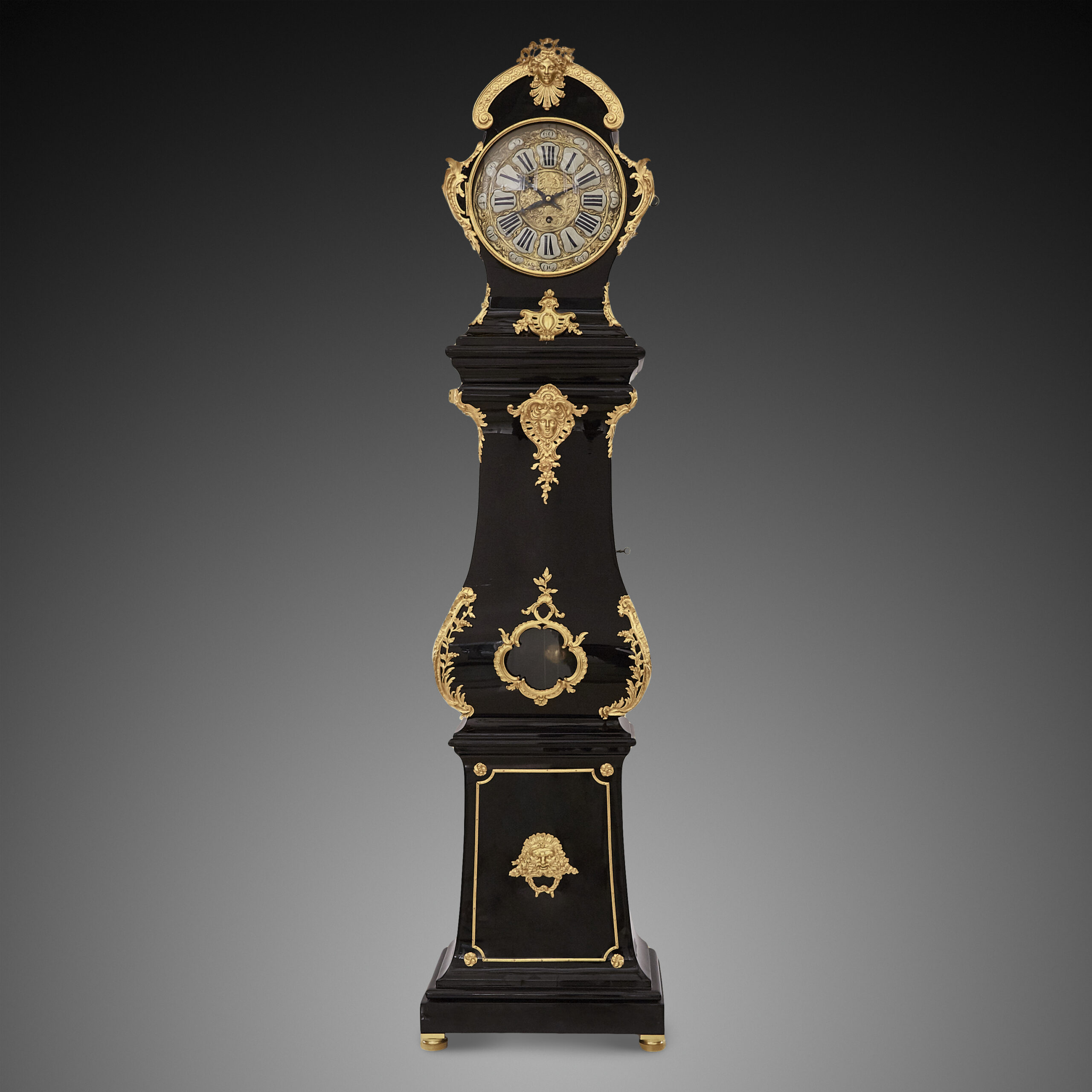
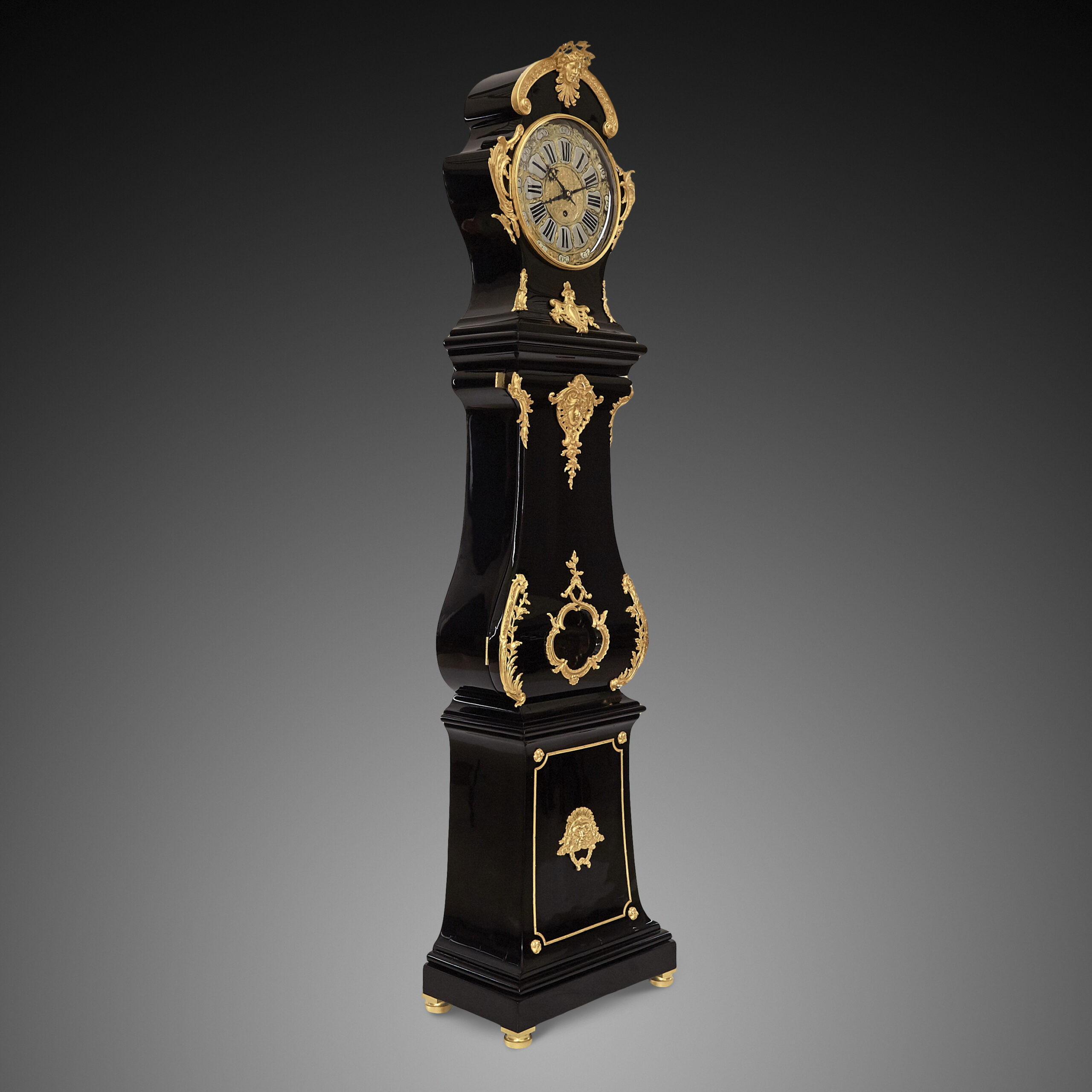
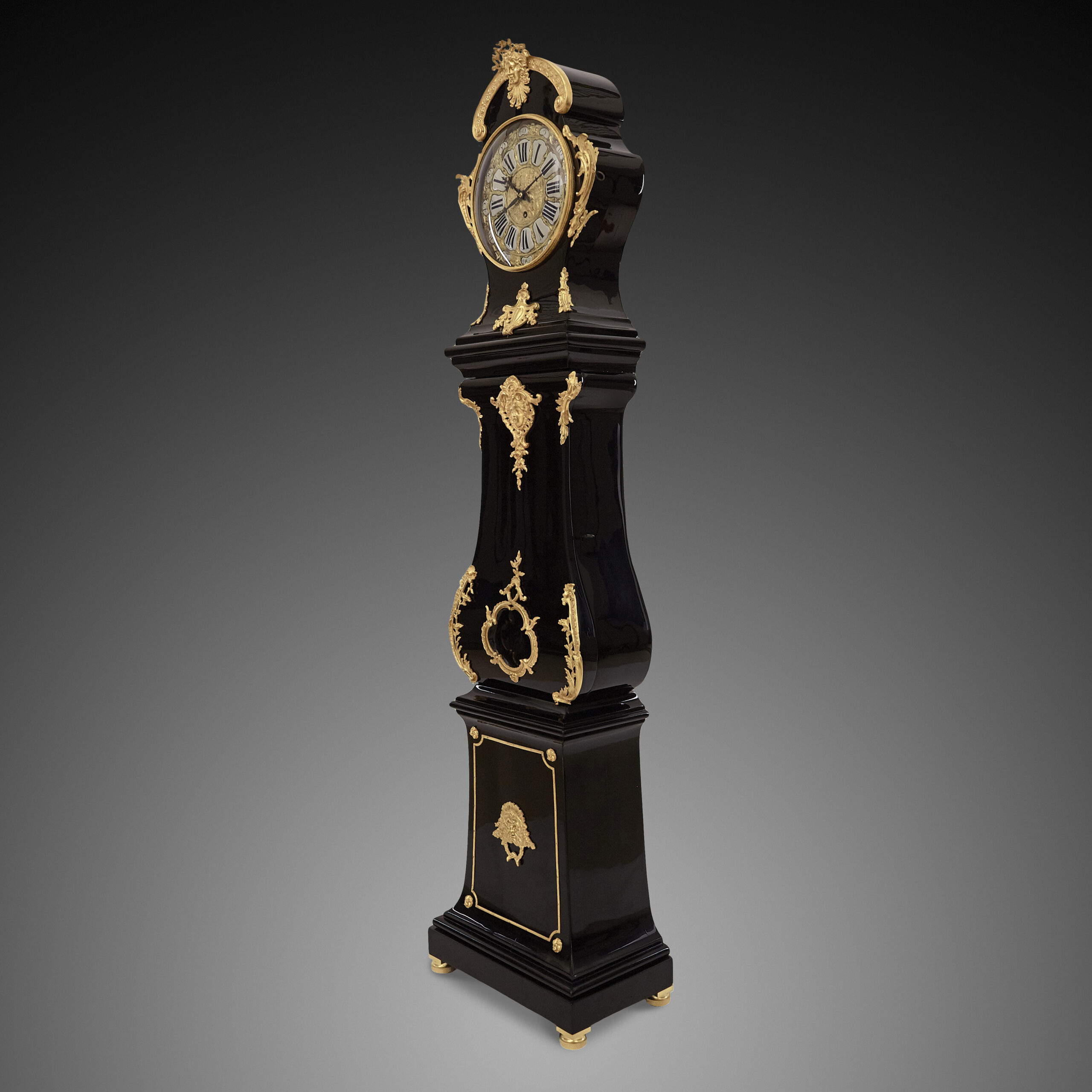
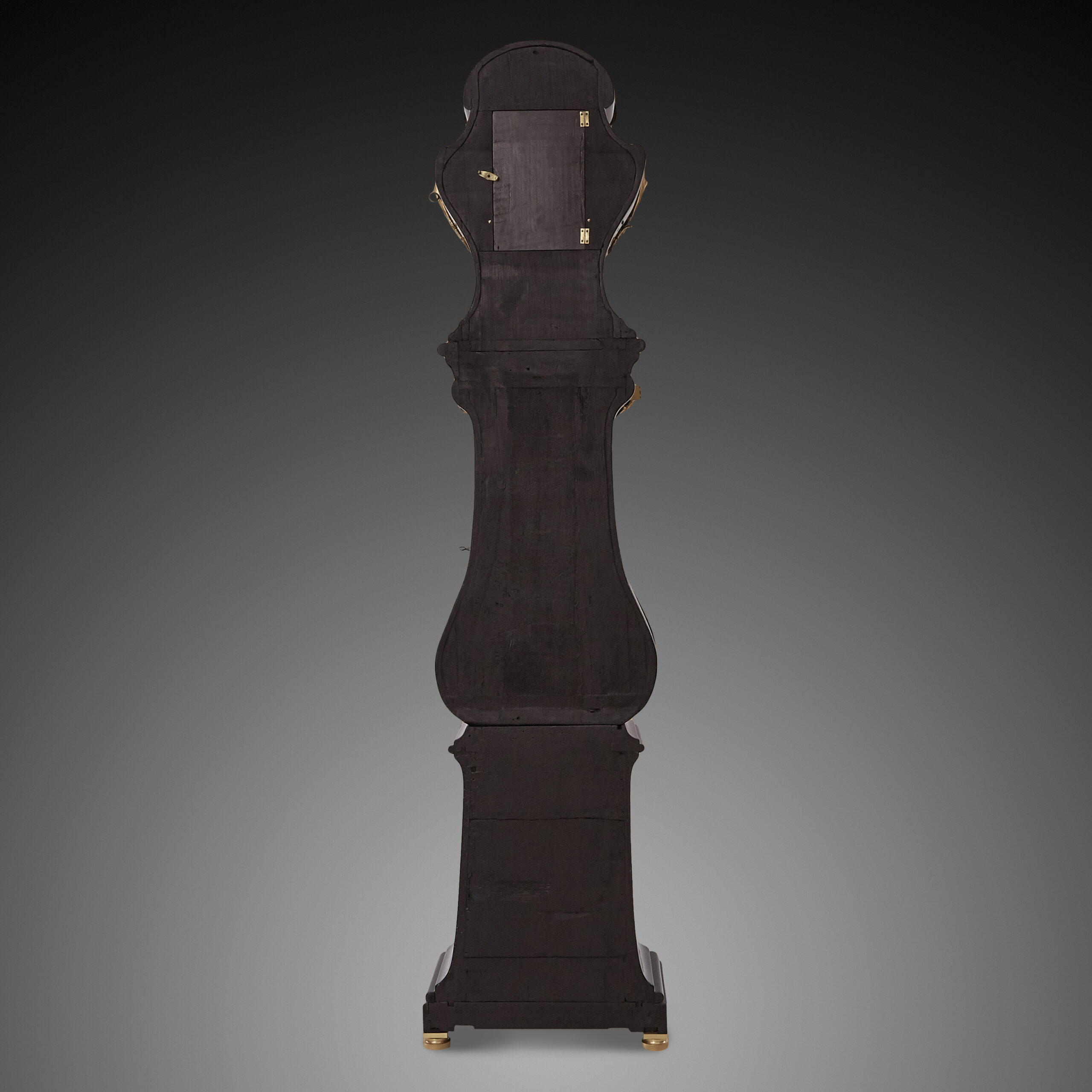
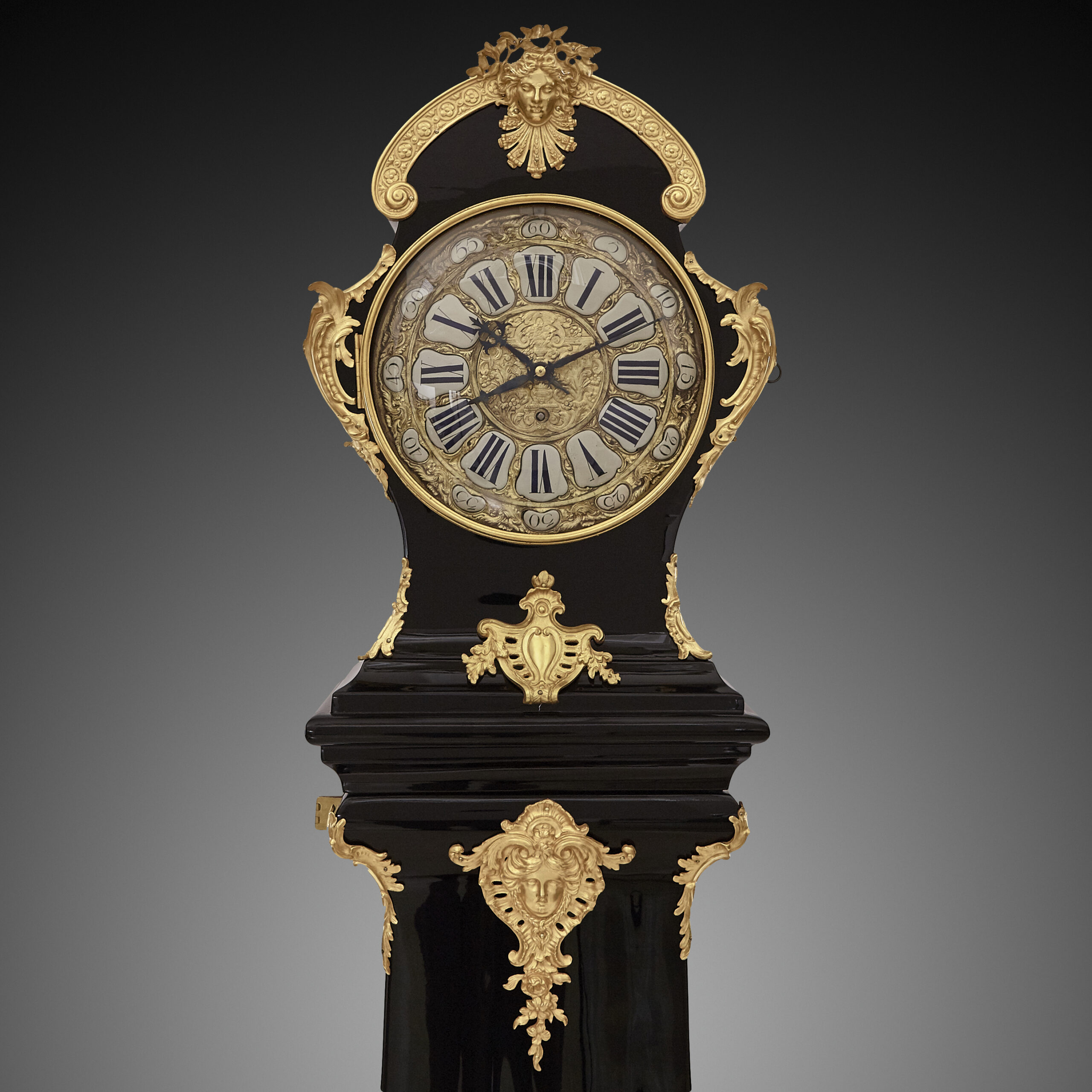
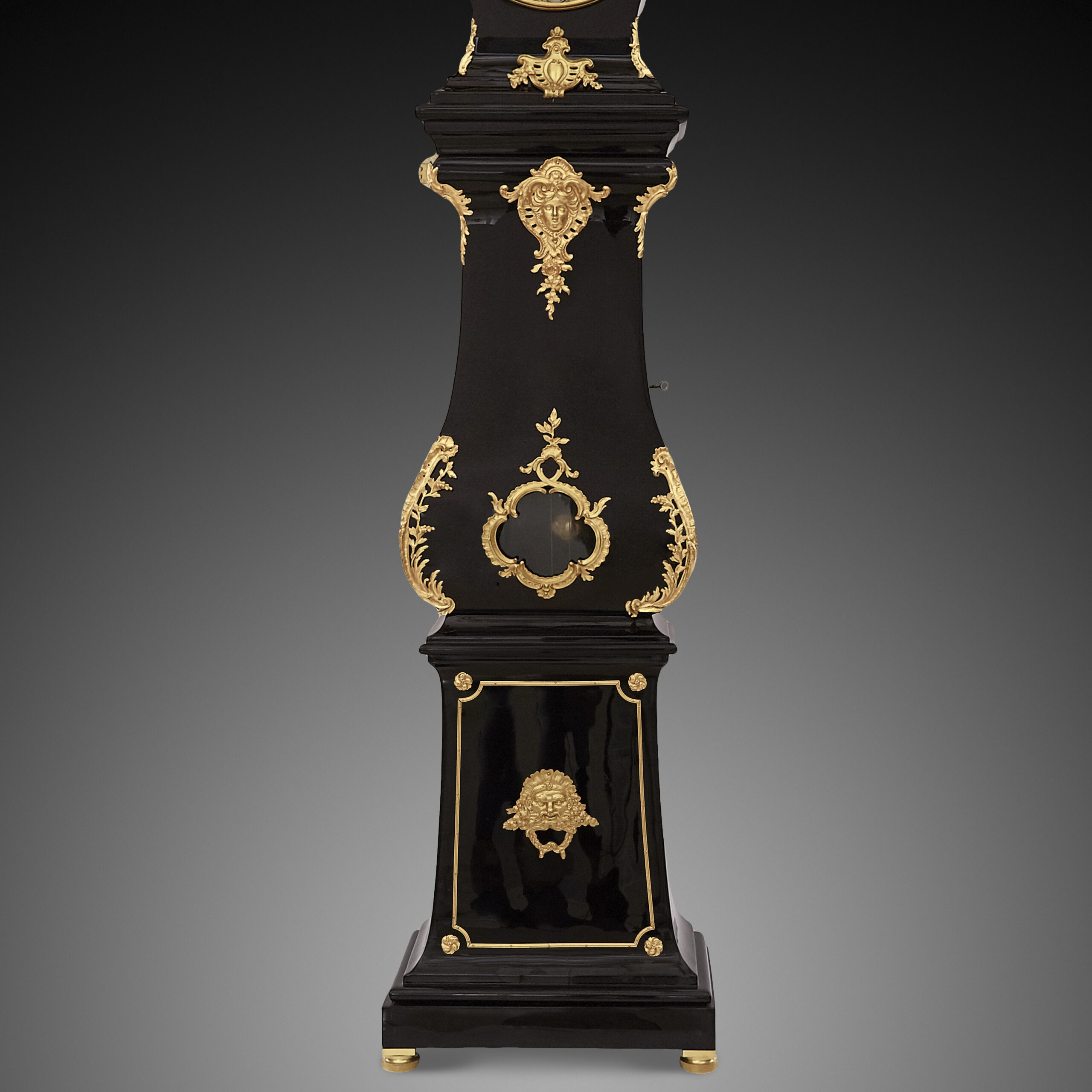
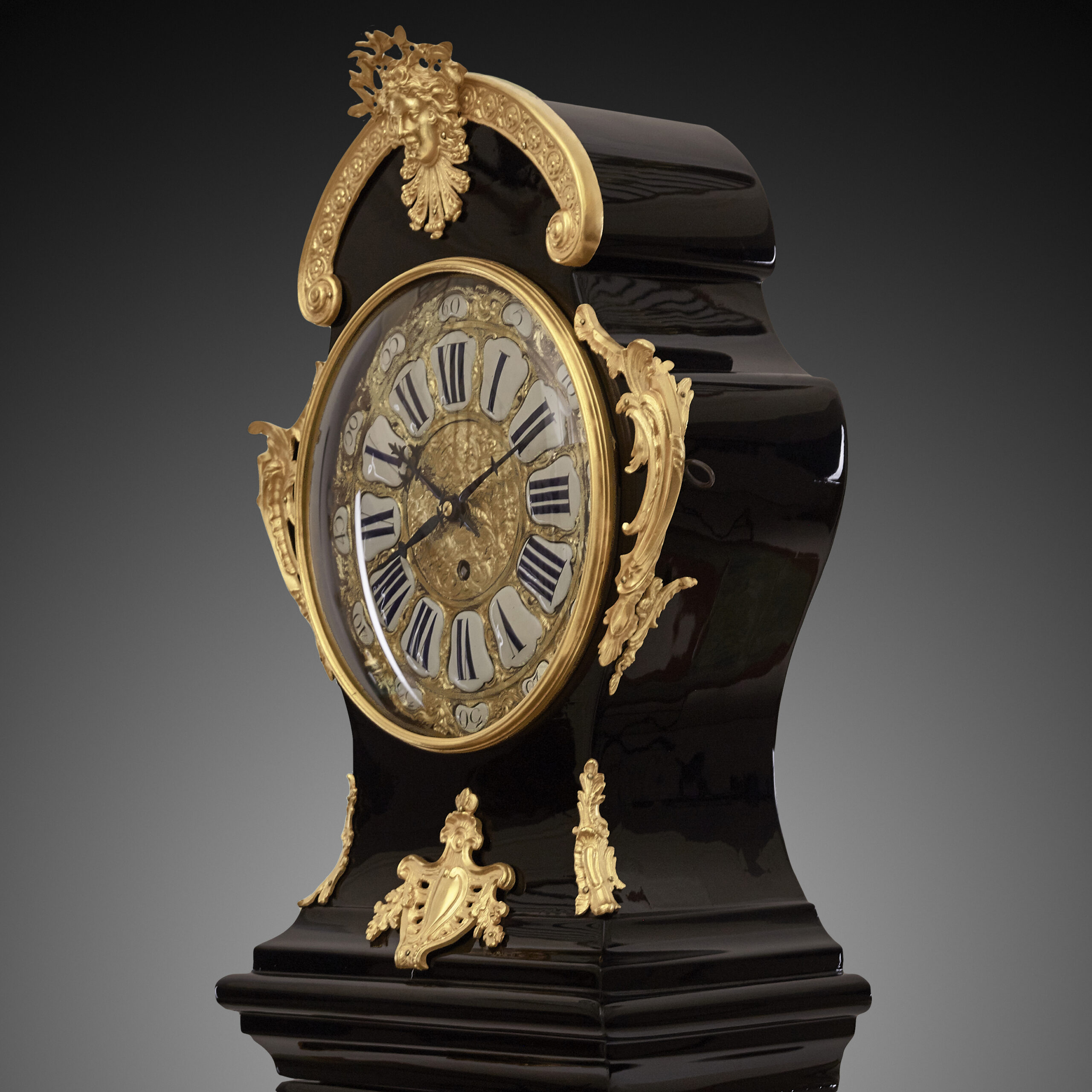
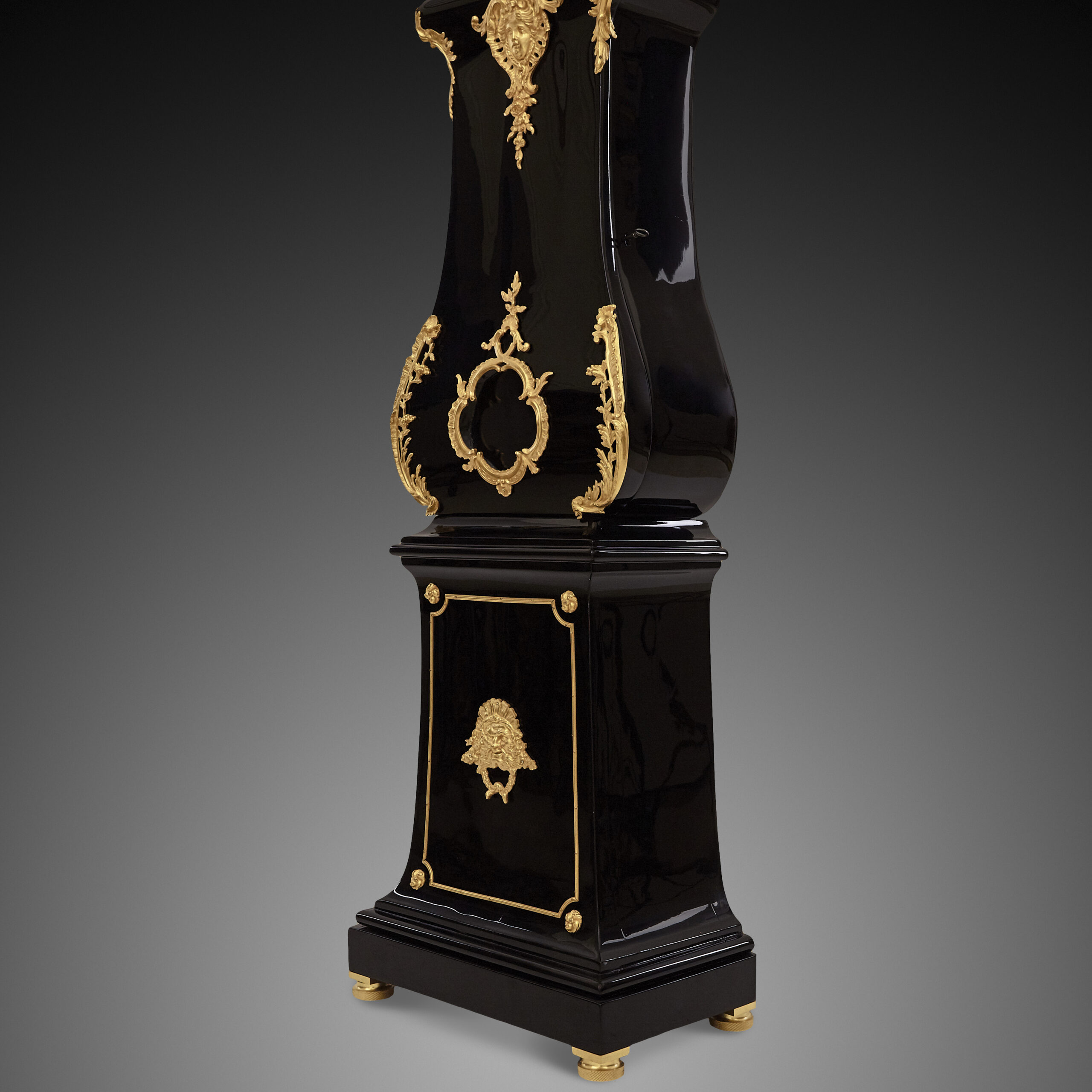
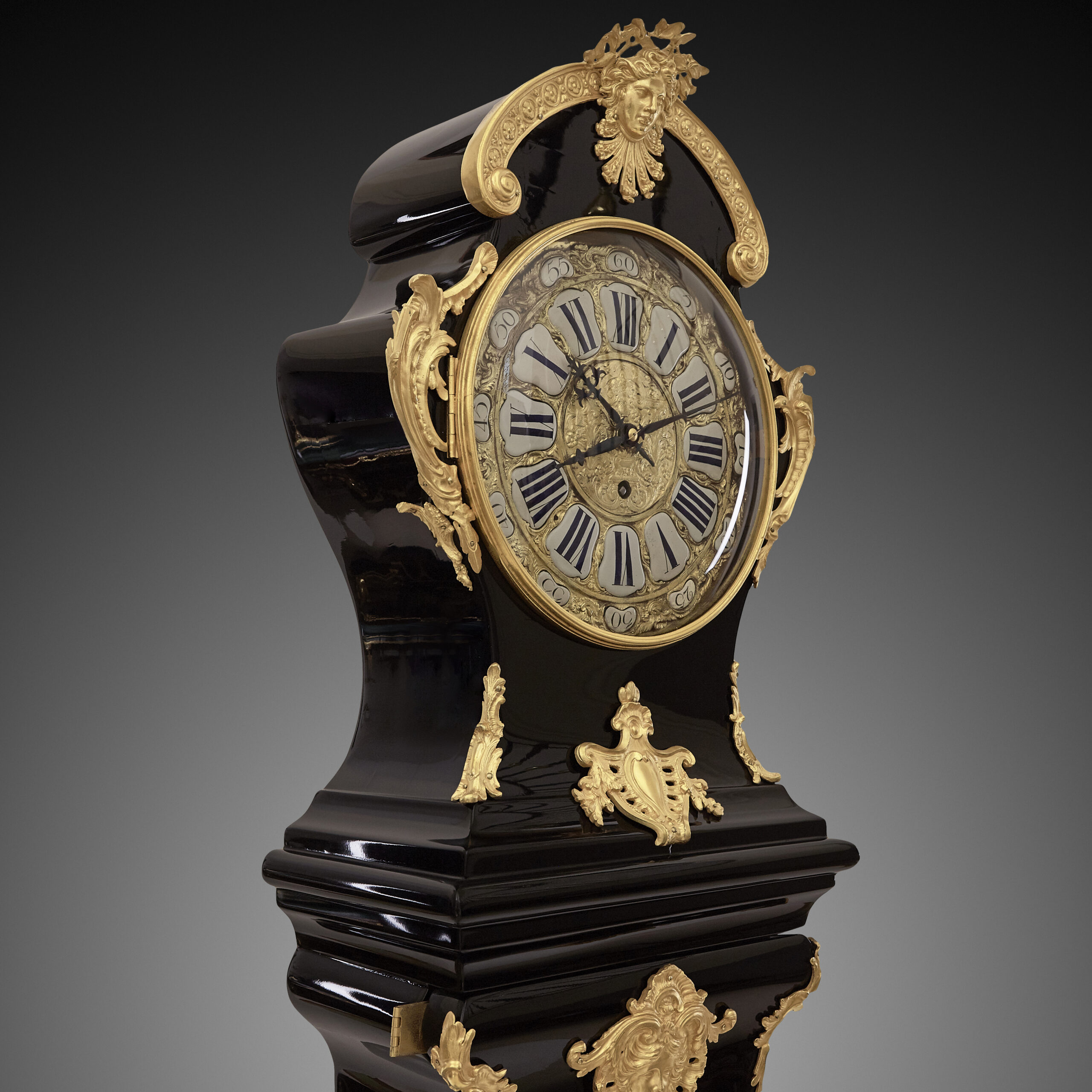
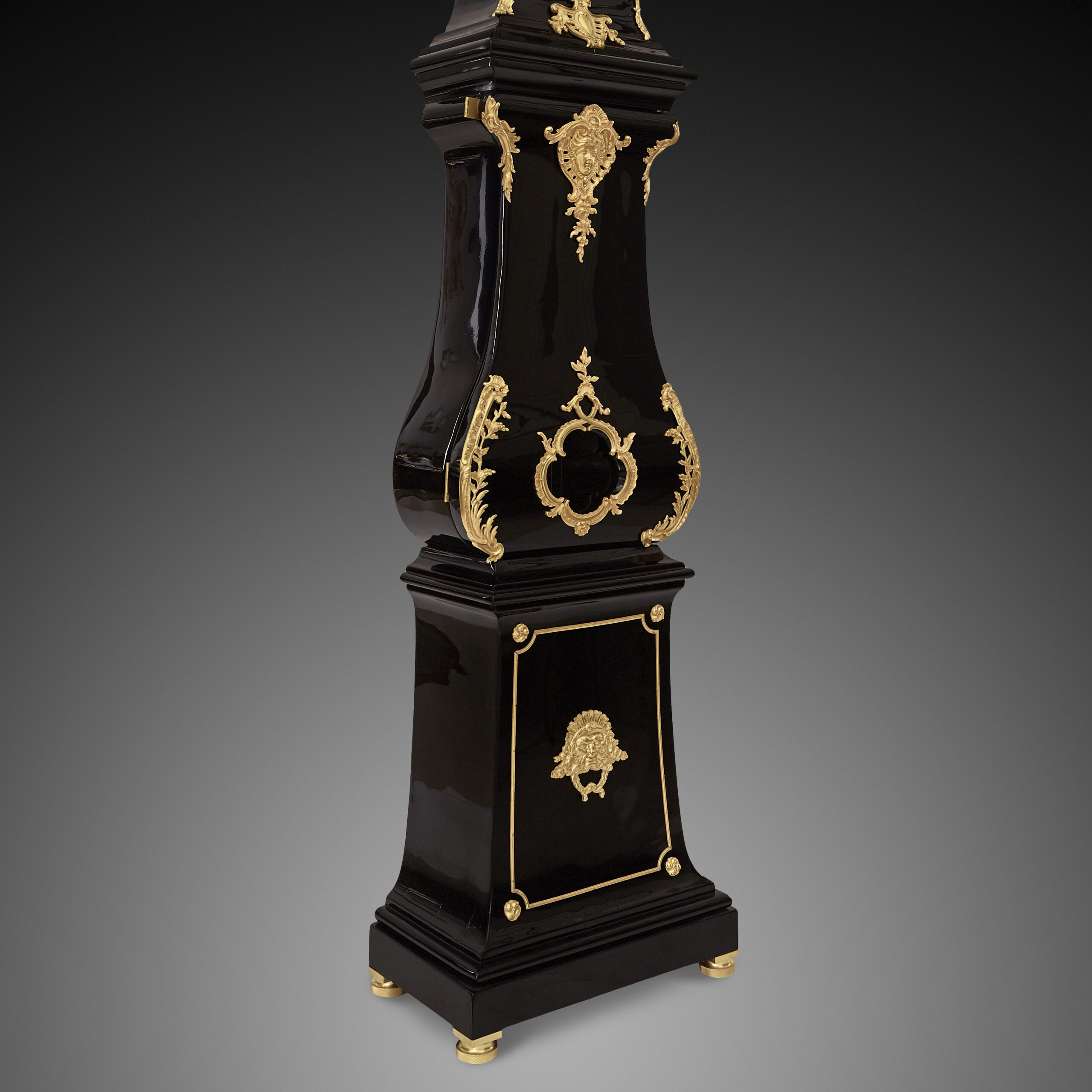
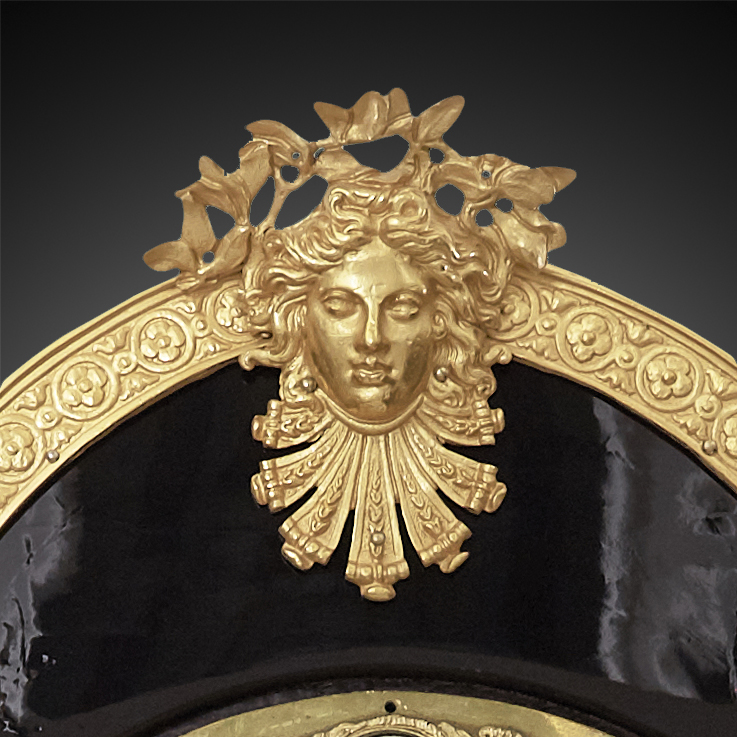
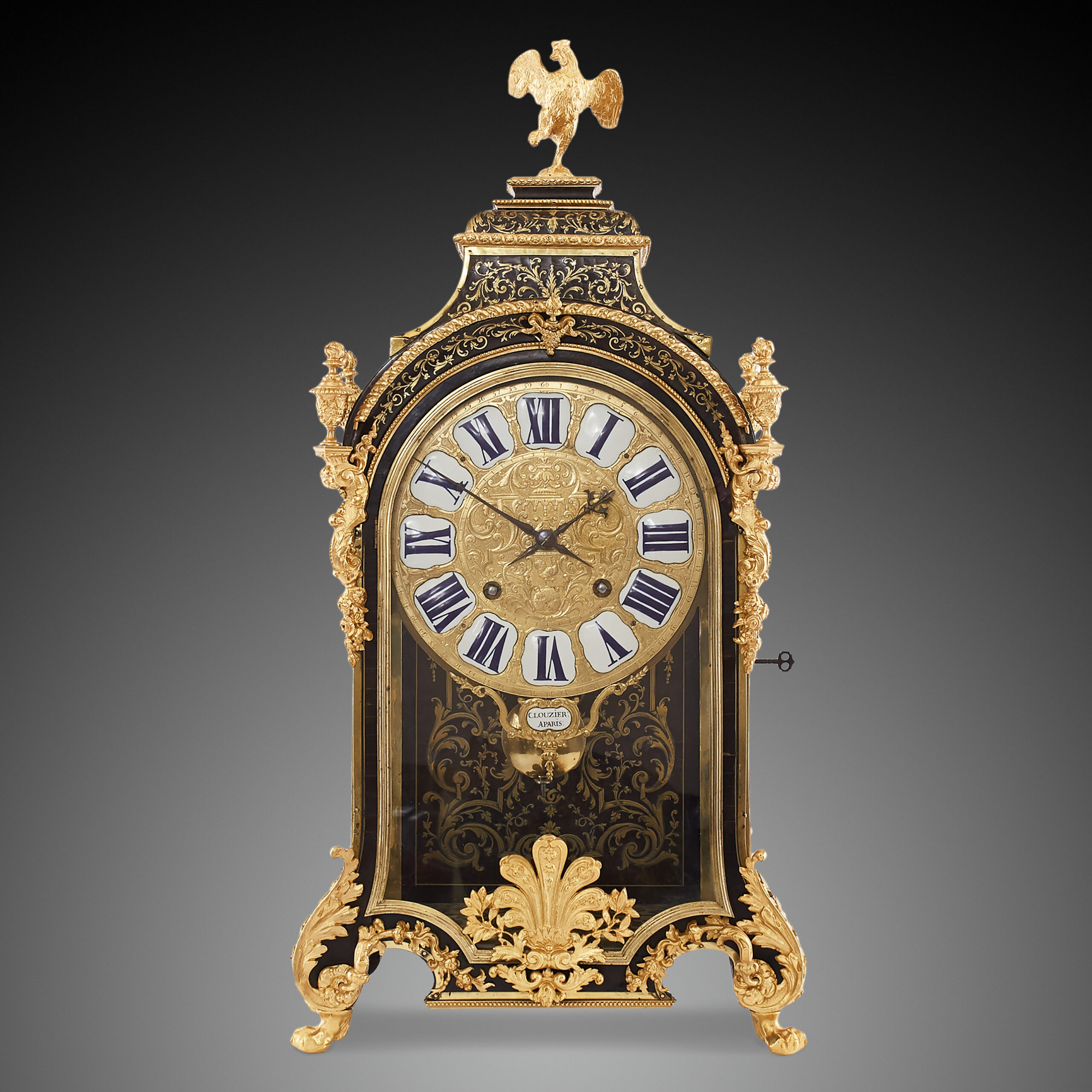
This longcase clock is a remarkable survivor from the height of the Louis XVI era, a time when French taste was undergoing a massive transformation away from the chaotic curves of the Rococo toward a much more disciplined, architectural style. What makes this piece so distinctive is that the entire case is crafted from finely carved wood. While most high-end clocks from this period relied on heavy gilded bronze mounts to show off wealth, this maker chose to demonstrate luxury through the sheer skill of the woodcarver. It is incredibly difficult to achieve that level of crisp, symmetrical detail in wood-mimicking the sharp lines of bronze friezes and floral motifs-and it speaks to a very specific, elite level of Parisian craftsmanship that was happening in the late 18th century.
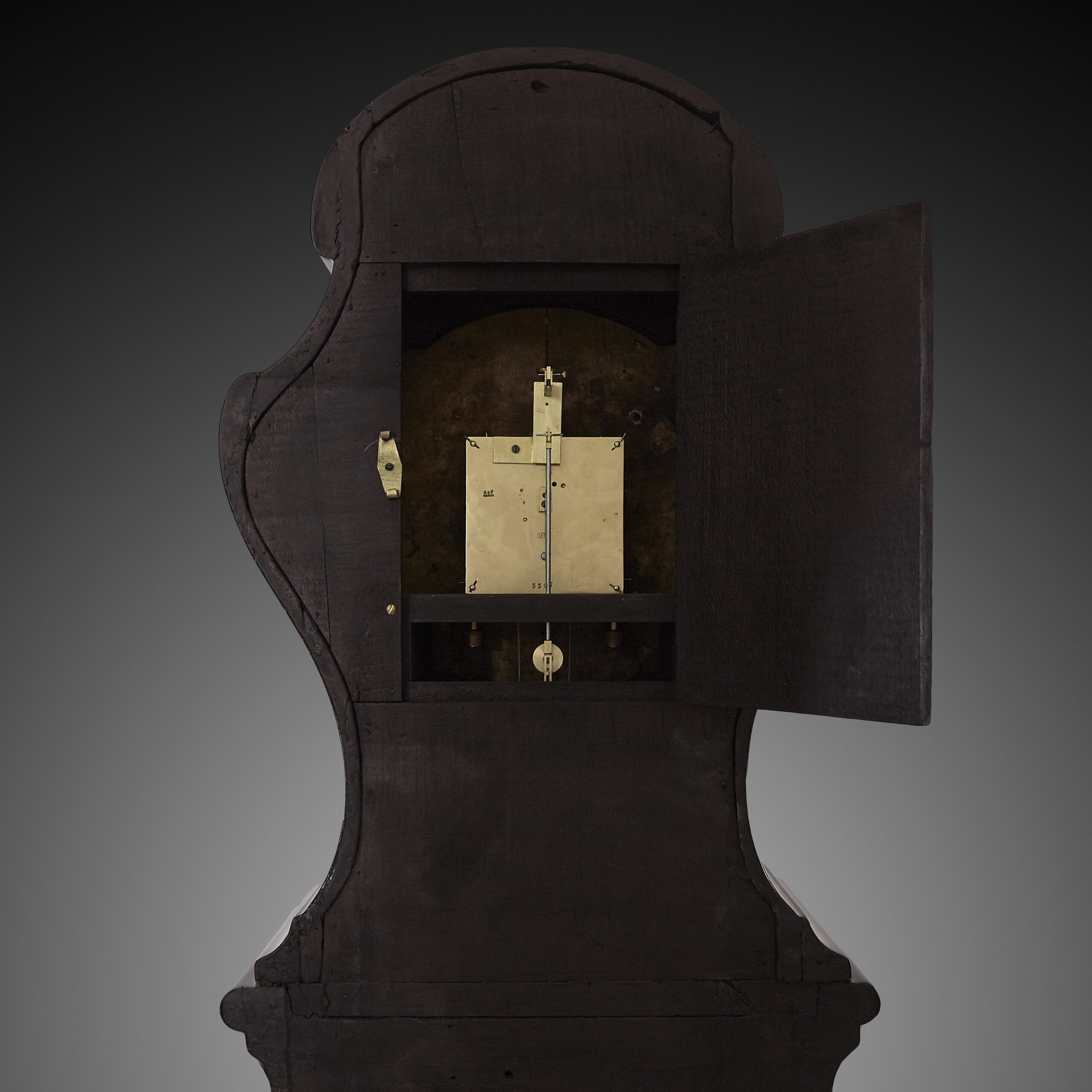
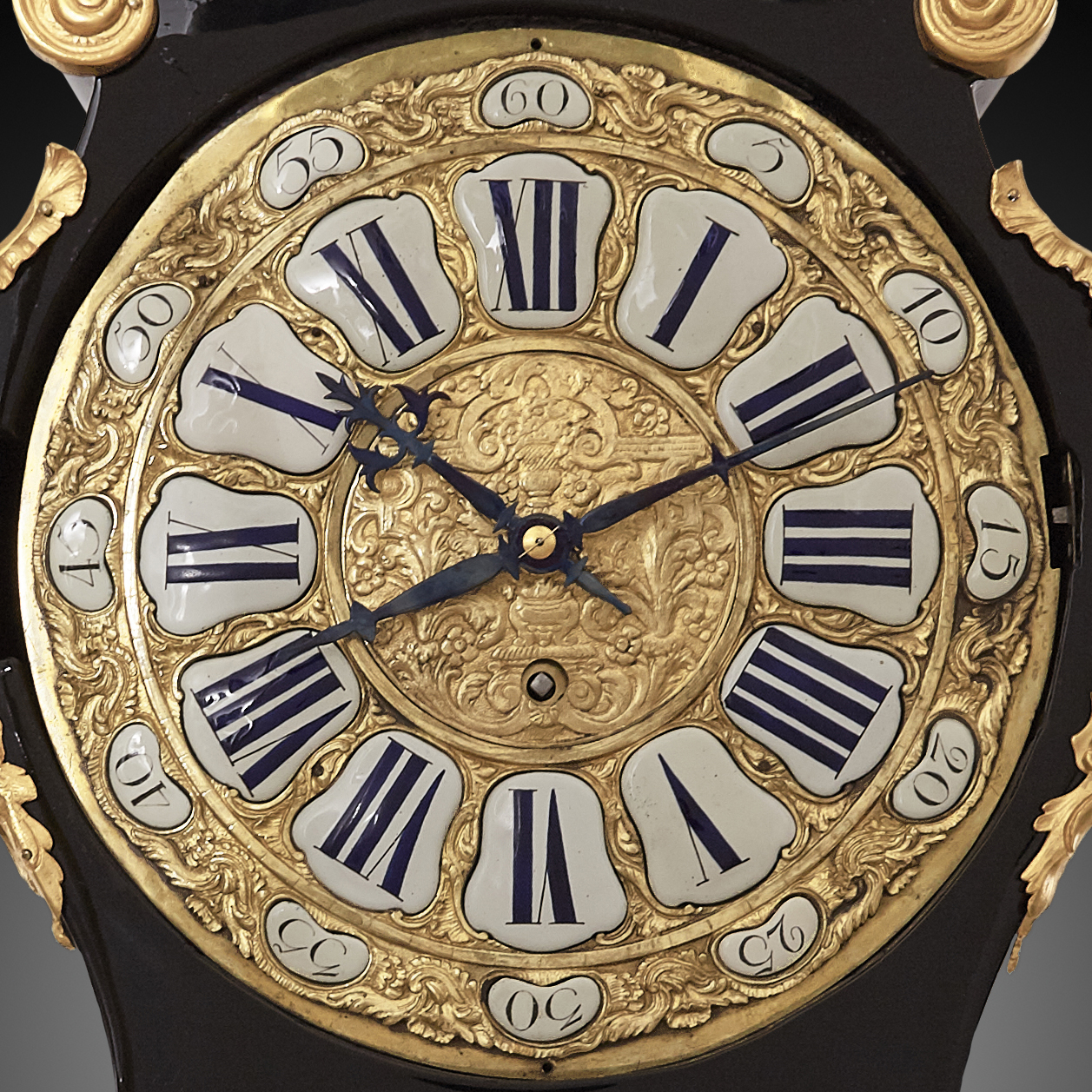
The signature H&F à Paris places the clock within a prestigious lineage of workshops that operated under the strict regulations of the Parisian guilds. During this period, the collaboration between the clockmaker and the cabinetmaker was essential, but here, the woodworker has really taken center stage by creating these elegant, neoclassical proportions that give the clock a monumental presence without needing the flashiness of gold. The dial itself is a work of art, with finely pierced hands and a layout that reflects the era’s obsession with clarity and mathematical order. Every element of the case, from the patina of the wood to the architectural base, was designed to create a sense of harmony that was a direct reaction to the “excess” of the previous generation.
However, the real soul of this piece lies in the movement. In the late 1700s, almost every quality clock was designed with an eight-day power reserve, which was the standard for a weekly winding ritual. Finding a movement with an extremely long reserve is a rare find and represents a significant leap in horological engineering. To make a clock run for a much longer period, the maker had to fundamentally rethink the gear ratios and find ways to drastically reduce friction within the train. It wasn’t just a matter of adding more weight; it required a mastery of physics and precision that few makers of the time possessed. This was the clockmaker’s way of proving they were at the absolute top of their field, creating a machine that could defy the standard limits of timekeeping and maintain its accuracy over a much longer stretch of time.
Because of that movement and the architectural nature of the case, a piece like this was never meant to be hidden away. It was designed for a space of importance, like a grand office or a library, where its steady, accurate ticking would provide a sense of permanence and order. It represents the best of both worlds: the refined, quiet beauty of the Neoclassical woodcarving and the aggressive, high-level engineering of the Parisian movement. It is a rare combination that makes the clock feel more like a living piece of history than a simple furniture item. It’s the kind of object that doesn’t just sit in a room; it anchors it, carrying the weight of a workshop that was operating at the peak of French decorative history.