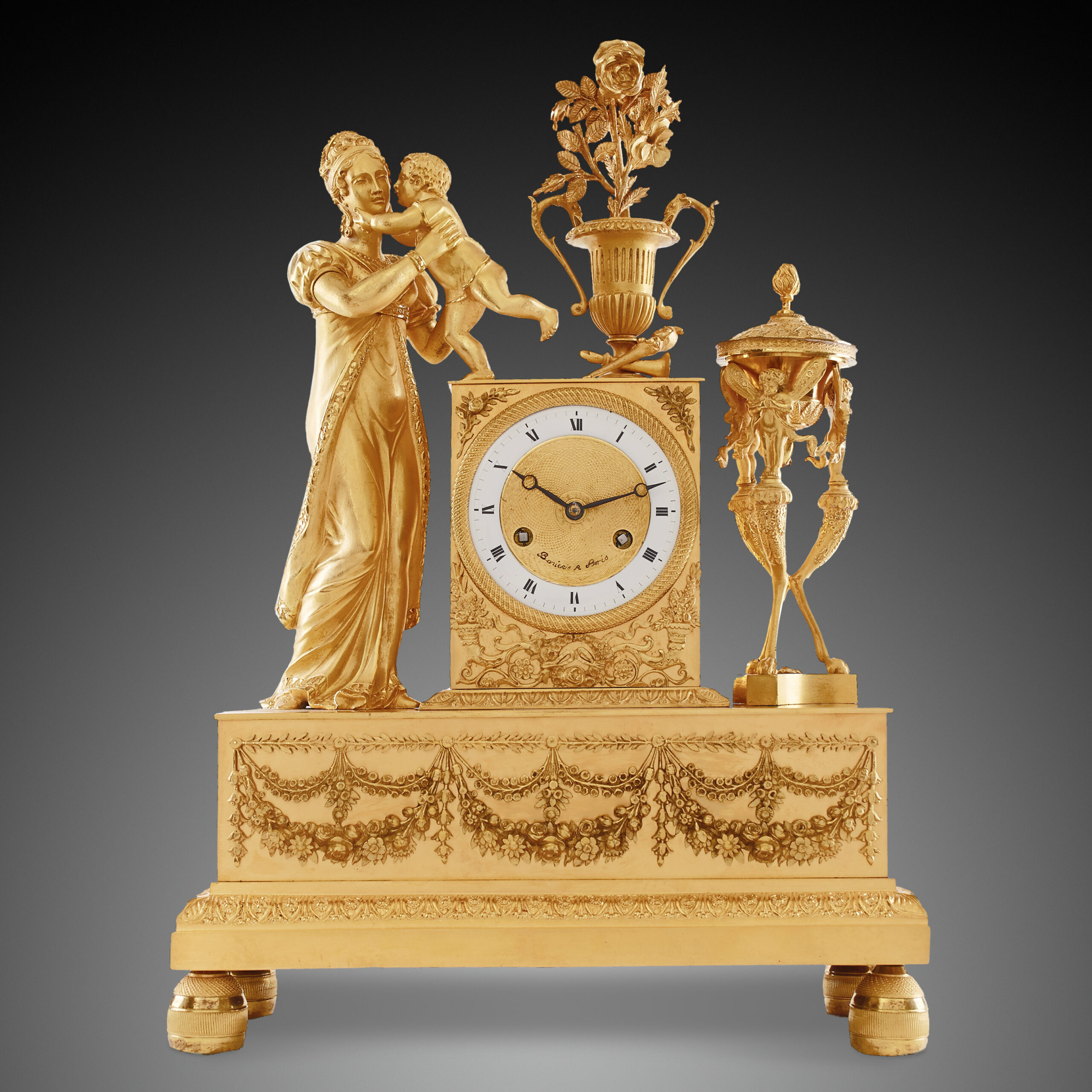
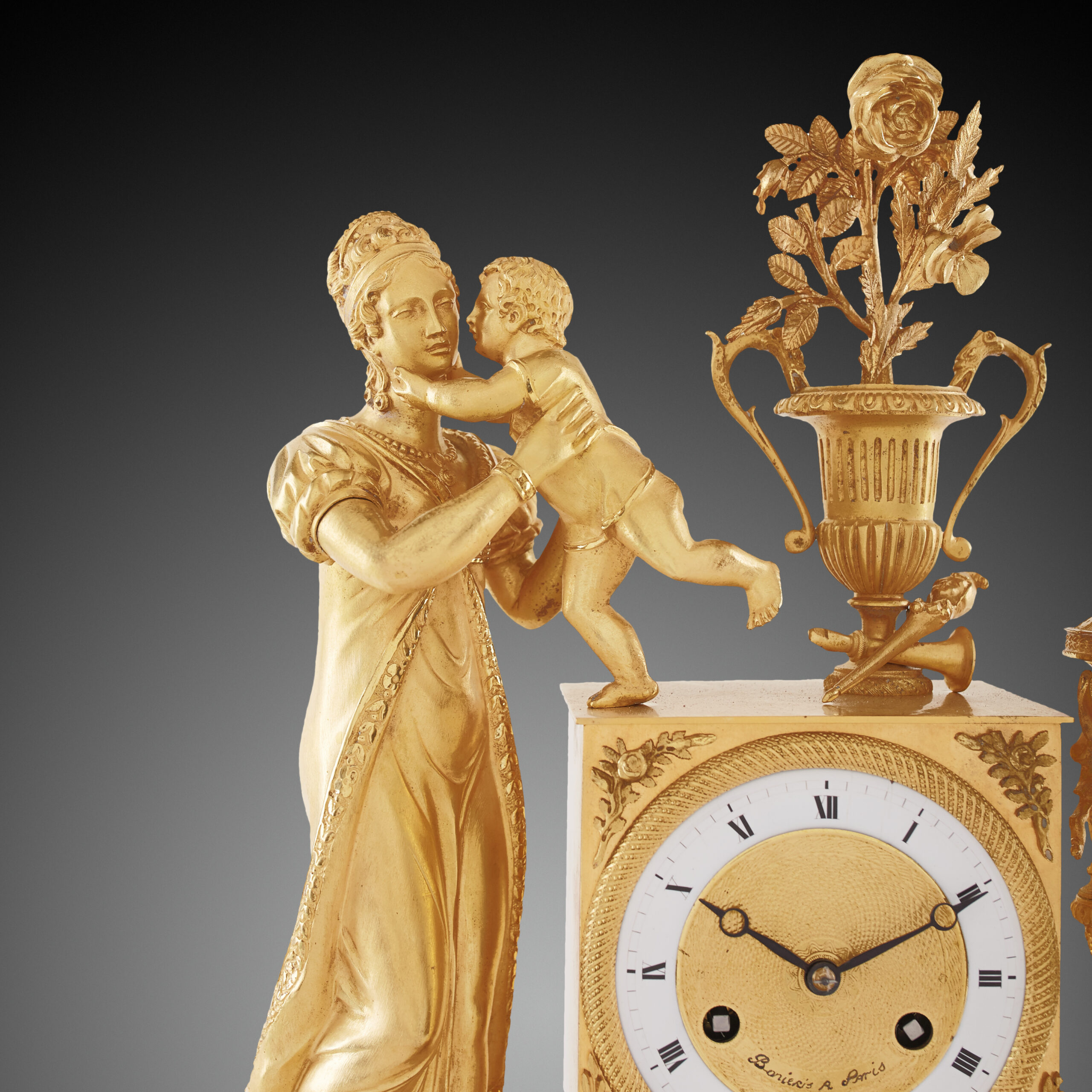
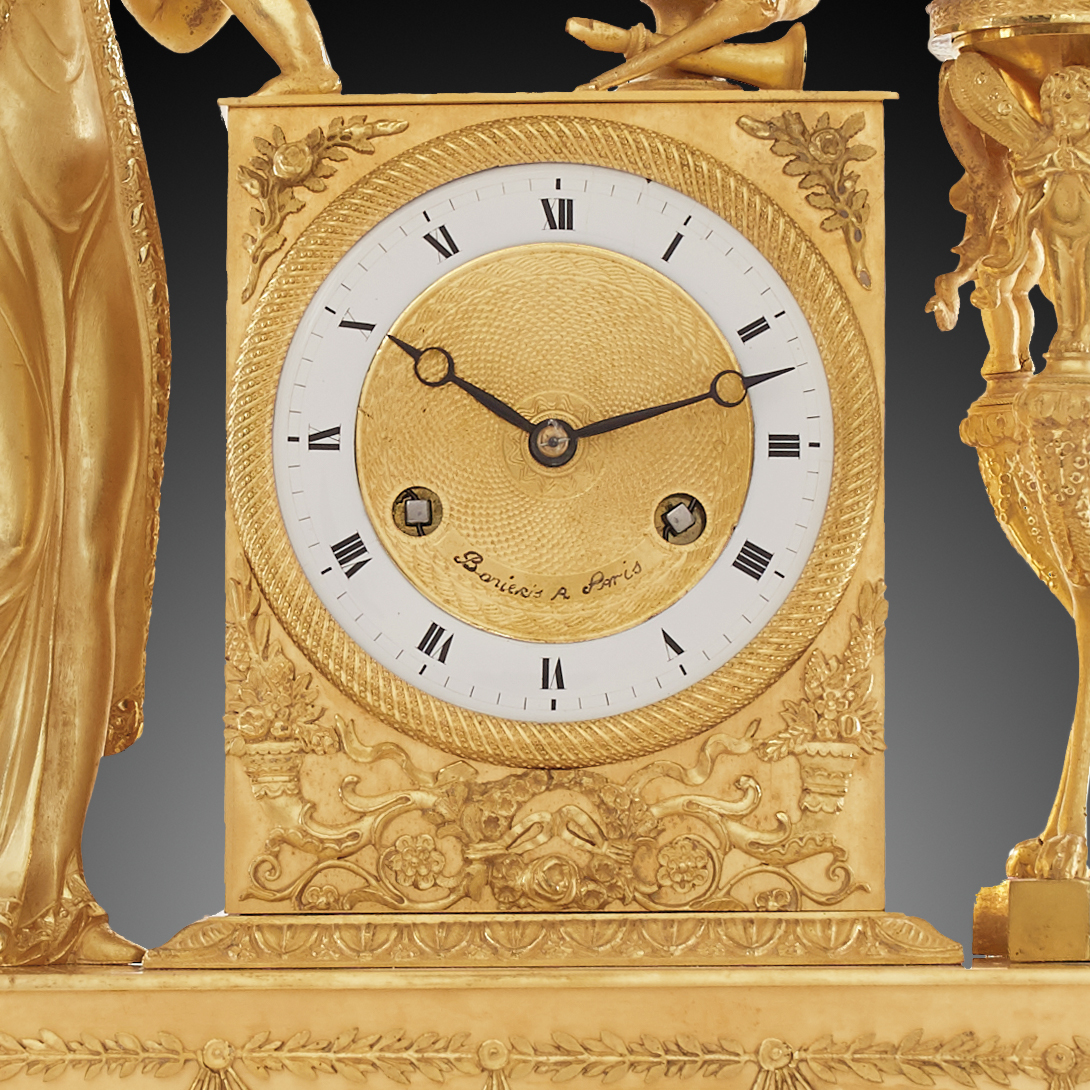
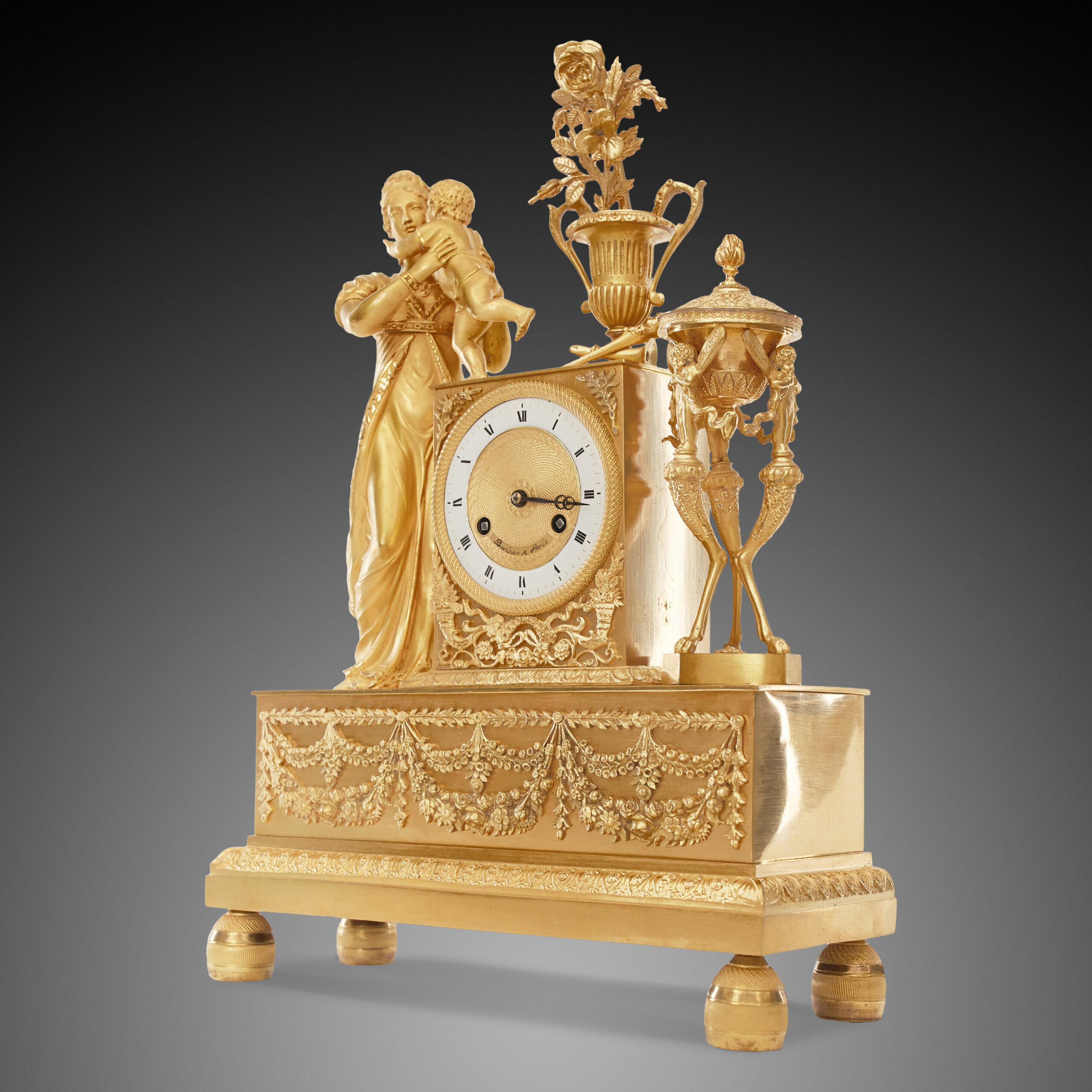
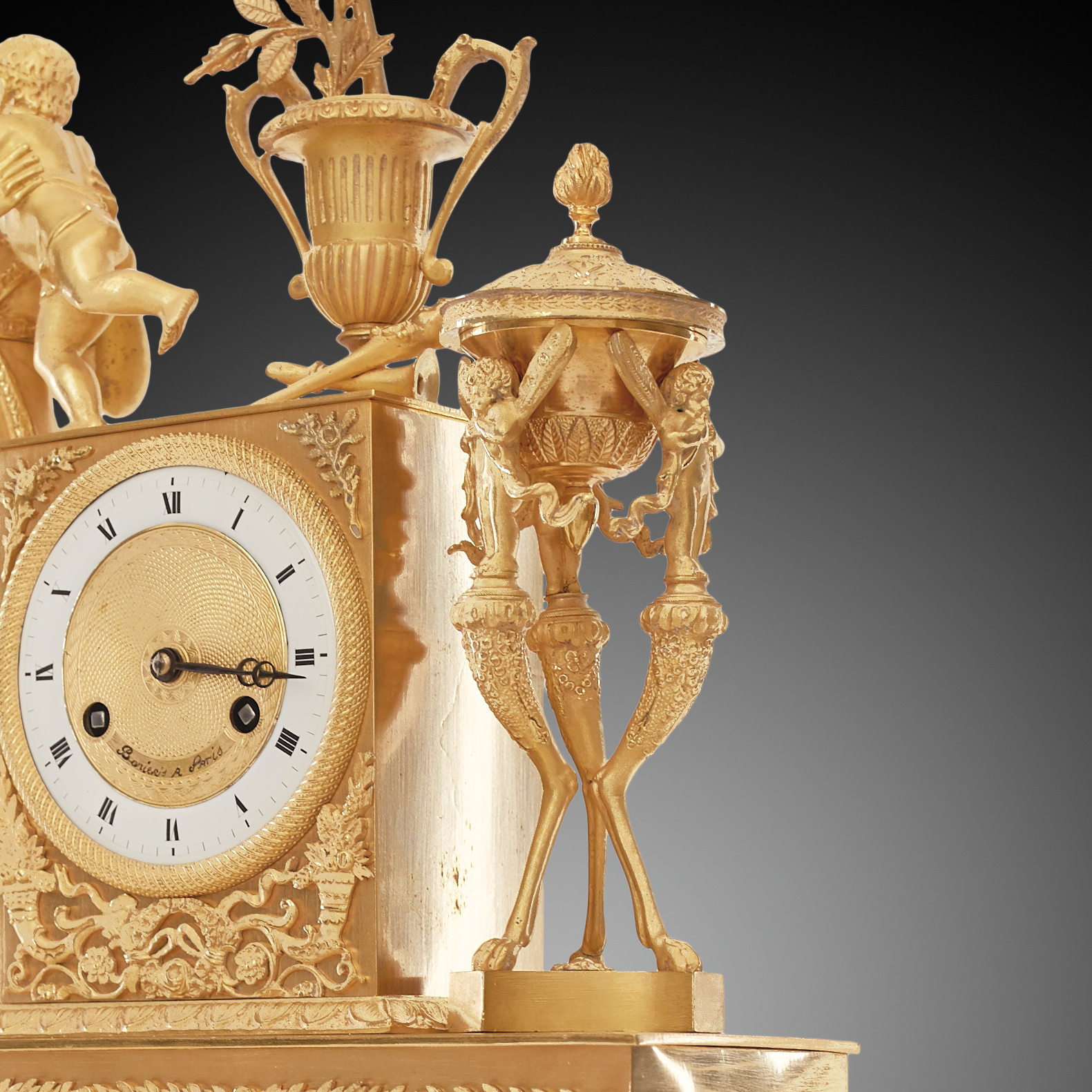
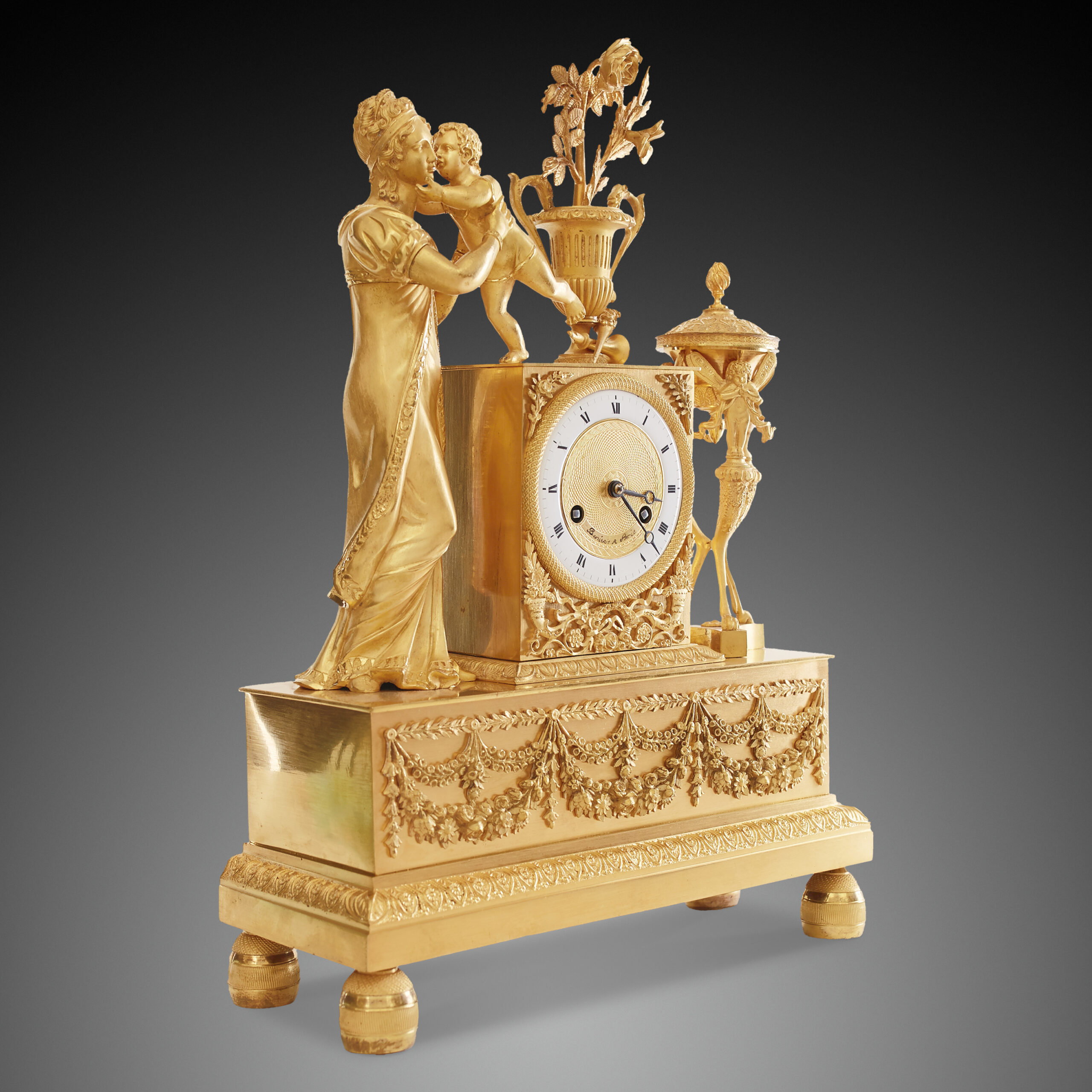
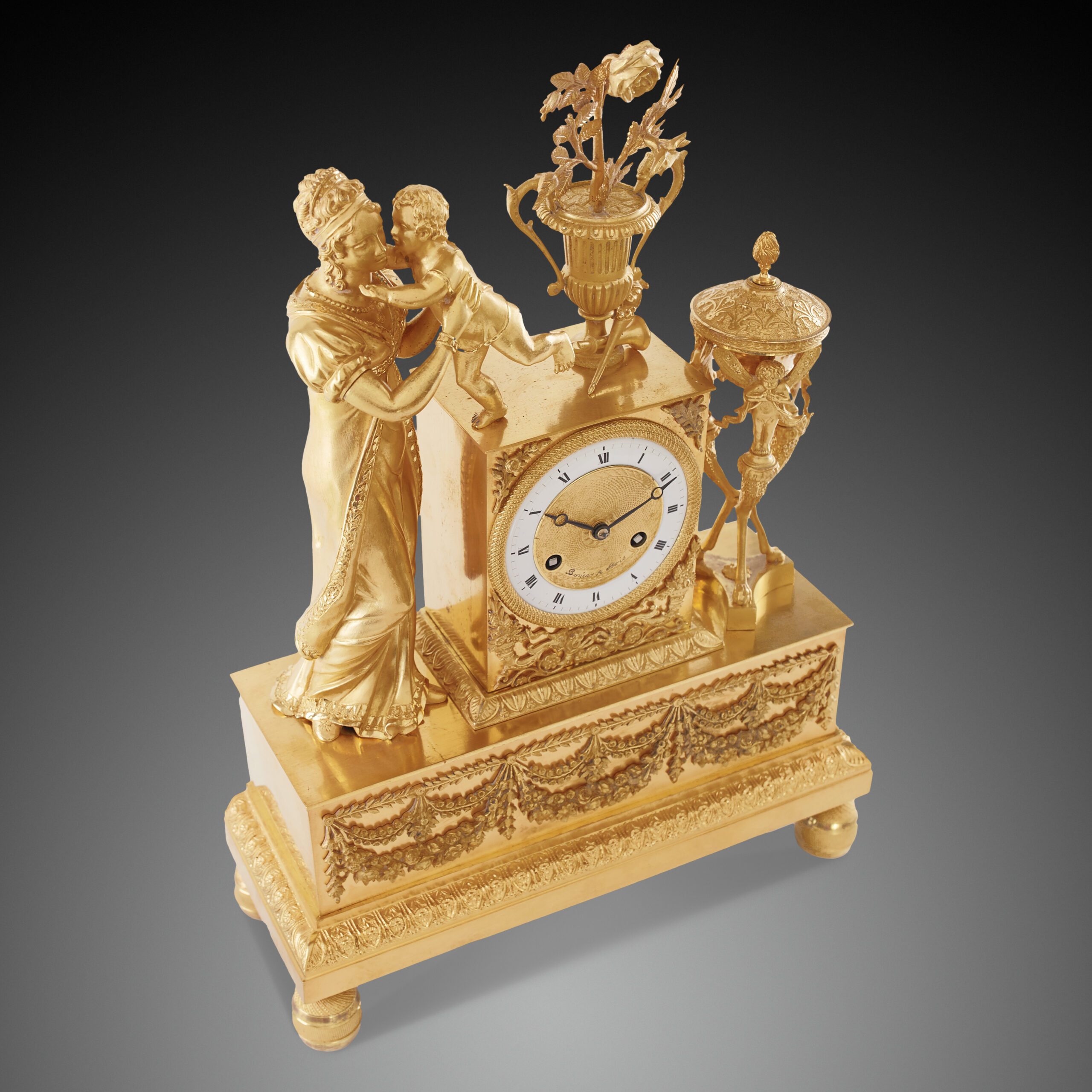
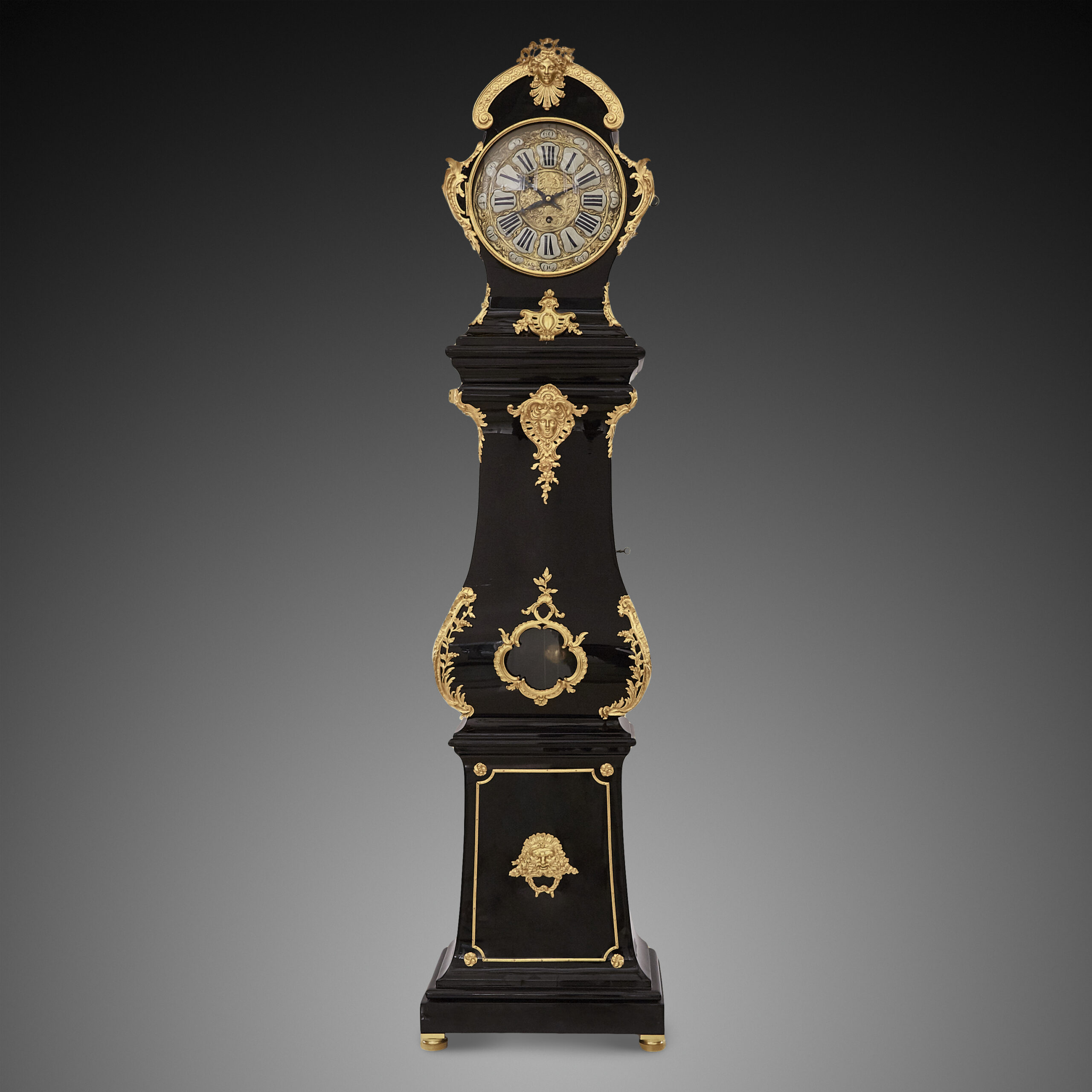
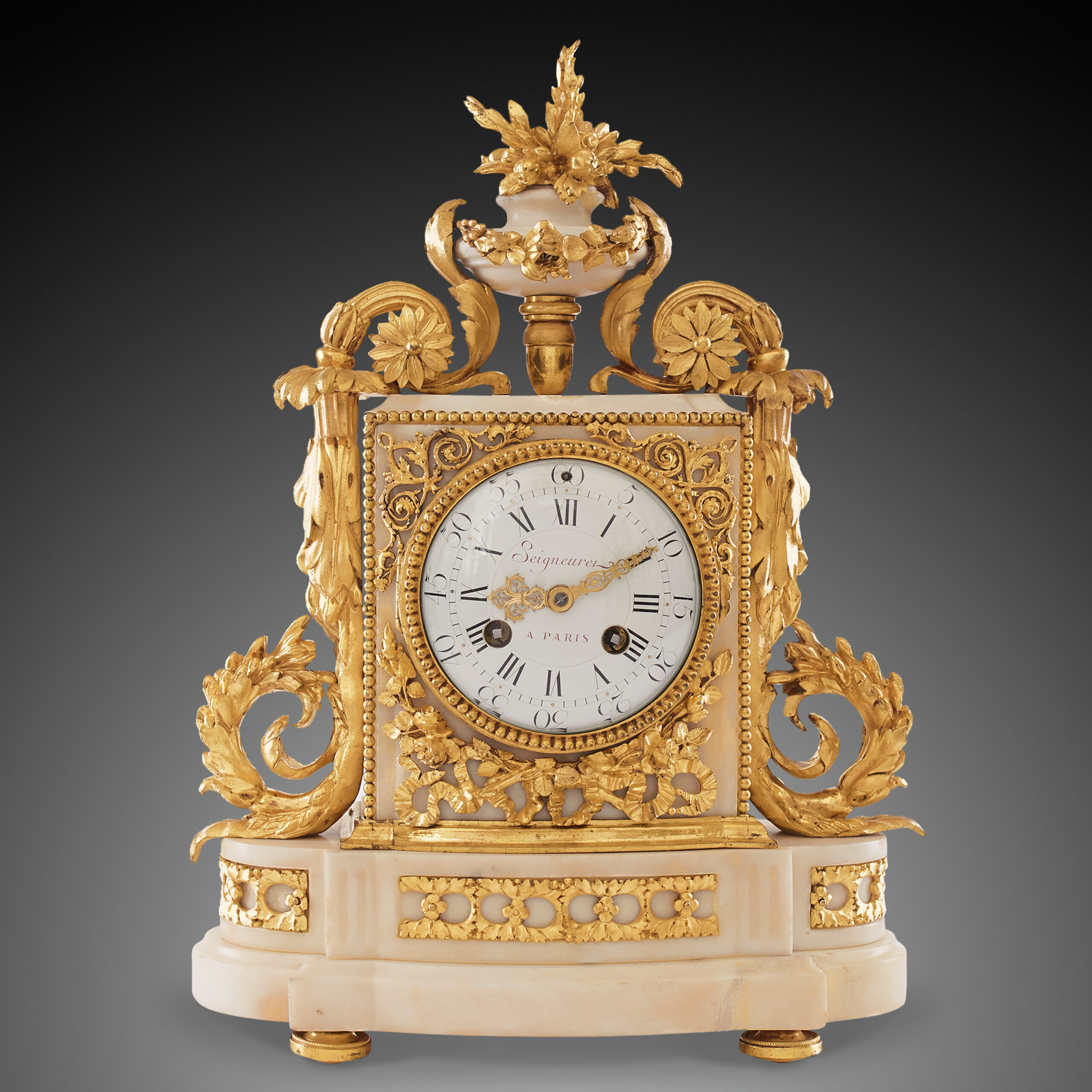
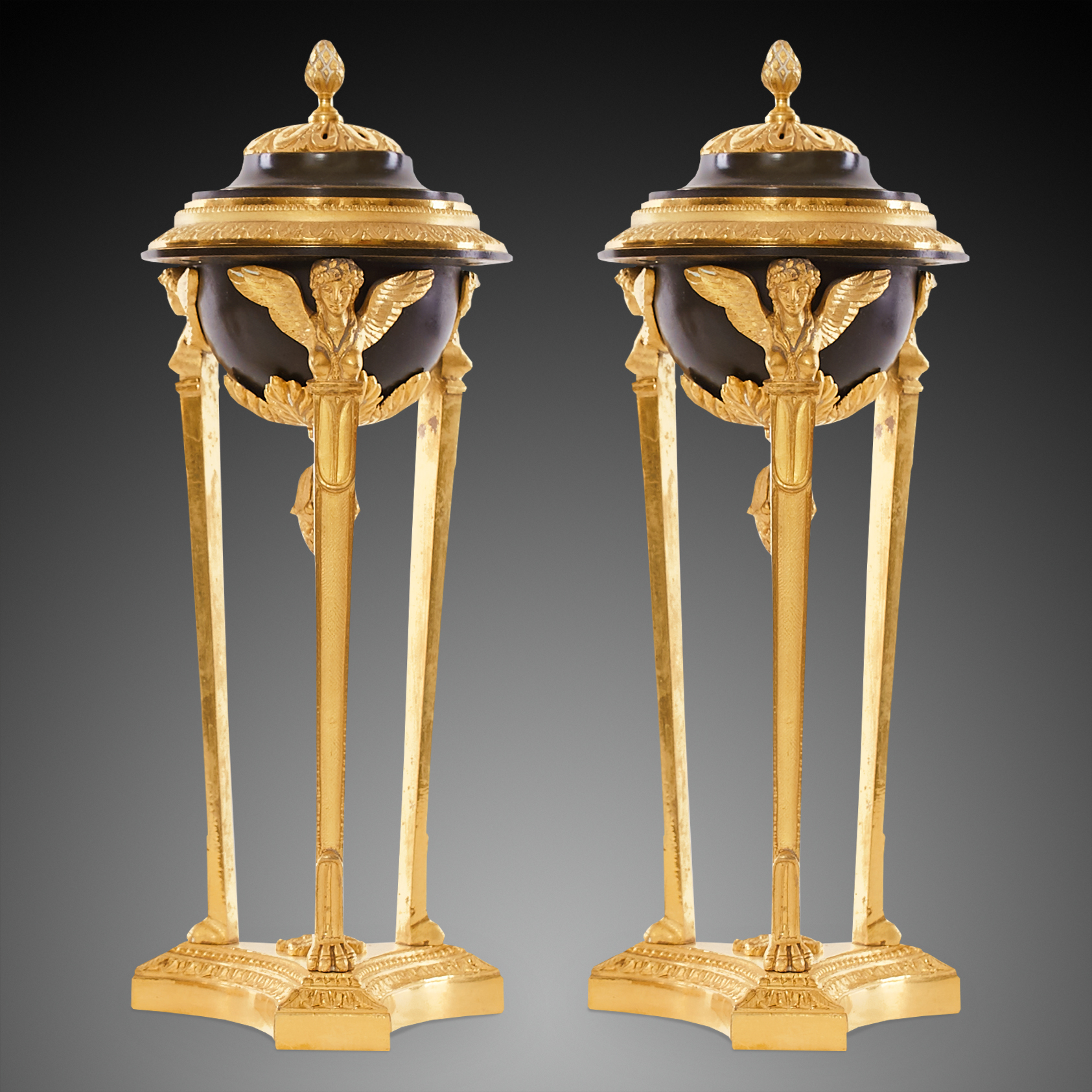
This remarkable mantel clock is an authentic and highly refined work from the French Empire period, created during the reign of Napoleon Bonaparte, when the decorative arts reached a level of clarity, symbolism, and technical excellence that continues to define the era. Signed “Bonieris à Paris” on the dial, the piece can be attributed to a respected Parisian clockmaker working at a time when collaboration between horologists and master bronziers produced objects of exceptional quality.
The composition reflects the intellectual and artistic ambitions of the Empire style, which drew heavily on the visual language of antiquity. Inspired by ancient Rome, this aesthetic was intended to project order, virtue, and permanence. In this context, mantel clocks became more than functional objects. They were conceived as sculptural statements, often carrying allegorical meaning aligned with the values of the period.
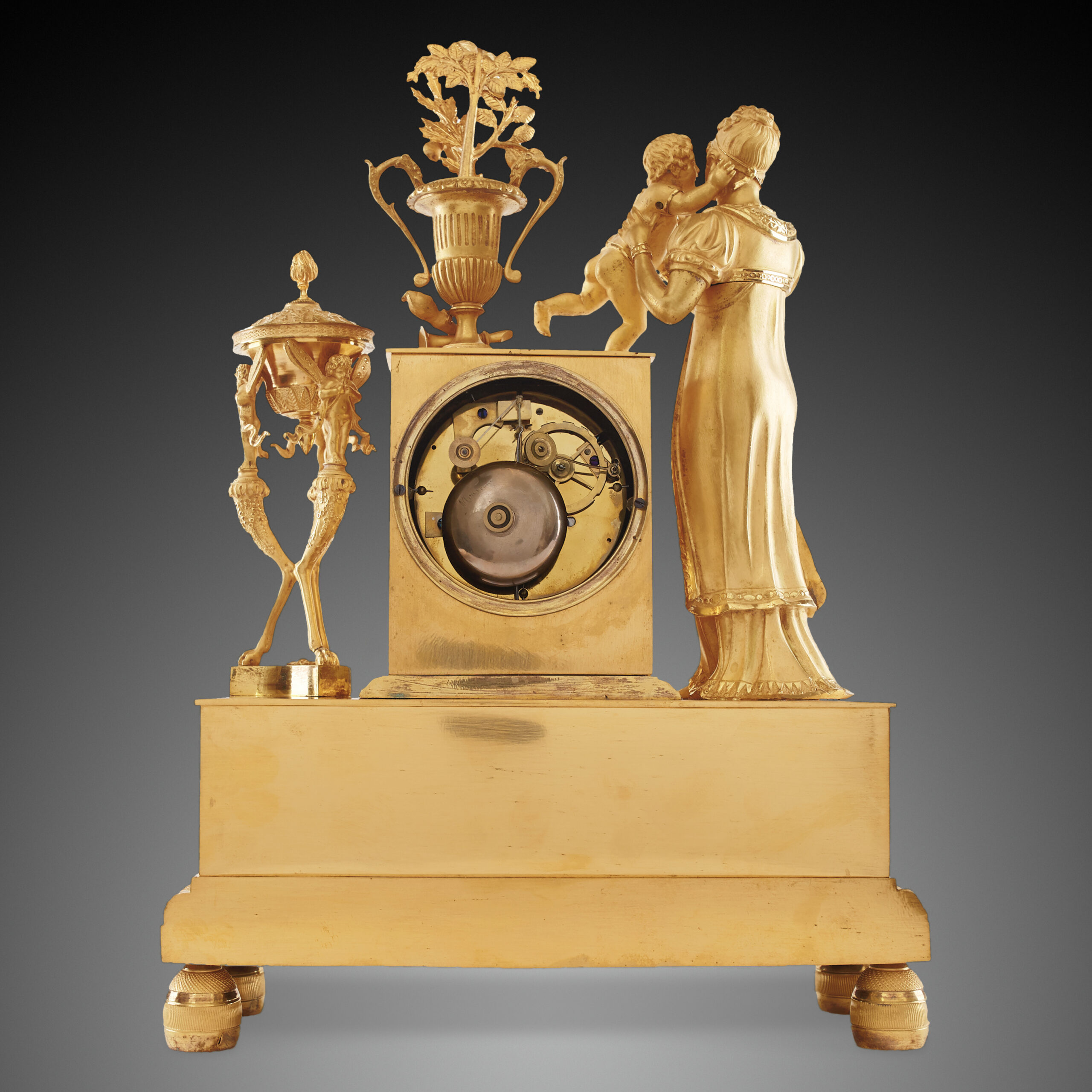
Here, the central theme is both intimate and symbolic. The finely modeled female figure, rendered in richly mercury-gilded bronze, holds a child in a tender and naturalistic gesture. This motif is typically interpreted as an allegory of motherhood, care, or charity, themes that were widely appreciated in early 19th century France. The sculptural quality is notable for its balance between classical restraint and emotional expression. The drapery falls with controlled elegance, revealing the influence of antique prototypes while maintaining a distinctly French refinement.
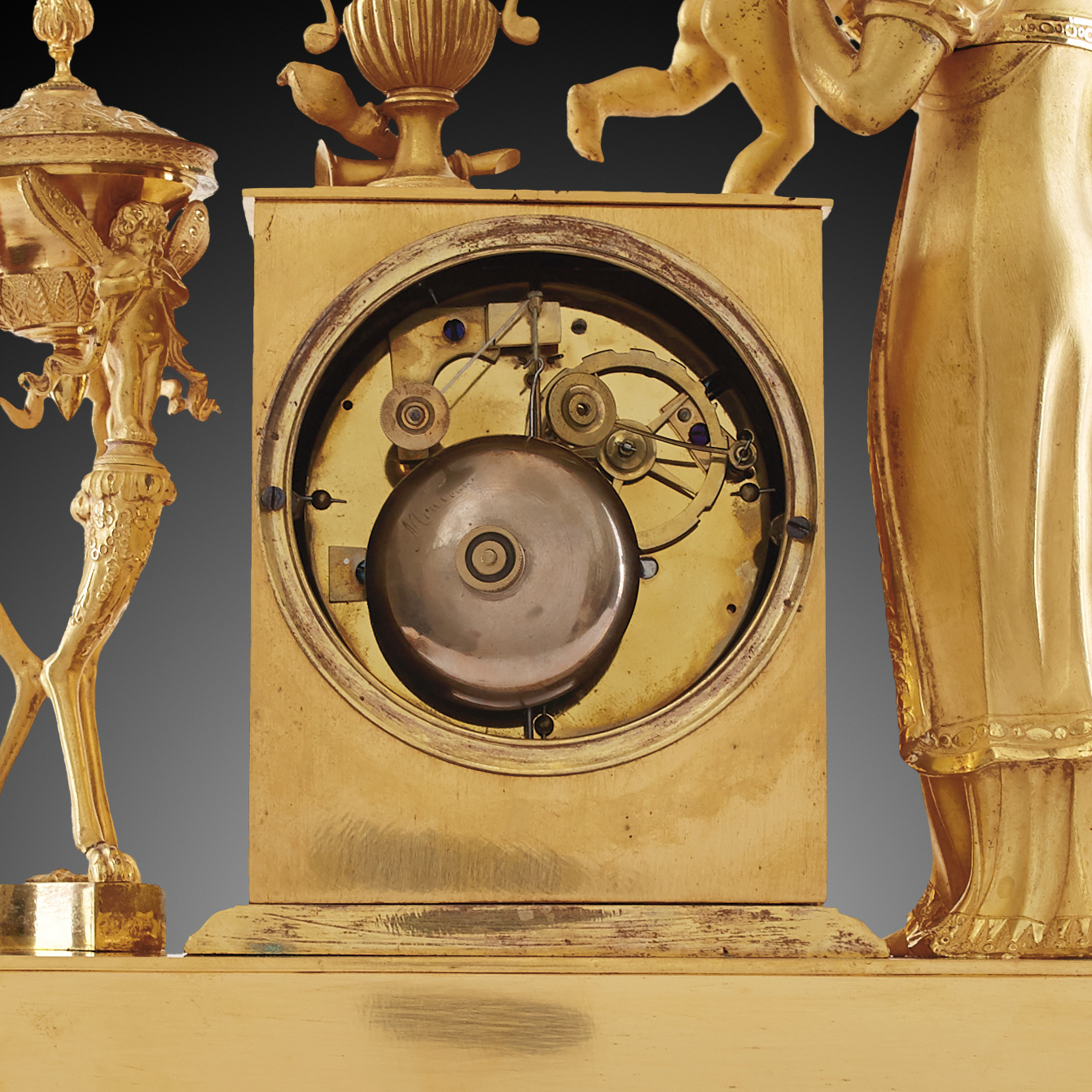
The clock case itself is architecturally composed, providing a stable and harmonious center to the arrangement. The enamel dial, with its Roman numerals and finely shaped hands, is both precise and understated, allowing the surrounding sculptural elements to take prominence. The movement would have been of high Parisian standard, designed for reliability and typically striking the hours and half-hours.
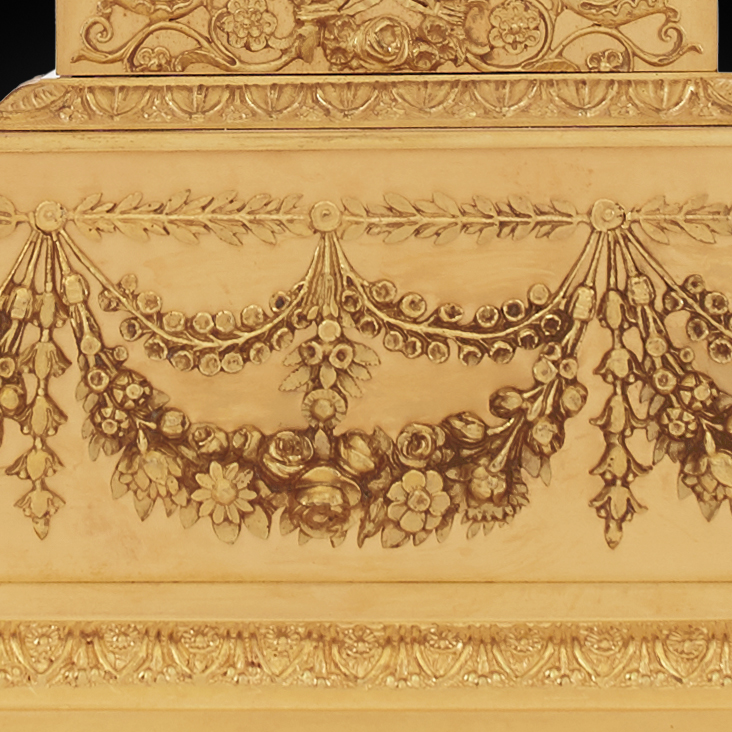
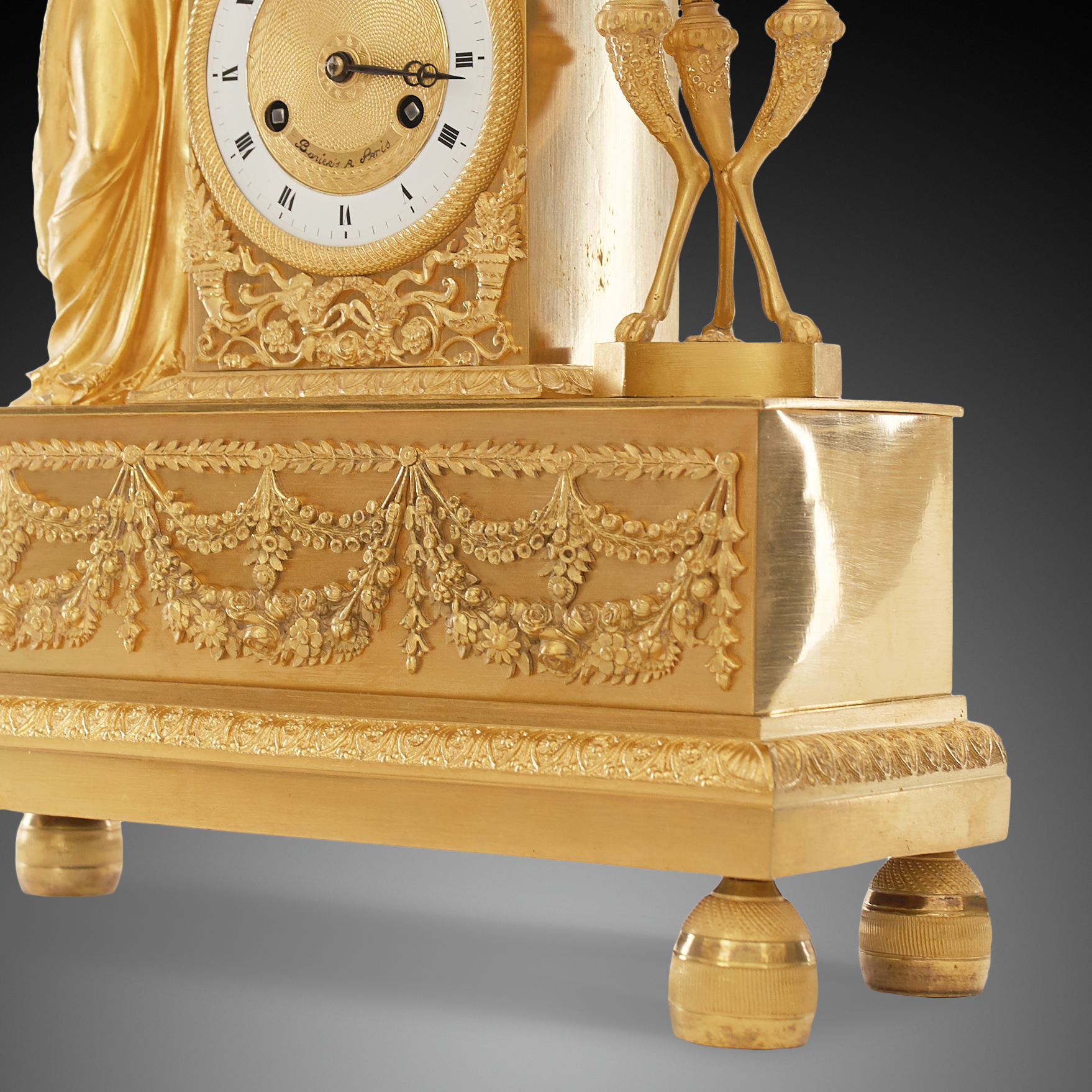
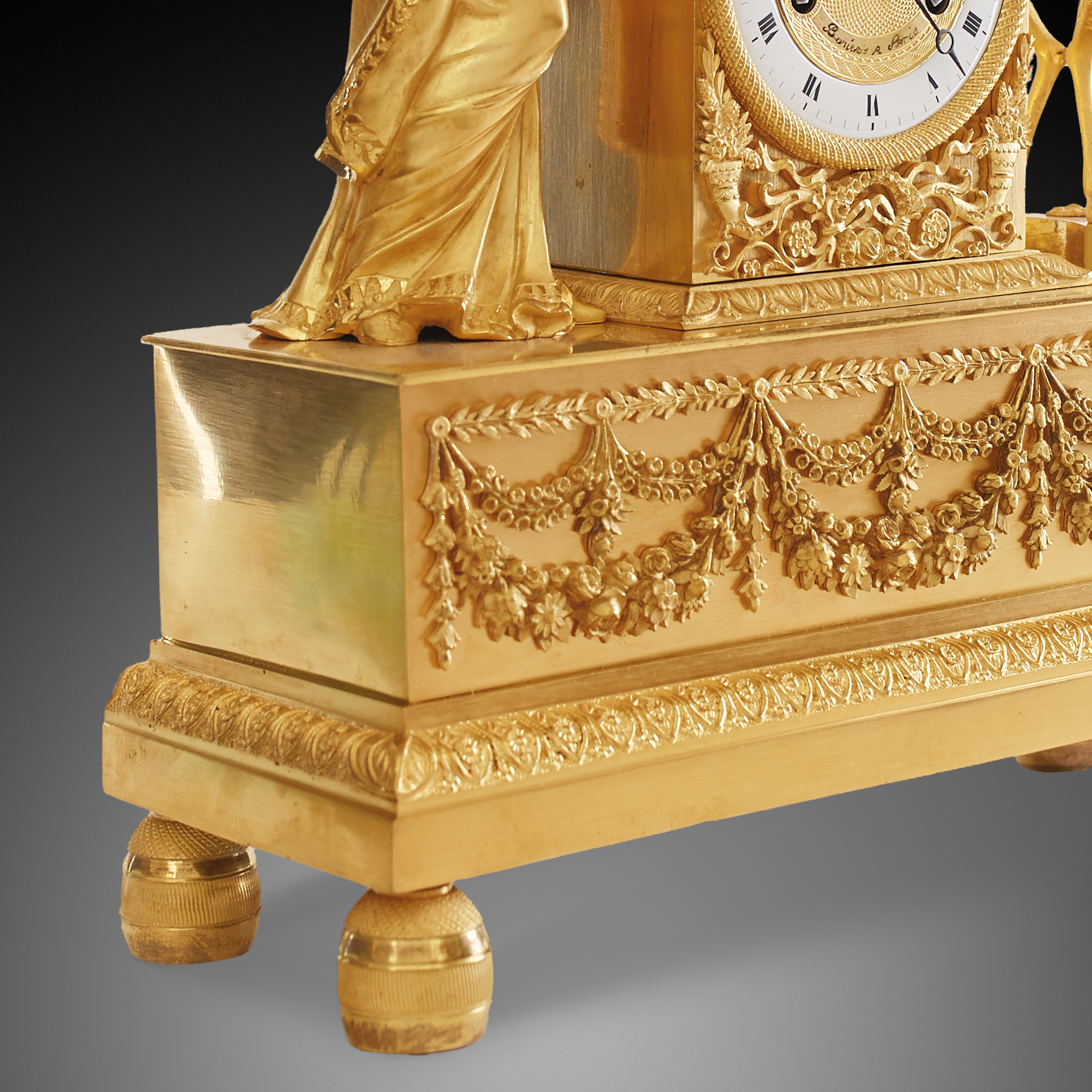
The broader composition is enriched by a series of finely executed decorative elements. A classical urn with floral ornament rises to one side, introducing vertical balance and referencing ancient ceremonial forms. The base is adorned with a delicately chased frieze of garlands, rosettes, and floral swags, all executed with remarkable precision. The clock stands on lion’s paw feet, a motif associated with strength and authority, reinforcing the imperial character of the piece.
The use of mercury gilding, a demanding and hazardous technique, results in a deep, luminous surface that distinguishes high-quality Empire bronzes from later reproductions. The consistency of the gilding, combined with the sharpness of the chasing, points to the work of highly skilled Parisian artisans at the height of their craft.
This clock is a compelling example of how art, symbolism, and function were seamlessly integrated during the Empire period. It reflects not only the technical mastery of its makers but also the cultural values of its time. Today, it stands as a significant and desirable work, appreciated for its sculptural beauty, historical context, and the enduring elegance that defines the finest French decorative arts.