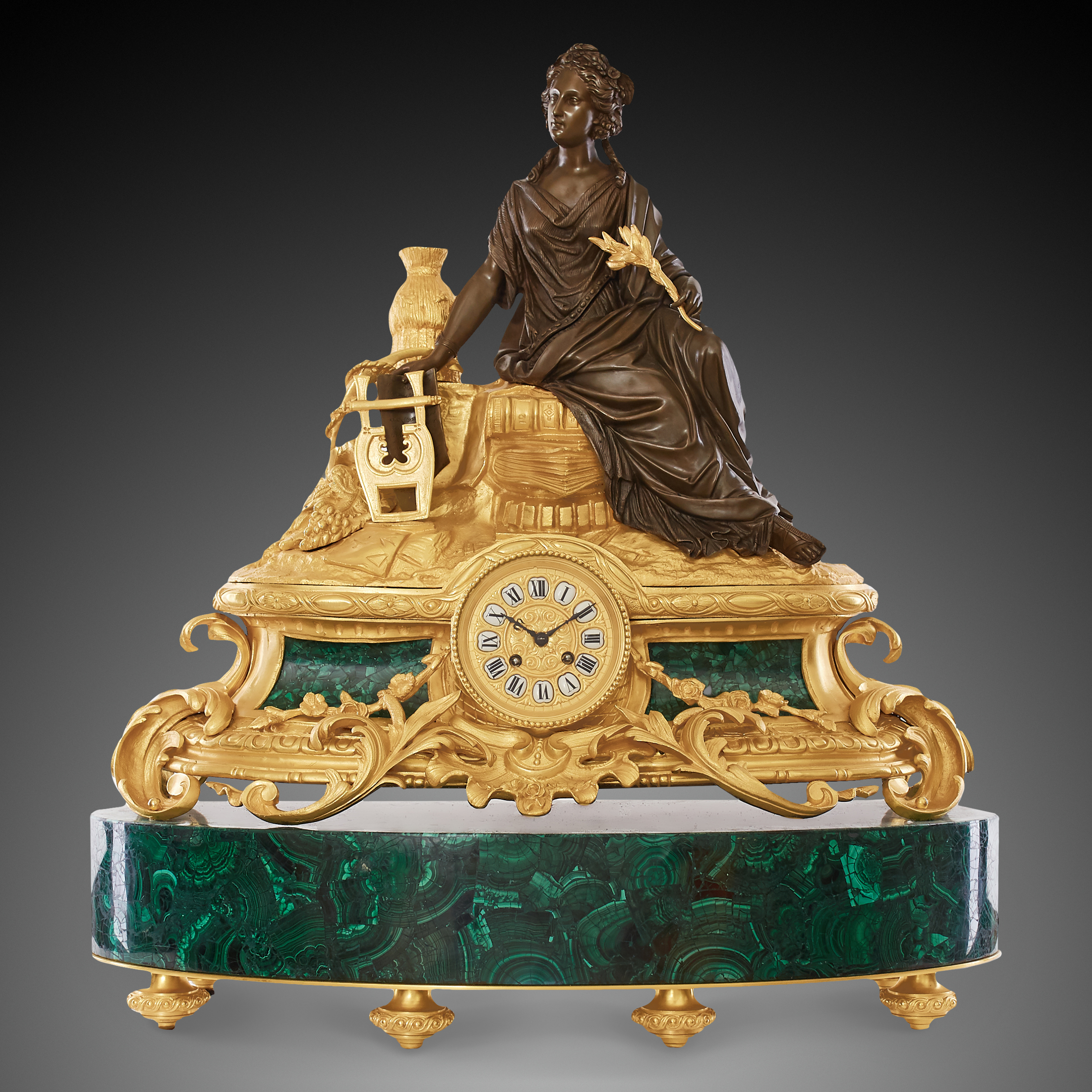
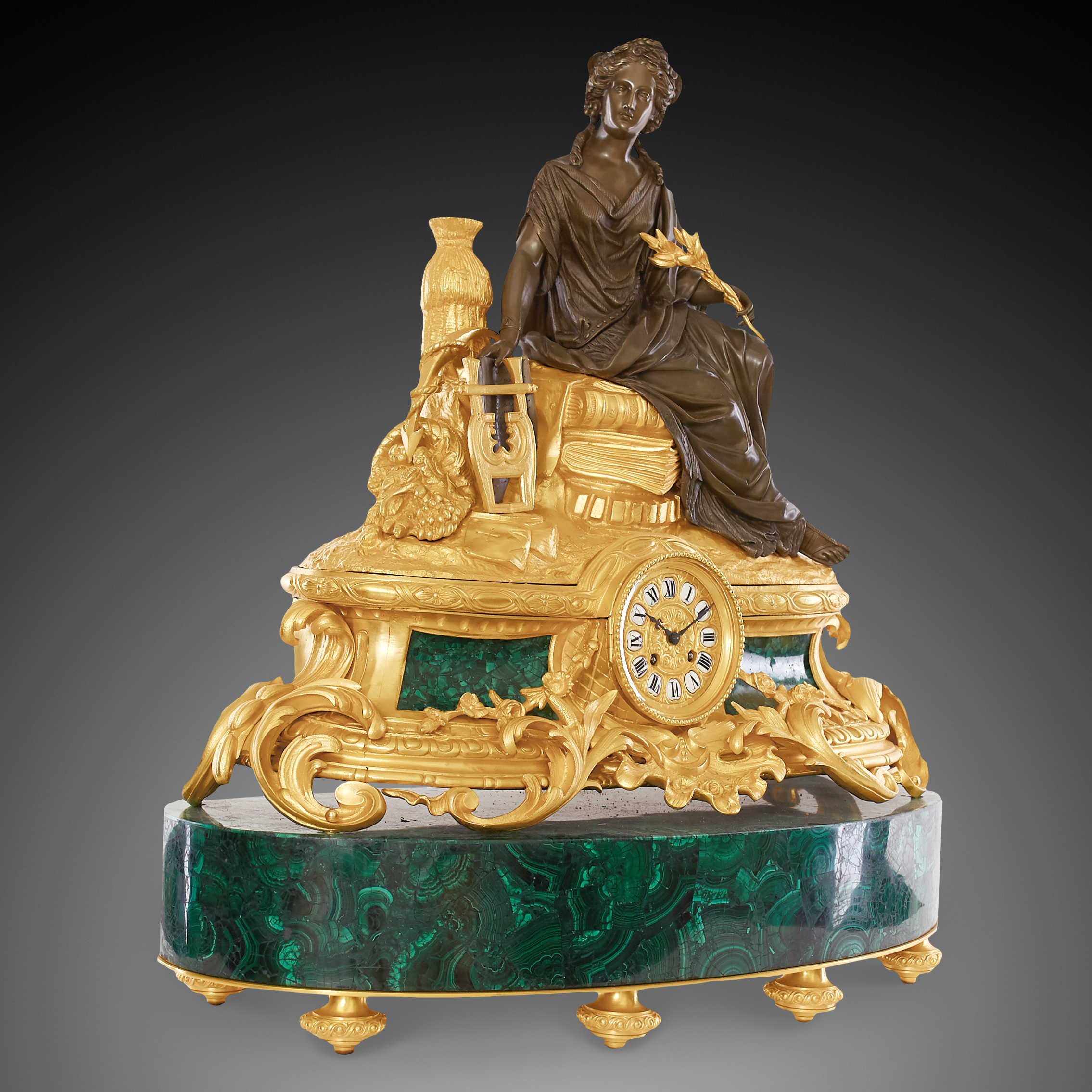
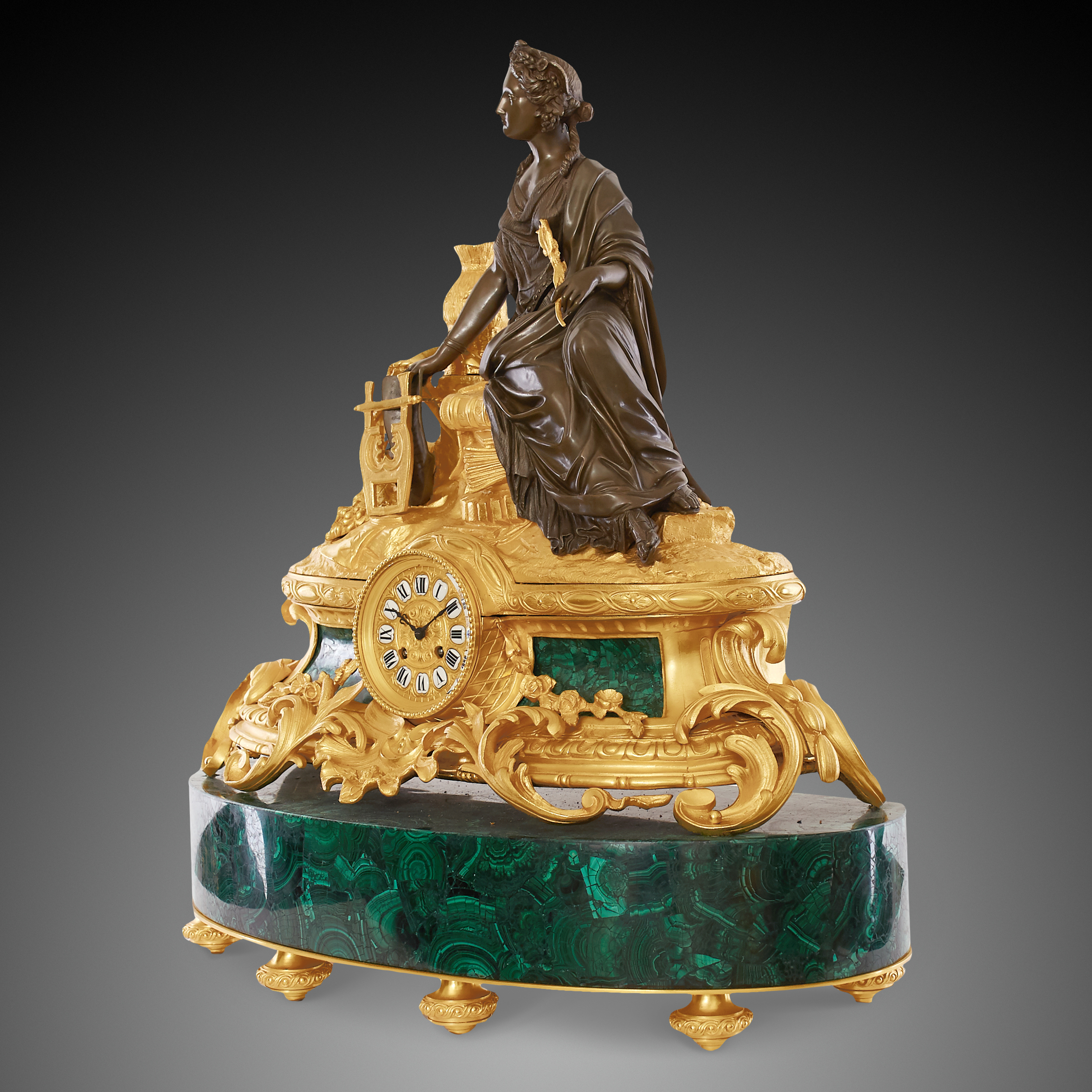
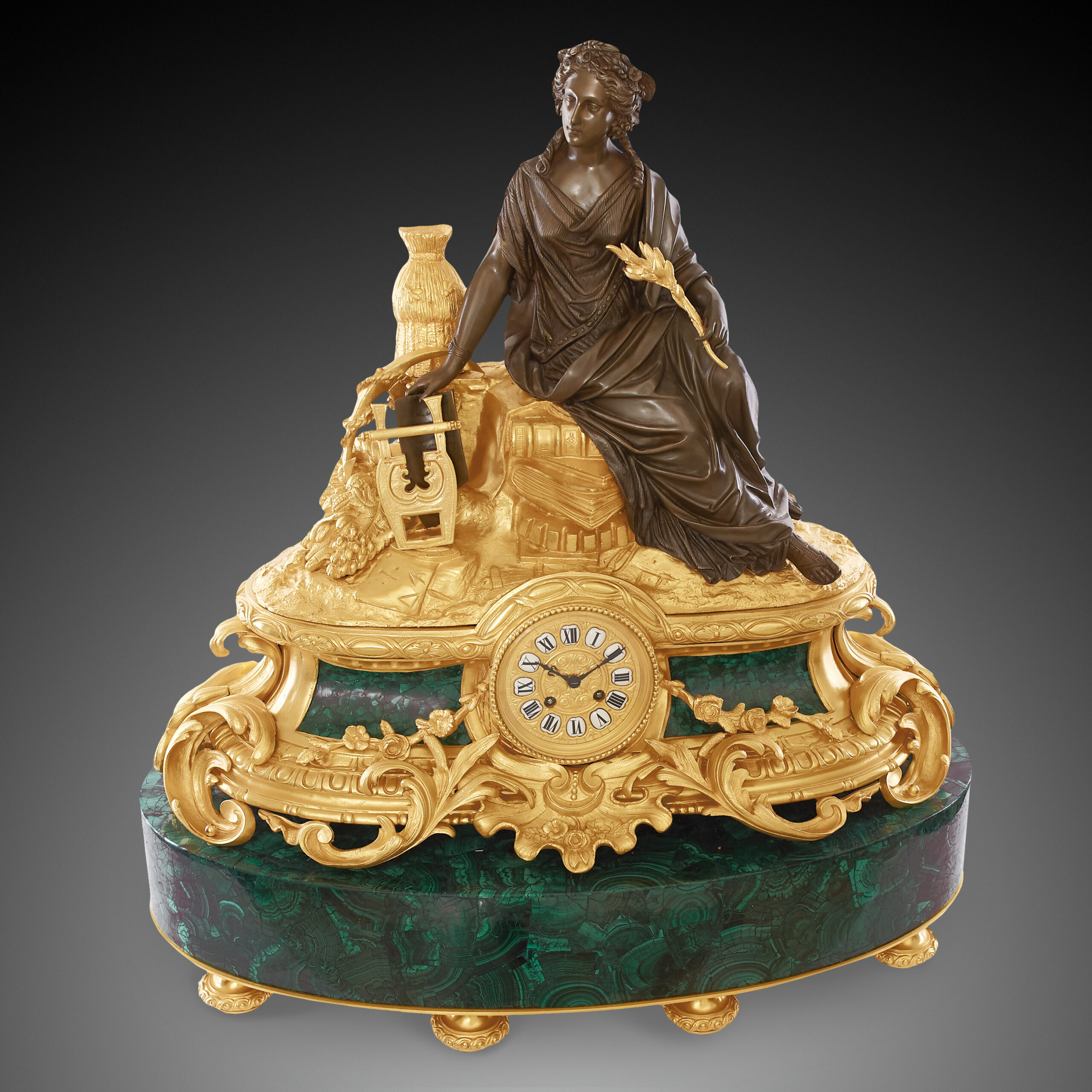
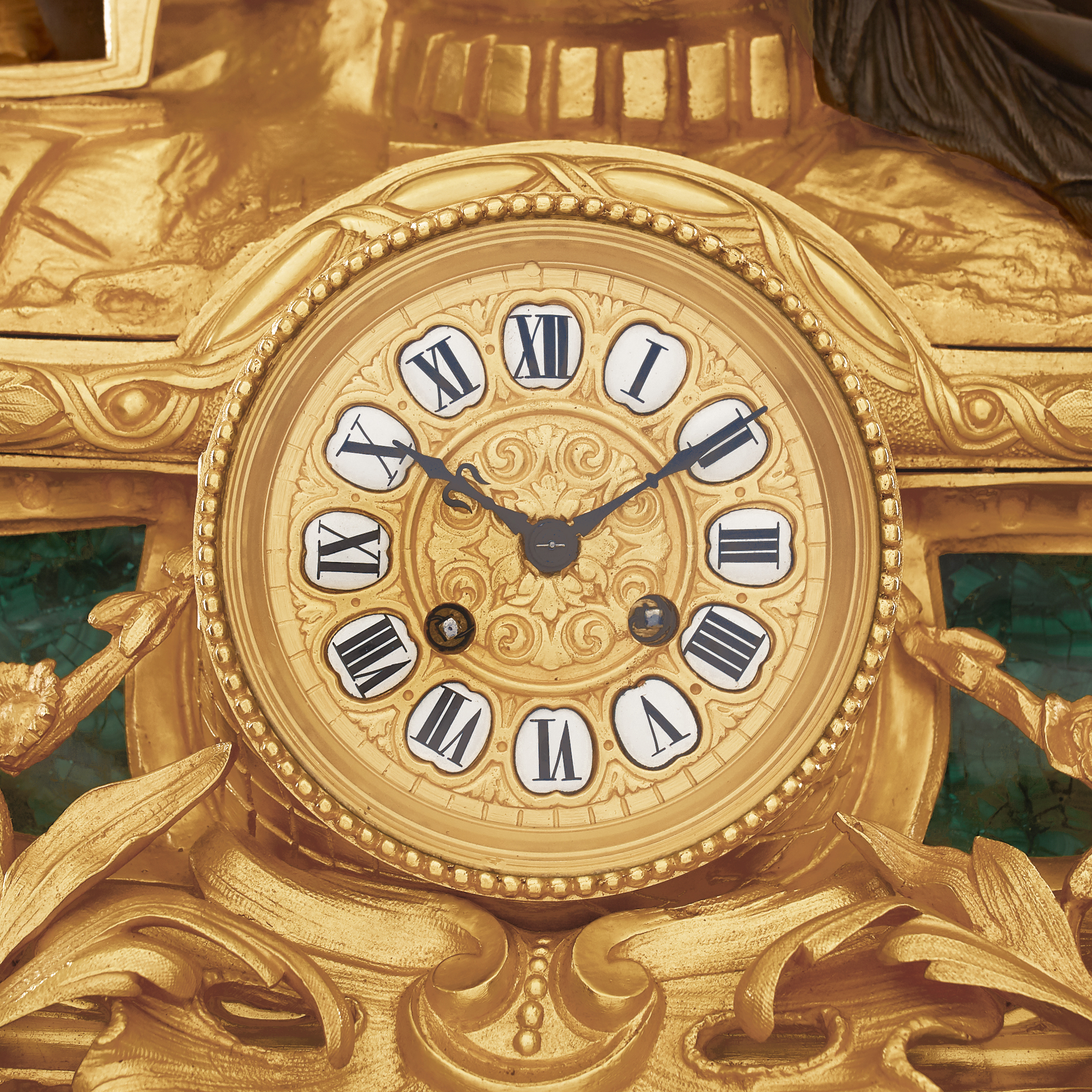
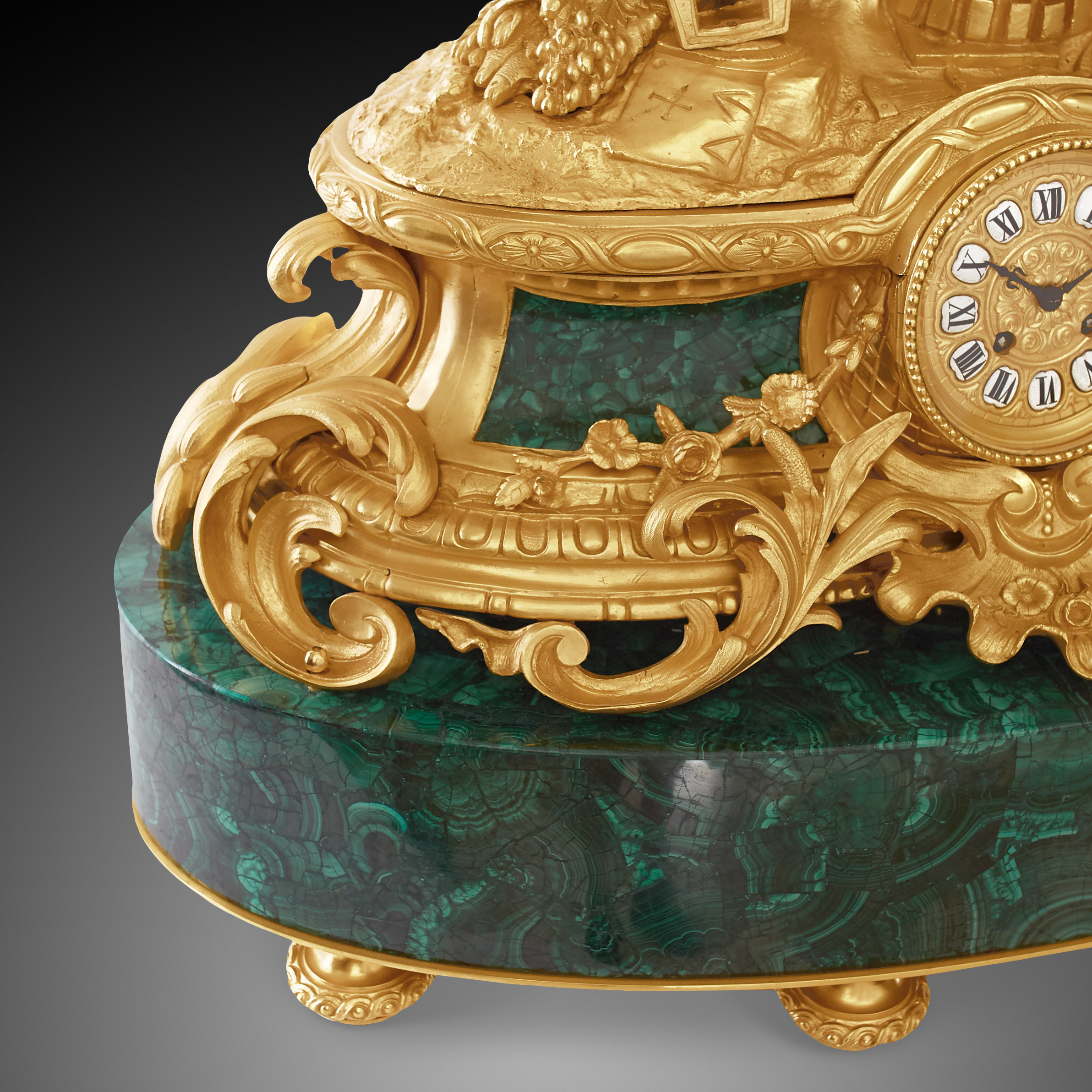
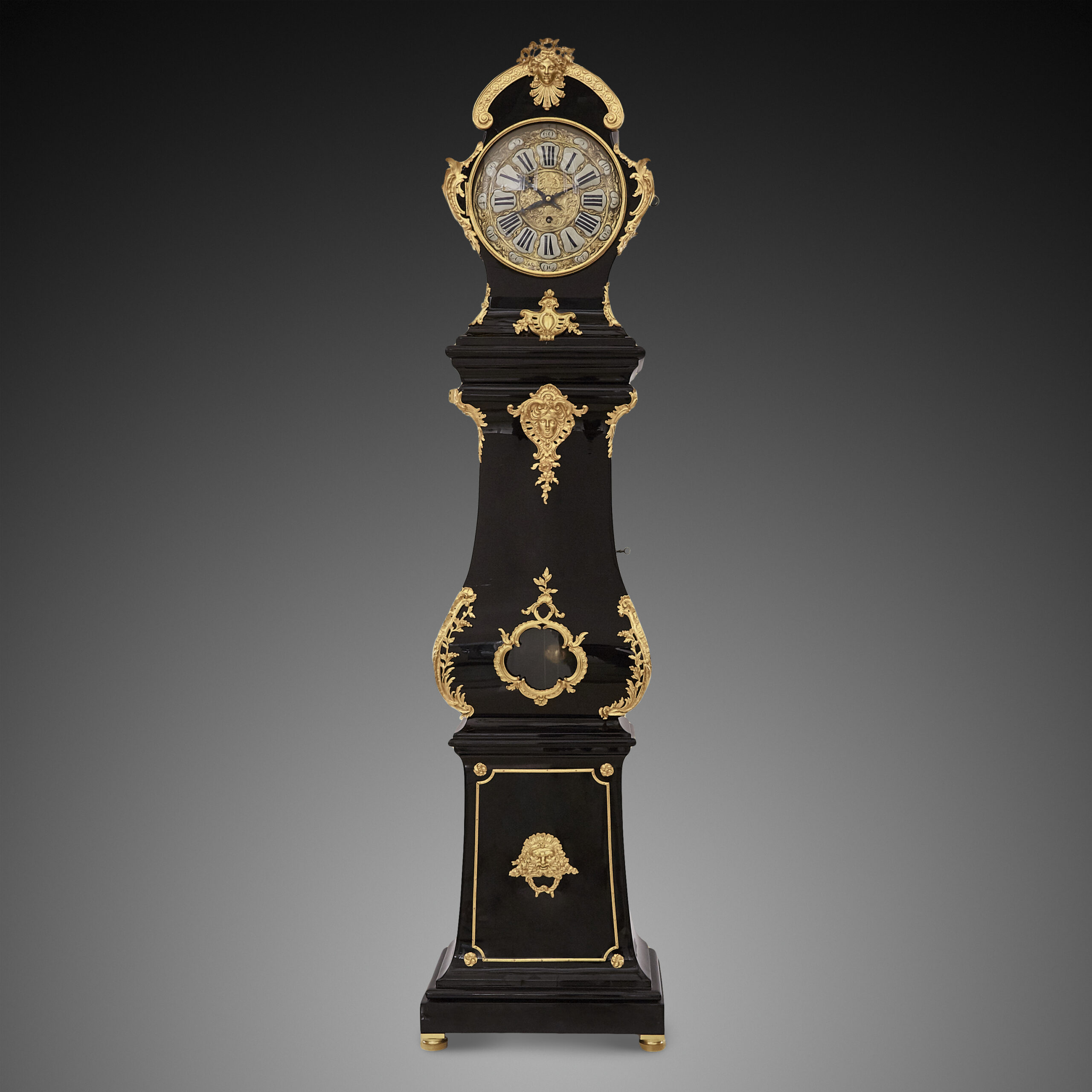
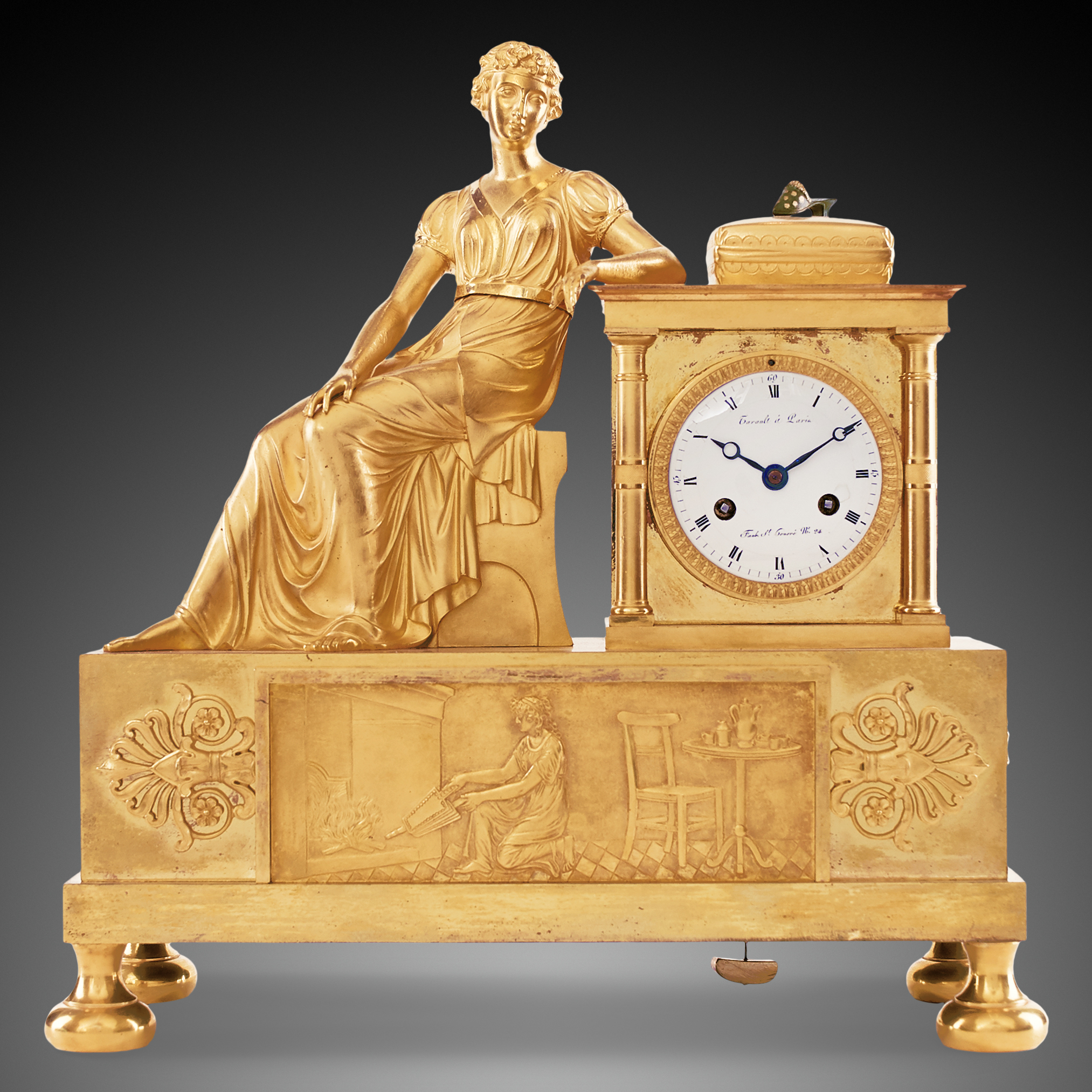
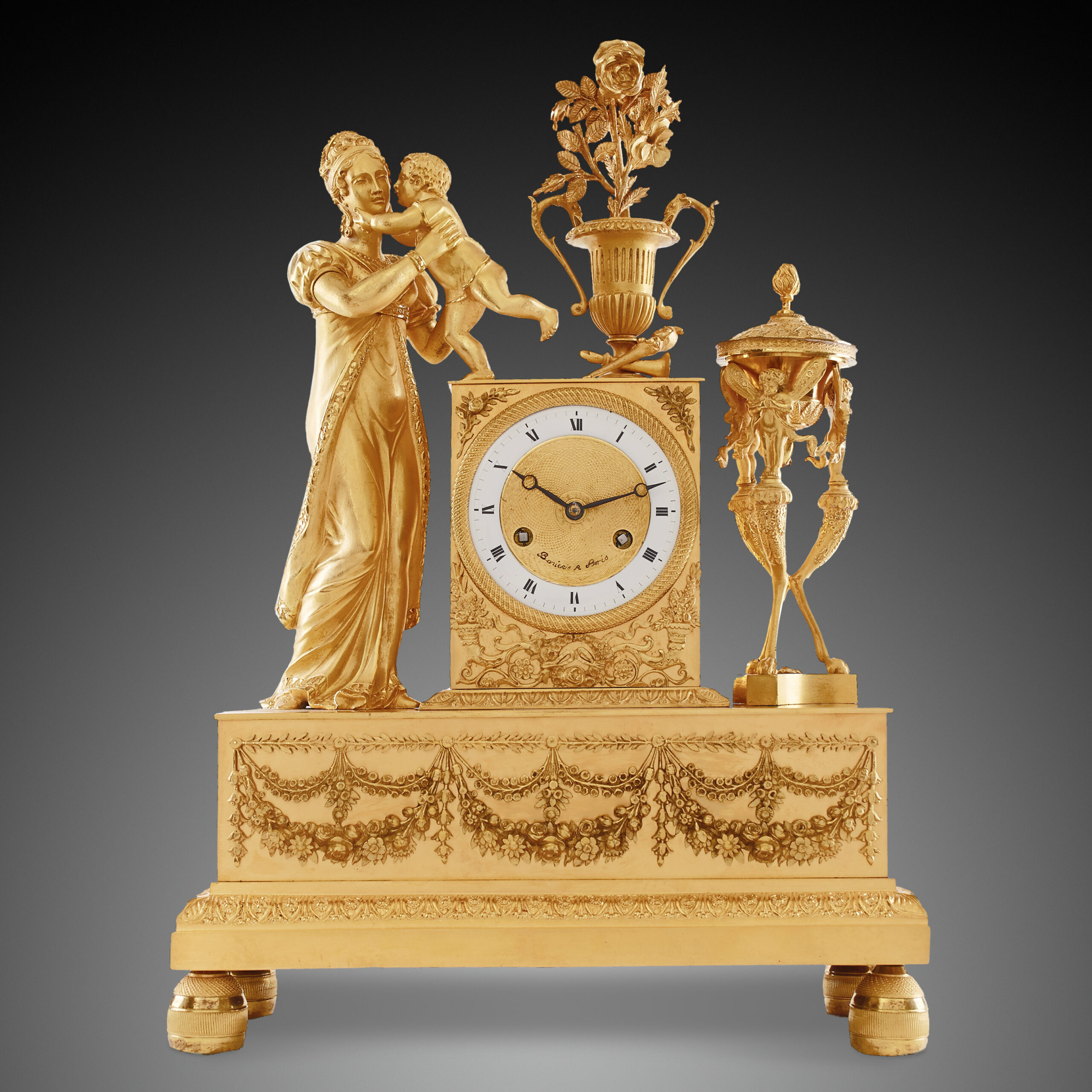
A highly impressive French gilt and patinated bronze mantel clock, richly mounted with malachite panels and designed in a grand Neoclassical and Empire revival taste. The clock is centred by a circular gilt bronze dial with individual enamel Roman numeral cartouches, finely formed hands, and a richly chased centre. The dial is set within an elaborate gilt bronze case, surrounded by scrolling acanthus, floral ornament, and bold architectural mounts, creating a composition of exceptional decorative presence.
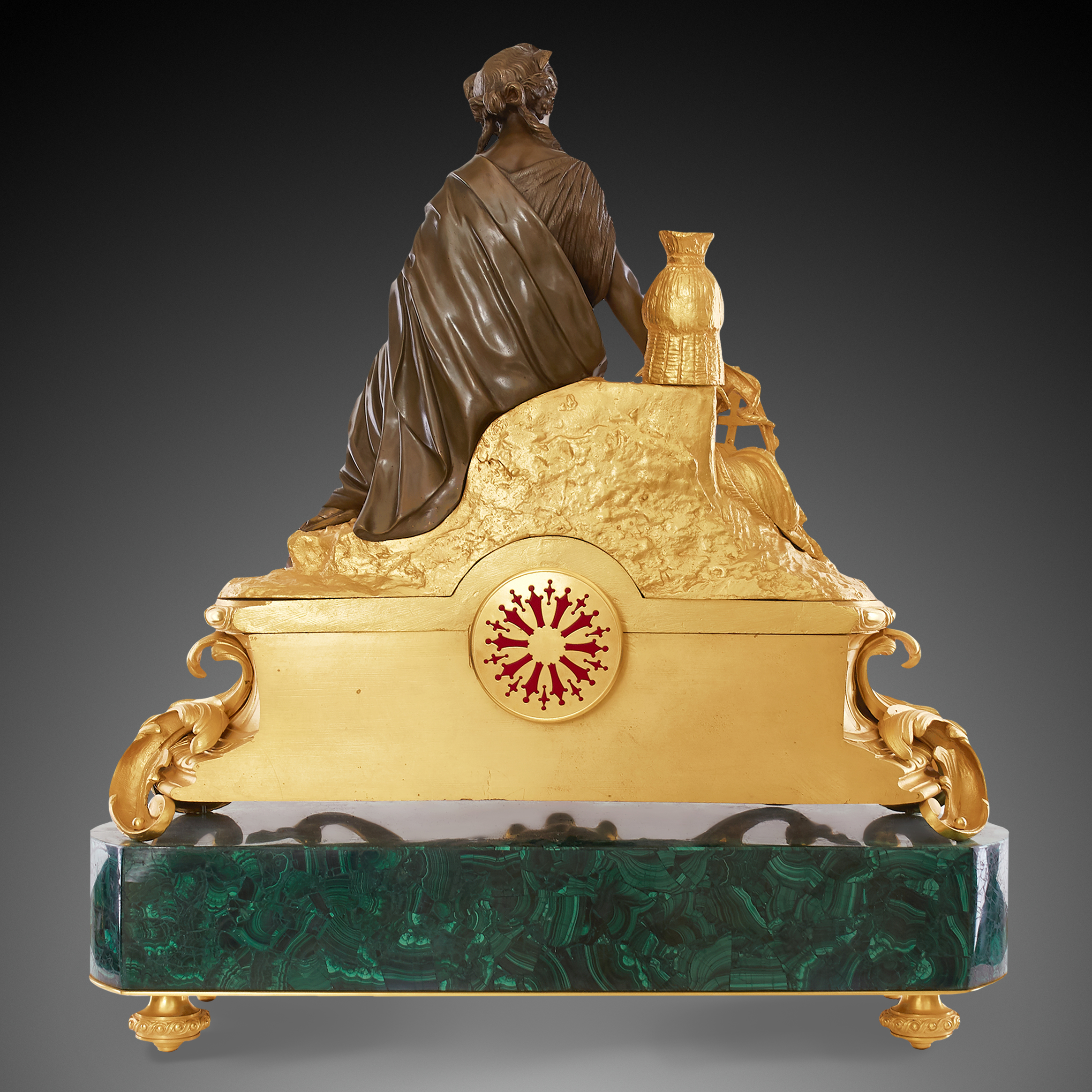
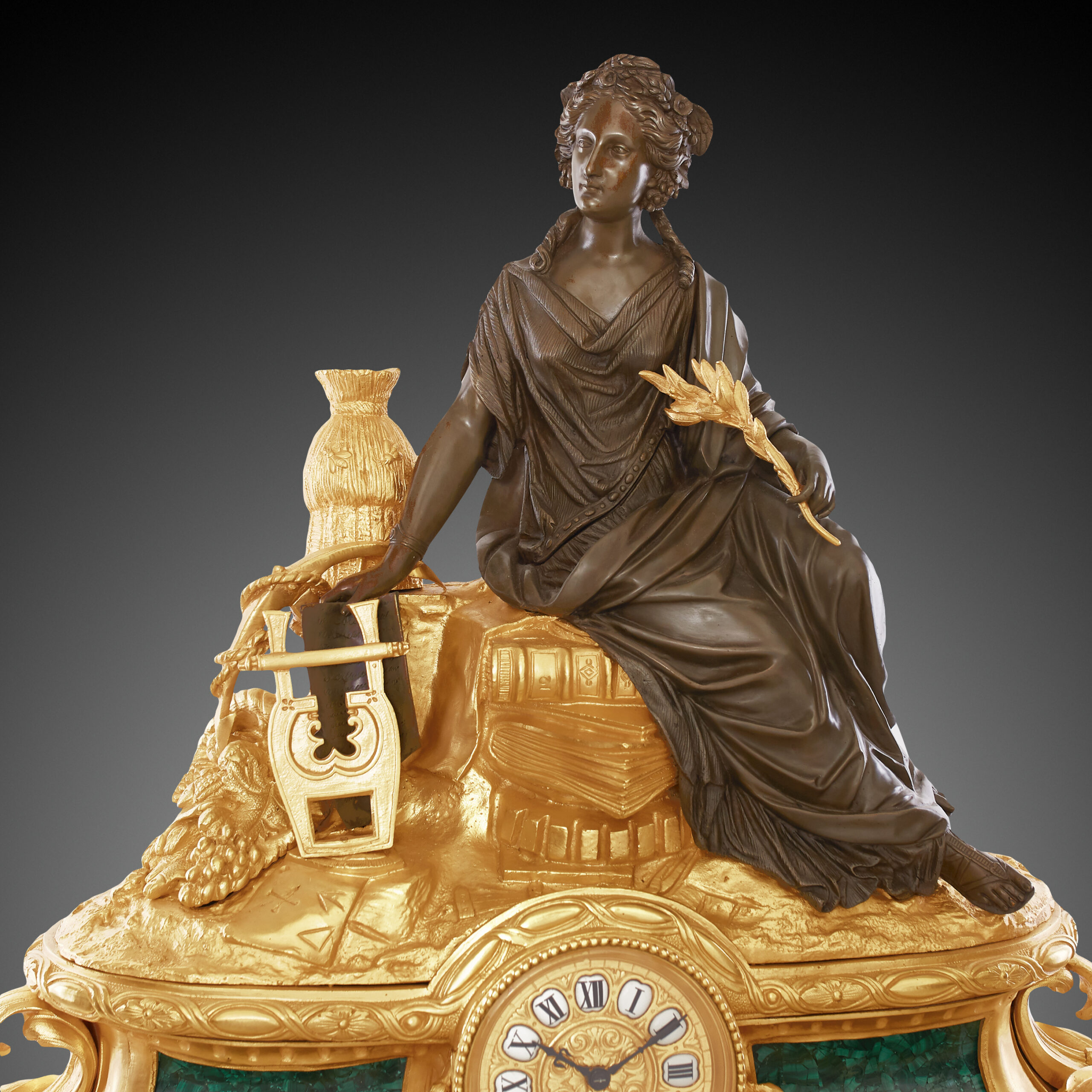
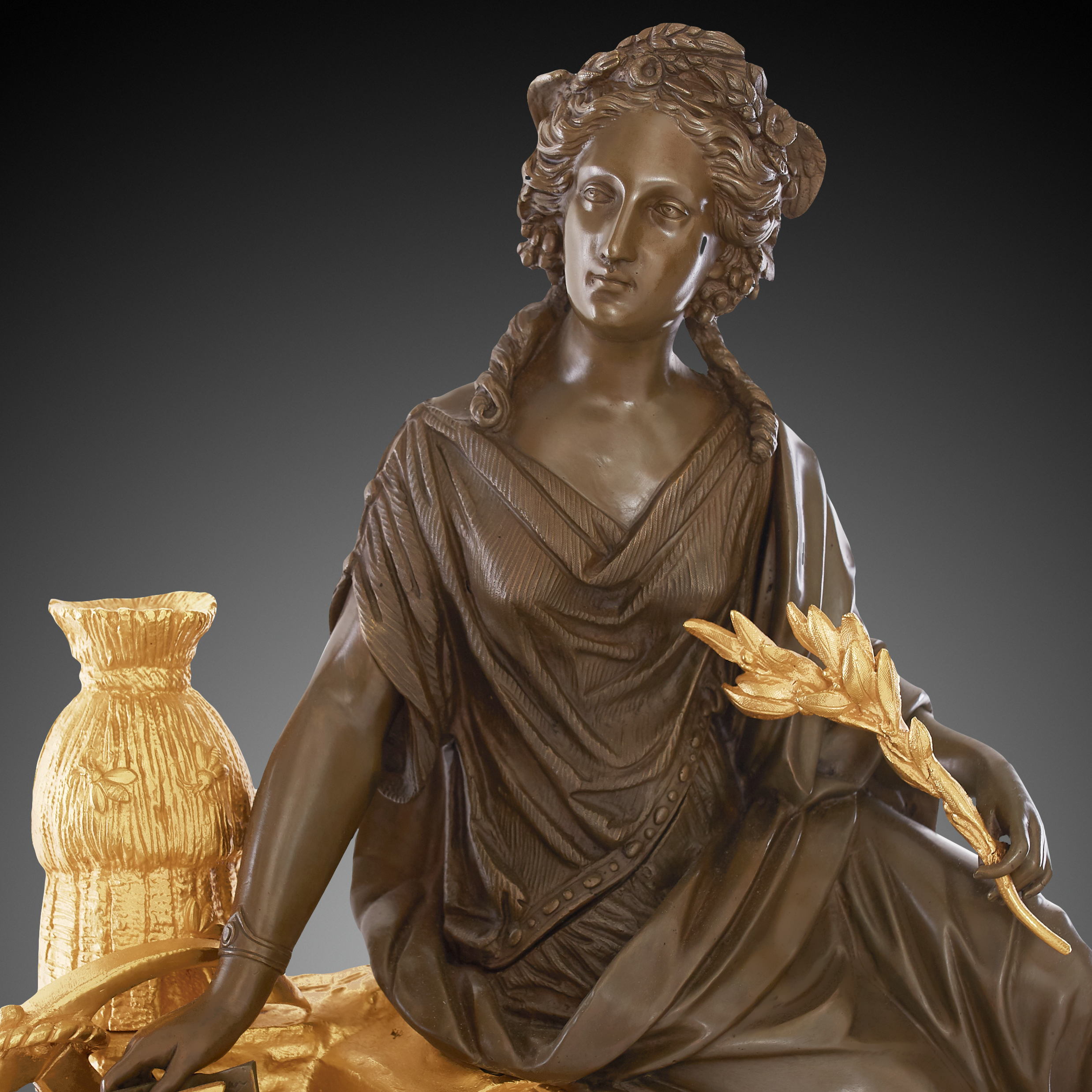
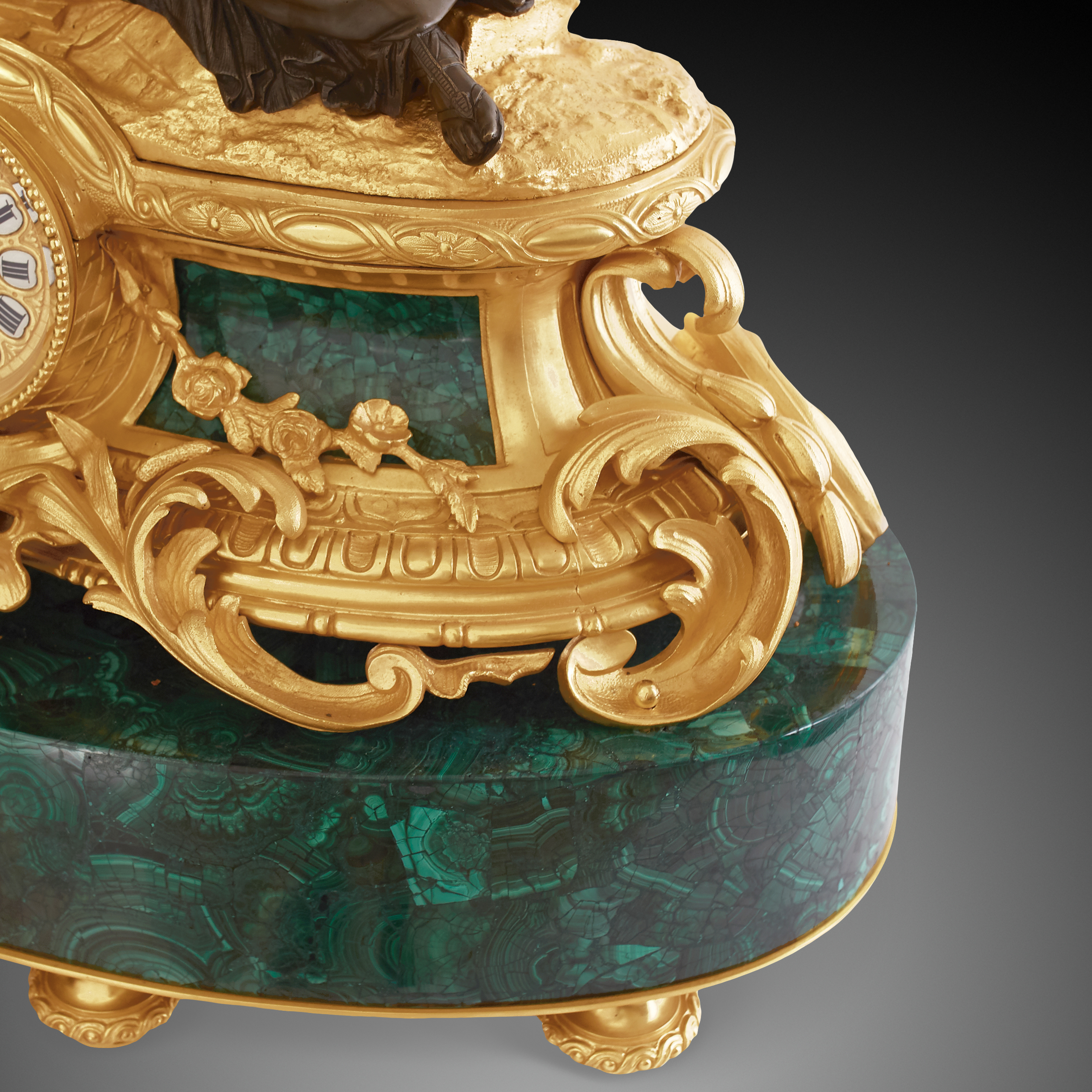
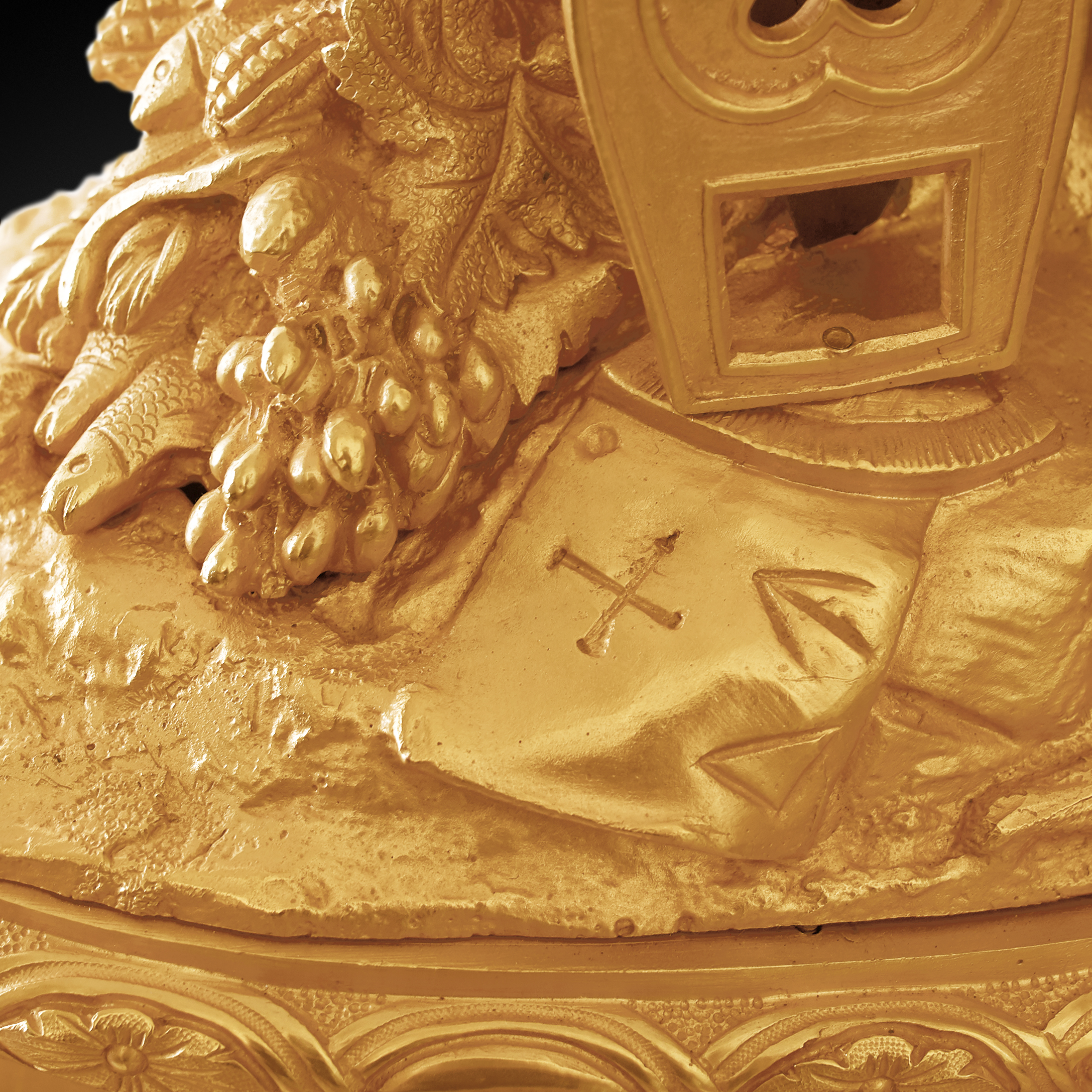
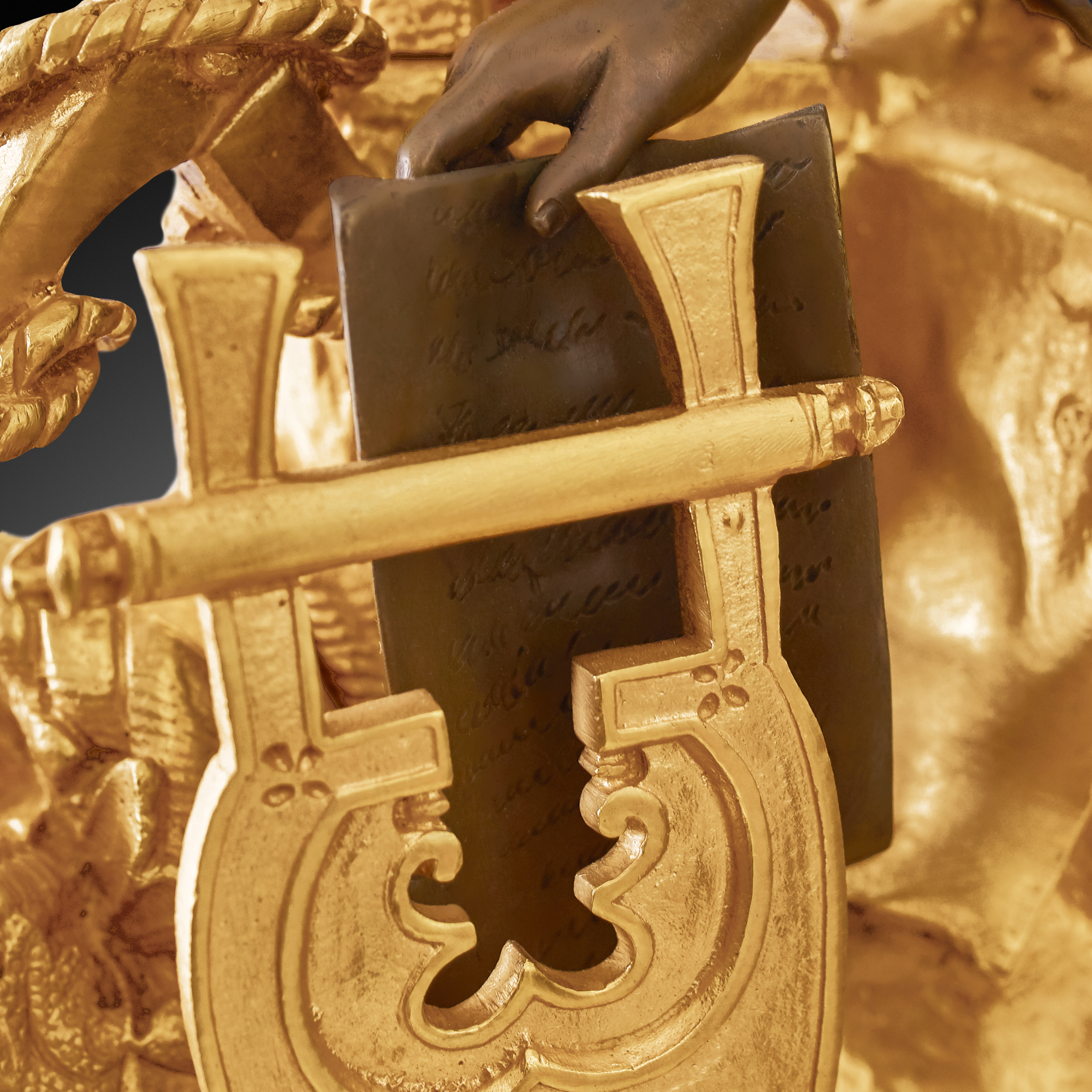
The upper section is surmounted by a finely modelled seated female figure in dark patinated bronze, shown in classical drapery and holding a gilt floral attribute. Her pose, costume, and idealised features reflect the influence of antique sculpture and the allegorical language widely used in French decorative arts. She may be interpreted as a personification of abundance, the arts, poetry, or classical virtue, especially when considered alongside the surrounding objects, including a lyre, vessel, fruit, and finely detailed ornamental trophies.
The case is lavishly enriched with gilt bronze mounts and inset green malachite panels, giving the piece a particularly luxurious character. The deep green surface of the malachite provides a striking contrast to the warm gilding and the darker patinated bronze figure above. This combination of rare decorative stone, finely chased bronze, and sculptural allegory reflects the taste for opulent materials and dramatic visual effects that became especially admired in important 19th-century interiors.
The clock rests on a substantial shaped malachite plinth, raised on gilt bronze feet. The lower section is decorated with scrolling gilt bronze supports, floral sprays, shell-like ornament, and finely chased borders, all contributing to the rich and theatrical quality of the design. The overall composition is both architectural and sculptural, combining the function of a timepiece with the presence of a decorative bronze and luxury object.
Historically, clocks of this type belong to the French tradition of treating mantel clocks as important works of decorative art rather than merely practical instruments. During the late 18th and 19th centuries, Parisian bronze founders and clockmakers produced elaborate timepieces that combined mythology, allegory, architecture, and precious materials. The use of classical female figures, musical attributes, floral motifs, and richly ornamented bases reflects the continuing influence of Neoclassicism and Empire design, while the use of malachite adds a distinctly luxurious 19th-century character.
Malachite was highly prized in European decorative arts for its vivid colour, dramatic natural pattern, and association with prestige. When combined with gilt bronze, it created a striking and costly effect suitable for aristocratic salons, grand reception rooms, and refined collector interiors. The material richness of this clock, together with its sculptural quality and elaborate mounts, indicates that it was intended as a statement piece for an important interior.
This example presents as a grand and highly decorative French mantel clock, combining patinated bronze sculpture, gilt bronze ornament, enamel numeral cartouches, and richly coloured malachite panels. Its impressive scale, classical allegorical subject, and luxurious materials make it a striking focal point for an antique clock collection, a formal interior, or a professional dealer’s gallery display.