Portico clock signed “Robinet à Paris”
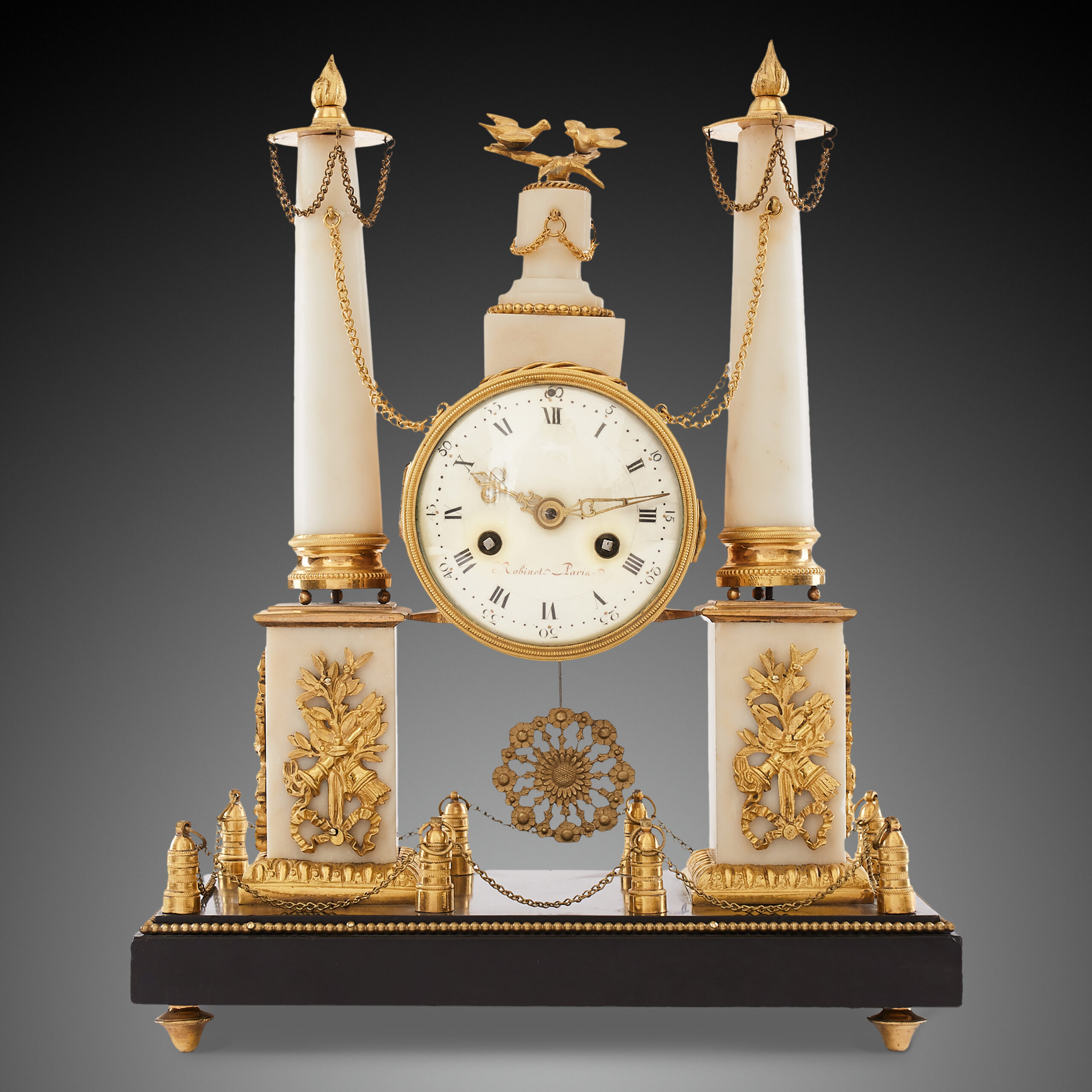
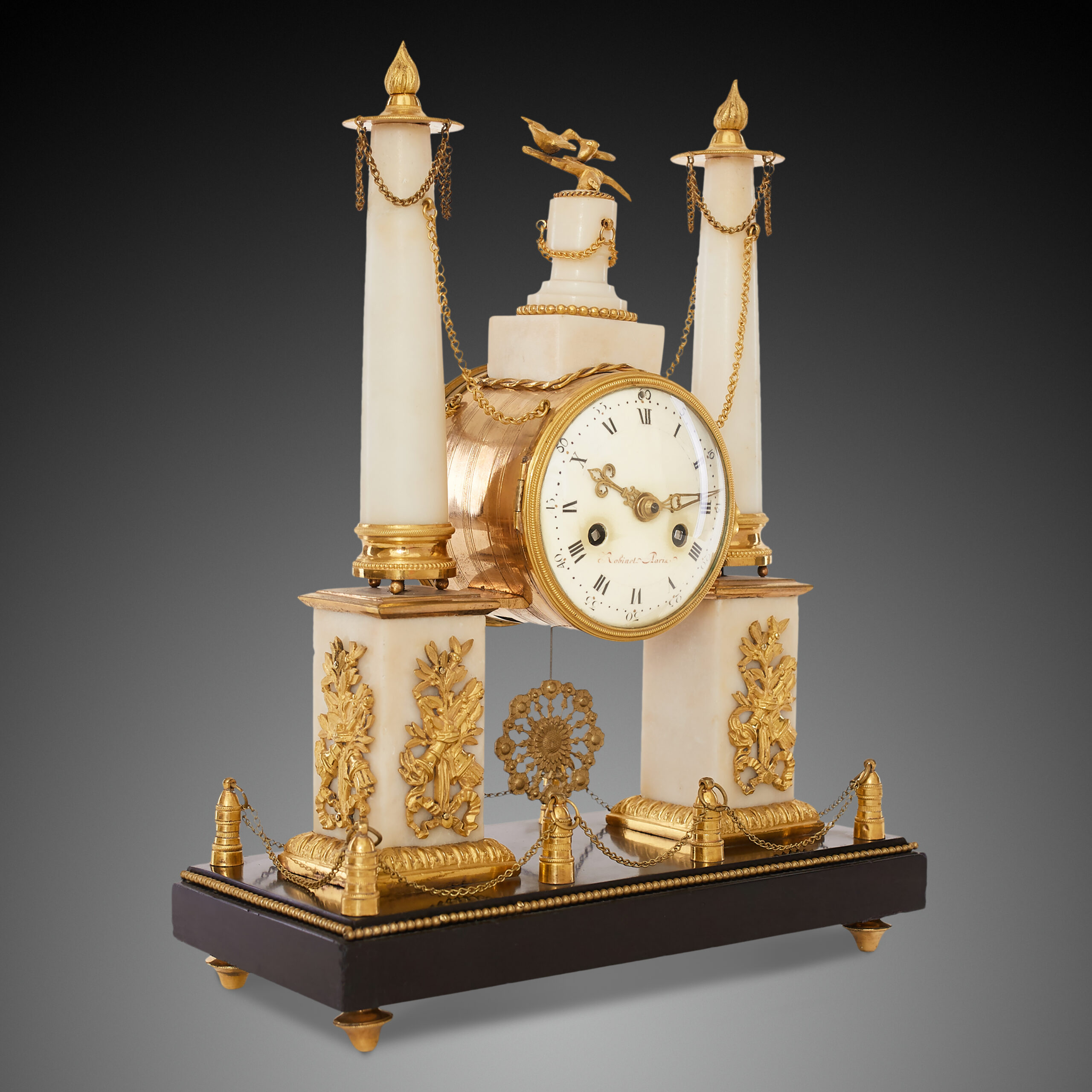
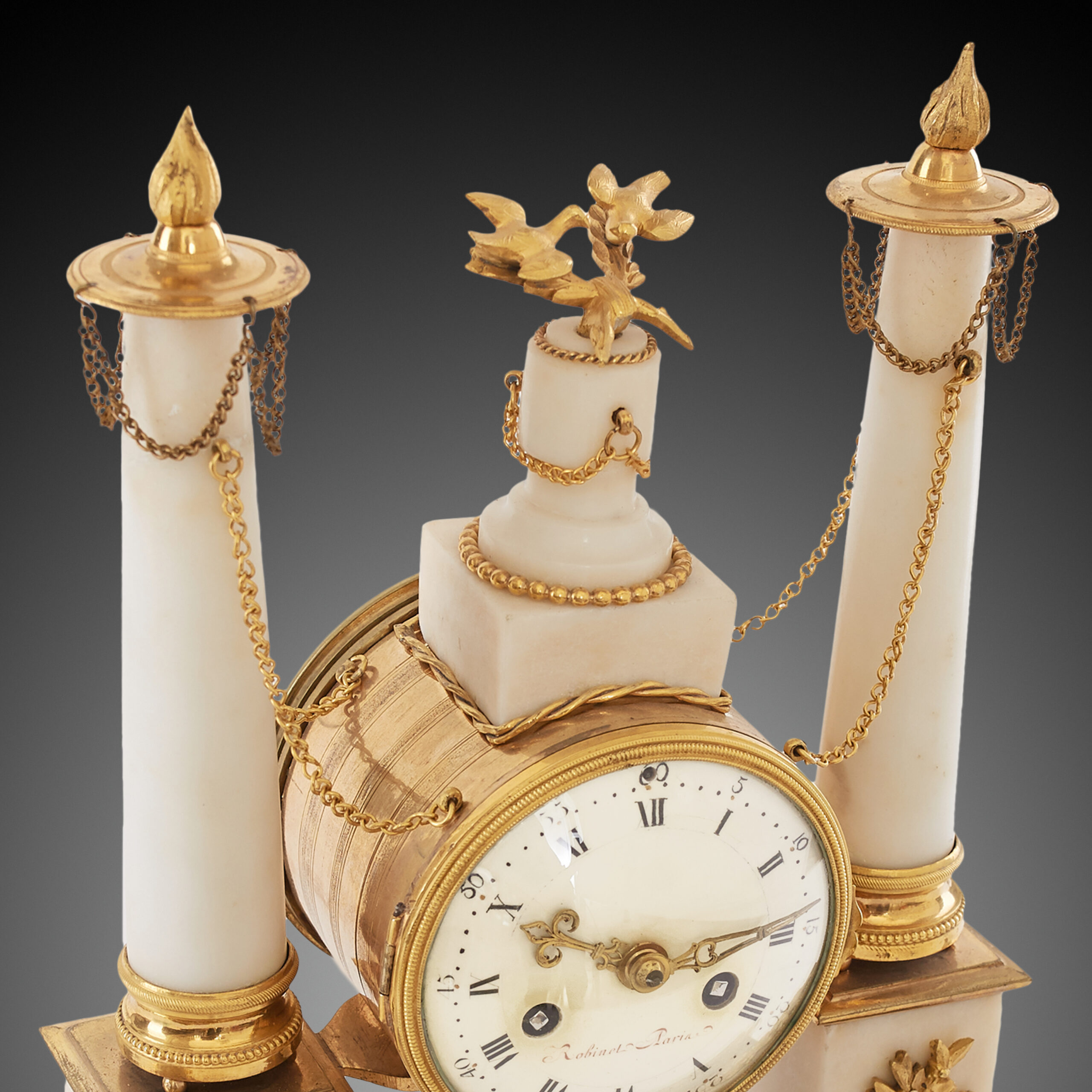
This fine portico clock crafted in Louis XVI style from ormolu, white and black marble, is signed on the dial “Robinet à Paris”. The source of inspiration for decorative motifs of Louis XVI style was coming from nature and antiquity thus many characteristic elements would reoccur in architecture, interior decoration and furniture. Many ornaments were borrowed from flora, and this love for nature appeared into decoration by the presence of a wreath of roses, baskets, palmettes, bows and ribbons. These motifs were fused with the antique series in which one can find trophies, Greco-Roman friezes, torches, stylized acanthus leaves. The use of gilt-bronze has reached its peak at the beginning of the 19th century in France, as it was cheaper than gold or silver. For this reason, it became the favourite material for clock cases, ornamental elements, candelabra and furniture ornaments.
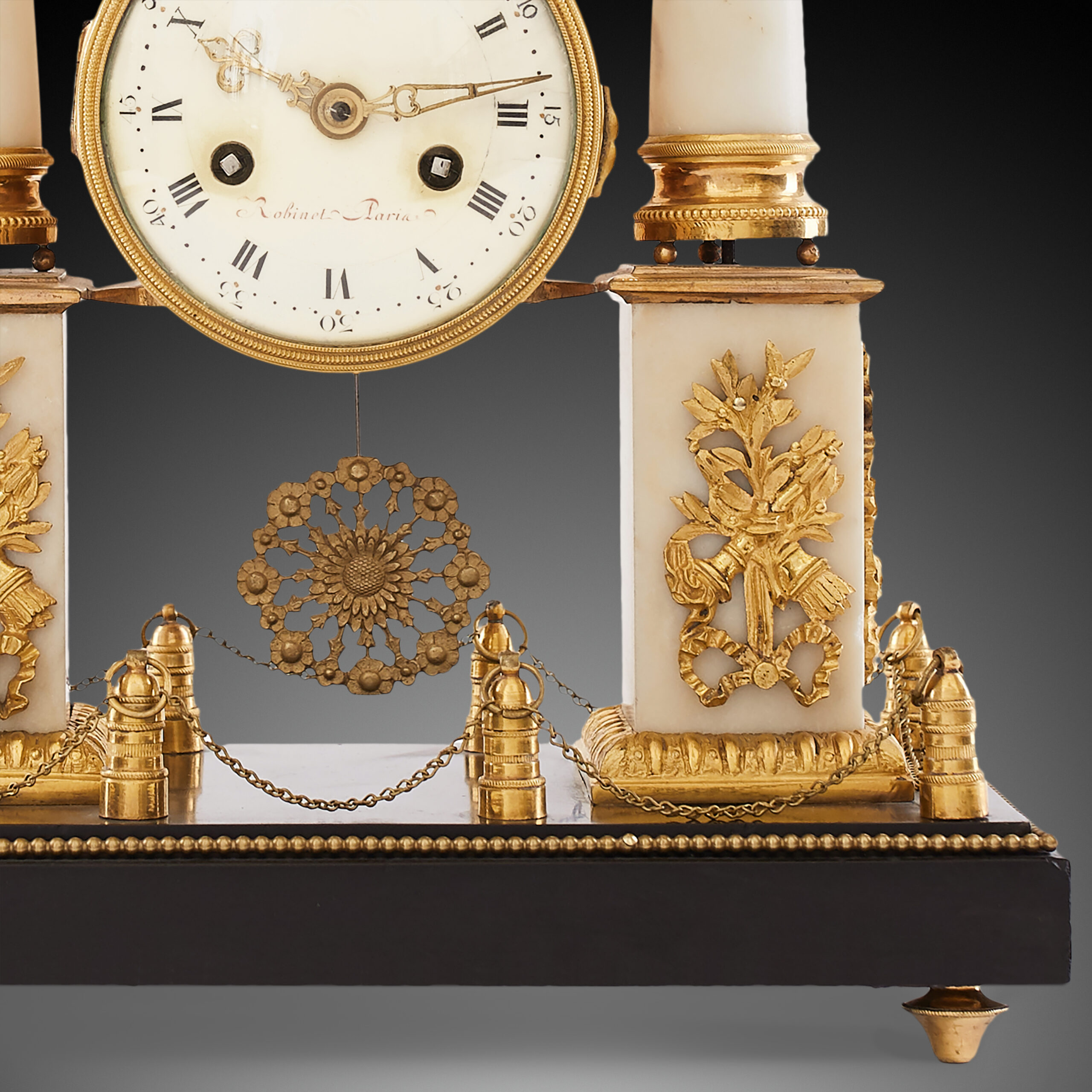
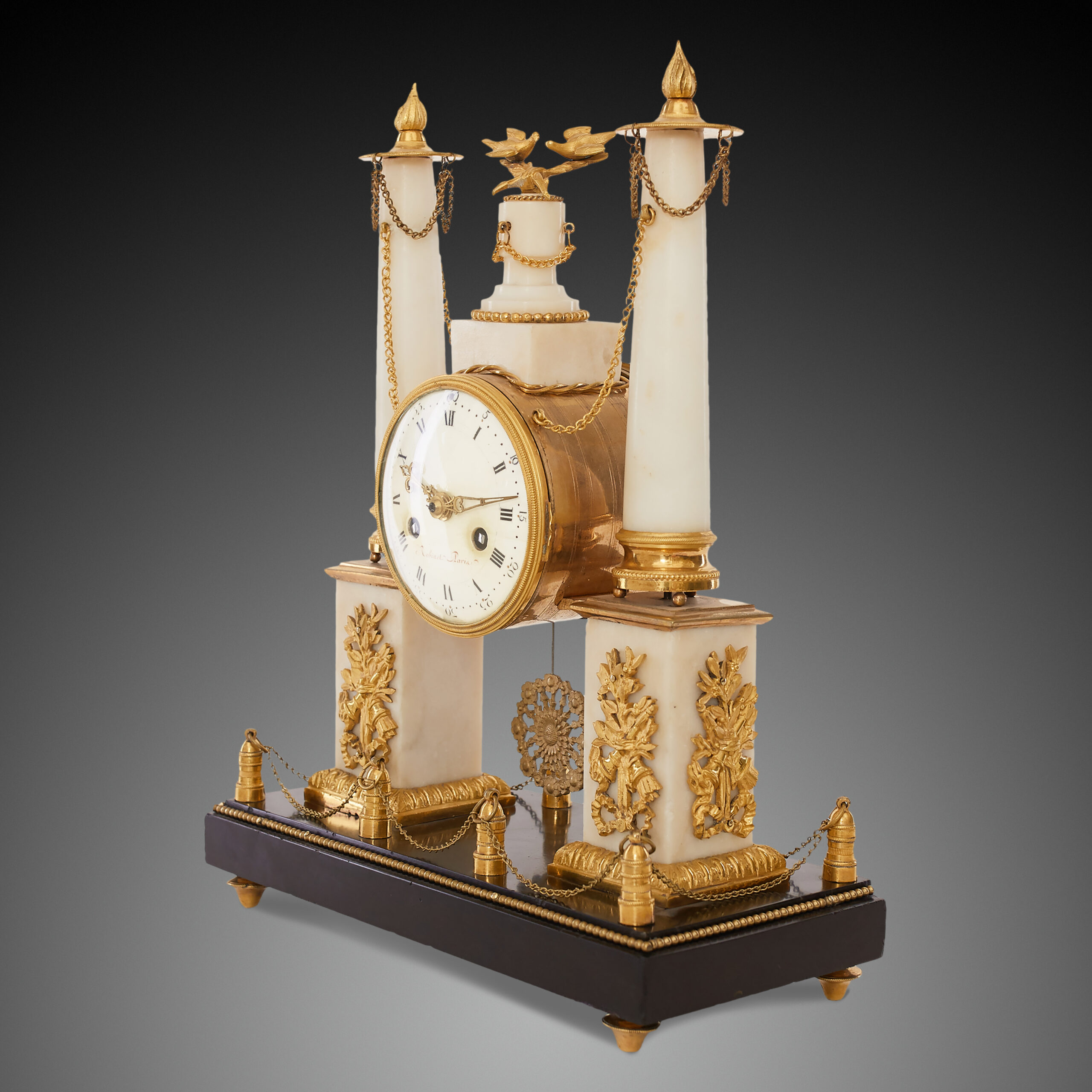
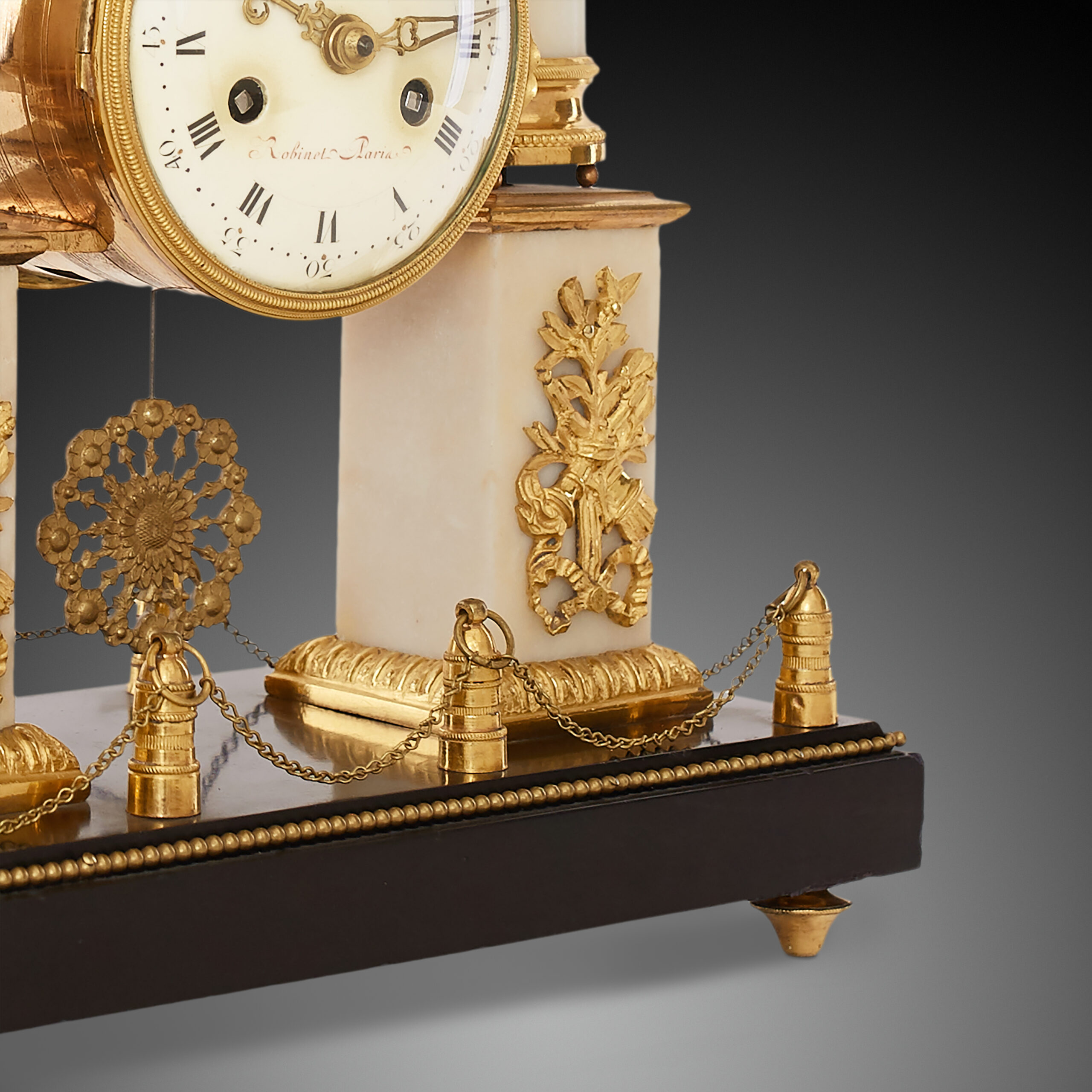
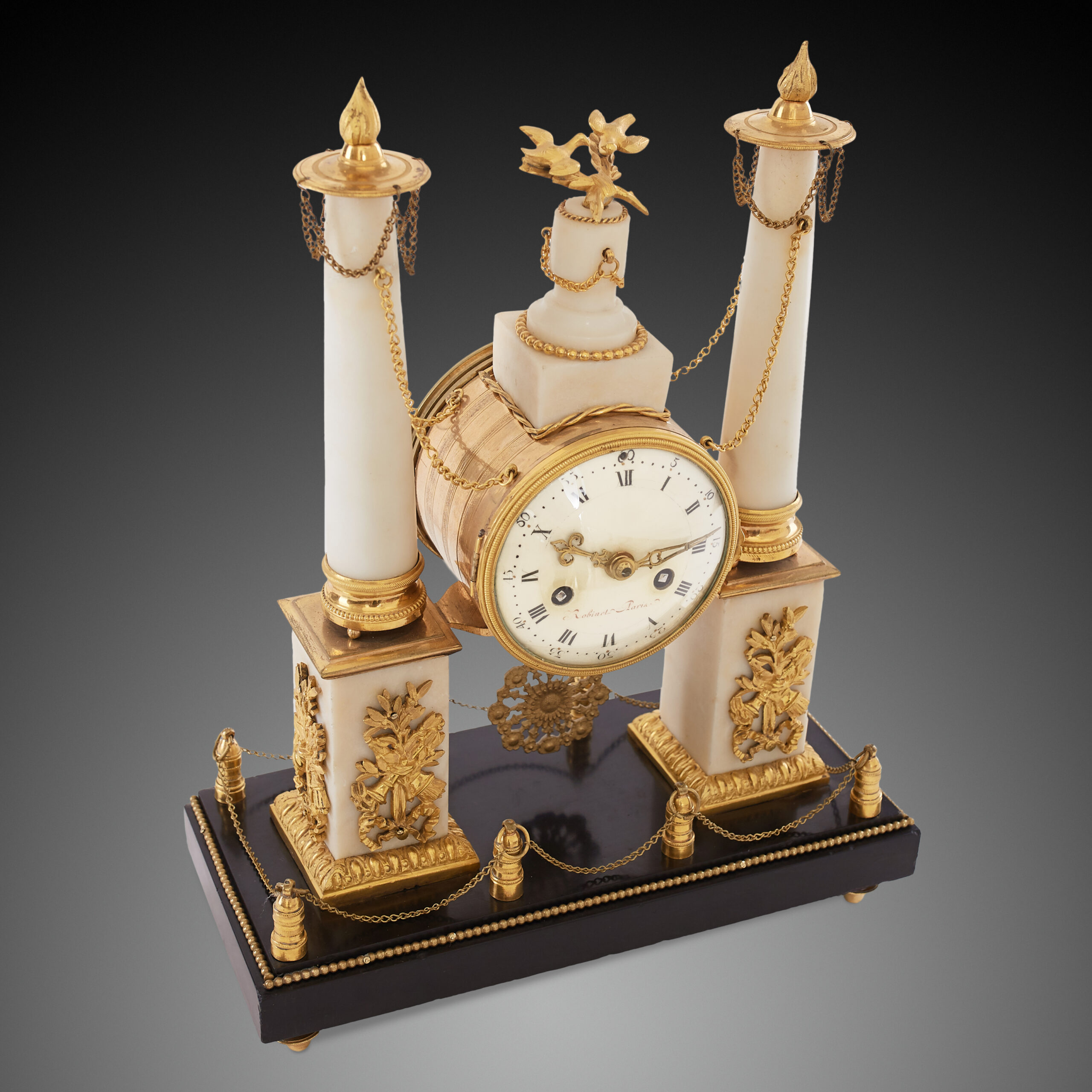
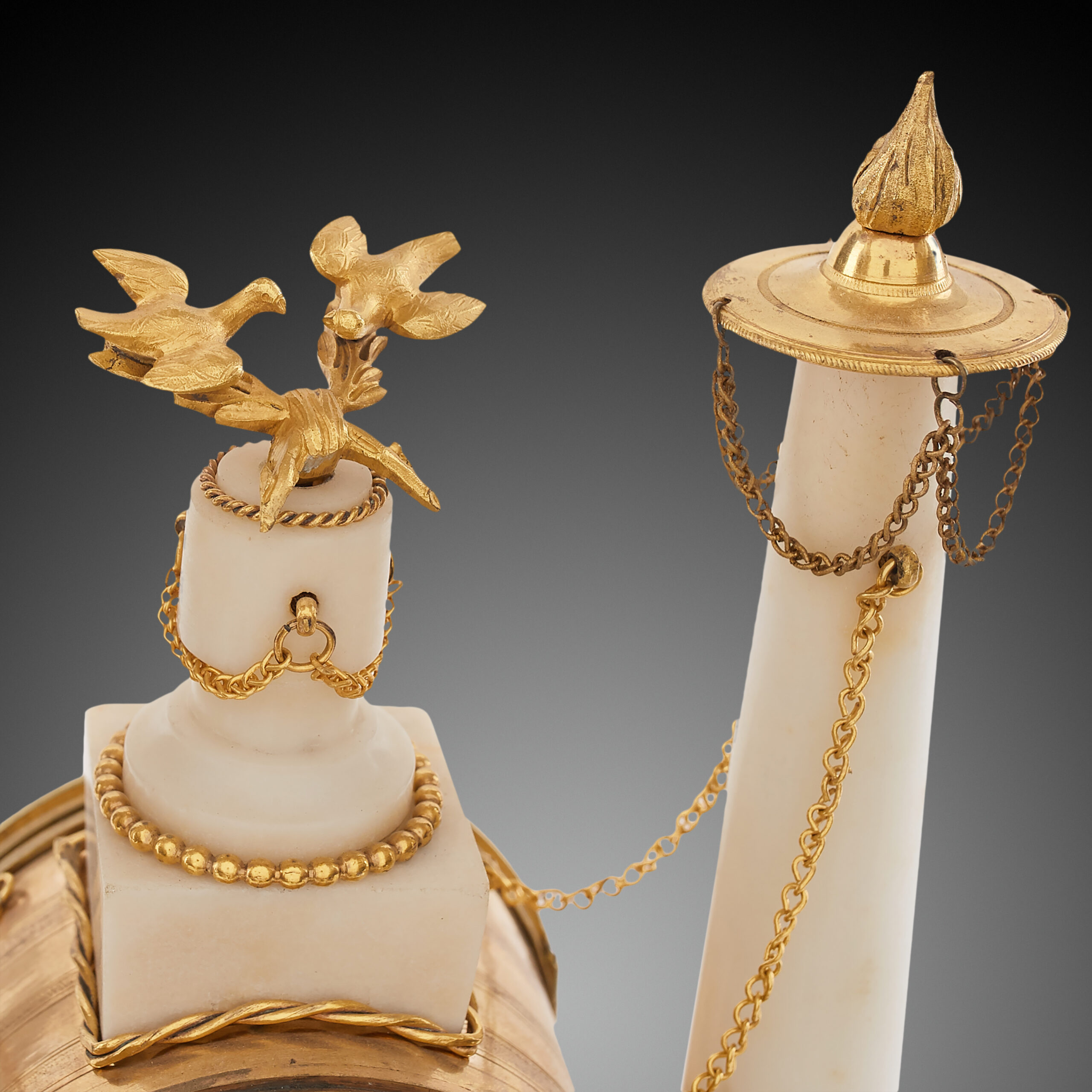
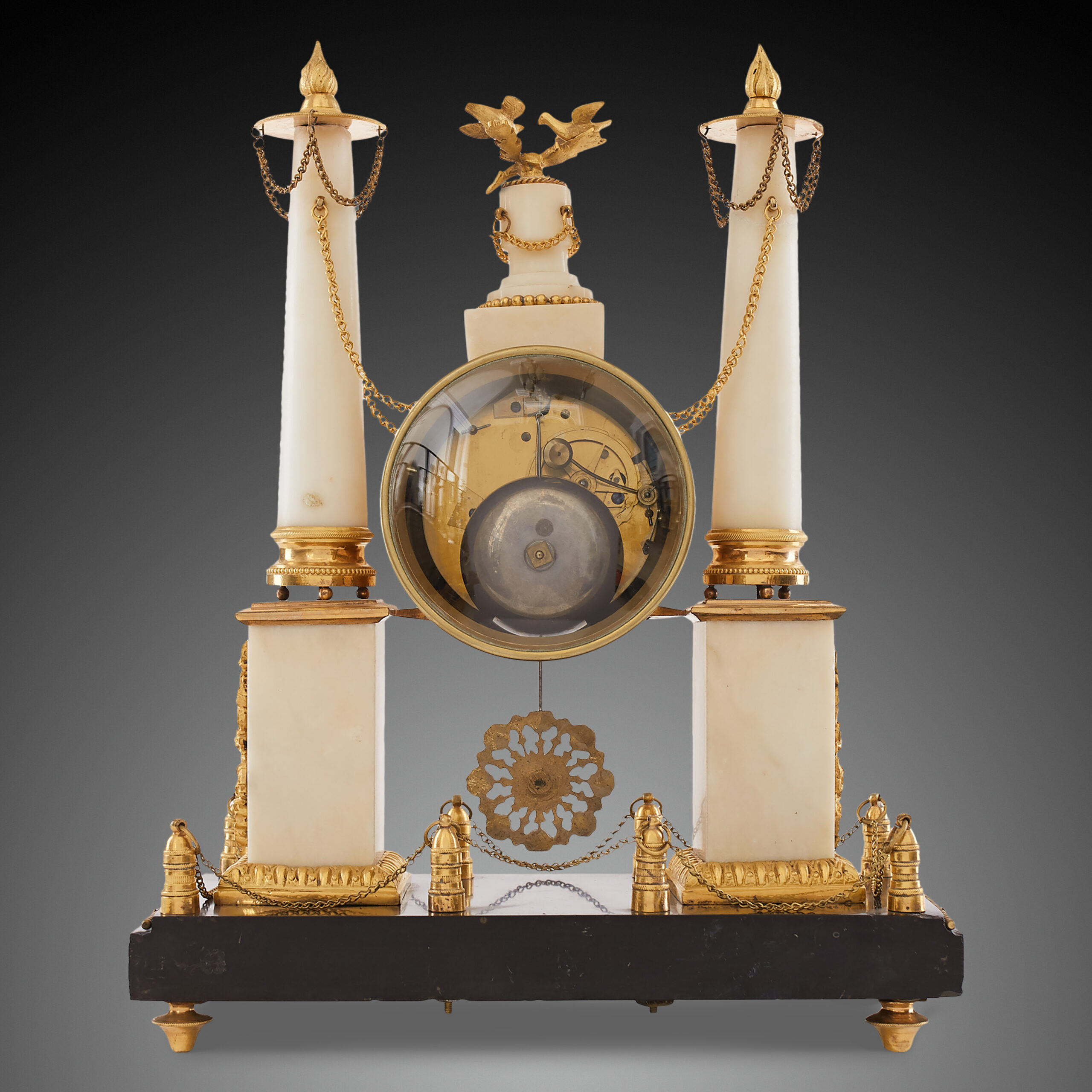
This nineteenth-century portico clock consists of two white marble obelisks situated on both sides of the cylinder-shaped dial. The top part of the obelisks resembles Tuscan style columns with a rectangular pedestal at the bottom. The obelisks tip feature a gilded bronze Olympic flame cauldron with light chains hanging from it. The midsection of the marble obelisk is also tactfully gilded. The base has two torches crossed together with mistletoe and a ribbon bow at the front and sidewalls.
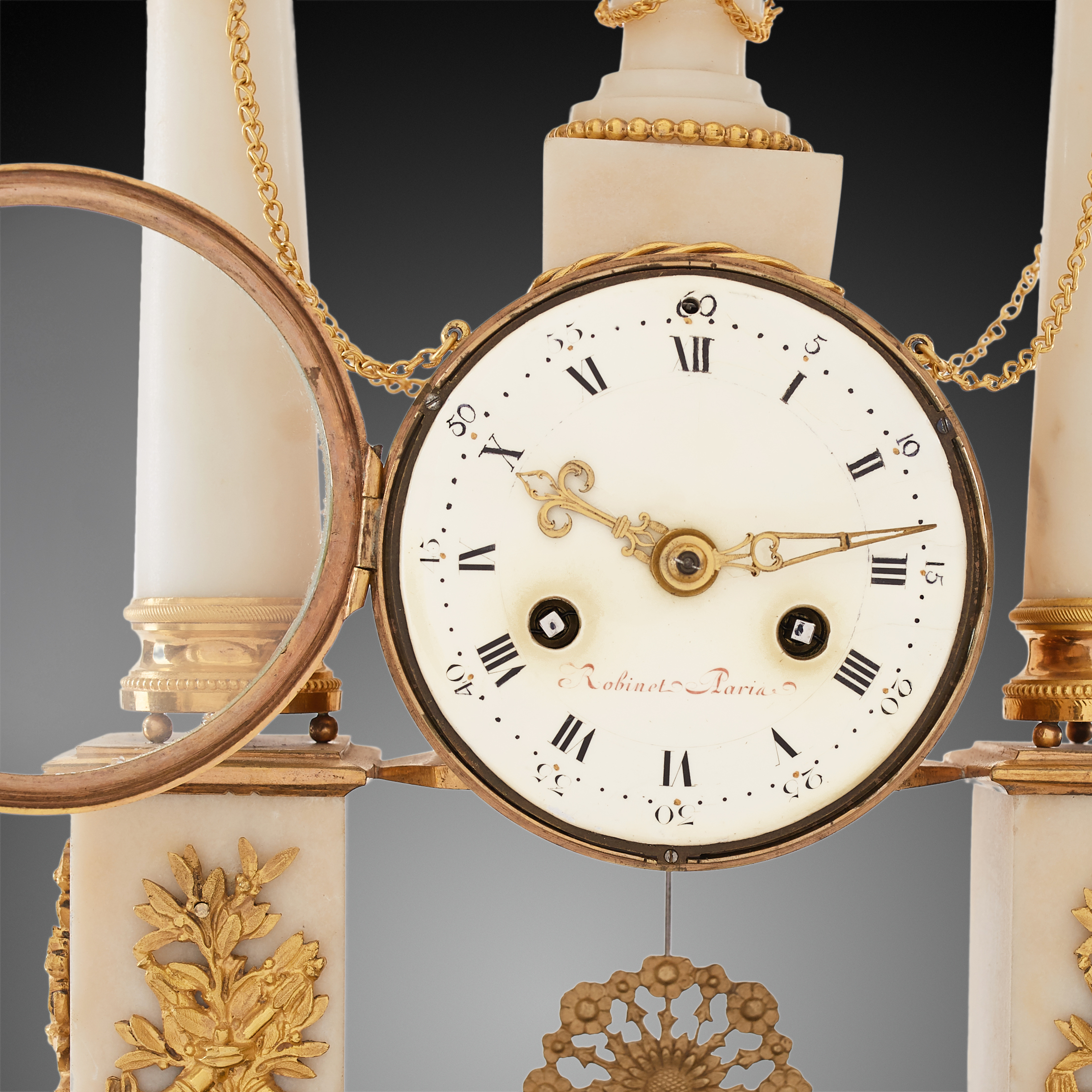
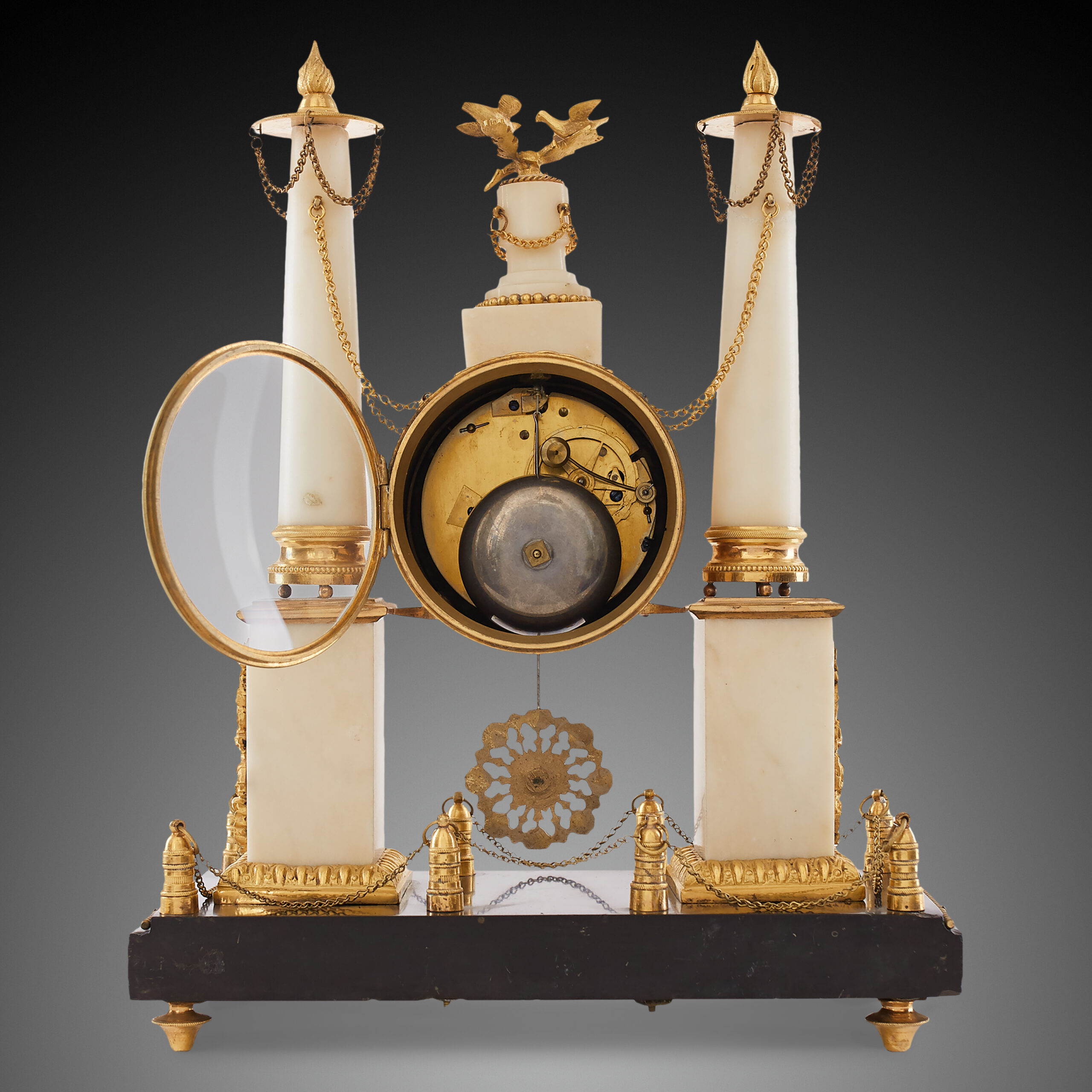
The dial of the clock is suspended between two columns with a chain attached to it that stems from a shaft of the column. A decorative figurine of two doves on a tree branch with a marble plinth surmounts the cylinder case of the clock. Doves are associated with not only love and peace but also feminity. The large domed enamel dial signed “Robinet à Paris” is accompanied by finely constructed gilded hands and uses Roman numerals for hours and Arabic numerals for minutes, including 8-day movement by Pierre Robinet that strikes hours and halves on a bell, all protected by curved glass. The whole structure of the clock stands on the marvellous black marble rectangular plinth with ormolu fence pillars connected with chains surrounding the obelisks and four toupie feet.
The portico clocks were invented in the Louis XVI period, along with considerably more of other models. The portico model was a huge success, which is why they come in a wide variety of designs and colours, but their main structure always consists of a base, two columns or obelisks, an entablature and a dial in the centre of the entablature. The concept is mostly connected with the architecture of Greek and Roman temples.
LITERATURE
Pierre Kjellberg, “La Pendule Française du Moyen Age au XXe Siècle”, 1997, p.200, 204-205