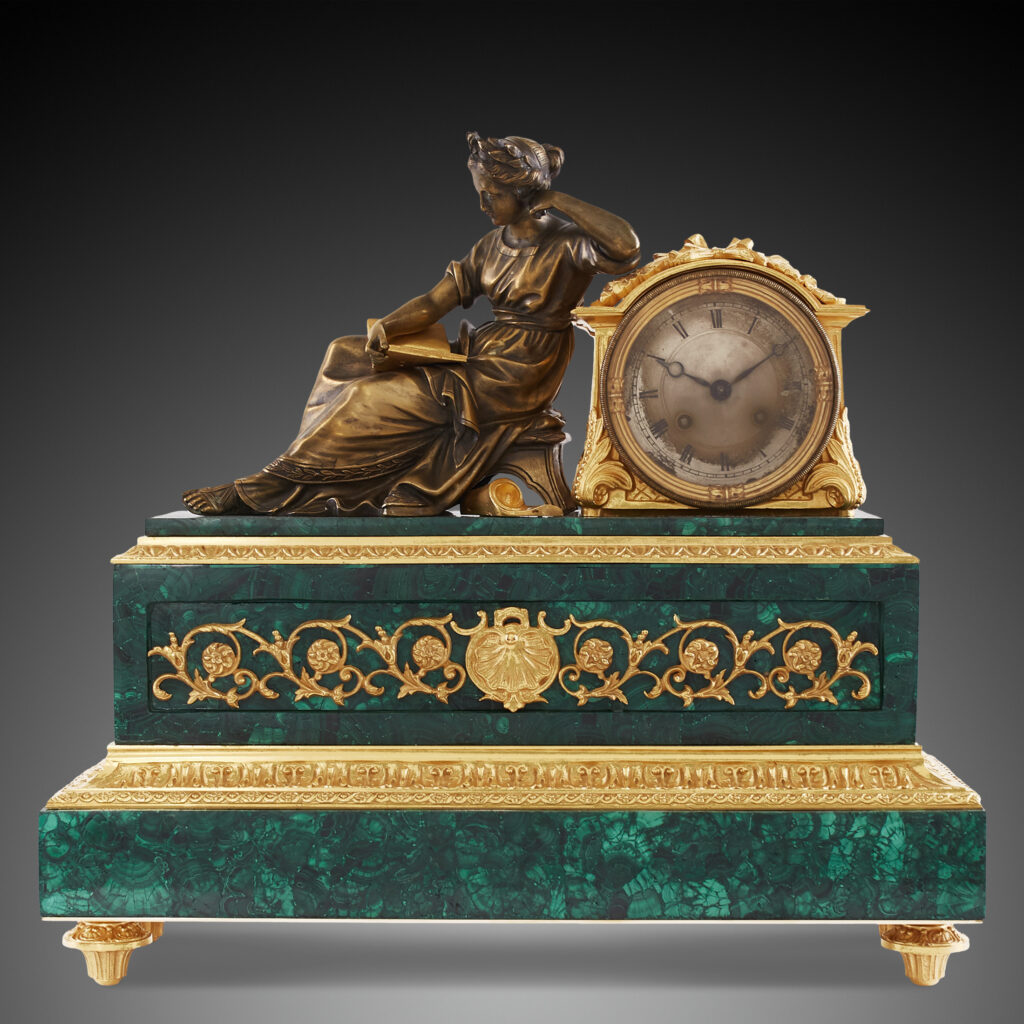
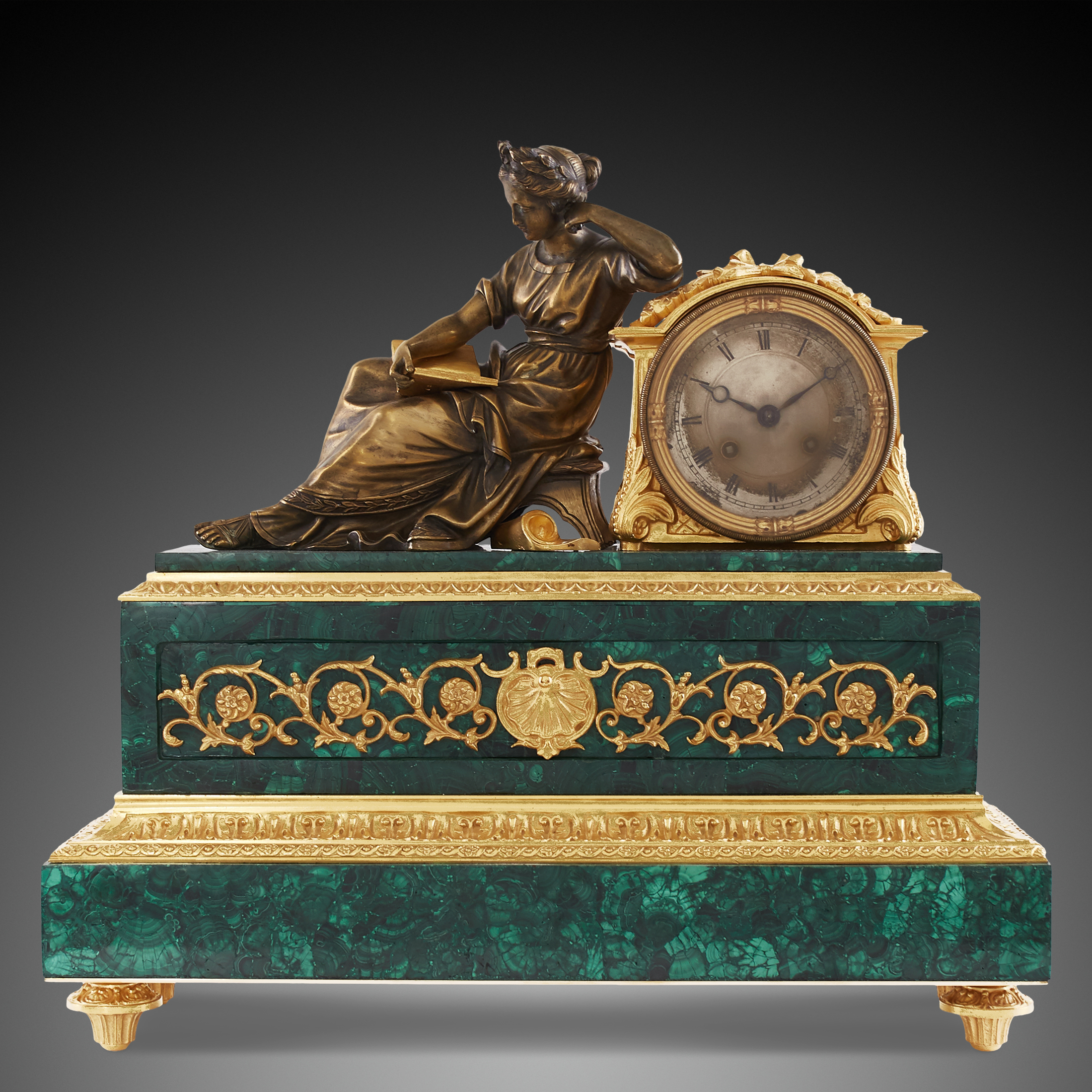
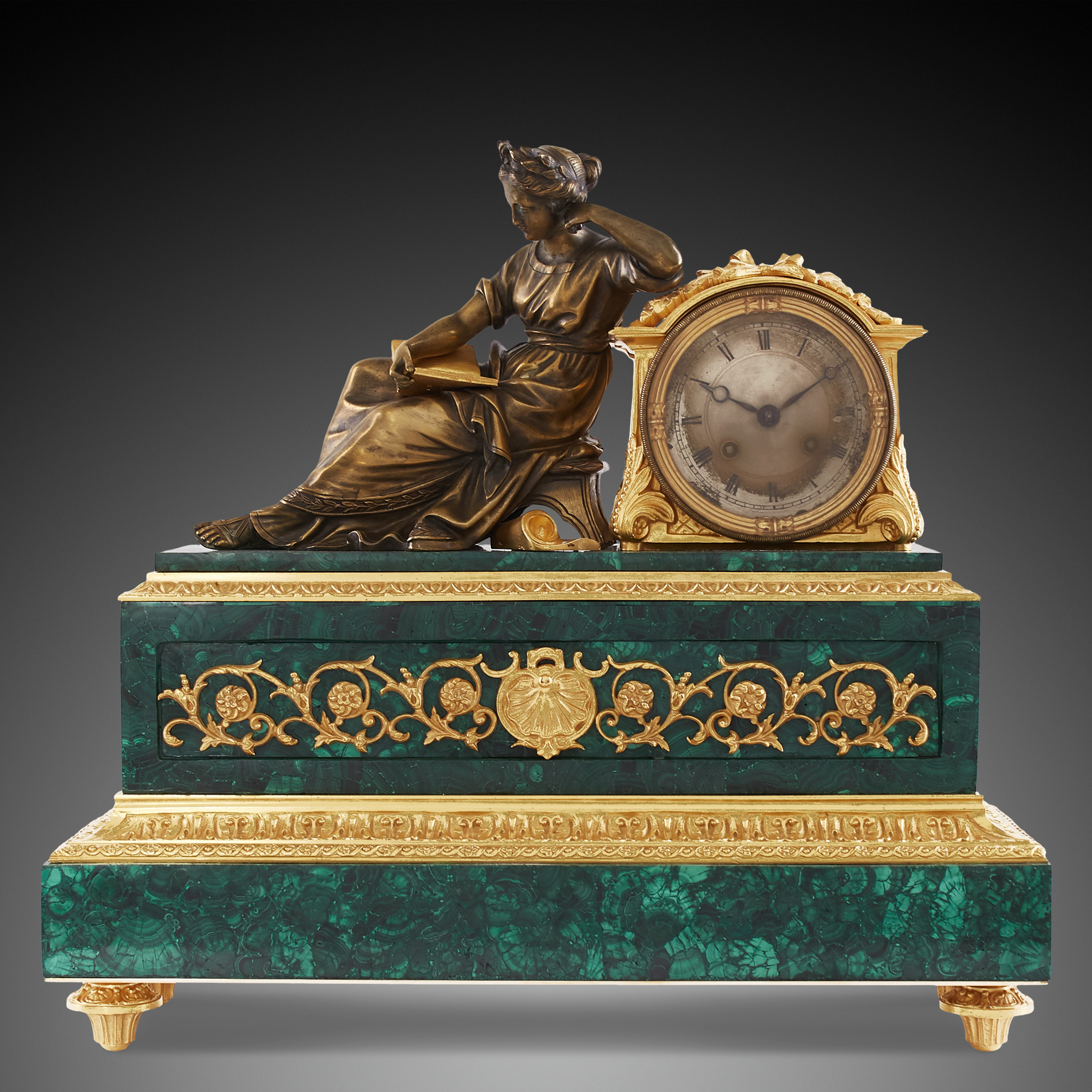
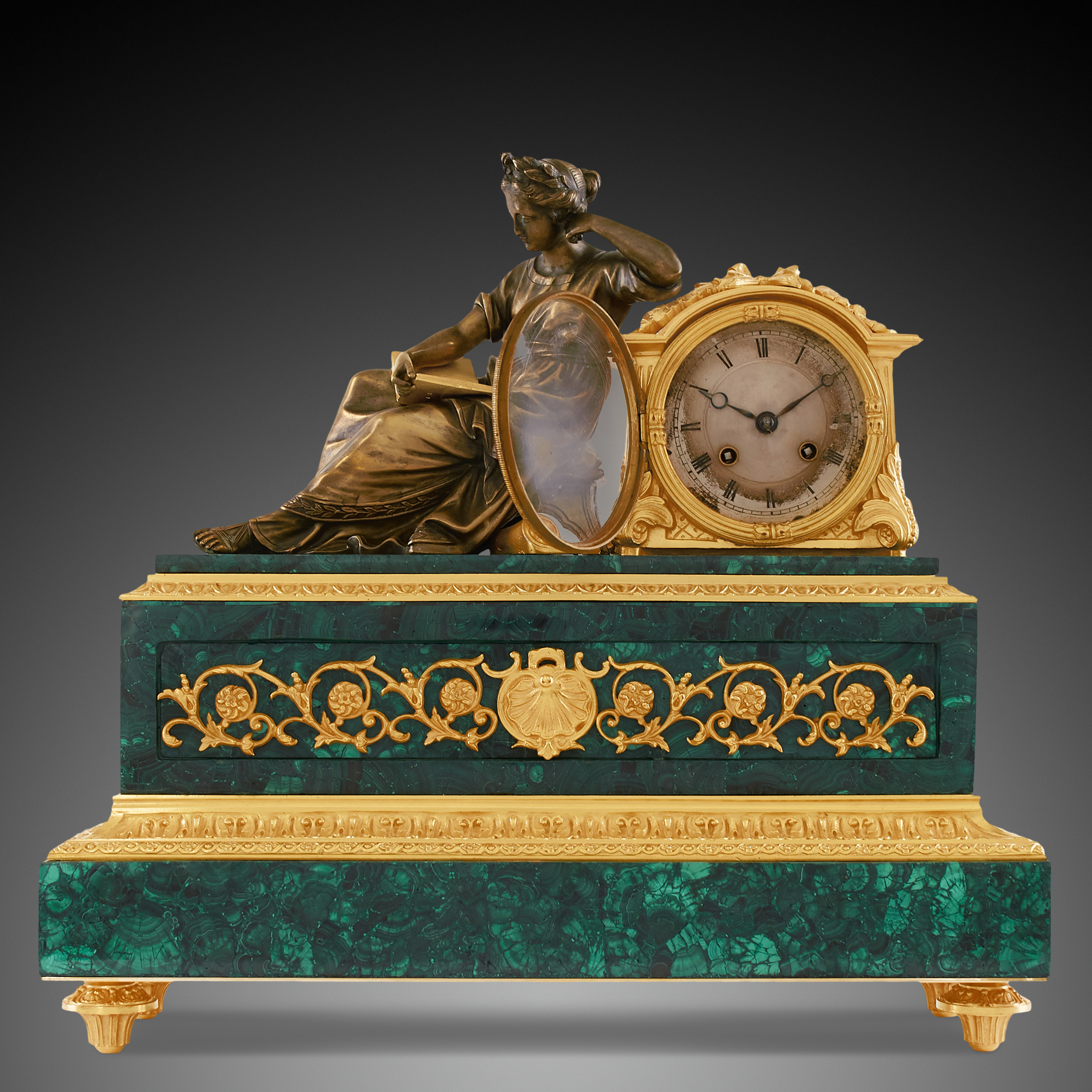
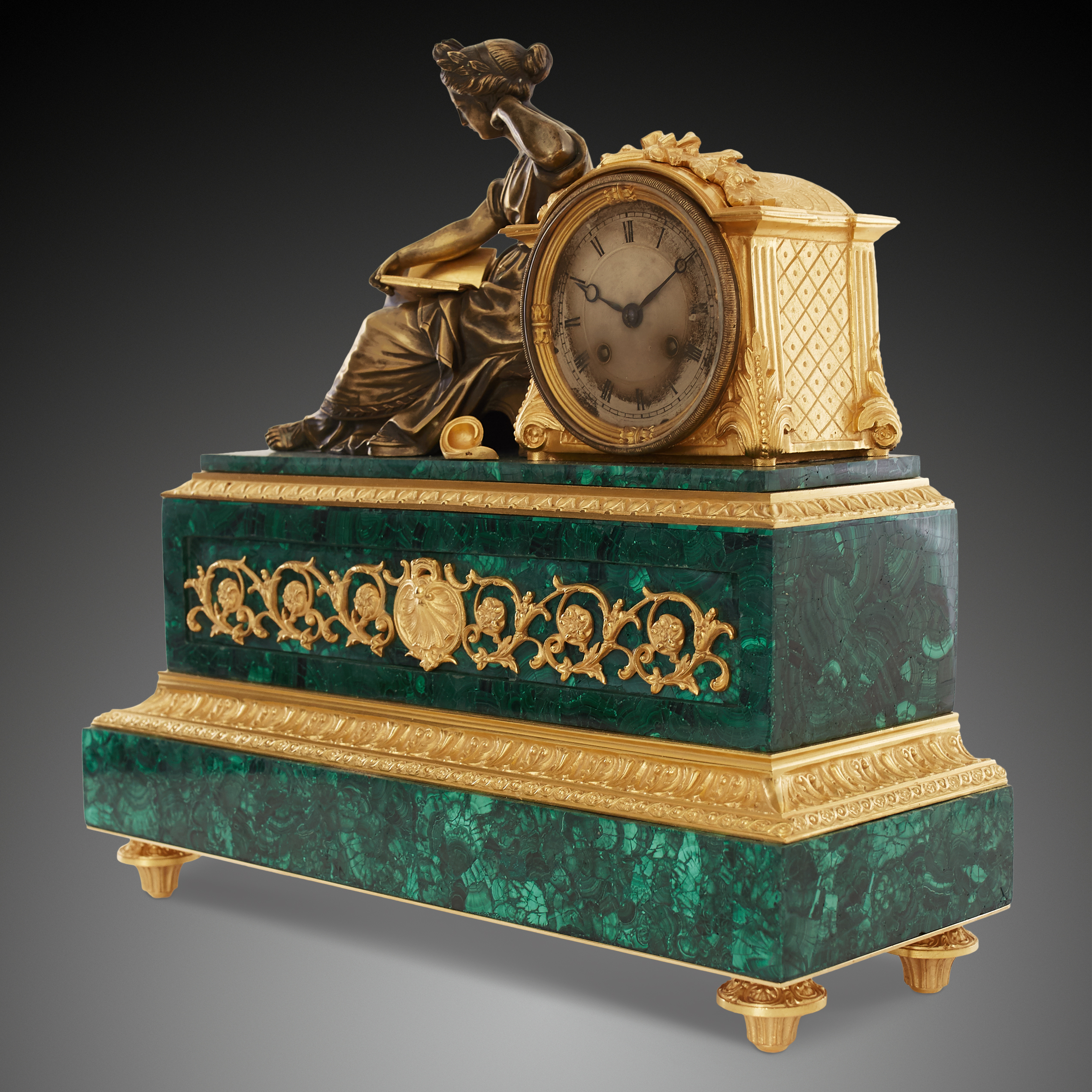
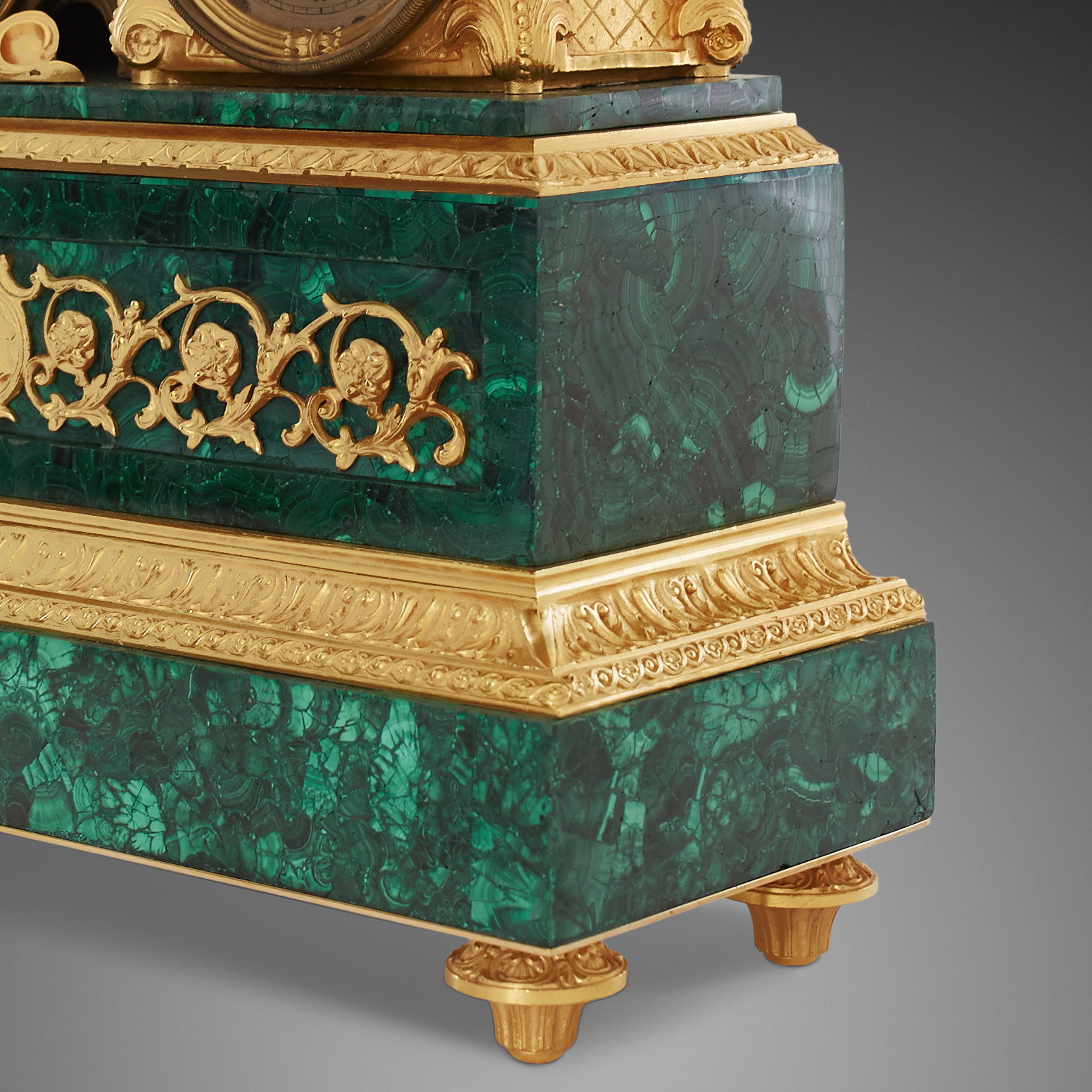
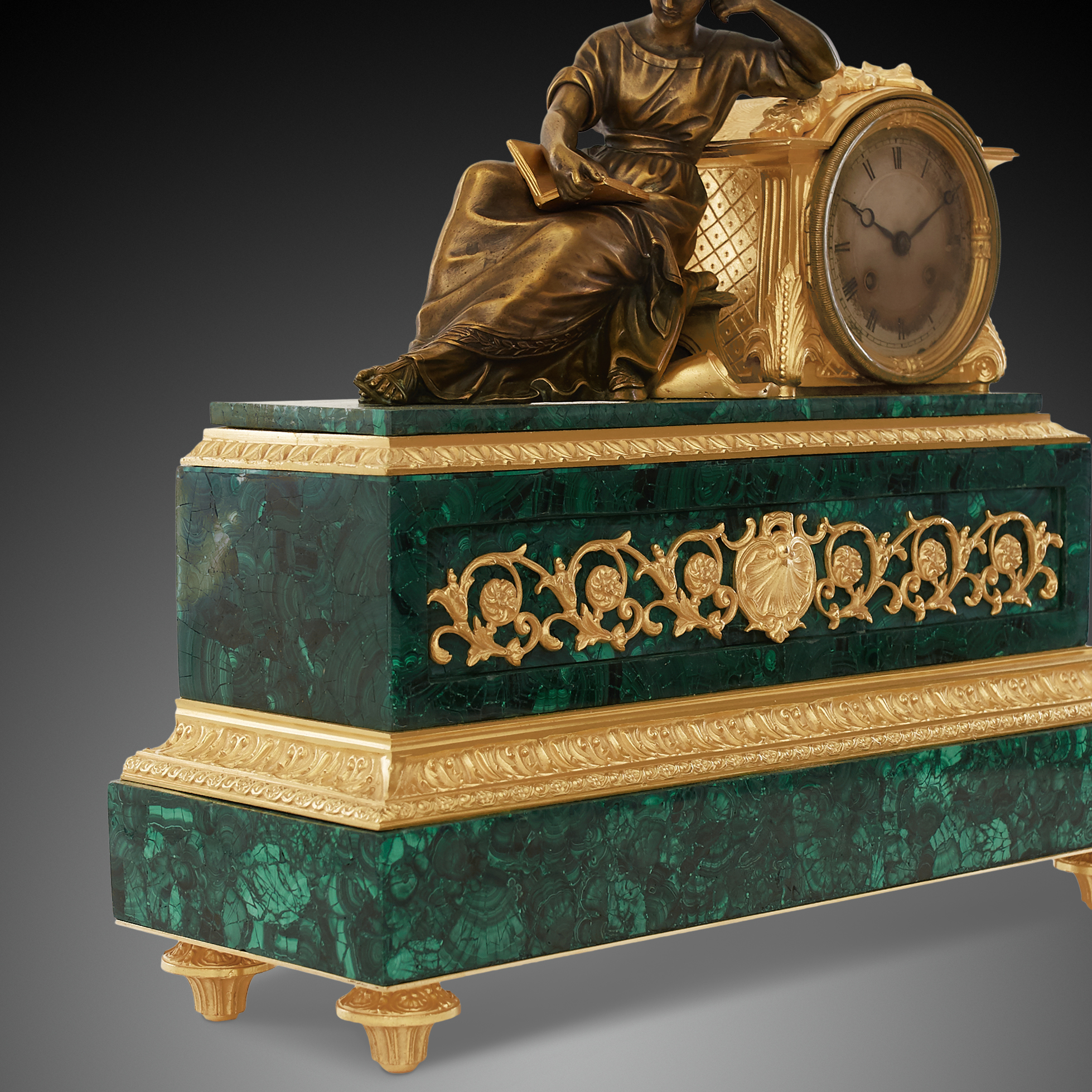
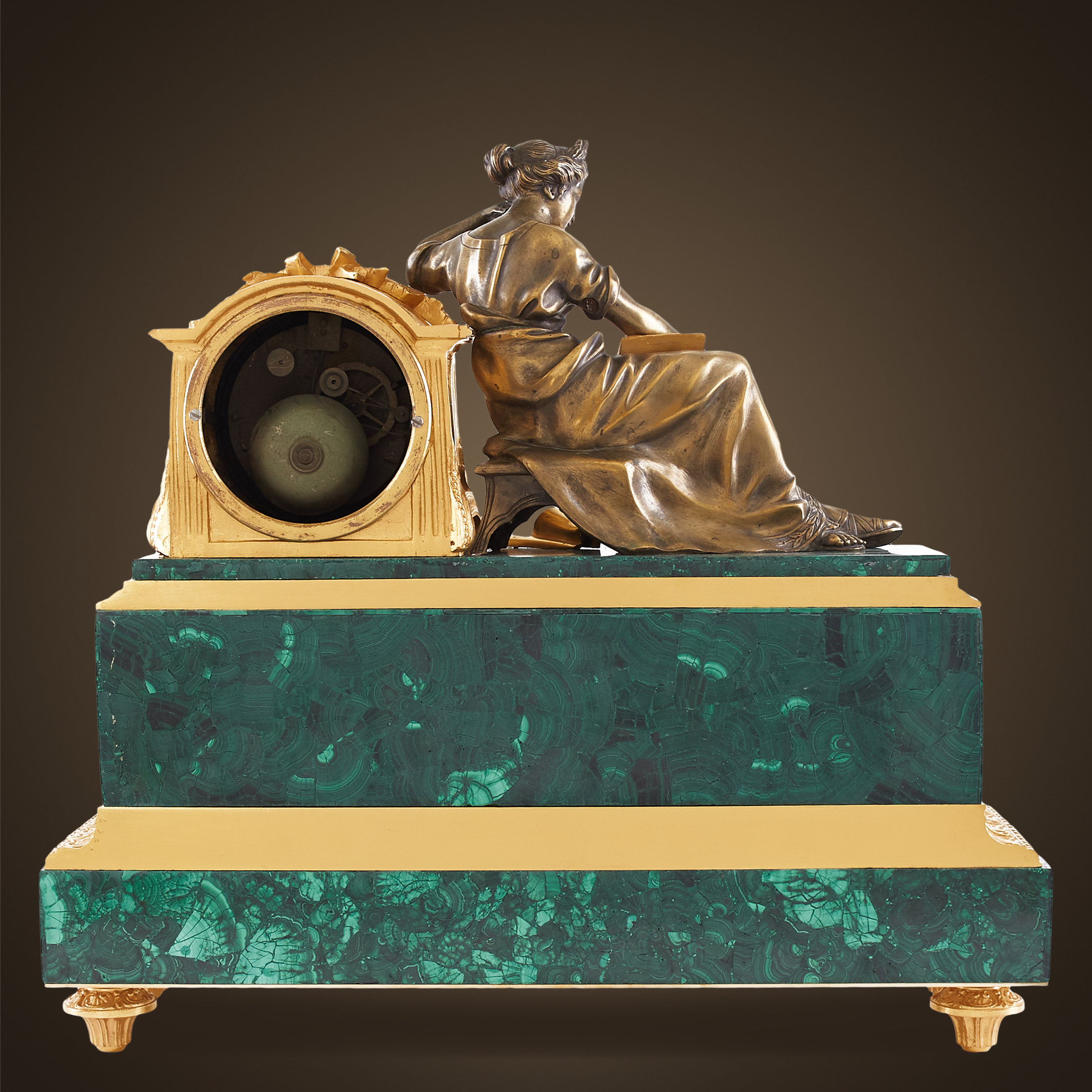
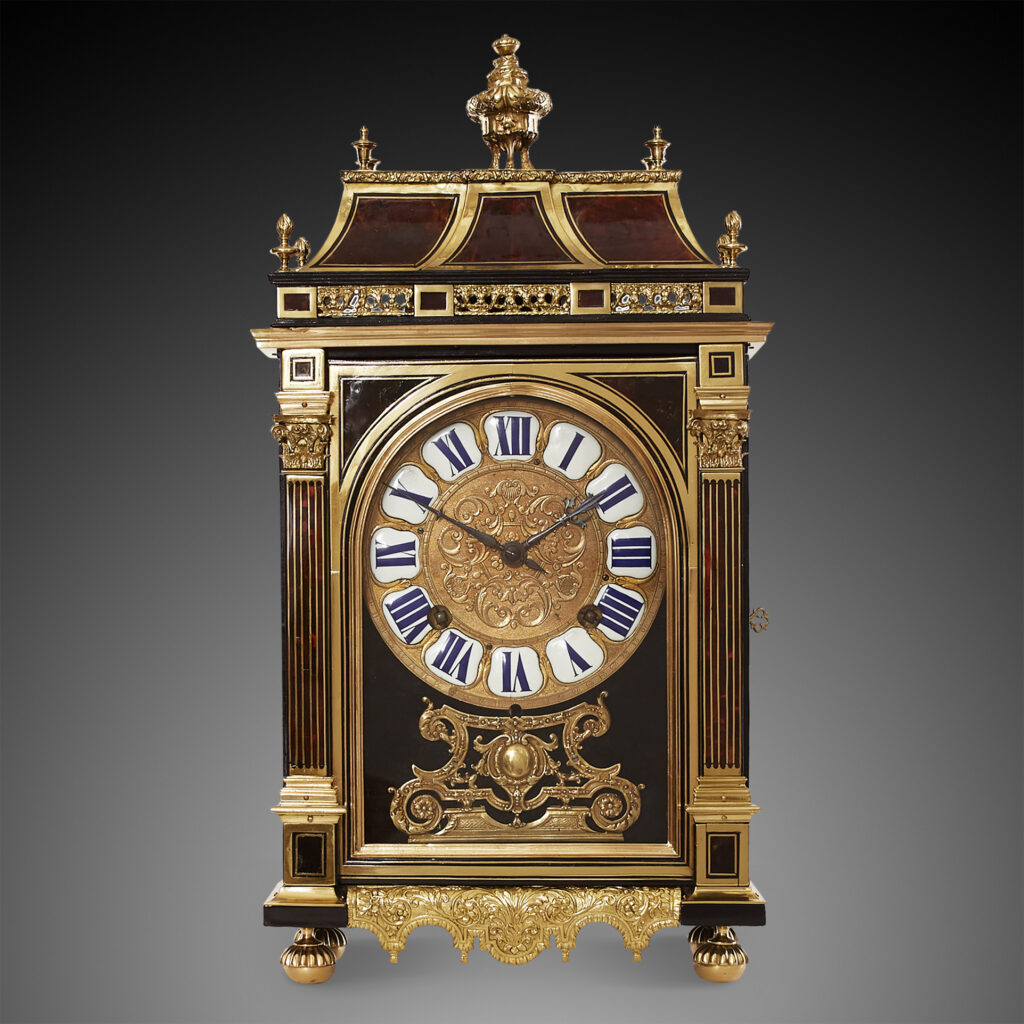
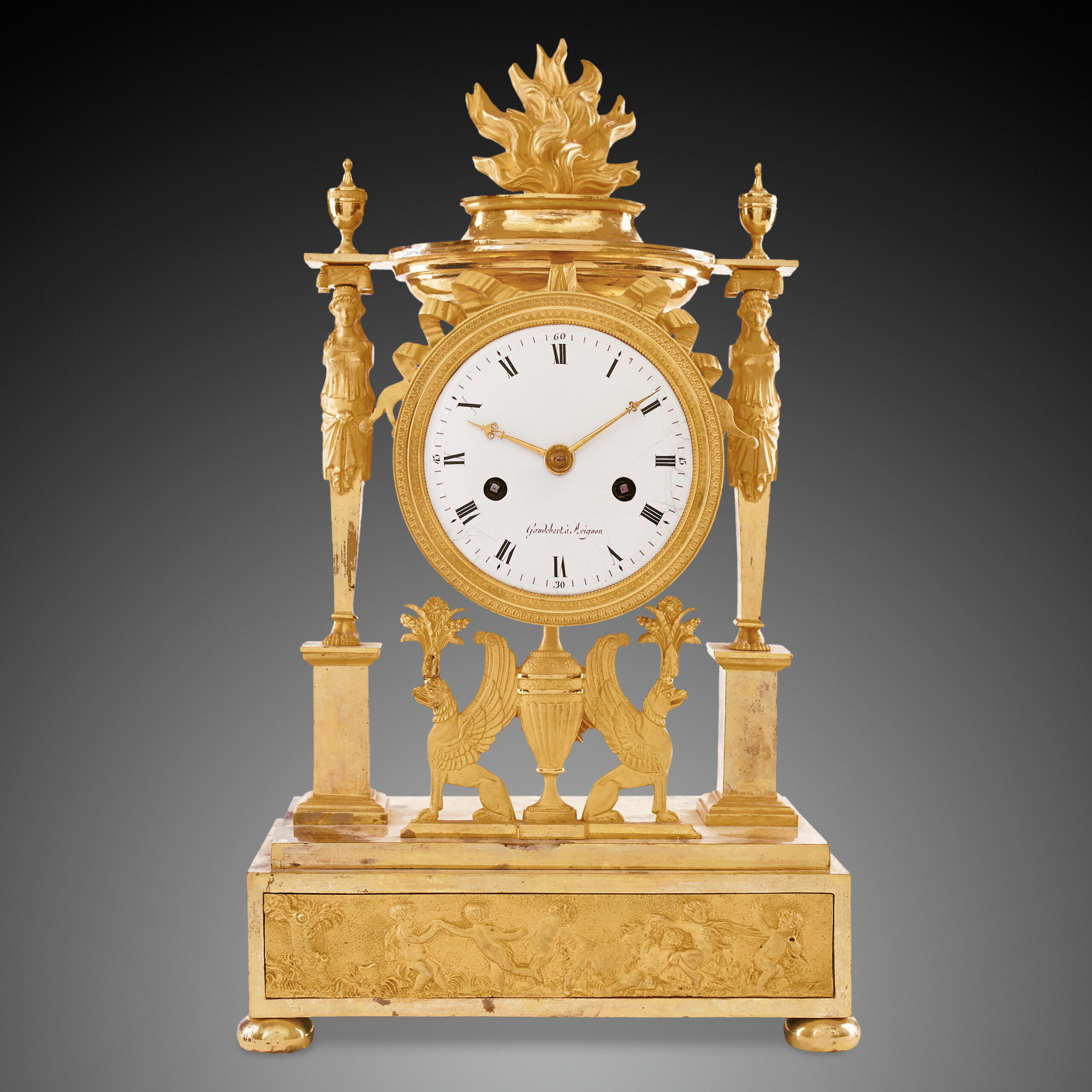
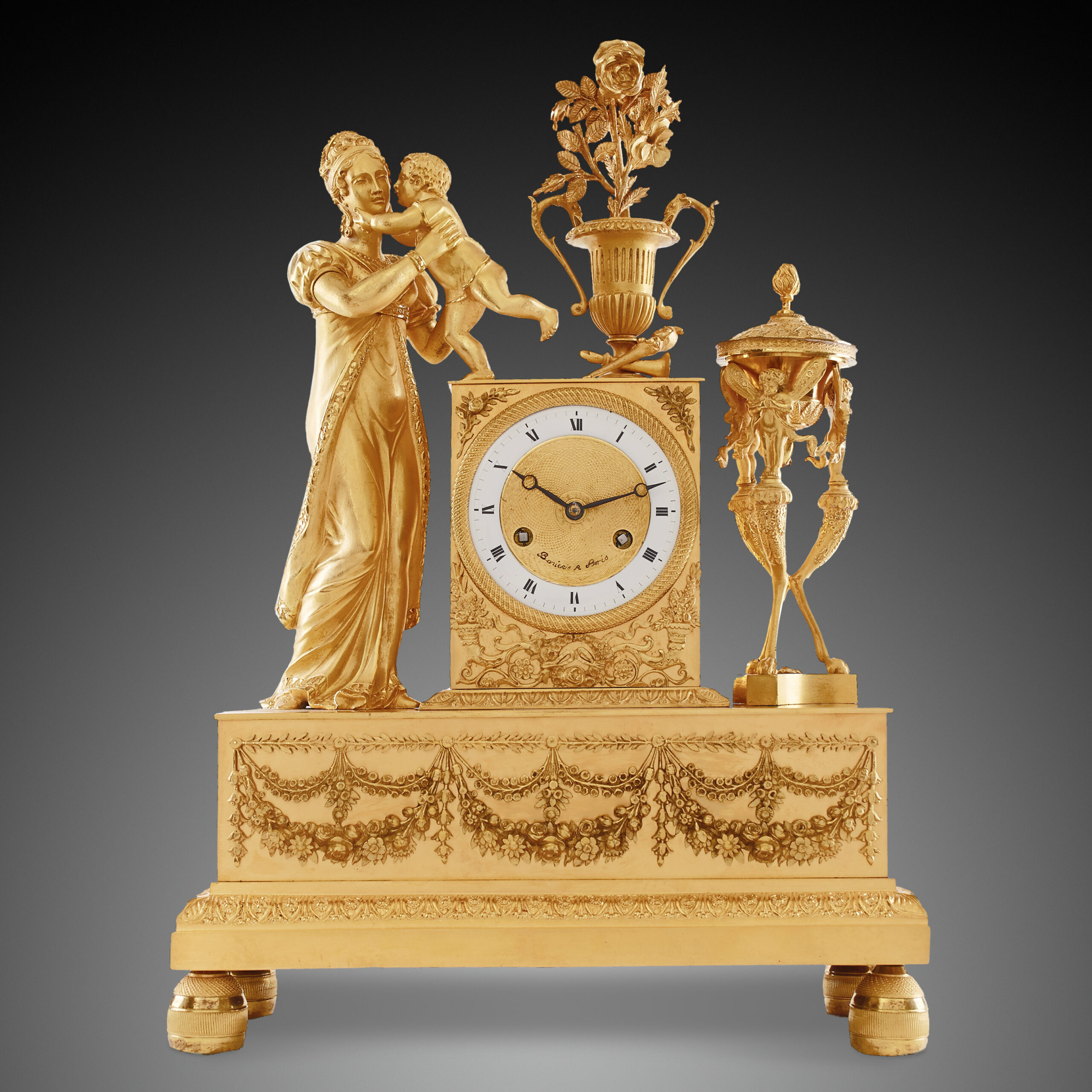
This magnificent mantel clock stands as a defining monument of late 18th-century French decorative arts, an object where the precision of horology meets the sublime narrative capabilities of neoclassical sculpture. As a collector, one’s eye is immediately drawn to the masterful interplay of color and material-specifically the rich, intense green of the malachite veneer that encases the rectangular plinth. Malachite, a mineral prized for its distinct, swirling banding, was a hallmark of elite commissions, and here it serves as a regal, deep-toned stage for the brilliance of the fire-gilded ormolu mounts.
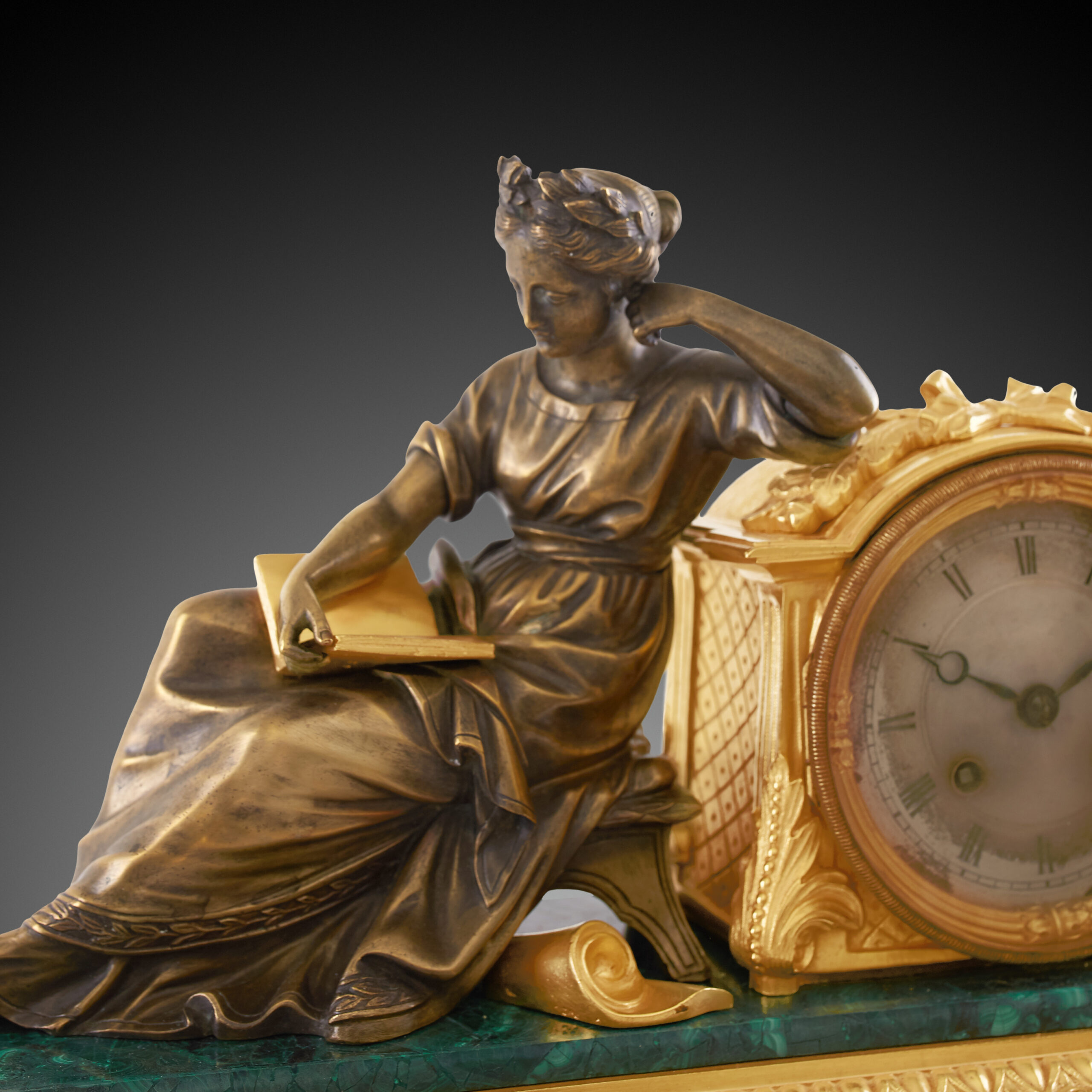
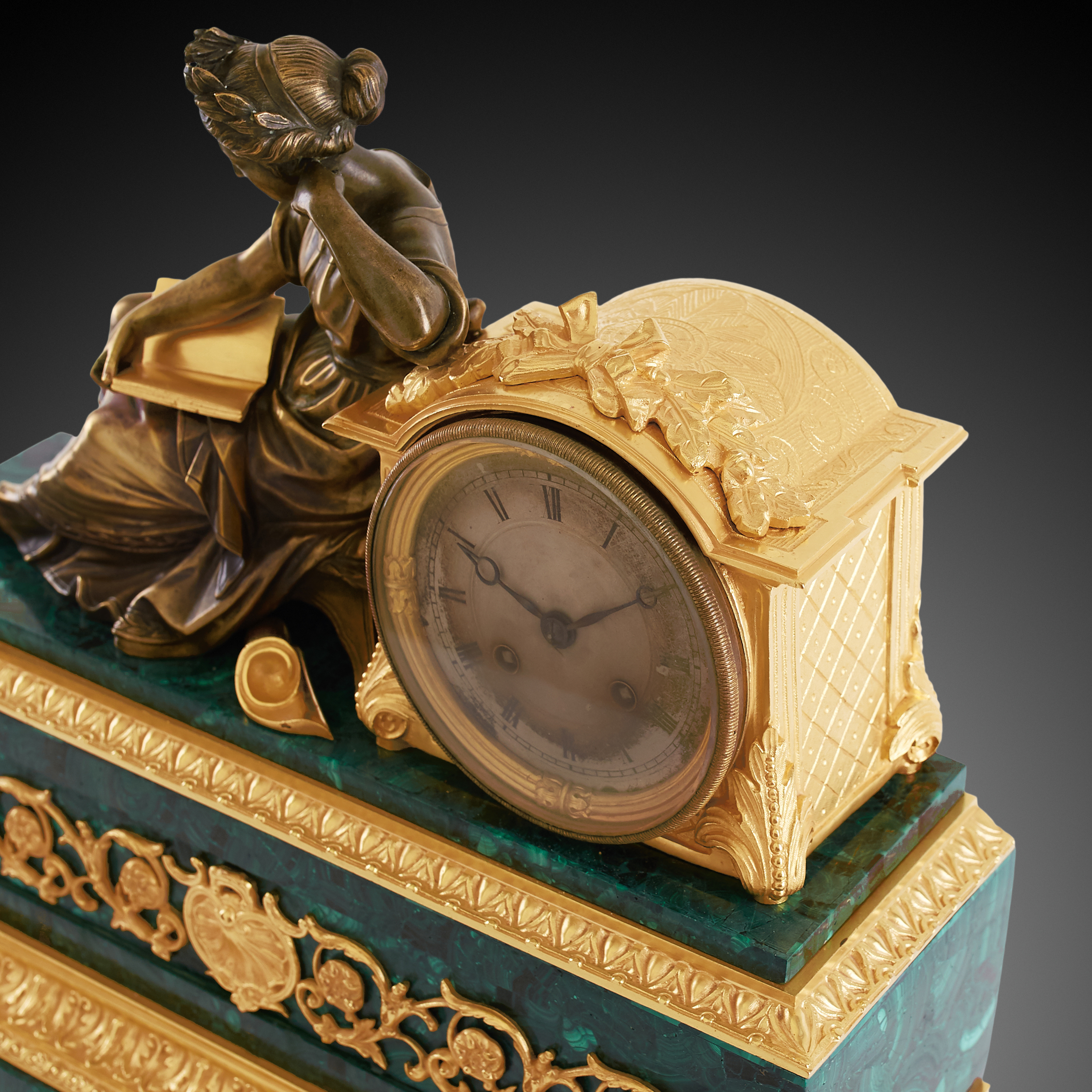
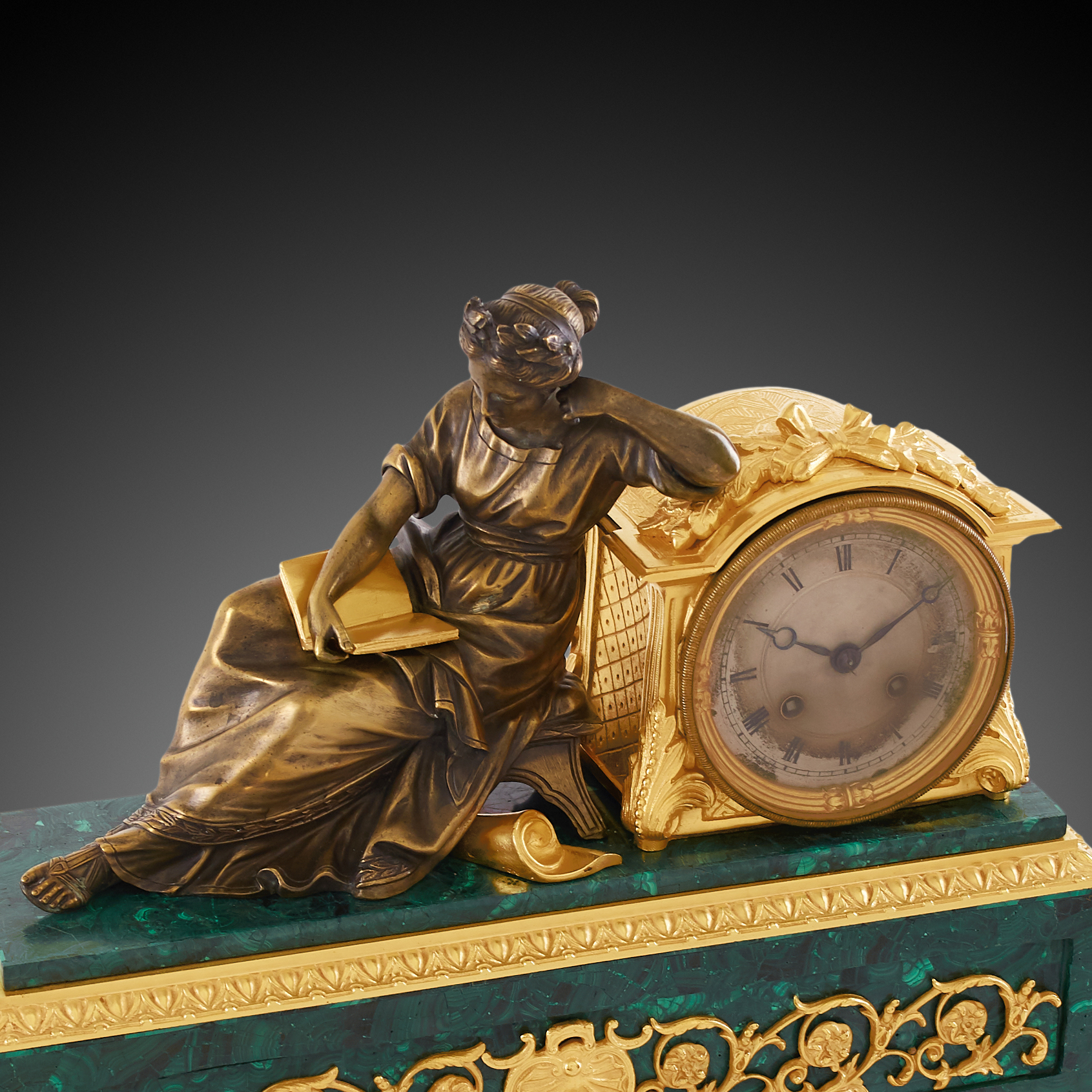
The sculptural program is the true heart of this piece. The reclining female figure, cast in patinated bronze with a depth of finish that catches the light in soft, muted tones, is a masterful study of human form and intellectual focus. Her pose, leaning gently against the clock case while absorbed in her book, transcends mere ornamentation; she is a personification of the Enlightenment’s greatest ideal-the contemplative life. This Pendule à la lecture model perfectly captures that fleeting, quiet moment of scholarly immersion, effectively turning a functional device for tracking time into an allegory for the infinite nature of knowledge itself.
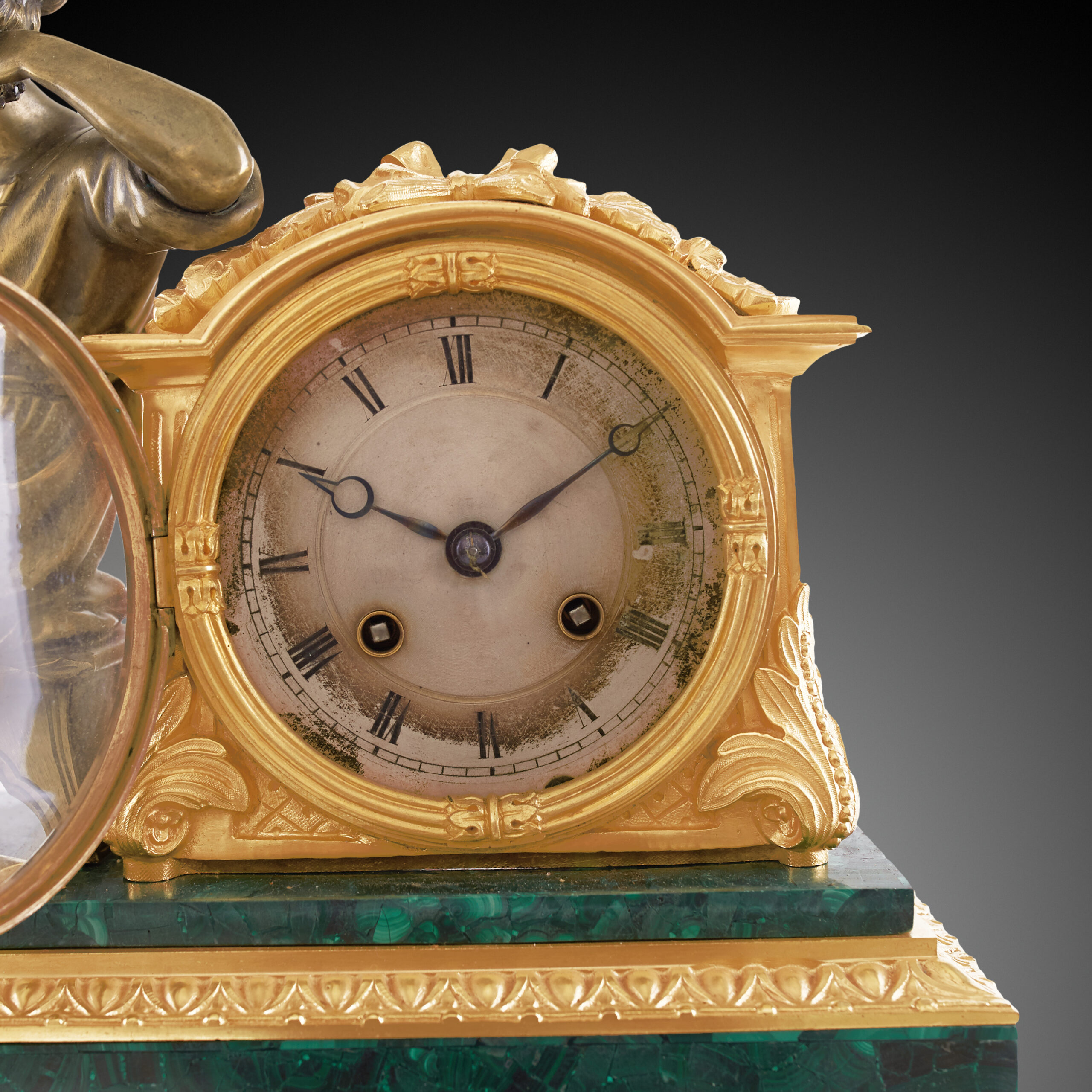
The ormolu work surrounding the dial and framing the malachite panels is executed with a level of crispness that is rarely seen outside of the most storied Parisian workshops. The central frieze, featuring a complex arrangement of scrolling acanthus vines punctuated by a central shell or medallion, demonstrates the ciseleur’s ability to bring movement to solid metal. These gilt elements do not merely decorate; they harmonize with the coolness of the green stone, creating a vibrant, polychromatic effect that is characteristic of the very best high-period French antiques.
Every architectural detail, from the delicate pearl-and-acanthus beaded border that rings the plinth to the refined, fluted feet, contributes to a silhouette of perfect poise. The clock face, with its elegantly legible numerals and original hands, remains a functional masterpiece, but its true power lies in its presence as a centerpiece. It commands the space it inhabits, not through overwhelming size, but through the sheer weight of its cultural and artistic history. It is a work that captures the essence of a society transitioning from the playful, organic excesses of the mid-1700s toward a more structured, philosophical, and intensely sophisticated aesthetic. To possess such a piece is to hold a tangible link to a world where every object was curated to elevate the domestic environment into a theatre of human achievement, beauty, and intellectual aspiration. It is, quite simply, an object of timeless, singular significance that continues to offer new discoveries to the discerning eye with every viewing.