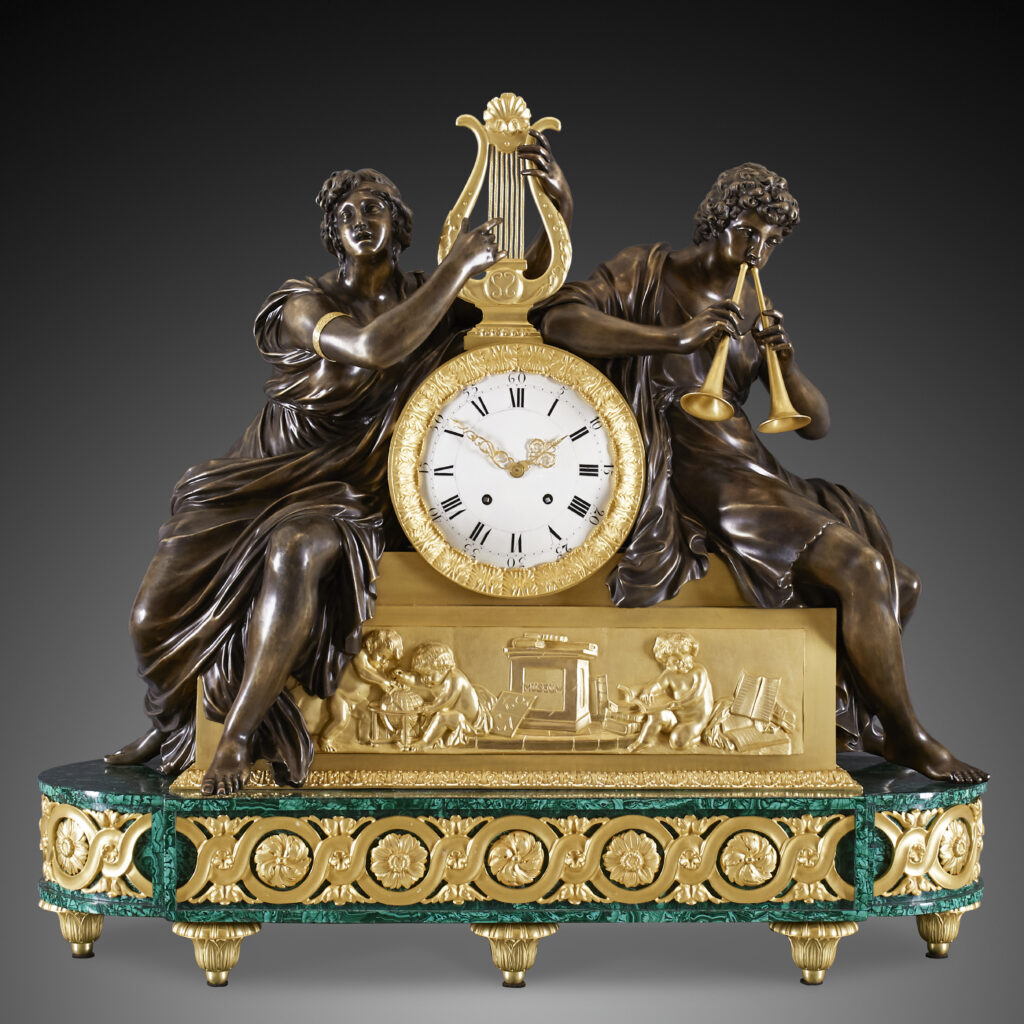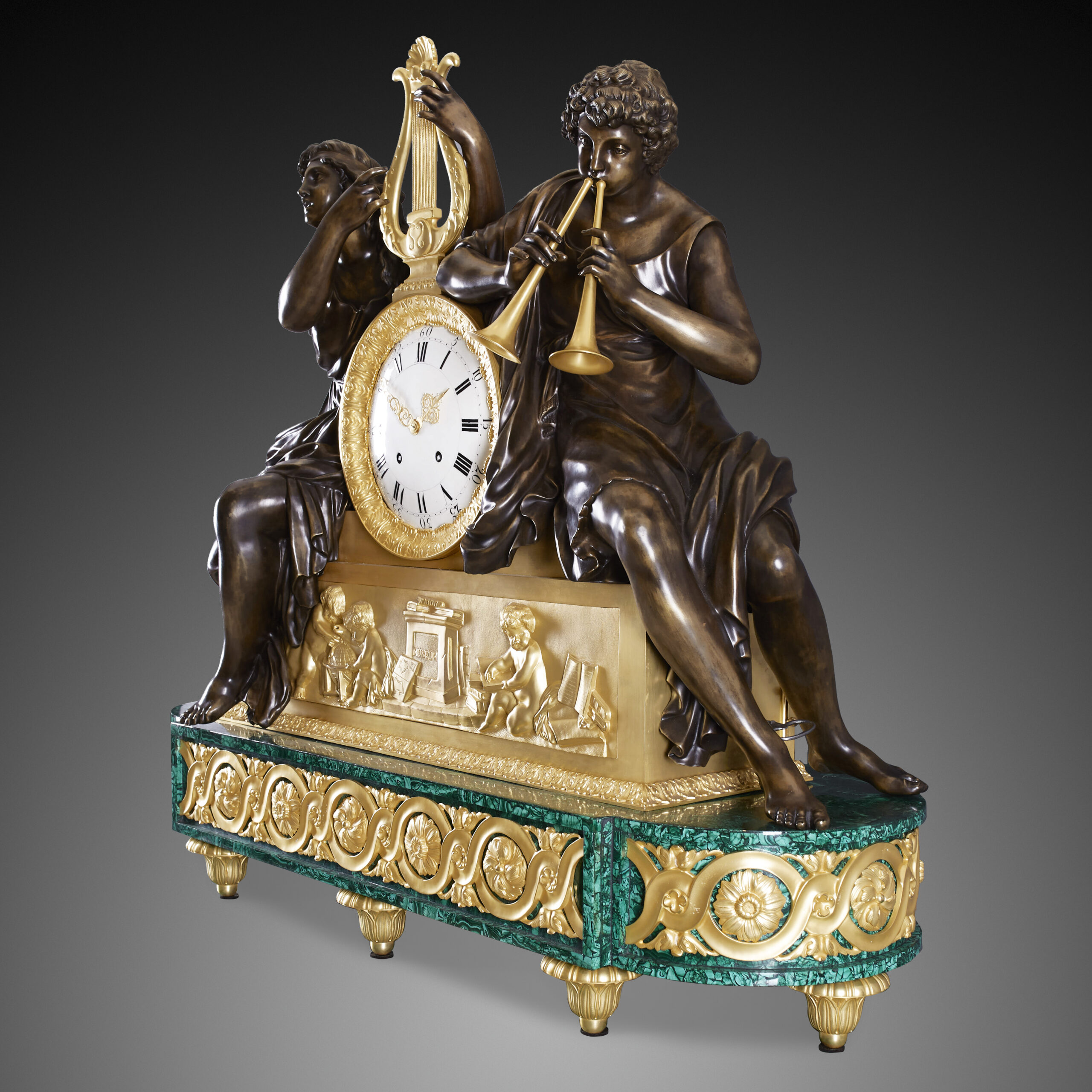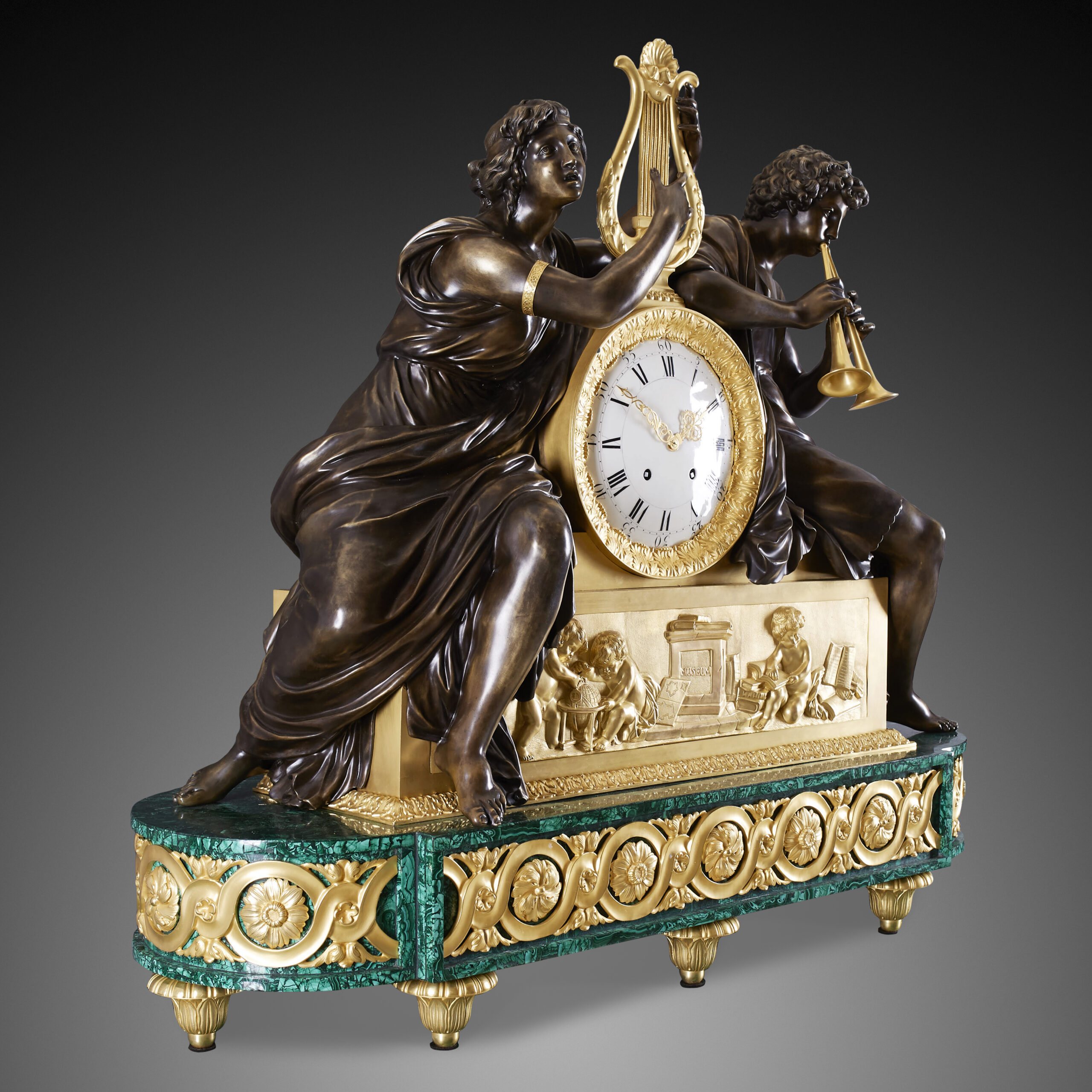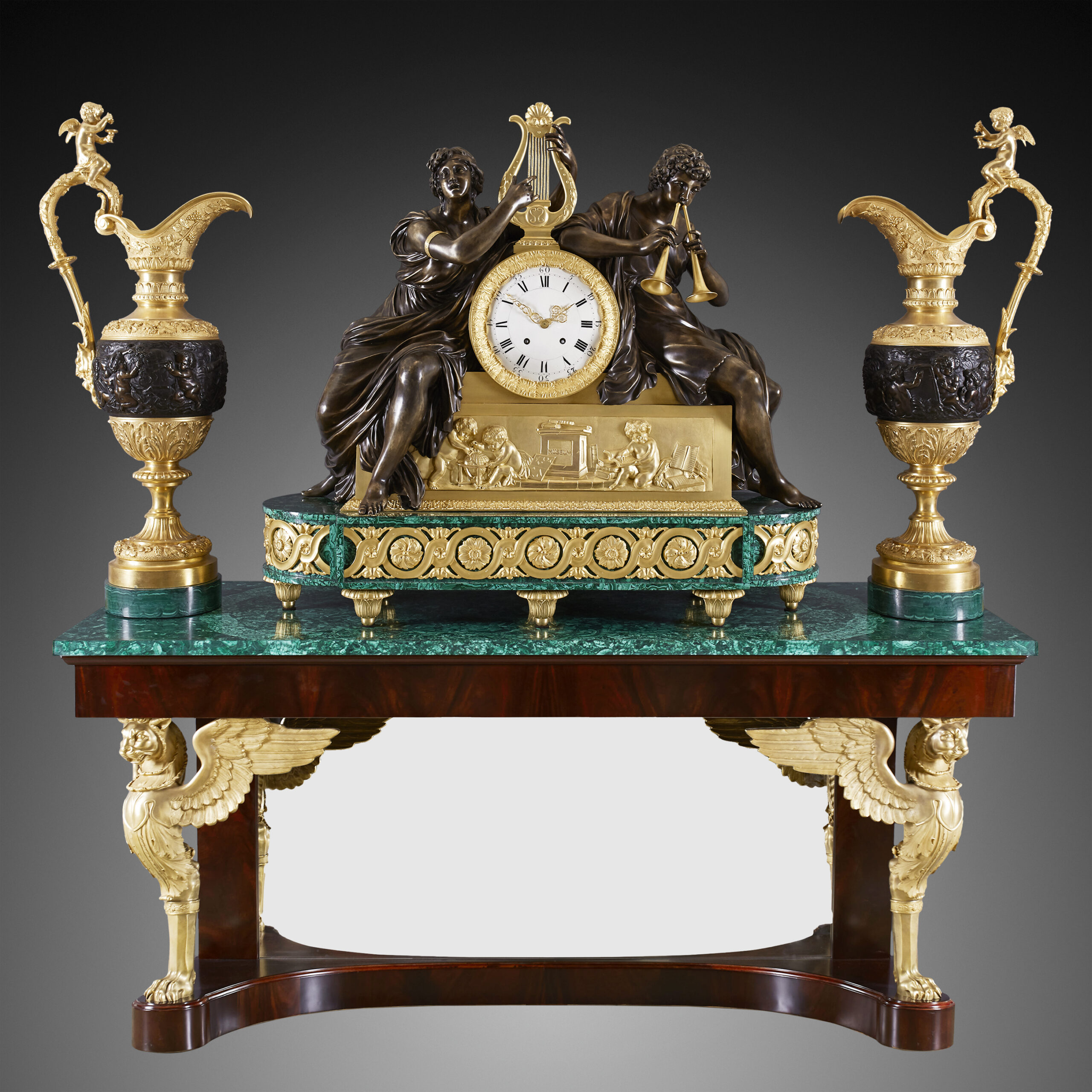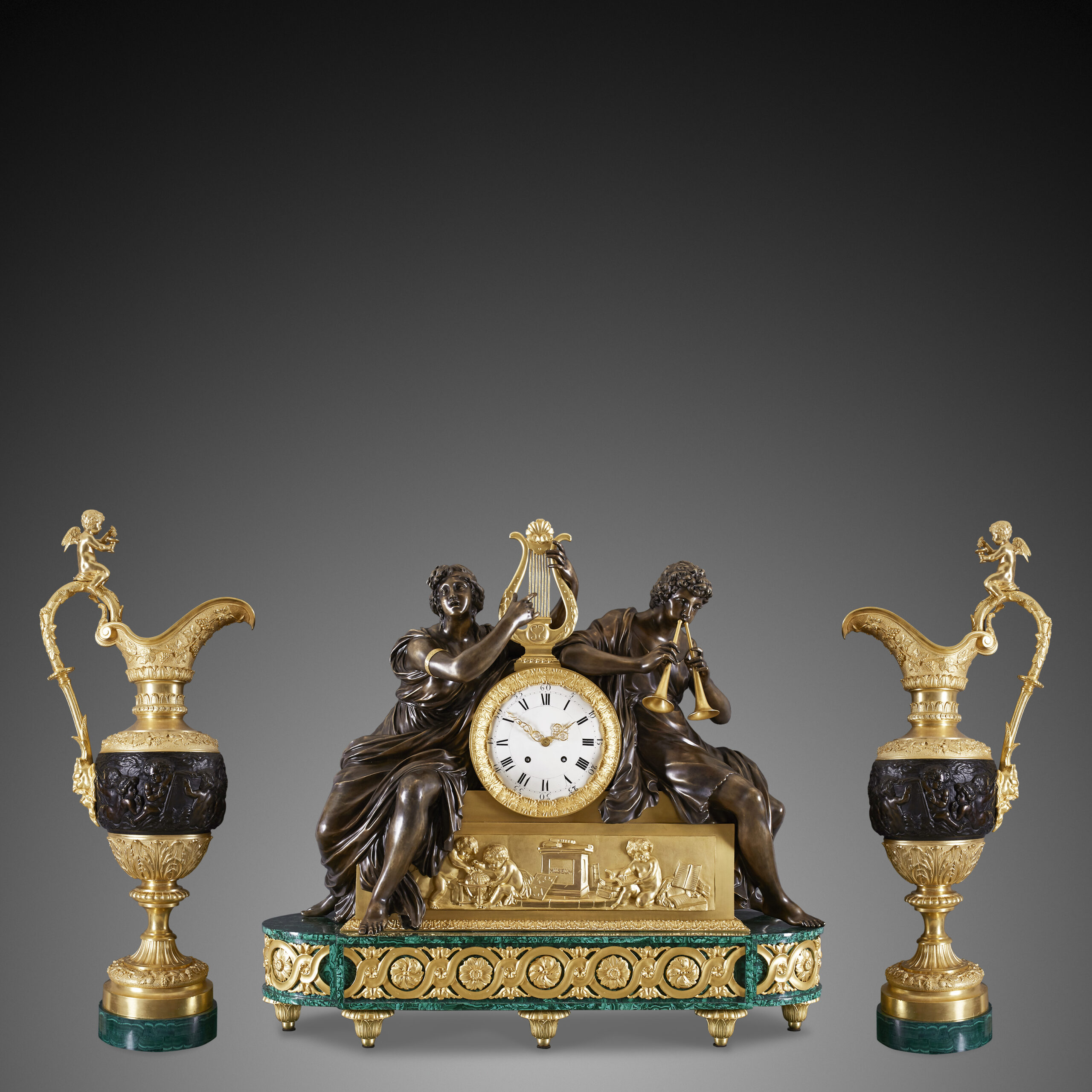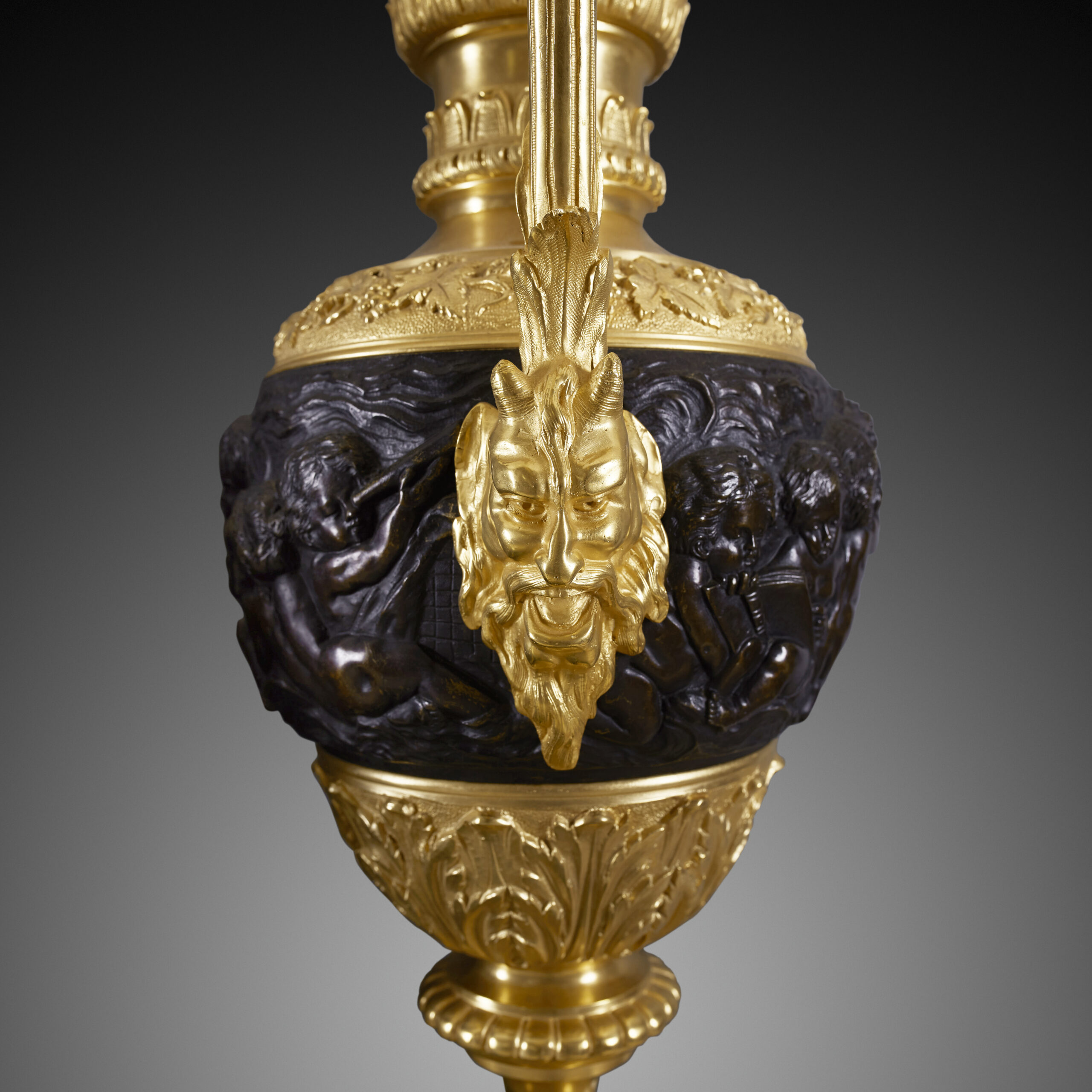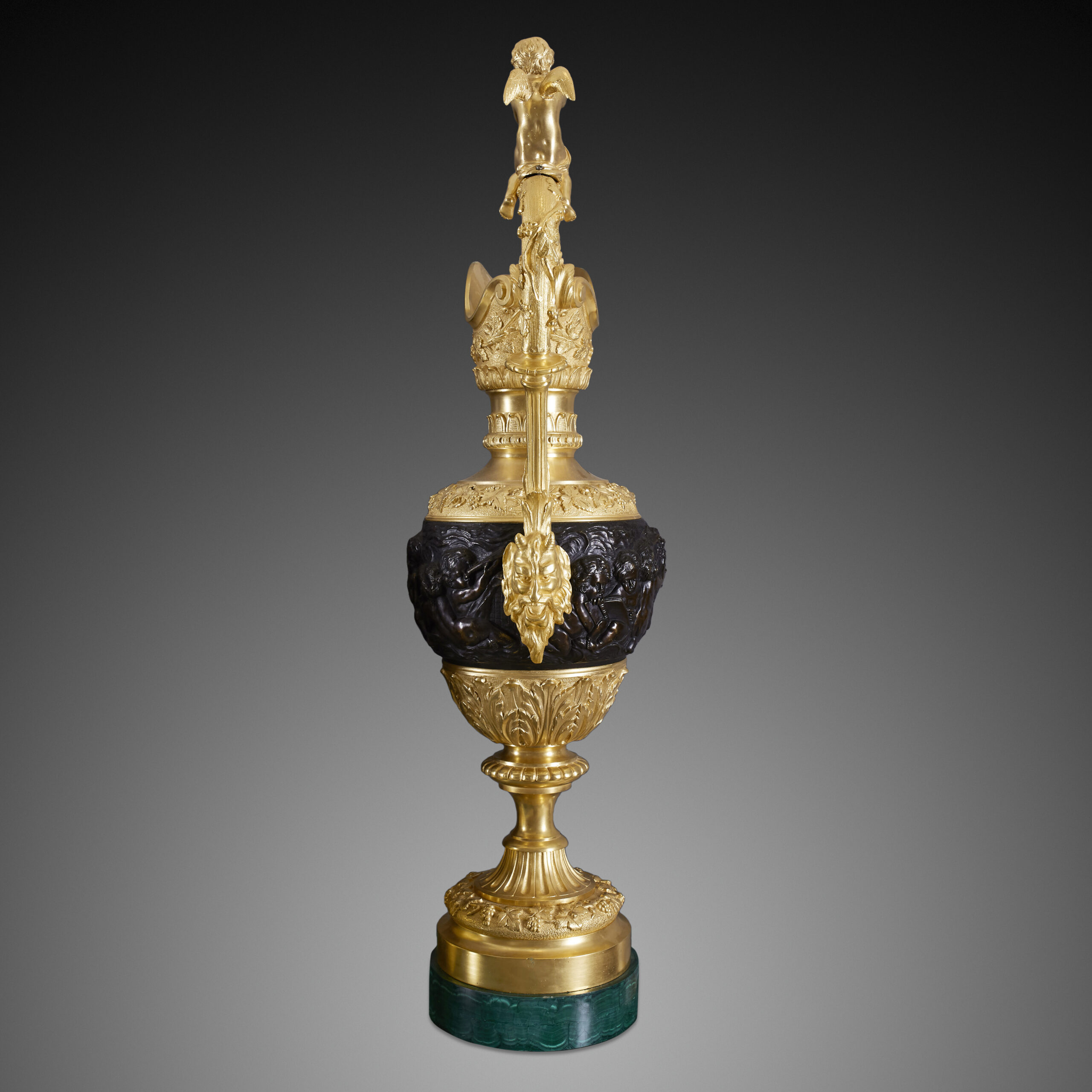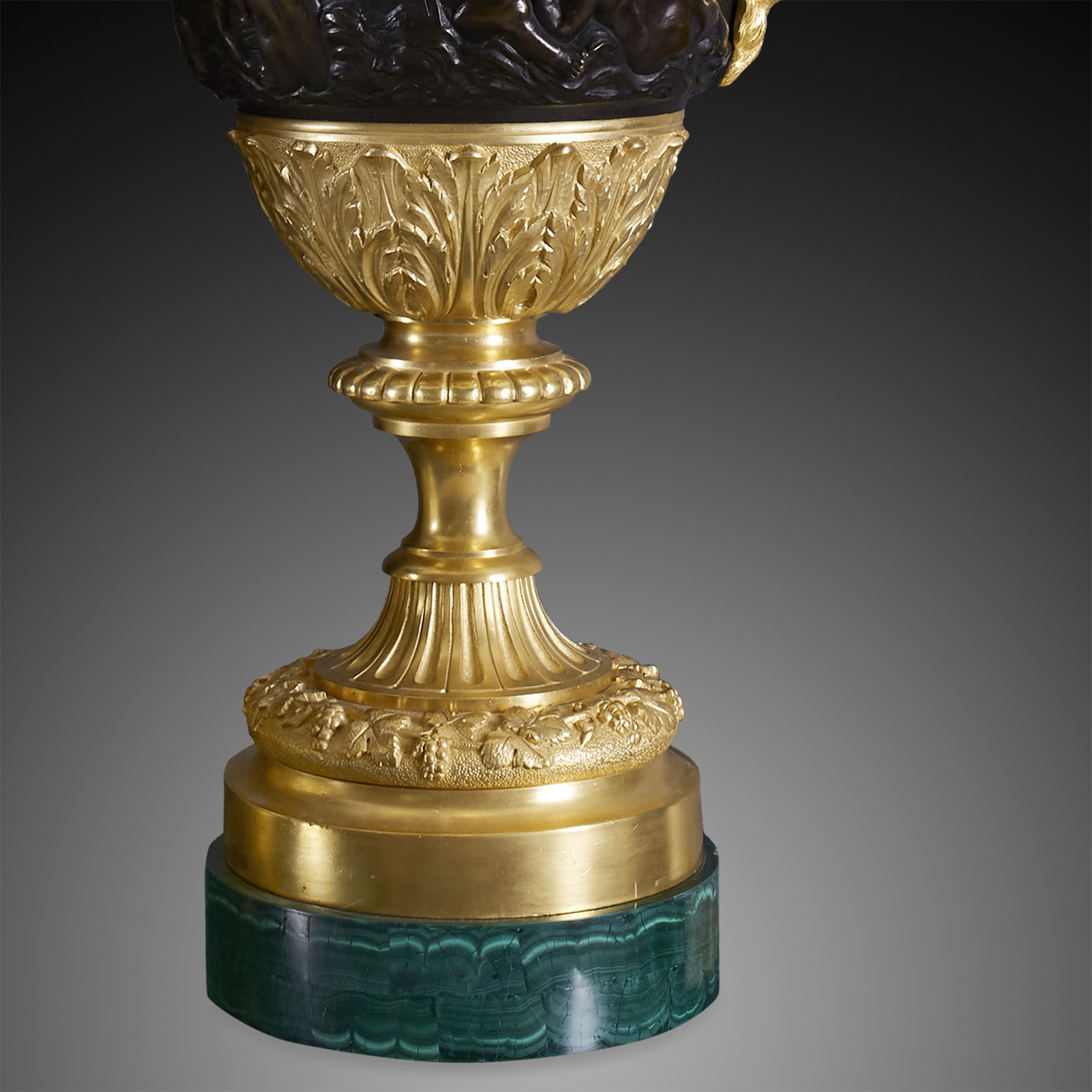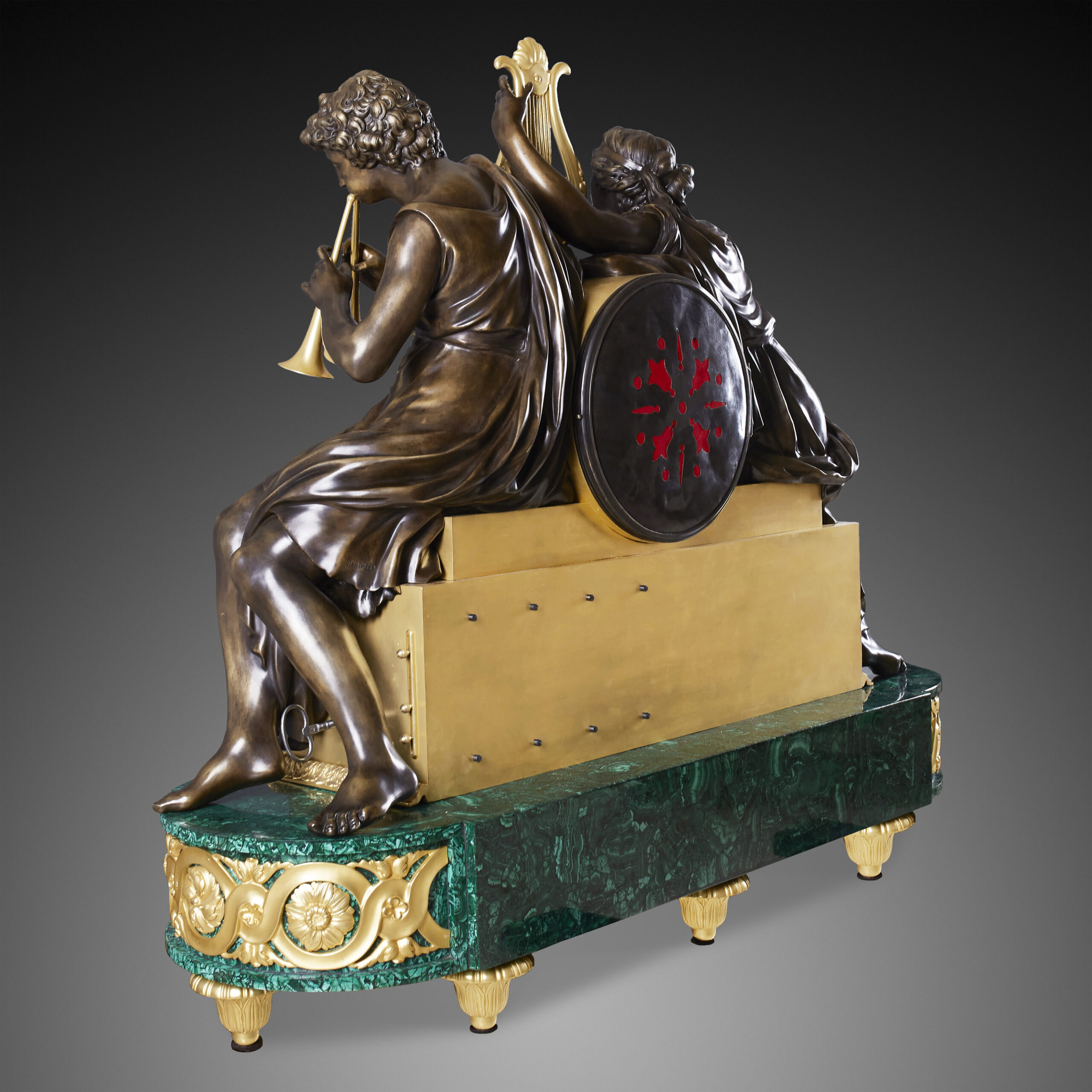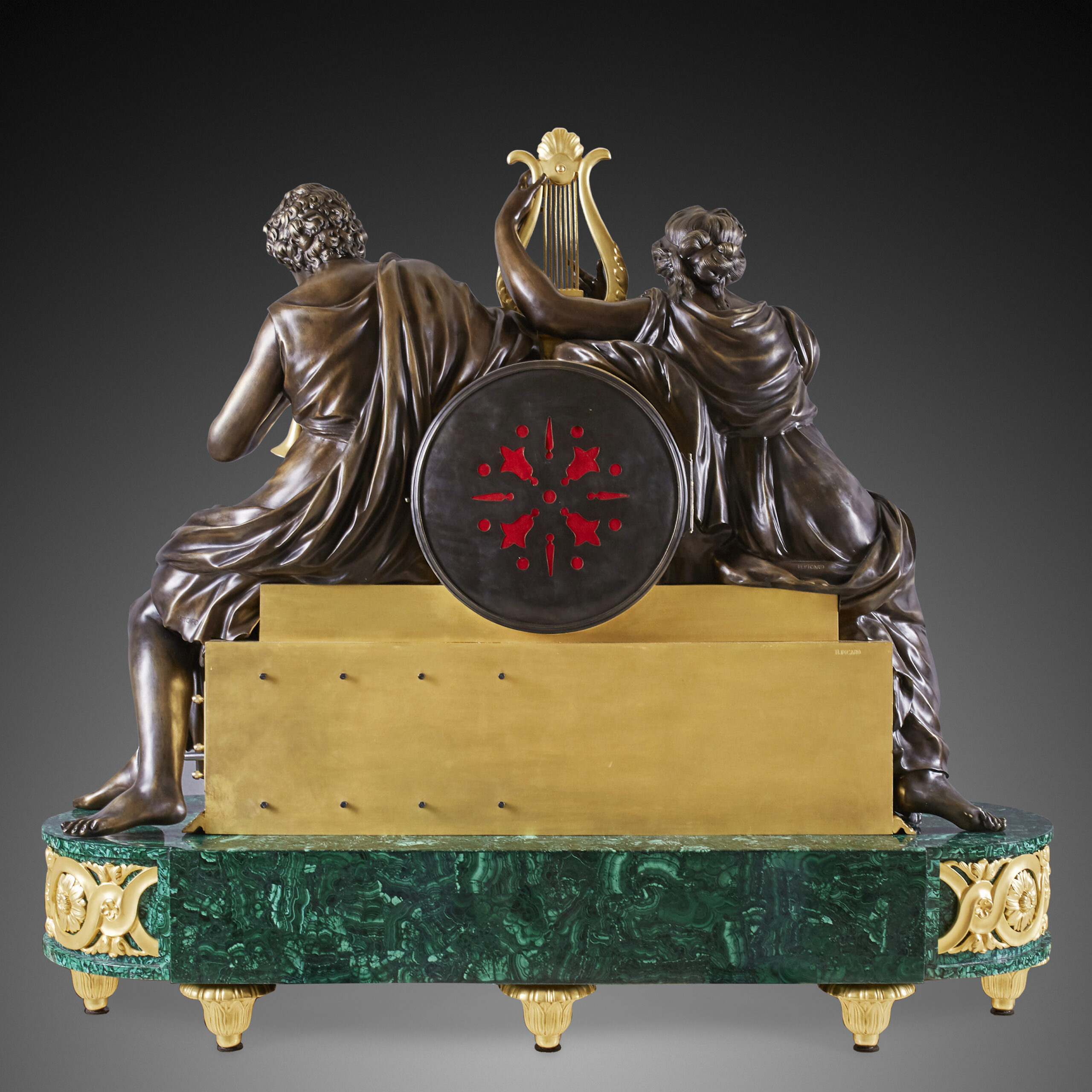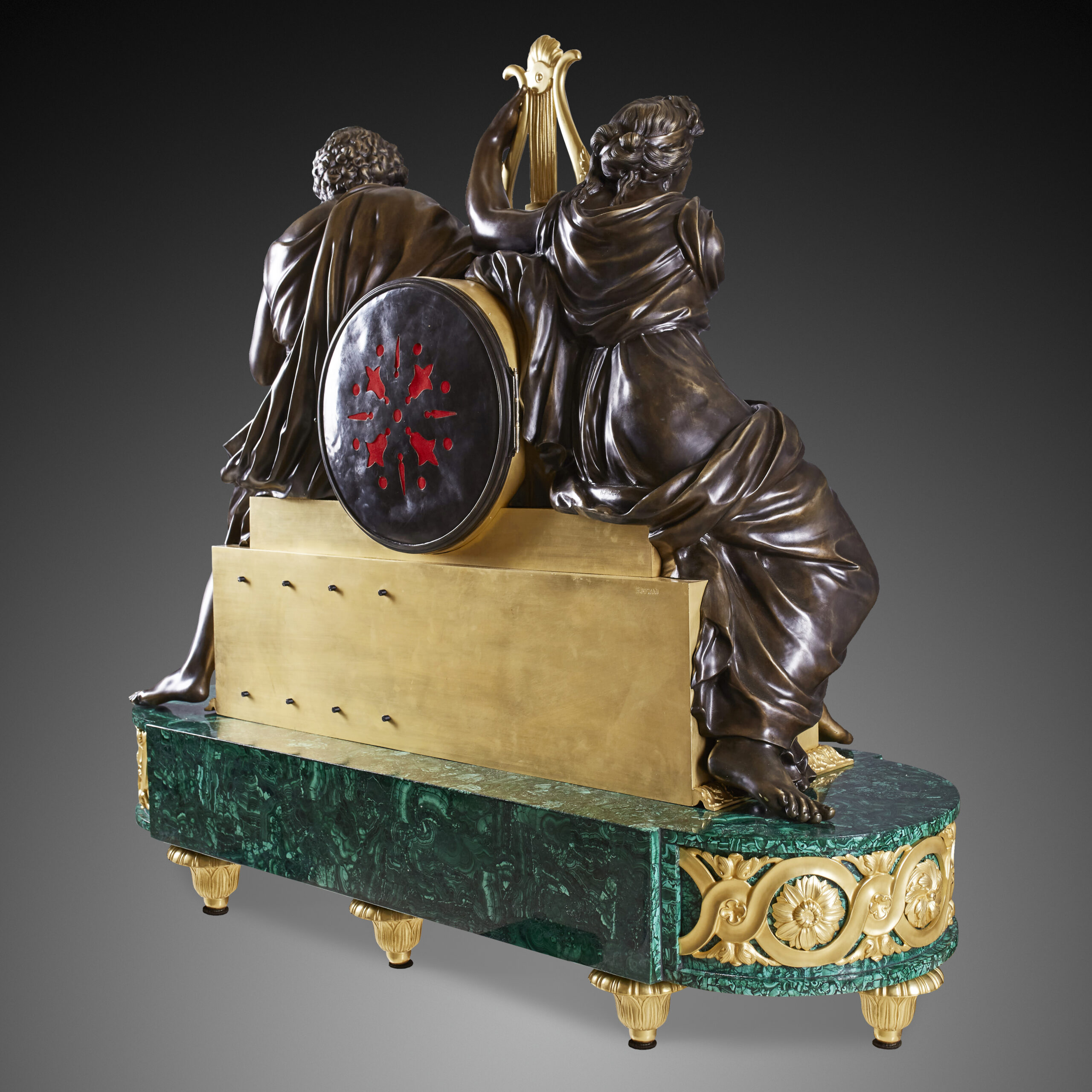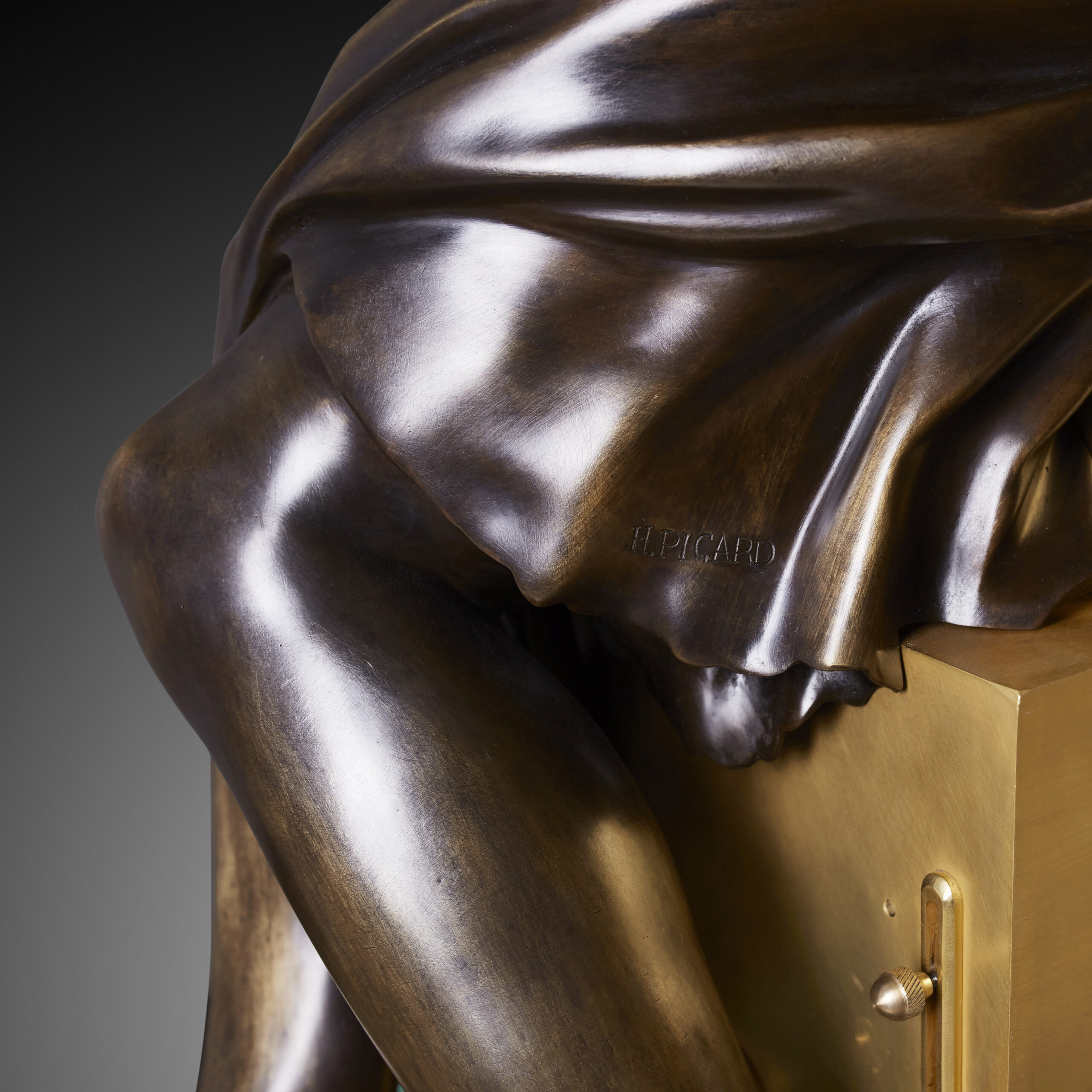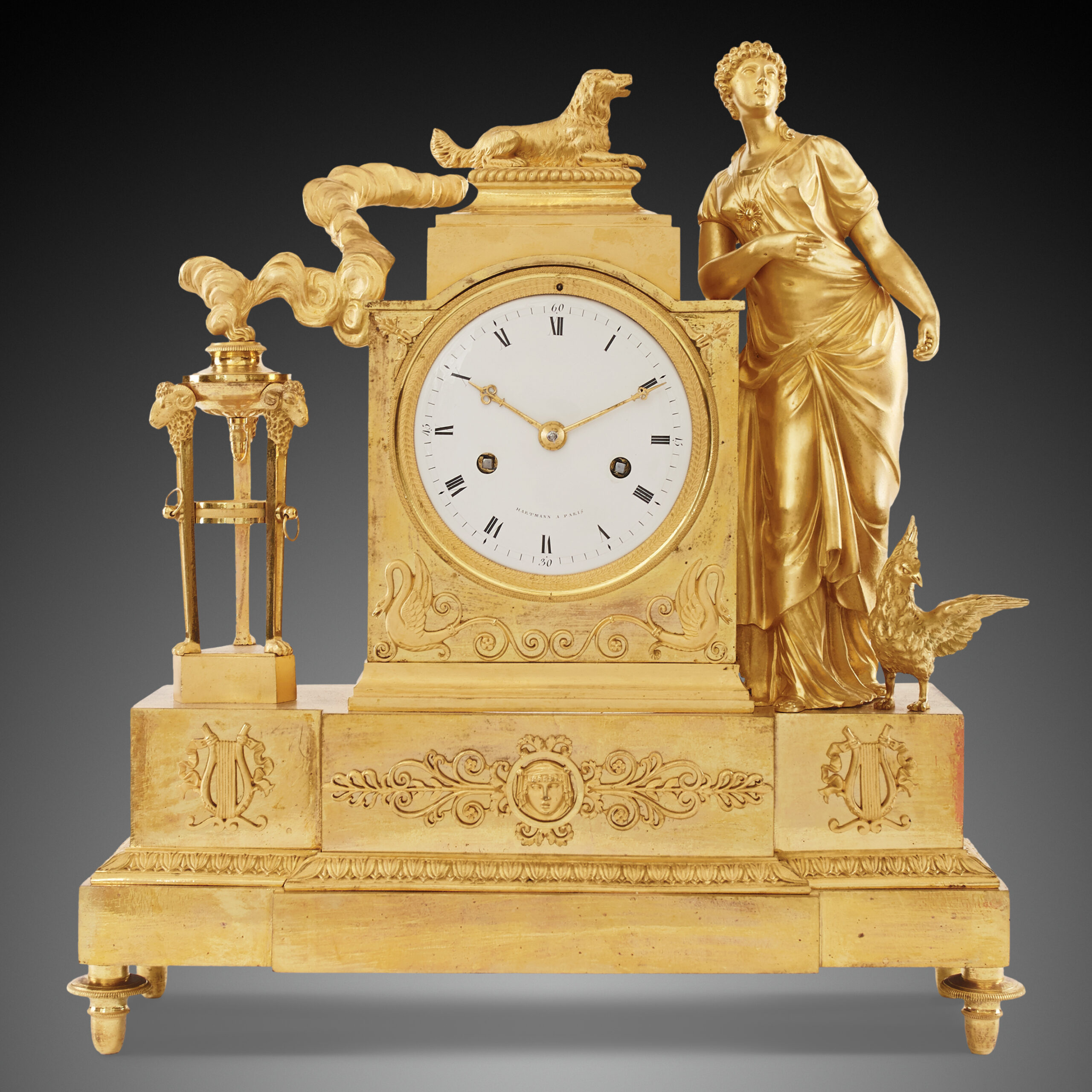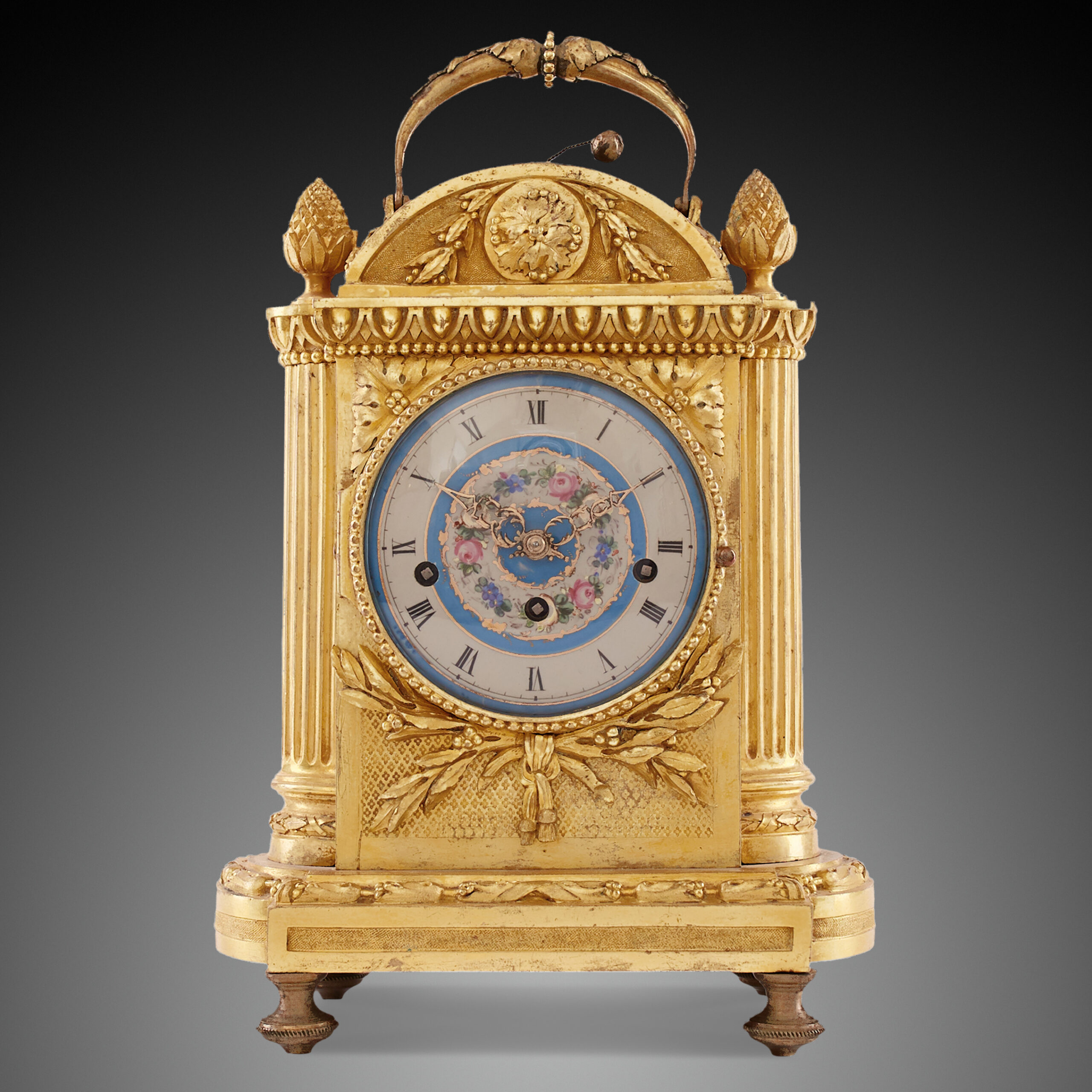
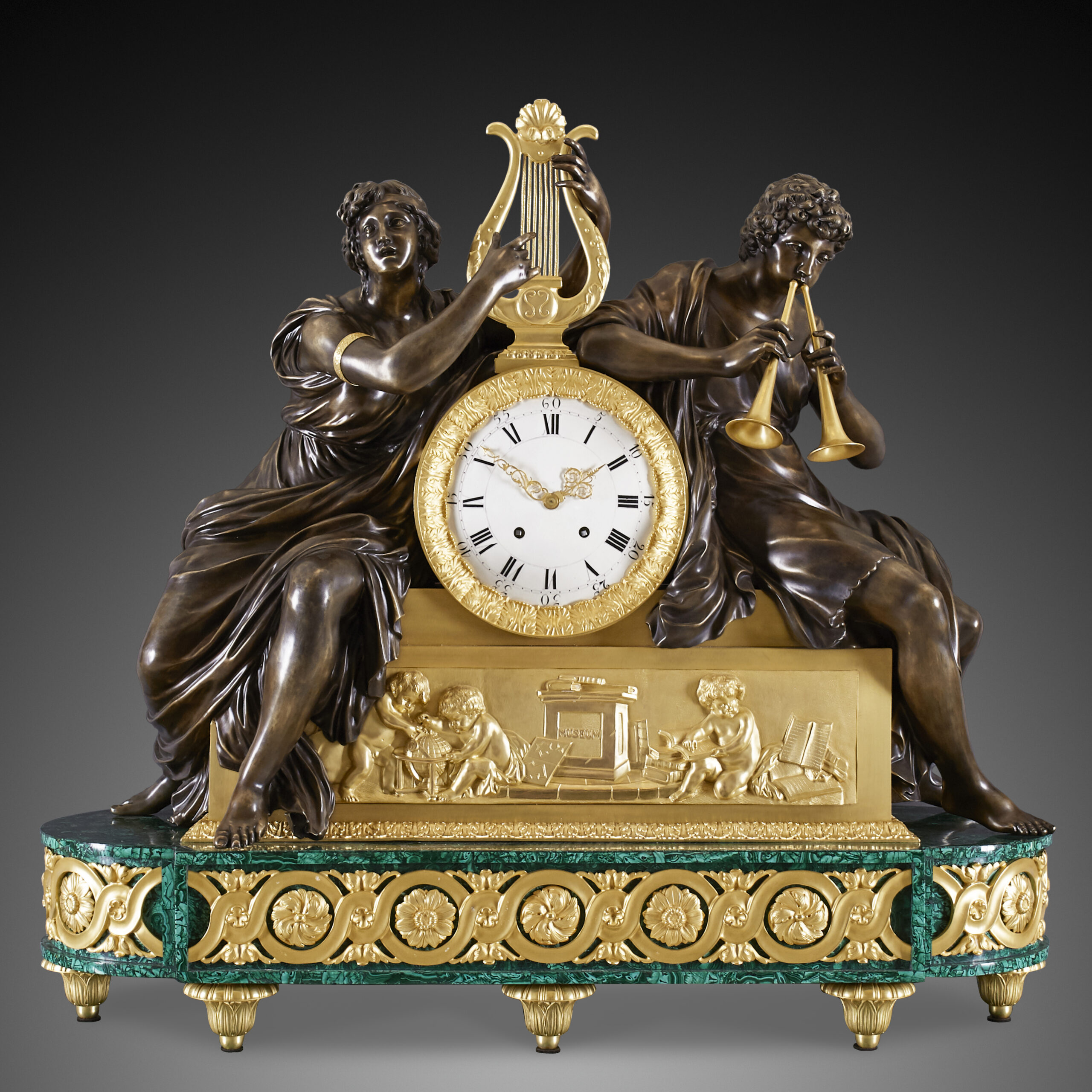
This antique clock set consists of two important pieces which are the mantel clock and the decorative garnitures. The set derives from the Louis Philippe I and Charles X period and is crafted in the characteristic Restoration style of that time. In the nineteenth century, bronze was preferable more than other materials due to the casting process and its possibility to achieve both detail and consistency. For this reason, it became the favourite material for clock cases, candelabra and furniture ornaments.
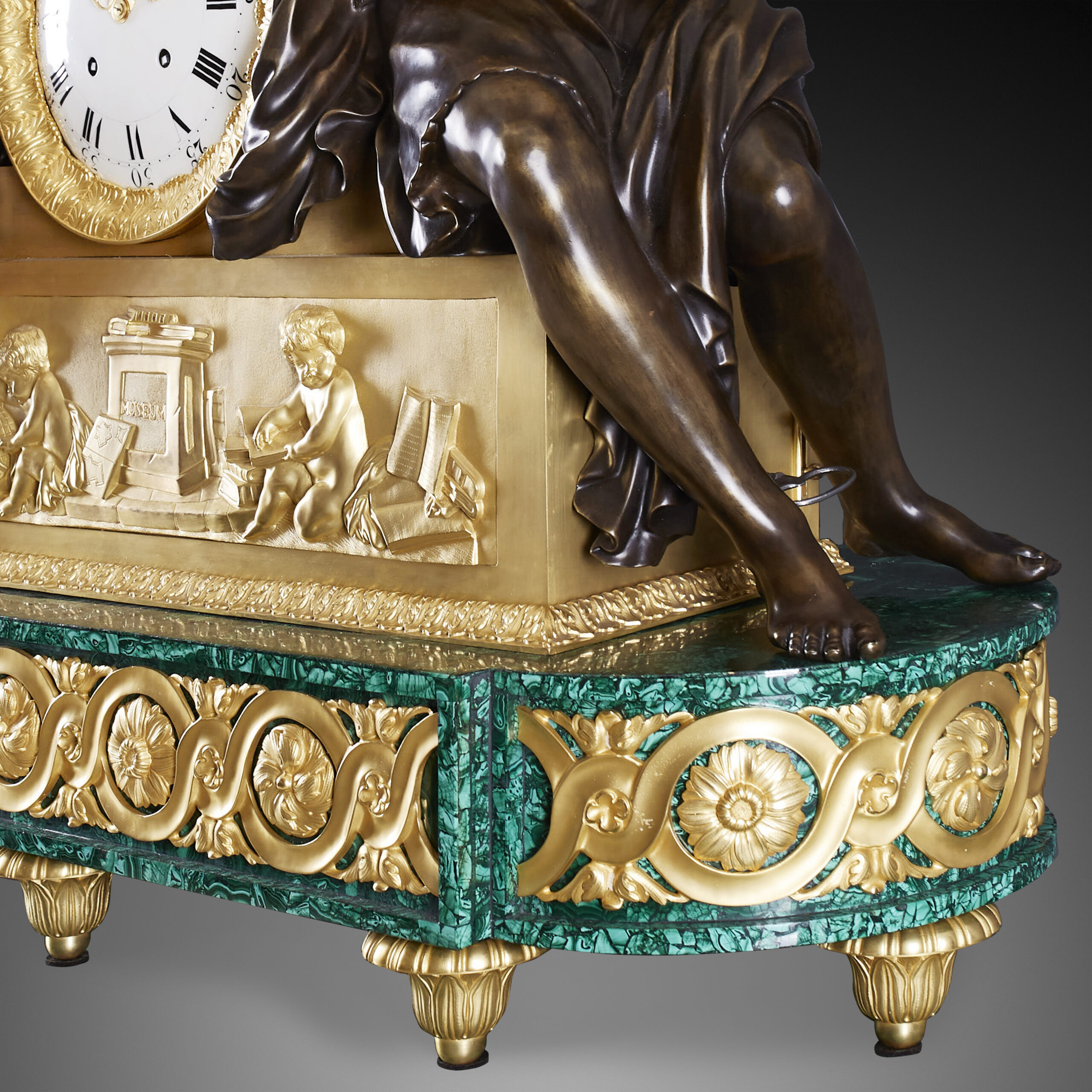
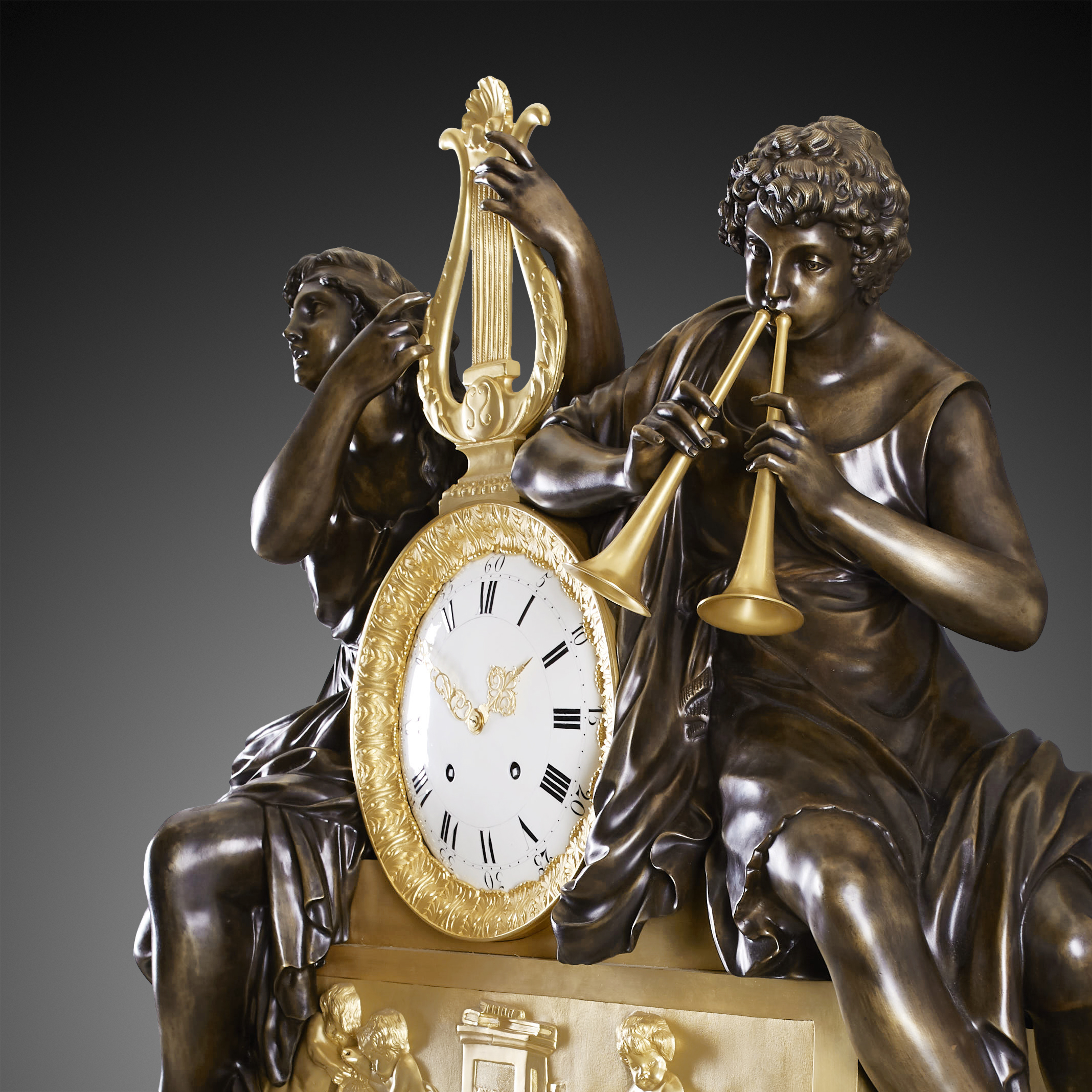
The main part of the Clock is decorated with the image of two people playing instruments. The burnished bronze statues were created by applying patina and heat to achieve the desired finish, this technique is commonly used to let the bronze age naturally as it becomes exposed to the elements. On the left side is Apollo – a Greek god, the symbol of art and truth who is often referred to with the image of a boy with blonde hair, white dress, playing the lyre. Next to Apollo is a Greek boy playing the Aulos flute – a typical Greek instrument, created by the goddess Athena. This timekeeper is depicting the competition scene between the two worlds: the divine and the lower realms. There is an anecdote that Apollo and a mortal boy, Marsyas, had a musical competition on Mount Olympus witnessed by gods and celestials. The manufacturer cleverly accentuated this epic scene when using black bronze with finely engraved chisels. The highlight for this set is the use of malachite dotted on the clock base, not only bringing the outstanding colour but also being a unique material that has the effect of absorbing negative energies and pollutants from the atmosphere and the body, according to the concept of the Egyptian, Greek and Roman empires.
The enamel dial located in between these two figures is encircled by a combination of Arabic and Roman numerals indicating hours. The dial is accompanied by finely worked gilded scroll hands and bordered with framing in an acanthus-leaf motif. The watch uses a weekly winding.
Beneath the dial is located an allegoric scene in relief as a frieze. The relief illustrates 3 putti figures in a museum, referencing the allegory of astronomy. Two of the putti figures are diligently trying to conduct some kind of astronomical calculations with a compass, while the third putti are examining the books surrounding him. The composition seems humorous and shows the light-heartedness of the period, because of the translation of serious studies of science and philosophy into a childish-serious play.
The façade of the malachite plinth features wide interlacing gilded motifs that stand out against the backgrounds with their attention to detail. The frieze is adorned with rosettes, acanthus leaves and symmetrically placed interlacing lines.
Moreover, inside of the clock is situated a working music box that plays 8 different tunes. The music box plays one tune every 12 hours starting from 8 am, lasting only for 45 seconds. The music box and tunes are closely associated with the competition that takes place between Apollo and Marsyas. Situated on the side of the clock, right behind the leg of Marsyas are three switches. Each switch is responsible for different functions, among them are 1) completely switching the tunes off 2) playing the tunes continuously without stopping throughout the day. 3) playing only the chosen tune.
The movement is stamped ‘Le Roy à Paris’, one of the most important clock making establishments active in Paris during the 19th Century.
LE ROY ET FILS (FRENCH, FOUNDED 1785)
Le Roy et fils (Le Roy & Sons) was a prestigious French clock making firm. The company was founded in 1785 by Basile Charles Le Roy, who worked in partnership with his son Charles-Louis Le Roy.
Both father and son became highly influential clockmakers in the 19th Century, taking commissions from Napoleon I and his sister, Princess Pauline, as well as the Duke de Bourbon and other members of the European social elite. In the 1850s, the company was brilliantly managed and numbered no fewer than 50 employees, among the best in the capital. This growing success was confirmed with the opening, in 1854, of the first Le Roy boutique in London under the name “Le Roy & Sons” at 296 Regent Street. The company was the only foreign clockmaking firm to hold a British Royal Warrant during the reign of Queen Victoria. Under the guidance of the manager, it became the place-to-be for all aficionados of luxury French watchmaking until 1952.