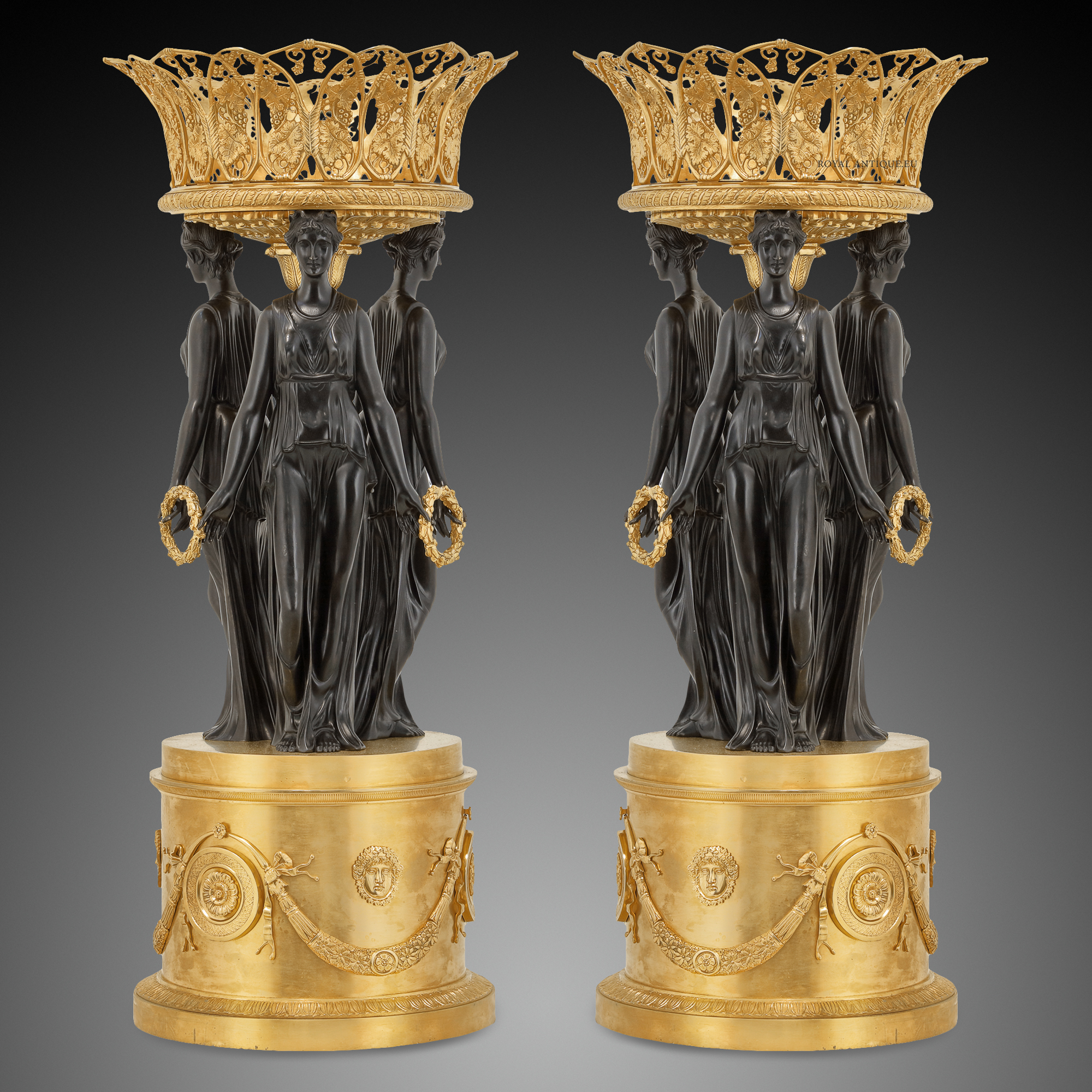
This magnificent pair of French Empire torchères (or candelabra stands) is a superb and highly theatrical example of the purest Neoclassical taste of the early 19th century, circa 1810–1820.
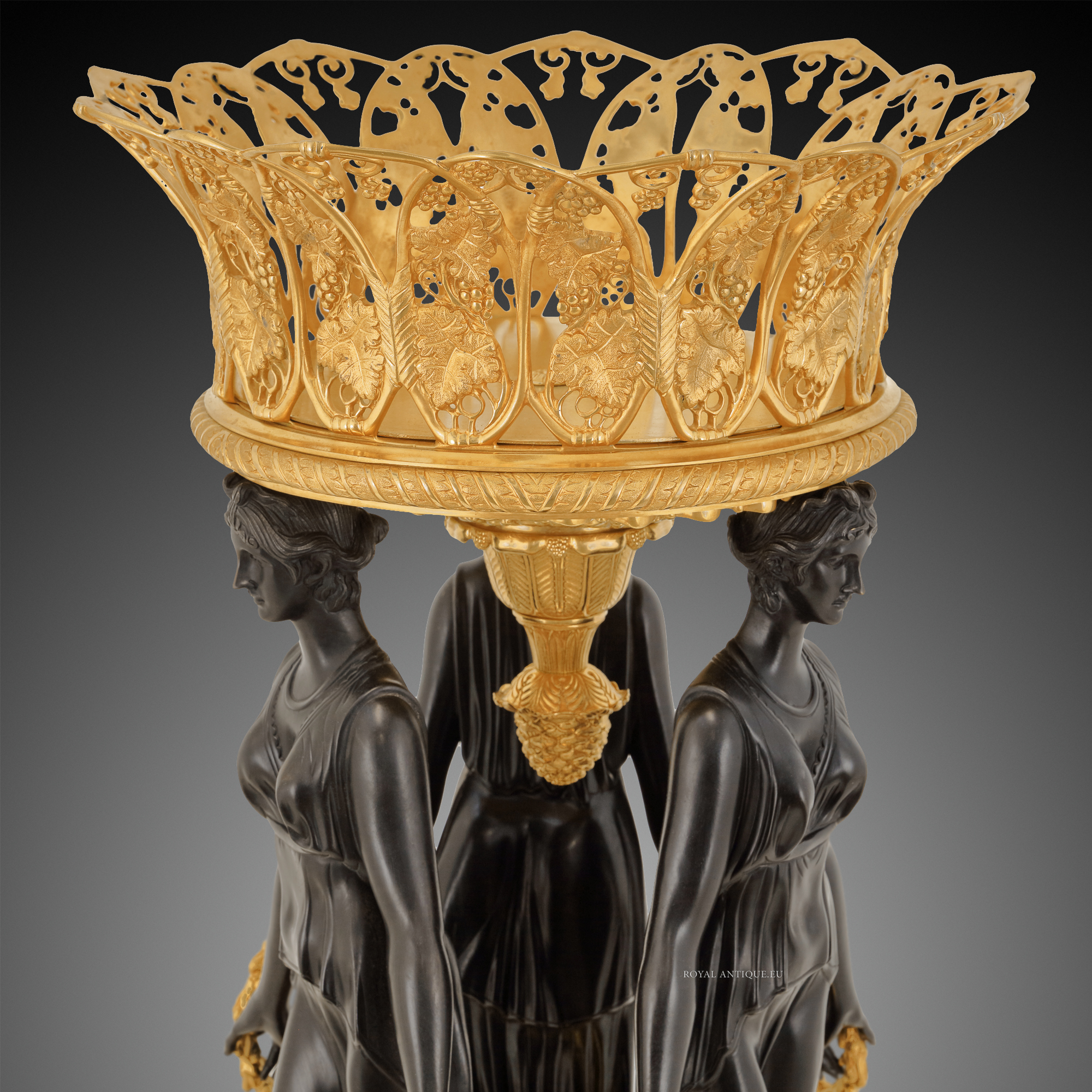
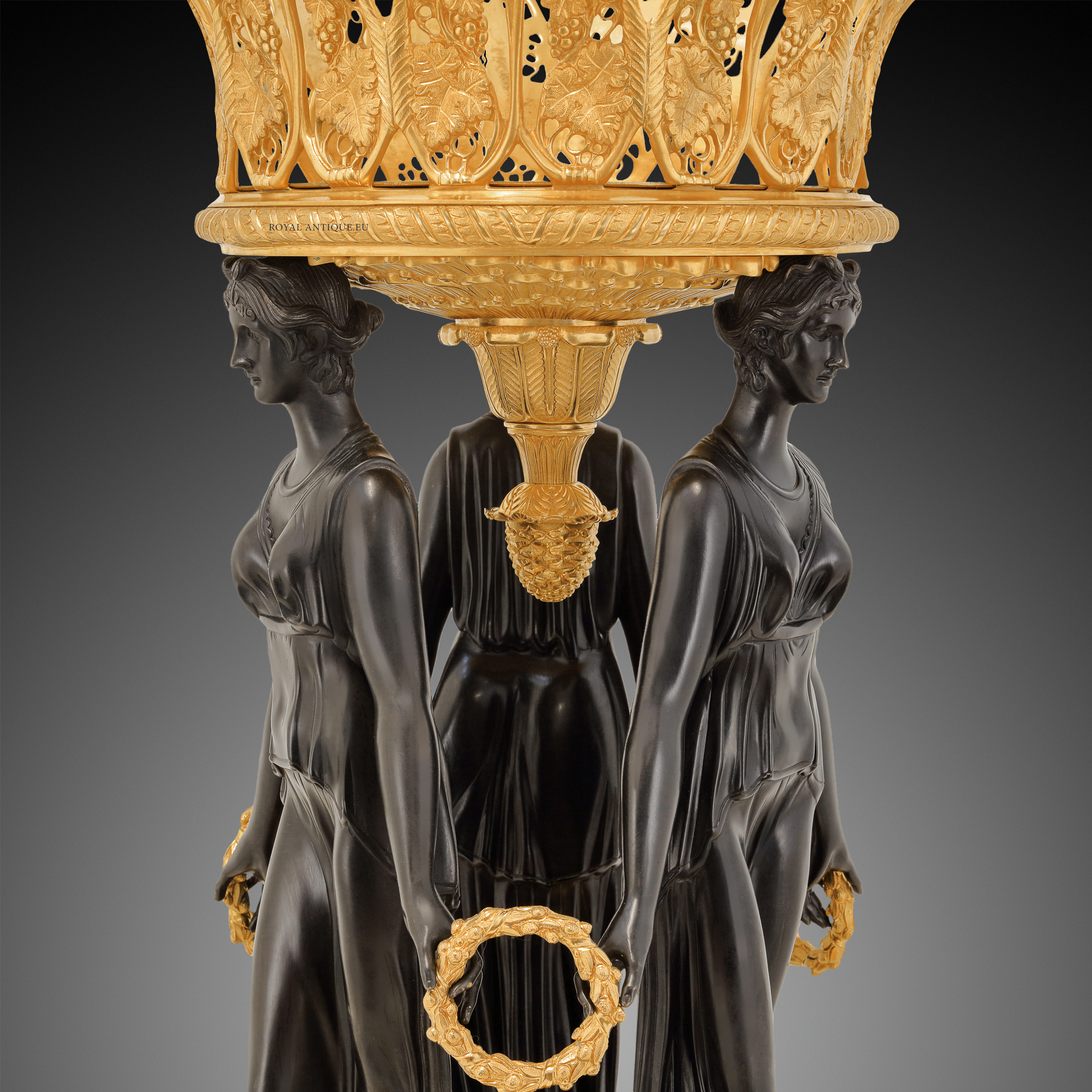
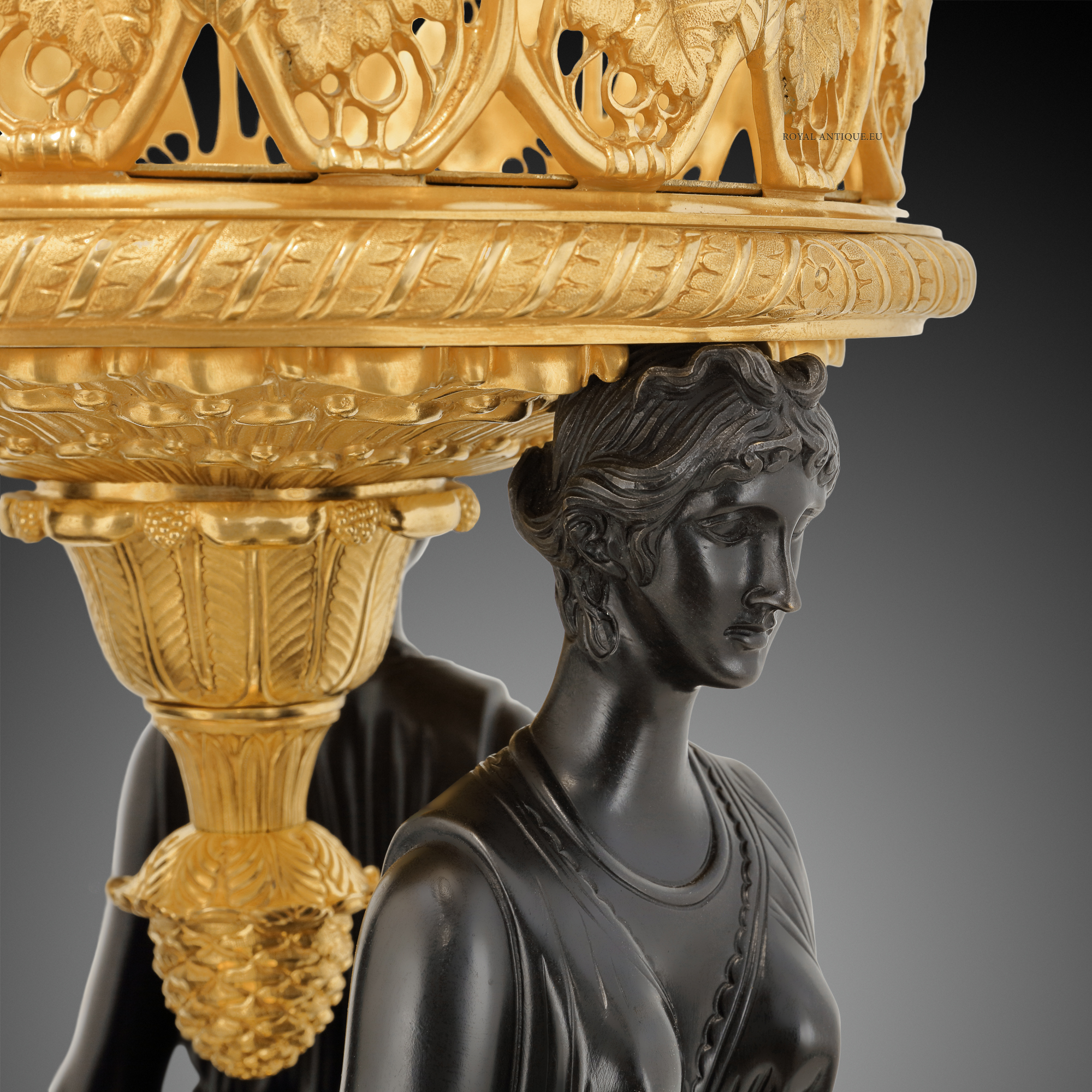
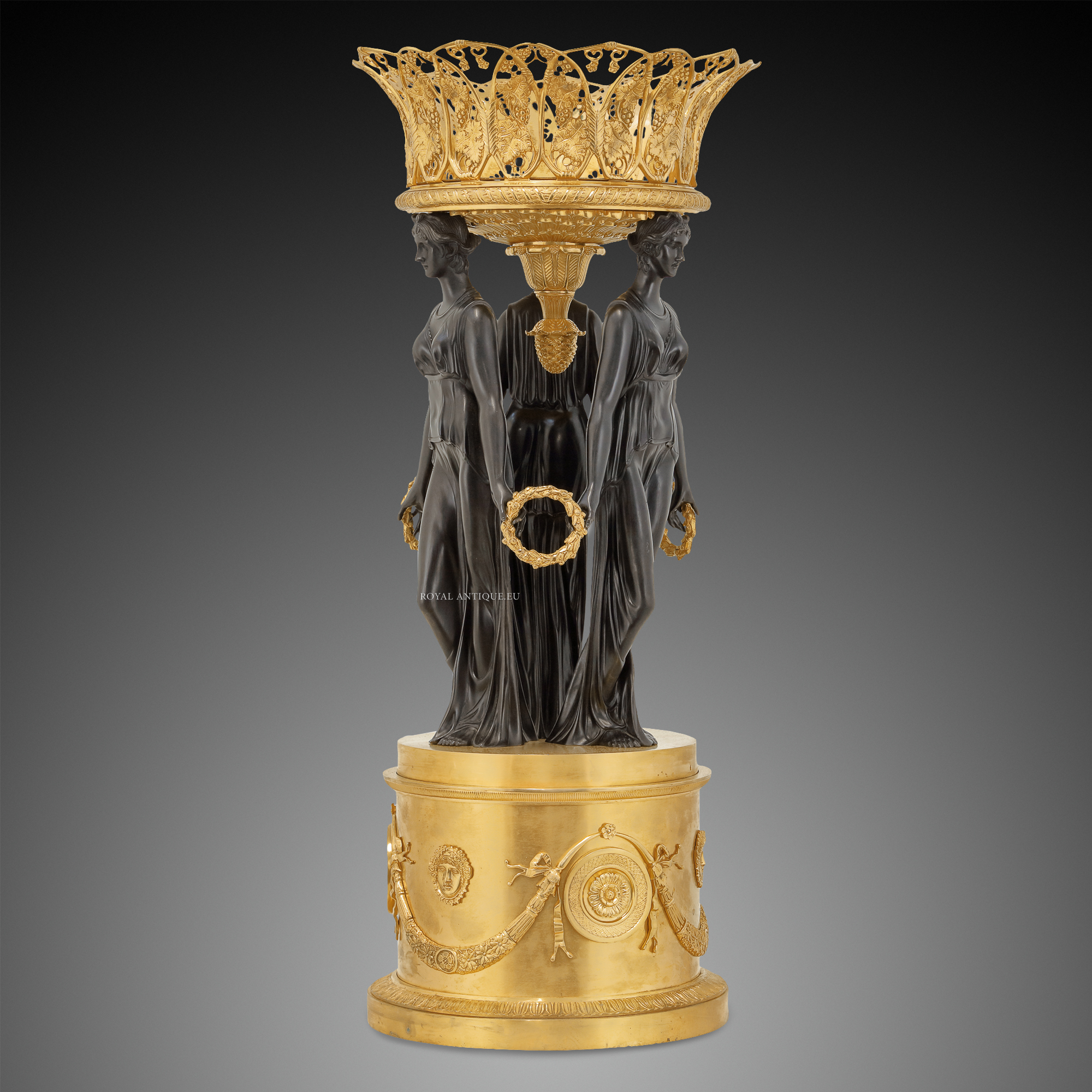
Each torchère is dominated by three elegant, life-size female figures in dark patinated bronze, representing the Three Graces or classical caryatids. The figures stand gracefully back-to-back, their draped robes falling in soft, naturalistic folds, each holding a ring in one hand. Their heads support an elaborate openwork gilt bronze crown or basket, designed to hold candles or a large decorative object. The contrast between the deep, rich black patina of the figures and the warm, luminous gilt bronze of the crowns and bases is particularly striking and typical of the finest Empire production.
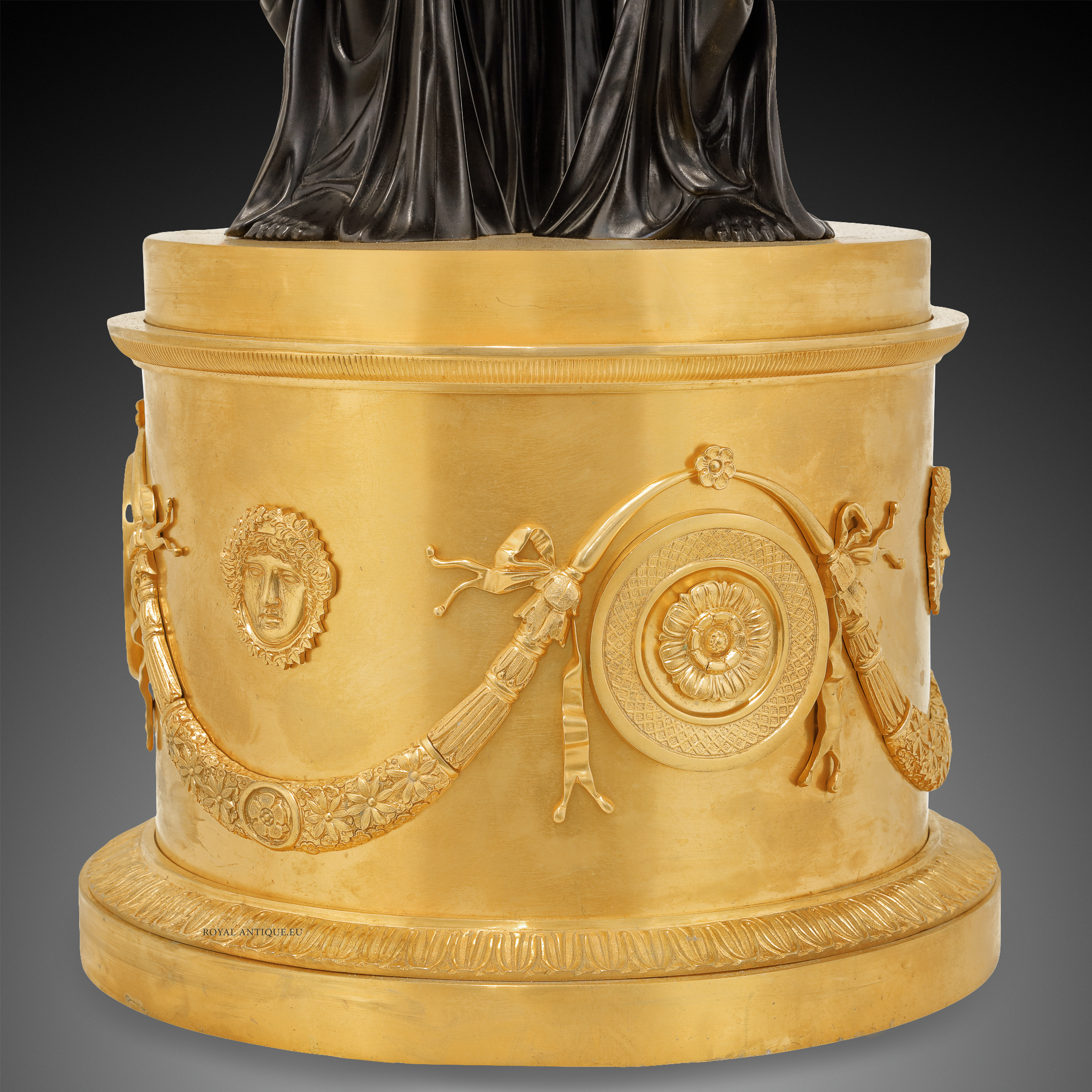
The figures rise from tall cylindrical pedestals in gilt bronze, richly decorated with classical swags, laurel wreaths, and anthemion motifs. The bases are stepped and finely detailed, giving the torchères a monumental yet perfectly balanced presence.
These torchères perfectly embody the spirit of the Empire under Napoleon Bonaparte. After the Revolution, French designers deliberately returned to the grandeur and architectural vocabulary of ancient Rome and Greece. Caryatids, laurel motifs, and the dramatic use of contrasting patinated and gilt bronze were used to express imperial power, order, beauty, and eternal glory. Such imposing pieces were commissioned for the grandest salons, ballrooms, and official residences of the Napoleonic elite, where they served both as sources of light and as powerful sculptural statements.
When placed as a pair in a room, these torchères create an immediate and commanding symmetrical effect. The dark bronze figures provide sculptural depth and drama, while the glowing gilt bronze crowns and bases catch the light with quiet brilliance. Their scale and classical purity make them ideal as dramatic accents in any Neoclassical interior.
This pair represents the pinnacle of French Empire decorative arts, where technical mastery in bronze casting and gilding meets flawless classical proportion and symbolic refinement. Their exceptional quality and pure stylistic coherence make them a highly desirable addition to any serious collection of early 19th-century French objets d’art.