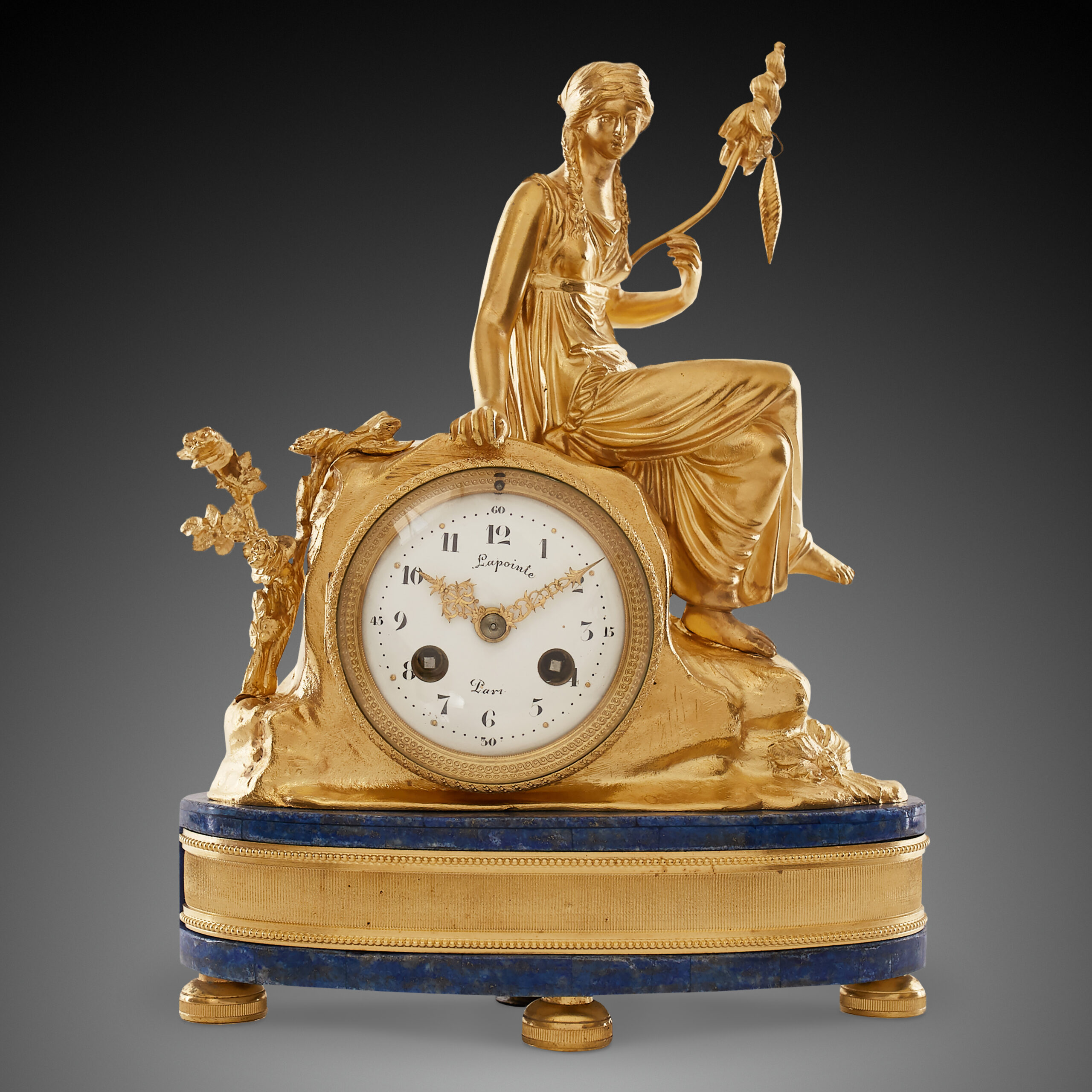
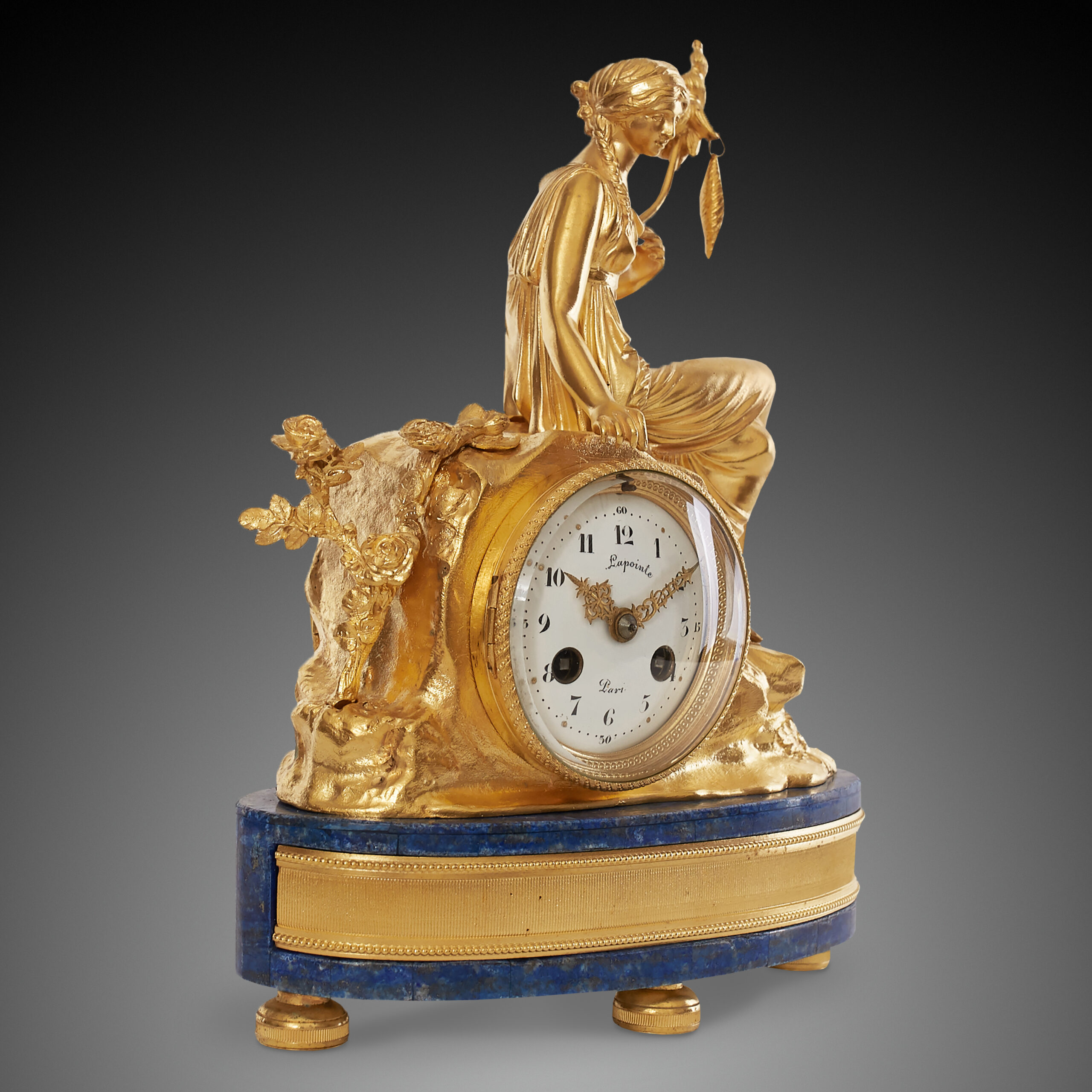
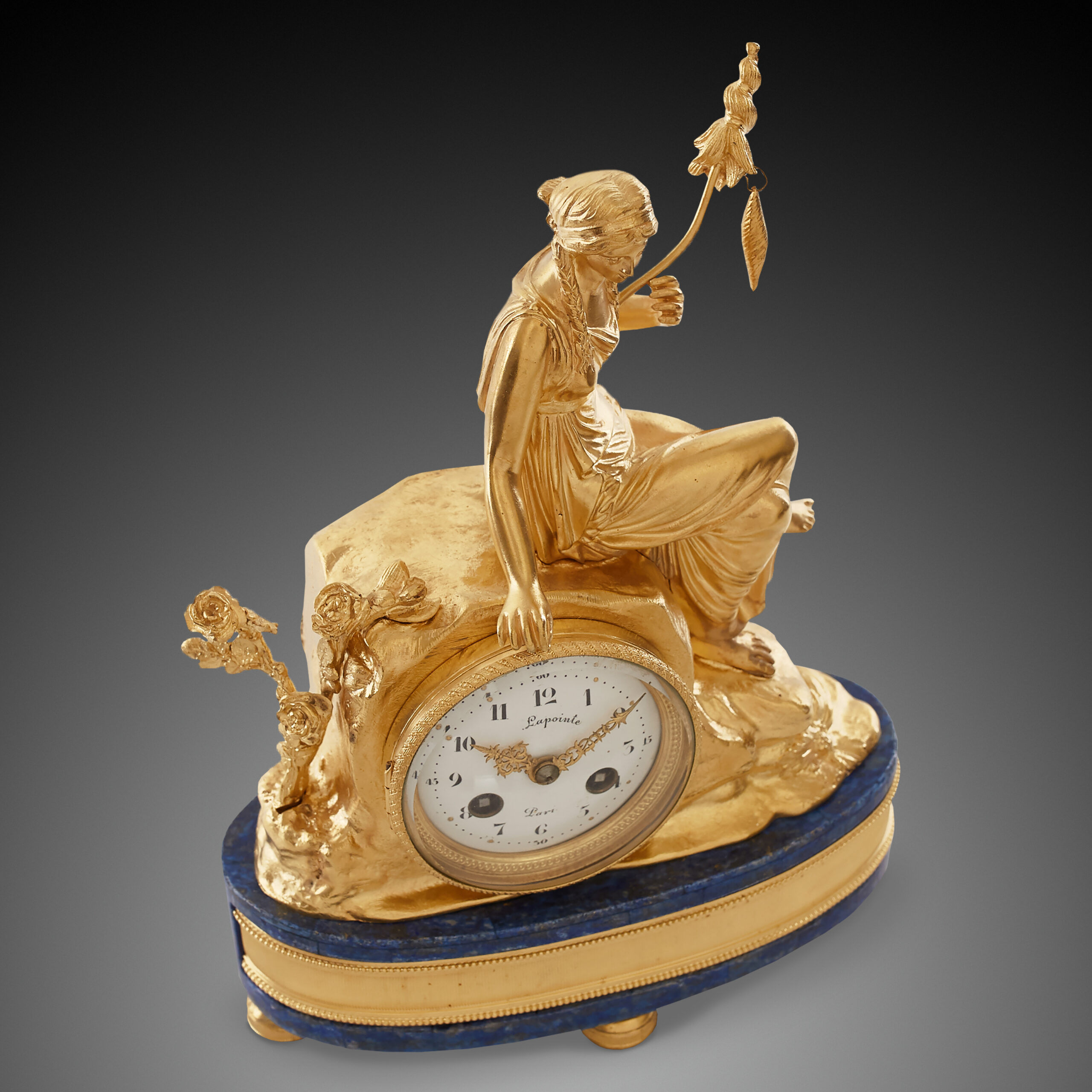
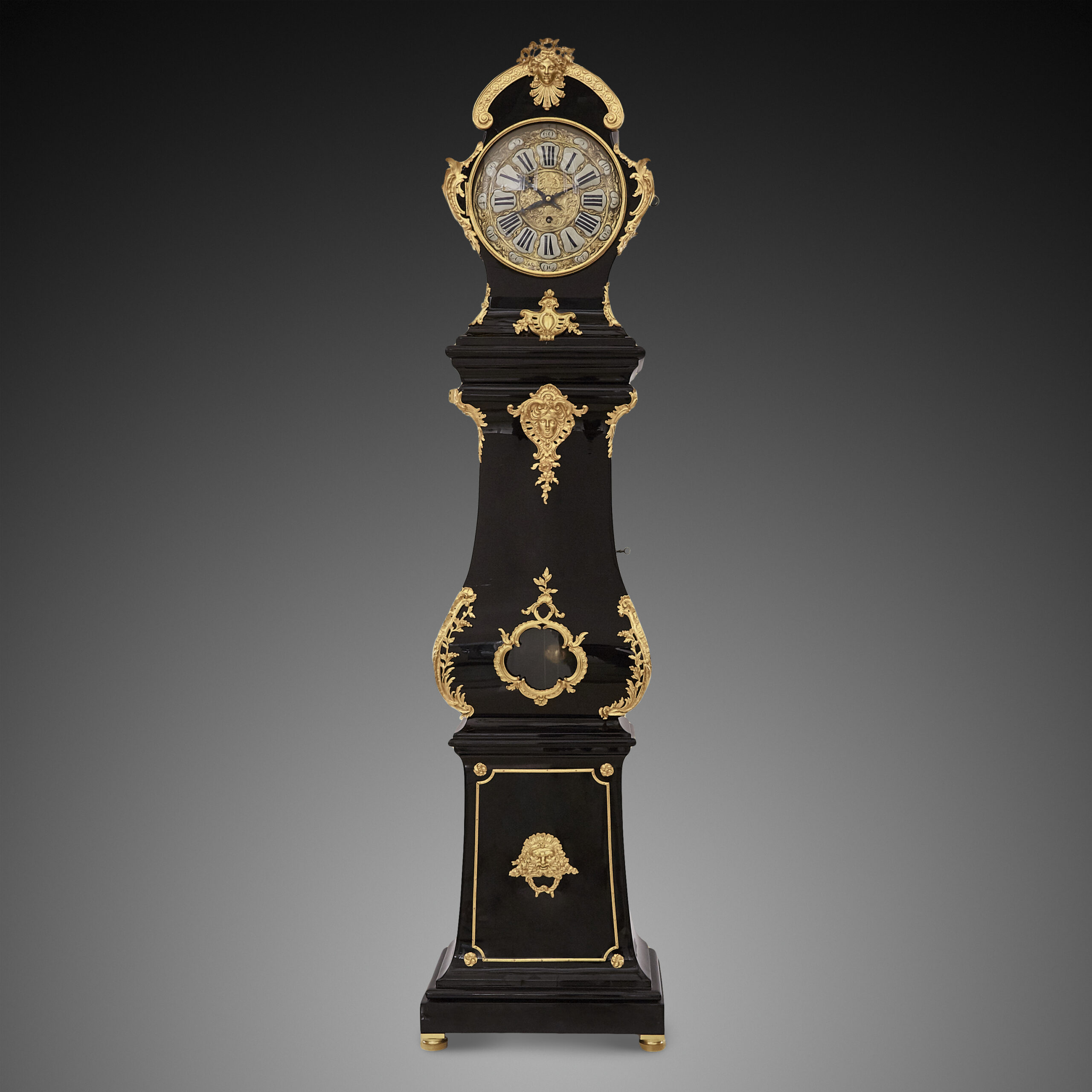
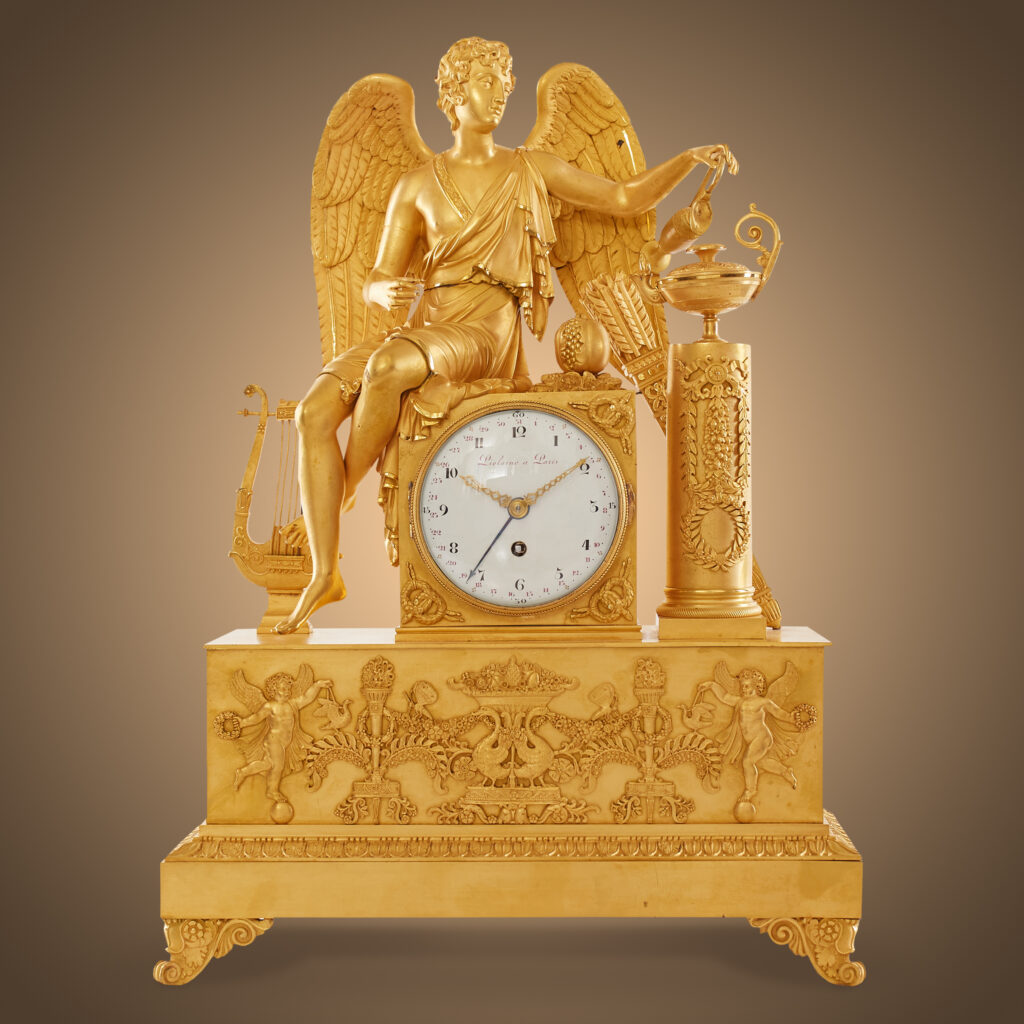
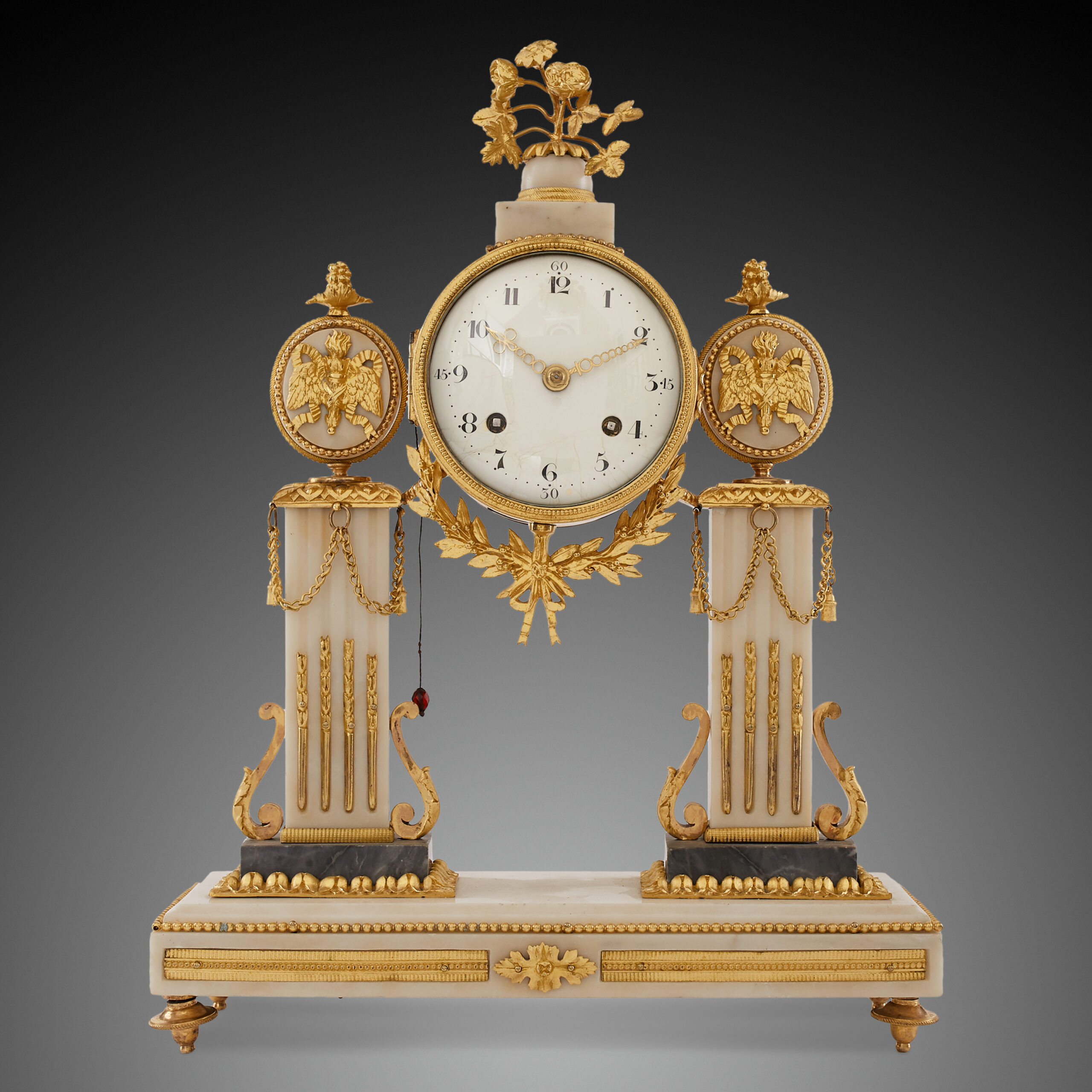
This exceptional French Empire mantel clock is a superb example of early nineteenth-century decorative arts, combining elegant neoclassical design with the finest standards of Parisian craftsmanship. Executed in richly mercury-gilt bronze, the clock is centered by a beautifully proportioned circular enamel dial signed Lapointe, Paris, a respected maker whose work reflects the sophistication and artistic excellence of the Empire period.
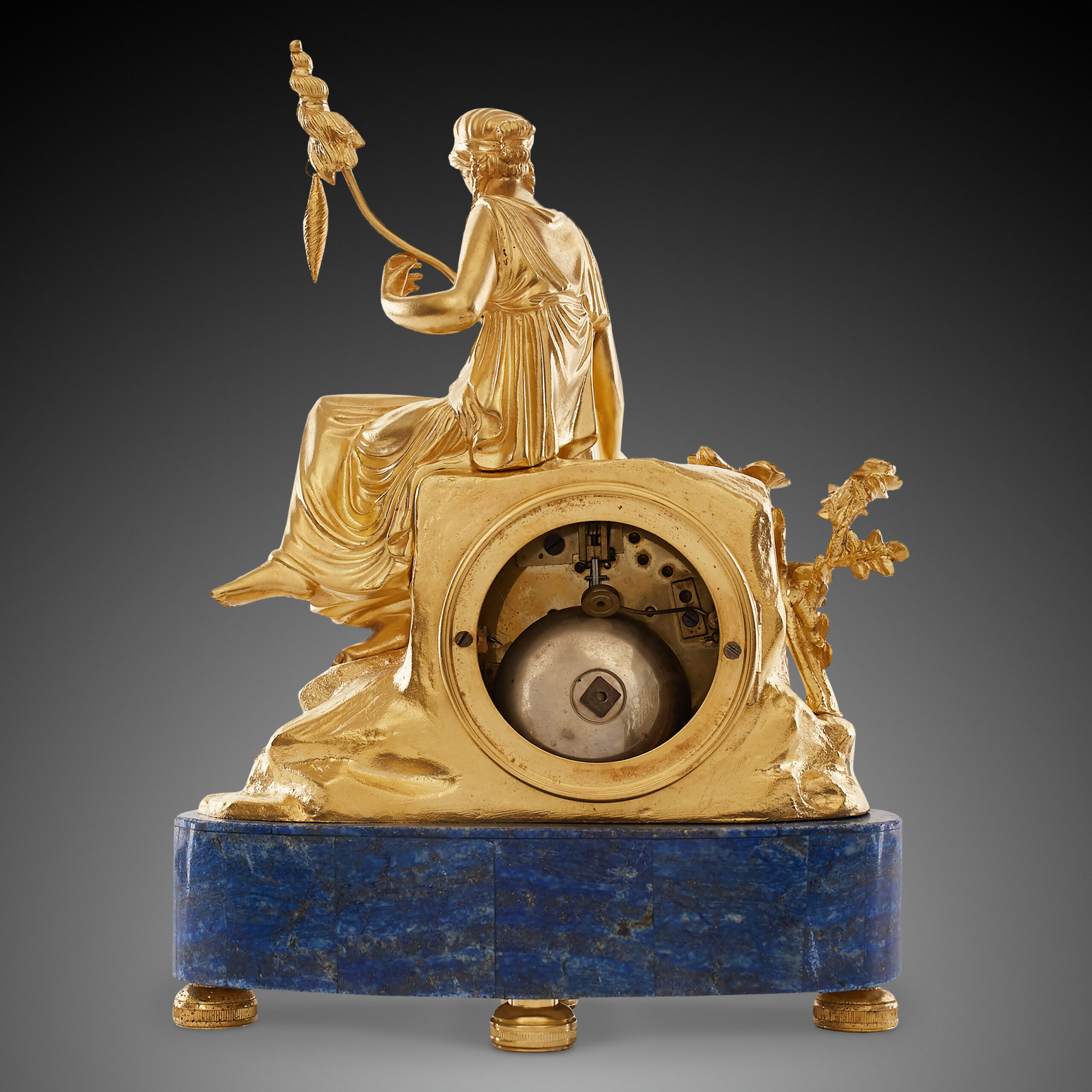
The case is surmounted by a graceful classical female figure seated upon a naturalistically modelled rocky outcrop. Draped in flowing garments and holding a flowering branch, the figure embodies the timeless allegorical themes of beauty, virtue, and nature that were highly prized in French decorative arts during the reign of Napoleon I. Her serene expression and finely sculpted features demonstrate the remarkable quality of the bronze casting and chasing, while the delicate folds of her drapery reveal the influence of classical Greek and Roman sculpture that inspired the Empire aesthetic.
The white enamel dial, framed by an elegant gilt bezel, is adorned with finely pierced and chased gilt hands that retain their delicate decorative character. The clock is further enriched with sculptural details, including a flowering tree emerging alongside the dial, creating a harmonious composition that balances architectural structure with naturalistic ornament.
Particularly striking is the substantial oval base, mounted with deep blue stone that provides a dramatic contrast to the luminous gilded bronze above. The richness of the blue stone enhances the overall visual impact of the piece while reflecting the Empire period’s appreciation for luxurious materials and refined colour combinations. The base is finished with finely detailed gilt mounts and raised circular feet, lending the clock a dignified and architectural presence.
Beyond its function as a timepiece, this clock stands as an important decorative object and a testament to the artistic achievements of French bronze makers during the Empire era. Its elegant proportions, sophisticated symbolism, and exceptional quality make it equally suited to a distinguished private collection, a formal interior, or an important decorative arts setting.
A rare and highly decorative example of French Empire craftsmanship, this mantel clock possesses both historical significance and enduring aesthetic appeal, making it a remarkable acquisition for collectors of fine French antiques and neoclassical decorative arts.