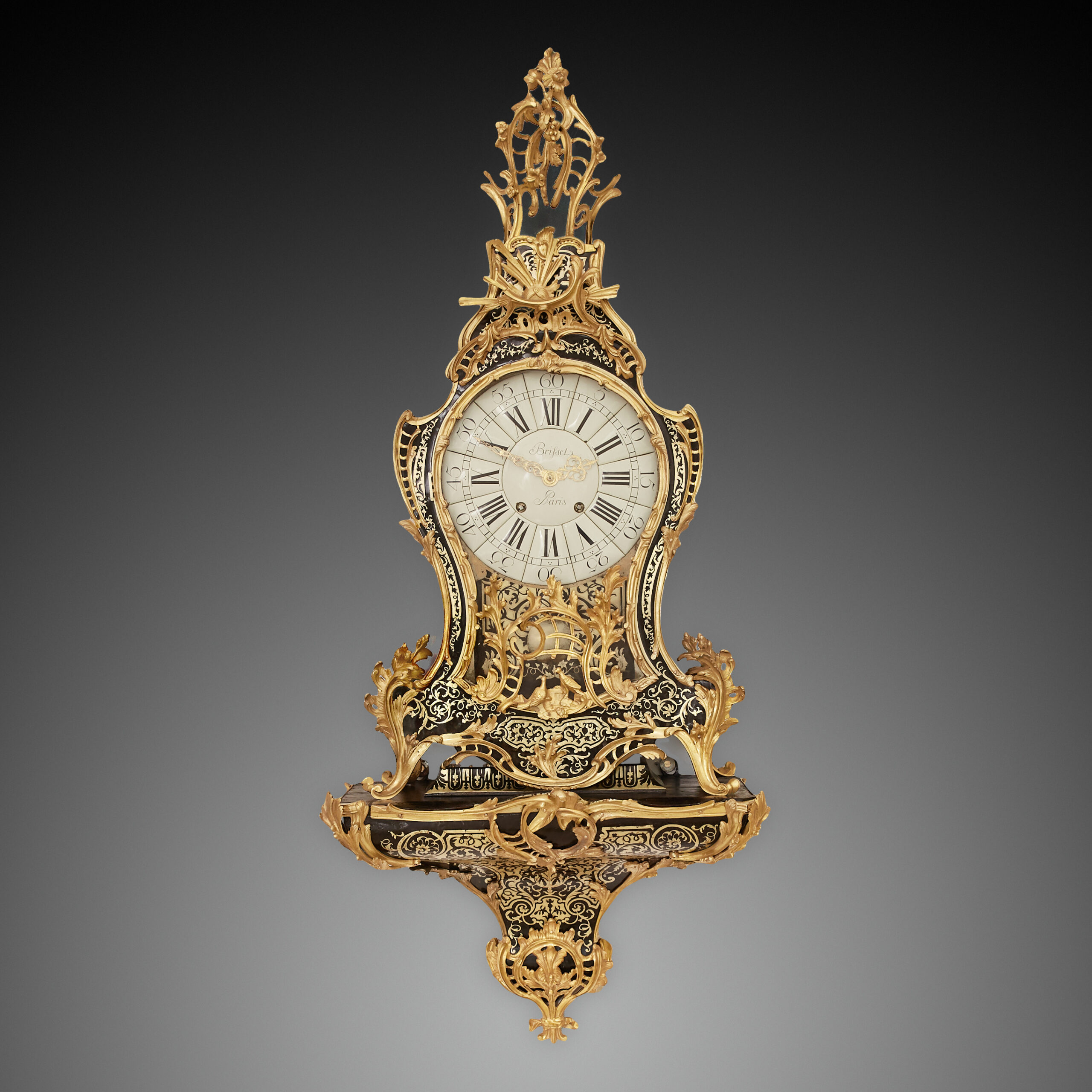
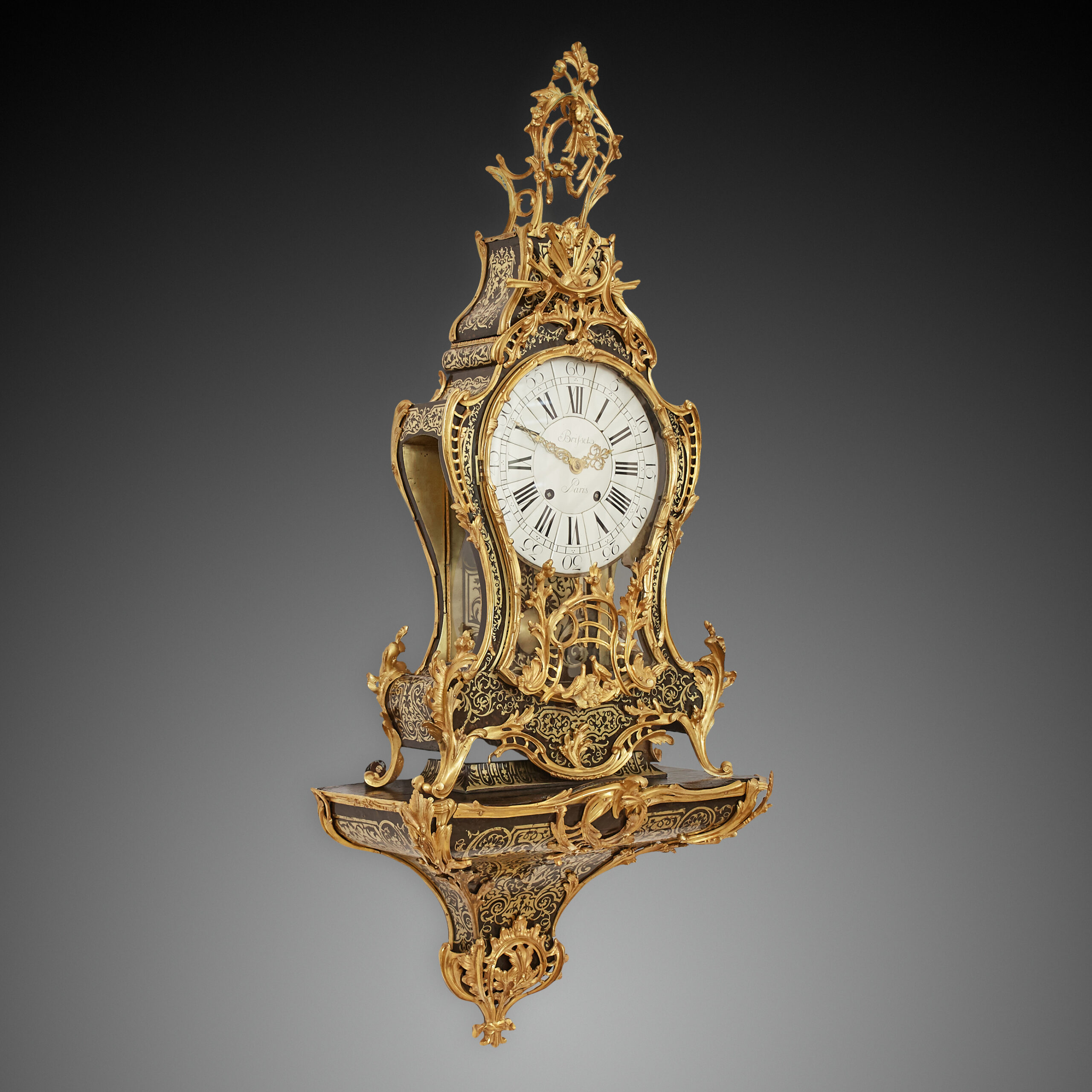
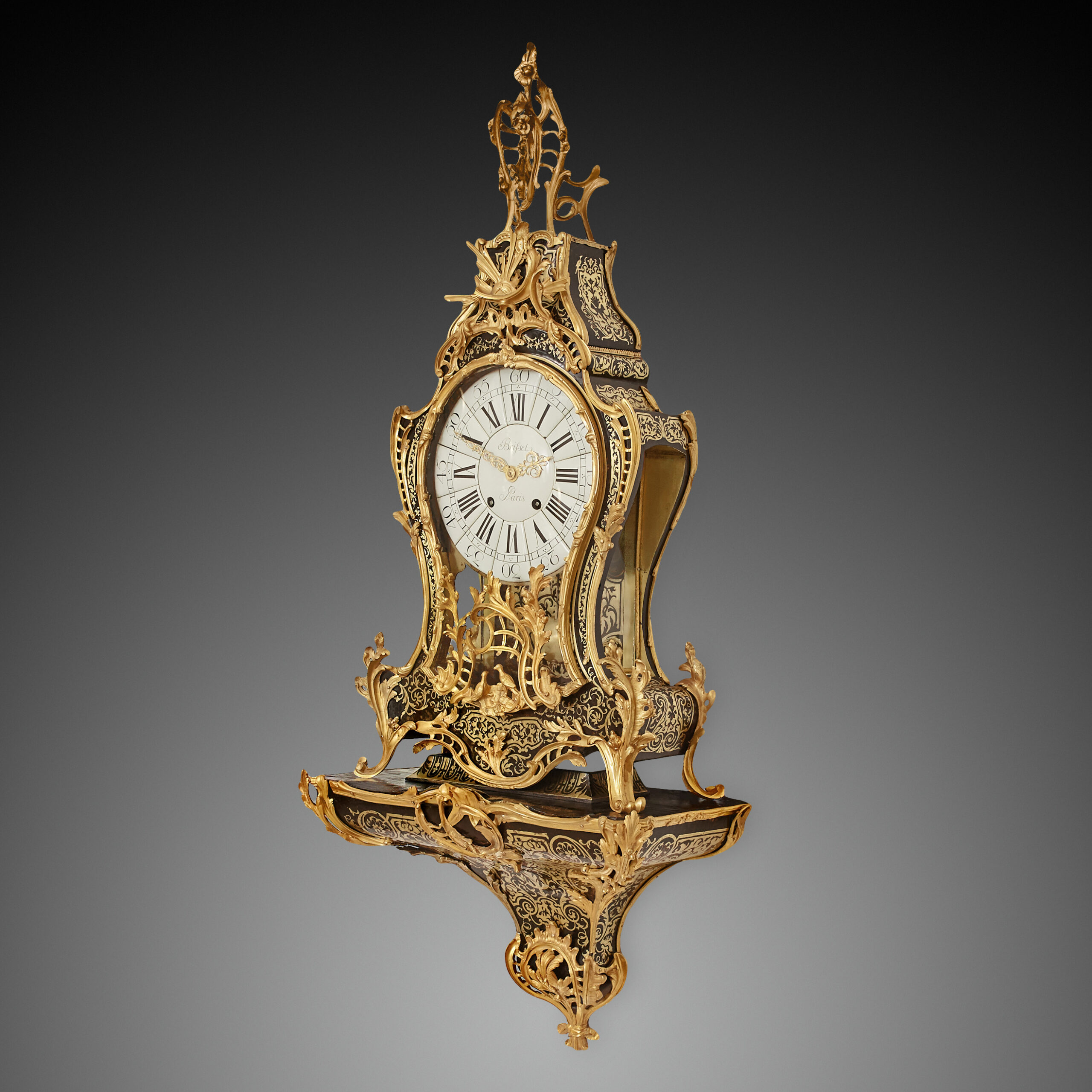
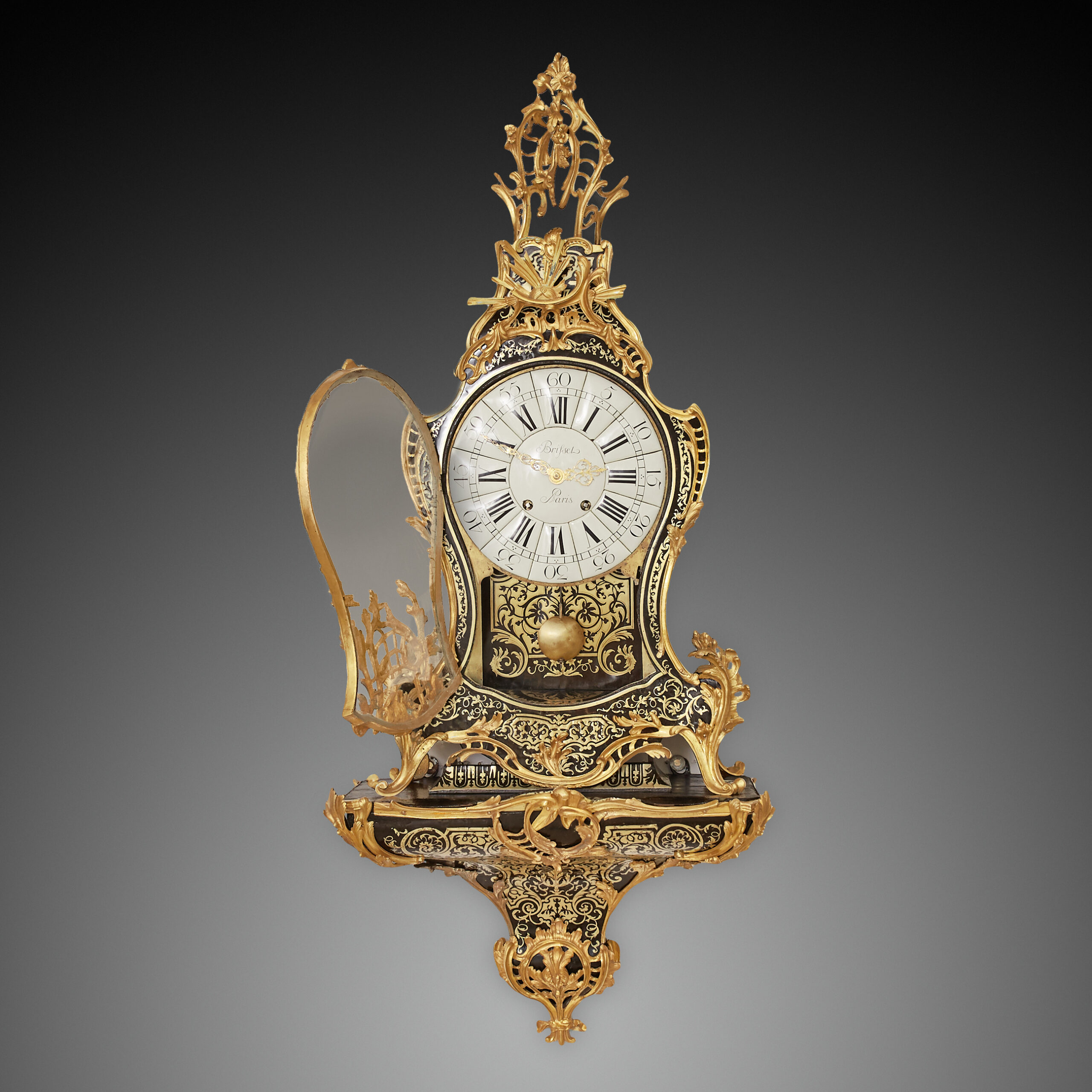
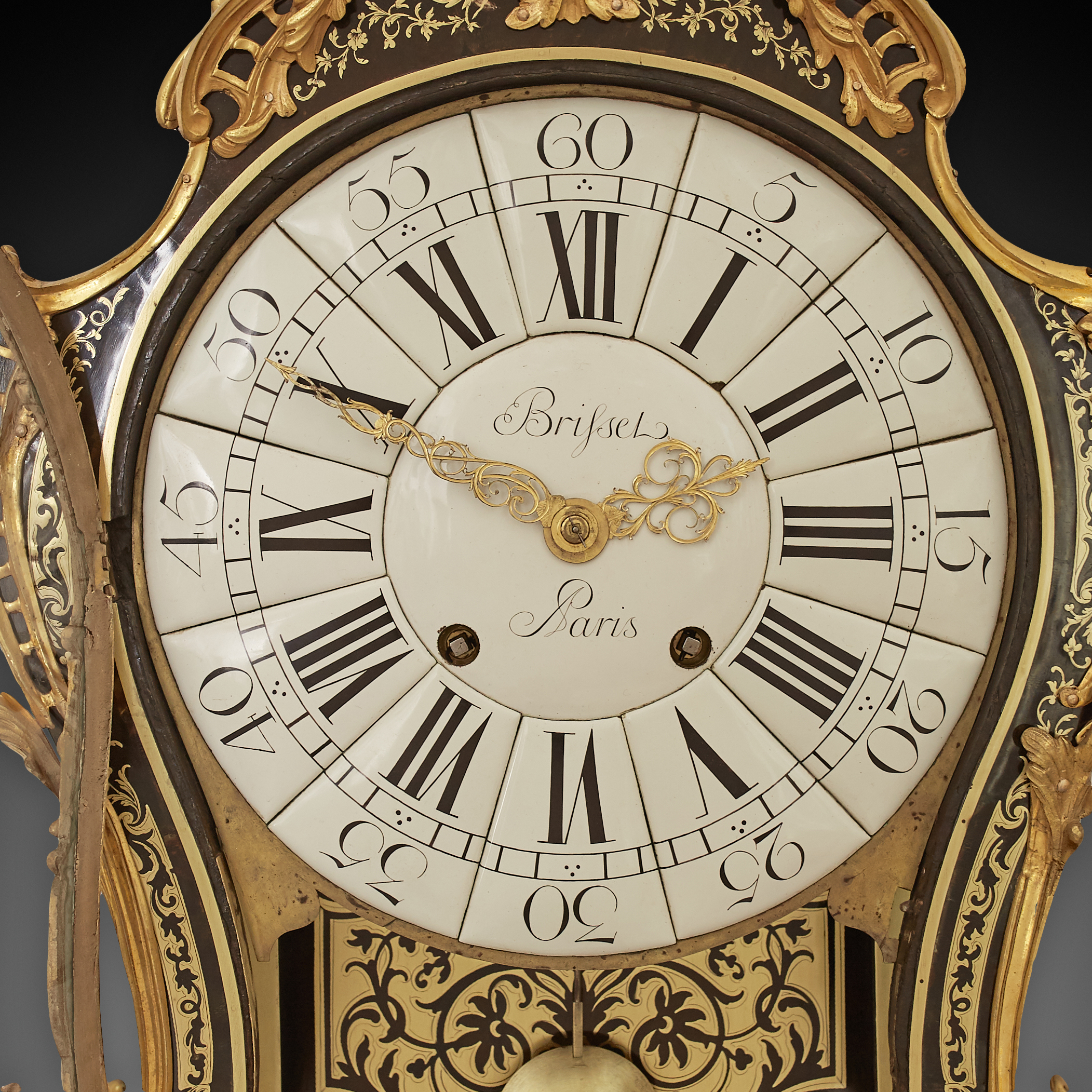
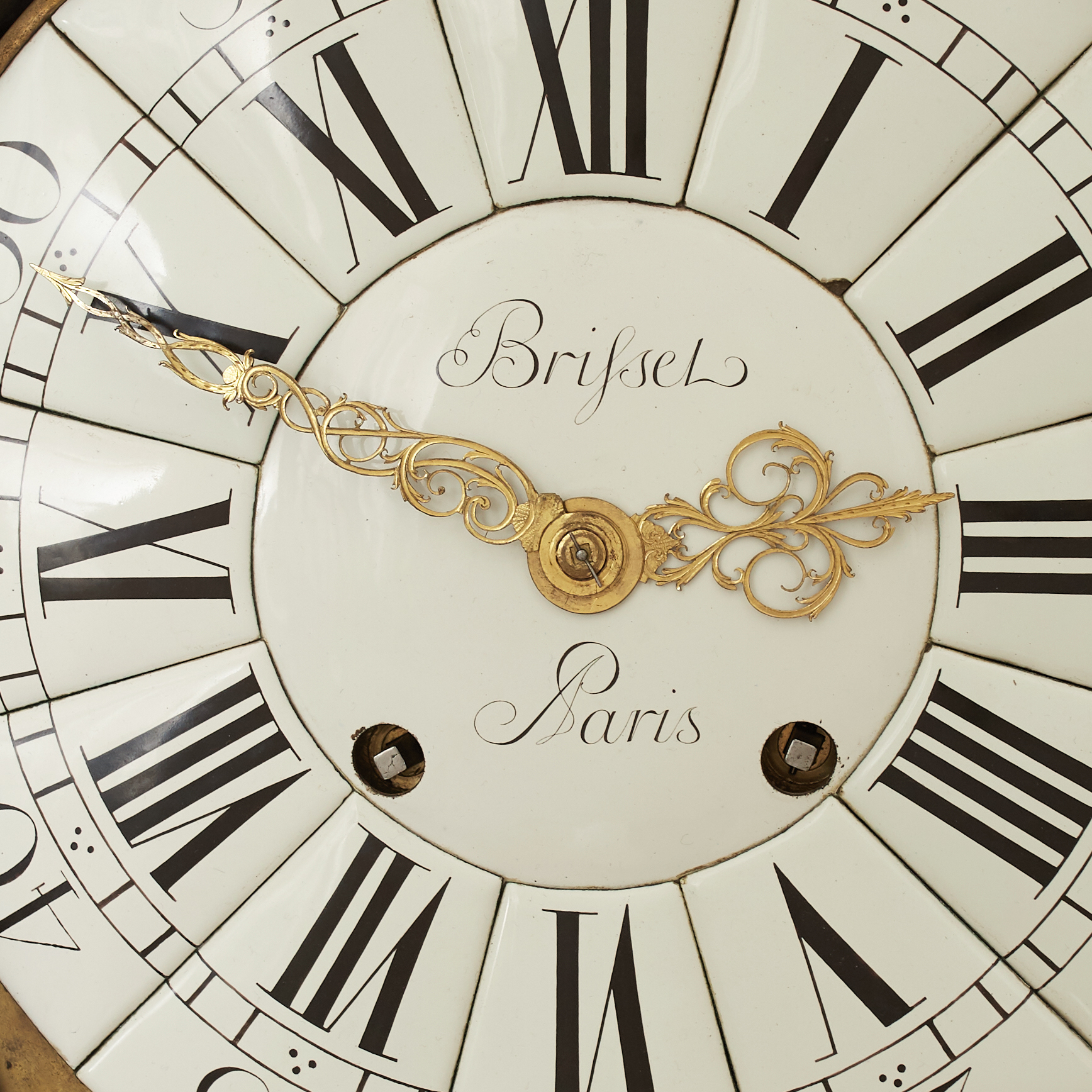
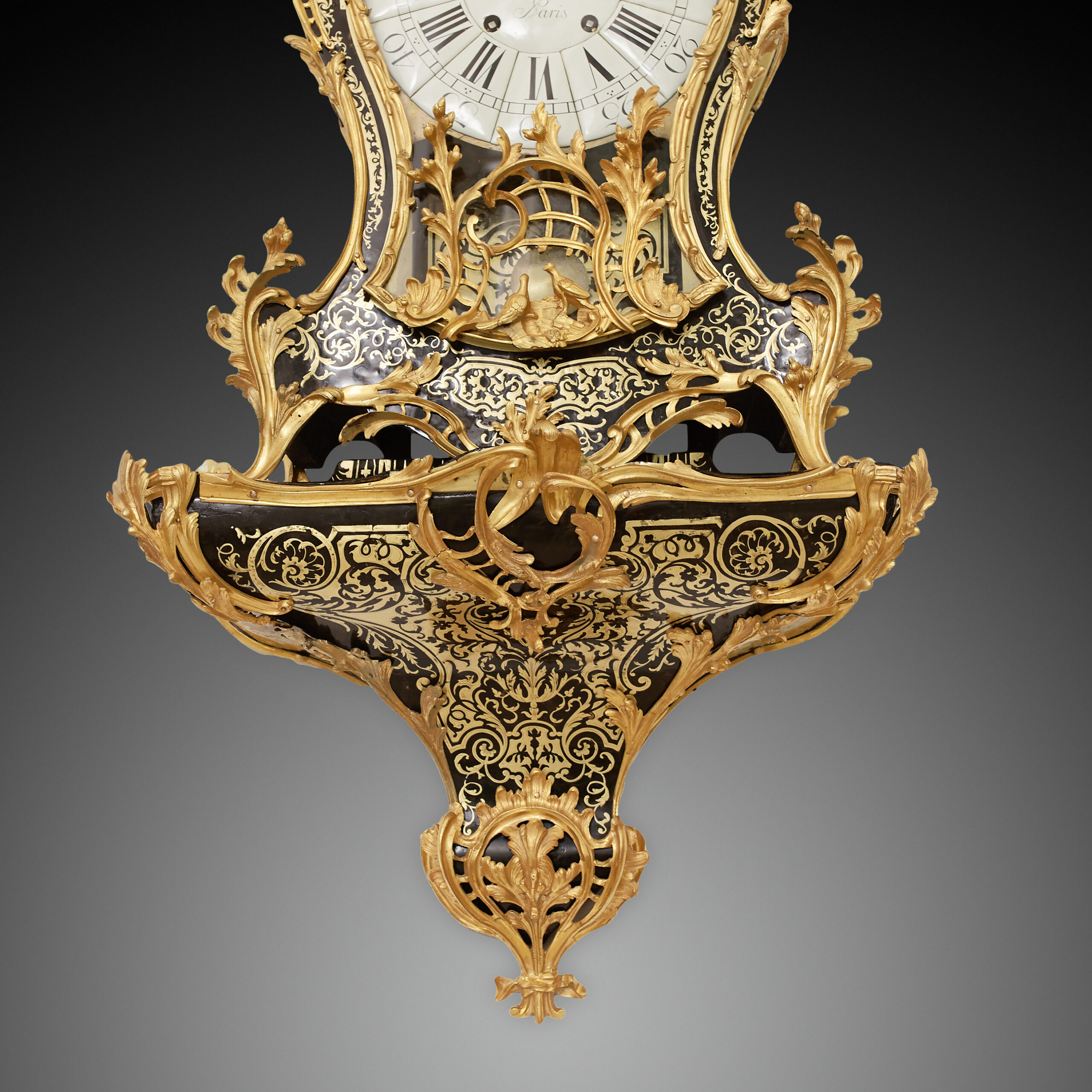
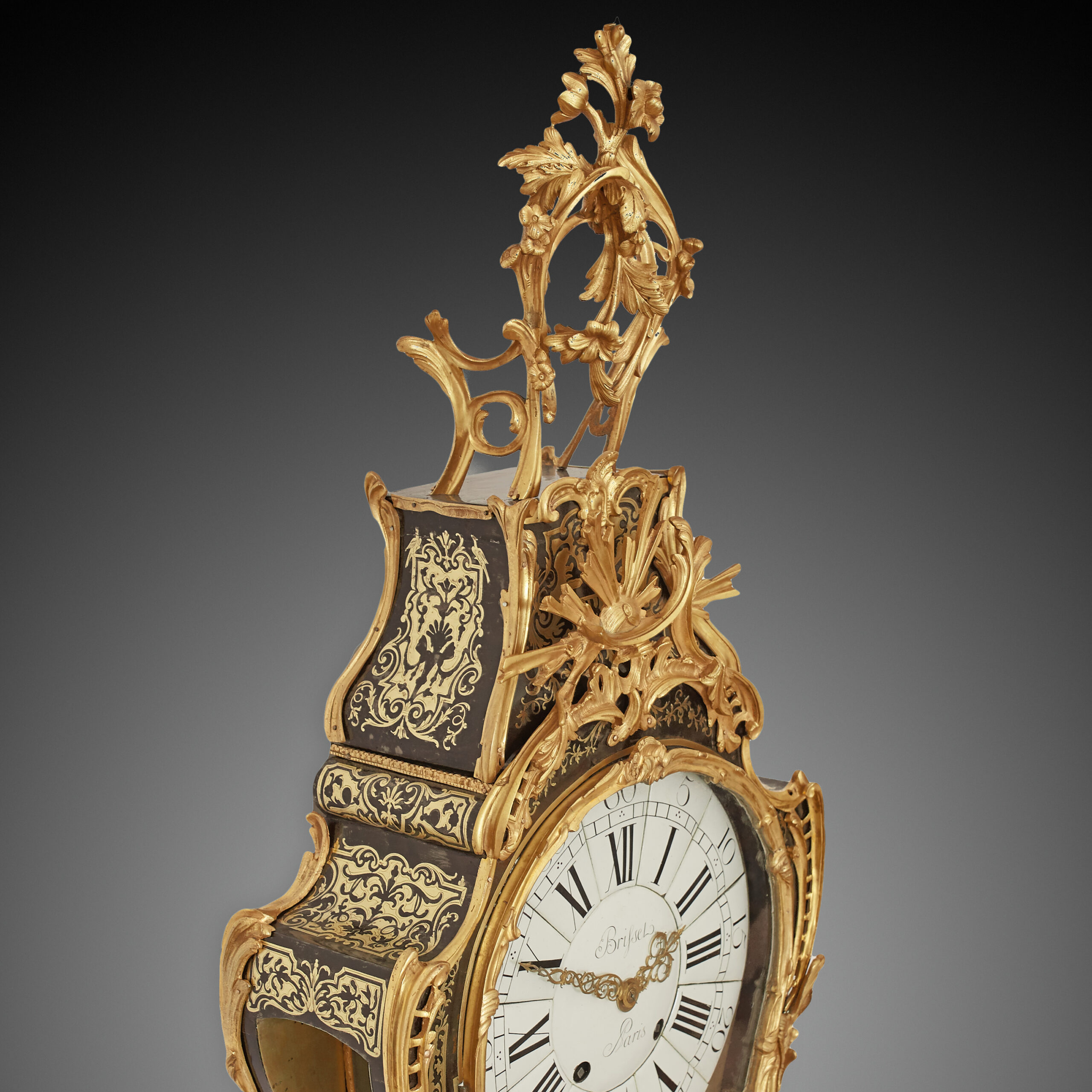
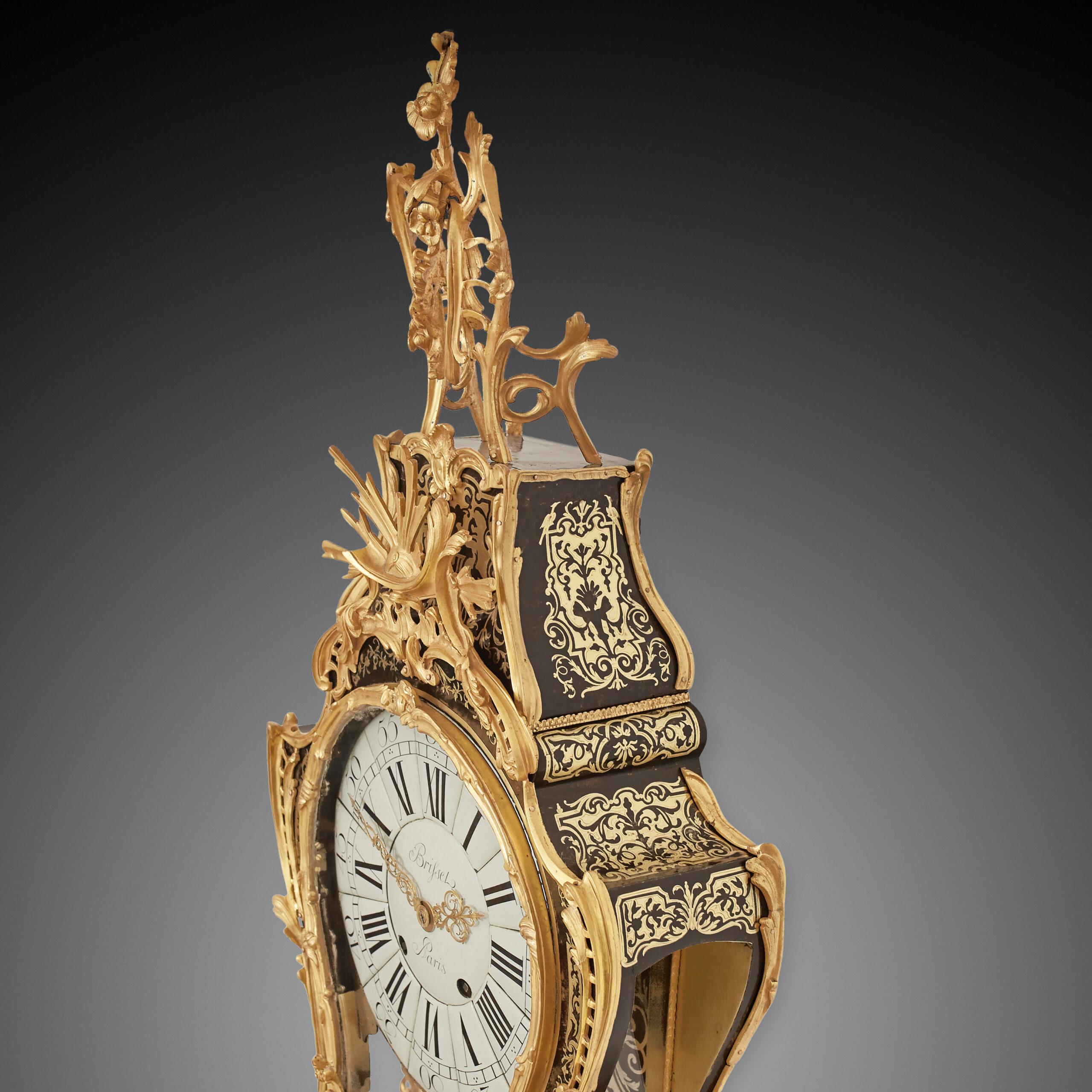
This exceptional 19th-century wall clock and its matching bracket represent a masterful triumph of the Boulle revival movement, a period during which French decorative arts experienced a profound resurgence of interest in the opulent aesthetics of the Ancien Régime. Signed by the esteemed Parisian horloger Brifset, this ensemble serves as a testament to the enduring influence of André-Charles Boulle, the legendary cabinetmaker to King Louis XIV, whose signature technique of brass and tortoiseshell marquetry became the hallmark of royal French furniture.
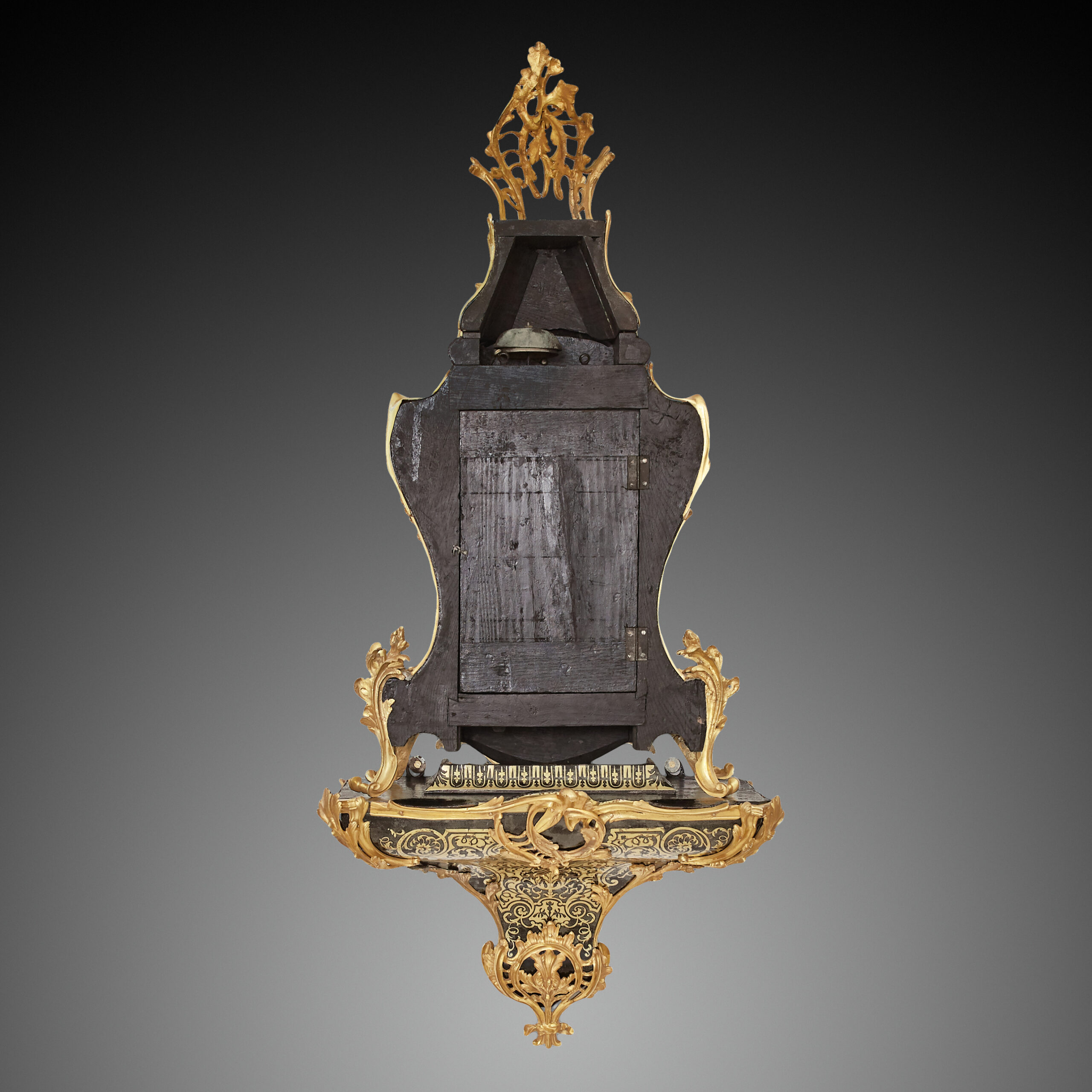
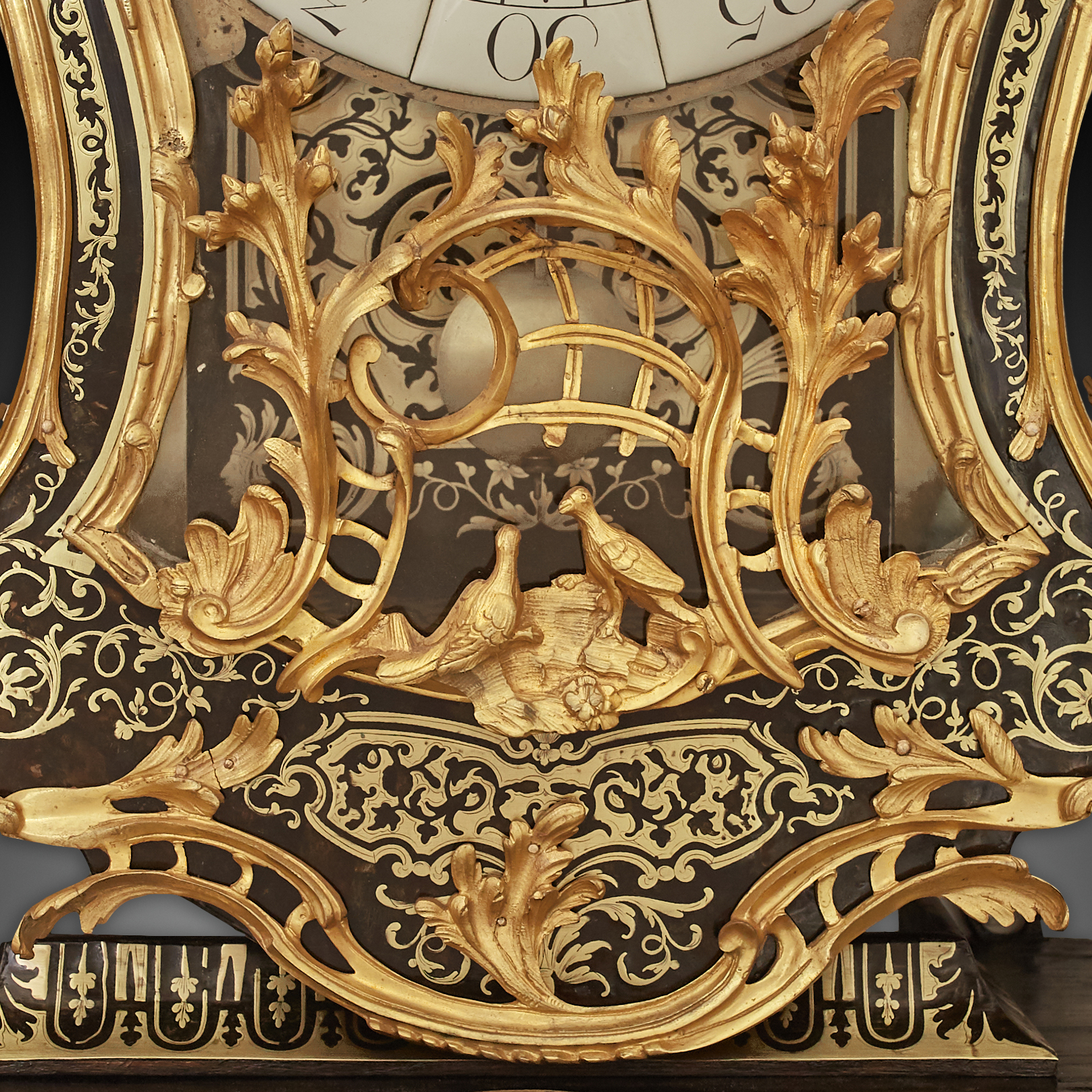
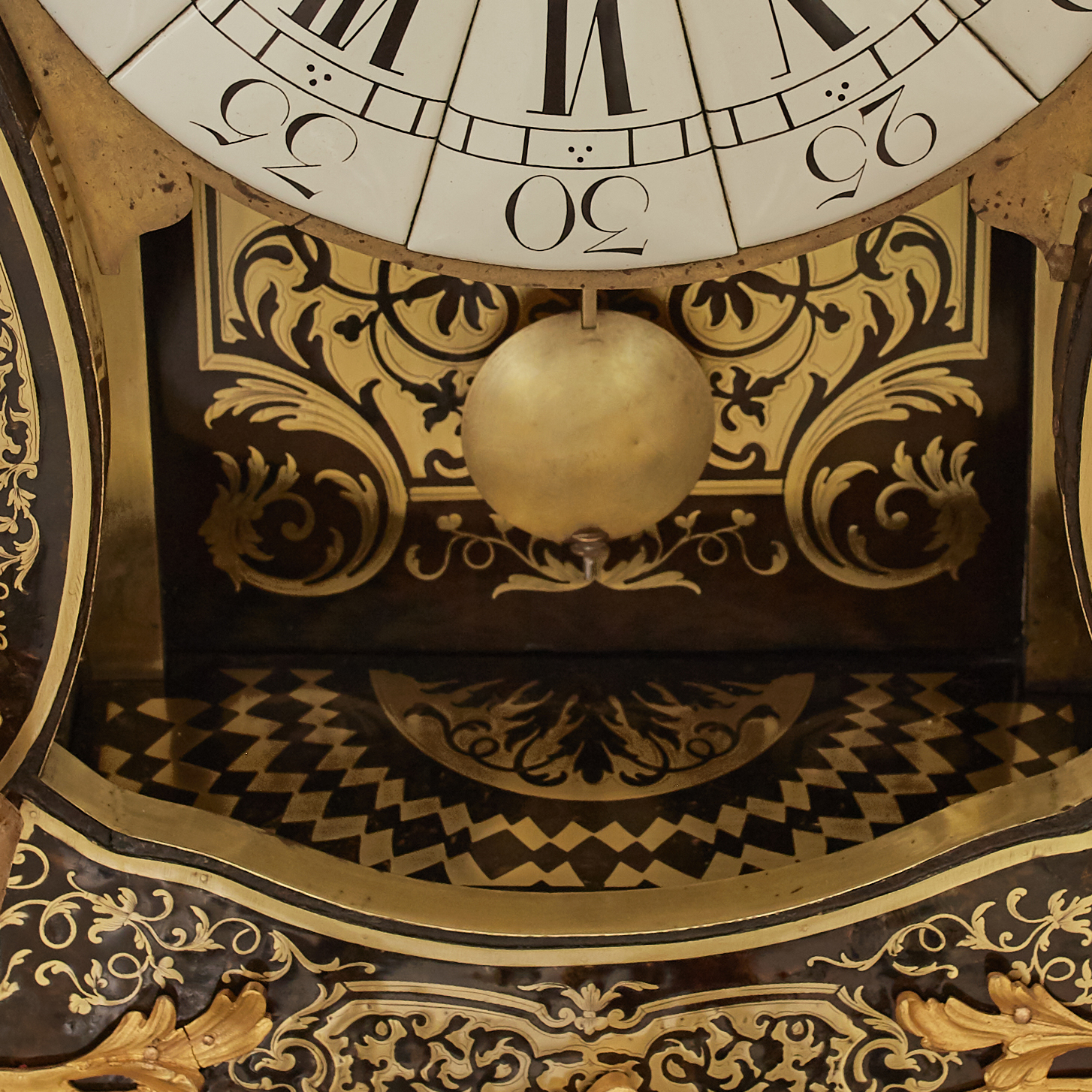
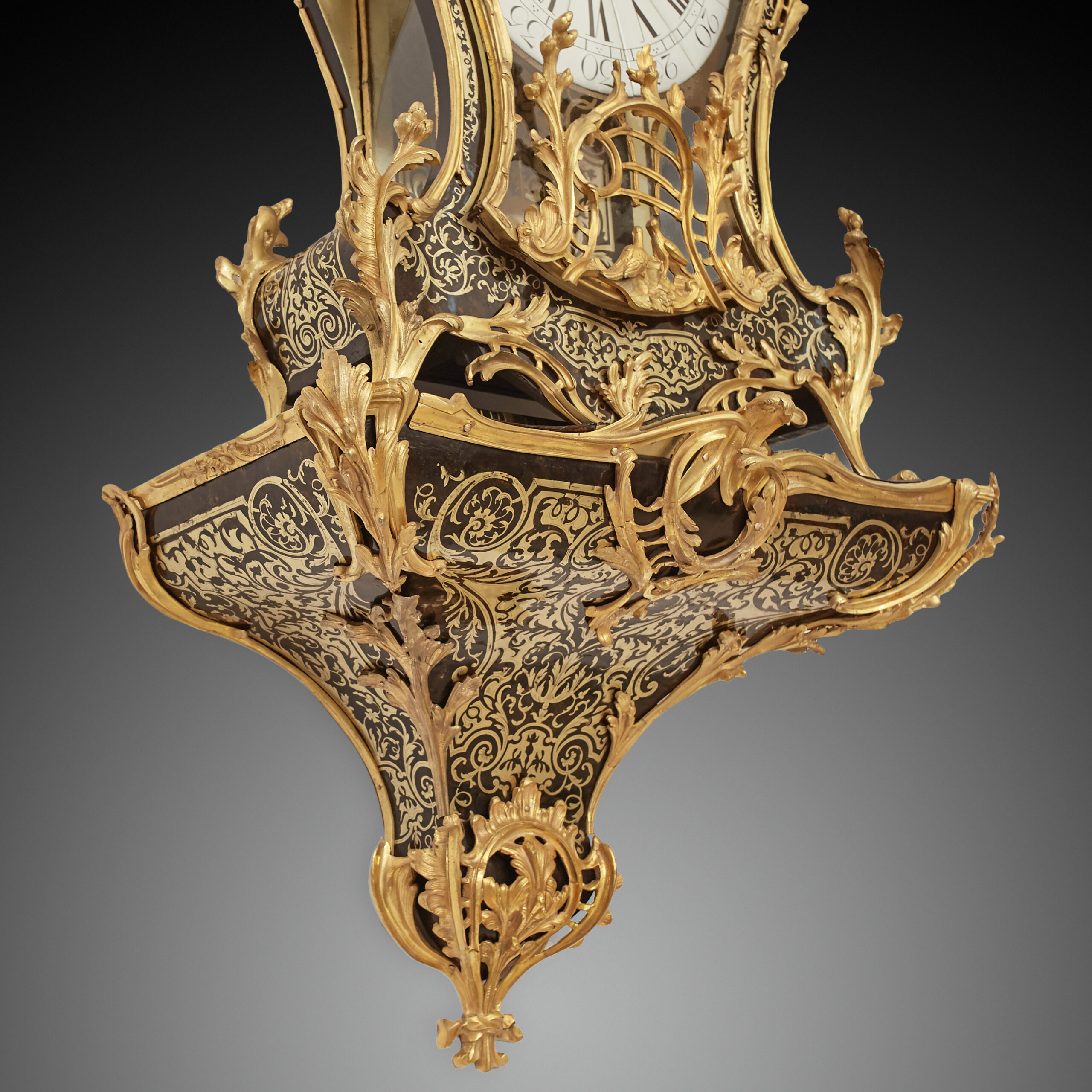
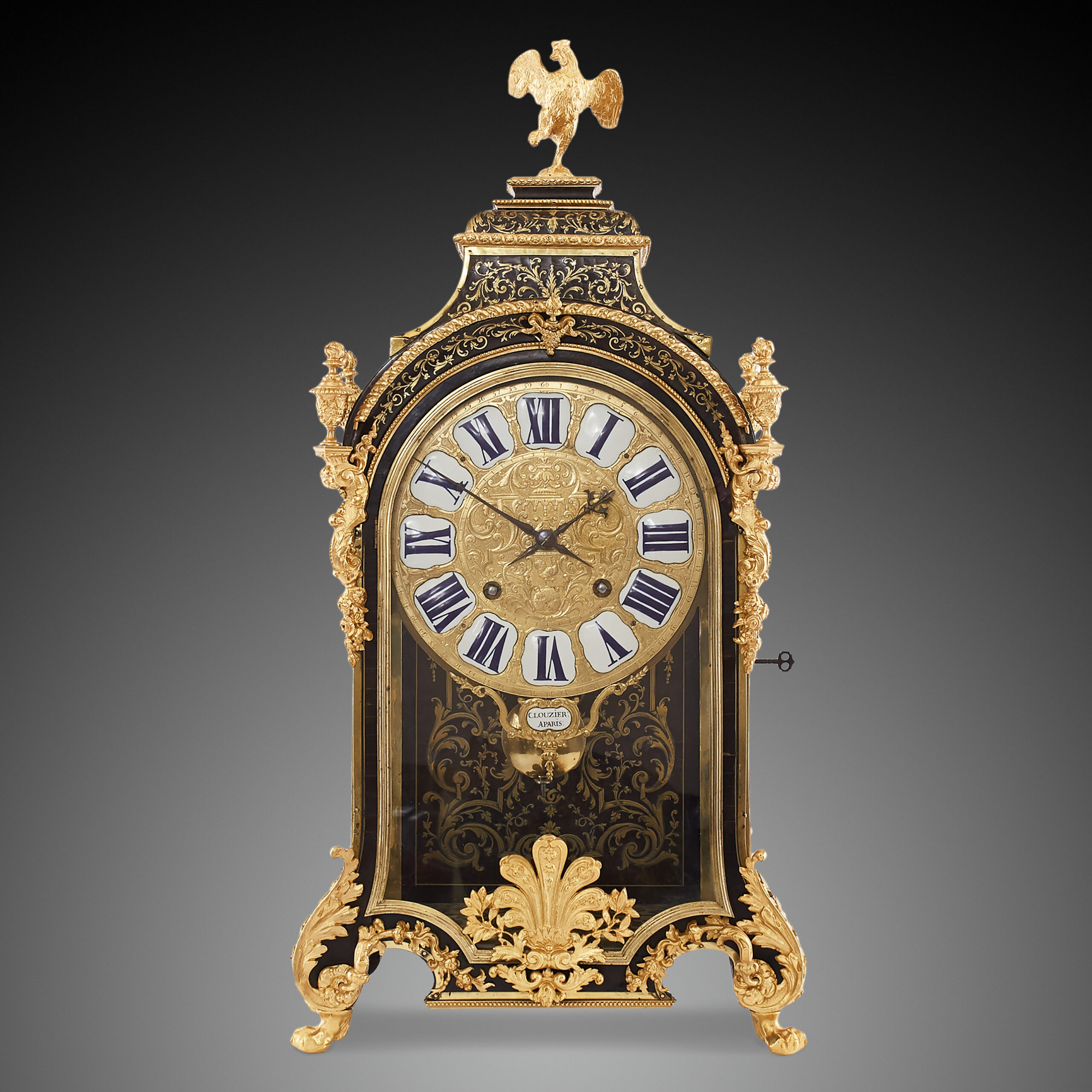
The construction of the case and the companion wall bracket is an exercise in technical virtuosity. The ebonized wood frame provides a deep, dramatic backdrop for the exquisite Boulle marquetry, which utilizes a complex, interlocking inlay of engraved brass against a field of vibrant red-stained horn or tortoiseshell. This intricate labor-intensive process requires a high degree of precision, as each piece of inlay must be hand-cut and fitted to create the fluid, polychromatic patterns that animate the surface of the clock. The architectural silhouette, characterized by balanced, sweeping curves, reflects the grandiosity of the 17th-century style while incorporating the technical refinements available to 19th-century artisans.
A defining feature of this piece is its extensive application of finely chased gilt-bronze, or ormolu. These mounts were executed by a master bronzier, with each element-from the ornate crowning figural group to the delicate scrolling acanthus leaves-exhibiting a crispness and clarity of detail that captures the light brilliantly. The central mask motif on the bracket provides a focal point that anchors the design, a classic decorative device designed to impart a sense of majesty and historical depth. The dial itself is a masterpiece of readability and elegance, composed of individual white enamel cartouches featuring Roman numerals, a hallmark of superior French horology during this era. The movement’s backplate is inscribed with the number 110, which serves as a vital record of its provenance, denoting its position within a deliberate, limited production run and distinguishing it from mass-market alternatives.
From an art-historical perspective, this clock must be viewed as the product of an era that sought to bridge the gap between the monumental history of the French monarchy and the evolving tastes of the 19th-century aristocracy. The creation of such a work necessitated a seamless, high-level collaboration between three distinct guilds: the ébéniste, responsible for the structural integrity and marquetry of the case; the bronzier, who cast and gilded the ornamental mounts; and the horloger, who engineered the precision movement. This multidisciplinary collaboration was the engine of French luxury production, ensuring that each commission served as both a highly functional instrument and a significant piece of interior sculpture. By reviving the “Grand Goût” of the Louis XIV period, the makers of this piece were not merely imitating the past; they were honoring a tradition of technical excellence that defined French craftsmanship on the global stage. It stands today as a tangible link to a world of refined interiors, where such objects were considered essential components of a life lived with elegance and prestige.