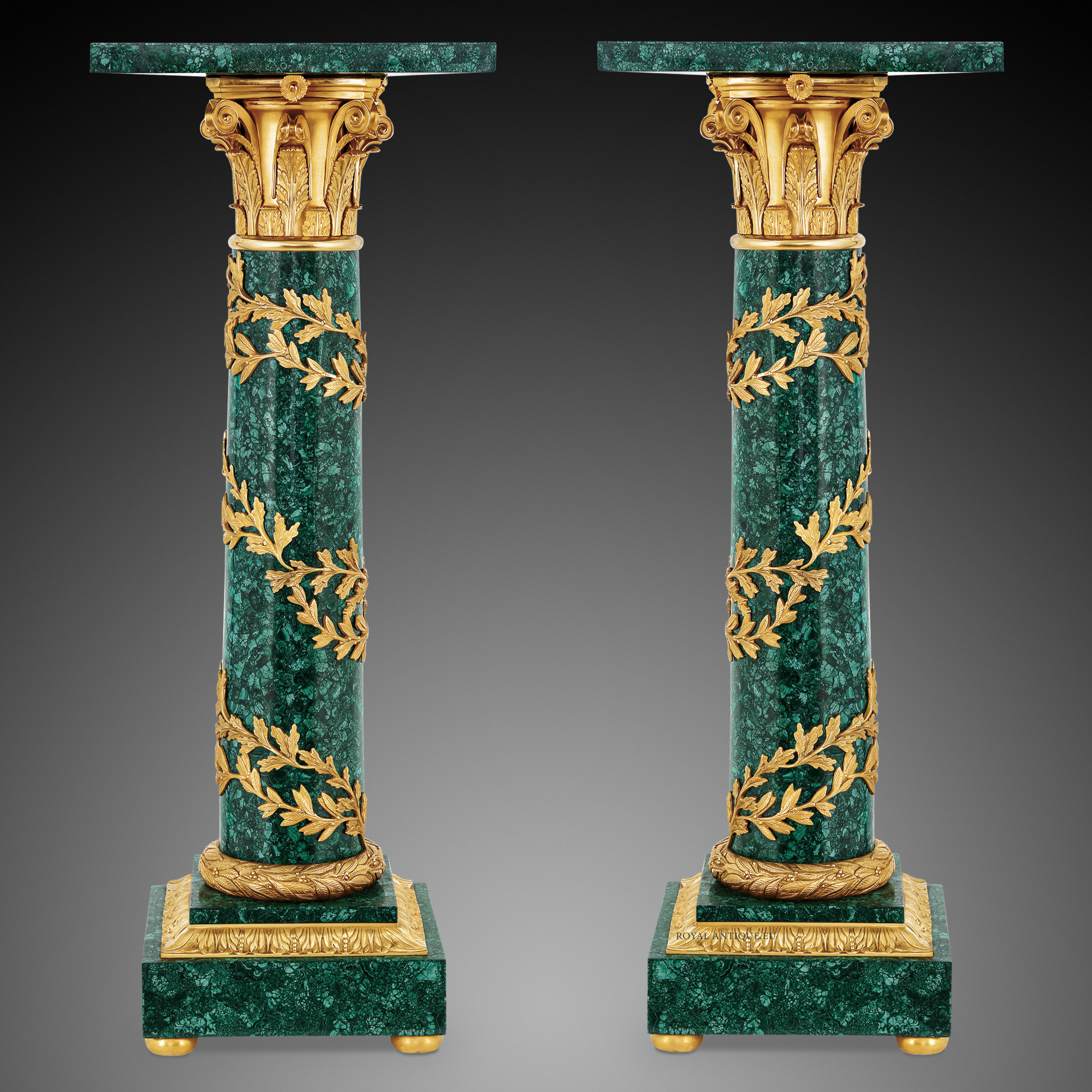
This magnificent pair of French Empire pedestals is a superb example of the highest quality malachite and gilt bronze craftsmanship produced in Paris during the early 19th century, circa 1810–1820.
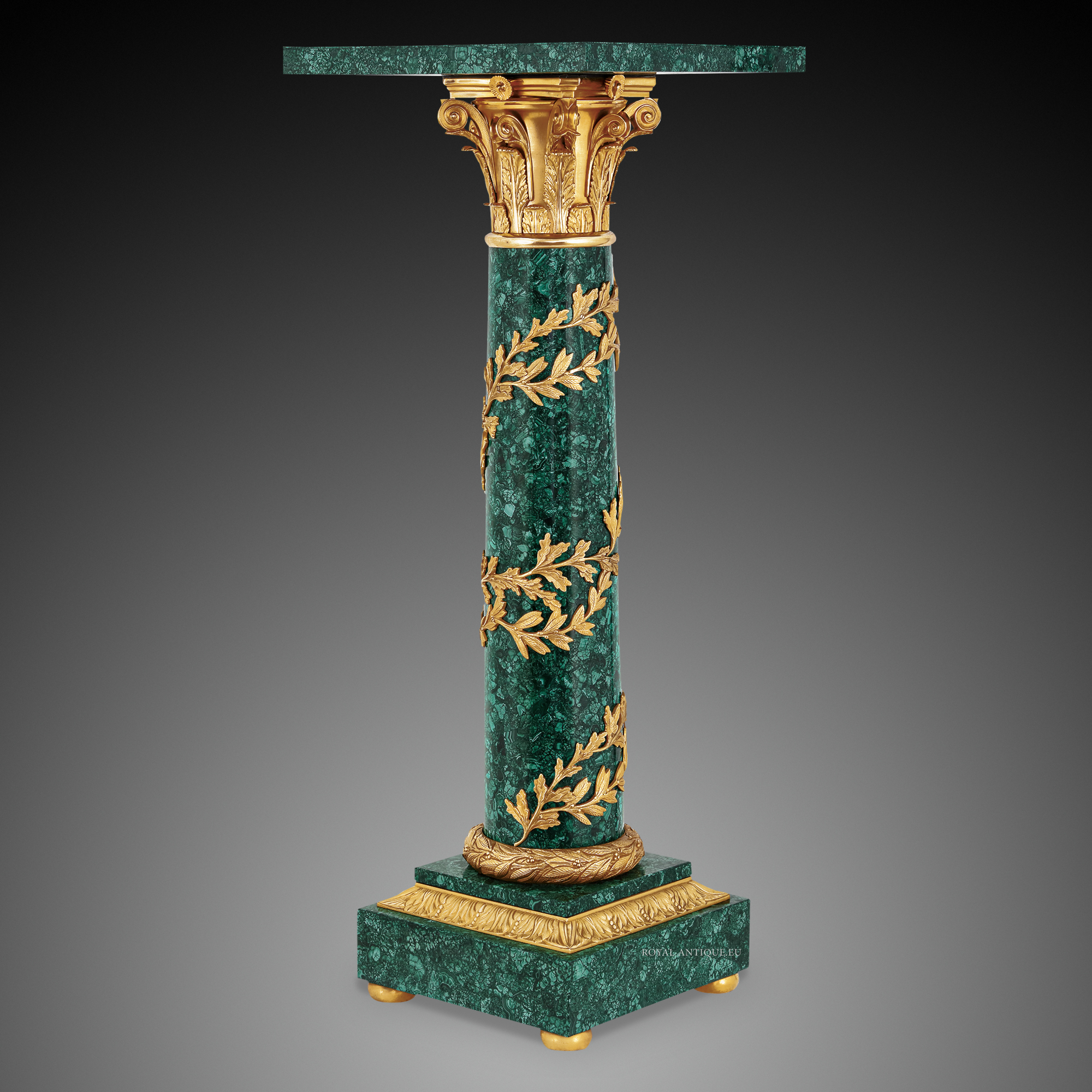
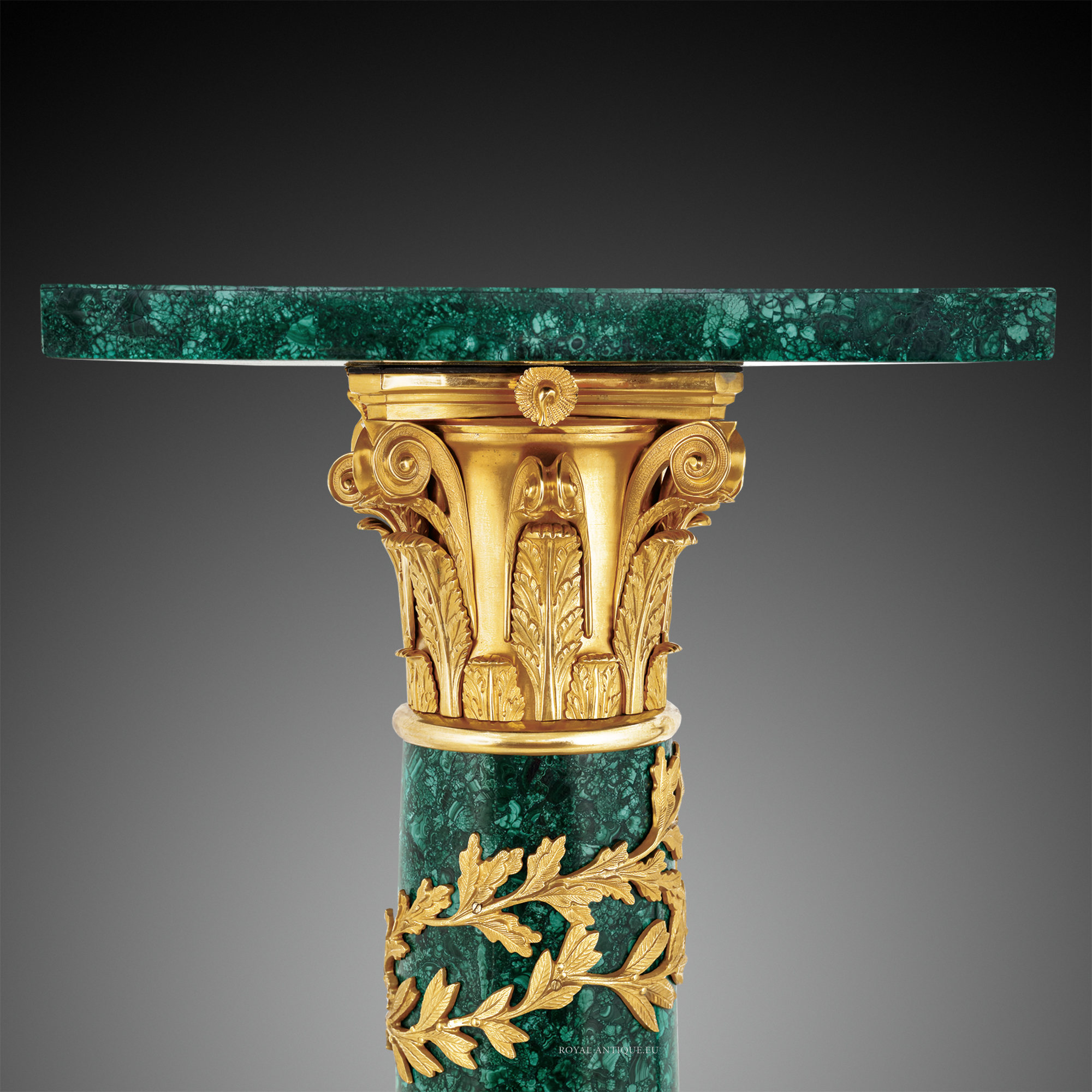
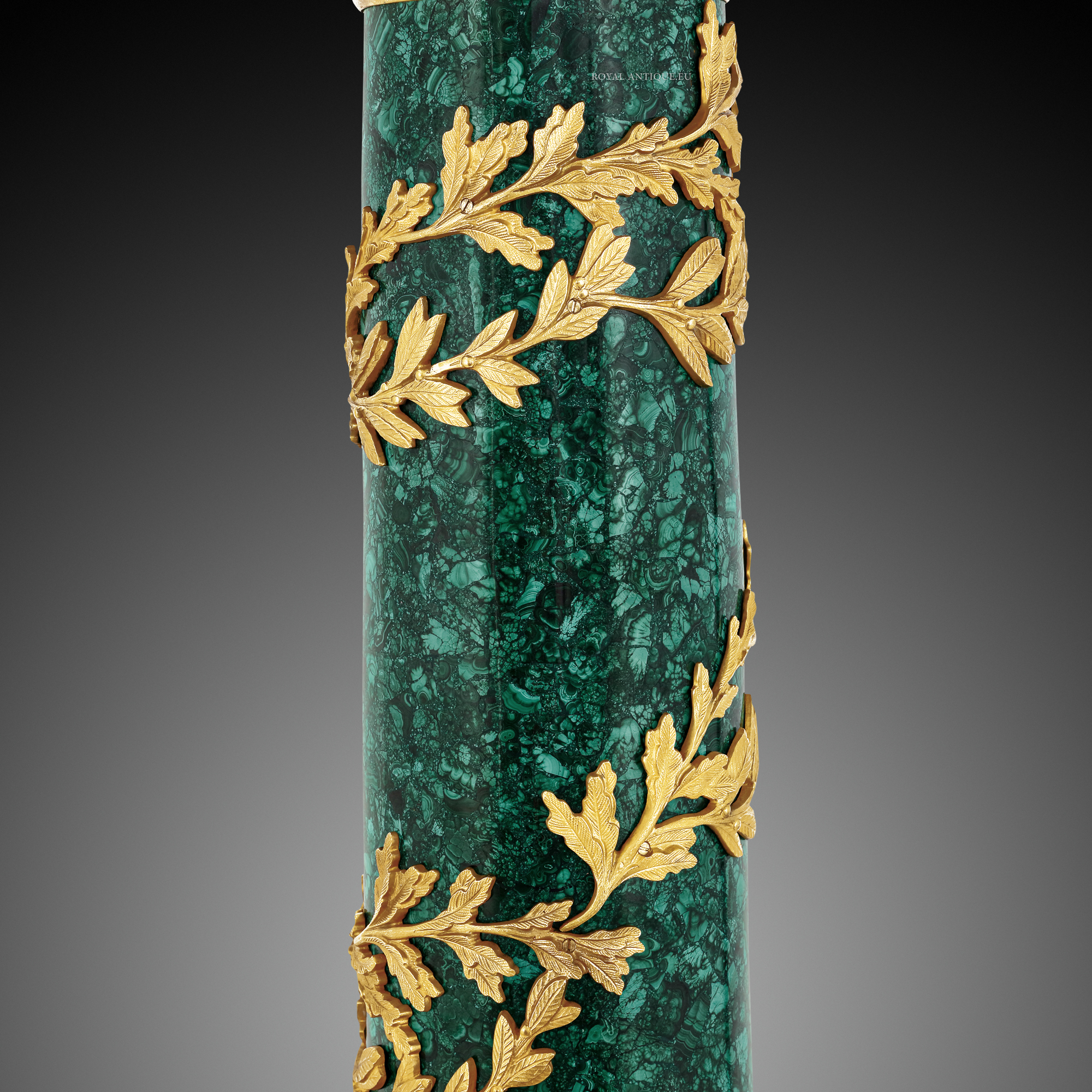
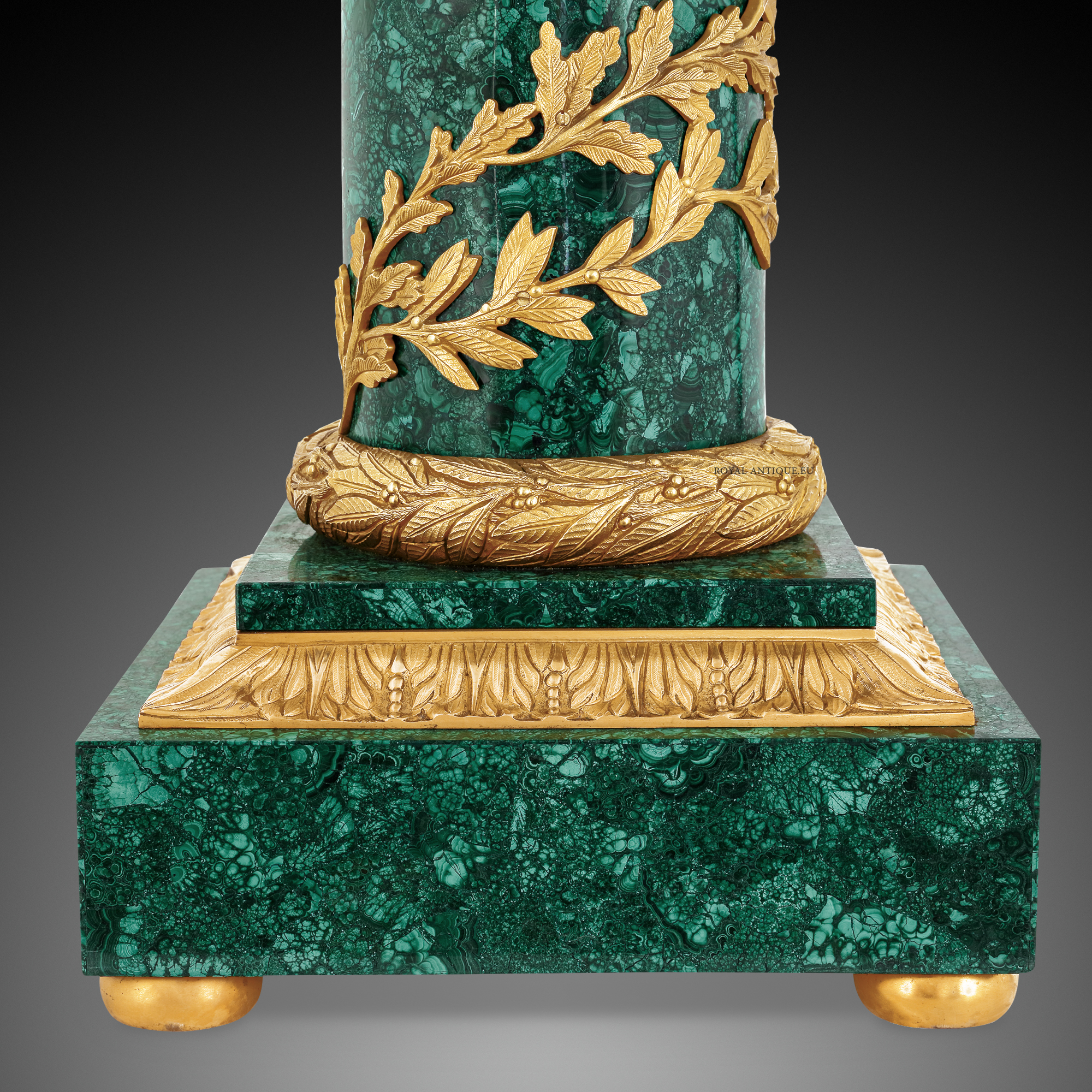
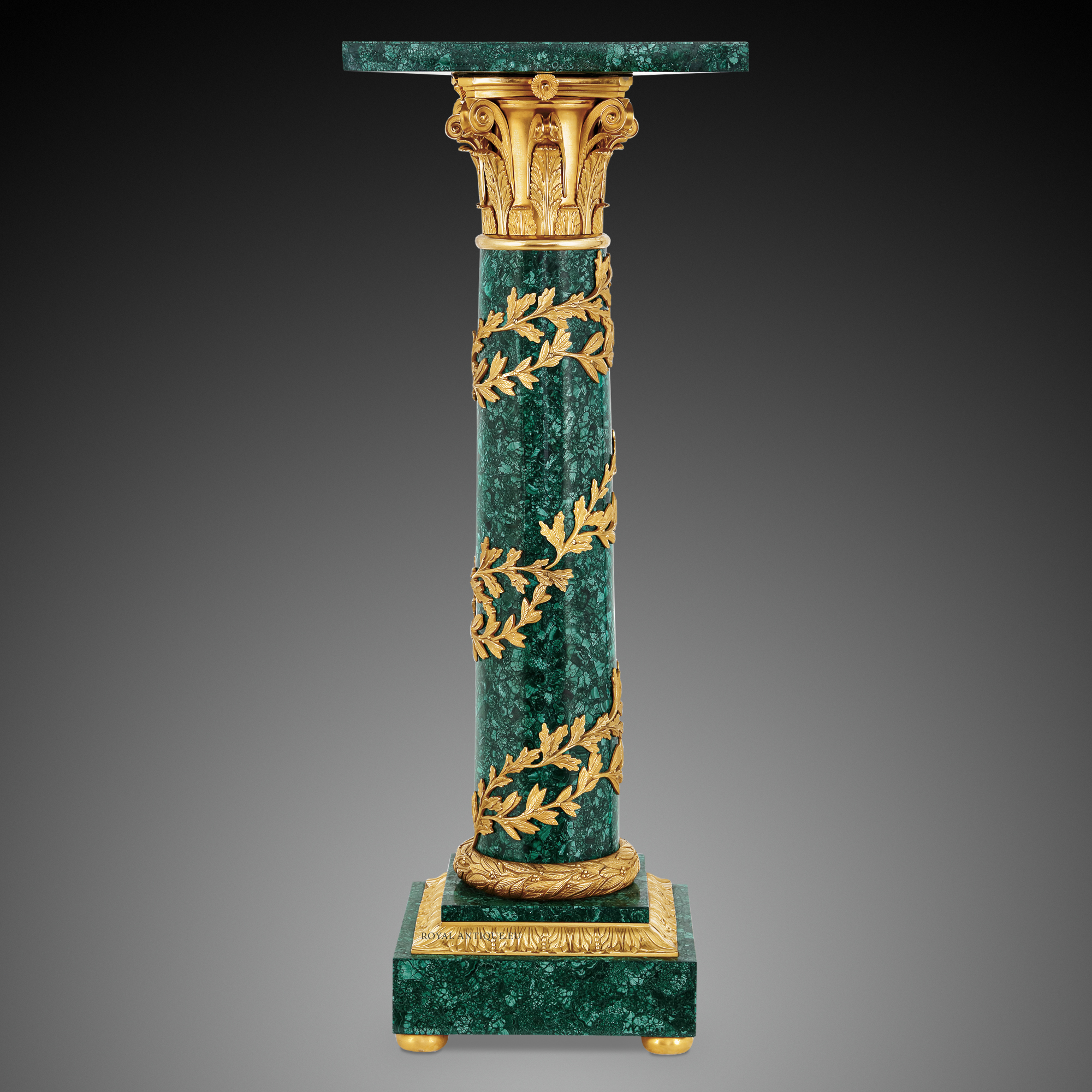
Each pedestal takes the form of a tall, fluted column executed in rich green malachite, whose natural swirling patterns give the surface a deep, luminous quality. The column is adorned with a delicate gilt bronze laurel garland that spirals gracefully around the shaft, a classic Empire motif symbolising victory, glory, and eternal honour. The capitals are of the Corinthian order, richly carved with acanthus leaves and volutes in gilt bronze, while the bases feature neat gilt bronze mouldings and a Greek key frieze.
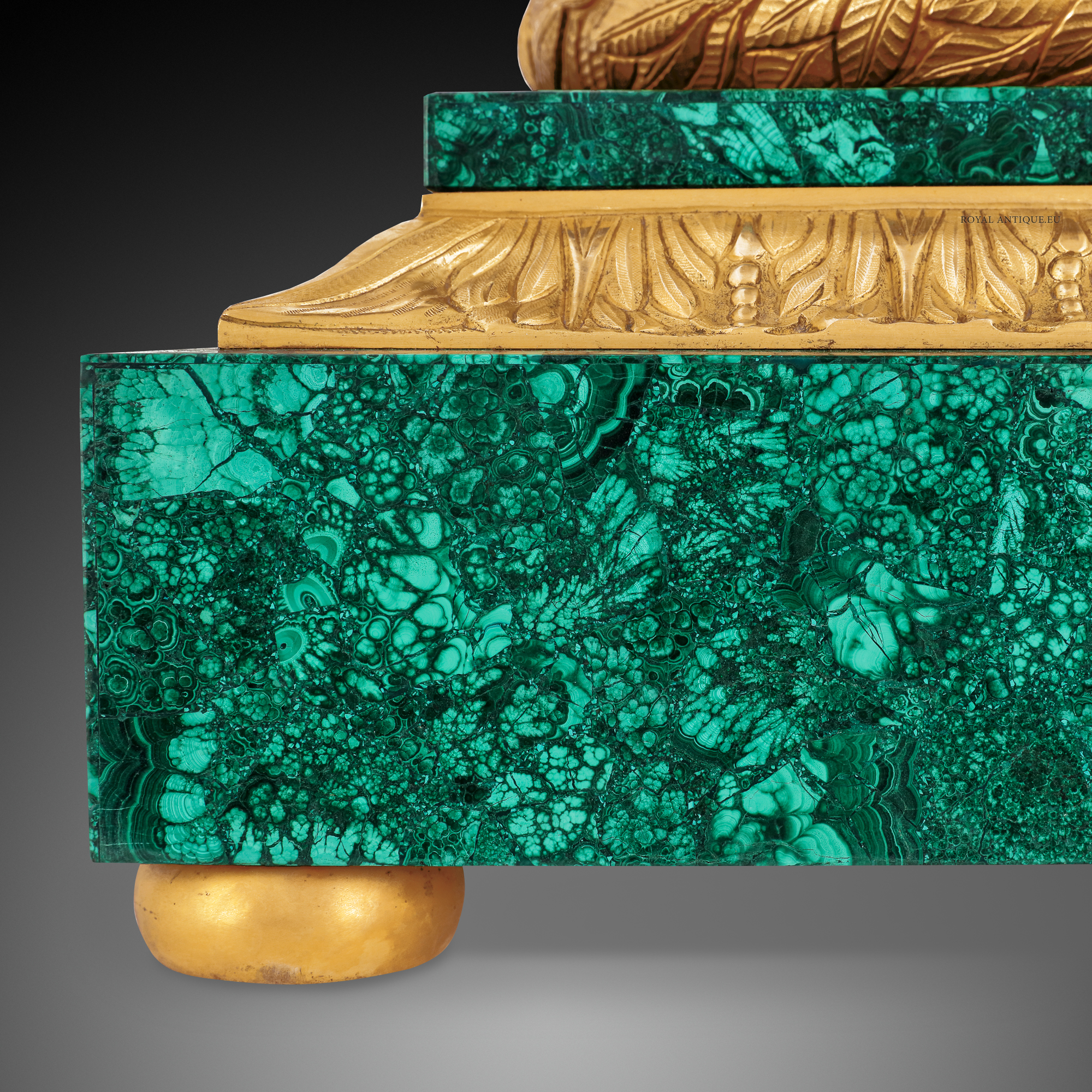
The pedestals stand on square malachite plinths with gilt bronze borders and small gilded feet, giving them a light yet monumental presence. Their proportions are perfectly balanced, stately enough to command attention, yet graceful enough to suit refined interiors.
These pedestals perfectly embody the spirit of the Empire period. After the Revolution, French designers deliberately returned to the architectural vocabulary of ancient Rome and Greece, using noble materials such as malachite (frequently imported from Russian mines) and luminous ormolu to express imperial power, order, and refined taste. Such columns were highly prized and often used in pairs to support clocks, candelabra, busts, or fine porcelain in grand salons, galleries, and official residences of the Napoleonic elite.
When placed together, this pair creates a powerful symmetrical effect. The deep green malachite columns glow with intensity, while the gilt bronze laurel garlands and Corinthian capitals catch the light with quiet brilliance. Their height and classical purity make them ideal as elegant supports or as architectural accents in any Neoclassical setting.
This pair represents the pinnacle of French Empire decorative arts, where technical mastery in stone veneering and bronze casting meets flawless classical design. Their exceptional quality and pure stylistic coherence make them a highly desirable addition to any serious collection of early 19th-century French objets d’art.