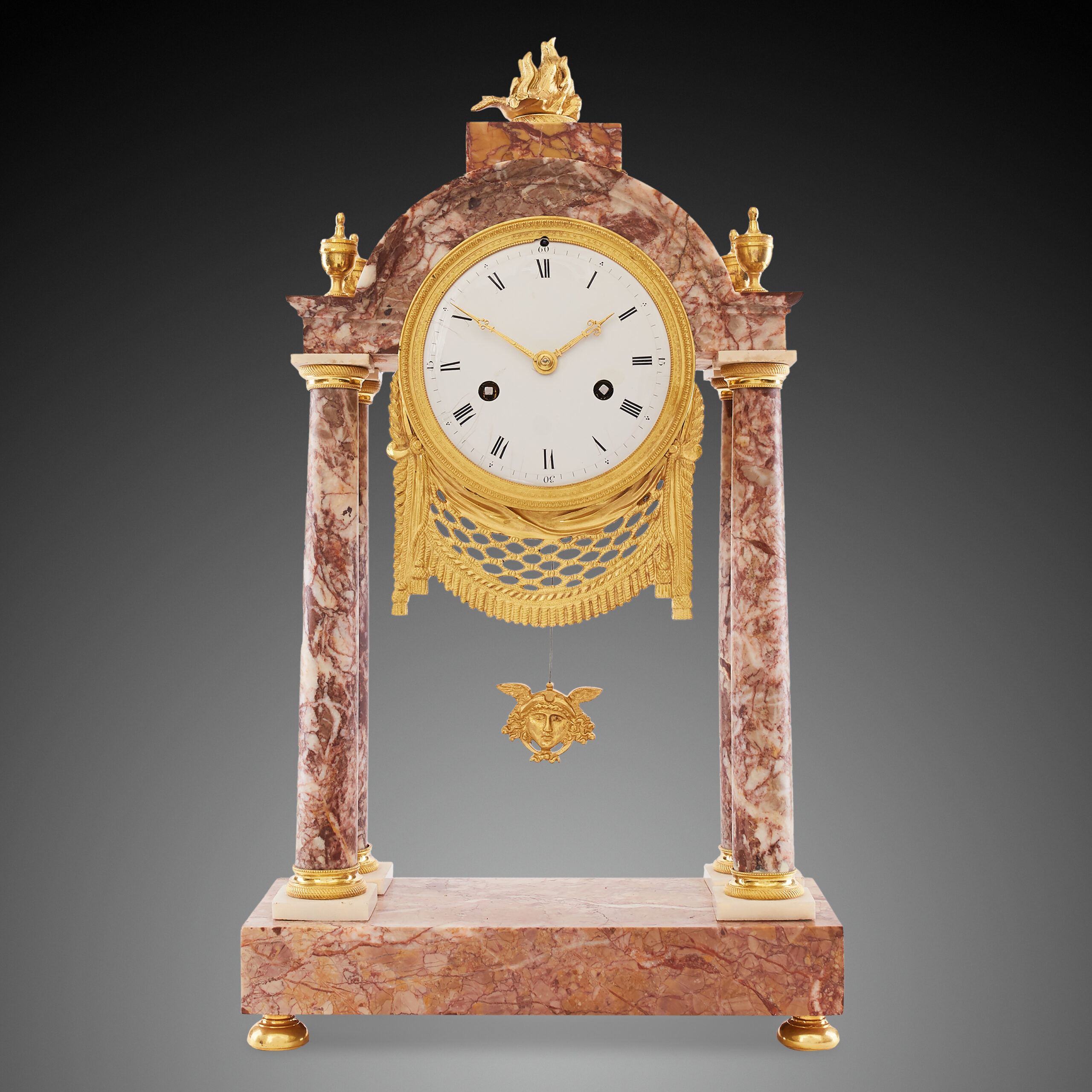
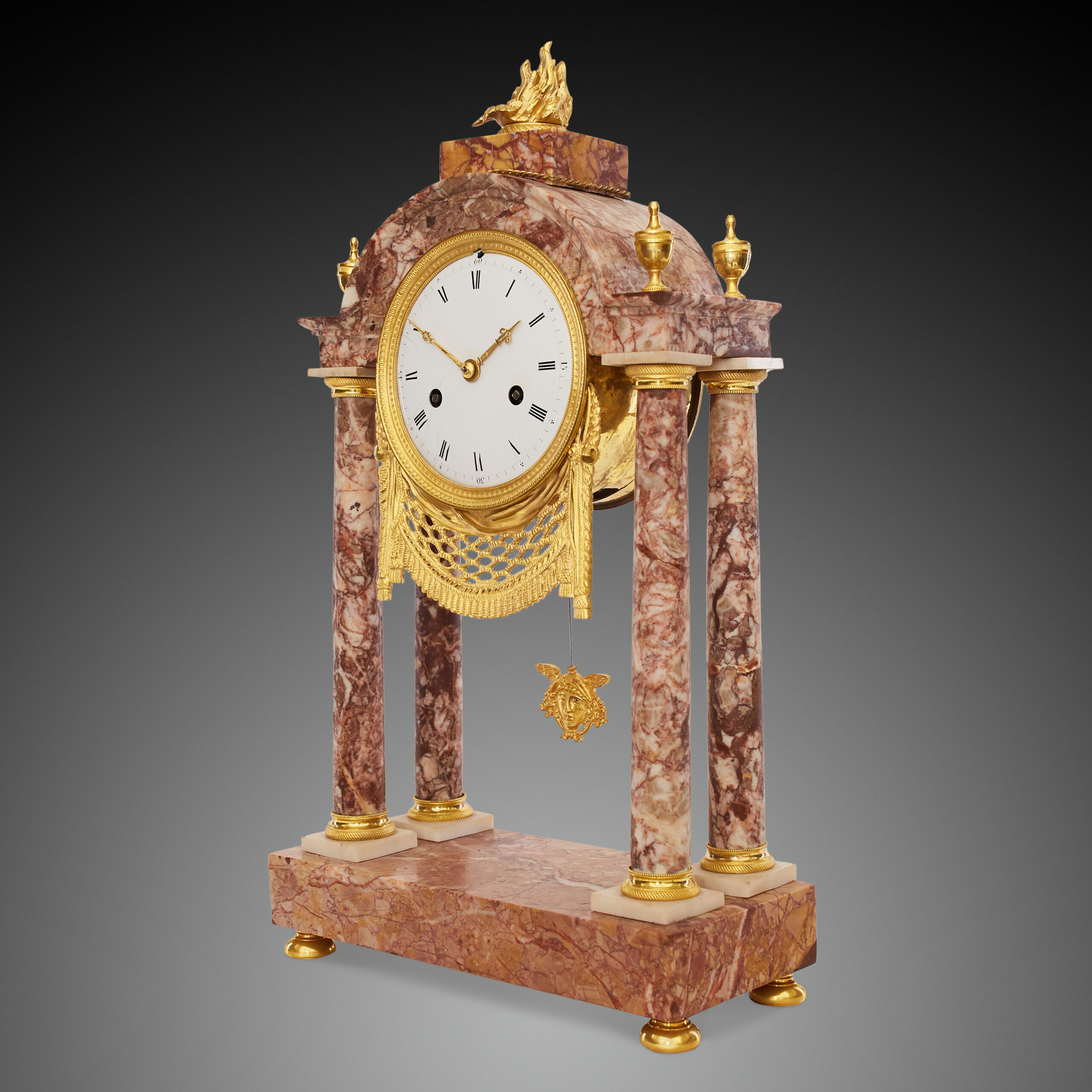
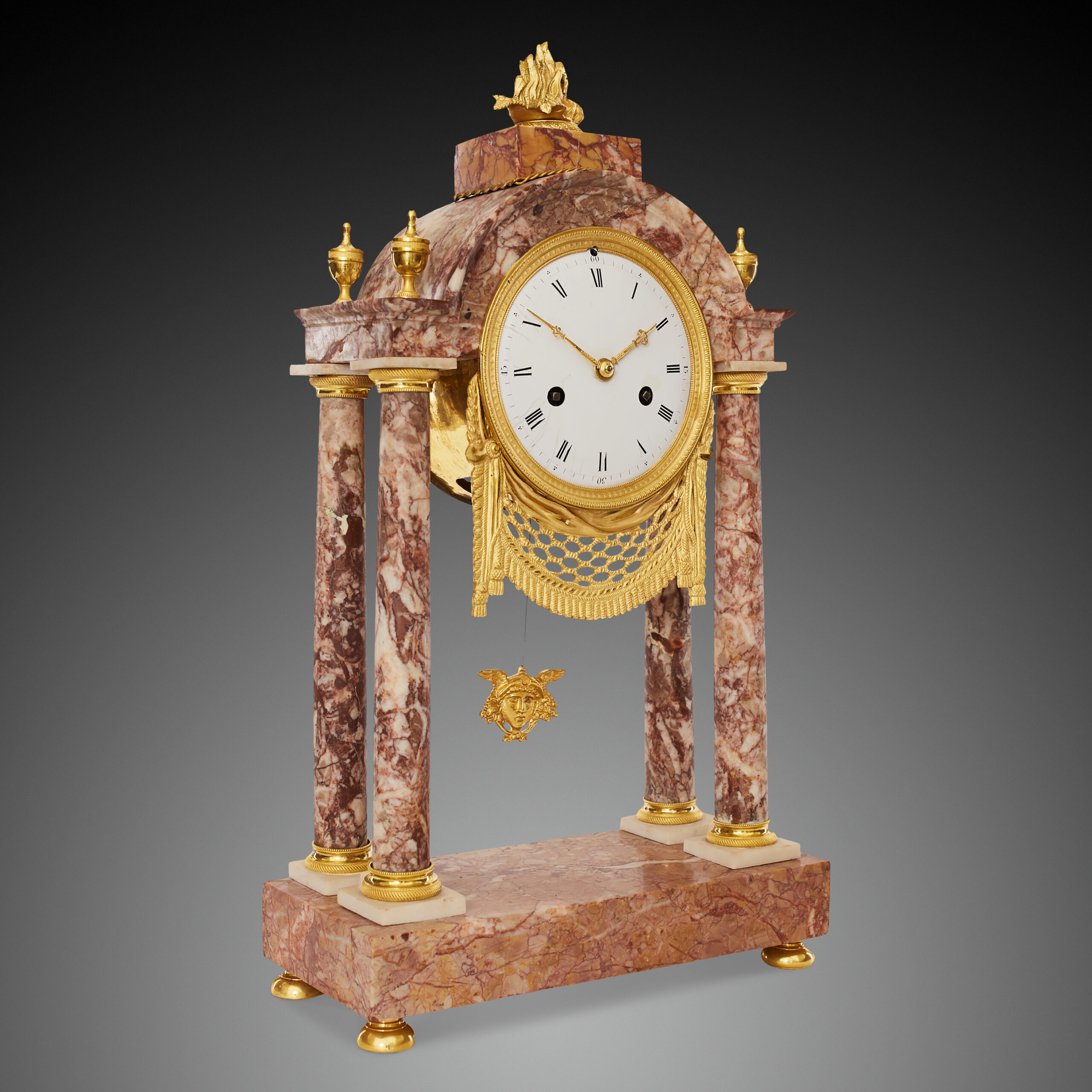
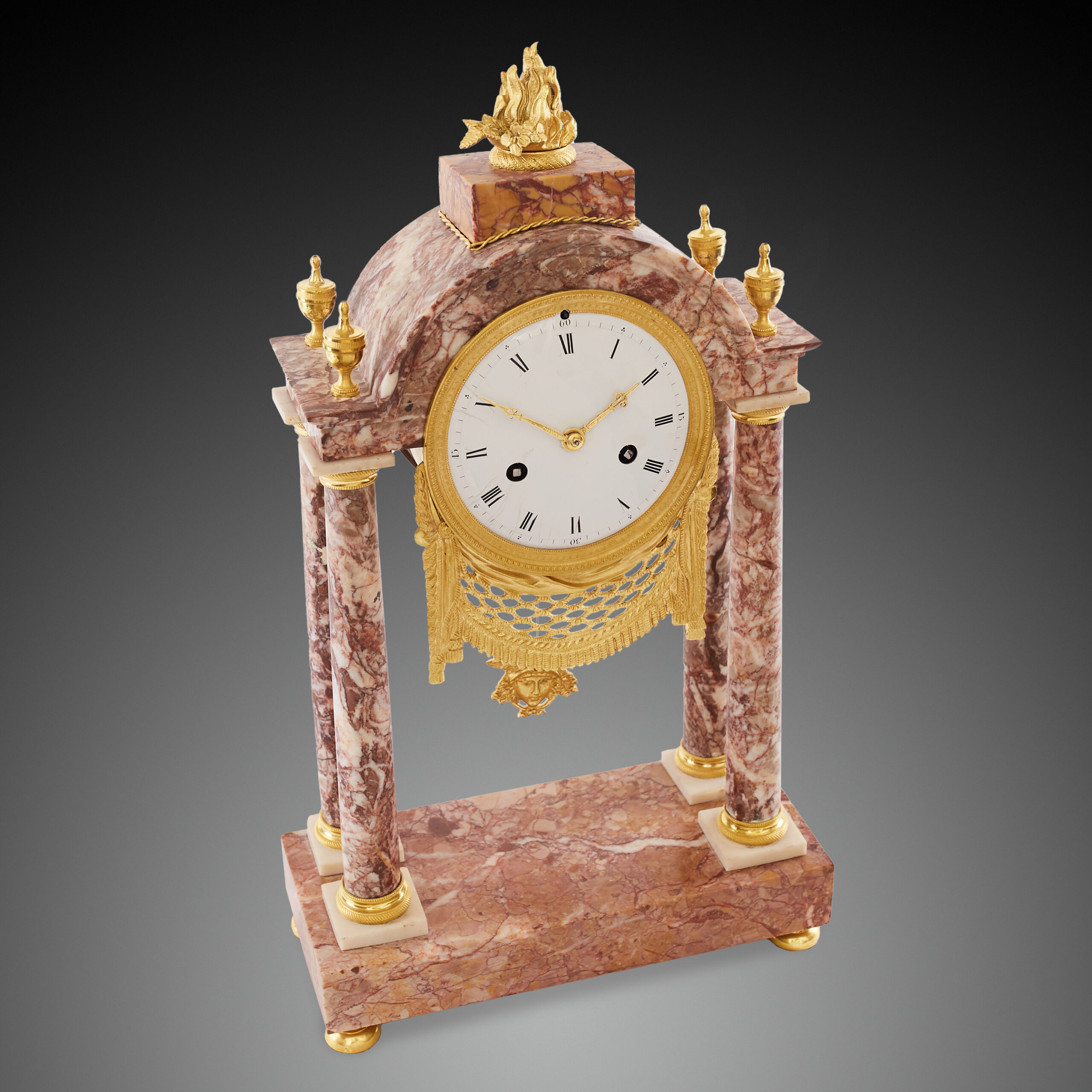
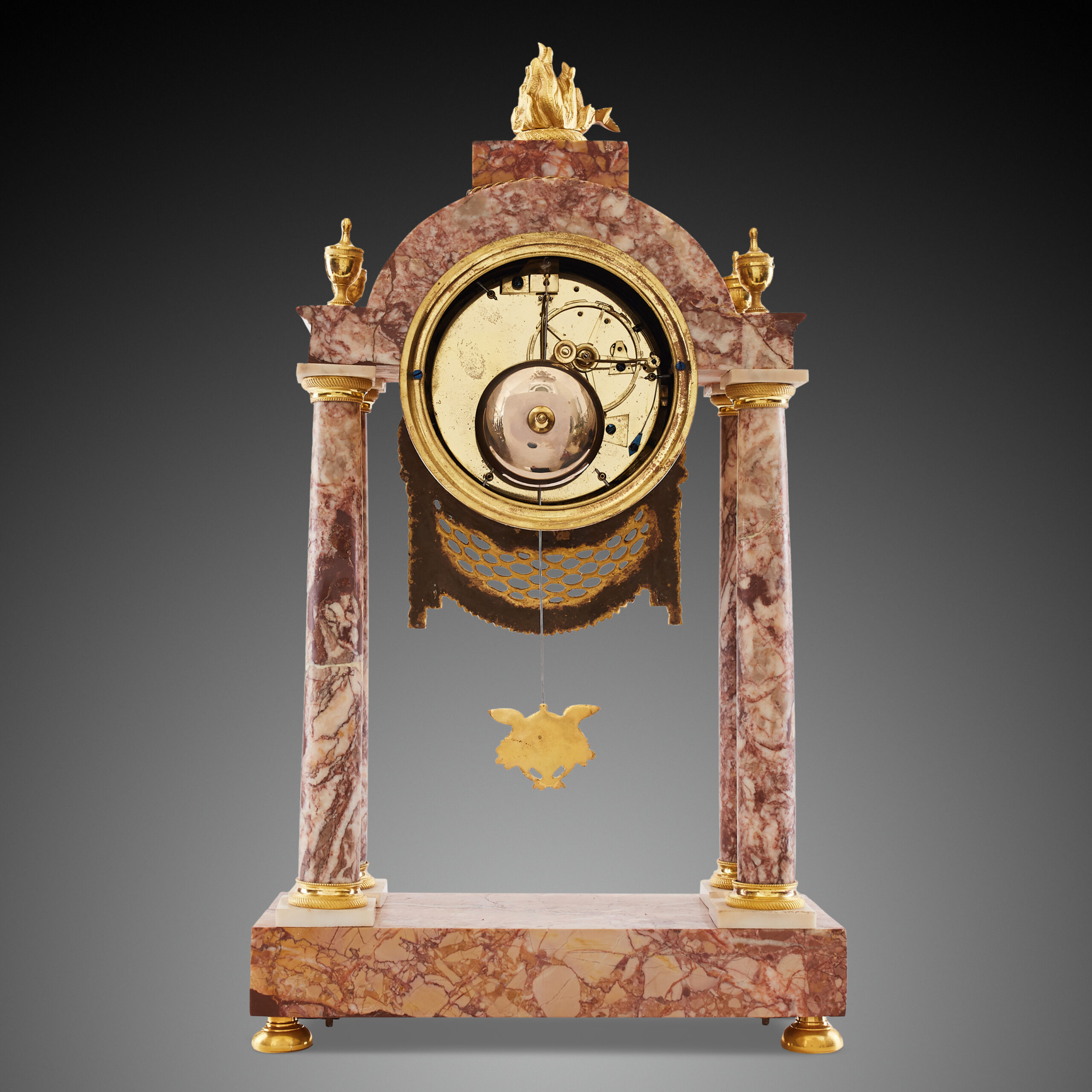
This elegant French mantel clock is a refined and characteristic example of the Empire style, dating from around 1810–1820. It exemplifies the pure Neoclassical taste of the Napoleonic era, where architectural clarity, classical symbolism, and luxurious materials are combined with exceptional harmony.
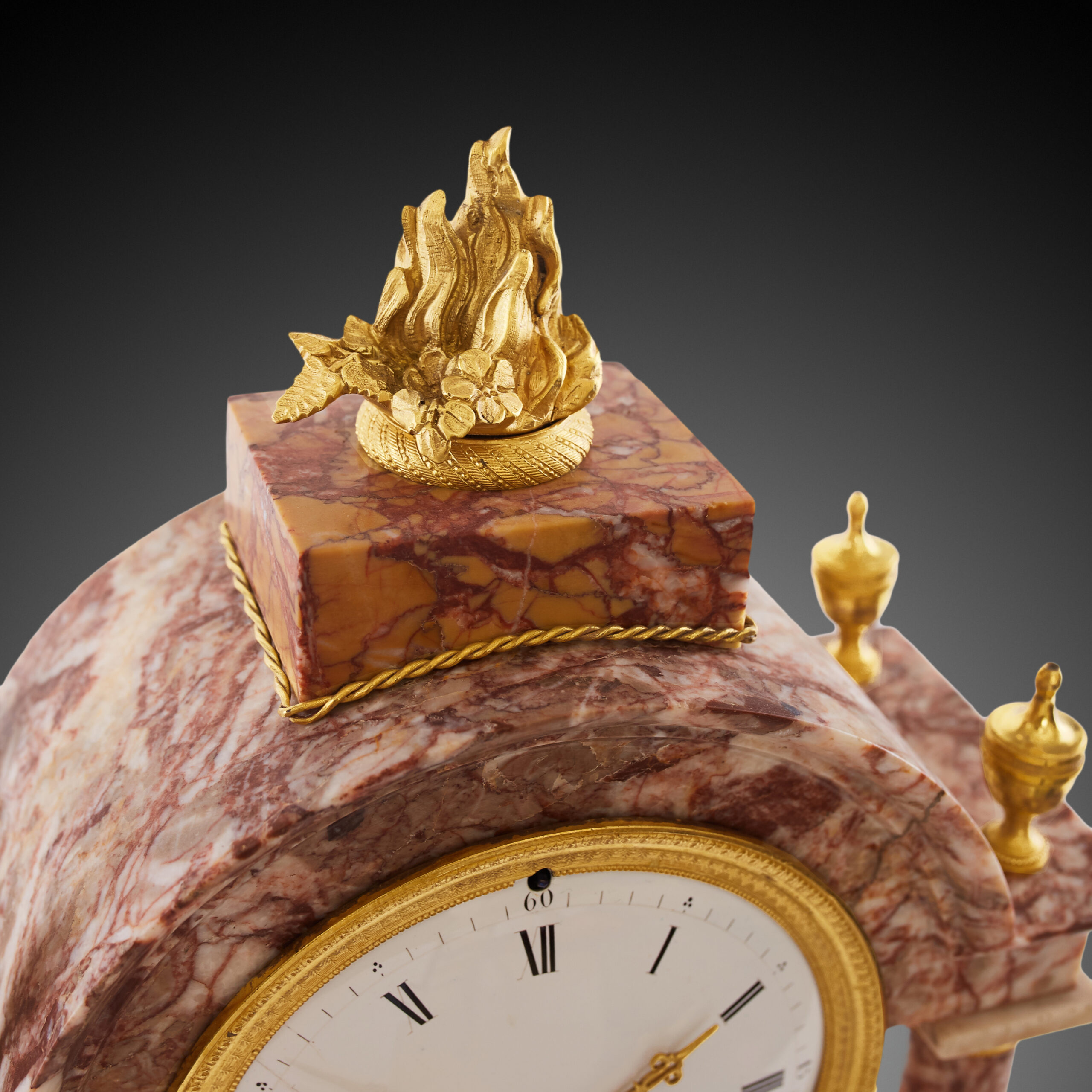
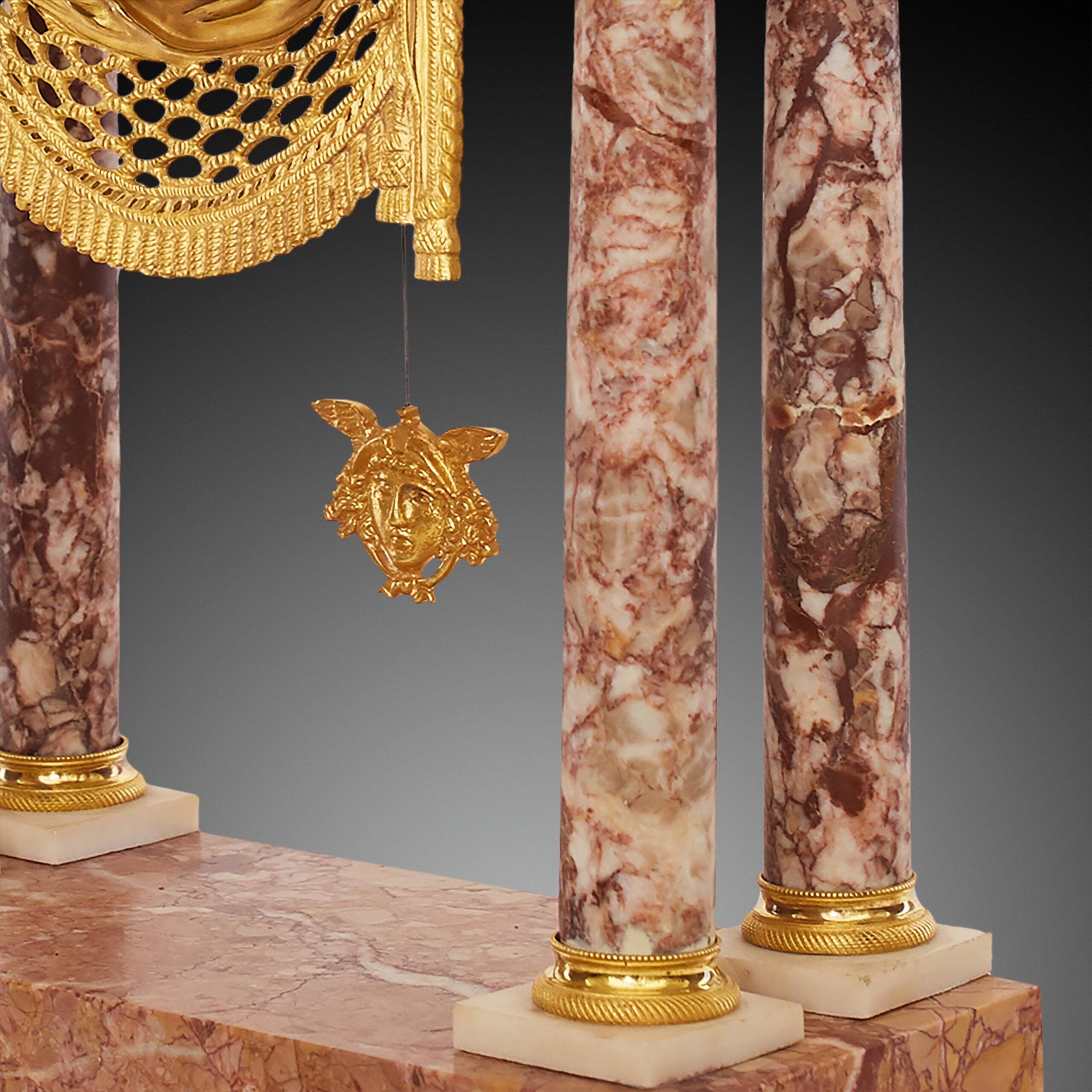
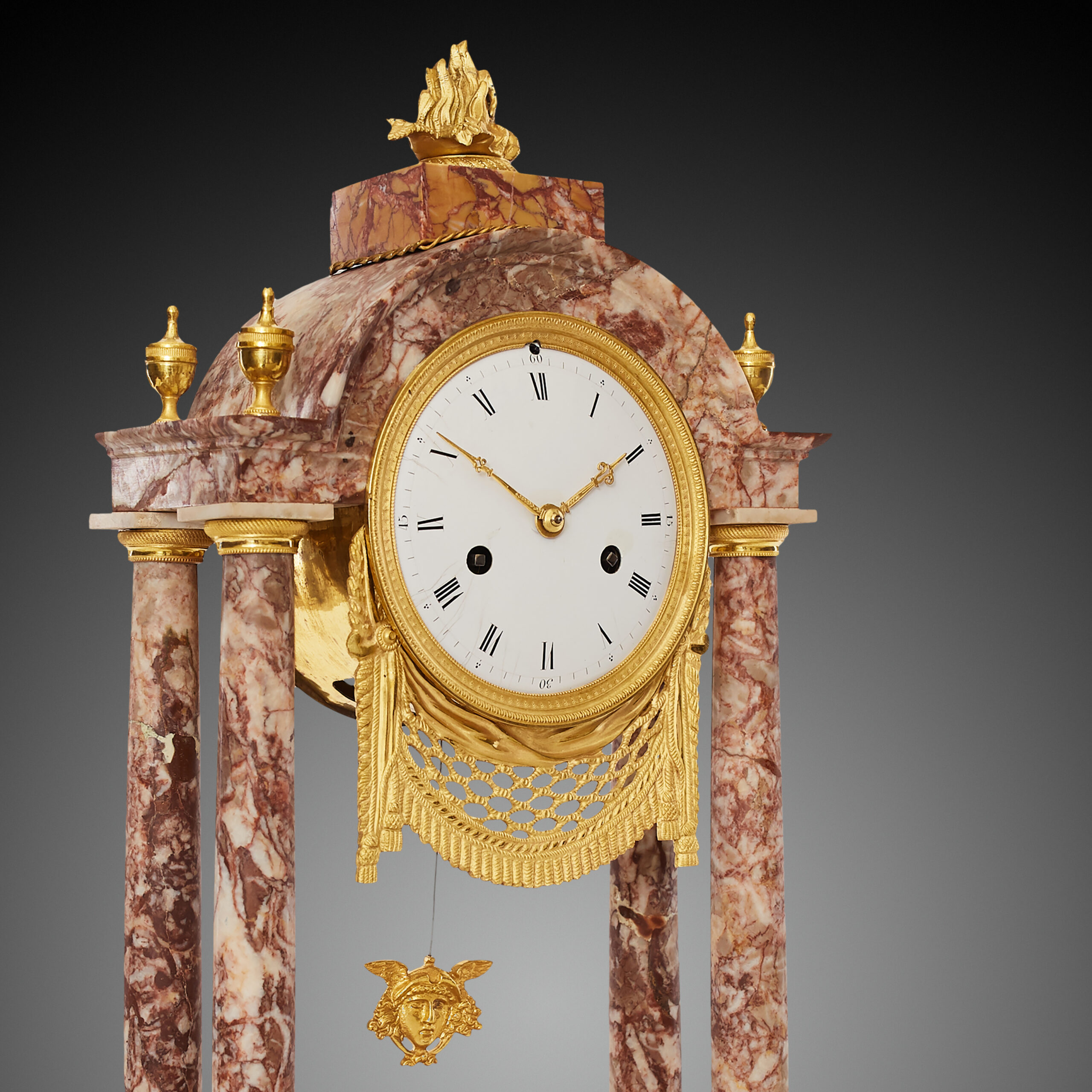
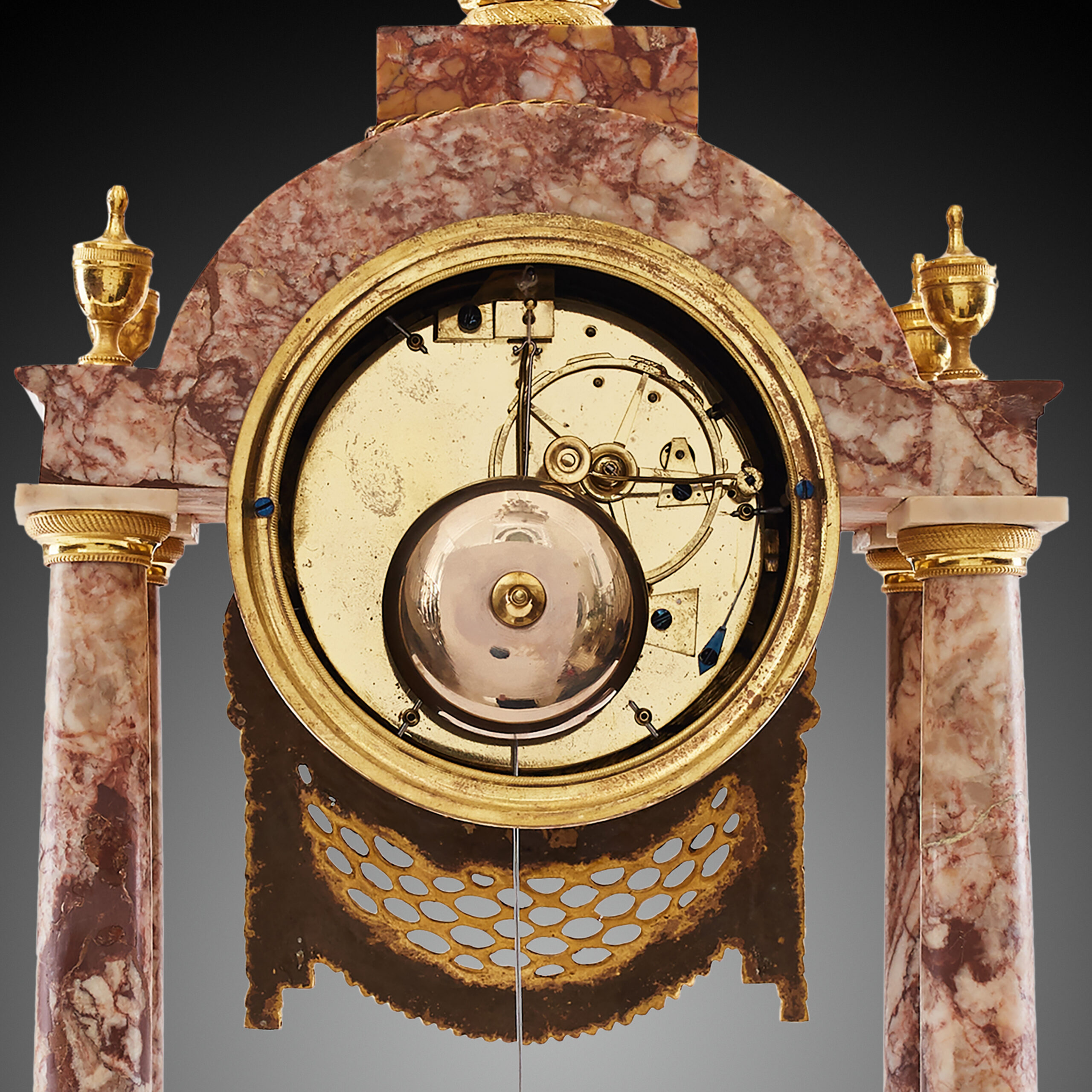
The clock is designed in the popular portico form, framed by two slender columns of richly veined red marble (likely griotte d’Italie) with finely chased gilt bronze capitals and bases. These columns support an arched pediment topped by a gilt bronze finial depicting a classical urn with flaming finial- a motif symbolising eternity and the eternal flame of knowledge. Two smaller urn finials grace the sides of the pediment, completing the architectural composition with graceful symmetry.
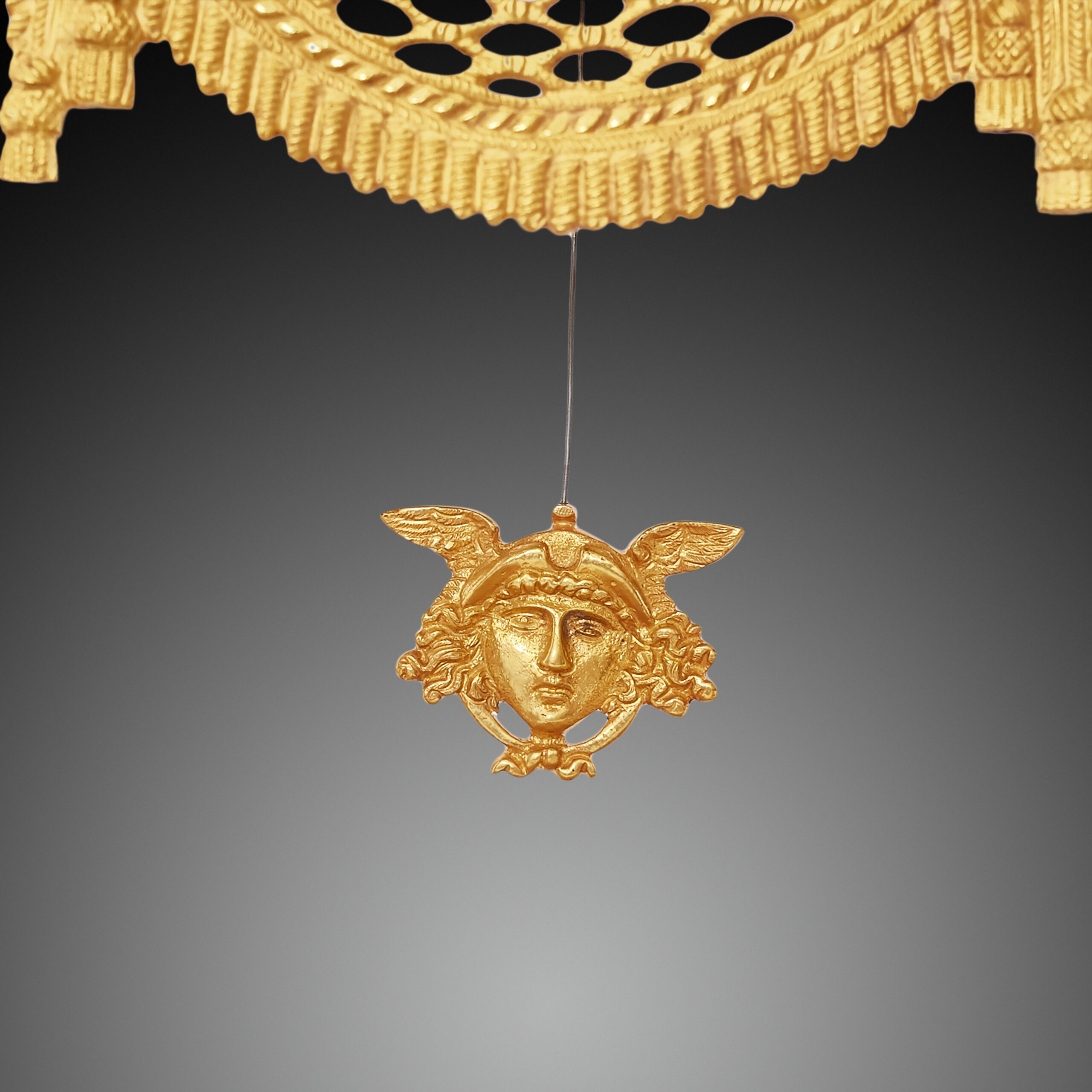
The circular white enamel dial presents crisp Roman numerals and is complemented by delicate gilt hands. Below the dial hangs a rich gilt bronze drapery with tassels and a net-like fringed apron, a charming detail that softens the strict architectural lines while remaining firmly within the Empire vocabulary. Centred beneath this is a finely cast gilt bronze eagle with spread wings-a powerful emblem of imperial authority and victory, frequently used during the Napoleonic period.
The whole composition rests on a rectangular base of matching red marble, elevated on four small gilt bronze feet that give the piece a light yet monumental presence.
This clock perfectly embodies the spirit of the Empire under Napoleon Bonaparte. After the Revolution, French designers turned deliberately to the grandeur of ancient Rome and Greece, using columns, pediments, laurel motifs, and eagles to express ideas of order, strength, permanence, and imperial glory. The combination of warm red marble with luminous gilt bronze was especially prized for its rich visual contrast and sense of opulence.
Mechanically, the clock is fitted with a reliable eight-day movement that strikes the hours and every half-hour on a clear bell. It has been professionally cleaned and serviced by a specialist in museum-quality timepieces and remains in excellent cosmetic and fully working condition. It comes complete with its original pendulum, winding key, and bell.
When displayed on a mantel, the clock offers a commanding yet refined presence. The red marble columns glow with depth, the gilt bronze mounts catch the light with quiet brilliance, and the imperial eagle adds a subtle note of authority. The gentle swing of the pendulum and the soft chime on the half-hour bring a living rhythm that enhances the dignified atmosphere of any Neoclassical interior.
This is a fine and authentic example of Empire horology, where technical precision meets classical elegance and imperial symbolism. Its balanced proportions, noble materials, and high-quality execution make it a beautiful and historically resonant addition to any collection of early 19th-century French decorative arts.