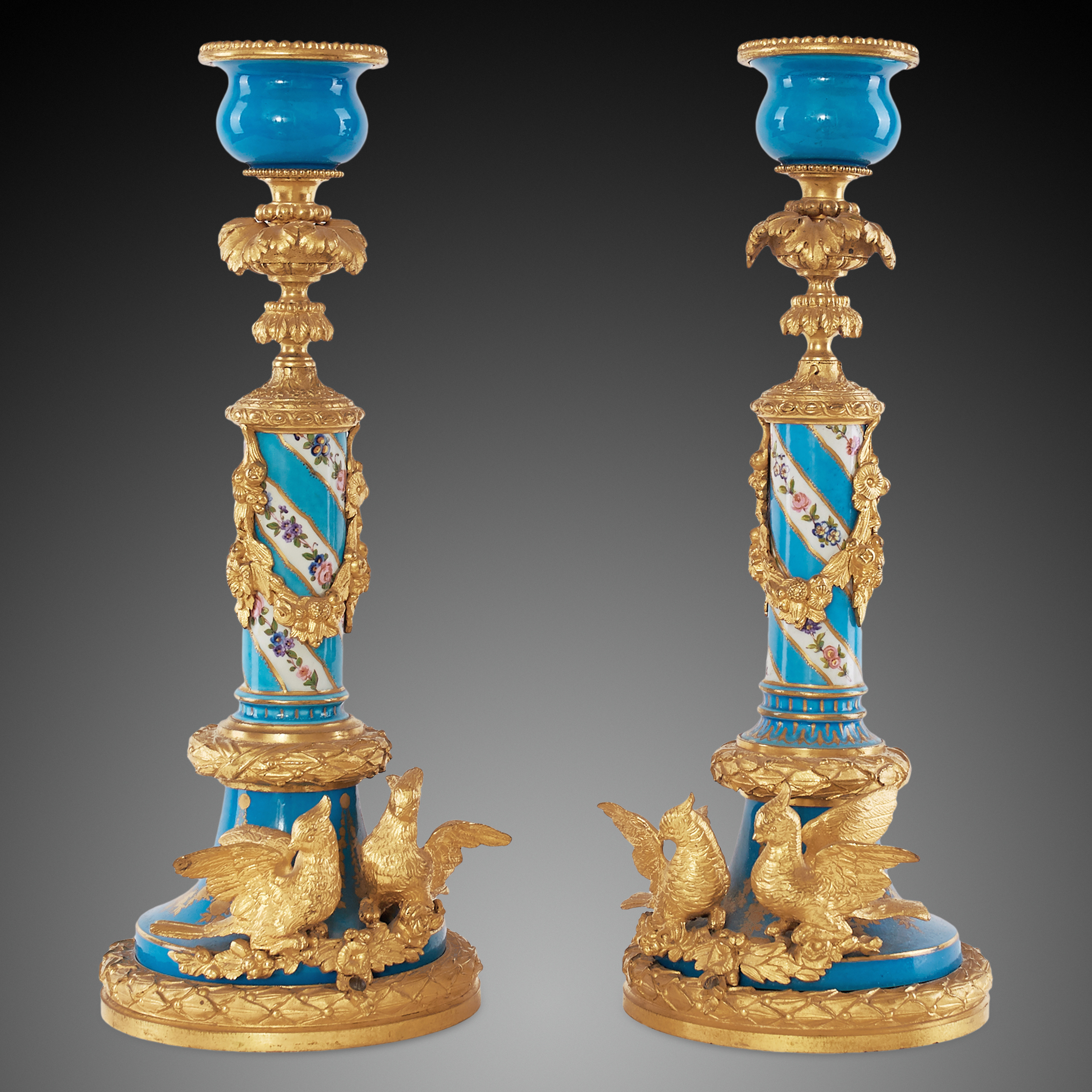
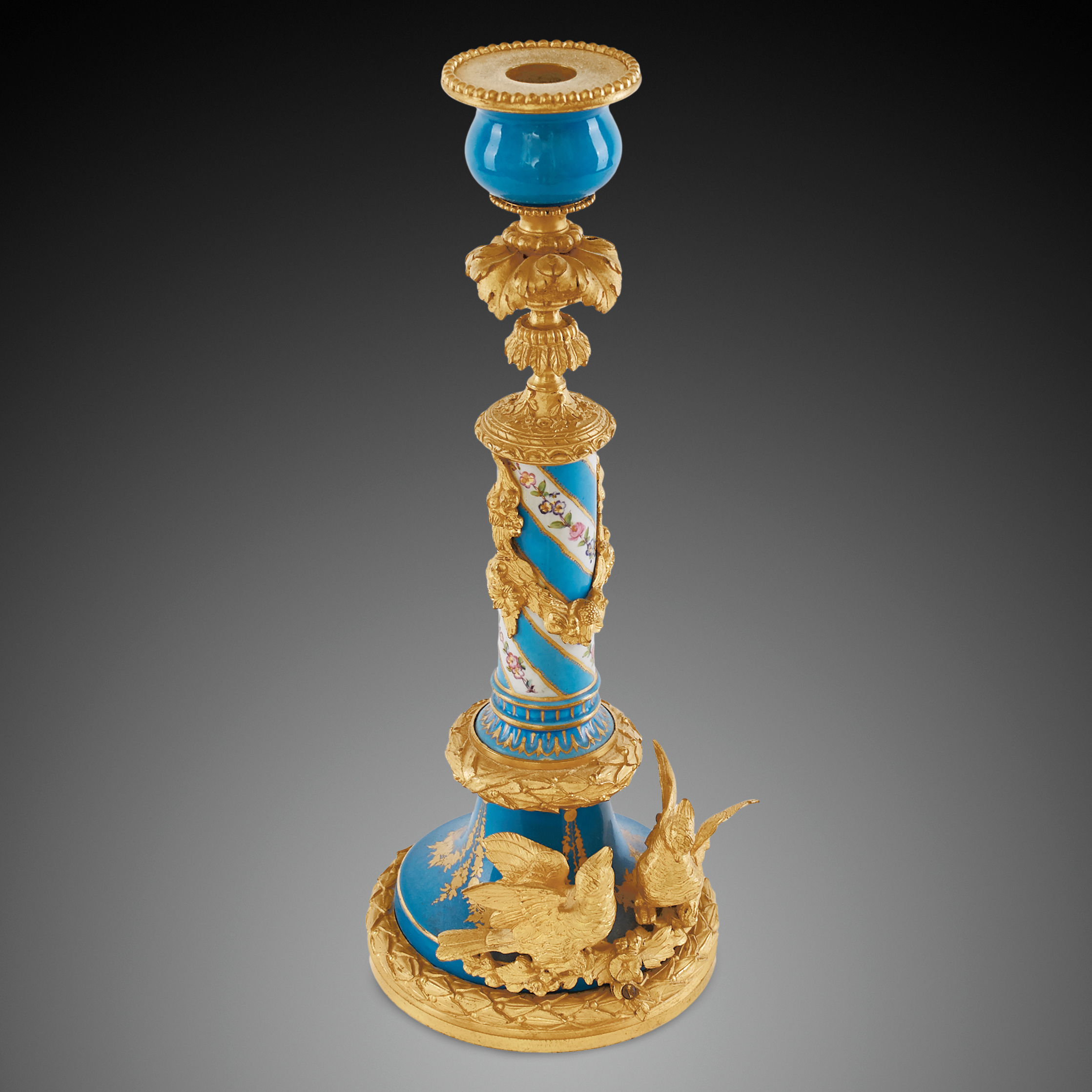
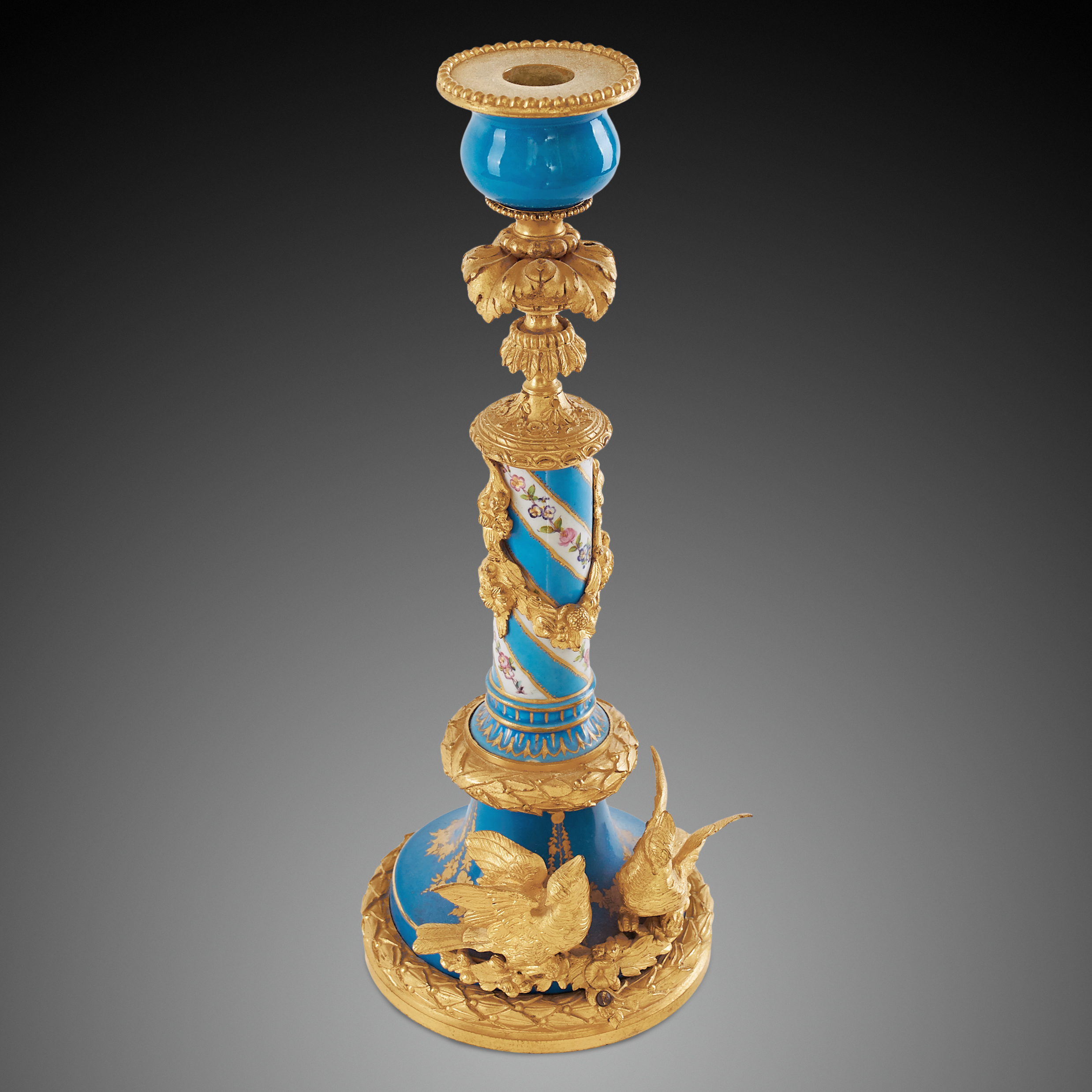
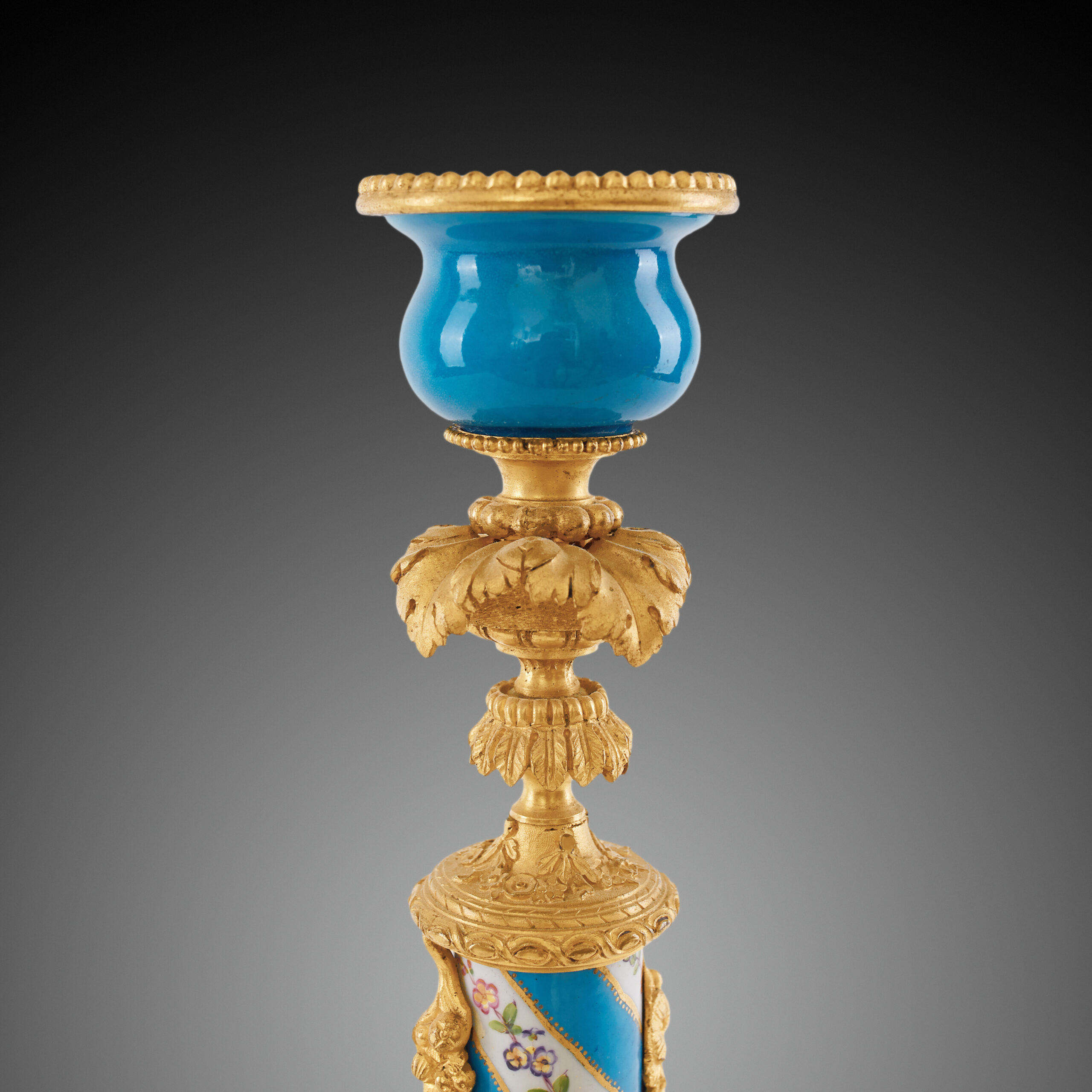
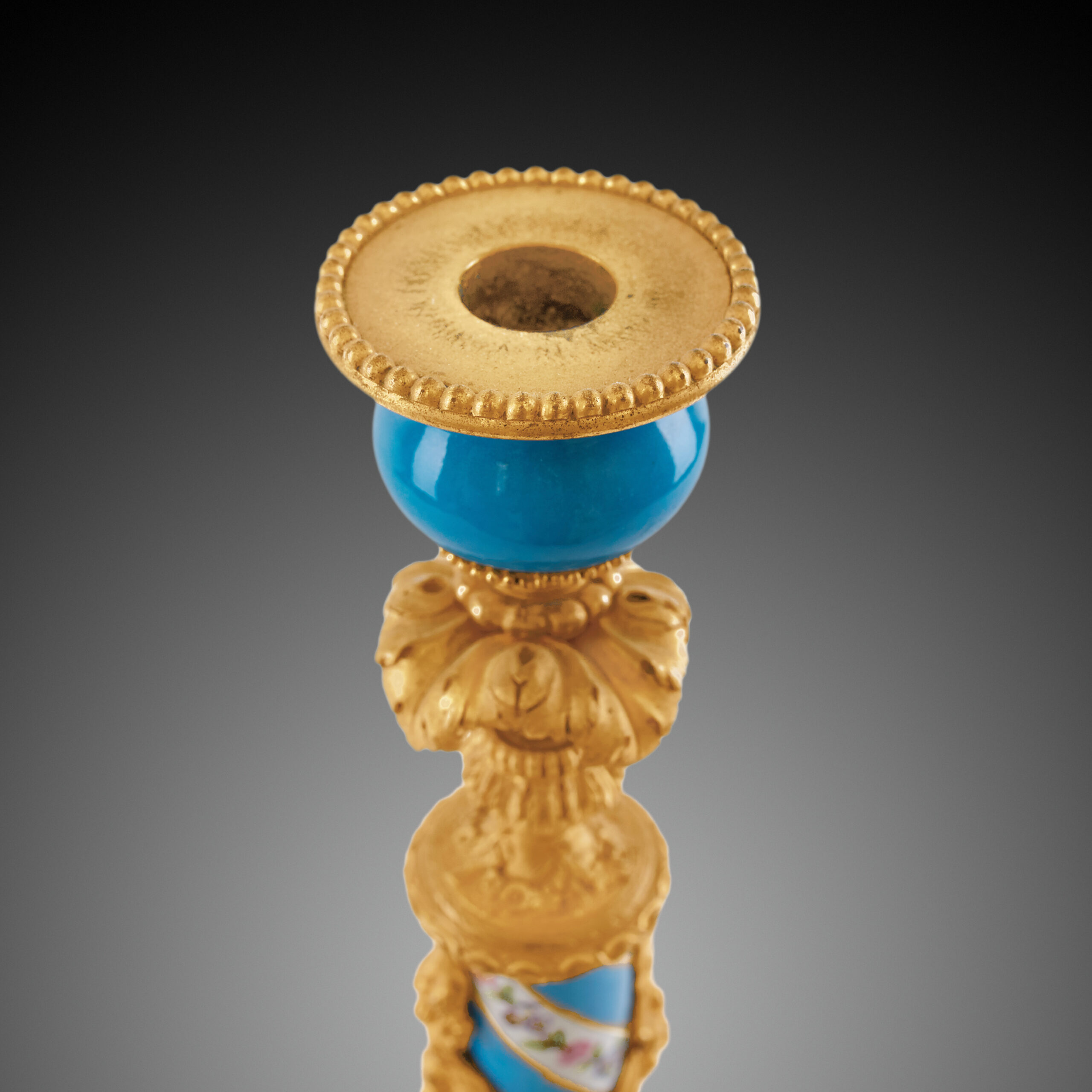
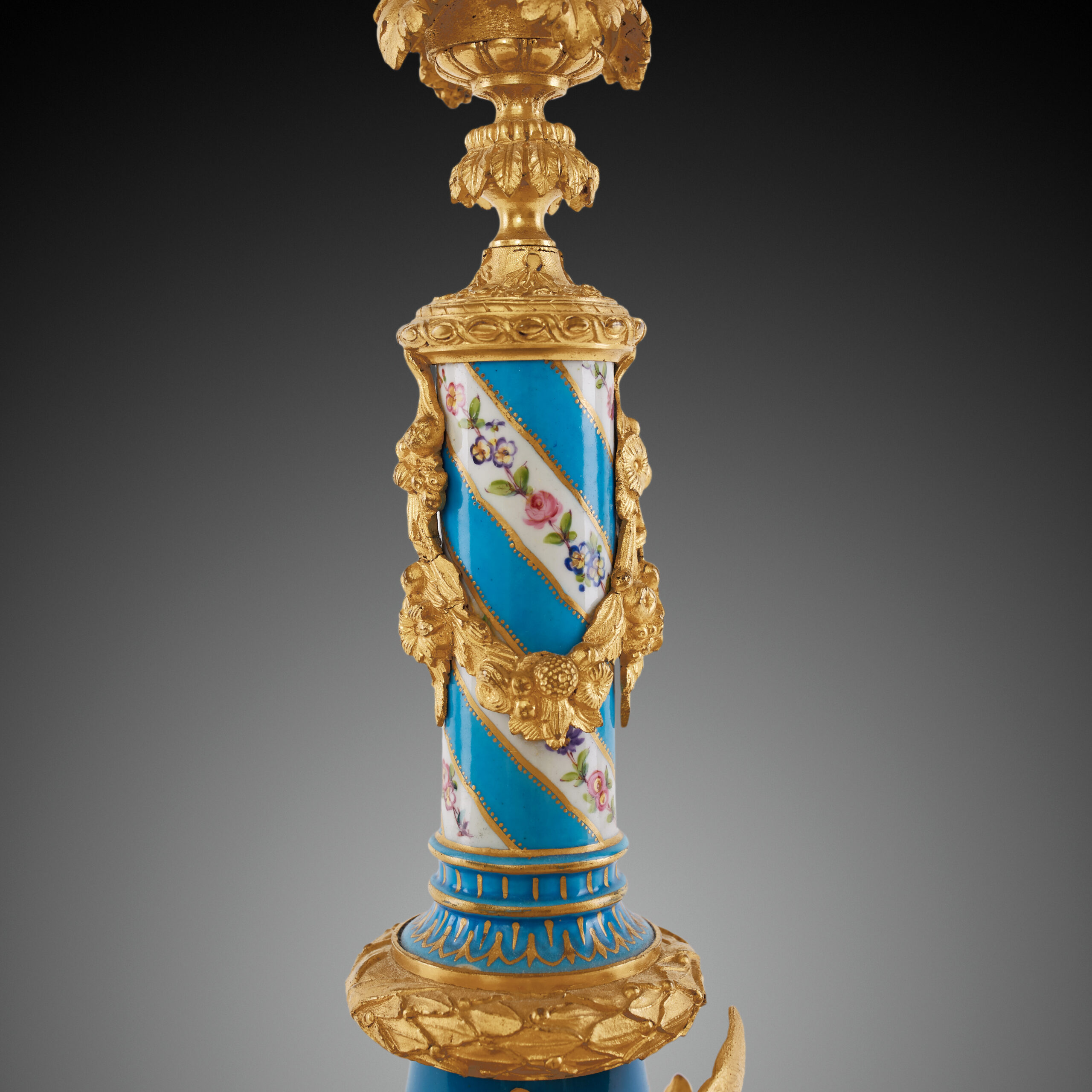
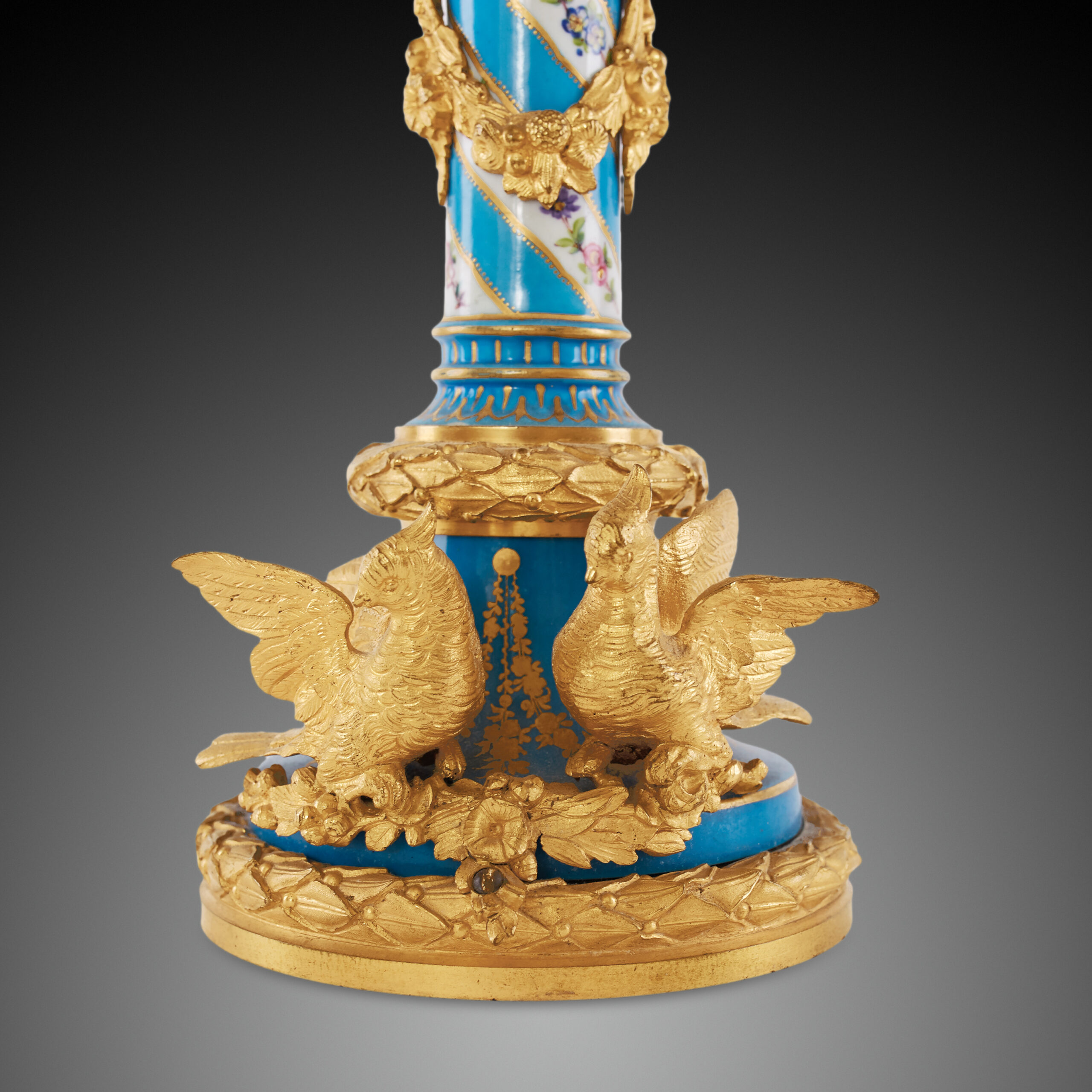
This fine and true pair of 19th-century candelabra is a superb example of the artistry and technical skill of the Napoleon III period. Designed to complement clocks and other decorative objects from the same era, these beautiful pieces represent a harmonious fusion of fine materials and exquisite craftsmanship, blending vibrant champlevé enamel with meticulously detailed ormolu.
Each candelabrum rises from a circular gilt bronze base where two birds perch gracefully on gilded branches, creating a lively naturalistic foundation. Above them hang beautifully sculpted flower wreaths that add a sense of delicate movement and grace. The central body takes the form of a columnar shaft covered in rich swirled blue champlevé enamel, a technique in which enamel powder is carefully applied into engraved cells within the metal and then fired to produce a smooth, luminous surface. This vivid blue enamel is further adorned with meticulously sculpted flower garlands and leaf motifs in brilliant gilt bronze, resulting in a rich interplay of color and texture.
The arms extend outward from the top of the column in balanced, elegant curves, designed to hold candles and cast a warm, flattering light. The overall design reflects the eclectic elegance so characteristic of the Second Empire, where artisans freely revived and combined elements from earlier French periods while embracing new levels of technical refinement. The champlevé enamel work, in particular, demonstrates the virtuosity of the workshops active in Paris during this time, where skilled enamellers and bronziers collaborated to produce objects of exceptional quality.
When paired together on a mantelpiece or console table, these candelabra create a striking symmetrical presence. The deep blue enamel glows against the warm gold of the ormolu, while the floral and avian motifs introduce a romantic, naturalistic touch that softens the architectural formality. In the evening, with candles lit, the light plays across the raised gilt details and the glossy enamel, bringing the surfaces to life and filling the room with a soft, luxurious ambiance.
Such pairs were highly prized in the grand interiors of the Napoleon III era, where they served both as practical sources of light and as sophisticated statements of taste and refinement. Their masterful combination of rich materials, intricate enamelwork, and sculptural details makes them a truly exceptional addition to any collection of antique French decorative arts. Placed alongside a matching or stylistically related clock, they form a cohesive and elegant ensemble that captures the opulent spirit of mid-19th-century Paris.