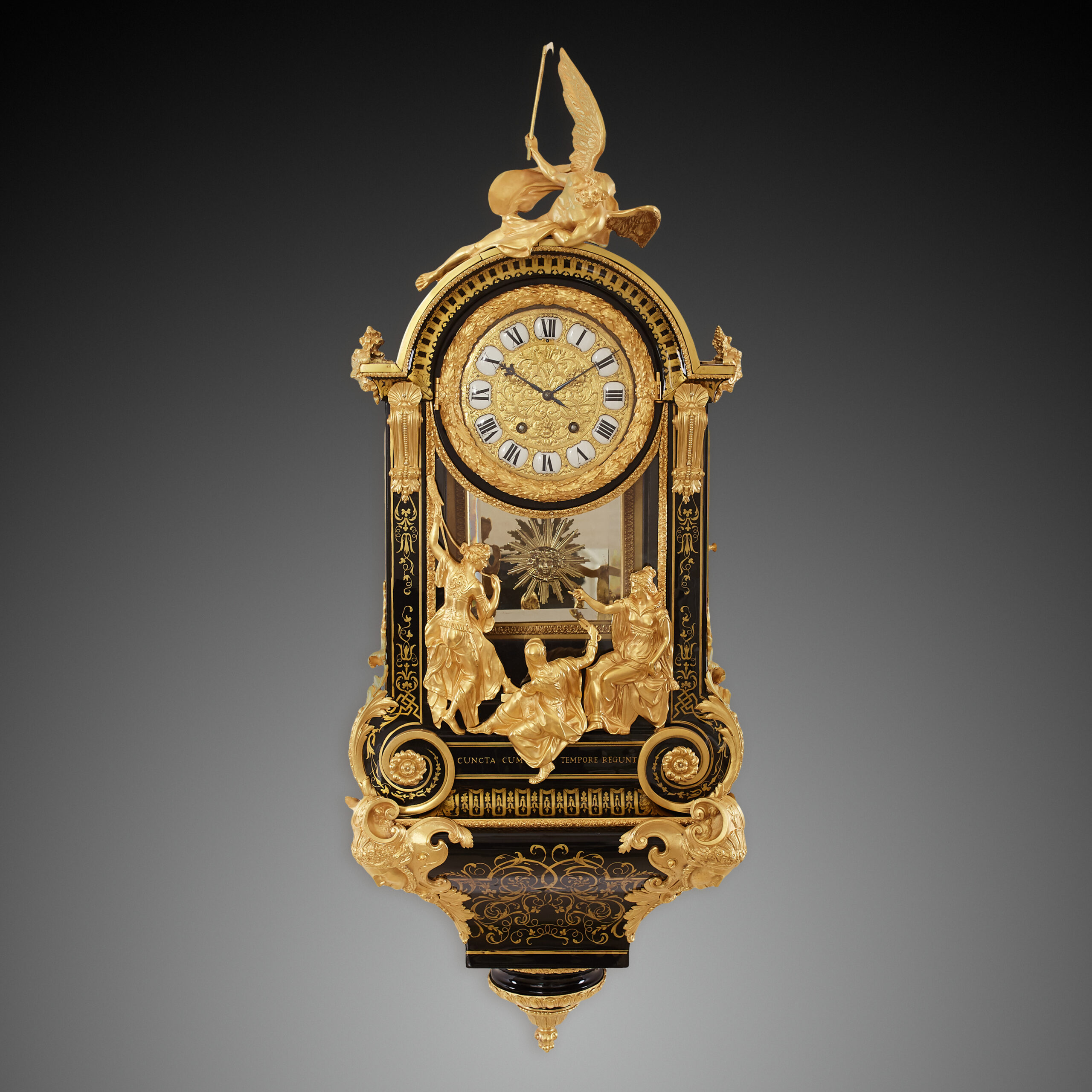
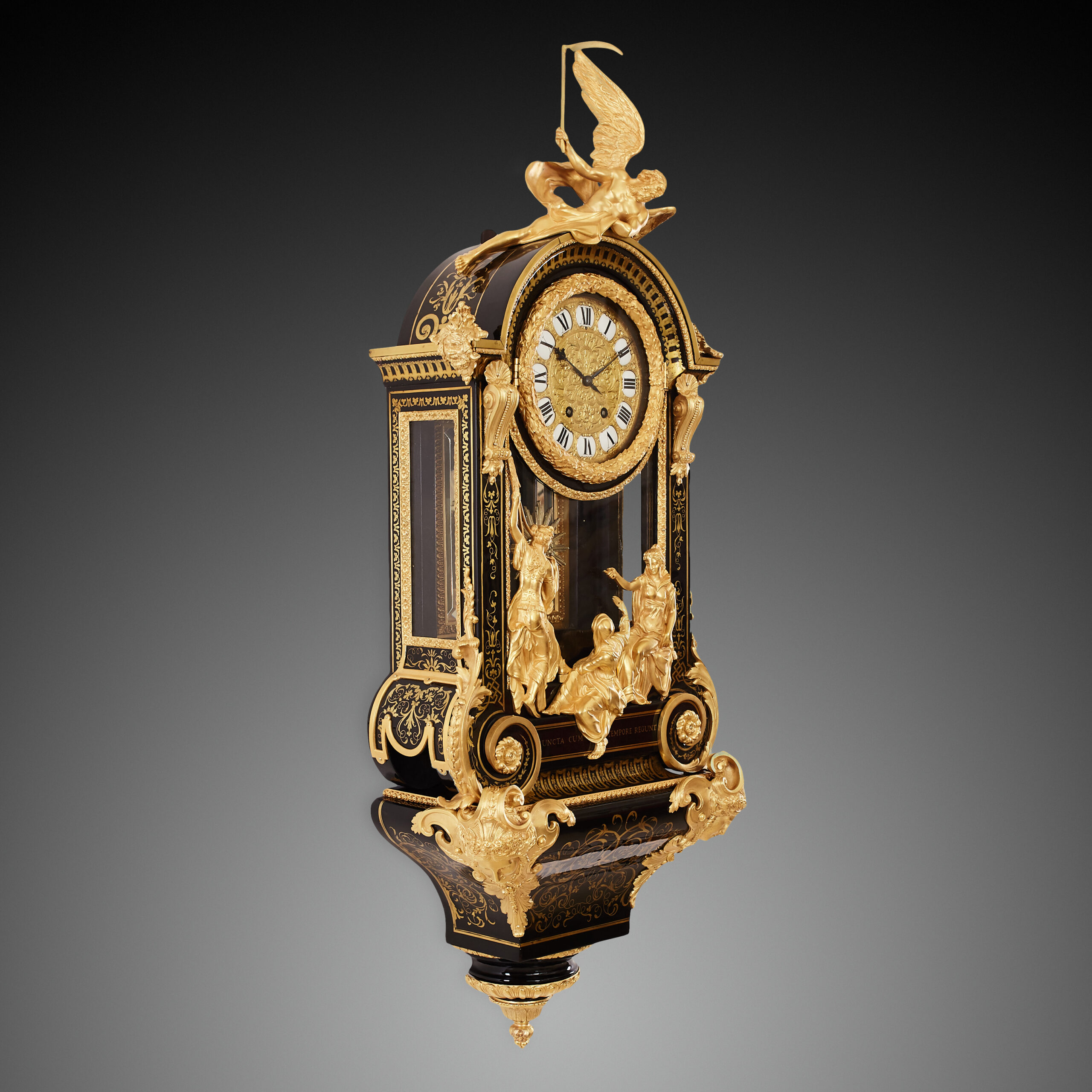
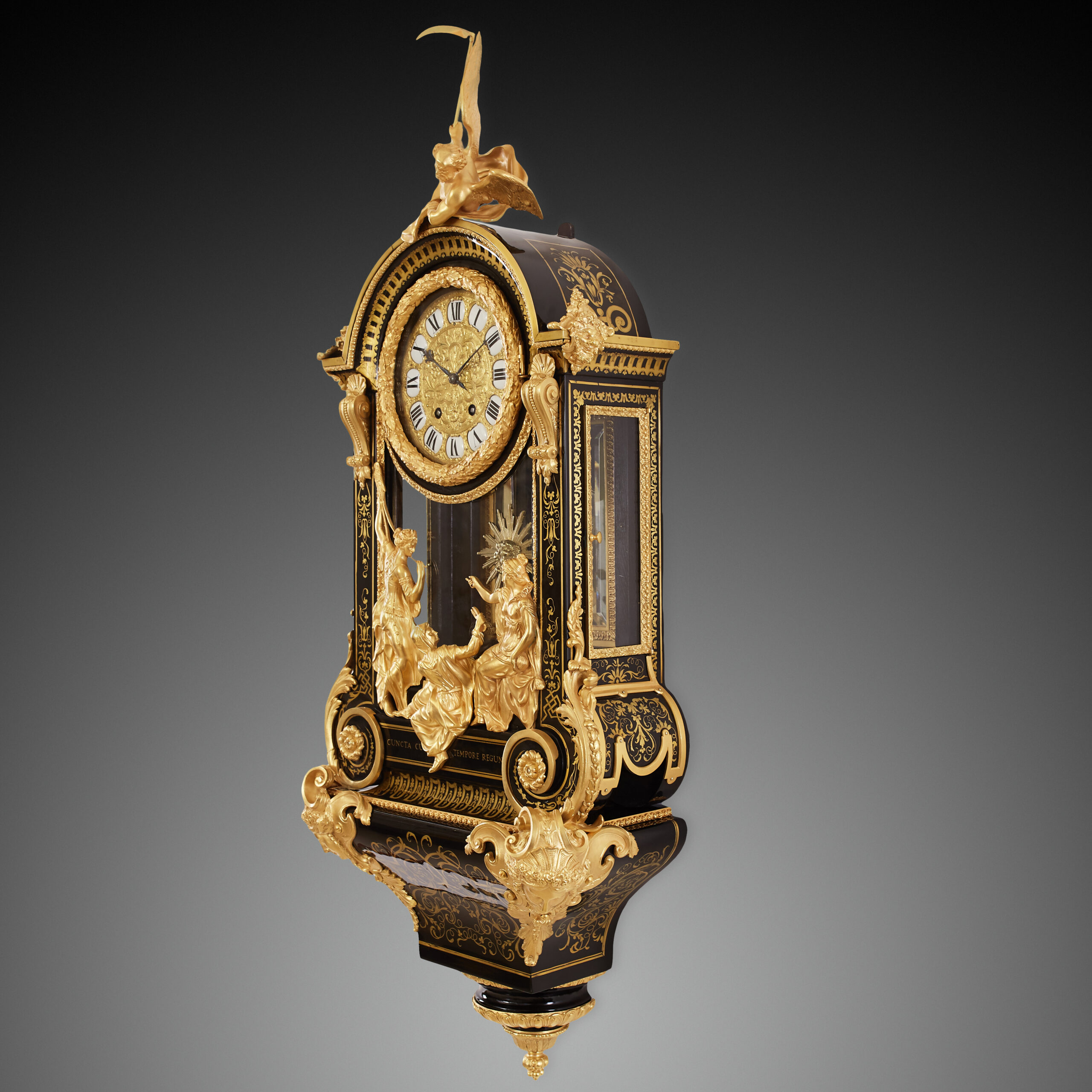
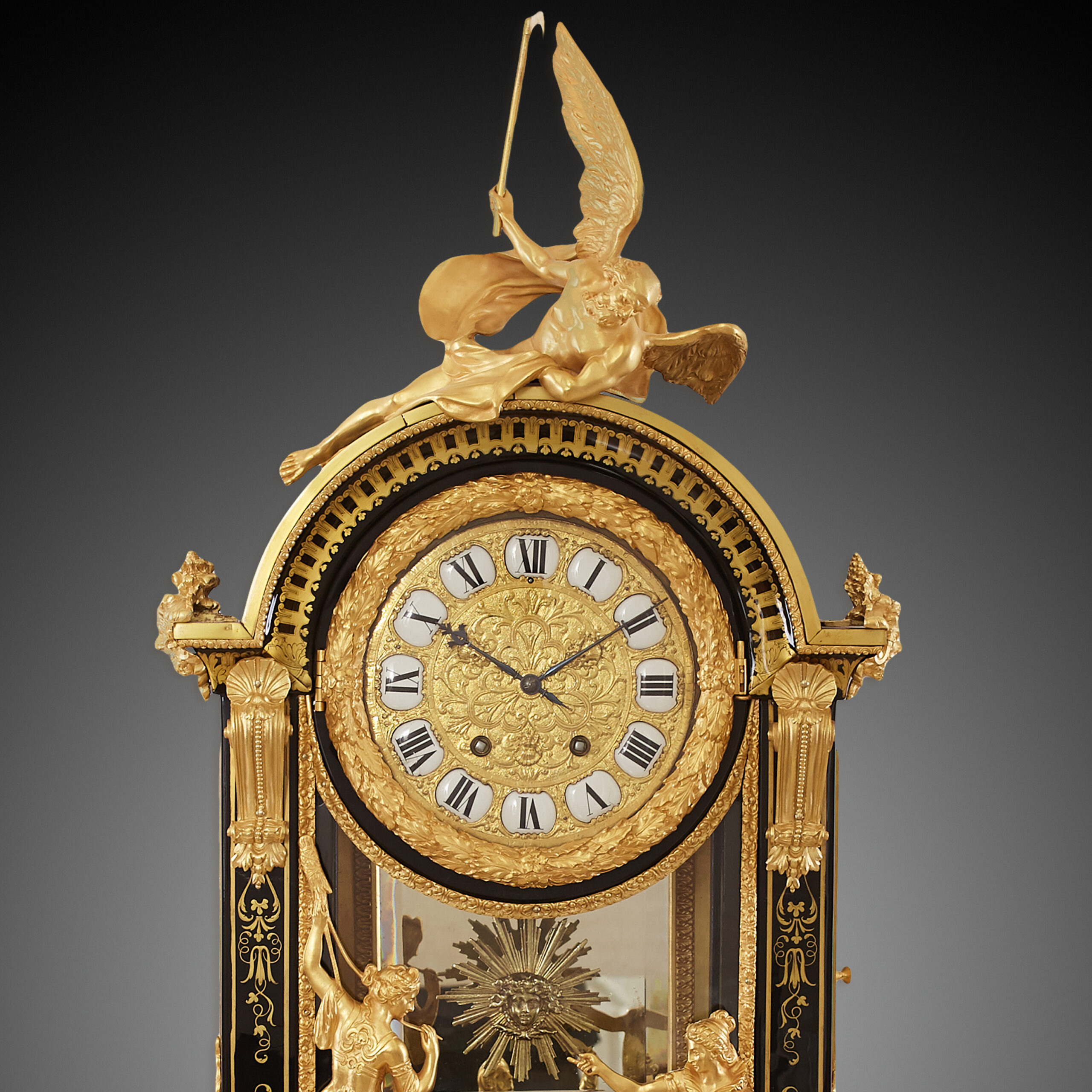
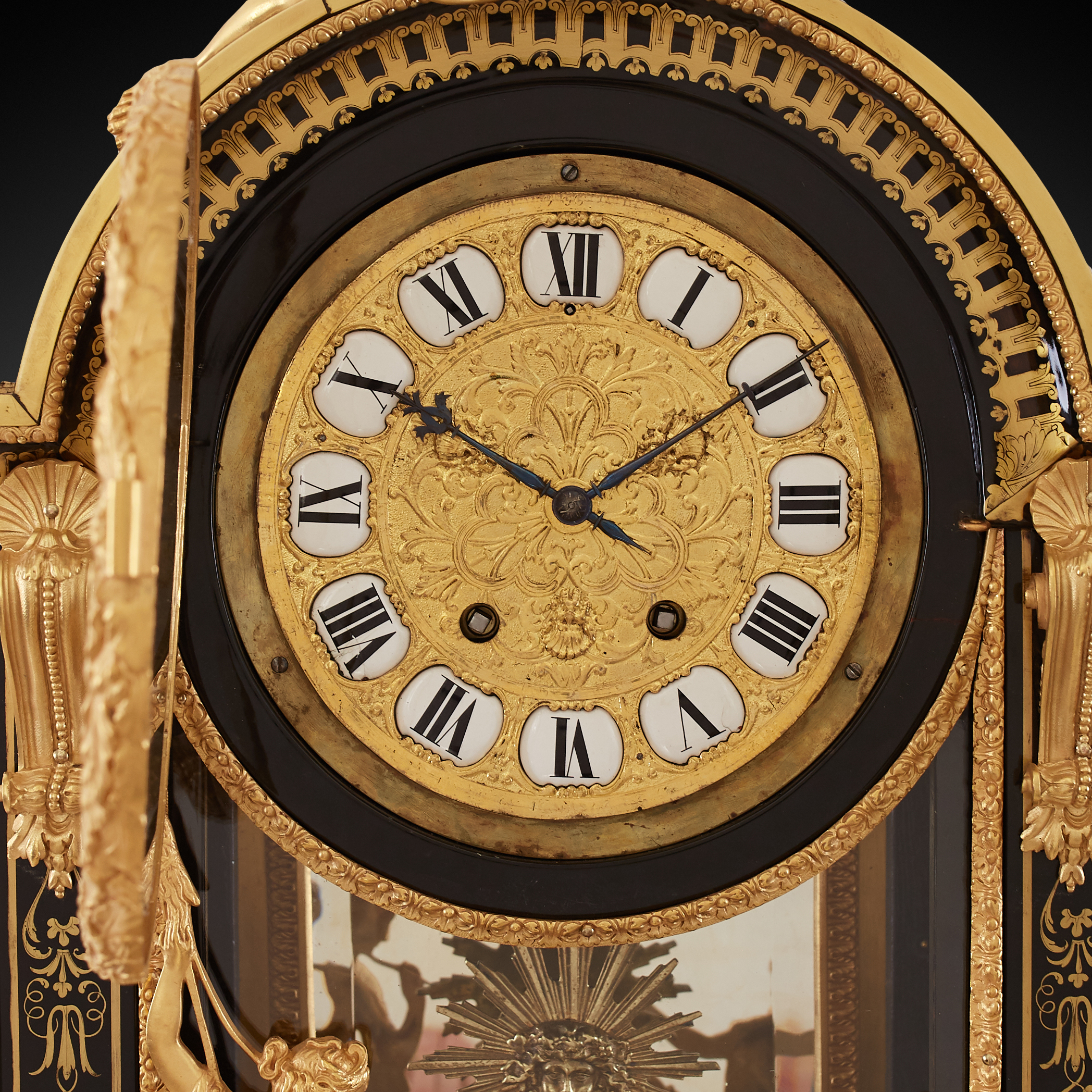
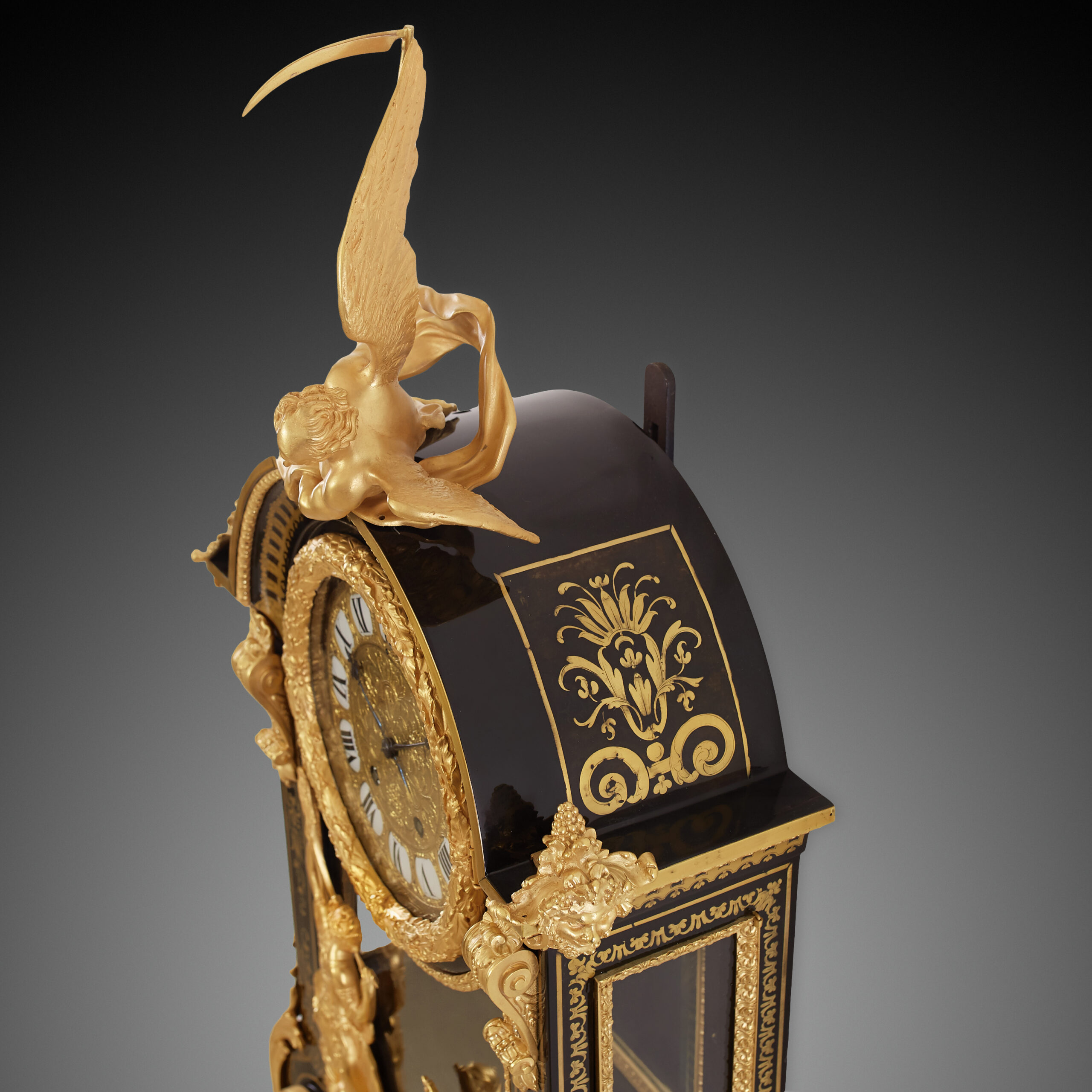
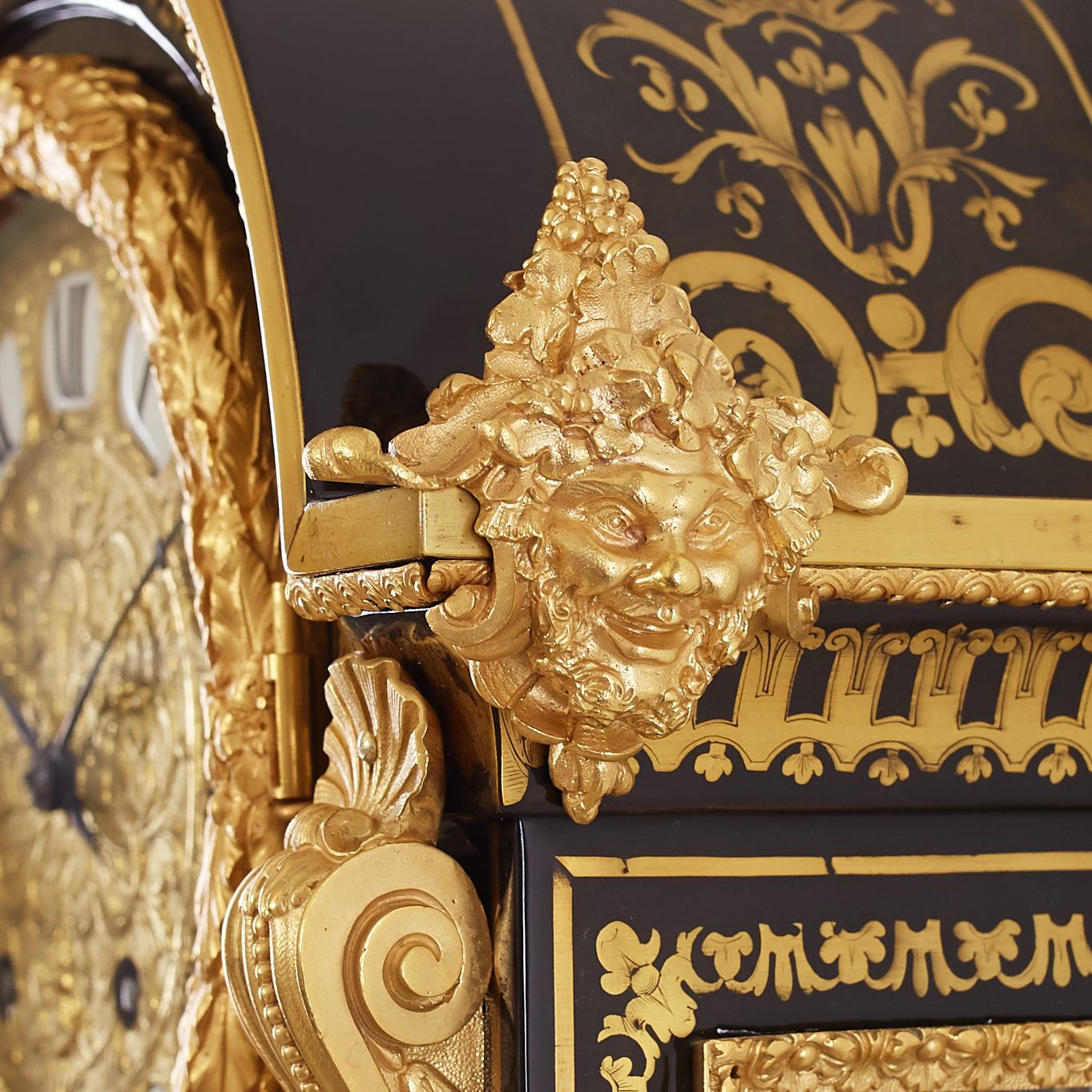
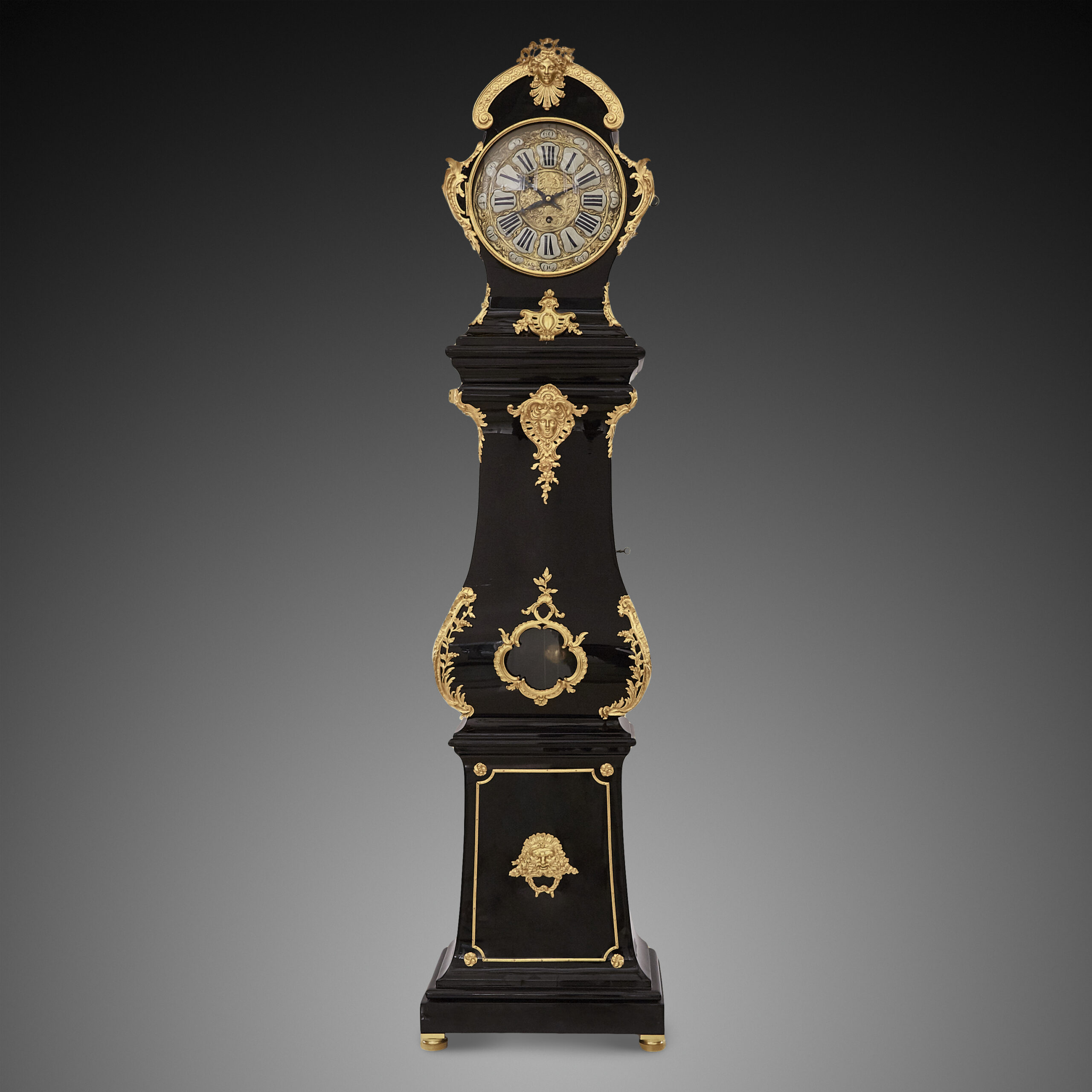
A highly impressive French Boulle-style wall clock, richly decorated with gilt bronze mounts, brass marquetry, and an elaborate architectural case in the grand Louis XIV revival taste. The clock is centred by a circular gilt bronze dial with individual enamel Roman numeral cartouches, finely formed hands, twin winding apertures, and a richly engraved gilt centre. The dial is framed by an ornate gilt bronze surround and set beneath a rounded crest, giving the clock a strong and commanding decorative presence.
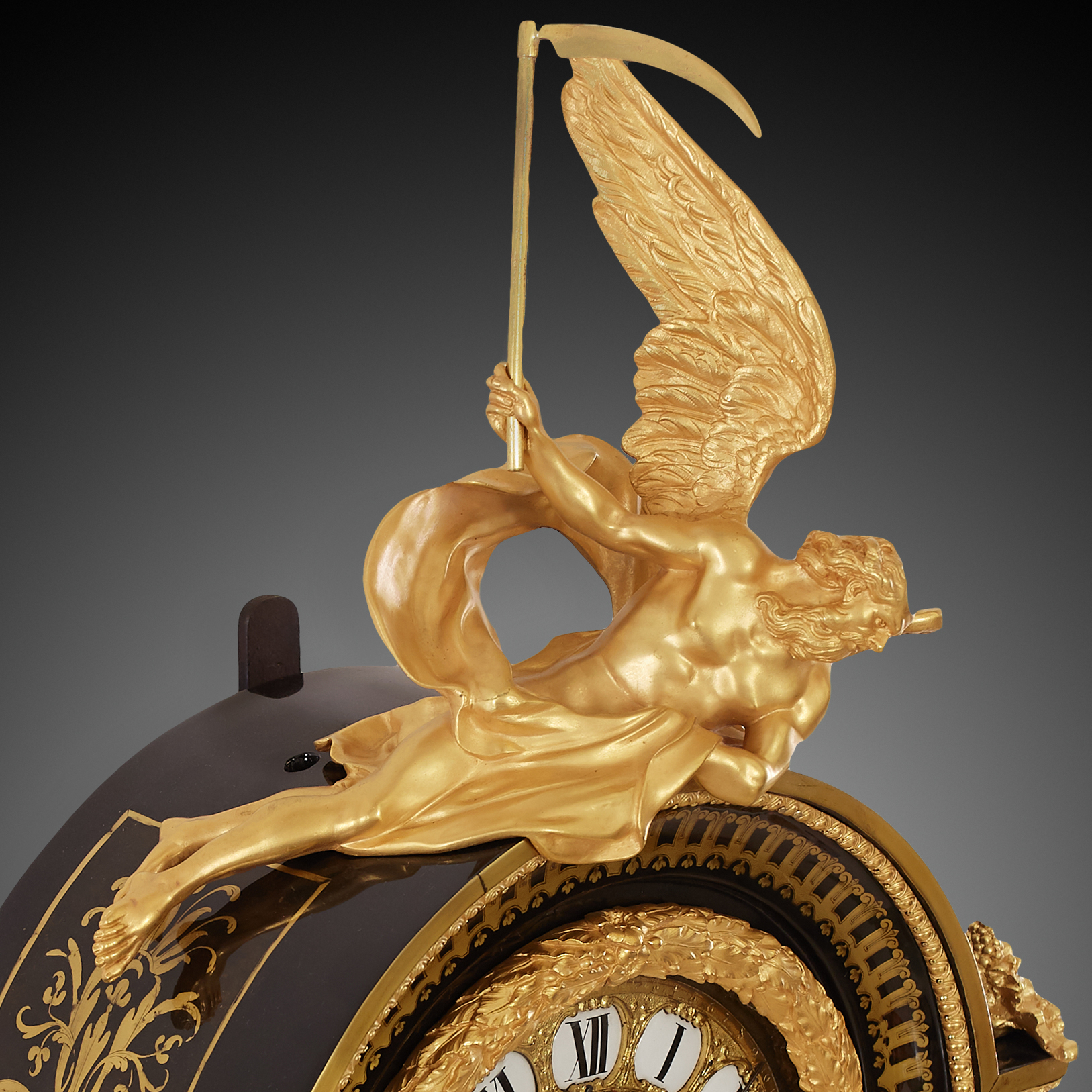
The case is executed on a dark ground, enriched with scrolling brass inlay and finely chased ormolu mounts. The upper section is surmounted by a dramatic winged figure, likely representing Cupid, Fame, or Victory, holding a bow and posed dynamically above the arch. This allegorical figure adds movement and theatrical character to the composition, reflecting the taste for mythological and symbolic ornament that was central to French decorative arts.
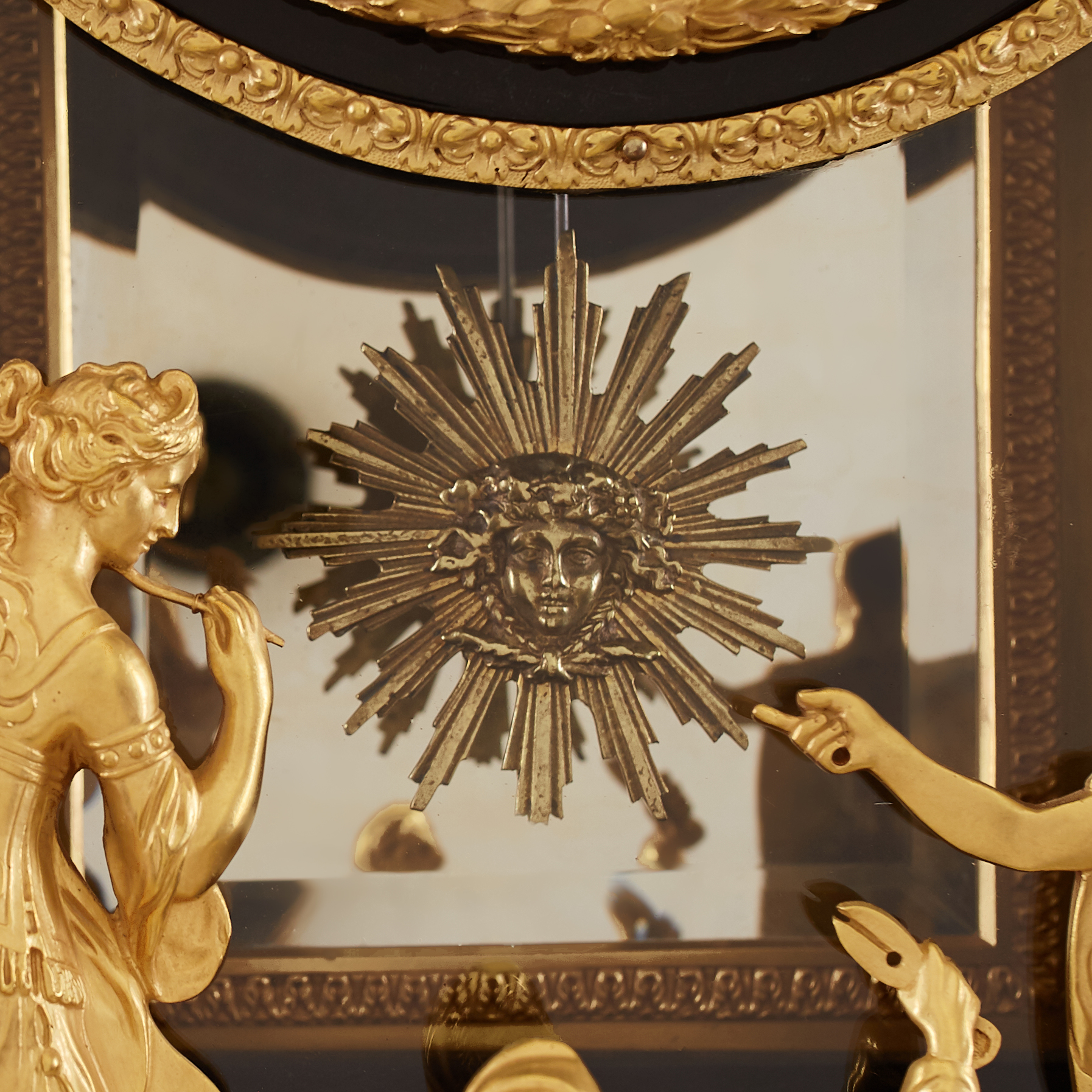
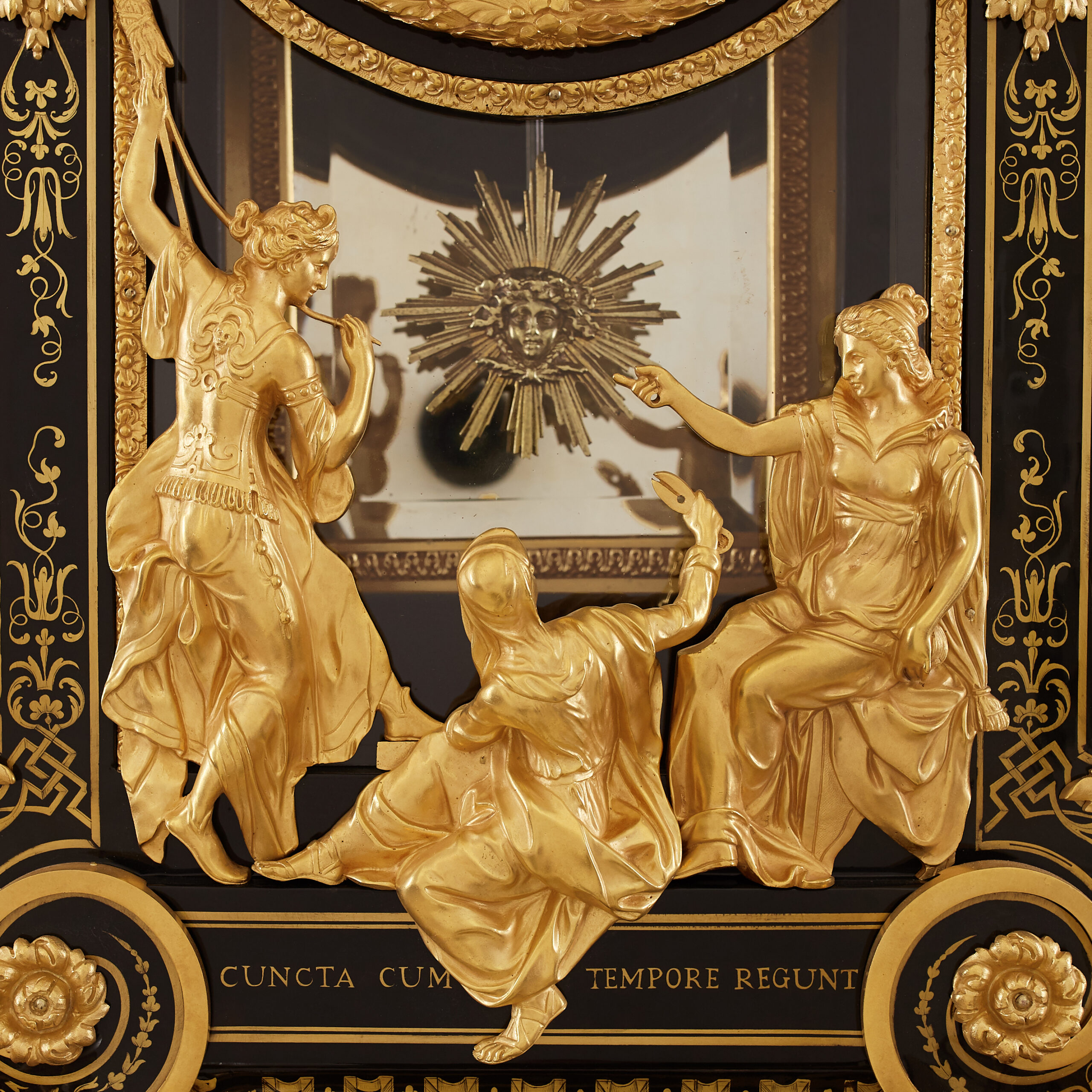
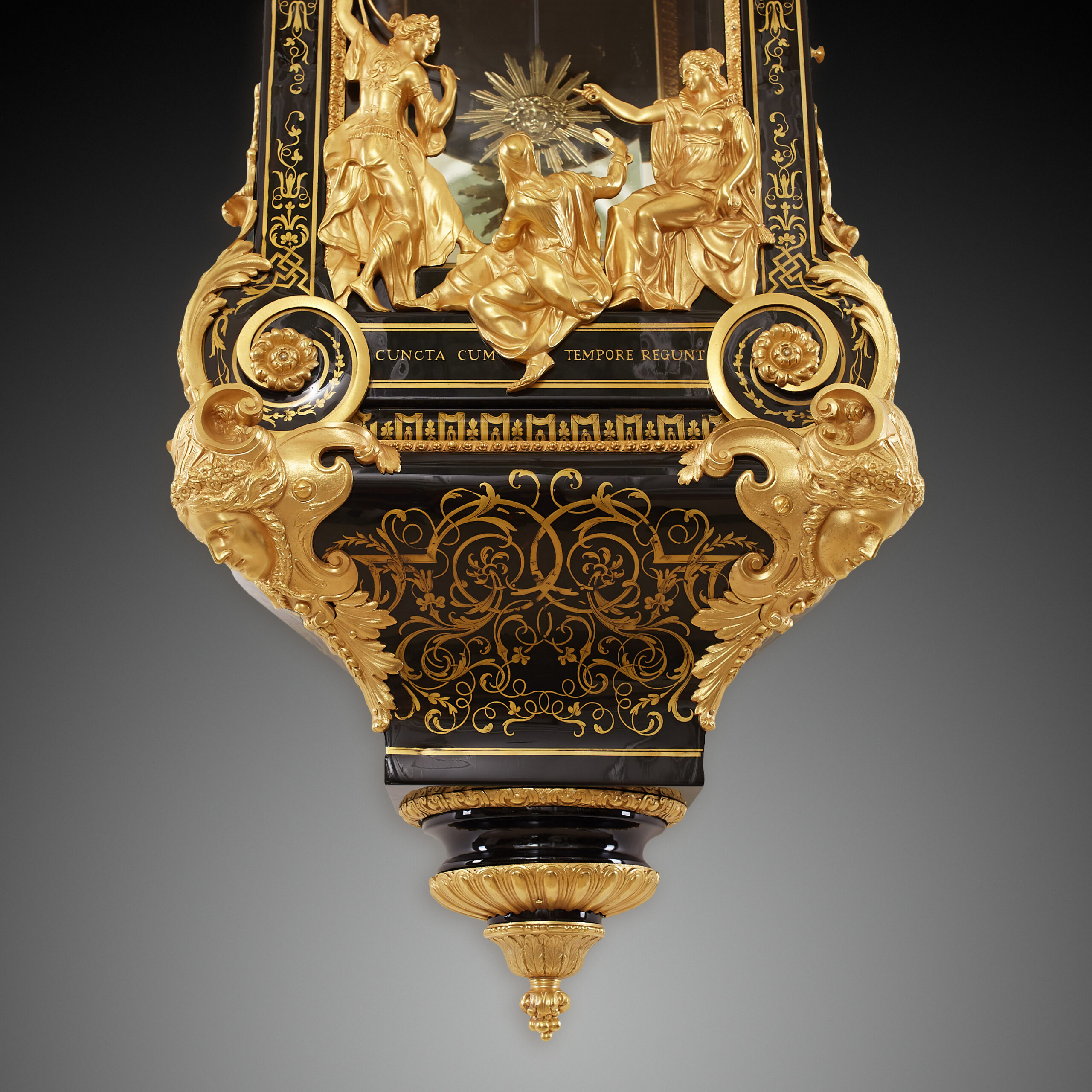
Below the dial, the glazed front reveals a richly decorated interior with a gilt bronze figural group arranged around a central sunburst mask. The figures appear in classical dress and create a narrative scene associated with time, the arts, or allegory. The mirrored back enhances the depth of the case and allows the gilt bronze elements to catch the light, giving the clock an especially luxurious and animated appearance.
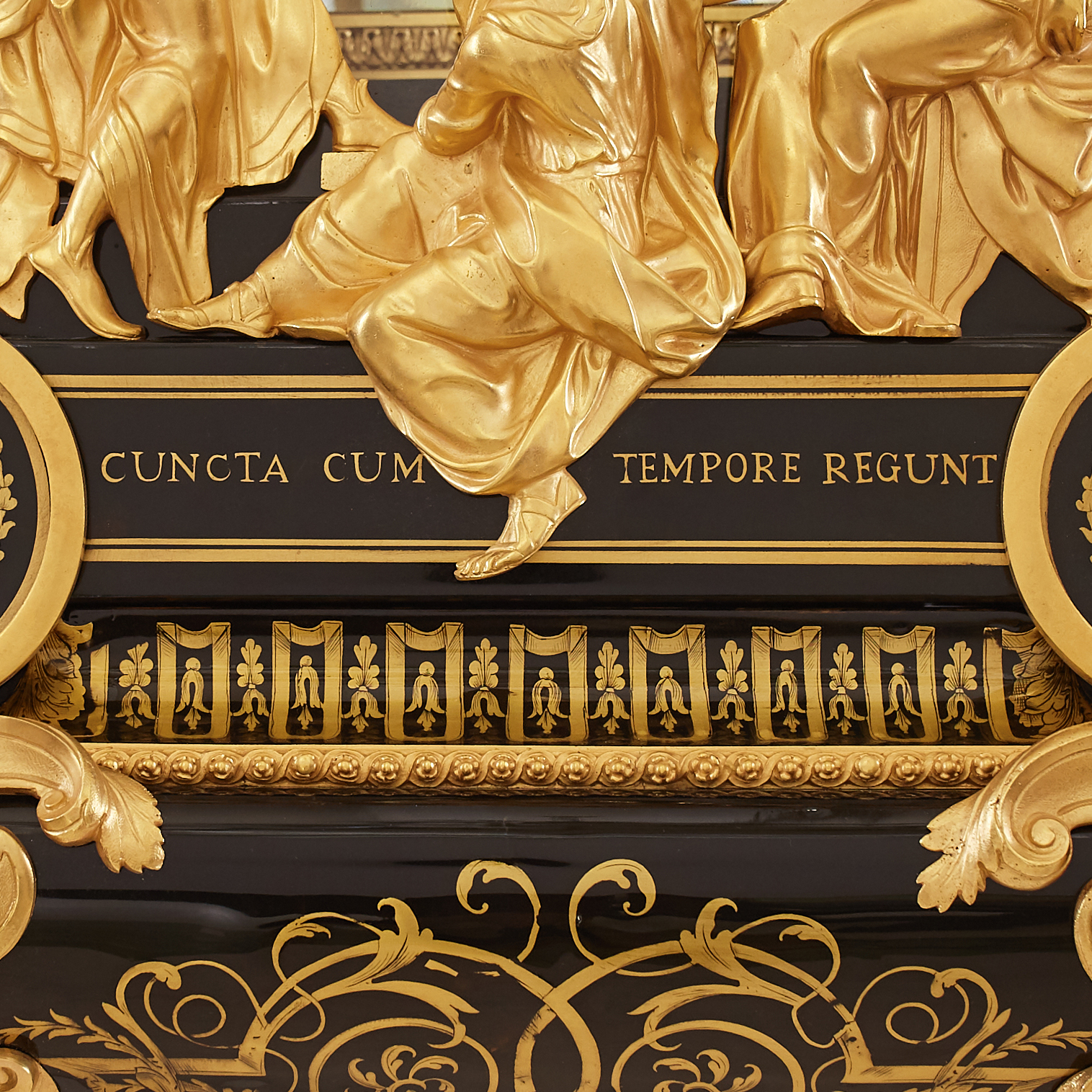
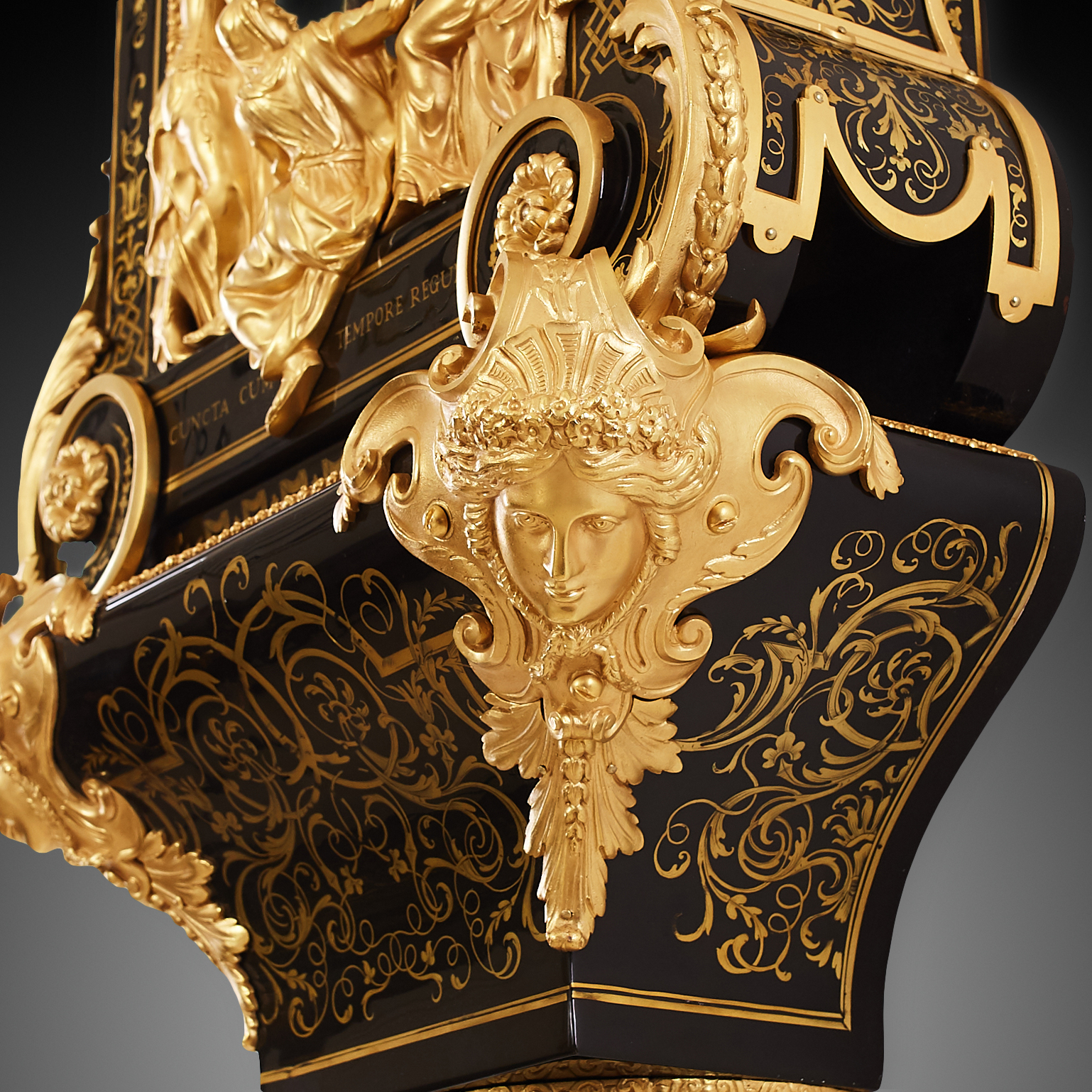
The lower section is decorated with bold scrollwork, foliate mounts, rosettes, masks, and a shaped drop finial. The integrated wall bracket continues the same decorative language, with Boulle-style marquetry and gilt bronze ornament forming a complete and harmonious ensemble. The inscription along the lower front, “Cuncta cum tempore regunt,” adds symbolic interest and reinforces the historical theme of time as a governing force.
Historically, clocks of this type are inspired by the celebrated Boulle tradition of late 17th and early 18th-century France, associated with André-Charles Boulle, cabinetmaker to King Louis XIV. Boulle marquetry, traditionally combining brass and tortoiseshell-style decoration, became one of the most prestigious forms of French luxury design. During the 19th century, this style was widely revived for aristocratic residences, grand salons, libraries, and collector interiors.
This example reflects that revival taste through its architectural silhouette, enamel cartouche dial, sculptural gilt bronze mounts, rich marquetry surface, and allegorical decoration. It was intended not only as a functional timepiece, but as an important decorative object expressing craftsmanship, status, and historical refinement. With its dramatic form, ornate gilding, and richly worked surface, this wall clock would make a striking focal point in a collection of antique clocks, French decorative arts, or an important period interior.