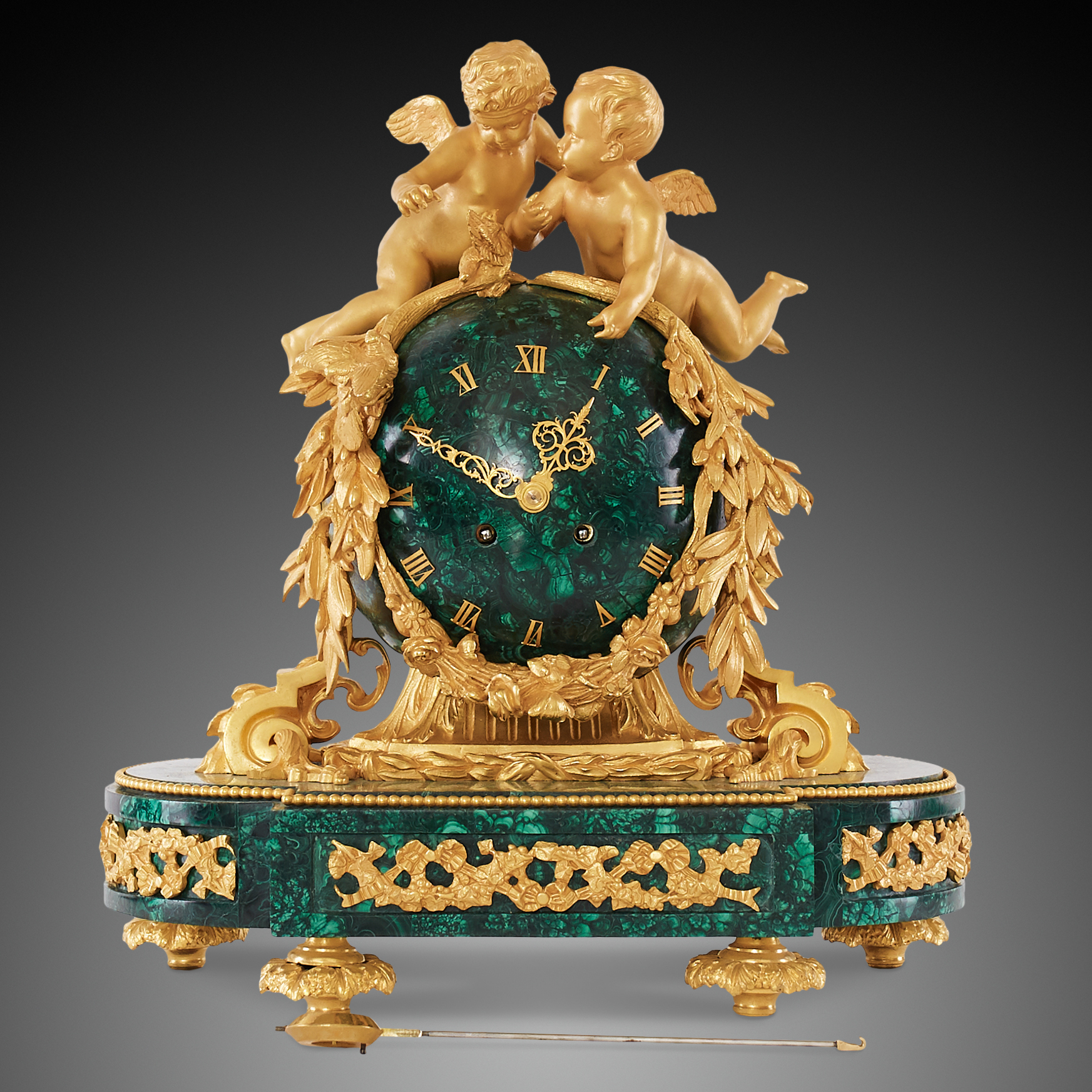
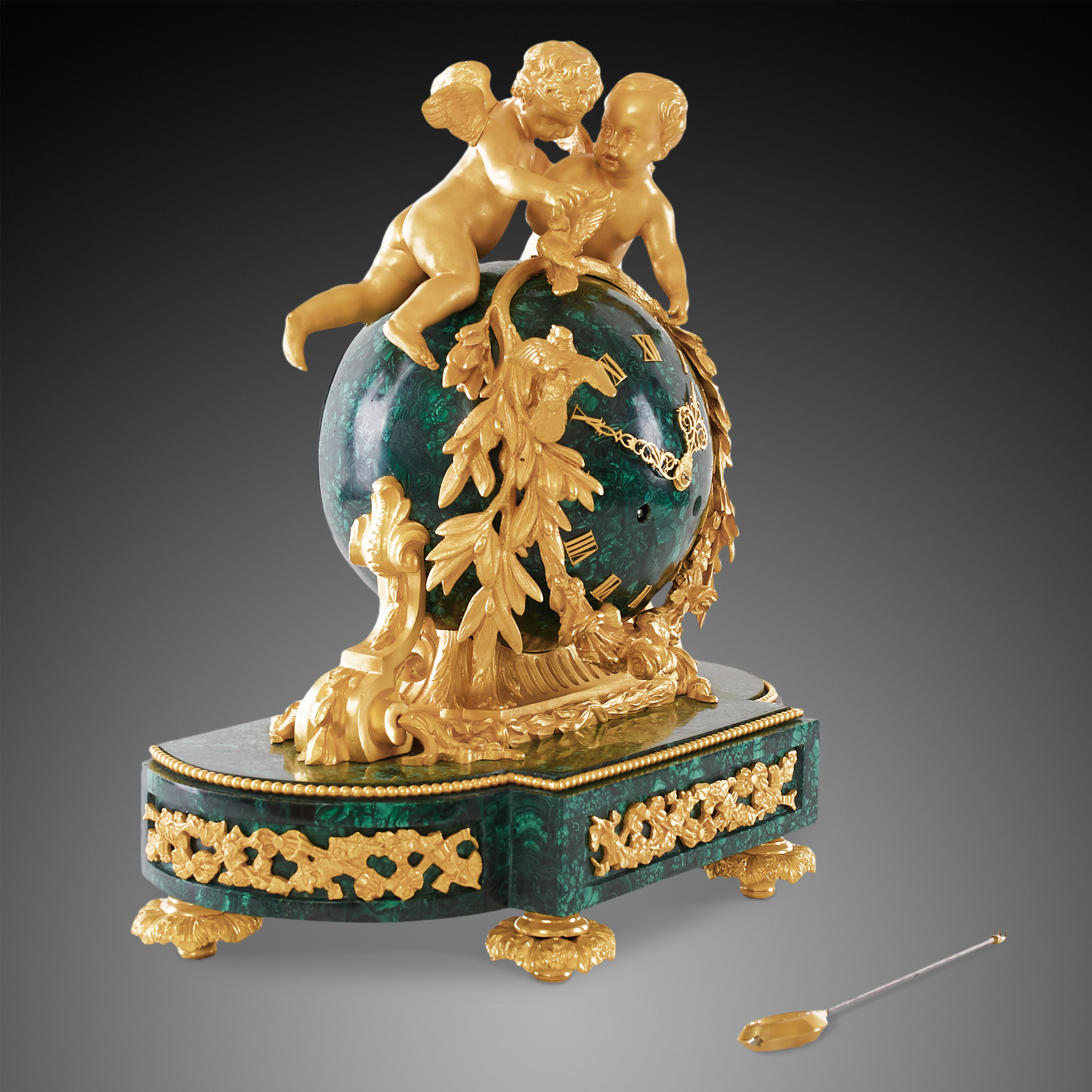
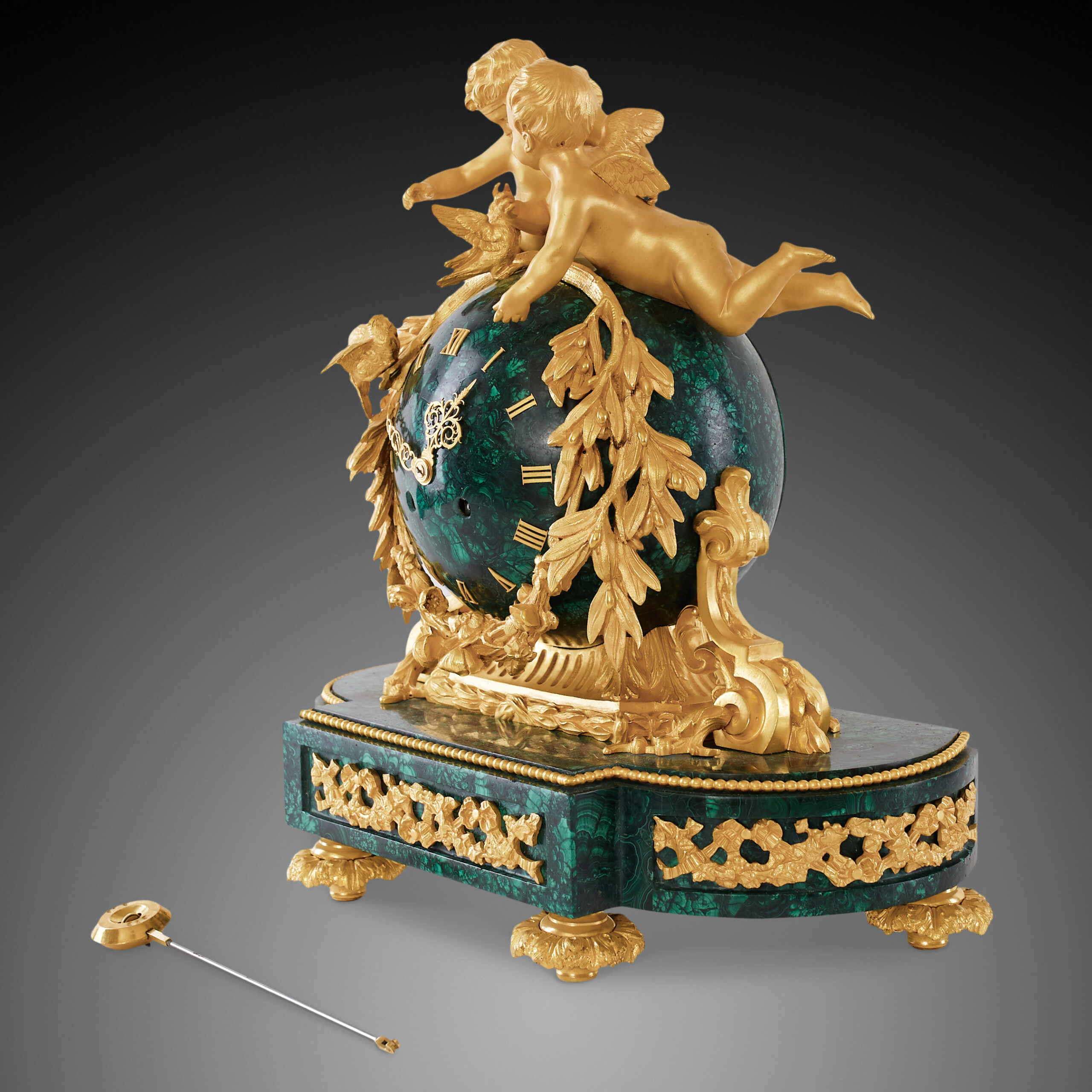
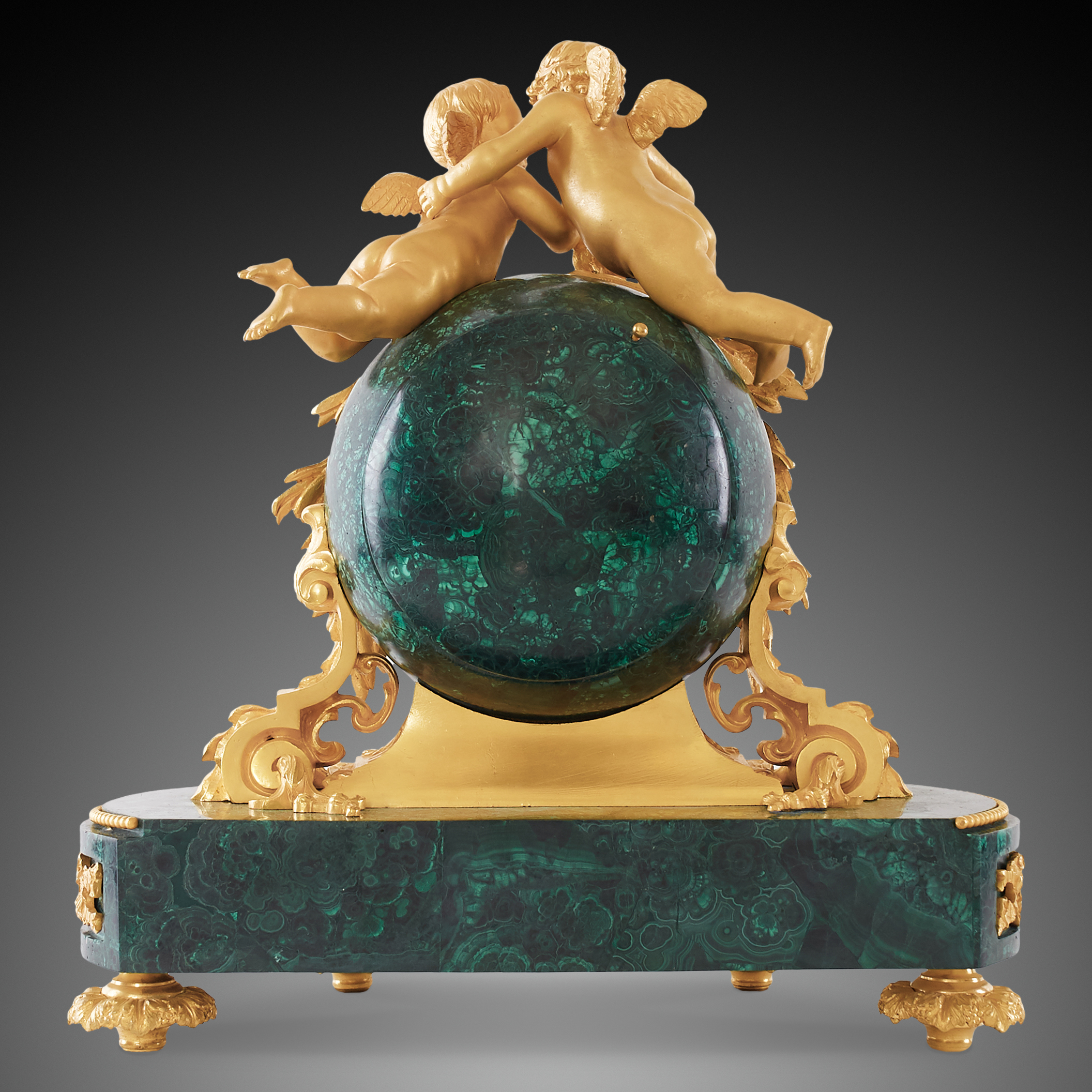
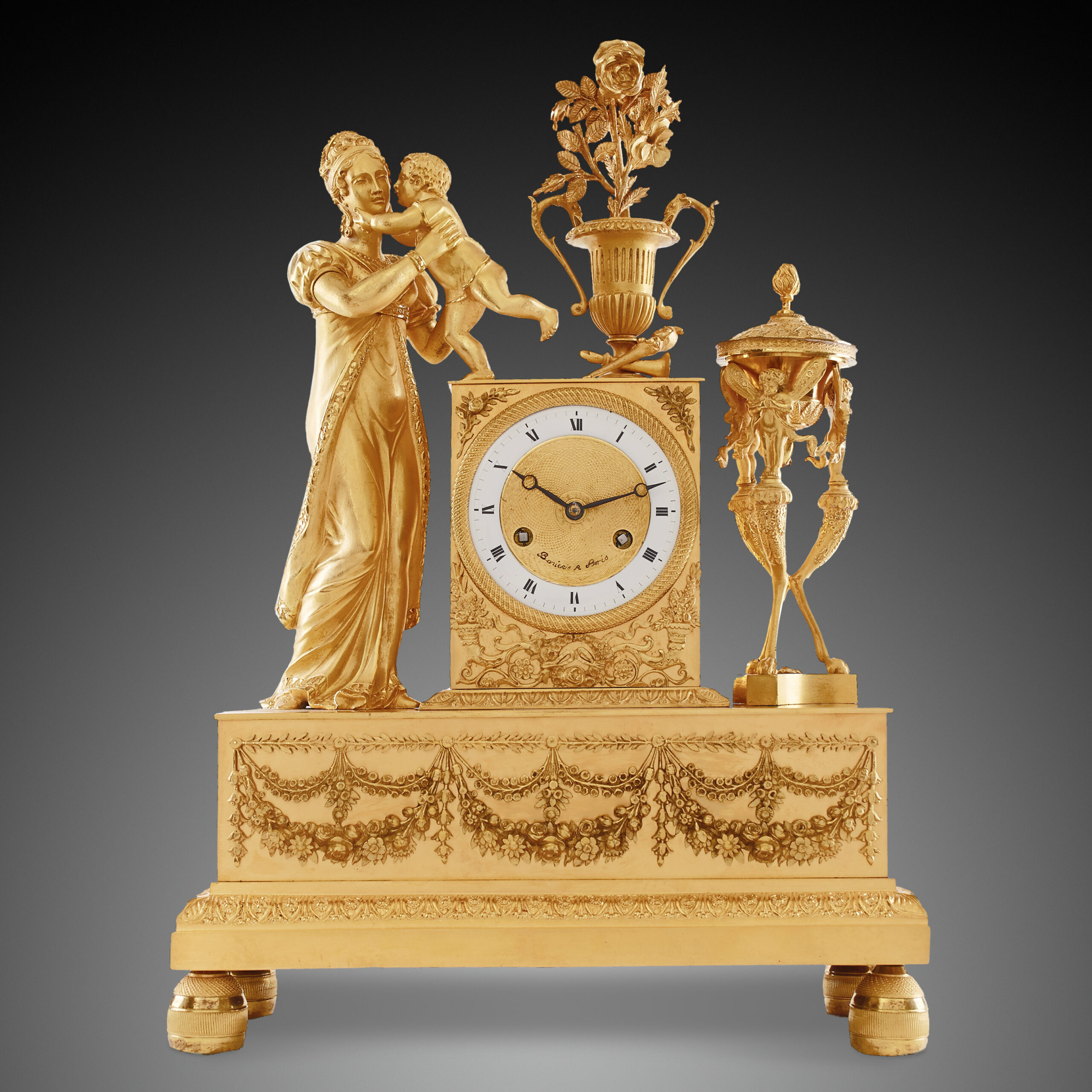
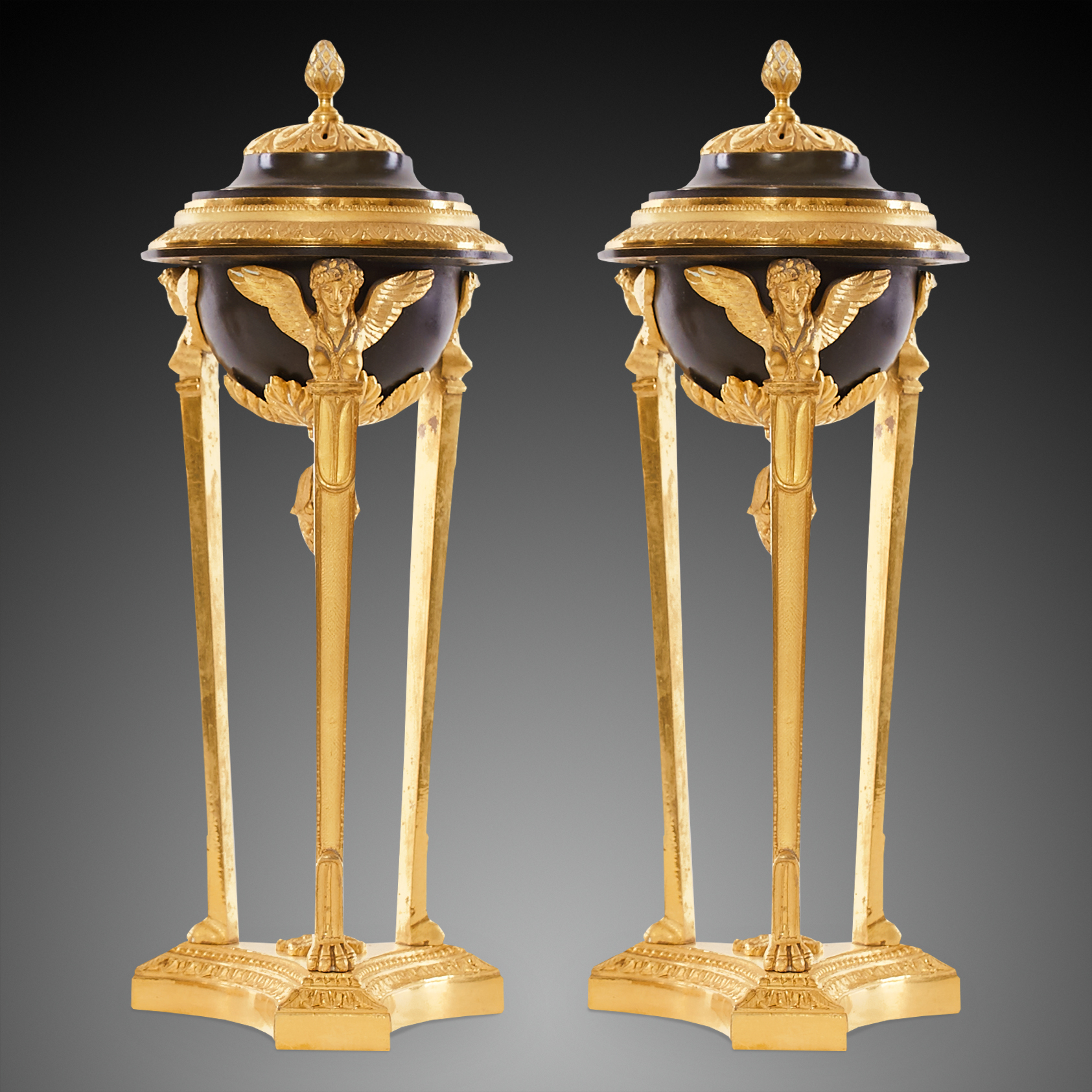
This remarkable late 19th-century mantel clock, known as the “Cherubs Pendulum,” serves as a magnificent homage to the refined aesthetics of the Louis XVI period. The timepiece is an evocative fusion of horological precision and Neoclassical narrative, commanding attention through its bold use of rare materials and deeply symbolic sculptural elements. Its design is a testament to the era’s fascination with classical antiquity, effectively bridging the gap between functional utility and high-art sculpture.
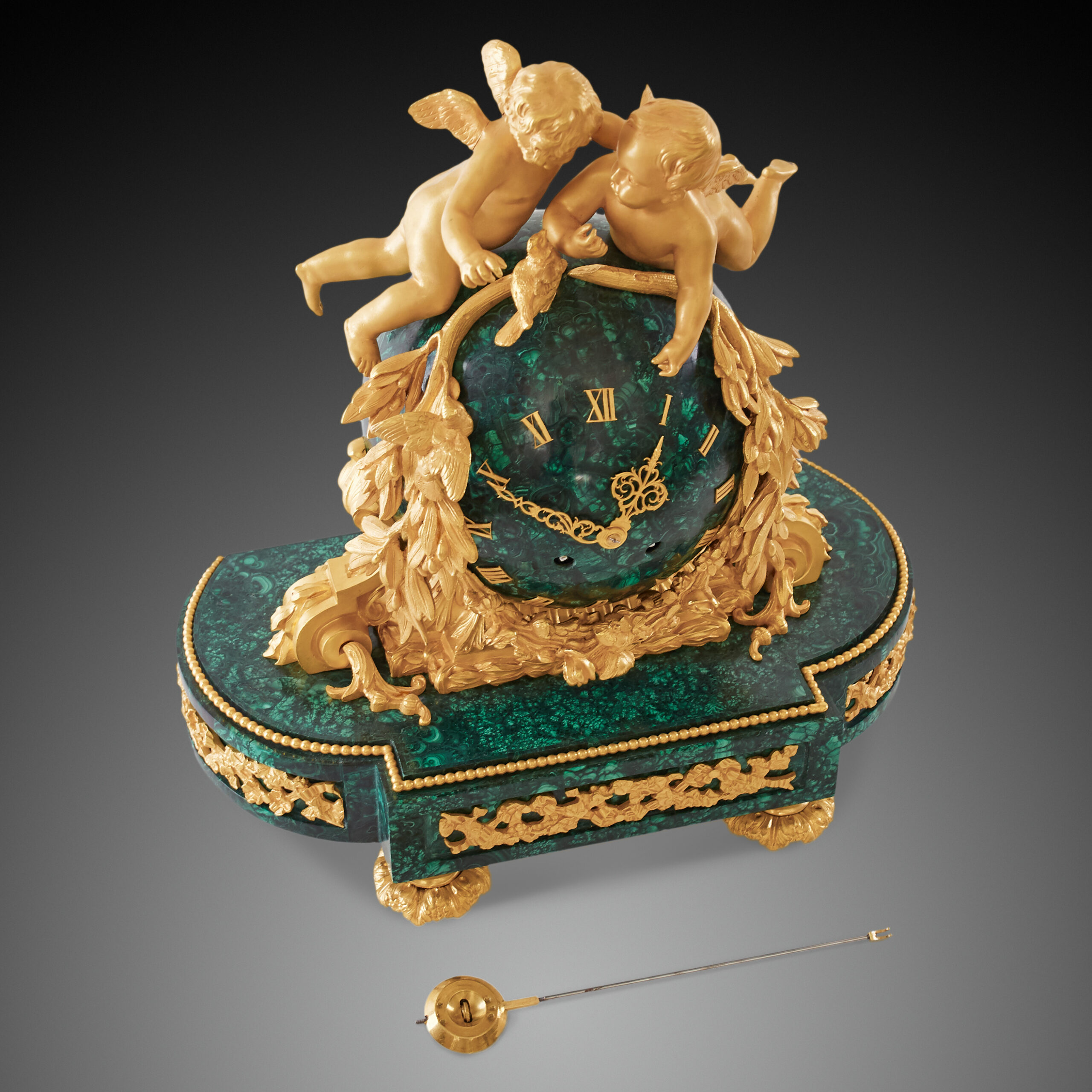
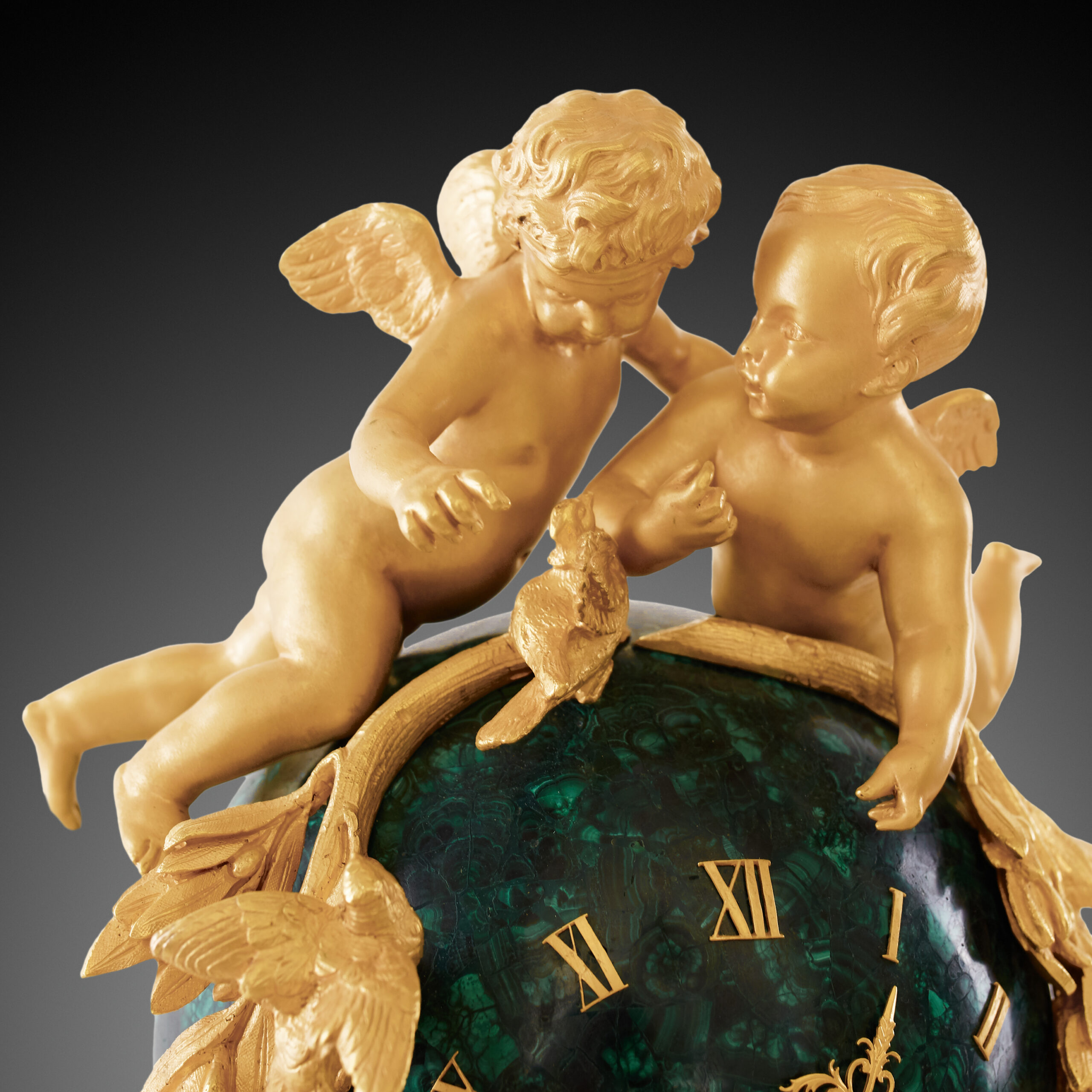
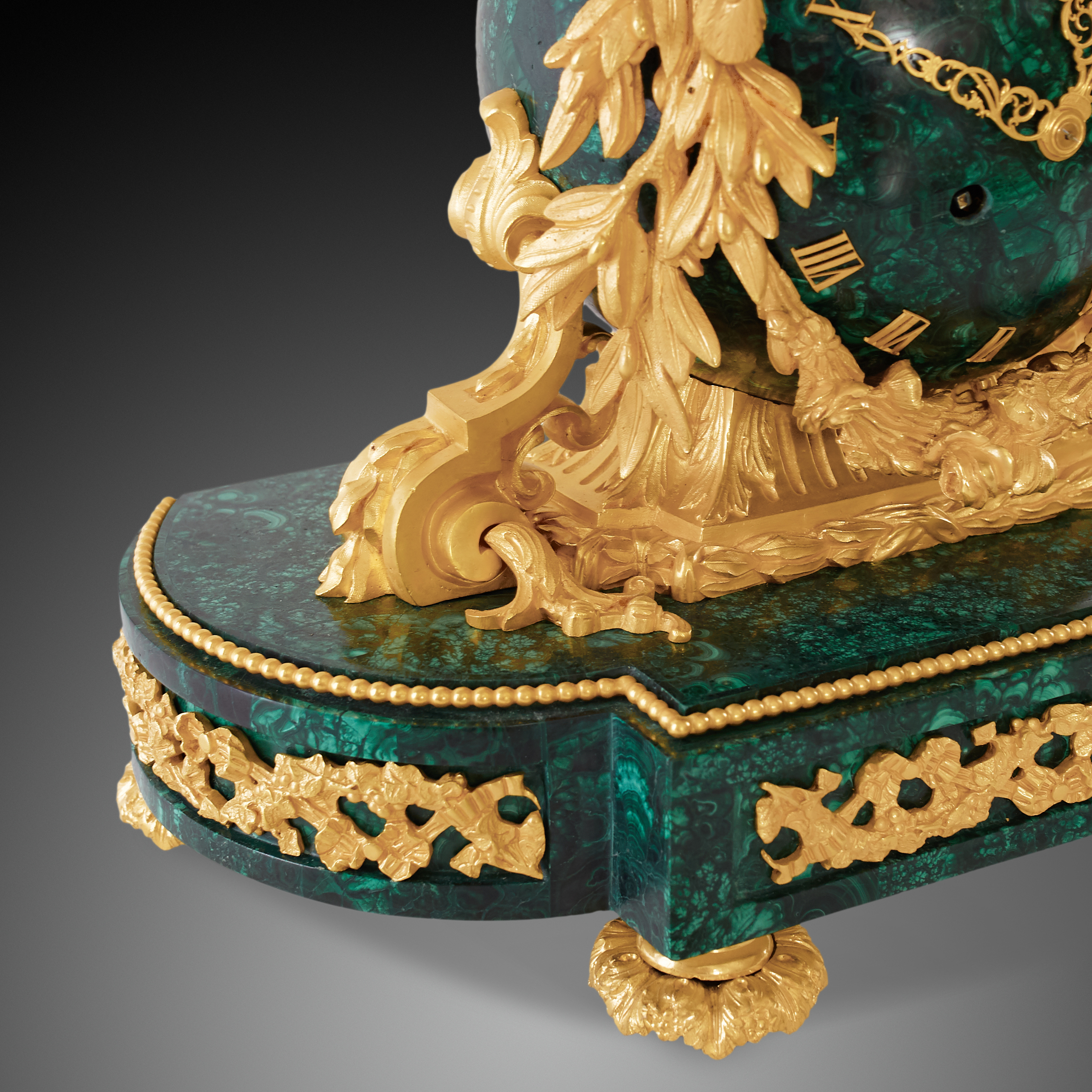
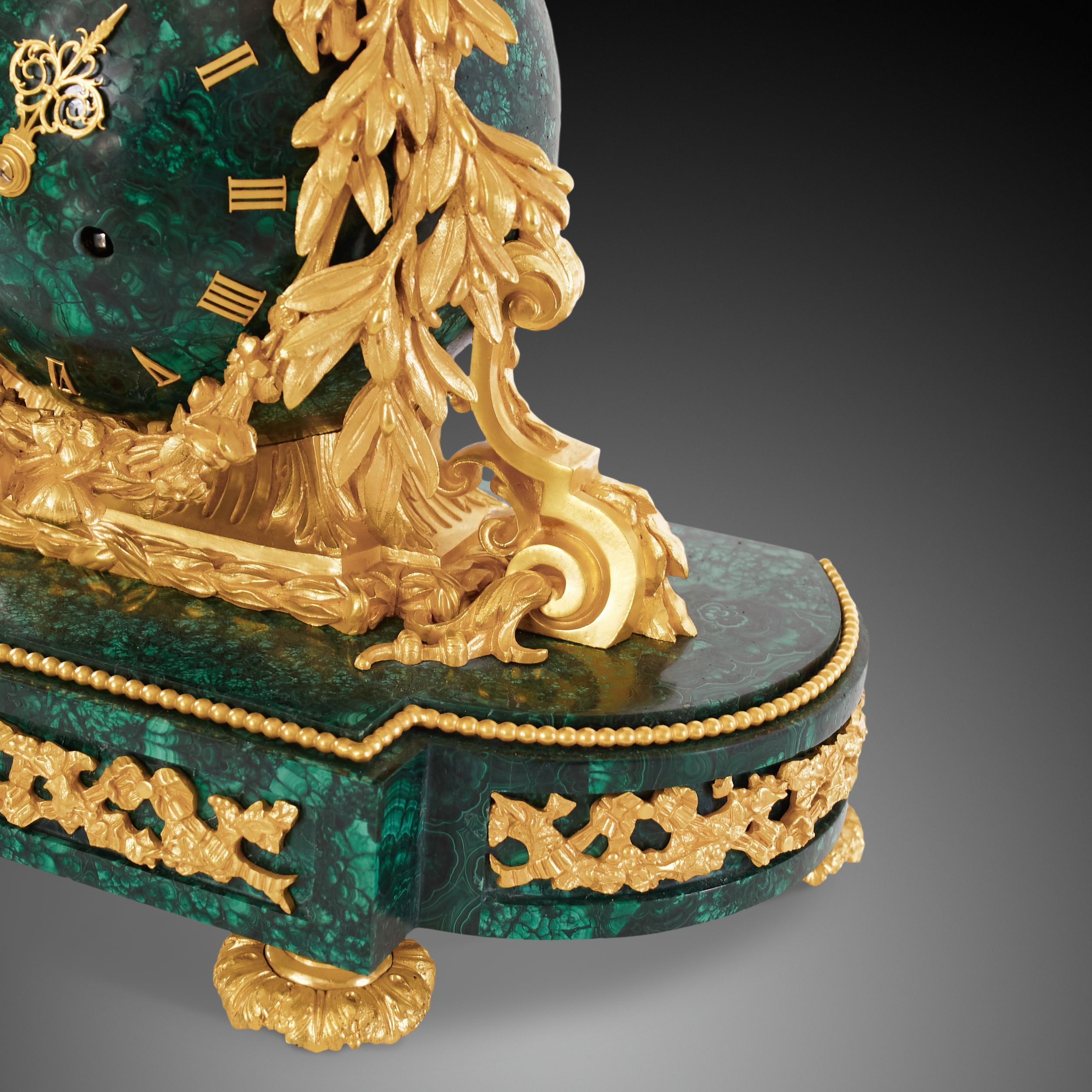
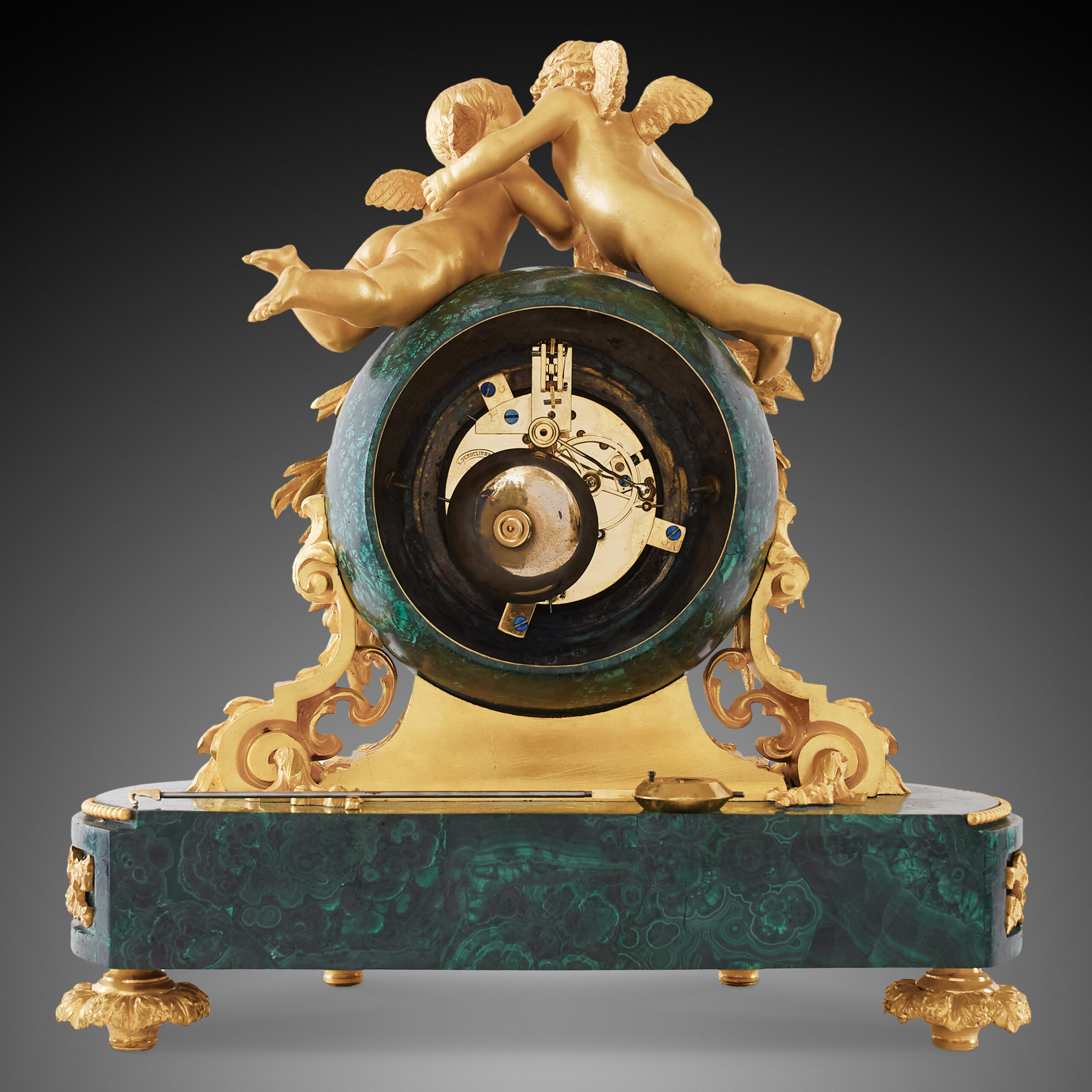
The clock’s central housing takes the form of a celestial globe, encircled by finely cast gilt-bronze olive branches. In classical iconography, the olive tree holds profound significance, famously serving as the gift offered by the goddess Athena to the people of Attica, symbolizing peace, wisdom, and protection. Perched atop this sphere are two charming cherubs, their delicate wings and joyous expressions capturing a sense of harmony as they look down upon the world. This borrowing of Greek mythological themes is a defining hallmark of the Neoclassical style, imbuing the object with an air of internal peace and enlightened living.
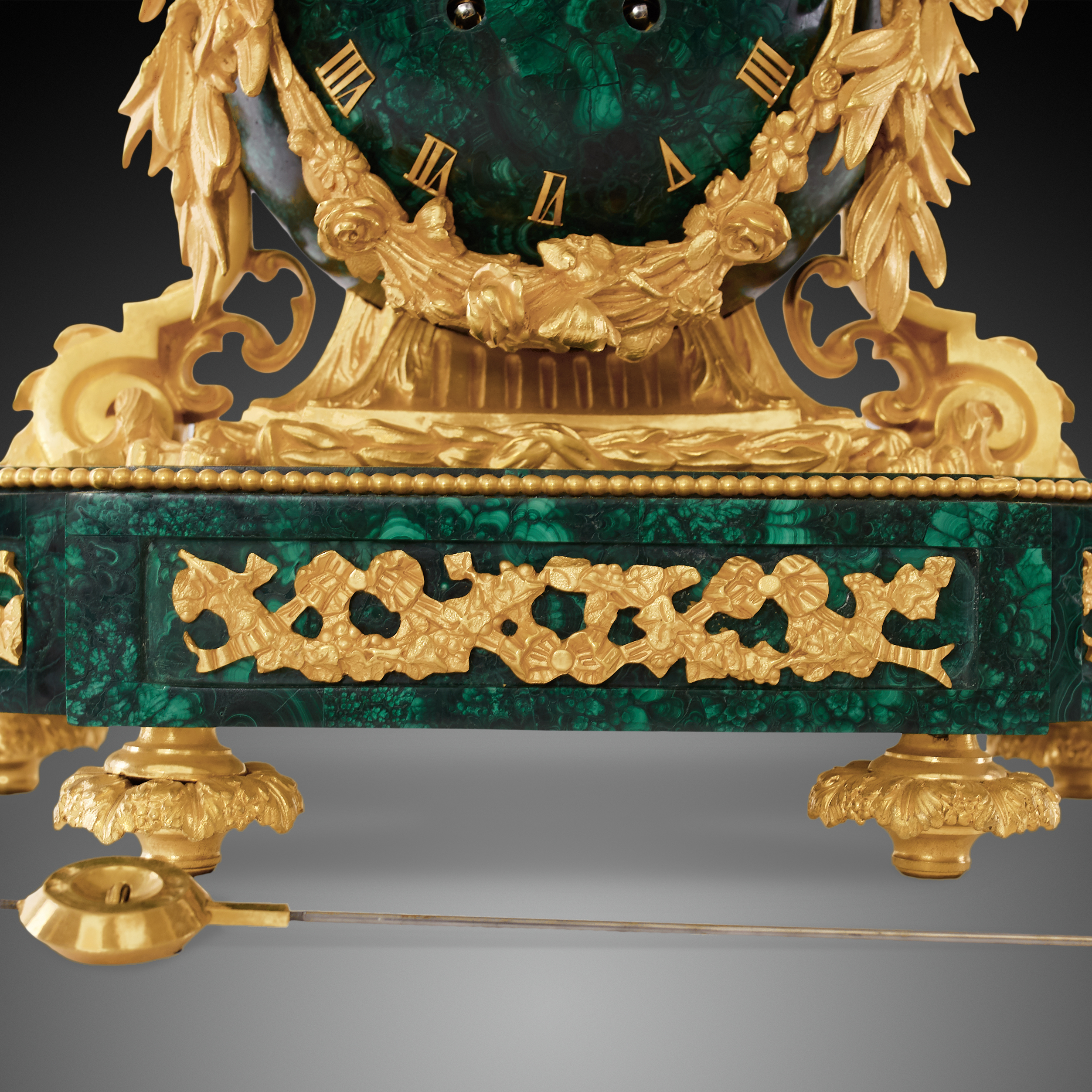
The dial itself is a striking study in contrast, featuring prominent, gilded Roman numerals set against the deep, verdant tones of the malachite face. The hands are masterfully executed, adorned with intricate acanthus motifs that echo the decorative language of the broader composition. The base, a substantial rectangular block with rounded ends, provides a grounded, architectural foundation. Its front is adorned with meticulously crafted gold-plated ornamentation, while the piece is raised upon large, flat feet inspired by the Acanthus mollis, lending a sense of both opulence and enduring stability to the design.
Beyond its artistic merit, the clock is defined by its masterful use of malachite. Within the traditions of ancient empires, this semi-precious stone was far more than a decorative luxury; it was believed to possess protective qualities, warding off malevolent influences while inviting luck and prosperity. By utilizing malachite as the primary material, the artist imbued the “Cherubs Pendulum” with a sense of longevity, conveying a message of eternal happiness and fortune for the collector.
Mechanically, the clock is in exceptional, museum-quality condition, having been professionally serviced by a specialist in the maintenance of horological antiquities. It features a reliable eight-day movement that strikes on the hour and the half-hour, producing a clear, resonant chime on its original bell. The clock is offered as a complete ensemble, accompanied by its matching pendulum, winding key, and bell, ensuring it remains as functional today as it was at the time of its creation. It stands as a brilliant example of 19th-century craftsmanship, where the collaborative artistry of the bronzier, the lapidary, and the master horloger united to create an enduring masterpiece of domestic elegance.