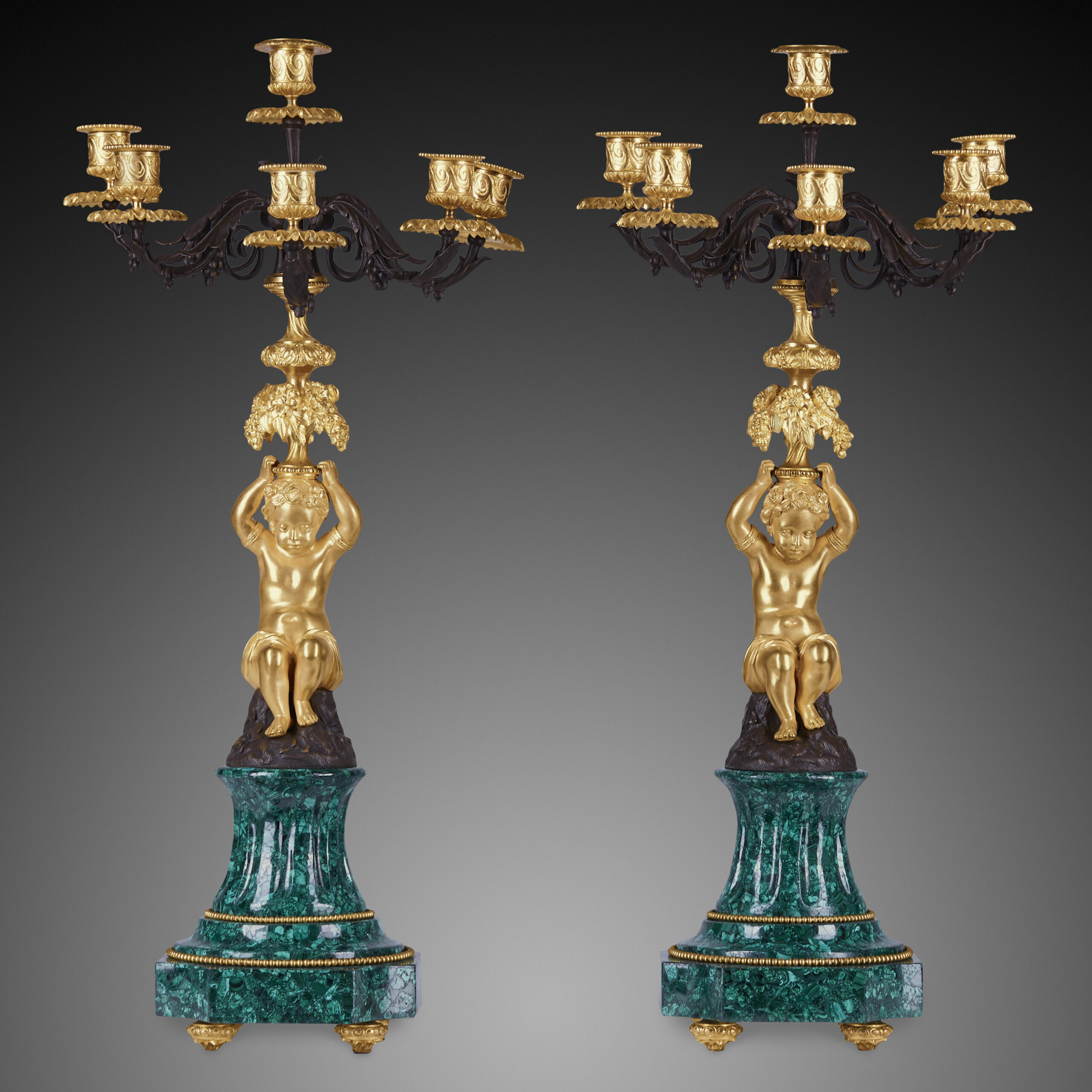
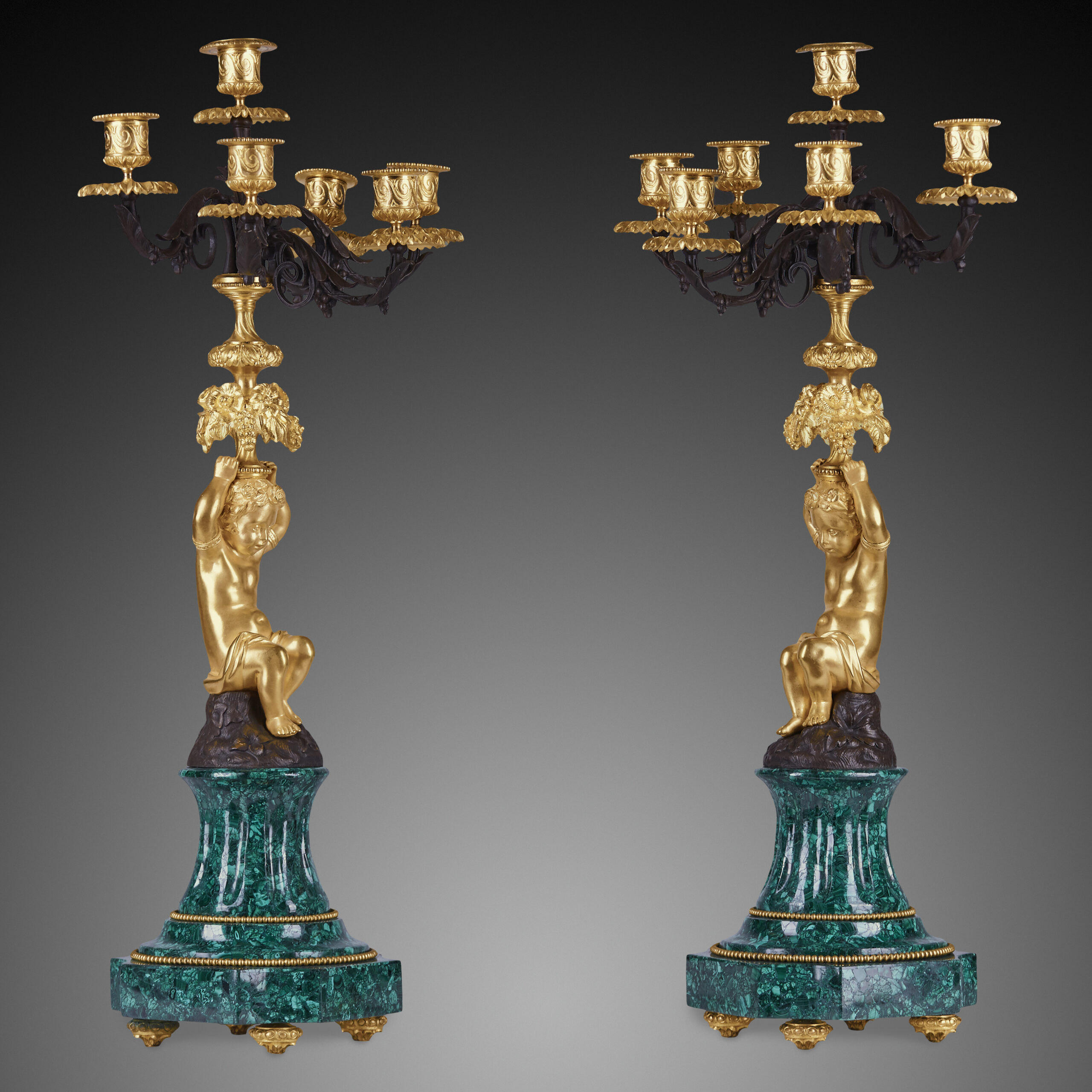
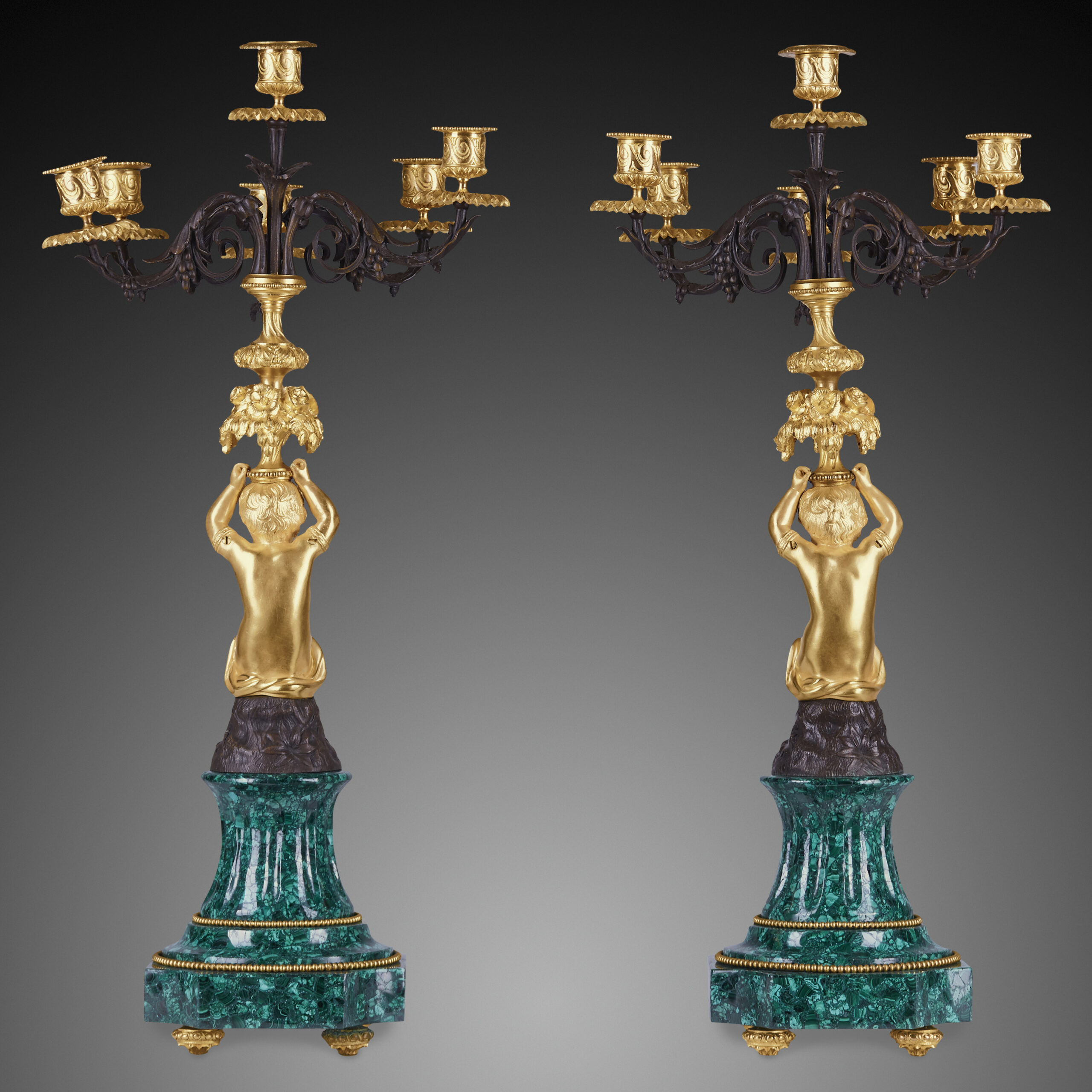
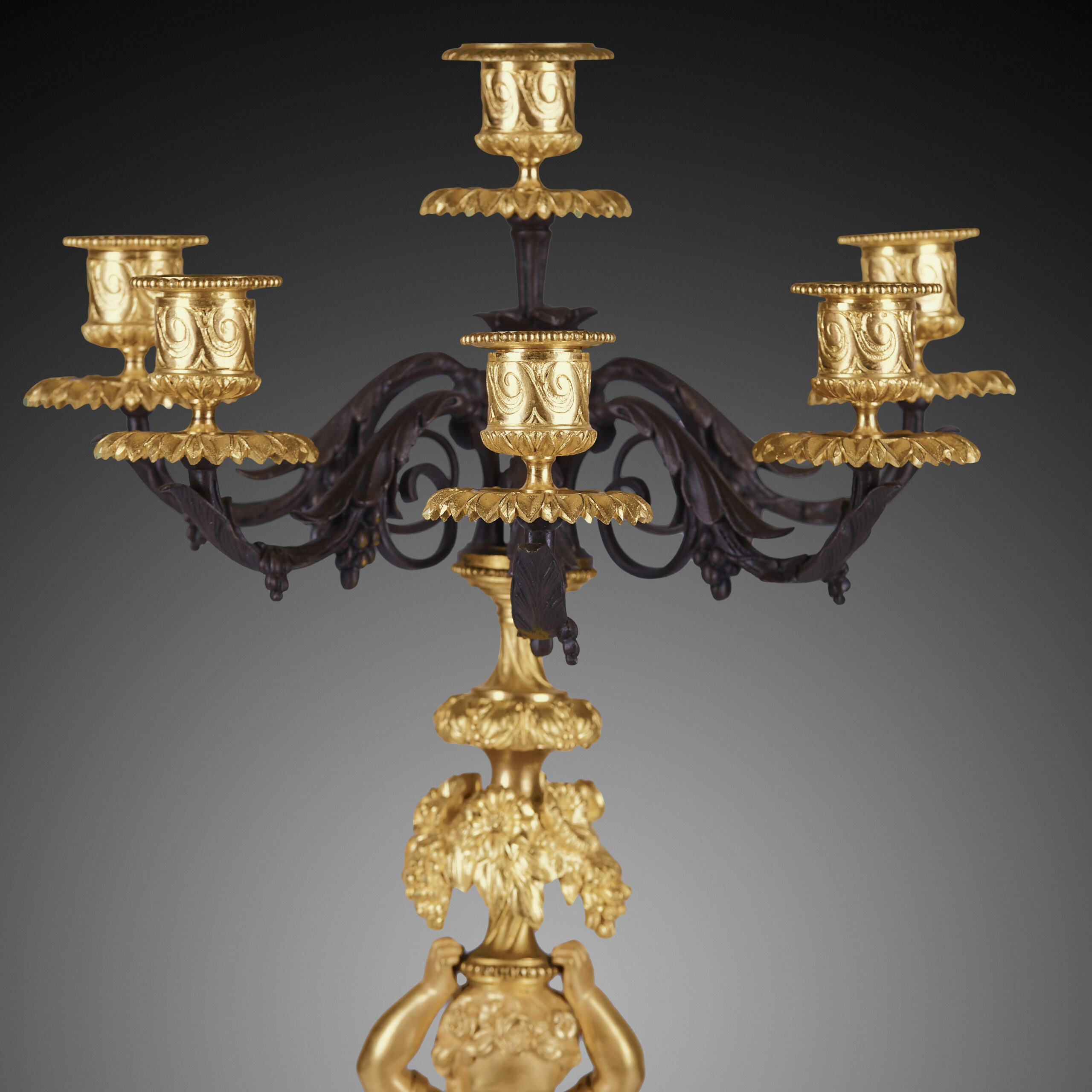
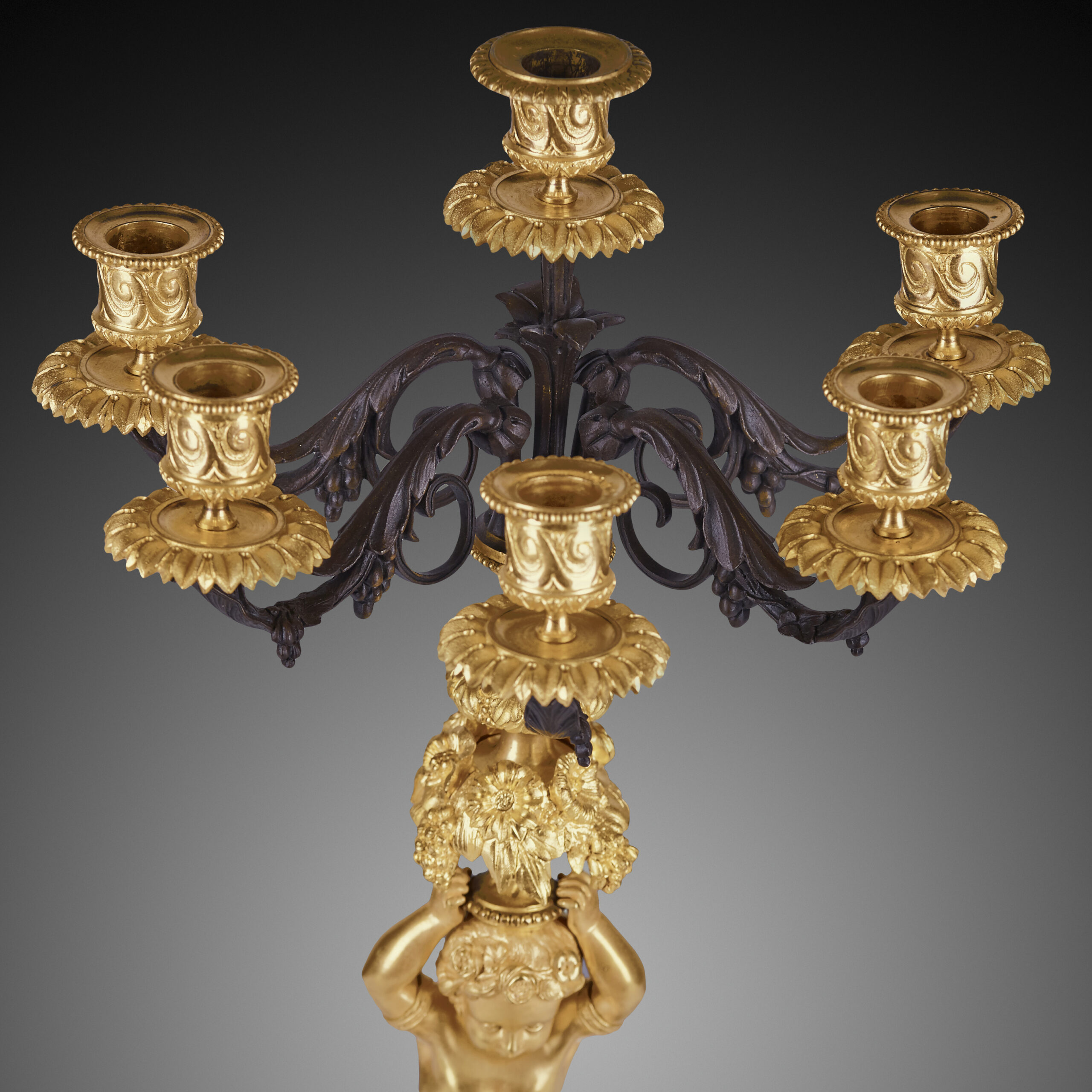
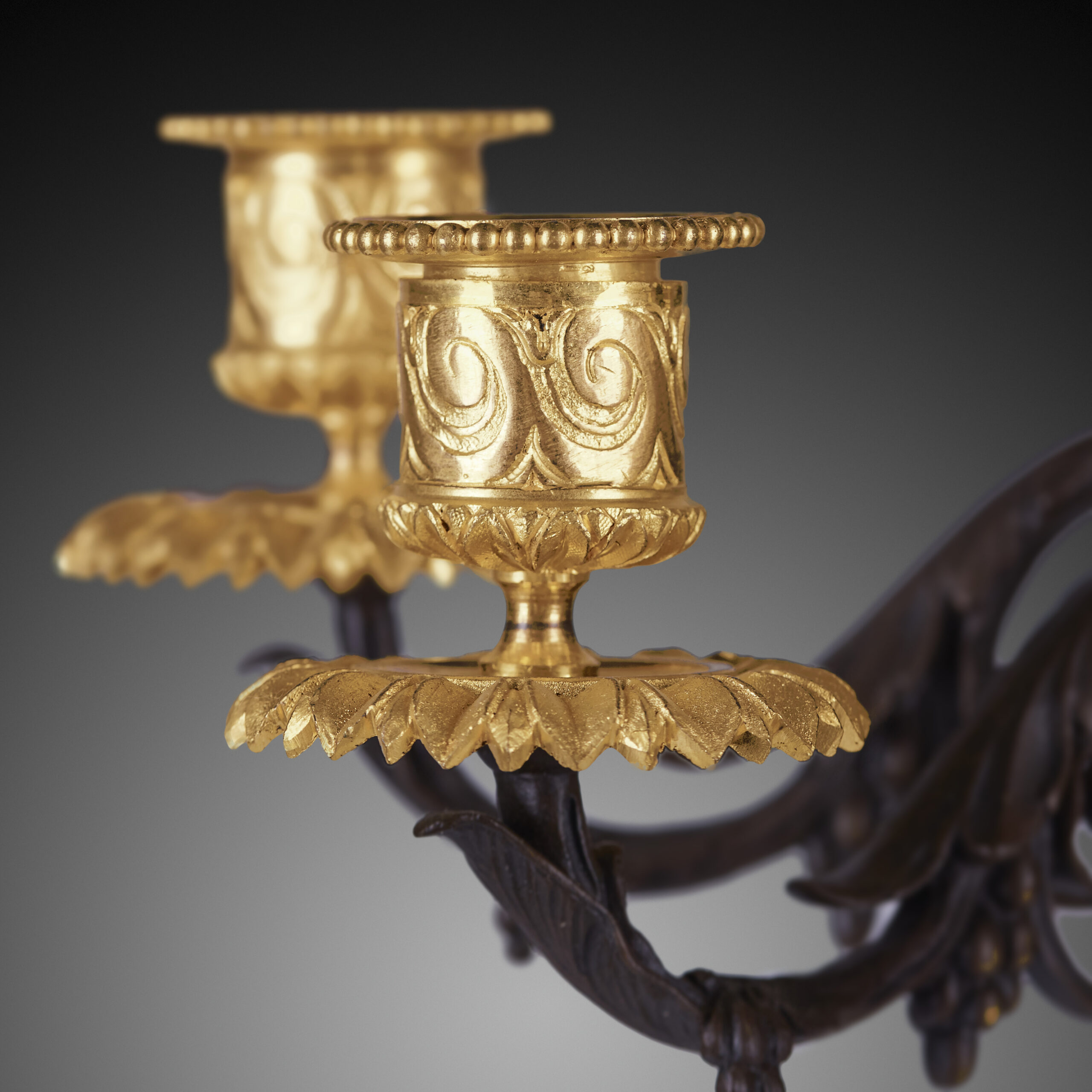
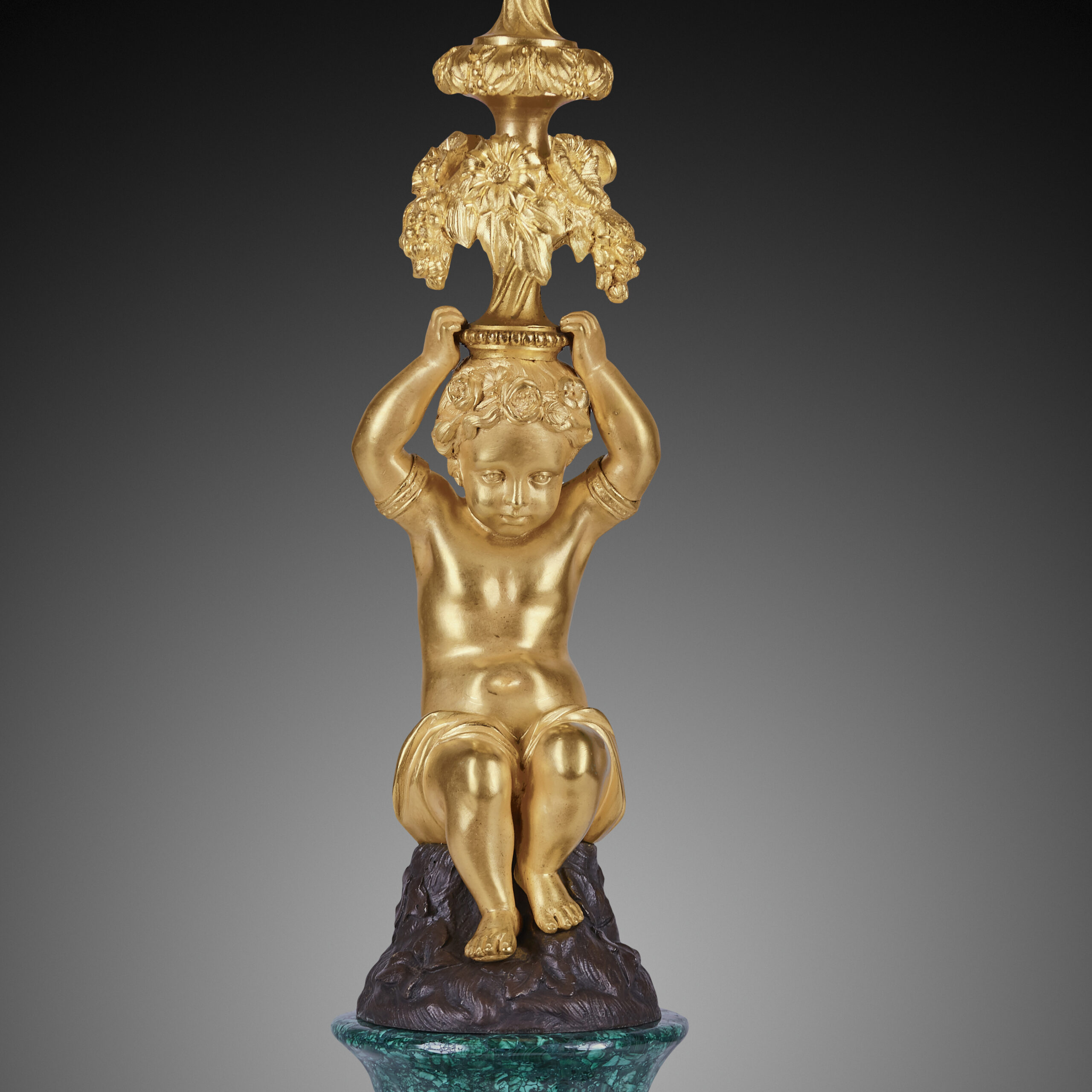
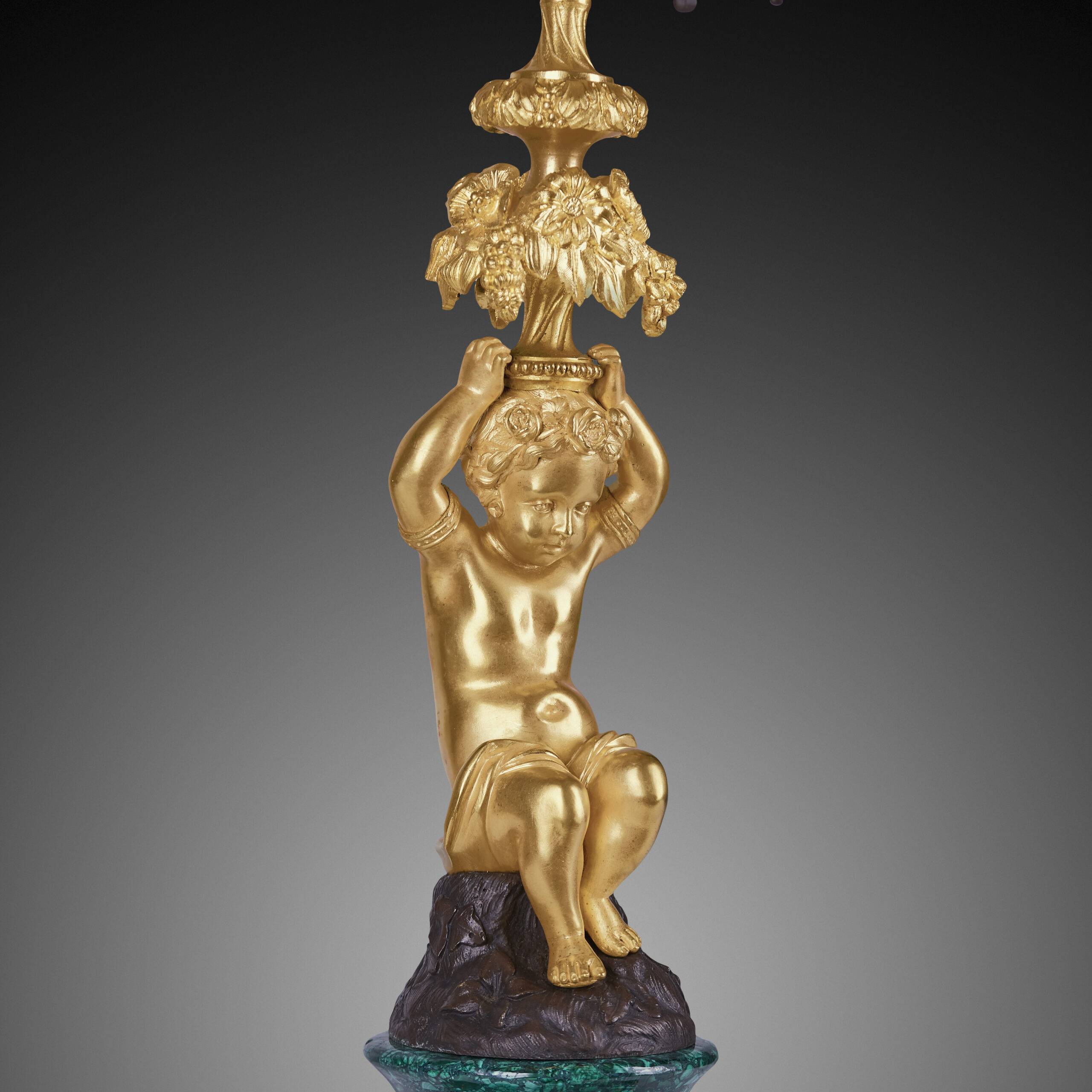
This magnificent and rare pair of 19th-century candelabra stands as a superb testament to the artistry and refined aesthetic of the Napoleon III period. They are distinguished by their intricate design, masterful craftsmanship, and the luxurious combination of three exceptional materials: finely cast gilt bronze, richly patinated bronze, and striking malachite.
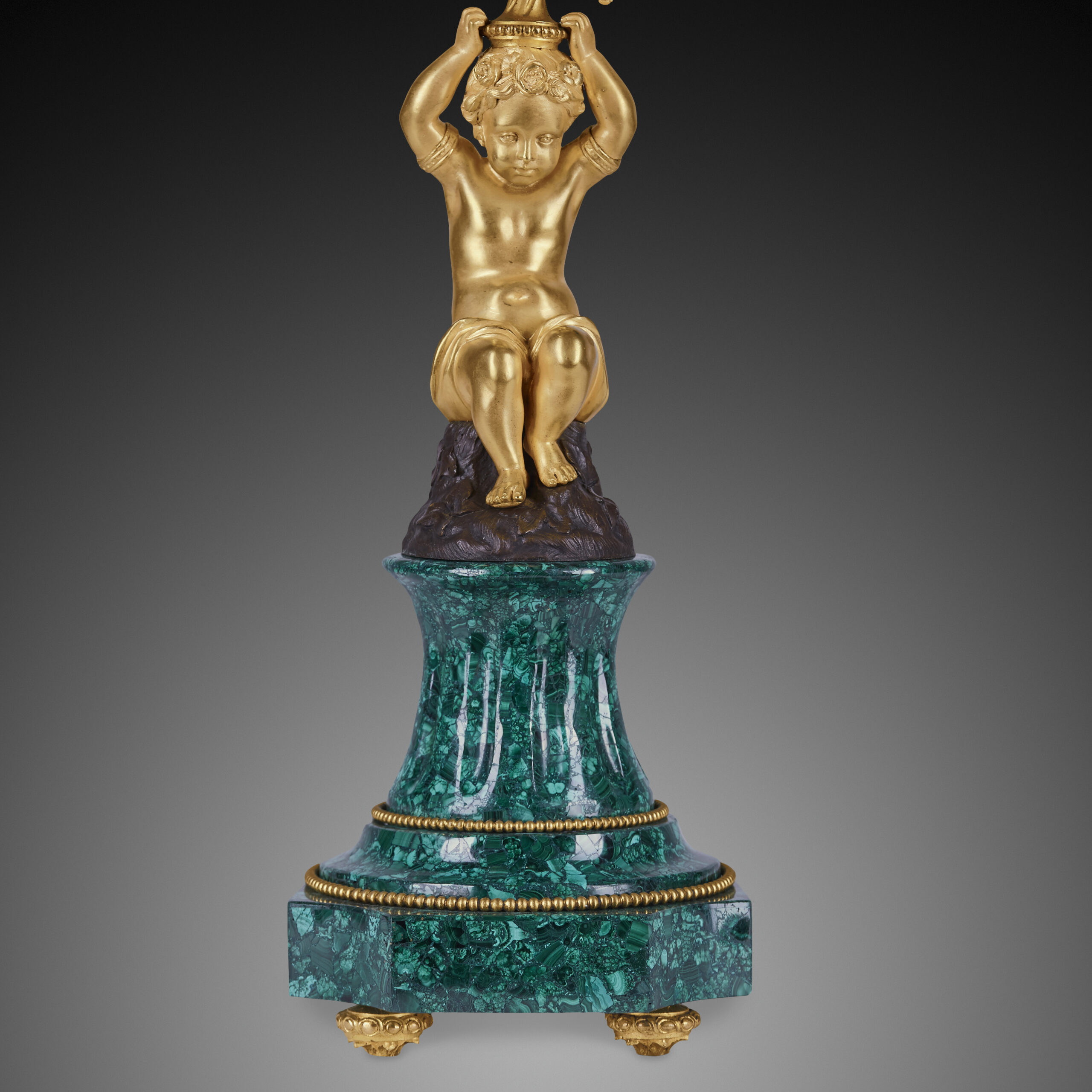
The candelabra are a celebration of classical and mythological motifs, designed to evoke the grandeur of antiquity. Each piece rises from a fluted, tapering base of stunning malachite. This vibrant green mineral, known for its mesmerizing concentric patterns, was highly prized in the 19th century as a symbol of luxury and was often used in the most prestigious commissions. The base is further embellished with finely chased gilt bronze mounts and rests on four elegant lion’s paw feet.
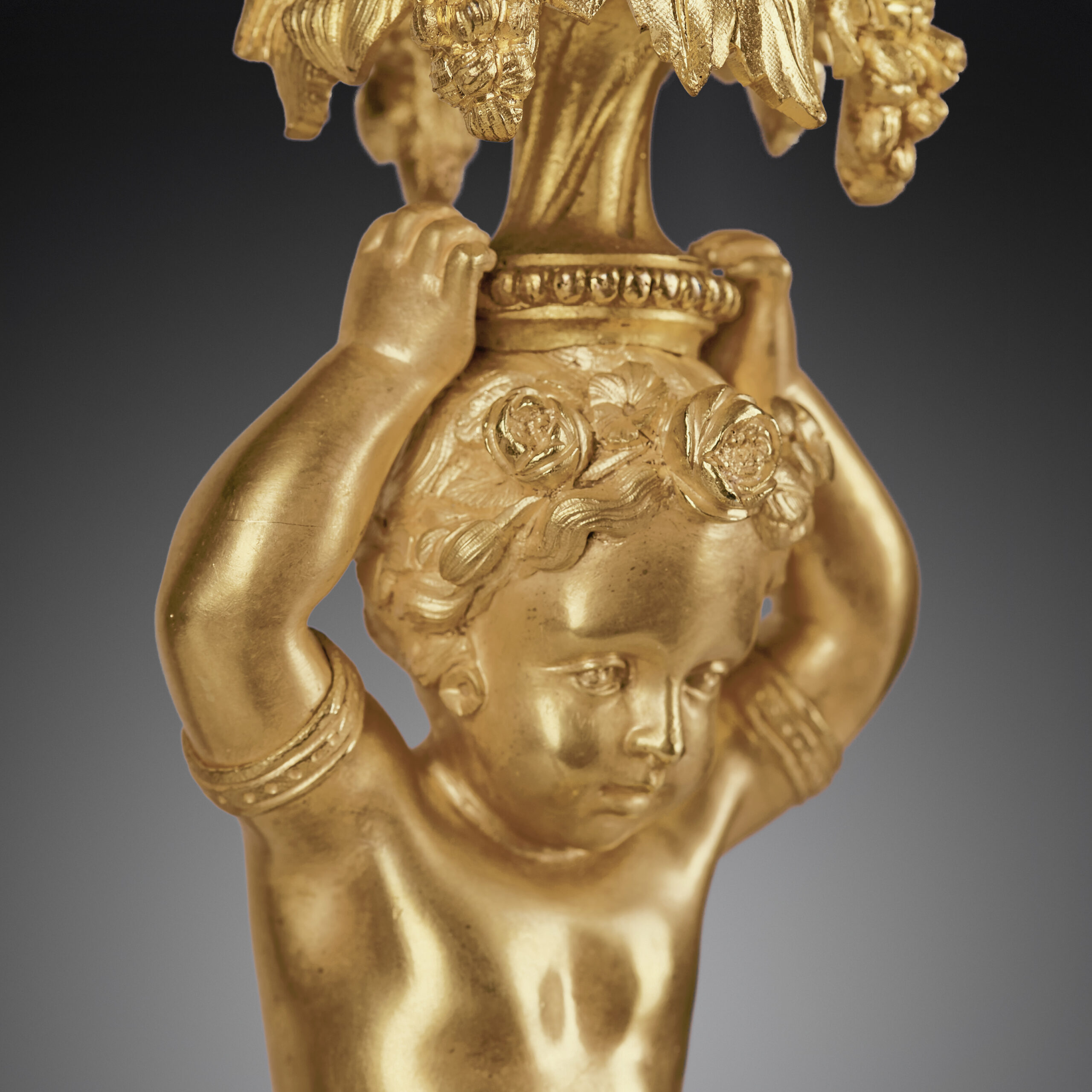
Rising from the malachite plinth is a beautifully modeled gilt bronze putto. This charming winged figure, or cherub, is a central sculptural element, supporting the structure of the candelabra with a sense of playful strength. The putto holds a vine laden with grapes and leaves, a motif associated with Bacchus, the god of wine, and symbolizing abundance and festivity.
The upper portion of the candelabra is a tour de force of bronze work. From the putto’s supporting arms, a central column and two scrolling arms branch out, masterfully cast in a contrasting dark patinated bronze. The arms terminate in five intricately detailed candle holders, arranged to create a balanced and harmonious display of light. The juxtaposition of the dark, almost black, patinated bronze against the brilliant, luminous gold of the putto and the vibrant green of the malachite creates a powerful and visually arresting effect.
This pair of candelabra exemplifies the Napoleon III period’s penchant for grandeur and its fascination with historical revivals. The combination of materials, the superb quality of the casting, and the meticulous attention to both classical and decorative detail mark them as objects of the highest order. They are not merely functional lighting; they are exquisite works of art that would serve as a commanding statement piece in a home adorned with traditional or eclectic décor, embodying the opulence and artistry of the 19th century..