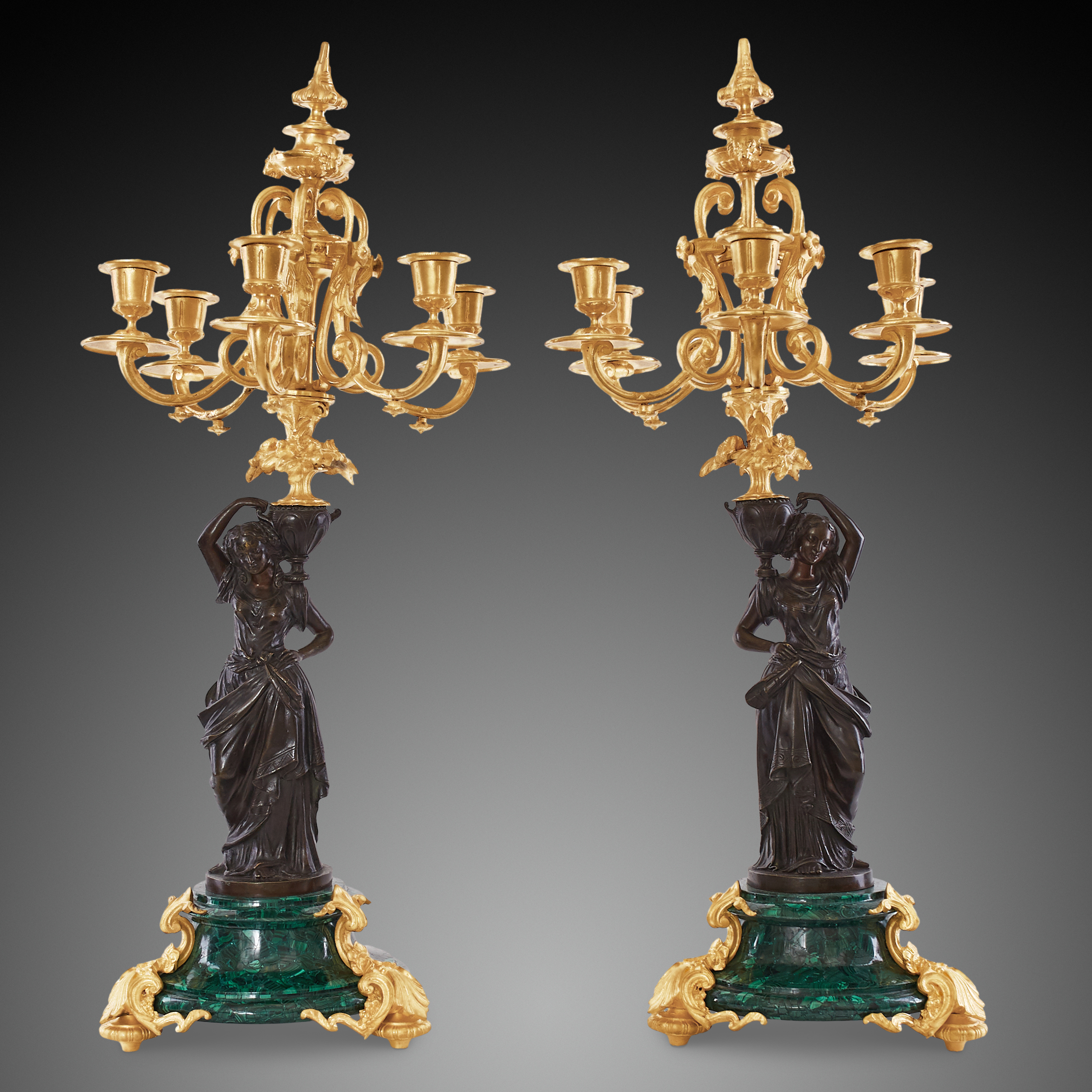
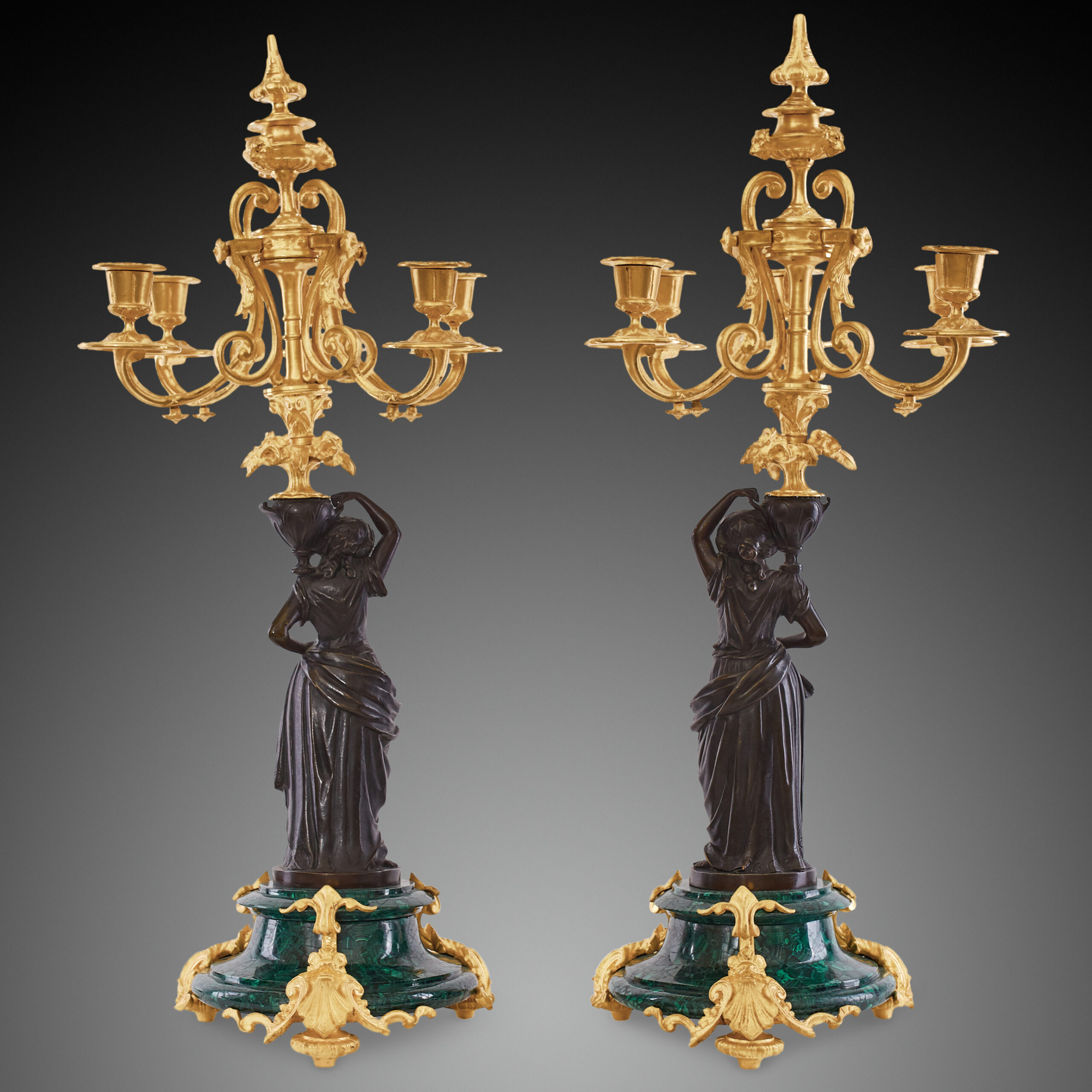
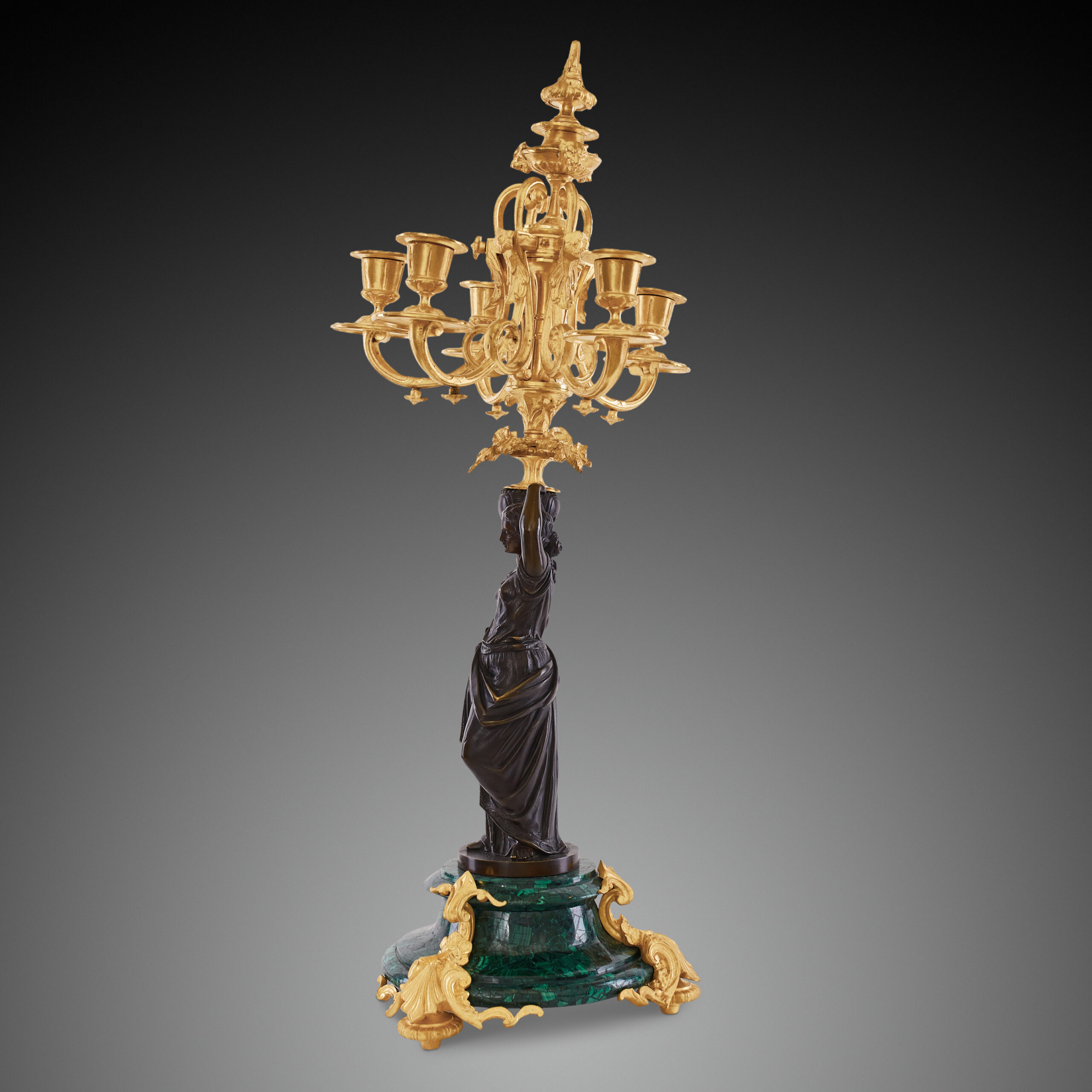
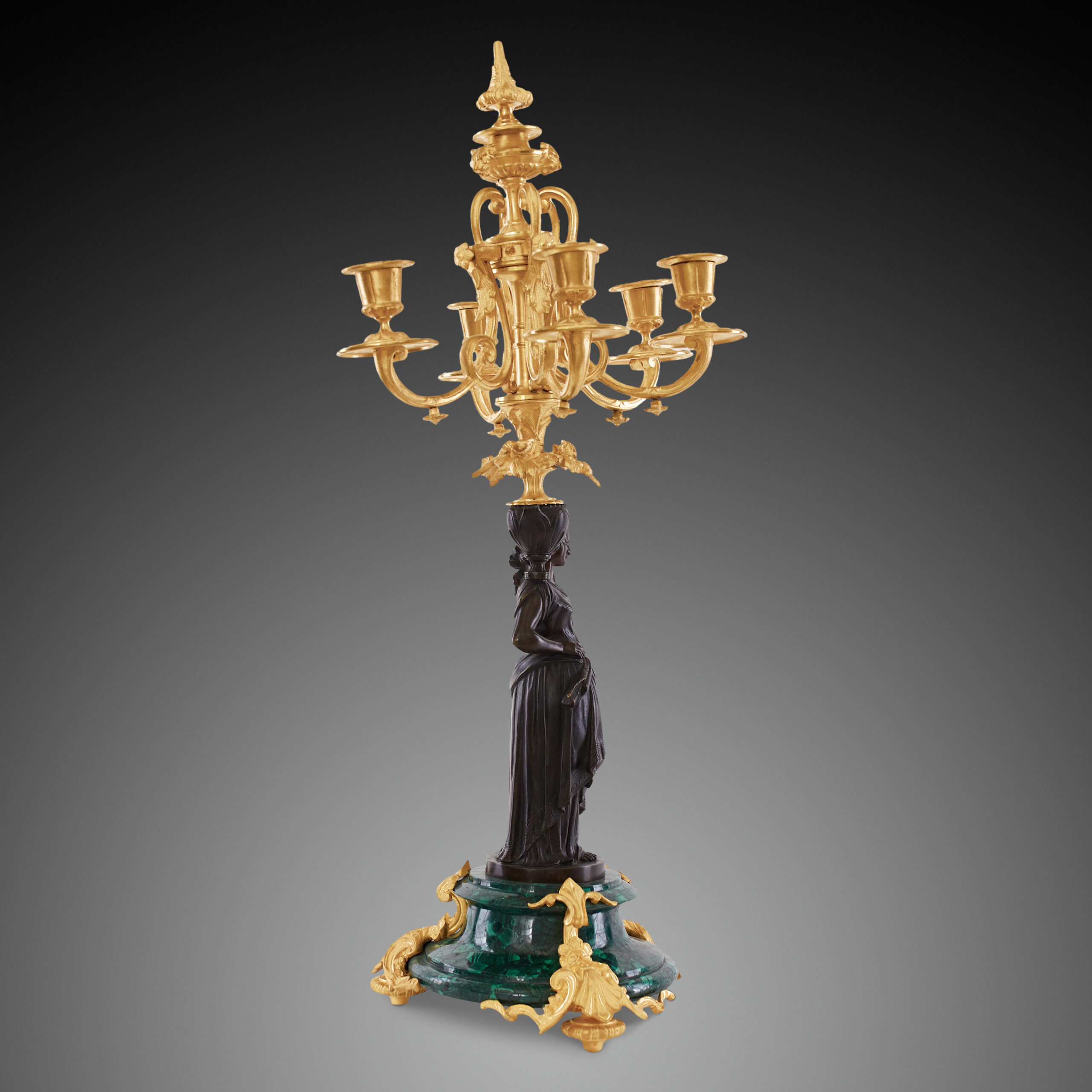
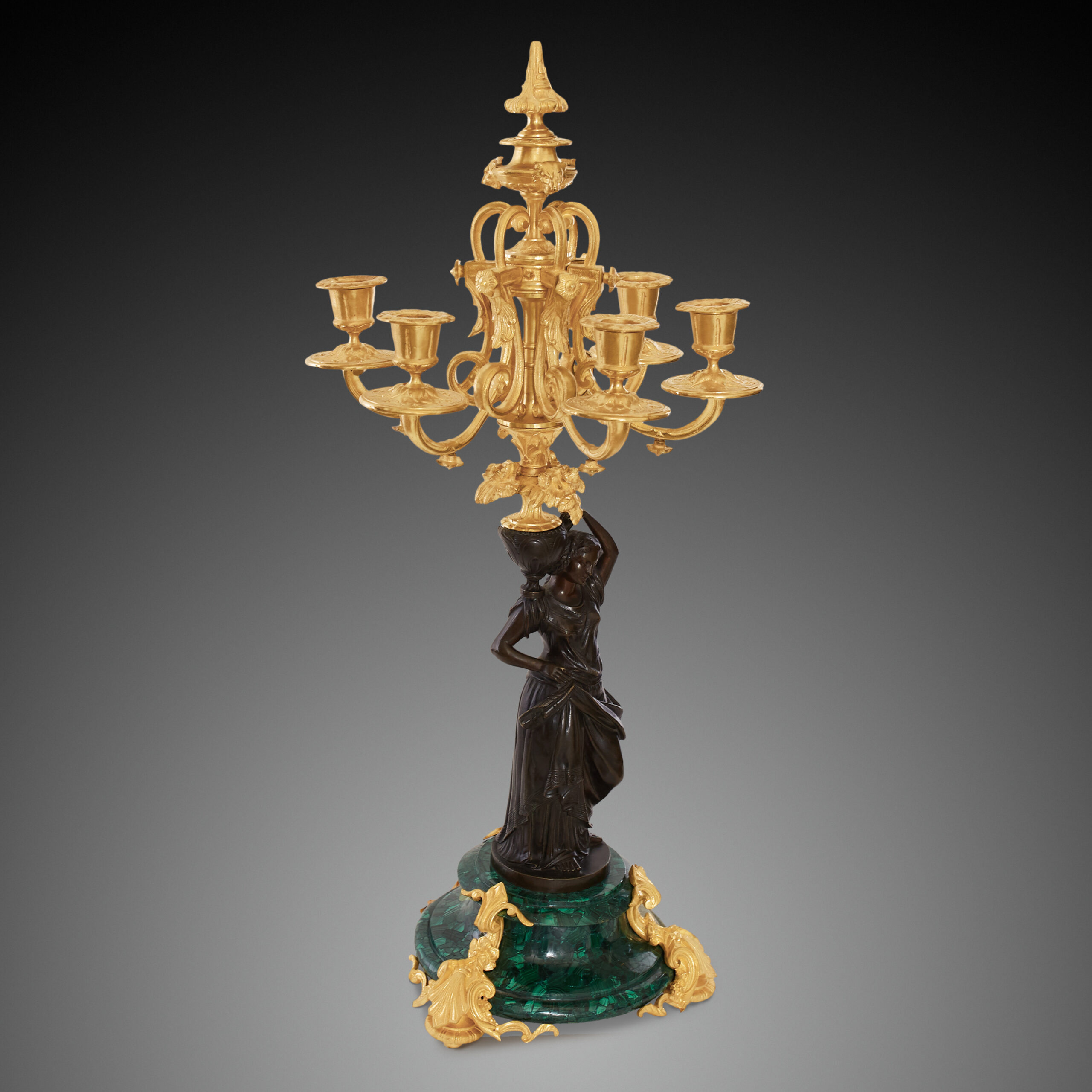
This magnificent and important pair of candelabra is a superb testament to the artistic and historical sensibilities of the Napoleon III period (1852-1870). These exceptional pieces are a profound fusion of sculpture, history, and decorative art, designed to evoke the grandeur of antiquity and the opulence of the Second French Empire. They combine the brilliance of gilt bronze (ormolu) with the rich depth of patinated bronze and the luxurious texture of malachite, representing a pinnacle of 19th-century European decorative arts.
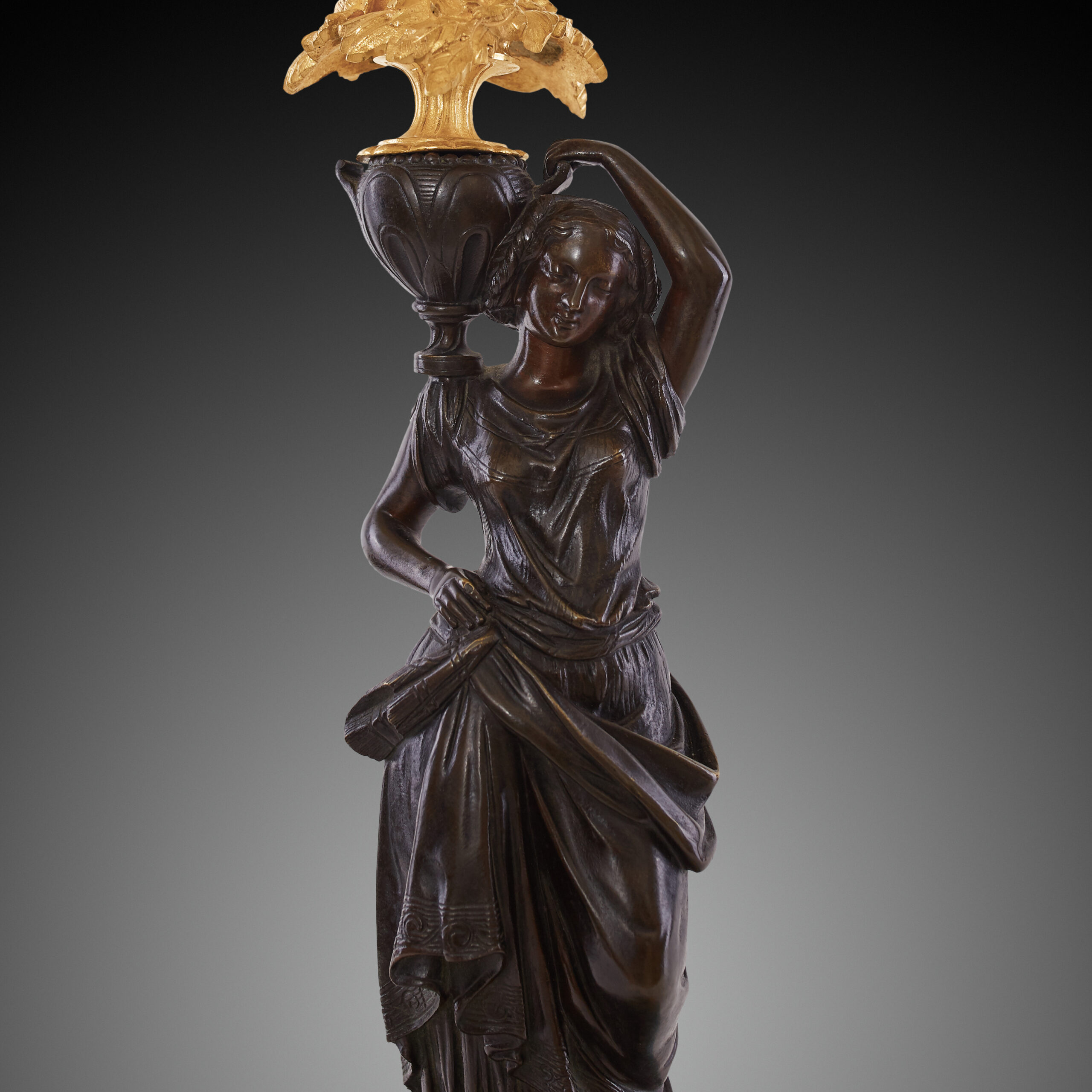
The design is a sophisticated and highly symbolic blend of classical motifs and symmetrical elegance. The central sculptural elements are two exquisitely rendered Vestals, the priestesses of Vesta, the goddess of the home in ancient Rome. In ancient Rome, the Vestals enjoyed immense privileges in exchange for their sacred vow of chastity and their unwavering devotion to the goddess. Their presence here is a powerful stylistic choice, symbolizing the protection and purity of the household. Each vestal is draped in the traditional Stola tunic and features the classic seni crines hairstyle, a subtle nod to the meticulous historical research that informed 19th-century decorative revivals.
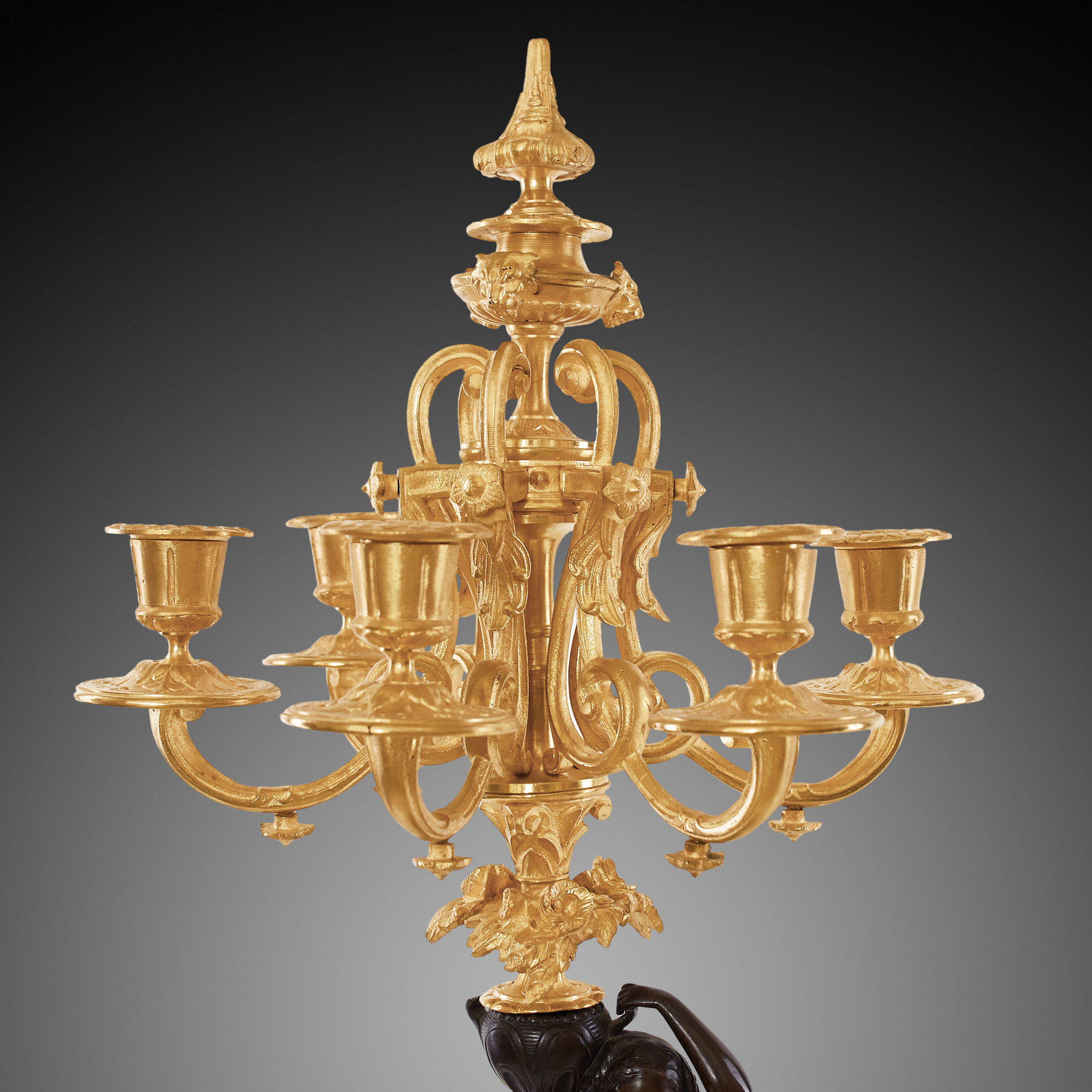
Each vestal figure, beautifully cast in patinated bronze, carries on her head a cushion from which a profusion of scrolled arms emerges. These arms, along with the central candle holder, are masterfully cast in gilt bronze and patinated bronze, creating a dramatic and beautiful contrast. The arms are adorned with intricate acanthus scrolls, supporting a total of five lights arranged to create a harmonious and balanced display. The base of the candelabra is a stunning display of materials, with a square plinth of vibrant malachite. This luxurious stone, highly prized for its rich color and mesmerizing patterns, is further embellished with finely chased gilt bronze mounts and rests on a beautifully curved base, adding to the grandeur and stability of the pieces.
The quality of the casting and the meticulous detail of the chasing are indicative of a top-tier Parisian workshop of the period. The purposeful juxtaposition of the brilliant, reflective gilt bronze against the deep, matte patinated bronze creates a powerful visual dynamic, highlighting the sculptural details and adding a sense of depth and contrast. The use of mercury gilding (ormolu), a difficult and costly process, resulted in a lustrous, durable finish that has maintained its brilliance for over a century.
This pair of candelabra is not merely functional lighting; they are a commanding statement piece that would have originally graced a grand salon, a mantelpiece, or a formal dining room. They perfectly embody the opulence and decorative spirit of the Napoleon III period, representing a fusion of historical scholarship and artistic virtuosity.