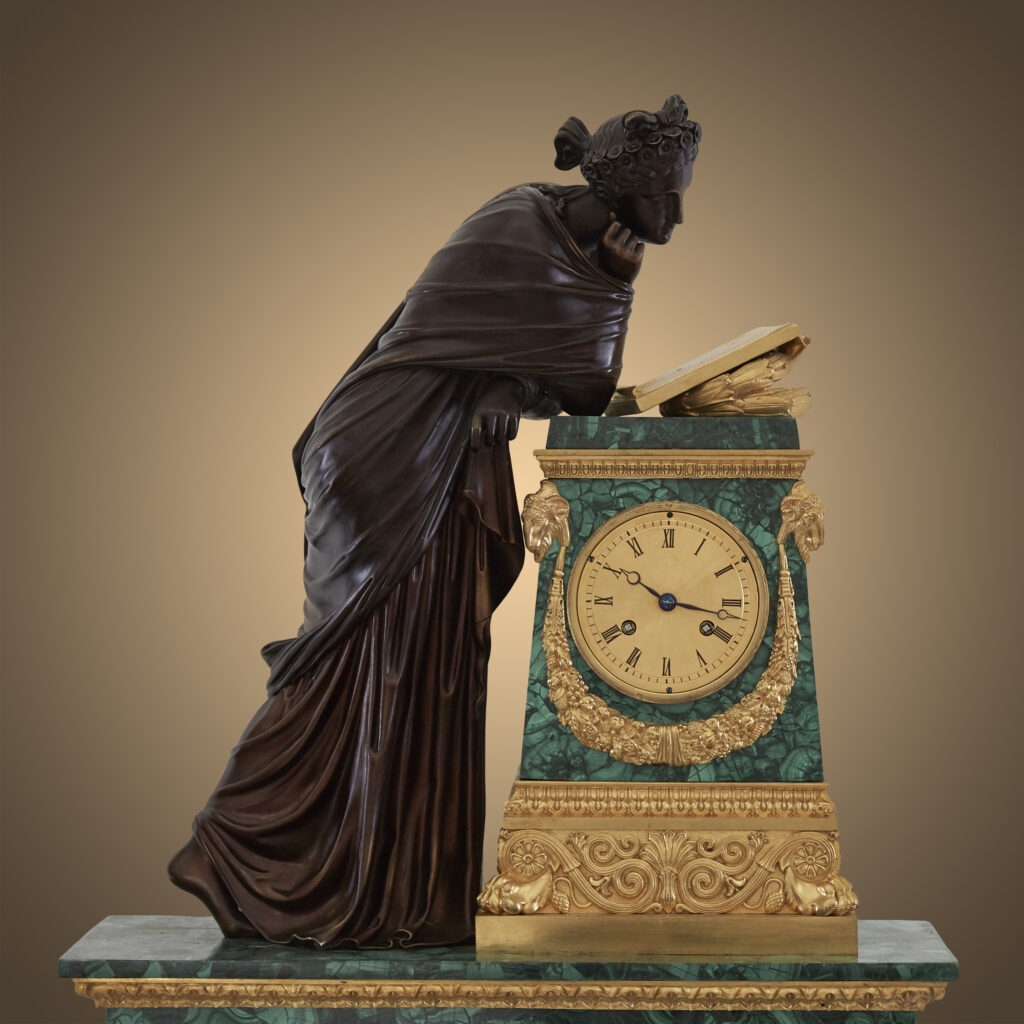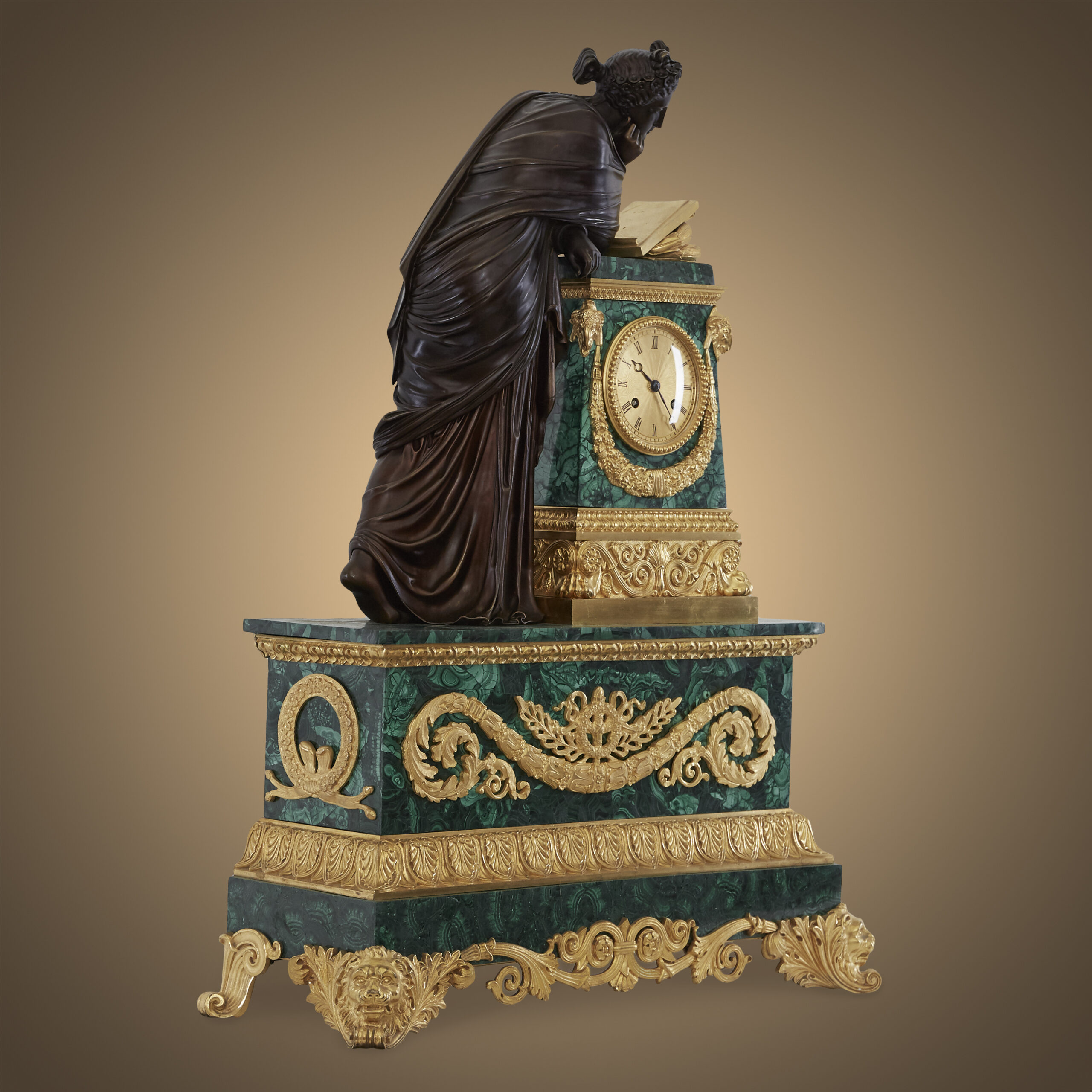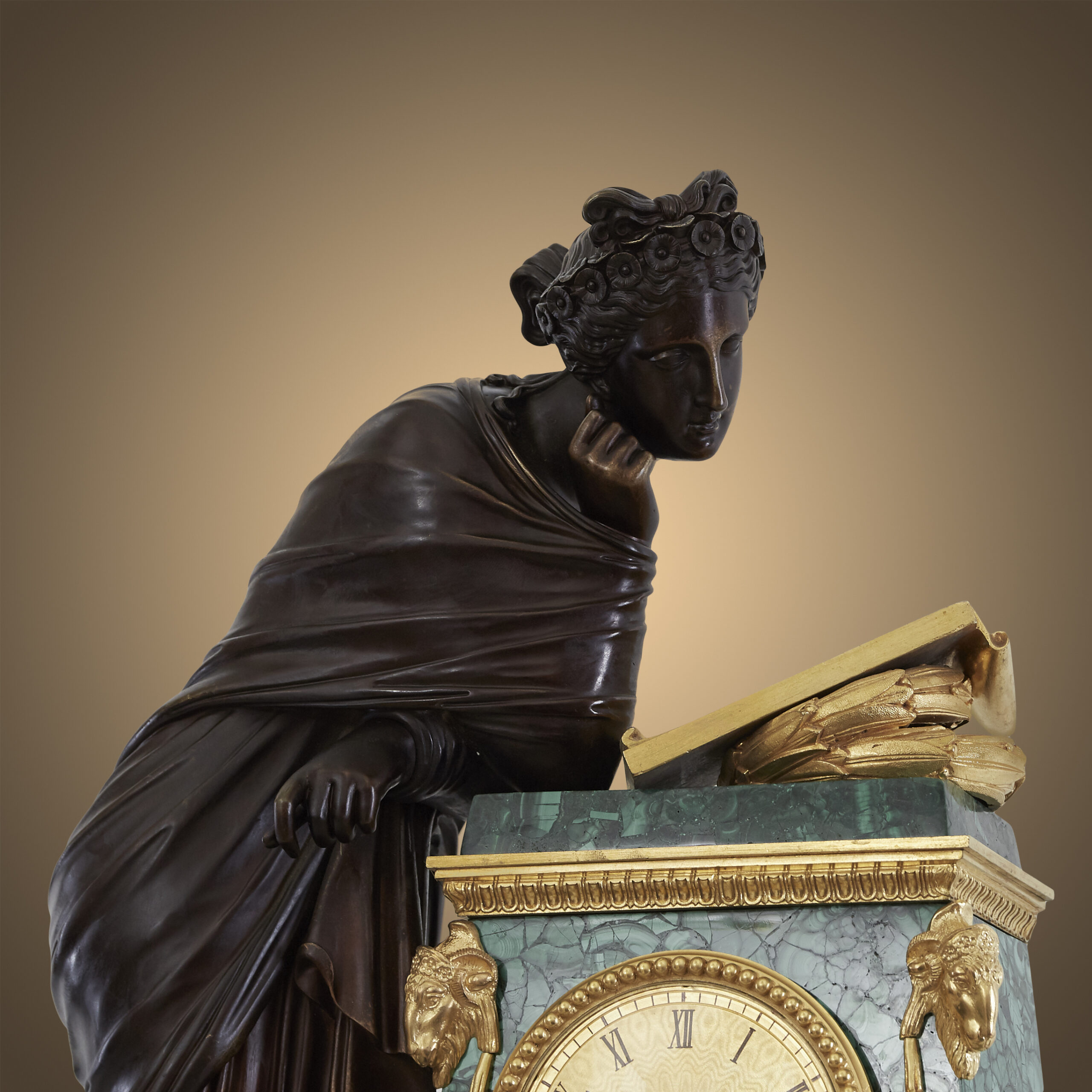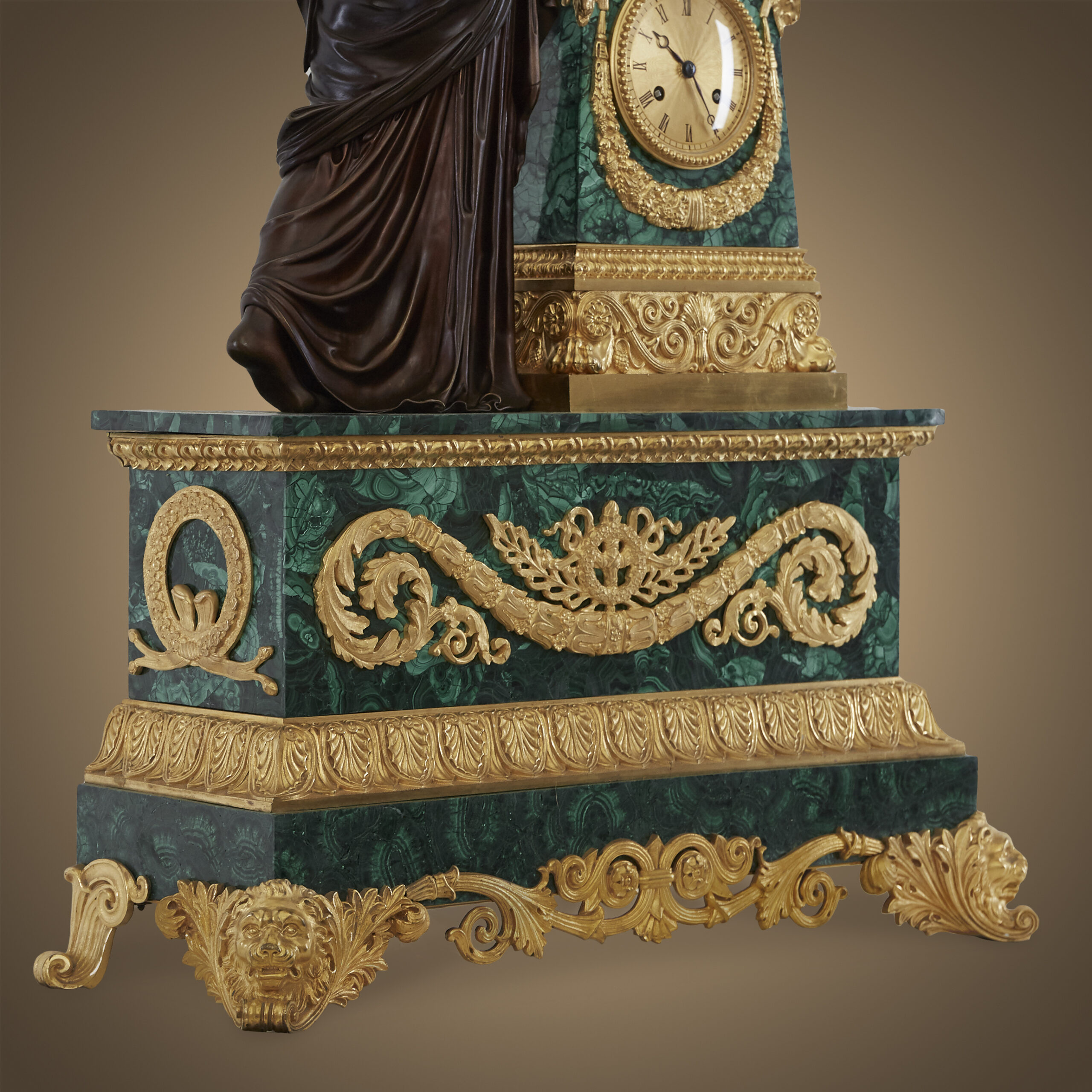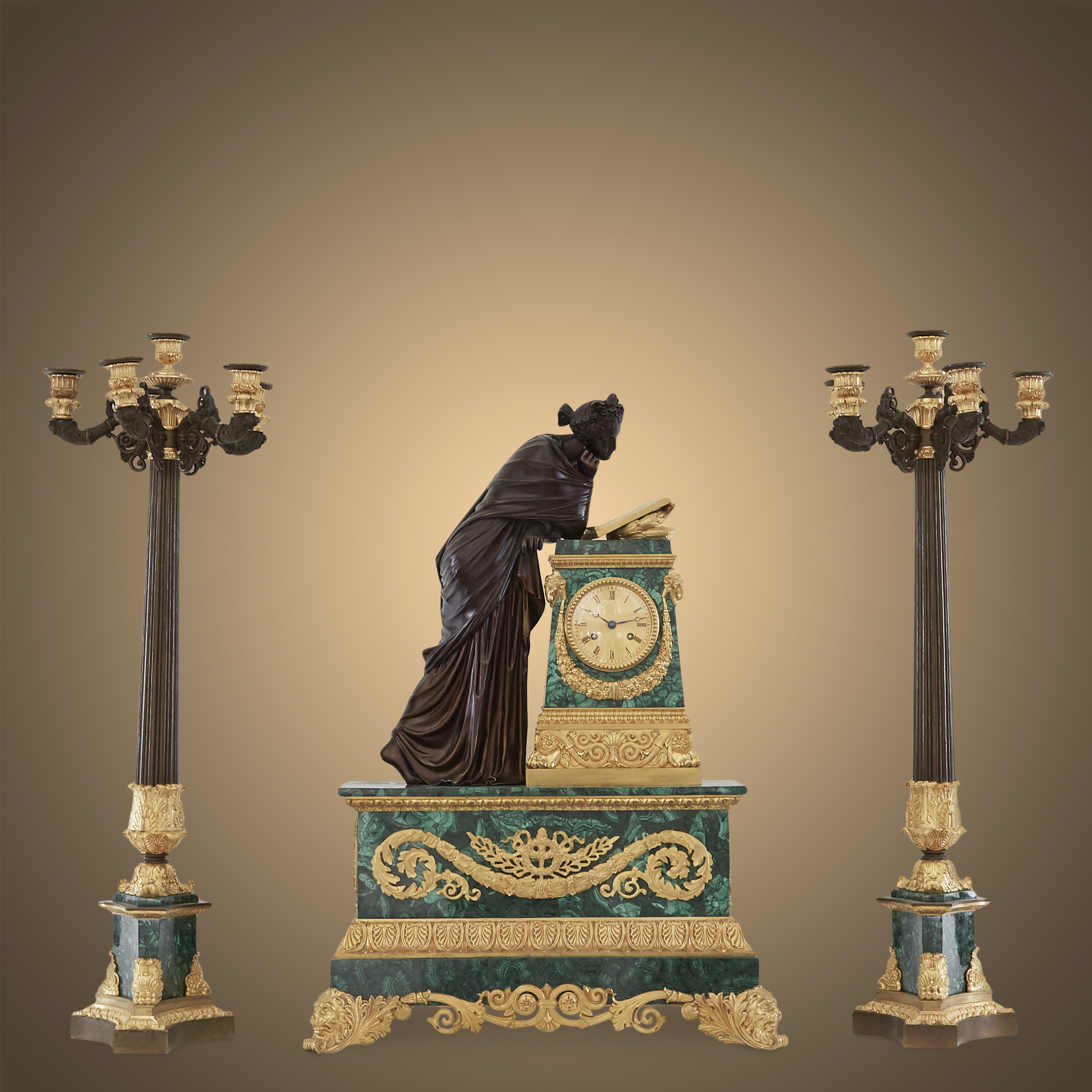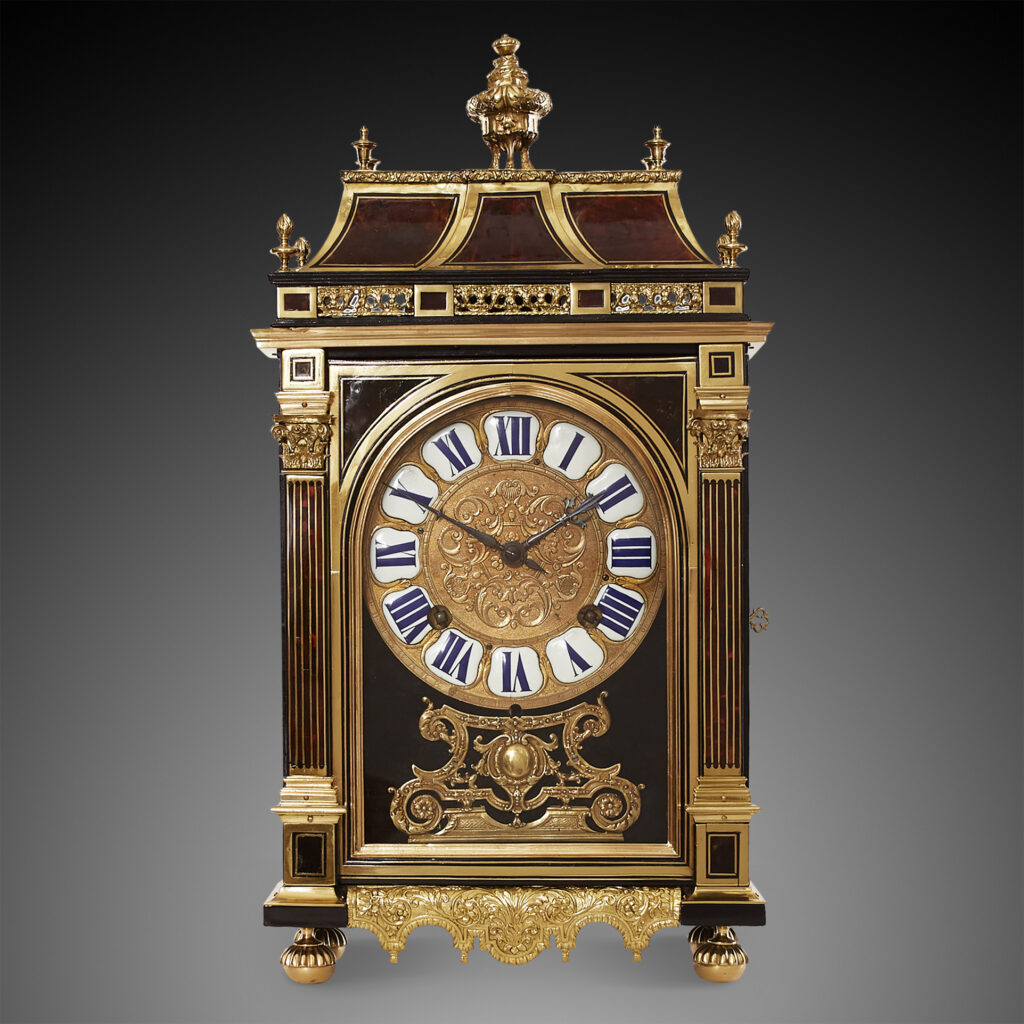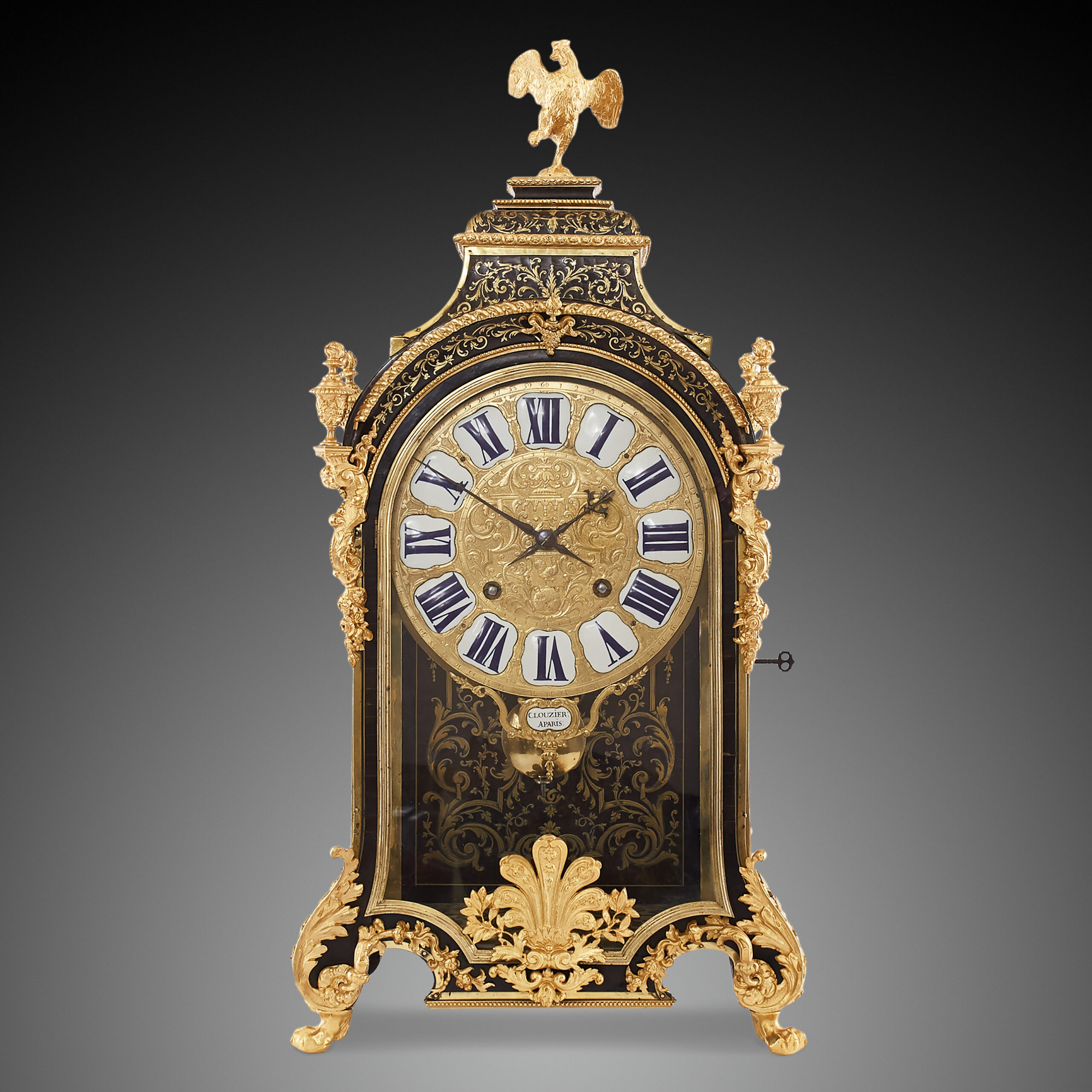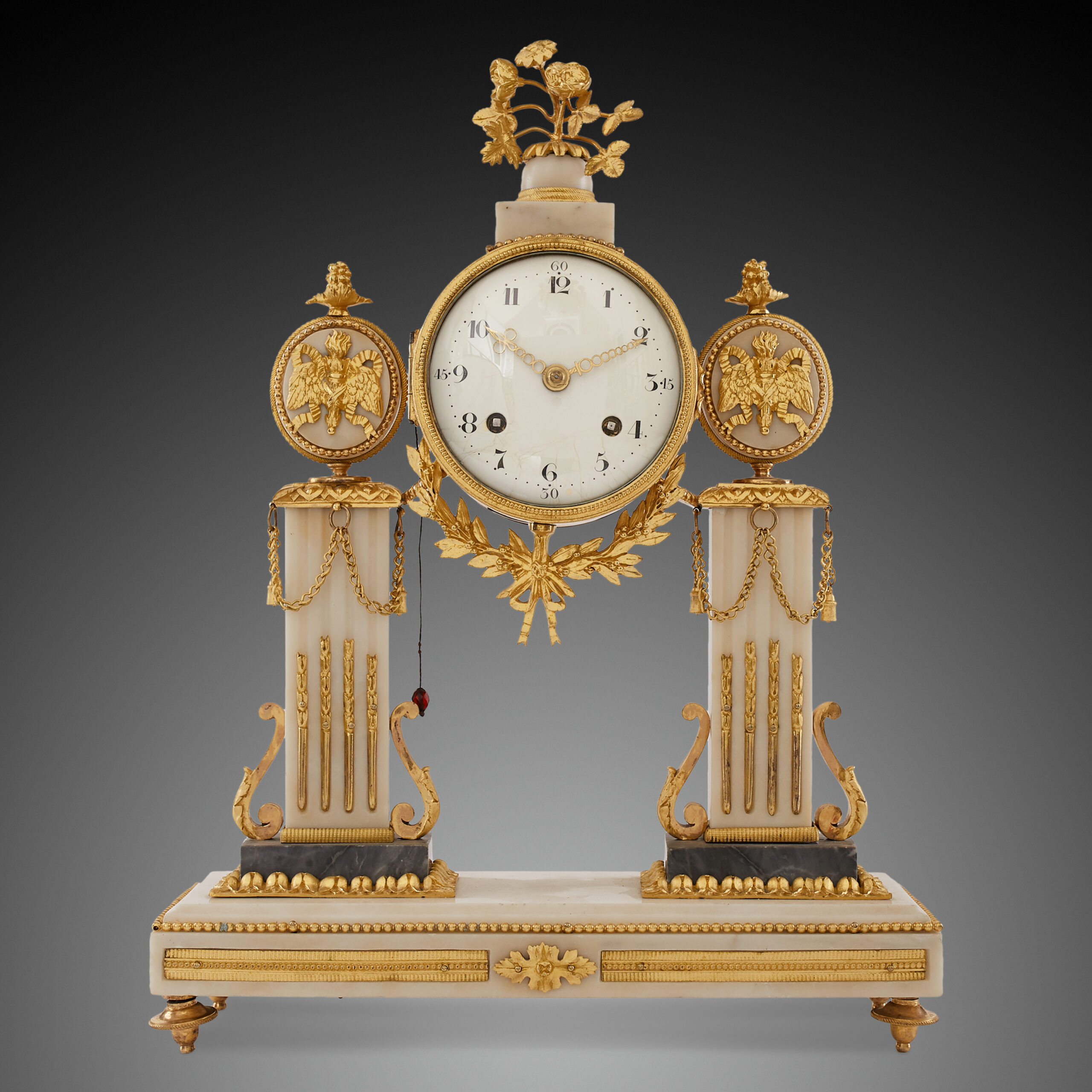
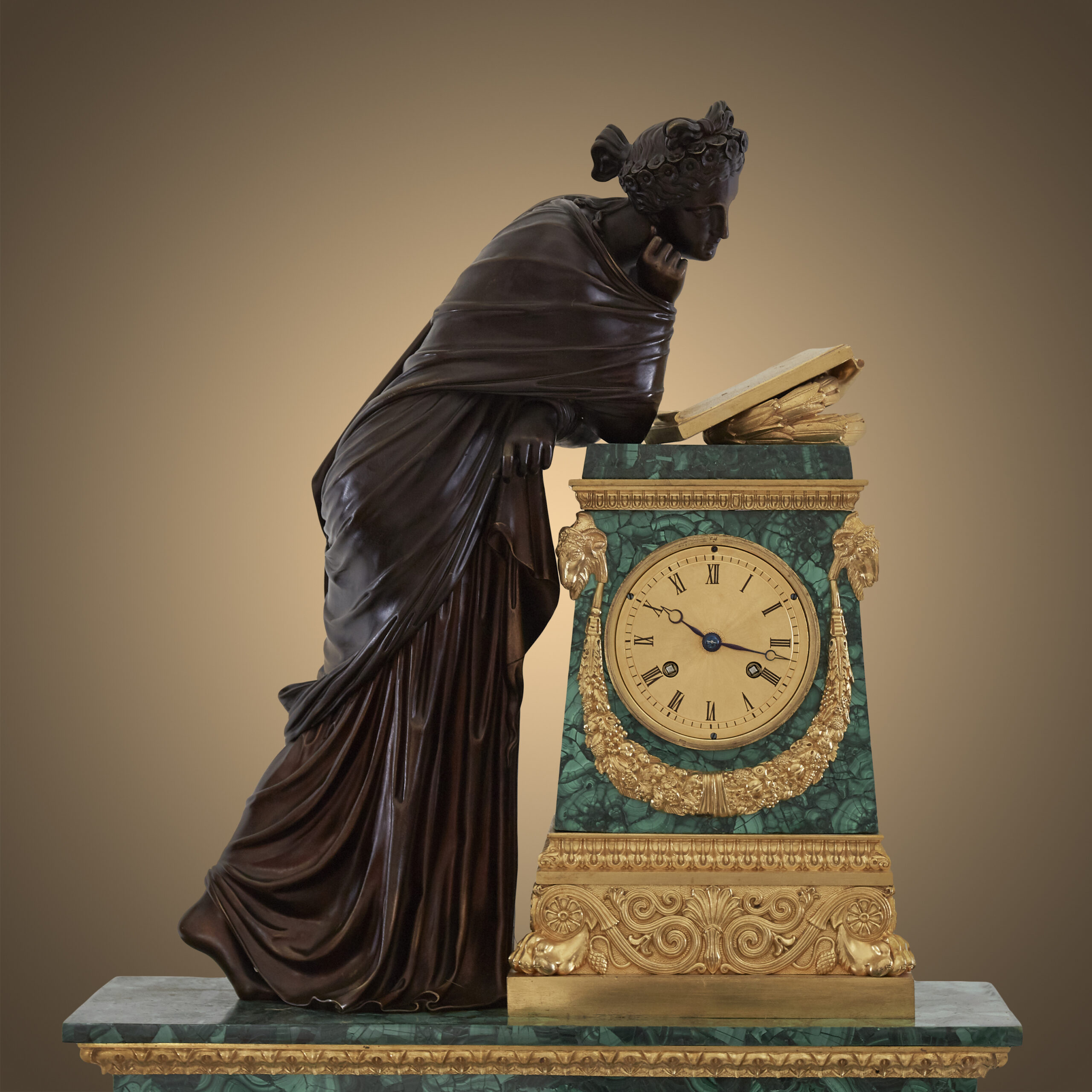
This magnificent 19th-century French figural mantel clock, dating from the late Empire through the Restauration to the early Louis-Philippe period (circa 1815–1840), stands as a superb example of Parisian decorative arts at its most refined and narrative-driven height. It features a finely sculpted patinated dark bronze figure of a graceful young woman, elegantly draped in flowing classical robes that cascade in naturalistic folds, leaning forward in quiet absorption as she reads from an open book placed atop a tall architectural pedestal. Her pose—head gently inclined, body subtly curved in concentration-evokes a moment of intellectual intimacy and contemplative grace, transforming the functional timepiece into a poetic allegory of Study, Wisdom, and the pursuit of knowledge, themes deeply cherished during the Neoclassical revival. The pedestal itself integrates a circular clock dial with crisp Roman numerals, encircled by exquisitely chased gilt-bronze (ormolu) mounts featuring acanthus leaves, palmettes, scrolling volutes, and delicate beadwork, all harmoniously contrasted against the rich, verdant tones of a green malachite or verde antico marble base adorned with additional gilt-bronze friezes, ornamental scrolls, and a stepped platform that lends architectural dignity and visual depth to the composition.
Such figural mantel clocks, known in French as pendules de cheminée, reached their artistic zenith in the late 18th and early 19th centuries, evolving from the more restrained Louis XVI designs into elaborate sculptural tableaux that merged horology with high bronze sculpture. Master bronziers like Pierre-Philippe Thomire (1751–1843), often called the “greatest bronzier of the Empire,” and his contemporaries such as Claude Galle perfected the dual techniques of dark patination for figures and mercury-gilt ormolu for highlights, producing luxurious objects for imperial, aristocratic, and later bourgeois patrons. This particular model draws inspiration from Enlightenment ideals that persisted well into the post-Napoleonic era: the celebration of education, classical learning, rational thought, and self-improvement, values embodied in allegorical figures frequently drawn from antiquity or inspired by contemporary literature and philosophy. Related examples from the period often depict a female reader seated on a Klismos chair with a lute nearby, reinforcing themes of the arts and sciences, or appear in garnitures alongside candelabra and vases to create cohesive decorative ensembles for elegant interiors.
Historically, these clocks were far more than mere timekeepers; they served as sophisticated status symbols displayed prominently on marble mantels in grand salons, private libraries, boudoirs, and reception rooms across Europe. Their narrative quality-here, the direct interaction between the sculpted figure and the clock face-reflected a growing Romantic sensibility within the lingering Neoclassical framework, where everyday moments of reflection were elevated to timeless virtue. Archaeological discoveries at Pompeii and Herculaneum, combined with the influence of artists like Jacques-Louis David, fueled this aesthetic, encouraging bronziers to adapt motifs from ancient sculpture, mythology, and painting into miniature three-dimensional scenes. Many such pieces were exported widely, finding homes in royal collections, noble residences, and the homes of the rising industrial elite who sought to emulate aristocratic taste. The luxurious combination of materials-cool, veined marble or malachite evoking ancient Roman opulence, warm gleaming gilt-bronze, and the velvety depth of patinated bronze—created a sensory richness that appealed to the era’s fascination with antiquity, time, mortality, and intellectual refinement.
Today, this clock endures as a collector’s treasure, embodying exceptional French craftsmanship in chasing, gilding, and assembly, where every detail-from the delicate hands on the dial to the intricate folds of the drapery—demonstrates the skill of Parisian ateliers. It not only marks the passage of hours but also serves as a enduring celebration of literature, contemplation, and the civilized pursuit of knowledge in an age that prized both classical revival and domestic elegance. Whether viewed in a historic interior or a modern collection, it continues to captivate with its harmonious balance of form, symbolism, and technical mastery.