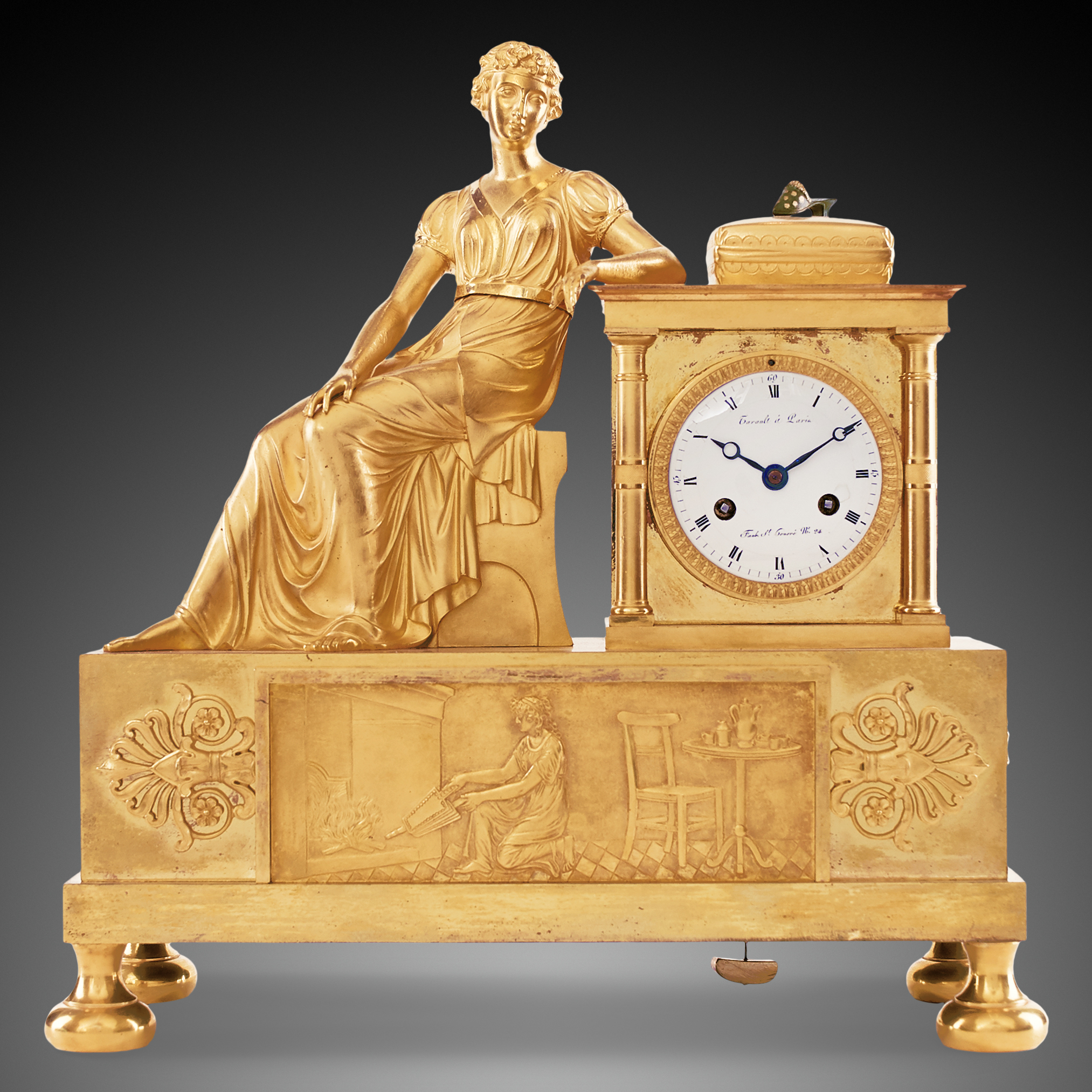
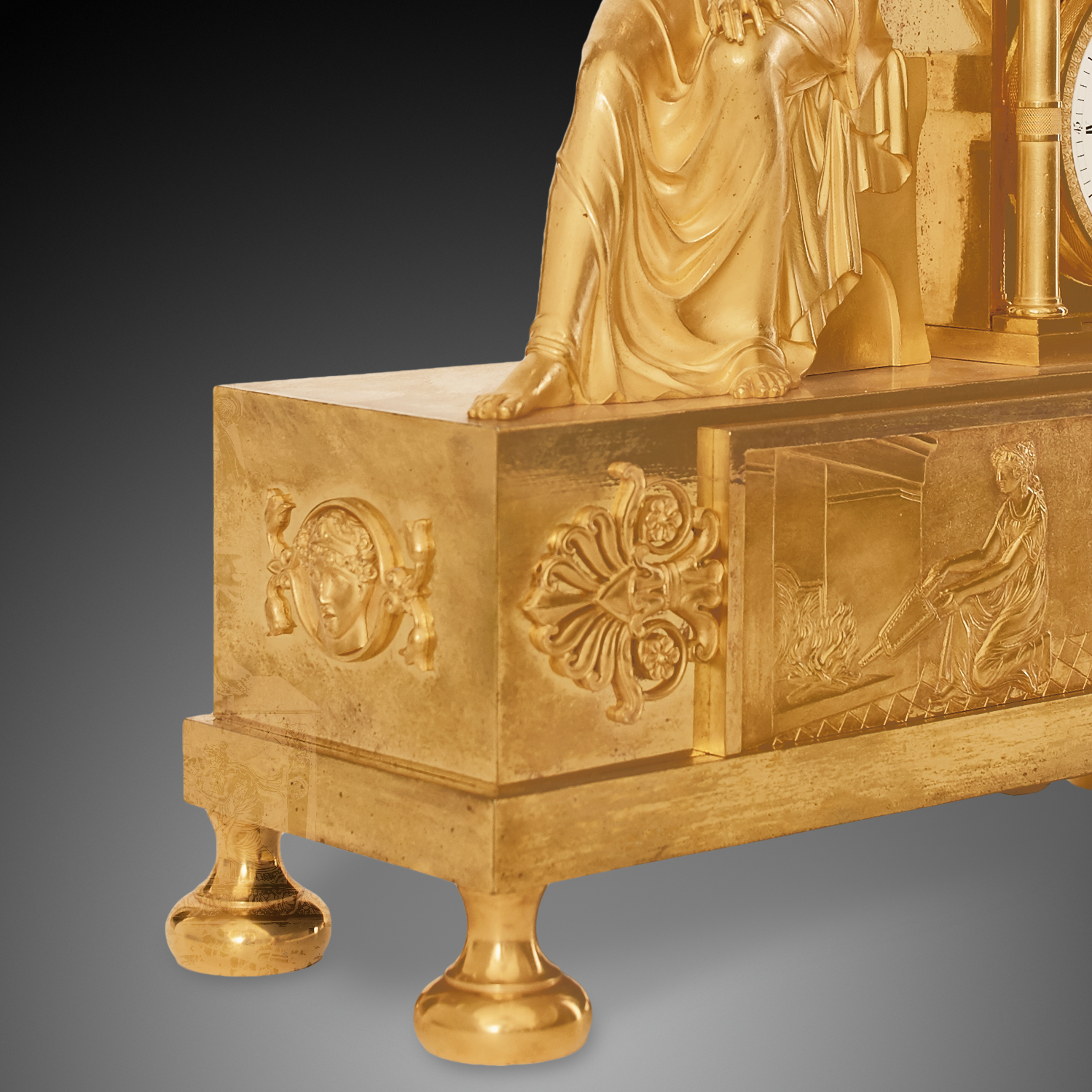
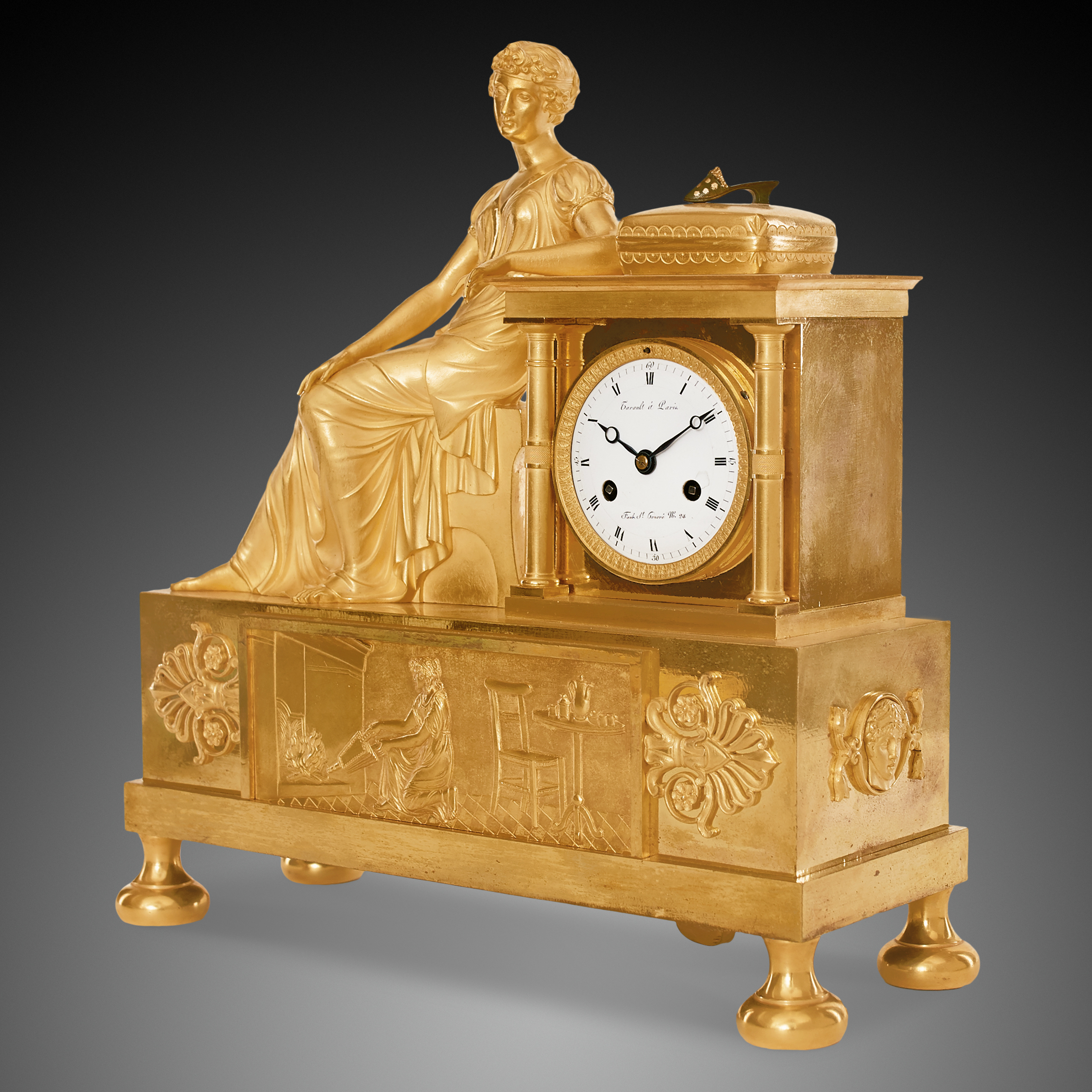
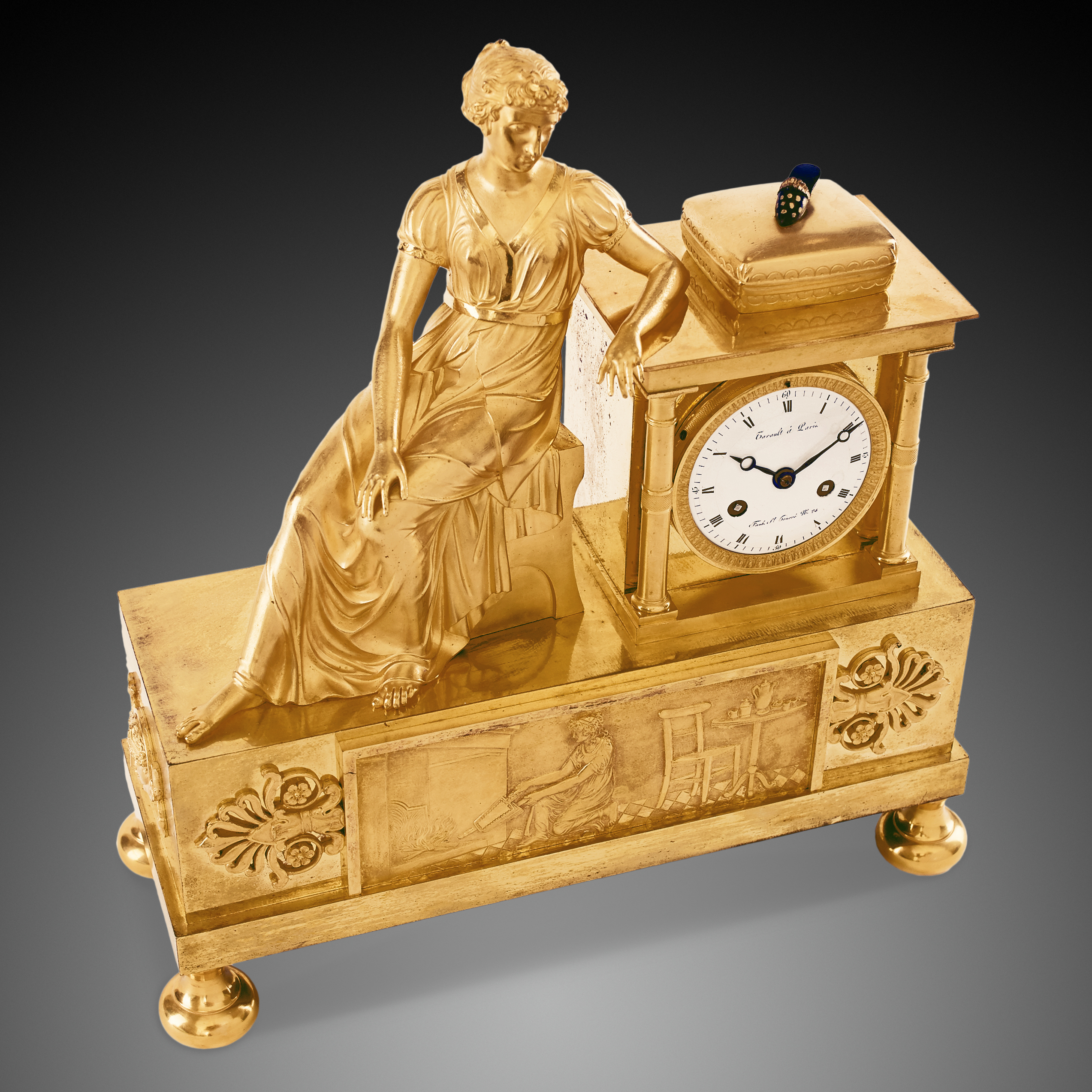
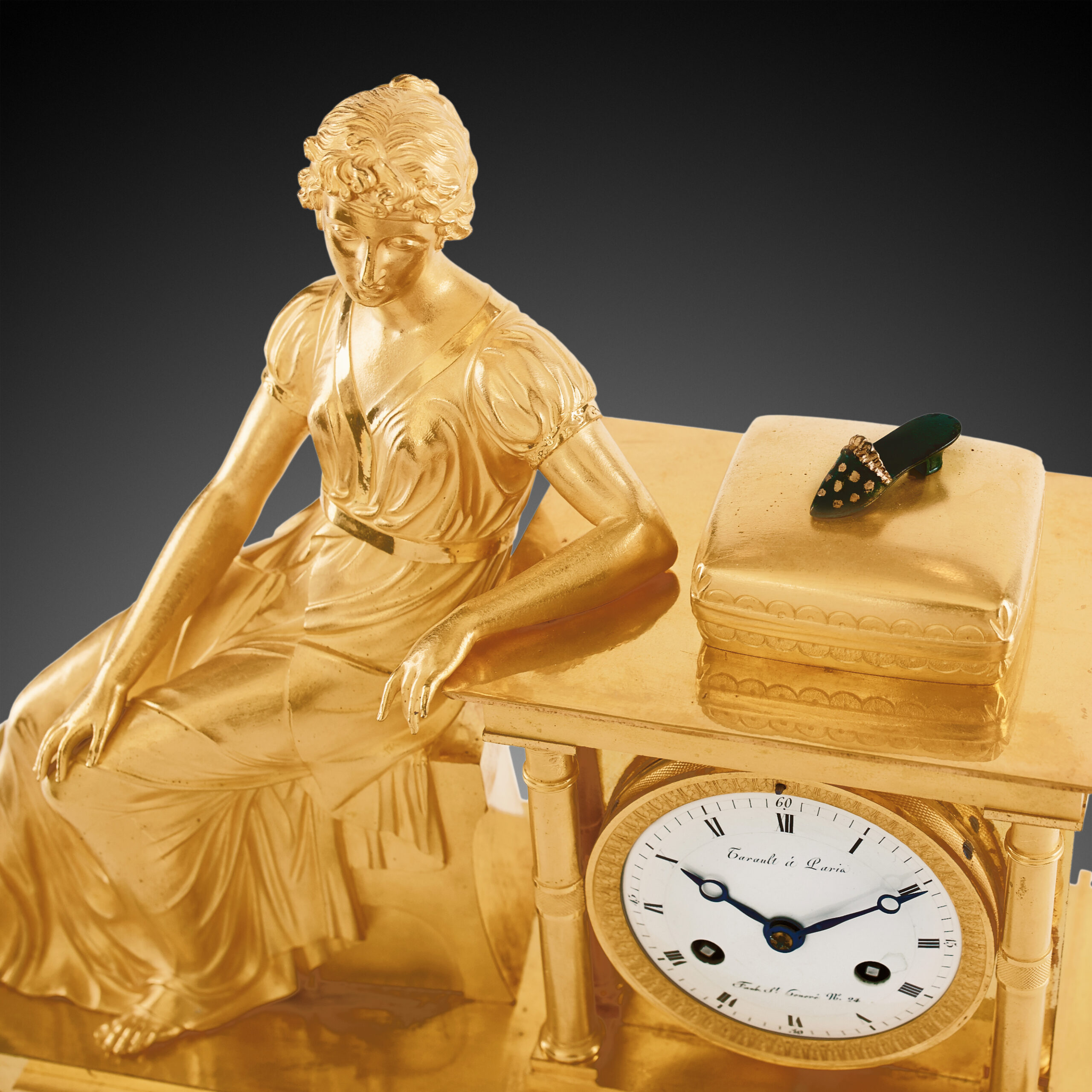
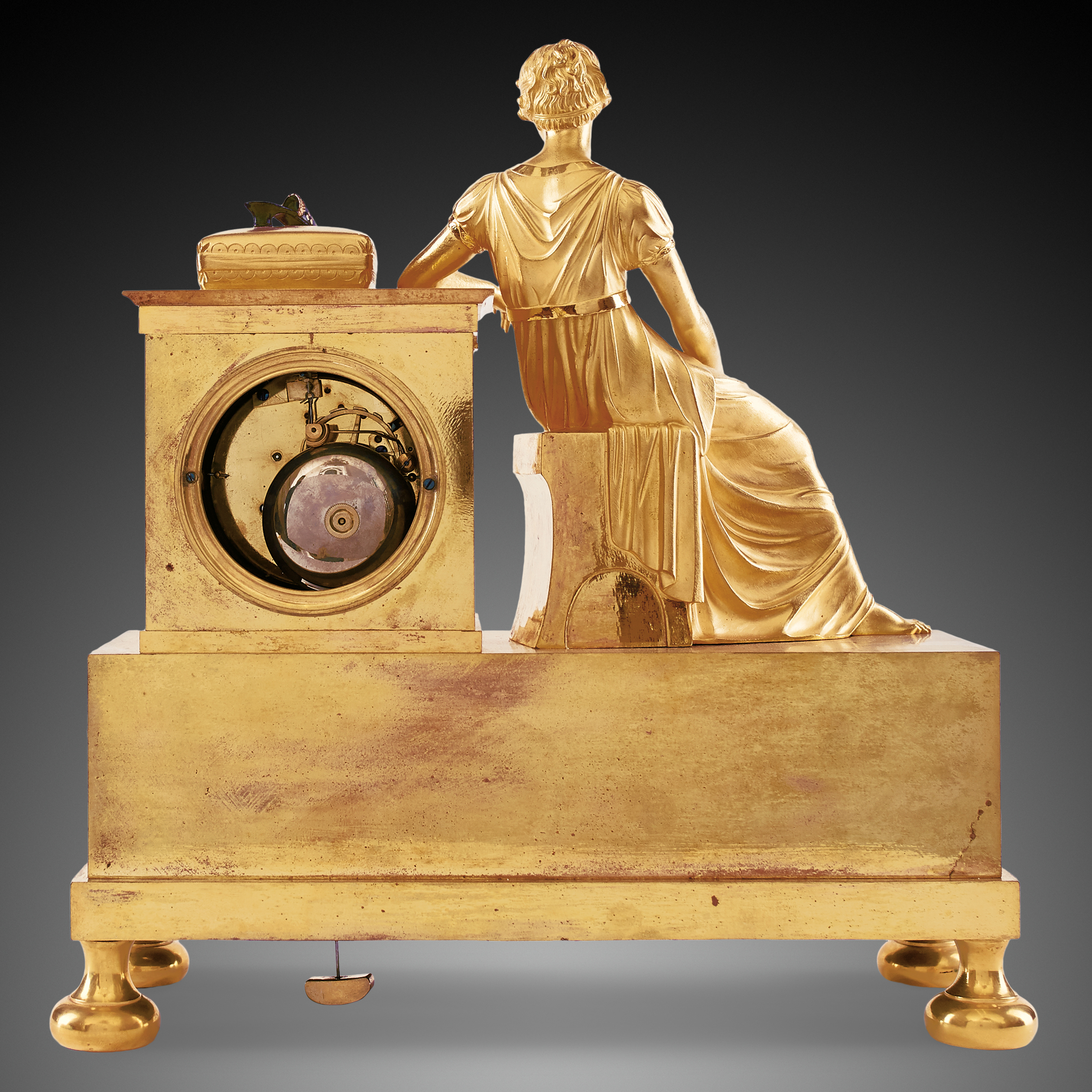
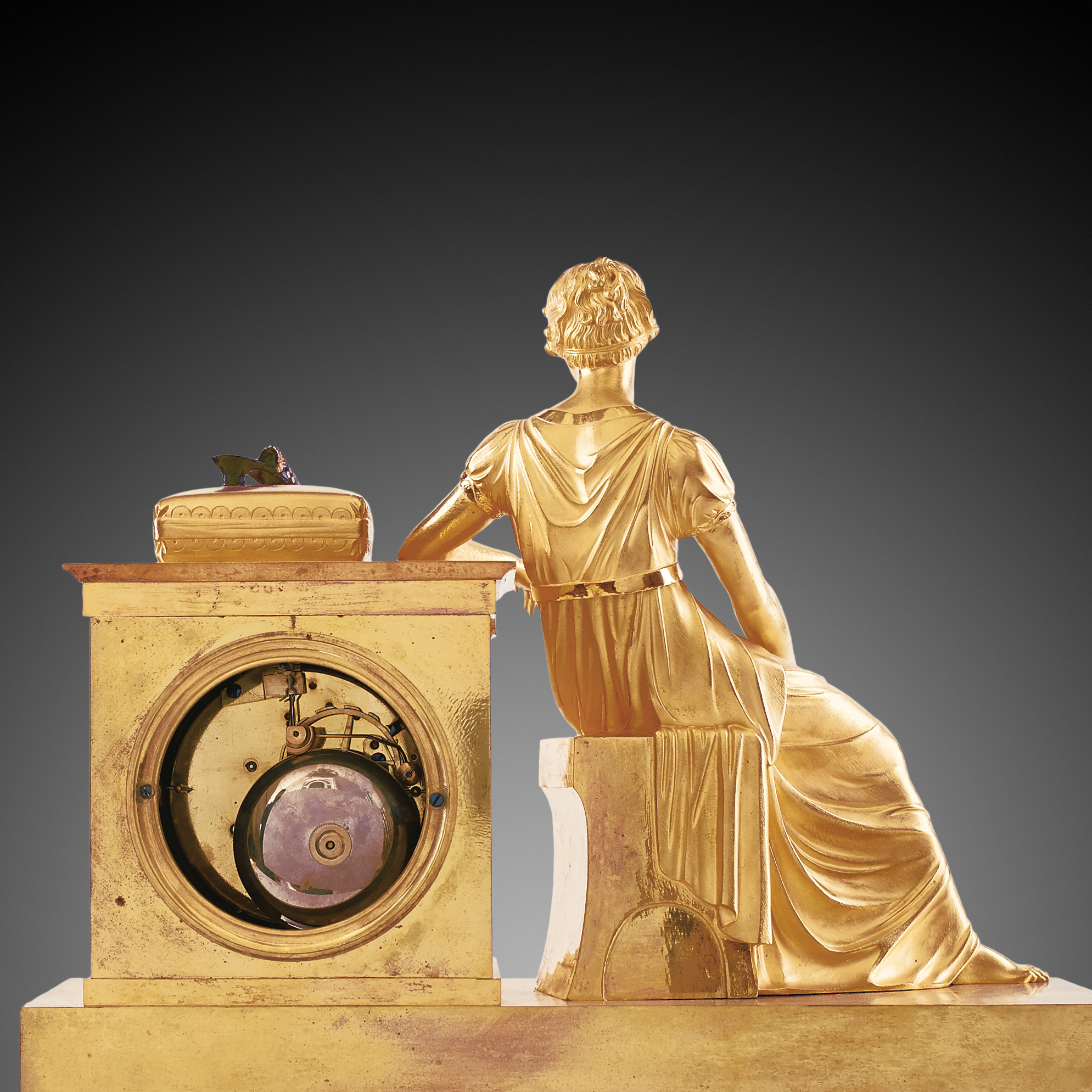
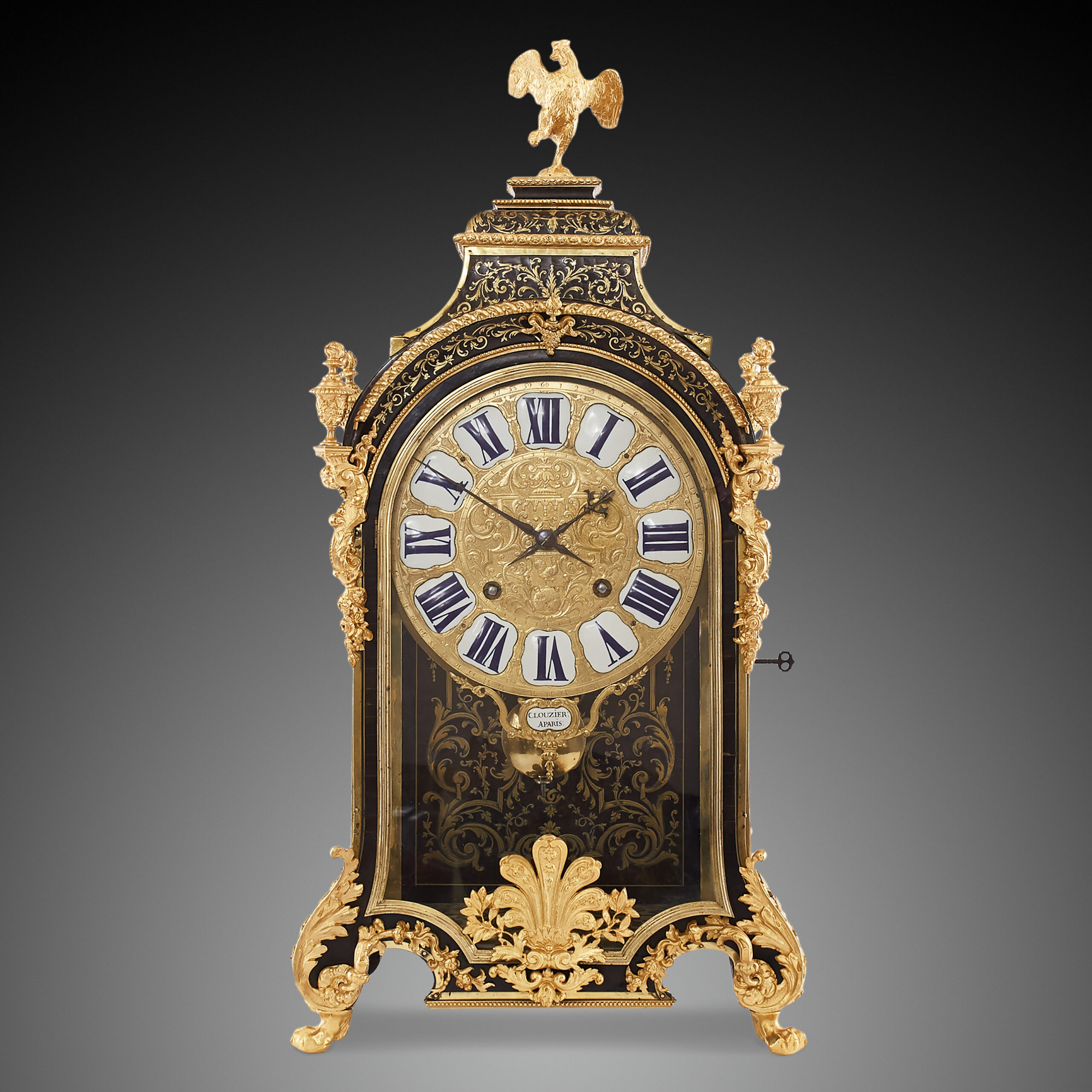
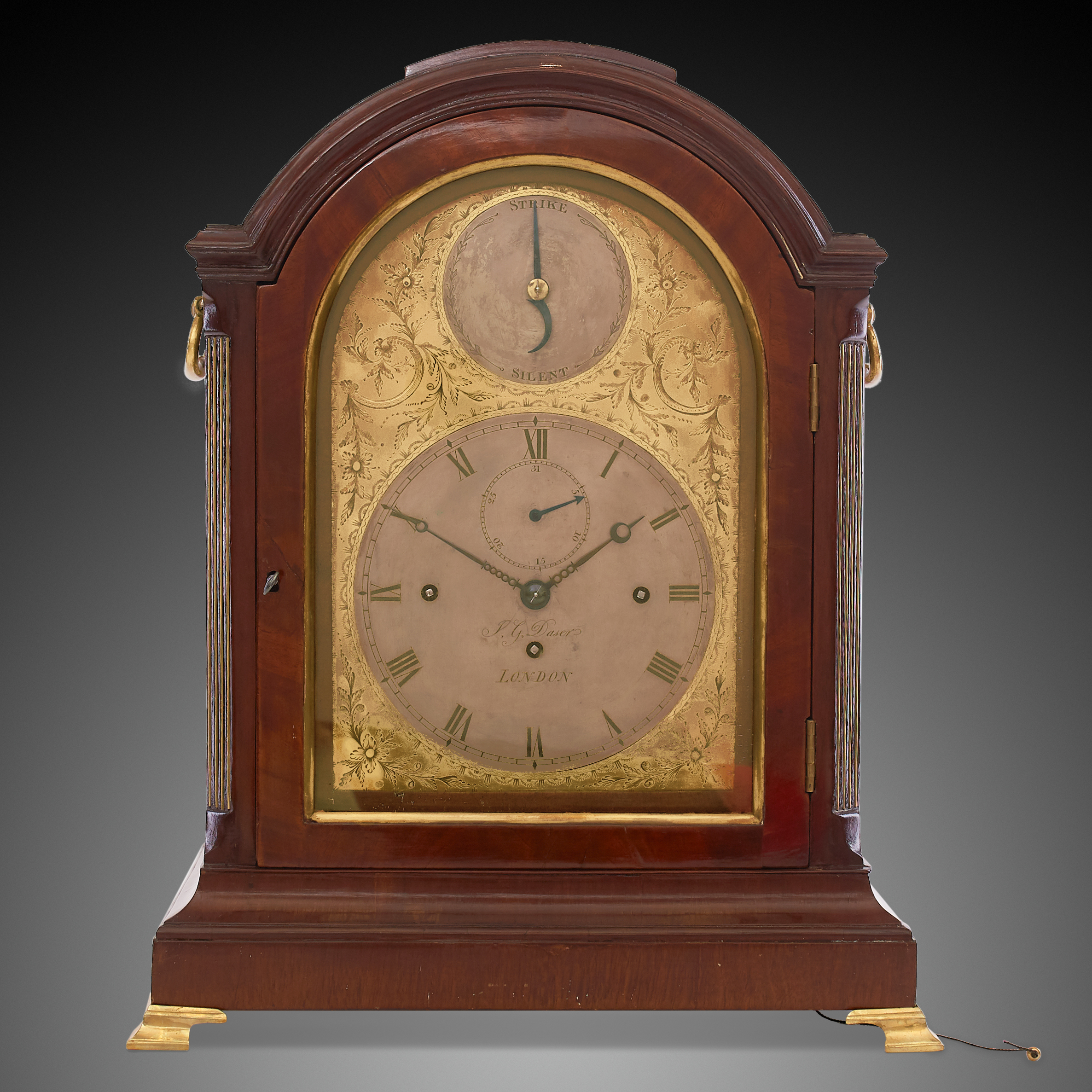
This is an exceptional and authentic mantel clock from the Empire period, a time of great artistic and political change in France under the rule of Napoléon I (1804-1815). The clock is signed on its dial “Toronl à Paris,” indicating its origin from a prestigious Parisian workshop. While the signature may be a less documented name among the most famous masters of the era, the quality of the clock and its powerful design are a testament to the immense skill of the Parisian fondeurs (casters) and ciseleurs (chasers) of the period.
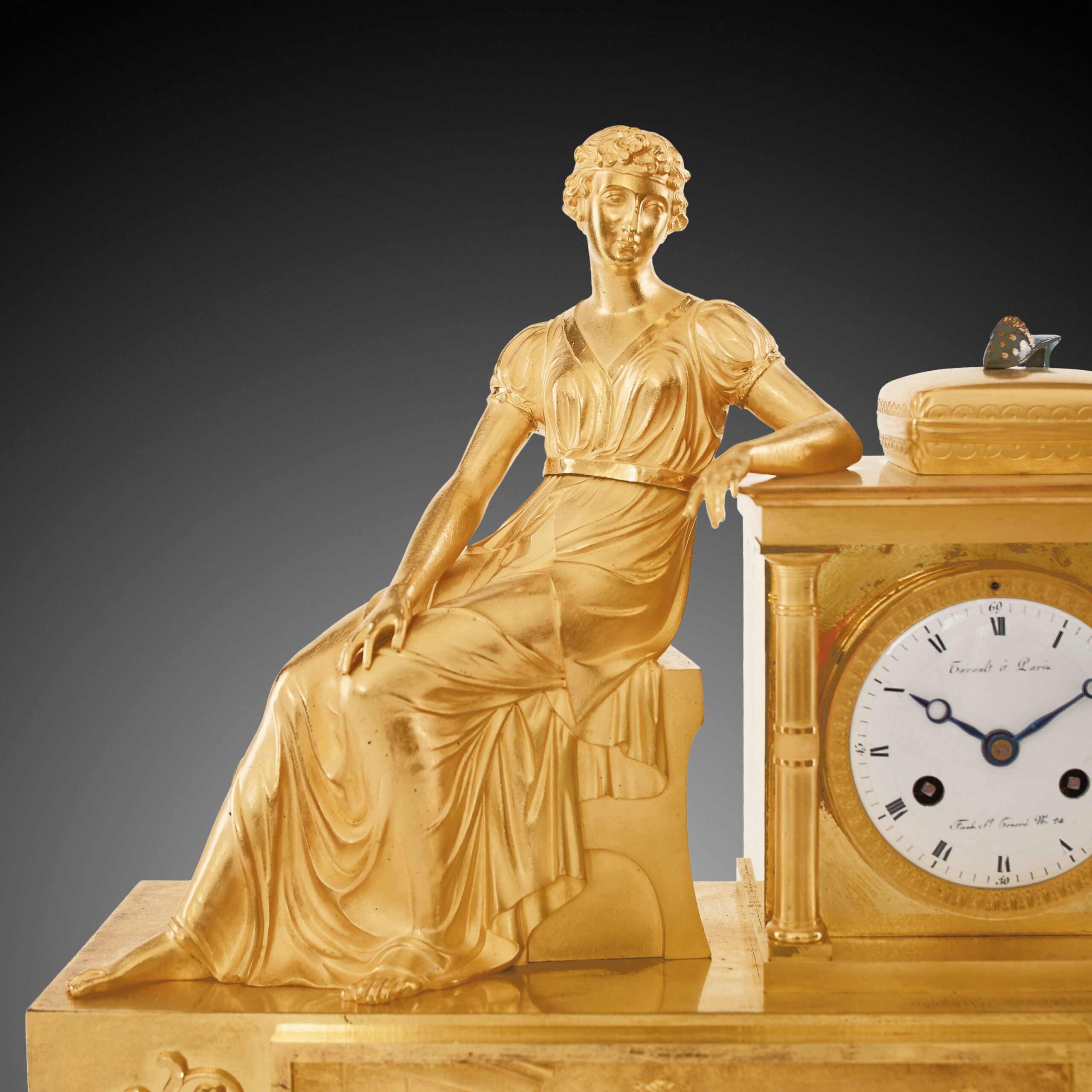
The Empire style was a powerful expression of imperial grandeur and order, drawing heavily from the classical world of ancient Rome. Clocks from this period often served a dual purpose: they were precise timekeepers and allegorical works of art, designed to celebrate the virtues and achievements of the new French Empire. This clock’s design is a superb example of this trend, featuring a classical female figure, likely a muse or a representation of an abstract concept, lounging serenely next to the clock case.
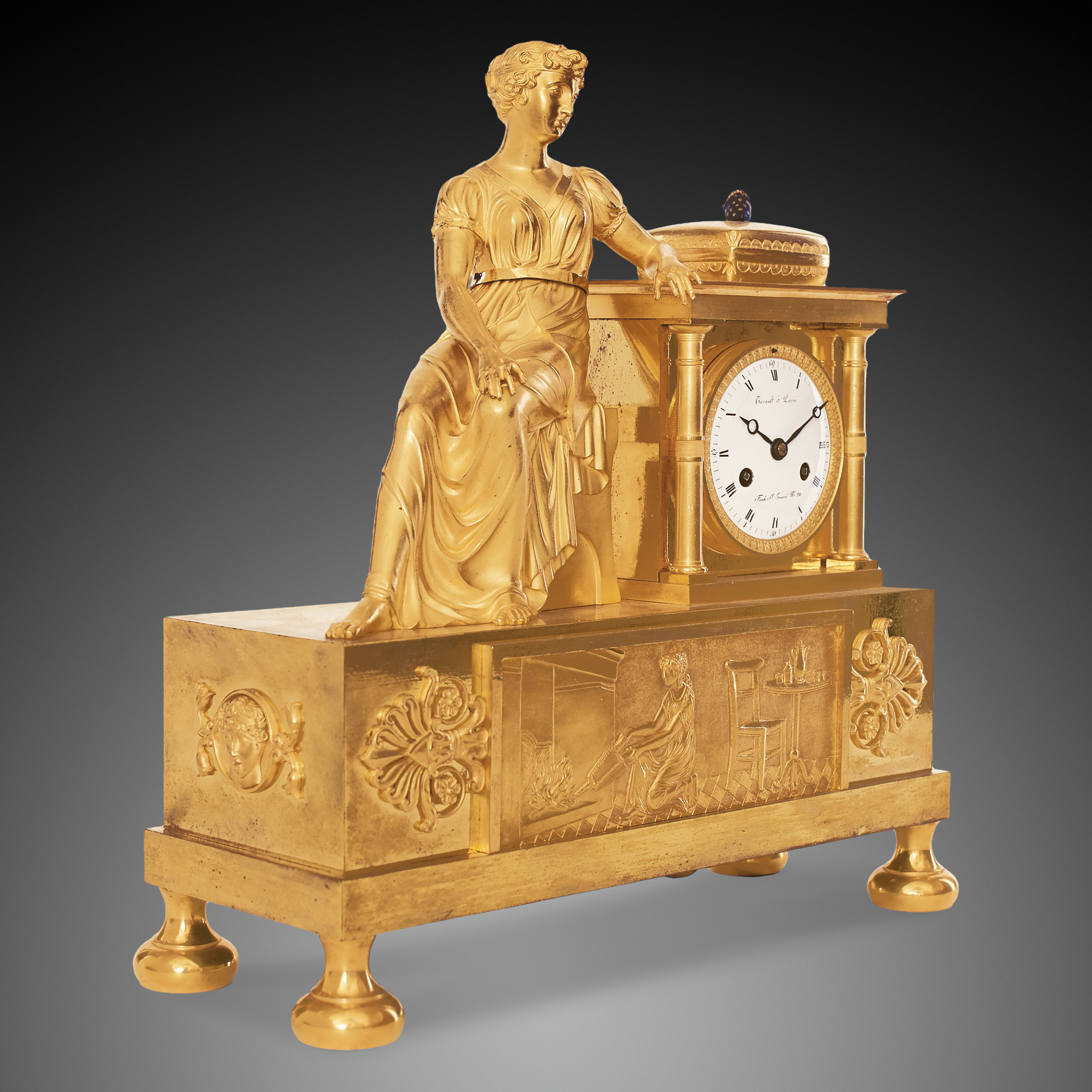
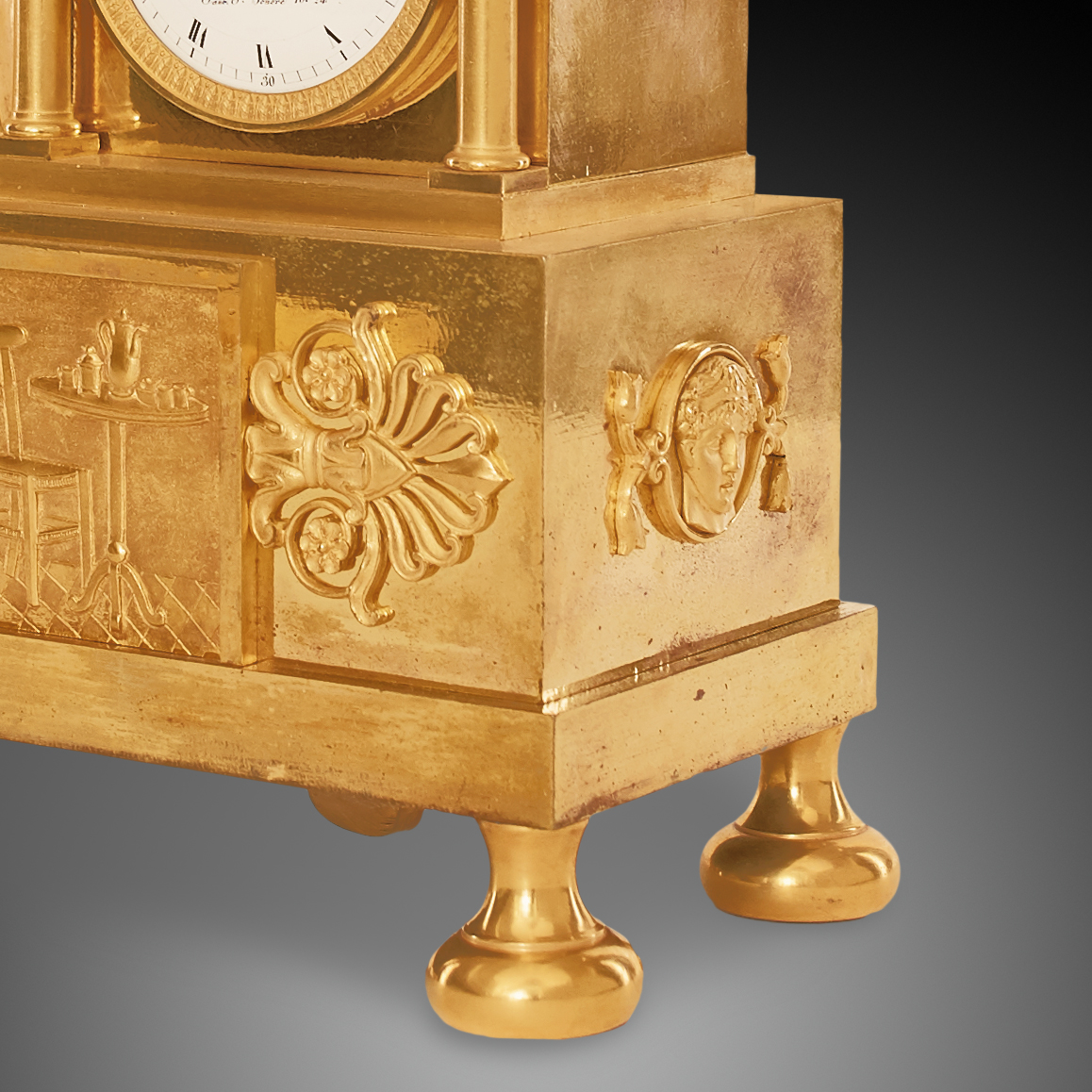
The clock is crafted from finely chased and mercury-gilded bronze (ormolu), a luxurious and difficult technique that was a hallmark of high-end Parisian workshops. The base is adorned with a detailed relief carving that appears to depict a craftsman at work, a theme that honors labor and ingenuity—key tenets of the Enlightenment and the Napoleonic era. The clock case itself is elegantly simple and architectural, topped with a classical urn, and the entire piece rests on finely cast lion’s paw feet, a potent symbol of imperial power.
The white enamel dial, with its crisp Roman numerals, is clear and legible. The movement would have been a high-quality, eight-day mechanism, typical of fine Parisian clocks, striking the hour and half-hour on a bell. This timepiece is a rare and highly desirable piece of historical art, combining exceptional sculptural artistry with a powerful allegorical narrative, making it a true centerpiece for any discerning collector.