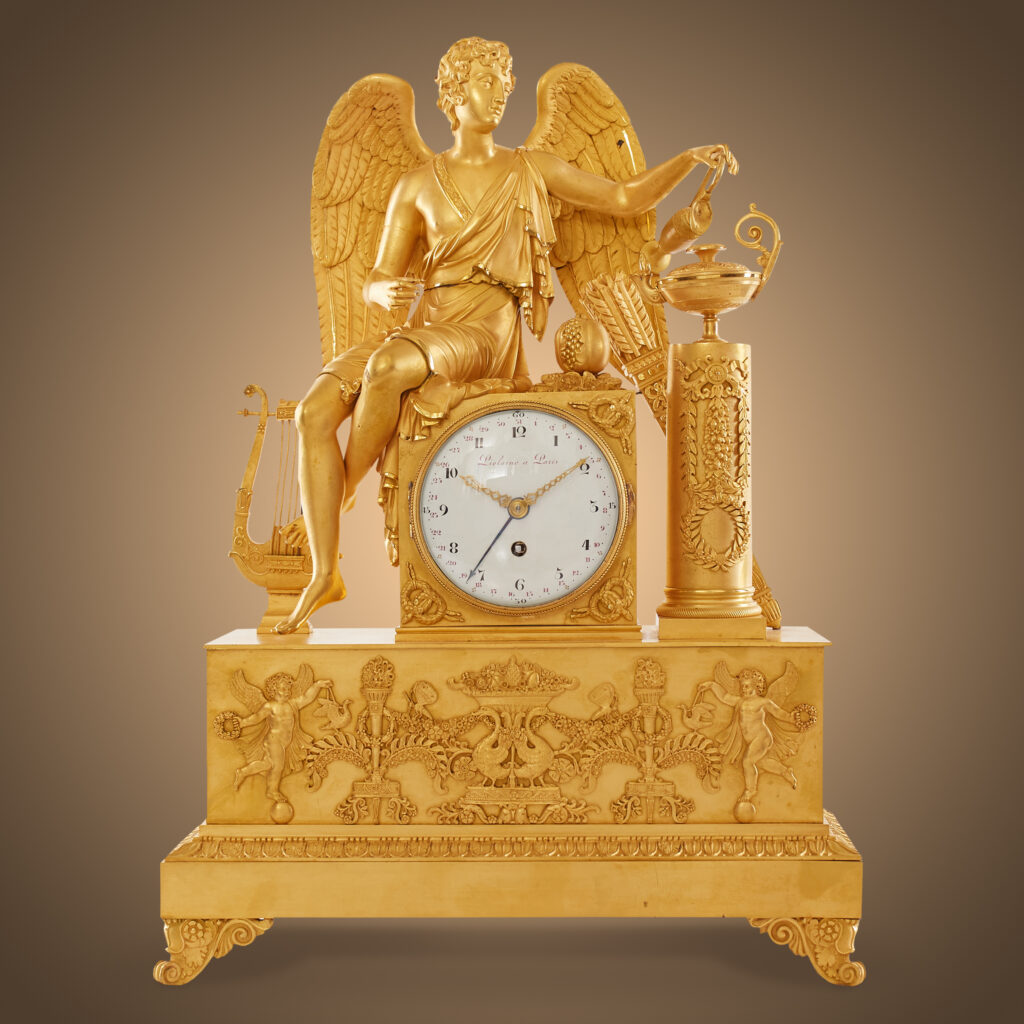
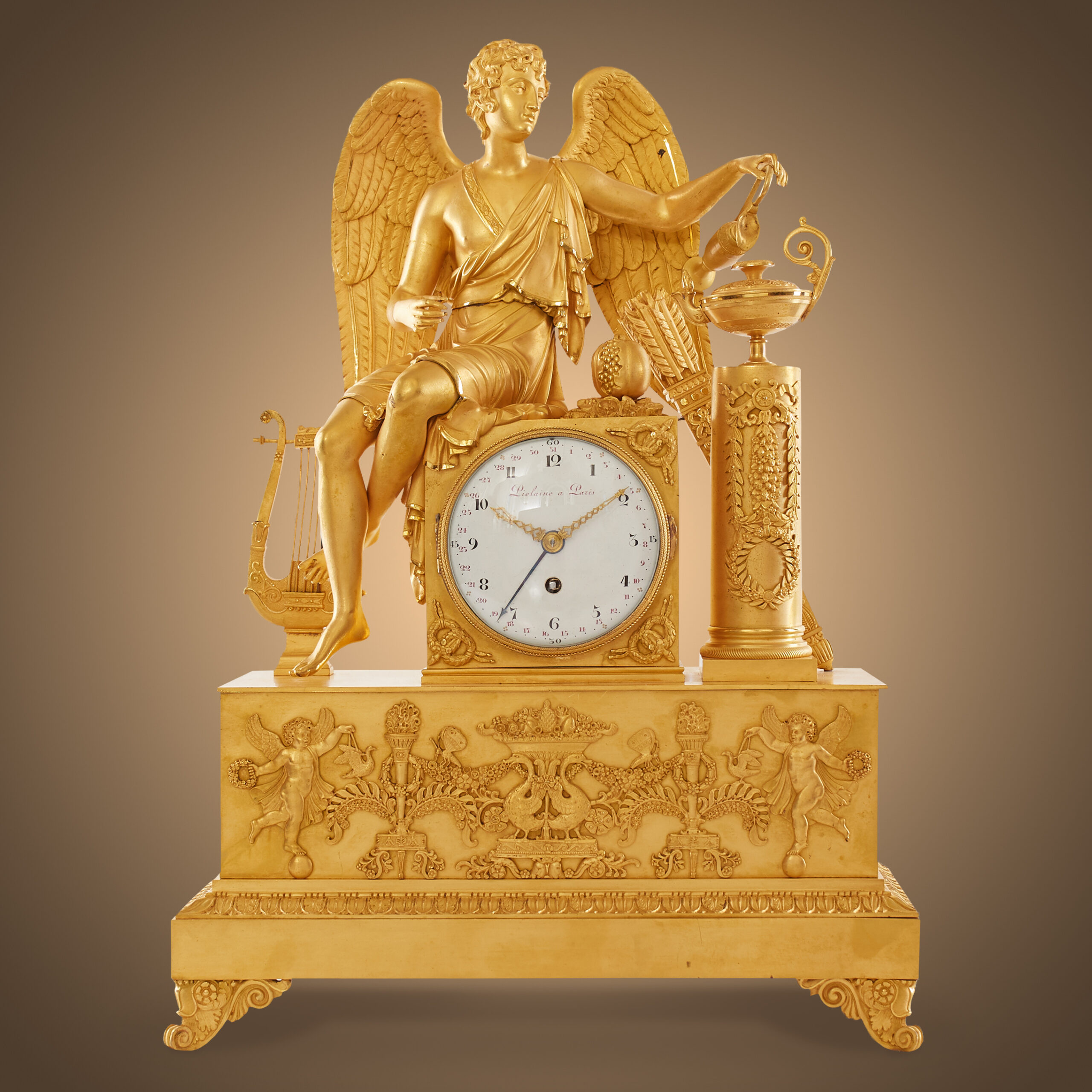
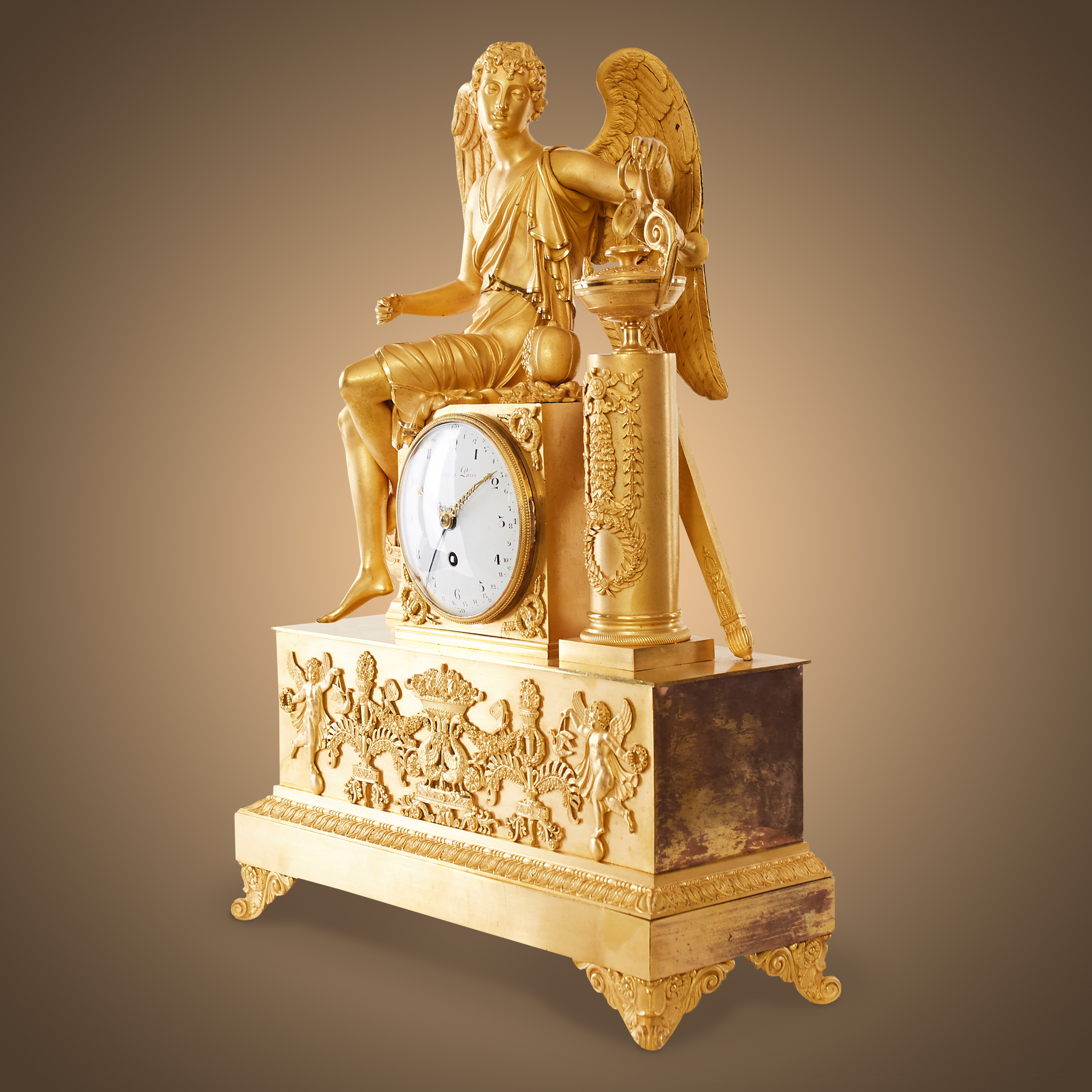
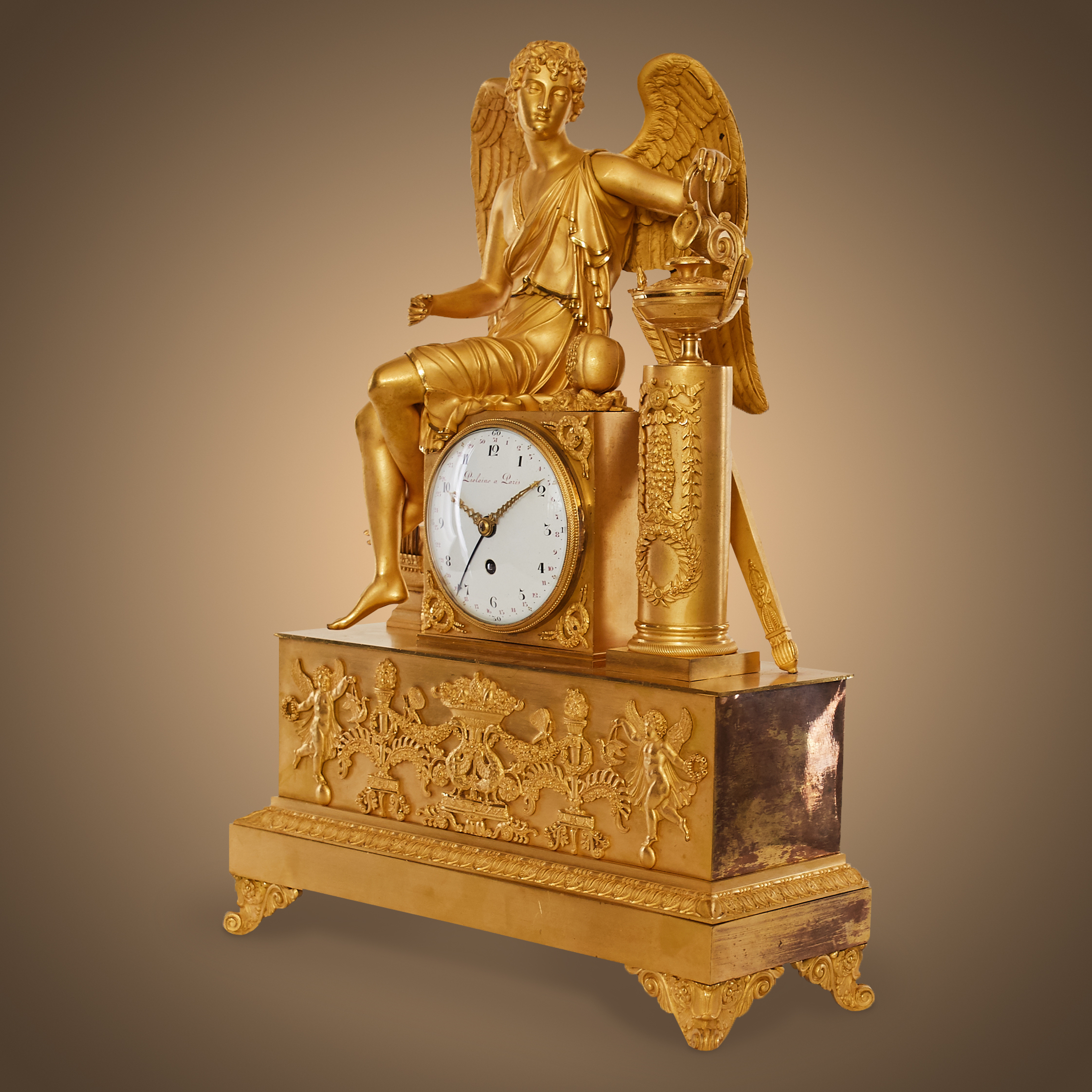
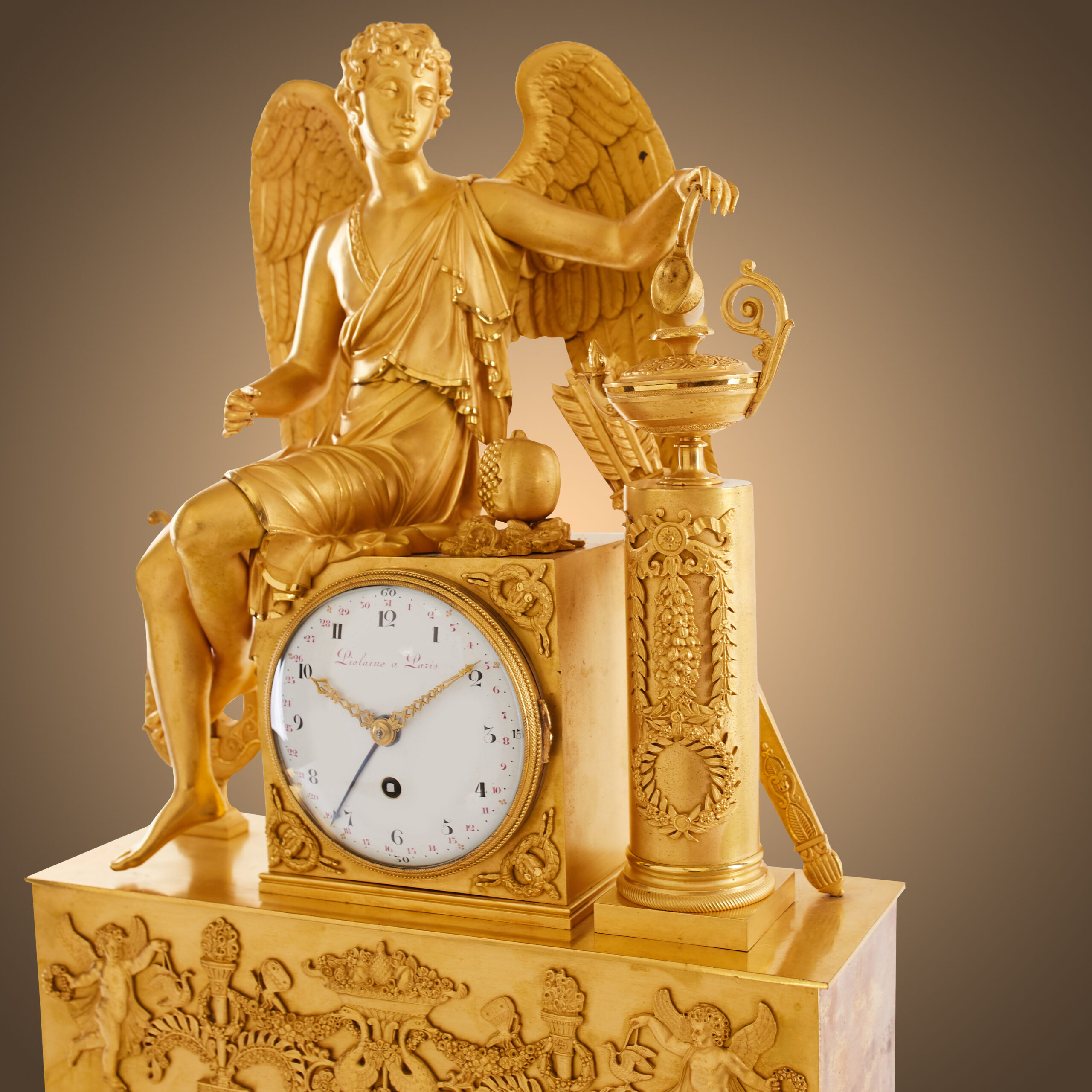
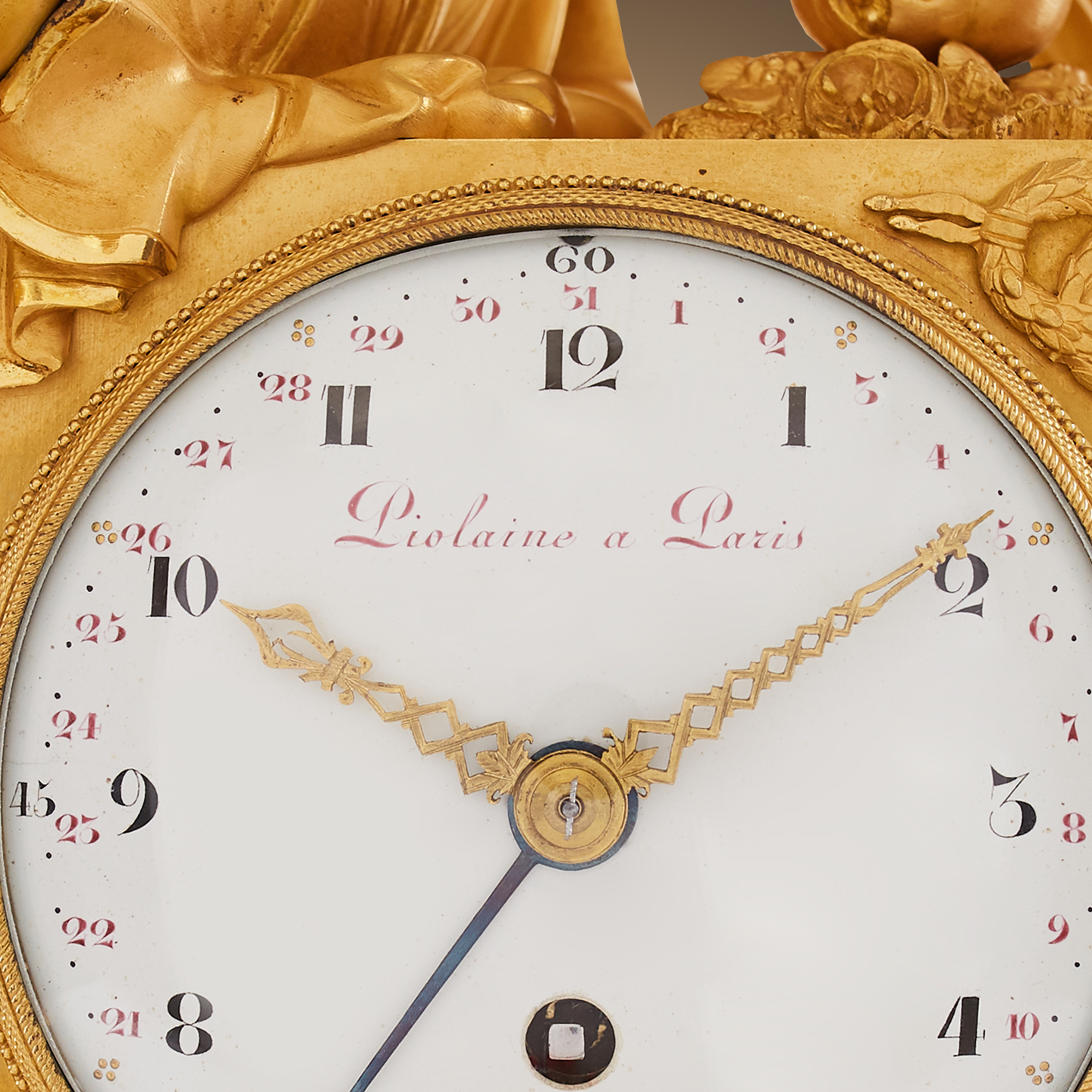
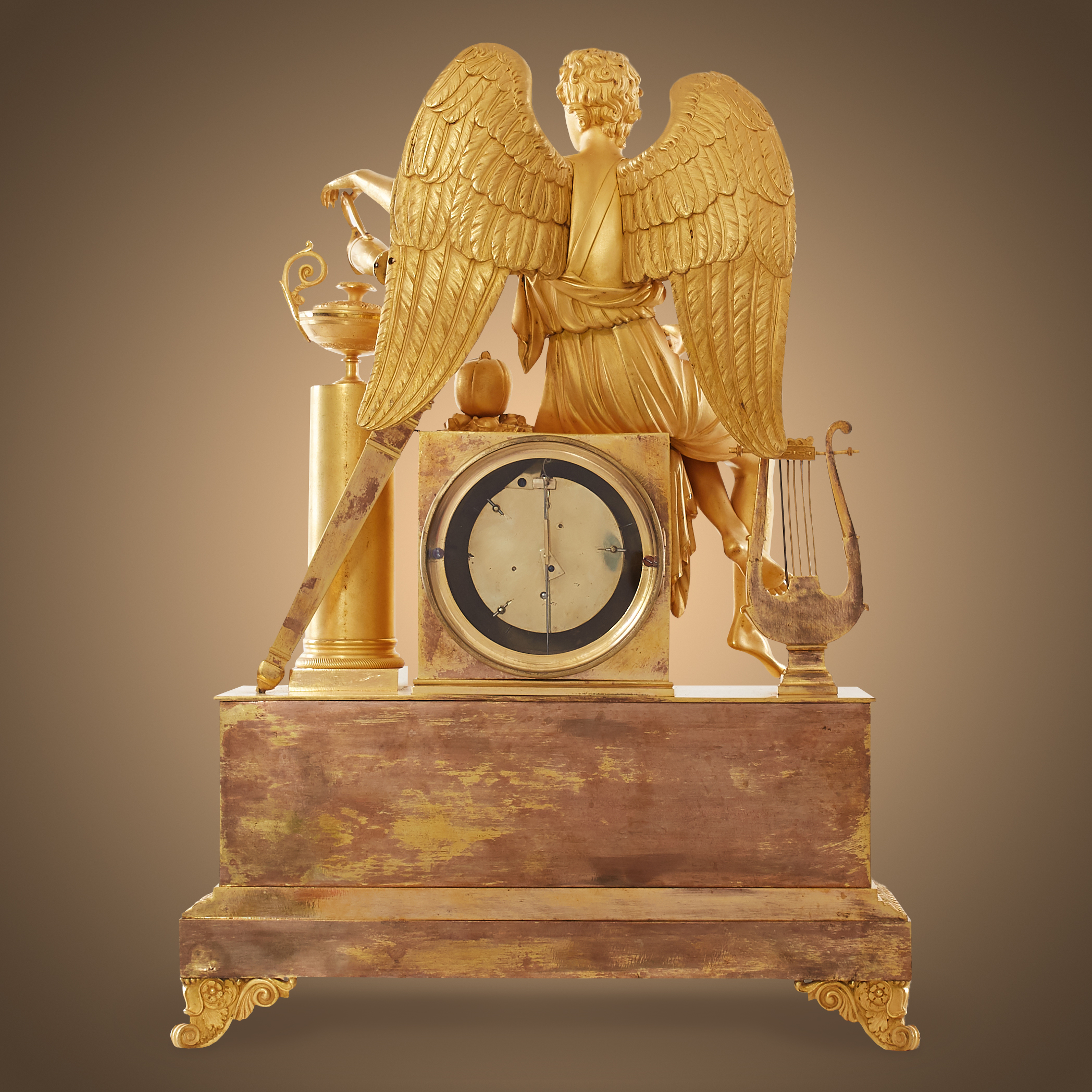
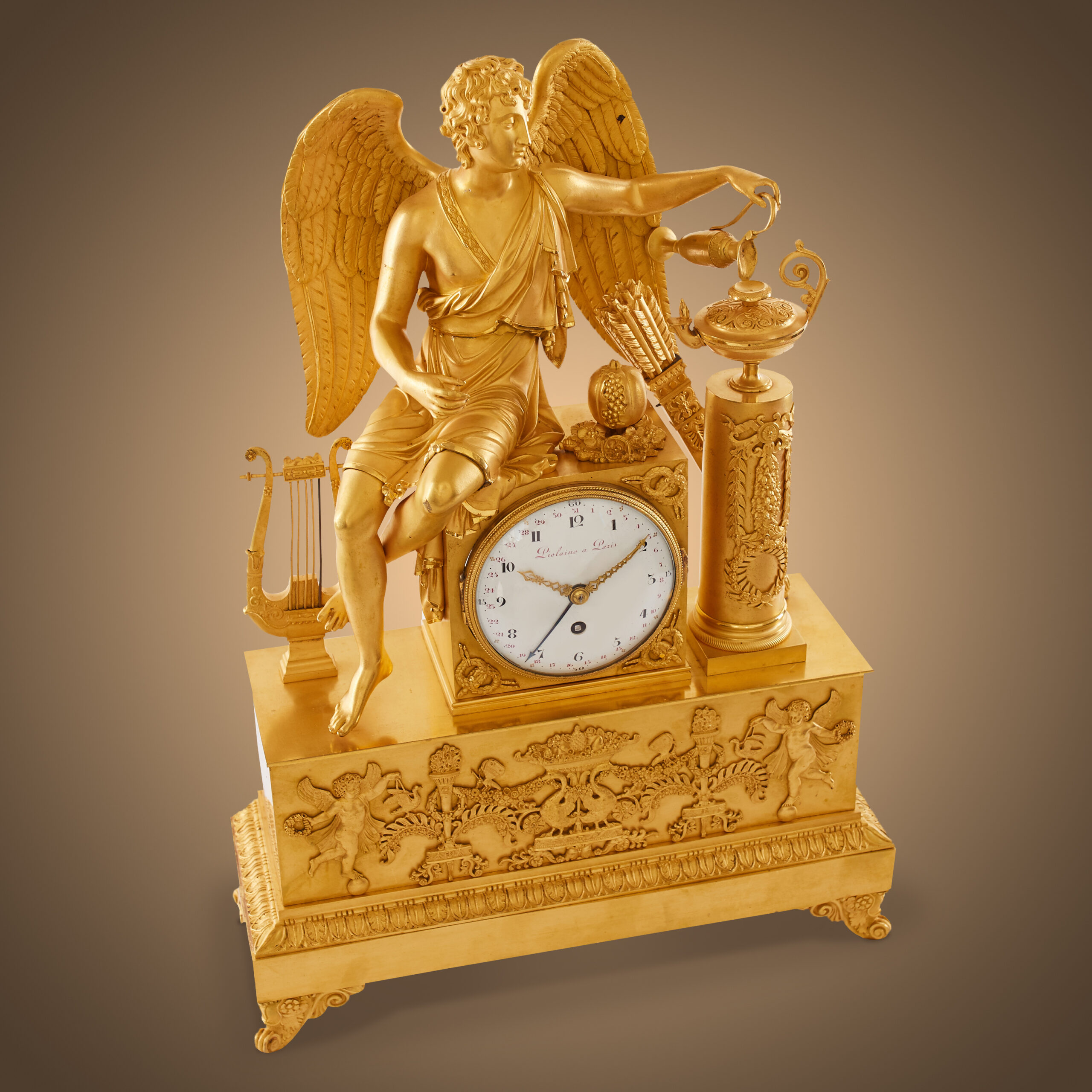
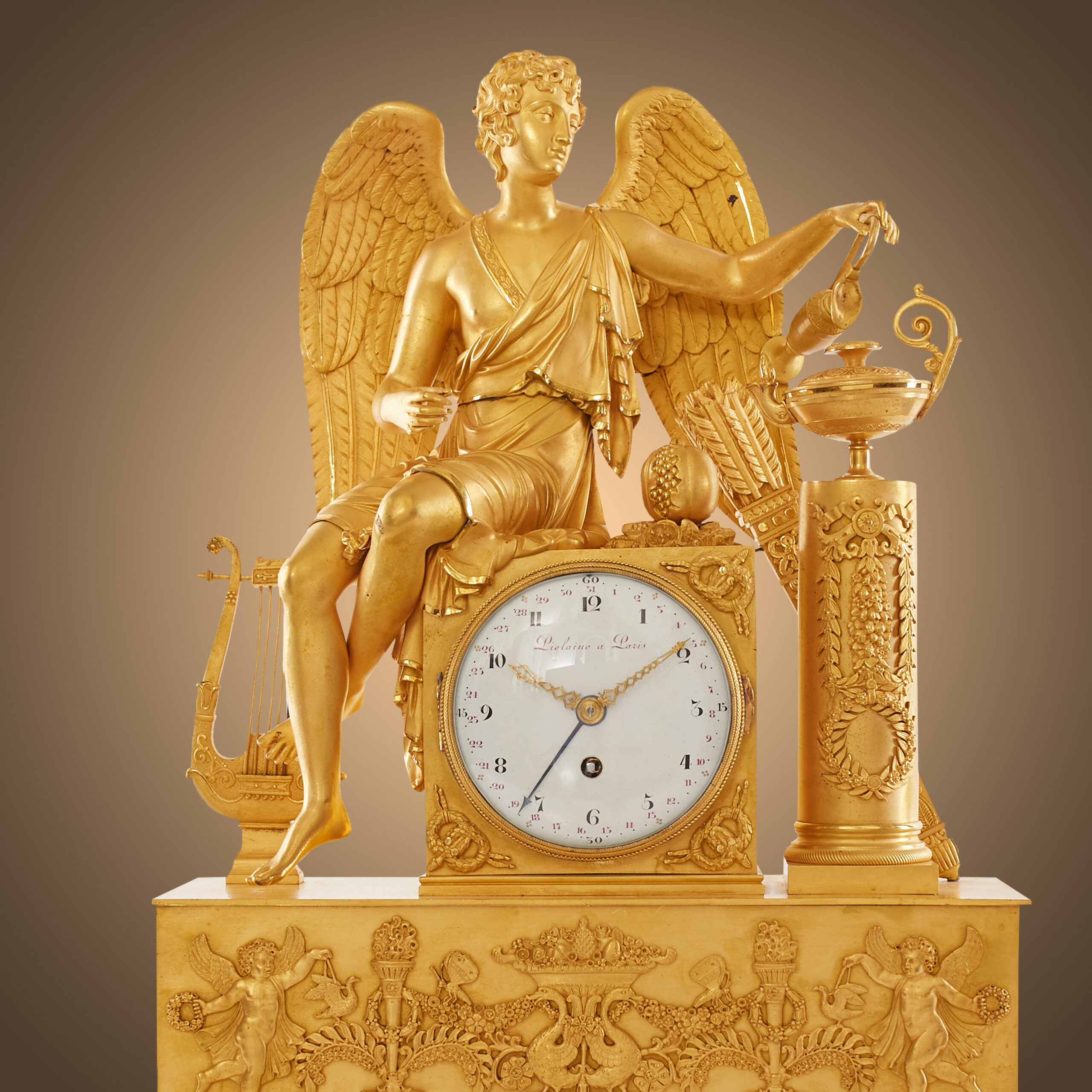
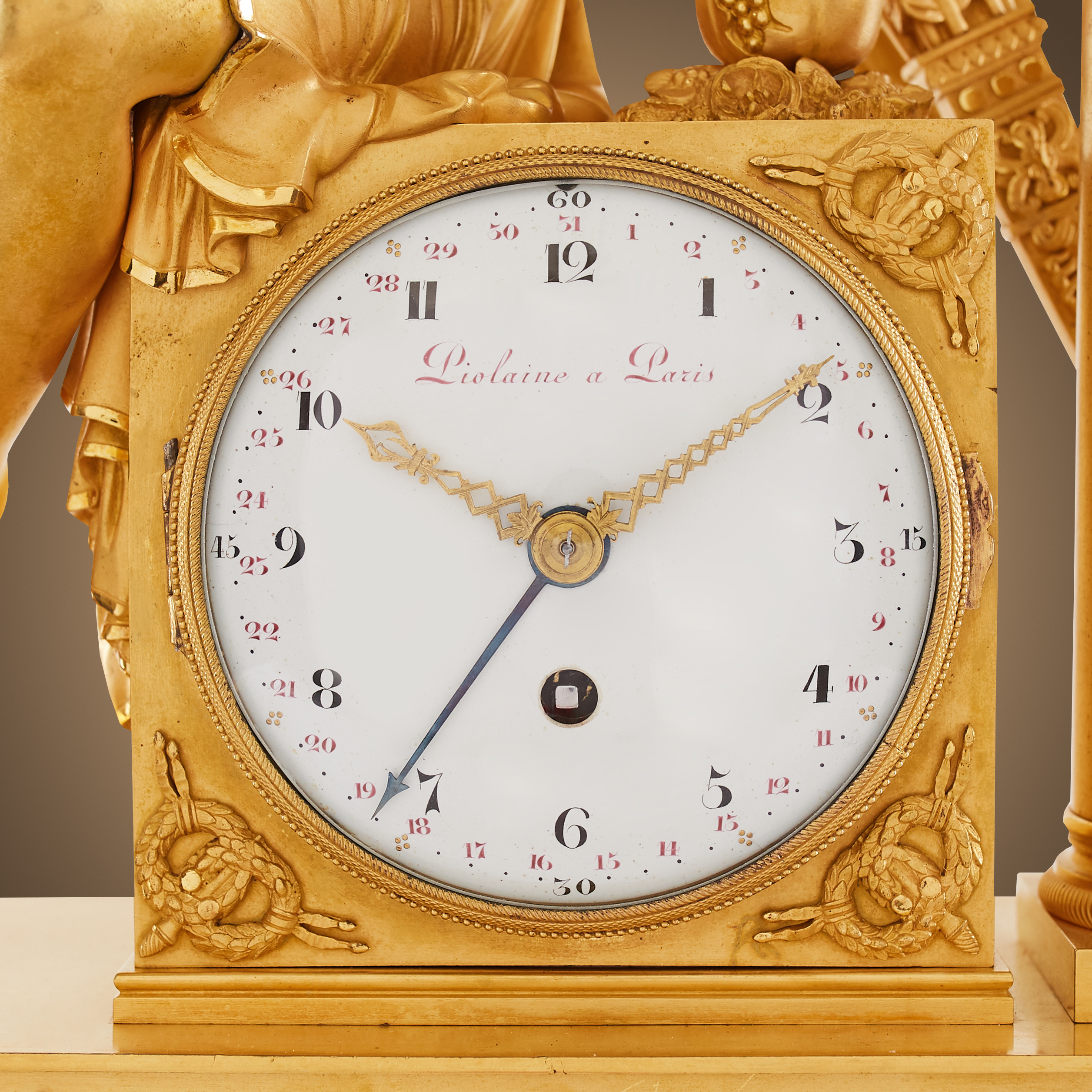
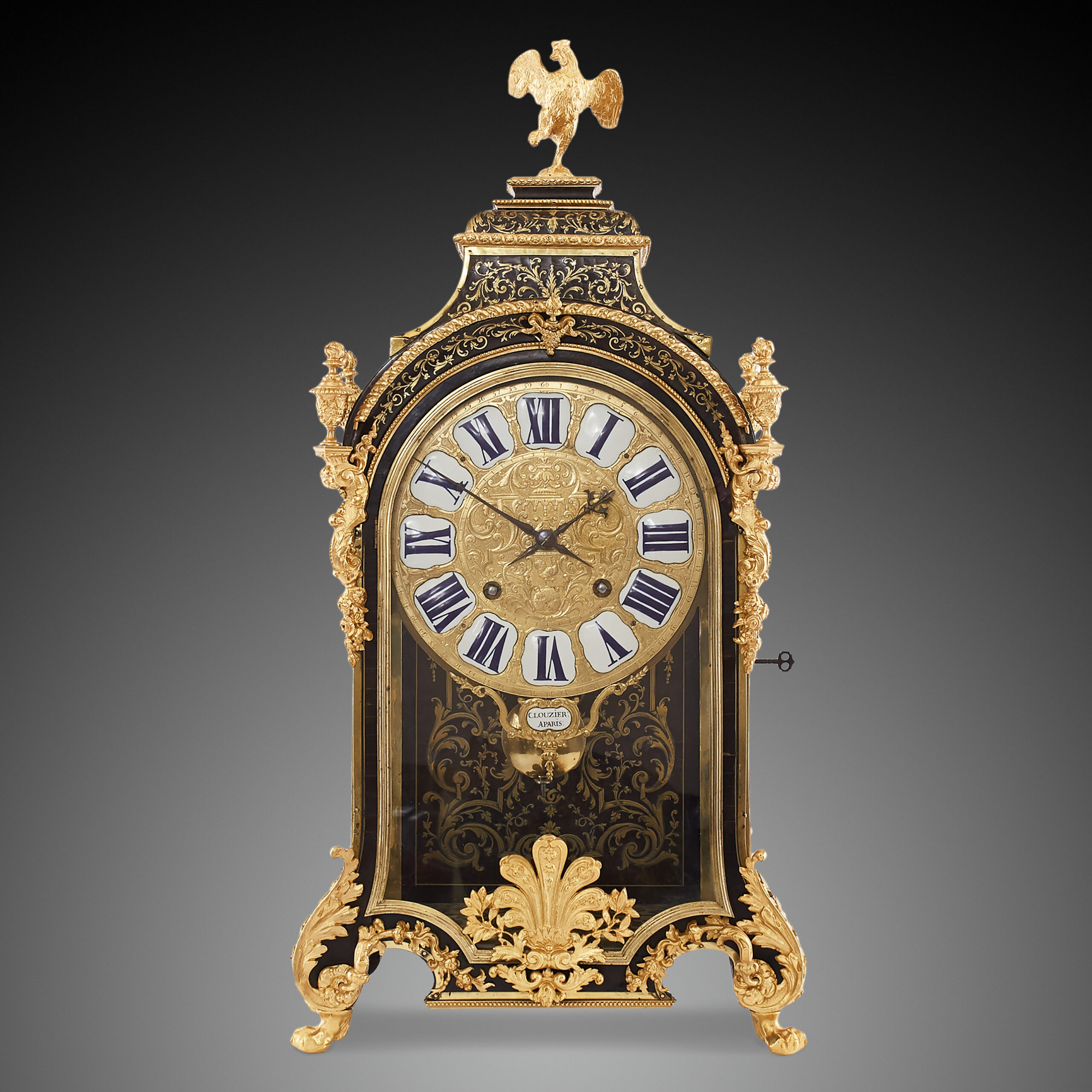
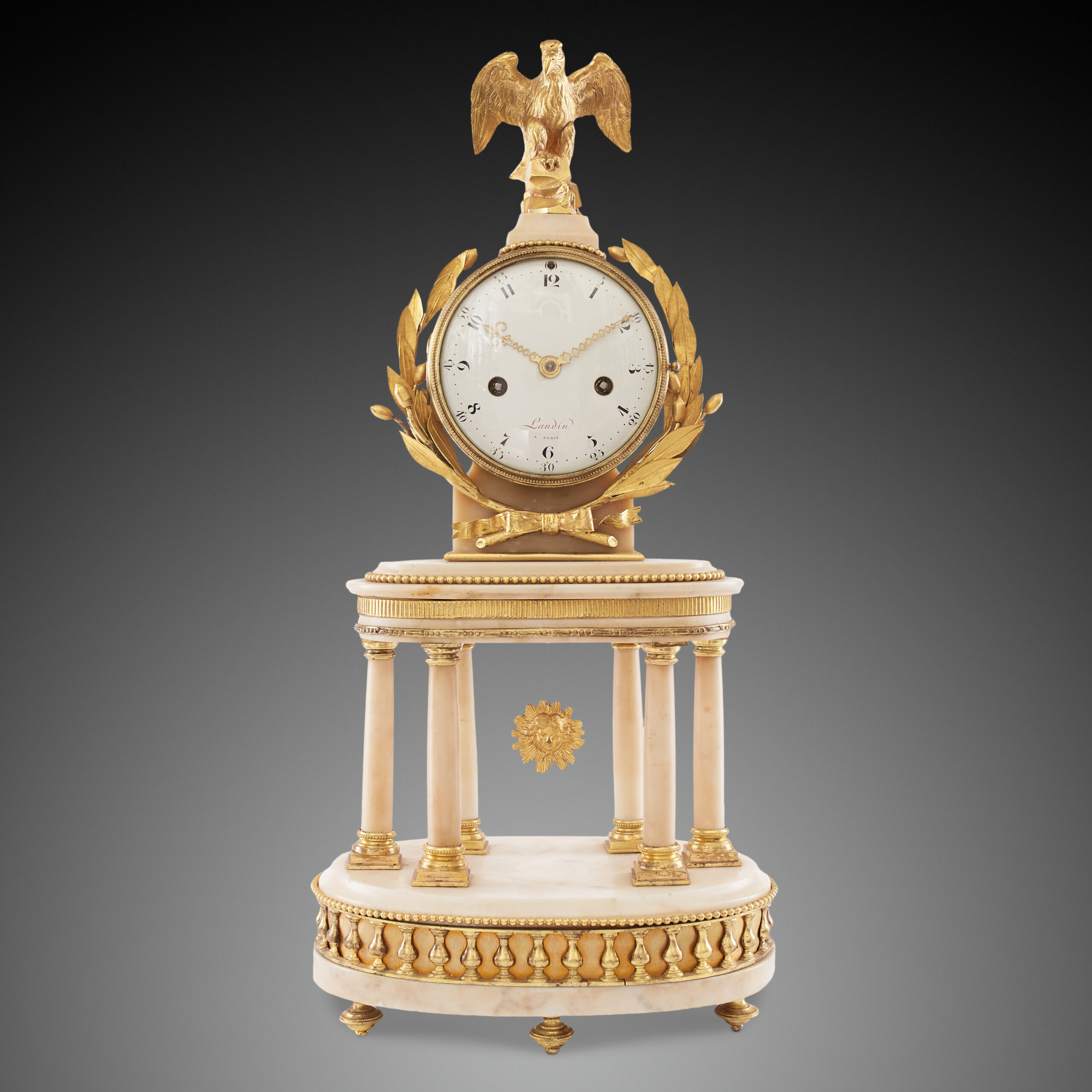
This is a magnificent and authentic Empire period mantel clock, a superb example of the style that flourished under the reign of Napoléon I (1804-1815). The clock is signed on the dial “PIOLAINE À PARIS,” a signature that belongs to a master horologist who worked in the French capital during the early 19th century. His work, like that of many of his contemporaries, embodies the neoclassical aesthetic of the Empire style, which was a powerful expression of imperial grandeur and a homage to the virtues and art of ancient Rome.
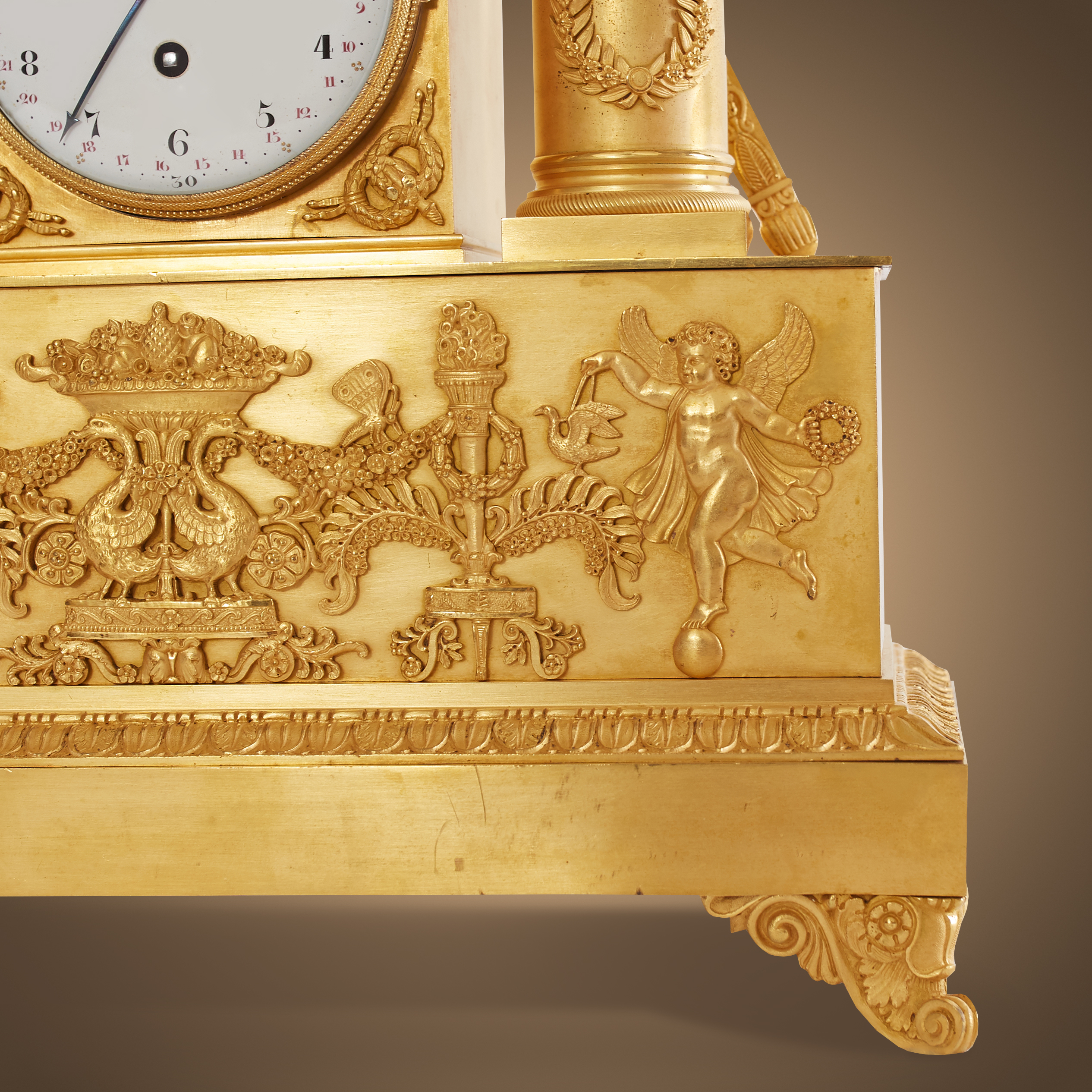
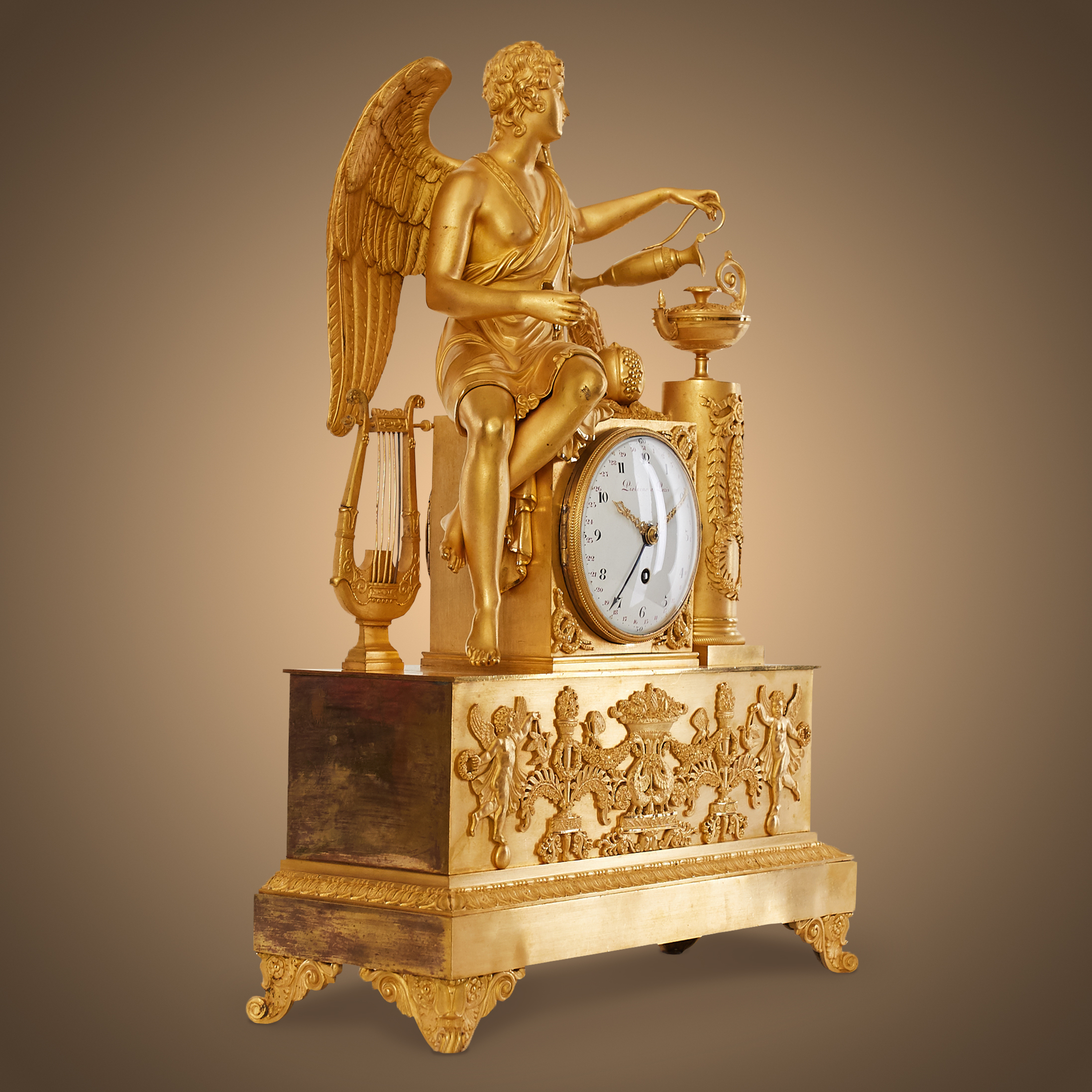
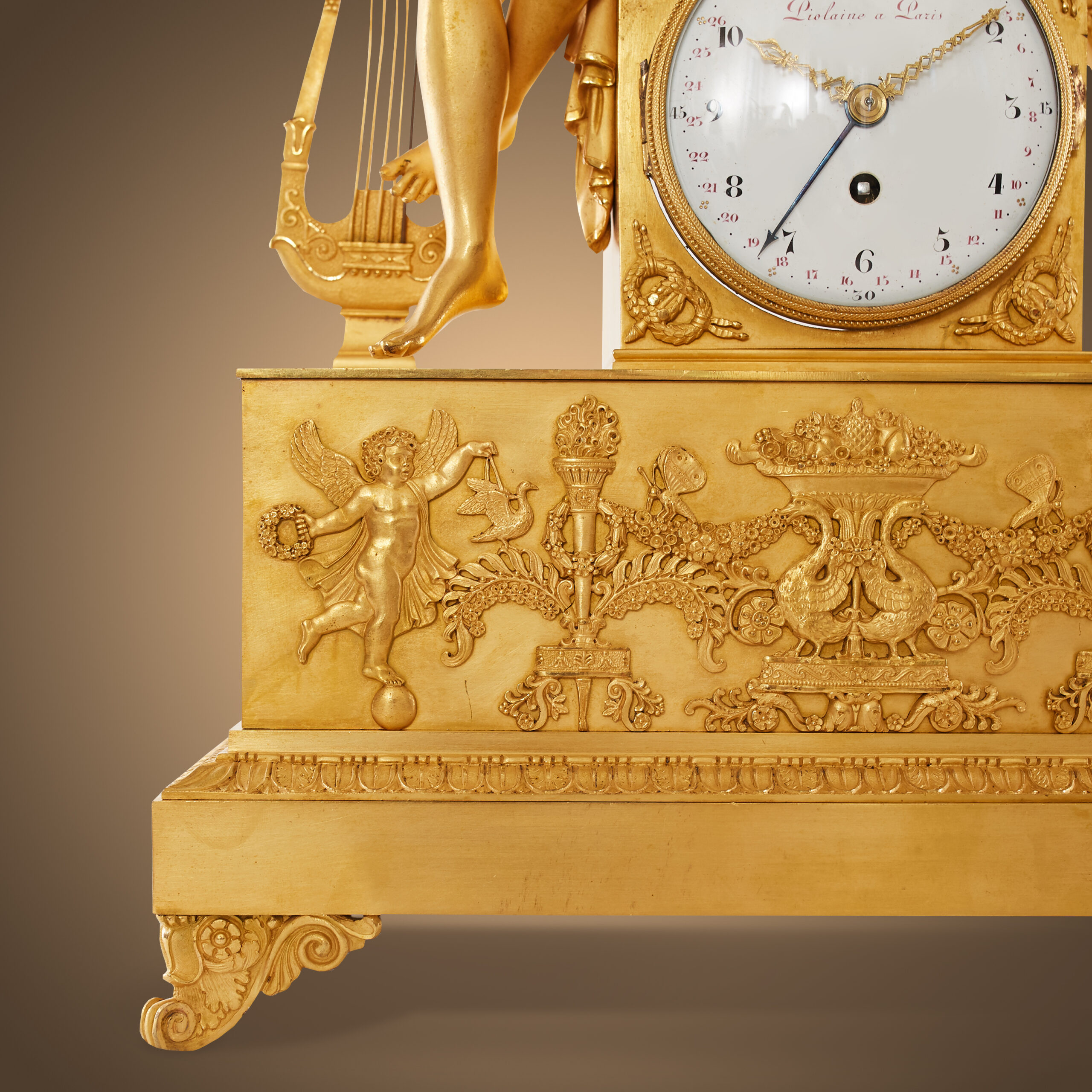
The clock’s case is a masterpiece of sculptural composition, crafted in finely chased and mercury-gilded bronze (ormolu). A prominent winged classical figure, possibly a representation of Apollo or a muse, sits gracefully next to the clock’s plinth, holding a lyre and resting on an orb. This allegorical scene celebrates the arts and sciences, which were highly valued during the Empire period. The clock’s dial is set within an elegant architectural case, which is balanced by a fluted column topped with a classical urn. The entire piece rests on a beautifully decorated base with a detailed relief frieze depicting classical figures and a central anthemion motif, supported by lion’s paw feet—a potent symbol of imperial power.
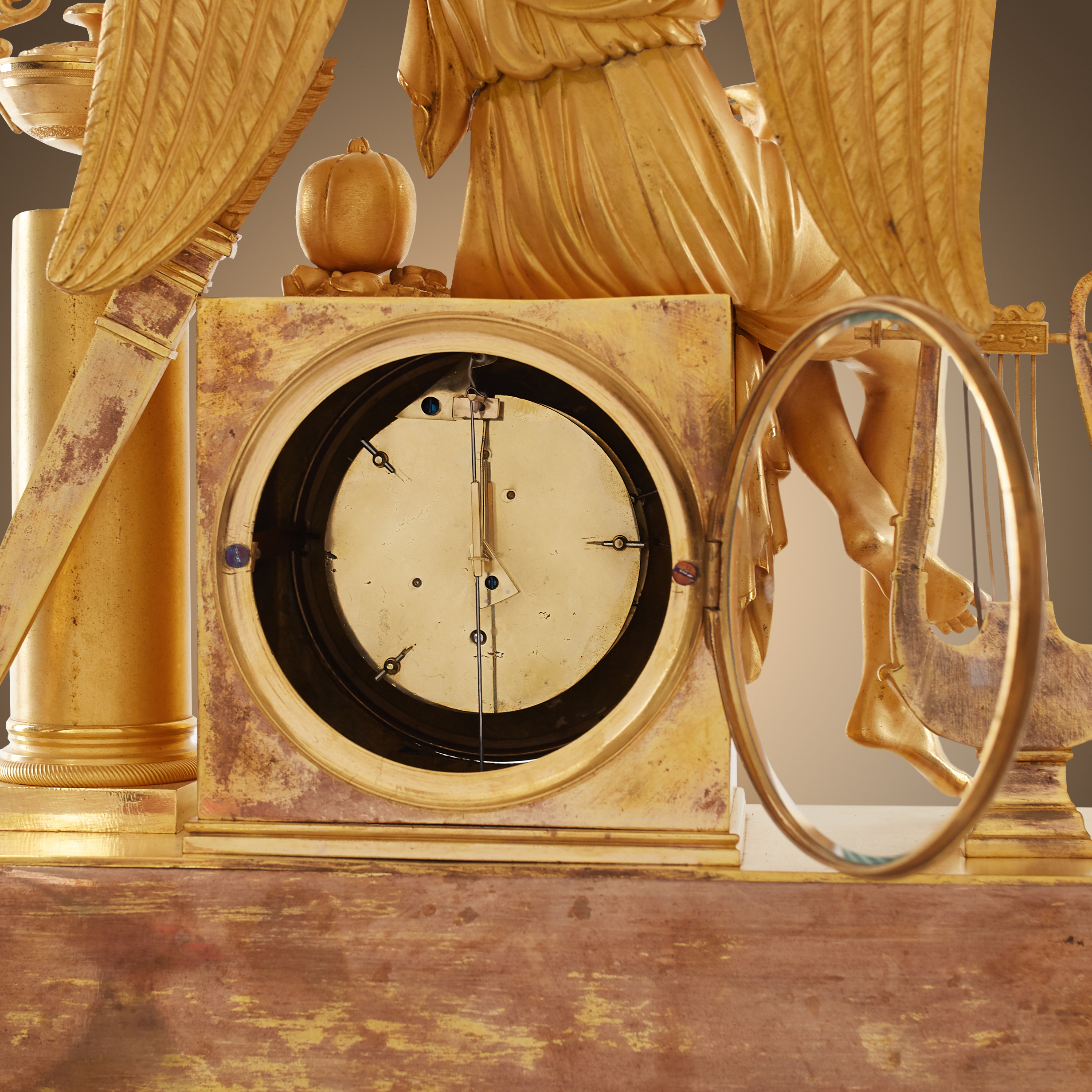
The white enamel dial, with its crisp Roman numerals, is clear and legible. The movement within, a hallmark of a high-quality Parisian workshop, is a precise eight-day mechanism with a silk suspension, a standard of excellence for the period. It would strike the hour and half-hour on a bell, a feature valued for its clear, resonant sound.
This clock is a rare and highly desirable work of art. It combines the timeless artistry of a master fondeur with the technical excellence of a respected horologist. Its elegant design and rich historical context make it a significant addition to any collection, and a true centerpiece for a refined interior. It stands not only as a functional object but as a beautiful monument to the artistic ideals of Napoleonic France.