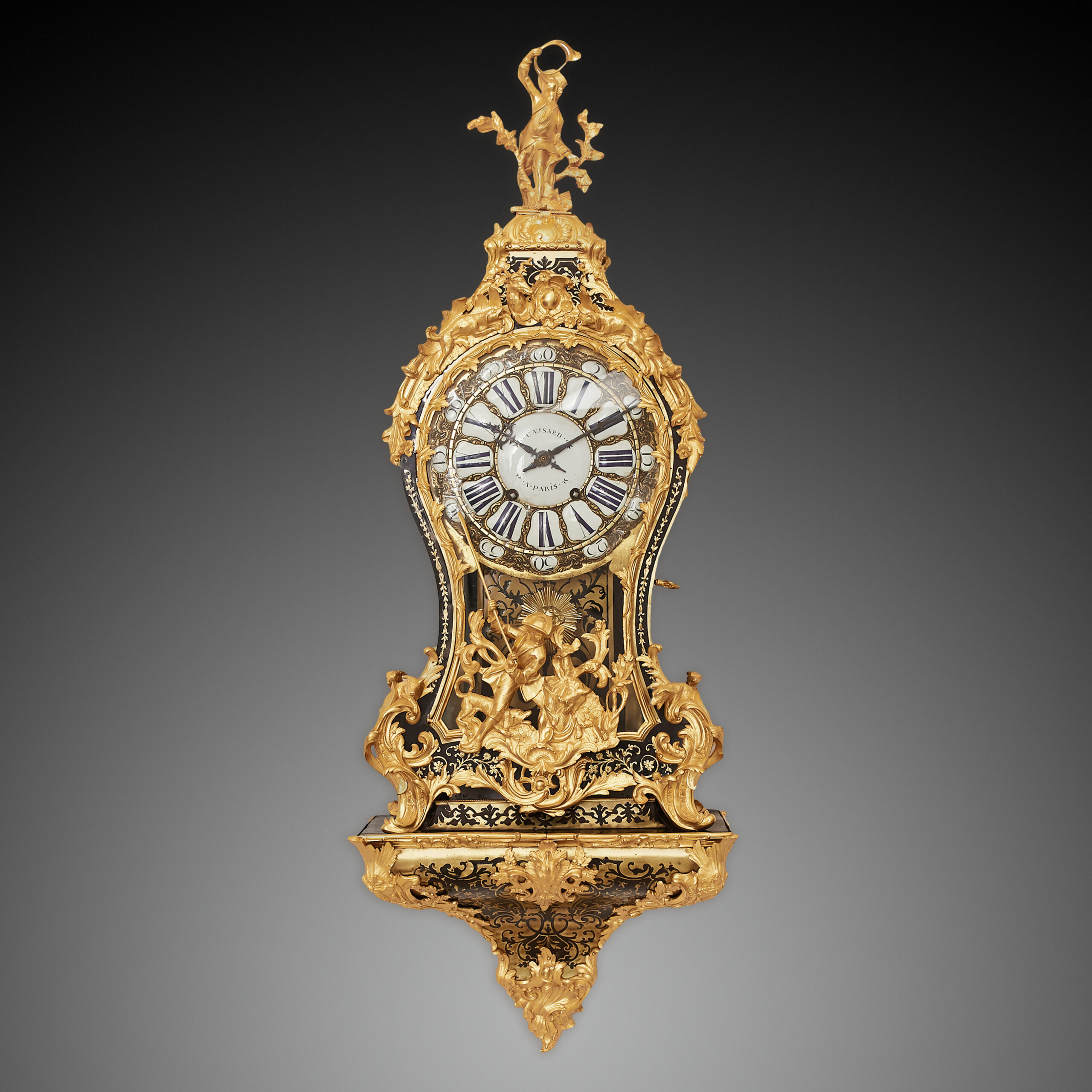
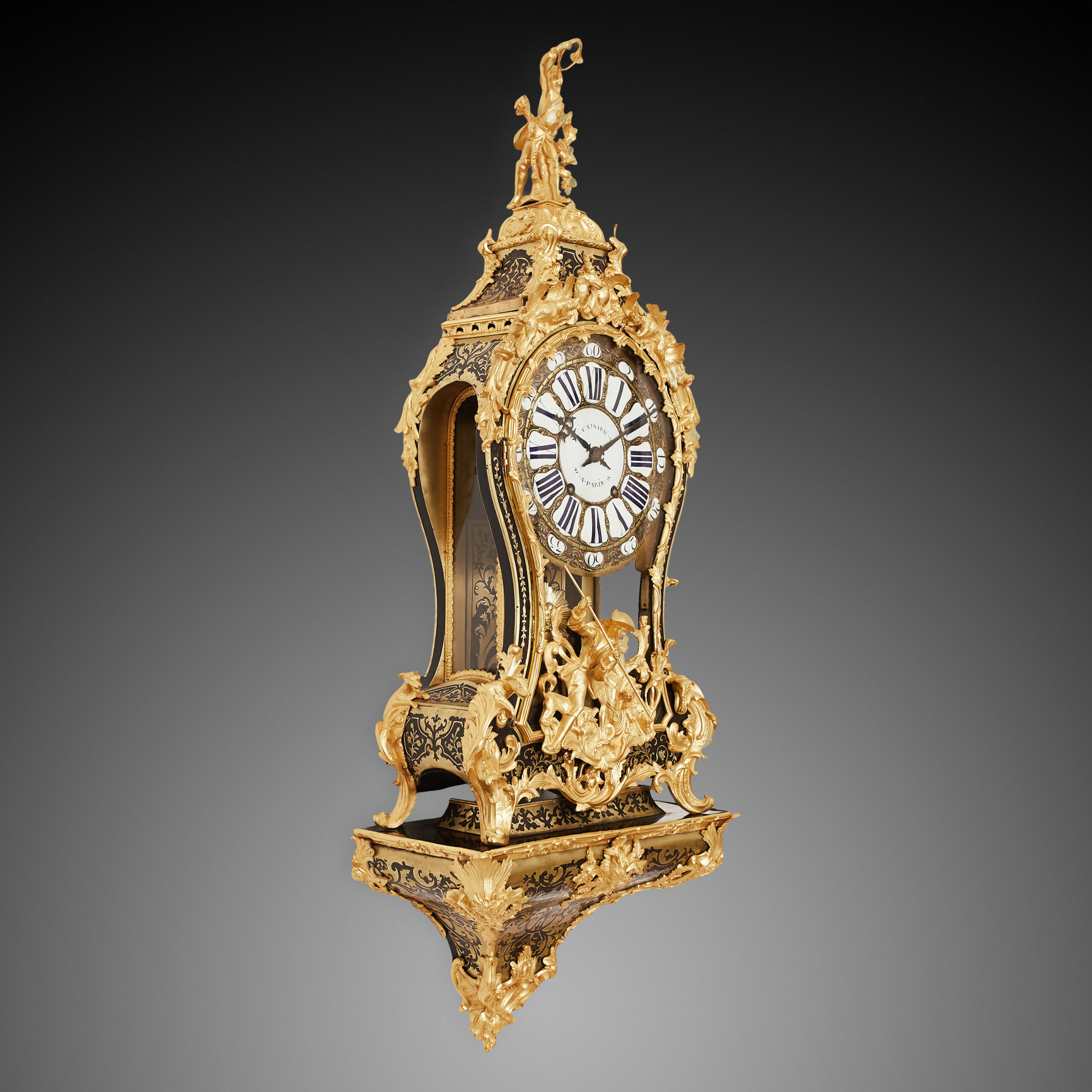
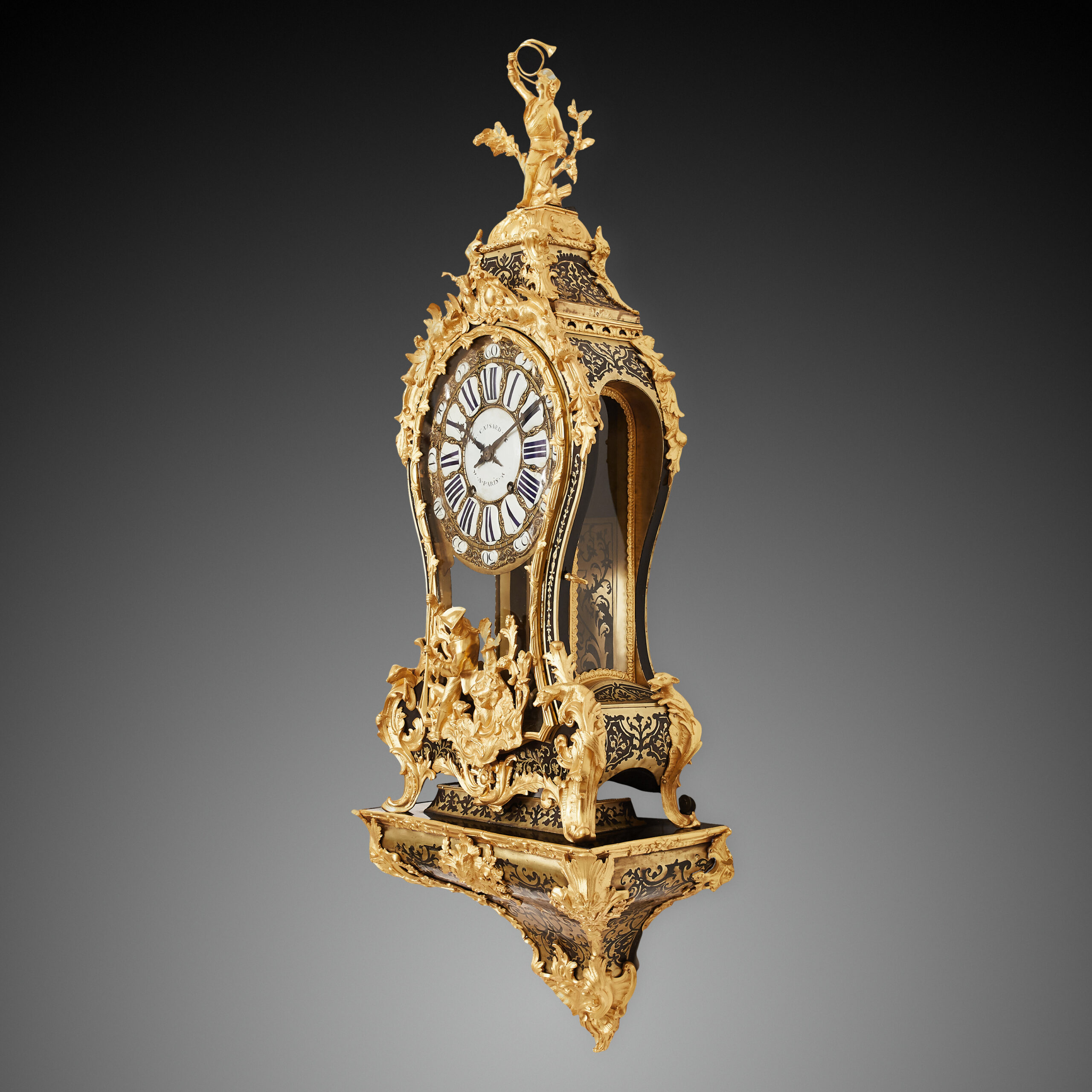
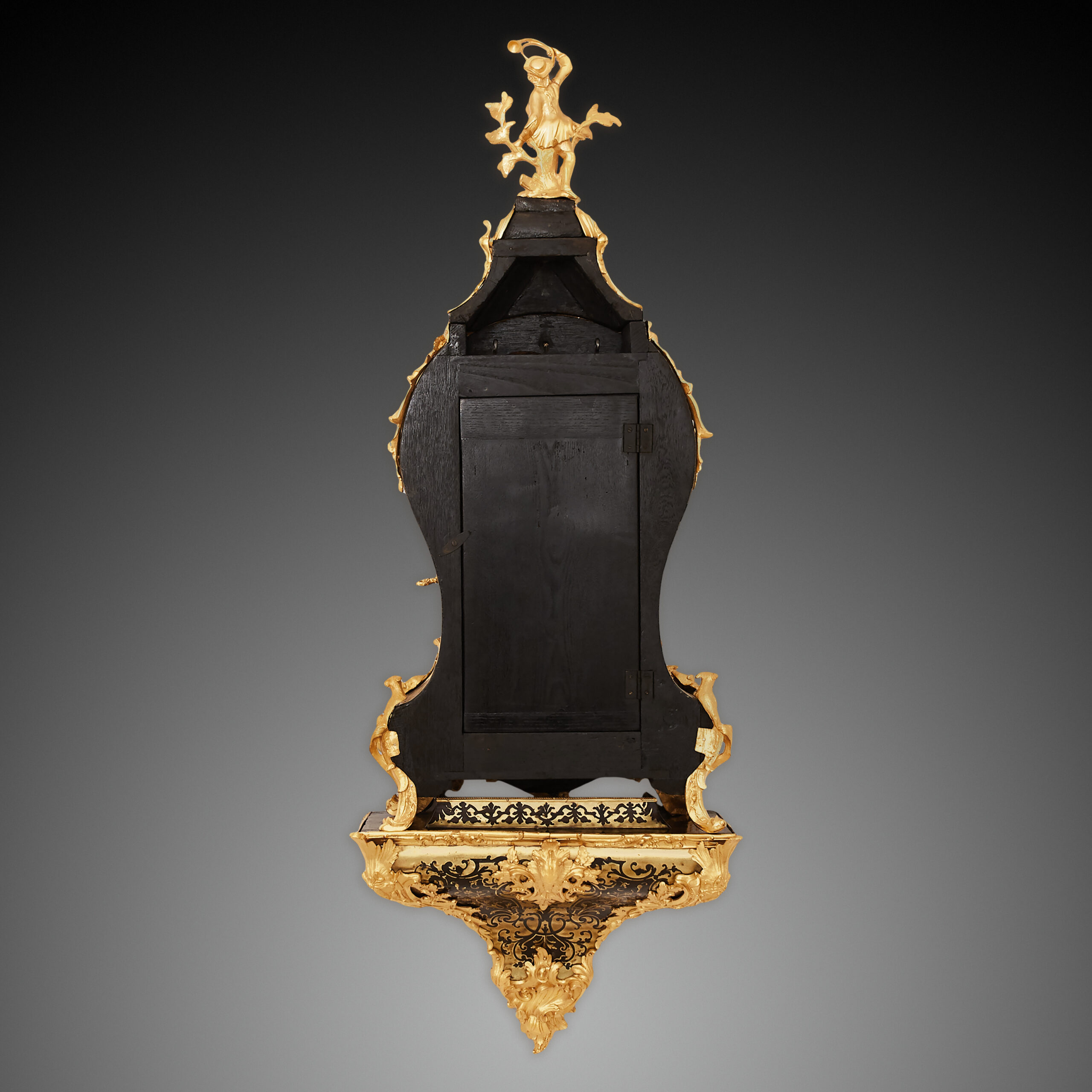
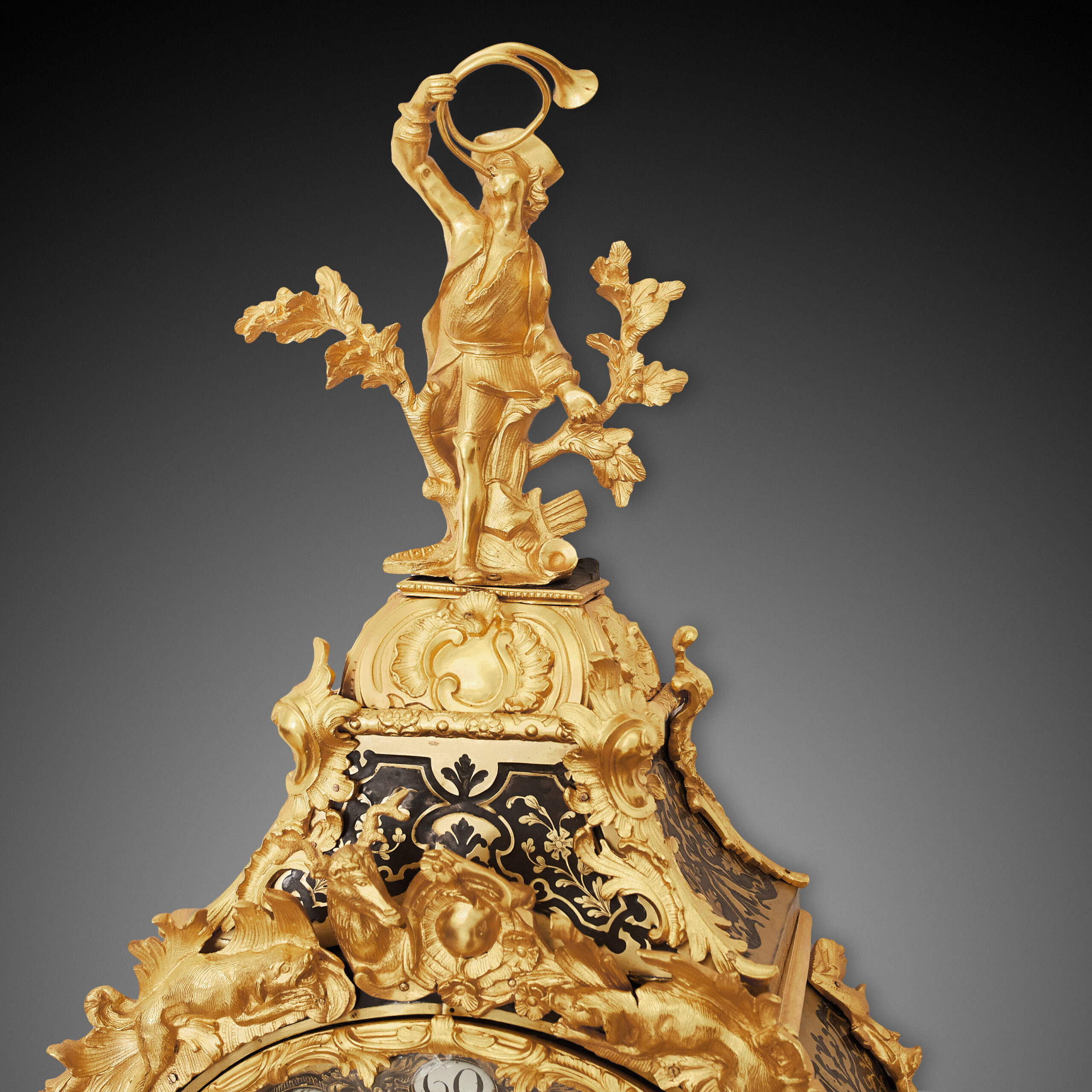
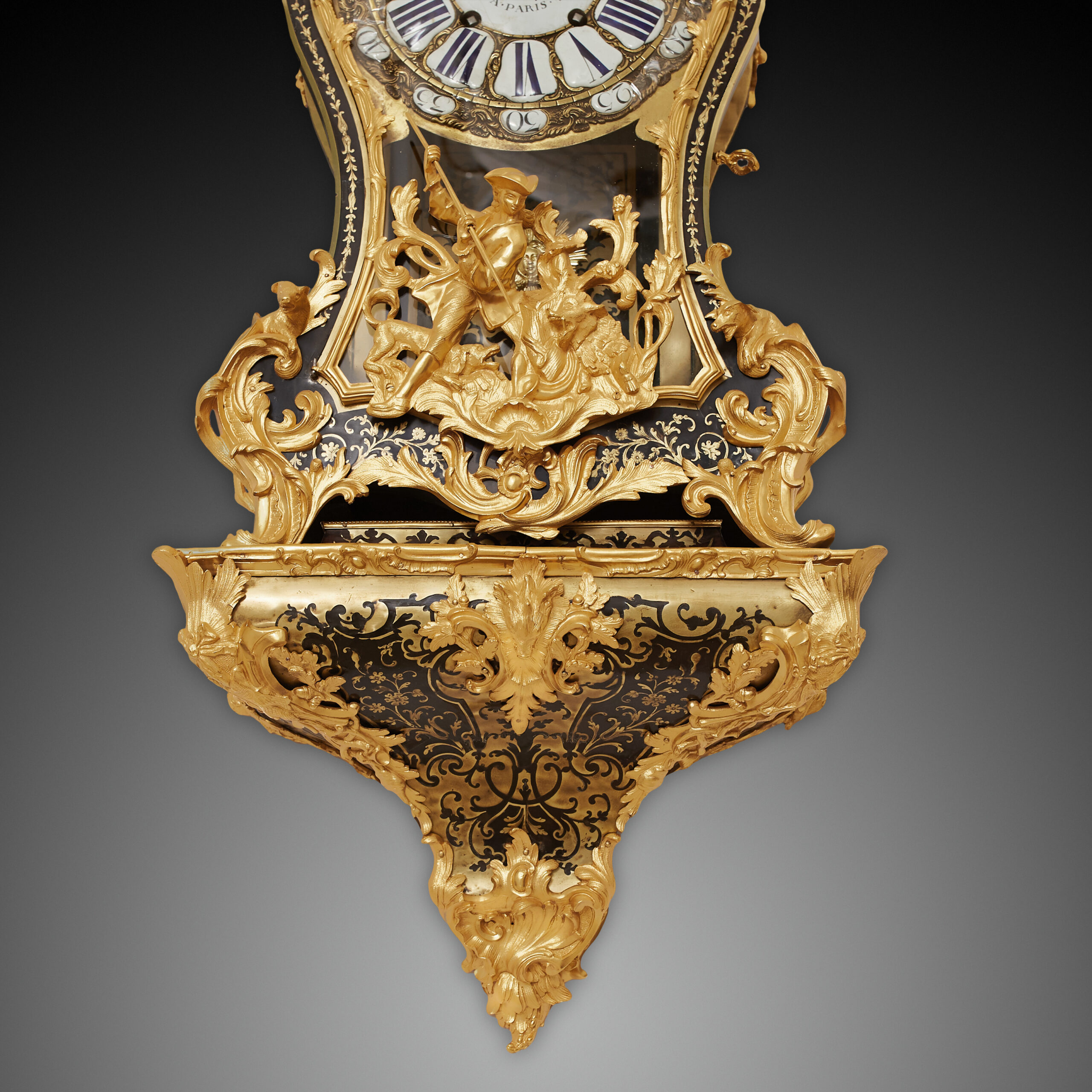
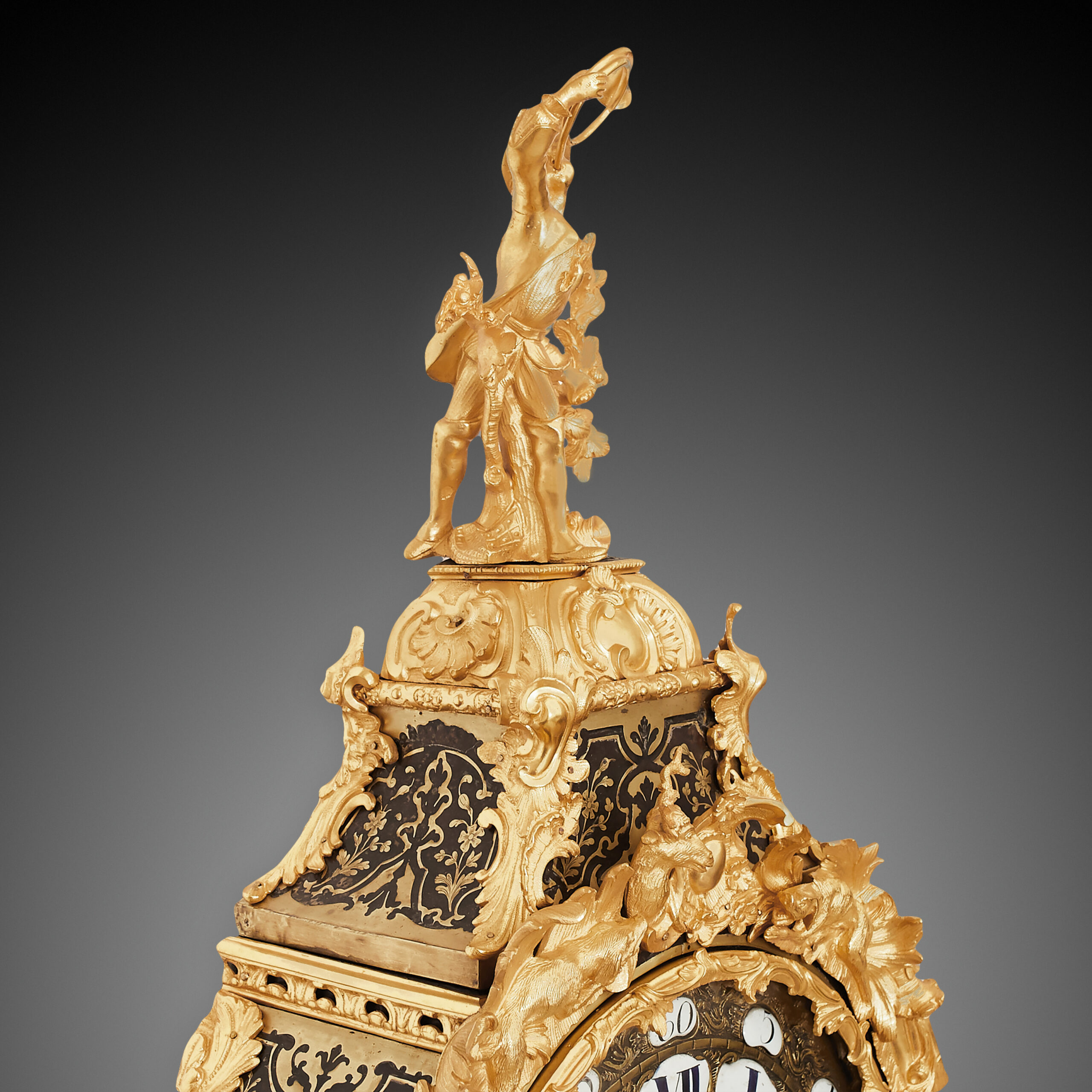
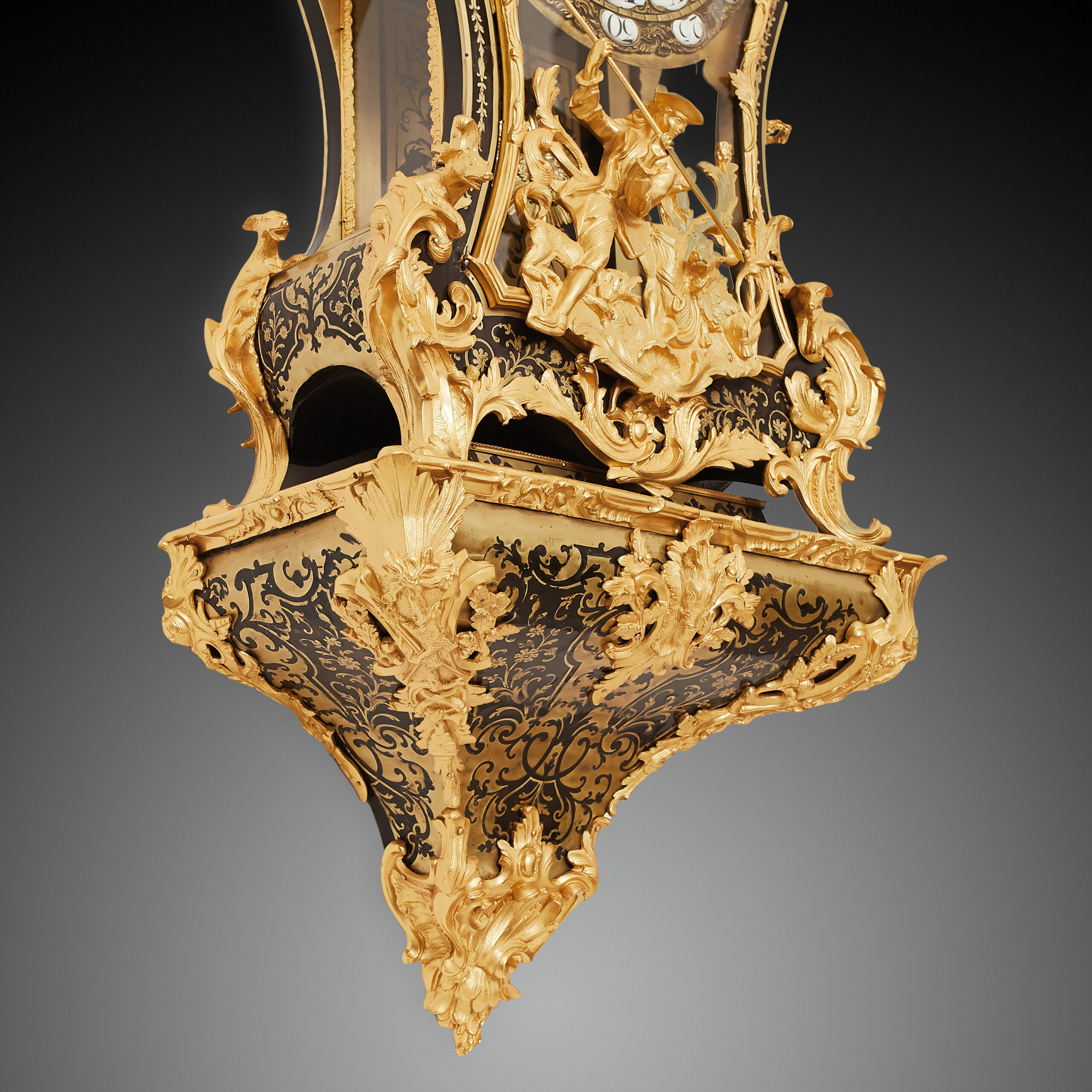
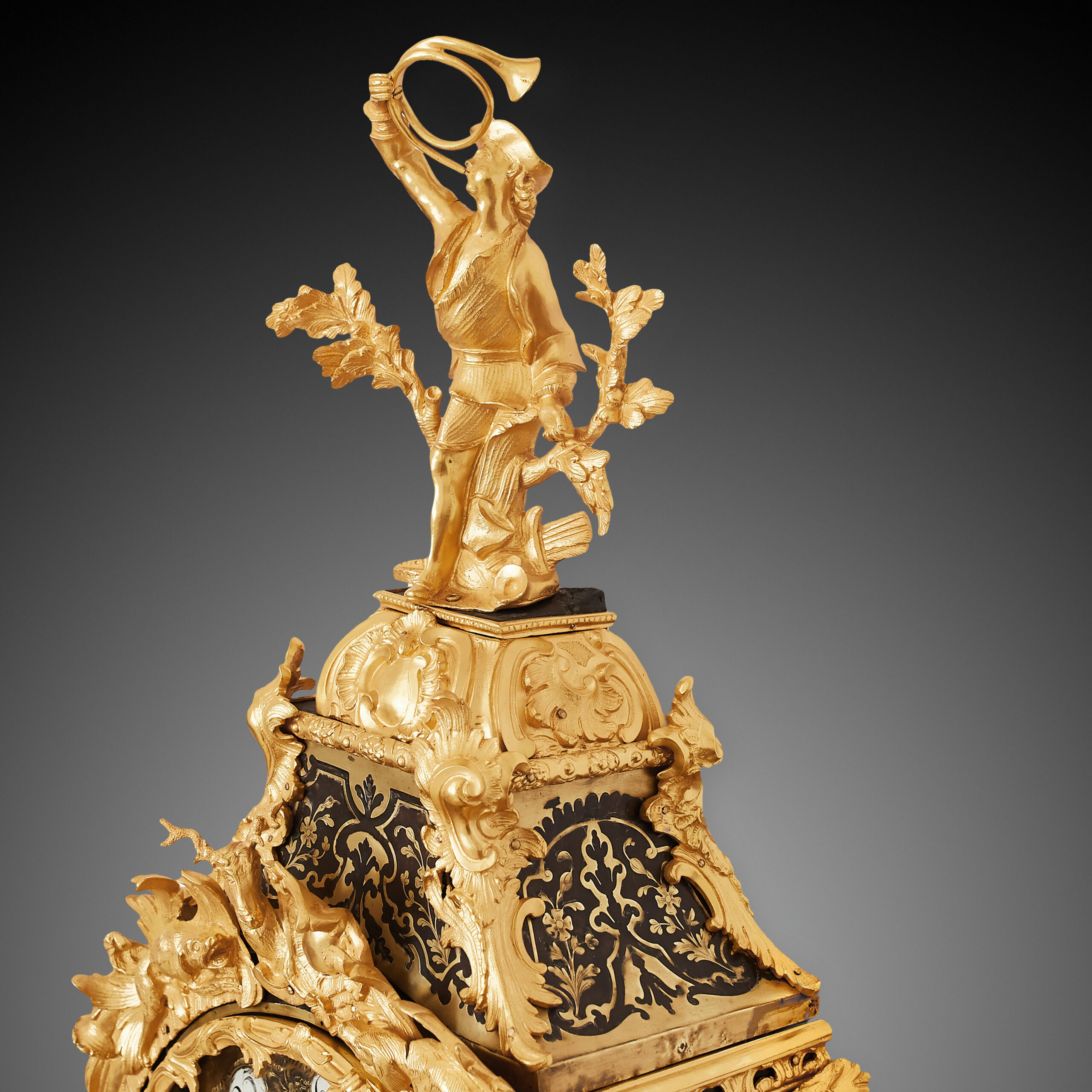
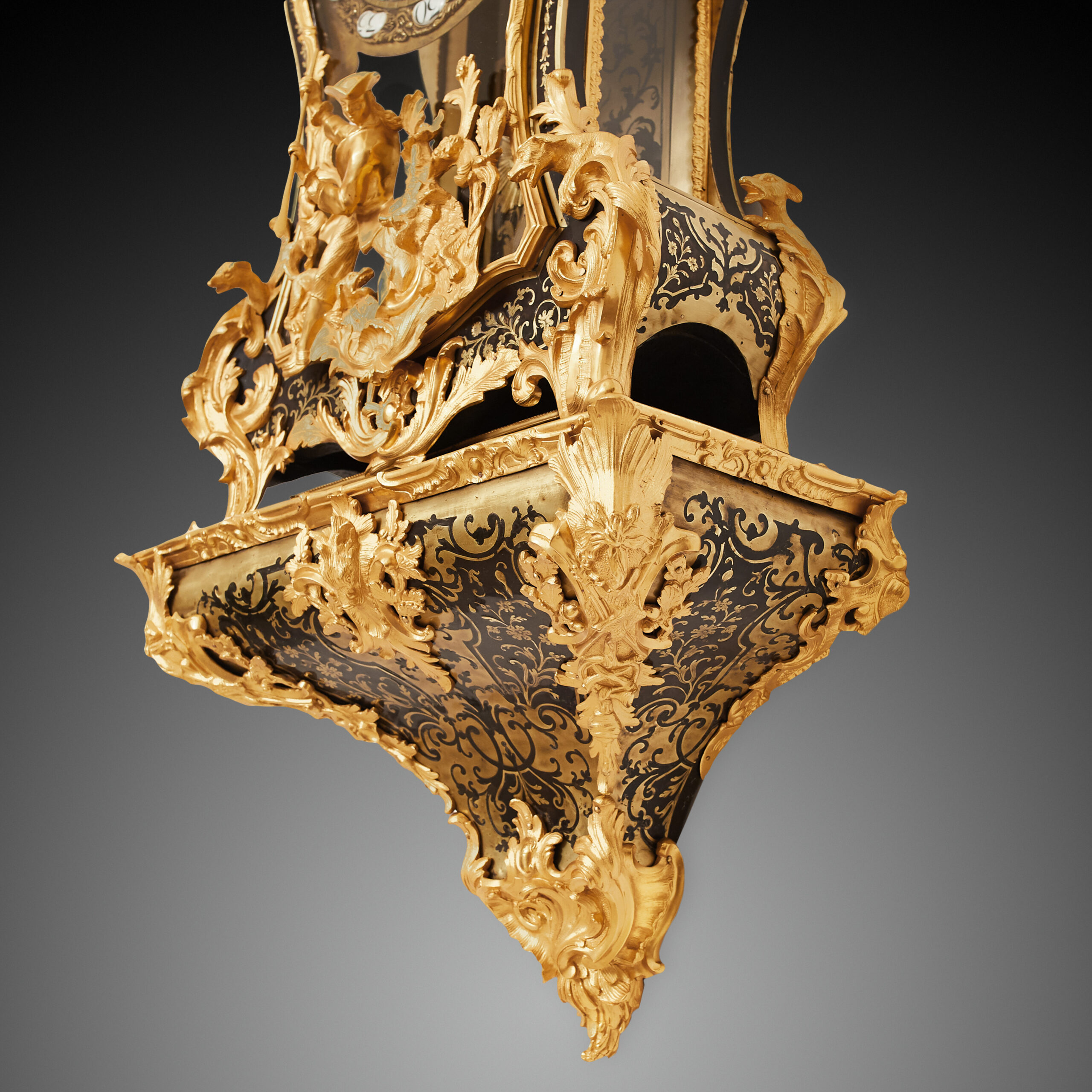
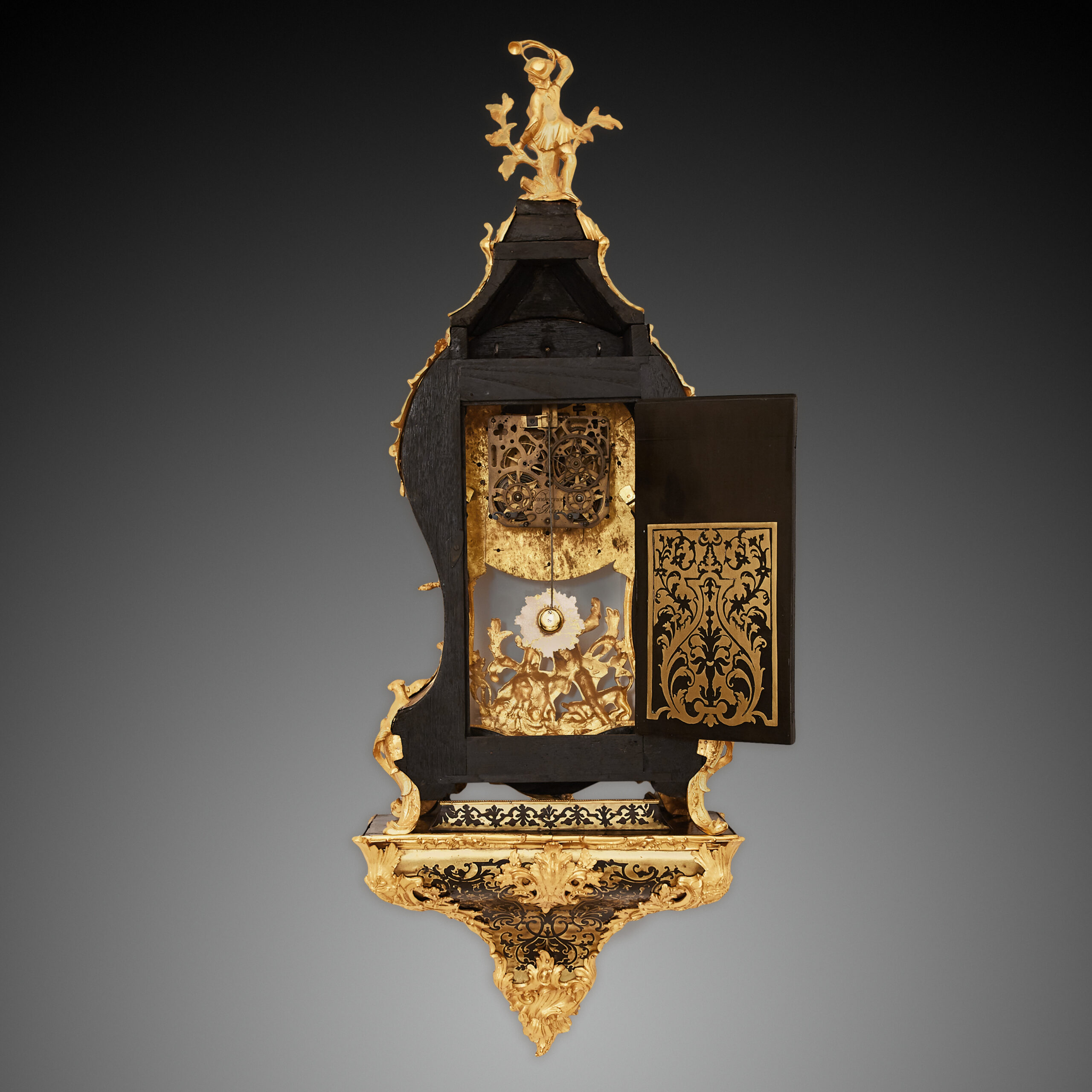
This wall-mounted cartel clock and its accompanying bracket represent the quintessential Rococo aesthetic of the mid-18th century. The case is a tour-de-force of Boulle marquetry, featuring an intricate and vibrant inlay of engraved brass against a dark tortoiseshell ground, a technique that demonstrates the immense prestige of the Parisian cabinetmaking guilds of the time. The silhouette is defined by the exuberant, asymmetrical movement of the fire-gilded ormolu mounts, which cascade down the frame in a series of sweeping C-scrolls, acanthus foliage, and decorative cartouches that capture the light with extraordinary brilliance.
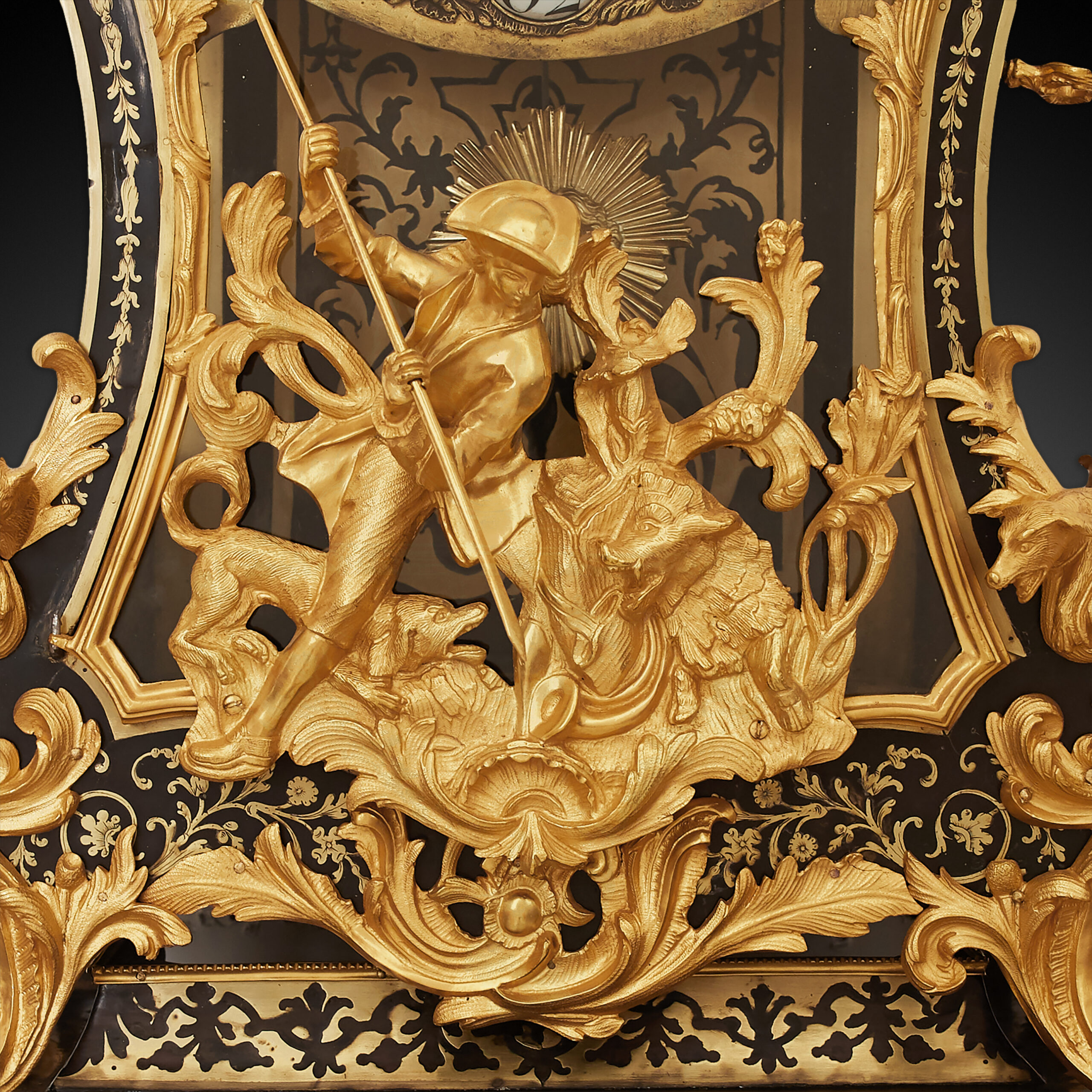
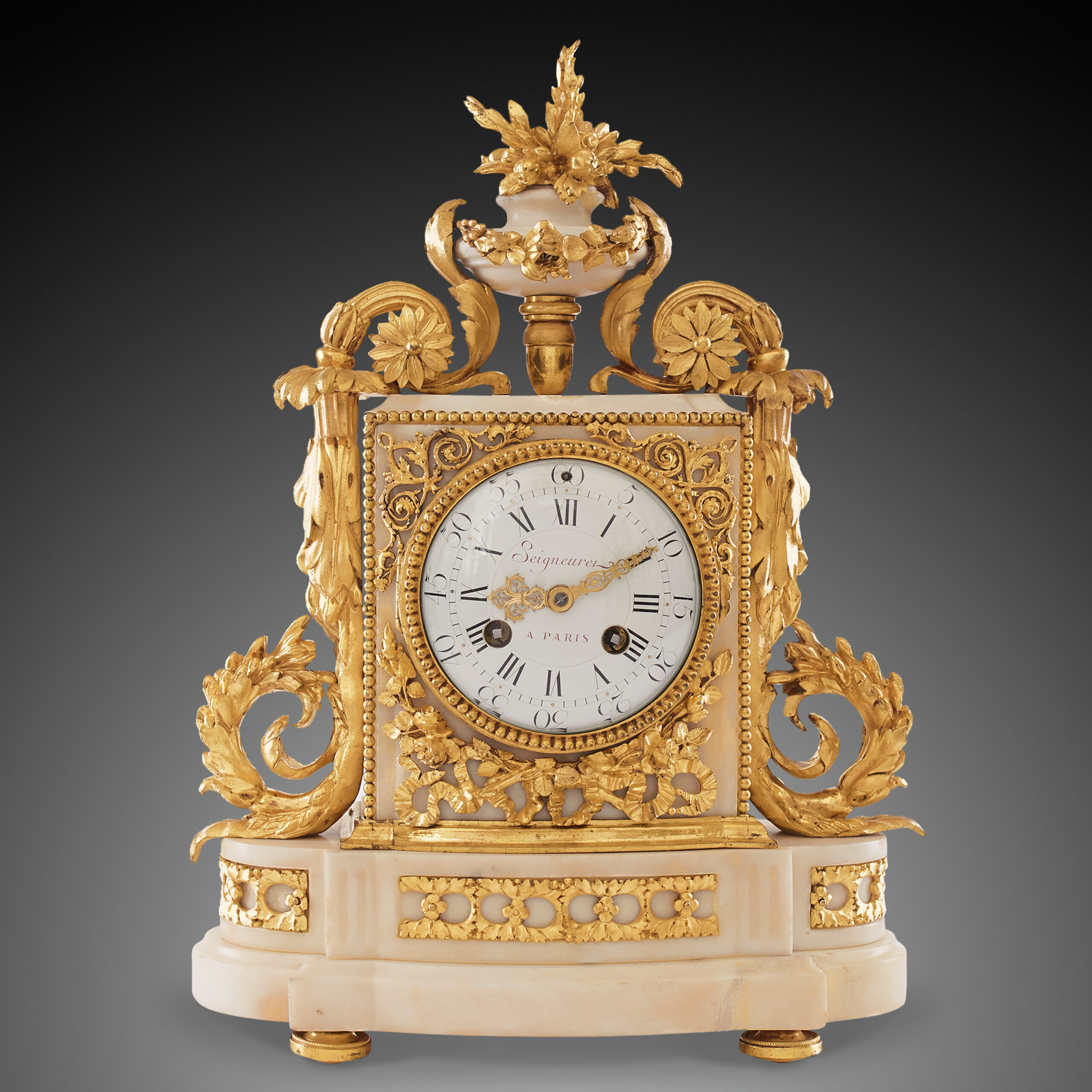
The dial is a masterwork of horological elegance, featuring individual white enamel cartouches with Roman numerals, set into a finely chased central plate that is decorated with sophisticated foliate and sunburst motifs. The clock is crowned by a triumphant, free-standing figure of the mythological Fame, holding her trumpet, which serves as a powerful focal point that reinforces the piece’s grand and celebratory character. Below the dial, the lower section of the case features a stunning relief casting of a classical figure, likely representing a hero or allegorical muse, surrounded by stylized rockwork and shells-classic hallmarks of the Rococo movement’s fascination with organic, non-linear design.
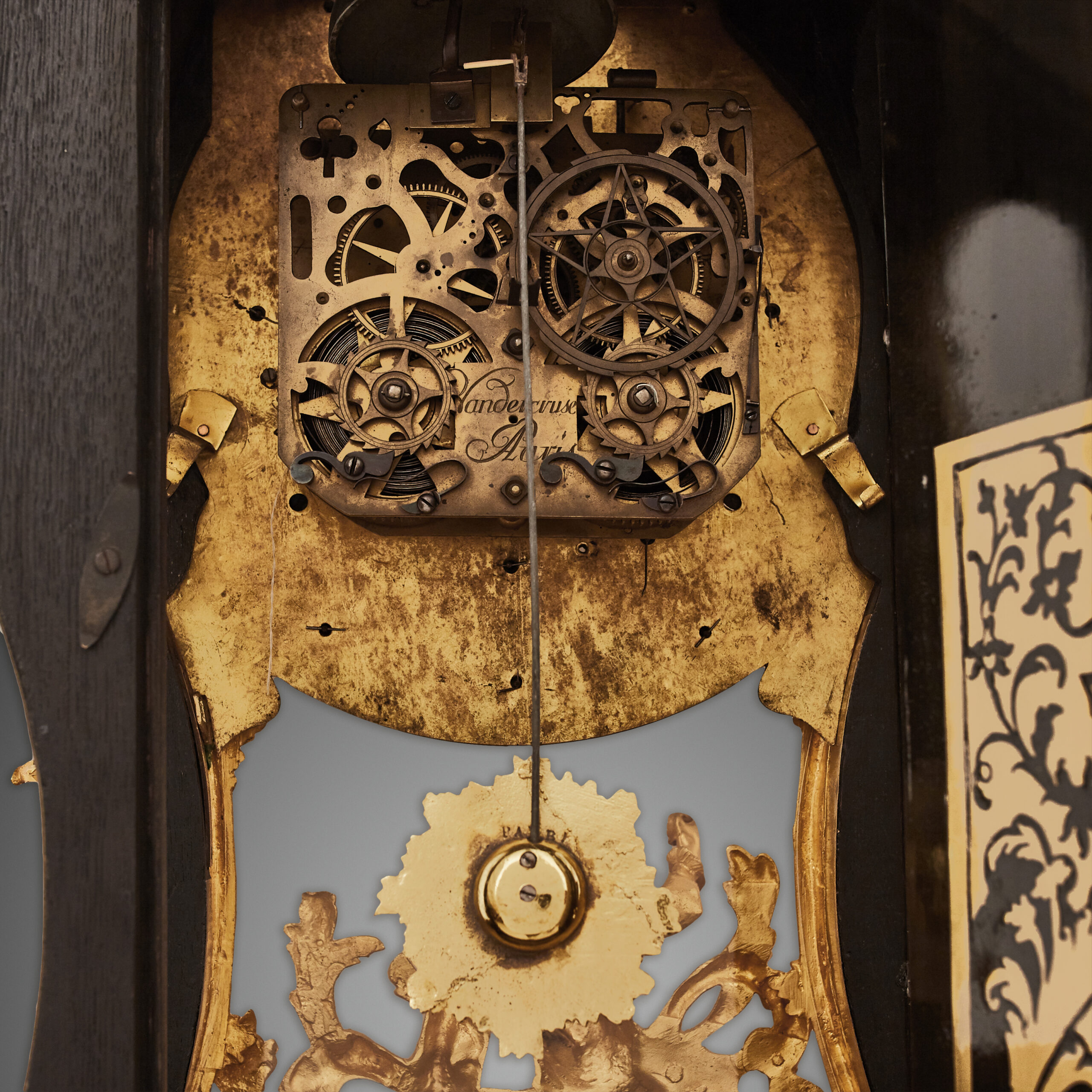
Every detail of this clock, from the precise, eight-day mechanical movement to the masterful interplay of bronze and marquetry, reflects a period where timekeeping was indistinguishable from high art. It is a monumental decorative object that was designed to dominate a grand salon, casting a warm, golden glow from its gilded surfaces while asserting the owner’s status and refined taste. Far from being a mere tool for tracking the hours, this cartel clock is an expressive, sculptural performance that captures the essence of the mid-18th century’s passion for beauty, complexity, and the theatrical presentation of domestic luxury.