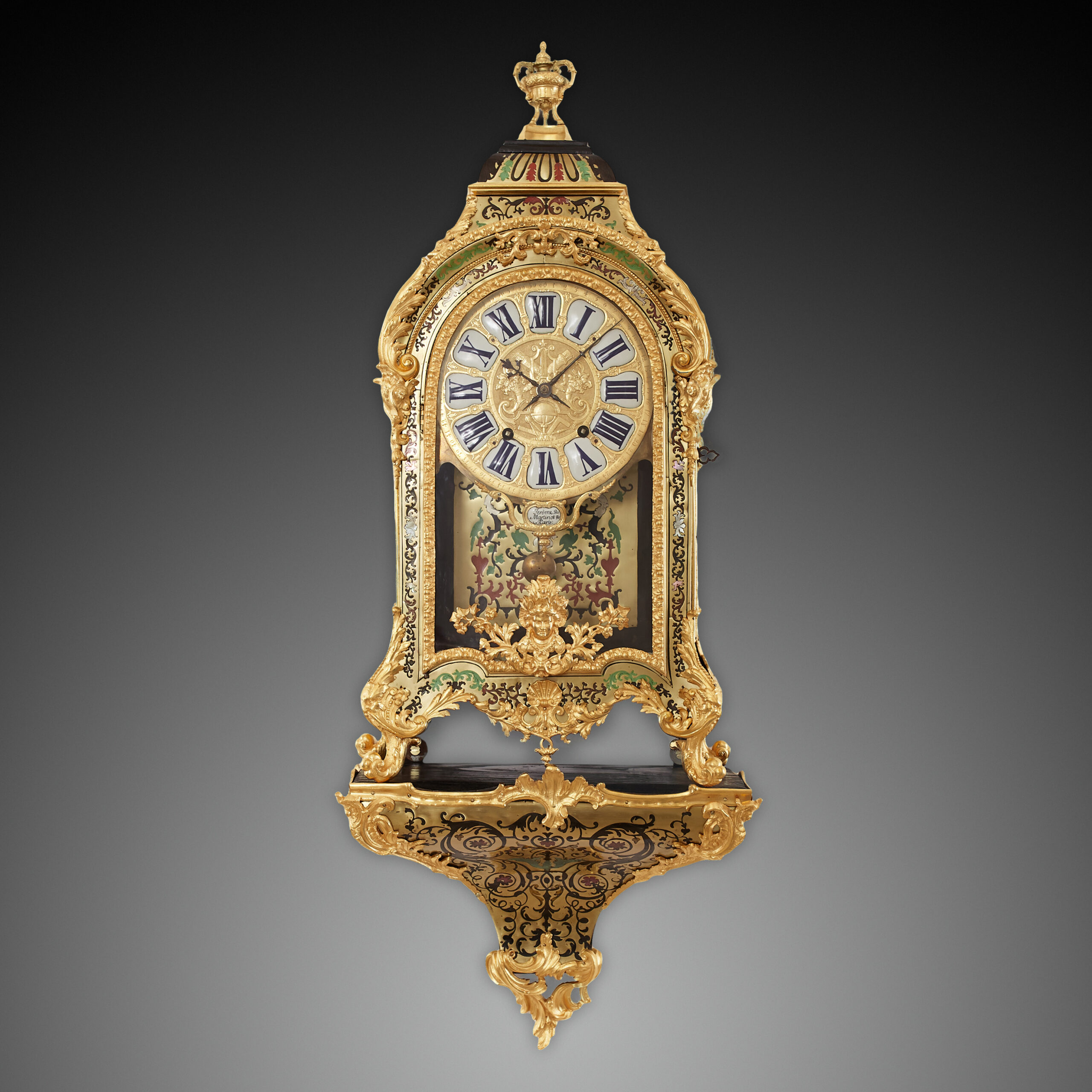
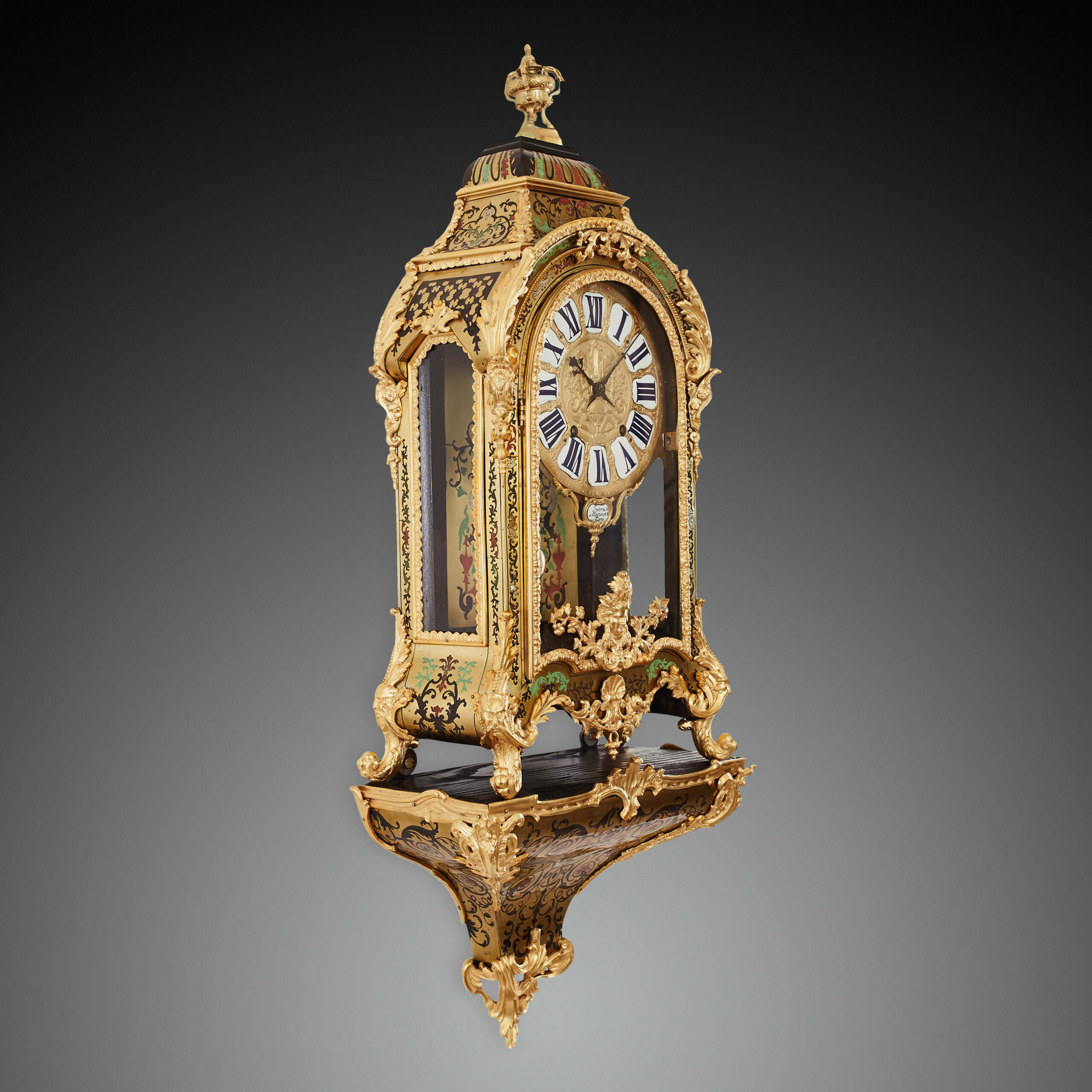
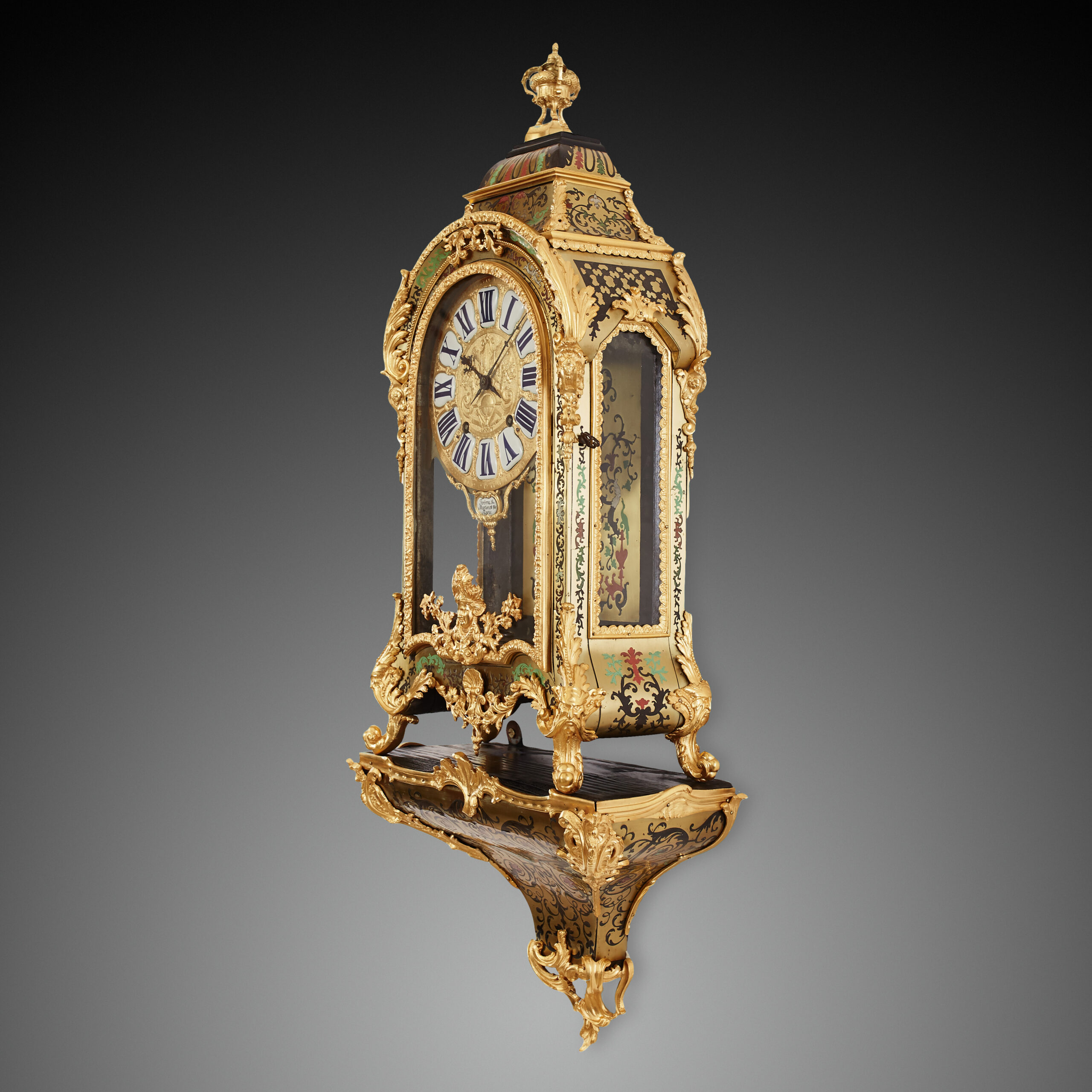
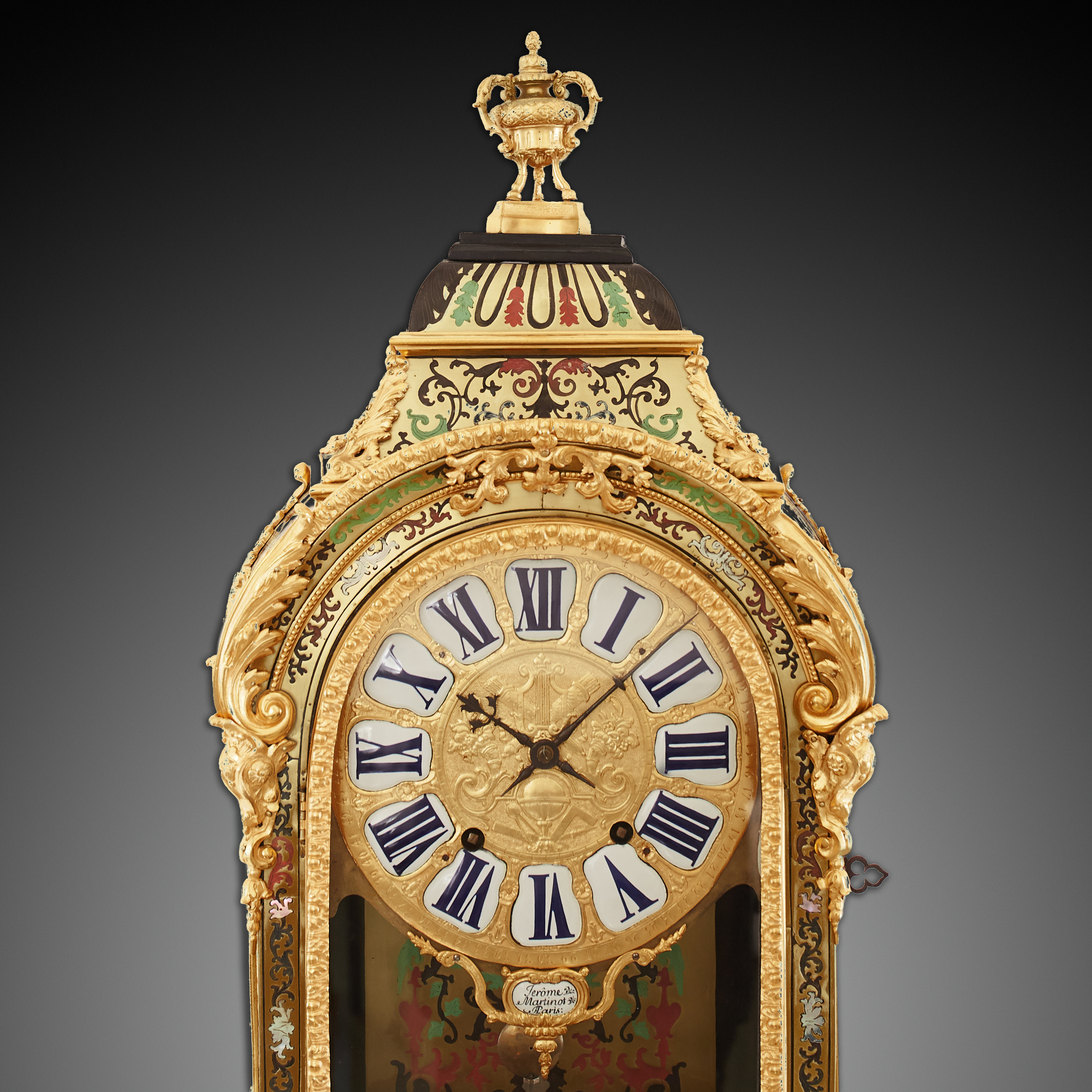
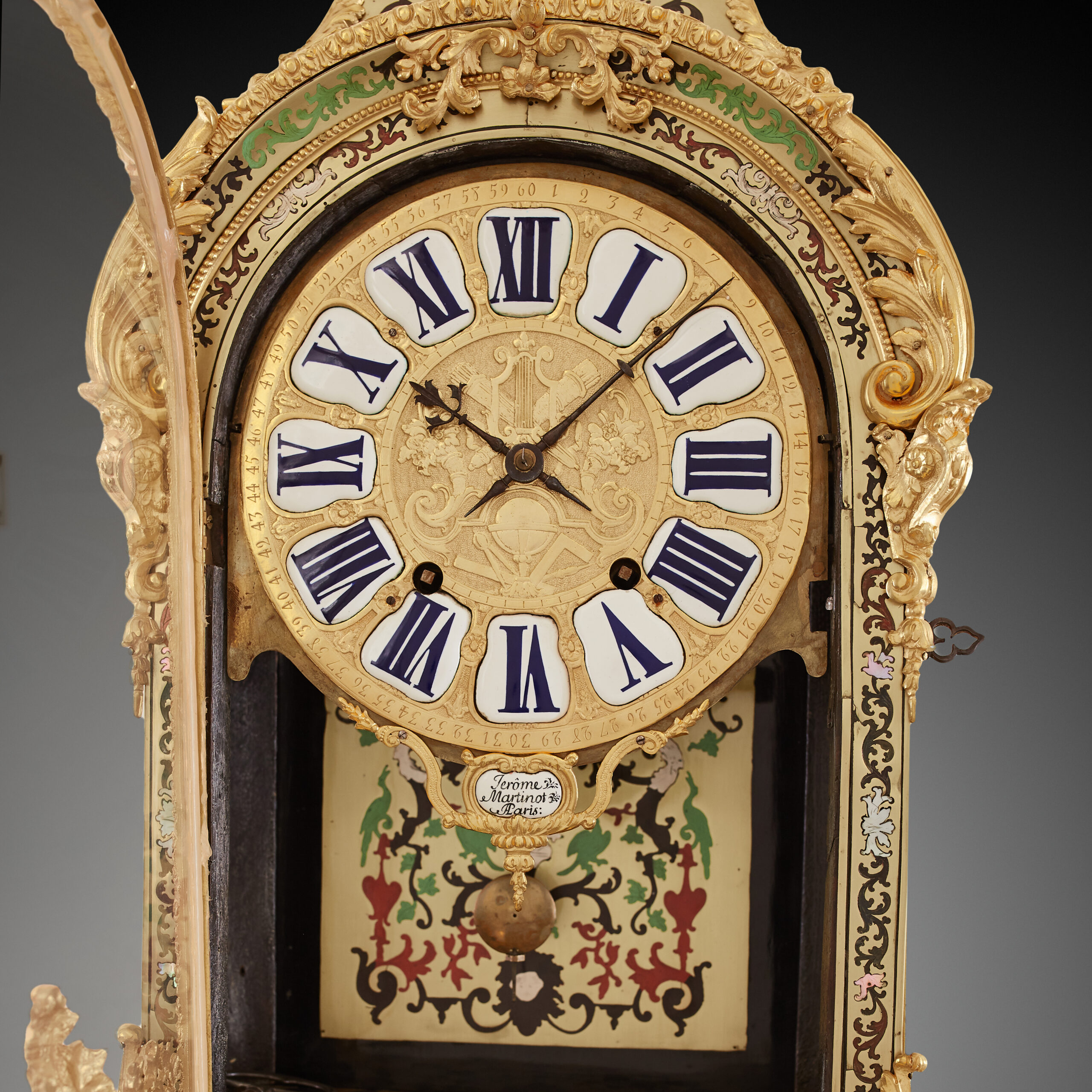
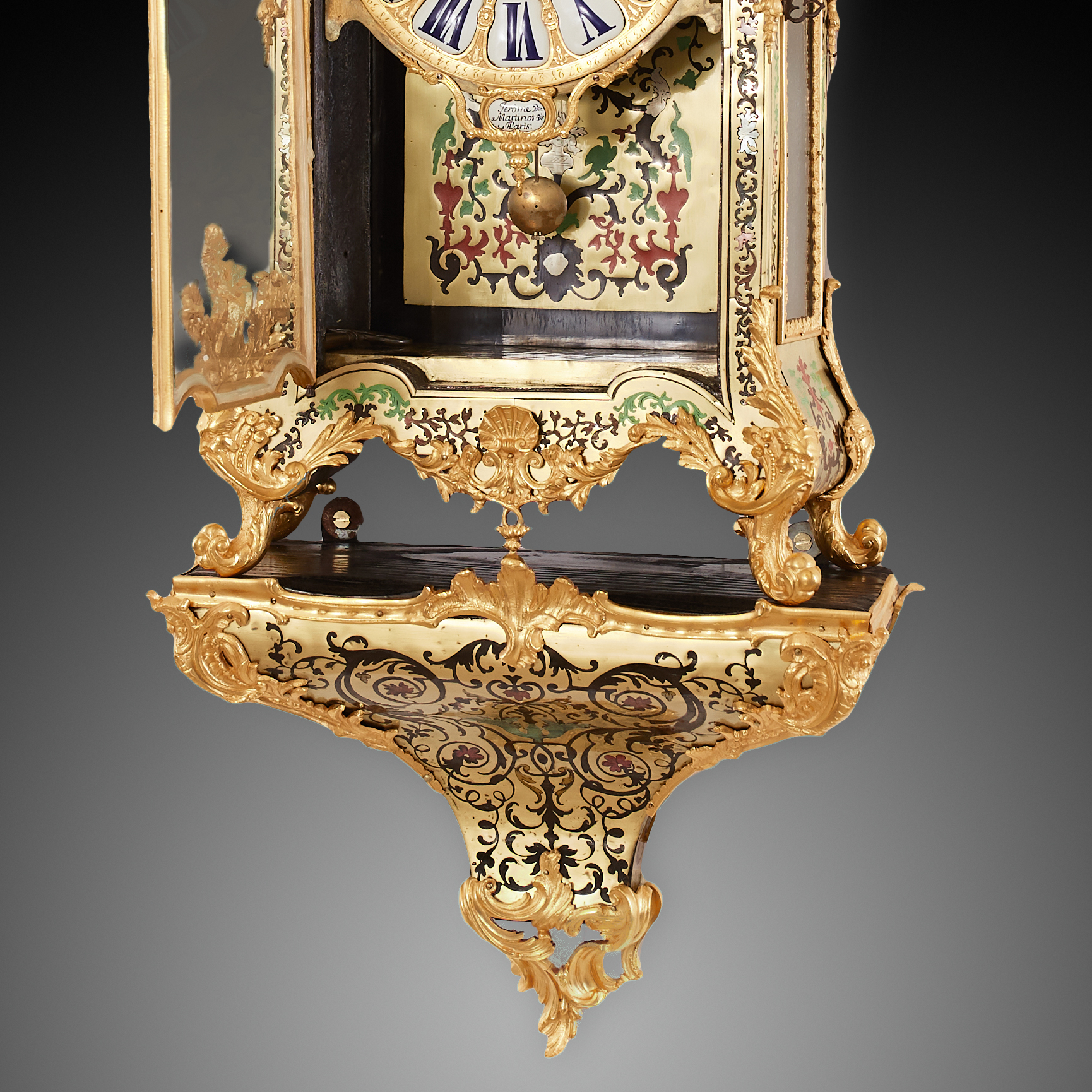
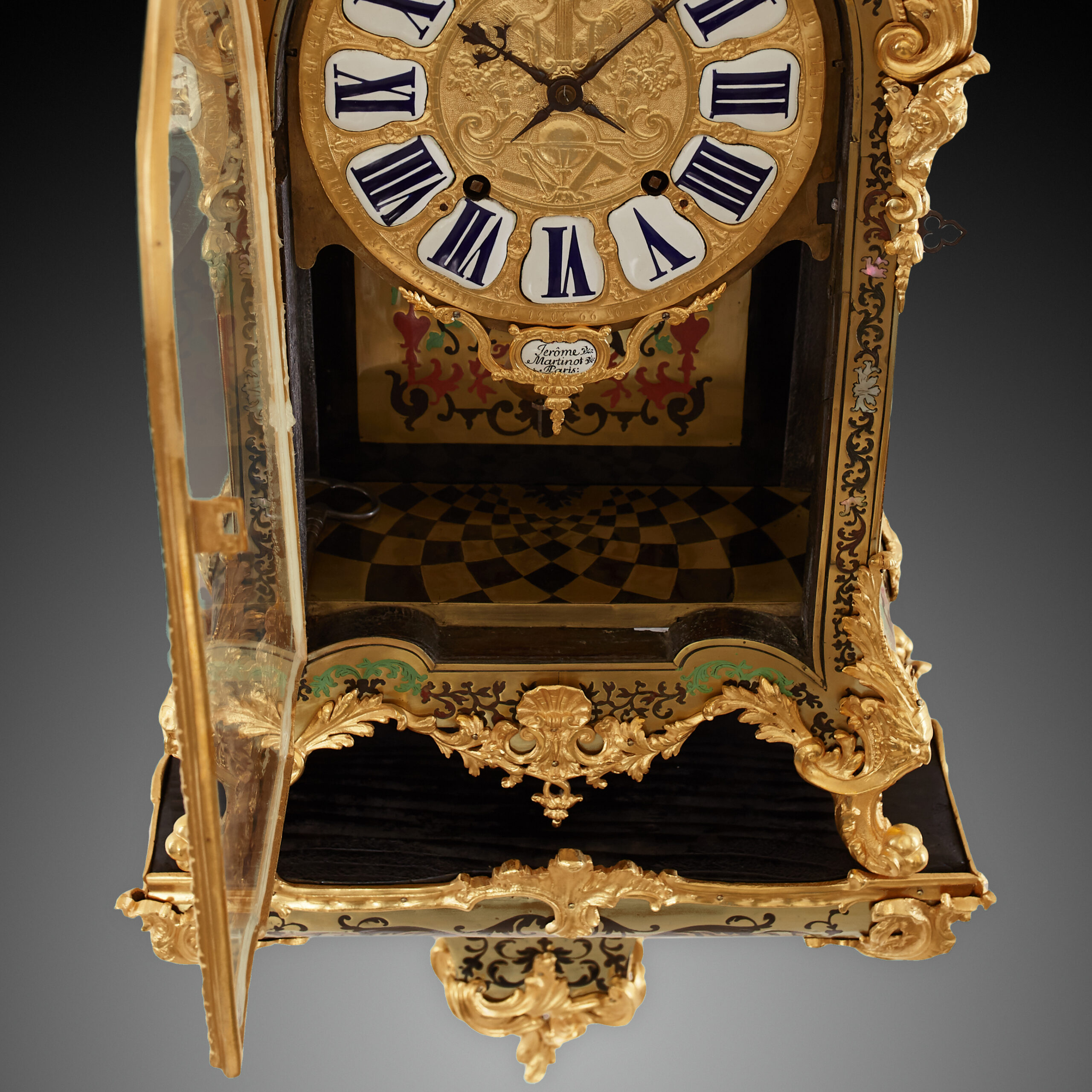
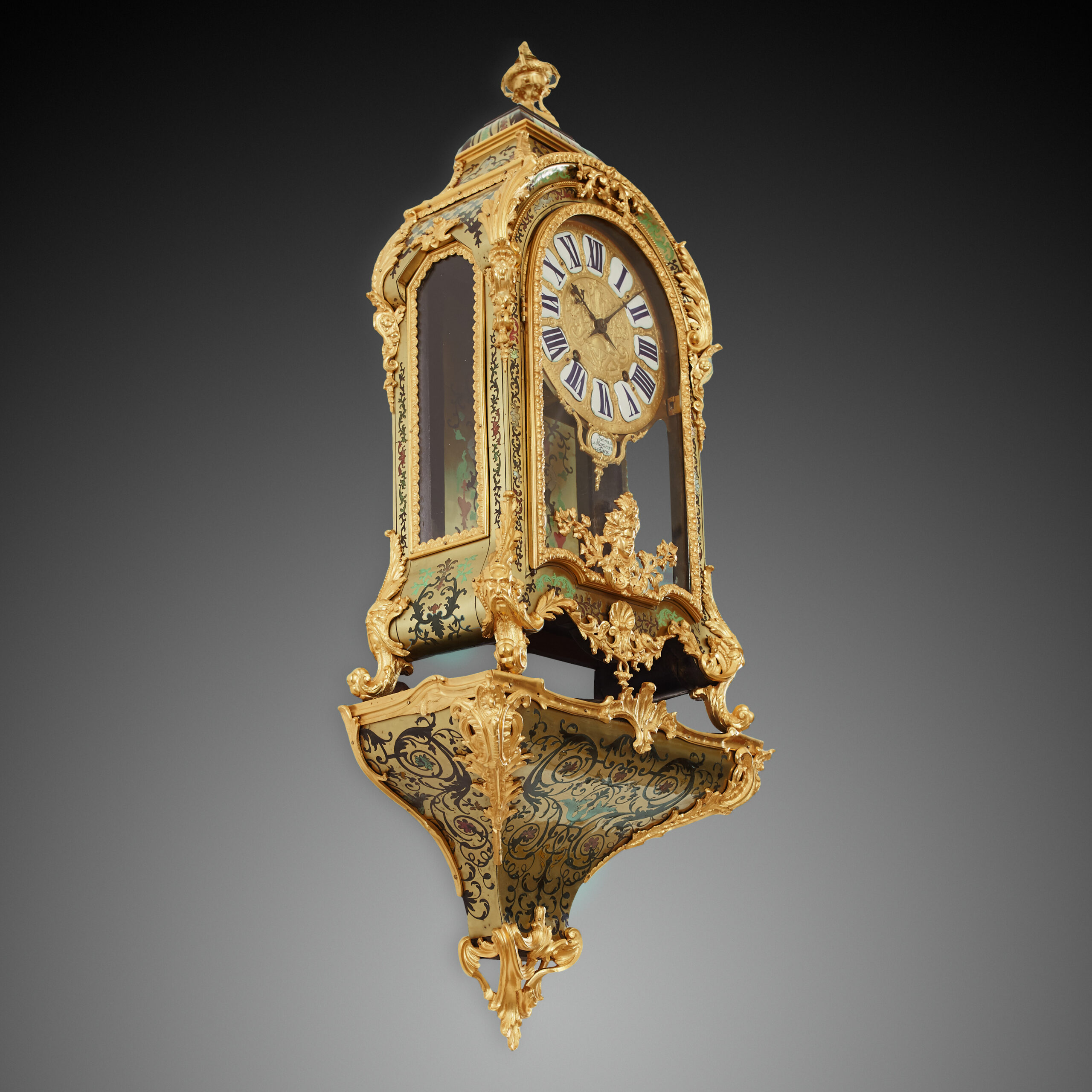
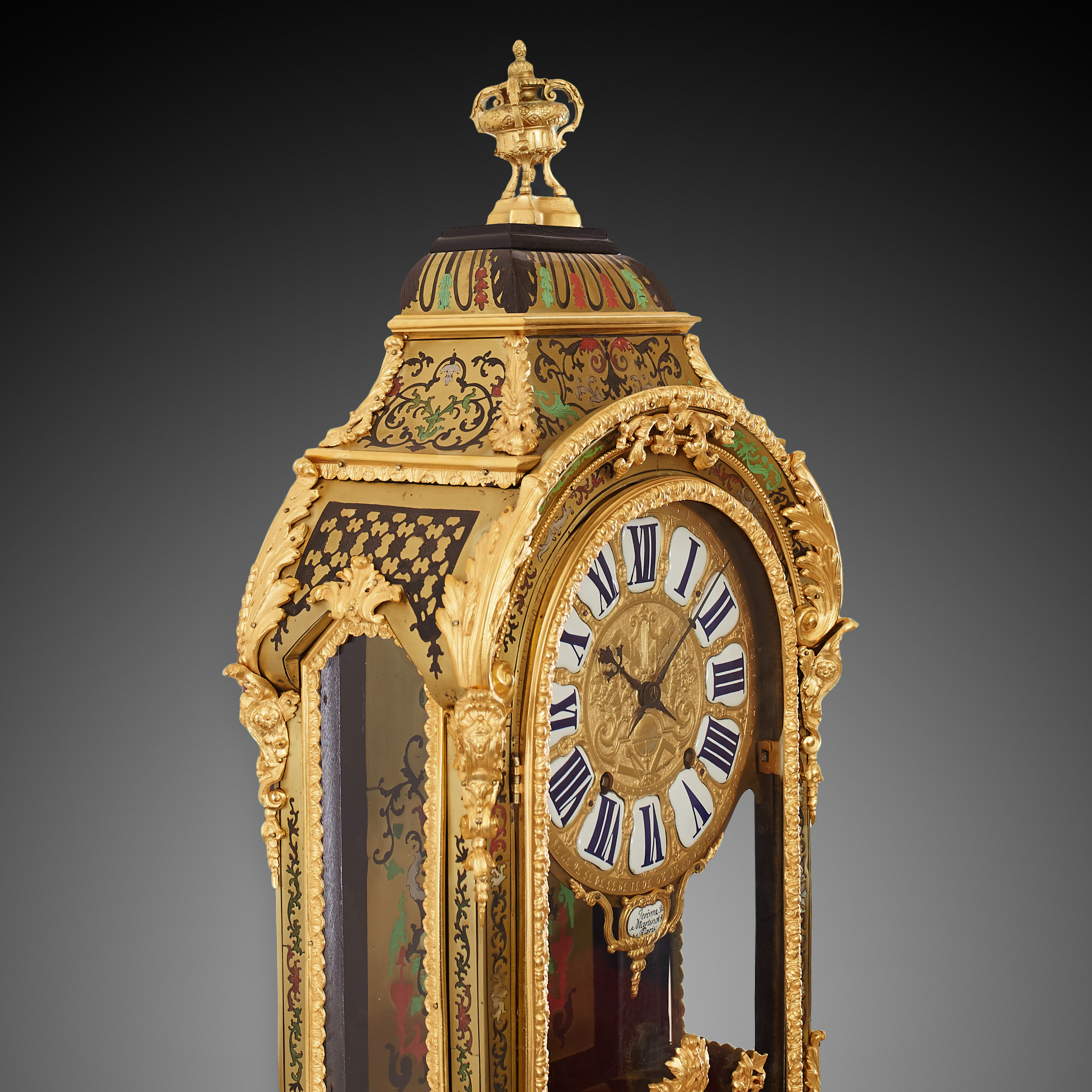
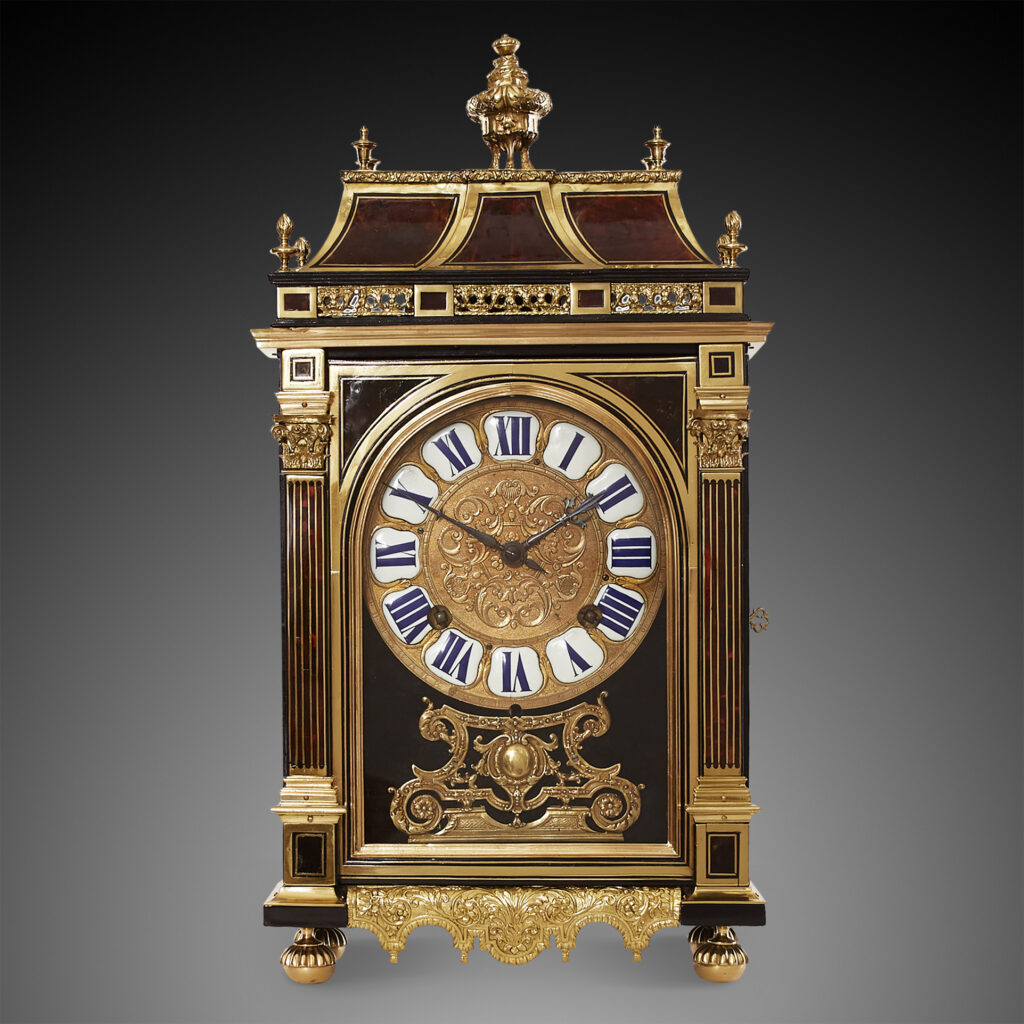
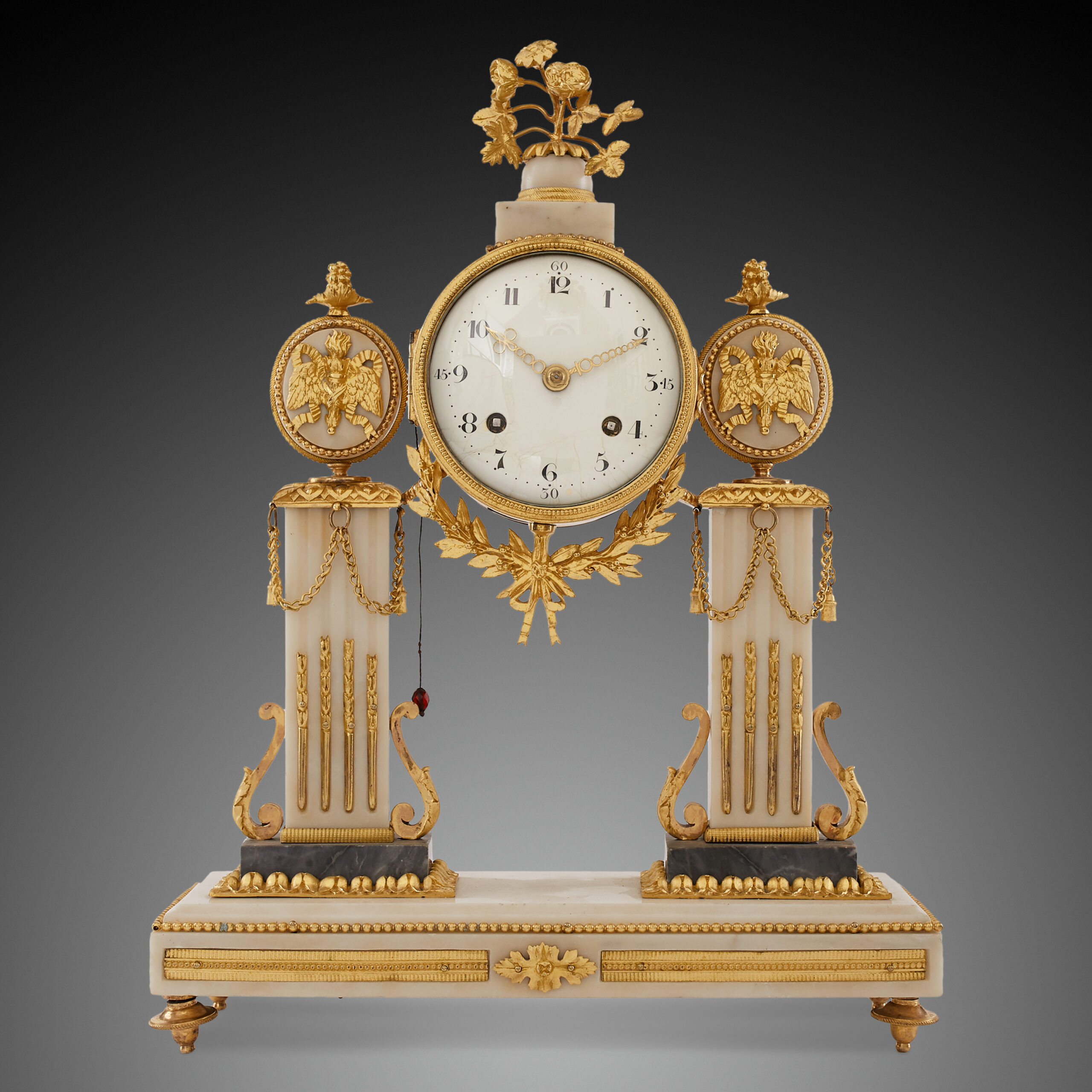
That Martino cartel clock is honestly one of the most stunning examples of the Louis XV period I’ve ever seen. It’s a perfect snapshot of what made the Rococo movement so wild and brilliant. When you compare it to the more restrained or architectural clocks you have, this one feels like it’s vibrating with energy.
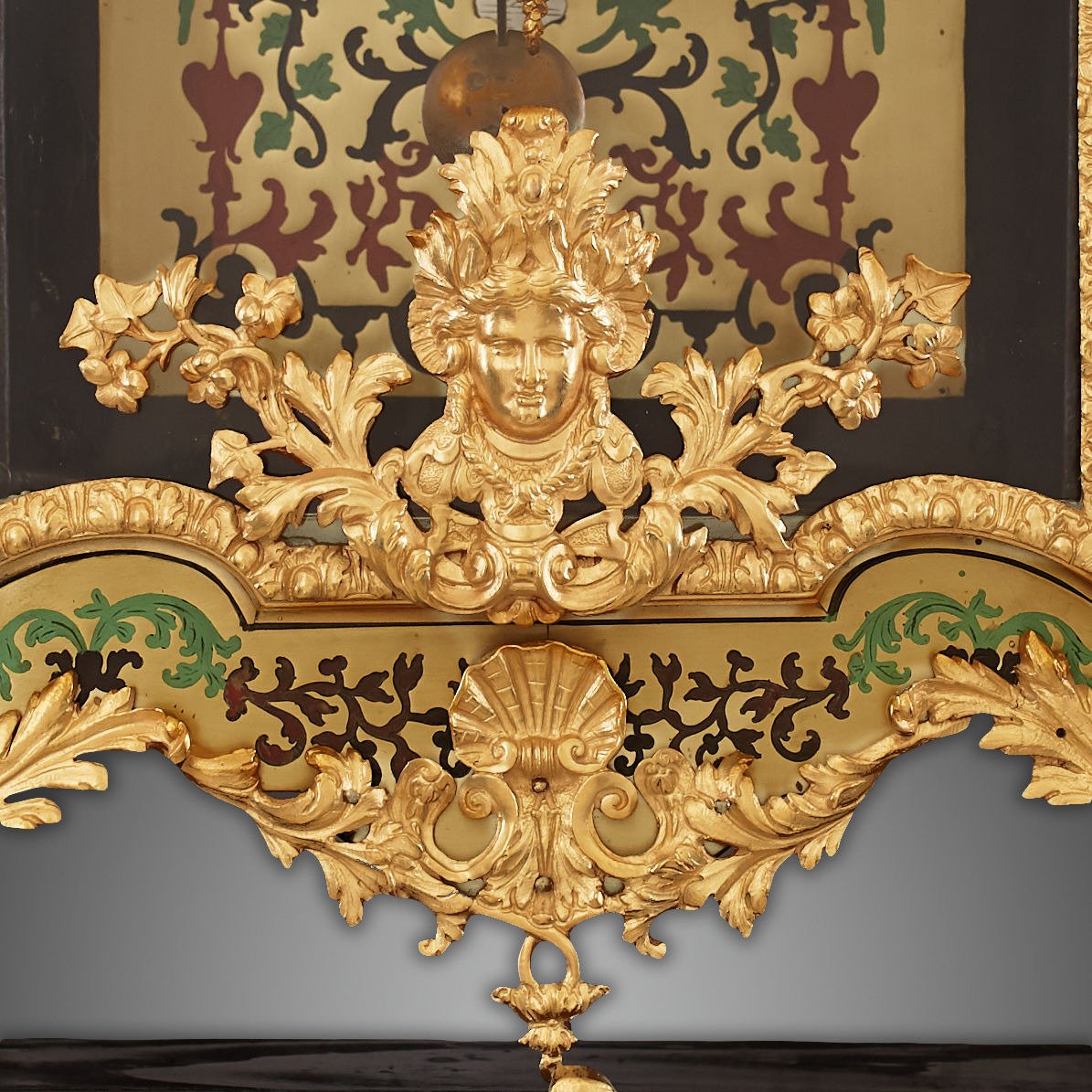
The first thing that hits you is that “asymmetrical” design. That was the hallmark of the Rococo-the idea that nature doesn’t grow in perfect, boring lines, so why should furniture? The way those gilt-bronze mounts-the ormolu-flow around the clock face looks almost like water or smoke frozen in time. It wasn’t just cast; it was chased by hand with tiny chisels to get that incredible detail on the leaves and scrolls.
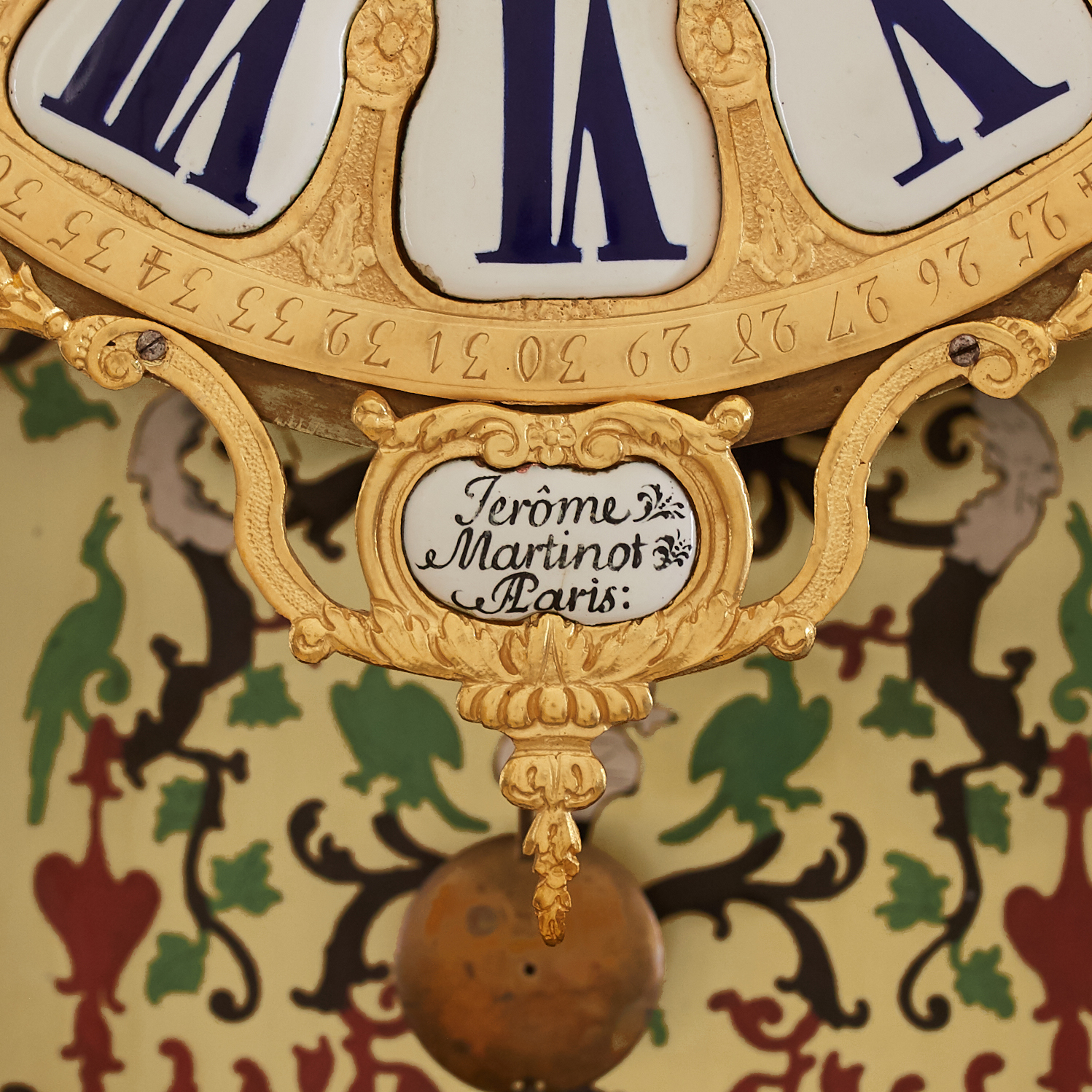
The use of Boulle marquetry here is just next-level. You have this intricate dance of brass against that green-hued background, and it’s meant to catch the candlelight in a way that makes the clock seem to glow from within. It’s not just a surface decoration; it’s part of the architecture of the piece. When you see the signature “Jérôme Martinot” on that sunburst dial, you know you’re looking at a piece that was made for a high-end Parisian salon where every single item in the room was chosen to show off the owner’s status and artistic eye.
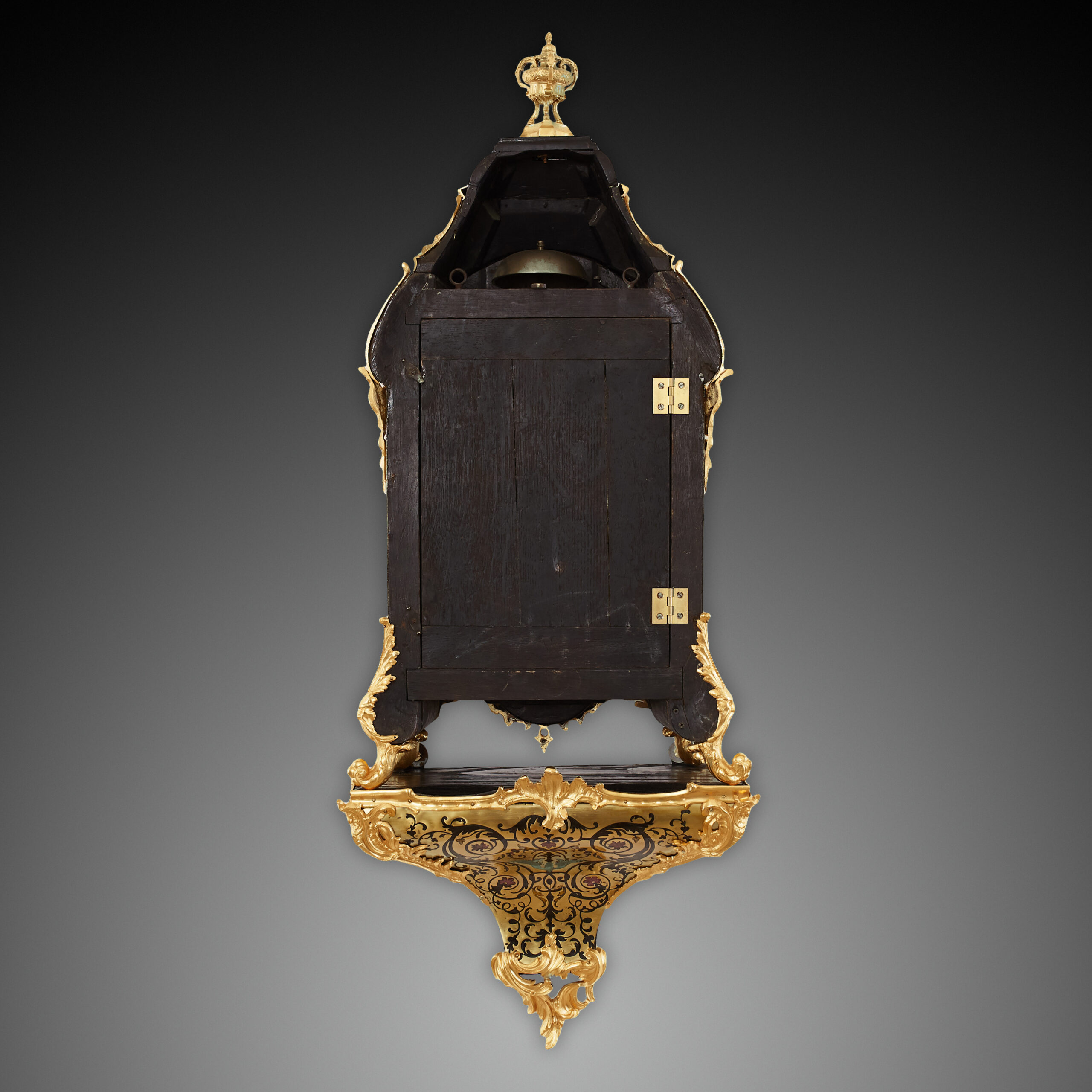
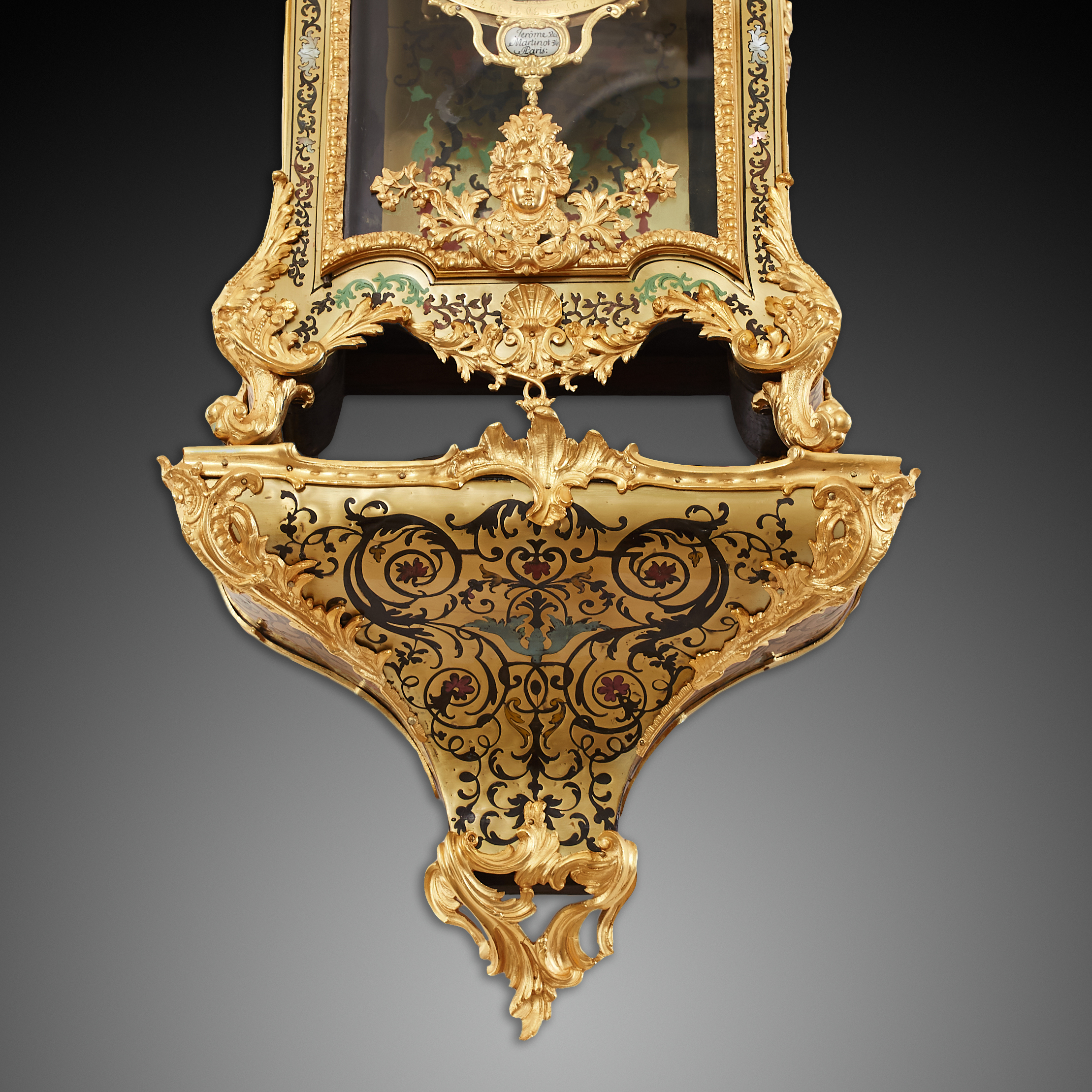
The bracket is another piece of the puzzle that people often overlook. It’s not just a stand; it’s an extension of the clock’s drama. By lifting the clock up off the wall, it makes it a focal point. It commands attention, especially because that central mask on the bracket acts as a kind of silent witness to the passage of time. And because it’s wall-mounted, the whole house acts as a sounding board, making the strike of the bell feel that much more significant.
It really highlights the collaborative genius of the 18th century. You had the horologist handling the physics, the cabinetmaker handling the marquetry, and the bronzier handling the sculpture, all working under the same roof. It’s an insane amount of labor for one object, but that’s exactly why it still looks this good after nearly three hundred years.