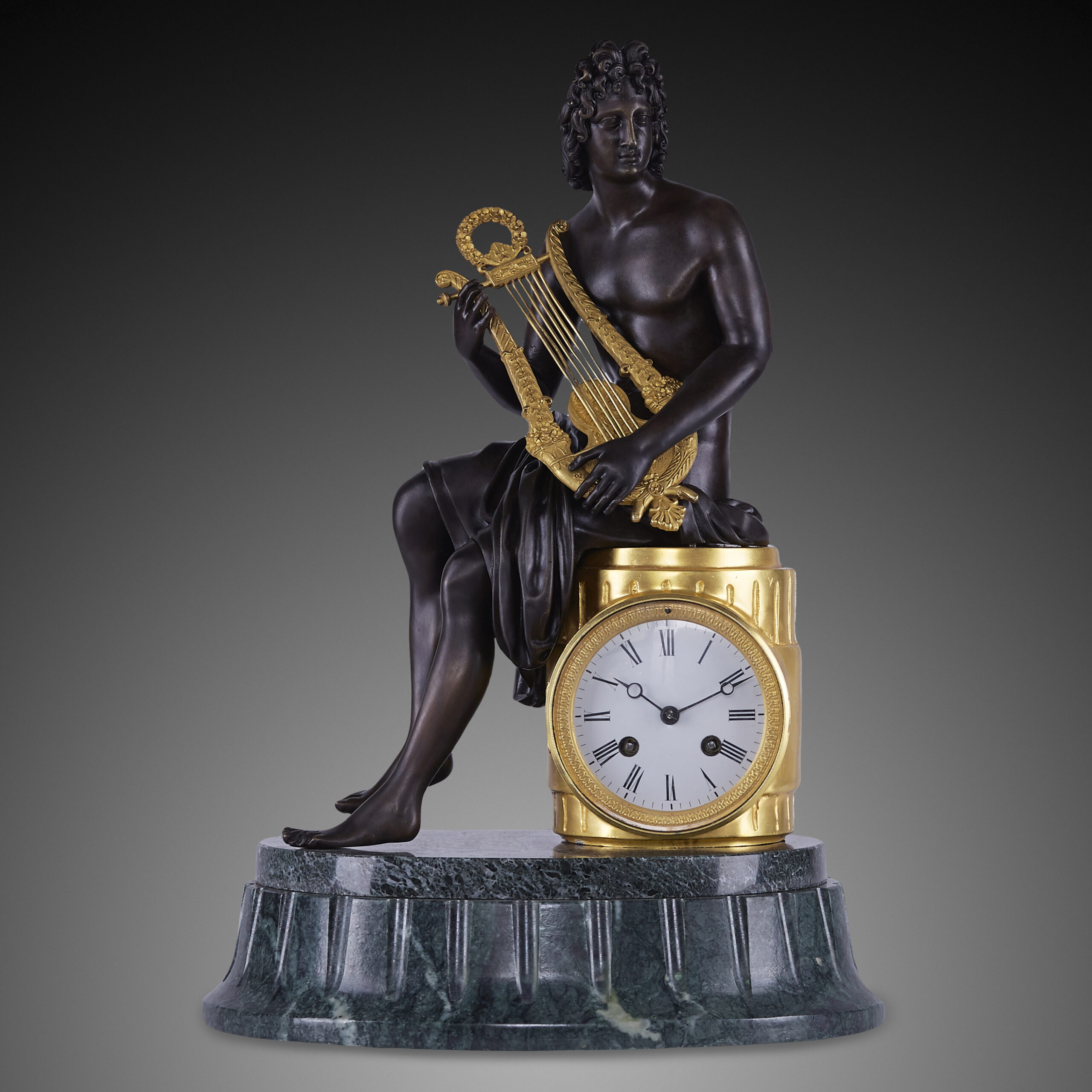
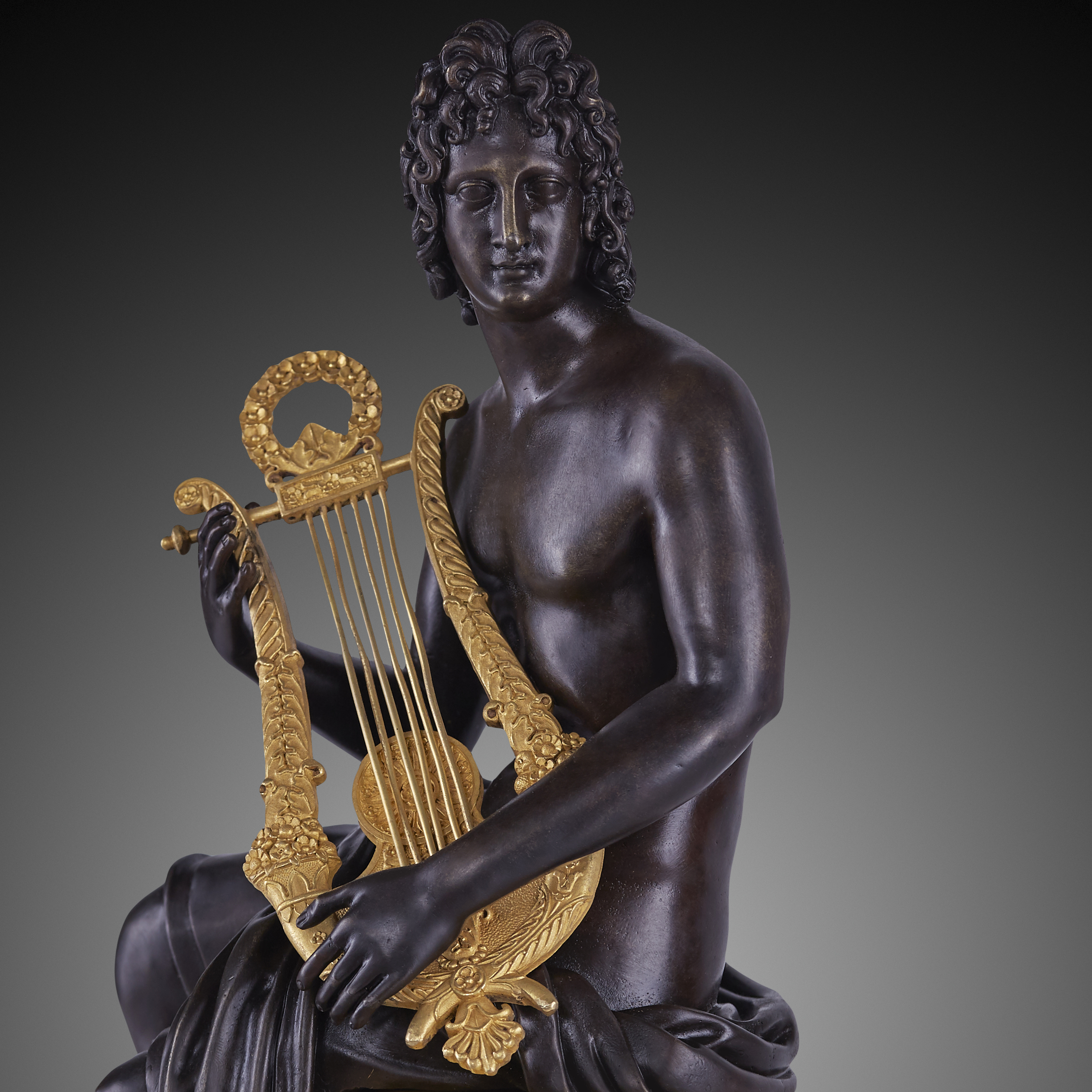
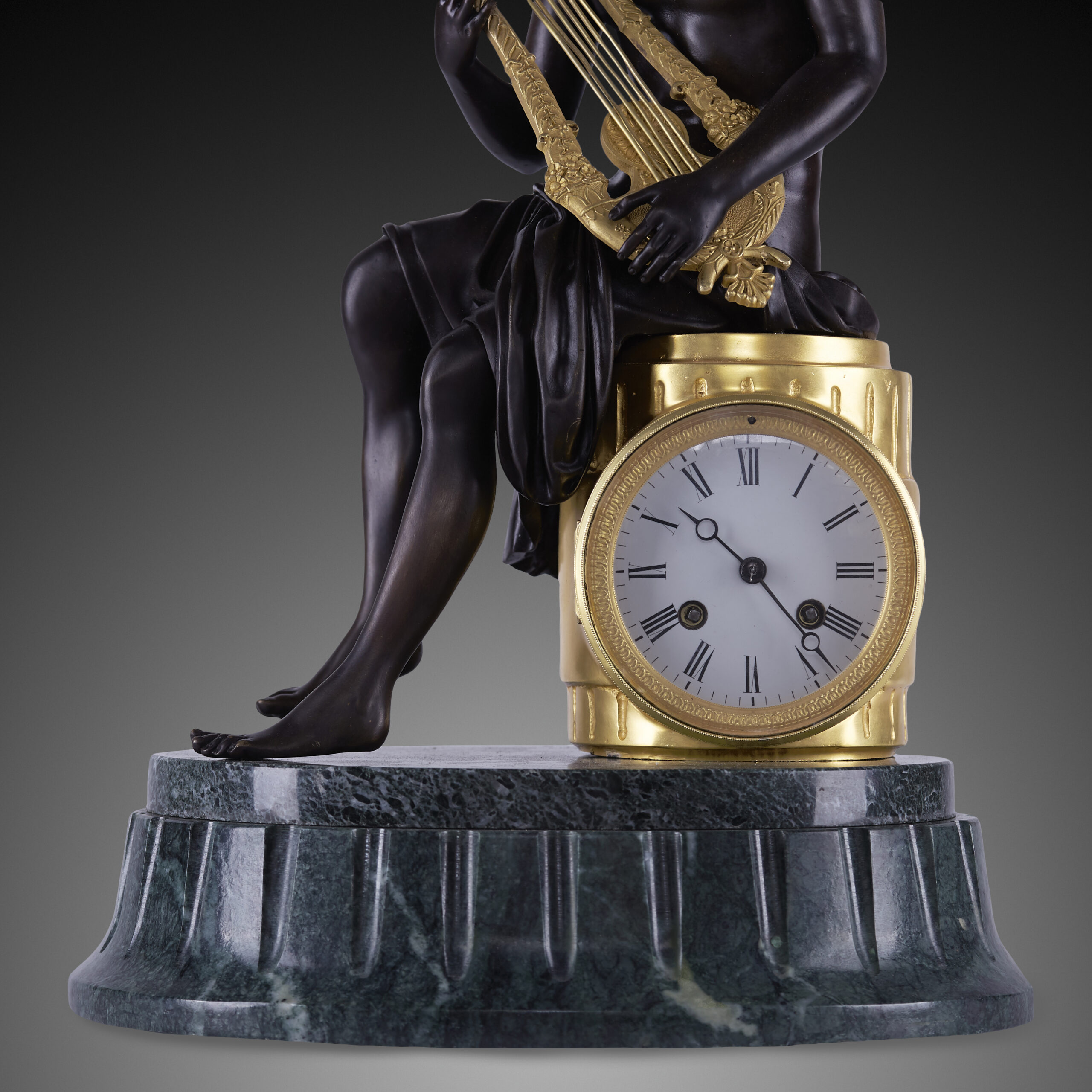
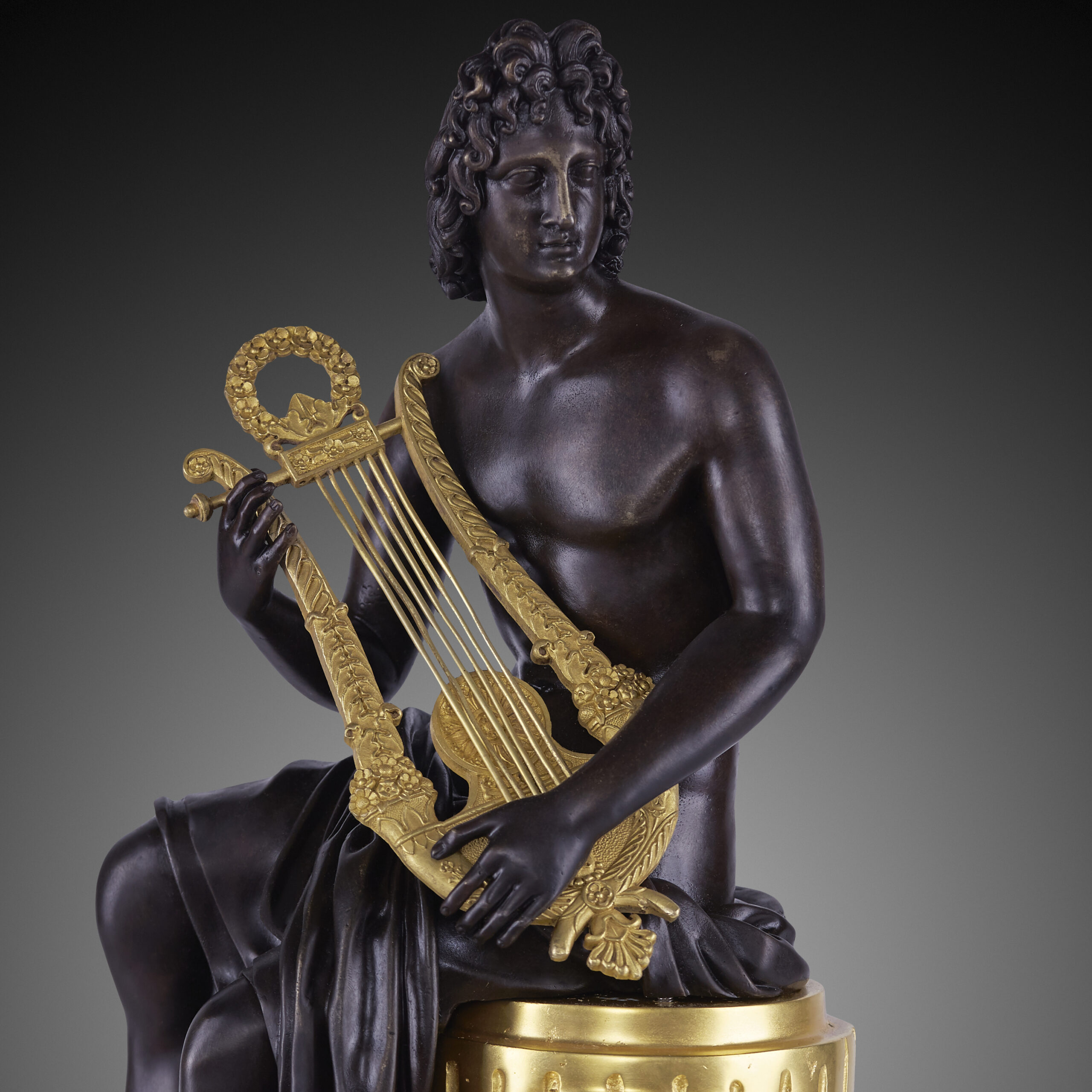
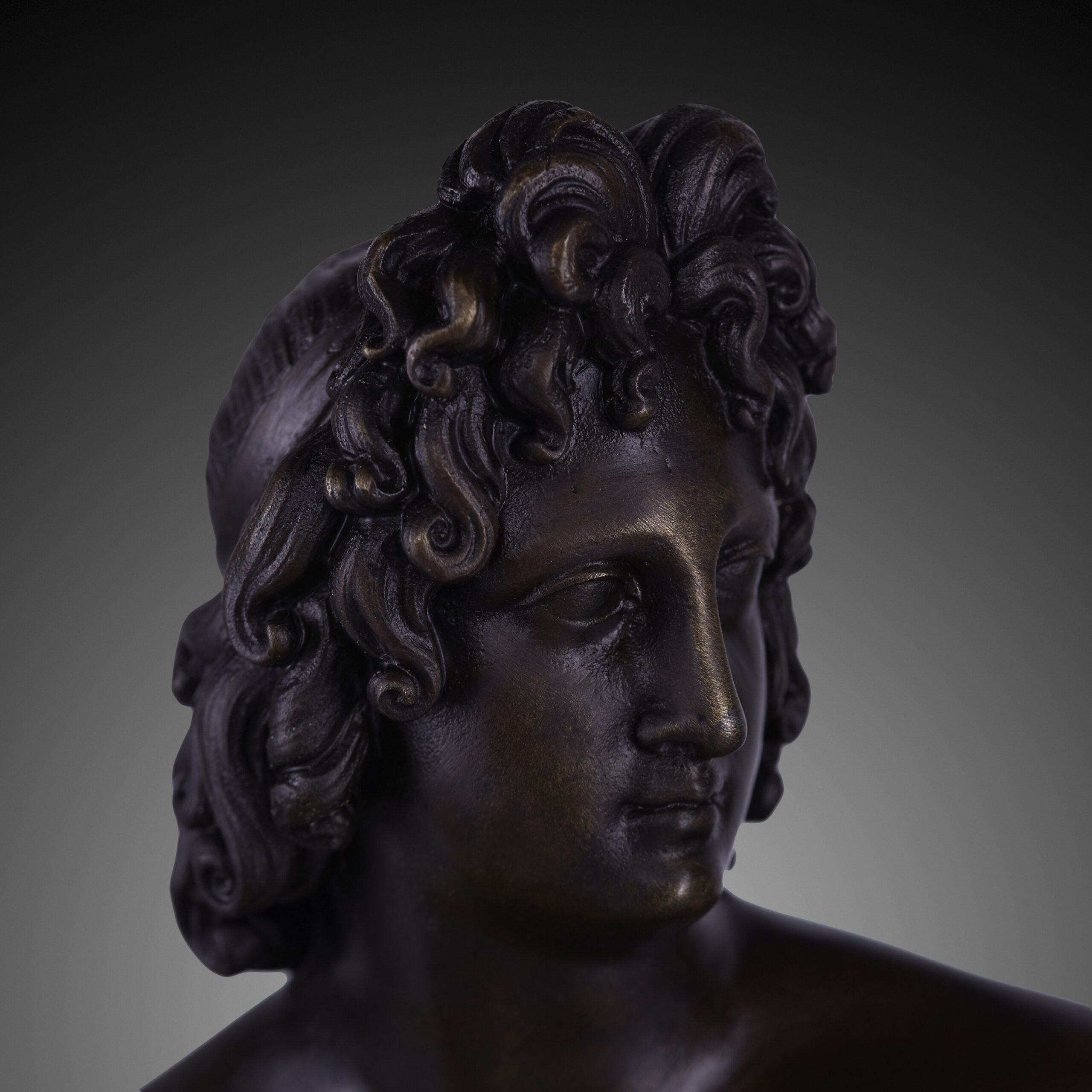
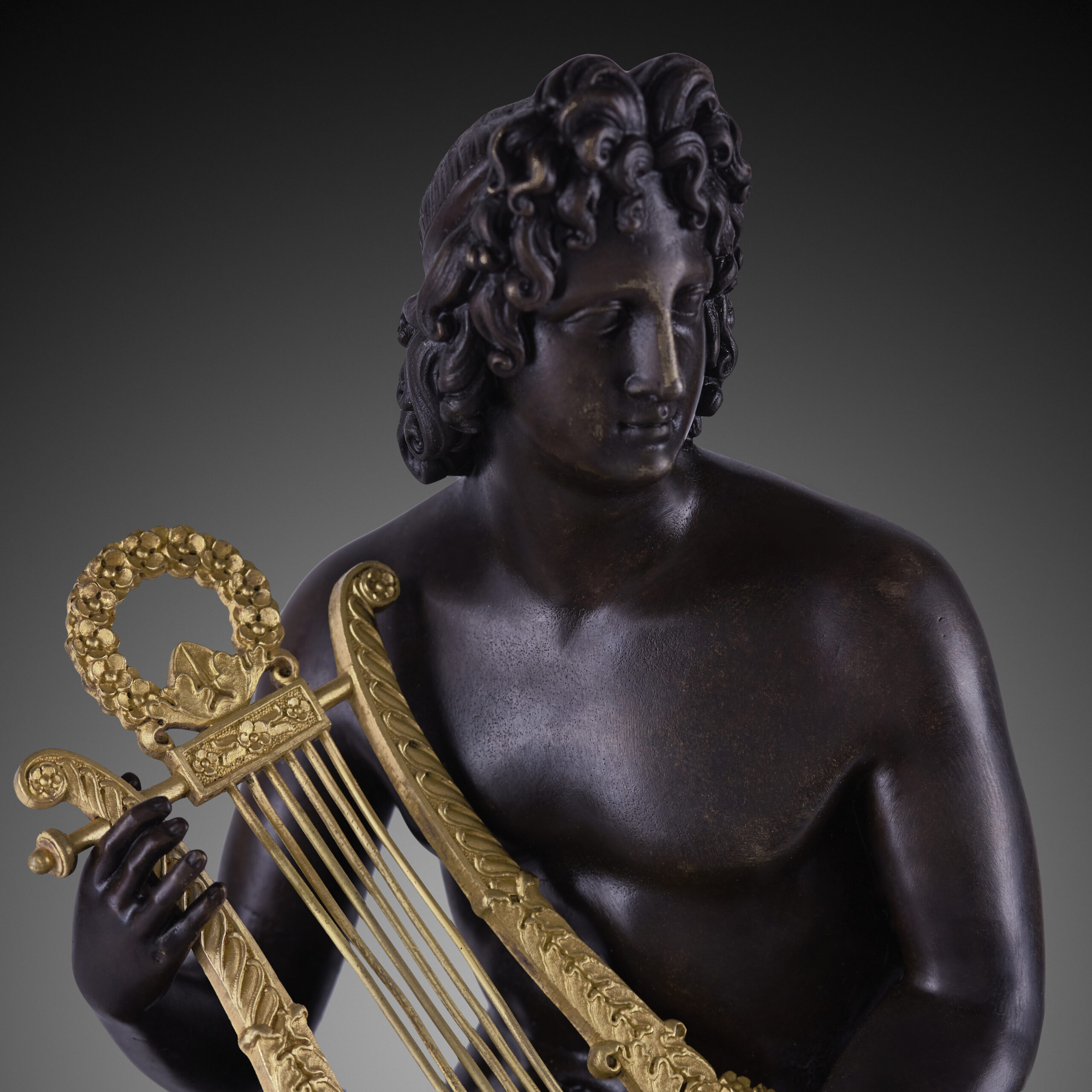
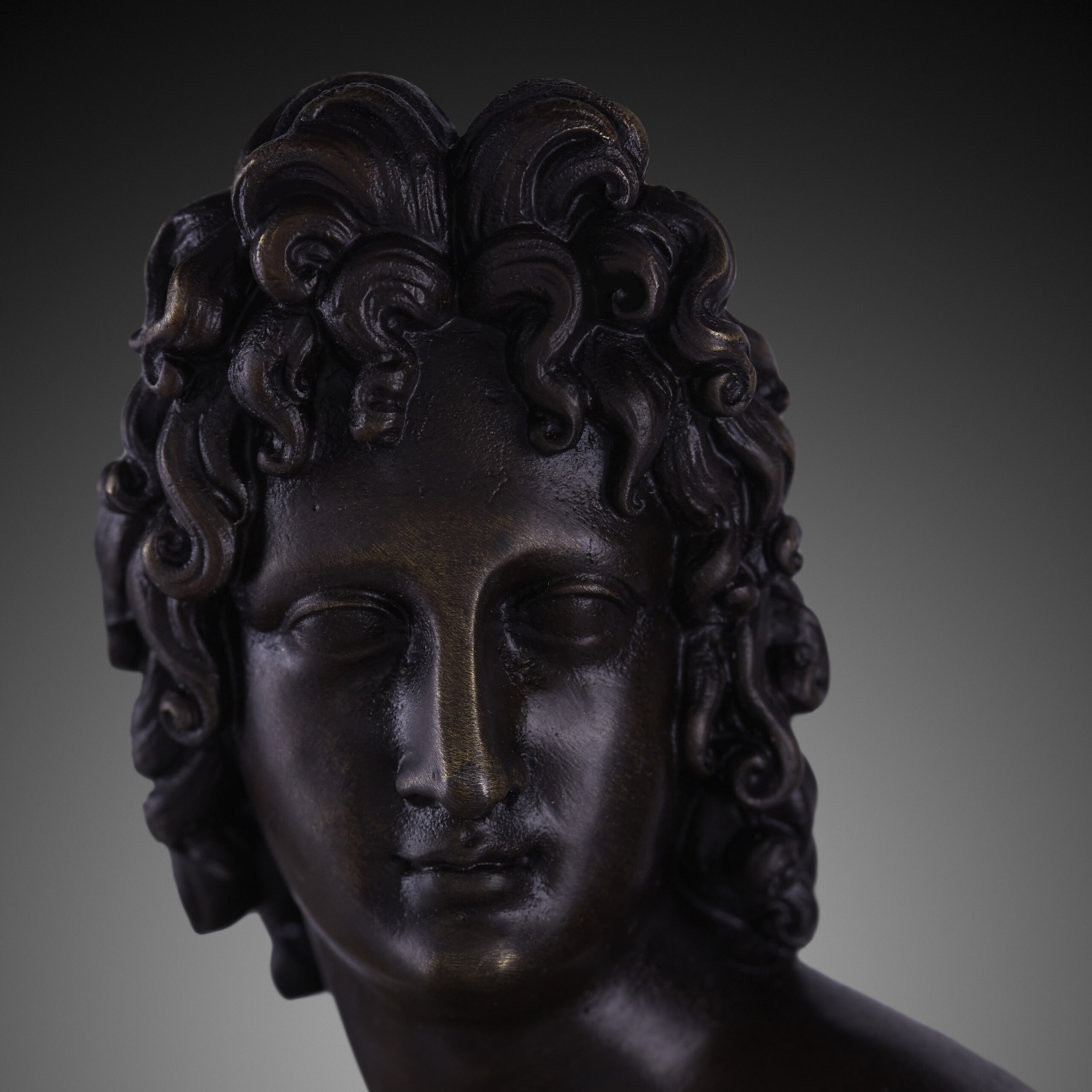
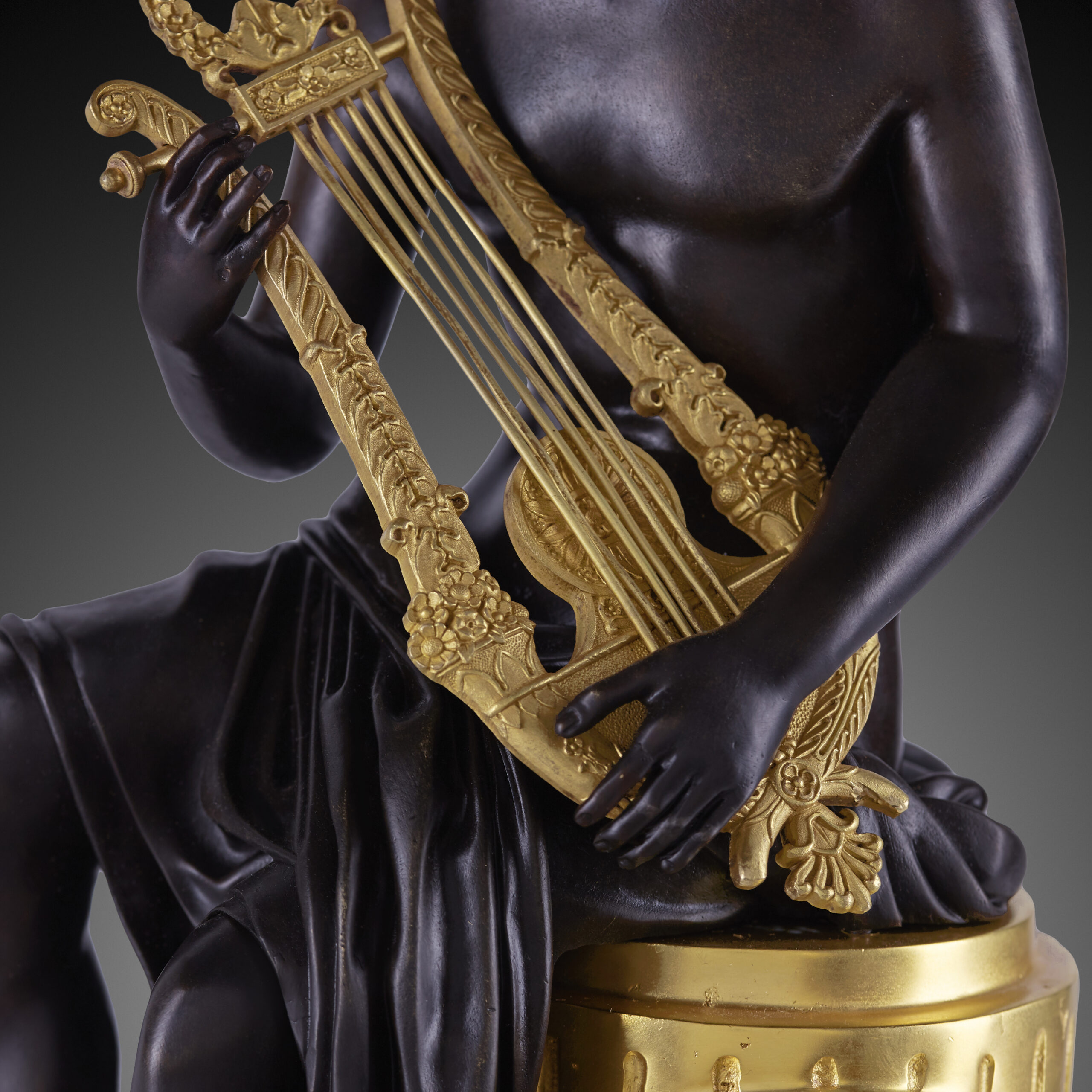
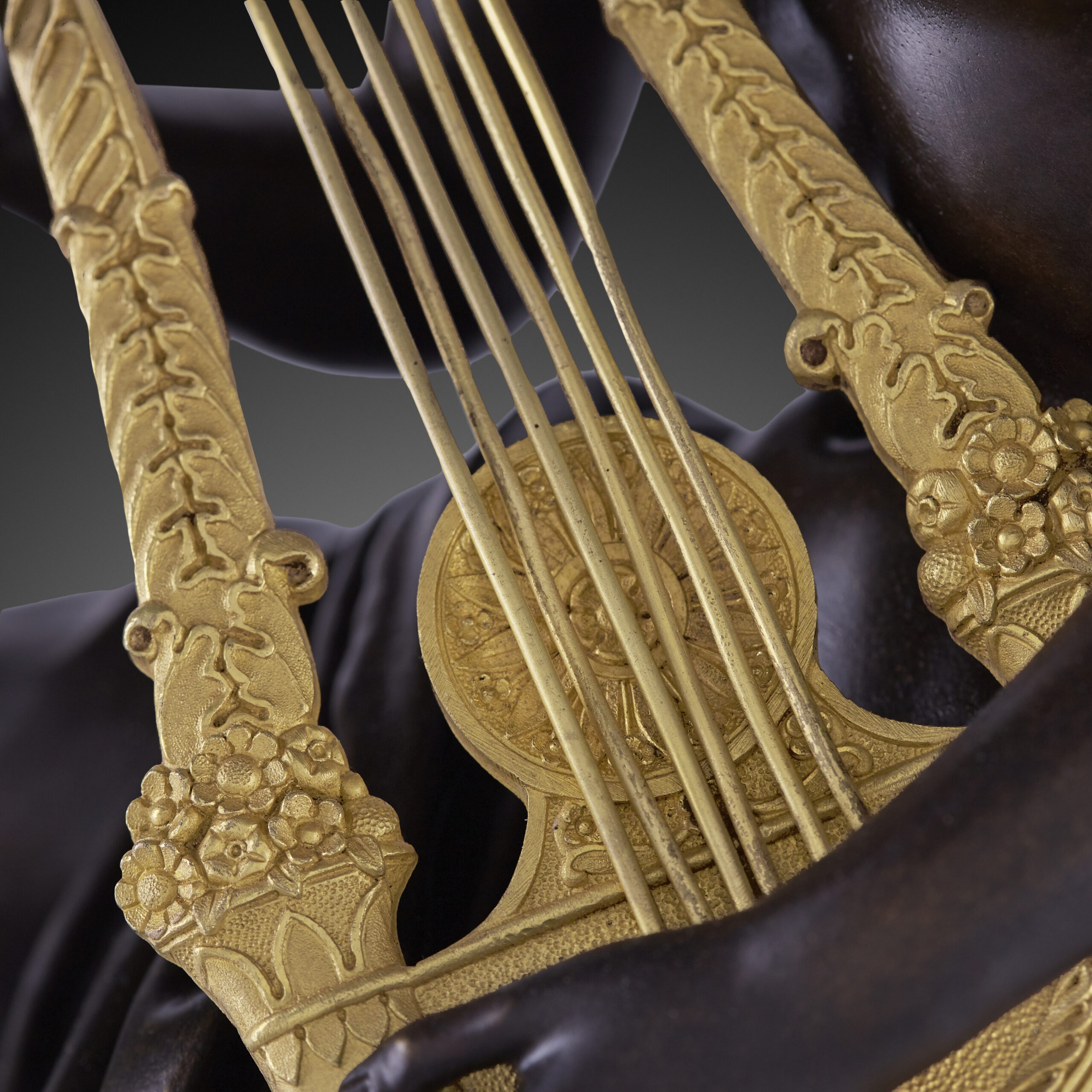
This Napoleon III fireplace clock is a striking example of the mid-19th century’s “Neo-Grec” style, a period when French designers were moving away from the rigid gold of the Napoleonic era and experimenting with bold, dramatic contrasts. The most immediate thing that hits you is the interplay of color and texture-the deep, dark patinated bronze of the figure against the brilliant gold of the lyre and the clock drum. By this point in the 1800s, makers had mastered the art of “patination,” using chemical treatments to give the bronze that smooth, chocolate-dark finish, which makes the gilded elements pop with even more intensity.
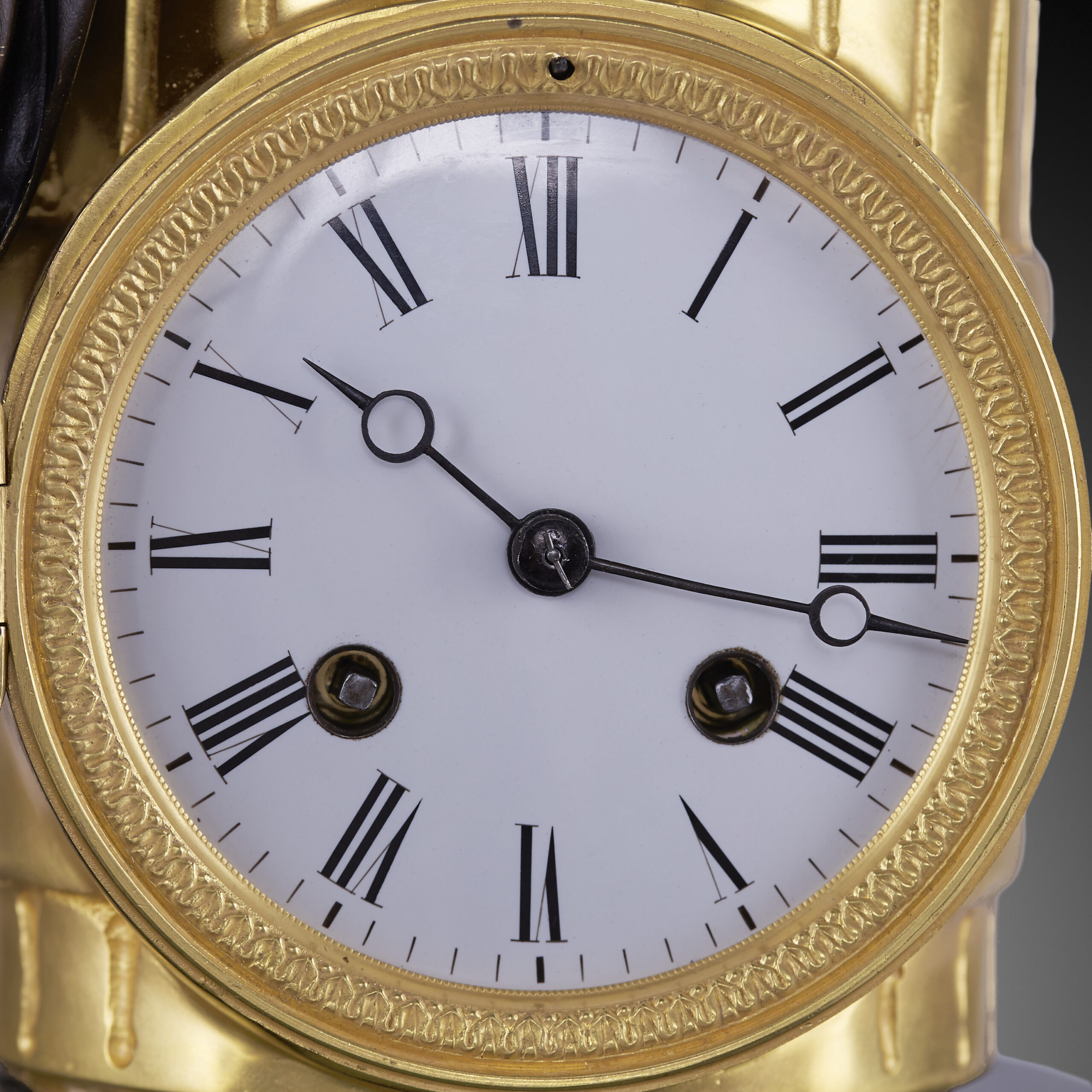
The figure itself, likely Apollo or a romanticized poet, is draped in a way that feels much more relaxed than the stiff, formal figures of the earlier 18th century. He’s holding a gilded lyre, which is the universal symbol for harmony and the arts, sitting casually atop the clock housing as if it’s a natural part of his world. This “drum” case was a favorite of the Napoleon III era because it allowed the sculpture to take center stage without being overwhelmed by a bulky base. The green marble plinth at the bottom adds a final layer of weight and luxury, its natural veining providing a cool, earthy counterpoint to all that metalwork.
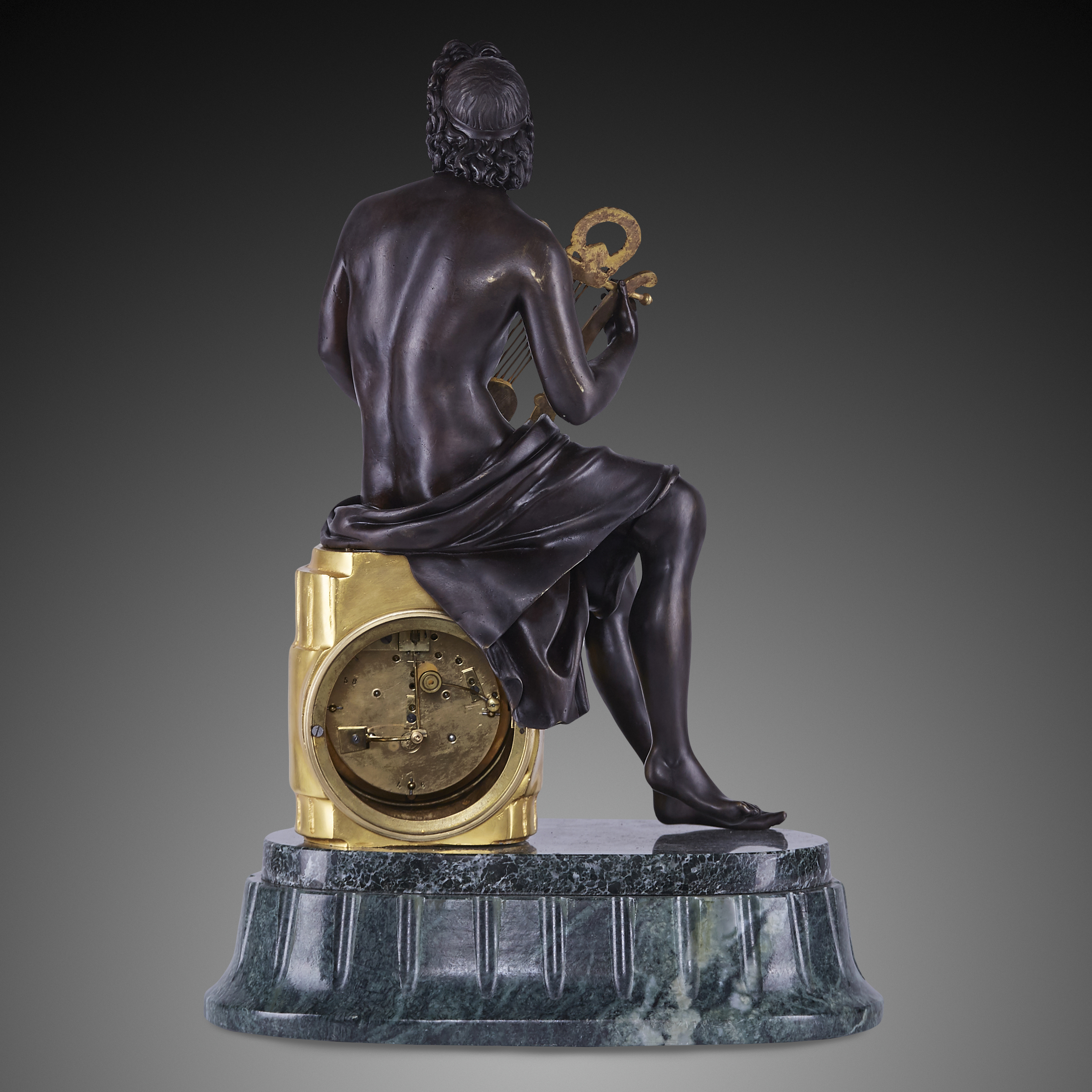
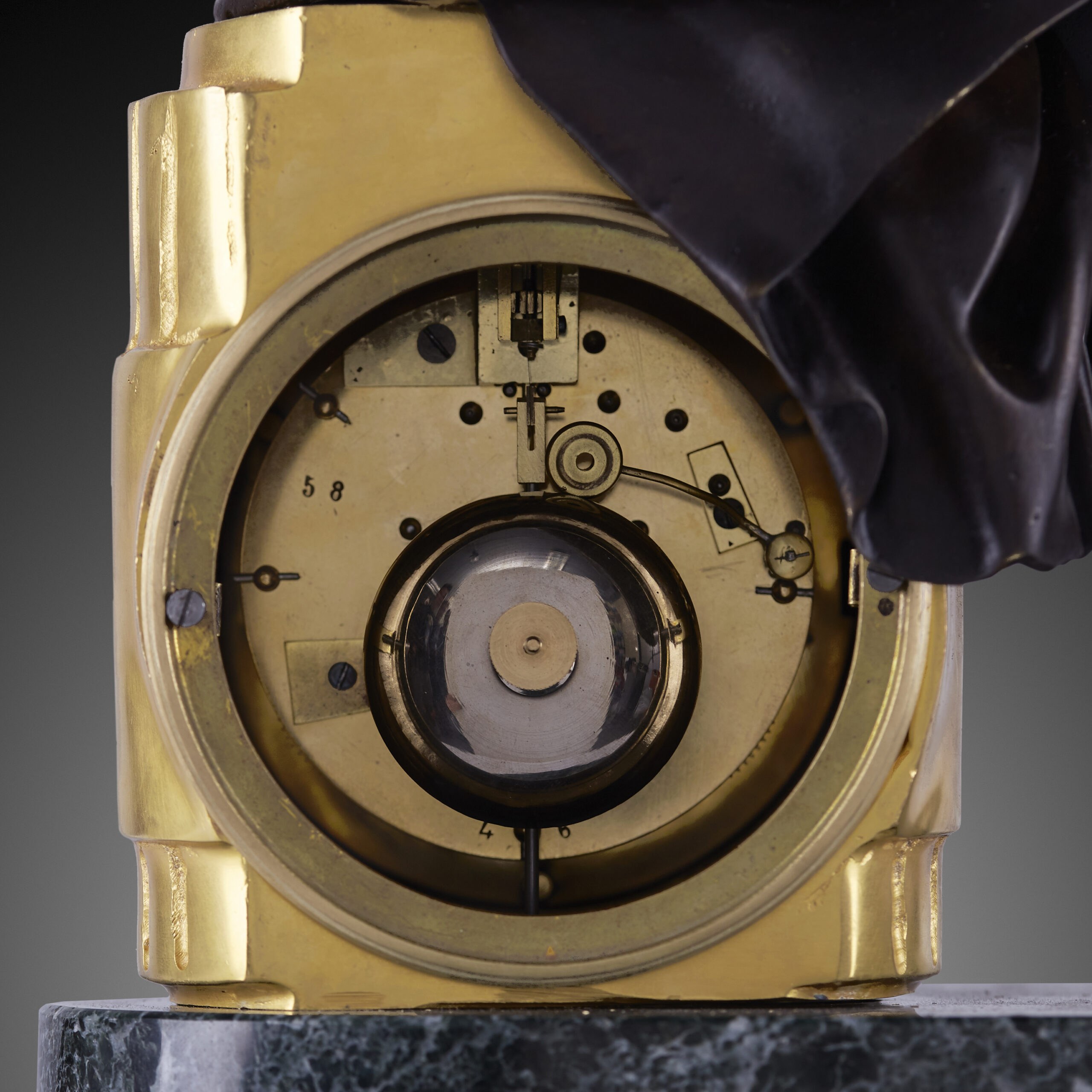
Technically, this is a very reliable piece of machinery. An eight-day movement is the classic workhorse of the French fireplace clock; it’s designed to be a consistent part of the household rhythm, striking the hours and half-hours on a resonant bell. The fact that it has been recently cleaned and serviced by a professional is a huge plus-in the world of horology, a “living” movement that actually keeps time is worth far more than a silent statue. It means the gears, the escape wheel, and the striking train are all in sync, just as they were when the clock first left a Parisian workshop in the 1860s.
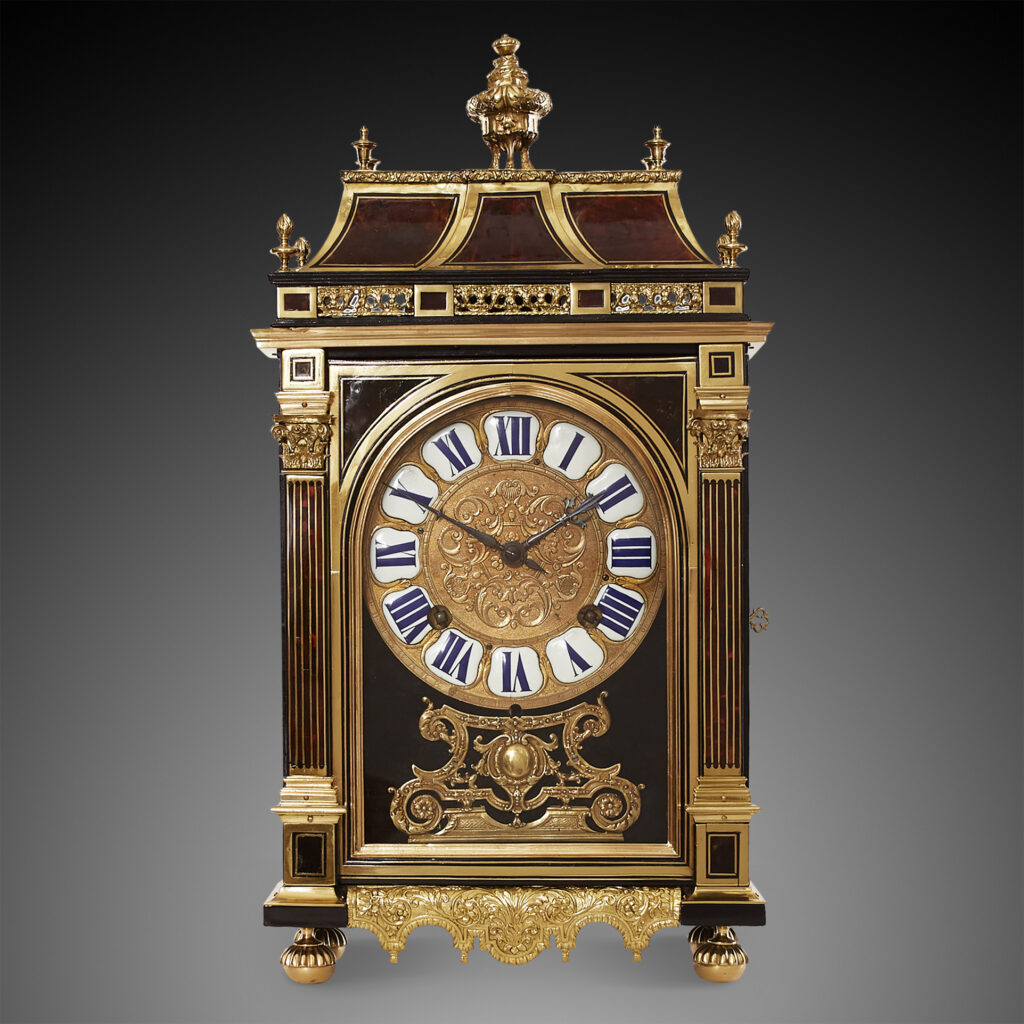
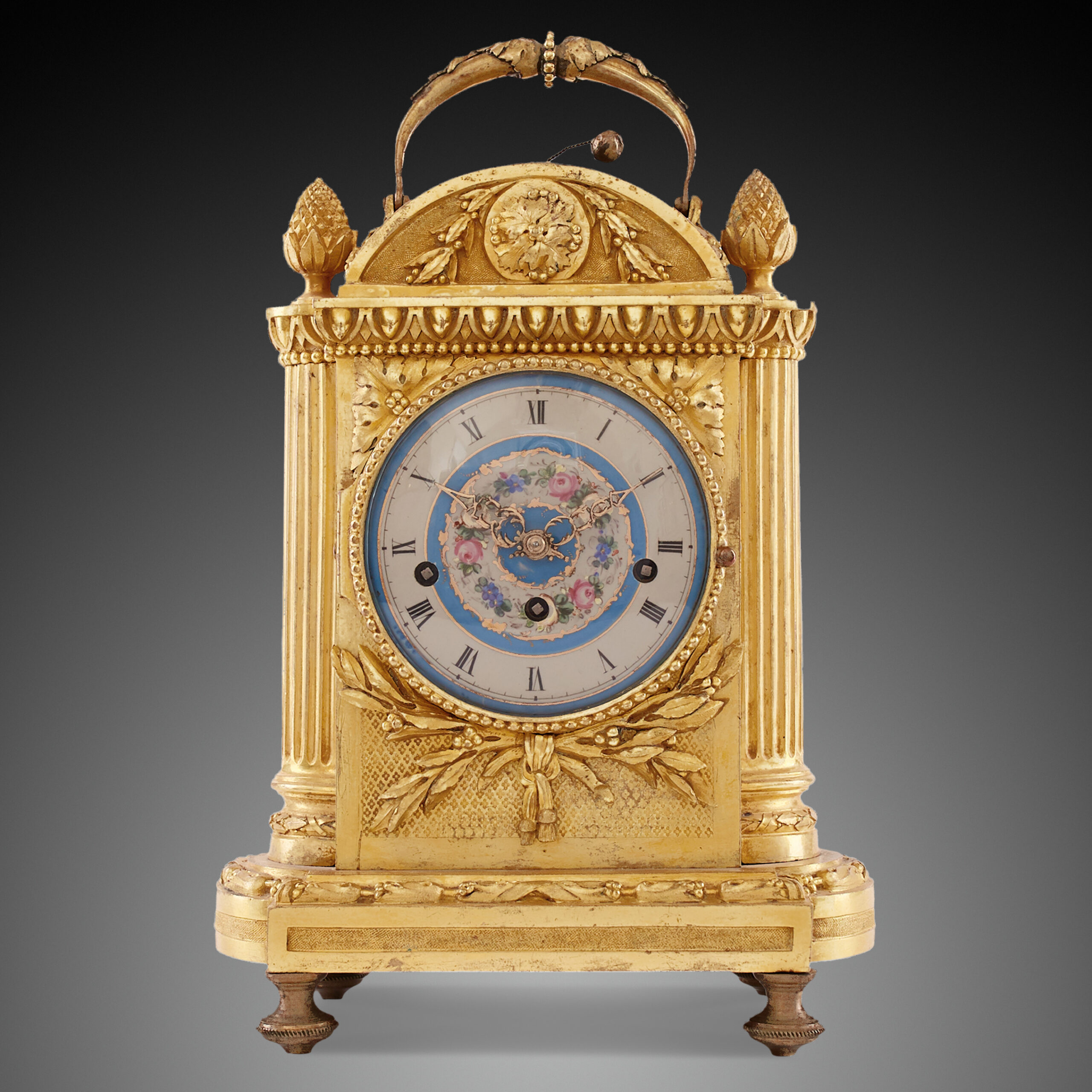
When you look at this piece alongside the earlier Empire clocks, you can really see how the “personality” of French art changed. The Empire style was all about power and perfection, but the Napoleon III style is about emotion and drama. It’s a piece that doesn’t just sit in a room; it tells a story. The combination of the dark bronze, the bright gold, and the green marble makes it a fantastic anchor for a collection, representing a time when French makers were looking back at classical history but infusing it with a much more modern, romantic energy. It’s a beautiful, functioning bridge between the ancient world and the industrial precision of the 19th century.