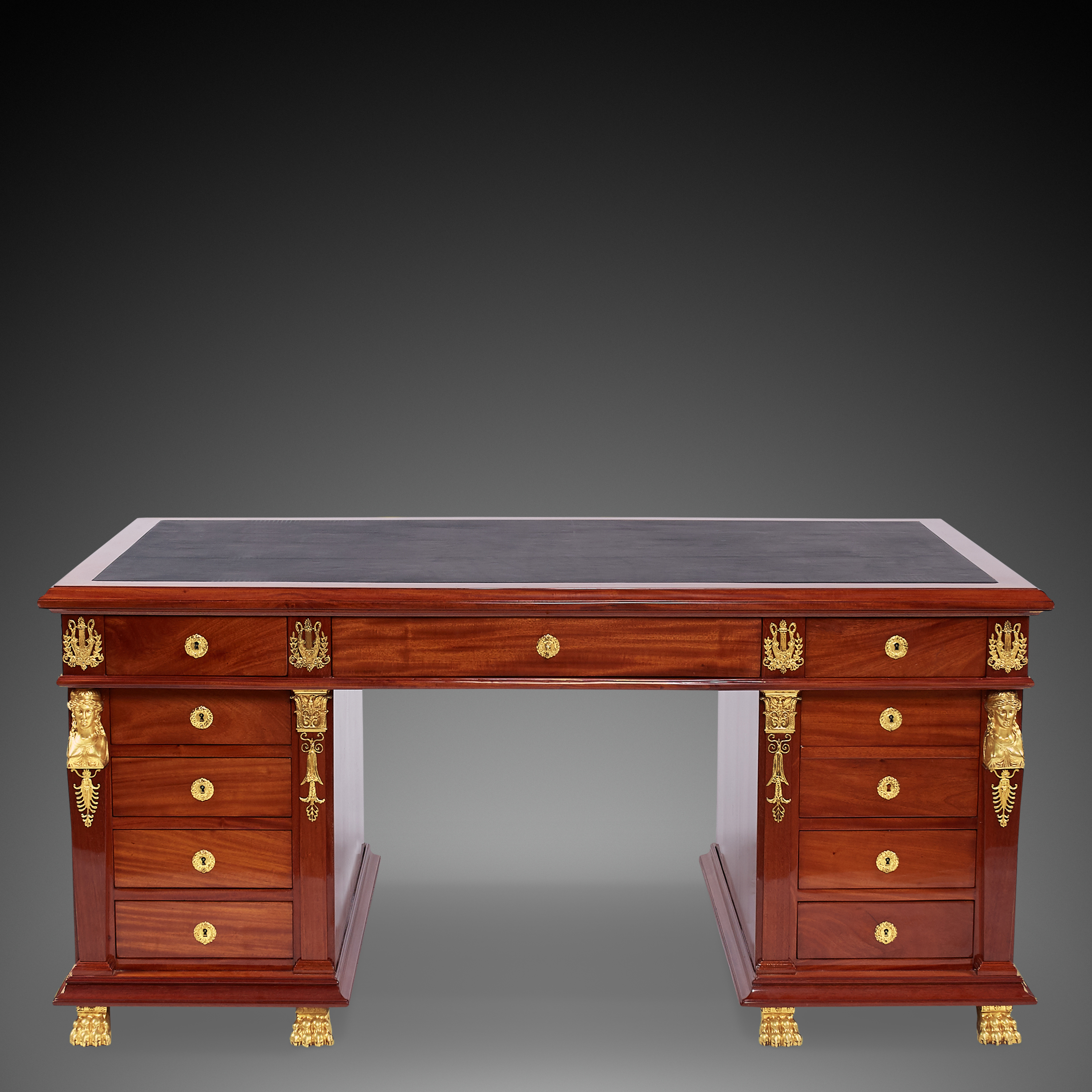
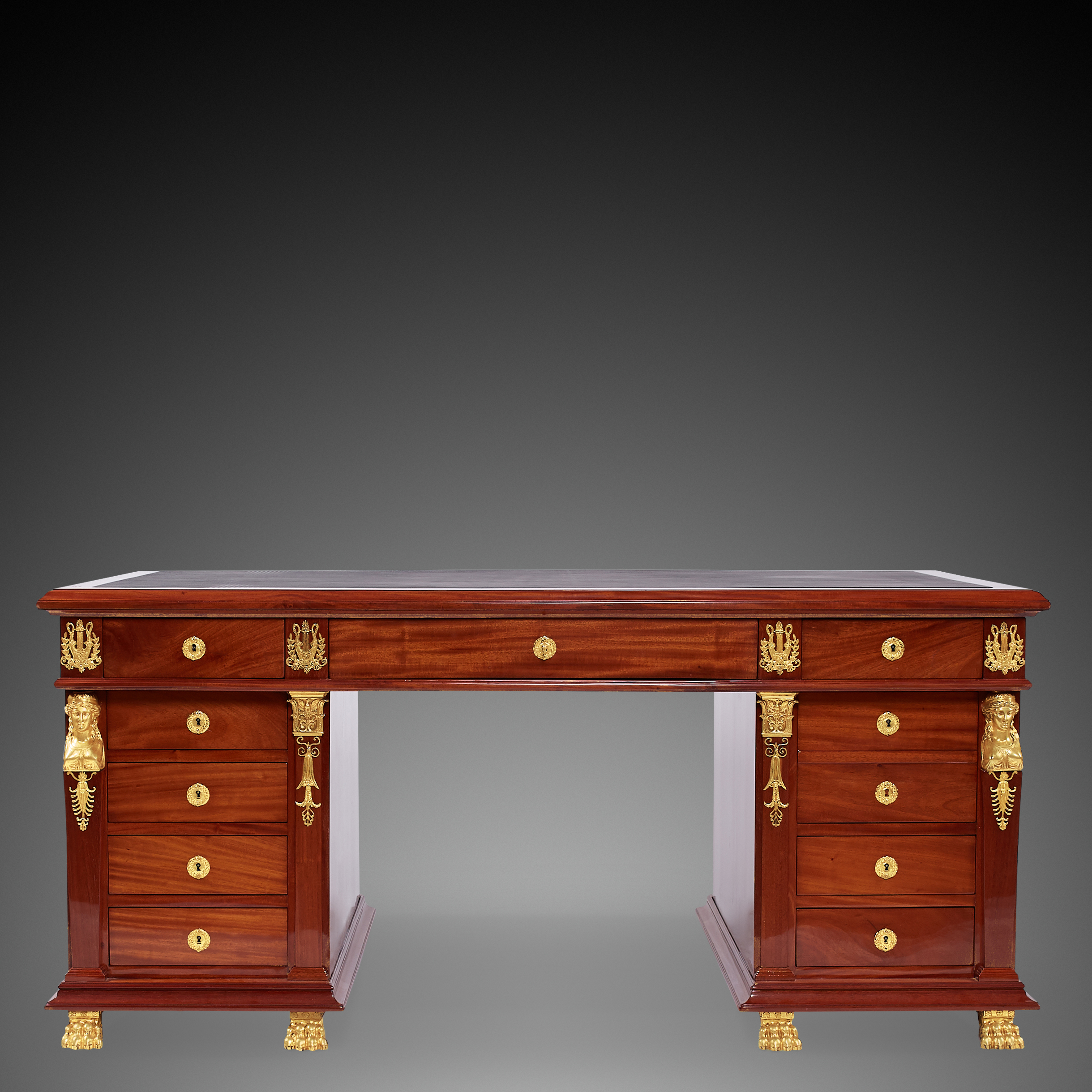
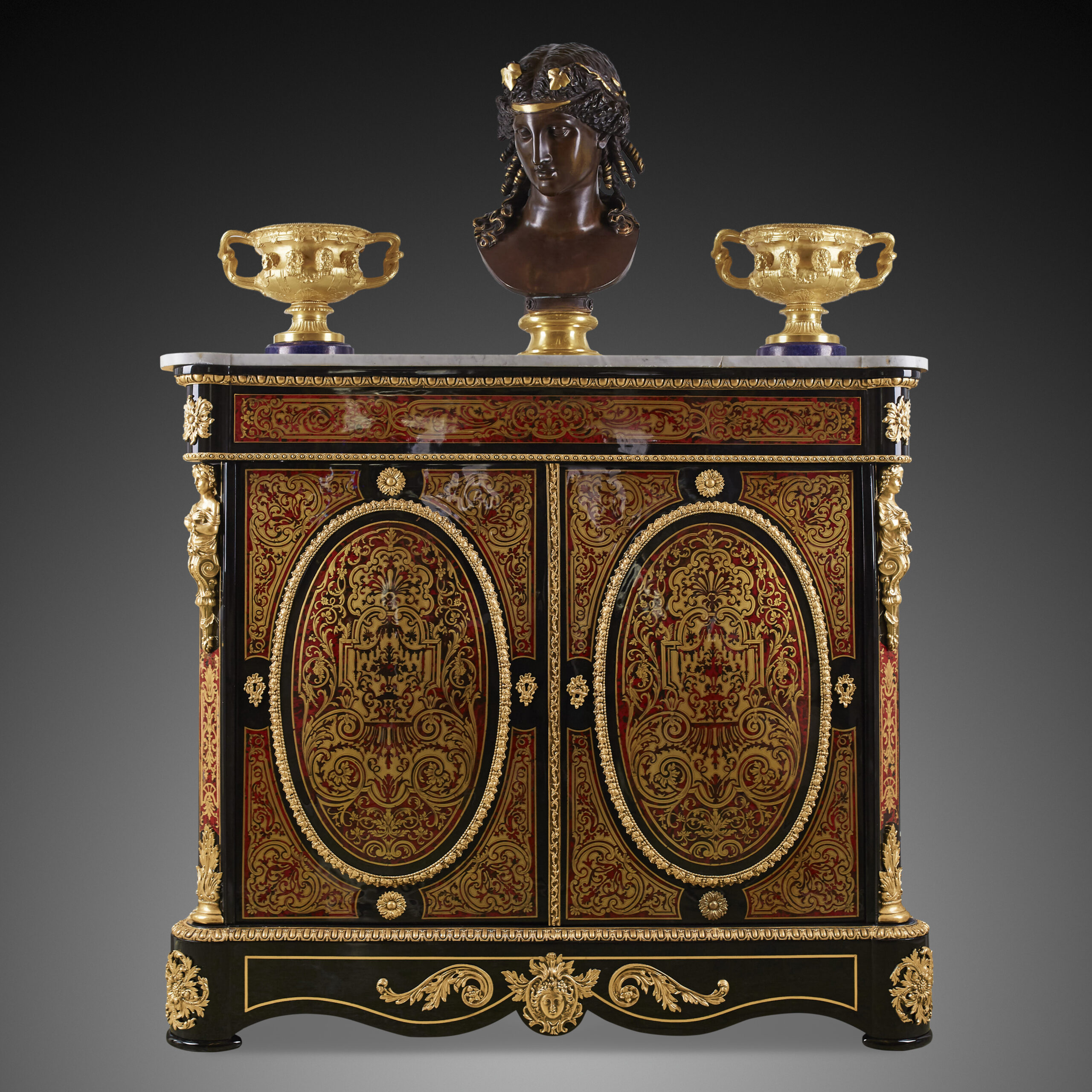
This impressive French desk (bureau plat) is a magnificent example of the Empire revival style during the Napoleon III period, dating from circa 1850–1870.
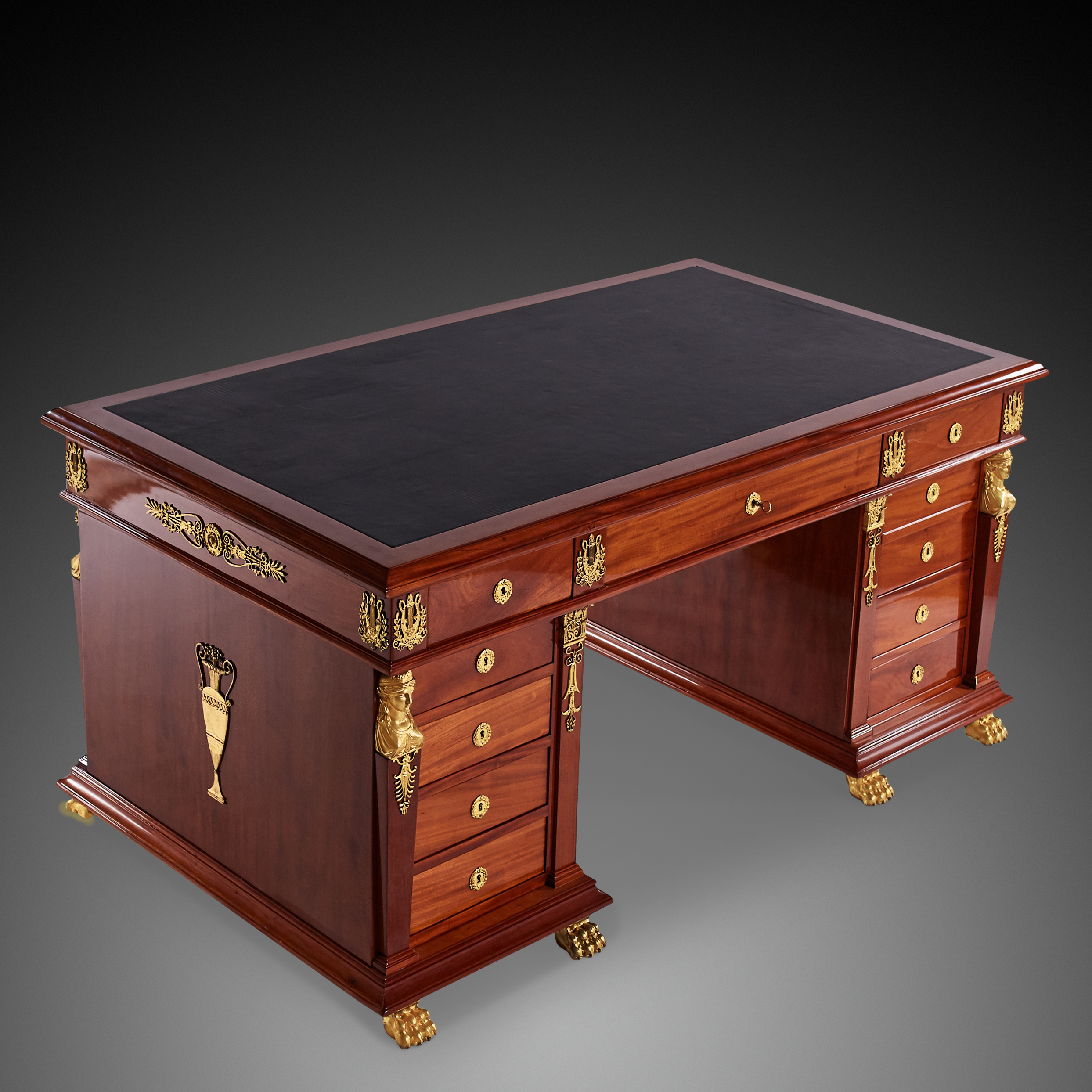
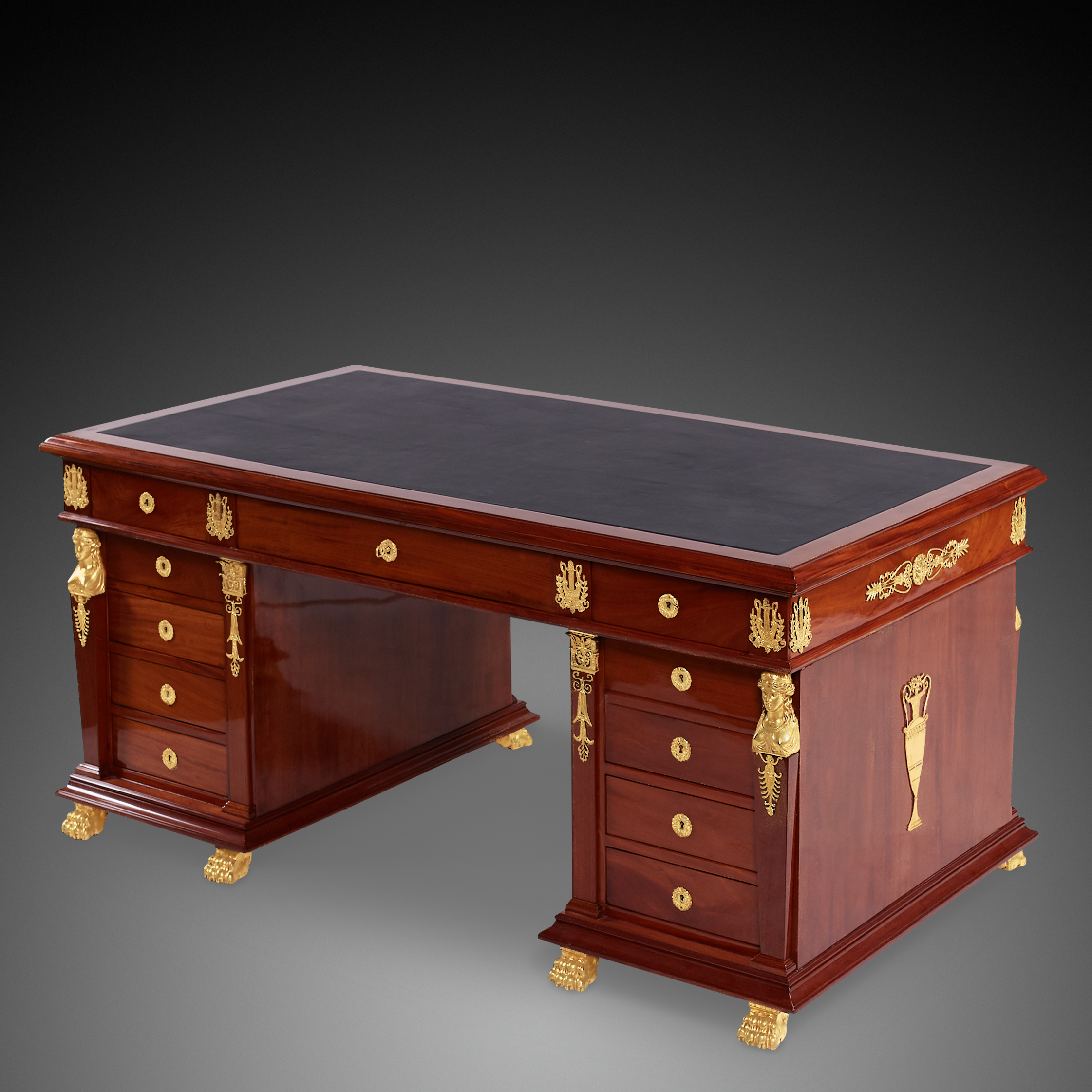
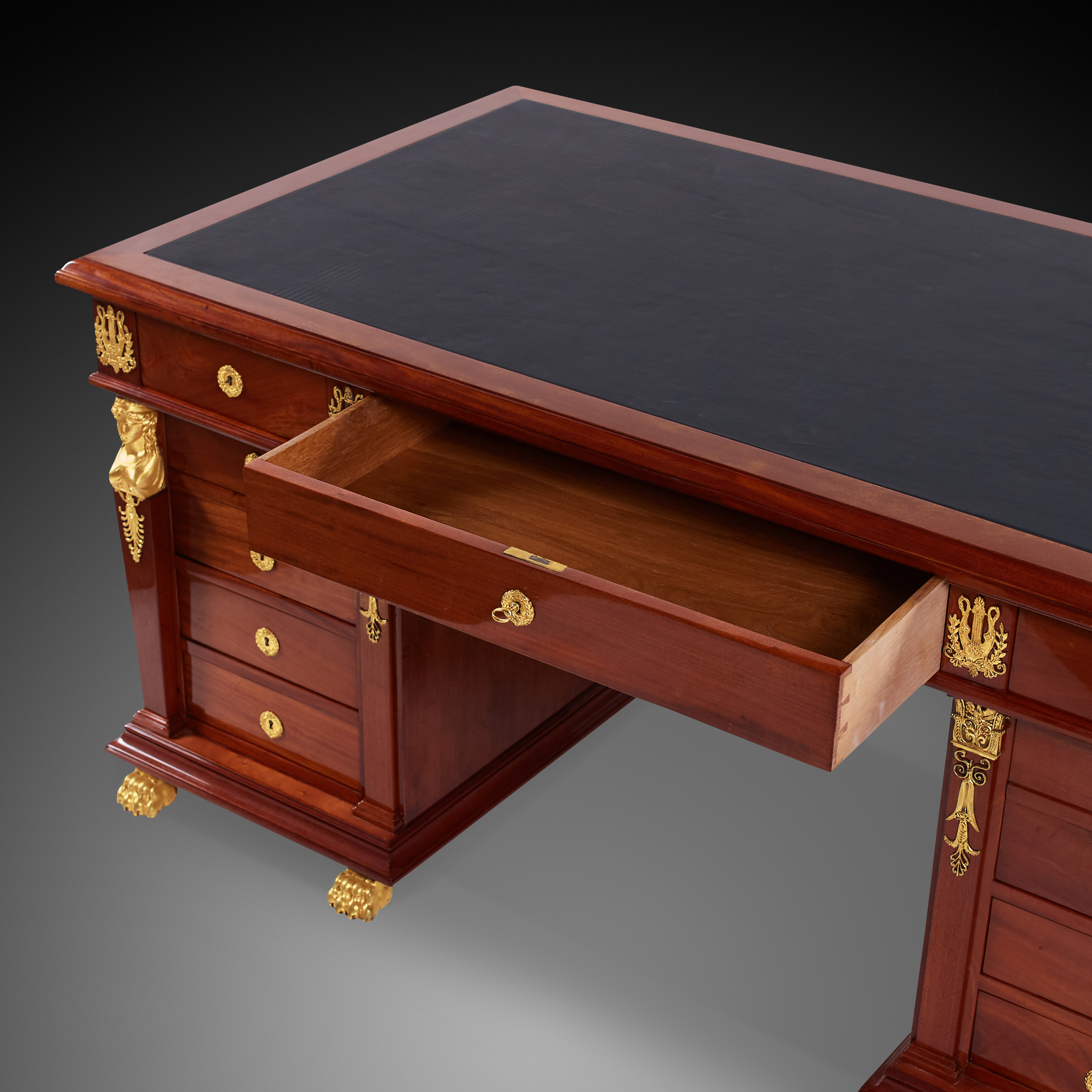
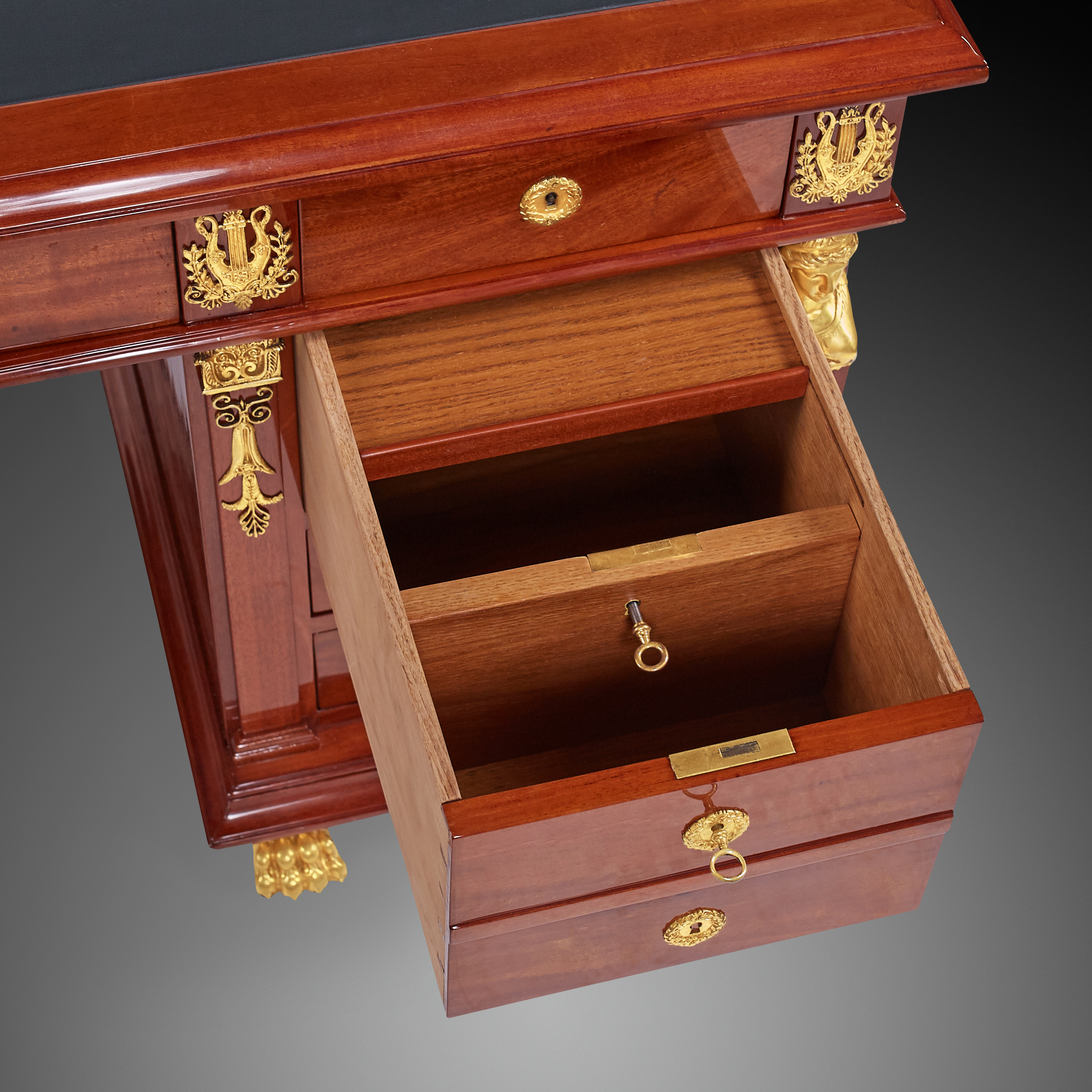
The piece faithfully revives the grand aesthetic of the First French Empire (1804–1815), characterized by monumental scale, rectilinear forms, classical symmetry, and opulent materials. Crafted from richly figured mahogany with a deep, high-gloss French polish, the desk displays clean, architectural lines and a bold profile. It is constructed with two pedestals, each containing drawers, and a generous central kneehole for comfortable use.
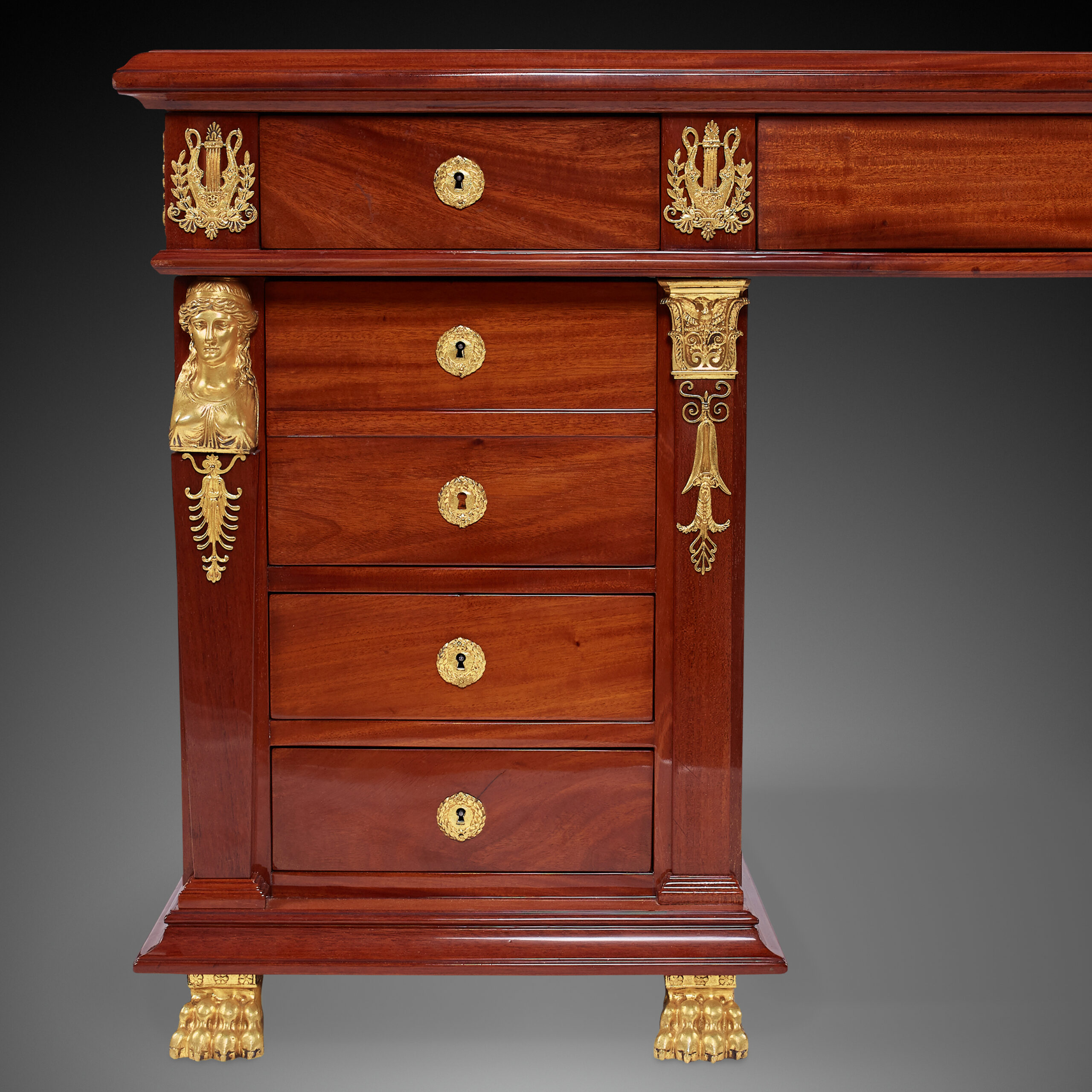
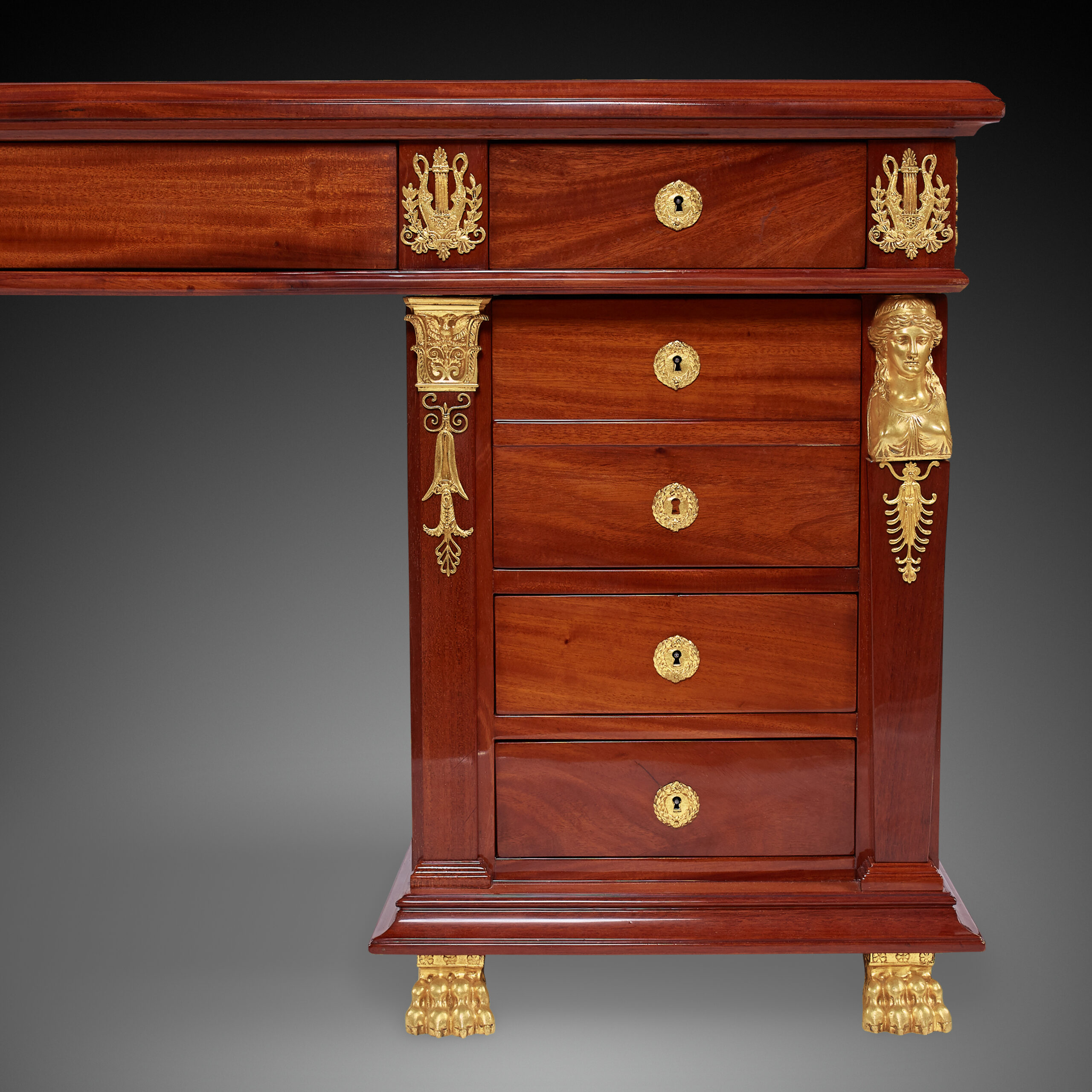
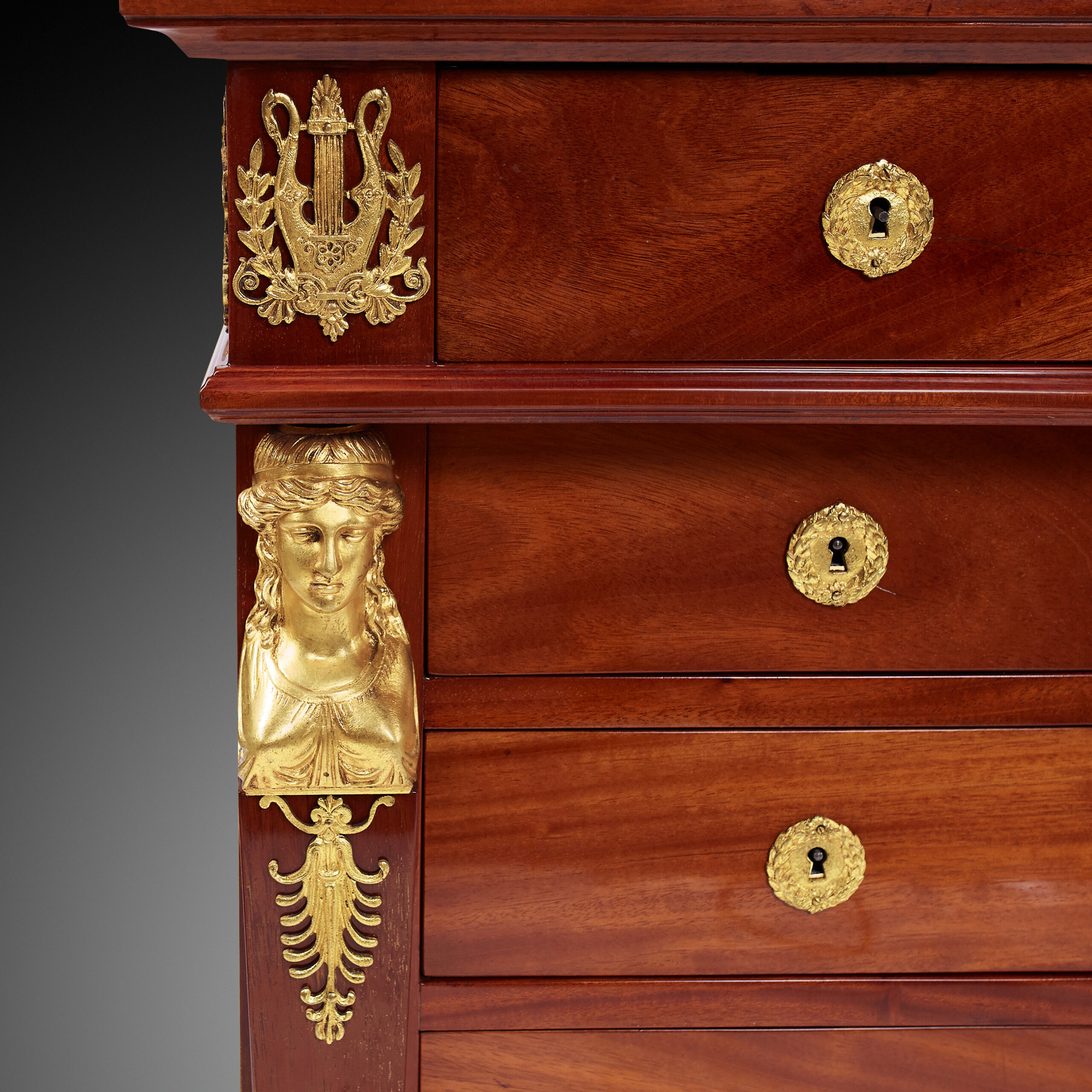
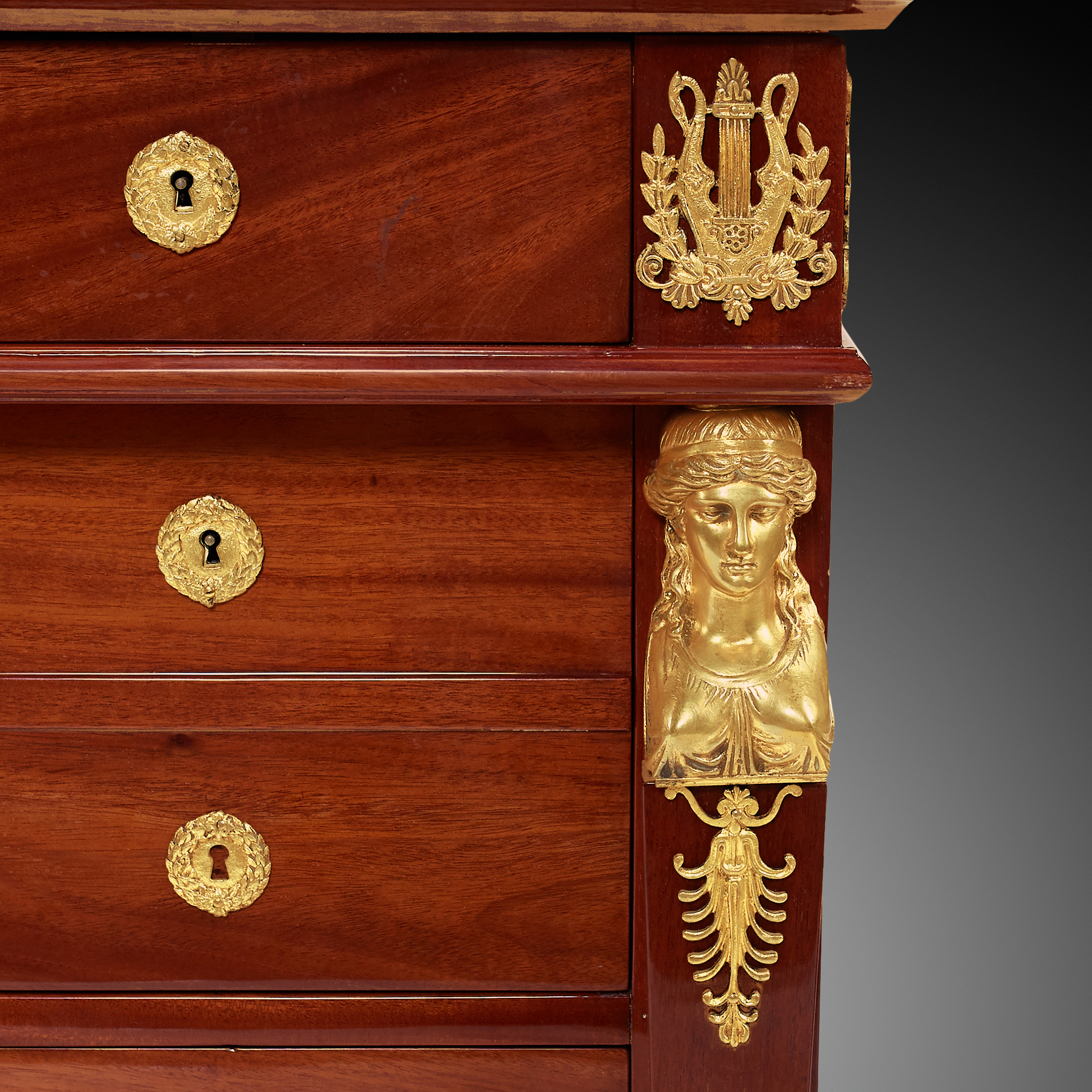
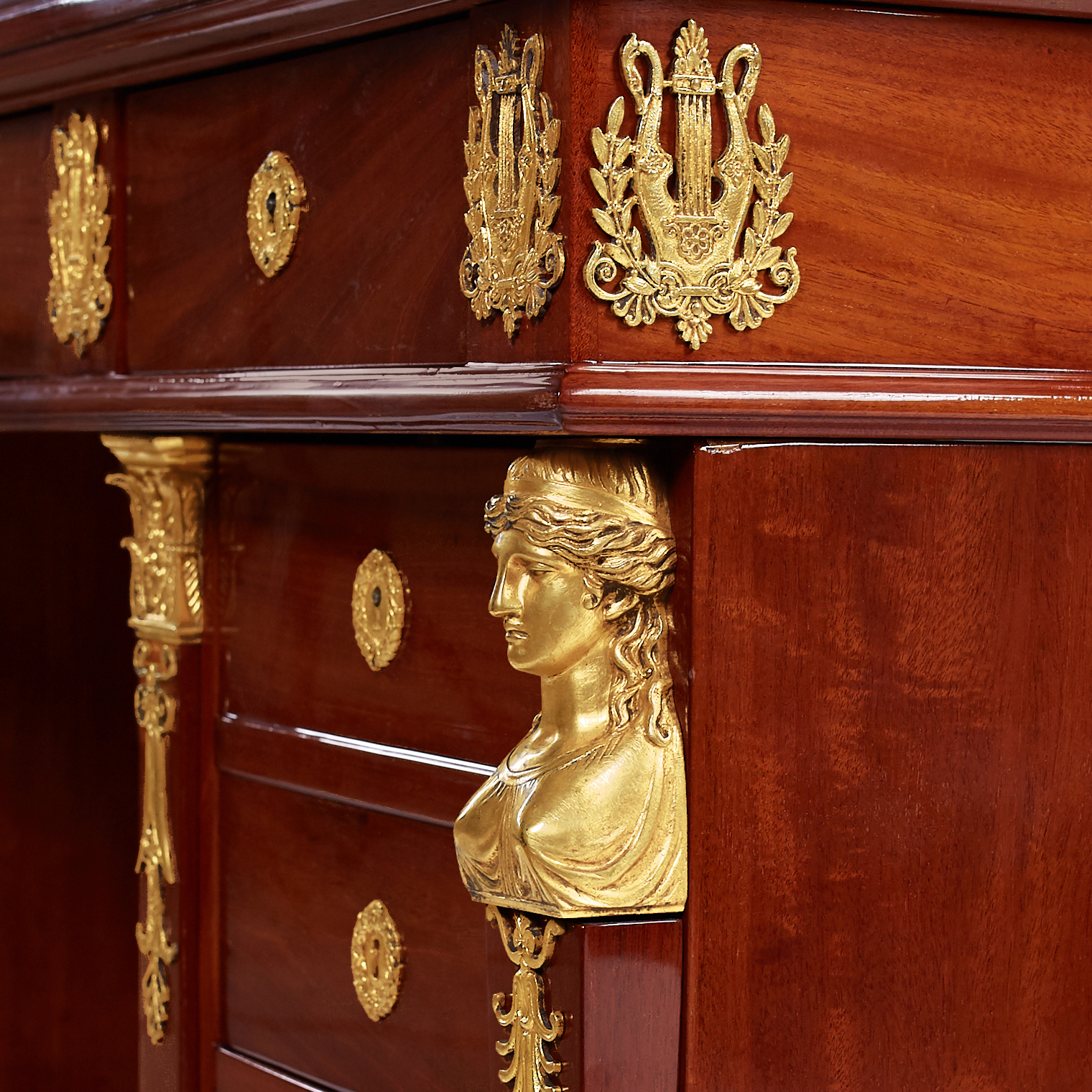
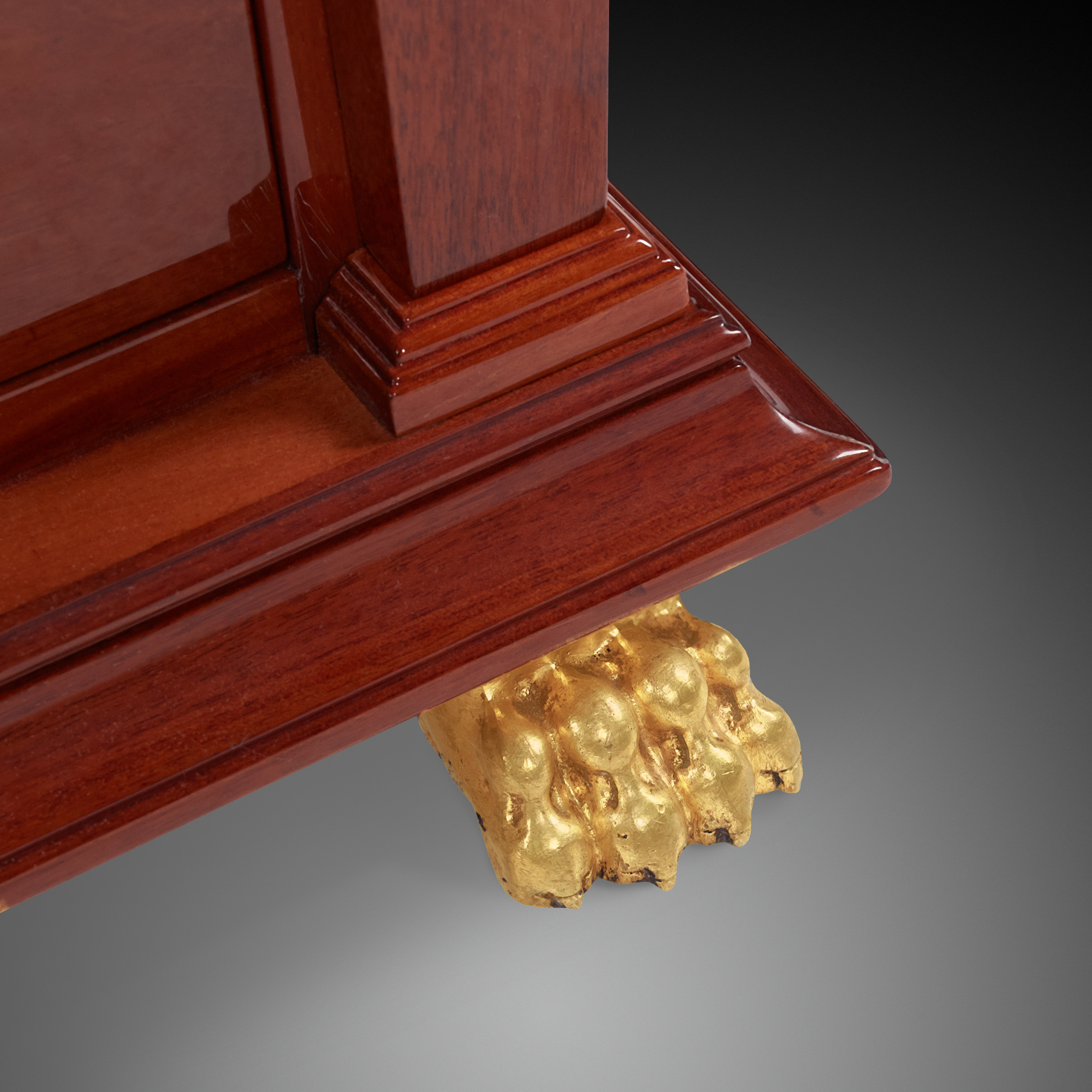
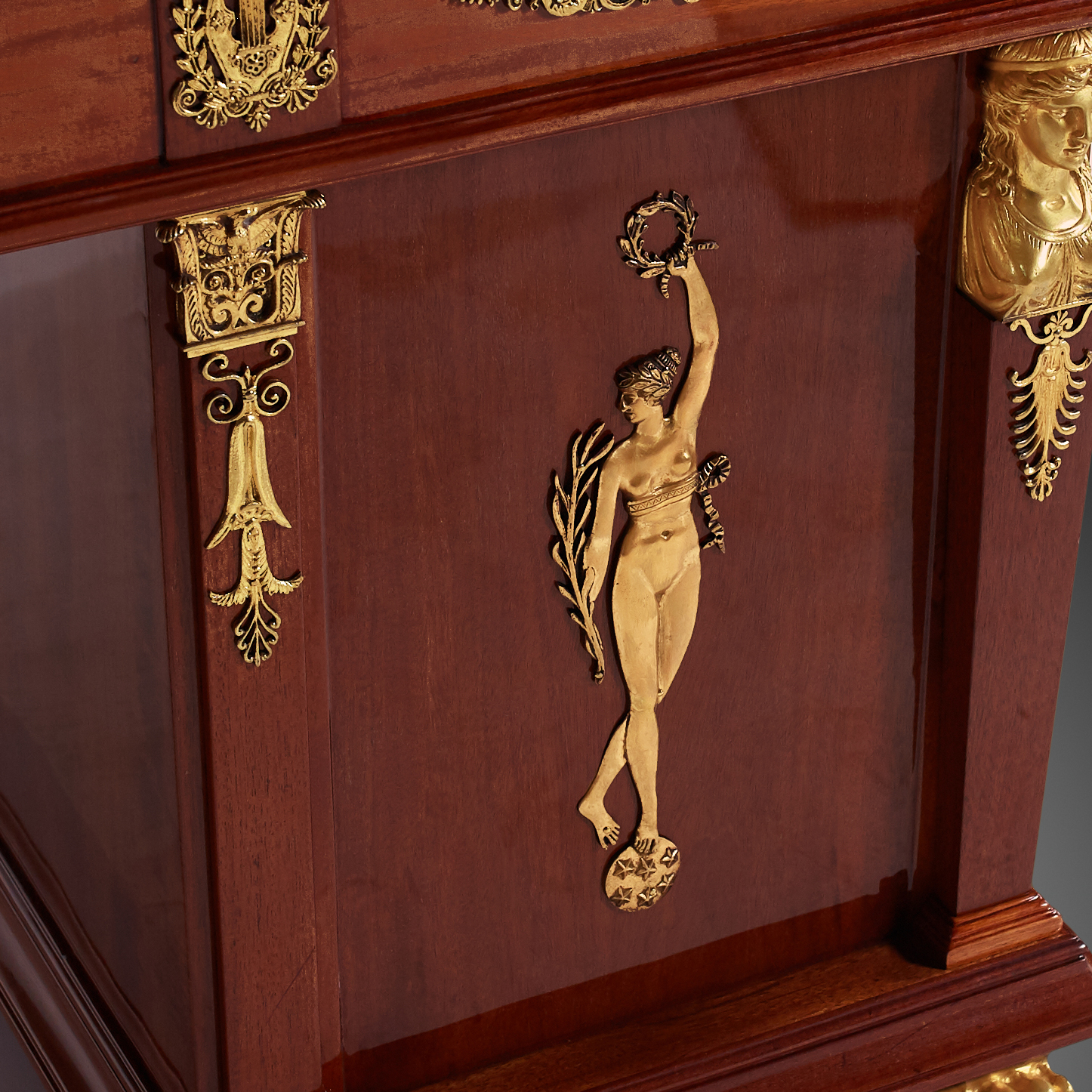
The desk is generously adorned with finely cast and chased gilt-bronze (ormolu) mounts of excellent quality. The drawer fronts are decorated with stylized scrolling foliage, while the central frieze drawer features a large ormolu plaque centred on a classical laurel wreath, the ancient symbol of victory and glory. The upper sections of the pedestals and legs are embellished with sculptural female busts or caryatid-like figures, a favourite classical motif of the Empire period. The pedestals and legs terminate in stylized lion-paw feet, another hallmark of the style. The top is inset with a black leather writing surface framed by a polished wood border.
This desk perfectly reflects the historicist spirit of the Second Empire. Under Napoleon III, there was a widespread revival of the First Empire aesthetic as a way to evoke the glory and authority of the Napoleonic era. By reinterpreting the bold, architectural forms and classical vocabulary of the early 19th century with the technical excellence and richer gilding of the mid-19th century, such pieces allowed the prosperous bourgeoisie and aristocracy to display both cultural sophistication and imperial elegance.
When placed in a study, salon, or formal room, this desk offers both practical workspace and a commanding decorative presence. The warm mahogany, crisp gilt bronze mounts, and classical proportions create a dignified and timeless elegance that is quintessentially Empire.
This is a beautiful and authentic example of Napoleon III ébénisterie, where technical mastery meets historical revival and refined luxury. Its grand scale, high-quality materials, and fine ormolu mounts make it a highly desirable addition to any serious collection of 19th-century French furniture.