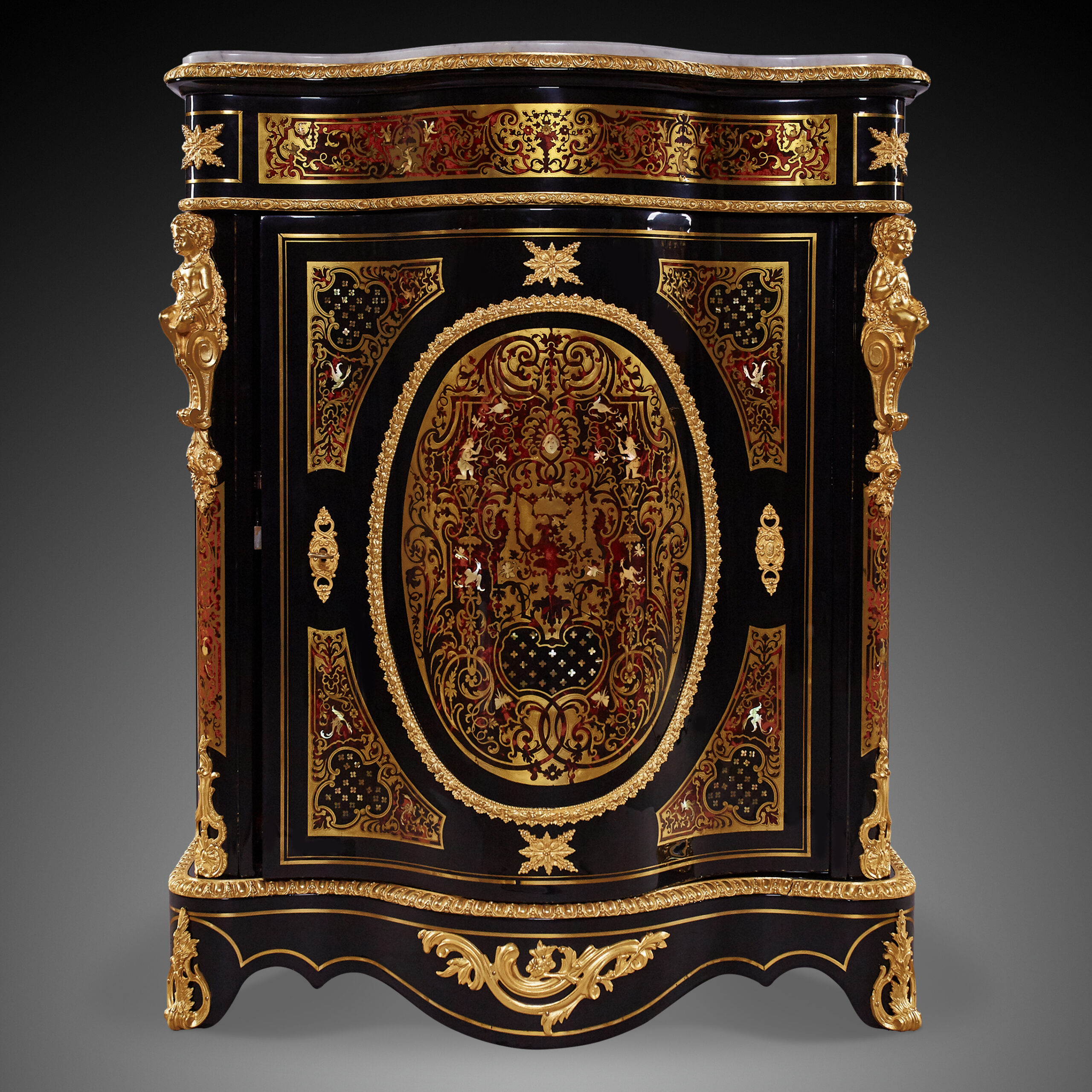
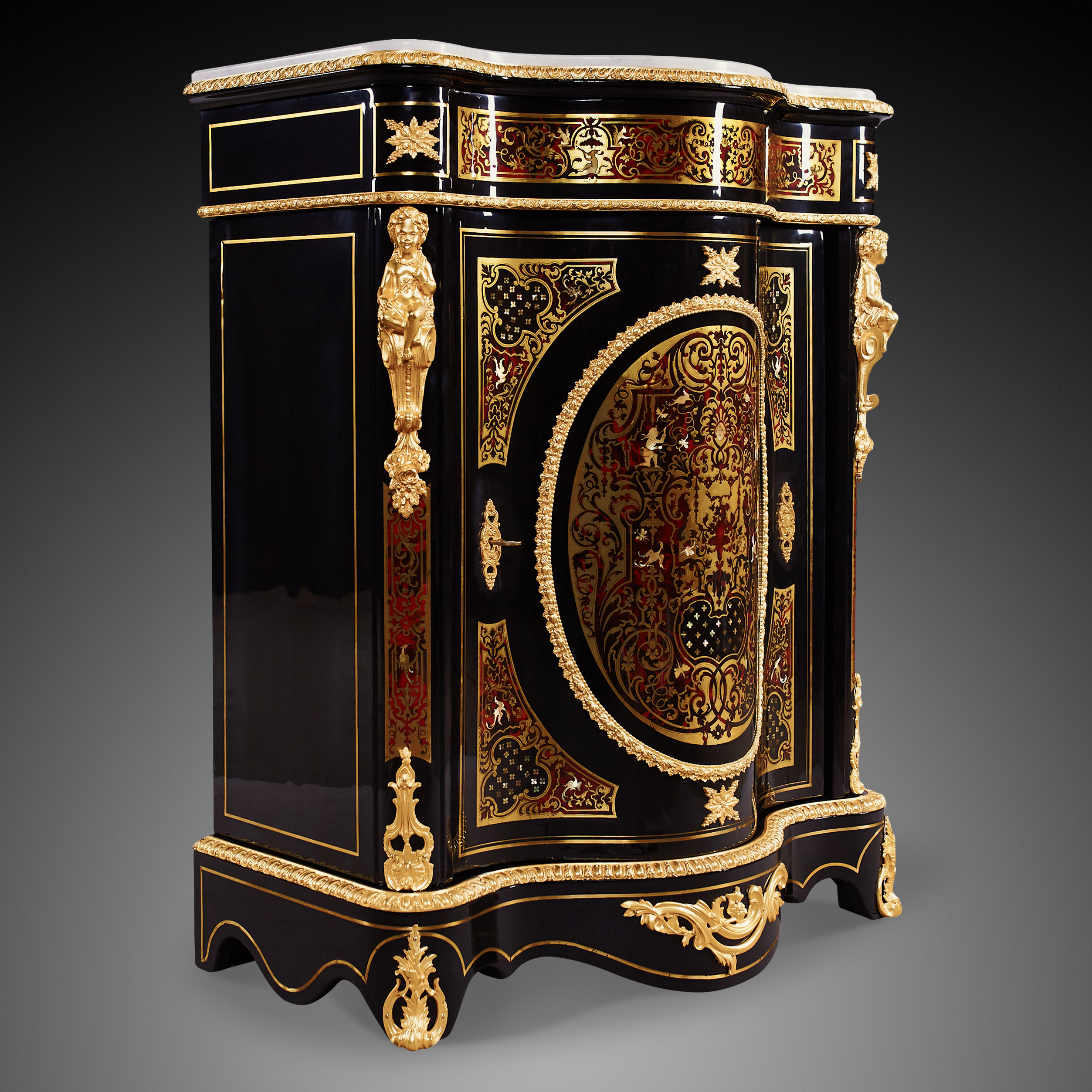
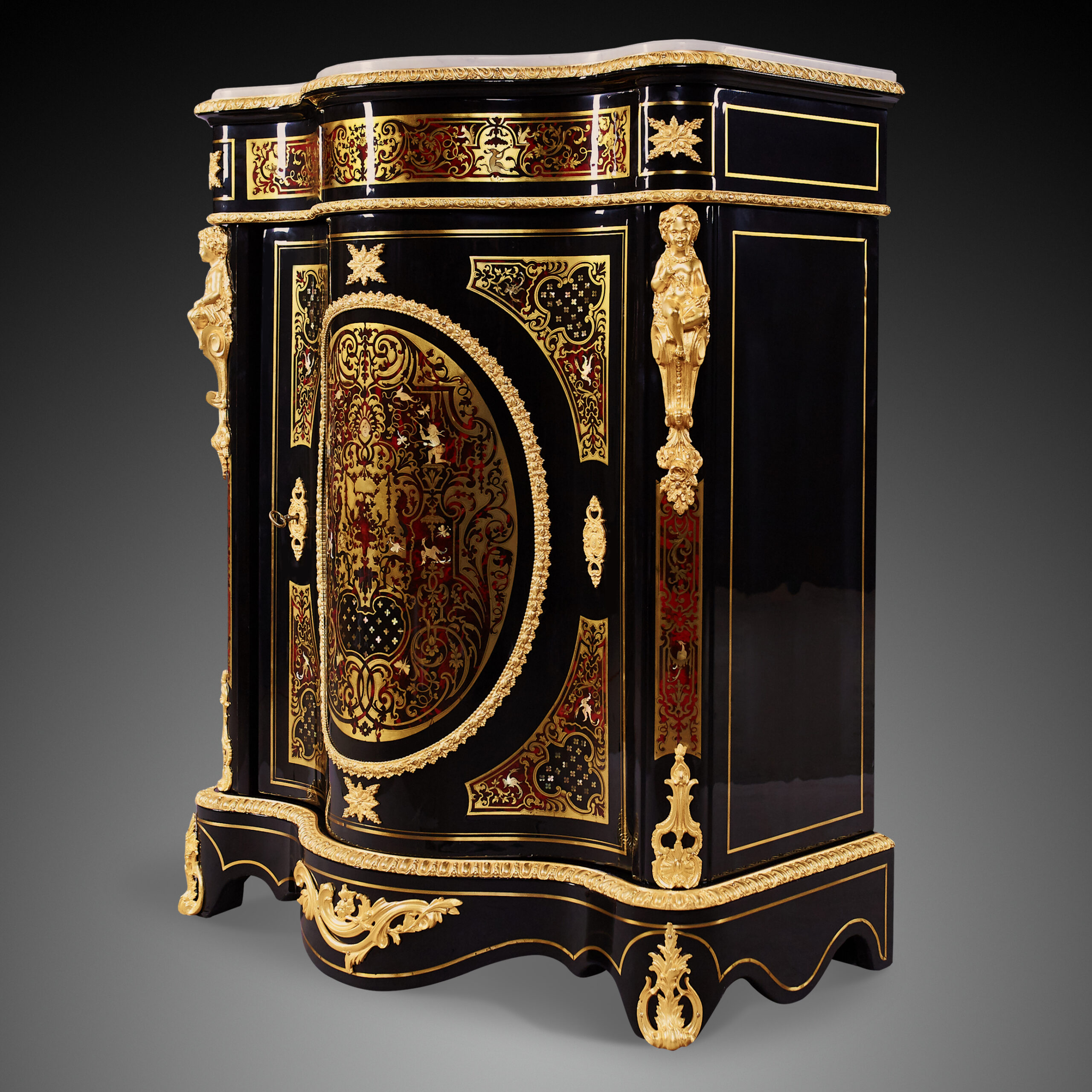
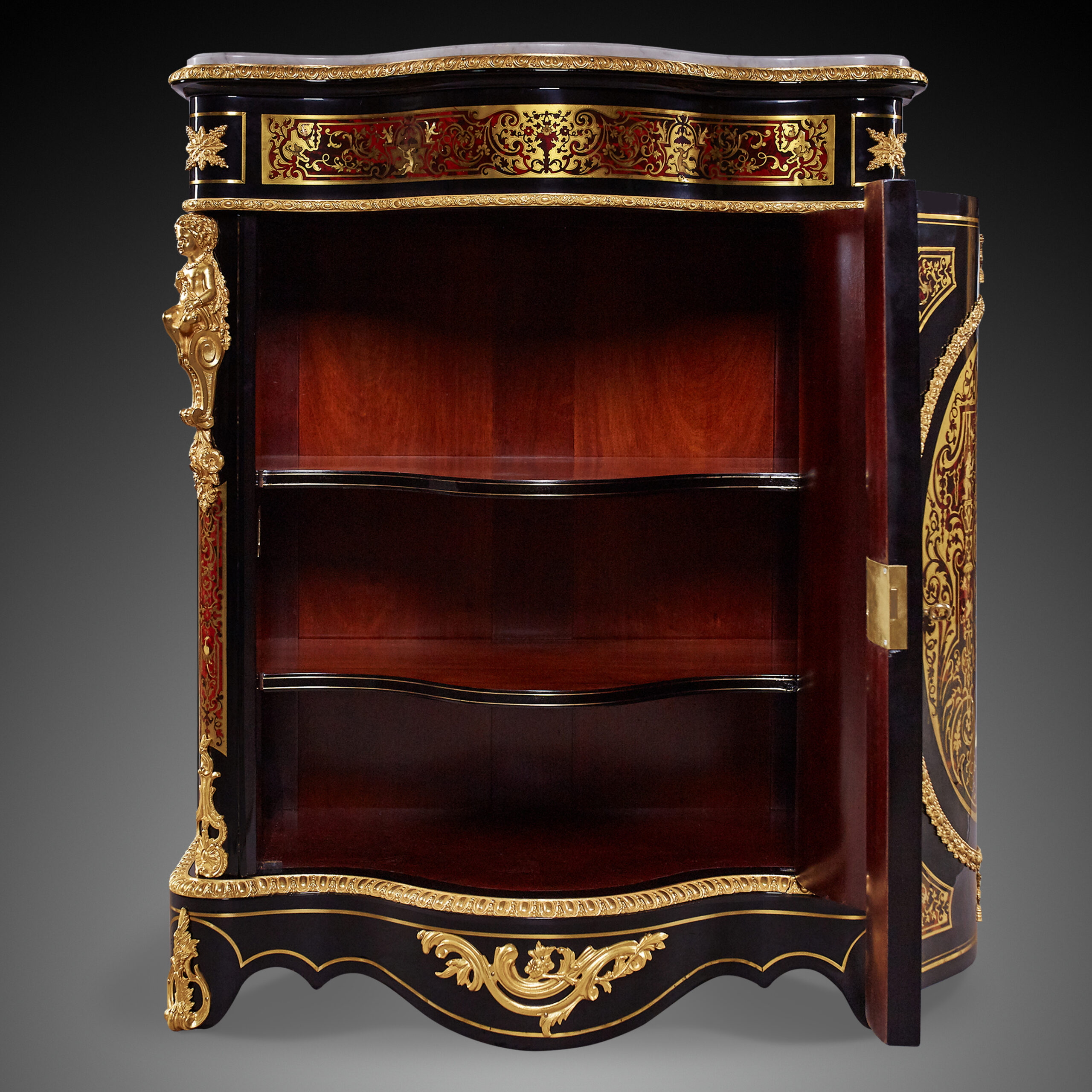
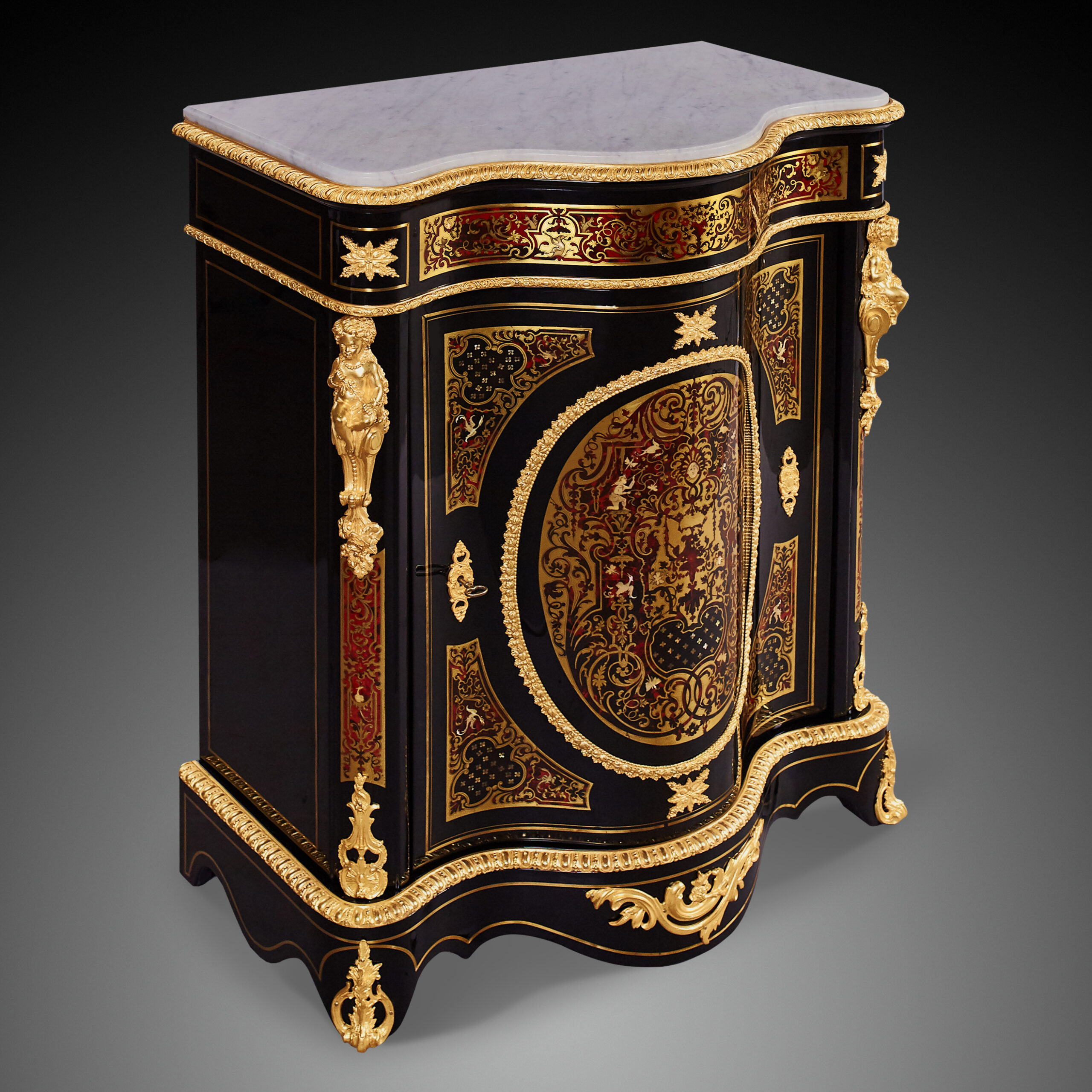
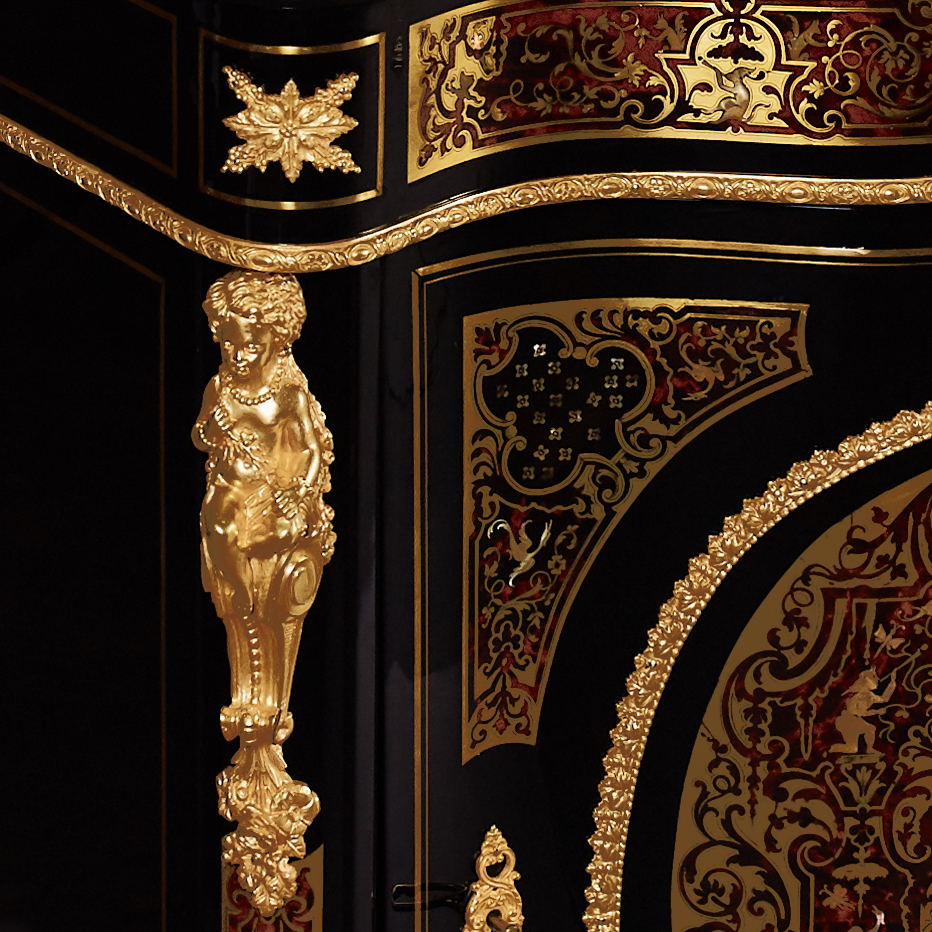
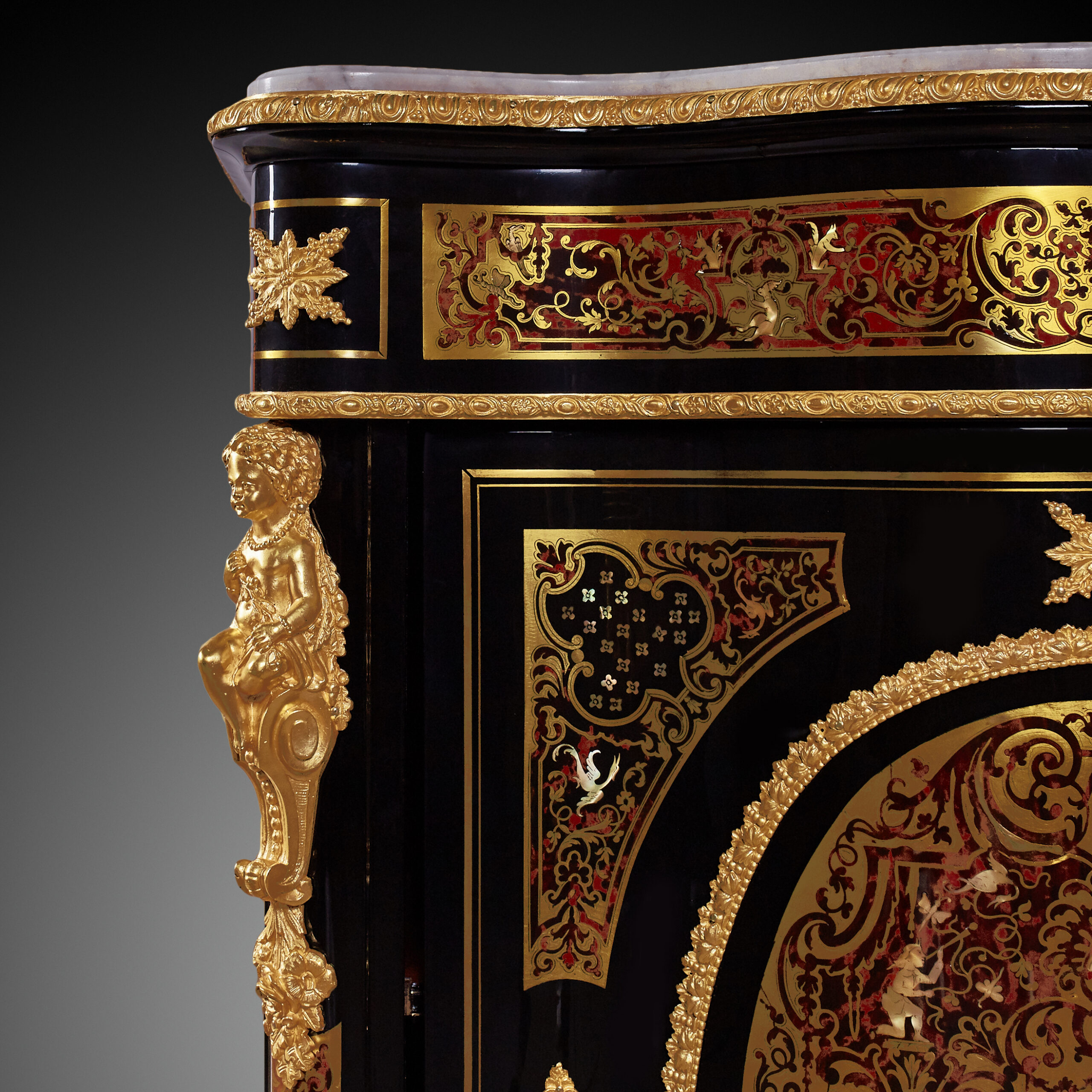
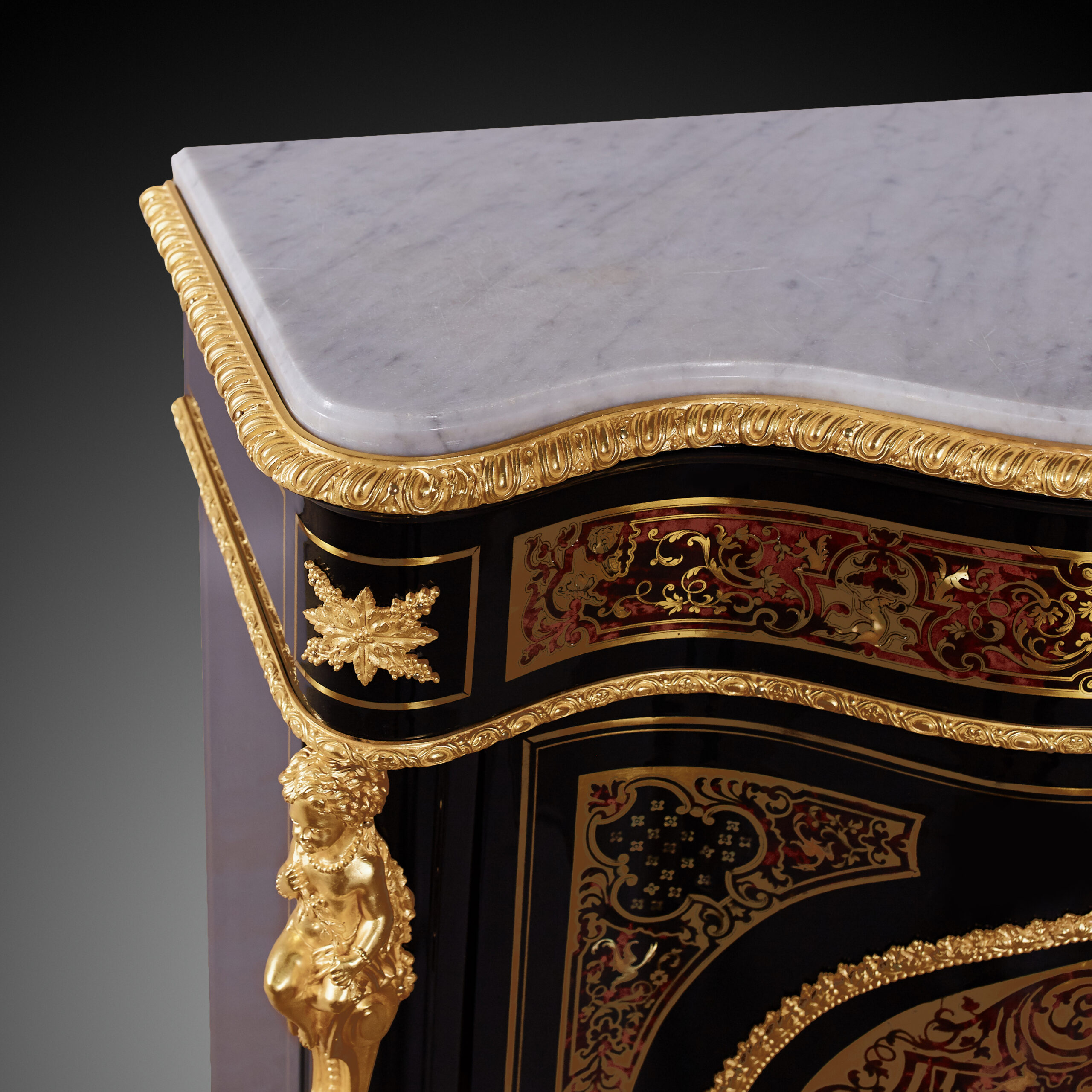
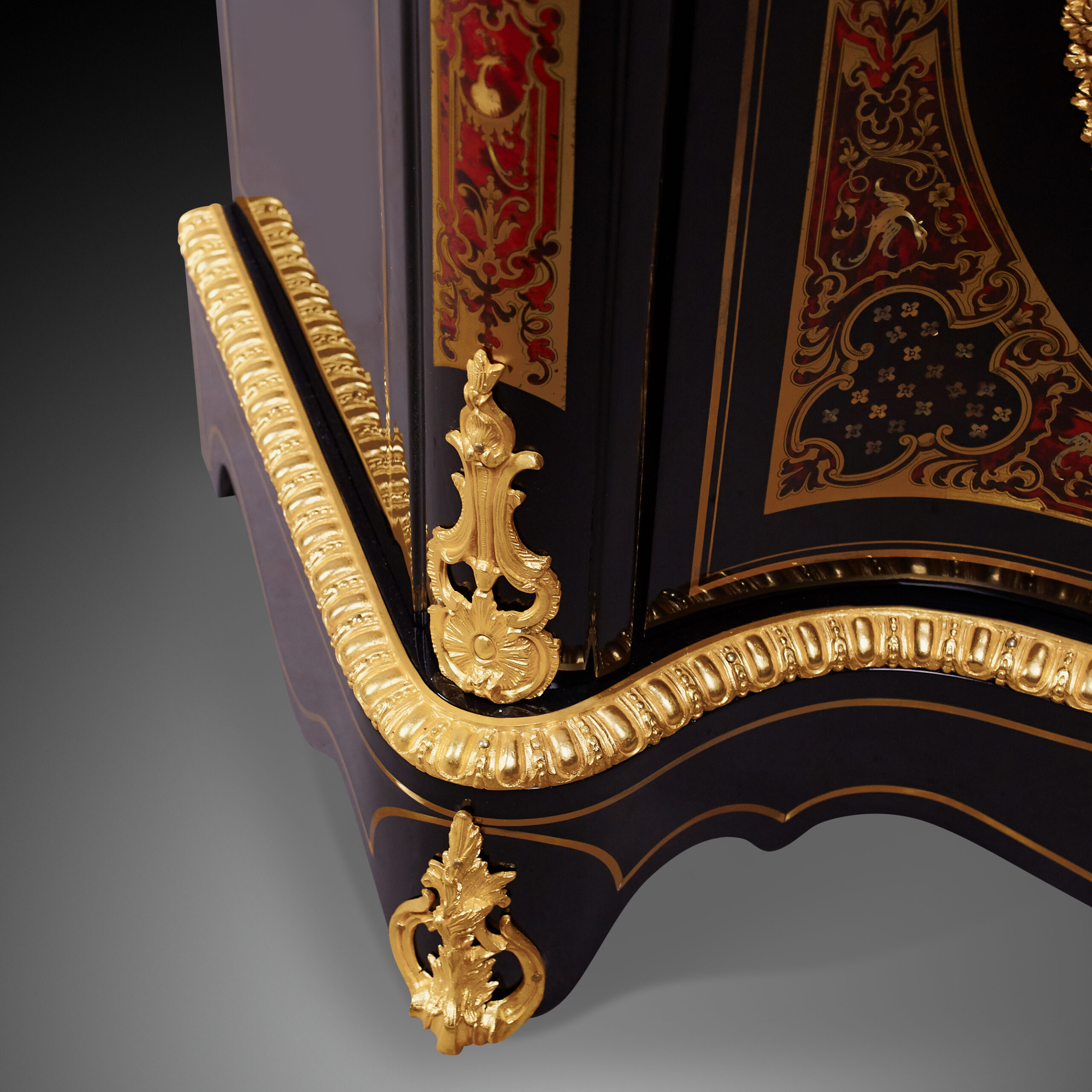
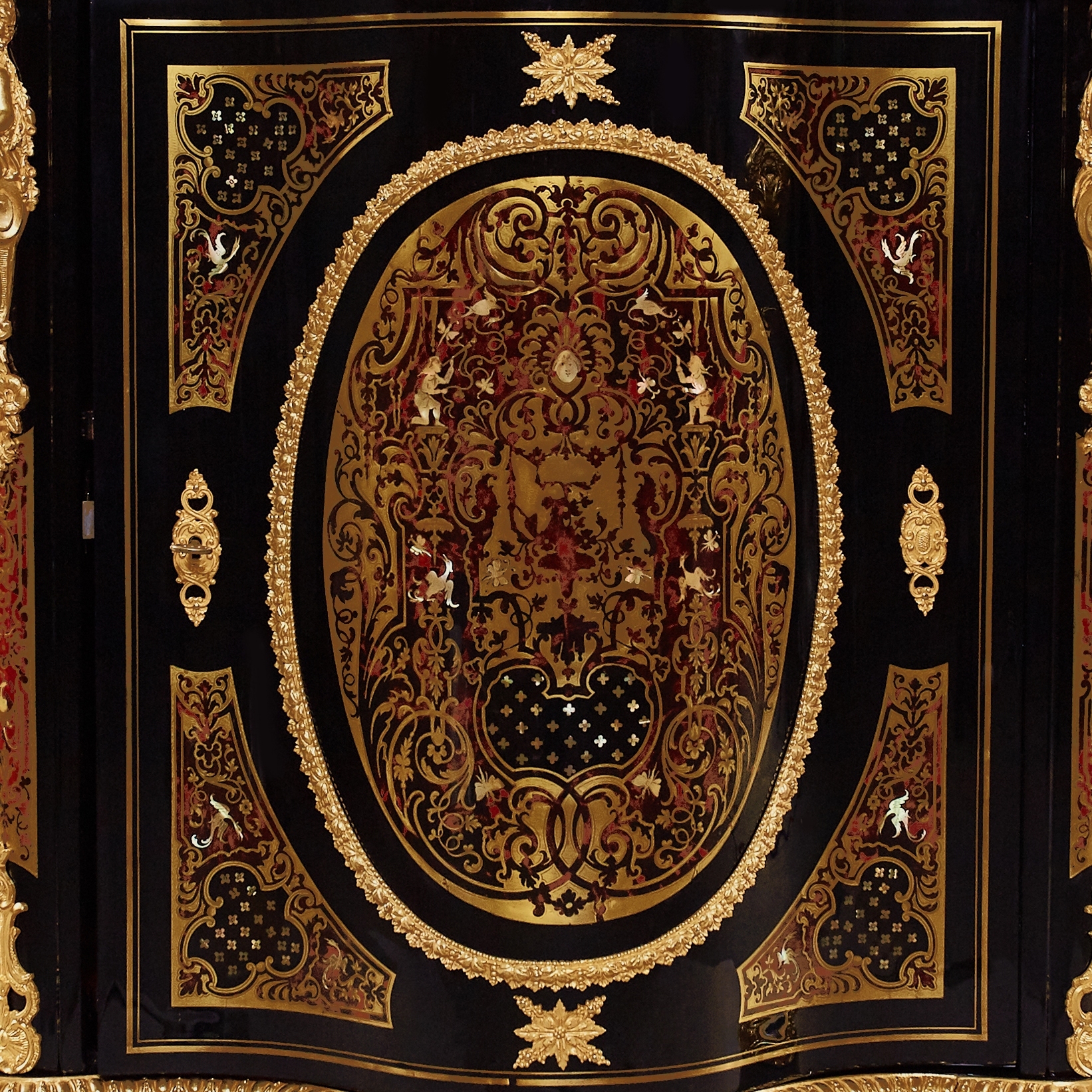
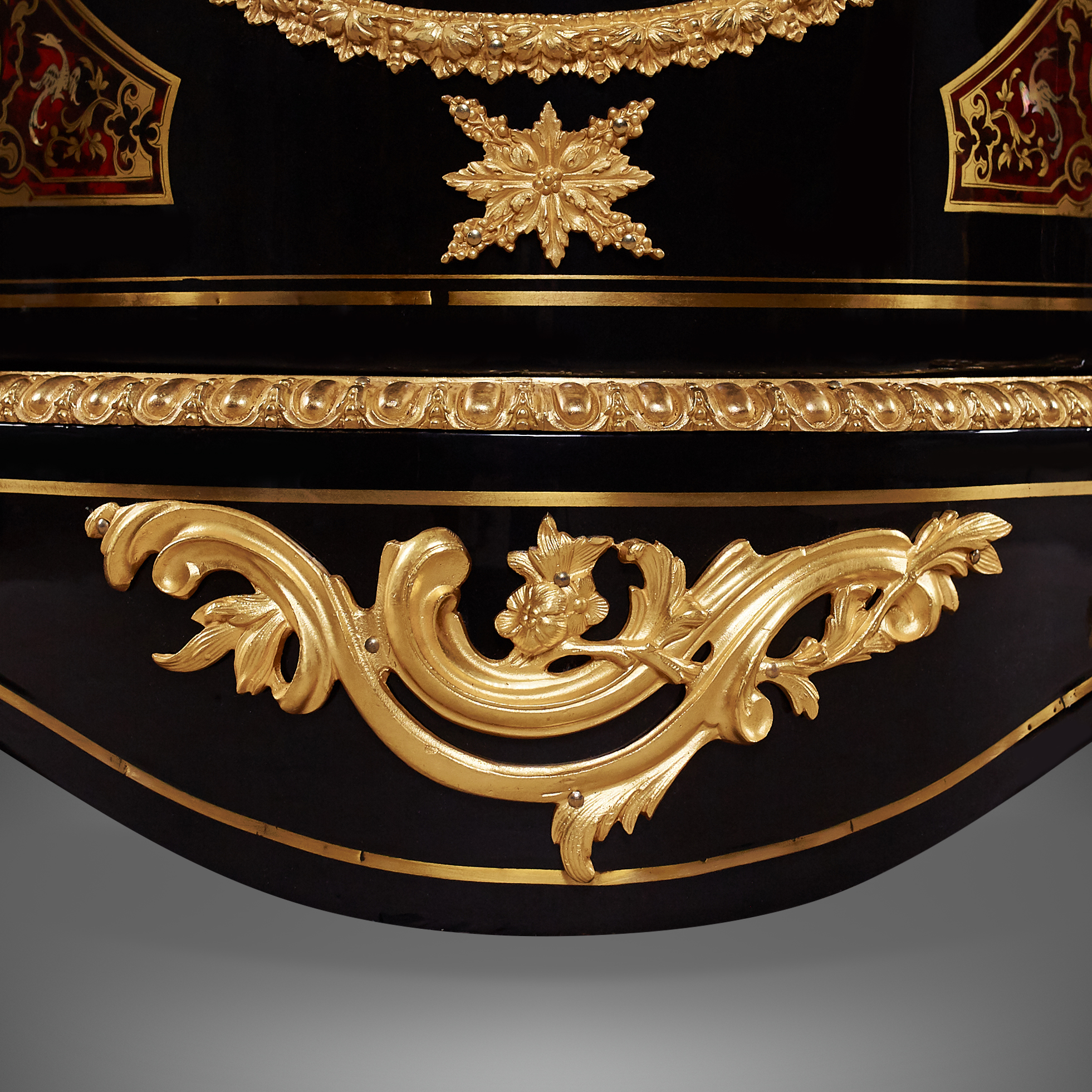
This magnificent commode is a superb example of the Boulle revival style that was highly fashionable during the French 19th Century Napoleon III Period. It is a masterful work of craftsmanship, celebrating the opulent aesthetic of the Louis XIV era through a precise and elaborate execution.
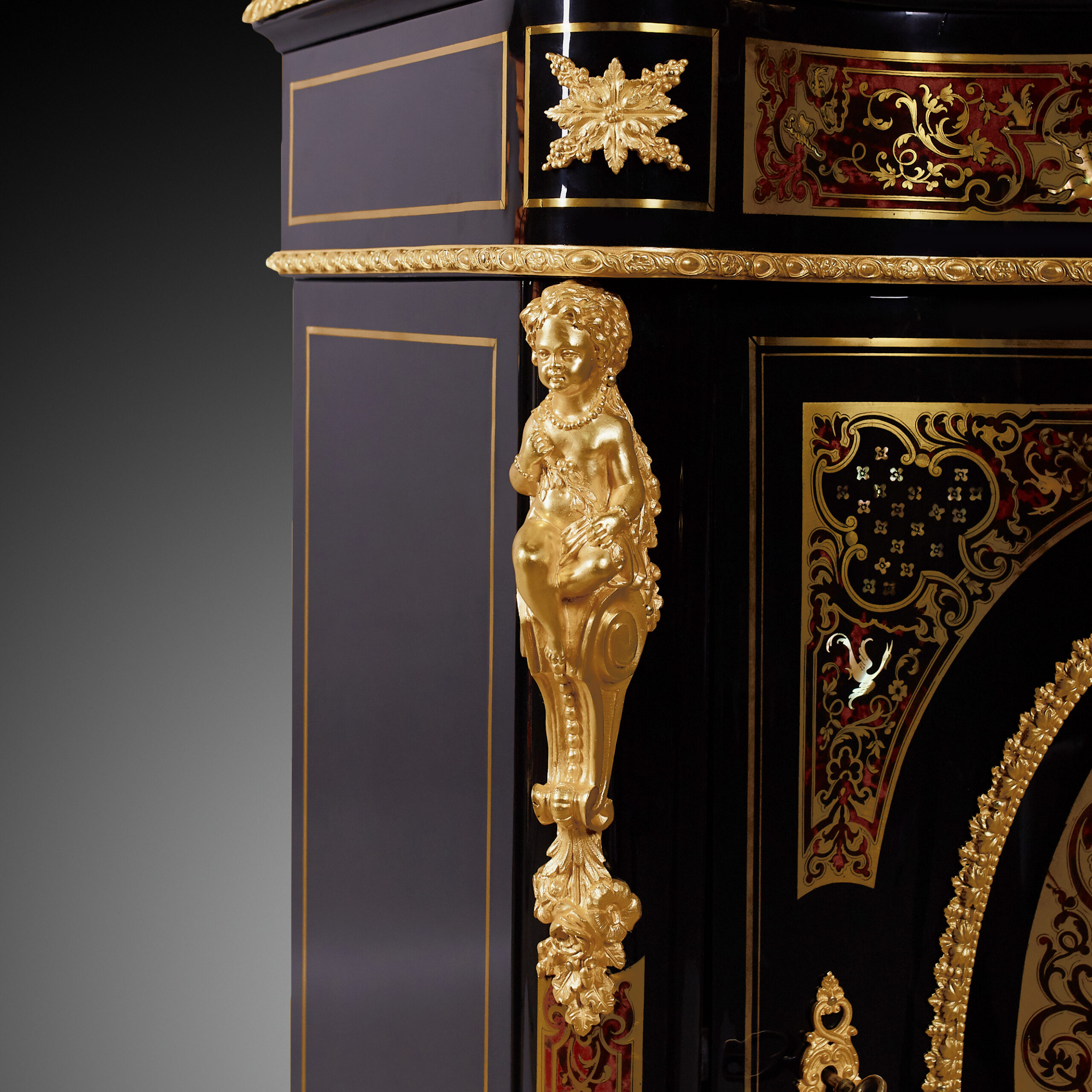
The commode is constructed from black polished wood, likely ebonized, and is a tour de force of marquetry and metalwork. The term “Boulle style” refers to the highly intricate marquetry technique pioneered by the celebrated cabinetmaker André-Charles Boulle (1642–1732). It involves the complex inlay of materials, typically tortoiseshell and brass, into a contrasting ground, creating flowing arabesque and mythological patterns. This commode perfectly captures that aesthetic, with its dark, ebonized wood providing a dramatic background for the elaborate marquetry panels.
The piece is further enhanced by exceptionally detailed gilt bronze (ormolu) mounts. These mounts frame the commode’s undulating architectural form and include sculptural elements such as caryatids and scrolling foliage. The combination of the rich gold of the gilding, the intricate, shimmering brass marquetry, and the deep, dark wood creates a visual effect of unparalleled luxury. This piece is a testament to the Napoleon III period’s love for historicism and its ability to produce pieces of extraordinary quality and artistic grandeur.
Historical Context and Significance
The history of this piece is embedded in its style, materials, and the very period in which it was created. This commode is a perfect example of the artistic values and historical mindset of the French Second Empire under Napoleon III.
The Boulle Revival as a Political Statement: The original Boulle marquetry style was perfected in the late 17th century by André-Charles Boulle, the cabinetmaker to King Louis XIV. By reviving this style, Napoleon III’s regime was making a political statement. It was a way for the new imperial power to symbolically link itself to the grandeur and prestige of the “Sun King,” France’s most powerful and artistically significant monarch. This commode is a tangible link between a 19th-century empire and a 17th-century monarchy.
Second Empire Eclecticism: The Napoleon III period (1852-1870) was a time of great economic prosperity in France. As a new bourgeois class gained wealth, they sought to project an image of legitimacy and cultured taste. One of the primary ways they did this was by furnishing their homes with objects that revived and celebrated the grand styles of France’s past, particularly the luxurious aesthetics of the Louis XIV and Louis XVI periods. This commode, with its lavish ornamentation and form, is a direct result of this historicist trend.
19th-Century Technical Mastery: While inspired by the past, this commode is also a product of the industrial revolution. The intricate gilt bronze (ormolu) mounts that adorn the piece were cast and chased with a precision that was difficult to achieve two centuries earlier. The “Boulle” marquetry itself, while honoring the original technique of inlaying brass and other materials, demonstrates a 19th-century flair for heightened detail and an overall sense of abundance that was a hallmark of the Second Empire style.