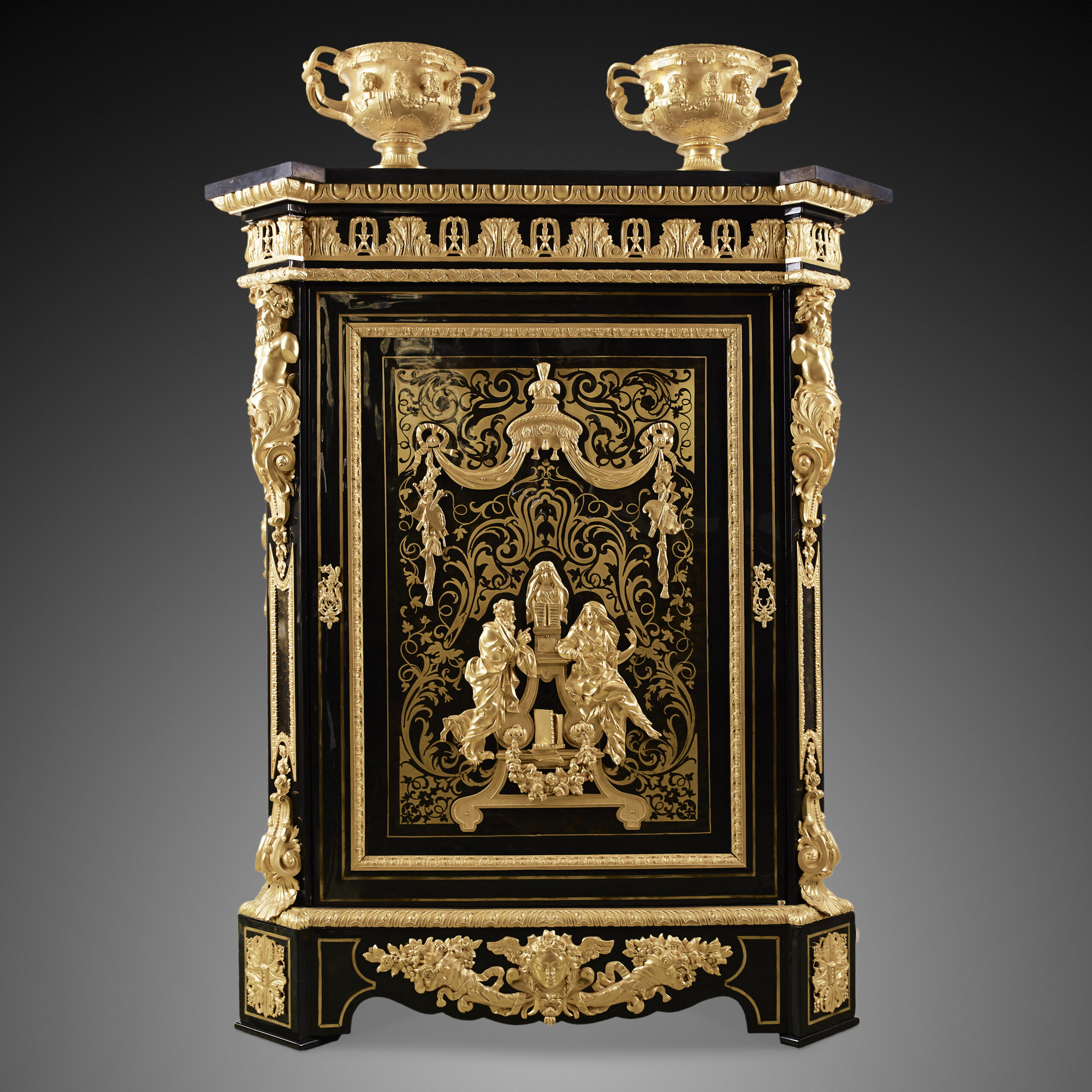
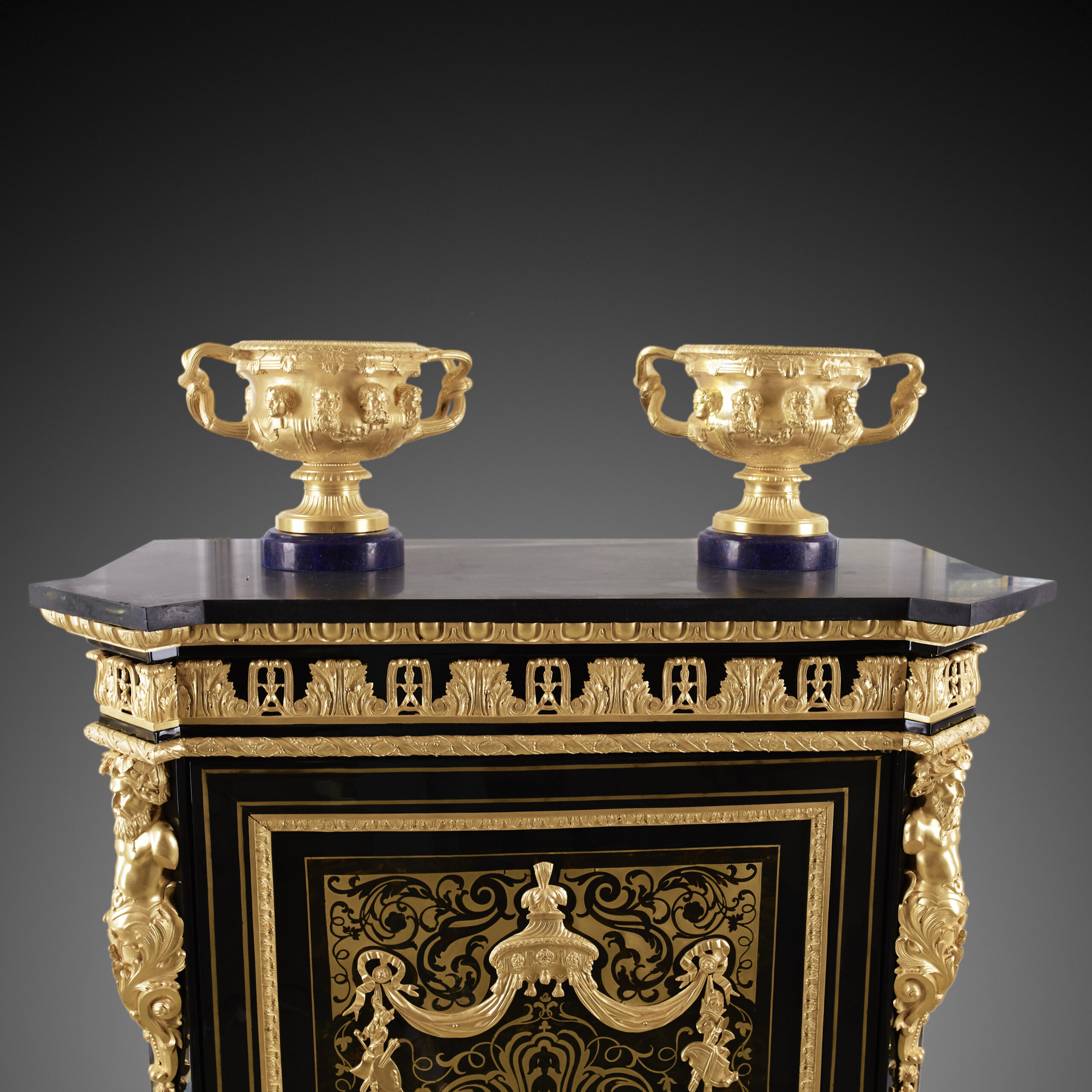
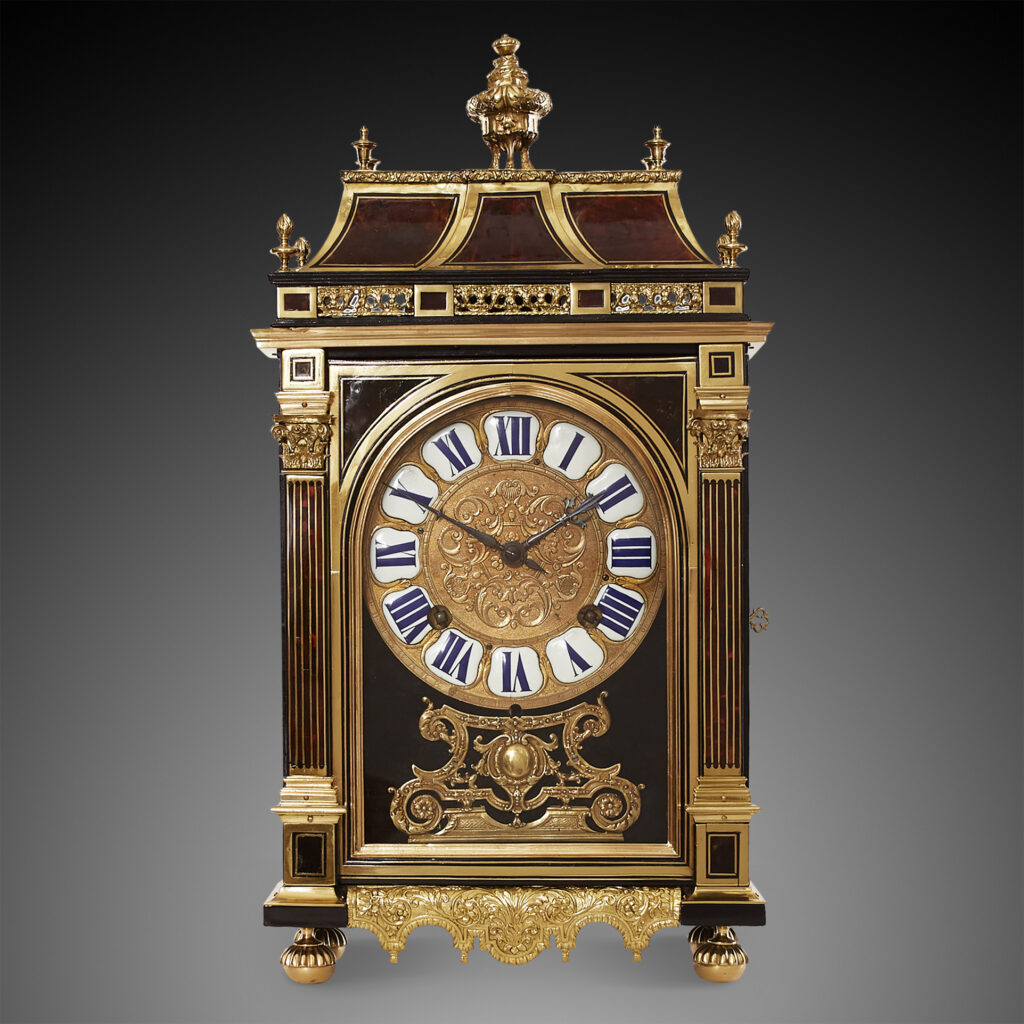
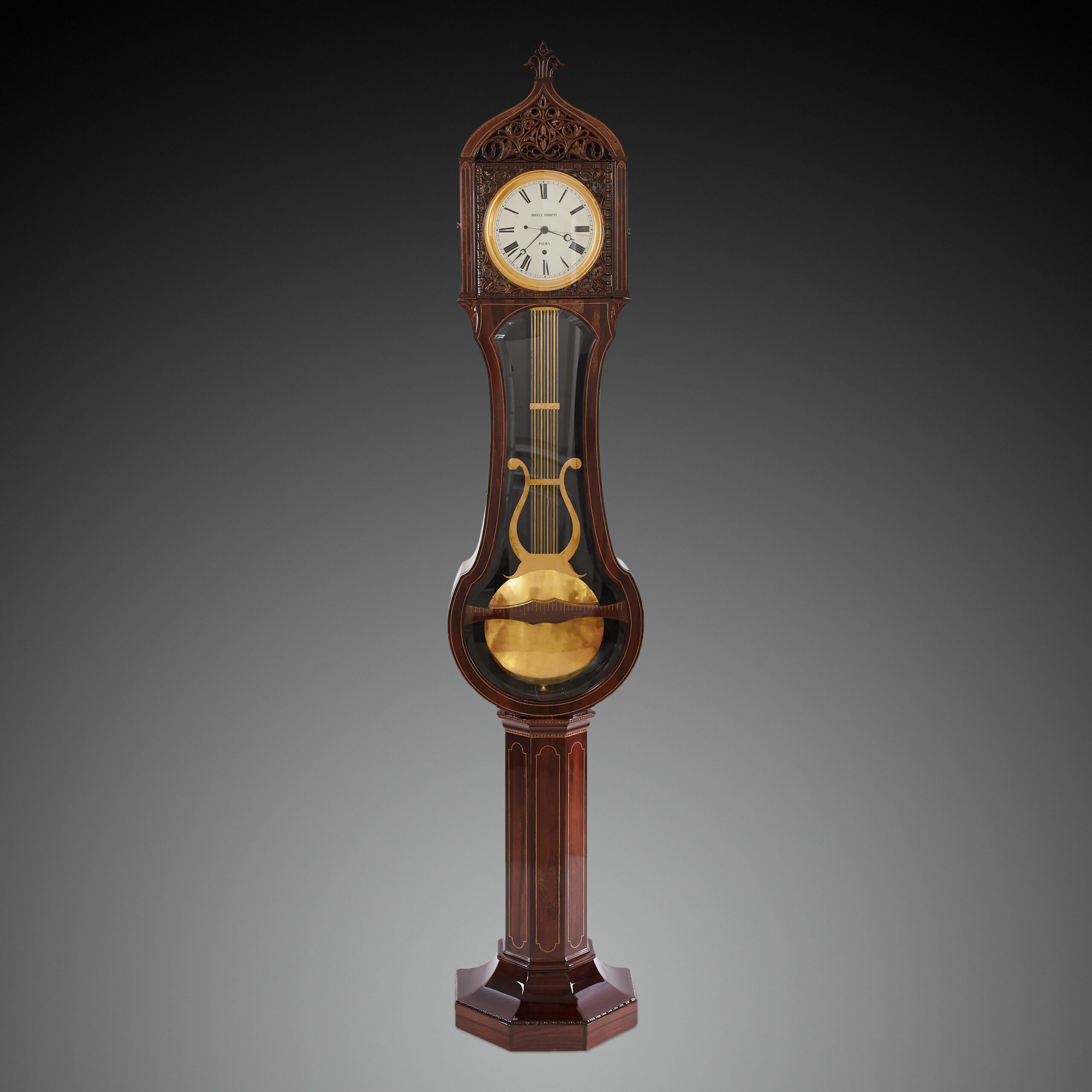
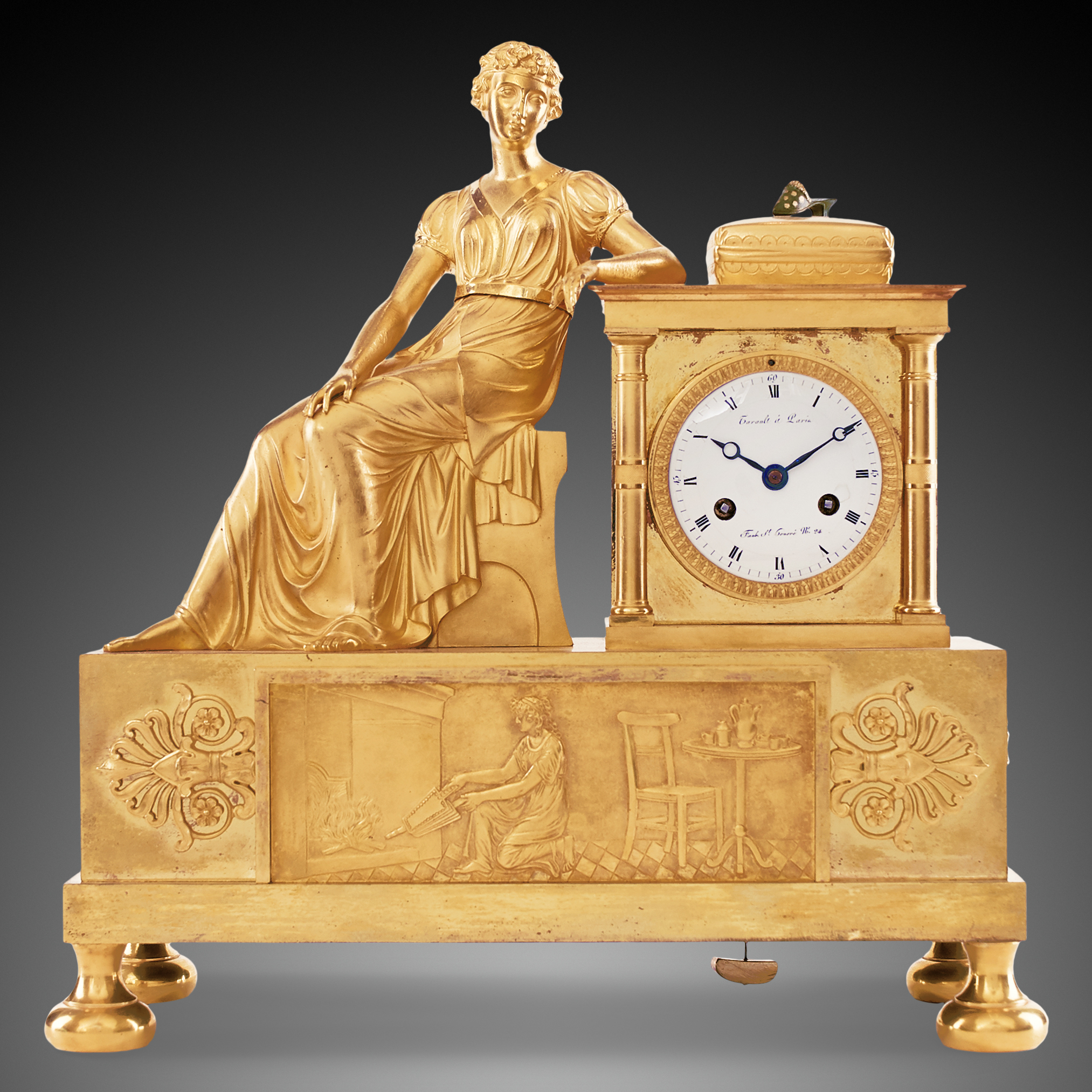
This magnificent French cabinet is a superb and highly sophisticated example of the Napoleon III revival of the Louis XIV Boulle style, dating from circa 1850–1870.
The piece is not a mere copy of earlier models but a thoughtful reinterpretation that reflects the unique artistic and intellectual currents of the Second Empire. It masterfully combines the opulent Boulle marquetry technique perfected by André-Charles Boulle for Louis XIV with classical iconography and the luxurious materials favoured by the prosperous bourgeoisie and aristocracy of the mid-19th century.
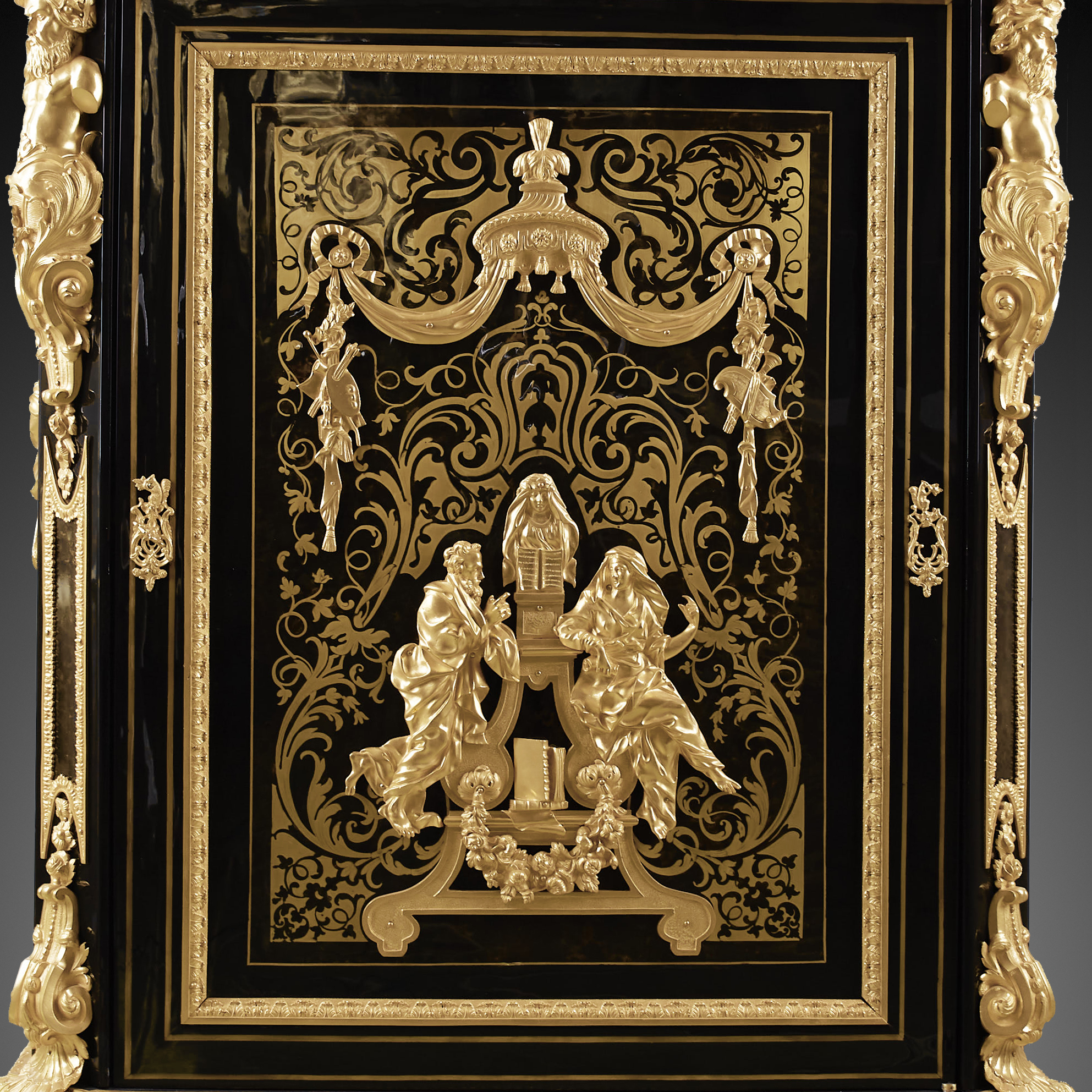
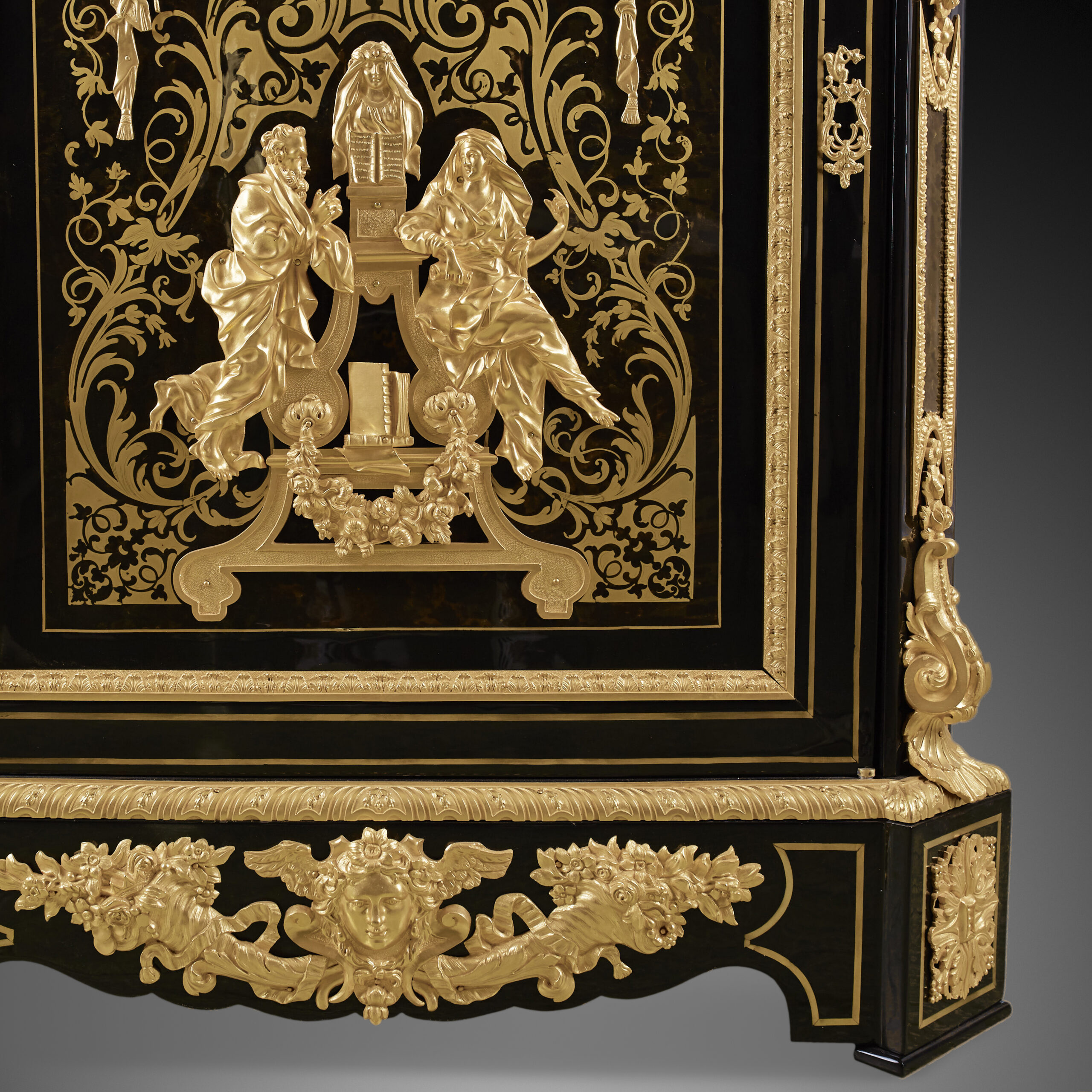
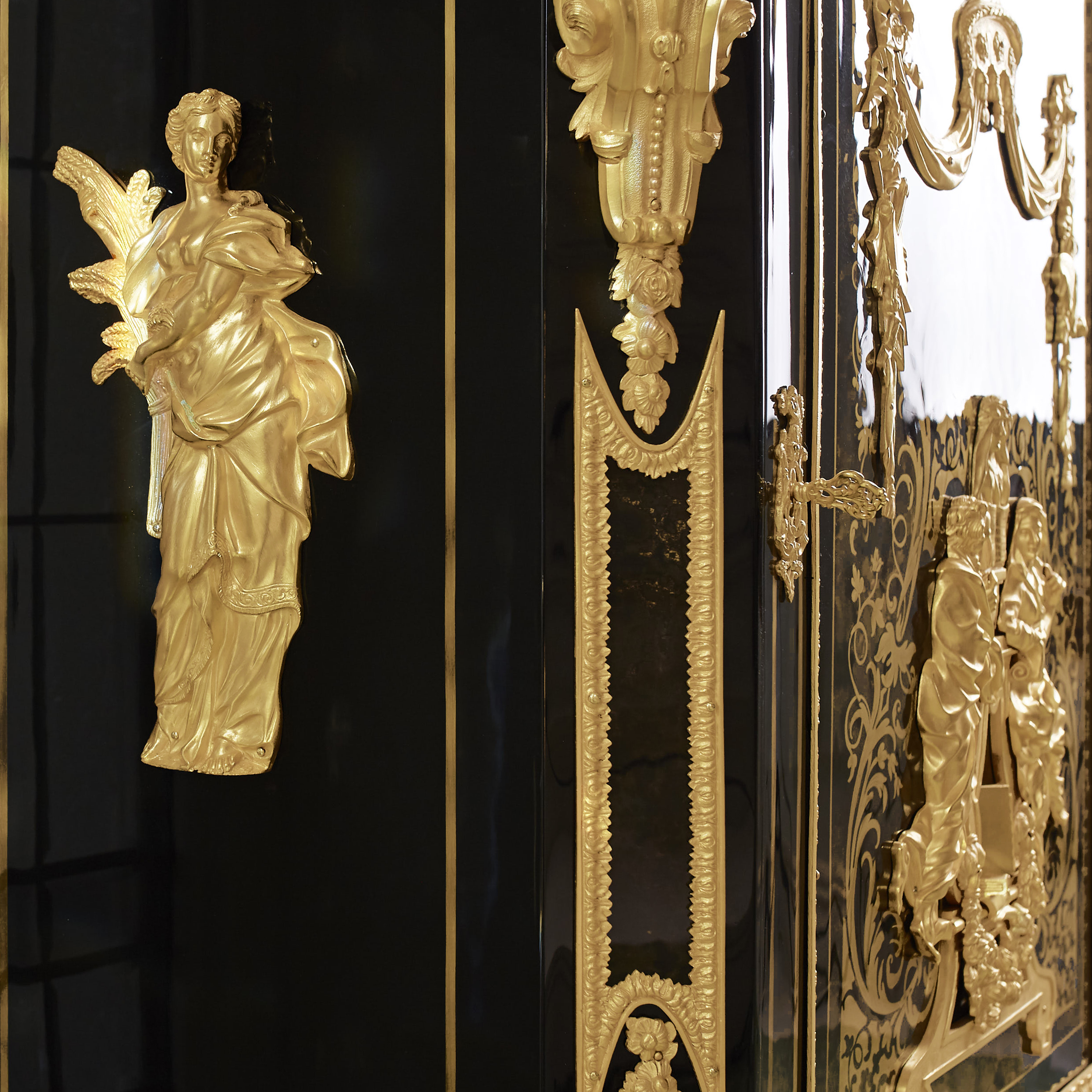
The cabinet is veneered in rich ebony, providing a dramatic dark ground for the intricate brass and red tortoiseshell marquetry. The central doors feature large oval panels framed by finely chased gilt-bronze borders. Within these panels are finely cast gilt-bronze reliefs depicting scenes from classical antiquity-most notably a representation of the philosopher Socrates in conversation with Aspasia, the influential Greek intellectual and companion of Pericles. This choice of subject is particularly meaningful, as it transforms the cabinet from a simple piece of furniture into an object with intellectual depth, celebrating the exchange of ideas and the moral foundations of Western civilization.
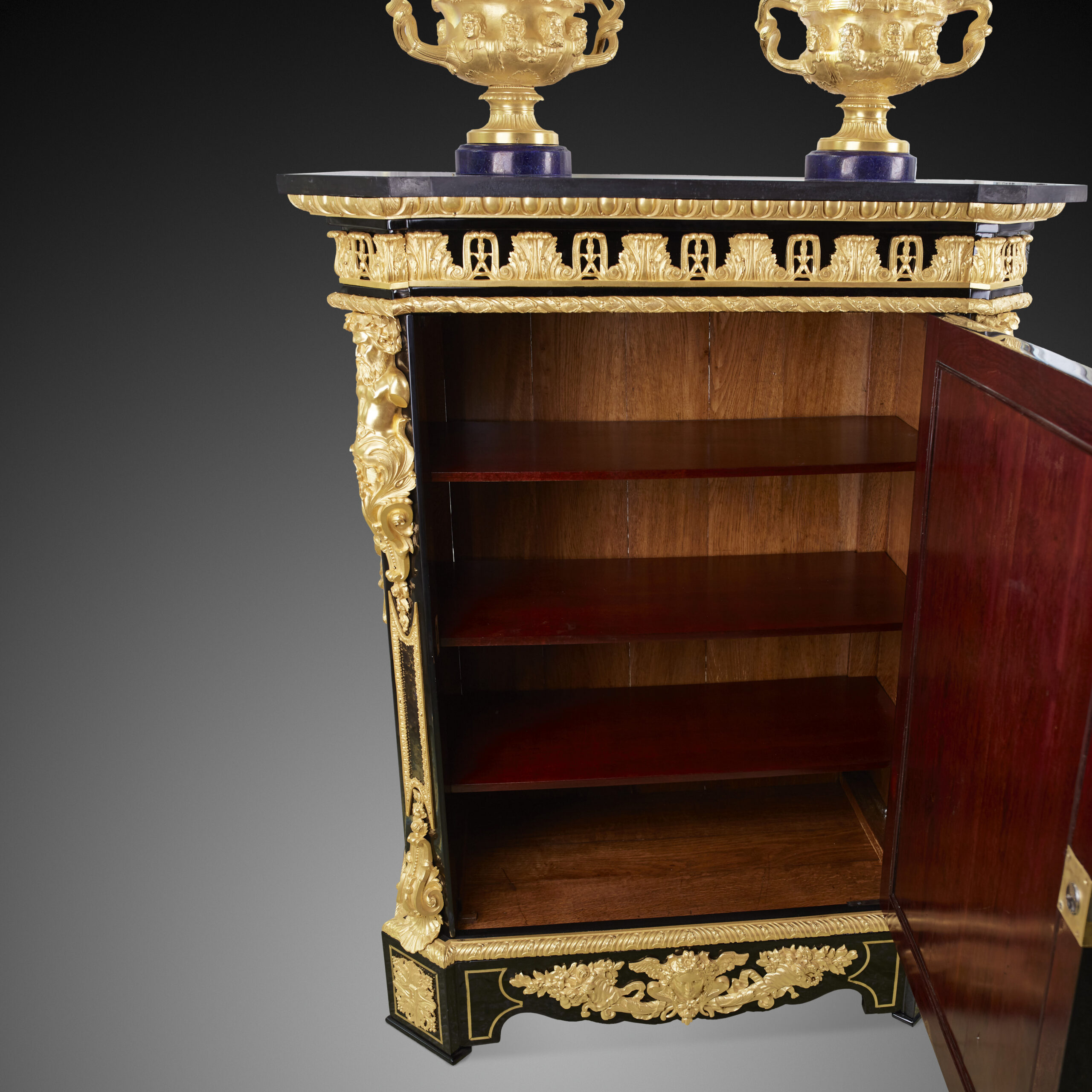
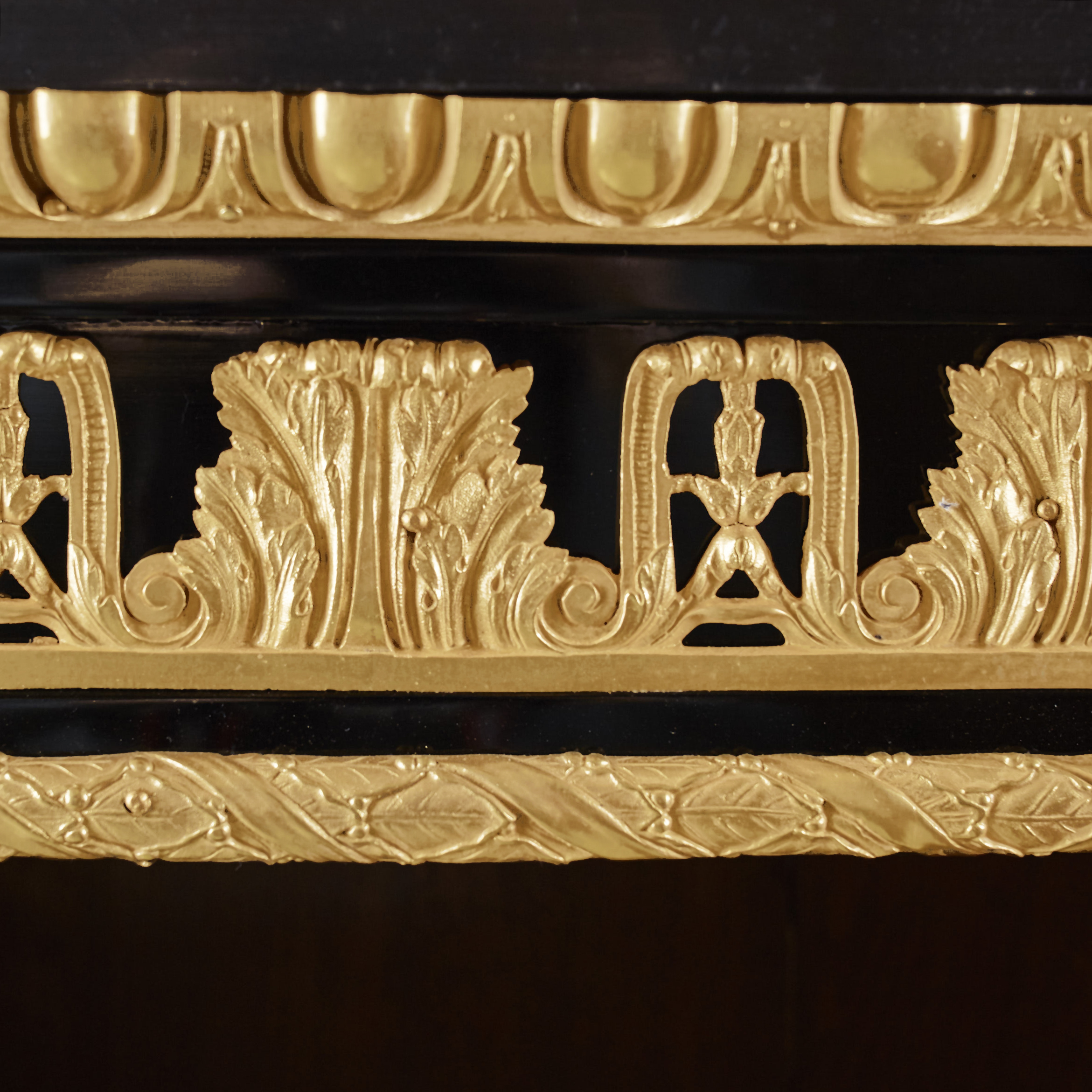
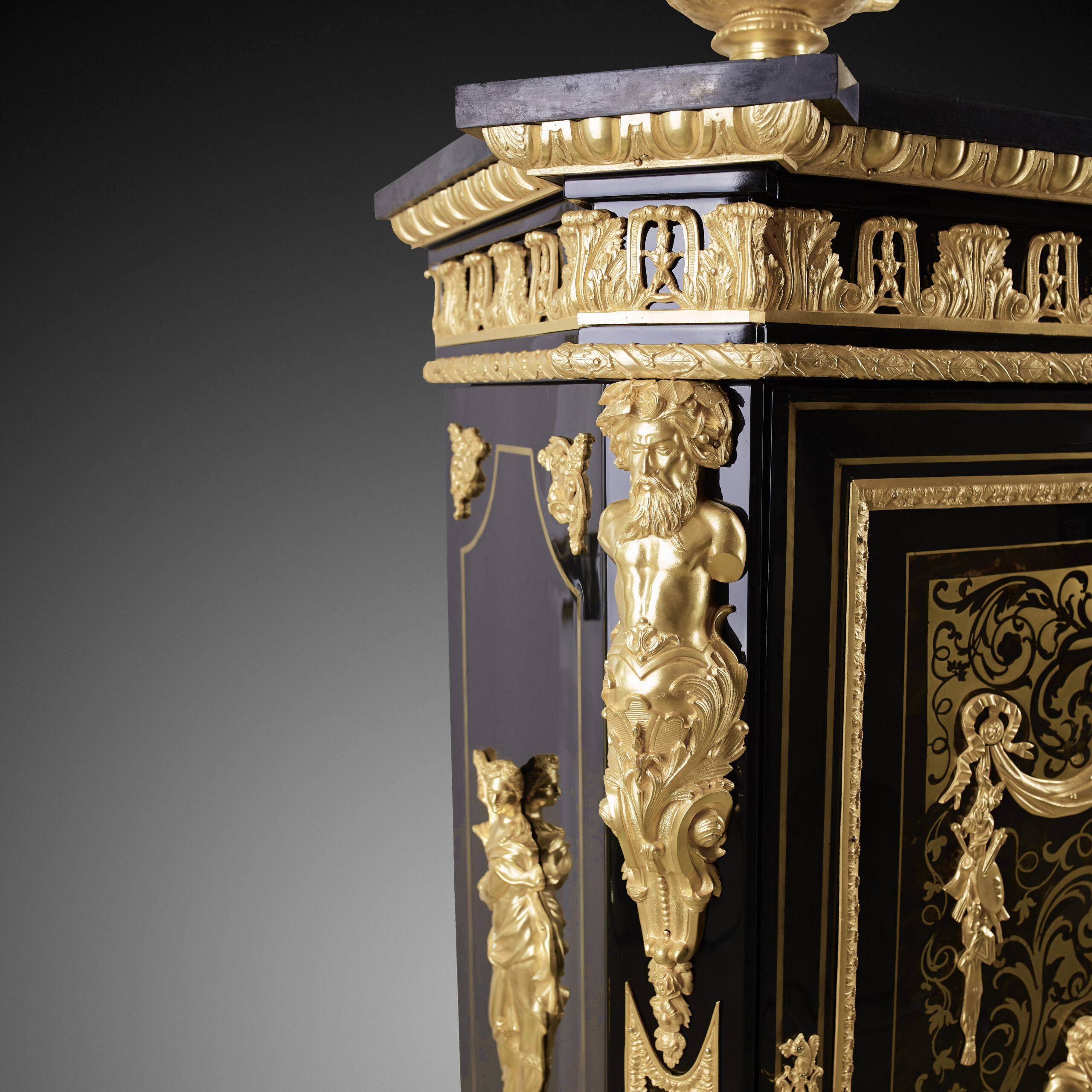
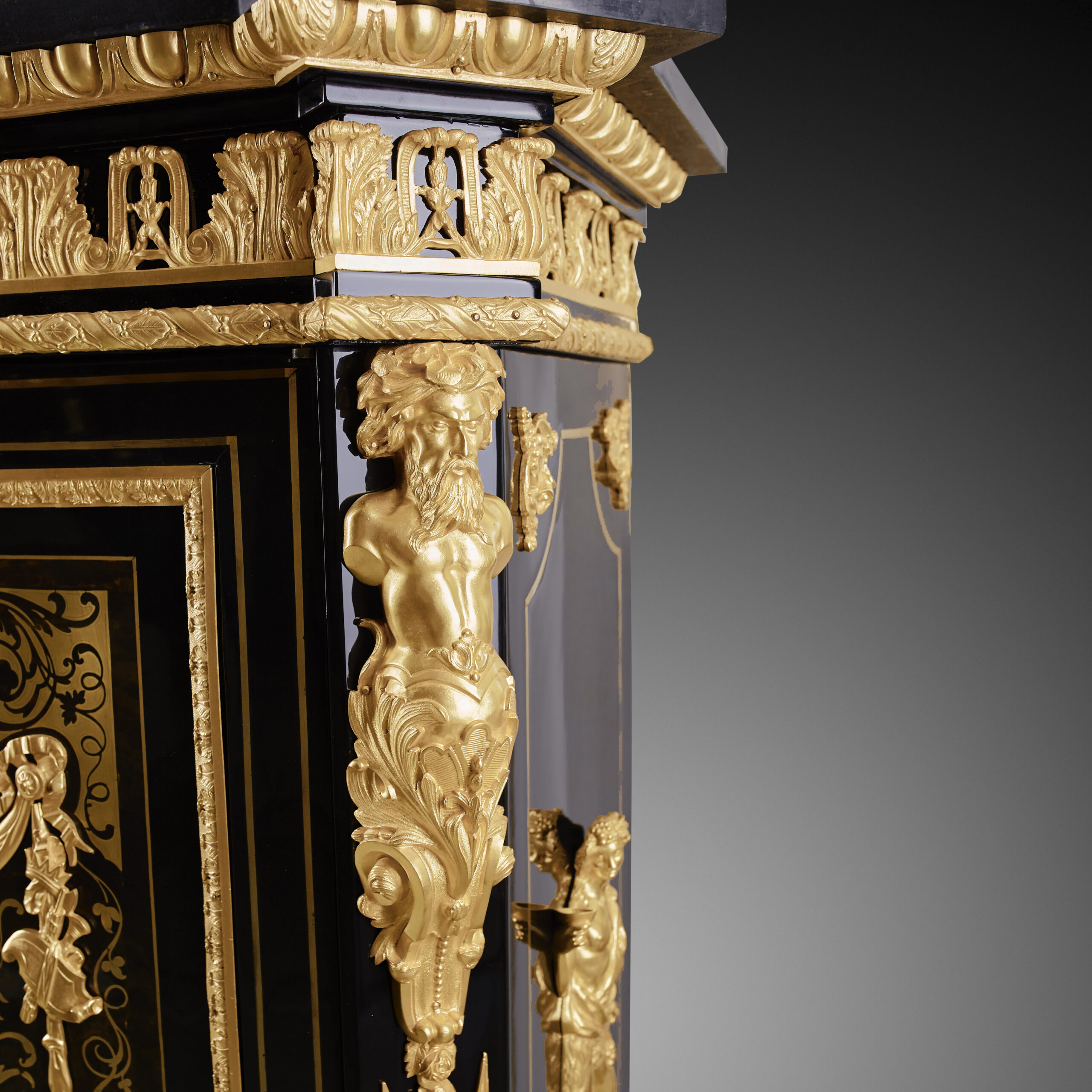
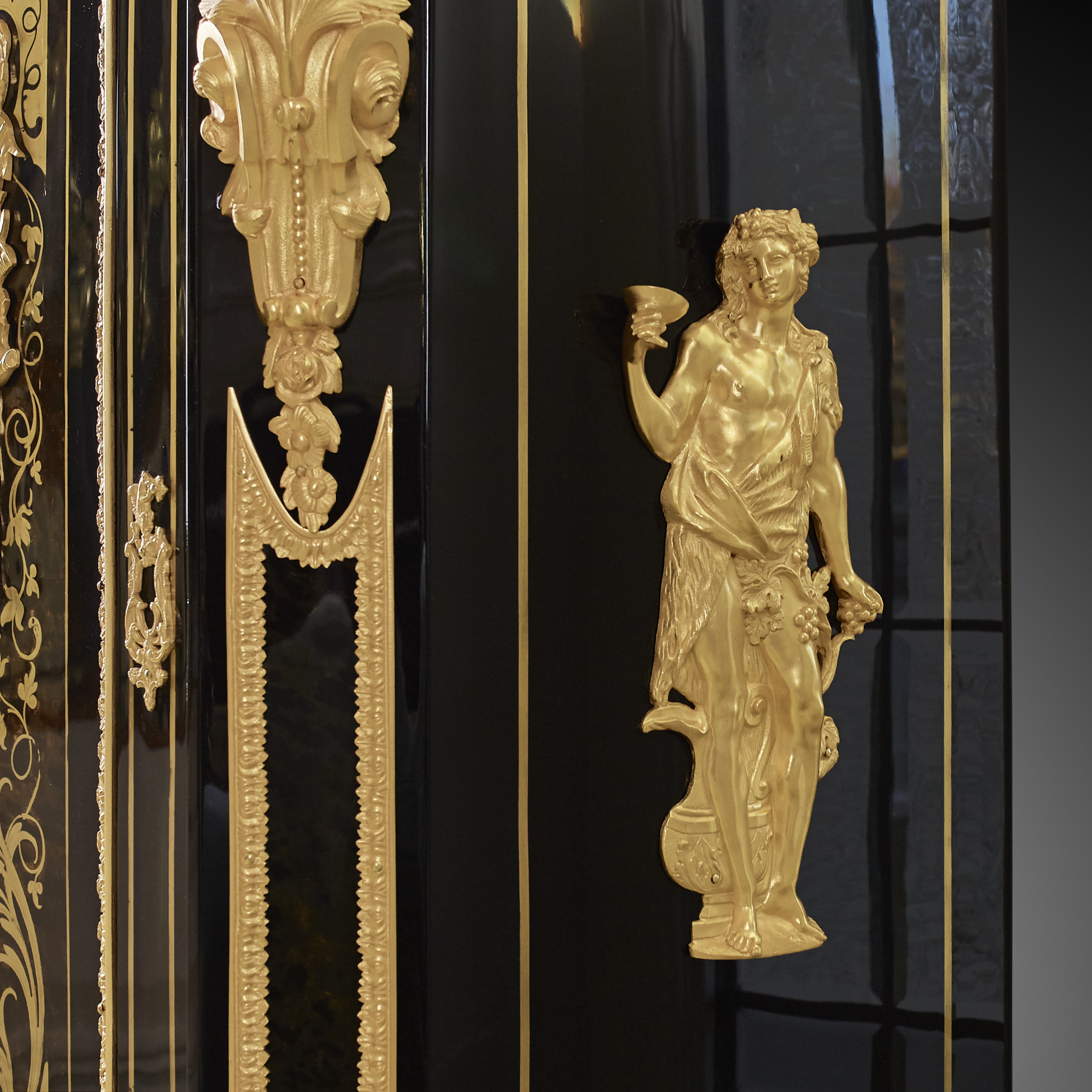
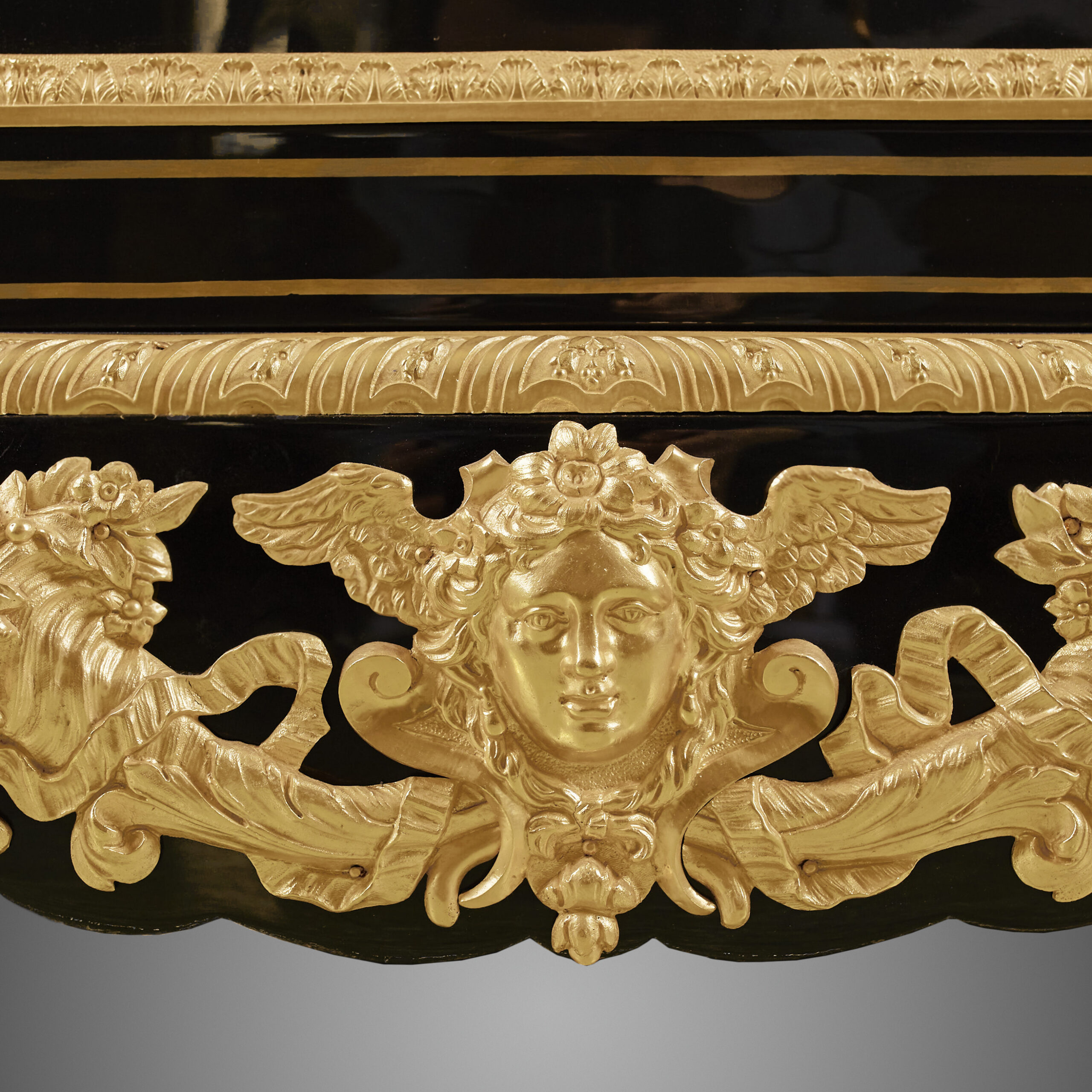
The sides and frieze are densely decorated with symmetrical scrolling acanthus, floral motifs, and classical strapwork in brass on a black ground. The corners are accentuated by sculptural gilt-bronze caryatid figures, while the base and cornice display elegant mouldings, acanthus scrolls, and mascarons. The cabinet is crowned with a white marble top, adding a cool, classical contrast to the richness of the marquetry and ormolu.
This cabinet perfectly illustrates the eclectic historicism of the Napoleon III era. The revival of Boulle marquetry was driven by a desire to reconnect with the grandeur of the French monarchy’s most brilliant period, while the inclusion of classical philosophical scenes reflects the 19th-century fascination with the “history of ideas” and the romanticized view of antiquity. Technological advancements of the time also allowed for greater precision in casting and inlay work, resulting in pieces that were often more elaborate and polished than their 17th-century predecessors.
When placed in a grand salon, library, or formal room, this cabinet serves both as practical storage furniture and as a striking decorative statement. Its rich materials, intricate marquetry, sculptural mounts, and intellectual iconography create a powerful visual and cultural impact that embodies the luxurious historicism and modern ambition of the Napoleon III period.
This is a truly exceptional example of 19th-century French ébénisterie, where technical mastery, historical revival, and intellectual symbolism come together in perfect harmony. Its quality and stylistic depth make it a highly desirable addition to any serious collection of Napoleon III decorative arts or Boulle revival furniture.