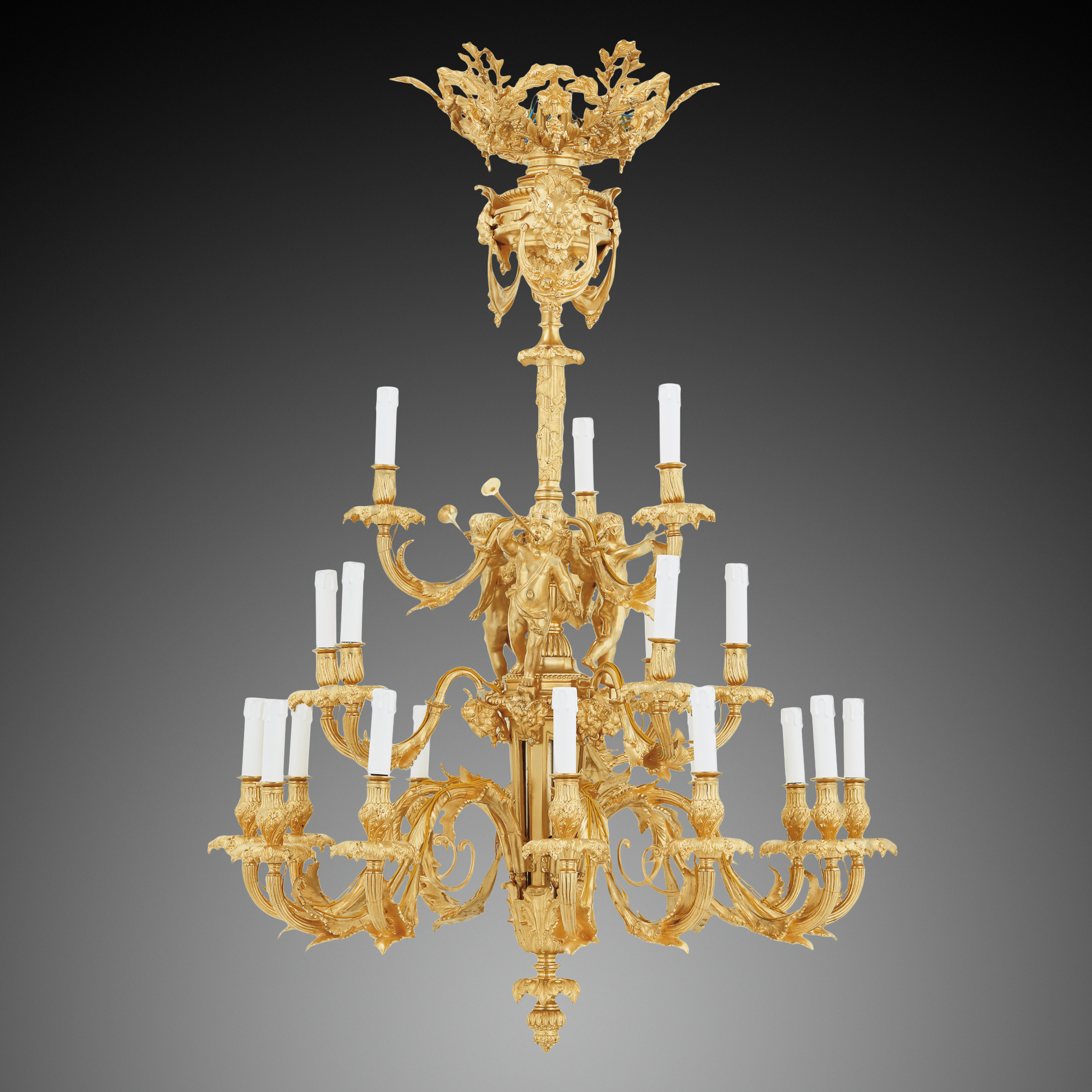
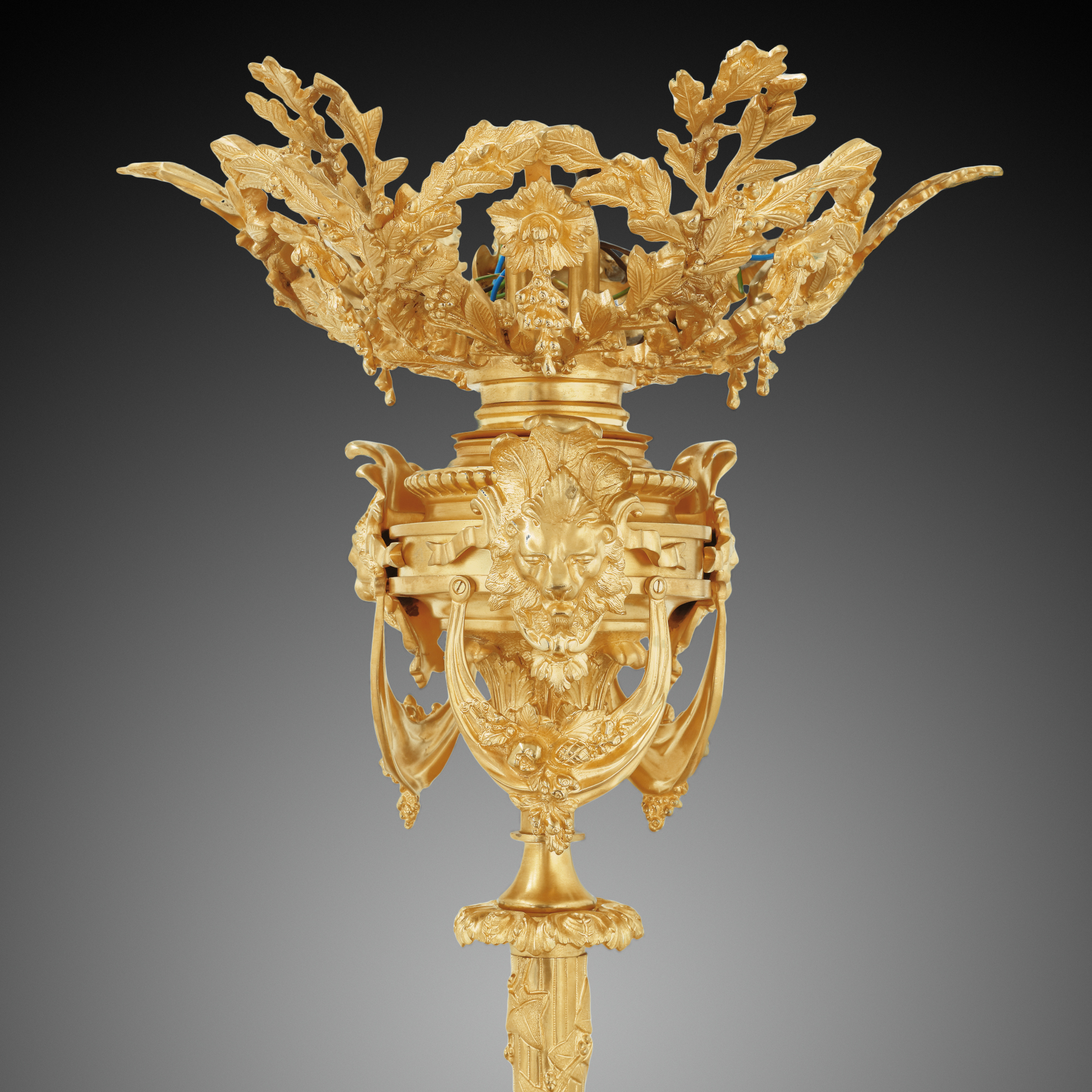
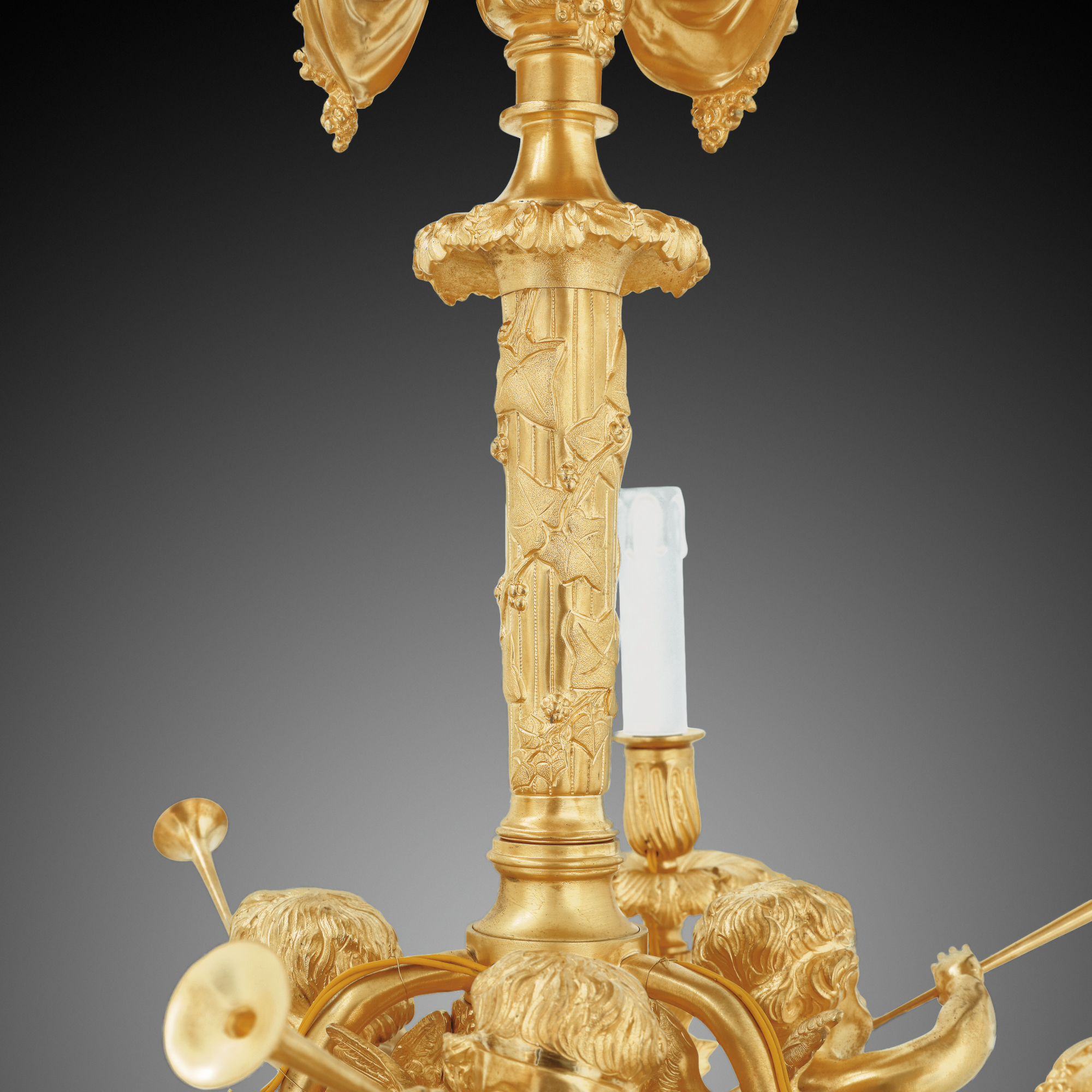
This magnificent and monumental chandelier is a breathtaking testament to the exquisite craftsmanship and refined aesthetic of the 19th century. Crafted from finely chiseled and expertly cast gilt bronze, this piece is a dazzling display of opulent design and artistic mastery. Its brilliant luster, achieved through high-quality gilding, illuminates any space with a warm and inviting glow even when not lit.
The 19th century saw a revival of historical styles, with craftsmen returning to the grandeur of the Louis XV Rococo and Louis XVI Neoclassical periods. This chandelier masterfully blends these influences, celebrating the whimsical, asymmetrical forms of the Rococo with the classical symmetry and motifs of the Neoclassical era. Such a synthesis was characteristic of the period, as foundries and designers responded to the tastes of a newly wealthy class eager to furnish their homes with objects of unparalleled luxury and historical resonance.
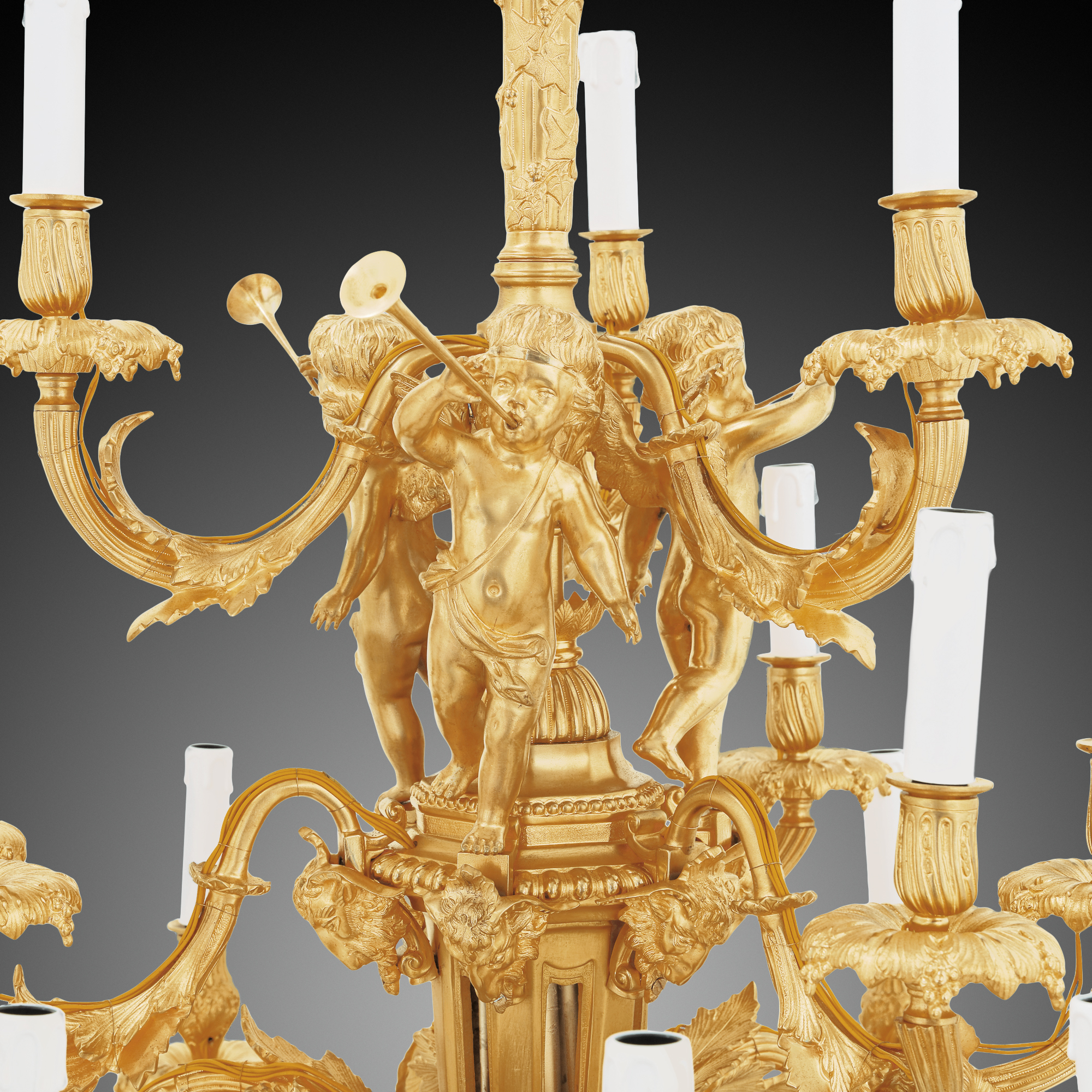
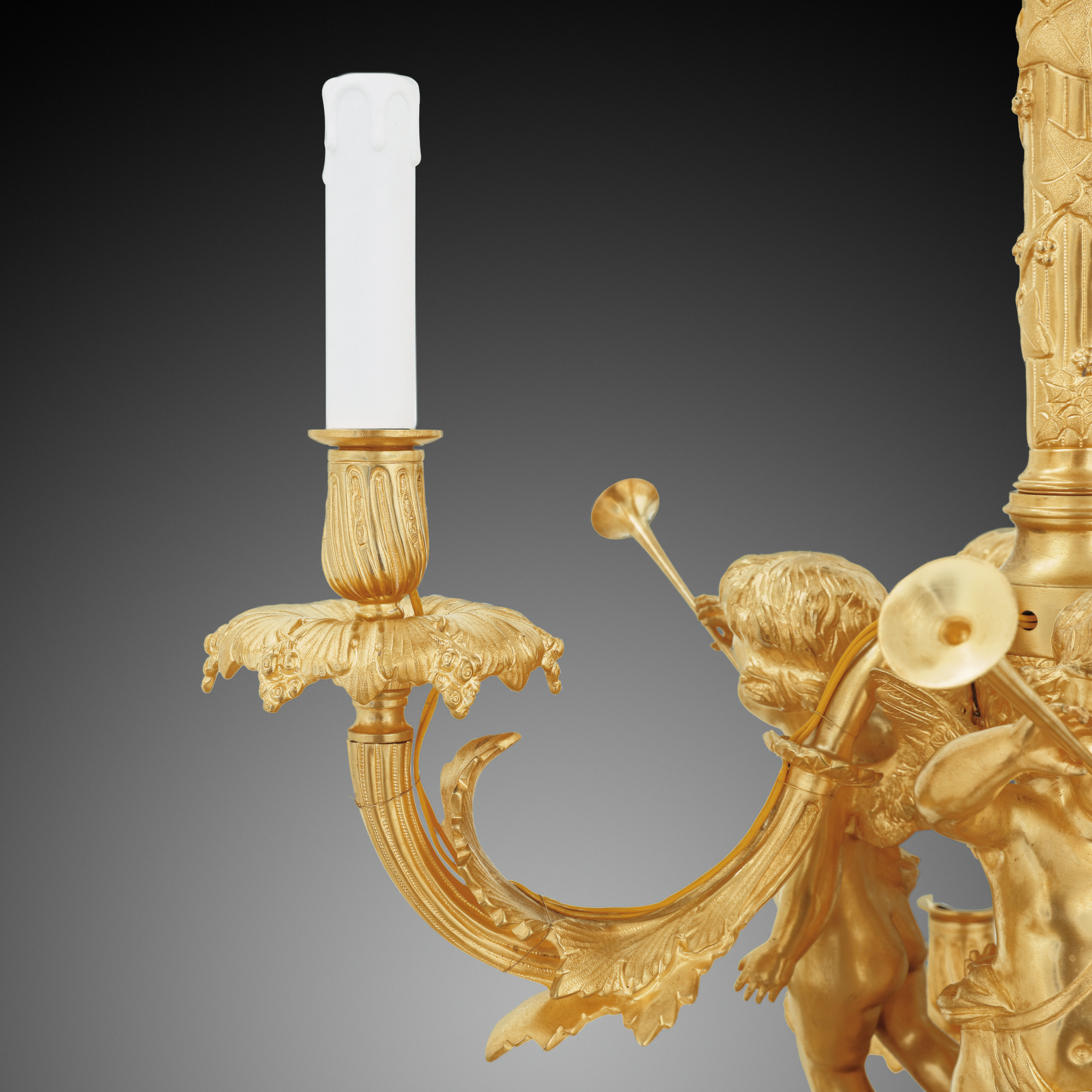
The chandelier is a tour de force of sculptural detail. The central pavilion is a sculptural marvel, adorned with three charming cherubim musicians. In art history, cherubim (or putti in their secular form) symbolize innocence, love, and the divine. Their presence here, each playing a different musical instrument, transforms the chandelier into a celestial orchestra, adding a whimsical and romantic touch that was highly prized in Rococo-inspired works.
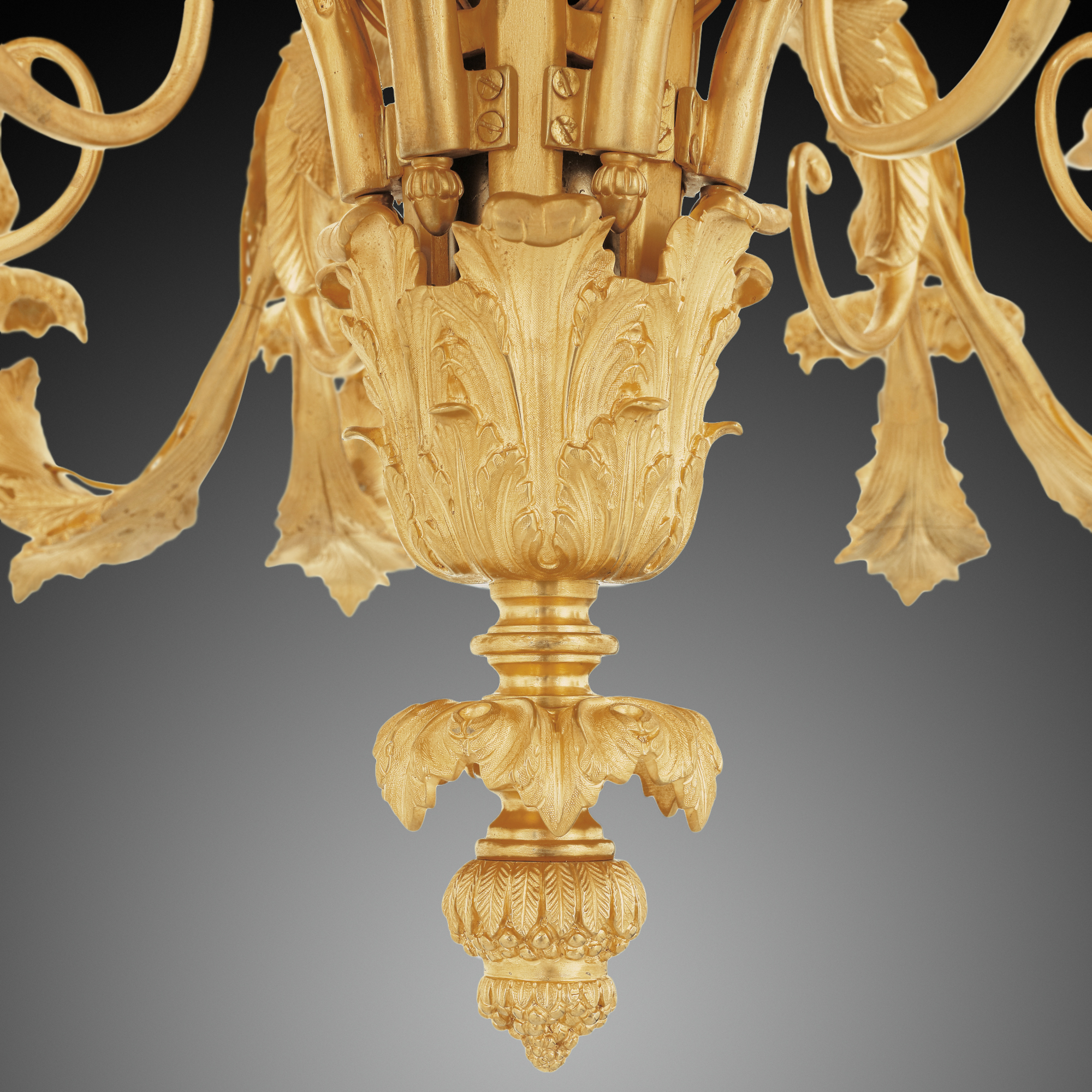
The intricate framework is a celebration of classical and mythological motifs. It is lavishly embellished with finely detailed ram heads, a symbol of strength and leadership often associated with antiquity, and powerful lion’s heads, representing nobility and courage. Delicate floral garlands and intricate scrollwork cascade throughout the structure, creating a sense of naturalistic movement and dynamism that is a hallmark of the finest Rococo-inspired works.
This impressive chandelier is designed for grand spaces, boasting a total of 21 lights arranged on three tiers. The multi-level configuration not only provides a powerful and even distribution of light but also enhances the sculptural quality of the piece, allowing it to be admired from every angle. When illuminated, the chandelier becomes a radiant focal point, casting a brilliant and warm light that enhances the richness of any interior.
The superior quality of the casting and the meticulous detail of the chasing and gilding are indicative of a top-tier Parisian or European workshop of the period. The process of creating such a piece, known as bronzes d’ameublement, was highly regulated by a guild system, ensuring the highest standards of craftsmanship. The final step, mercury gilding (ormolu), was a dangerous and costly process that involved coating the bronze with a mixture of ground gold and mercury, then heating it to burn off the mercury and leave a thick layer of pure gold. This painstaking technique resulted in a durable and stunning finish that has maintained its brilliance for over a century.
This chandelier is not merely a source of light; it is a work of art, a symbol of luxury and sophistication that would be a commanding presence in a grand salon, dining room, or ballroom, truly embodying the splendor of the 19th century.