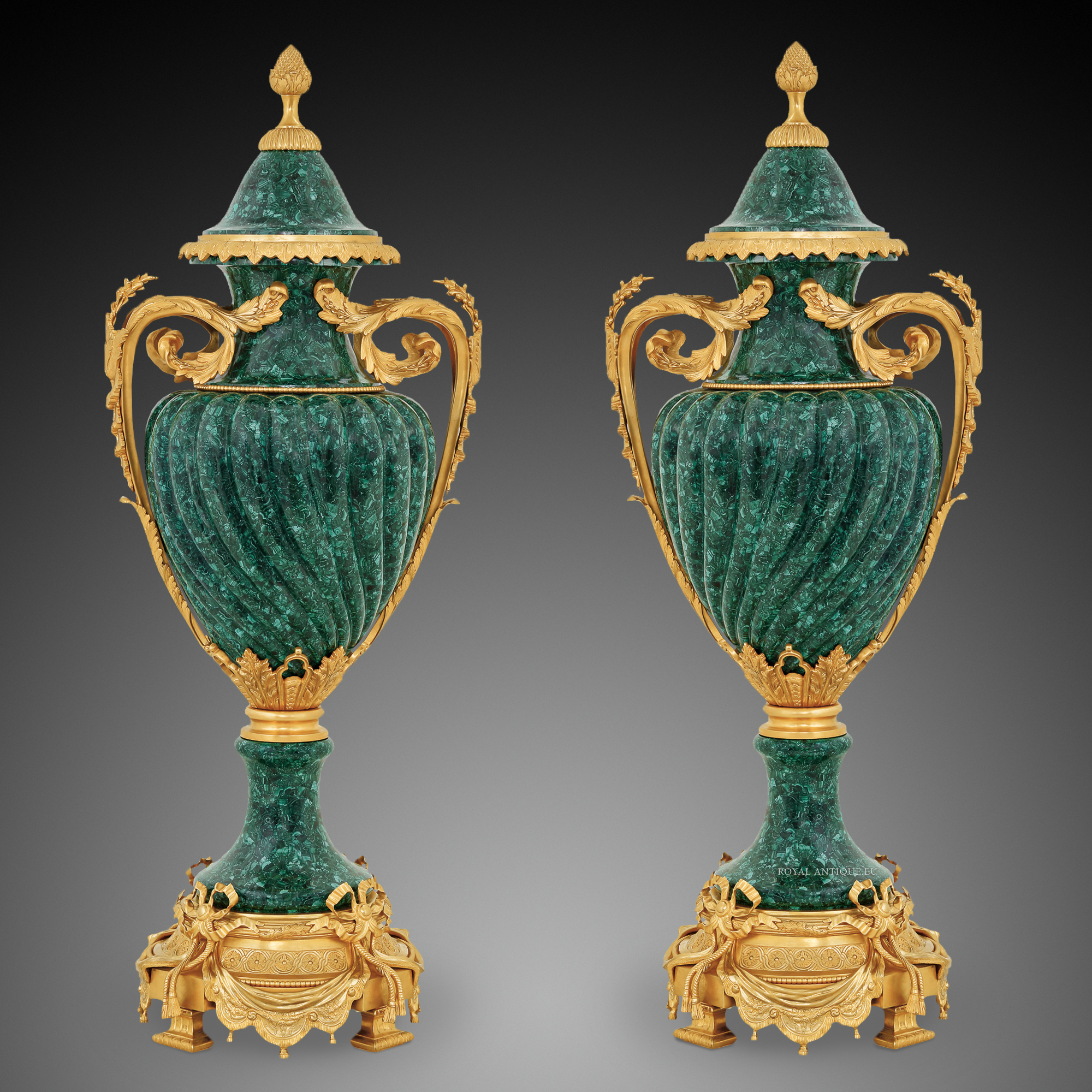
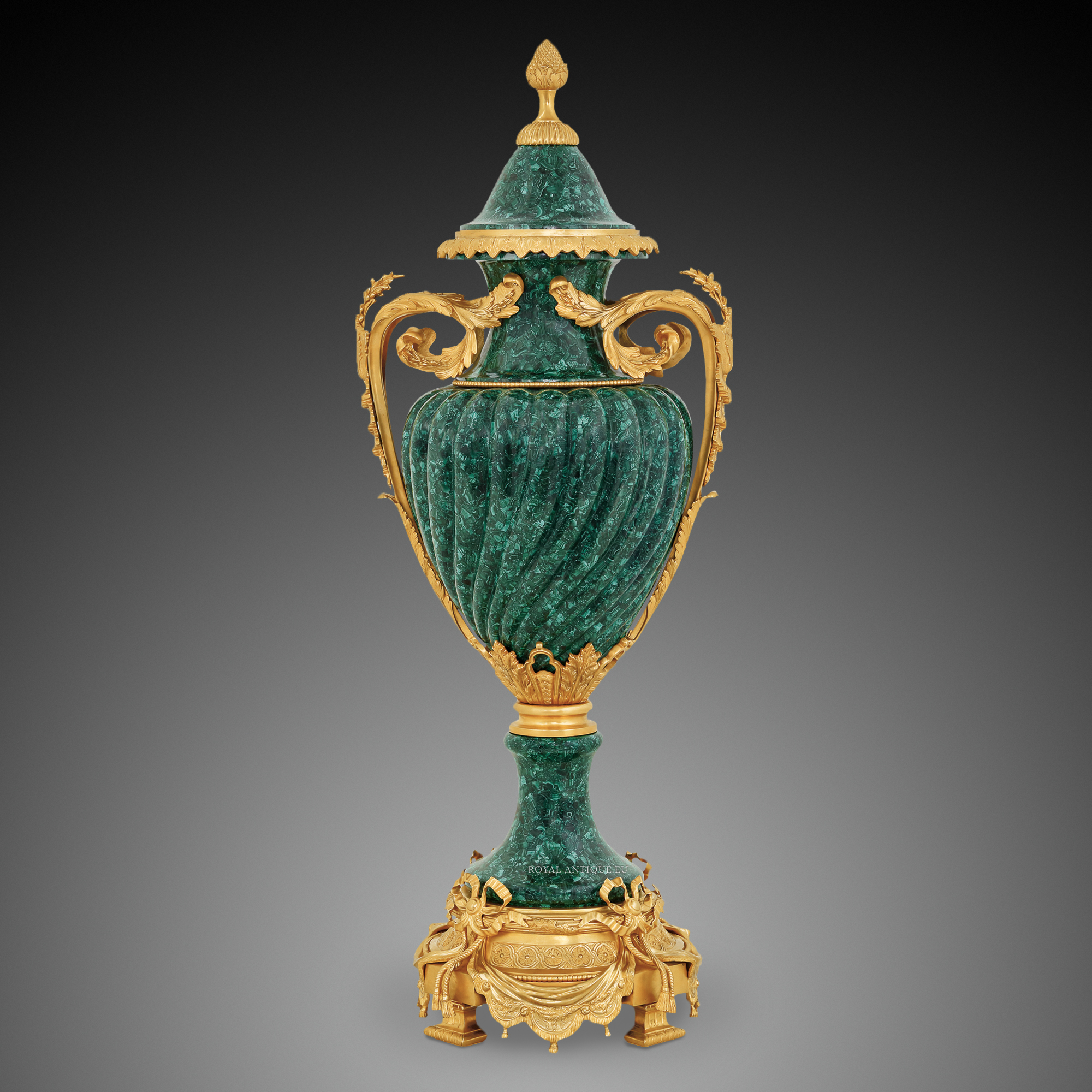
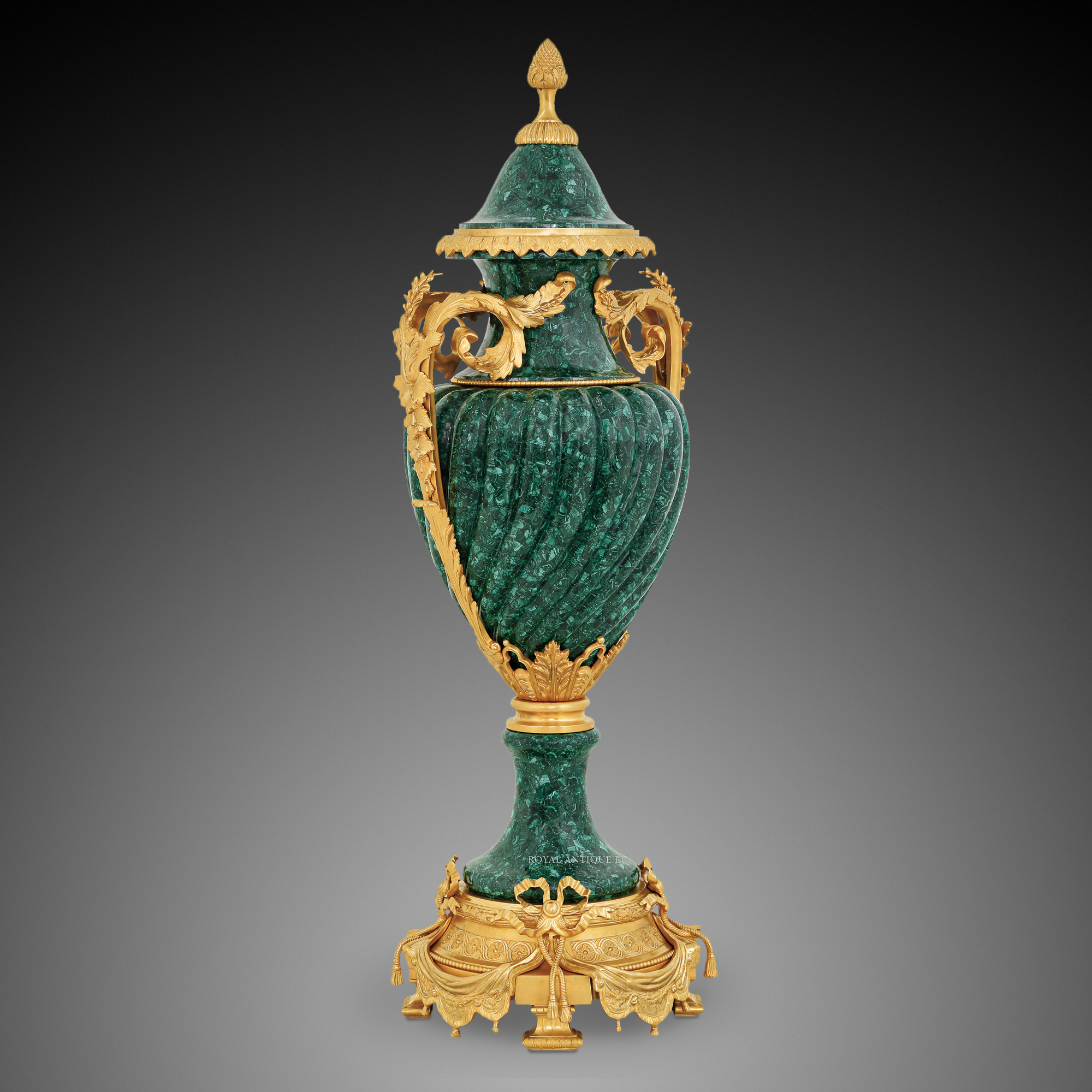
This magnificent pair of French Empire vases is a superb example of the highest quality ormolu and malachite work produced in Paris during the early 19th century, circa 1810–1820.
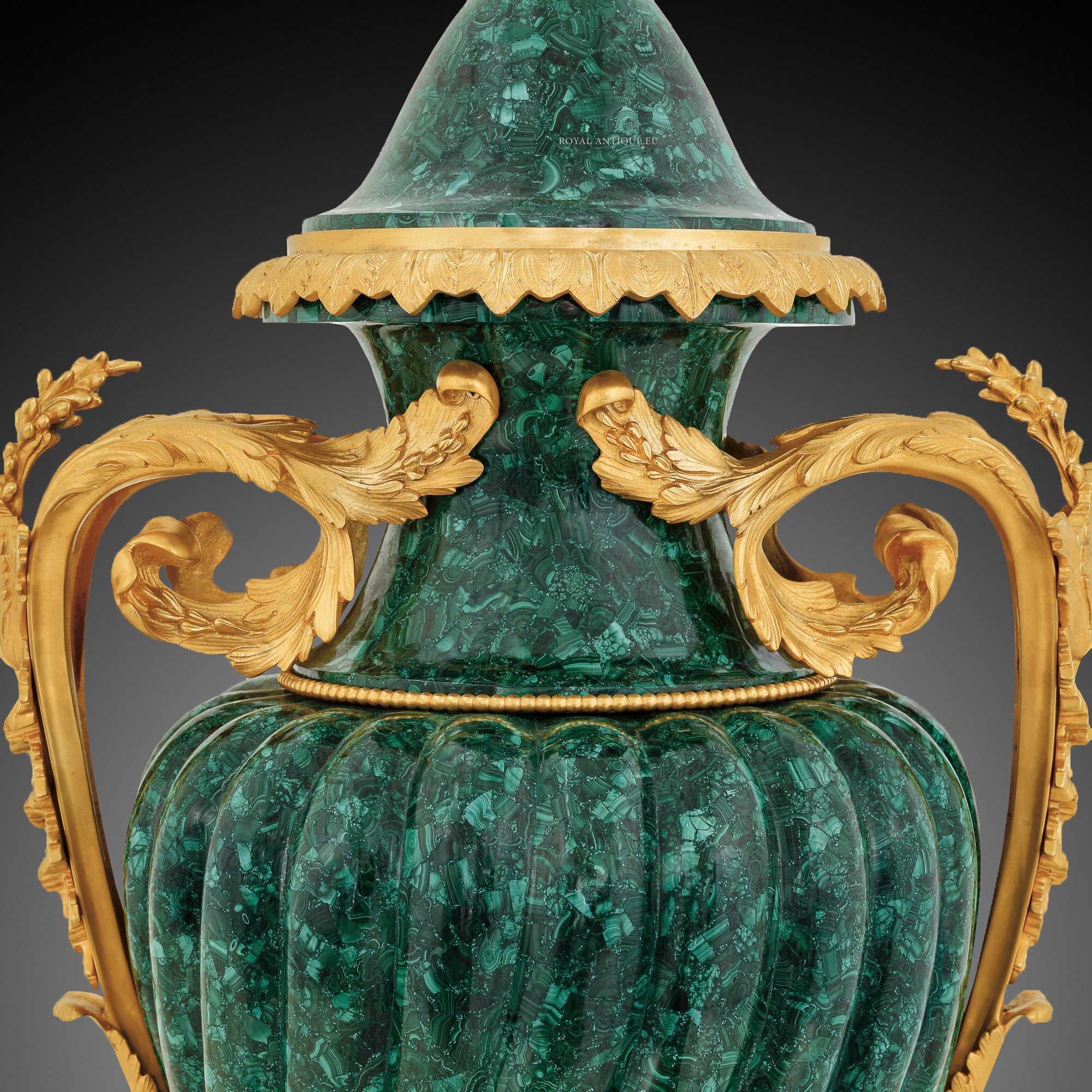
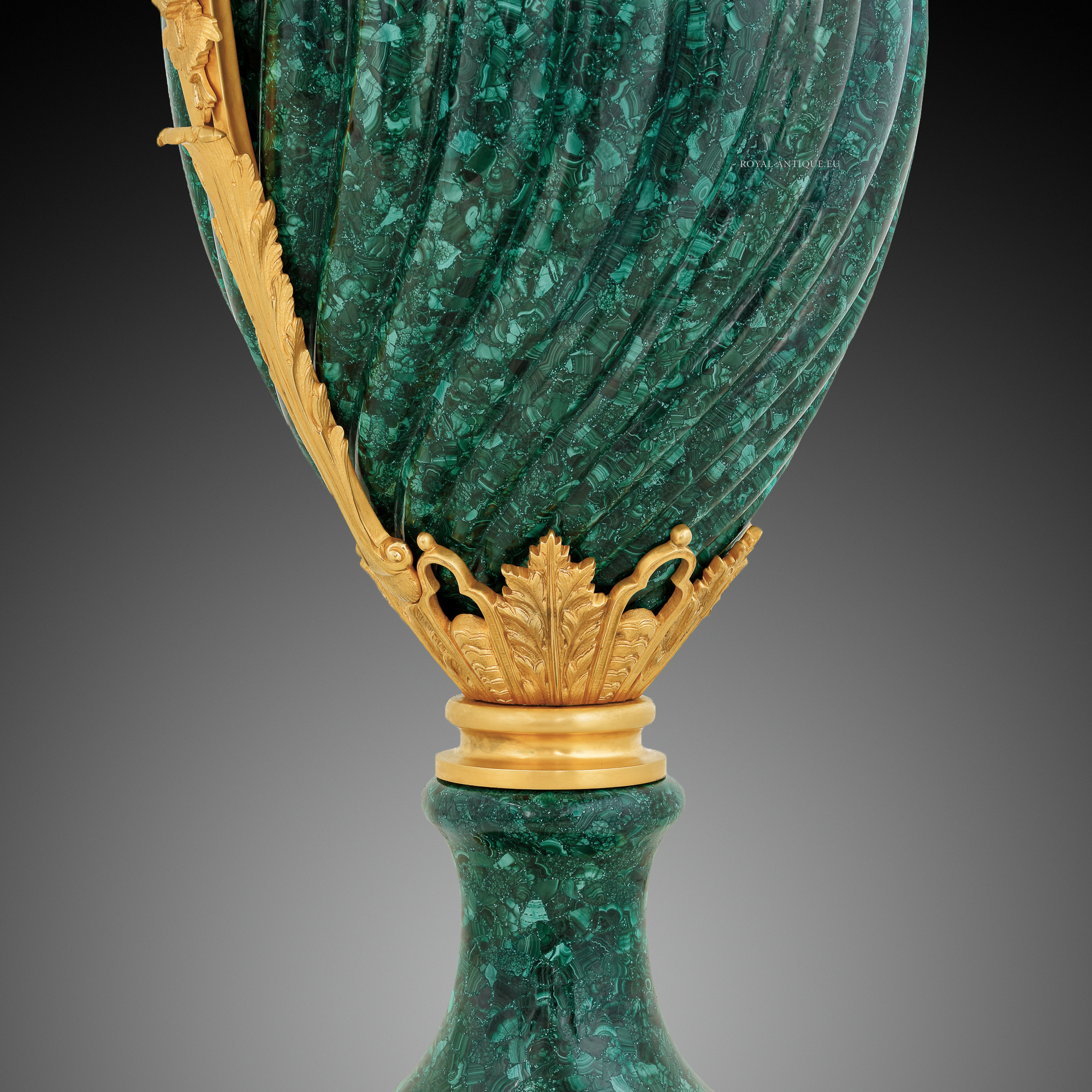
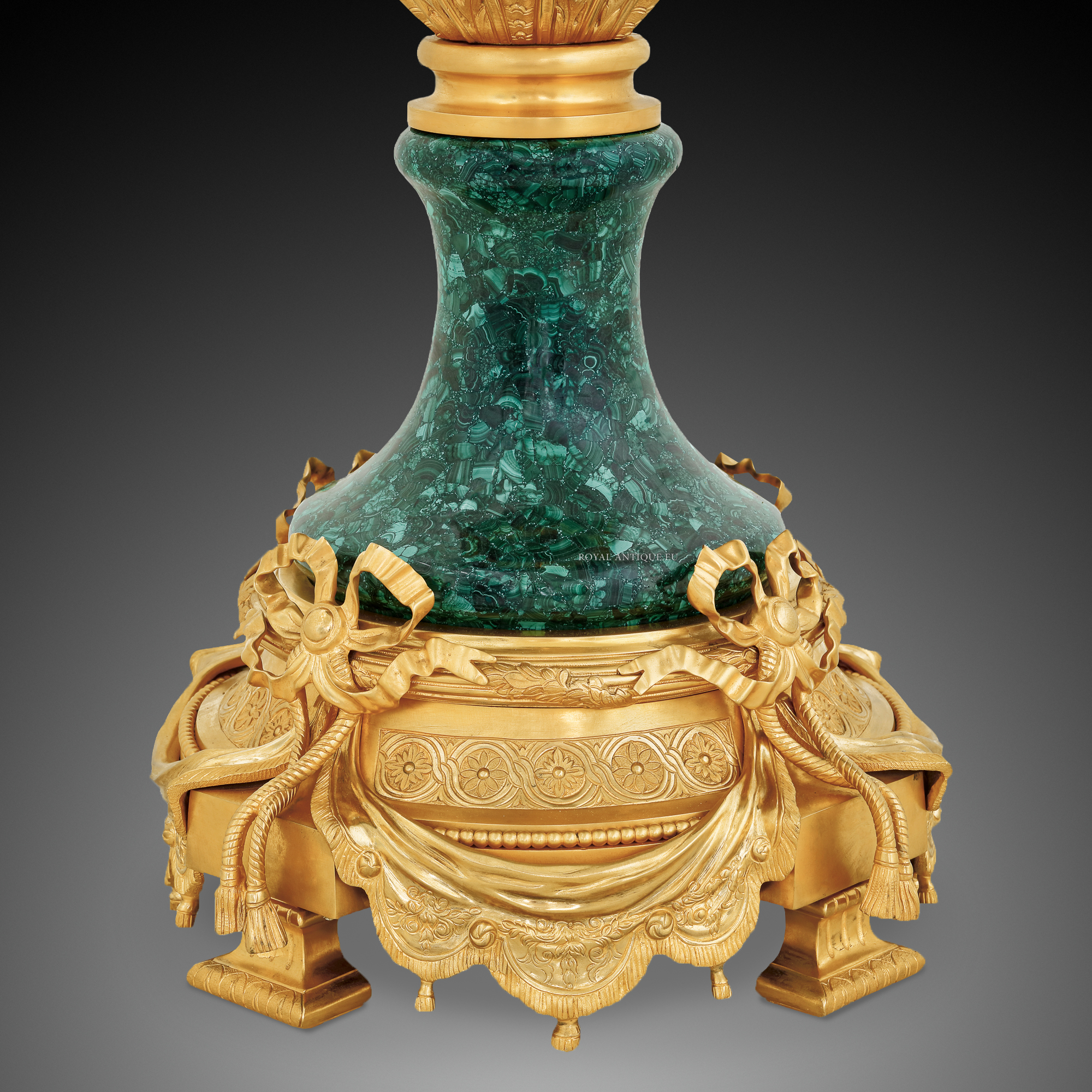
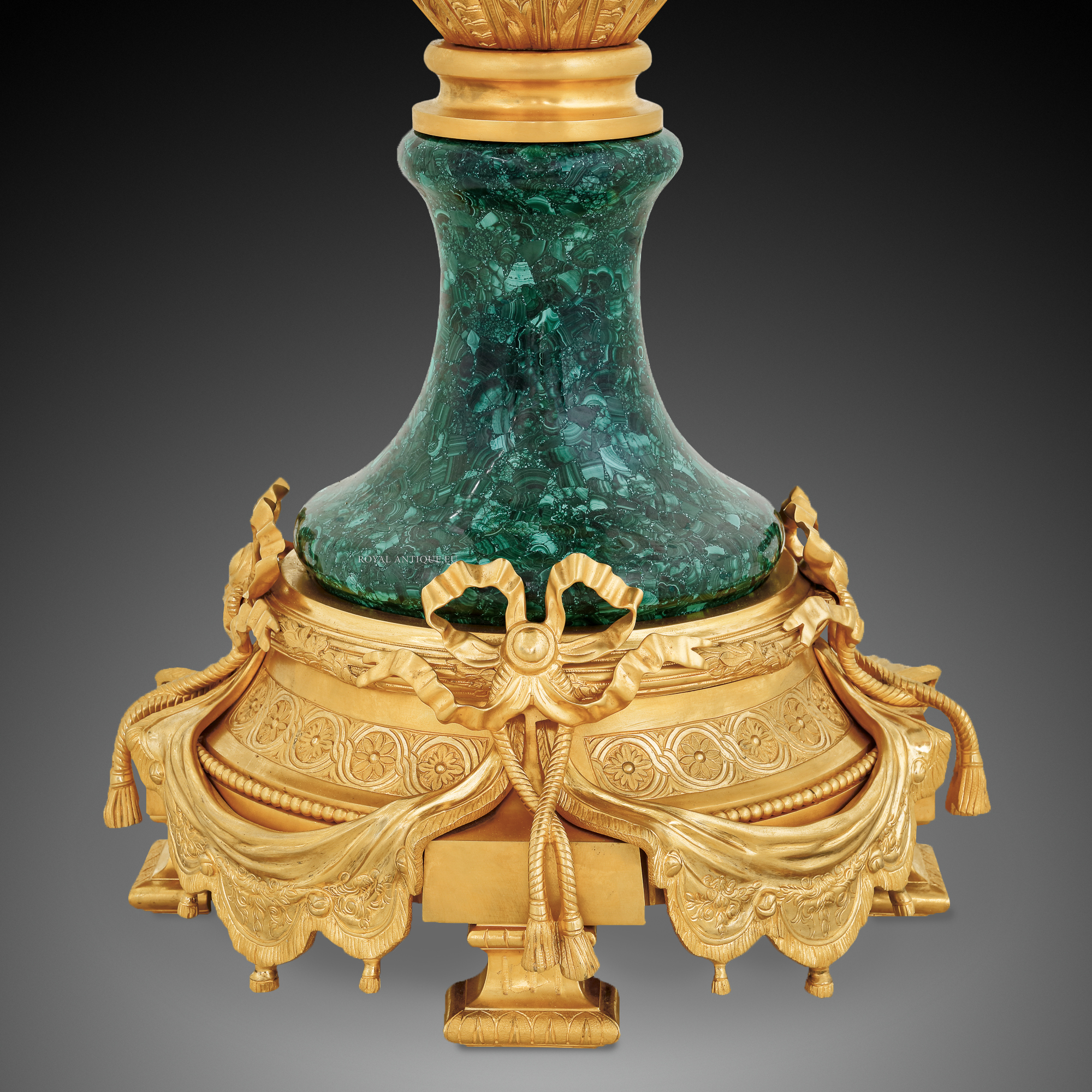
Each vase is executed in the pure Neoclassical taste that defined the Empire style under Napoleon Bonaparte. The body is formed from rich green malachite with a distinctive fluted or reeded pattern that enhances its natural beauty and gives the surface a dynamic, almost architectural rhythm. The malachite is framed by finely chased gilt bronze bands and elegant scrolling handles that rise gracefully from the shoulder. The domed lids are also veneered in malachite and crowned with gilt bronze acorn finials, while the lower part features a richly decorated gilt bronze base with acanthus leaves and classical motifs.
The combination of deep green malachite with luminous gilt bronze creates a striking contrast that was particularly prized during the Empire period. Malachite, often sourced from Russian mines, was considered one of the most luxurious stones available and symbolised wealth and imperial prestige.
These vases perfectly embody the spirit of the Empire. After the Revolution, French designers deliberately returned to the grandeur of ancient Rome and Greece, using columns, pediments, laurel swags, and noble materials to express ideas of order, victory, permanence, and cultural refinement. Such pieces were commissioned for the palaces, ministries, and elegant private residences of the Napoleonic elite.
When displayed as a pair on a console, mantel, or pedestal, they create an immediate impression of opulence and classical dignity. The deep green malachite glows against the warm, reflective gilt bronze, while the scrolling handles and acanthus bases catch the light with quiet brilliance. Their scale and symmetry make them ideal as important decorative elements in any Neoclassical interior.
This pair represents the pinnacle of French Empire decorative arts, where technical mastery in both stone veneering and bronze casting meets flawless classical design. Their exceptional quality and pure stylistic coherence make them a highly desirable addition to any serious collection of early 19th-century French objets d’art.