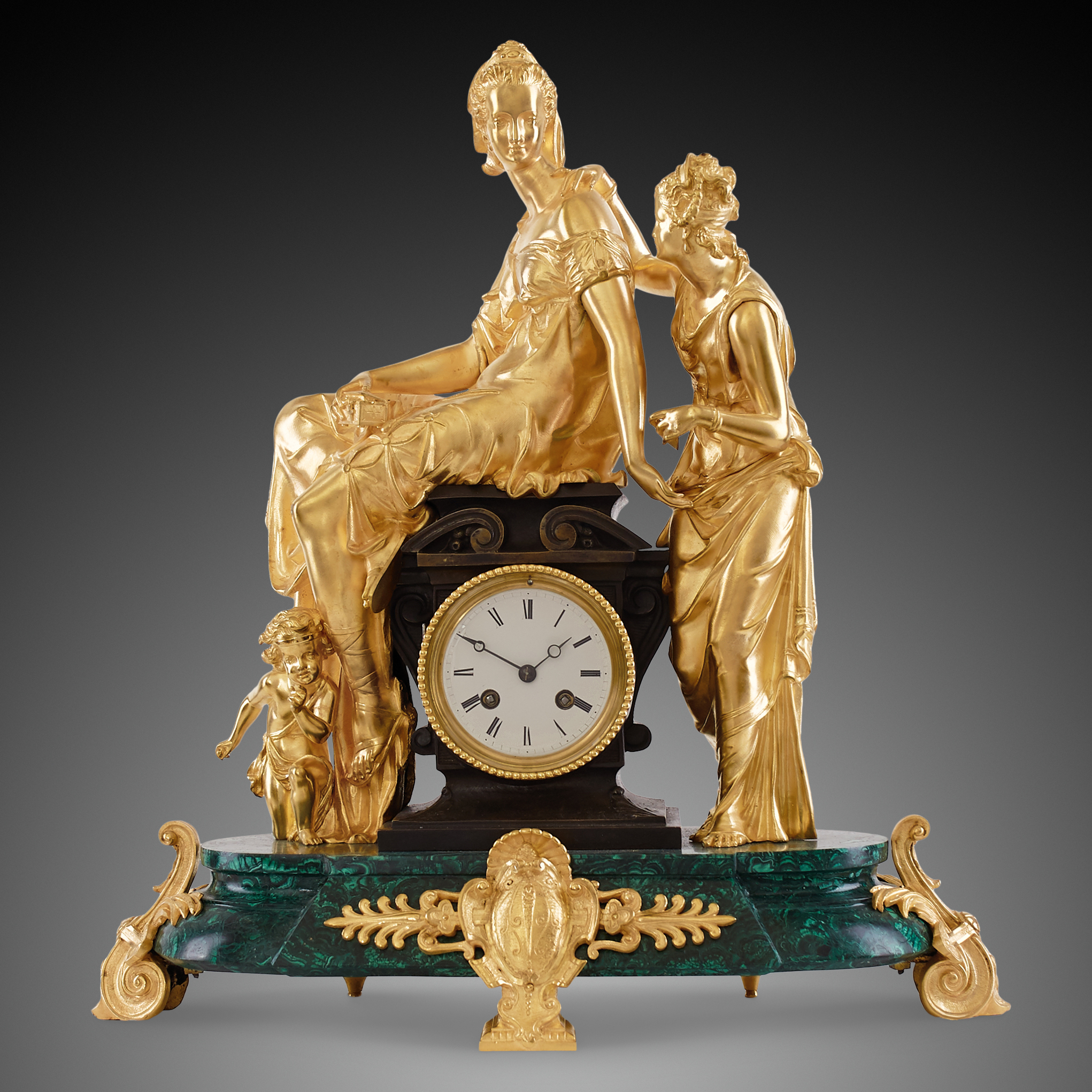
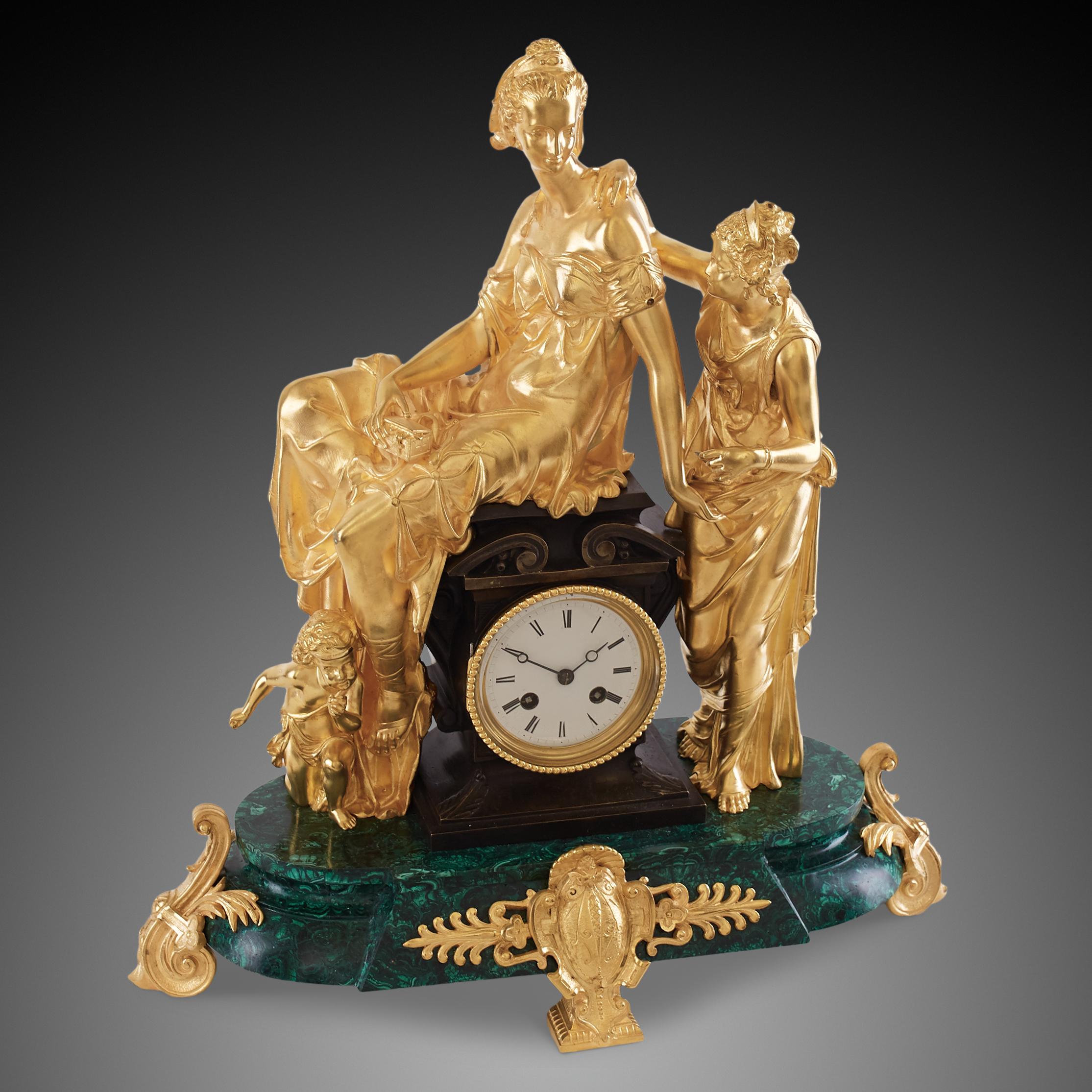
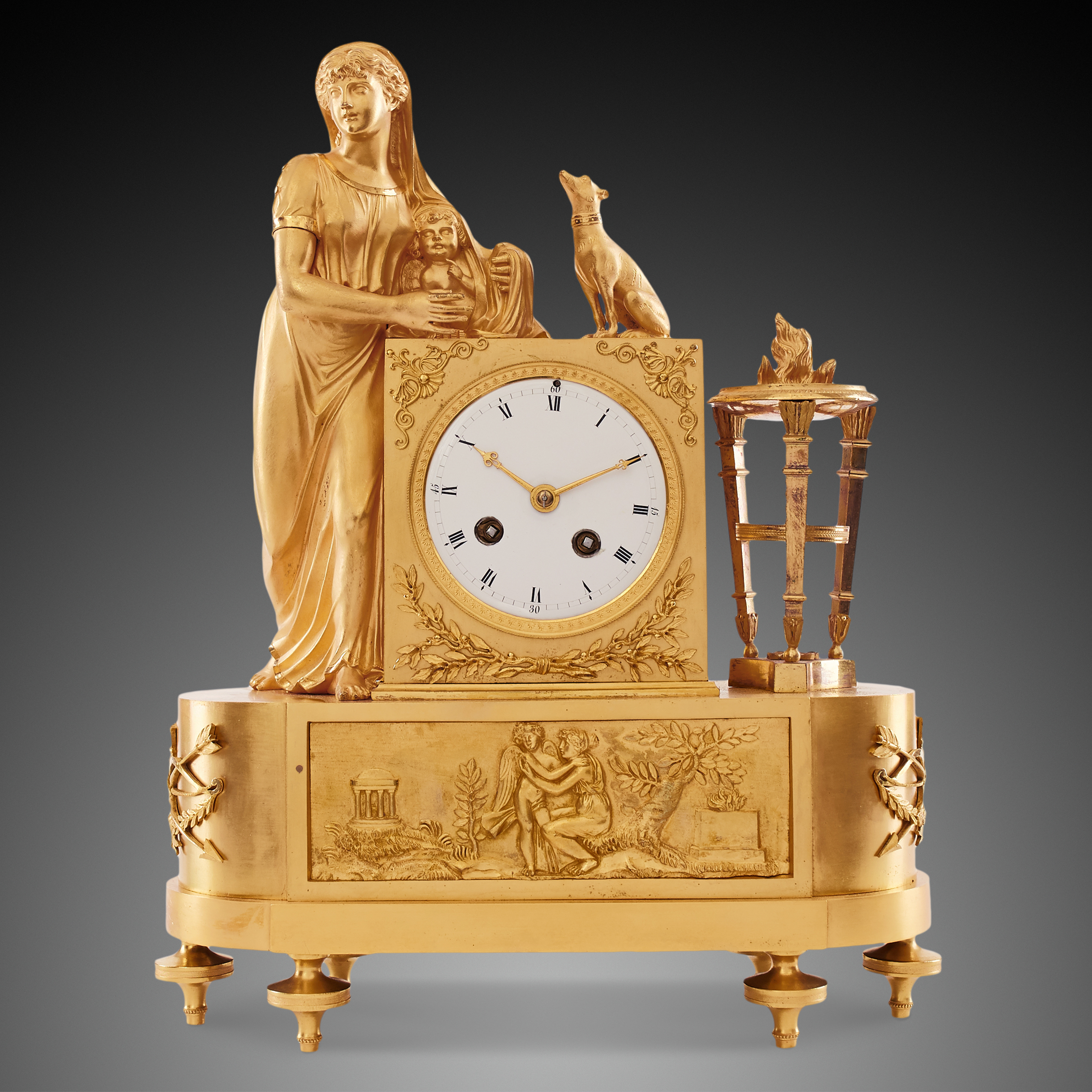
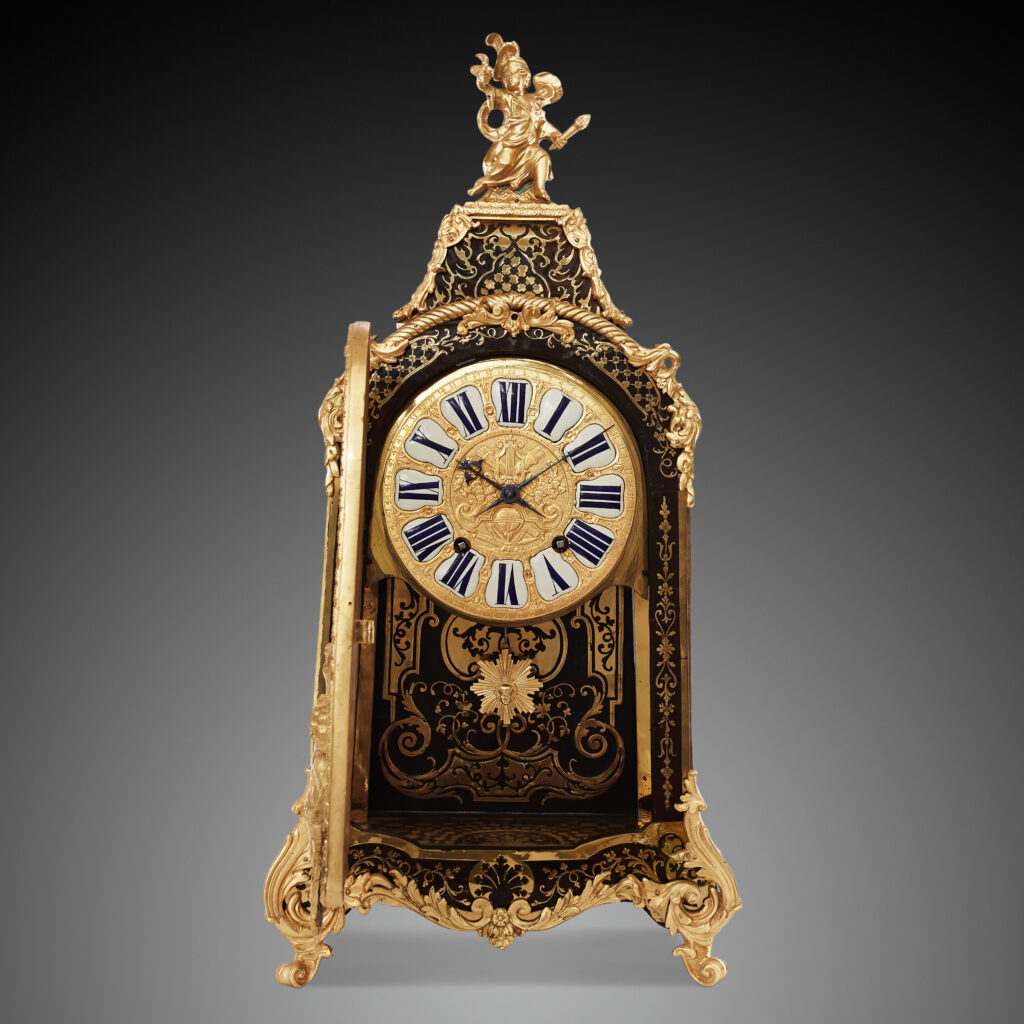
This magnificent French mantel clock is a superb example of the rich and narrative style of the Napoleon III period, dating from around 1850–1870. It represents the height of Second Empire decorative arts, where sculptural ambition, romantic historicism, and luxurious materials were combined with exceptional technical skill.
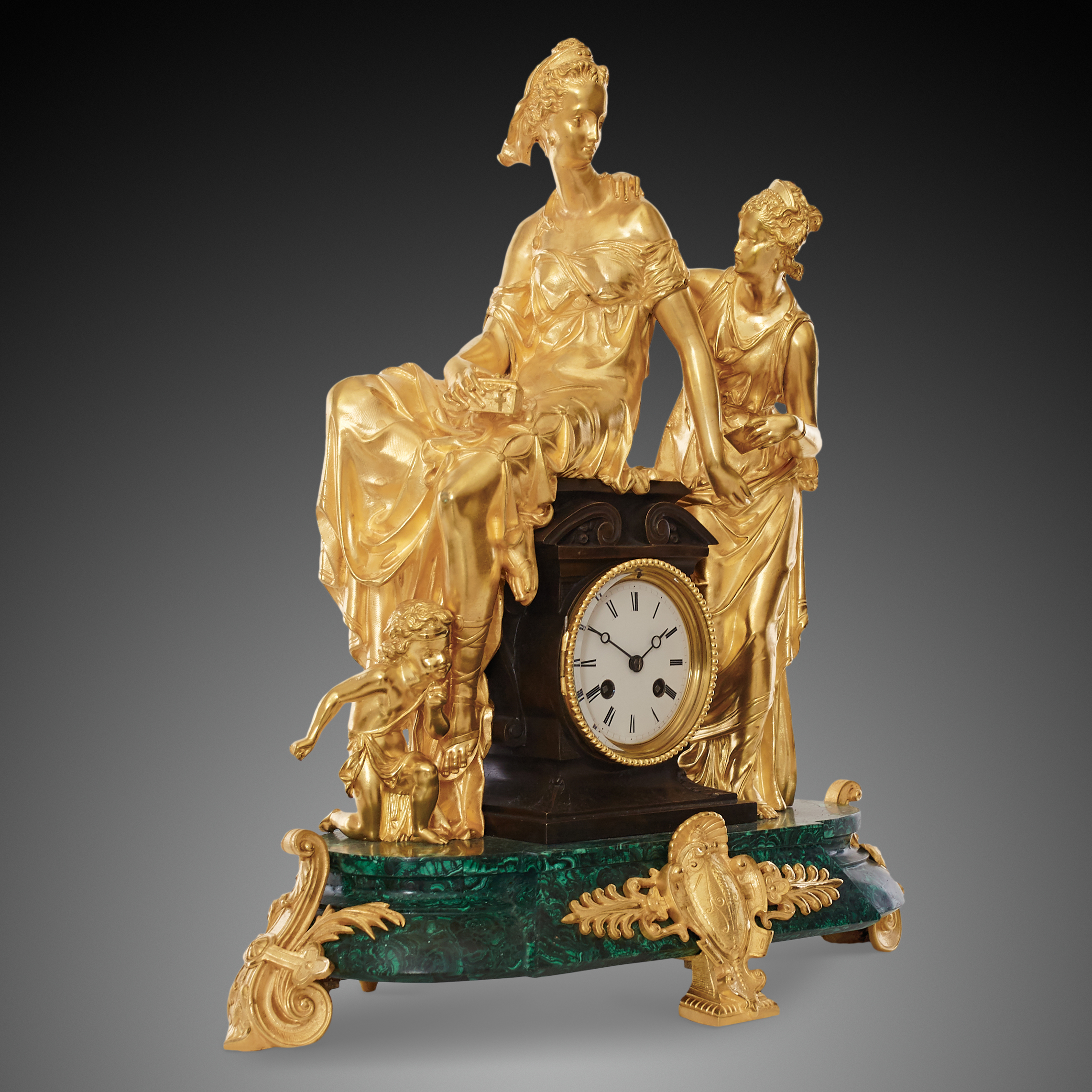
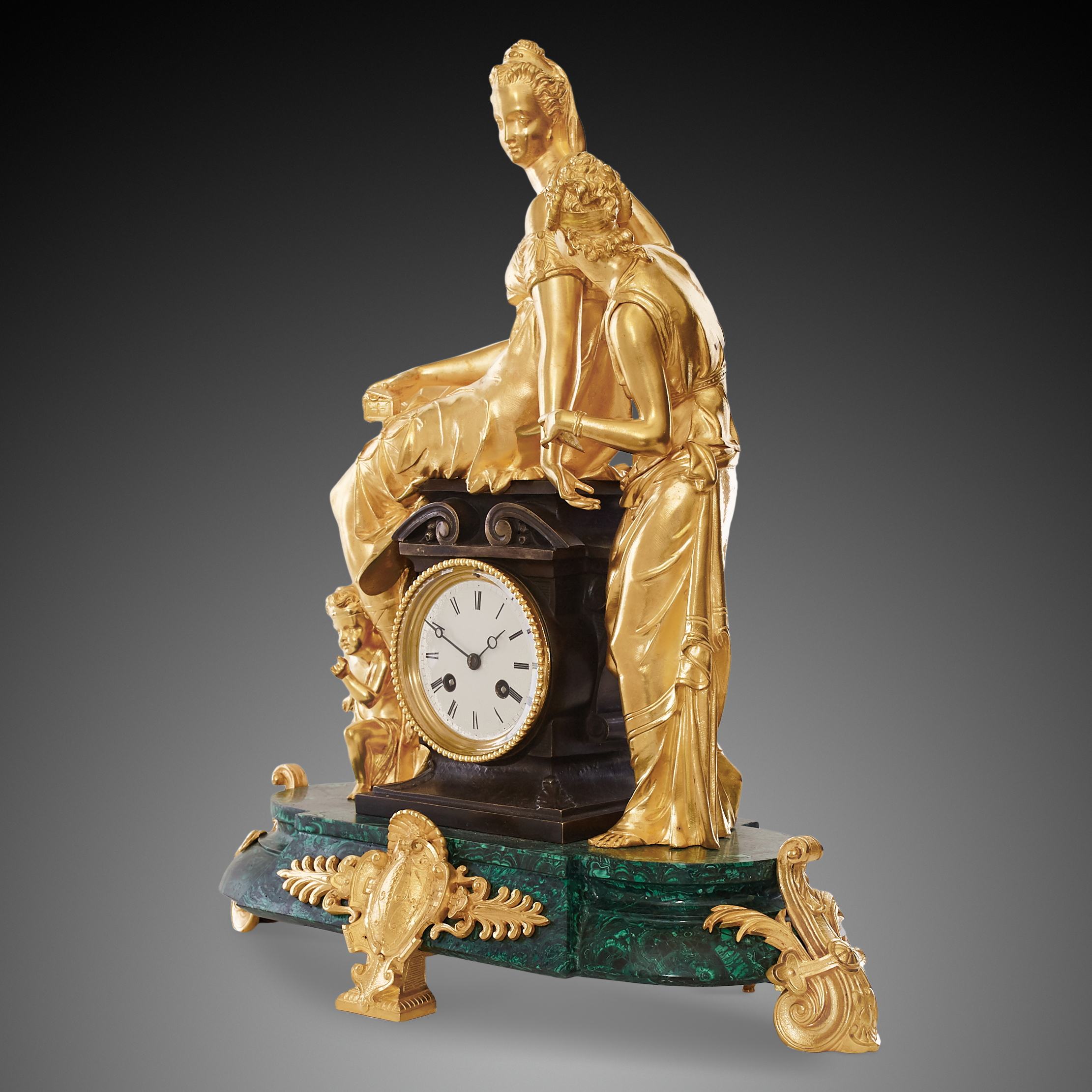
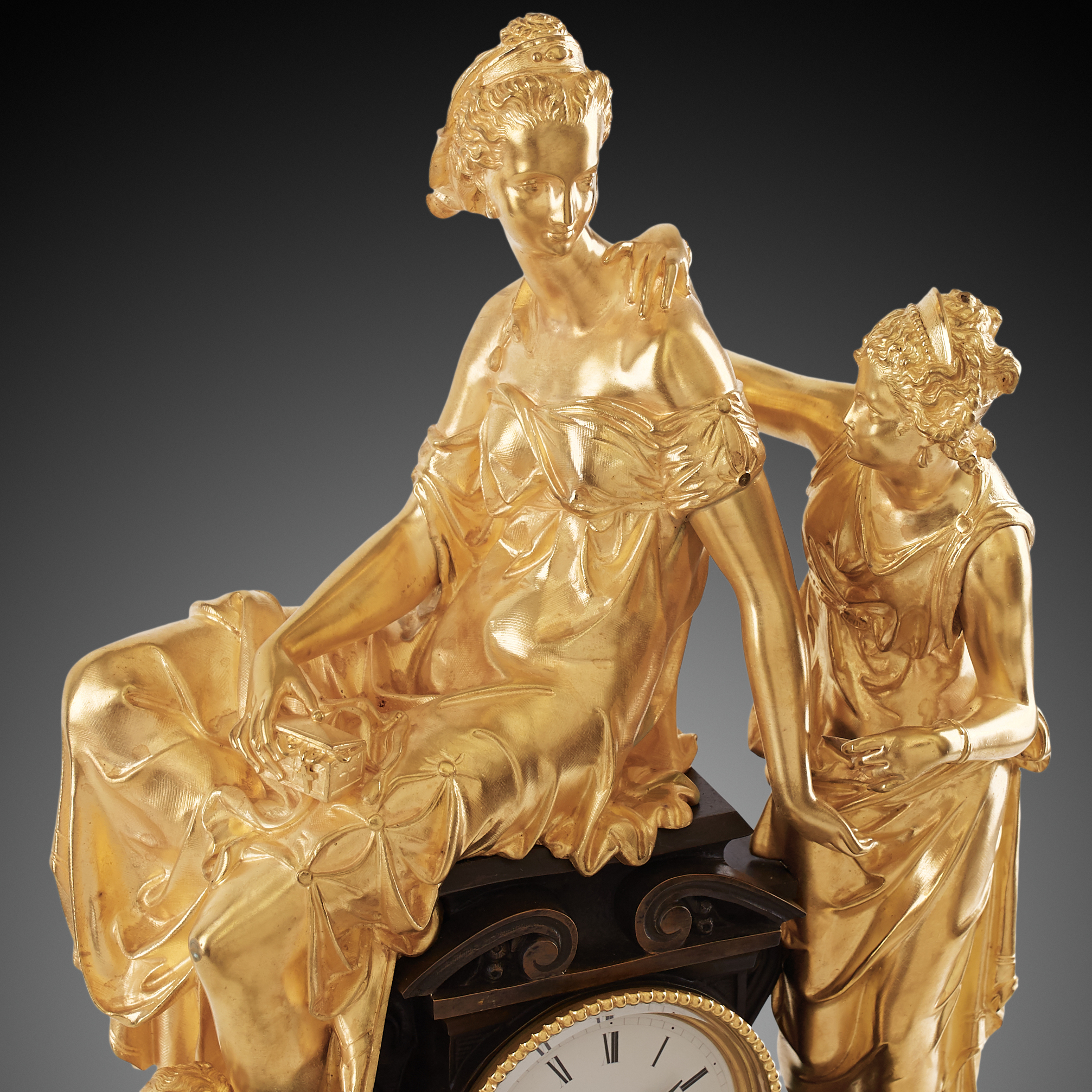
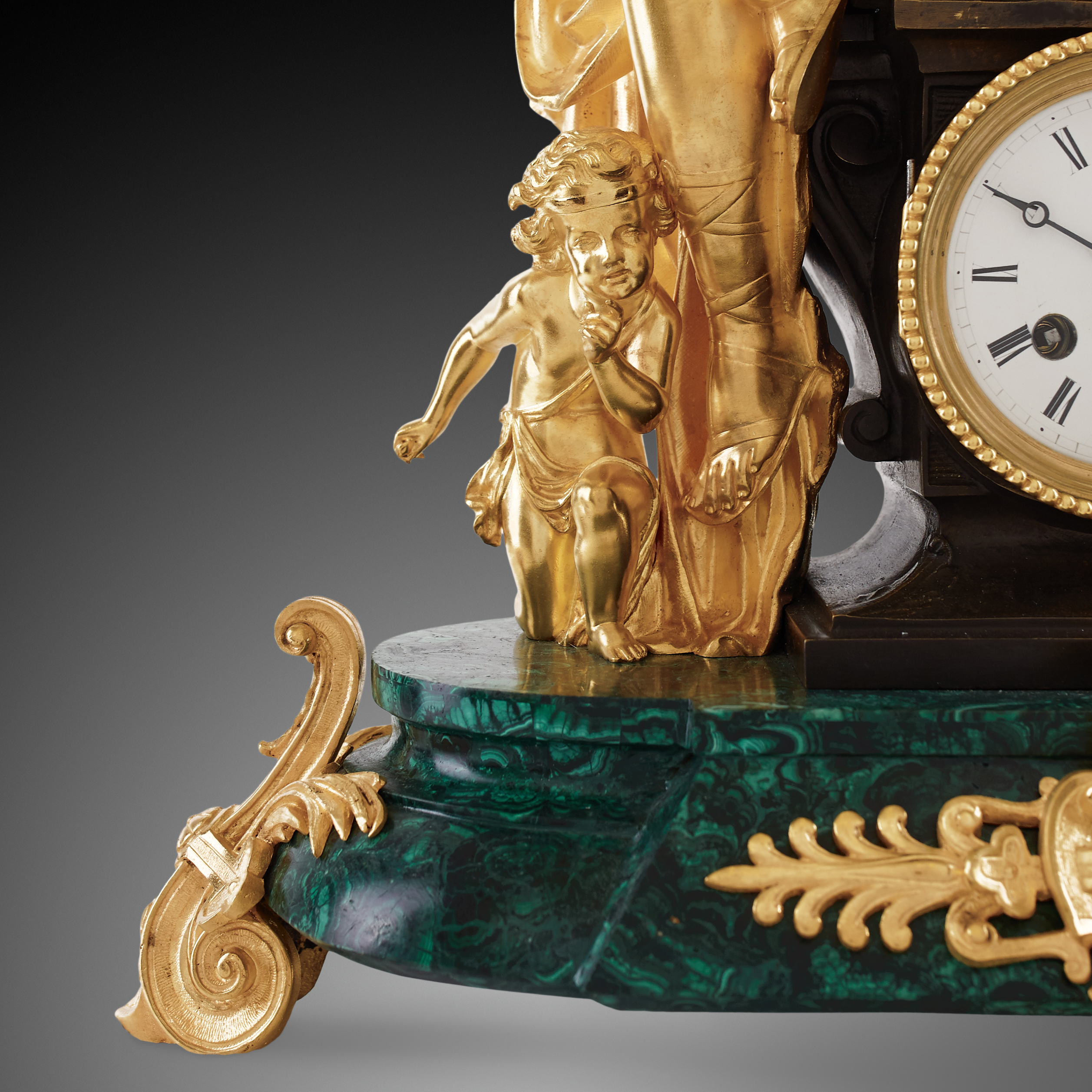
The clock is dominated by a large and finely modelled gilt bronze figural group. A seated classical lady, elegantly draped in flowing robes, occupies the central position. She is accompanied by a standing female figure who leans gently toward her in a tender, almost conspiratorial gesture. To the left, a small putto or cherub adds a playful and allegorical touch. The figures are rendered with great sensitivity -the drapery falls in soft, naturalistic folds, and the faces convey a quiet emotional depth that was highly prized during this romantic revival period.
The clock dial is set into the base of the composition, framed by a gilt bronze bezel with a white enamel face and Roman numerals. The entire sculptural group rests on a substantial platform of vibrant green malachite, which provides a striking colour contrast to the warm, luminous gilt bronze. The malachite base is further enriched with finely chased gilt bronze mounts, including a central mascaron flanked by laurel branches and elegant scrolled feet that terminate in acanthus leaves.
This clock perfectly captures the eclectic and theatrical spirit of the Napoleon III era. After the more austere classicism of the Empire period, the Second Empire revived historical themes with greater freedom and opulence. Mythological or allegorical scenes such as this one ,possibly representing Poetry, Music, or a gentle moment between the Muses were popular subjects that allowed bronziers to display both technical virtuosity and storytelling ability.
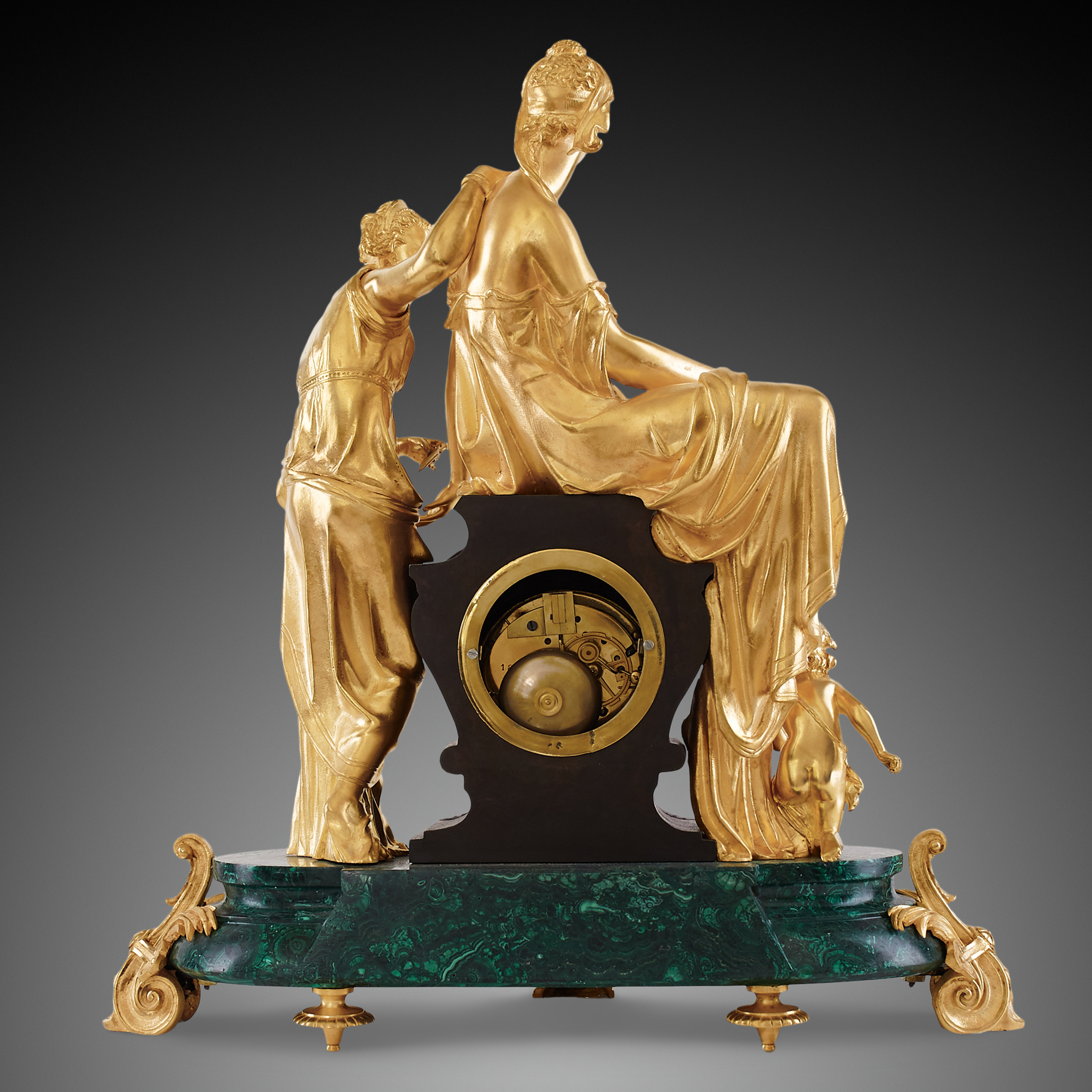
Mechanically, the clock houses a reliable eight-day going movement that strikes the hours and every half-hour on a clear bell. It has been professionally cleaned and serviced by a specialist in museum-quality timepieces and remains in excellent cosmetic and fully working condition. It comes complete with its original pendulum, winding key, and bell.
When displayed on a mantelpiece, the clock creates a commanding yet refined focal point. The warm glow of the gilt bronze figures against the deep green malachite base produces a rich and luxurious effect. The gentle interaction between the two main figures invites contemplation, while the soft chime on the half-hour adds a measured, civilised rhythm to the room.
This is a fine and evocative example of mid-19th century French craftsmanship, where sculptural quality meets decorative opulence. Its narrative composition and high-quality execution make it a standout piece that embodies the romantic and luxurious taste of the Napoleon III period. It would sit beautifully in any collection of Second Empire decorative arts or alongside other figural bronzes of the era.