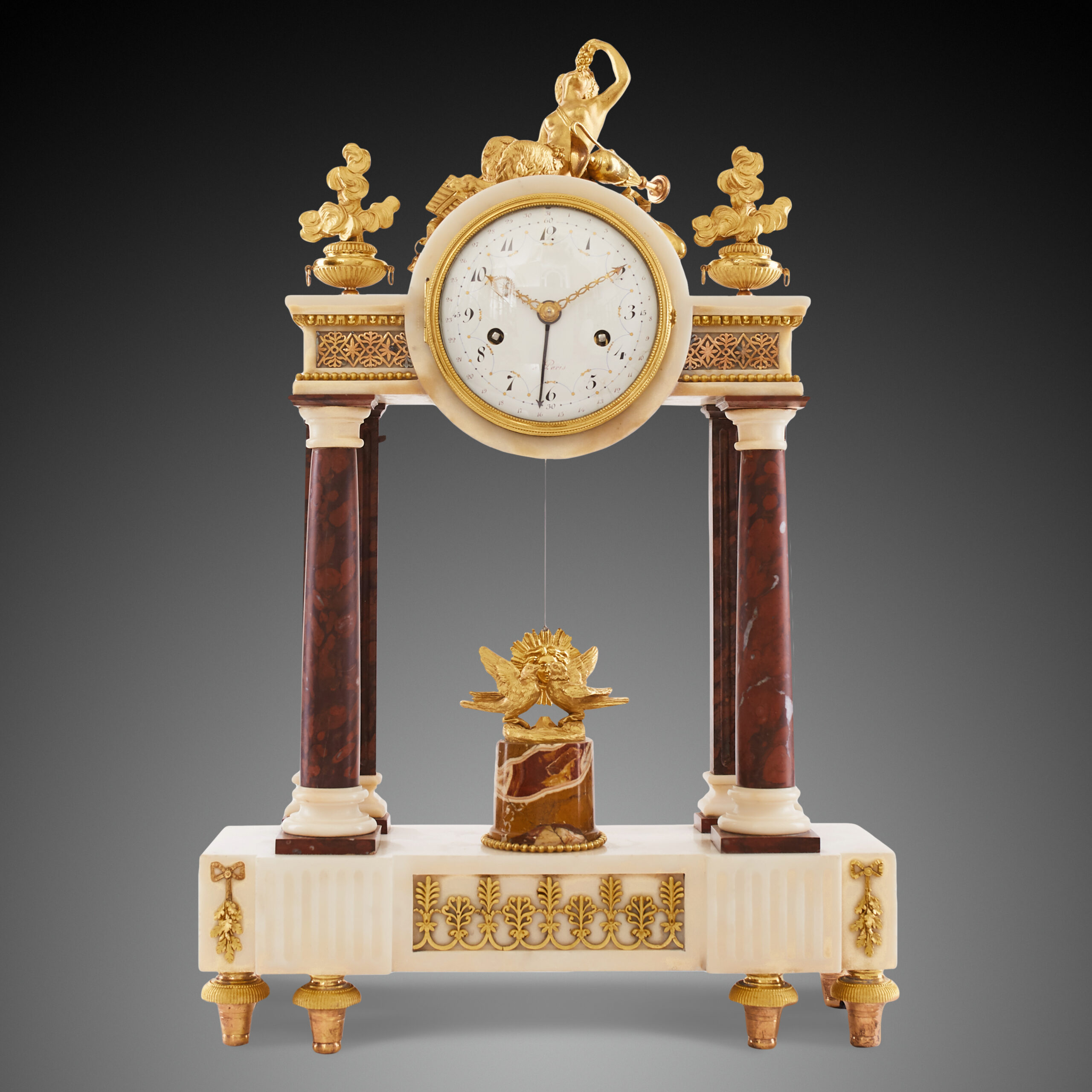
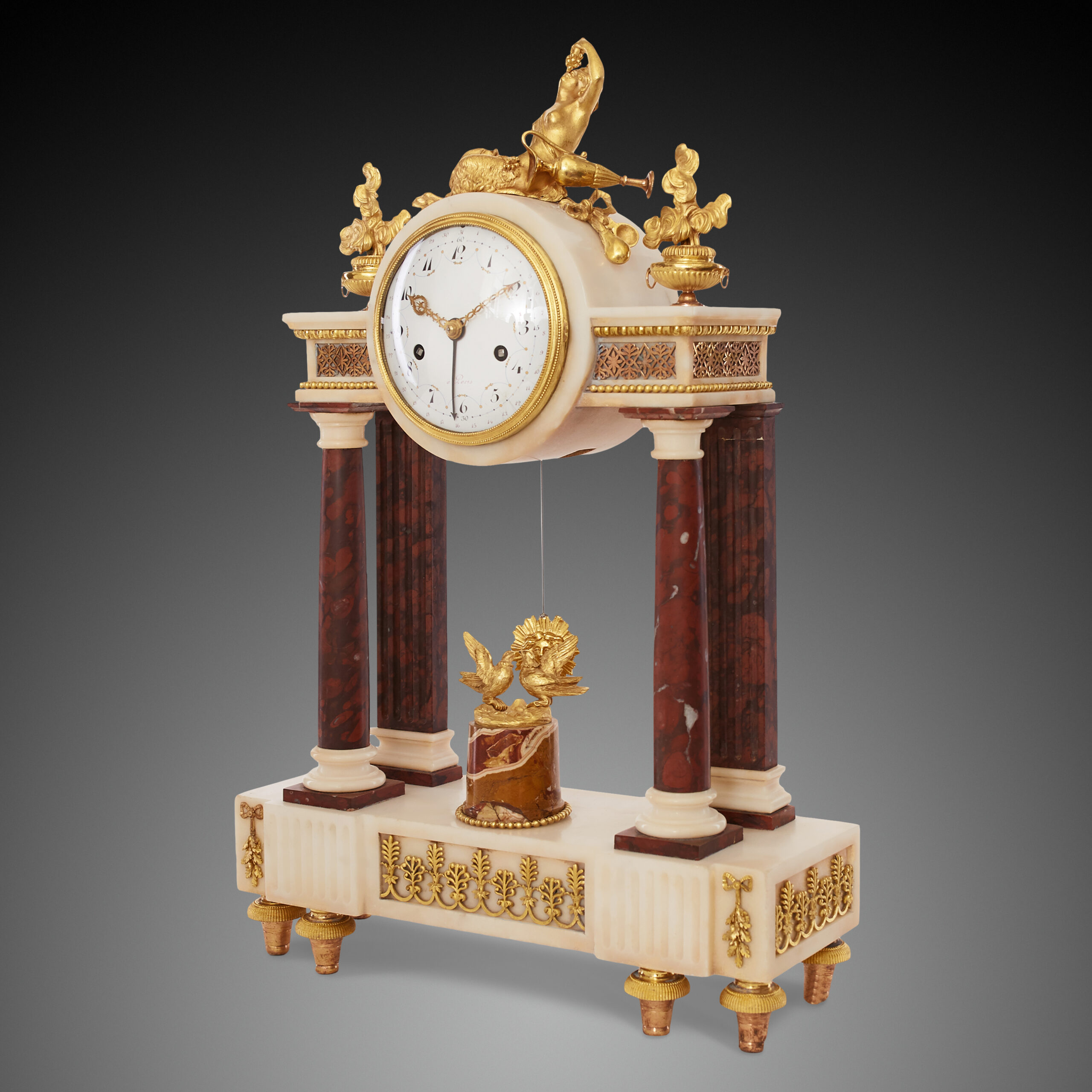
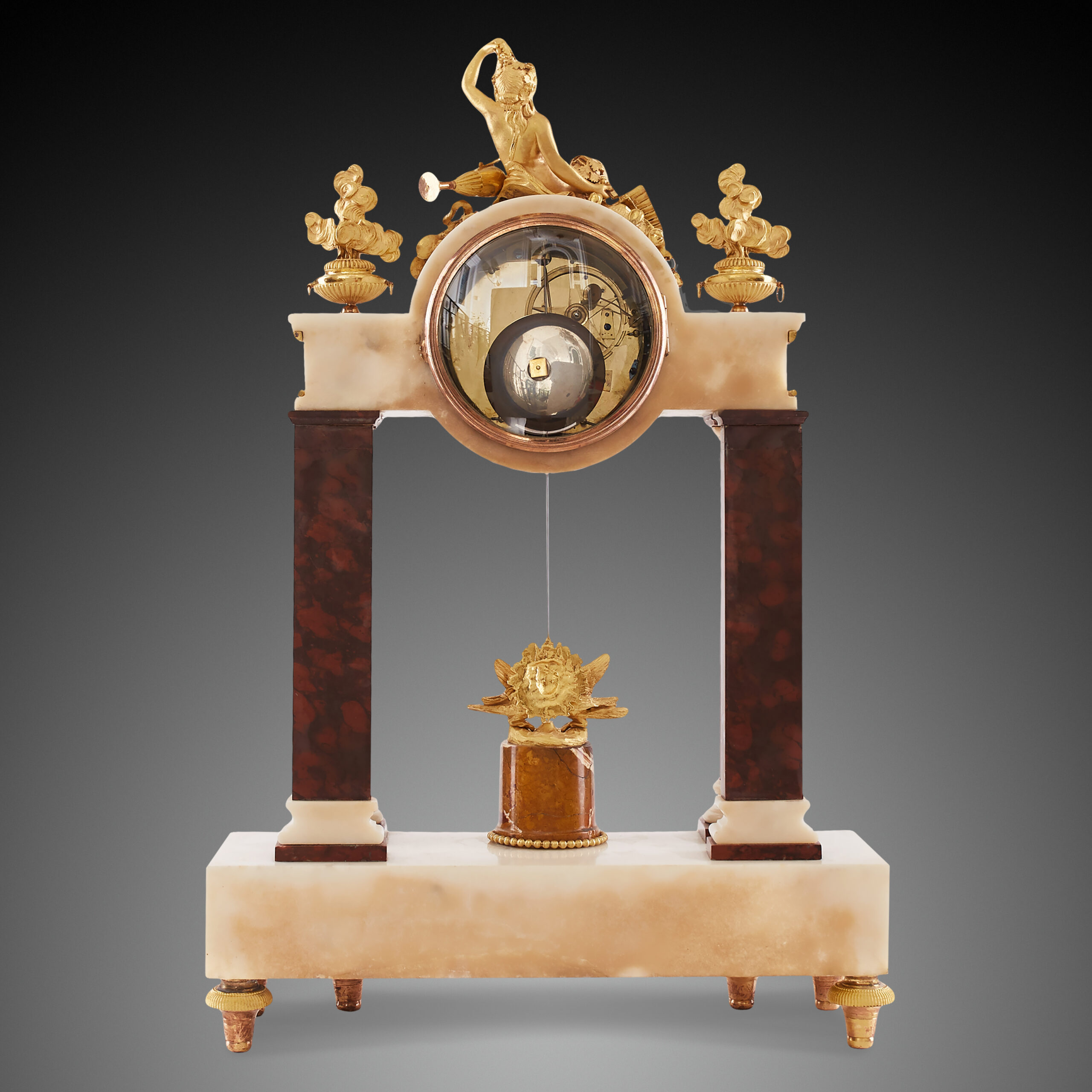
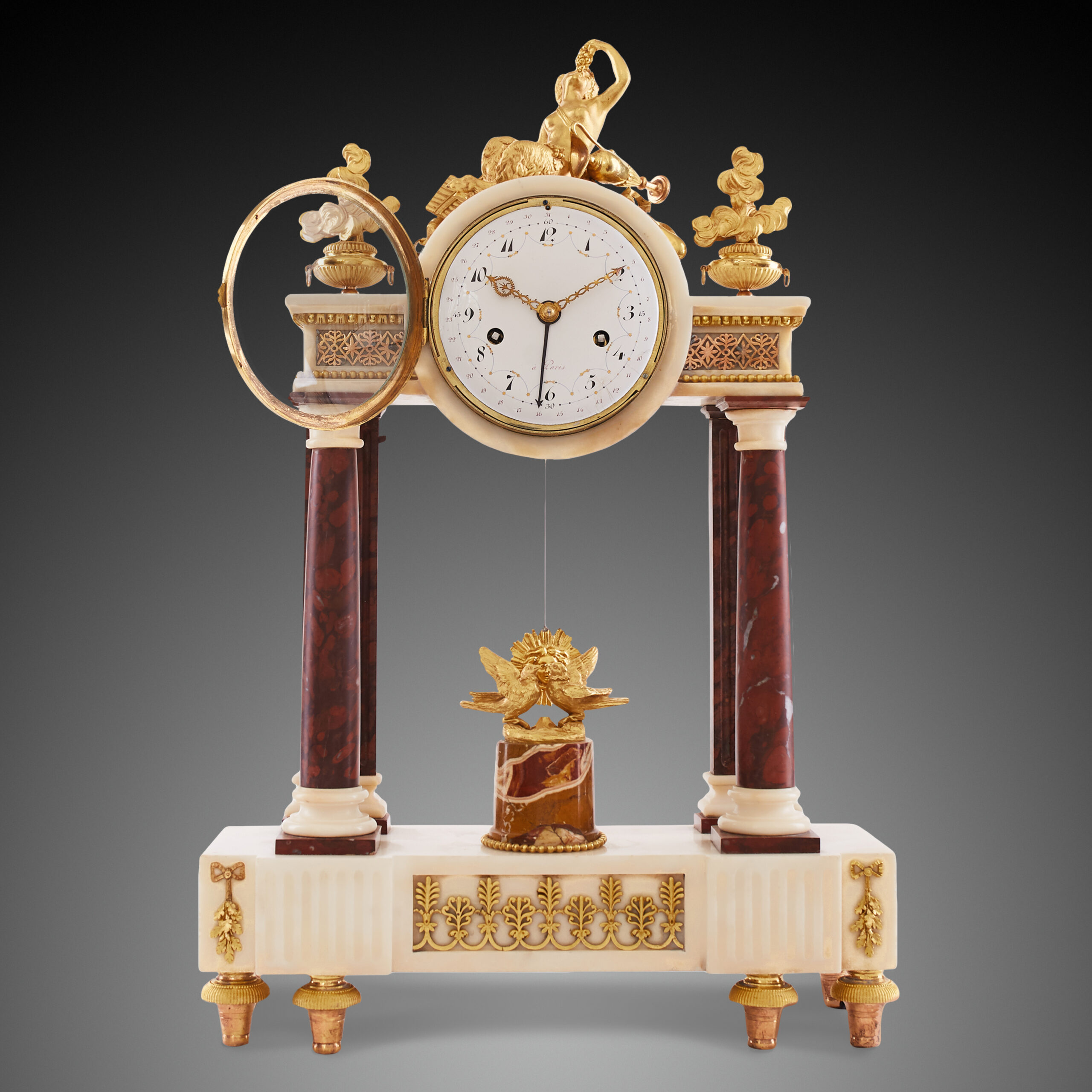
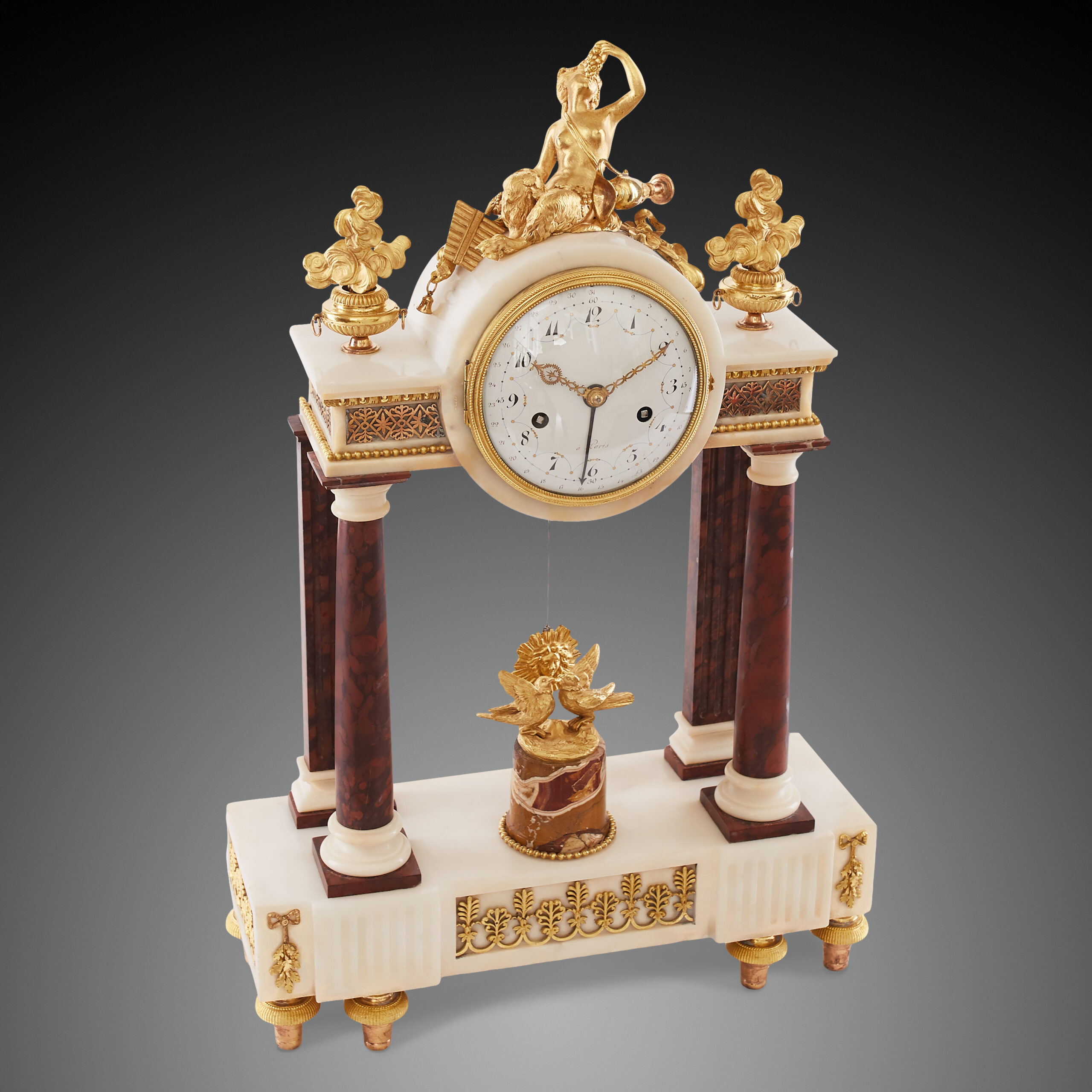
This elegant French mantel clock is a superb and highly decorative example of the Empire style, dating from around 1810–1820. It represents the refined architectural taste of the Napoleonic era, where classical forms, luxurious materials, and symbolic ornamentation were combined with exceptional craftsmanship.
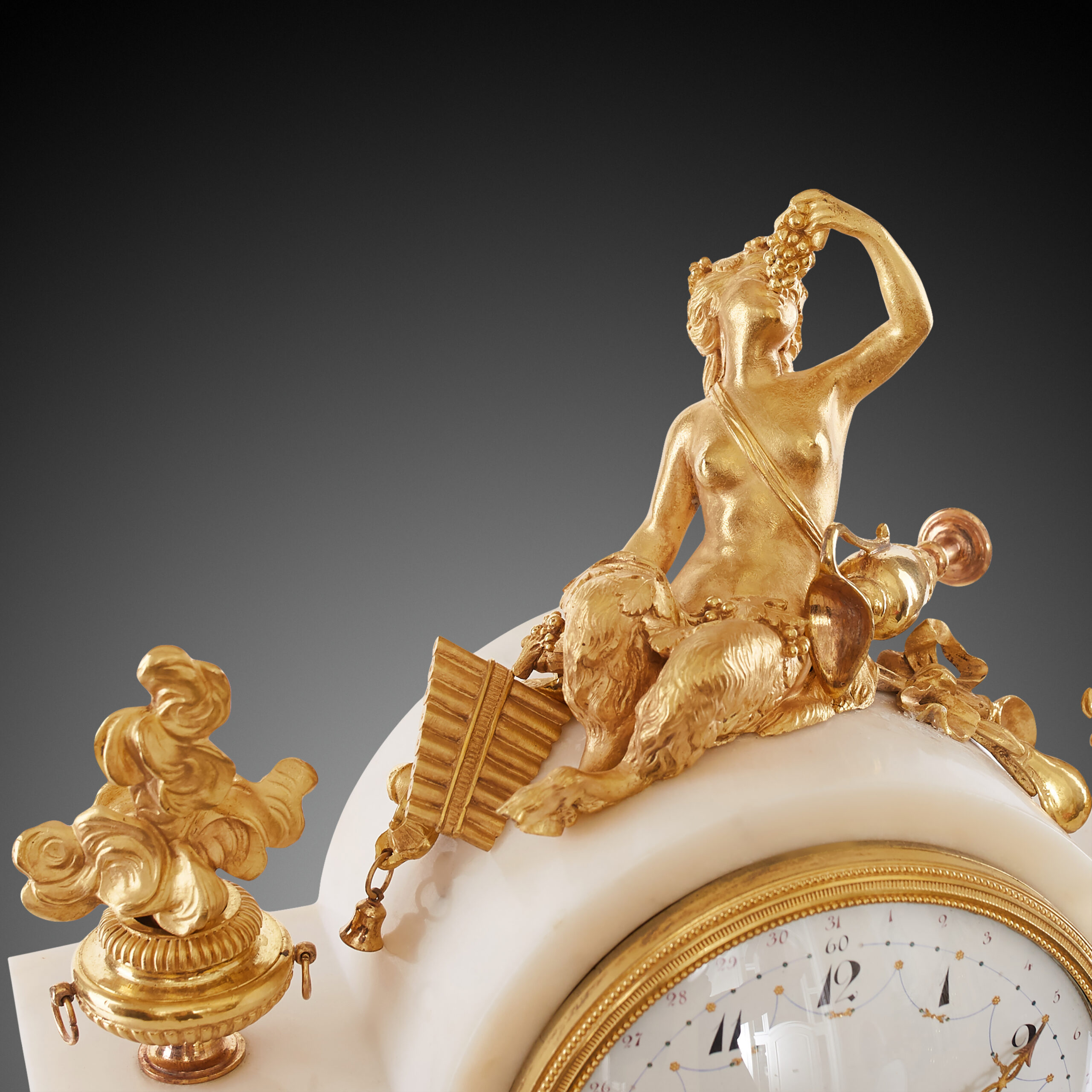
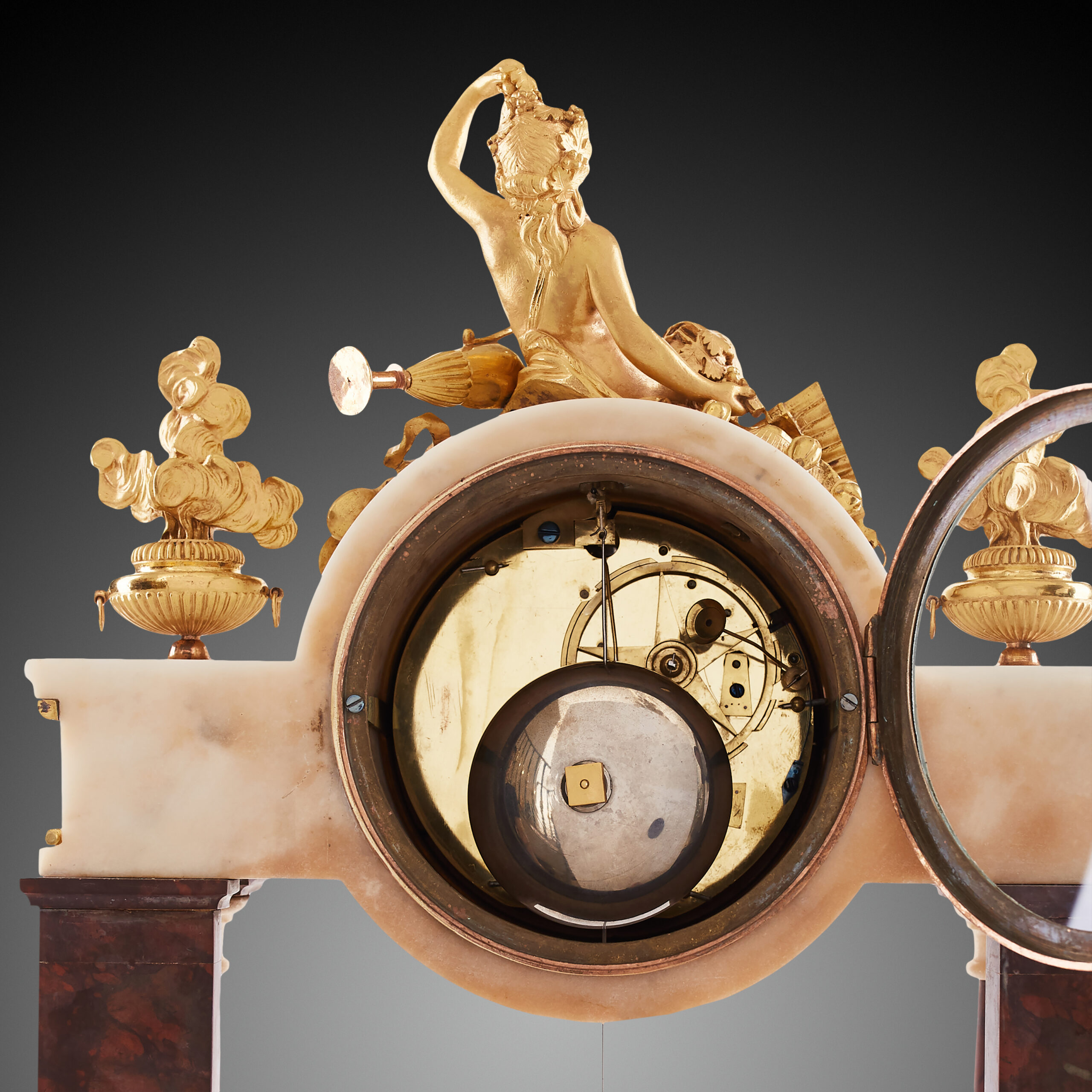
The clock is constructed in the classic portico form, framed by two tall columns of rich red marble with finely chased gilt bronze capitals and bases. These columns support an entablature and a stepped pediment crowned by a large, dynamic gilt bronze group featuring a winged figure (possibly a Genius or Victory) accompanied by two putti. The sculptural finial adds movement and height to the composition, while the overall symmetry maintains the architectural dignity so characteristic of the period.
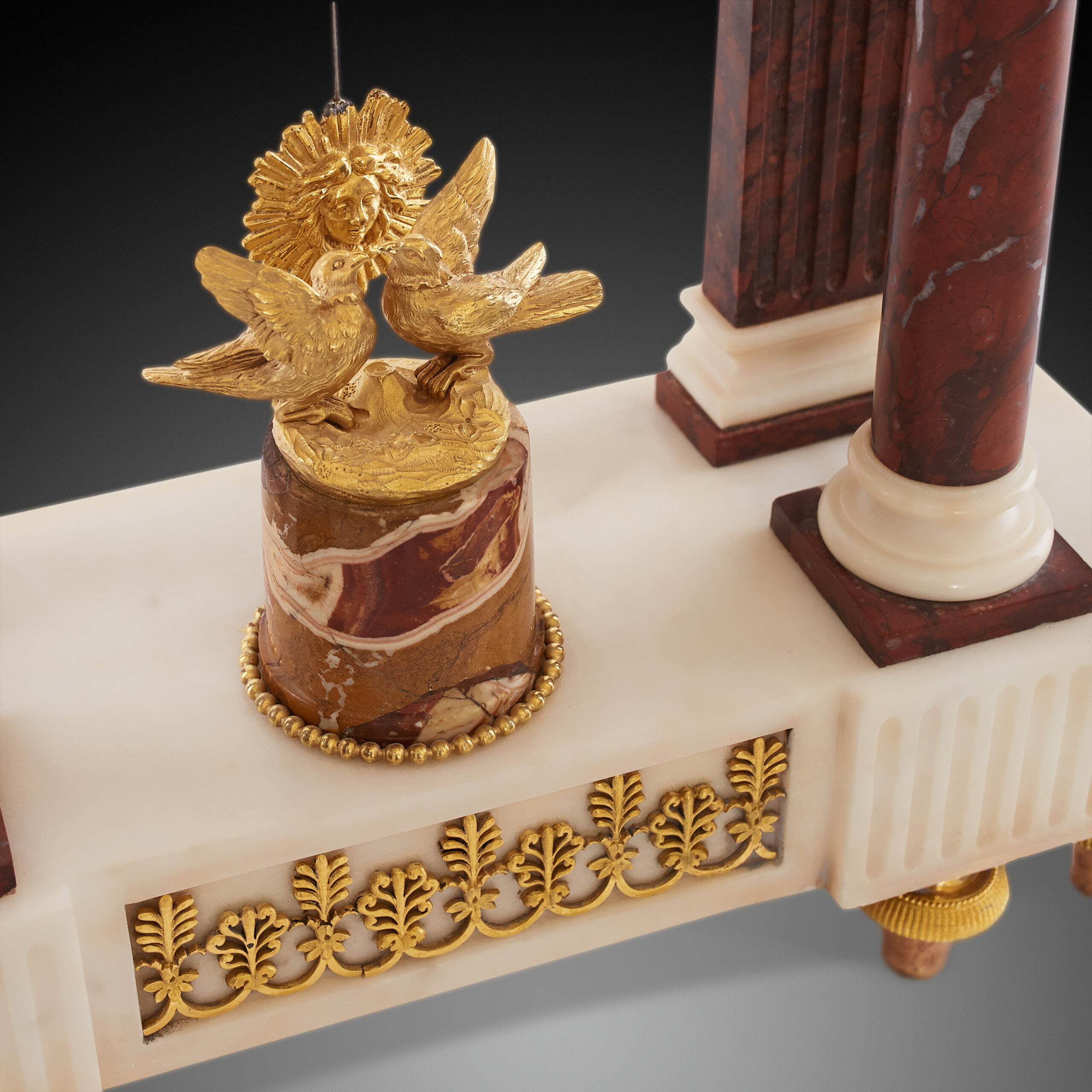
The circular white enamel dial displays crisp Roman numerals and is fitted with delicate gilt hands. Below the dial, an exposed sunburst pendulum with a finely modelled gilt bronze cherub (or Genius) seated on a drum provides a charming focal point. The cherub holds attributes that reinforce the lyrical and allegorical theme of the piece.
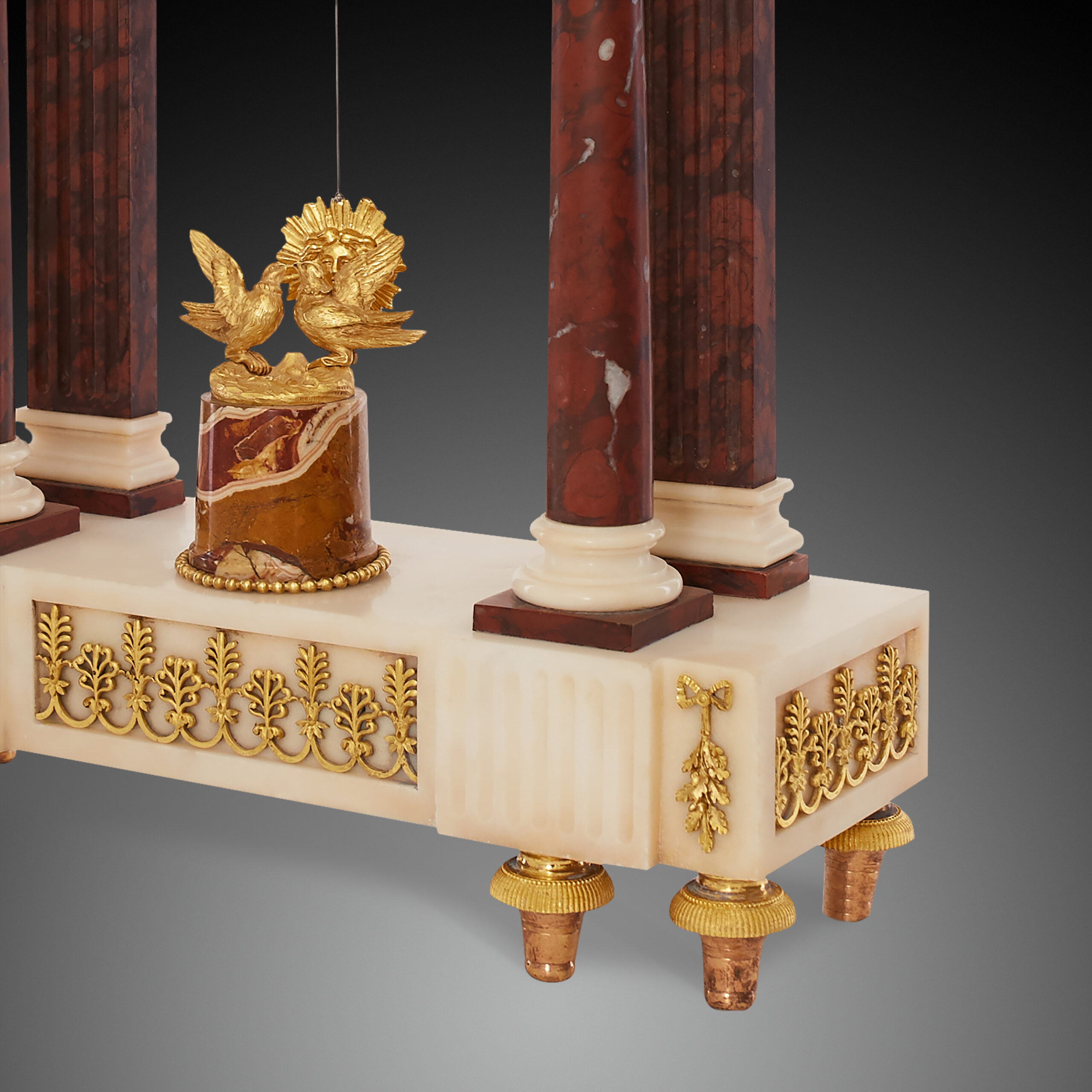
The base is executed in white marble with a gilt bronze frieze of classical motifs and rests on four elegant gilt bronze feet. The warm tones of the red marble columns contrast beautifully with the cool white marble base and the luminous gilt bronze mounts, creating a rich and harmonious visual effect typical of high-quality Empire production.
This clock embodies the spirit of the Empire under Napoleon Bonaparte. Designers of the period deliberately drew inspiration from ancient Rome and Greece, using columns, pediments, putti, and classical figures to express ideals of order, beauty, victory, and eternal glory. Such pieces were created for the palaces, ministries, and elegant residences of the imperial elite, where they served as both precise timekeepers and powerful symbols of cultural refinement.
Mechanically, the clock houses a reliable eight-day movement that strikes the hours and every half-hour on a clear bell. It has been professionally cleaned and serviced by a specialist in museum-quality timepieces and remains in excellent cosmetic and fully working condition. It comes complete with its original pendulum, winding key, and bell.
When placed on a mantel, the clock presents a striking yet balanced presence. The red marble columns frame the dial with dignity, the gilt bronze elements glow with warmth, and the sculptural finial and pendulum cherub add a sense of life and movement. The gentle tick of the mechanism and the soft chime on the half-hour bring a civilised rhythm to the room.
This is a fine and authentic example of Empire horology, where technical precision meets sculptural elegance and imperial symbolism. Its noble proportions, rich materials, and high-quality execution make it a beautiful and historically resonant addition to any collection of early 19th-century French decorative arts.