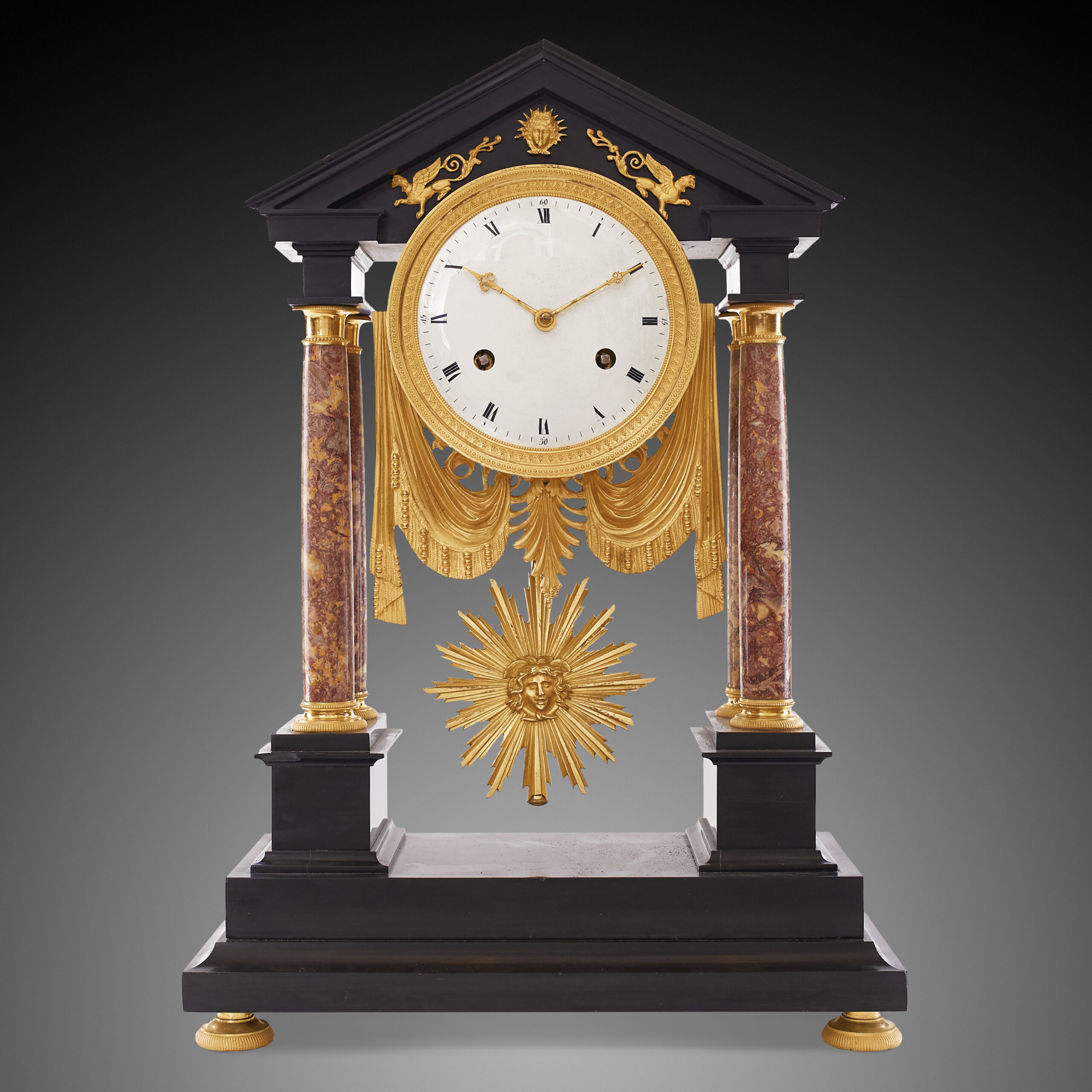
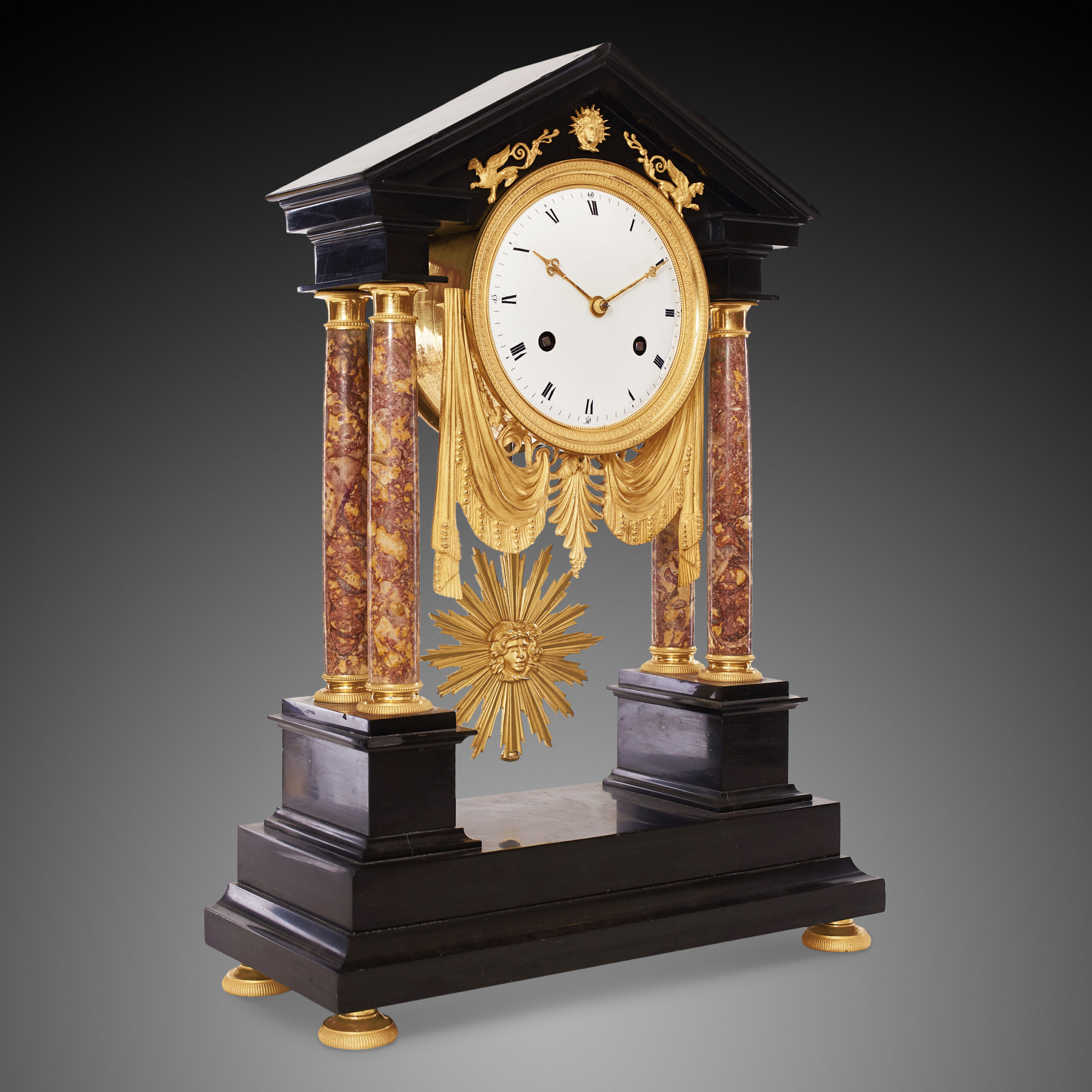
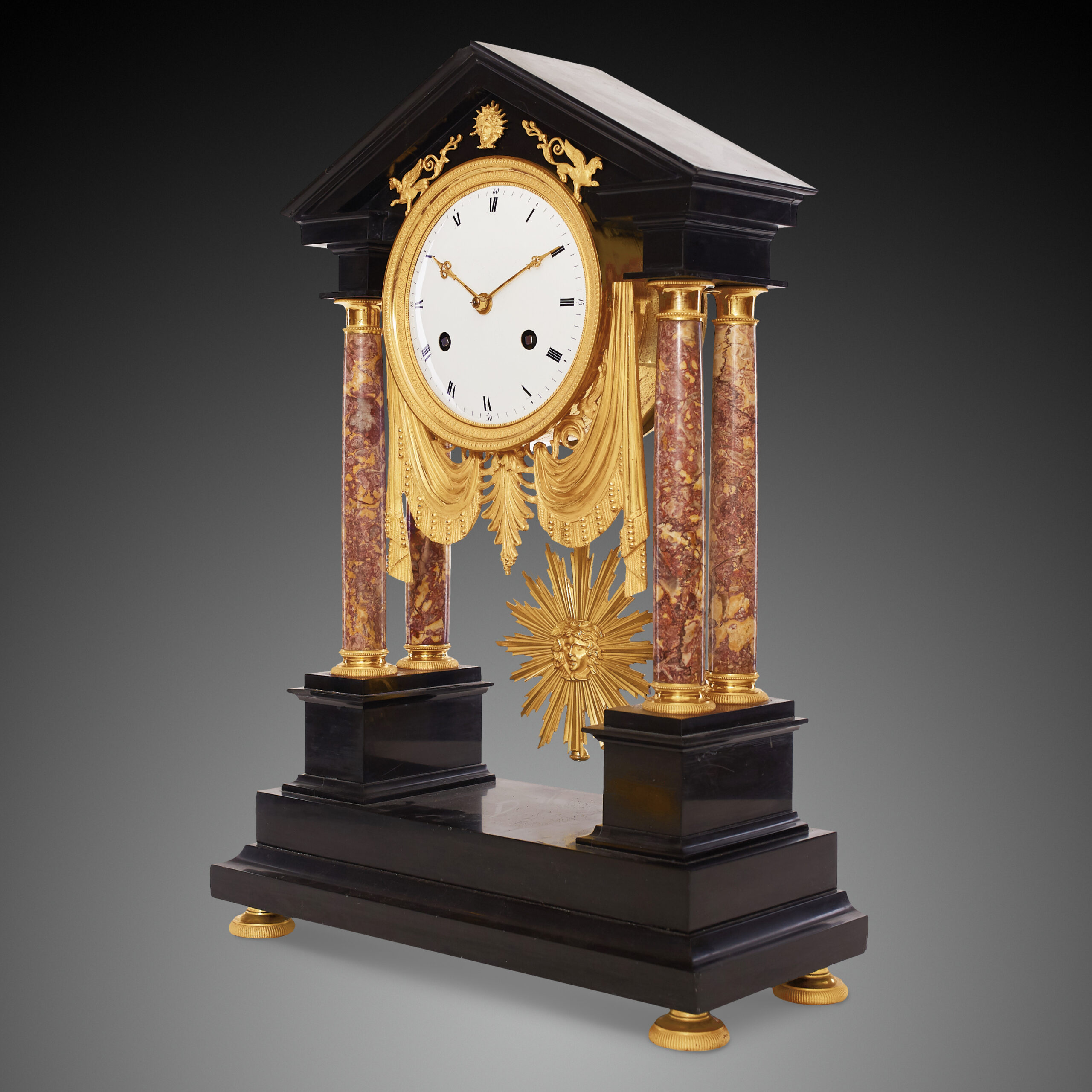
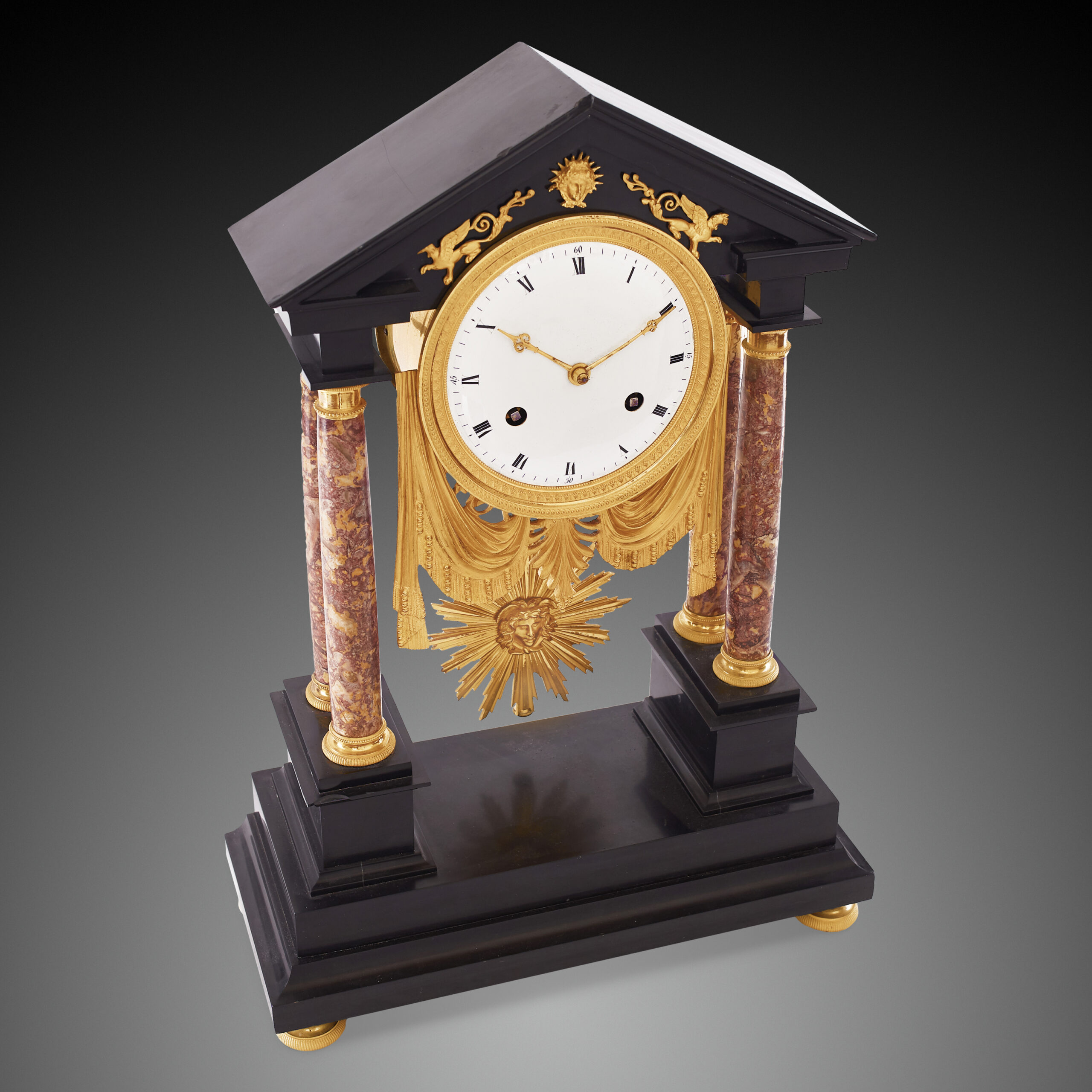
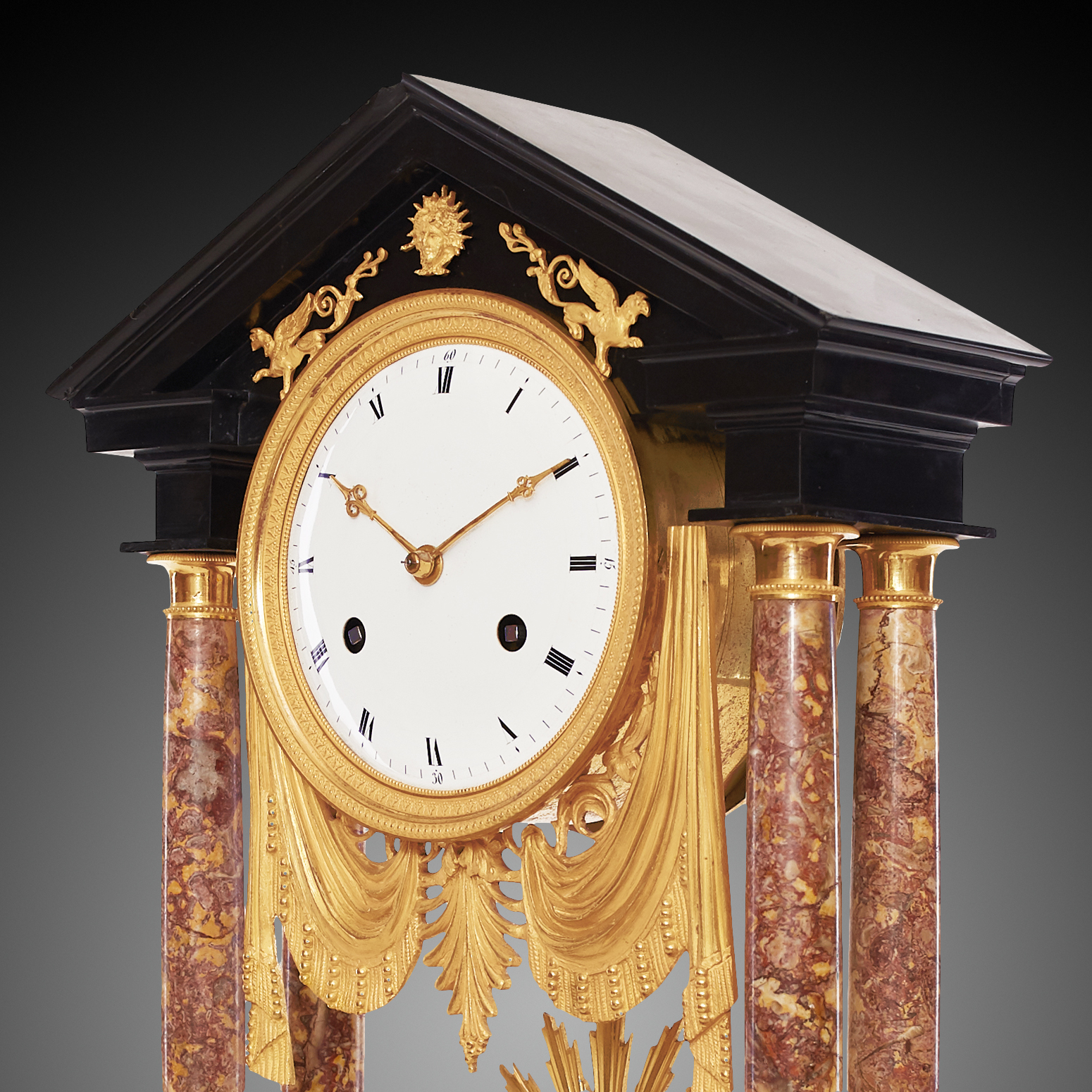
A fine French marble and gilt bronze portico mantel clock, designed in the Neoclassical taste and distinguished by its imposing temple-form architecture, rich ormolu decoration, and elegant contrast of materials. The clock is centred by a large circular white enamel dial with Roman numerals, an outer minute track, finely shaped gilt hands, and twin winding apertures. The dial is framed by a richly chased gilt bronze bezel and suspended beneath a classical pediment, creating a balanced and architectural composition.
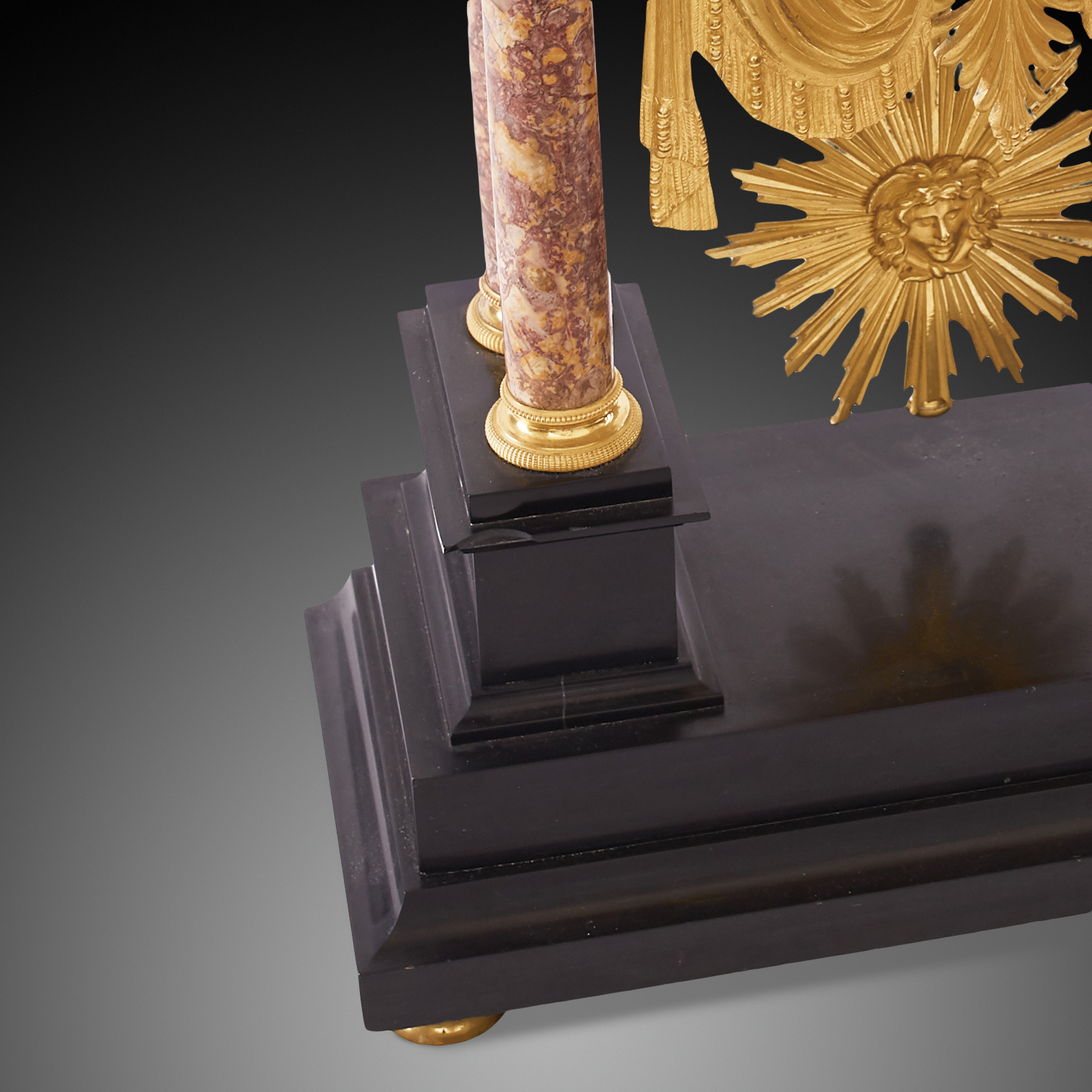
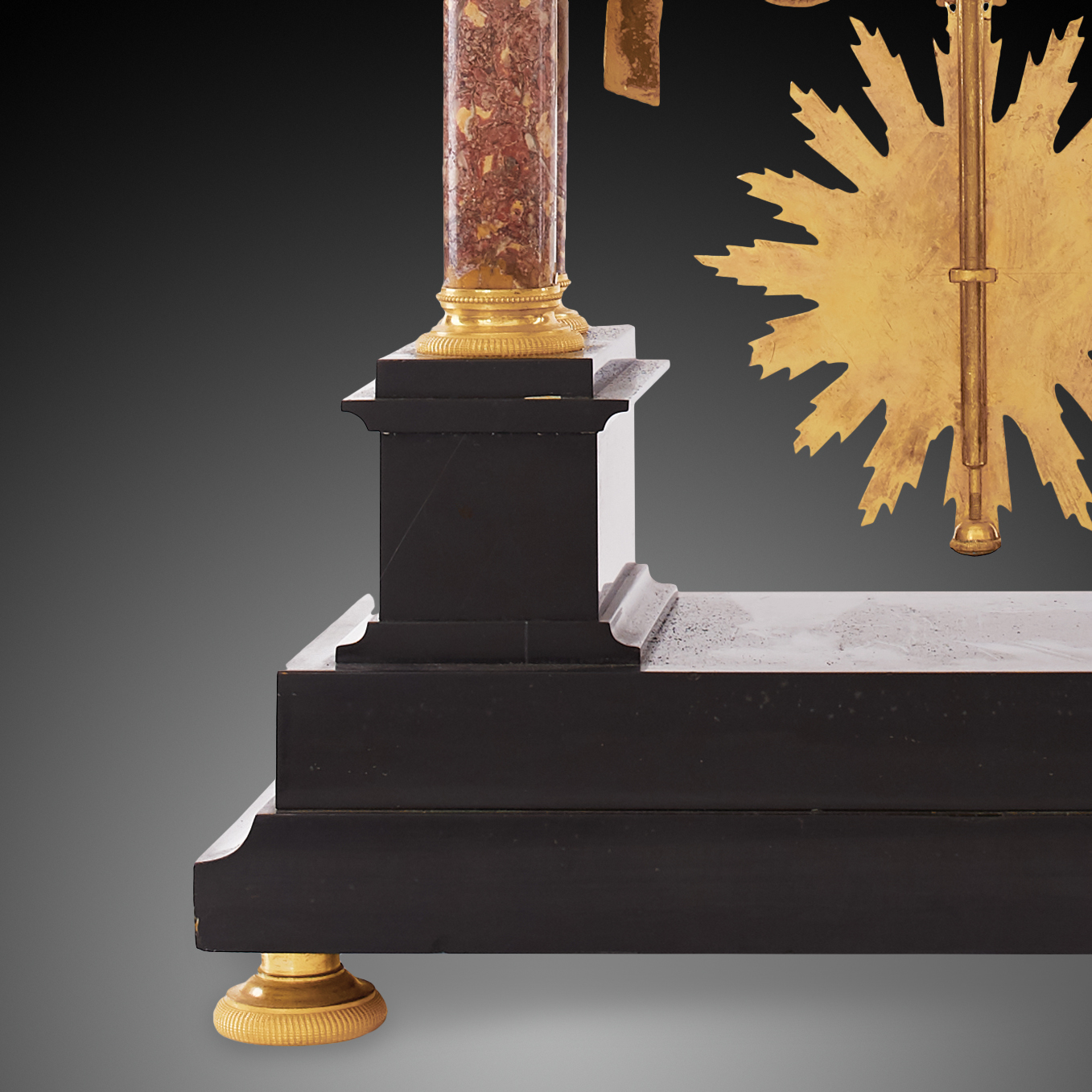
The case is formed as a miniature classical temple, supported by two cylindrical marble columns with gilt bronze capitals and bases. The columns rise from a stepped black marble plinth and support a black marble pediment, giving the clock a strong architectural presence. The use of dark marble, variegated red marble columns, and bright gilt bronze mounts creates a refined and luxurious contrast, characteristic of high-quality French decorative clocks of the late 18th and early 19th-century tradition.
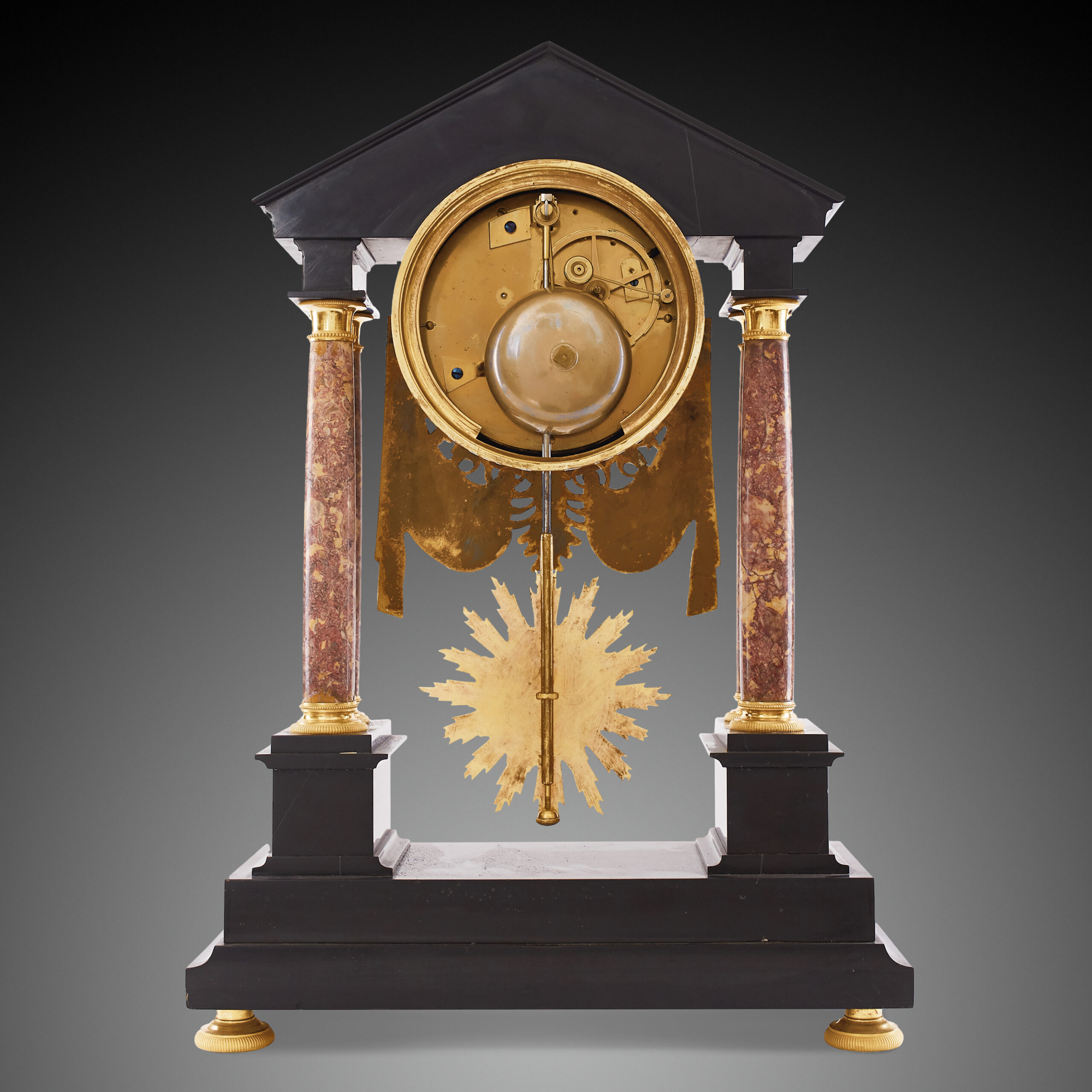
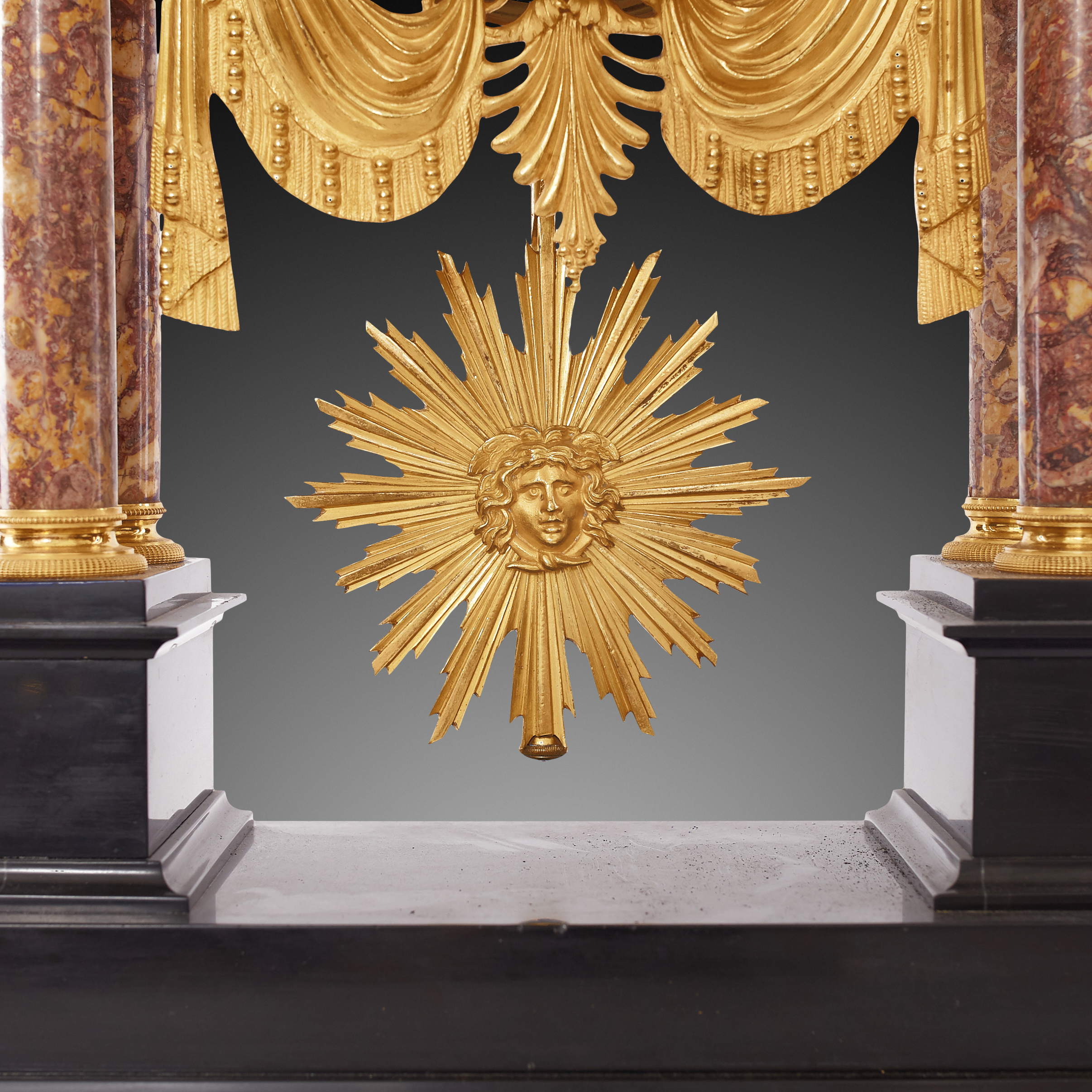
Beneath the dial is an elaborate gilt bronze drapery mount, finely modelled with tasselled swags and a central foliate ornament. This curtain-like decoration adds richness and movement to the otherwise formal architectural structure. Suspended below is a large gilt bronze sunburst pendulum with a classical mask, a striking decorative feature associated with radiance, authority, and classical grandeur. The pediment is further enriched with gilt bronze mounts including winged creatures, scrolls, and a central sun mask, reinforcing the refined symbolic language of Neoclassical and Empire design.
Historically, portico clocks became highly fashionable in France during the late Louis XVI, Directoire, and Empire periods. Their architectural forms were inspired by ancient Greek and Roman temples, reflecting the period’s admiration for order, symmetry, and classical antiquity. These clocks were made not only as practical timepieces, but also as important decorative objects intended for display in elegant interiors, where they represented taste, refinement, and social status.
The combination of architectural design, carefully selected marble, finely chased gilt bronze mounts, and an ornamental sunburst pendulum gives this clock a strong decorative presence. Such pieces were typically placed on mantelpieces, console tables, or commodes in salons, libraries, and formal reception rooms, where their sculptural and architectural qualities could be appreciated.
This example presents as a refined and highly decorative French portico mantel clock with strong historical character. Its classical pediment, marble columns, gilt bronze drapery, sunburst pendulum, and elegant enamel dial make it an attractive addition to a collection of antique clocks, French decorative arts, or Neoclassical interior objects. It would display beautifully in a professional dealer’s gallery or a sophisticated period interior.