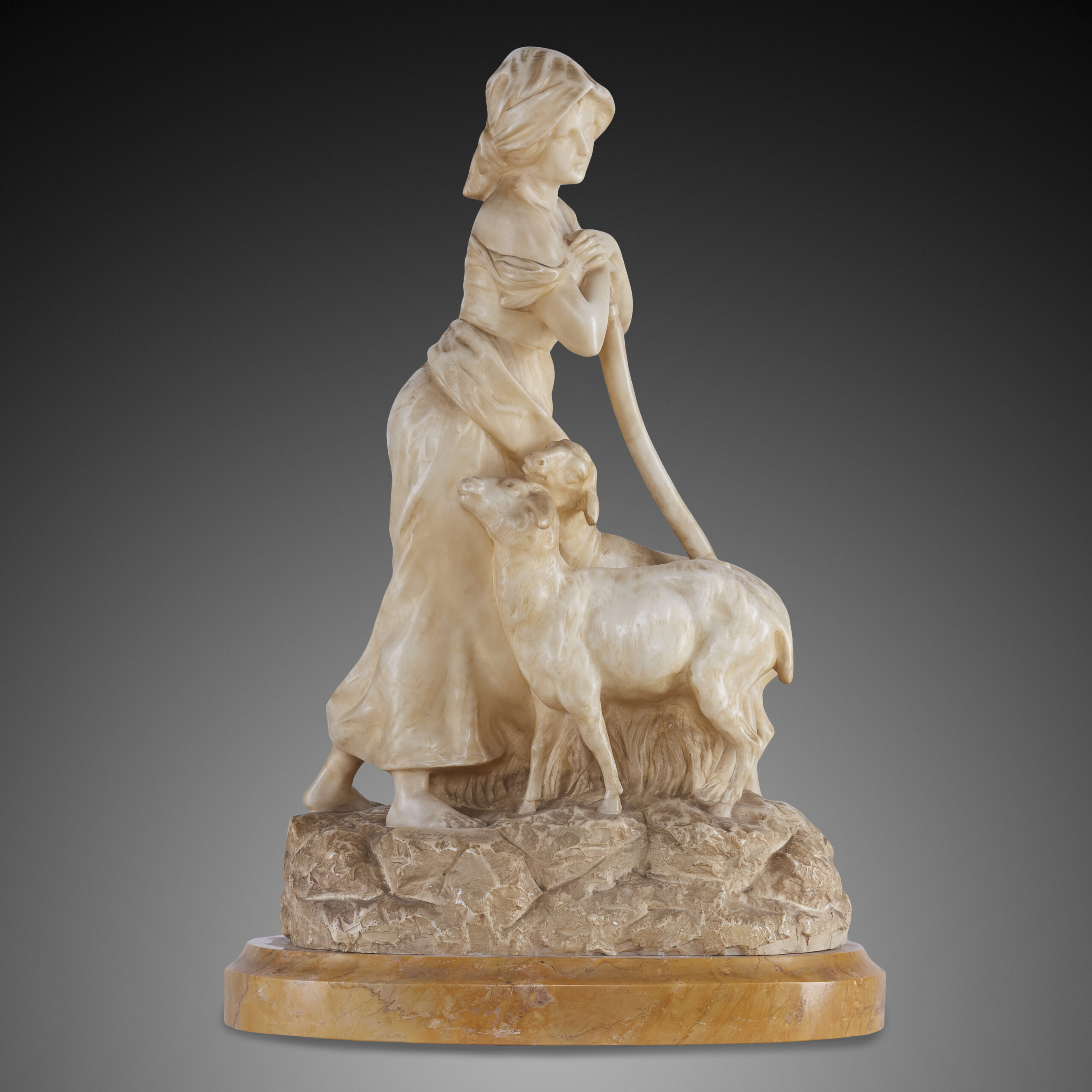
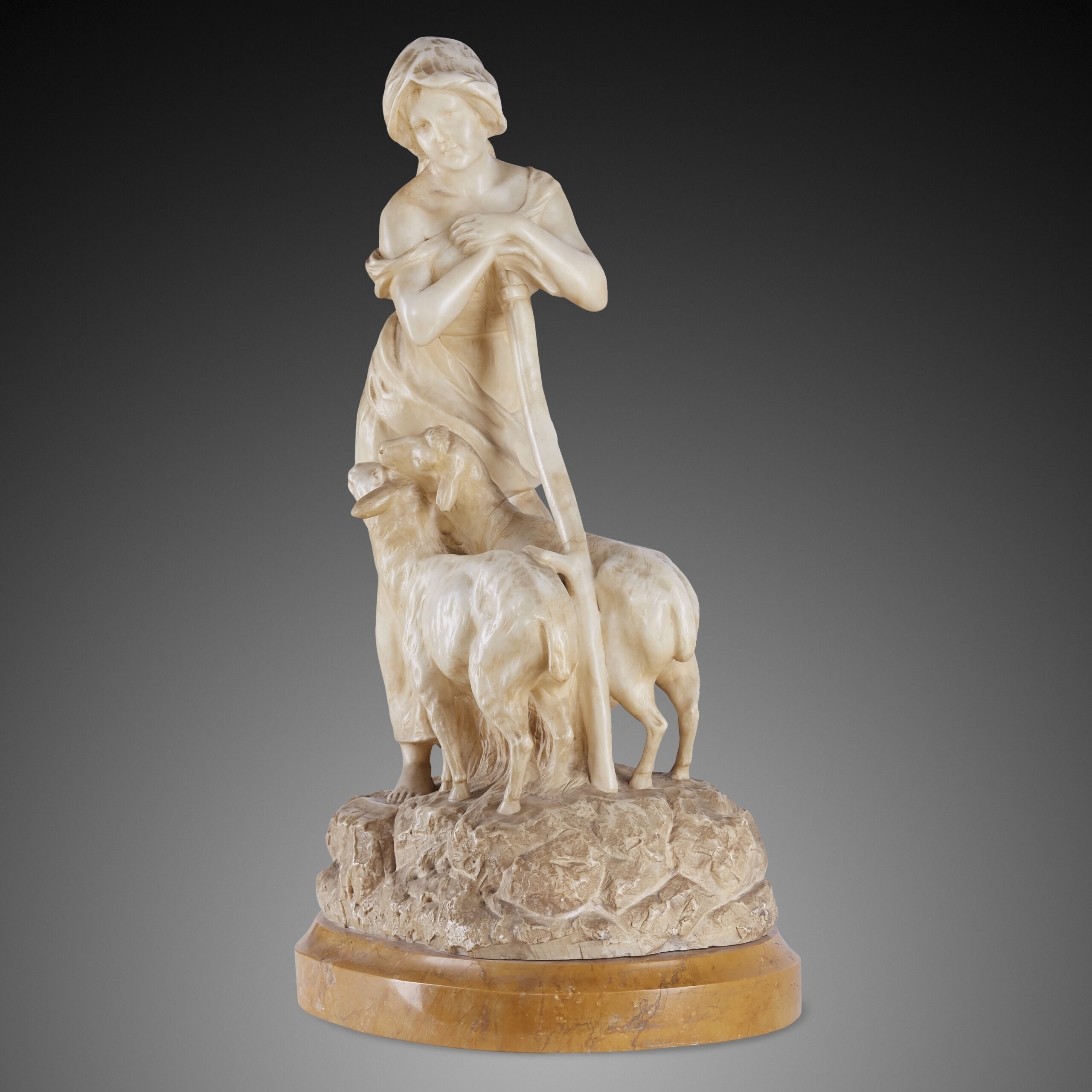
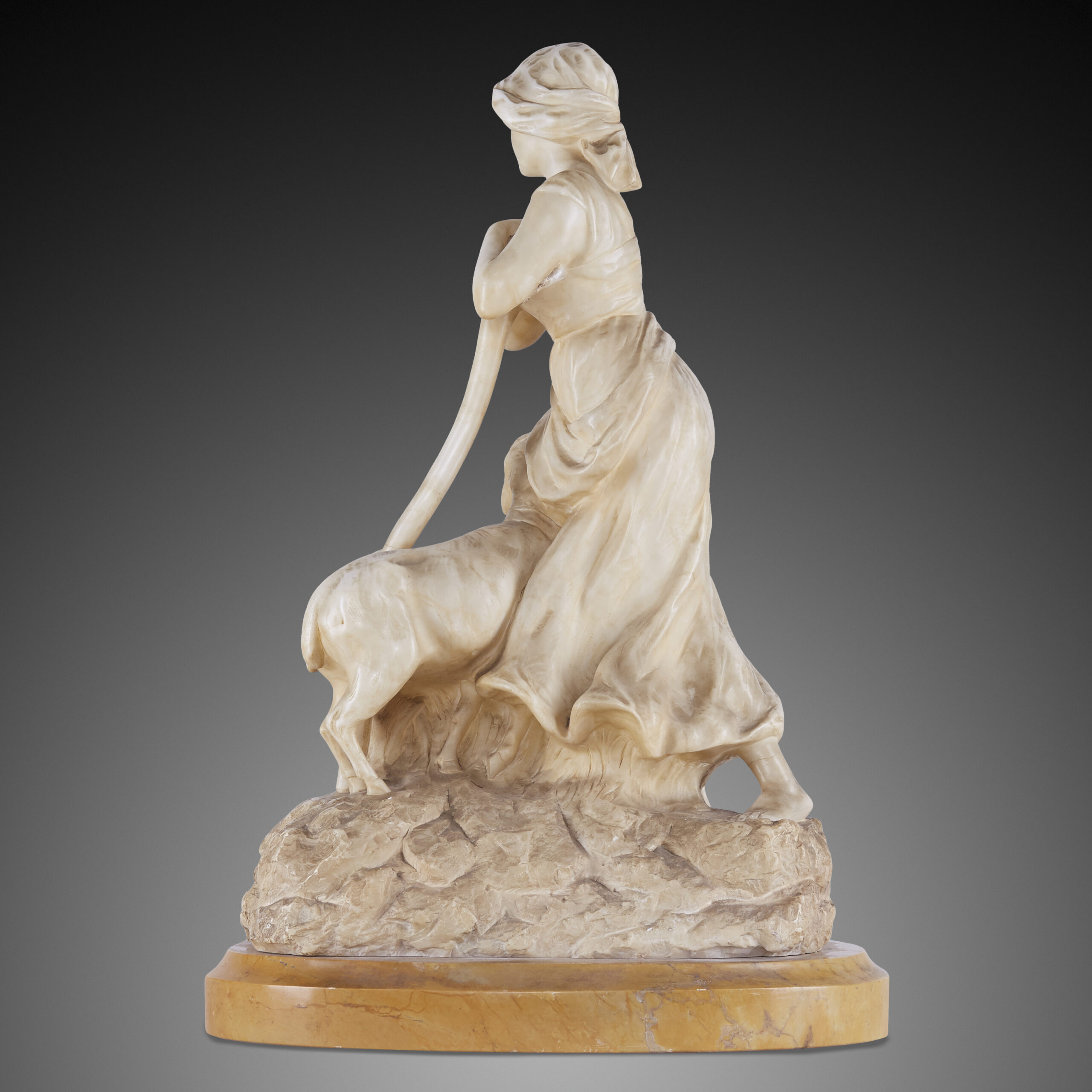
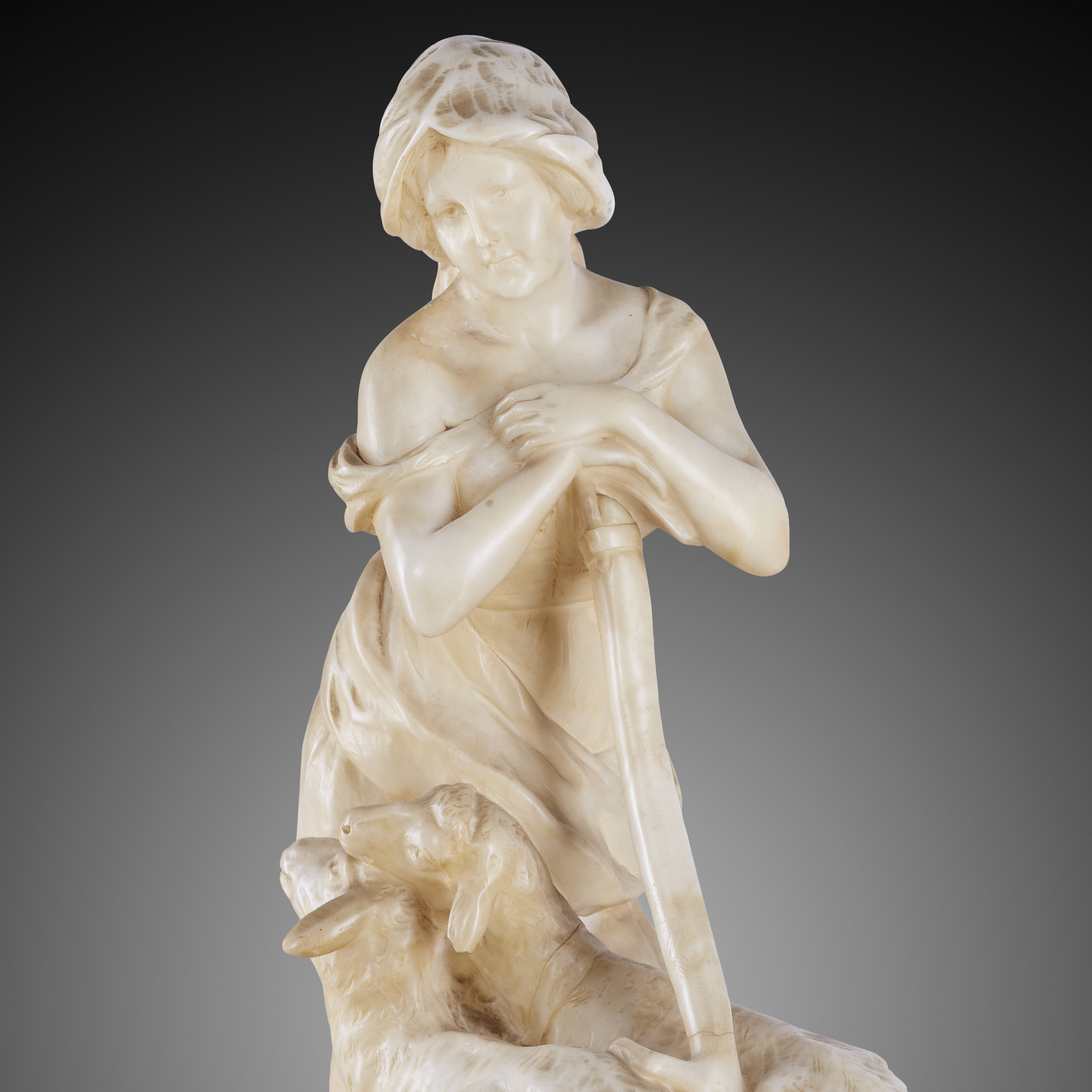
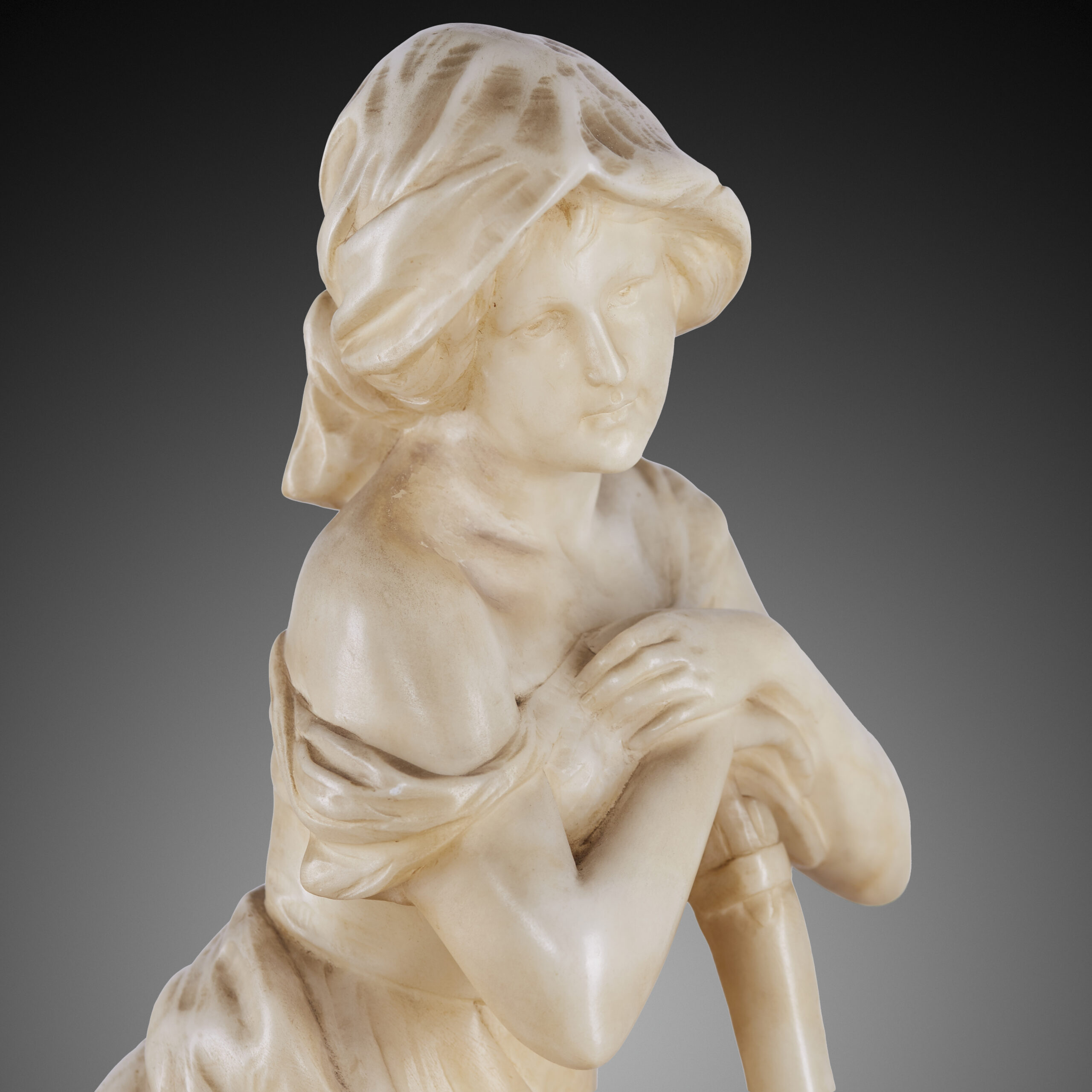
This charming and finely carved 19th century marble sculpture depicts a shepherdess in a moment of quiet care for her flock. It is a beautiful example of the idyllic and pastoral themes that remained popular throughout much of the 19th century, celebrating the simple beauty of rural life and the timeless bond between humans and nature.
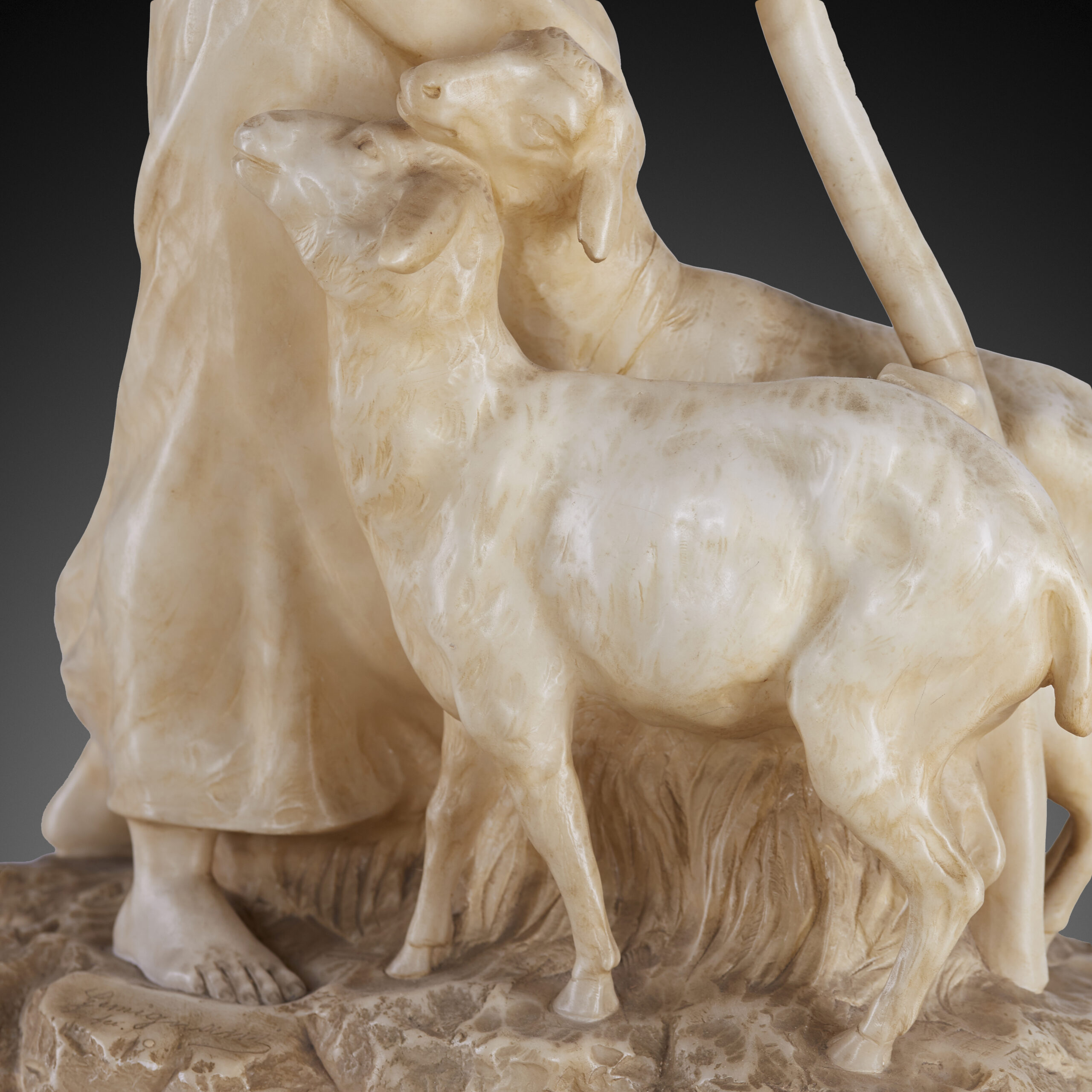
The shepherdess is rendered with a gentle and naturalistic touch. She stands gracefully, her head slightly bowed as she attends to a young lamb at her side. Her attire, a simple dress and headscarf, is carved with a remarkable sense of fluidity and softness. The drapery of her gown, with its delicate folds and creases, contrasts beautifully with the rugged texture of the rocky ground upon which she stands. Her hands, one holding her staff and the other gently touching the lamb, are rendered with a touching sense of tenderness and quiet affection.
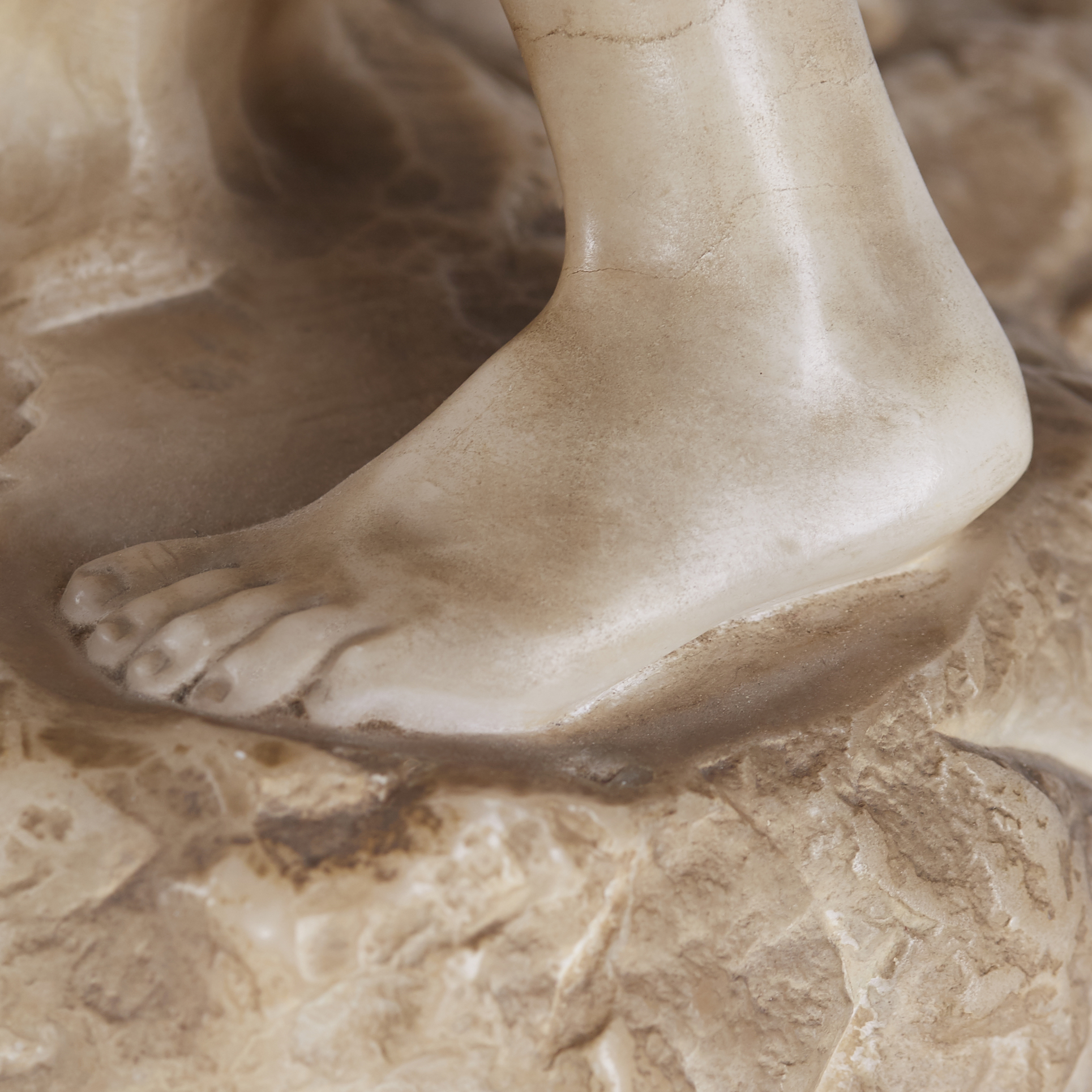
The young lamb at her feet is sculpted with equal attention to detail, its woolly fleece and docile posture adding to the overall sense of tranquility and warmth. The entire composition rests on a rugged, rocky base that serves as a natural pedestal for the figures, emphasizing the pastoral setting. This rocky base is masterfully carved to create a convincing texture of stone and earth, providing a powerful contrast to the smooth, serene finish of the shepherdess and the lamb.
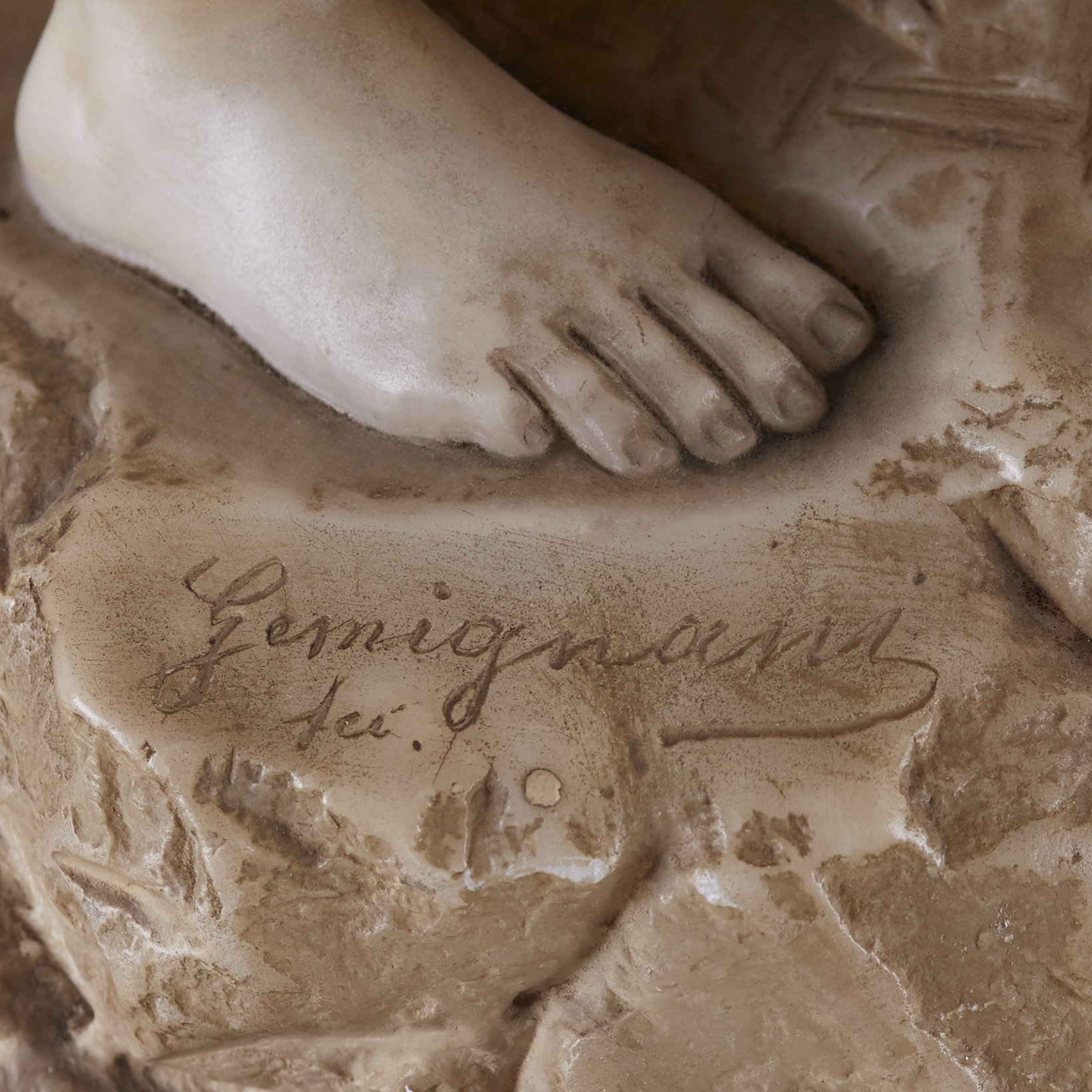
The sculpture is mounted on a separate, polished marble plinth. The warm, golden tones and natural veining of this plinth complement the creamy white of the figures, creating a harmonious and aesthetically pleasing whole. The quality of the carving, the delicate facial features, and the skillful rendering of textures, from the soft fleece to the hard rock, all point to the hand of a highly skilled sculptor working in the French or Italian tradition of the period.
When viewed in person, the piece exudes a quiet innocence and graceful peace that feels both intimate and timeless. The gentle interaction between the shepherdess and the lamb invites the viewer to pause and appreciate the simple virtues of rural existence, a theme that resonated deeply in 19th century Europe amid growing industrialization. Placed on a console, in a library, or within a collection of period sculpture, this marble brings a soft, poetic presence that balances well with more architectural or opulent objects from the same era.
This beautiful statue is a testament to the enduring appeal of pastoral scenes in 19th century art. It is a work that speaks of grace, tenderness, and a deep sense of harmony with nature, making it a delightful and sophisticated addition to any collection of period sculpture.