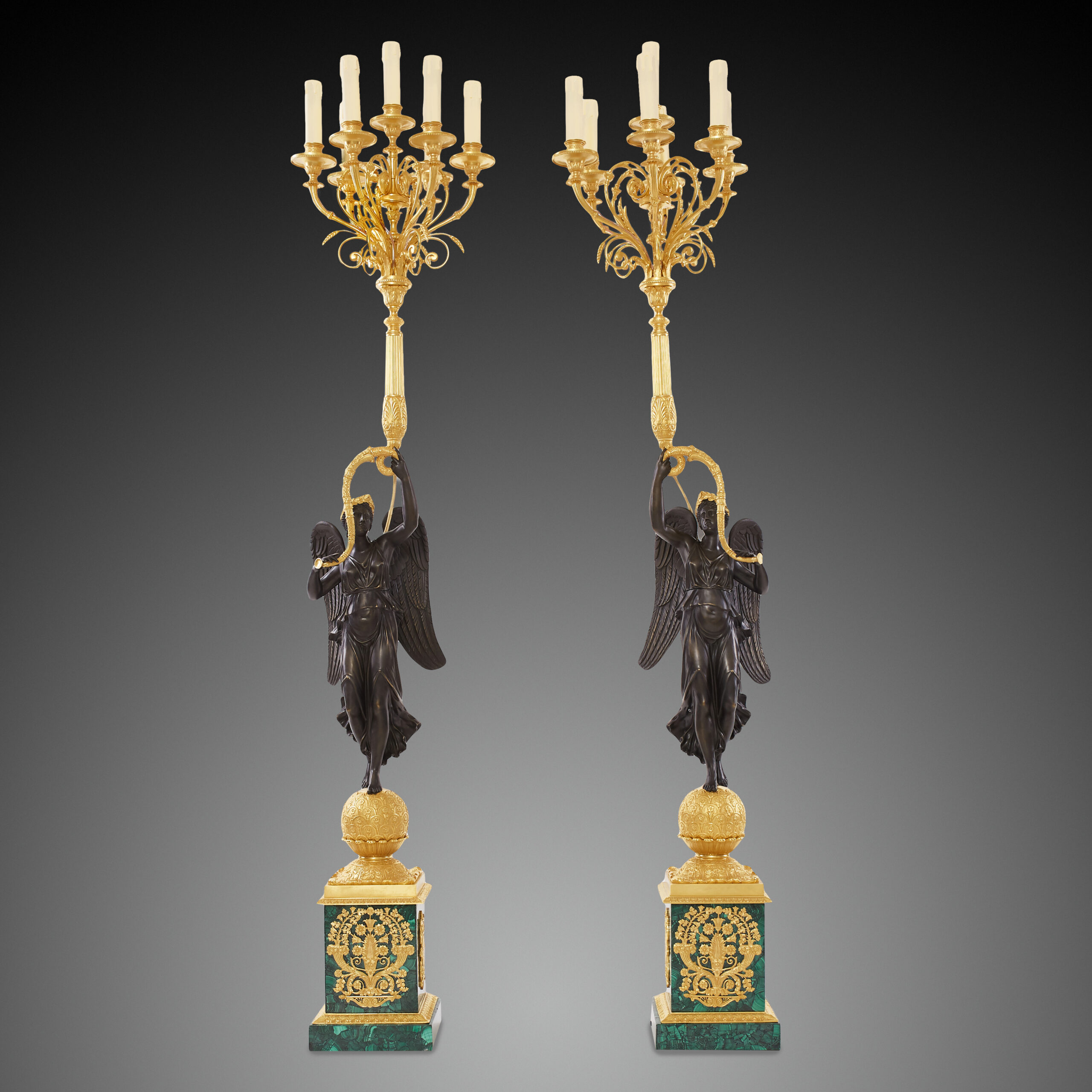
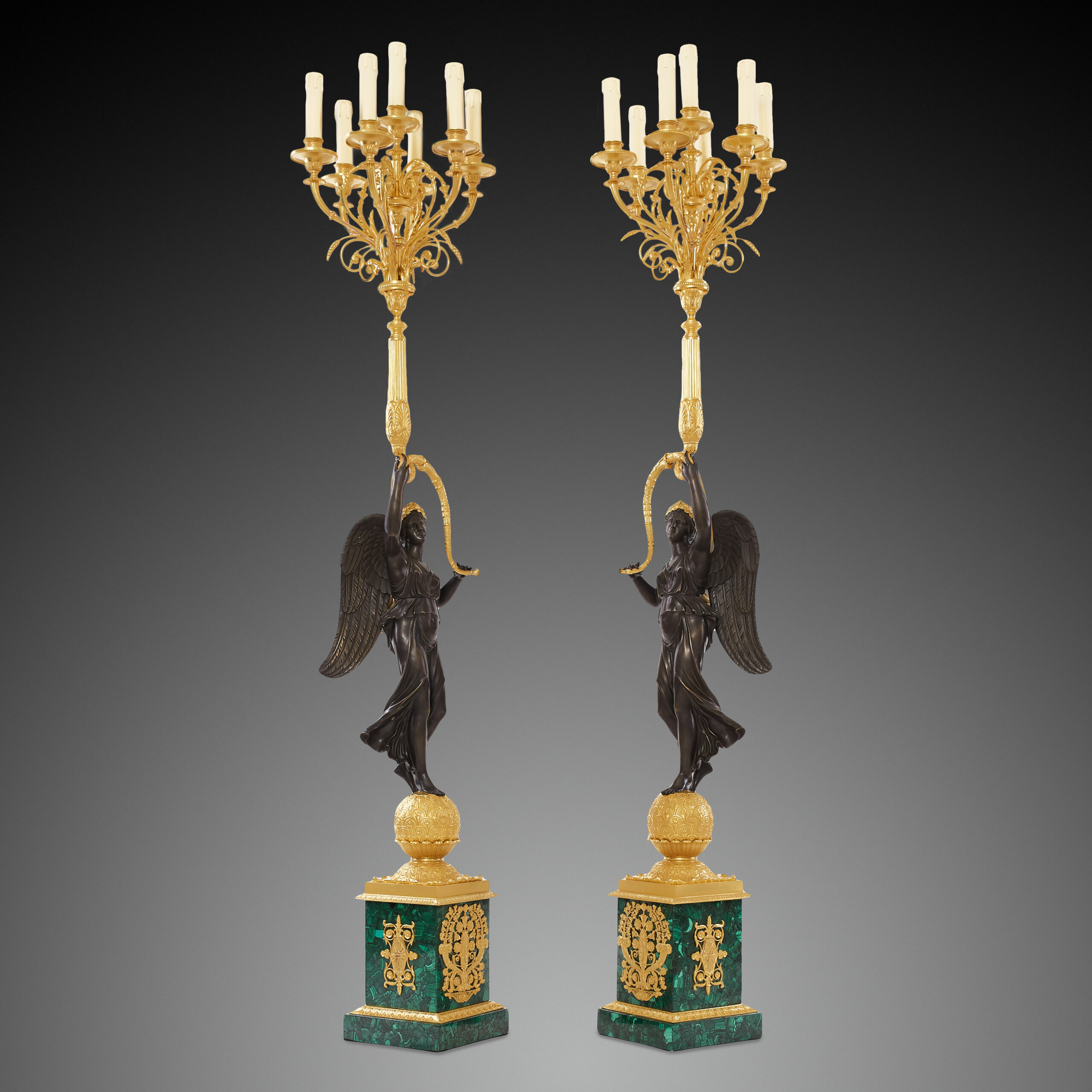
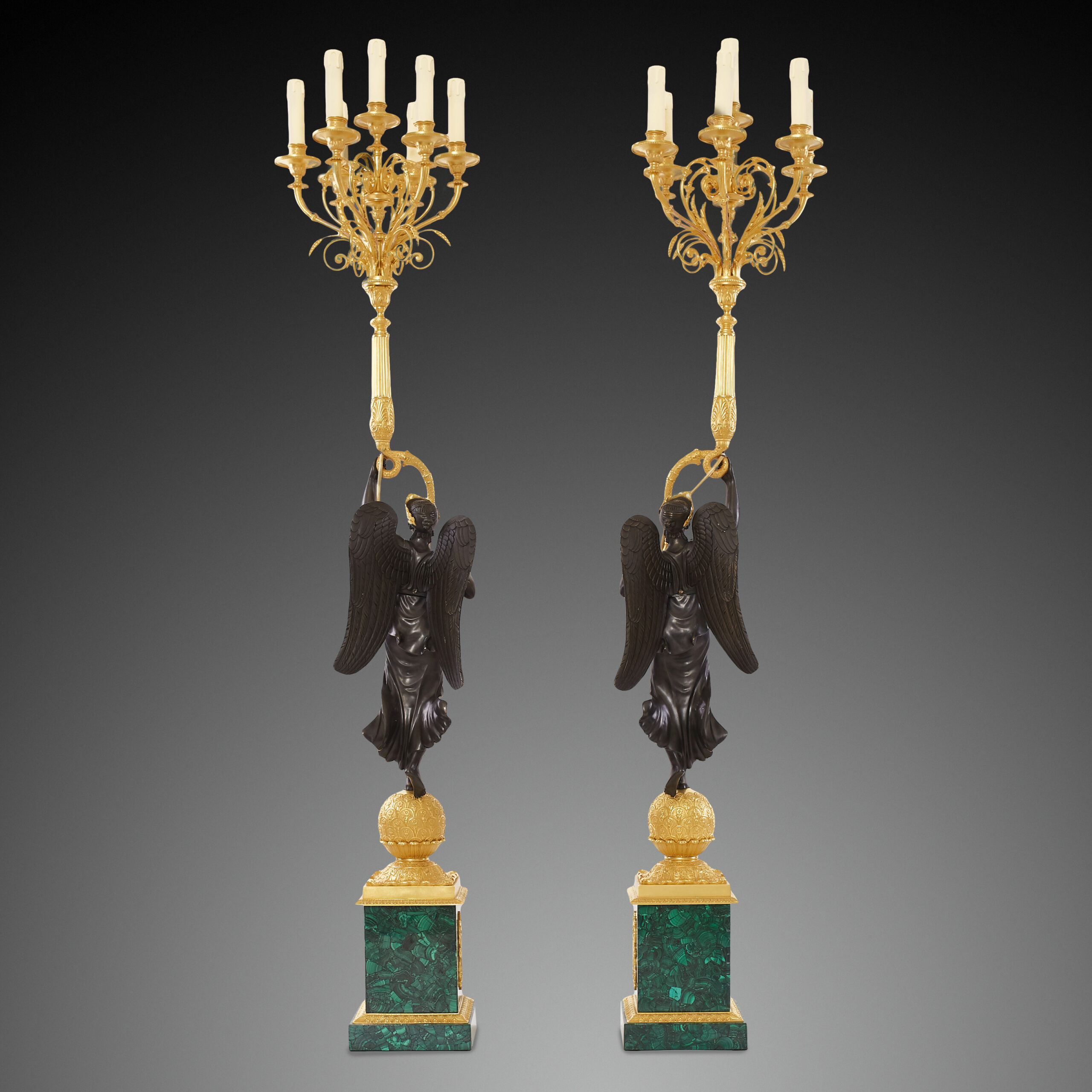
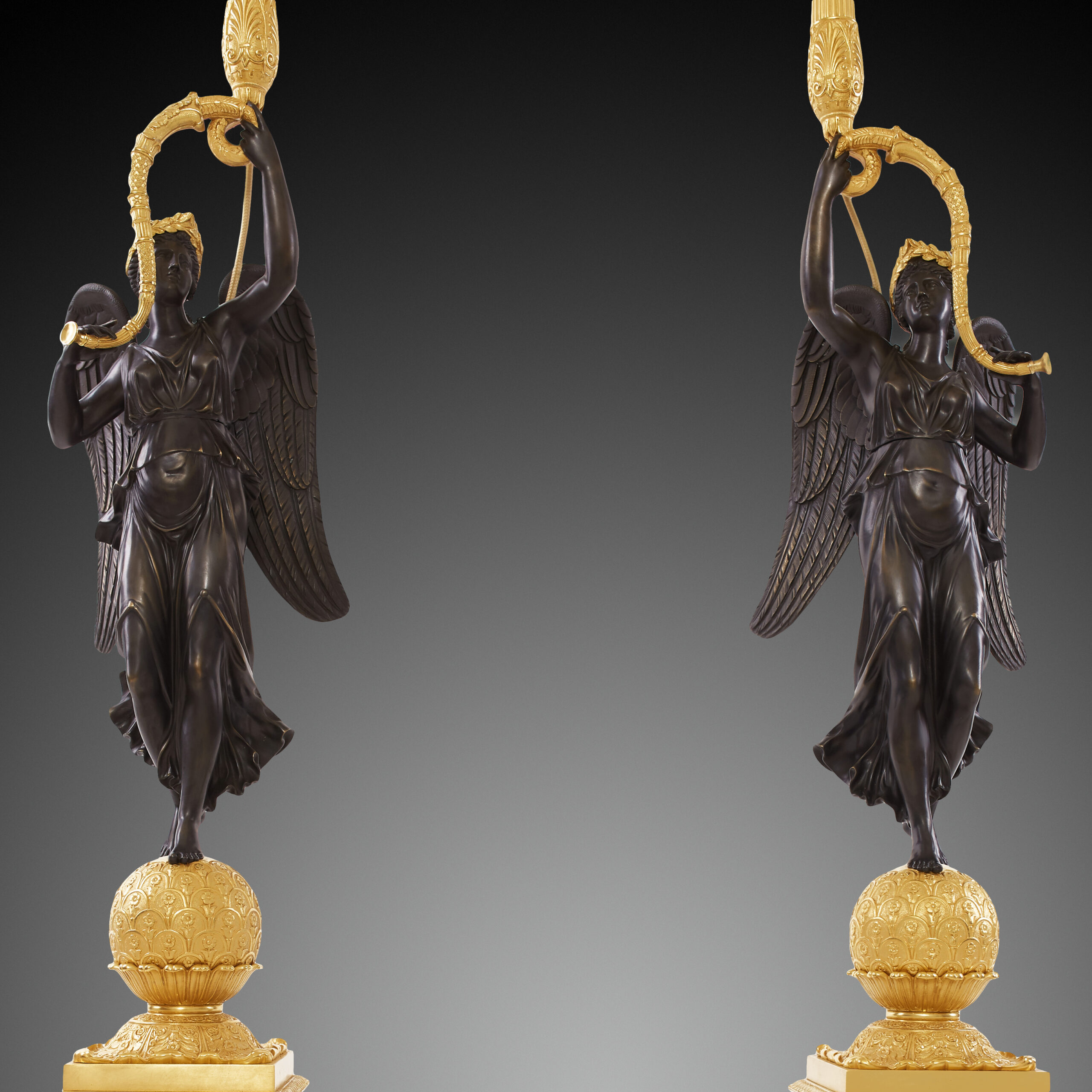
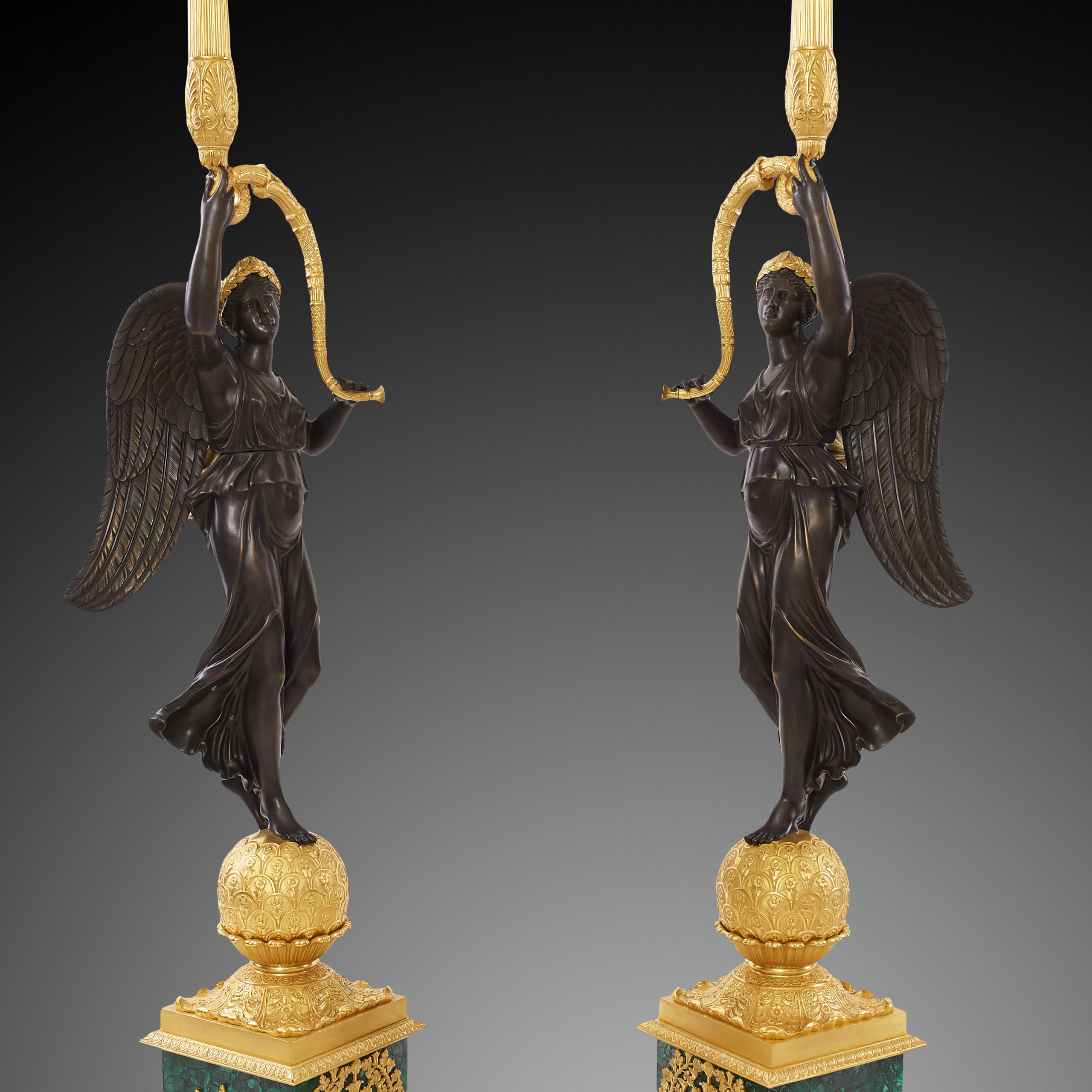
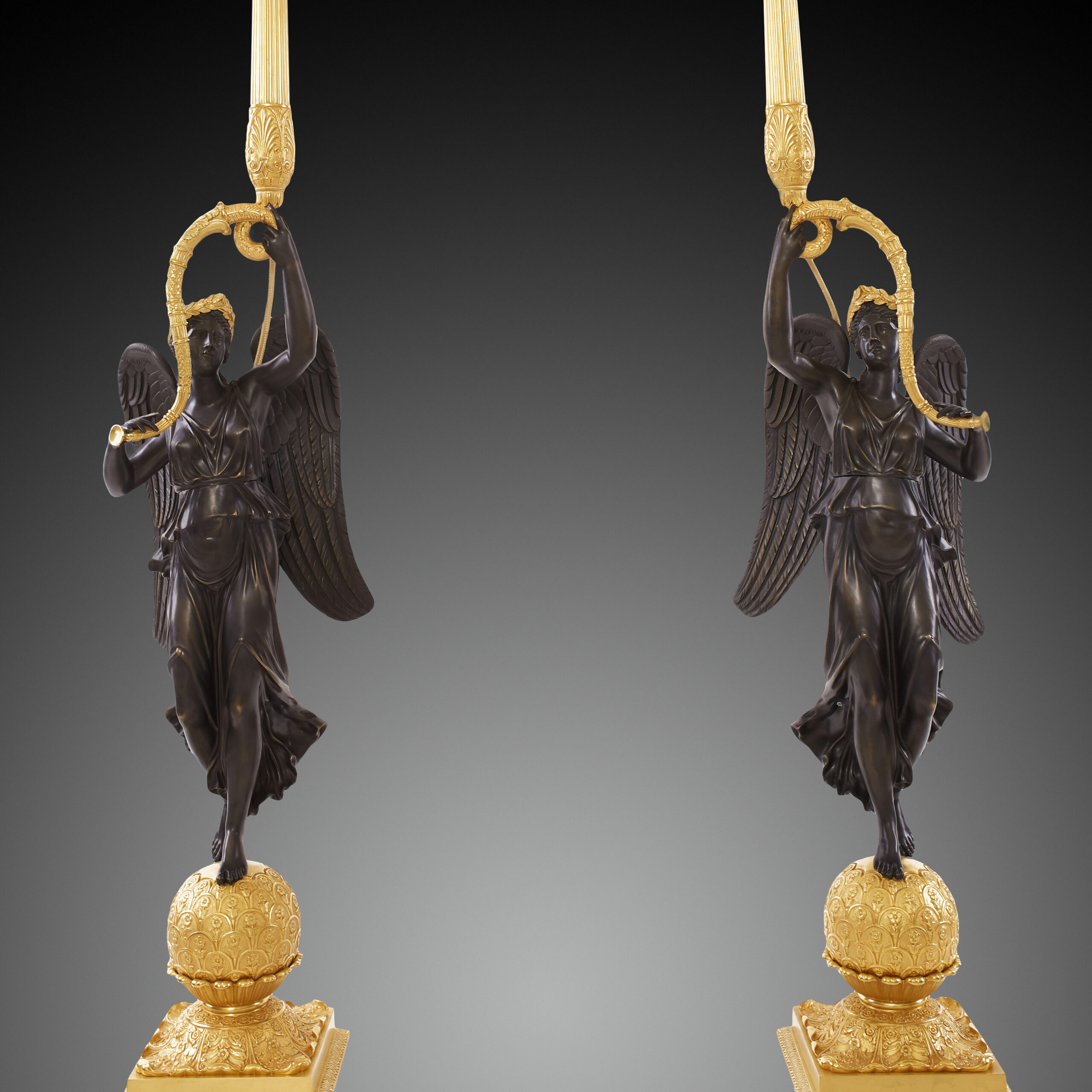
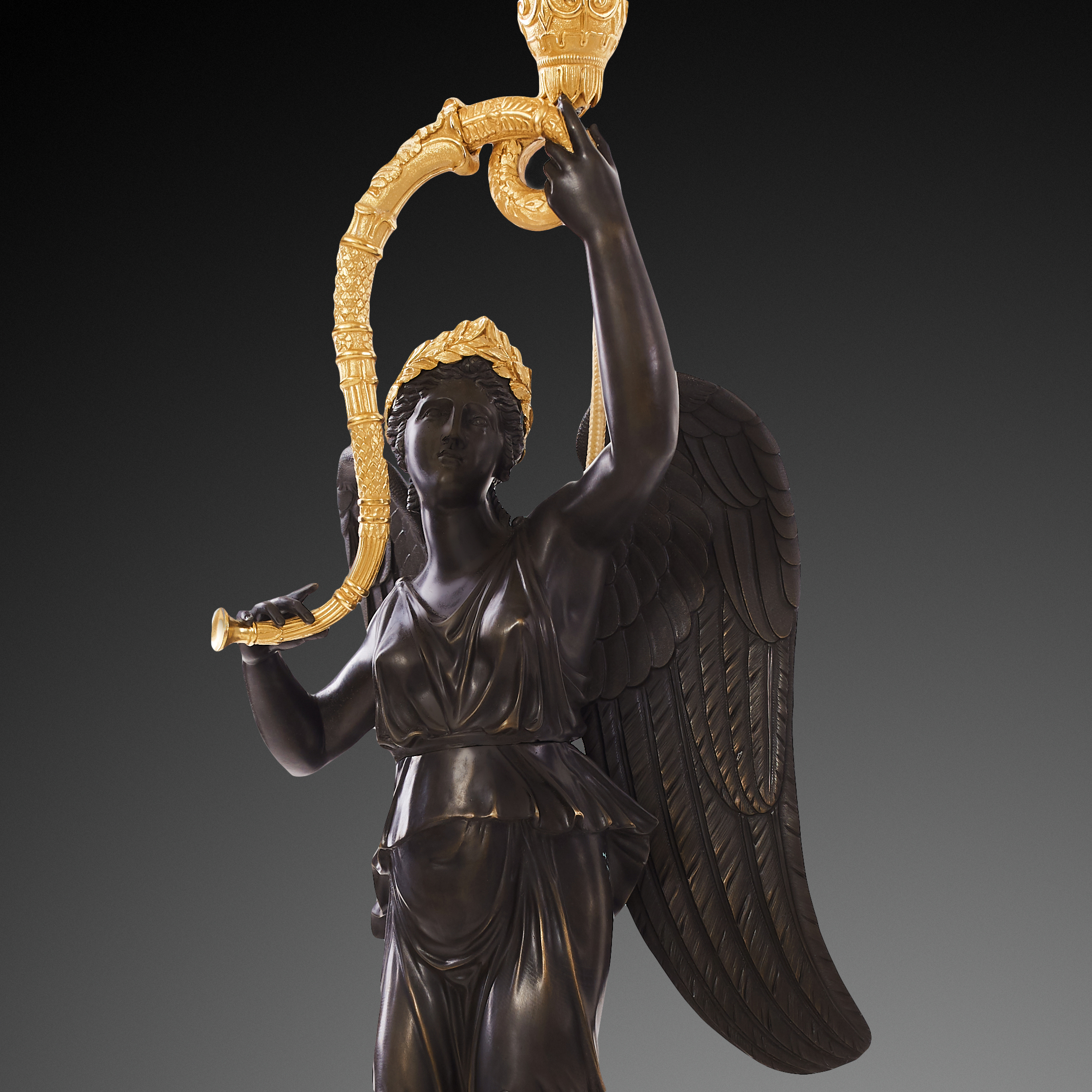
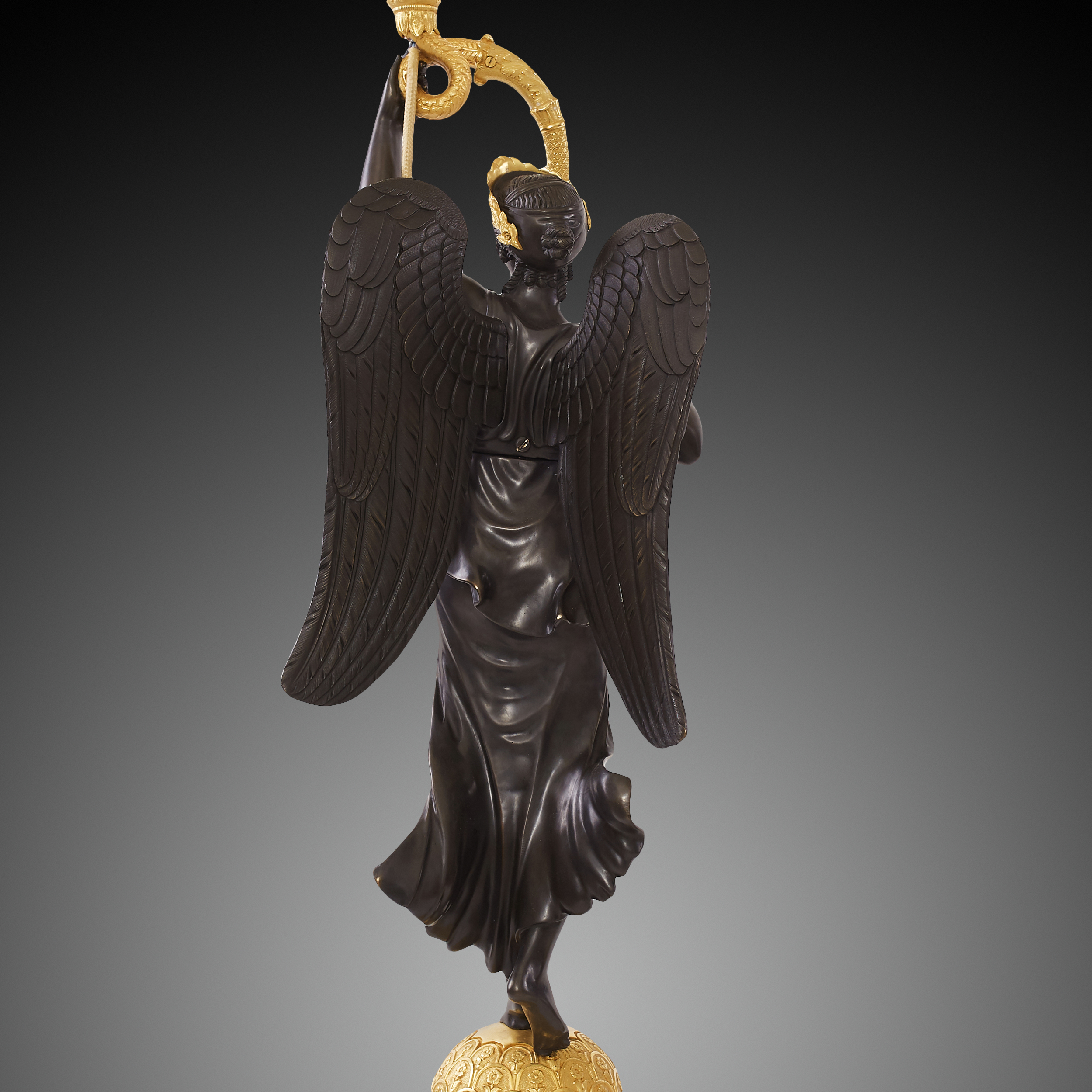
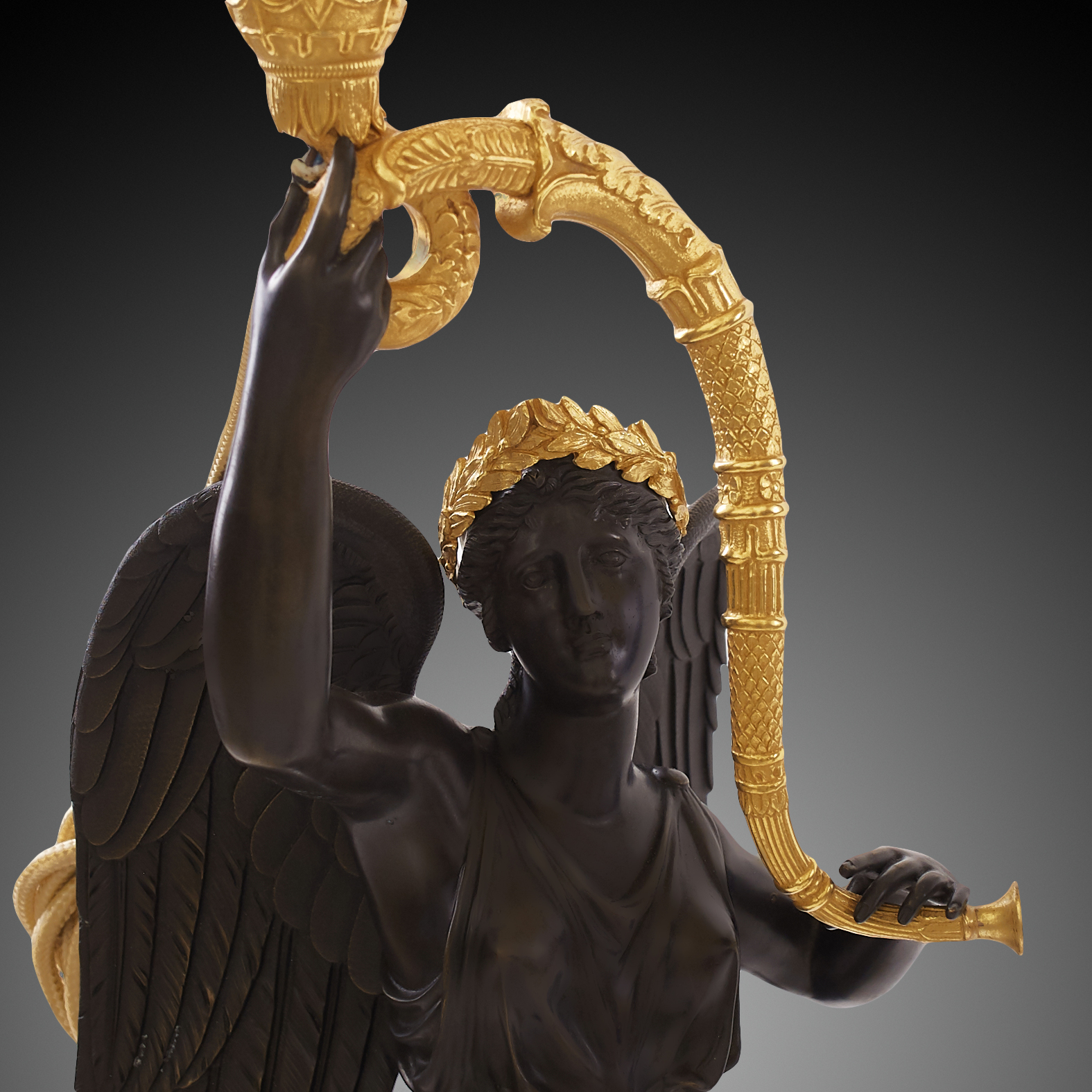
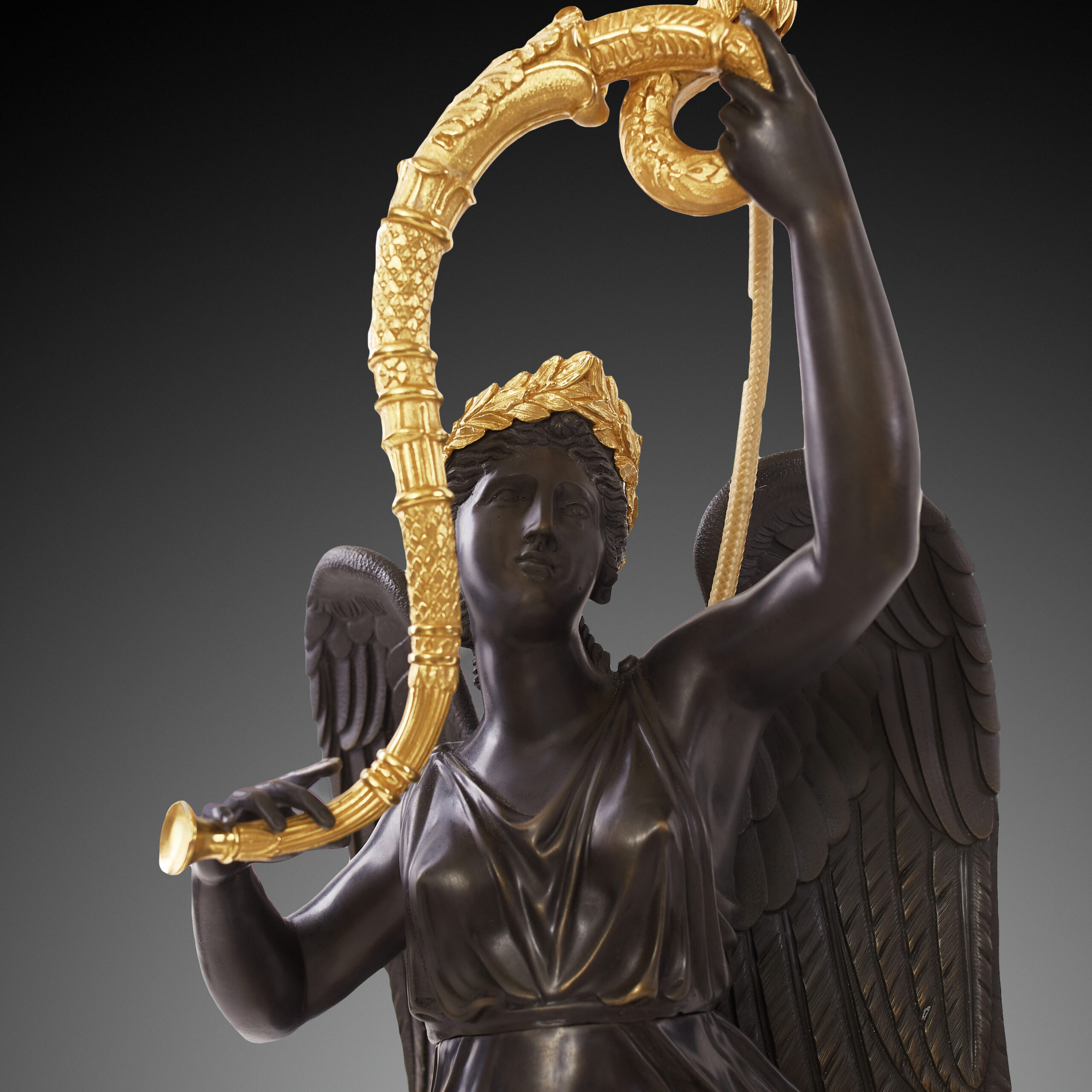
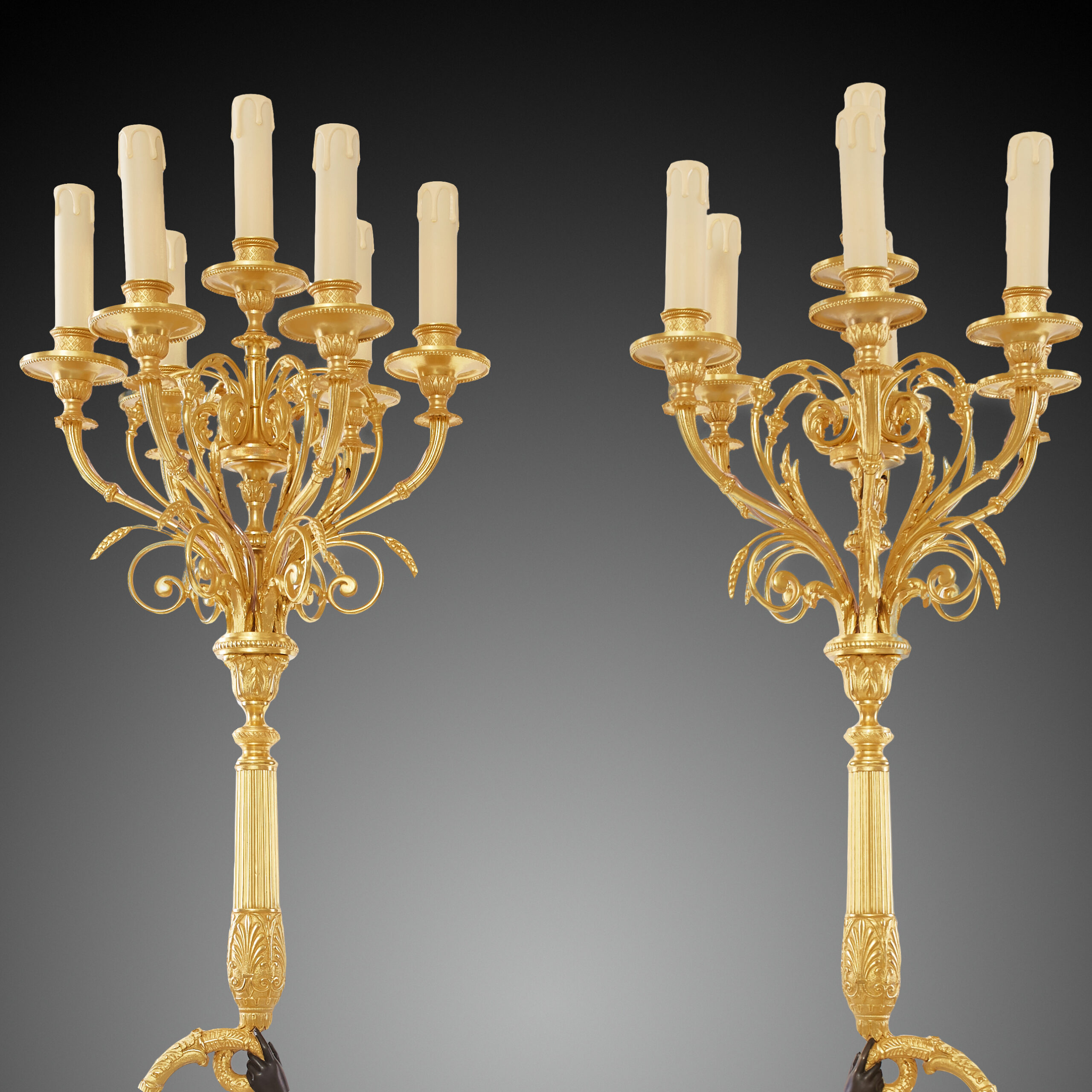
This exceptional pair of 19th-century candelabra is a magnificent example of the opulent and eclectic taste of the Napoleon III period, which drew heavily on the grandeur of the preceding First Empire. These pieces beautifully combine three contrasting tones: the brilliant gleam of gilt bronze (ormolu), the deep warmth of patinated bronze, and the rich, vibrant green of malachite.
The pedestals are of substantial rectangular form, providing a sturdy and elegant foundation. Crafted from luxurious malachite, they are enhanced by finely chased gilt bronze mounts featuring classical acanthus leaf patterns meticulously interlaced with other floral motifs. These ornaments create a sense of natural beauty held within a formal, symmetrical framework, far removed from later Art Nouveau tendencies and firmly rooted in the neoclassical vocabulary revived during the Second Empire.
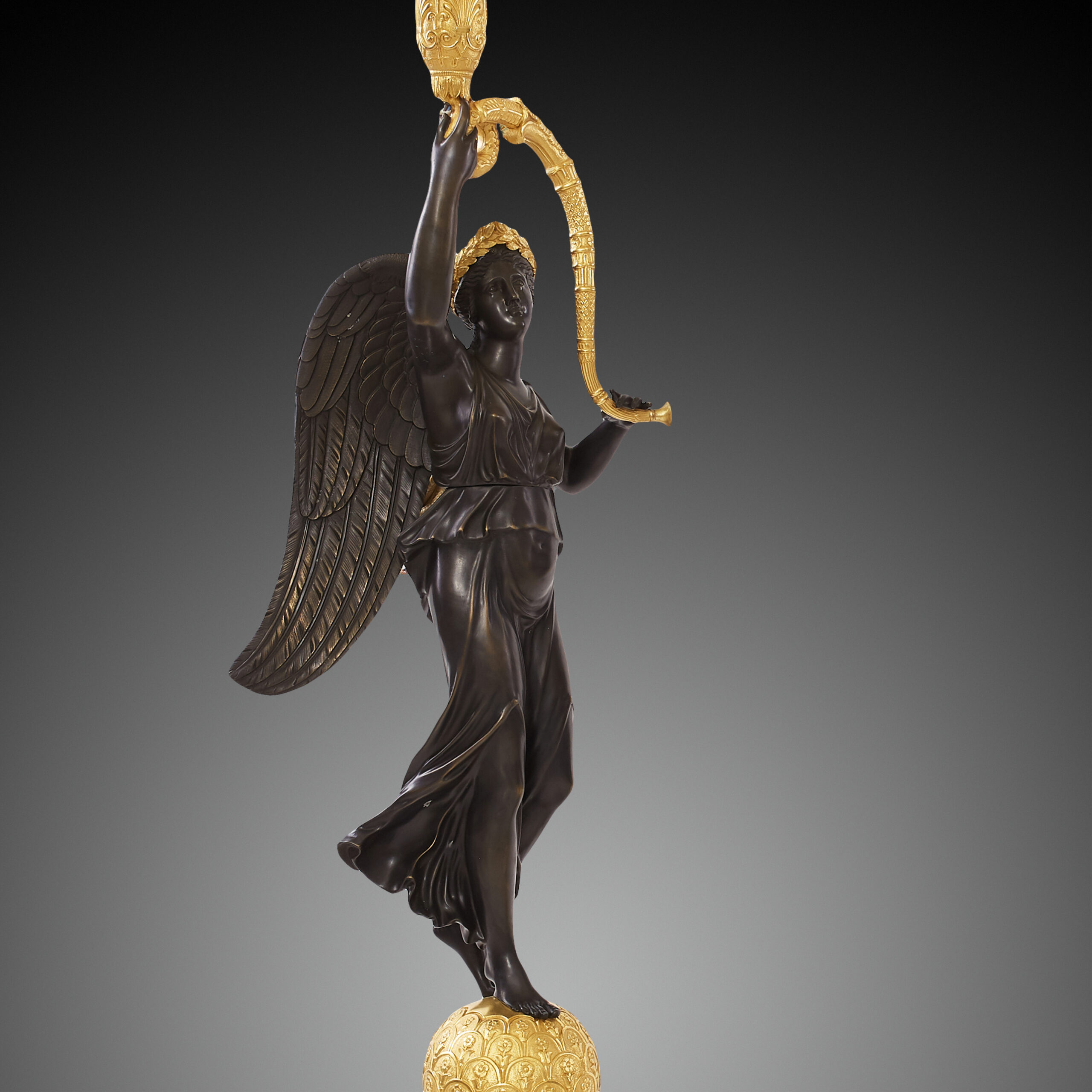
Above each malachite base rises a foliate cast pedestal with a domed top that supports a beautifully modeled statue of a winged woman. This goddess-like figure, likely representing a winged Victory or an angel, is executed in rich dark patinated bronze that gives her a sculptural presence and quiet dignity. A small but telling detail is the laurel wreath crowning her head, worked in bright gilt ormolu. This accent not only highlights her face but also draws the eye upward along the column-like structure toward the candelabra branches.
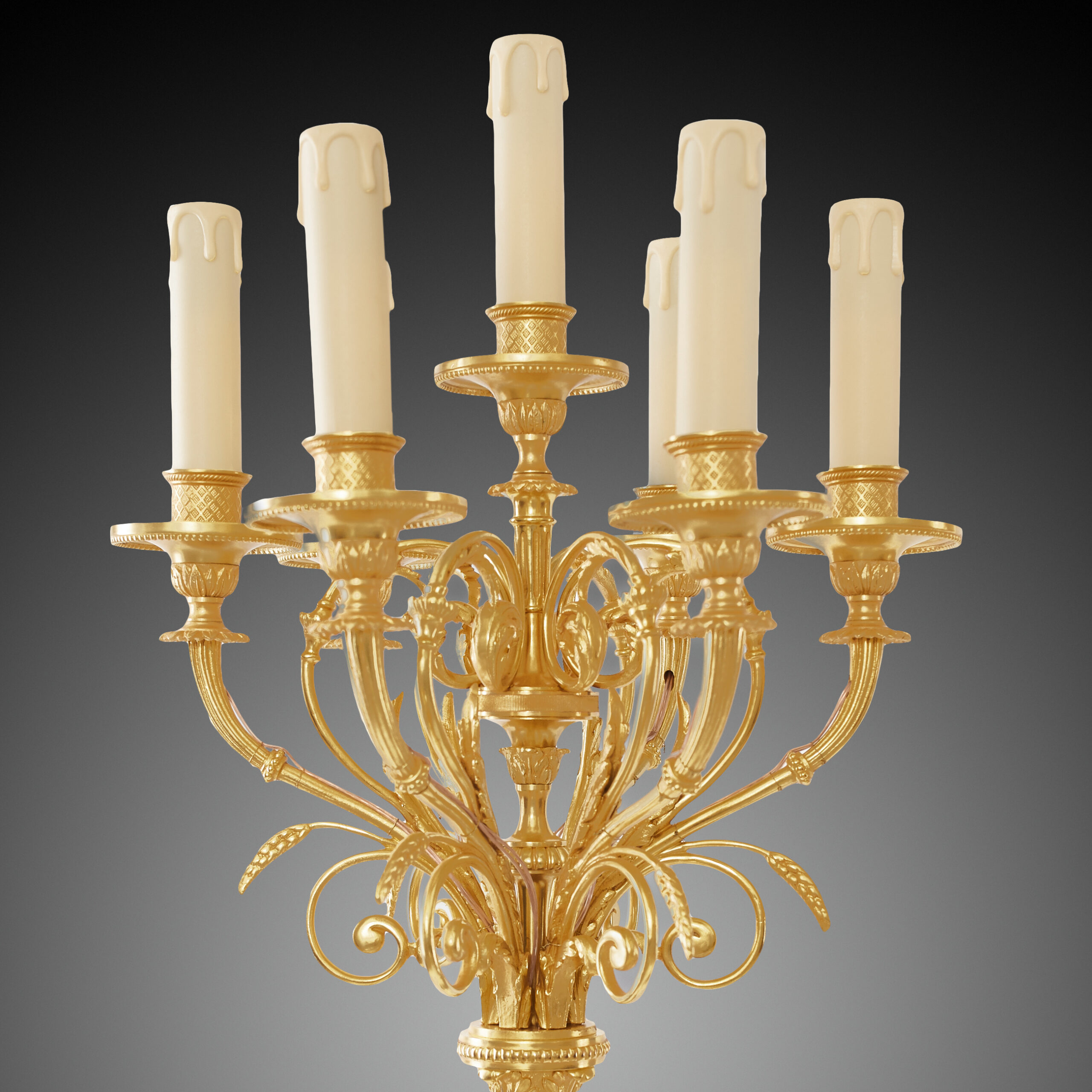
The seven-light arms extend with balanced elegance, adorned with classic anthemia and other stylized floral motifs that reinforce the piece’s strong classical influence. The overall composition achieves a harmonious fusion of contrasting materials and forms, typical of the finest Napoleon III decorative arts, where technical virtuosity met a cultivated appreciation for historical revival.
When the pair is displayed together on a console or mantel, the deep green malachite, warm patinated bronze, and luminous gilt bronze create a rich and sophisticated visual dialogue. The winged figures add a sense of movement and elevation, while the classical detailing ensures a timeless dignity. Lit with candles, the candelabra cast a warm, flattering light that plays across the textured surfaces and brings the entire ensemble to life.
These candelabra stand as a fine and characteristic expression of mid-19th-century French taste, where luxury materials and sculptural ambition were combined to produce objects of both practical beauty and lasting decorative power. Their quality and stylistic coherence make them a notable addition to any collection of Second Empire decorative arts.