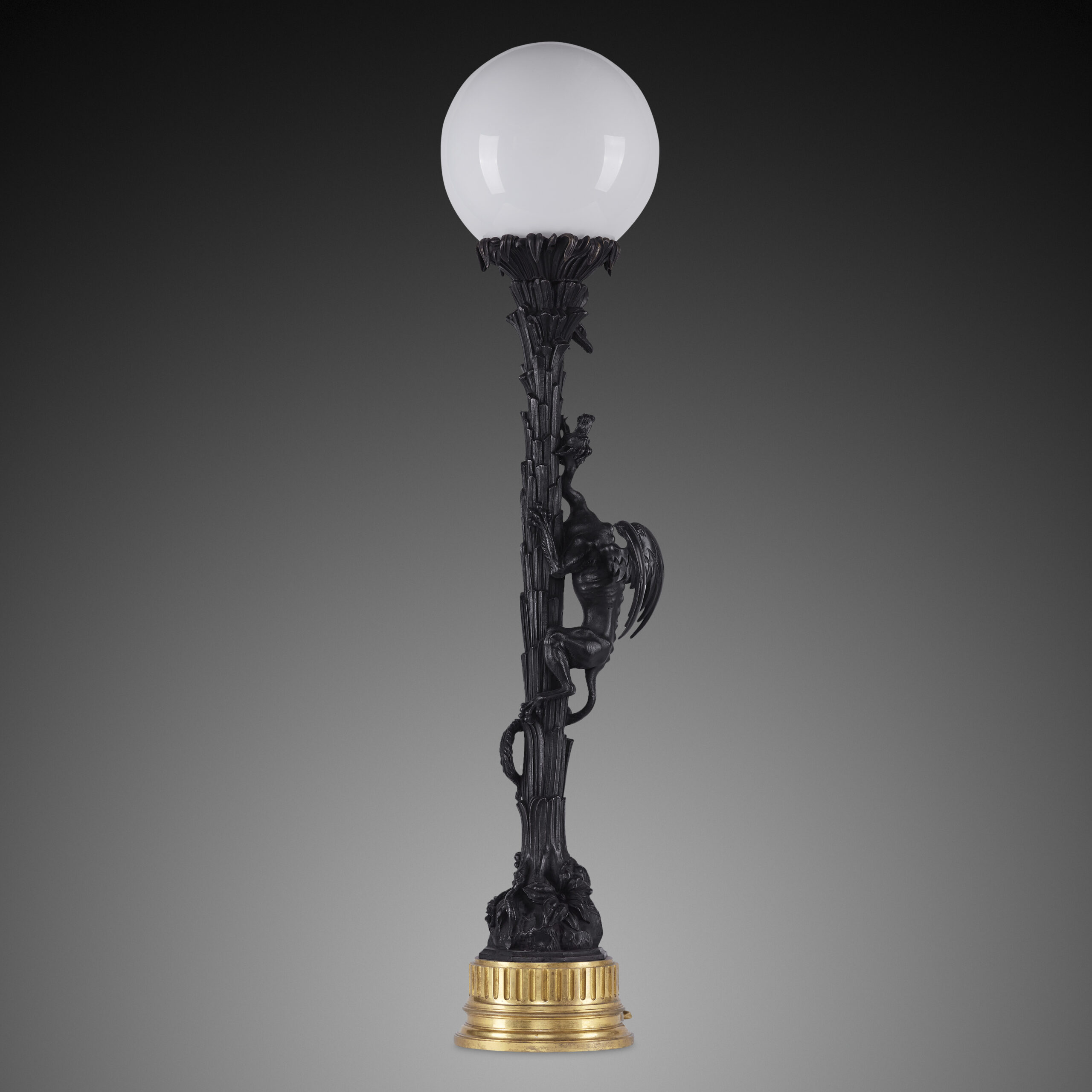
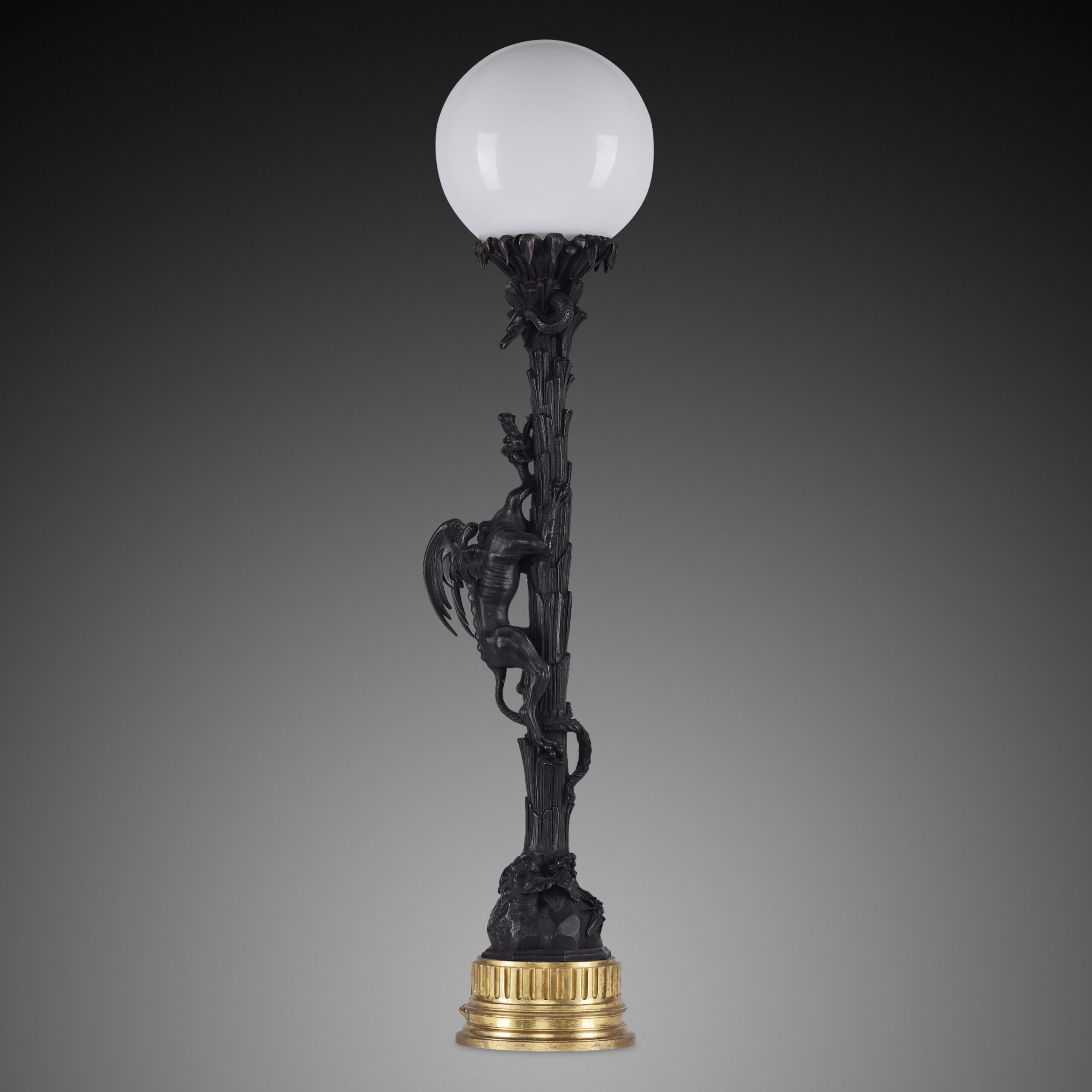
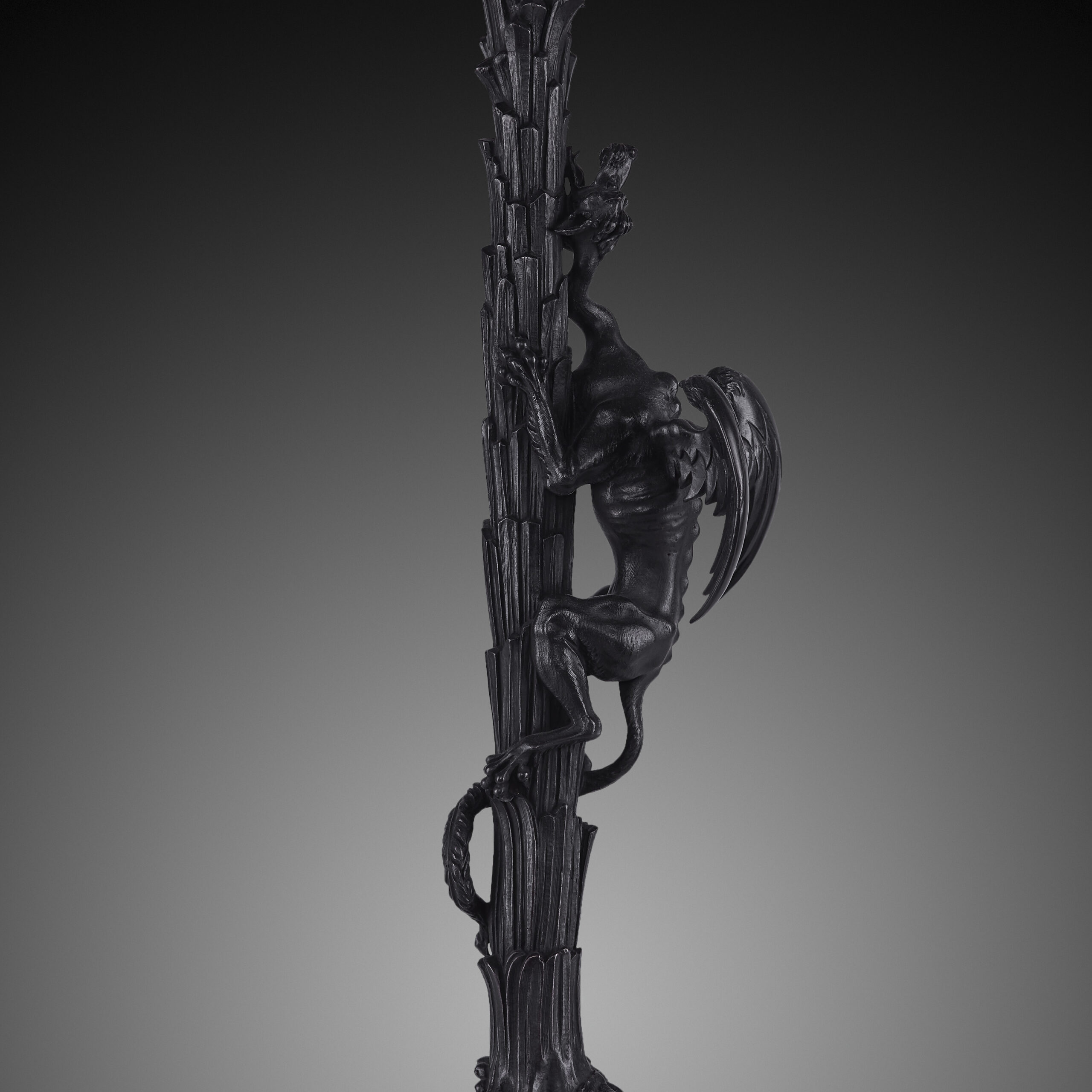
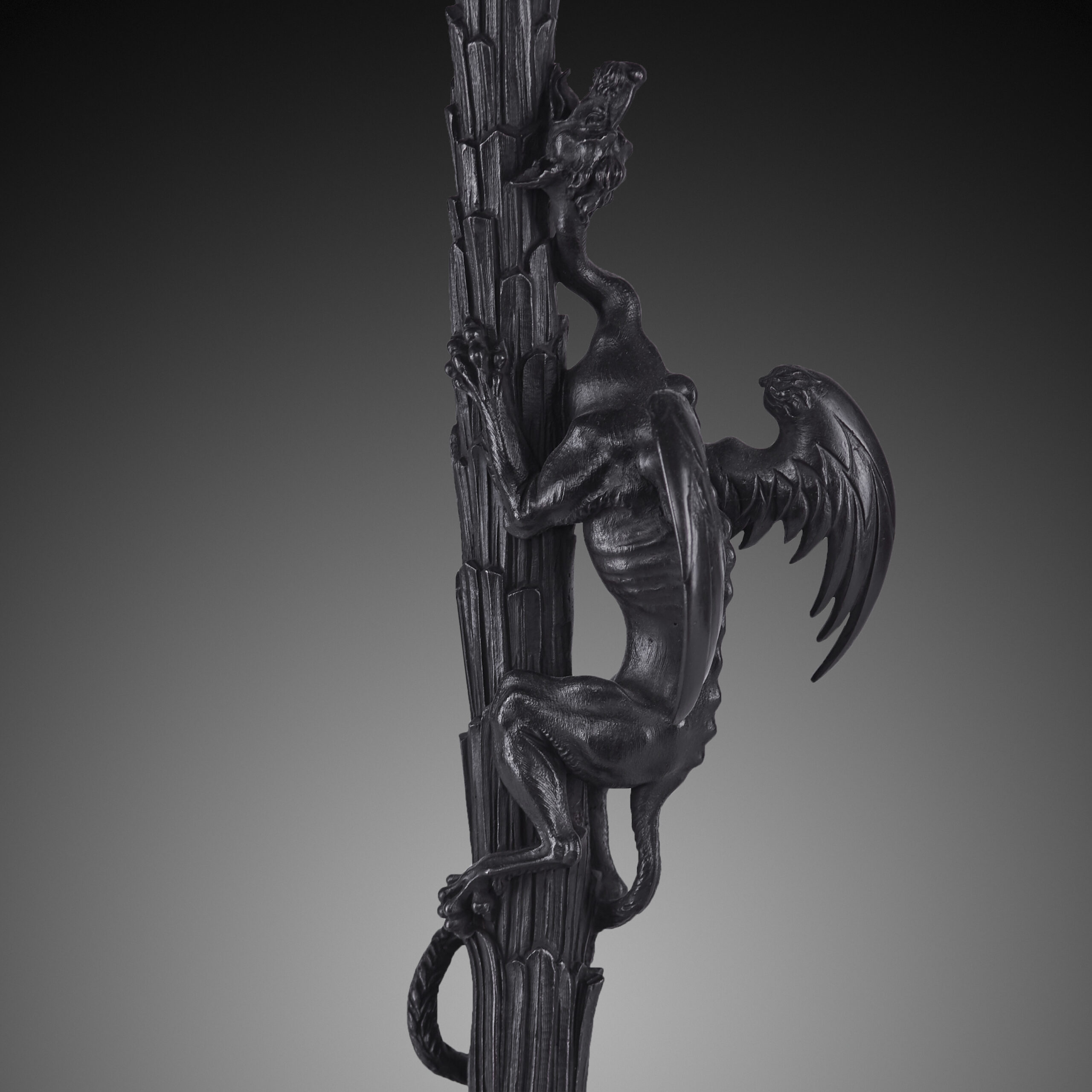
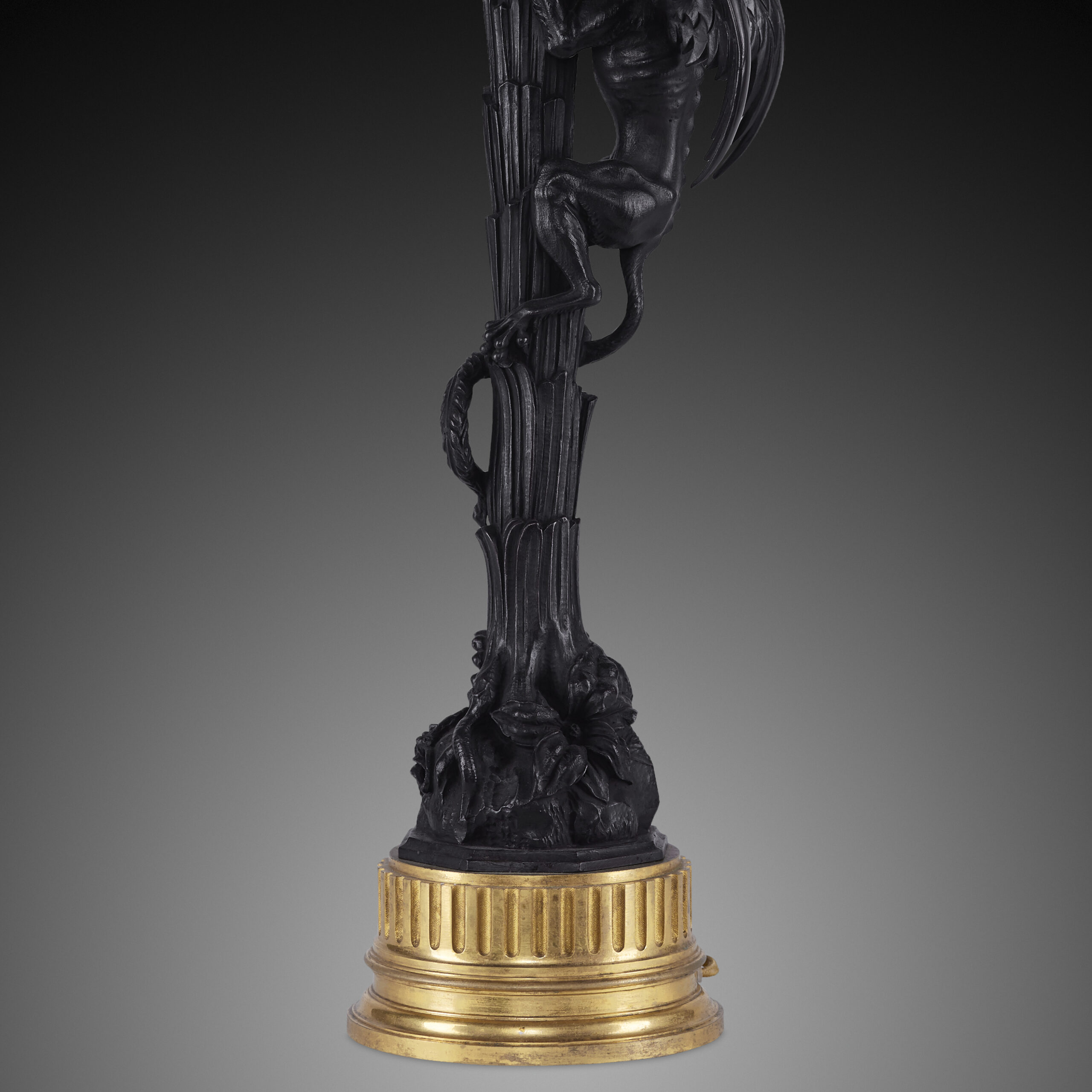
This striking table lamp, at an impressive height of 90 cm, is a superb and highly characteristic example of the Romantic-Eclectic aesthetic of the mid-19th century. The piece masterfully synthesizes fine sculpture with functional design, embodying the era’s fascination with naturalistic drama and mythological subjects. It is a powerful illustration of the skilled craftsmanship of the period, made from a combination of cast brass and patinated bronze.
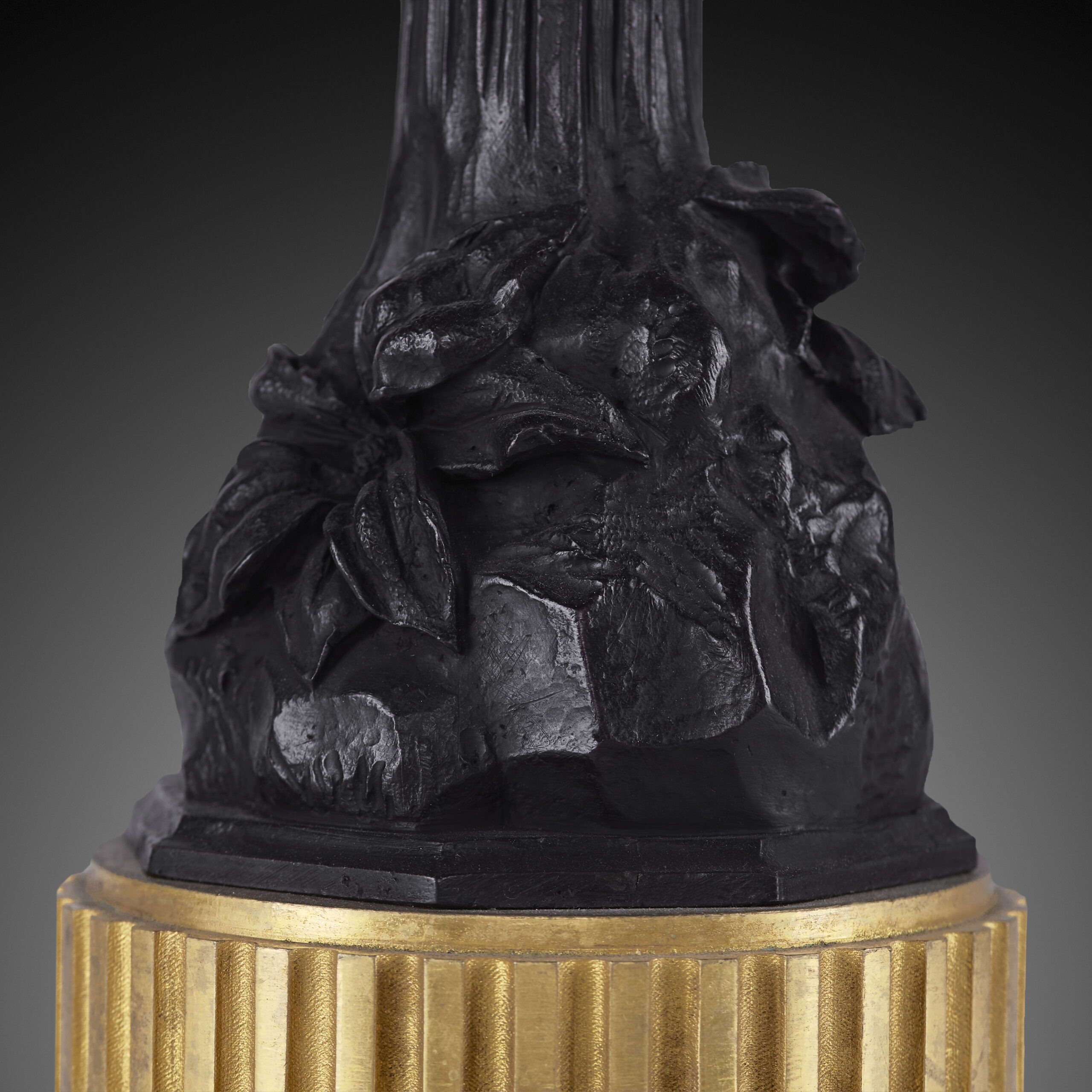
The lamp’s design is a deliberate study in artistic contrasts. The substantial base is a circular plinth of cast brass with a brilliant gilt finish. This opulent, machine-like precision of the base’s fluted detail is a perfect foil for the wild, organic chaos of the sculptural body.
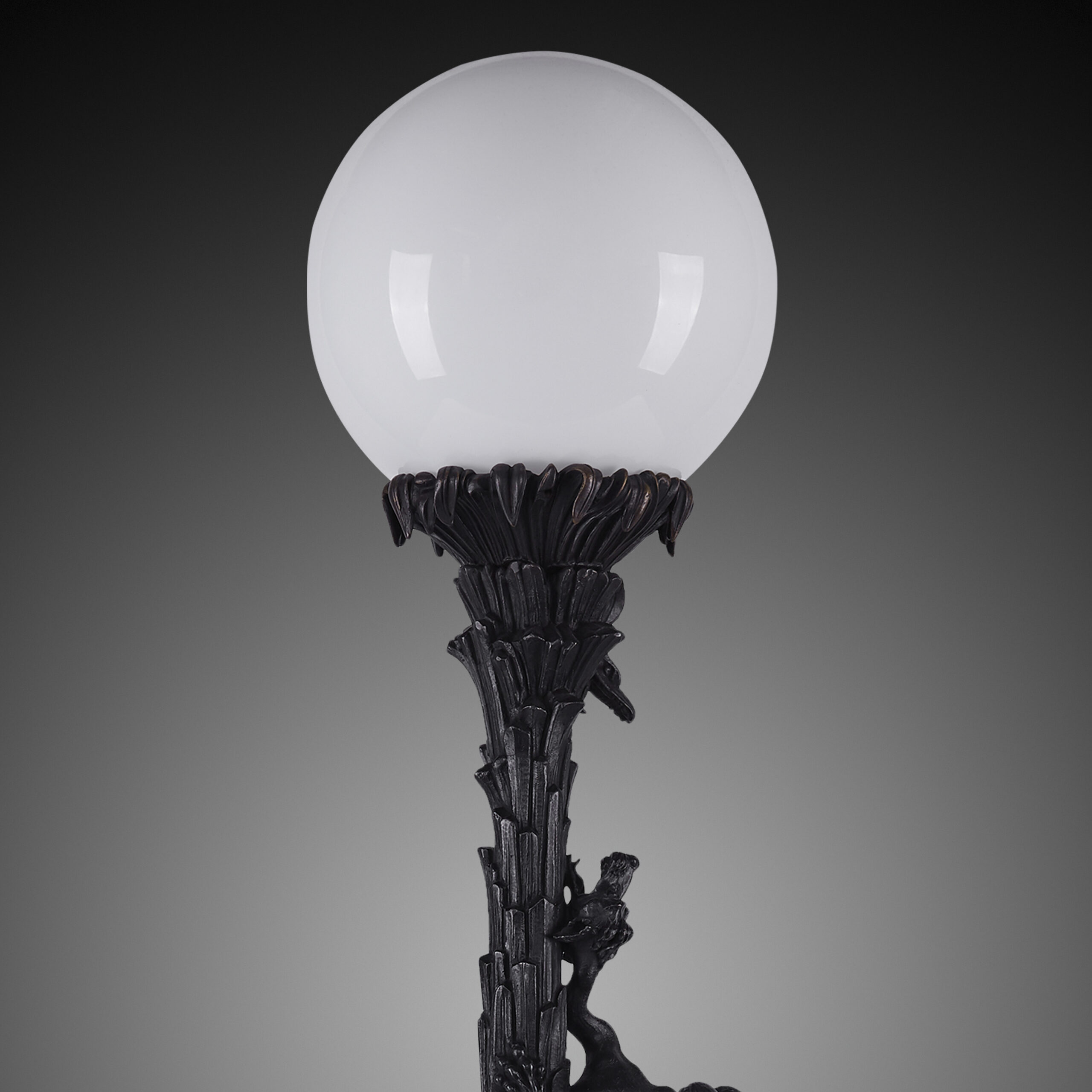
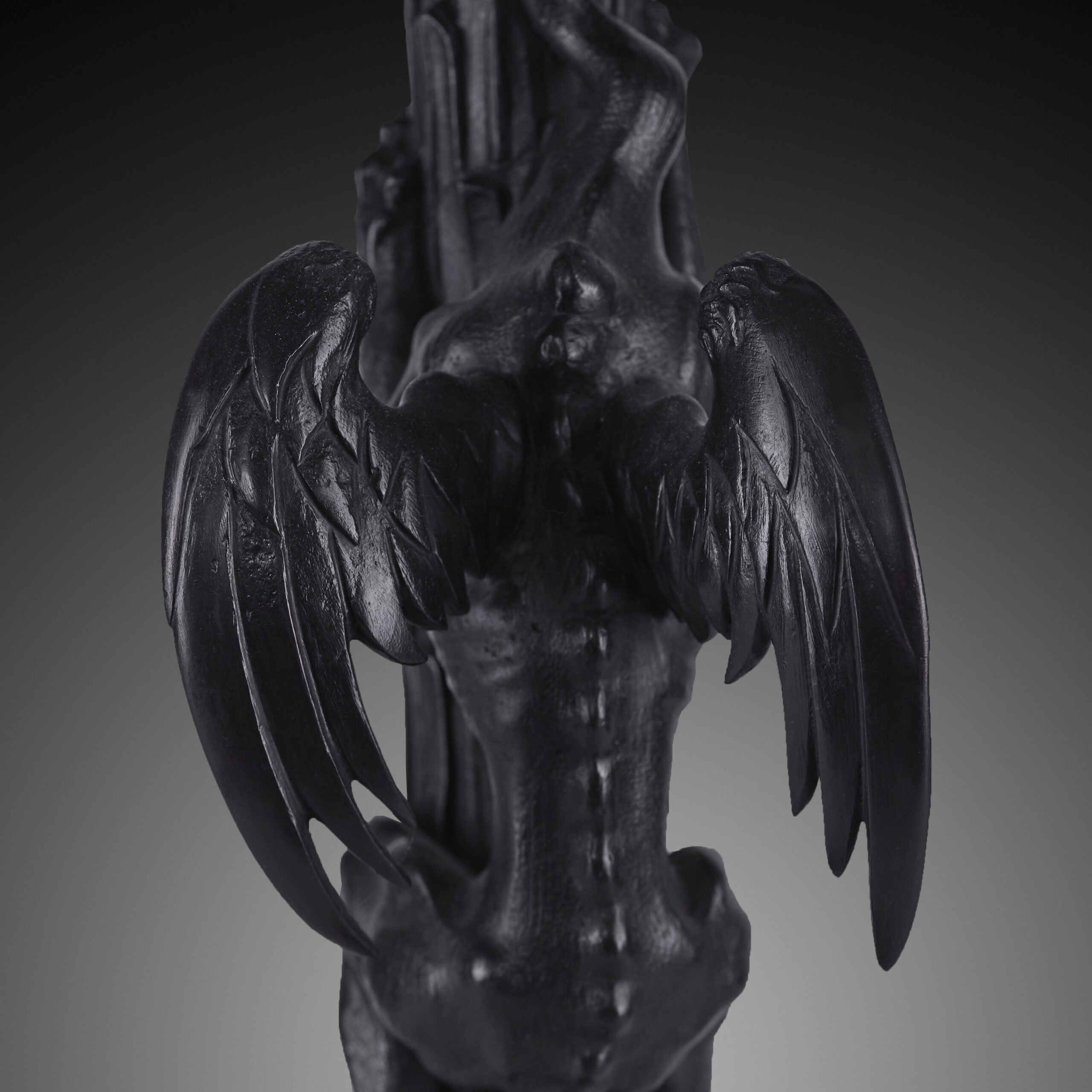
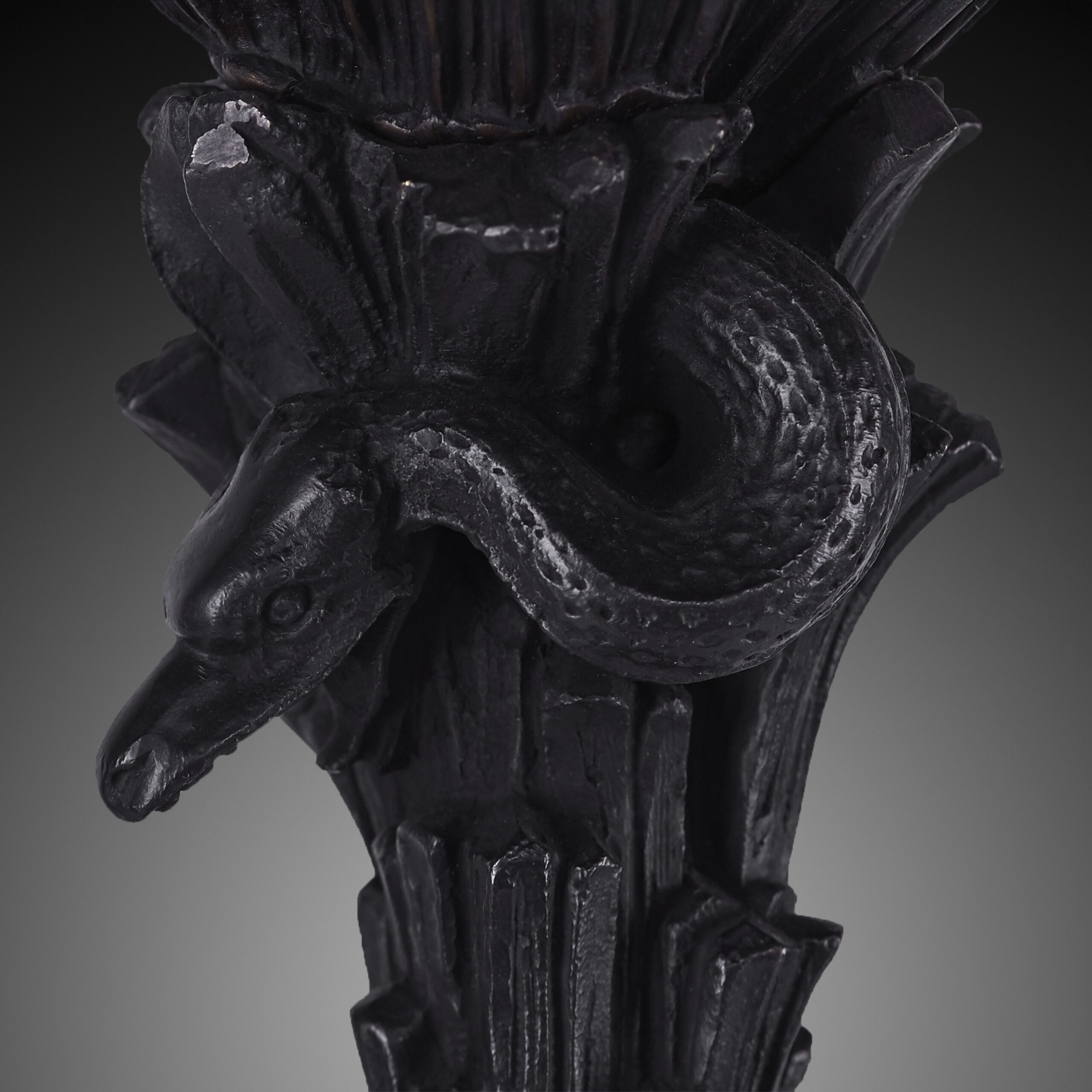
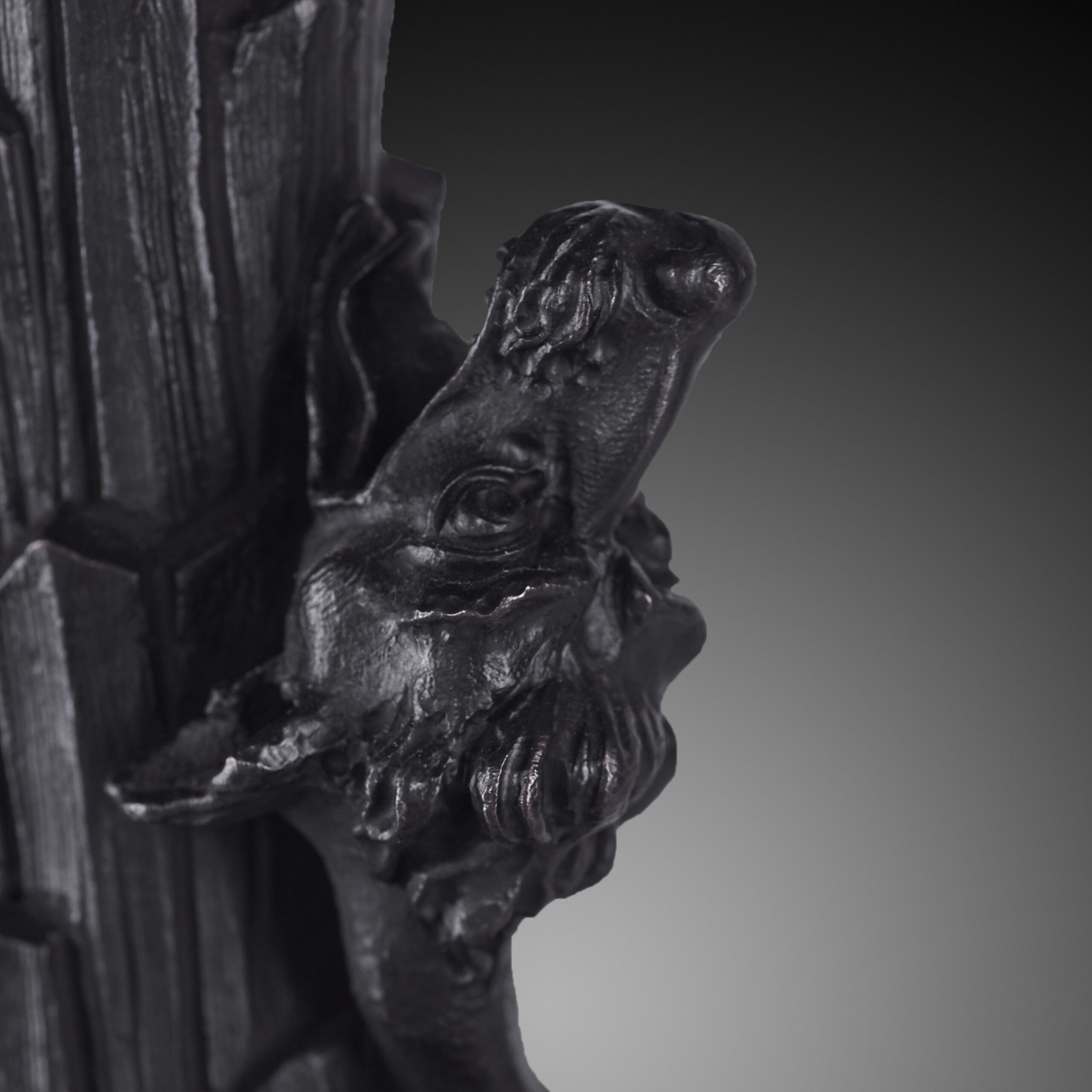
The main body of the lamp is a dynamic composition in patinated bronze, featuring a mythological creature, such as a satyr or faun, vigorously scaling a gnarled, trunk-like column. The figure’s dramatic pose and the highly textured surface of the tree trunk speak to the Romantic movement’s profound interest in raw nature and ancient mythology. The dark, rich patina applied to the bronze was a deliberate technique to give the piece an aged and sculptural quality, emphasizing its artistic gravitas. The contrast between this dark, warm patina and the dazzling gilding of the base was a key element of Second Empire decorative arts, where the interplay of textures and tones was highly prized.
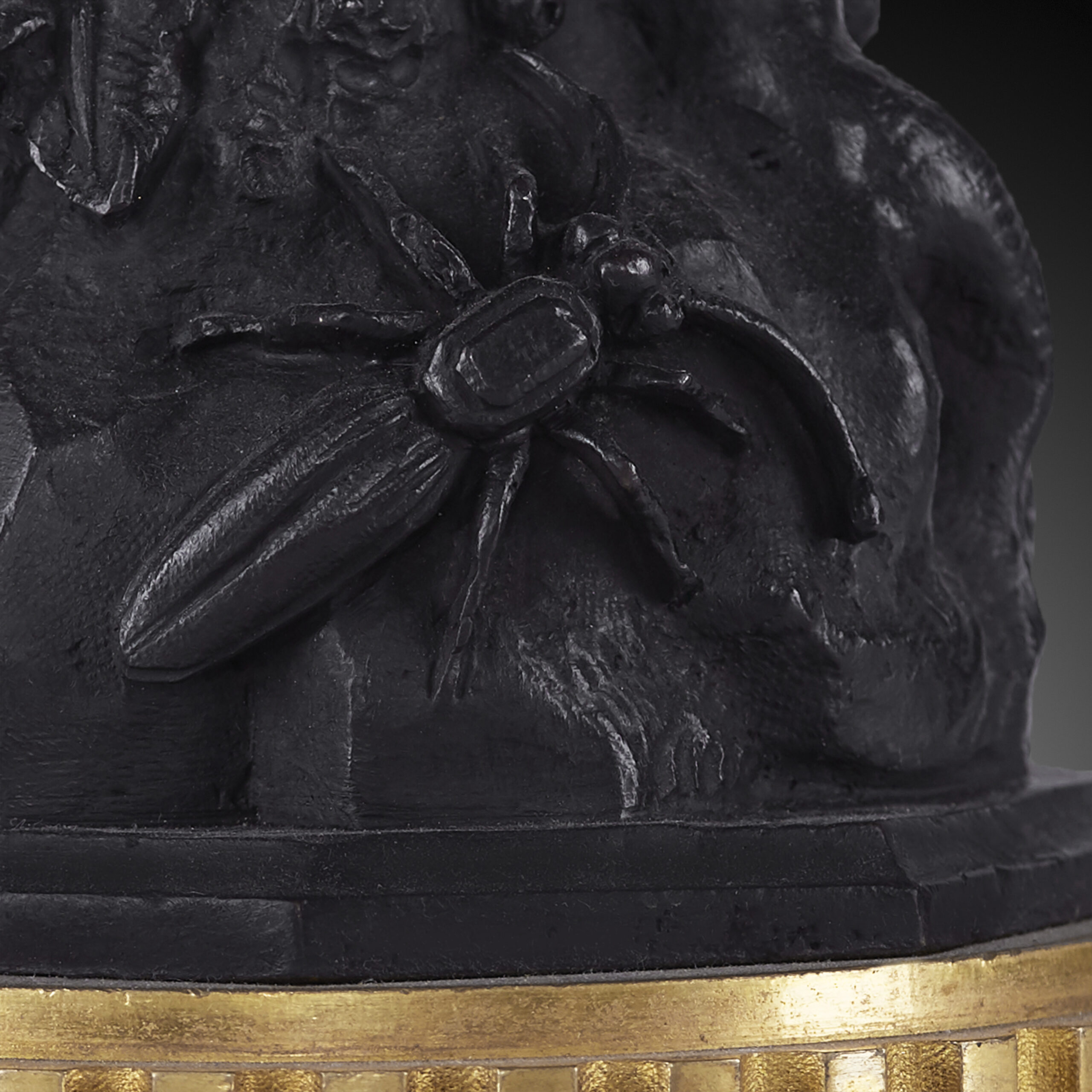
The entire lamp is a testament to the technical virtuosity of 19th-century bronziers. The fine casting, likely achieved through the lost-wax method, allowed for the exquisite detail seen in the figure’s musculature and the intricate bark of the tree. The piece would have originally graced a prominent location in a formal salon or study, serving as both a sophisticated light source and a monumental sculpture that reflected the owner’s cultivated taste and wealth.