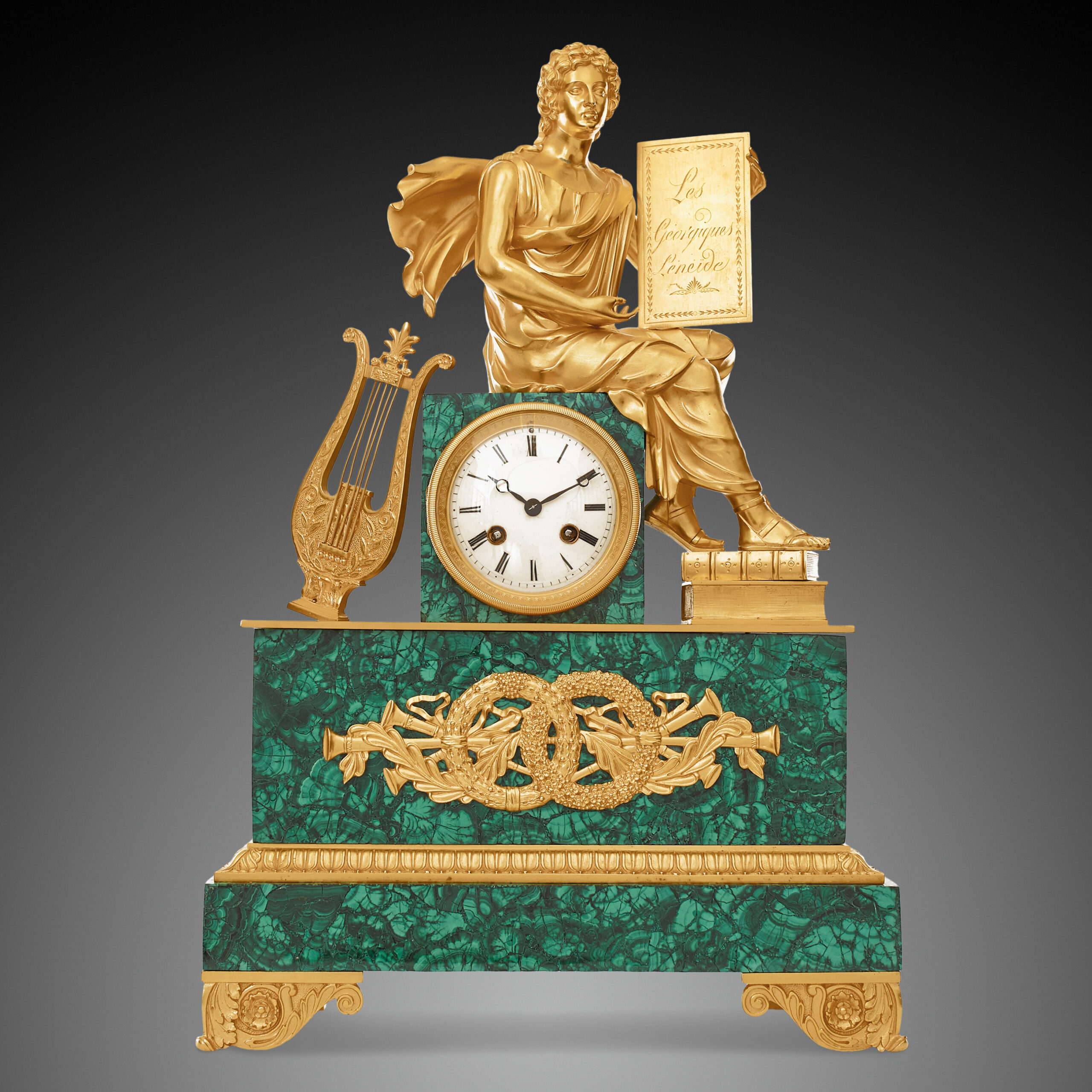
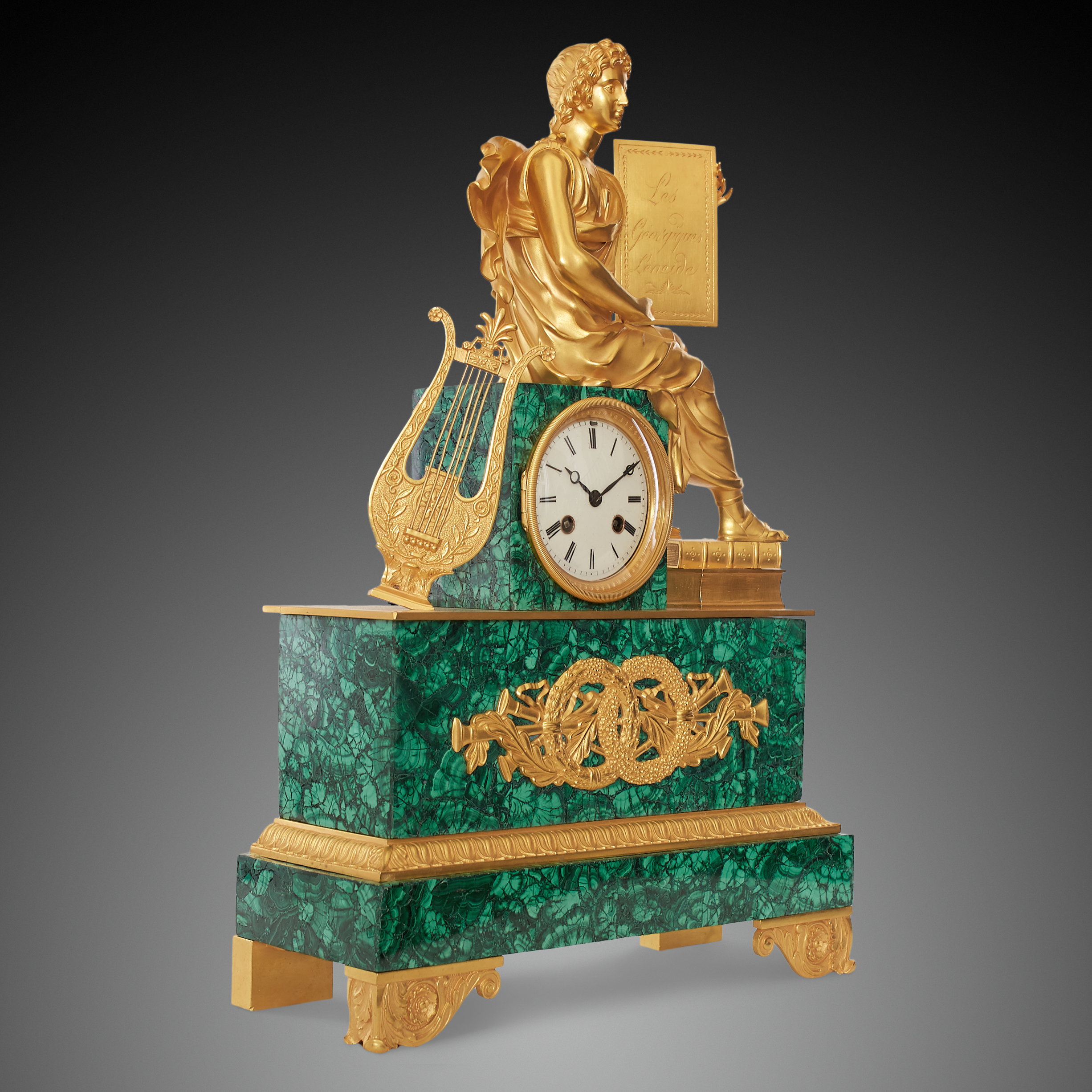
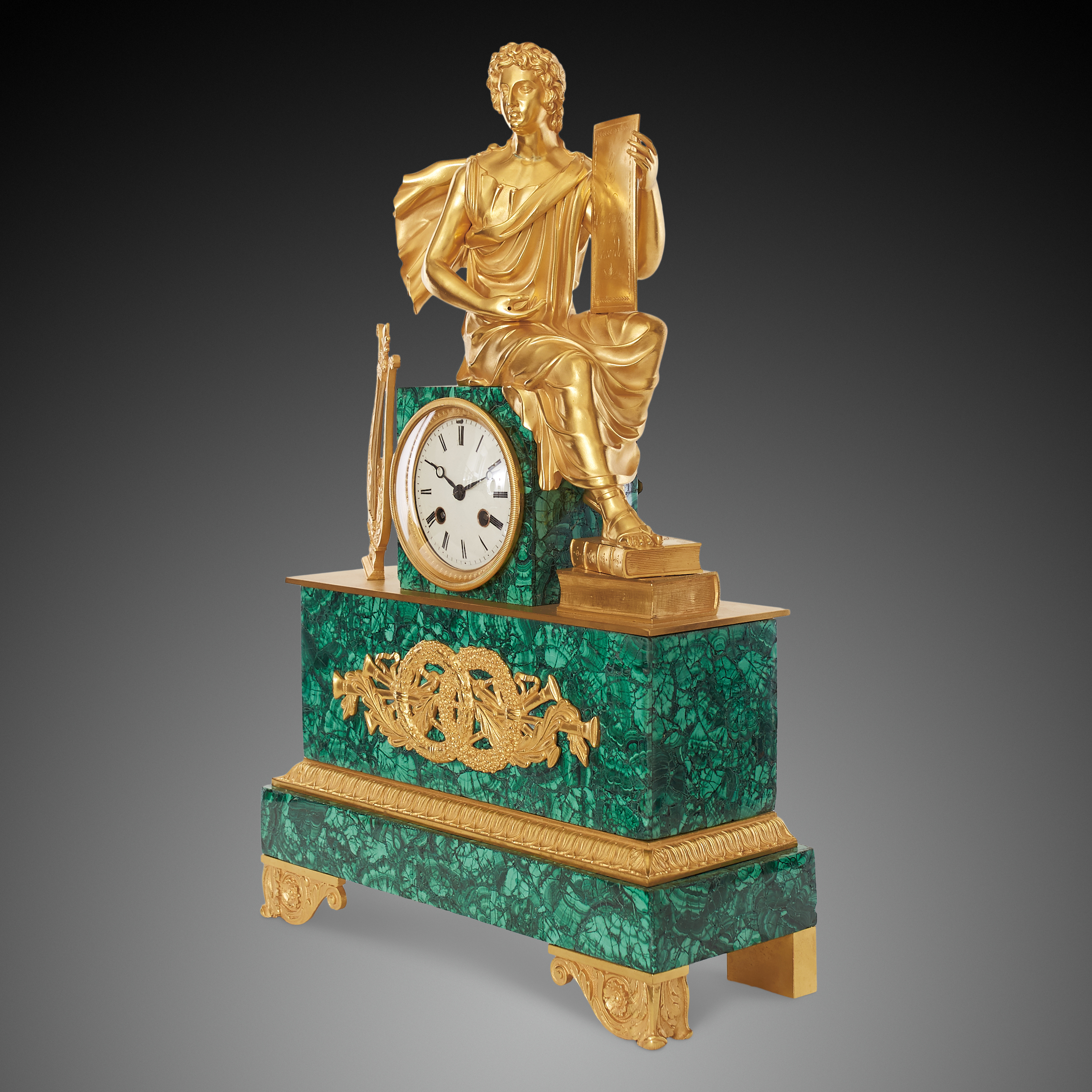
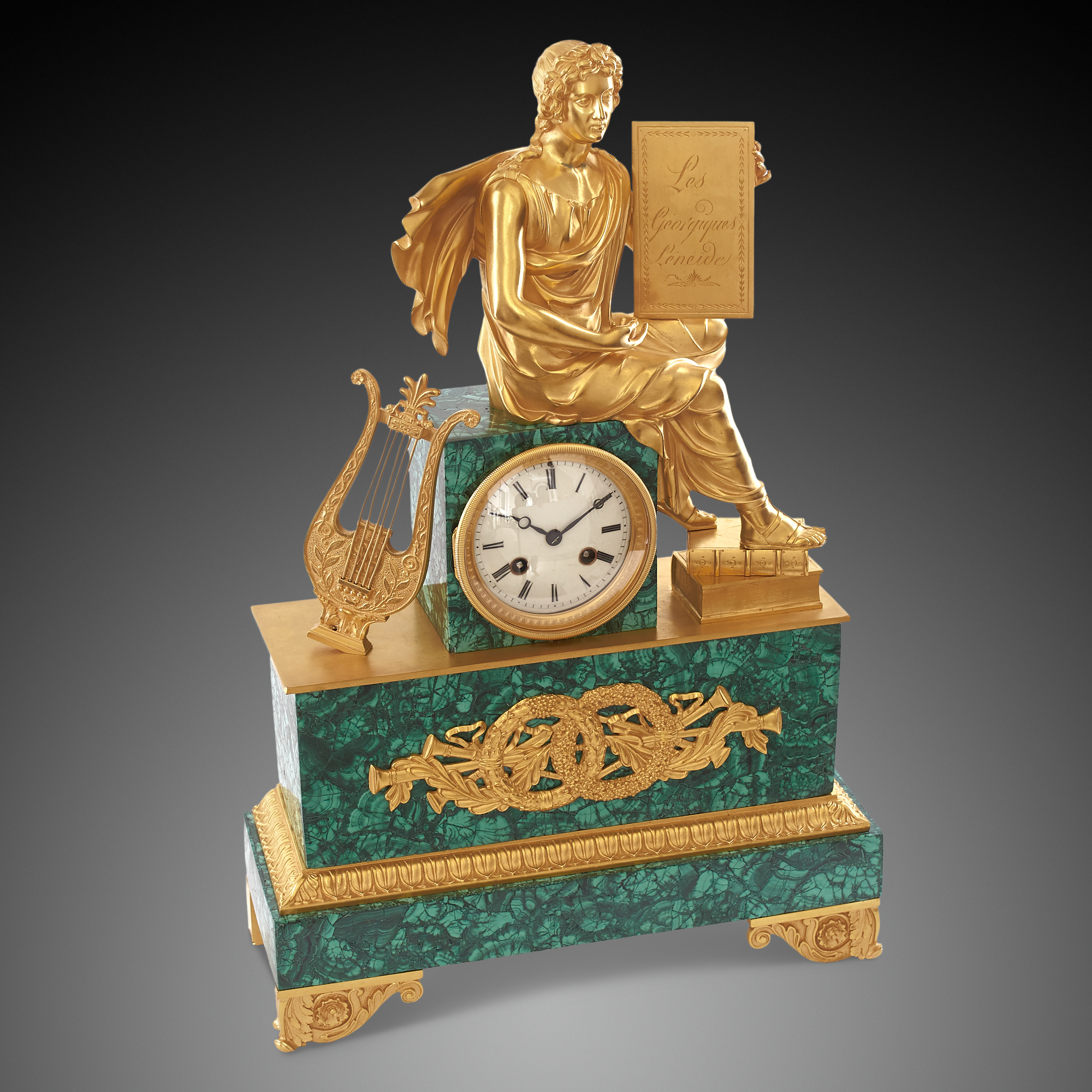
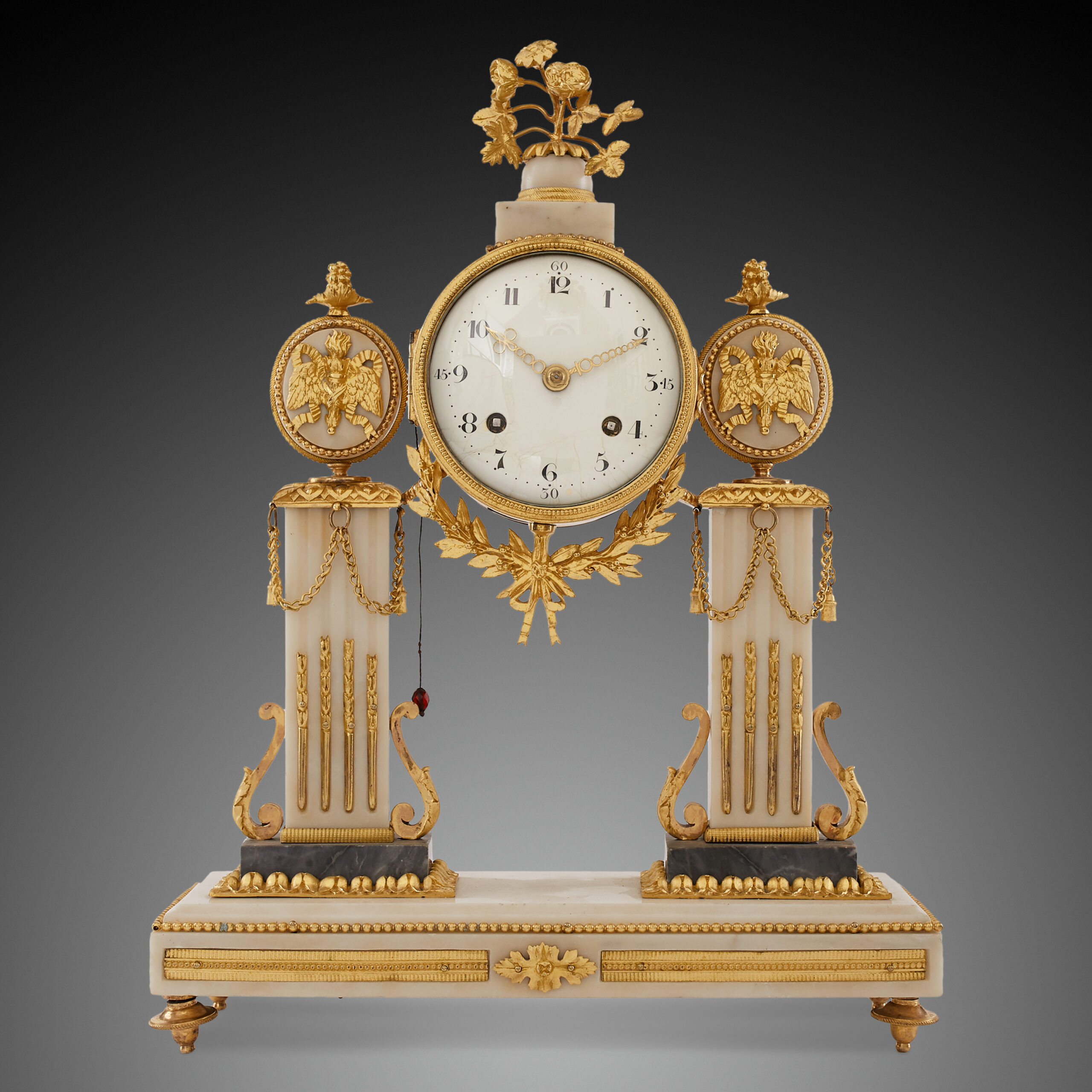
This beautiful French mantel clock from the Louis Philippe and Charles X period, circa 1830, captures the graceful transition from the austere grandeur of the Empire style toward a more romantic and narrative sensibility that defined early 19th-century French decorative arts. These transitional clocks are particularly appealing because they bridge the monumental classicism of Napoleon’s era with the gentler, more literary spirit of the following decades.
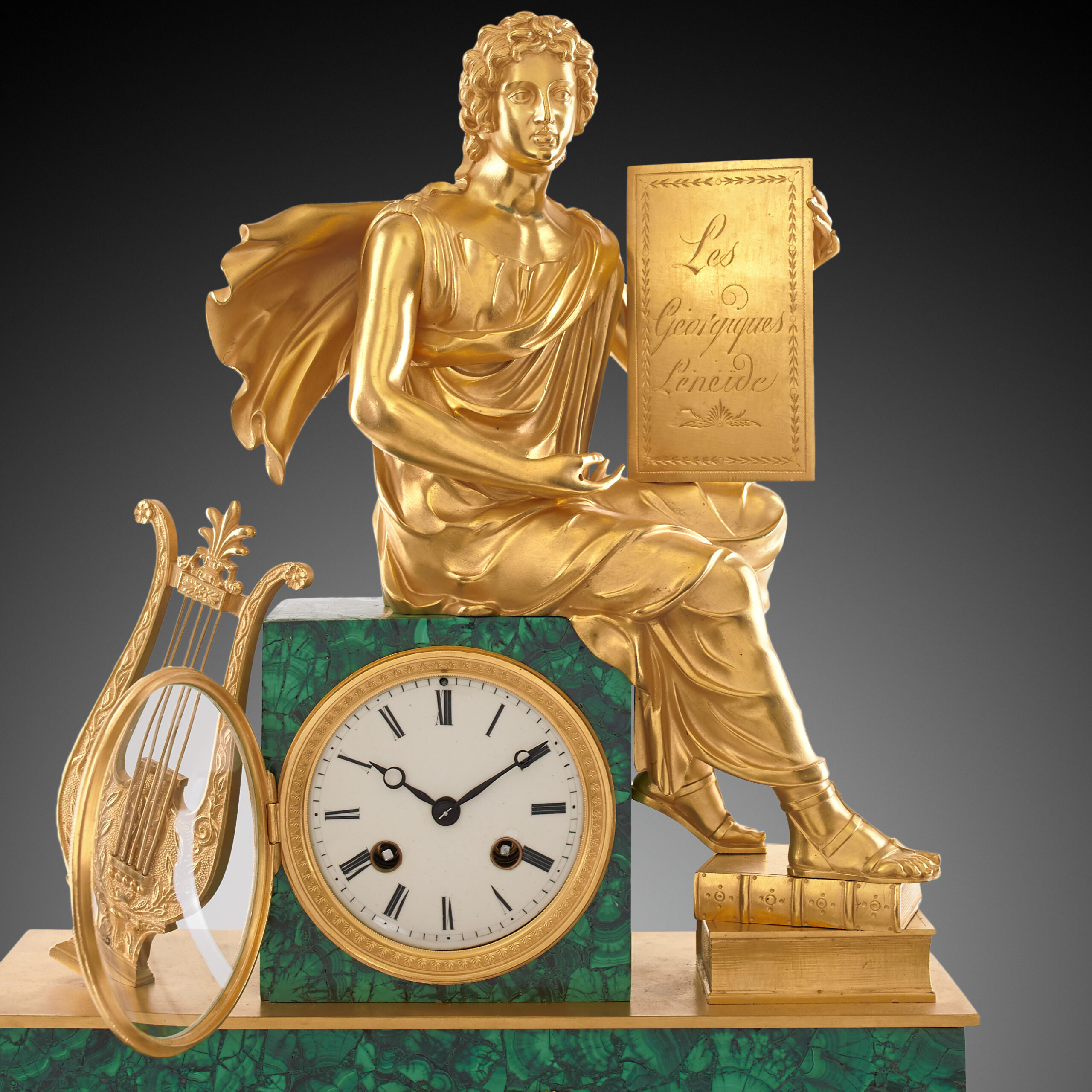
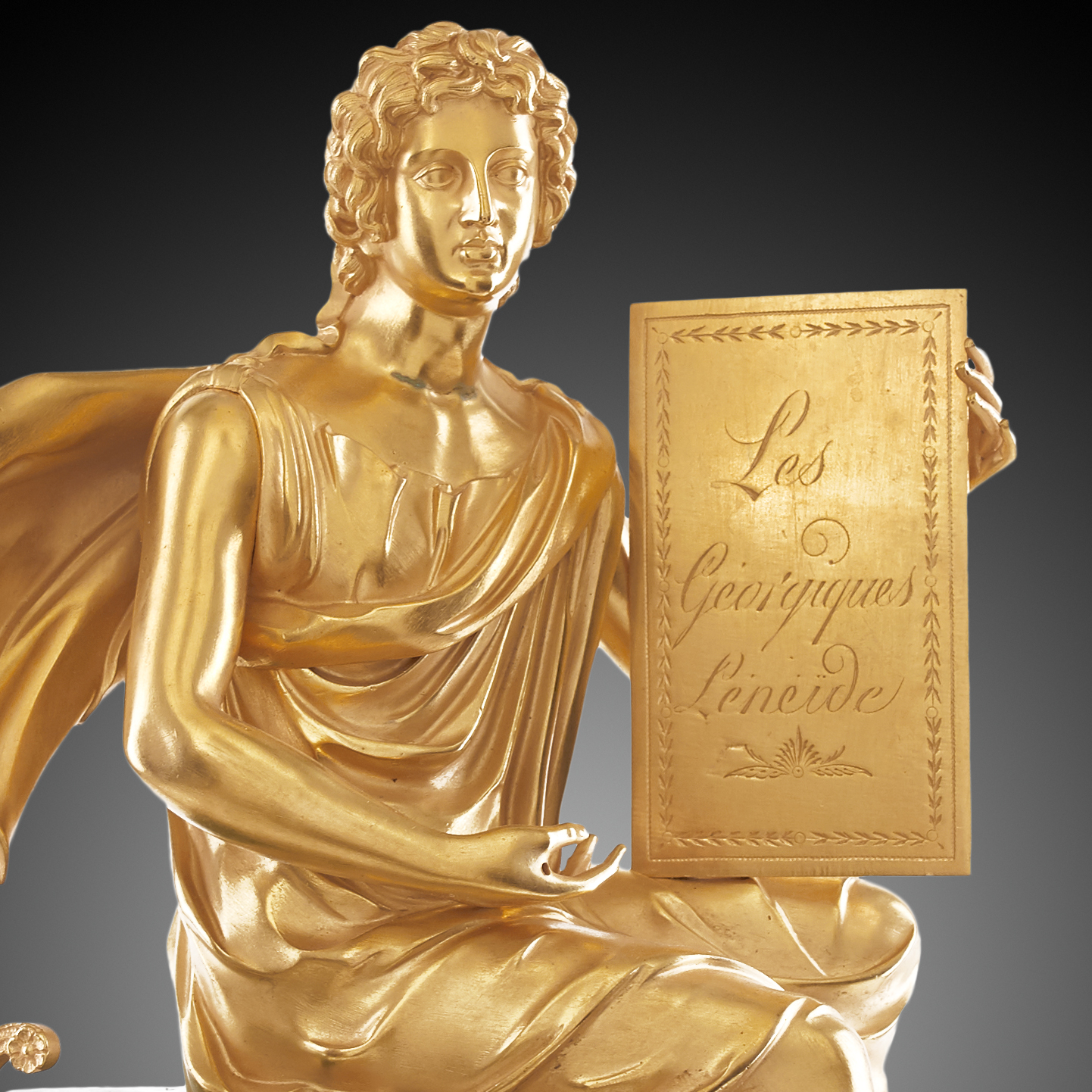
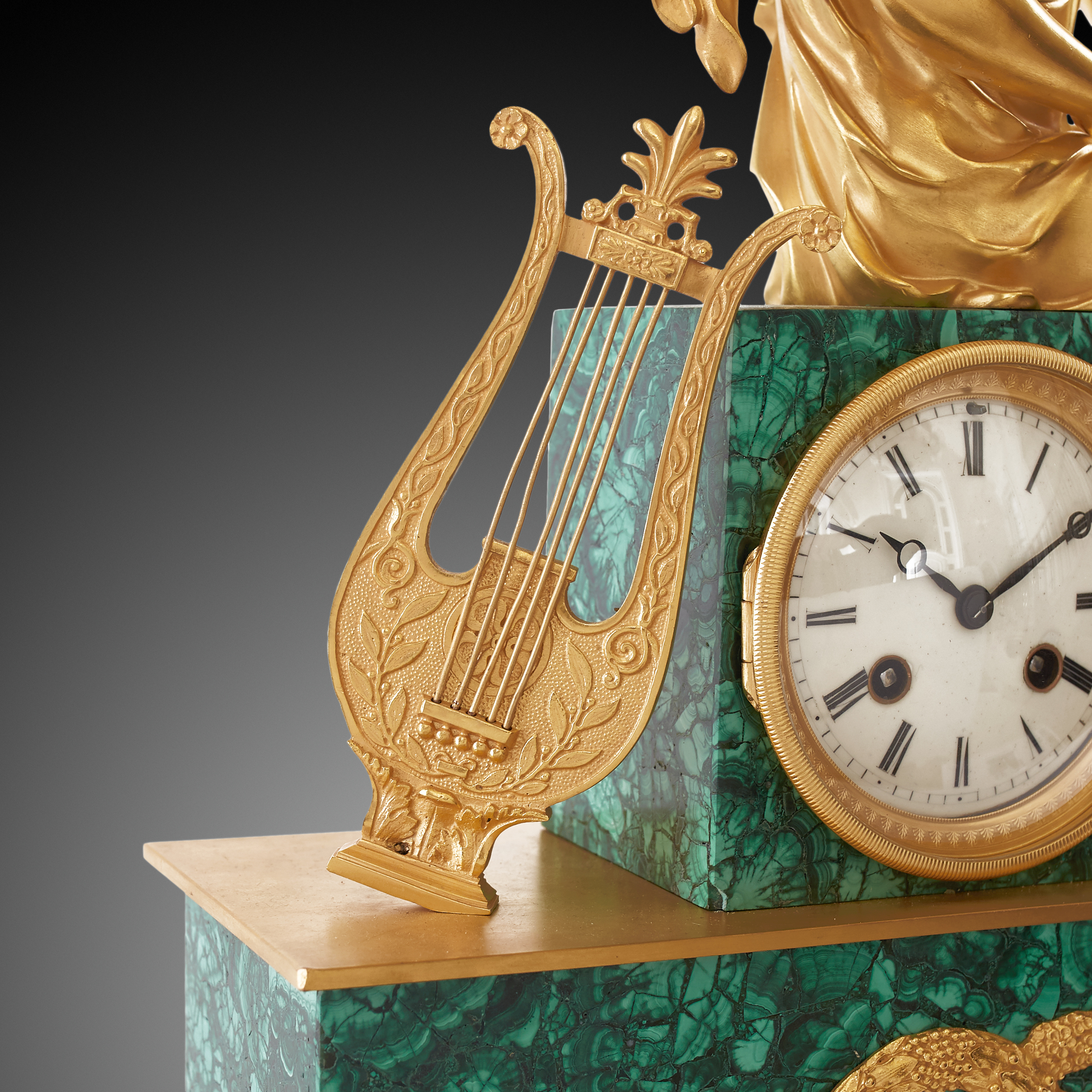
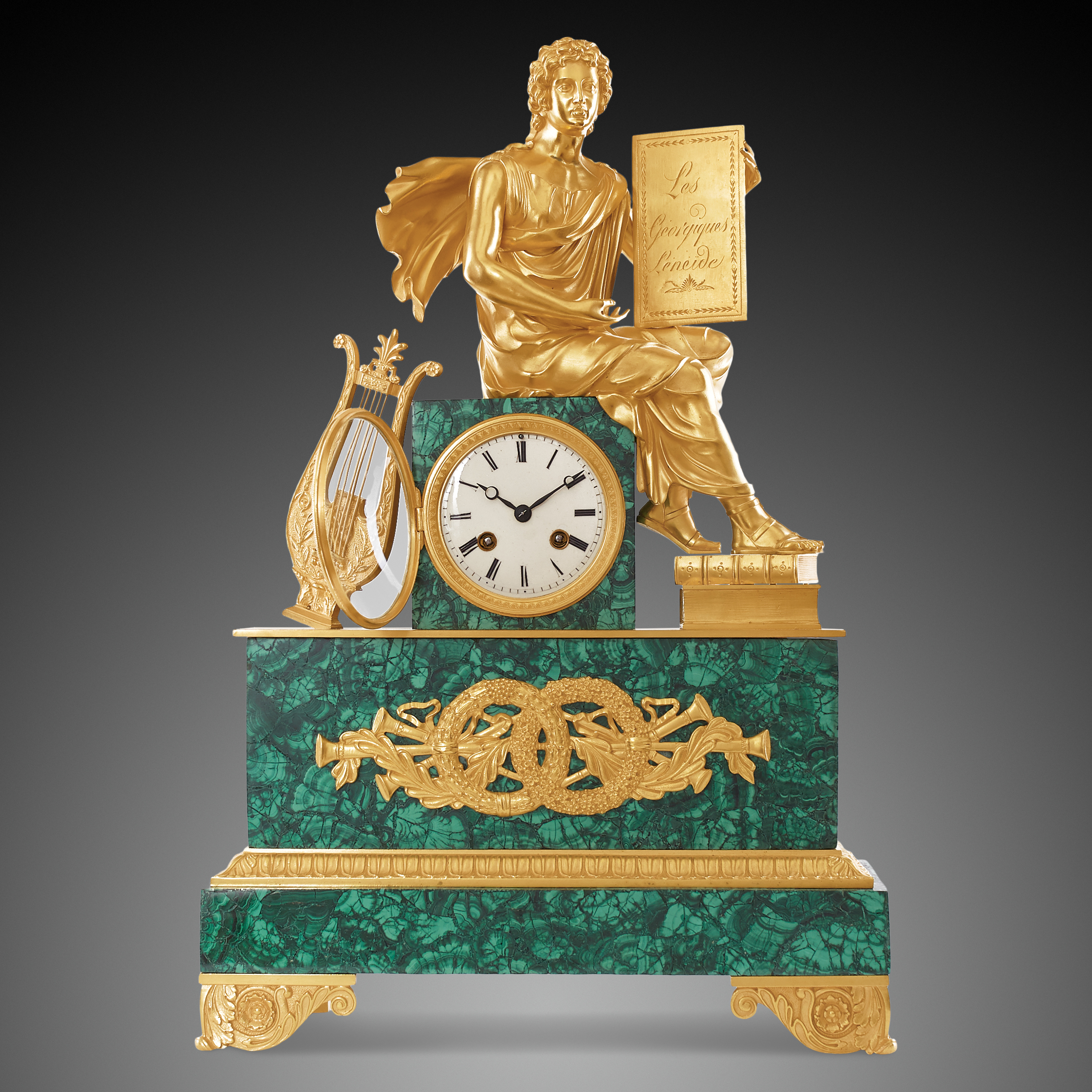
The composition centers on a finely modeled gilt bronze figural group surmounting the clock: a seated classical figure, most likely a poet or muse, draped in elegantly flowing robes and accompanied by a lyre. In one hand the figure holds a tablet or book clearly inscribed “Les Georgiques,” a direct and charming reference to Virgil’s famous poem on pastoral life and agriculture. This literary allusion reflects the period’s renewed appreciation for classical learning and the romantic idealization of rural virtue, themes that resonated deeply in the salons and literary circles of the time.
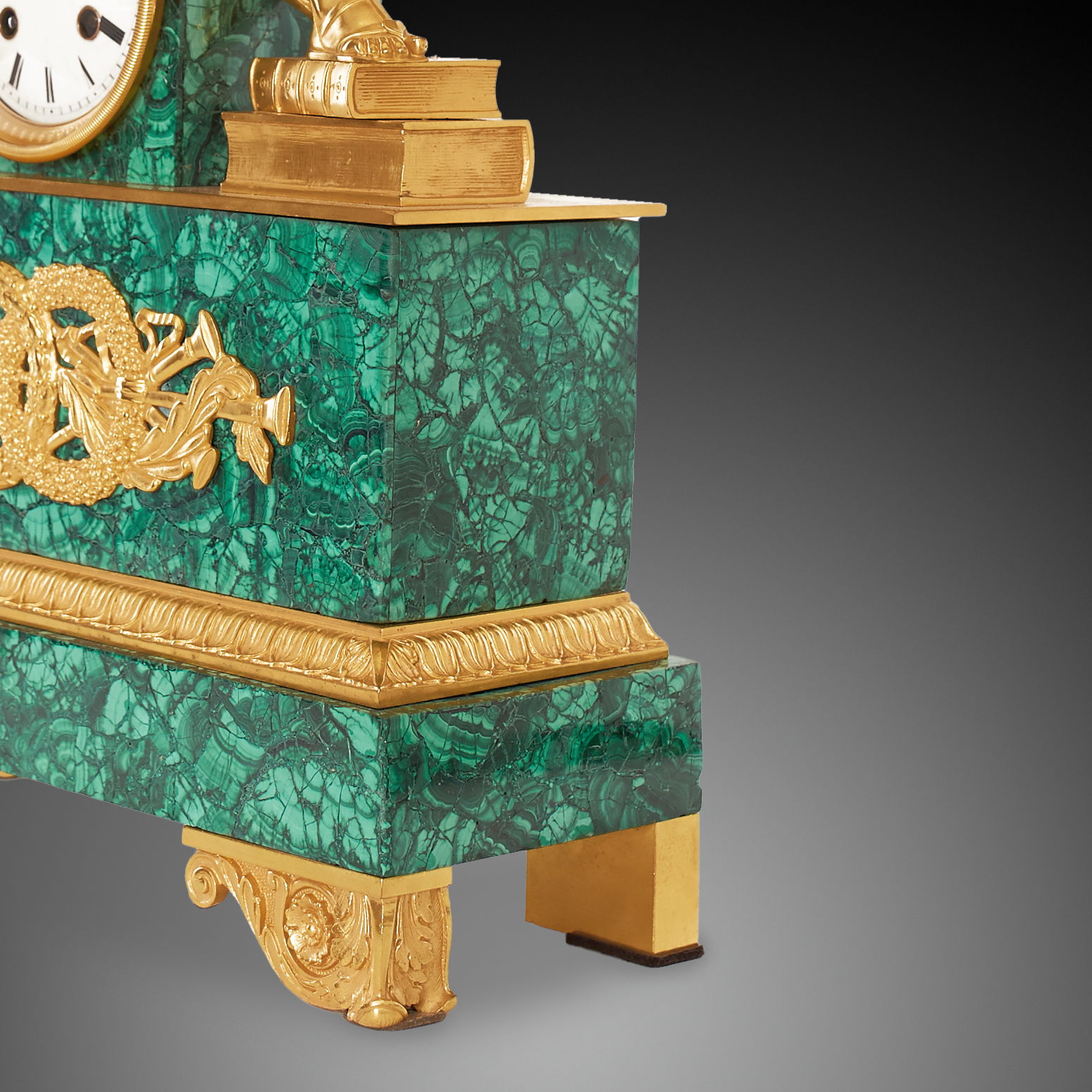
Below, the circular clock dial with Roman numerals sits within a richly veneered malachite base of exceptional quality. Malachite, with its vivid green veining and luxurious polish, was highly prized in the 1820s and 1830s for high end furnishings and objets d’art. The base is further enhanced by extensive gilt bronze mounts and a prominent frieze depicting a pair of intertwined serpents flanking a flaming torch, powerful allegorical symbols of eternal knowledge and the enduring flame of wisdom. The contrast between the warm, luminous gilt bronze and the deep, marbled green of the malachite creates a harmonious and opulent visual effect that feels both refined and quietly dramatic.
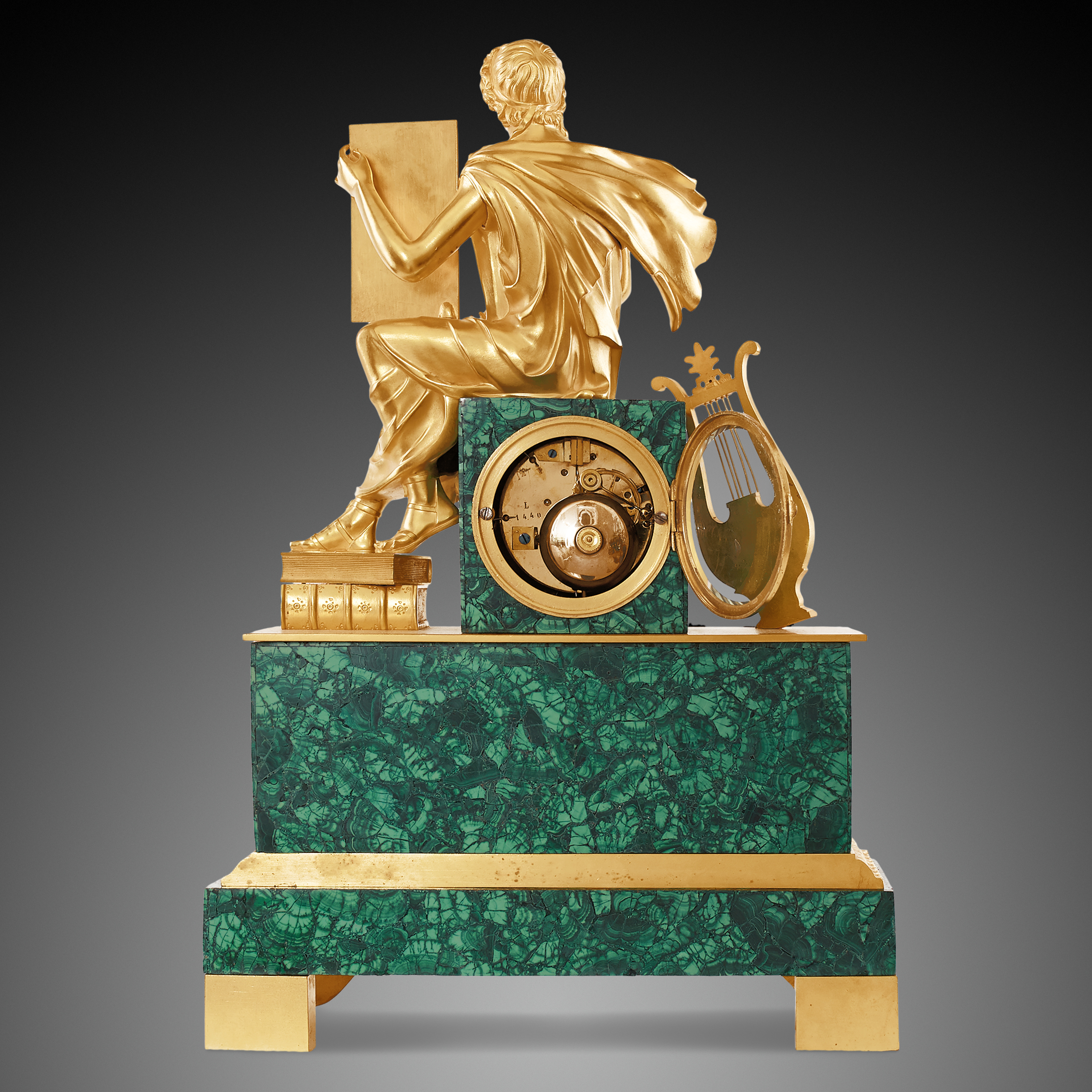
Mechanically, the clock houses a solid eight day going movement that strikes the hours and every half hour on a clear bell. It has been professionally cleaned and serviced by a watchmaker experienced in museum quality timepieces, and it remains in excellent cosmetic condition with perfect working order. The piece comes complete with its original pendulum, winding key, and bell.
Historically, this clock belongs to a fascinating moment in French design. After the fall of the Empire in 1815, the Restoration under Charles X and the subsequent July Monarchy under Louis Philippe moved away from the severe imperial vocabulary toward a softer, more sentimental neoclassicism. Mythological and literary themes gained prominence, and materials such as malachite, porphyry, and other rare stones enjoyed renewed popularity among the aristocracy and rising bourgeoisie. Clockmakers and bronziers in Paris continued to produce these sculptural mantel pieces for discerning clients who wished to display both taste and erudition in their interiors.
The true charm of this piece lies in its storytelling quality. The seated figure quietly contemplating Virgil’s Georgics invites reflection, while the warm glow of the gilt bronze against the malachite base adds a layer of tactile richness that brings the whole composition to life. When the movement is running, the gentle tick and the soft chime on the half hour create an atmosphere of cultured tranquility that feels perfectly at home in a 19th century inspired setting.