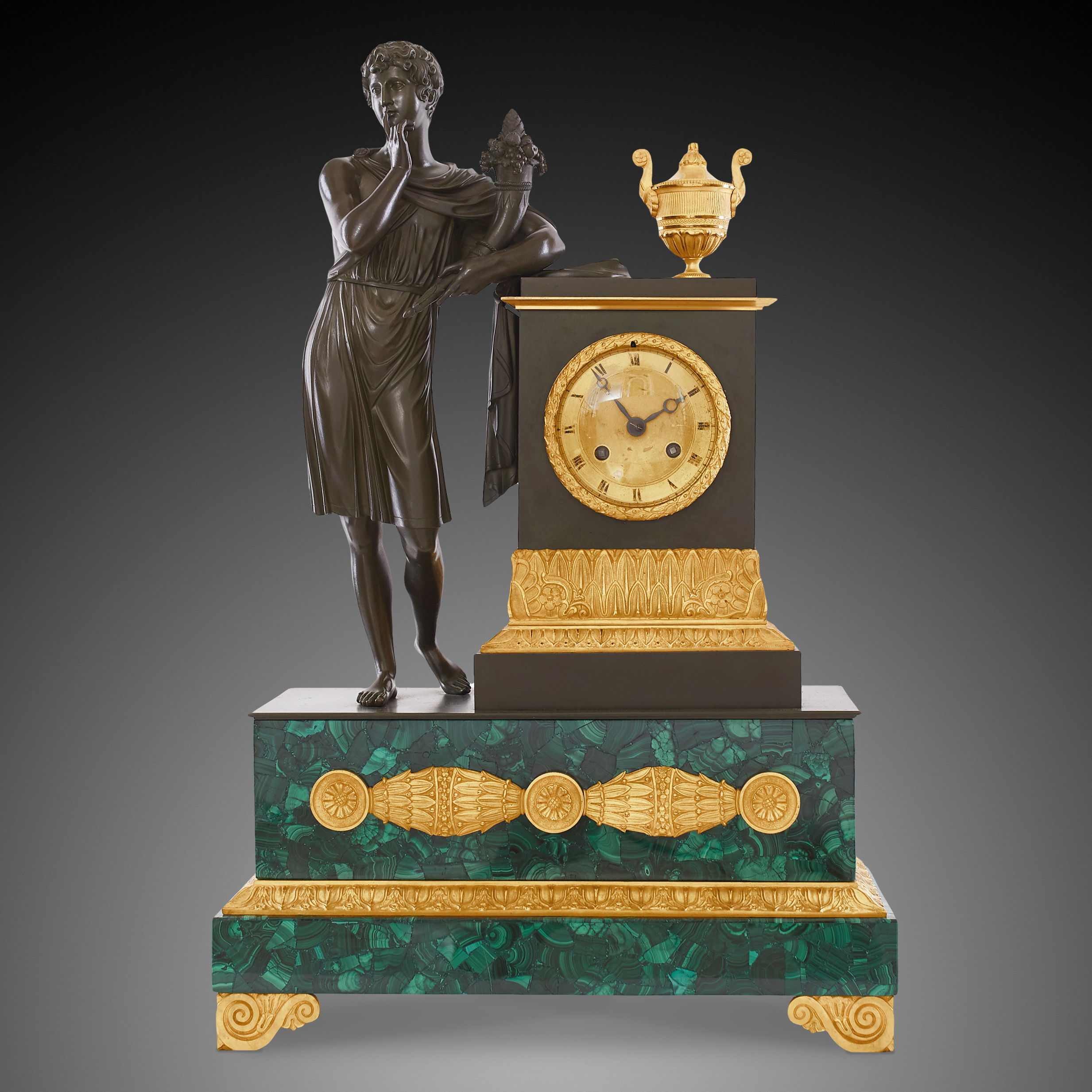
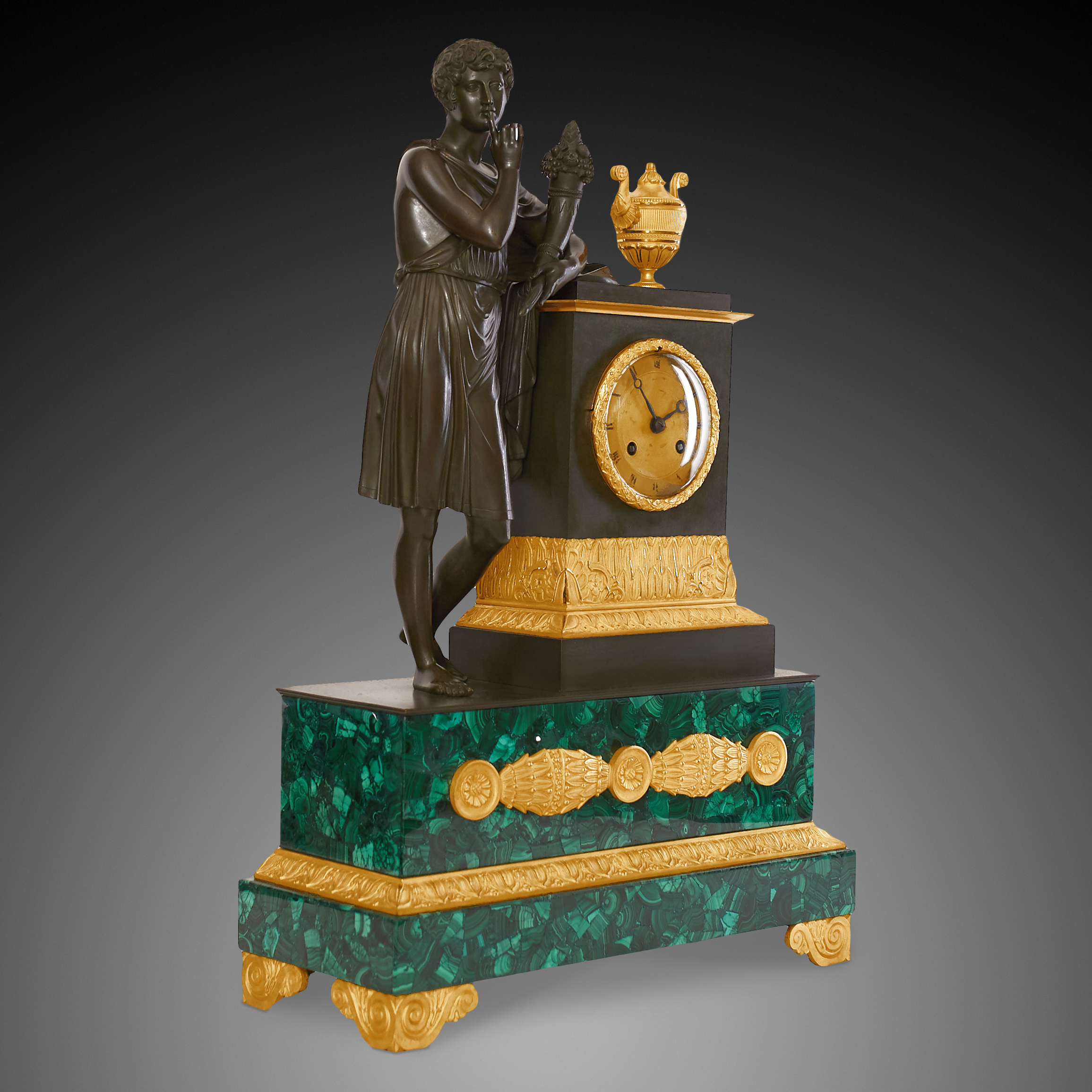
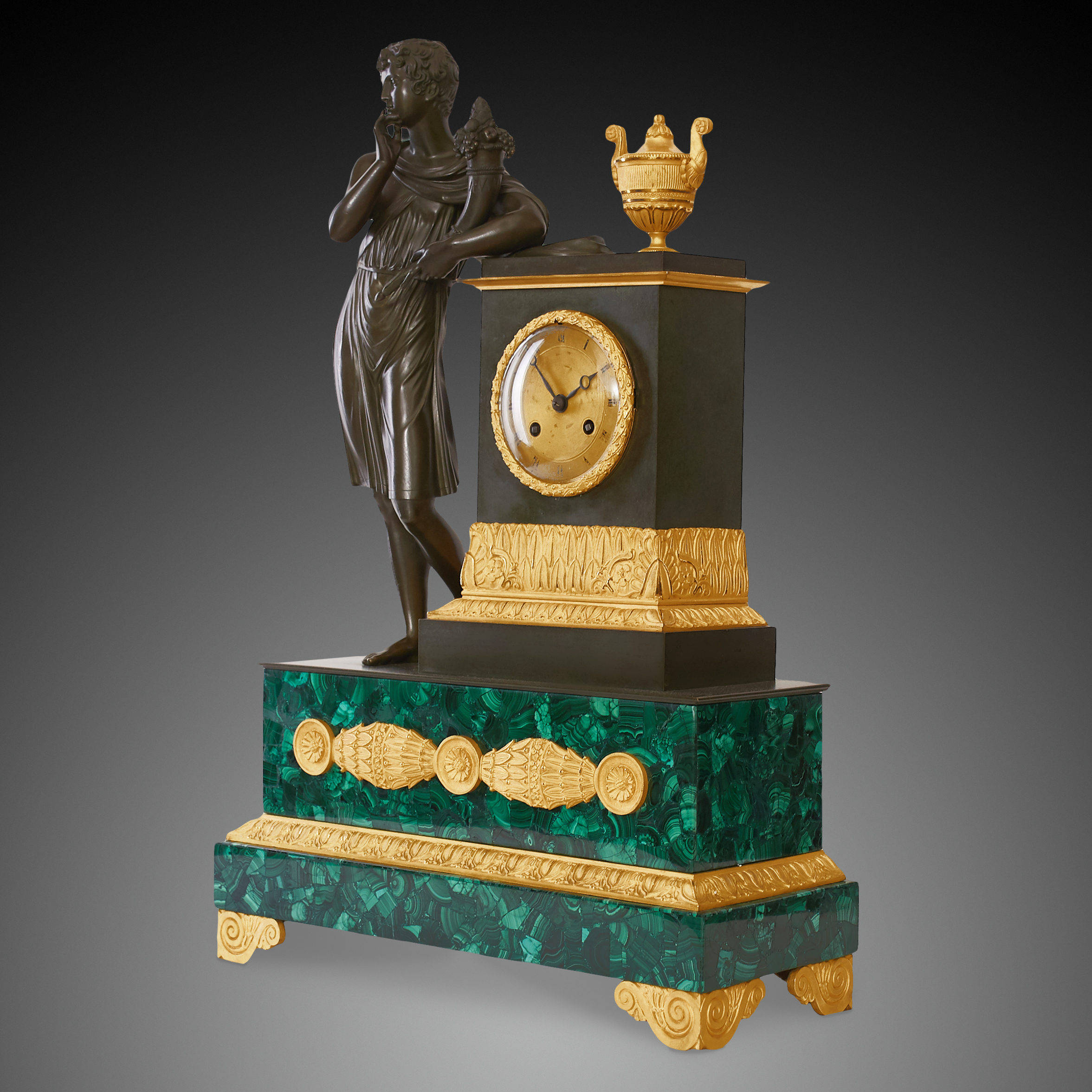
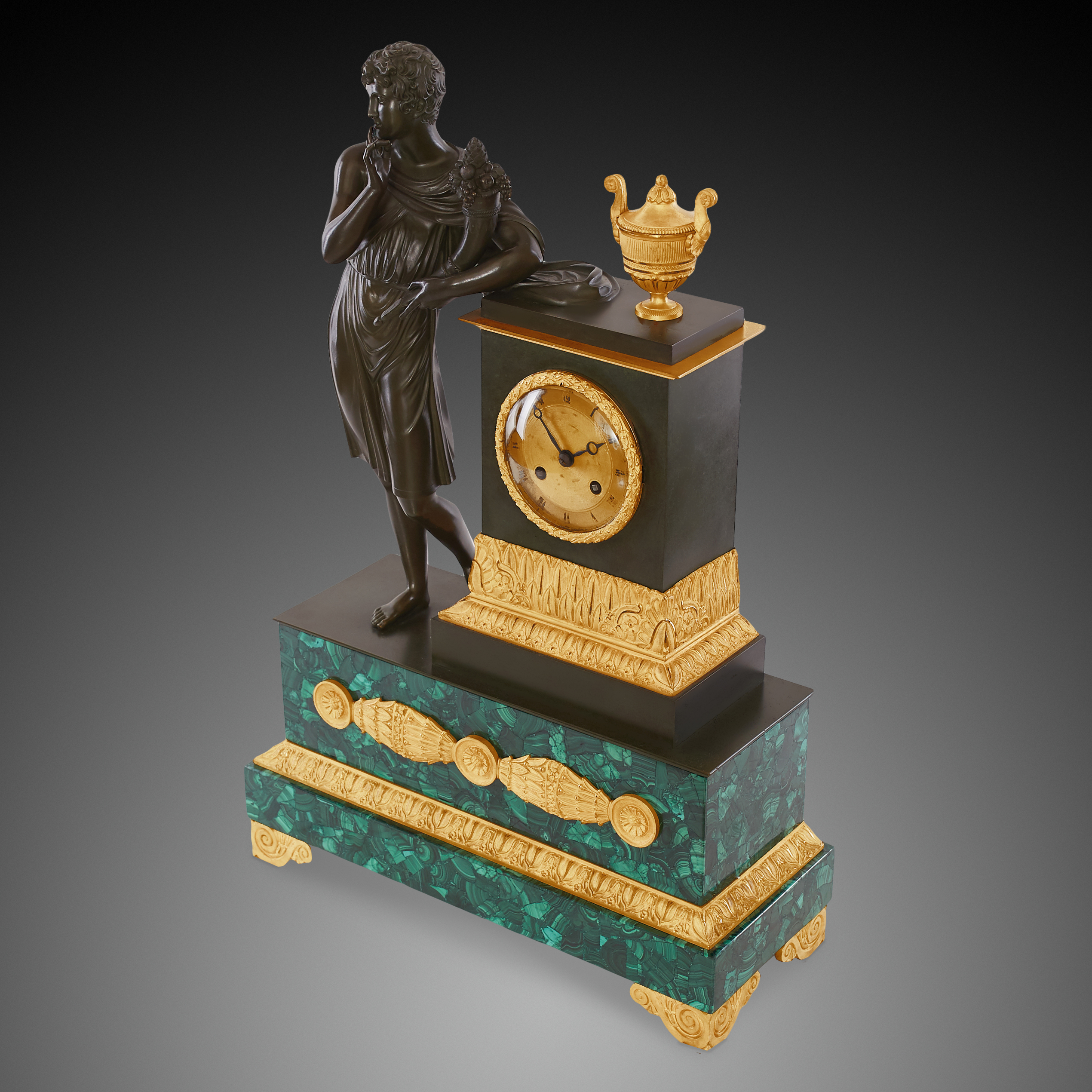
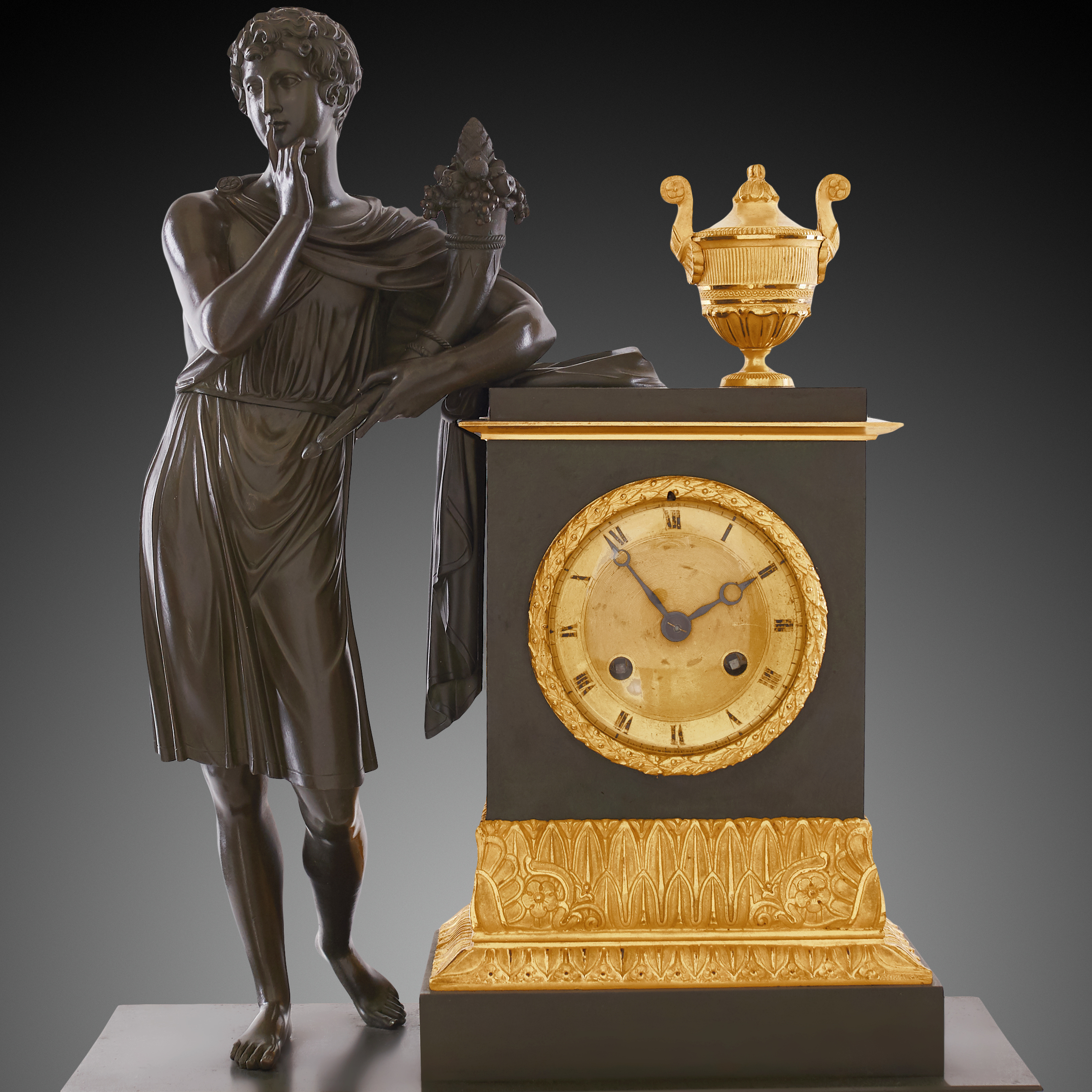
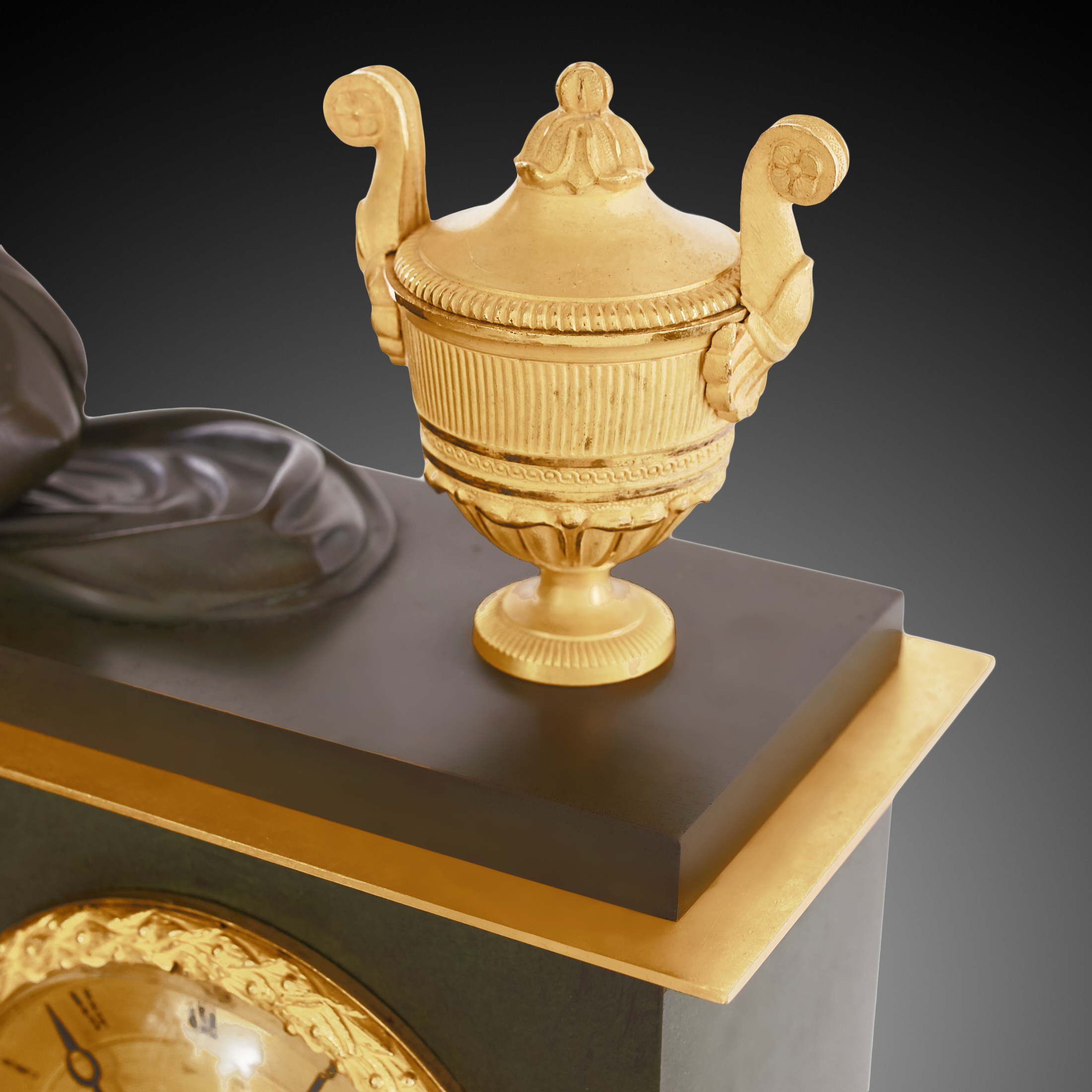
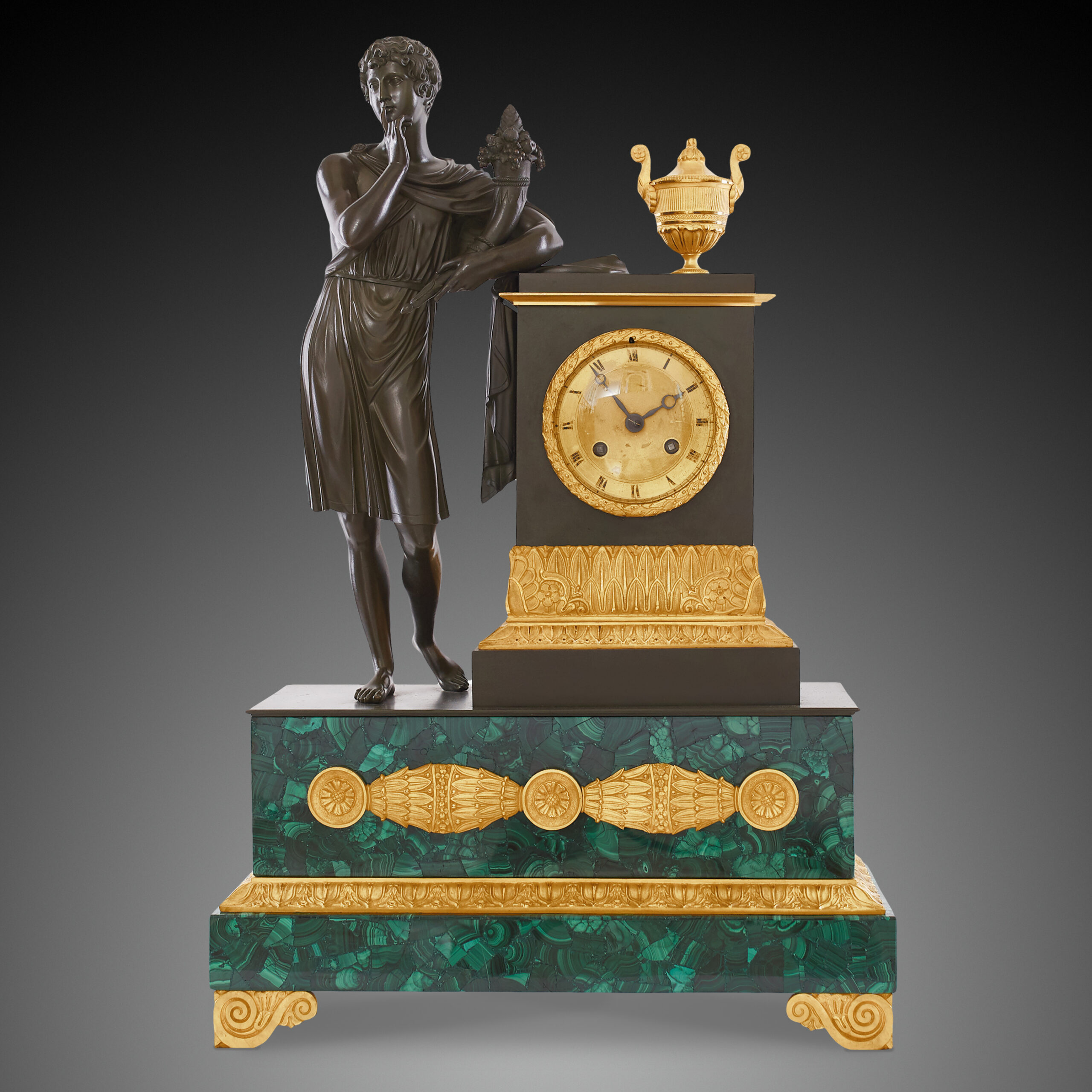
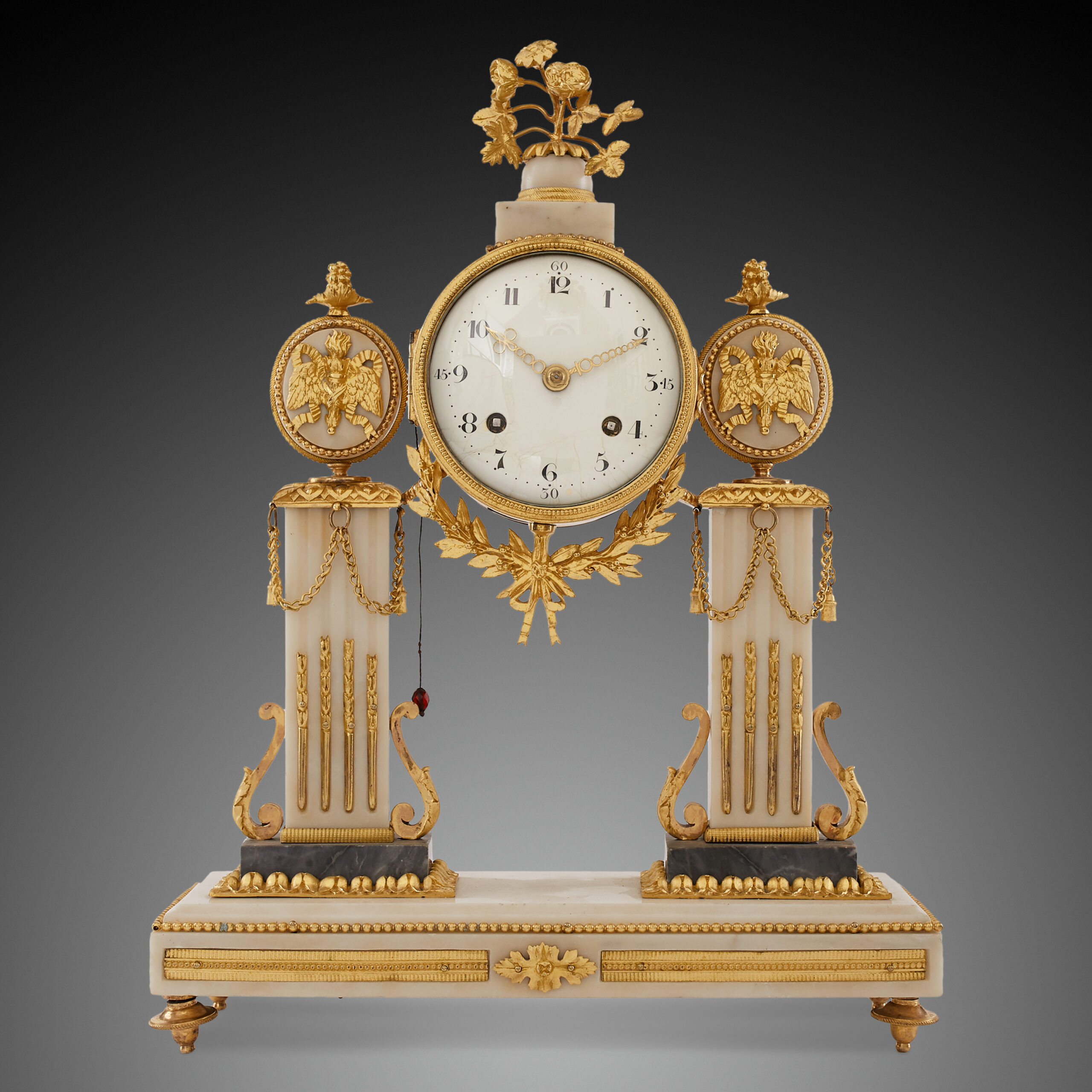
This exquisite mantel clock was created in the 19th century, embodying a transitional moment in French decorative arts that bridged the monumental Empire style with the emerging romanticism of the Louis Philippe and Charles X periods. The early 19th century was a time of profound political and cultural transformation in France, marked by the fall of Napoleon and the restoration of the monarchy, which deeply influenced artistic expression.
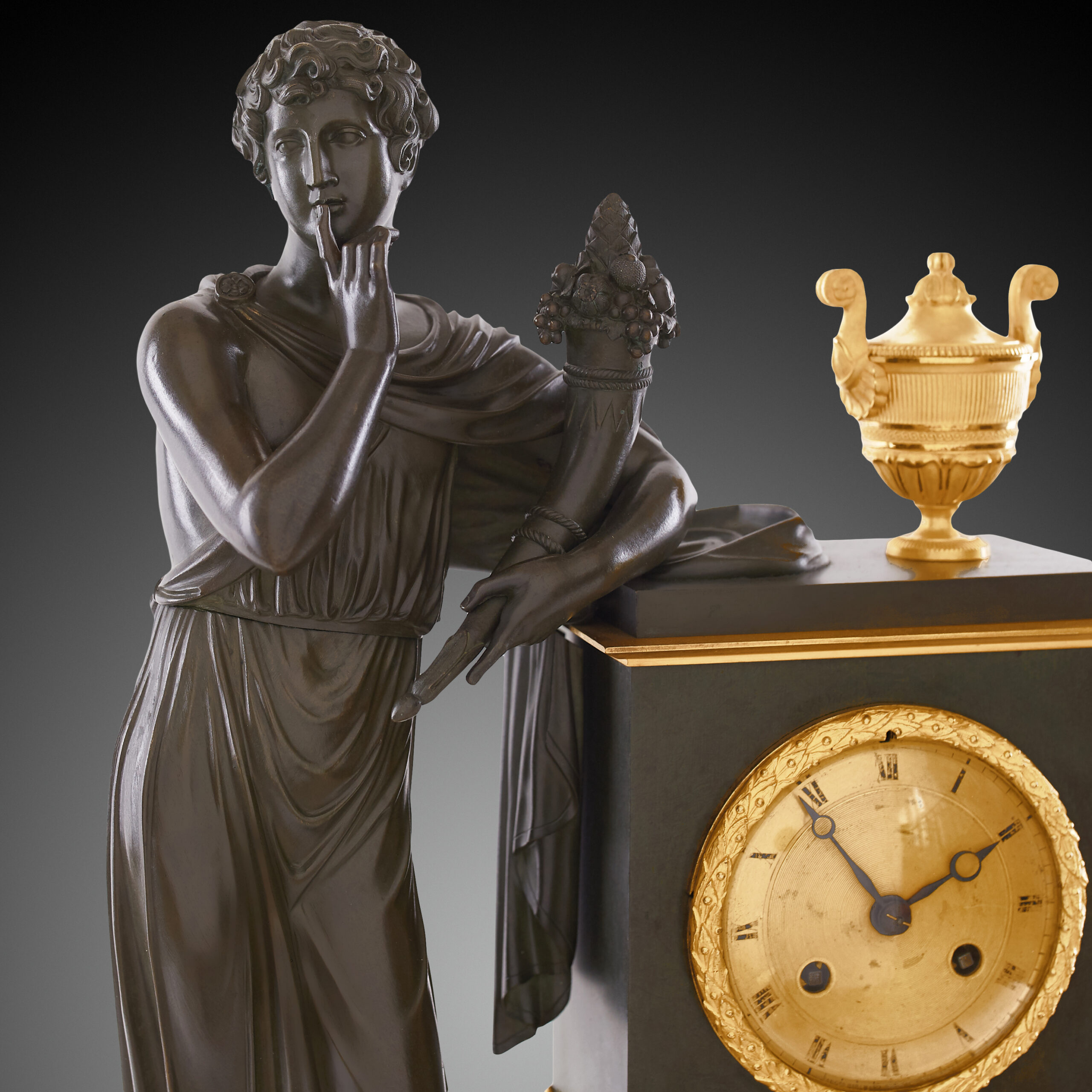
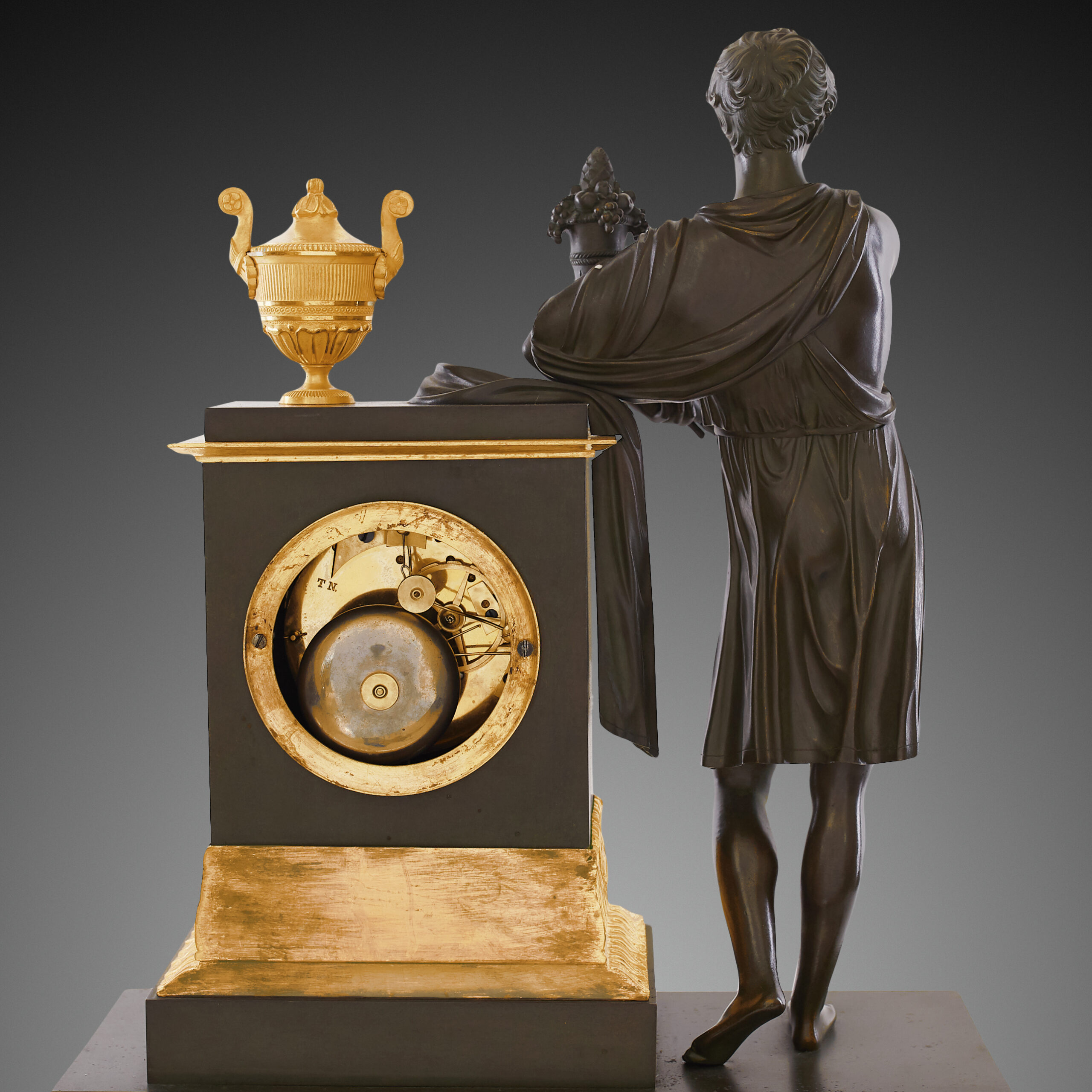
During the Empire period, design favored grandiose, imperial, and military themes celebrating power and conquest. However, by the mid-19th century, tastes shifted toward more introspective and artistic interpretations of classical motifs. This clock exemplifies that evolution, featuring a serene, classically draped male figure rather than a triumphant warrior, symbolizing reflection and the philosophical contemplation of time and existence.
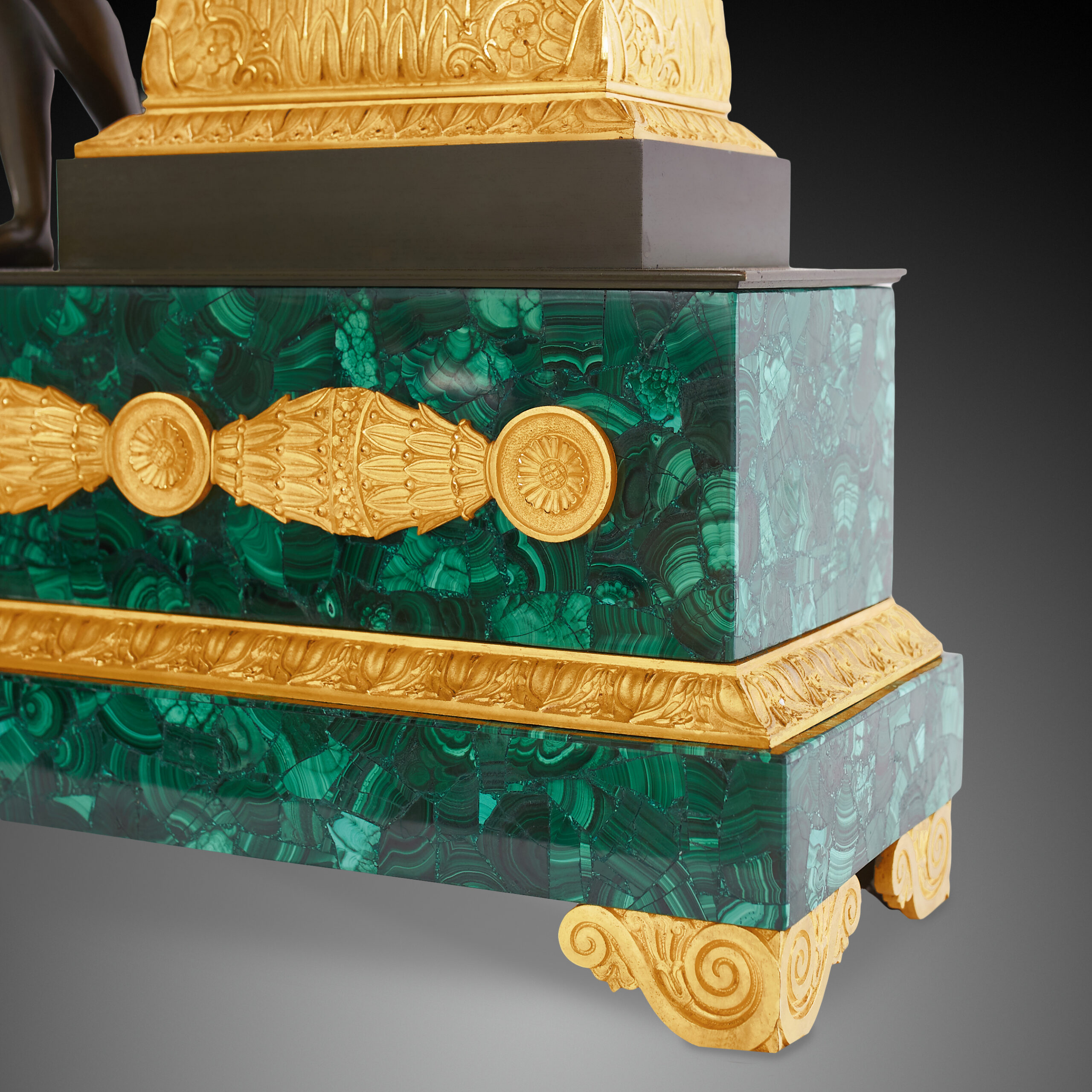
The use of malachite-a rare and exotic green stone imported primarily from Russia-signaled wealth and sophistication. Its vivid coloration and natural patterns were highly prized by collectors and aristocrats, making it a fashionable material in high-end decorative arts. The patinated bronze figure and gilded bronze mounts were produced using refined techniques developed over centuries, showcasing the unparalleled skill of French bronziers and clockmakers.
Clocks like this were not simply timekeepers but also potent symbols of cultural refinement, often commissioned by the elite to decorate salons, libraries, or private studies. They reflected the owner’s intellectual pursuits and taste for Neoclassical ideals fused with emerging romantic sensibilities. Moreover, such pieces provide valuable insight into the evolving aesthetic values of 19th-century Europe, balancing between tradition and innovation.
This clock likely originated from one of the celebrated Parisian workshops or ateliers known for their exceptional quality and artistry, such as those of Raingo Frères or François Linke, both of whom were renowned for combining exquisite materials with classical design elements during this era.
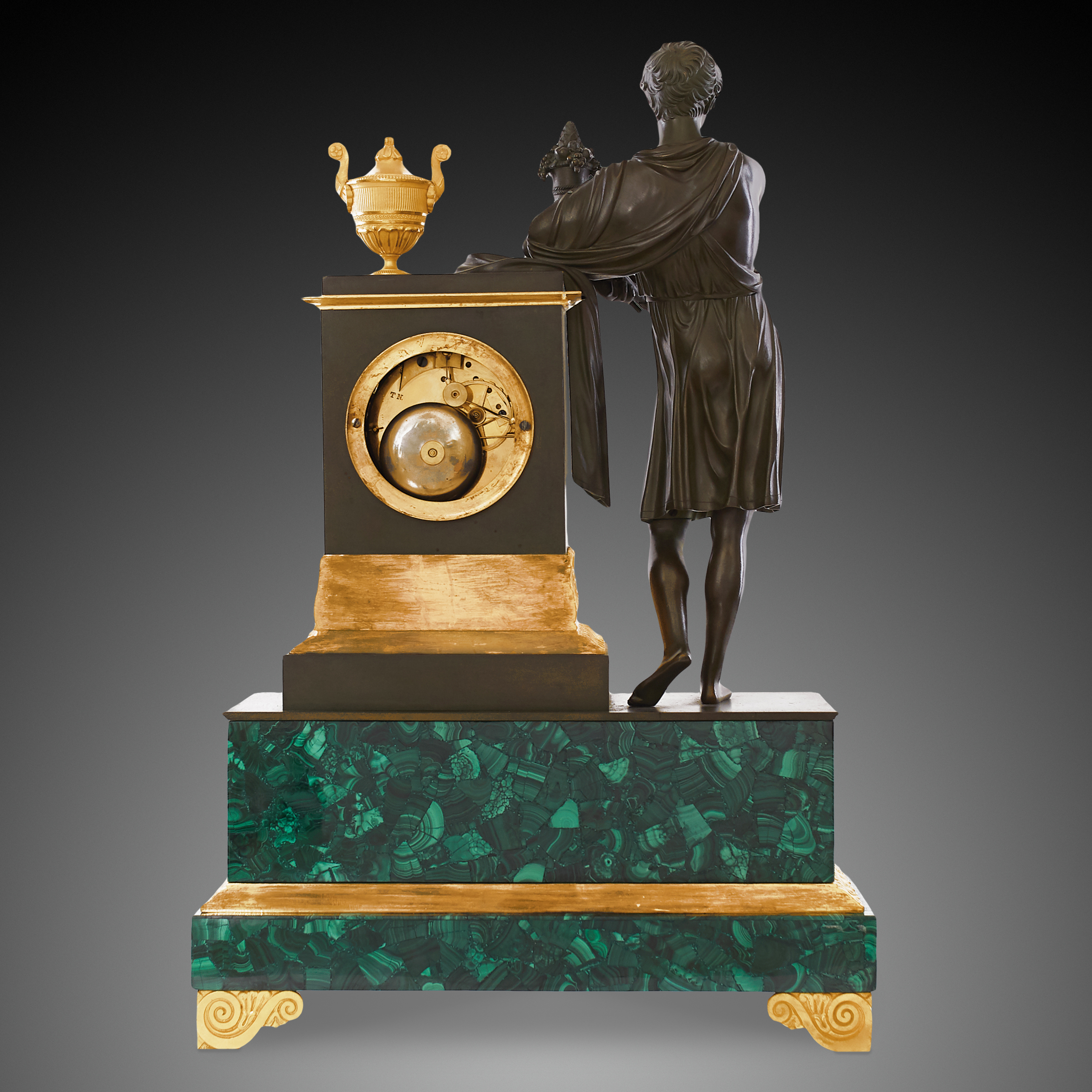
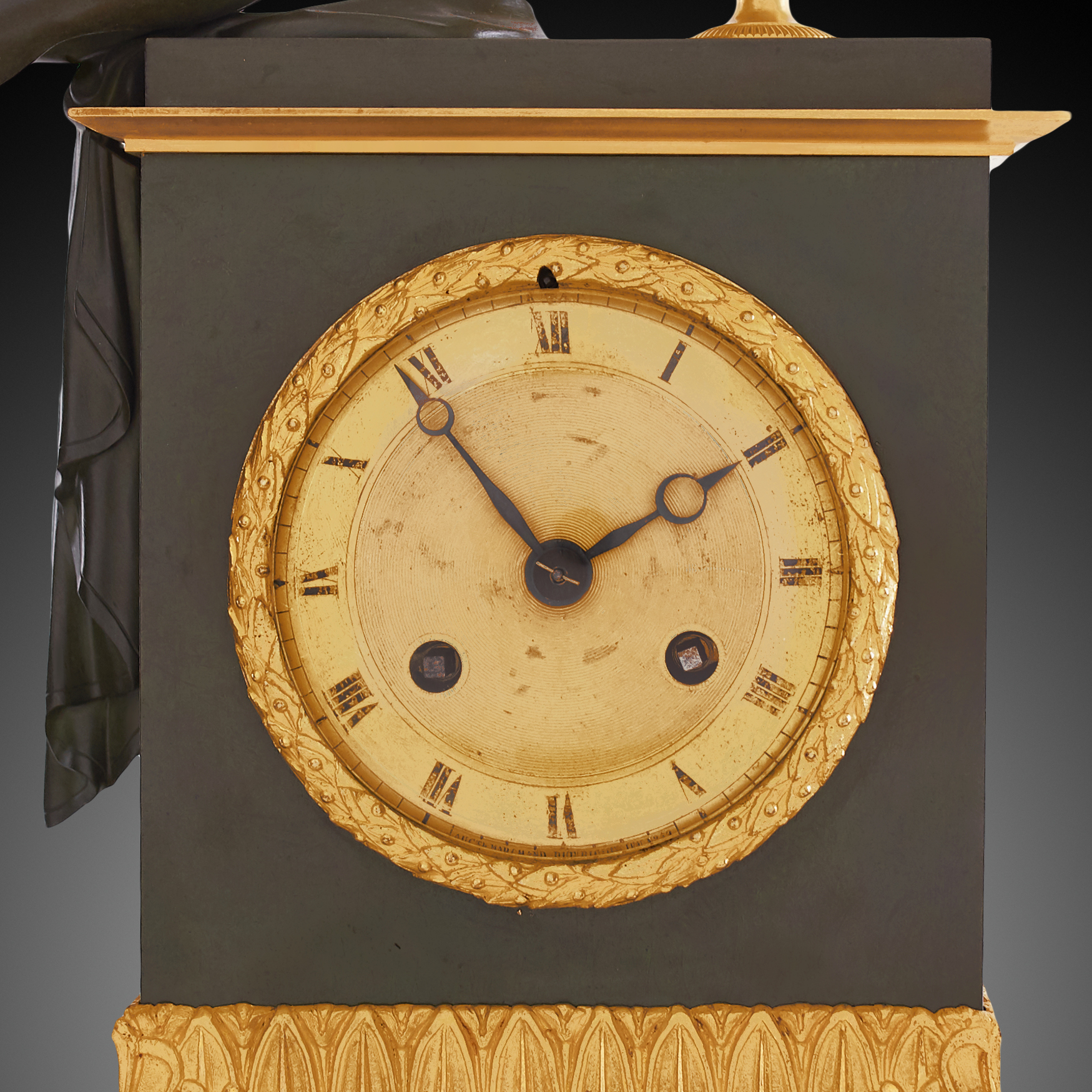
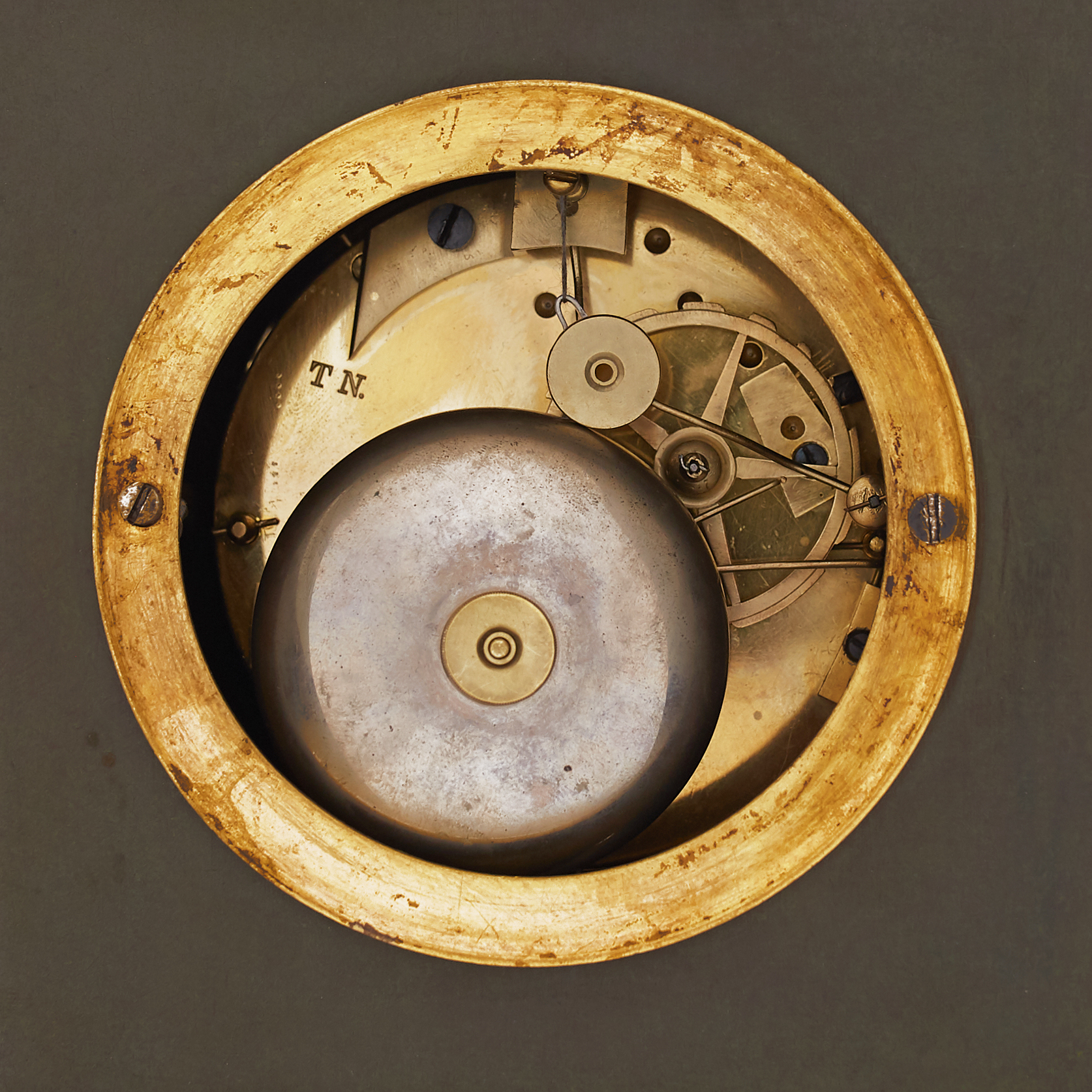
The clock is in excellent and perfect working condition. In addition, it has been cleaned and maintained by a professional watchmaker specializing in museum maintenance. The eight-days going movement. It strikes the every, half hour and hour on it’s bell. The clock comes complete with its pendulum, key and bell.