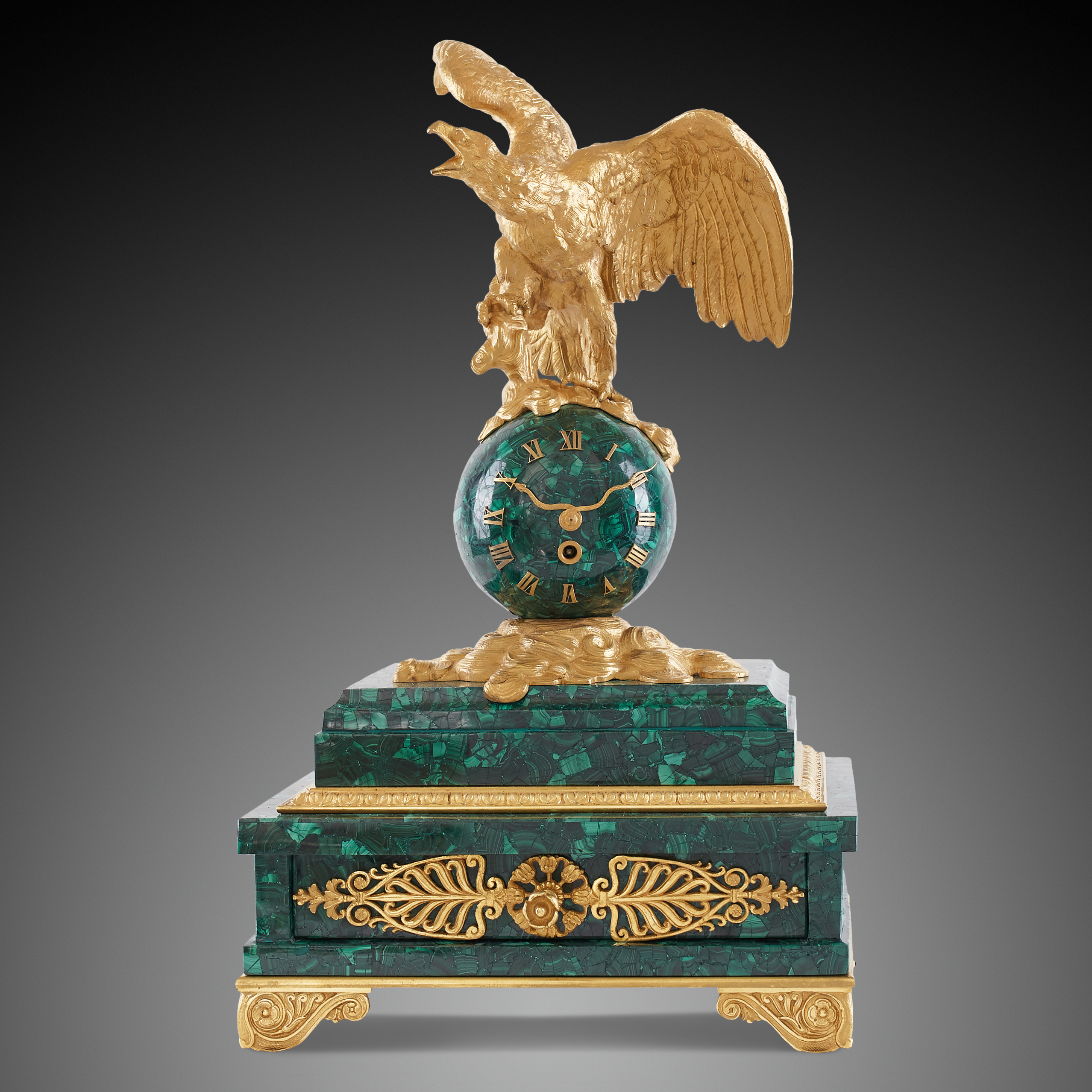
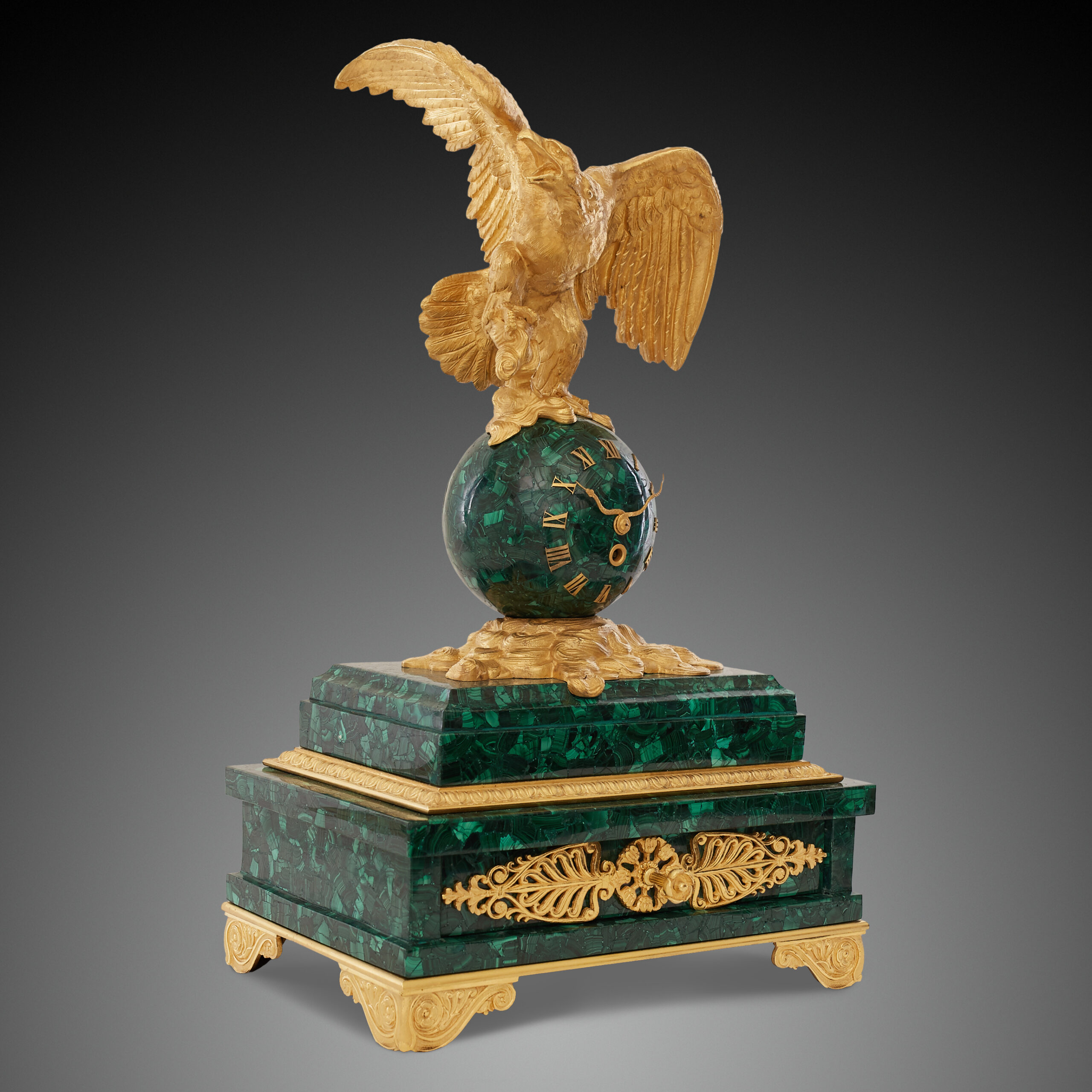
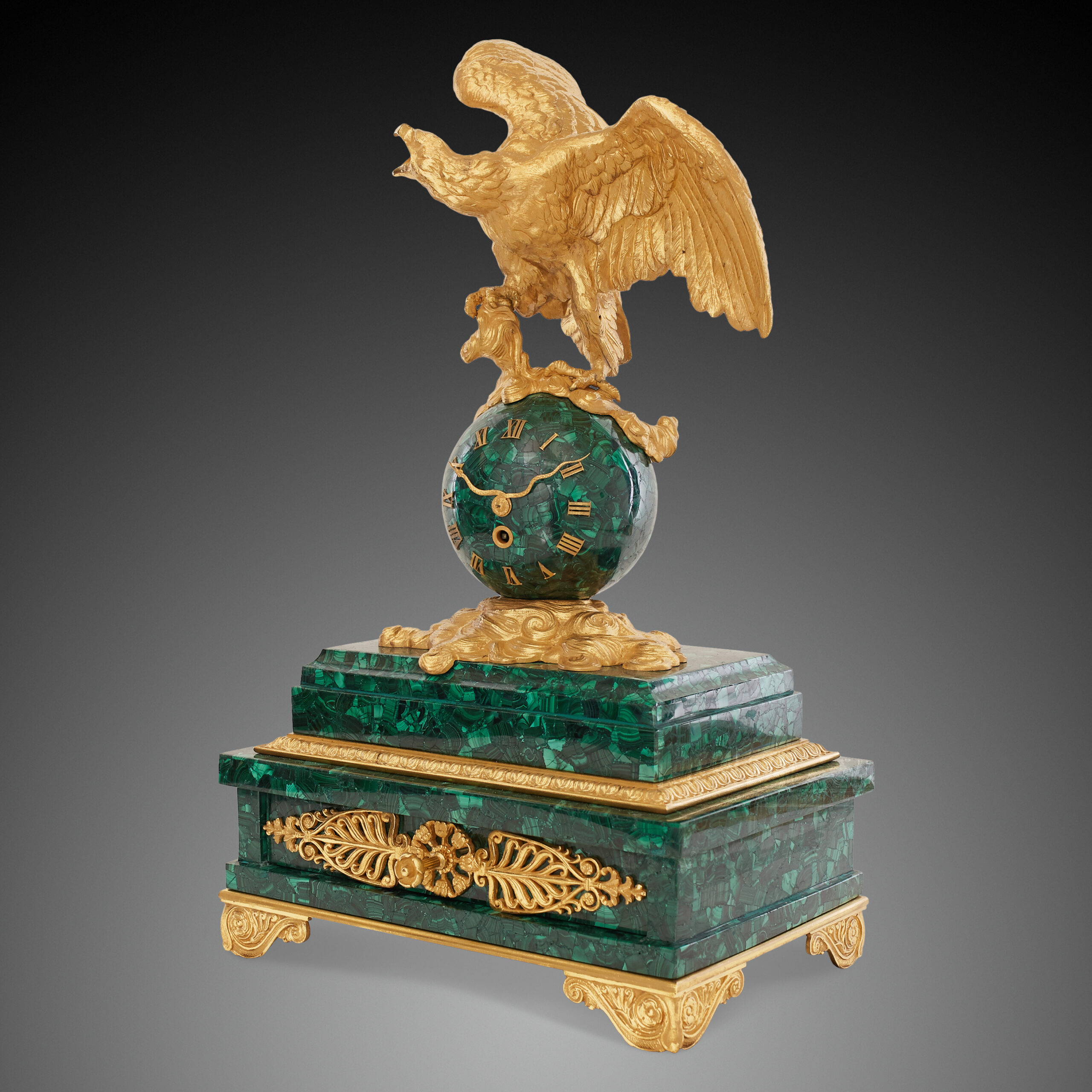
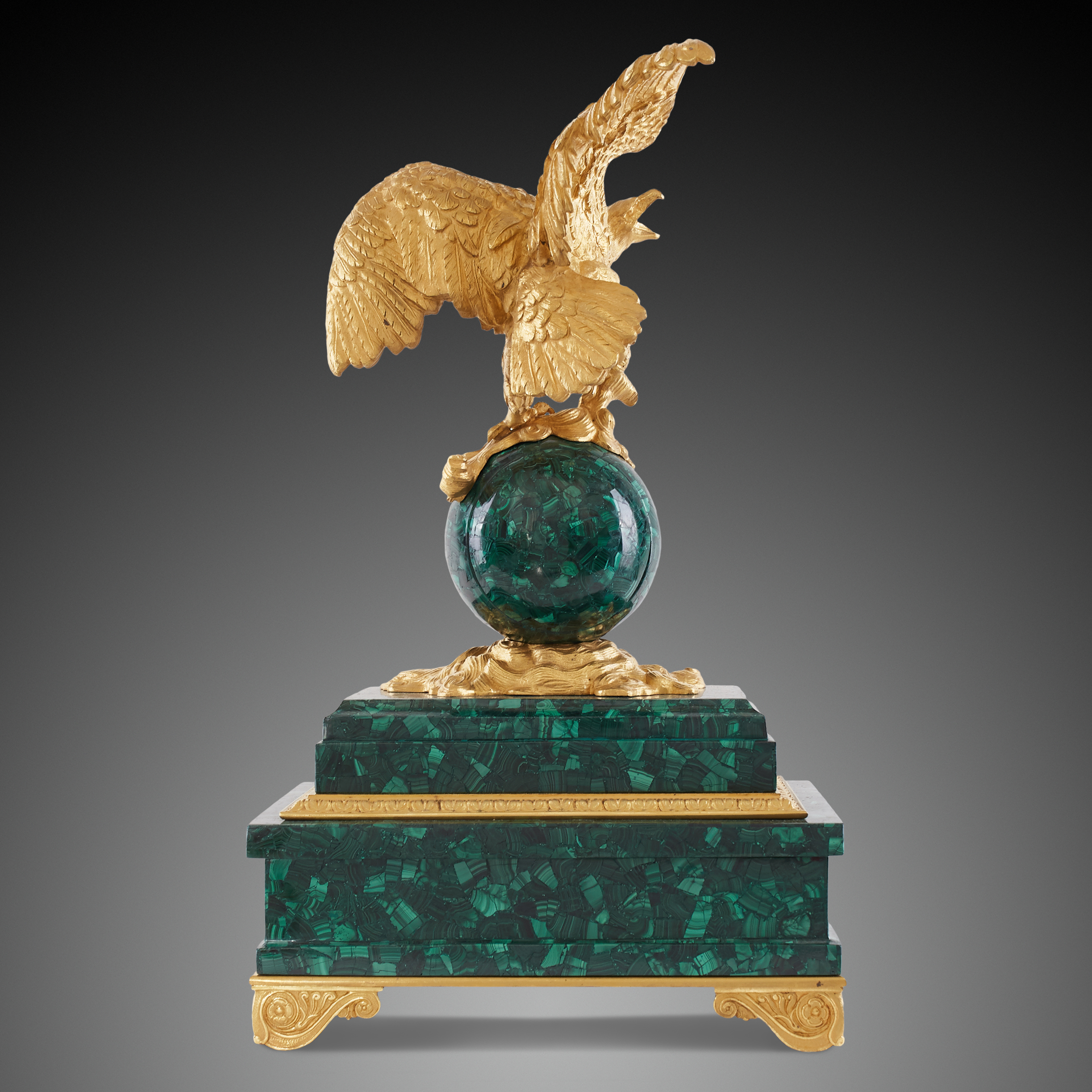
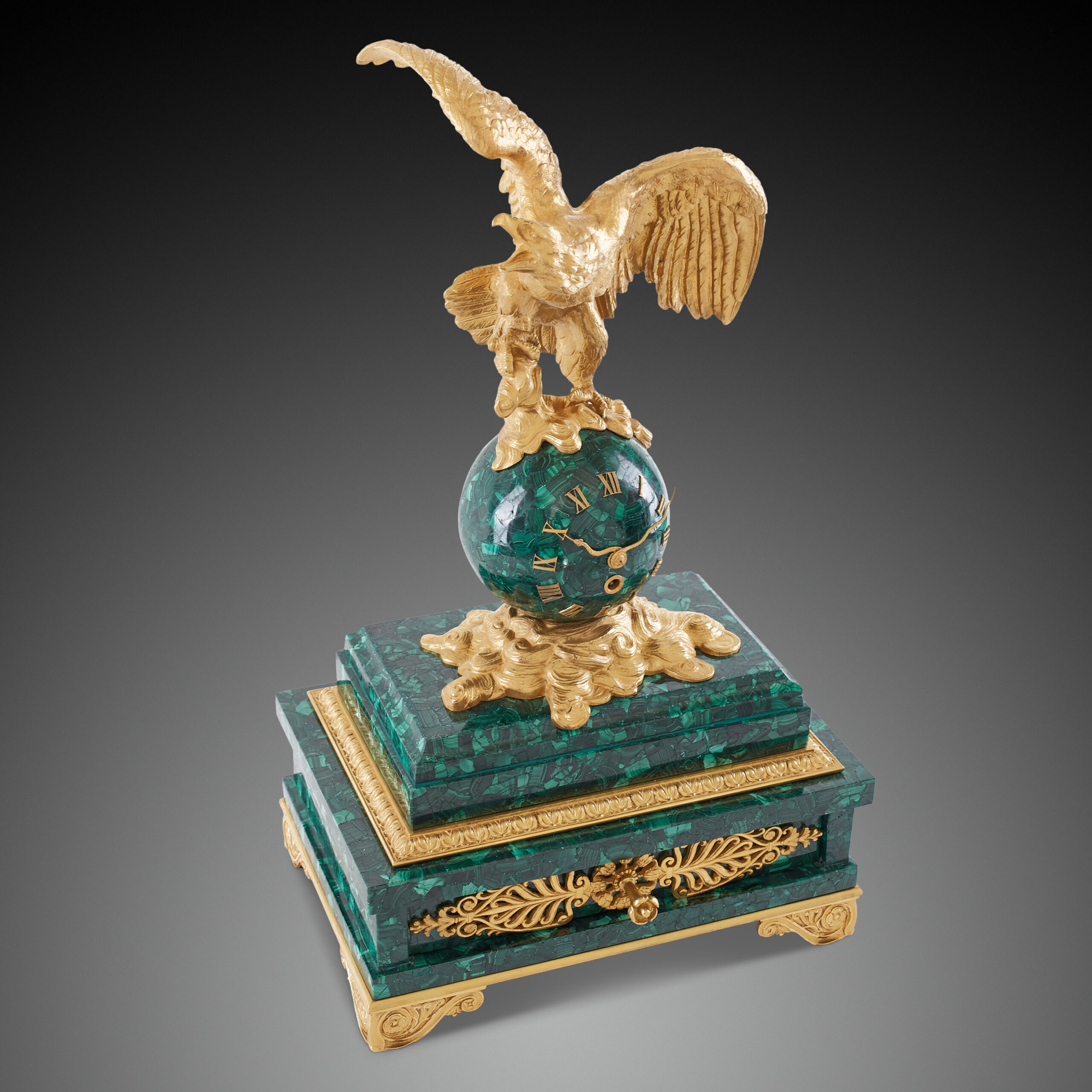
This striking French mantel clock is a magnificent and highly symbolic example of Napoleon III decorative arts, dating from around 1850–1870. It combines imperial grandeur with luxurious materials in a bold, theatrical composition that is typical of the Second Empire’s eclectic and opulent taste.
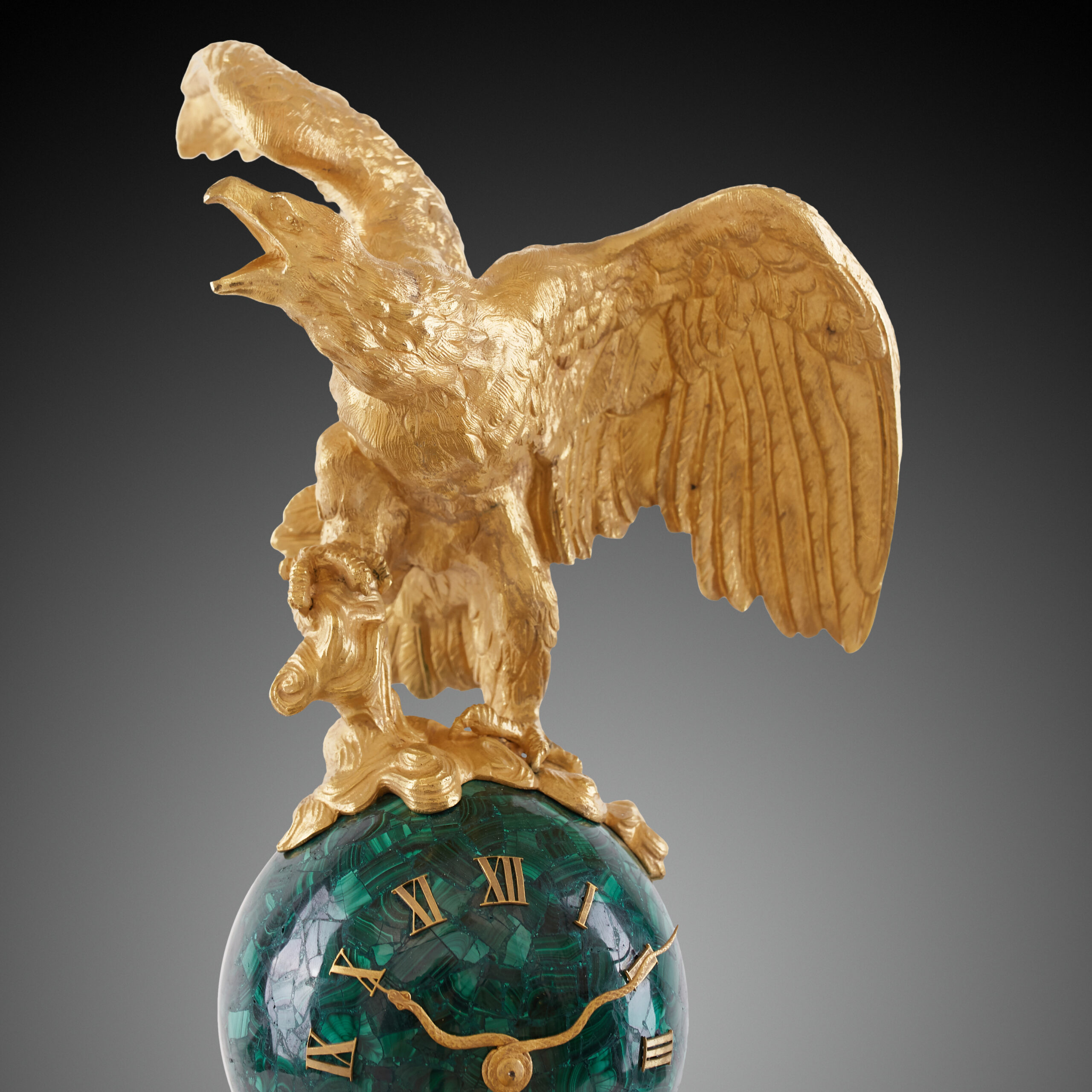
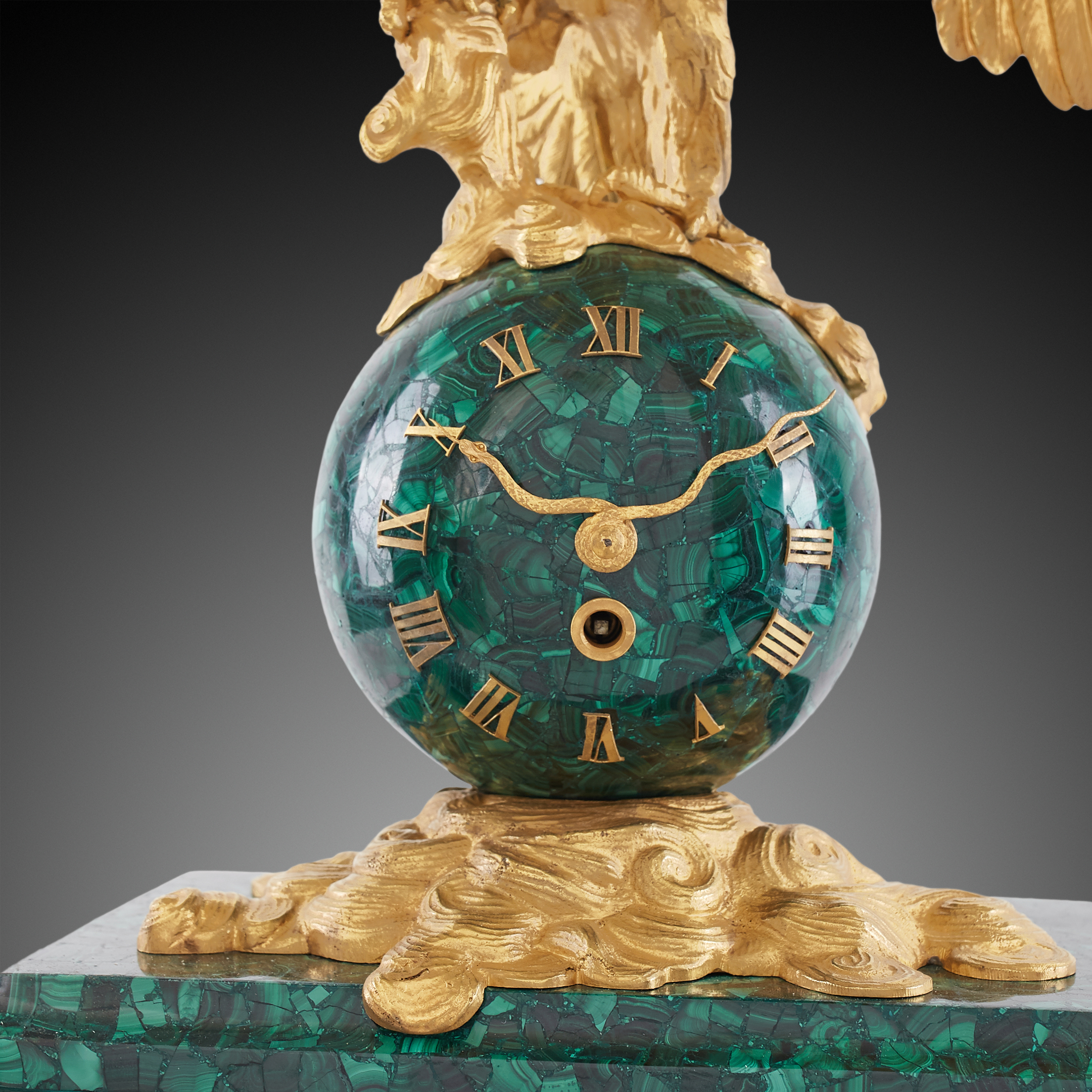
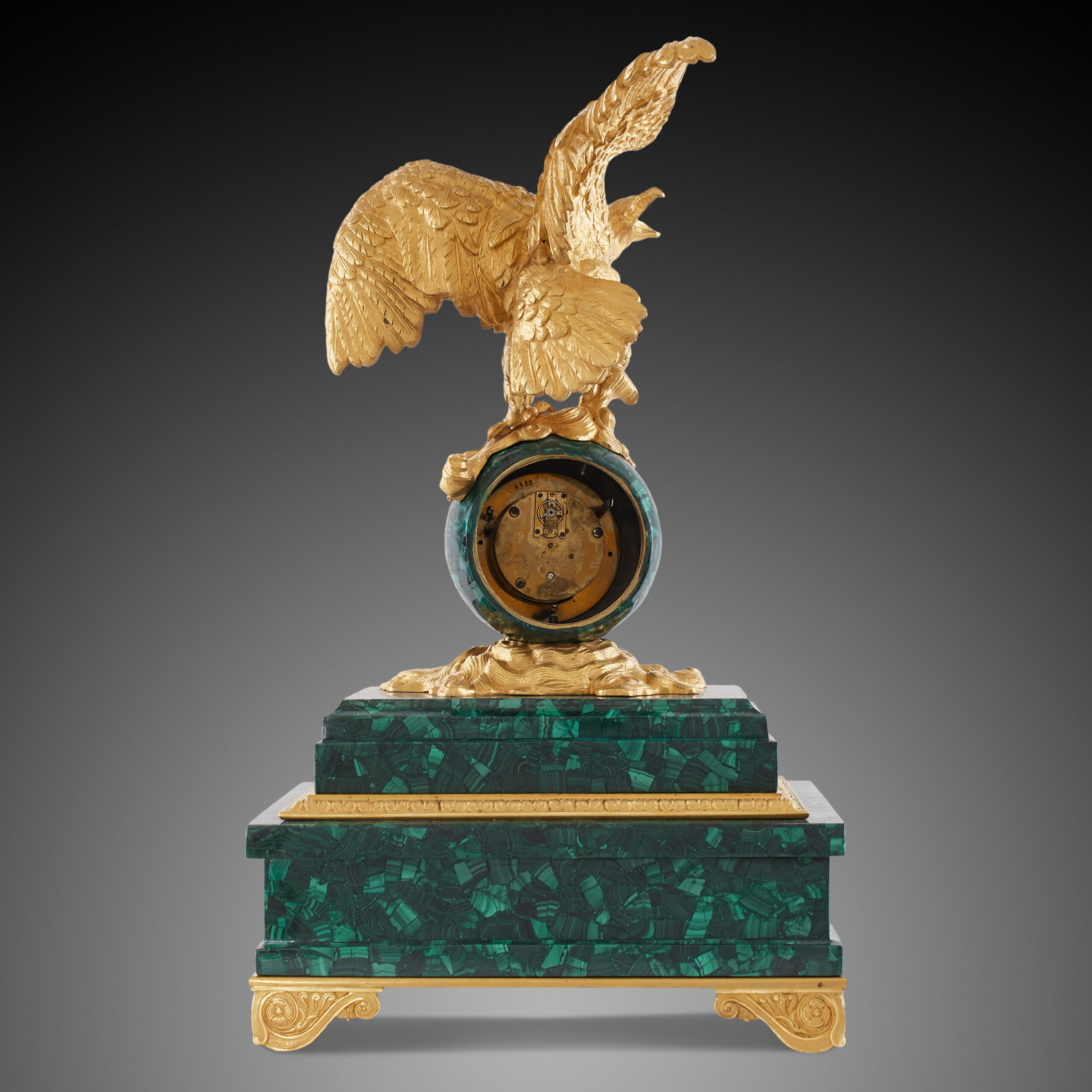
The clock is crowned by a large, powerfully modelled gilt bronze eagle with spread wings, its beak open and head turned dramatically to the side. The eagle, a classic emblem of imperial power, victory, and authority, sits atop a celestial globe executed in rich blue lapis lazuli with golden flecks. The globe serves as the clock’s dial, with Roman numerals elegantly applied directly onto its surface and delicate gilt hands indicating the time.
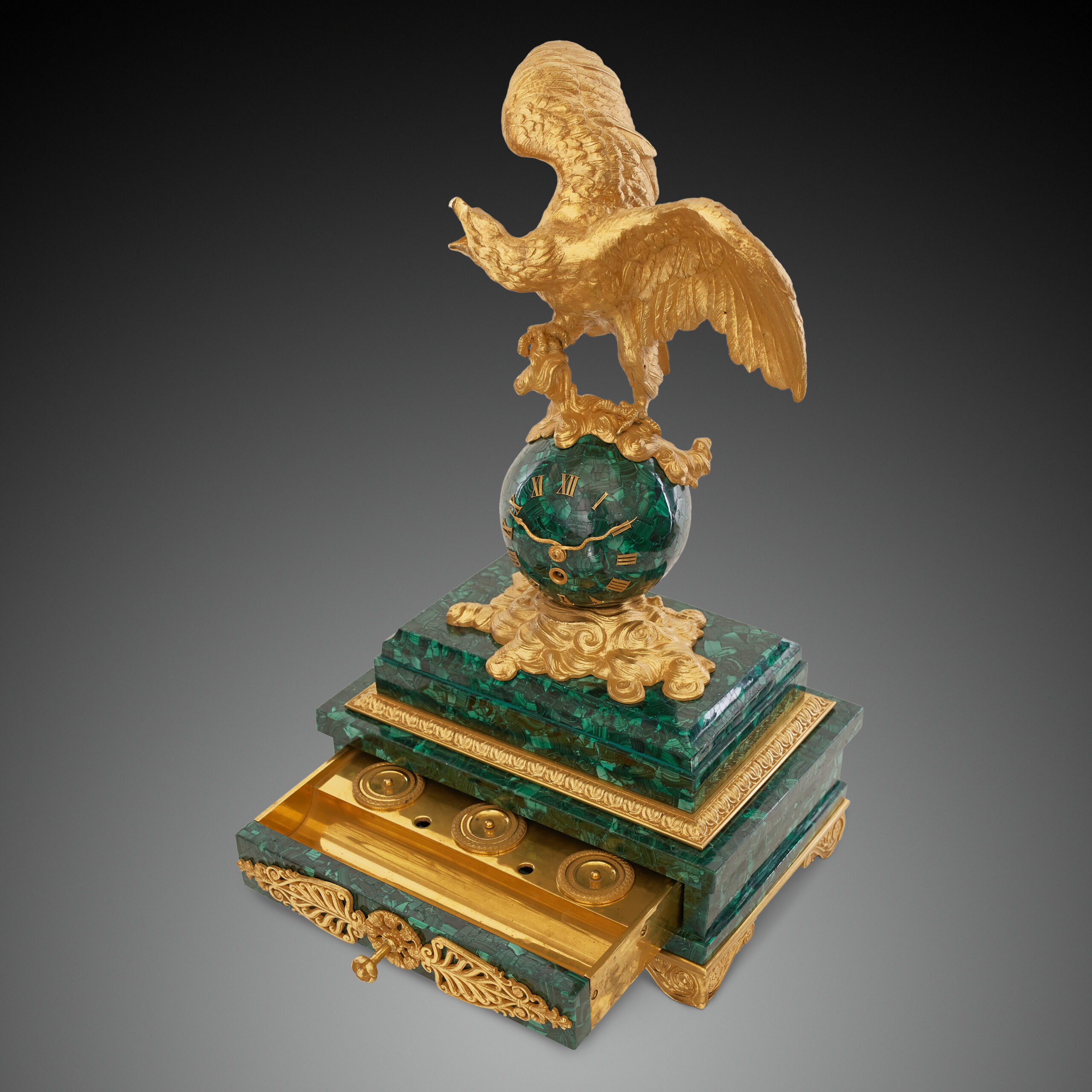
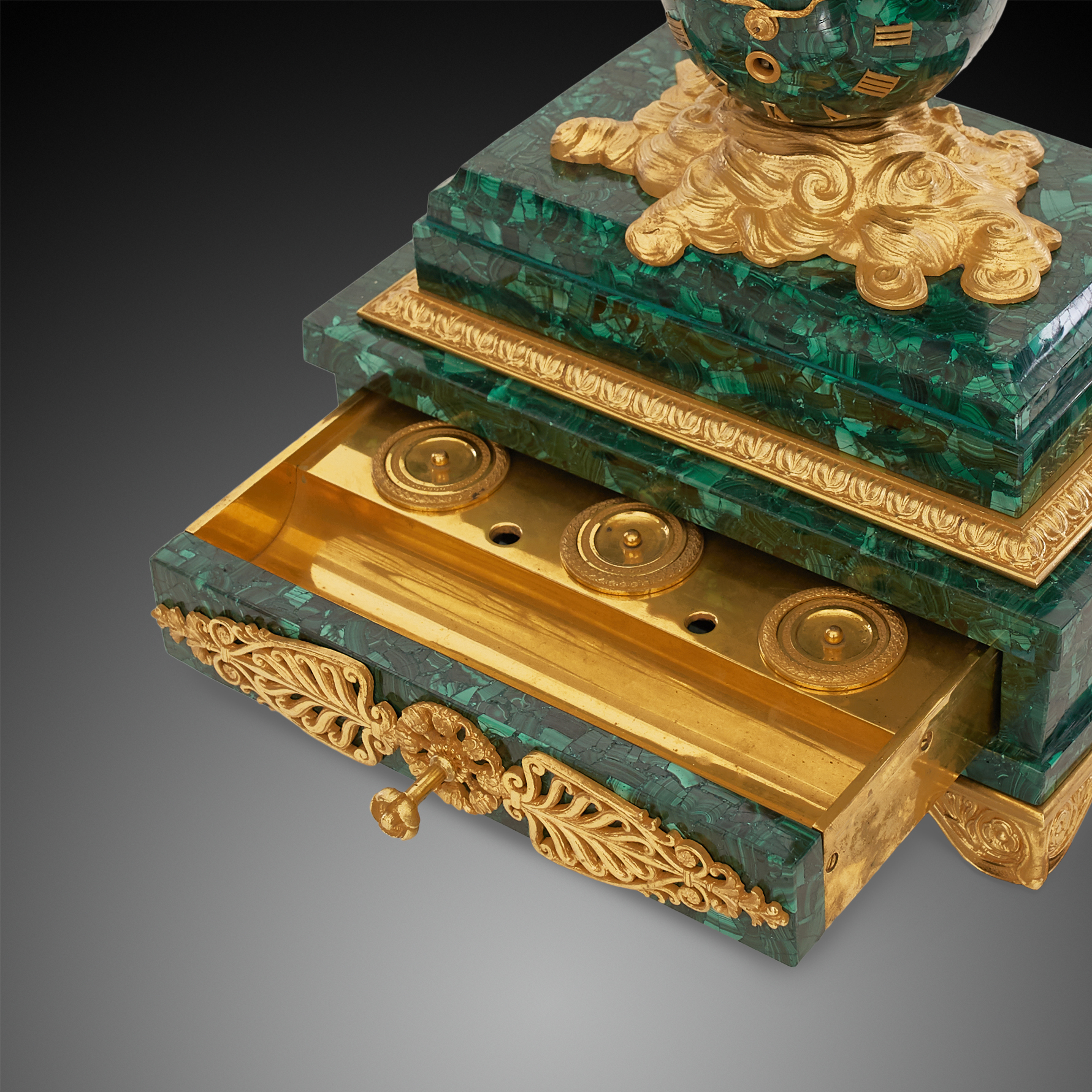
The entire sculptural group rests on a stepped base of vibrant green malachite, which provides a vivid contrast to the deep blue of the lapis lazuli and the warm glow of the gilt bronze. The malachite platform is enriched with finely chased gilt bronze mounts, including a prominent frieze of classical foliage and scrolling acanthus on the lower drawer section. The base terminates in elegant gilt bronze feet with acanthus decoration, giving the piece a solid yet refined presence.
This clock perfectly captures the romantic historicism and imperial spirit of the Napoleon III period. The eagle motif directly echoes the symbolism of the First Empire under Napoleon Bonaparte, while the lavish use of lapis lazuli and malachite reflects the era’s love of exotic, noble materials and technical virtuosity. Such dramatic figural clocks were highly prized in grand salons and official interiors, where they served both as precise timekeepers and as powerful decorative statements of taste and status.
Mechanically, the clock houses a reliable eight-day going movement that strikes the hours and every half-hour on a clear bell. It has been professionally cleaned and serviced by a specialist in museum-quality timepieces and remains in excellent cosmetic and fully working condition. It comes complete with its original pendulum, winding key, and bell.
When displayed on a mantel, the clock creates a commanding focal point. The golden eagle appears to soar above the deep blue globe, while the rich green malachite base grounds the composition with luxurious depth. The gentle tick of the movement and the soft chime on the half-hour add a measured, civilised rhythm that enhances the dramatic presence of the piece.
This is a fine and evocative example of mid-19th century French craftsmanship, where sculptural ambition, imperial symbolism, and luxurious materials come together in perfect harmony. Its bold design and rich colour combination make it a standout addition to any collection of Napoleon III decorative arts.