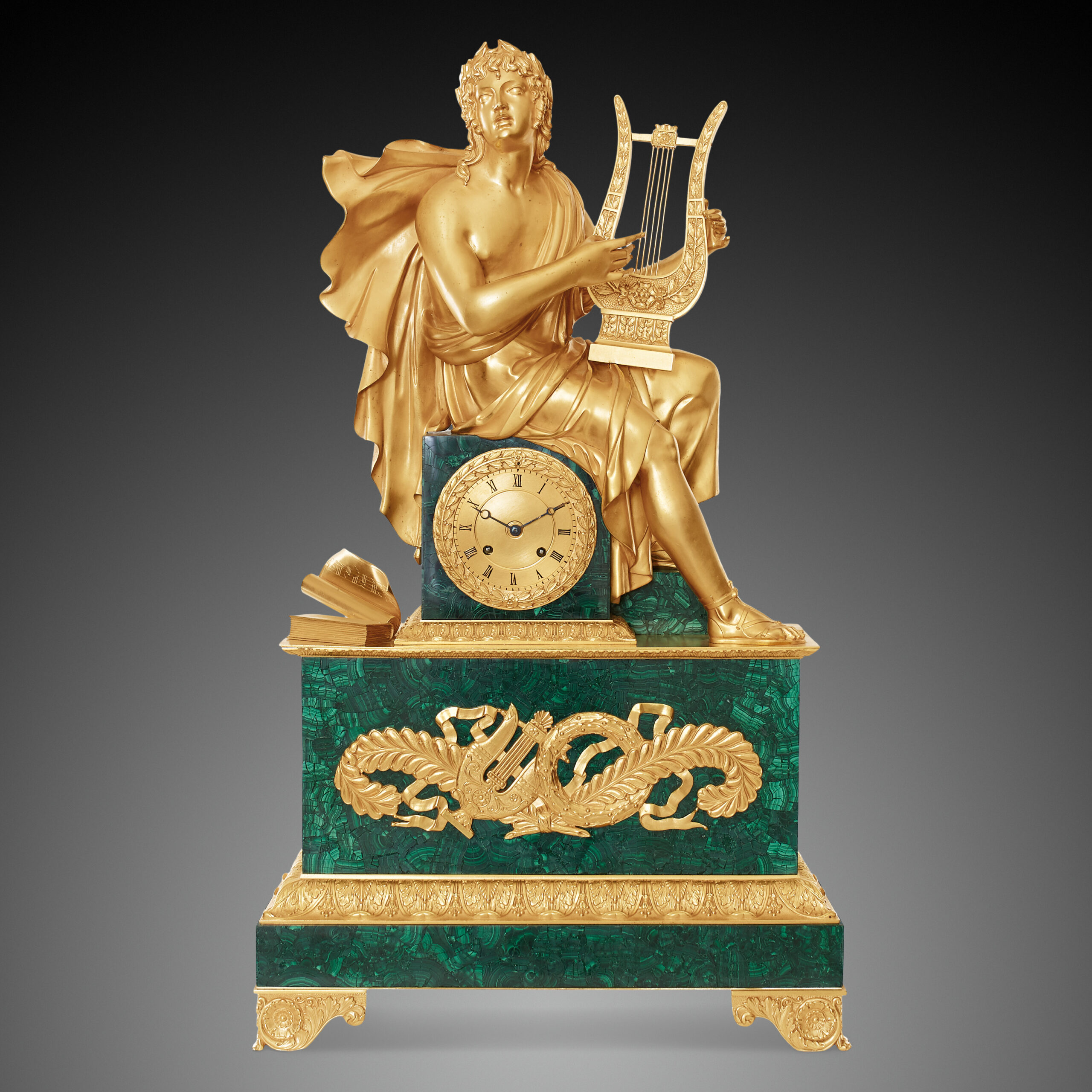
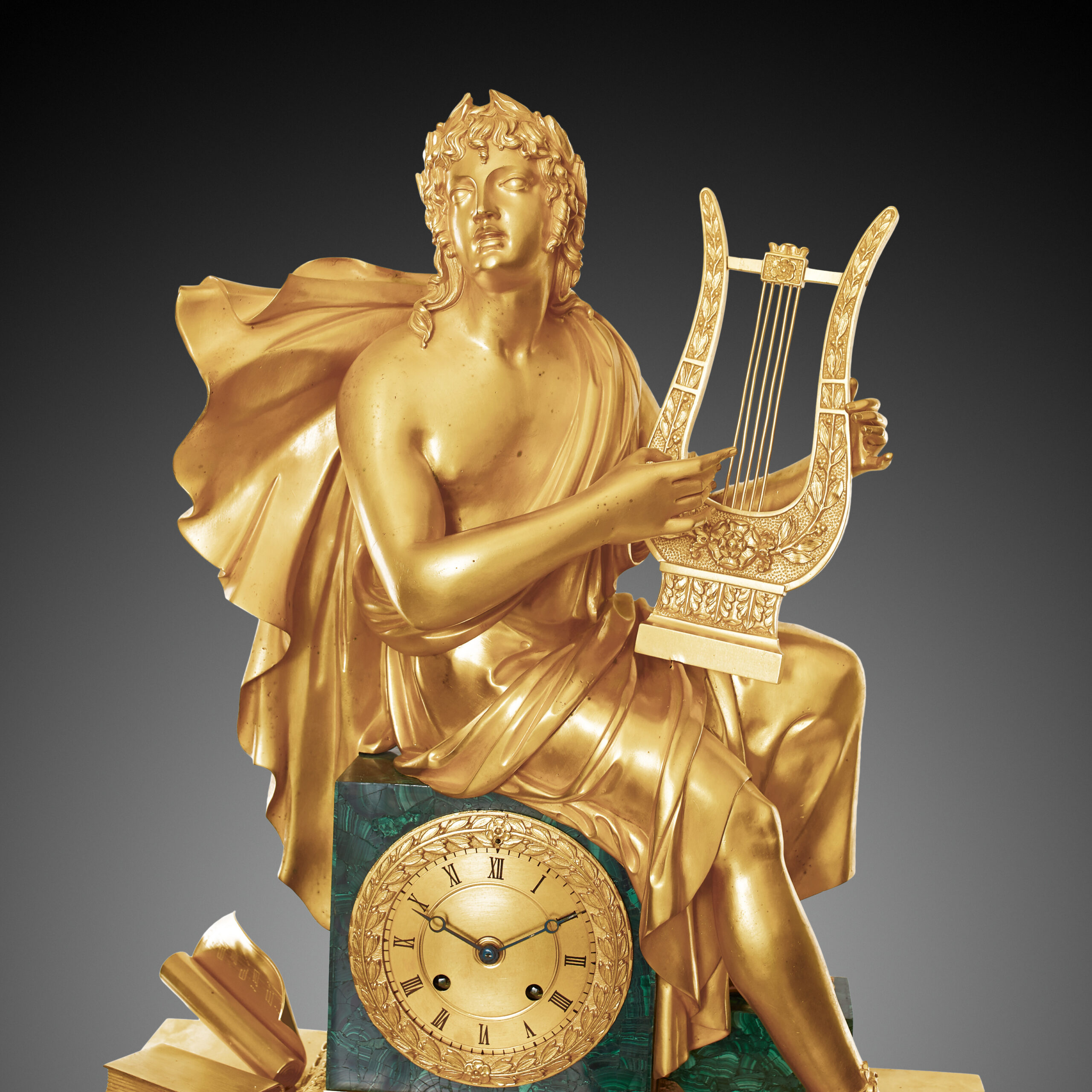
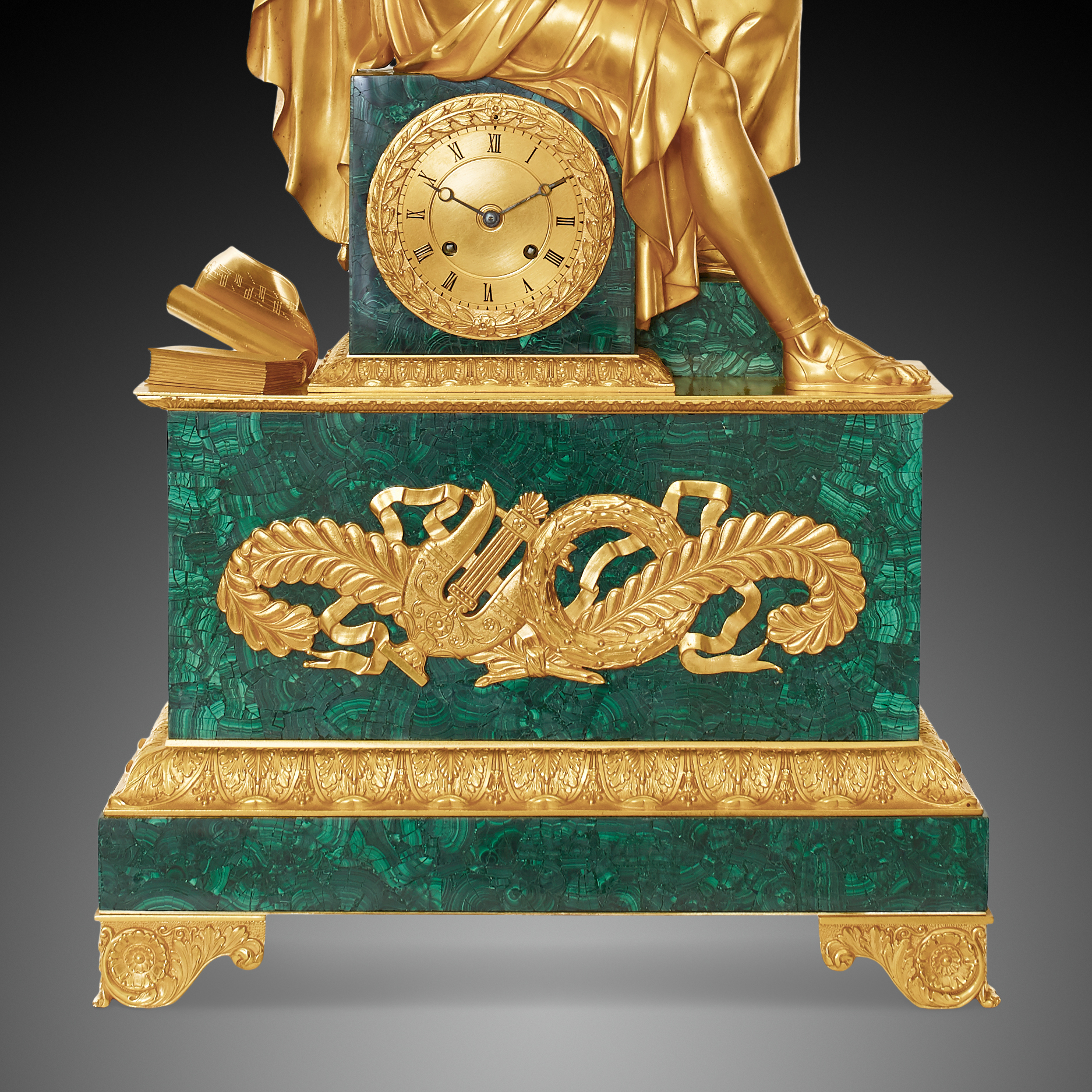
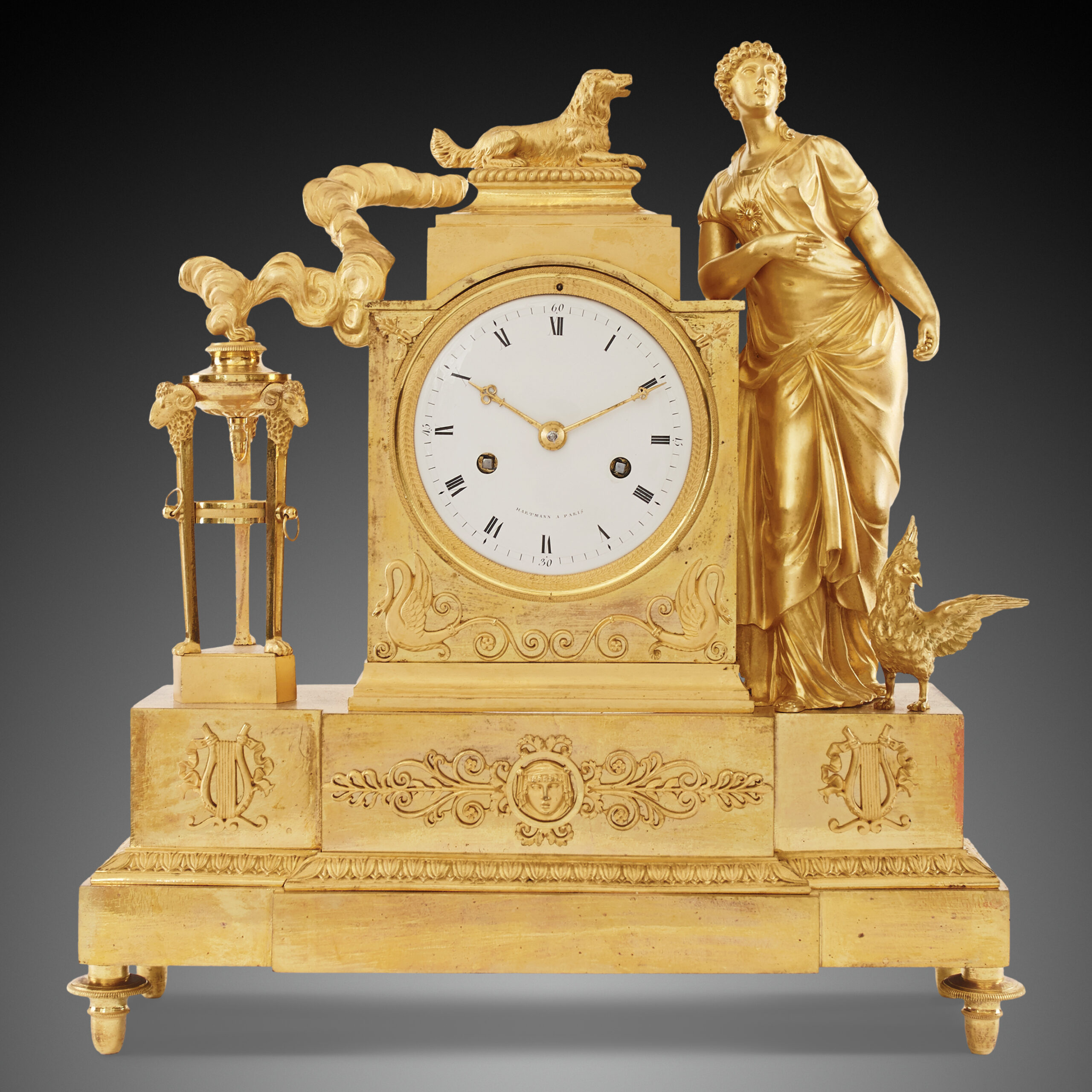
This magnificent French mantel clock is a superb example of the opulent and romantic taste of the Napoleon III period, dating from around 1850–1870. It combines sculptural excellence with luxurious materials in a composition that is both theatrical and highly refined.
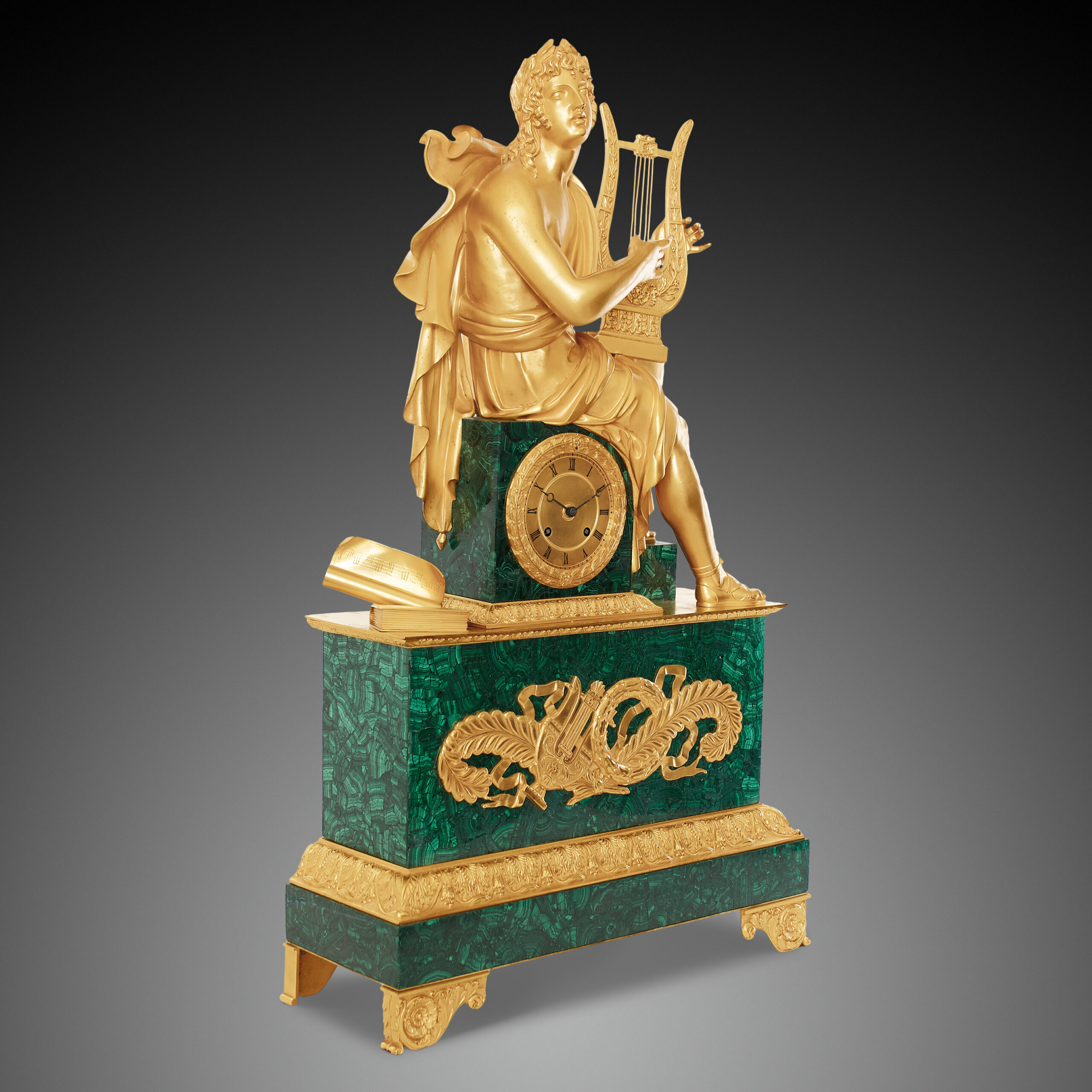
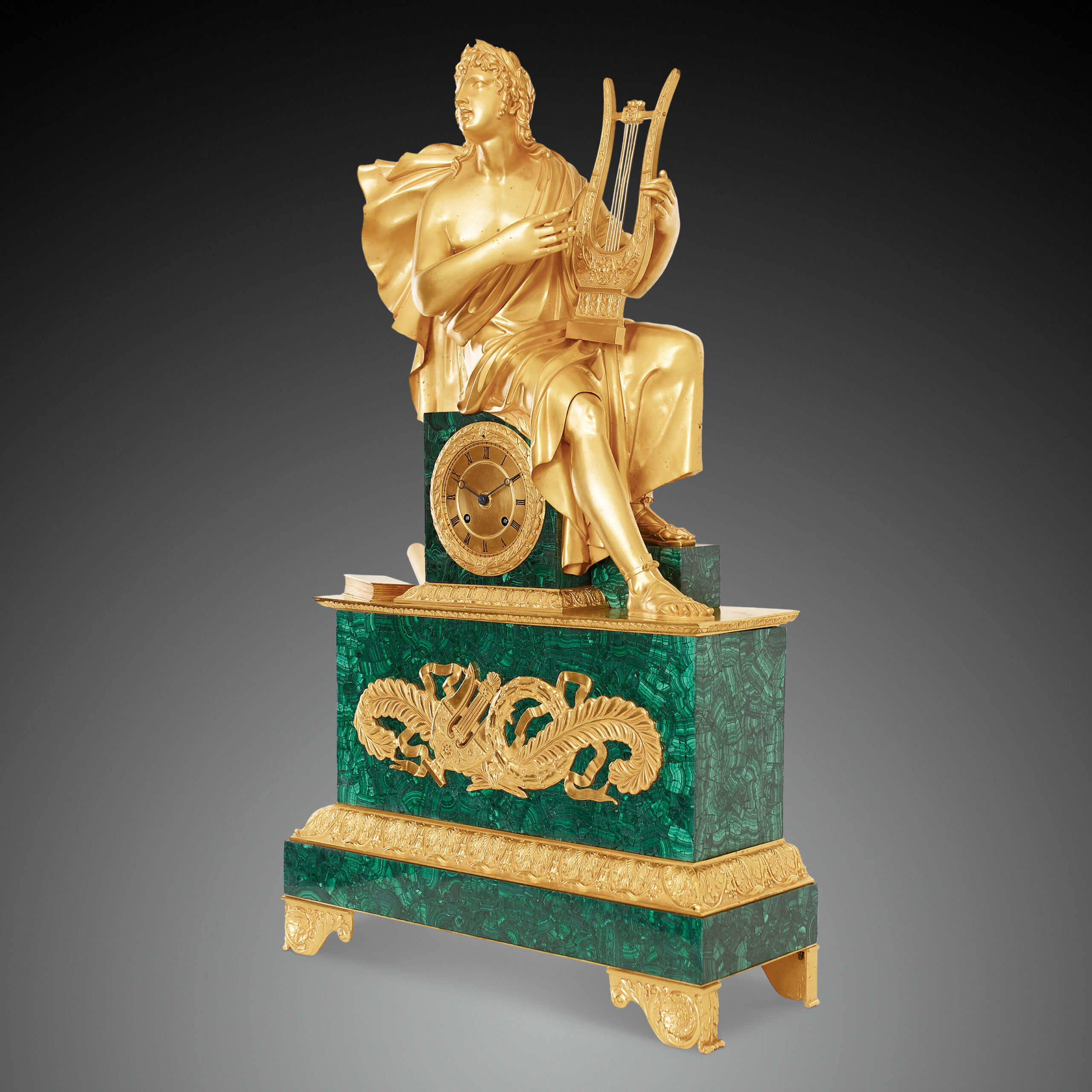
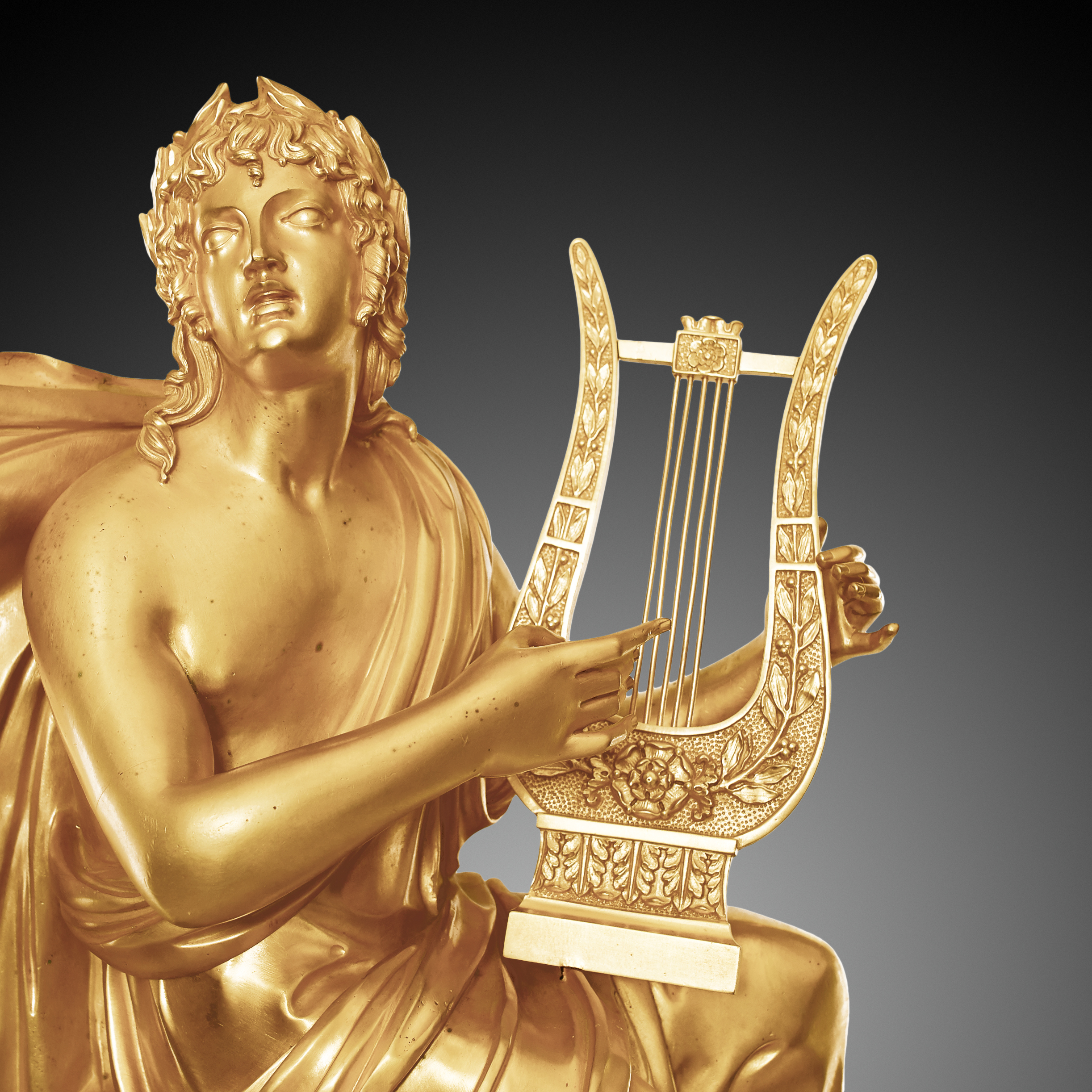
The clock is dominated by a large, finely modelled gilt bronze figure of a seated classical musician-most likely Apollo or a personification of Poetry and Music. The figure is shown gracefully draped in flowing robes, holding a large lyre, with one leg extended and the other bent in a relaxed yet noble pose. The modelling of the anatomy, the soft fall of the drapery, and the expressive face demonstrate the high level of skill achieved by the best Parisian bronziers of the Second Empire.
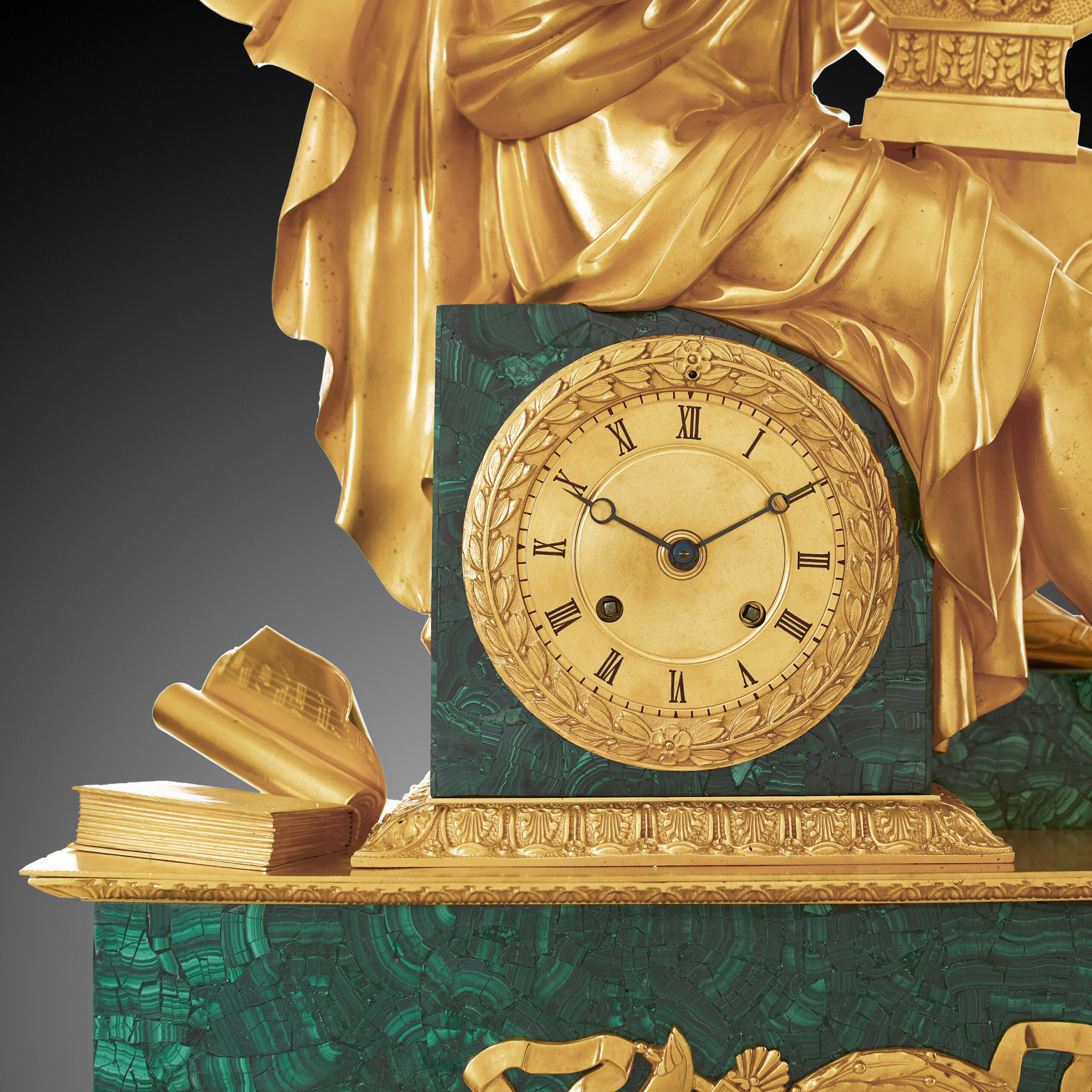
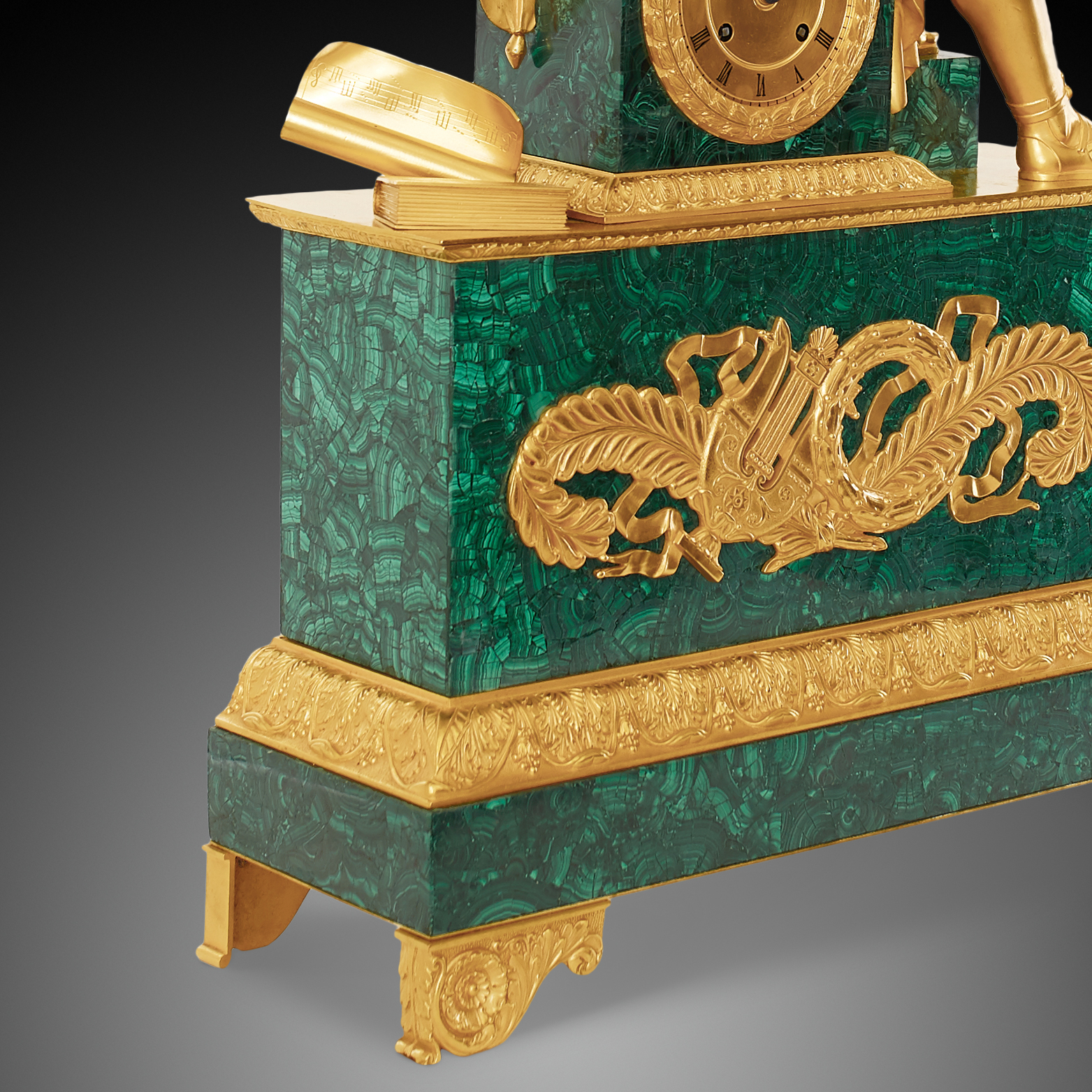
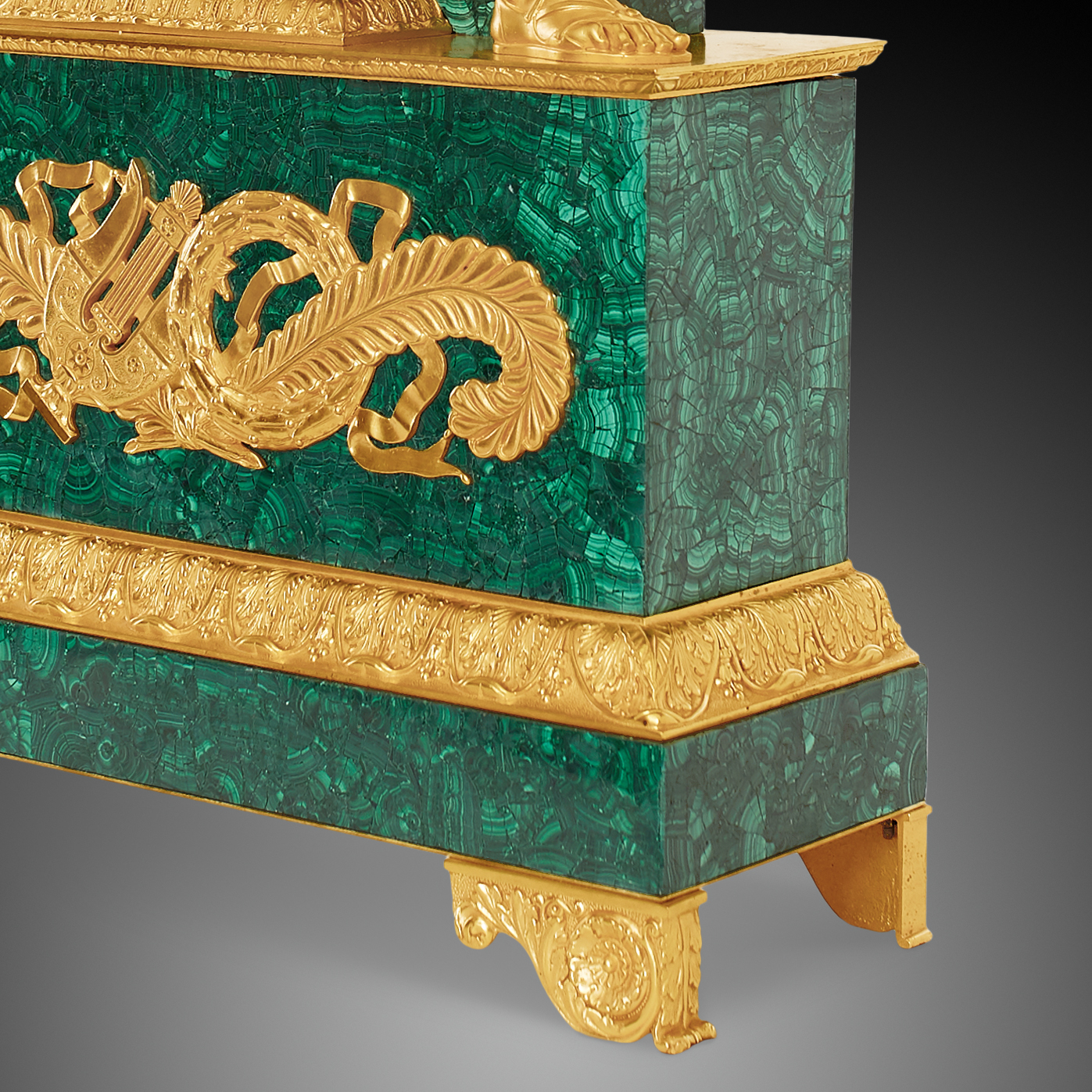
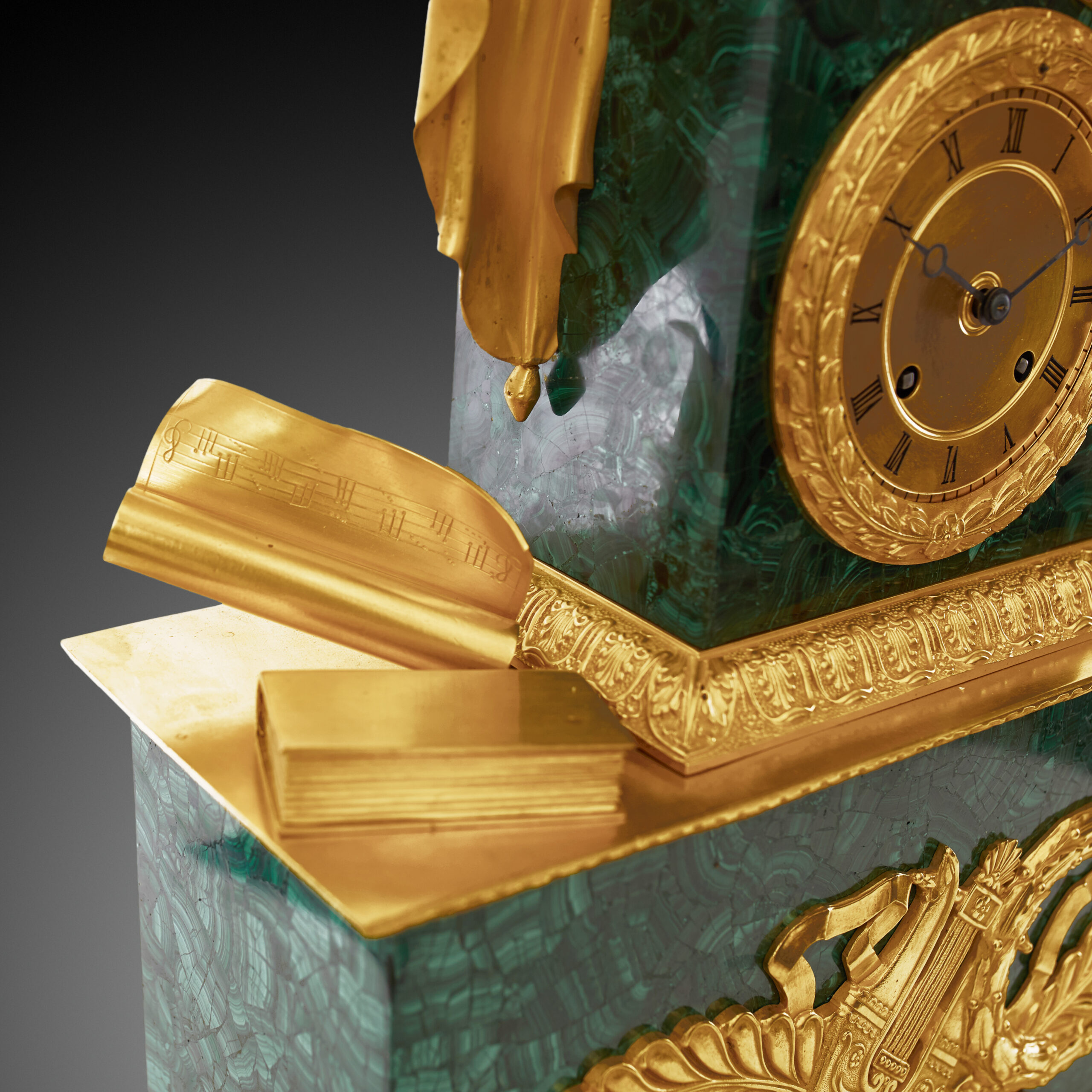
The circular white enamel dial with Roman numerals is discreetly set into the lower part of the composition, allowing the sculptural group to remain the undisputed focal point. The entire figure rests on a substantial rectangular base of rich green malachite, whose vivid veining provides a striking contrast to the warm, luminous gilt bronze. The front of the malachite base is adorned with a large, finely chased gilt bronze dragon or winged serpent motif-a powerful and exotic decorative element that adds drama and symbolic depth to the piece.
This clock perfectly reflects the eclectic historicism of the Napoleon III era. While drawing on classical mythology, it presents the subject with the theatrical flair and material richness characteristic of the mid-19th century. The use of malachite paired with lavish ormolu was especially popular among the French elite, who appreciated both the exotic beauty of the stone and the technical virtuosity of the gilt bronze work.
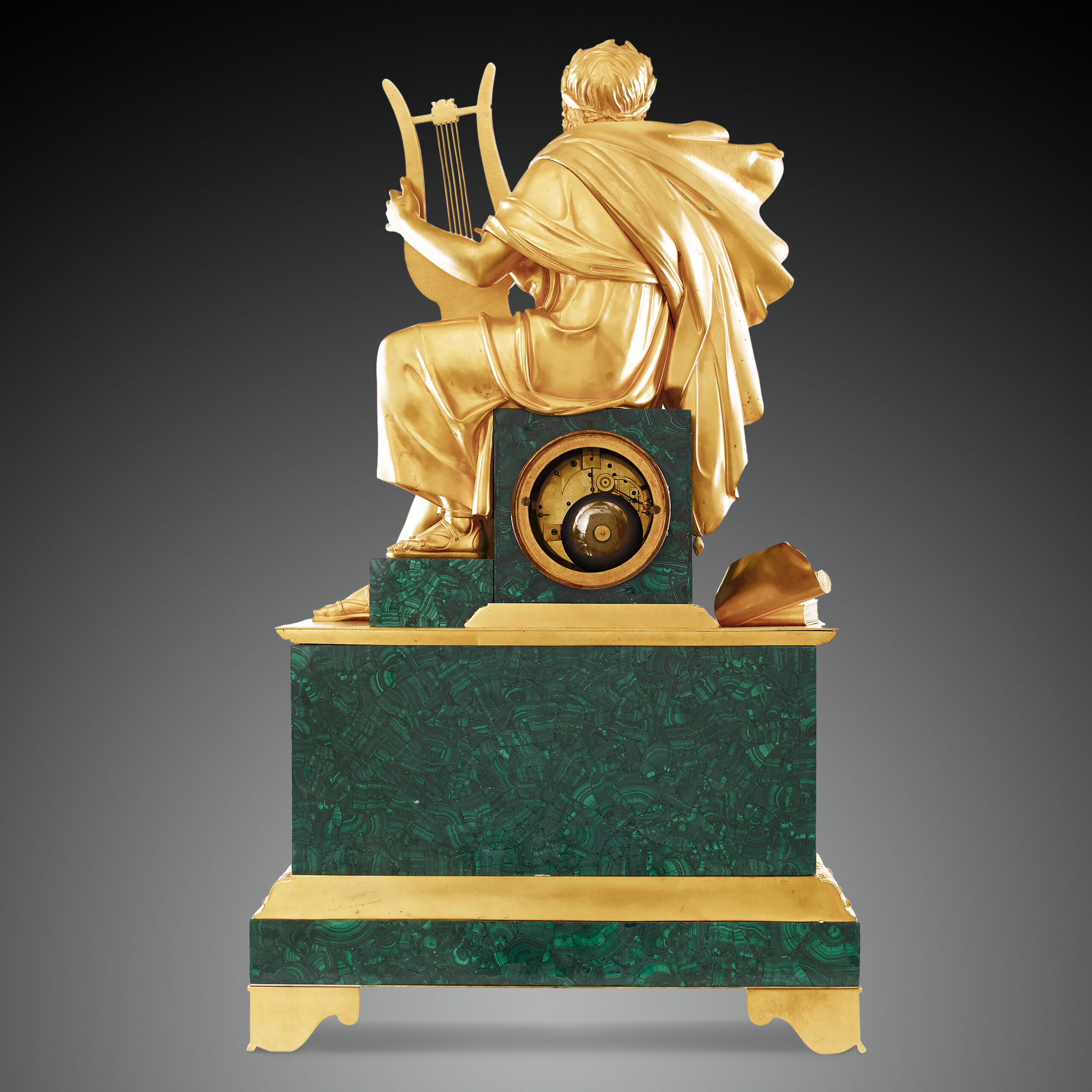
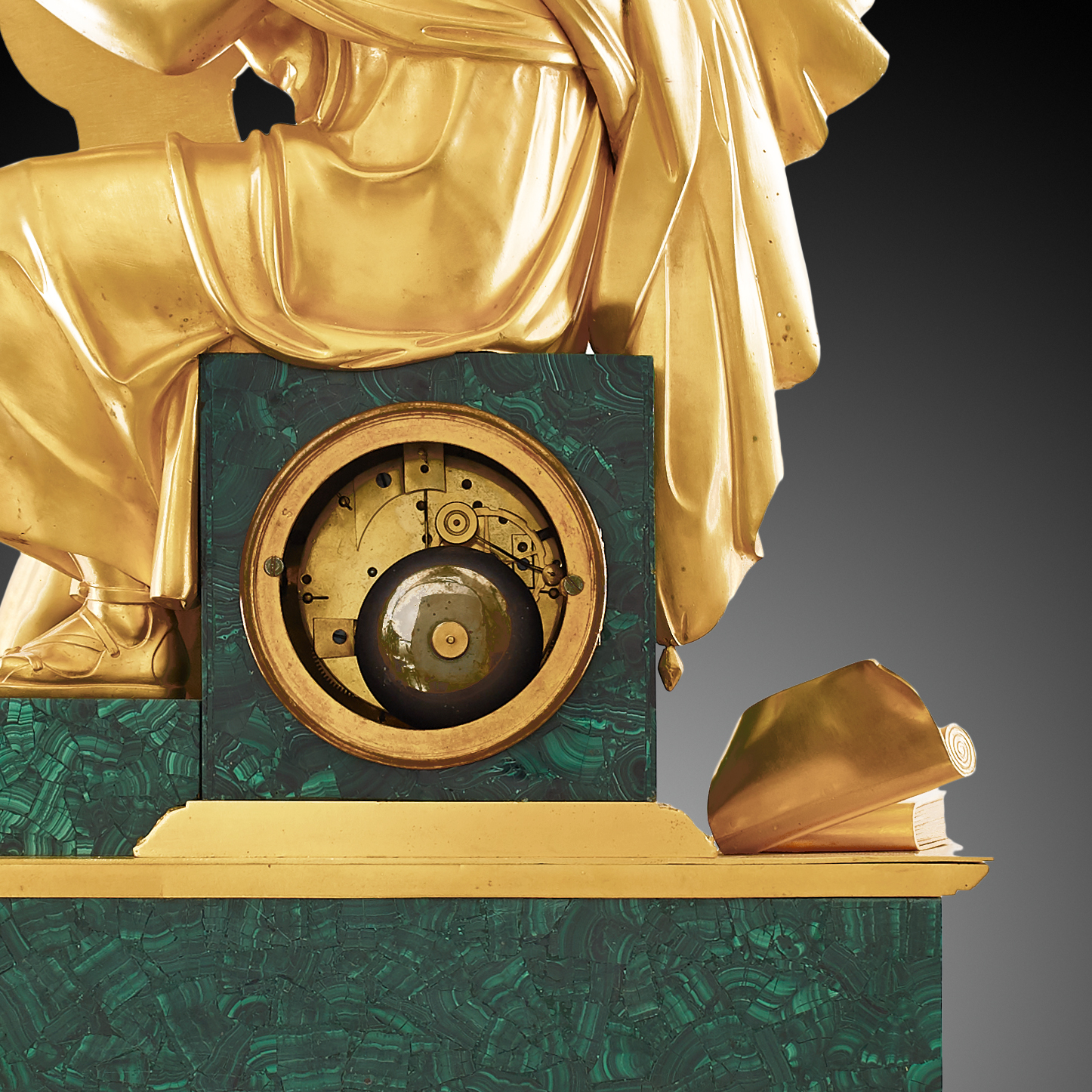
Mechanically, the clock houses a reliable eight-day going movement that strikes the hours and every half-hour on a clear bell. It has been professionally cleaned and serviced by a specialist in museum-quality timepieces and remains in excellent cosmetic and fully working condition. It comes complete with its original pendulum, winding key, and bell.
When displayed on a mantel, the clock commands attention through its sculptural presence and rich colour contrast. The golden figure of the musician glows against the deep green malachite, while the dragon motif on the base adds a bold and exotic accent. The gentle tick of the movement and the soft chime on the half-hour bring a civilised rhythm to the dramatic composition.
This is a fine and evocative example of Second Empire decorative arts, where technical mastery, luxurious materials, and romantic narrative come together in perfect harmony. Its sculptural quality and striking visual impact make it a standout piece in any collection of 19th-century French objets d’art.