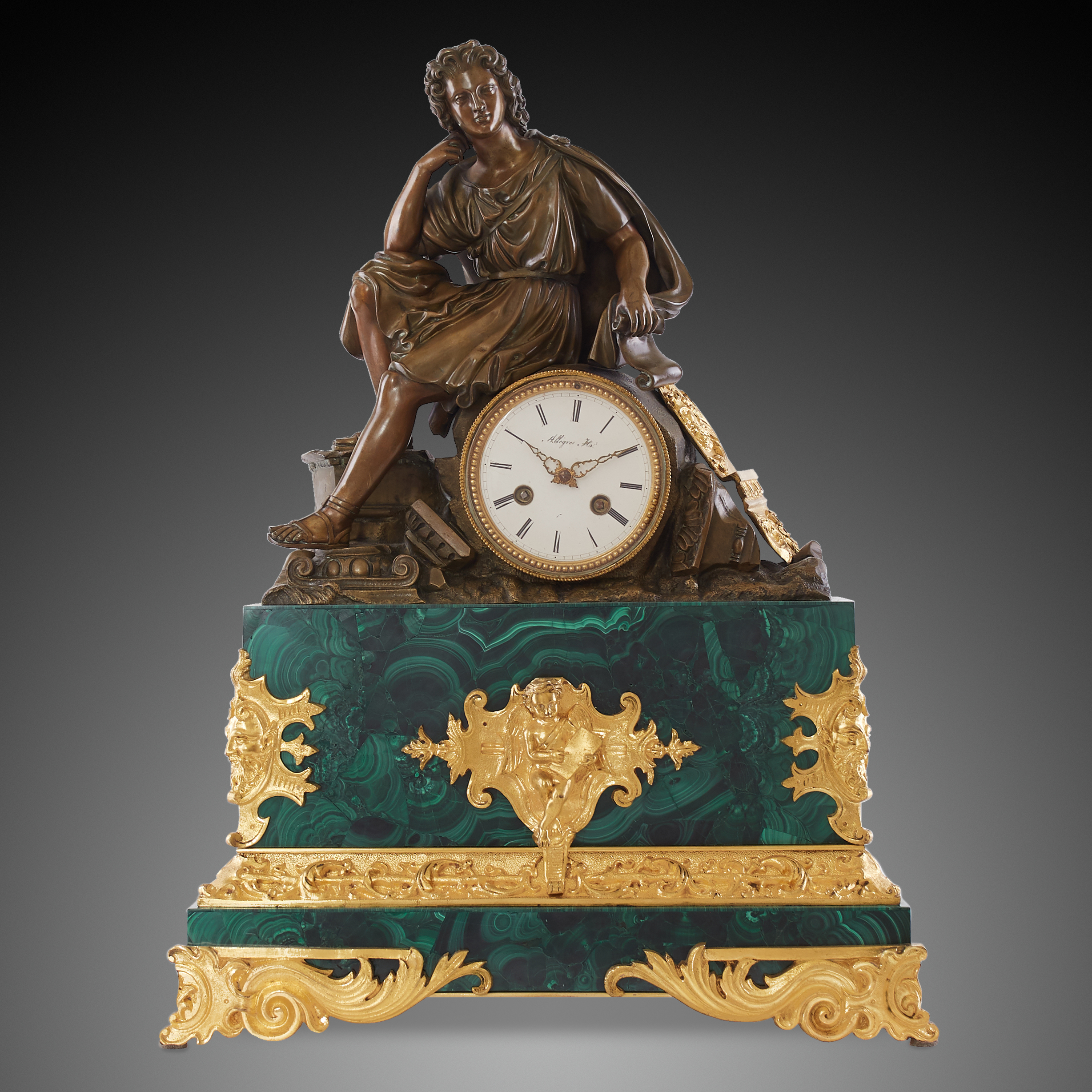
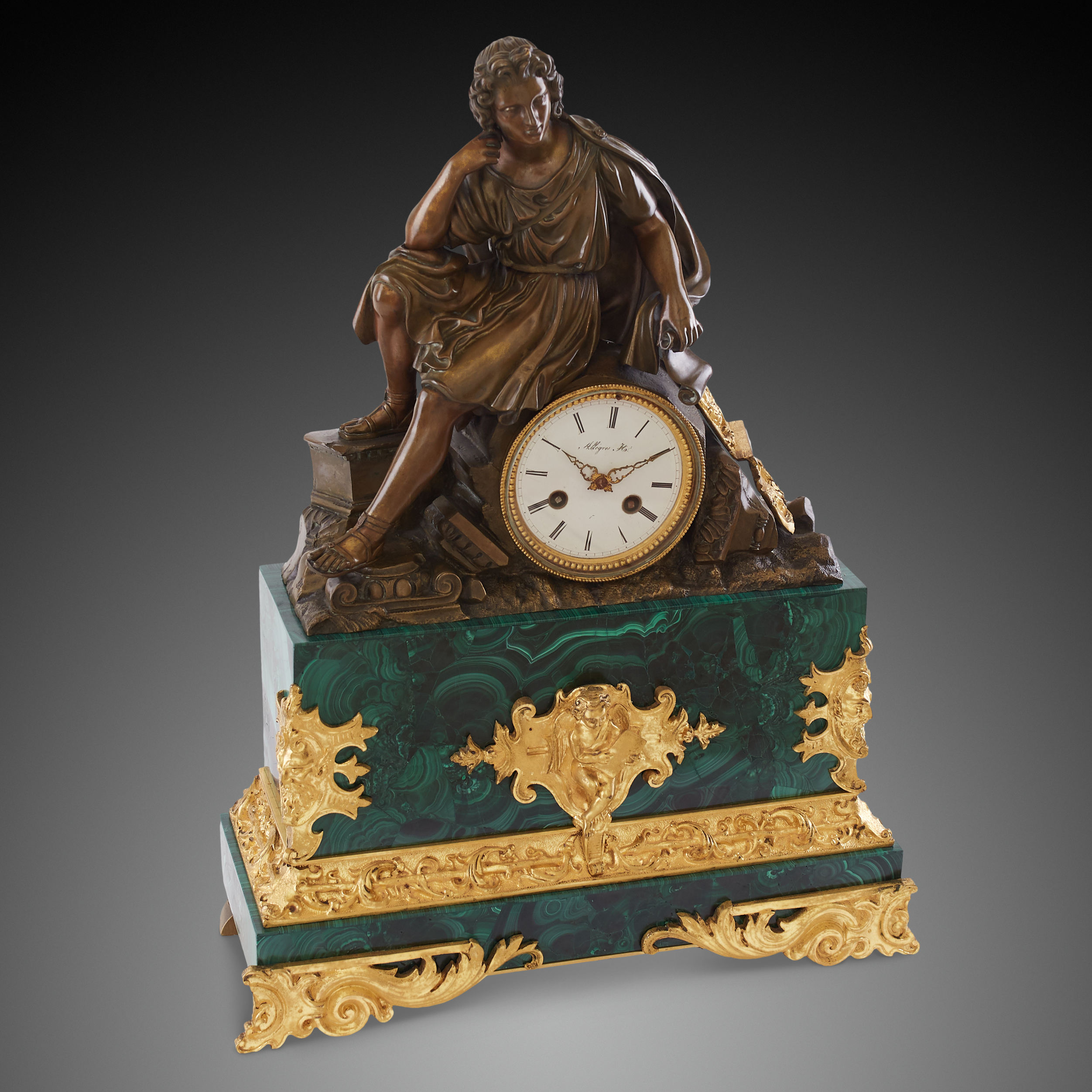
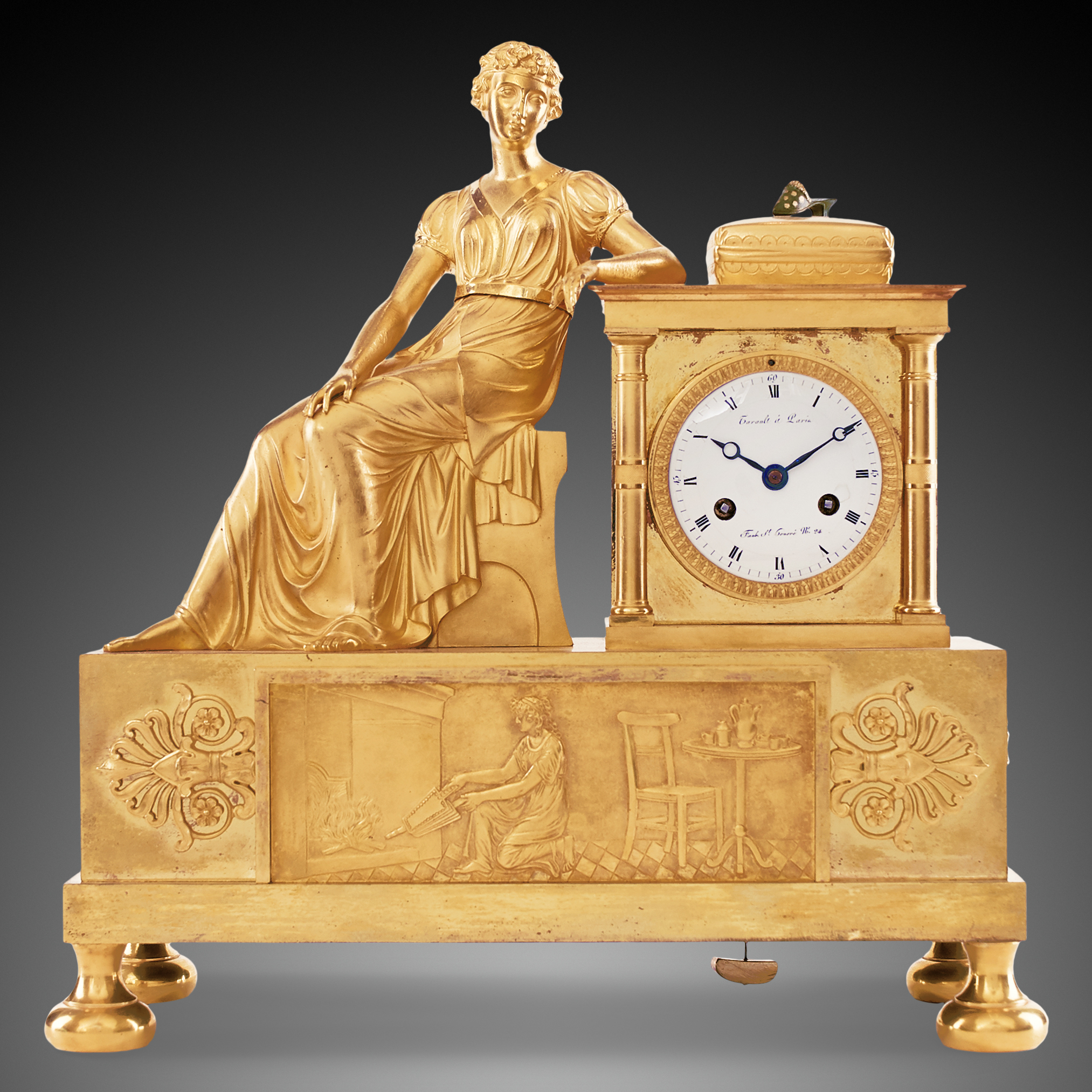
This impressive French mantel clock is a fine and characteristic example of the Napoleon III period, dating from around 1850–1870. It showcases the romantic and sculptural taste of the Second Empire, where narrative figural groups were combined with luxurious materials and high-quality ormolu work.
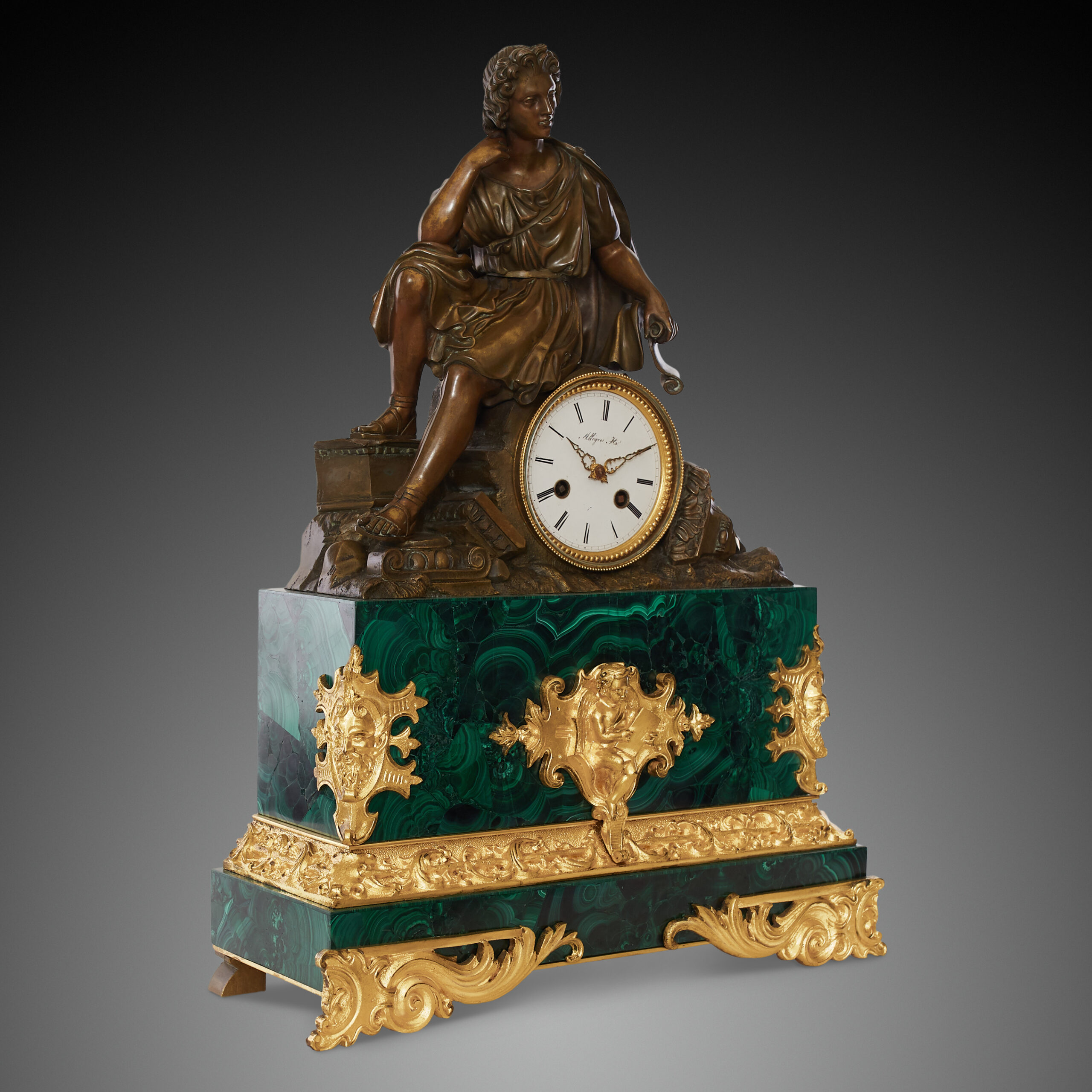
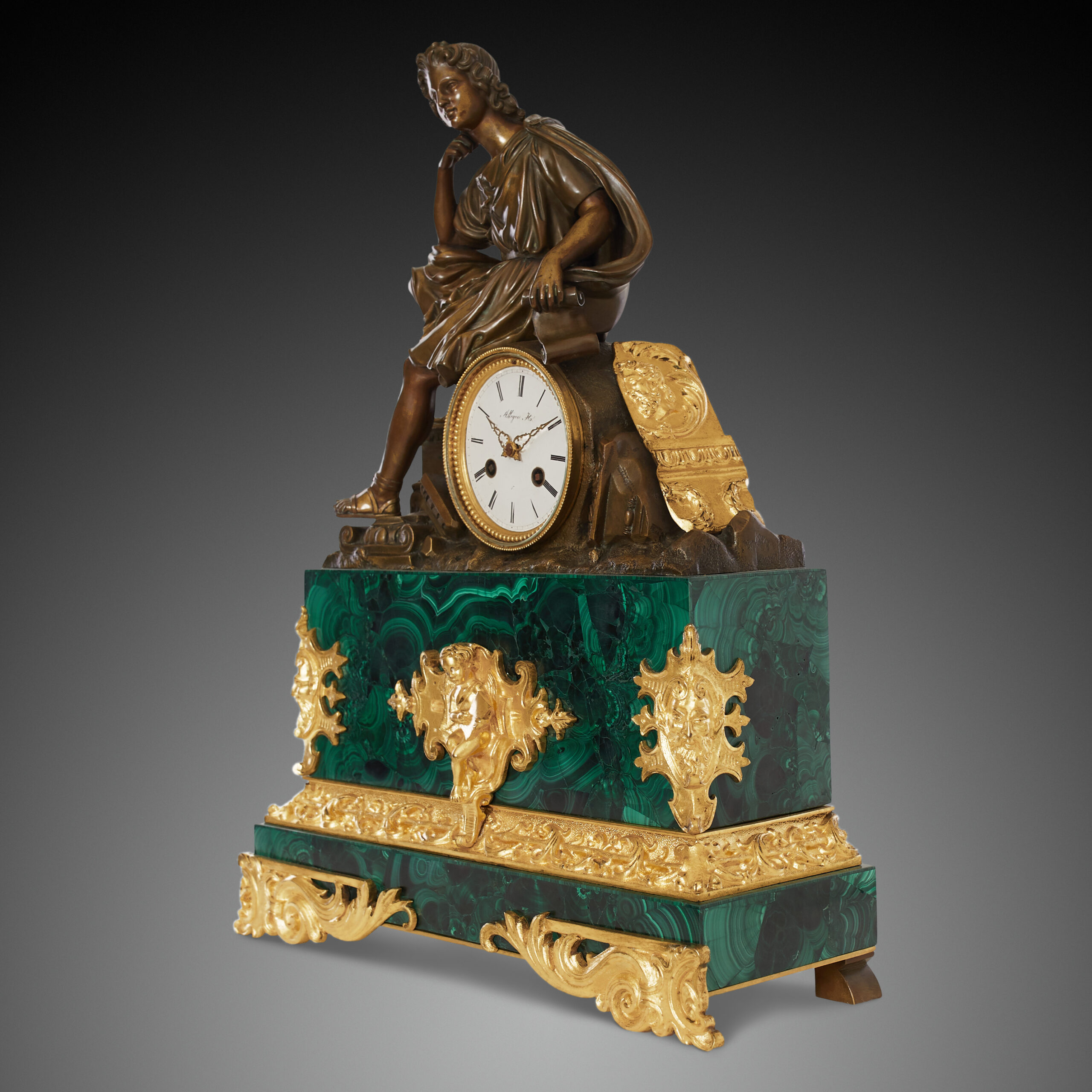
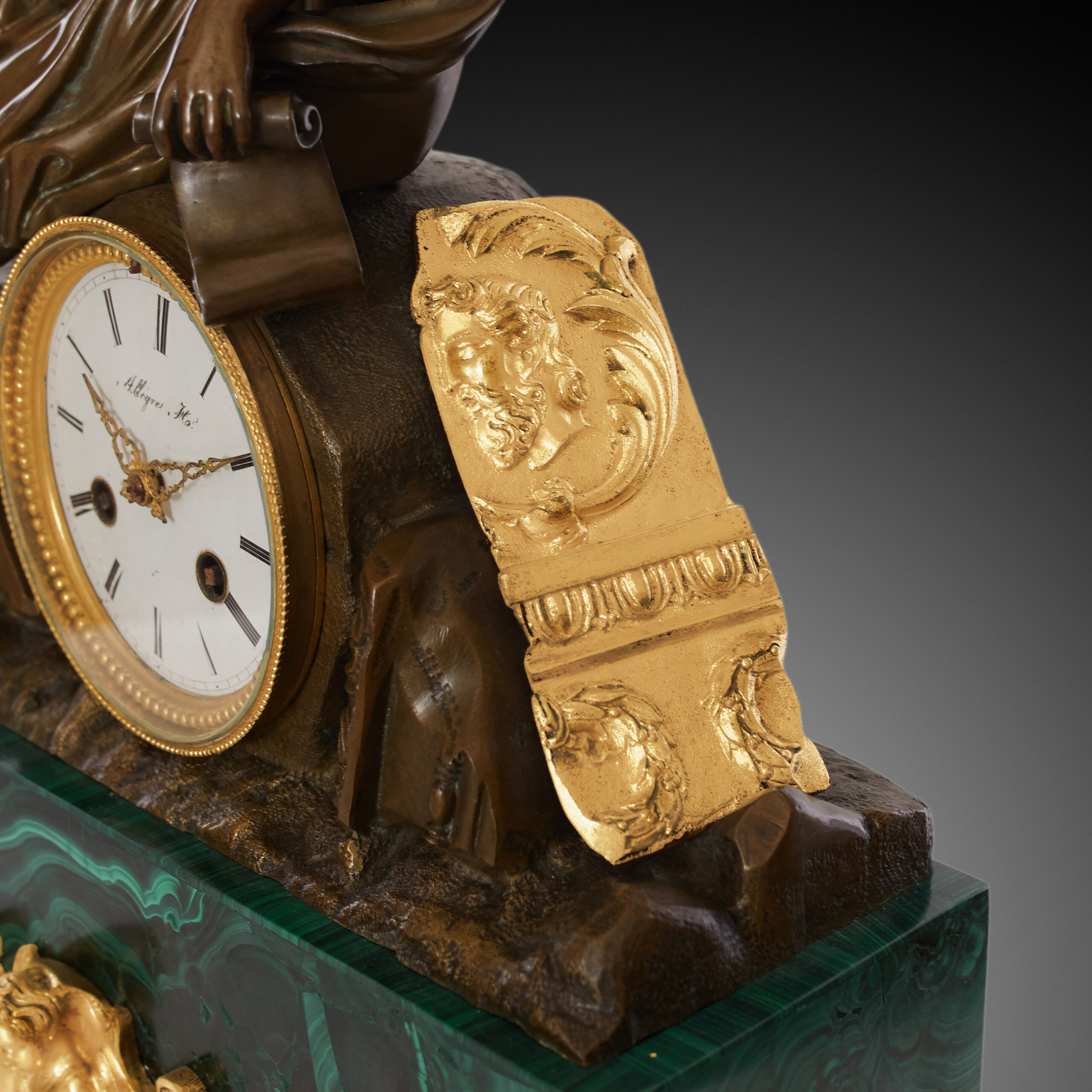
The clock is dominated by a beautifully modelled patinated bronze figure of a seated classical lady, most likely representing one of the Muses or an allegorical figure of Poetry or History. She is shown in a relaxed, contemplative pose, draped in flowing antique robes, with one arm resting gracefully and the other holding a lyre or scroll. The modelling of the drapery and the sensitive treatment of the face and hands reveal the hand of a skilled bronzier working in the best Parisian tradition.
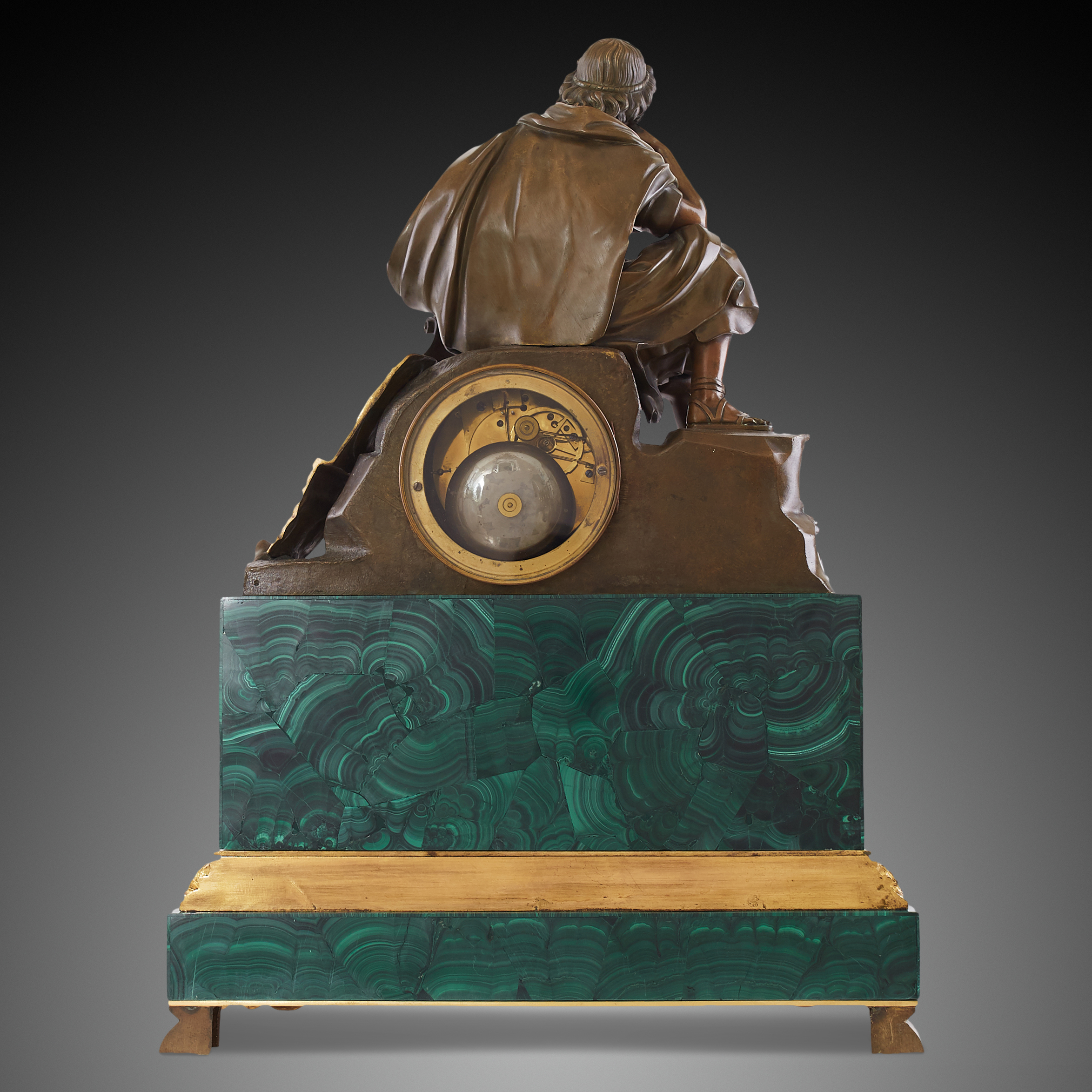
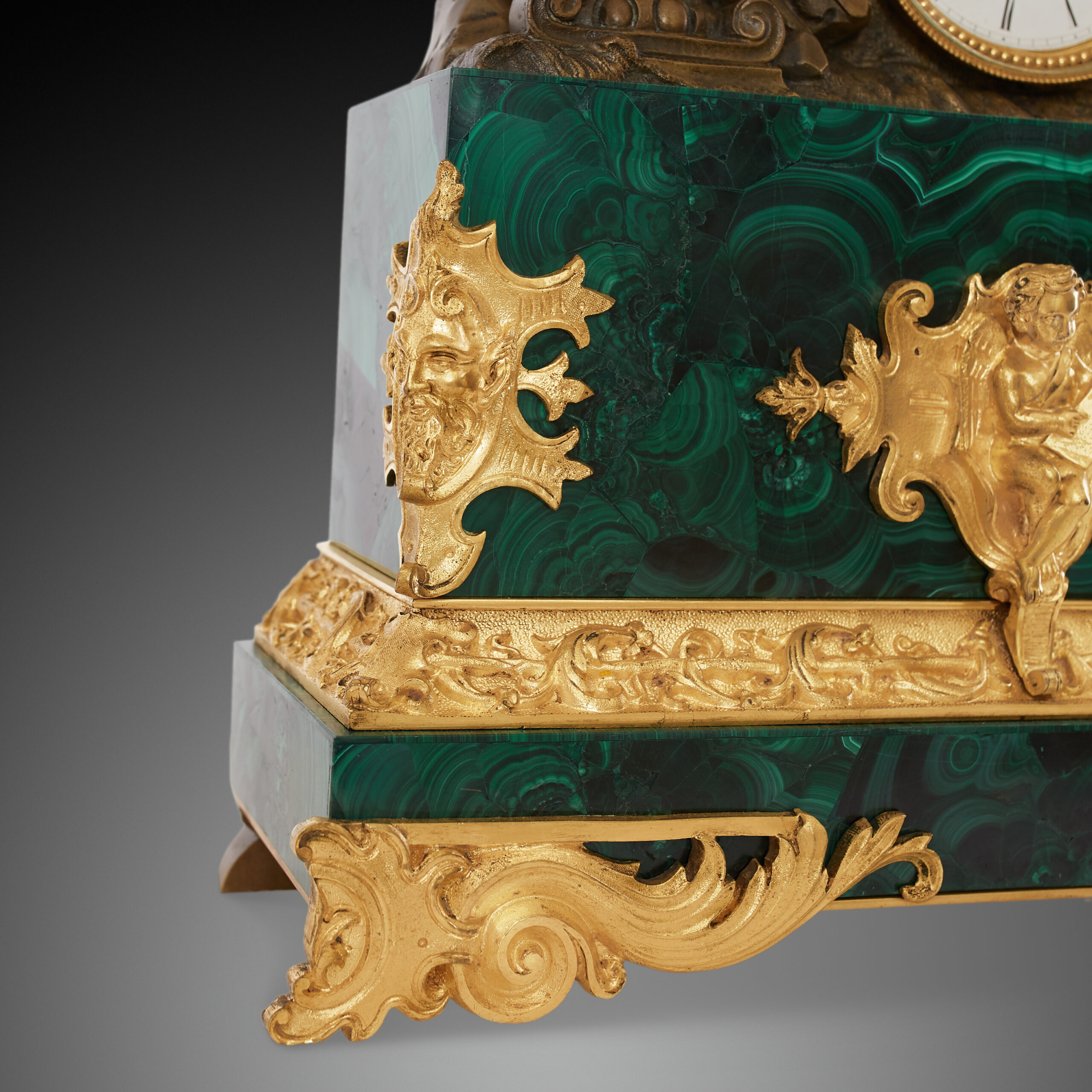
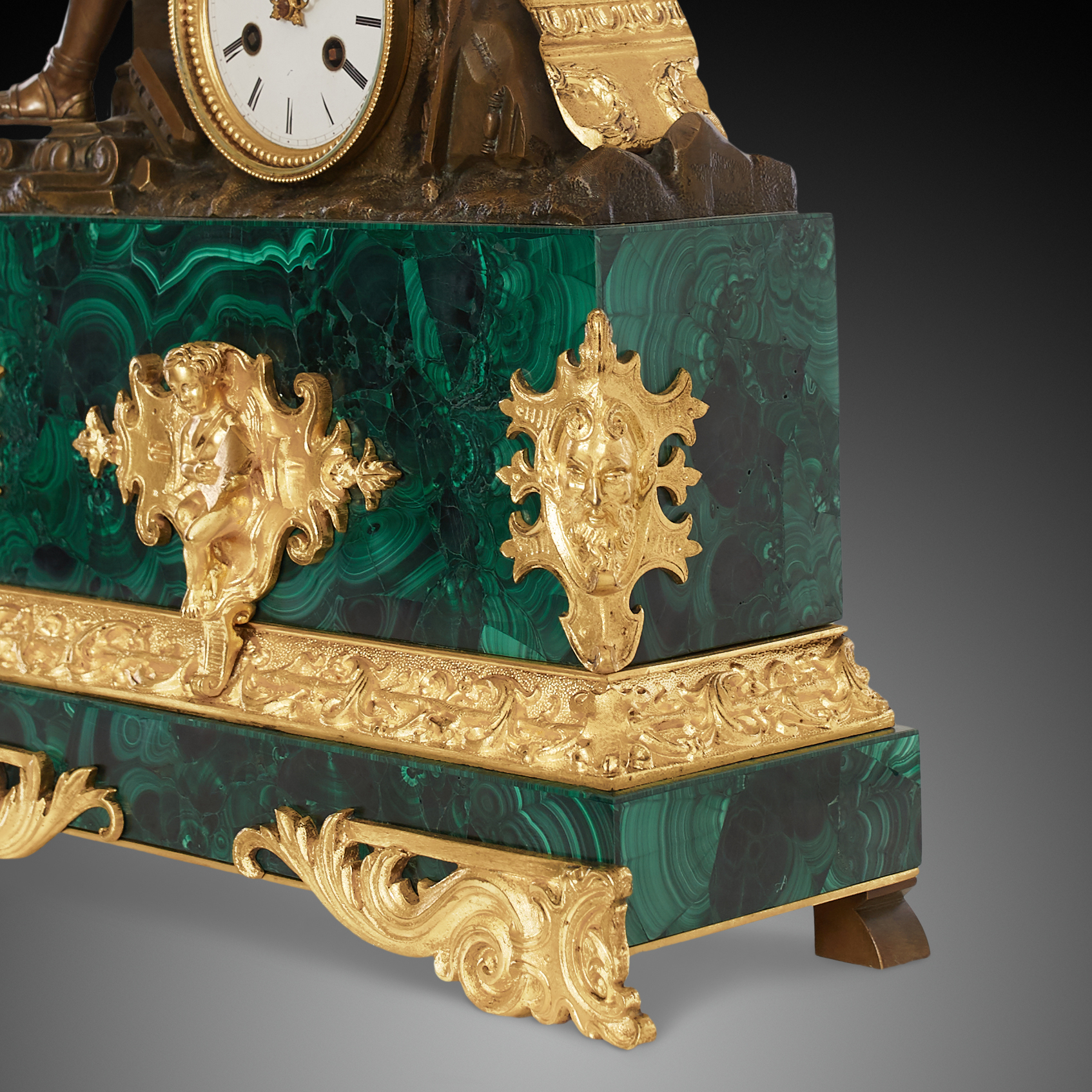
The circular white enamel dial with Roman numerals is set directly into the base of the composition, framed by a gilt bronze bezel. The entire sculptural group rests on a substantial rectangular plinth of vibrant green malachite, whose swirling natural patterns provide a rich and dramatic contrast to the warm tones of the patinated bronze and the luminous gilt bronze mounts.
The malachite base is further enhanced by elaborate gilt bronze ornamentation, including a prominent central mascaron (mask) flanked by acanthus scrolls and a lower frieze with scrolling foliage. The base terminates in elegant scrolled feet with acanthus decoration, giving the clock a solid yet refined presence.
This type of figural clock reflects the eclectic historicism of the Napoleon III era. After the more austere classicism of the First Empire, the Second Empire revived mythological and literary themes with greater freedom and opulence. Such pieces were highly prized in grand salons and bourgeois interiors, where they served both as accurate timekeepers and as decorative conversation pieces that evoked the grandeur of antiquity in a romantic, narrative manner.
Mechanically, the clock houses a reliable eight-day going movement that strikes the hours and every half-hour on a clear bell. It has been professionally cleaned and serviced by a specialist in museum-quality timepieces and remains in excellent cosmetic and fully working condition. It comes complete with its original pendulum, winding key, and bell.
When placed on a mantel, the clock creates a striking focal point. The deep green malachite base glows with intensity, the patinated bronze figure adds sculptural depth and warmth, and the gilt bronze details catch the light with quiet brilliance. The gentle swing of the pendulum and the soft chime on the half-hour bring a living rhythm to the composition.
This is a beautiful and evocative example of mid-19th century French craftsmanship, where technical precision meets sculptural elegance and luxurious materials. Its narrative quality and fine execution make it a standout piece that perfectly embodies the romantic spirit of the Napoleon III period.