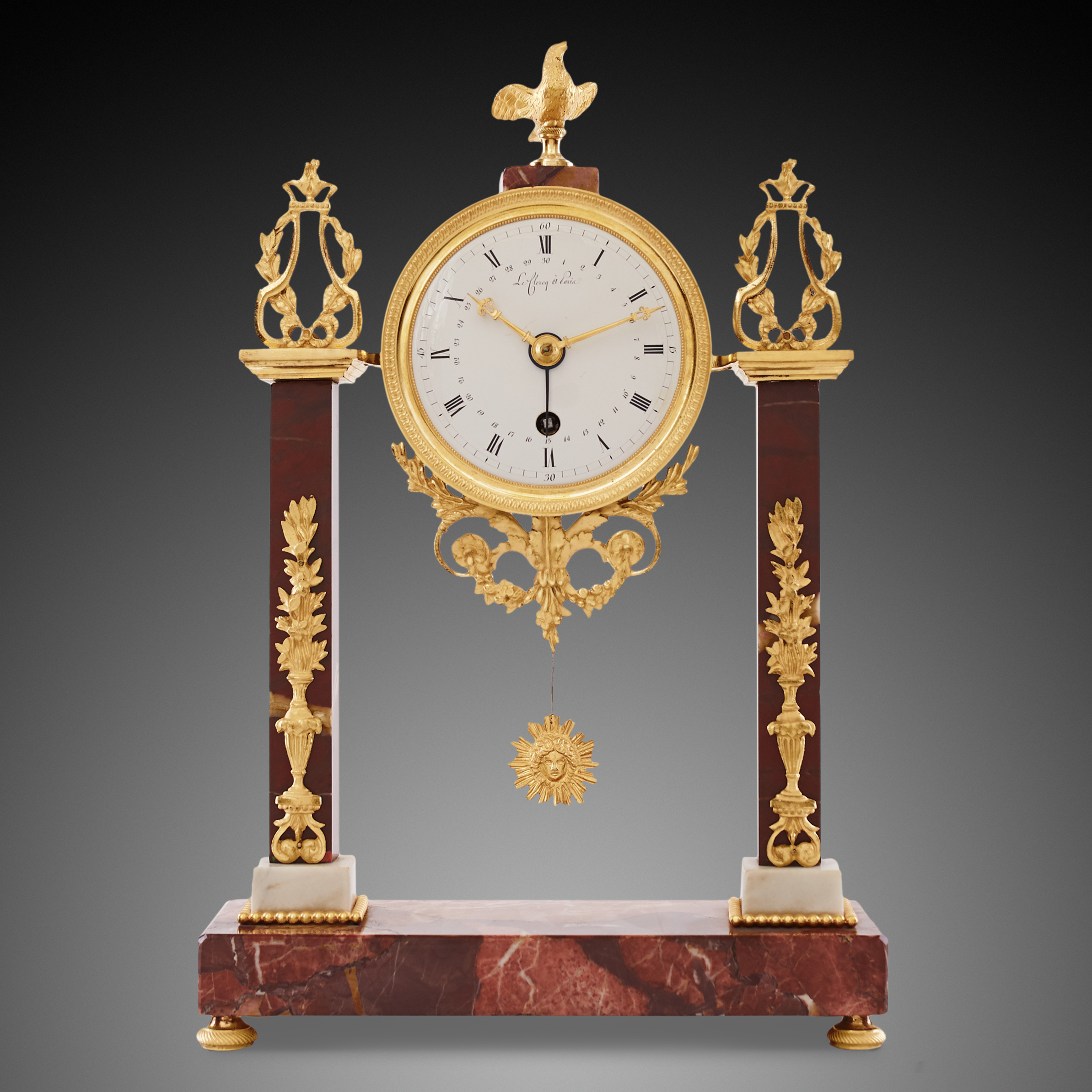
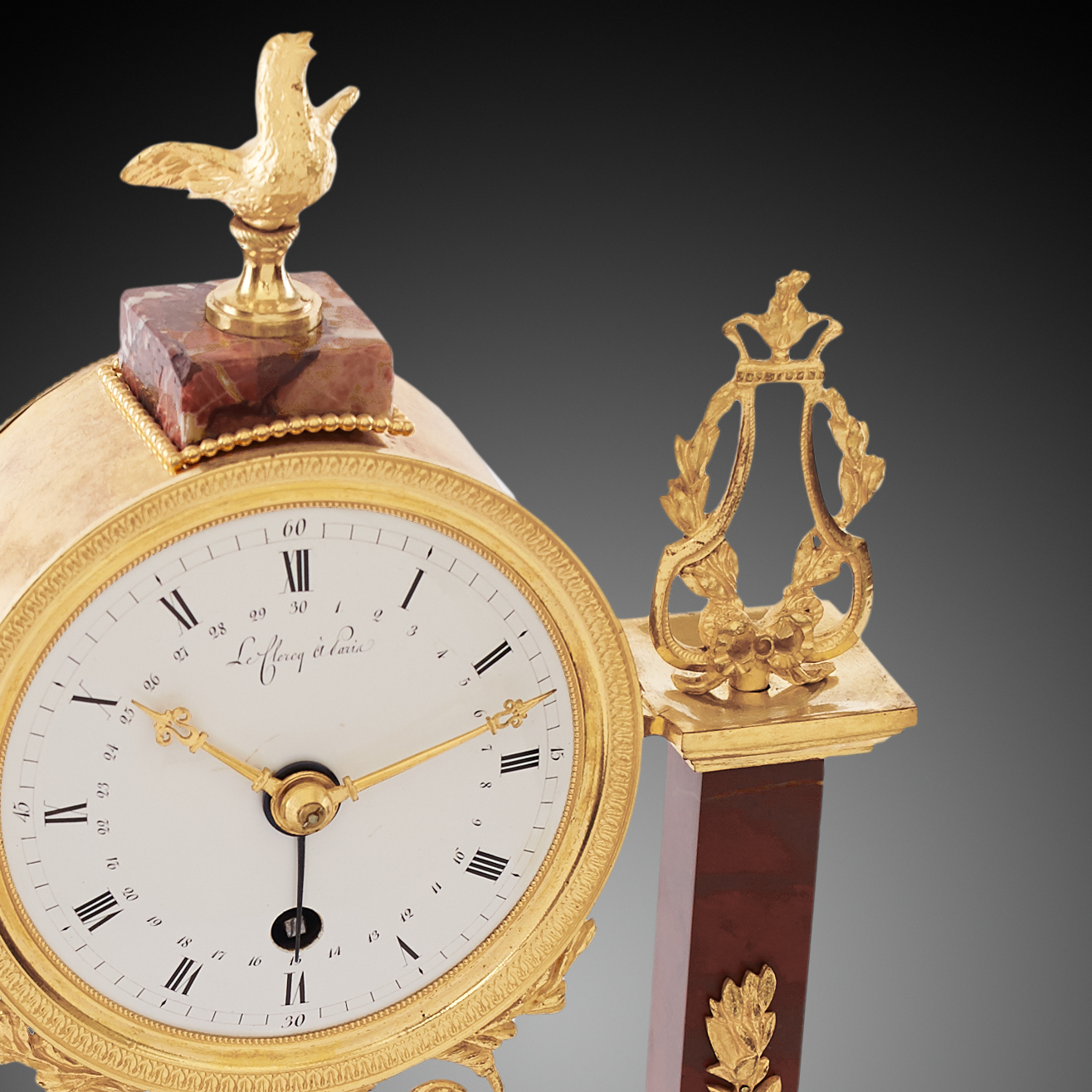
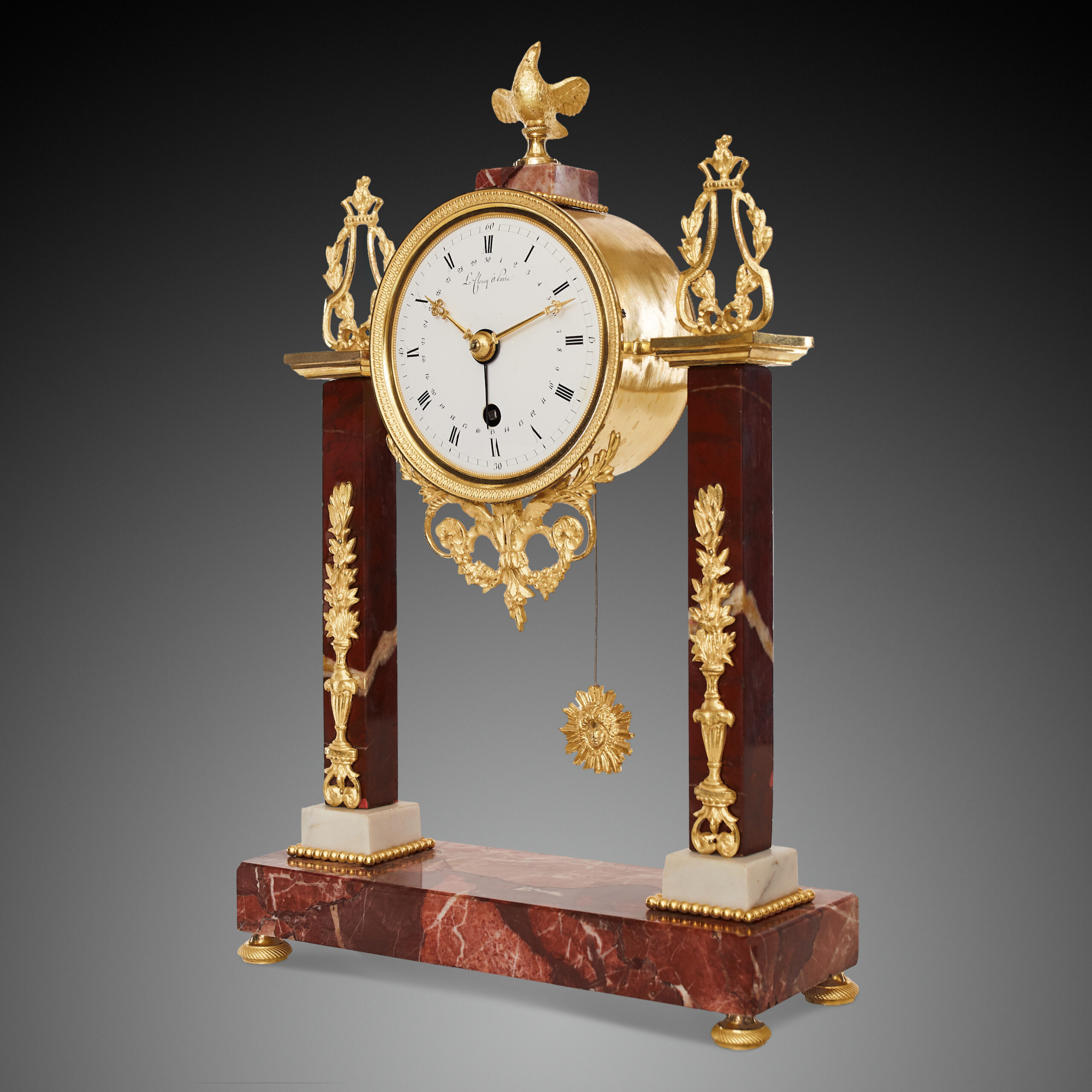
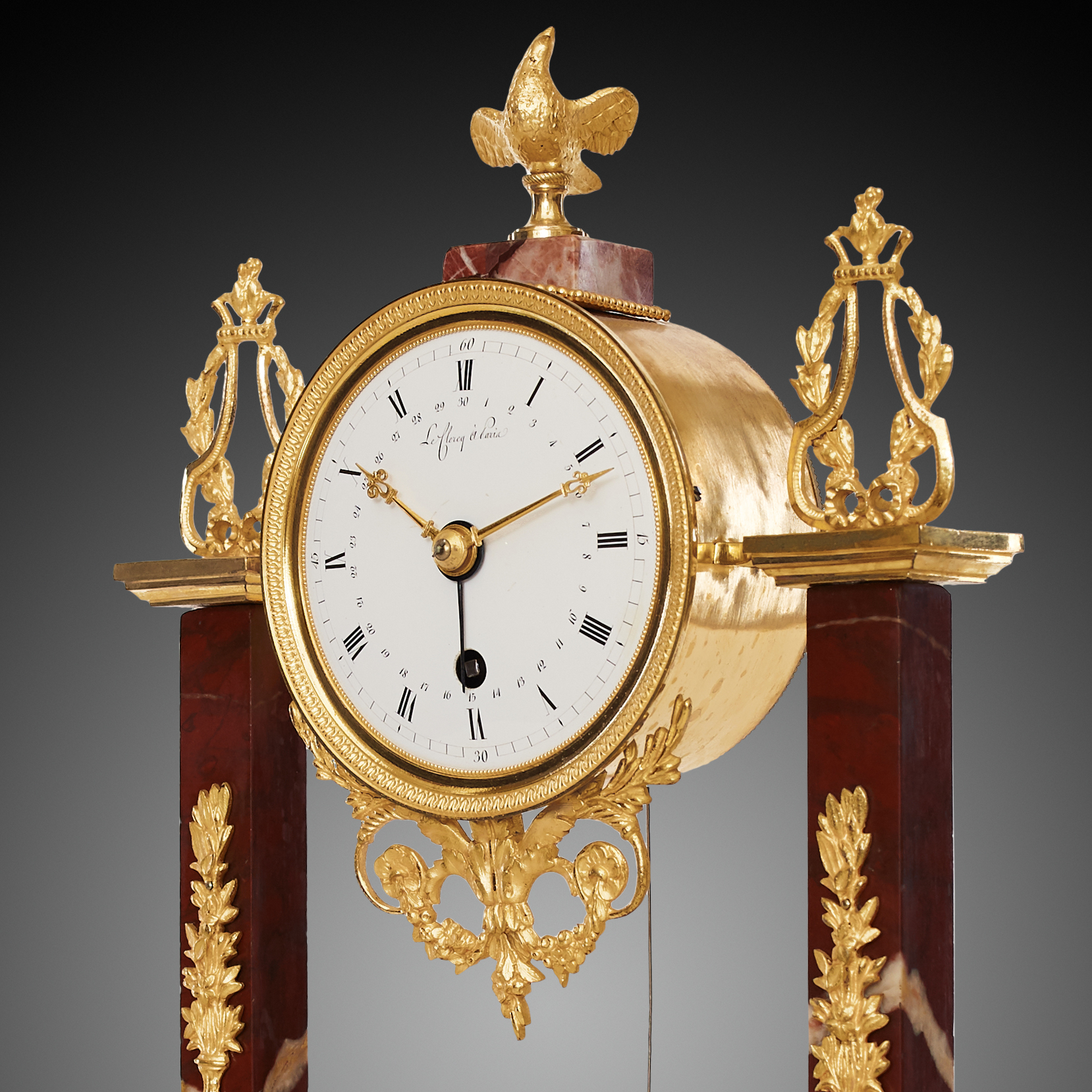
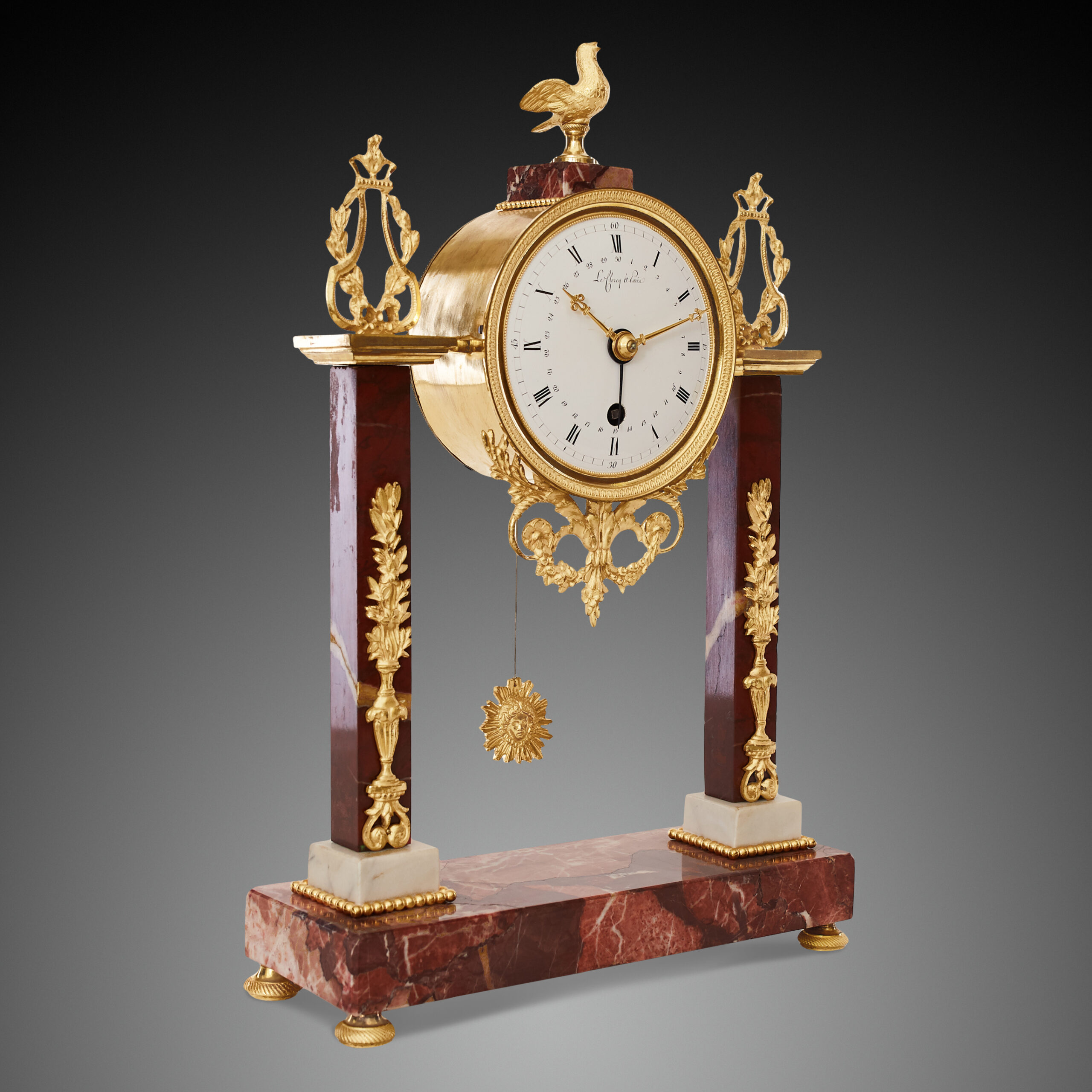
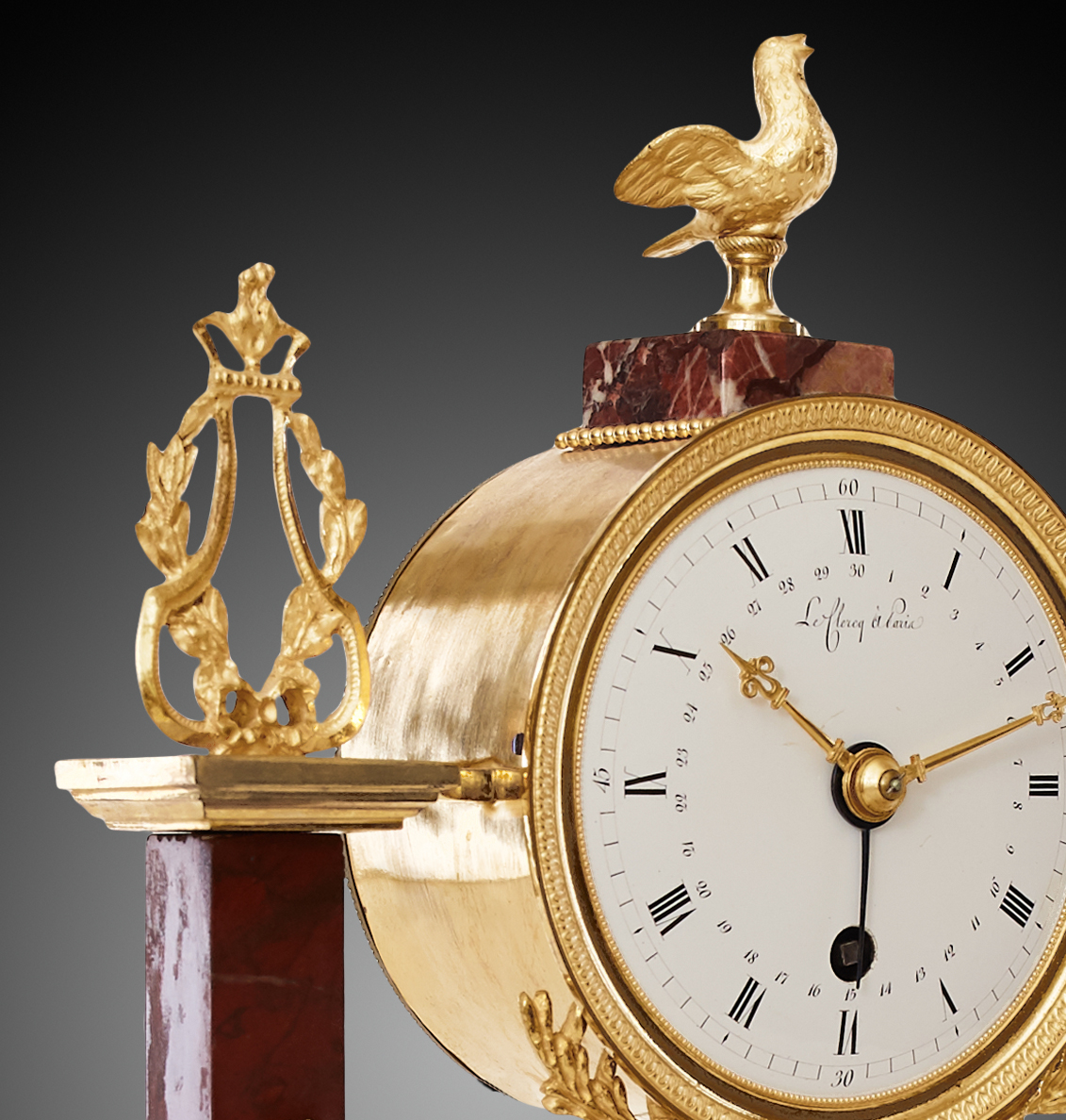
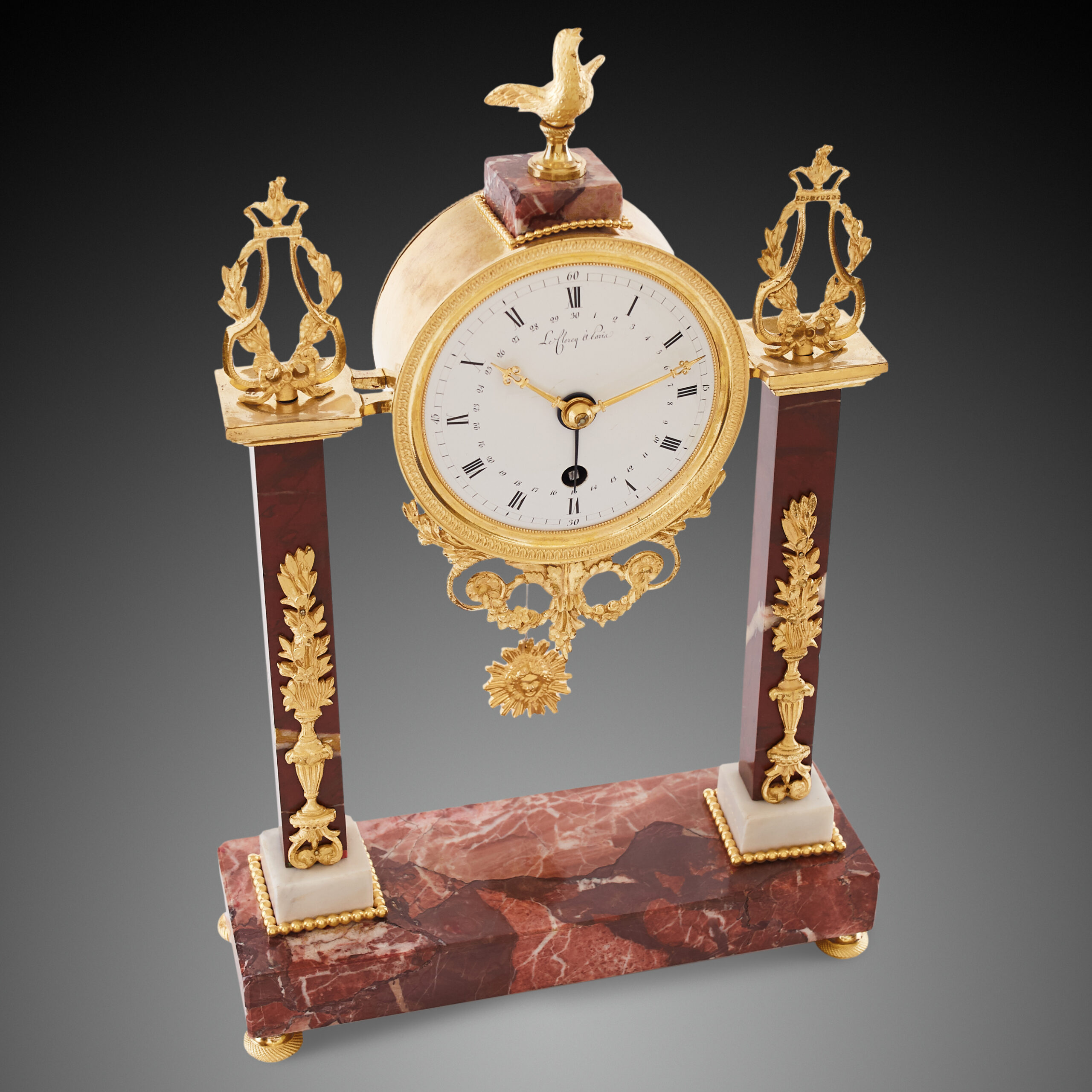
A fine French marble and gilt bronze portico mantel clock, designed in the elegant Neoclassical taste and distinguished by its architectural structure, refined ormolu mounts, and balanced proportions. The clock is centred by a large circular white enamel dial, signed “Le Roy à Paris,” with Roman numerals, outer minute track, finely pierced gilt hands, and a visible pendulum aperture. The dial is framed by a richly chased gilt bronze bezel and suspended between two upright marble columns, creating a light and architectural composition typical of high-quality French decorative clocks.
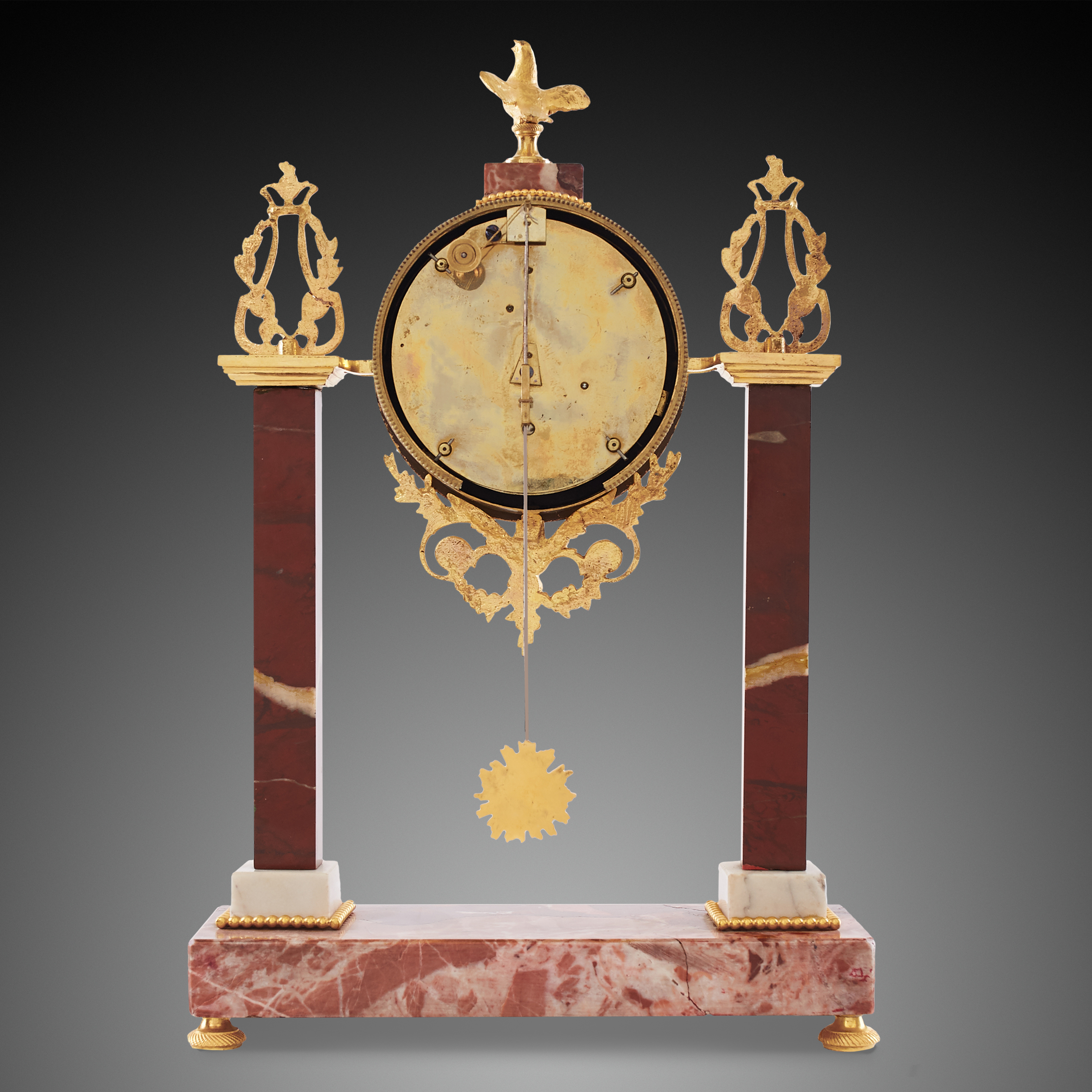
The clock is raised on a substantial red marble rectangular base, supported on gilt bronze toupie feet. Two slender red marble uprights rise from white marble plinths and are decorated with finely cast gilt bronze trophies, laurel branches, urns, foliate garlands, and classical scrollwork. The side columns are surmounted by openwork gilt bronze ornaments, while the clock case itself is crowned by a gilt bronze eagle finial, a motif associated with power, dignity, and imperial symbolism.
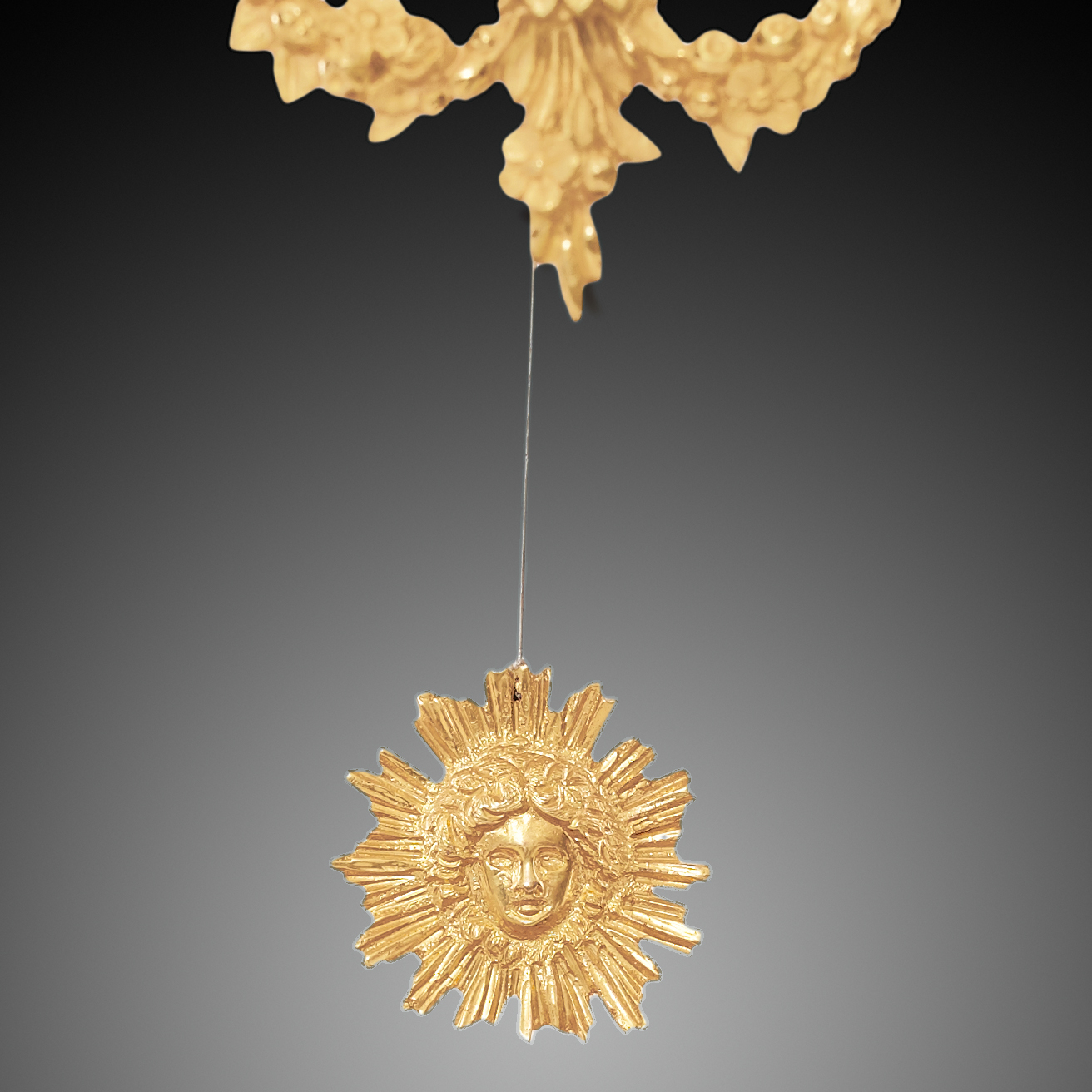
The lower section of the dial is enriched with elaborate gilt bronze foliage, scrolling acanthus, and decorative masks, from which hangs a sunburst pendulum with a classical female mask. This detail adds movement and visual interest to the composition, while also reinforcing the clock’s classical decorative language. The combination of red and white marble with finely chased gilt bronze creates a luxurious contrast of colour and material, giving the piece a strong yet refined presence.
Historically, portico clocks became especially fashionable in France during the late Louis XVI, Directoire, and early Empire periods. Their architectural forms were inspired by ancient Greek and Roman temples, reflecting the Neoclassical taste that dominated French decorative arts from the late 18th century onward. The use of columns, laurel ornament, urns, eagles, masks, and sunburst motifs all belongs to this classical vocabulary, which was intended to convey order, harmony, learning, and prestige.
Clocks of this type were not made merely as practical timekeepers. They were important decorative objects intended for display in formal interiors, where they represented refinement, taste, and social status. Placed on a mantelpiece, console table, or commode, a portico clock would have formed part of a carefully arranged interior scheme alongside bronzes, porcelain, mirrors, and fine furniture.
This example presents as a particularly decorative and elegant French portico mantel clock. Its signed enamel dial, richly coloured marble, finely worked gilt bronze mounts, eagle finial, and sunburst pendulum give it strong visual appeal and historical character. It would make an impressive addition to a collection of antique clocks, French decorative arts, or a refined period interior, and it is highly suitable for presentation in a professional dealer’s gallery.