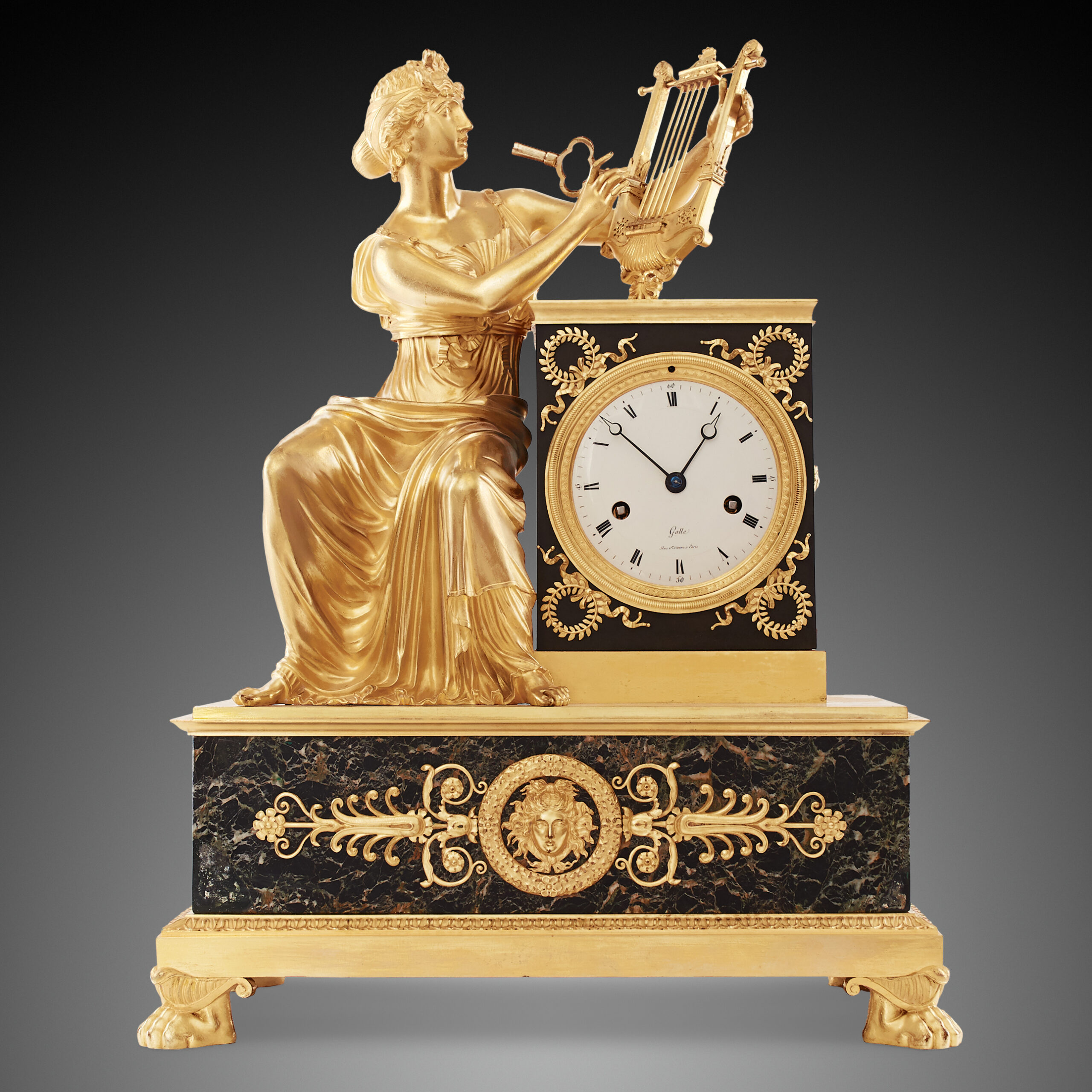
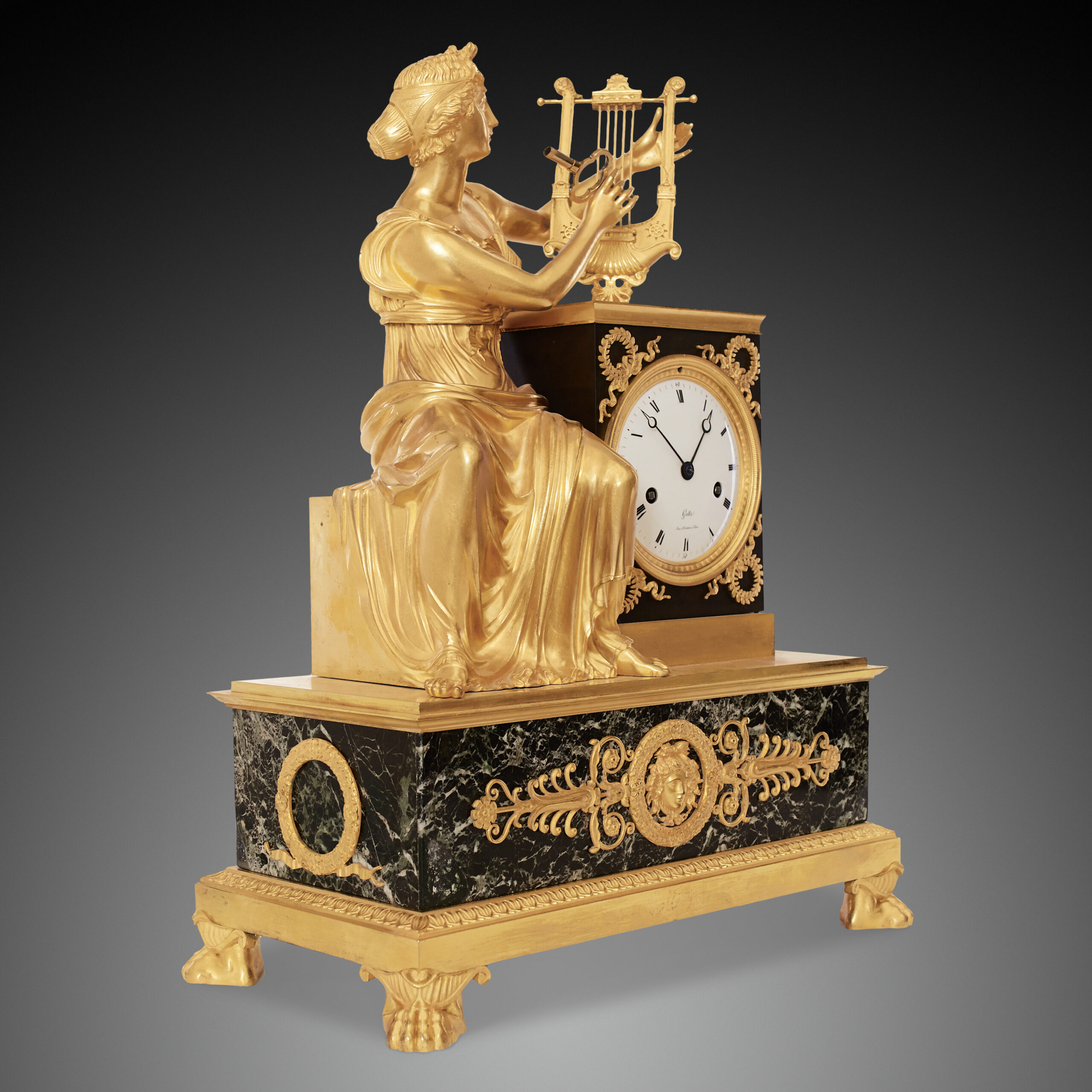
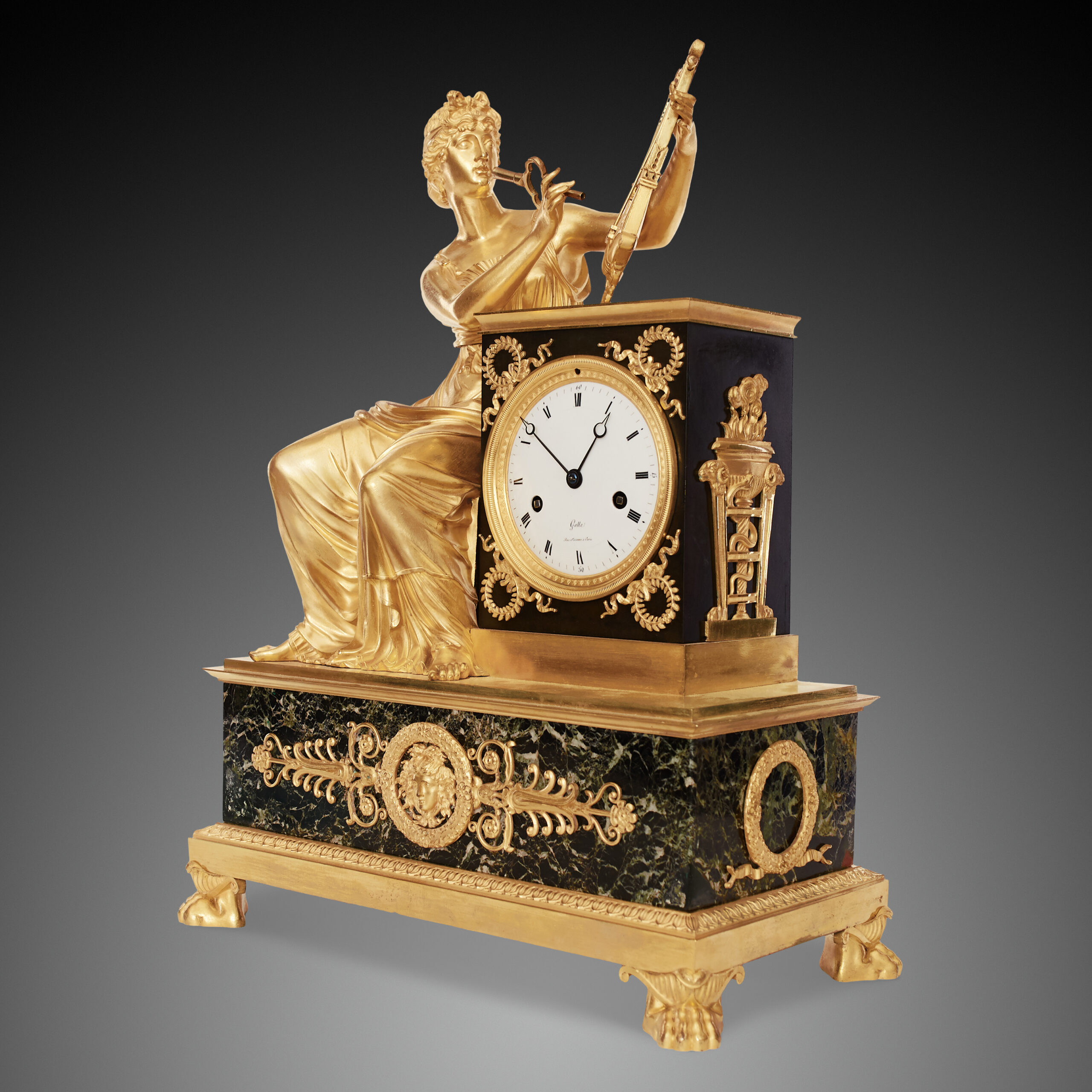
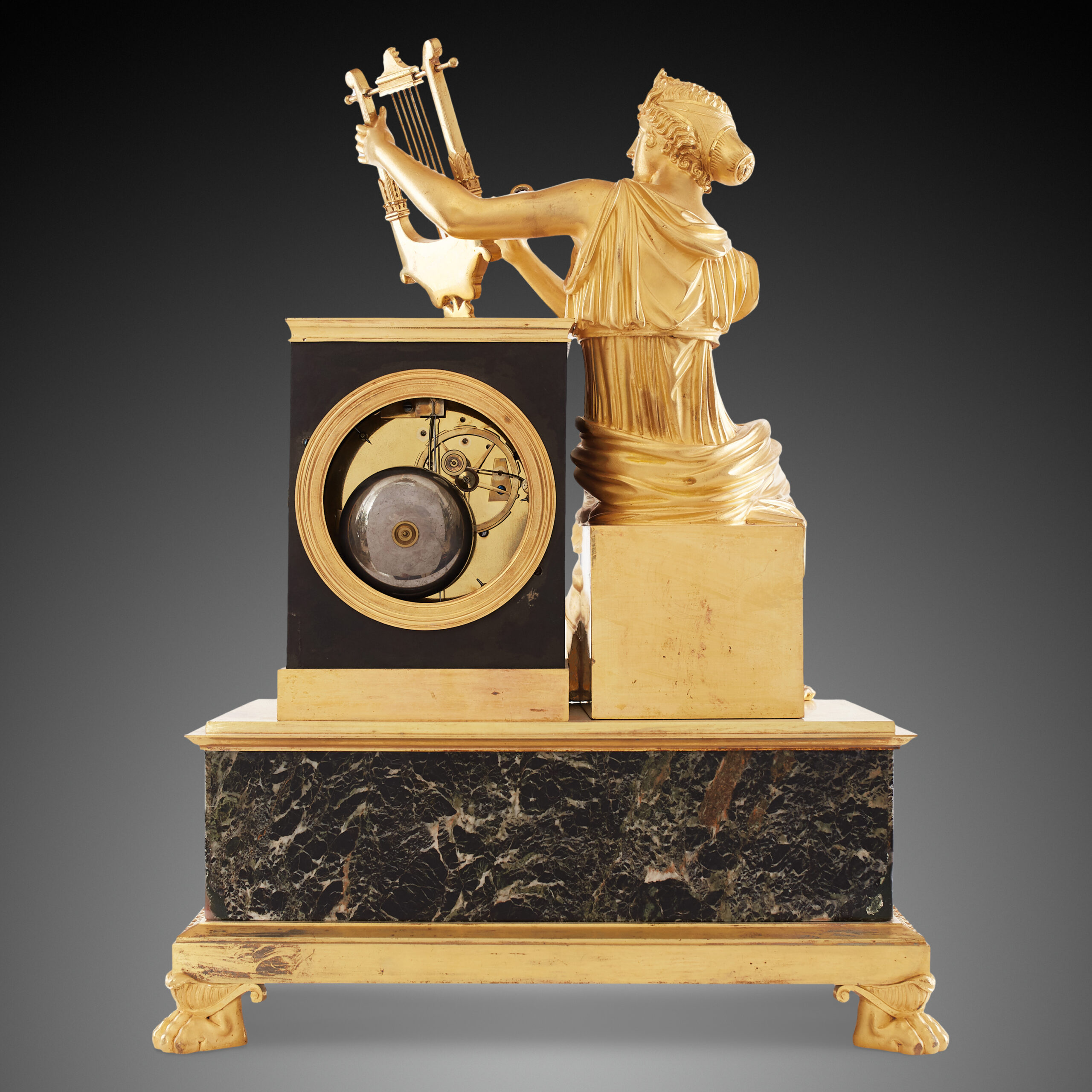
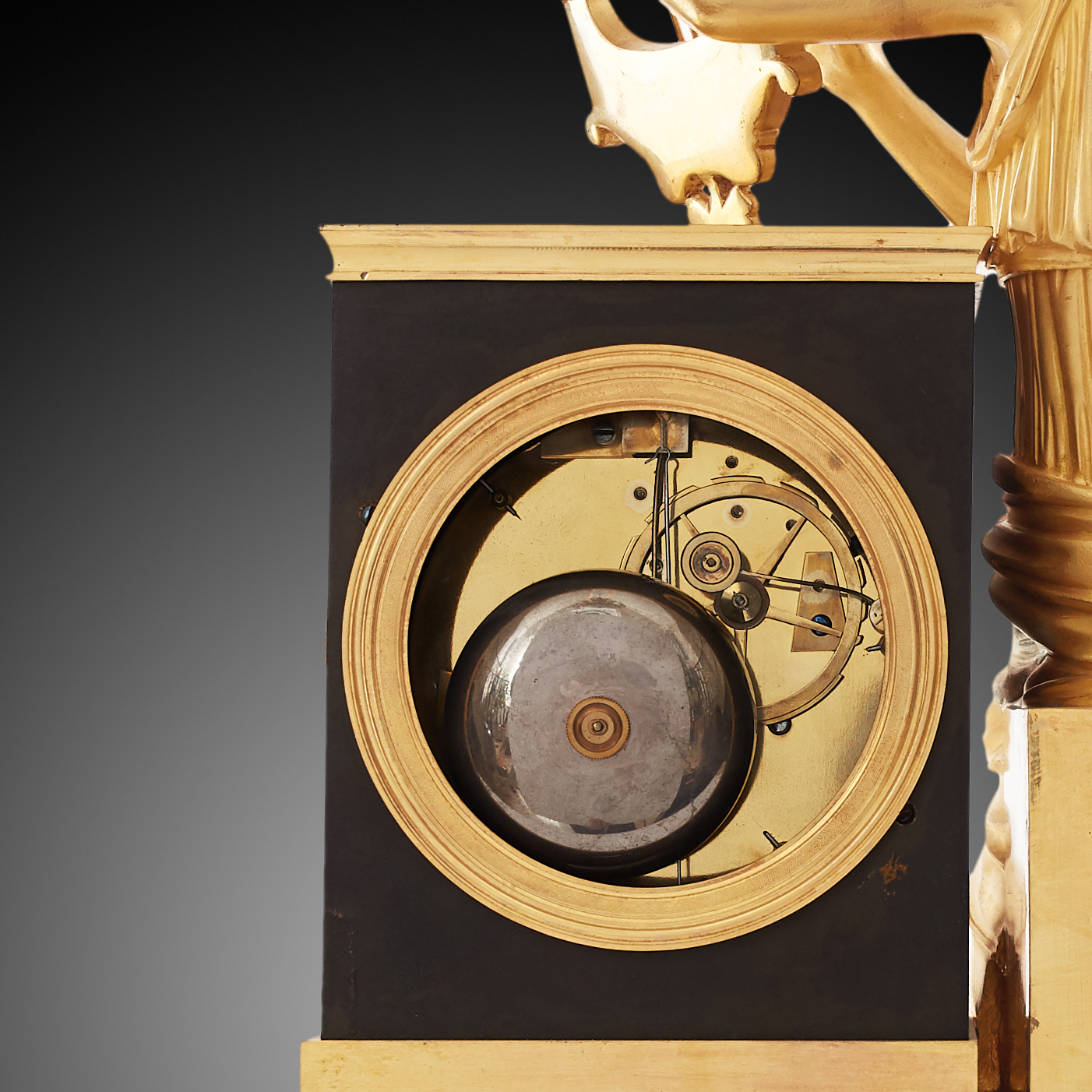
The Claude Galle mantel clock is a masterwork of the Neoclassical era, defined by the strict, military-influenced elegance that Napoleon himself championed. Signed by one of the most significant bronziers in history, it represents the exact moment when French art moved away from royal excess and toward a more disciplined, intellectual beauty.
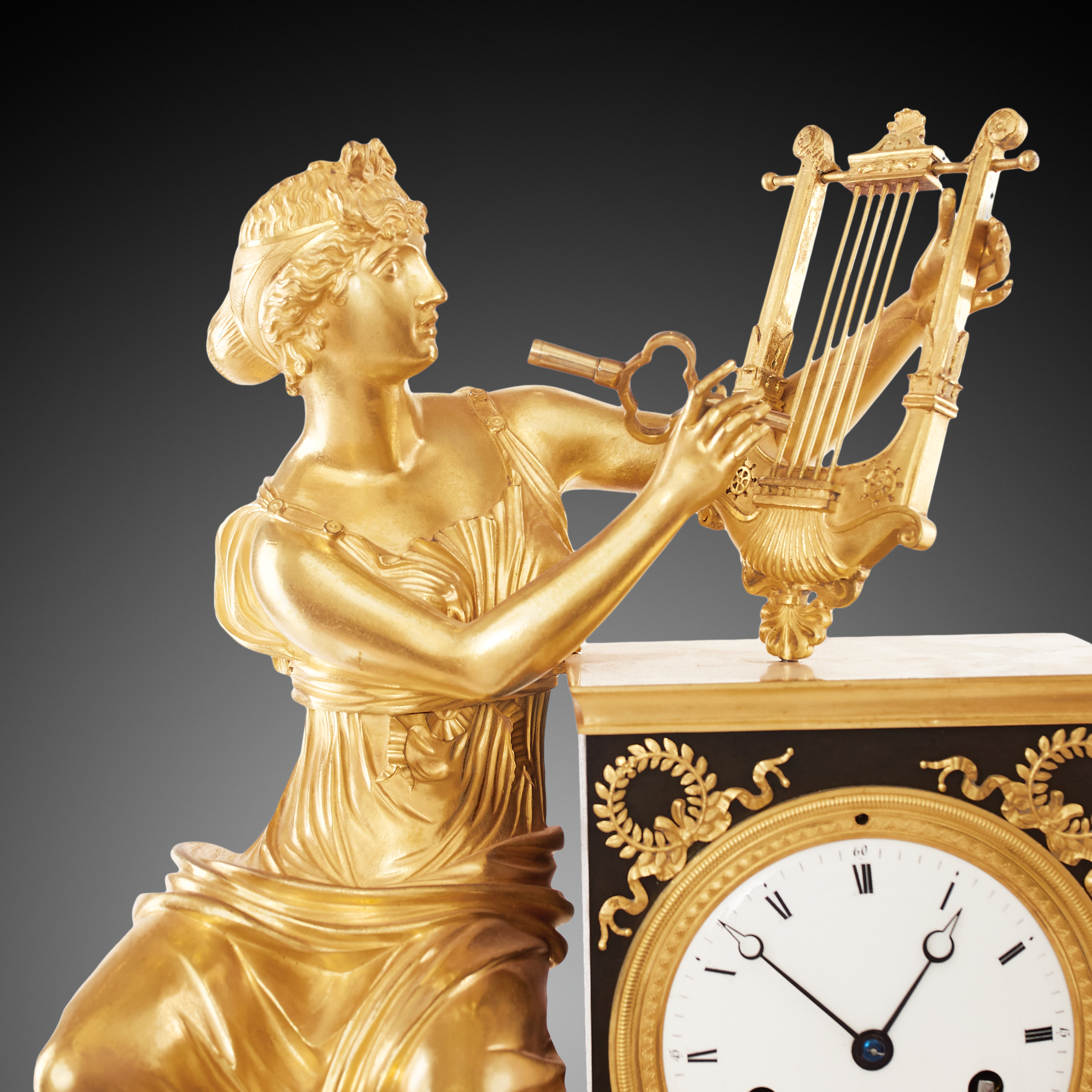
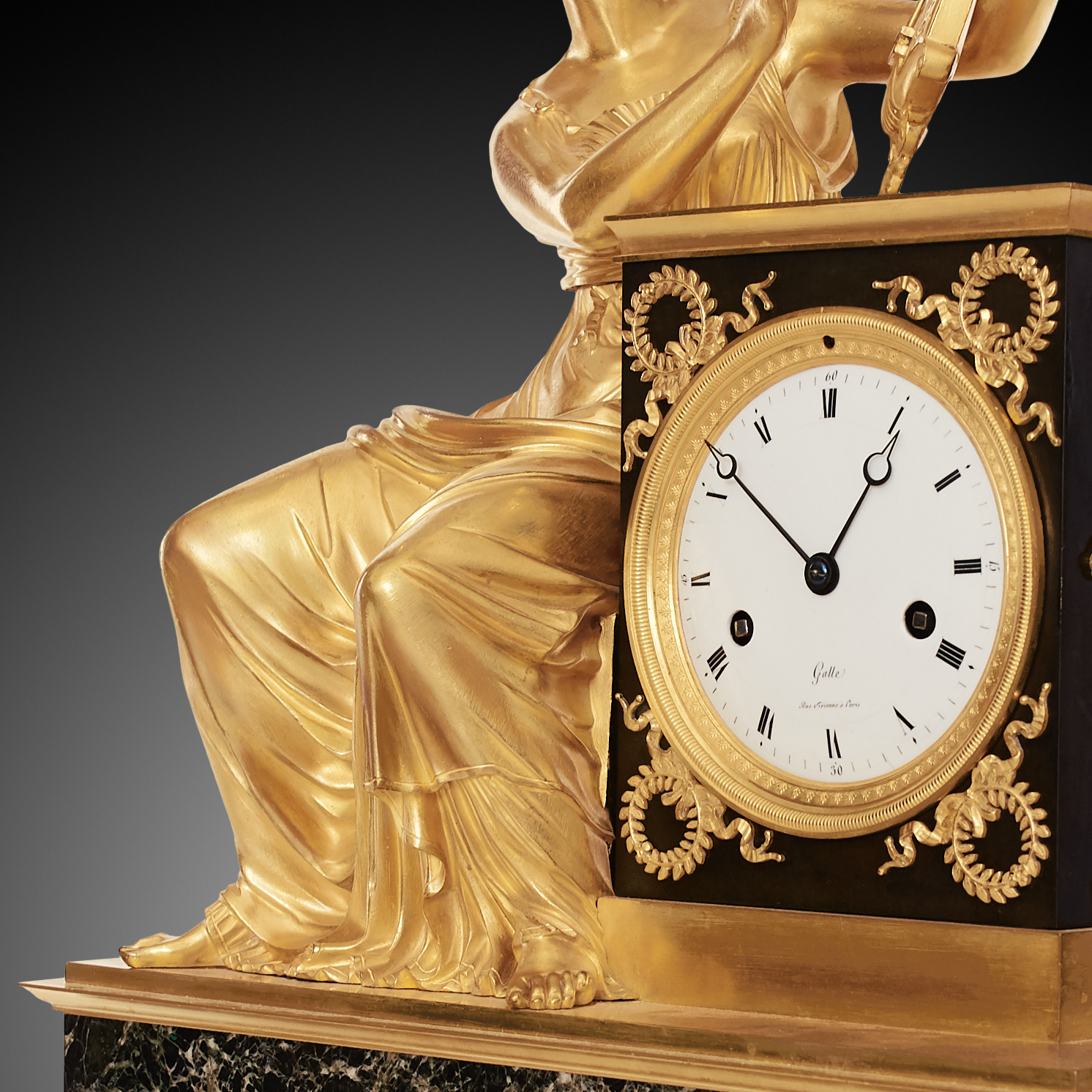
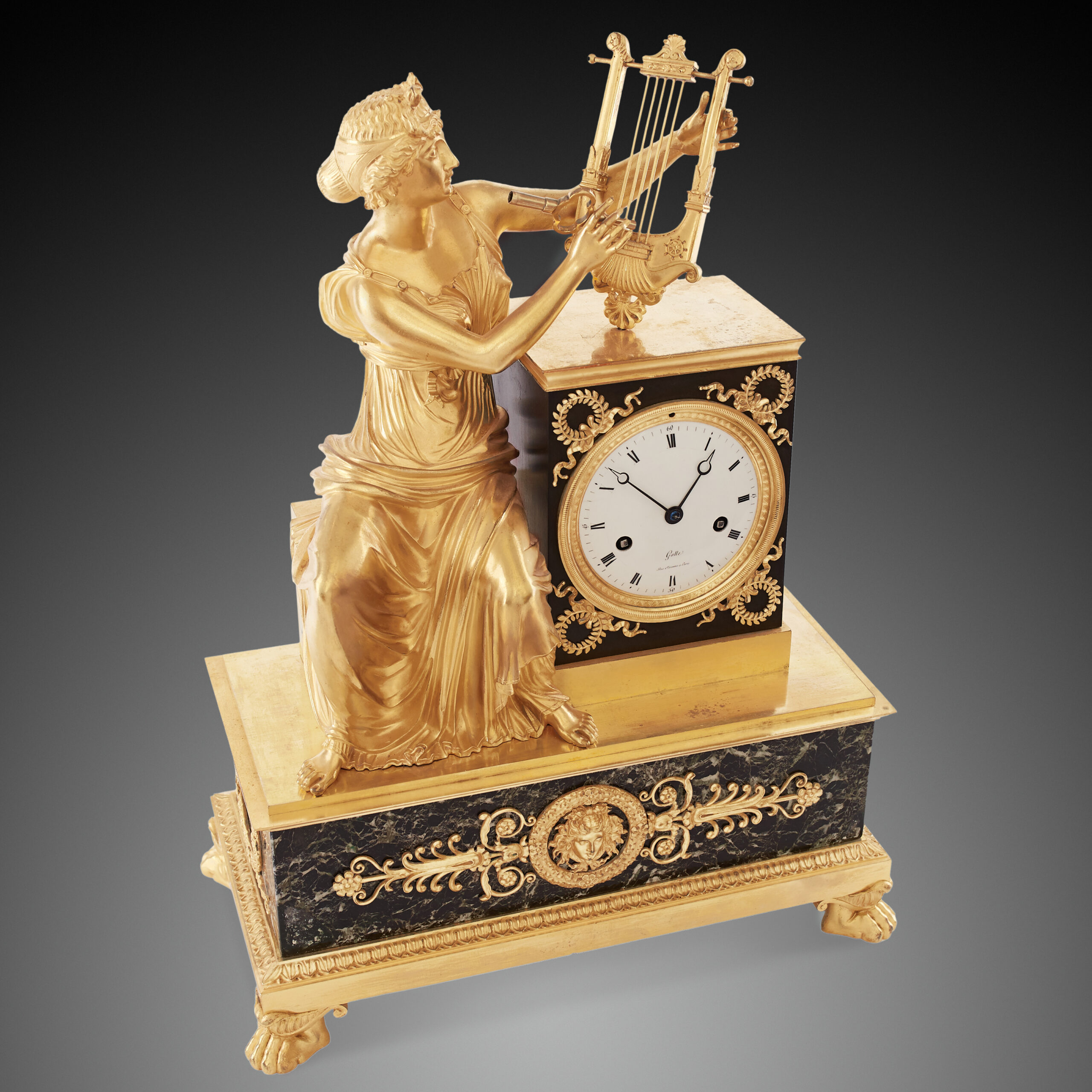
The central figure-a woman in flowing Greek drapery holding a lyre,is far more than a decoration. In the 1800s, this was a clear reference to Apollo, the god of wisdom, moderation, and the arts. By placing her on a clock, Galle was suggesting that the owner’s life was governed by these high classical ideals. The detail in her hair and the folds of her clothing is incredible; it shows how Galle could take hard bronze and make it look as soft as silk.
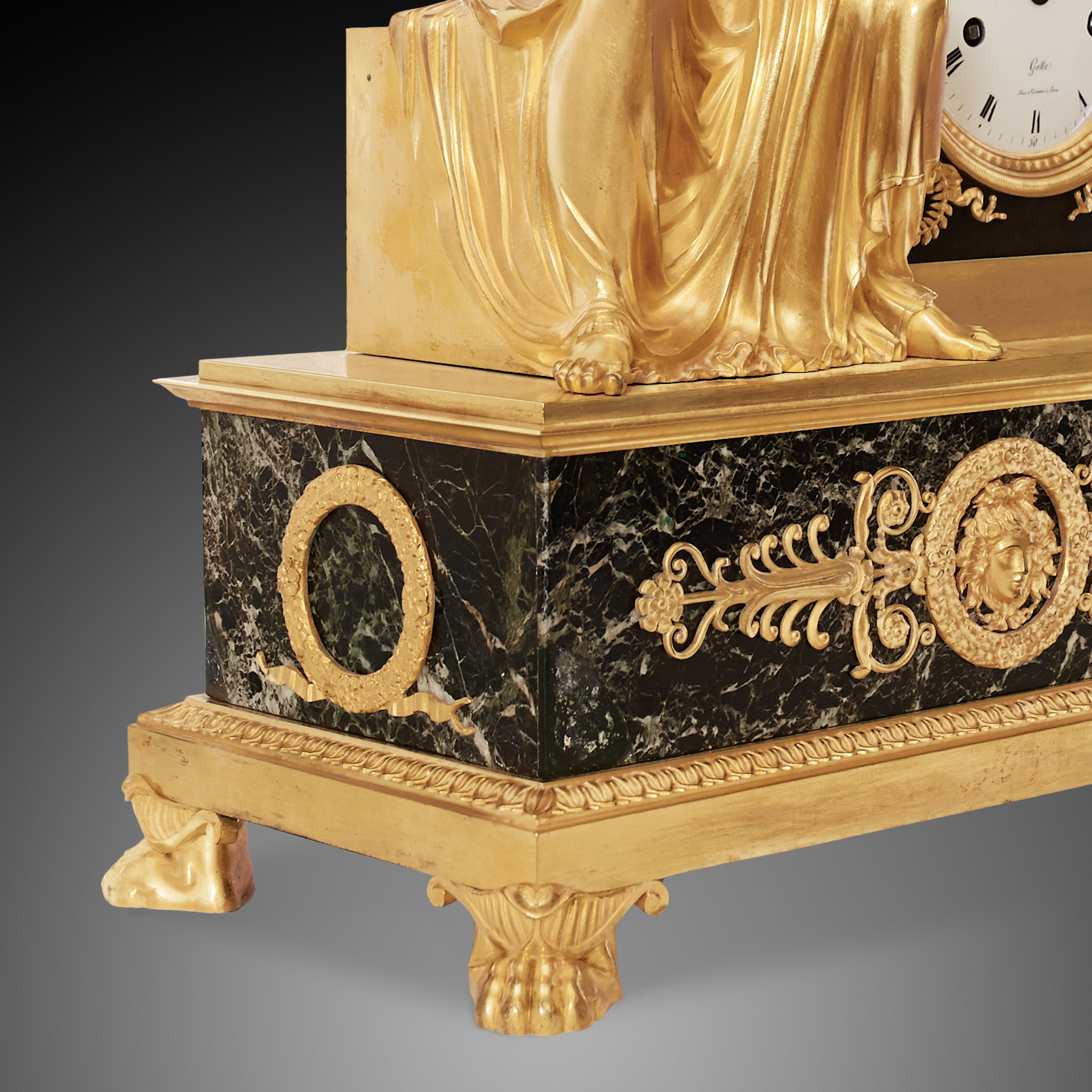
The piece relies on a powerful contrast between the deep, dark marble and the brilliant mercury-gilded bronze, also known as ormolu. Galle was a master of this technique, which used high heat and mercury to bond gold to bronze. It created a finish so durable and rich that it still looks like solid gold centuries later. On the marble base, the laurel wreaths serve as symbols of honor and victory, while the Medusa mask acts as a protective classical emblem, adding a layer of gravity to the design.
There is a tragic human story behind this clock. Despite furnishing the greatest palaces in the world-Versailles, Fontainebleau, and Saint-Cloud Galle died in poverty. He was a victim of his own success; the imperial court was notoriously slow to pay their bills, and he eventually went bankrupt financing these massive projects. Today, the very pieces that once ruined him are the crown jewels of museums like the Victoria and Albert in London and the Louvre in Paris.
This clock isn’t just a timekeeper; it’s a survivor of a very specific, high-stakes moment in French history. It serves as a perfect anchor for a collection, sitting right between the restrained British style of a Joseph Daser clock and the later, more eclectic Napoleon III pieces. It represents a time when every object in a room was intended to reflect the prosperity, history, and order of the world the owner lived in.