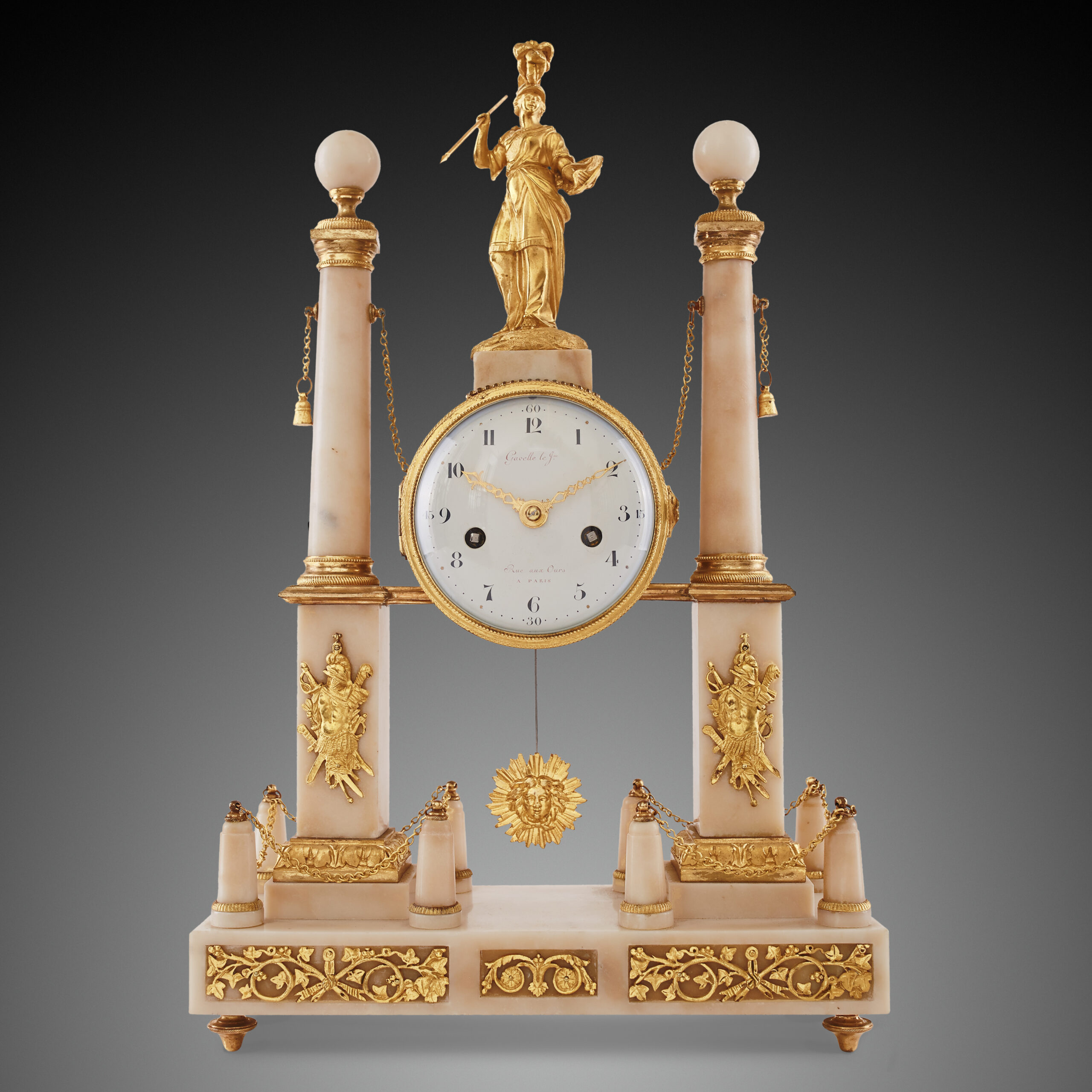
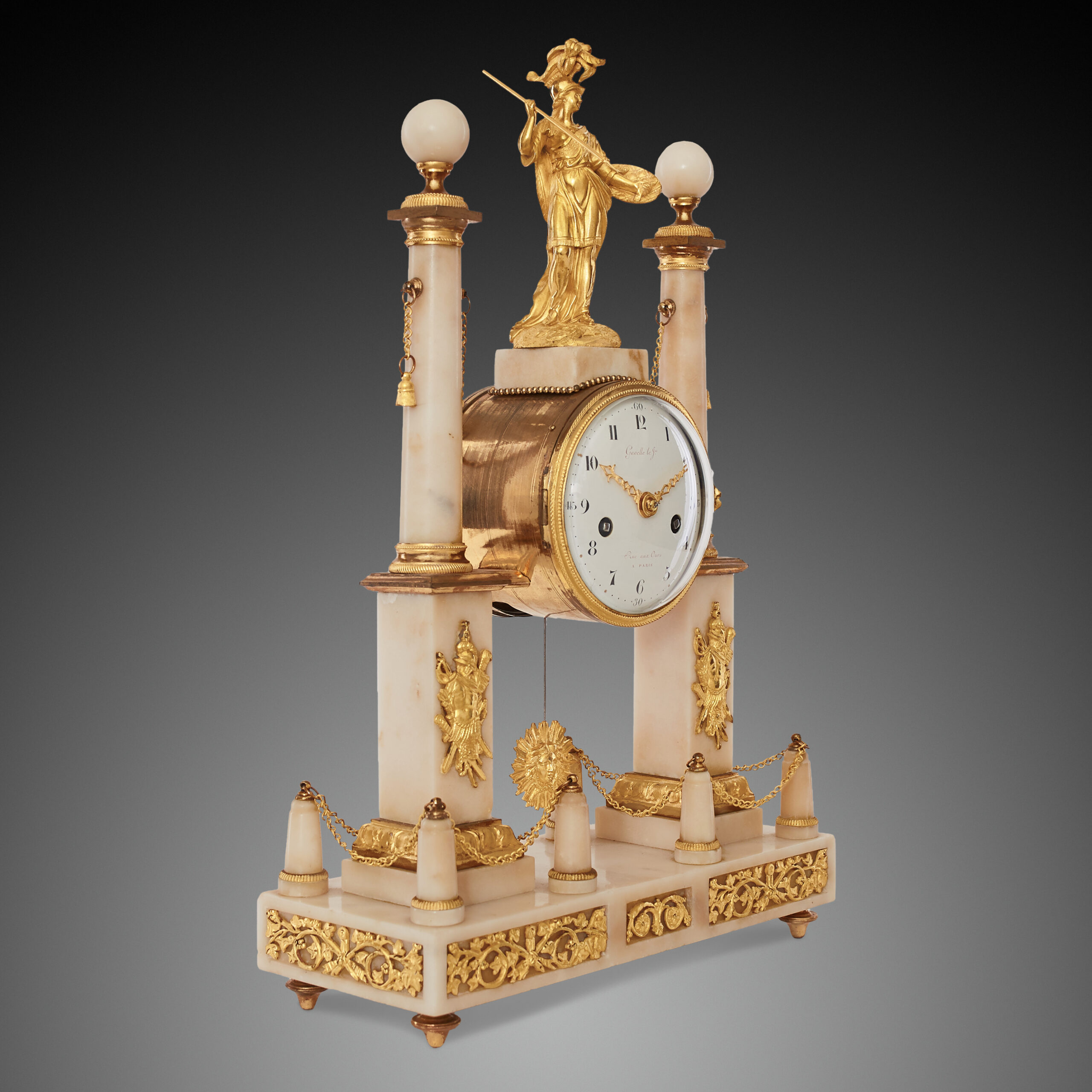
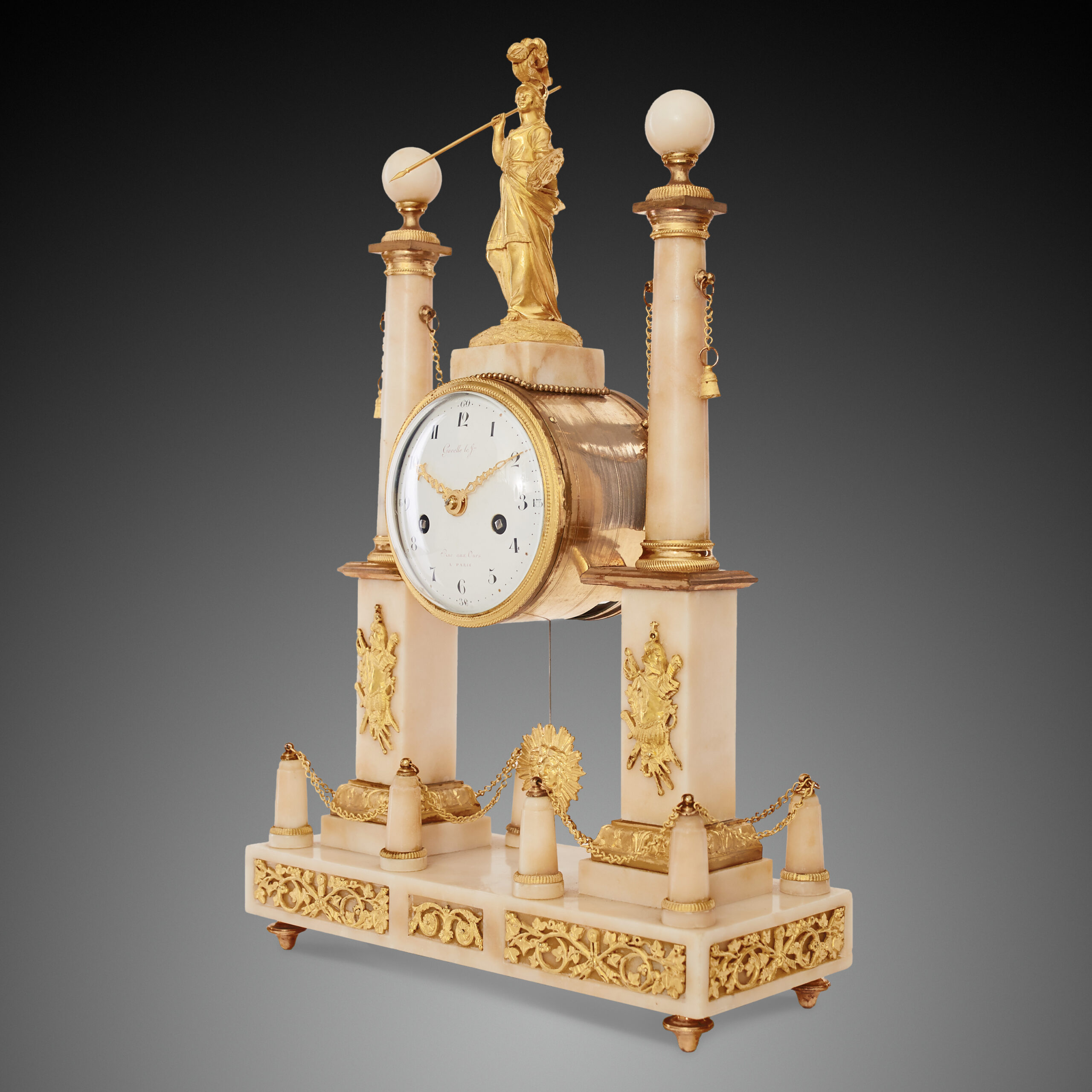
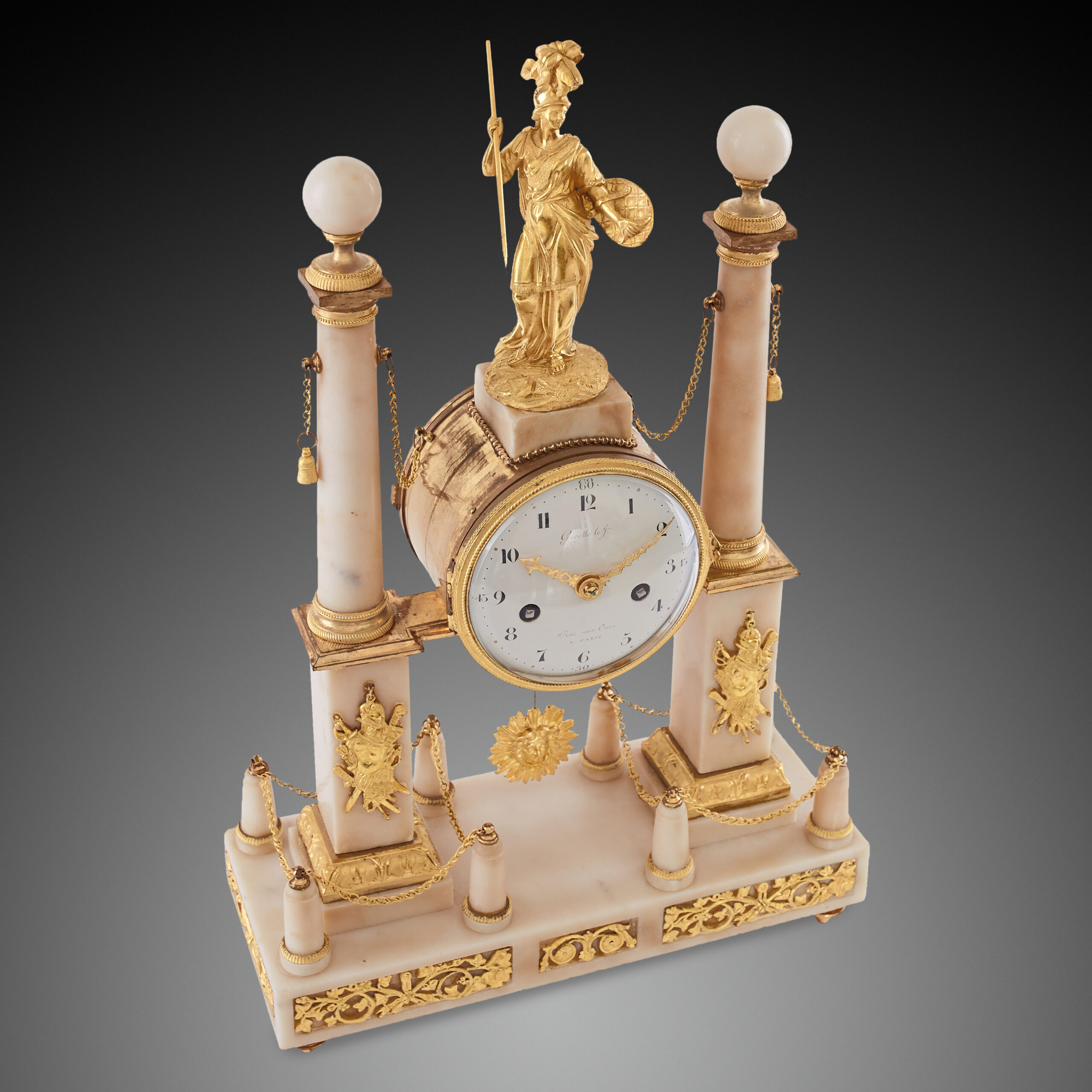
This Gavelle le Jeune portico clock is an exceptional example of late 18th-century French design, specifically illustrating the architectural trend of the Louis XVI period. At this time, Parisian designers were moving away from the solid, heavy forms of earlier decades and instead creating miniature monuments. By using two white marble obelisks as the primary support, Gavelle created an airy, vertical silhouette that feels more like an ancient temple than a traditional clock. This choice of obelisks was very deliberate, reflecting the era’s fascination with the monumental architecture of Egypt and Rome.
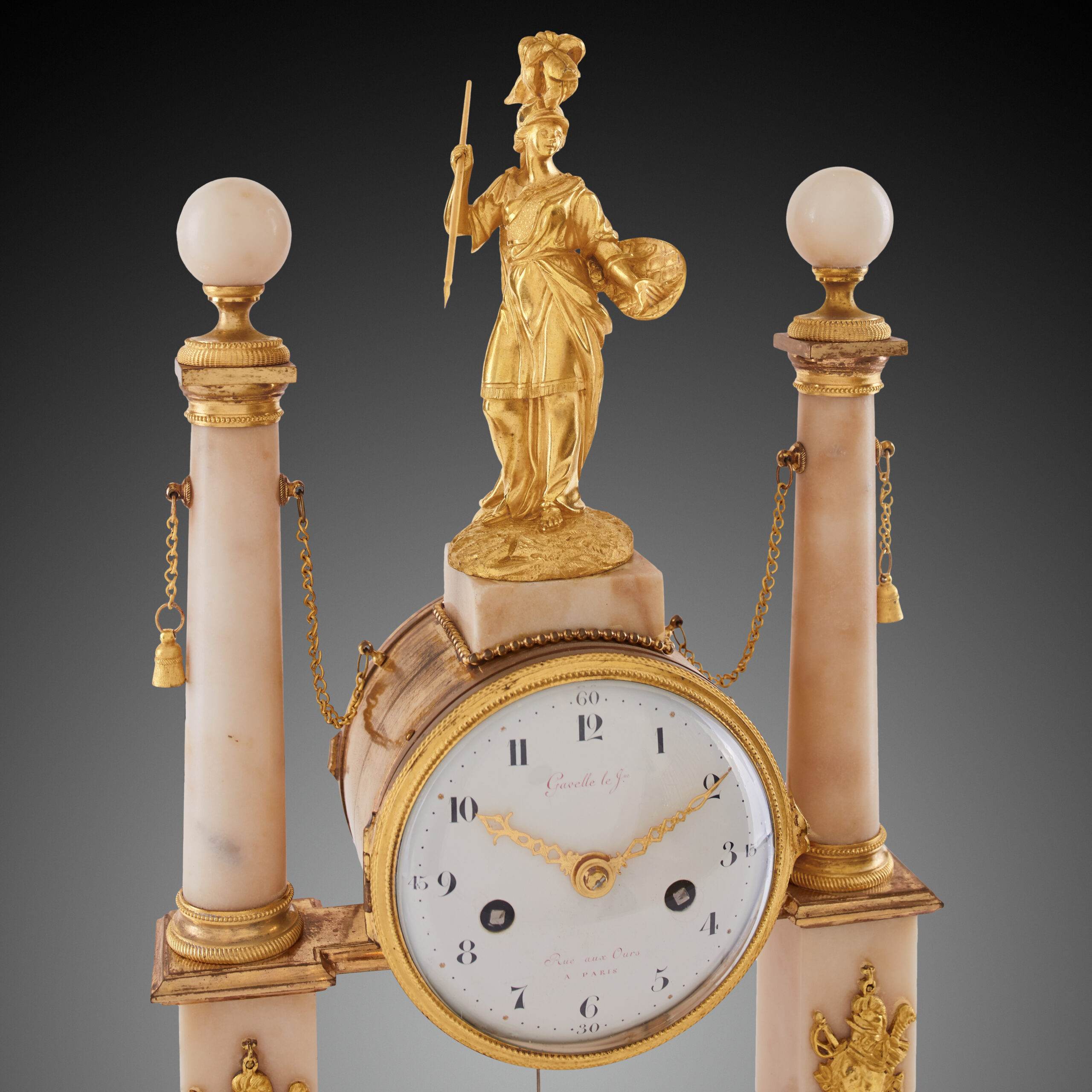
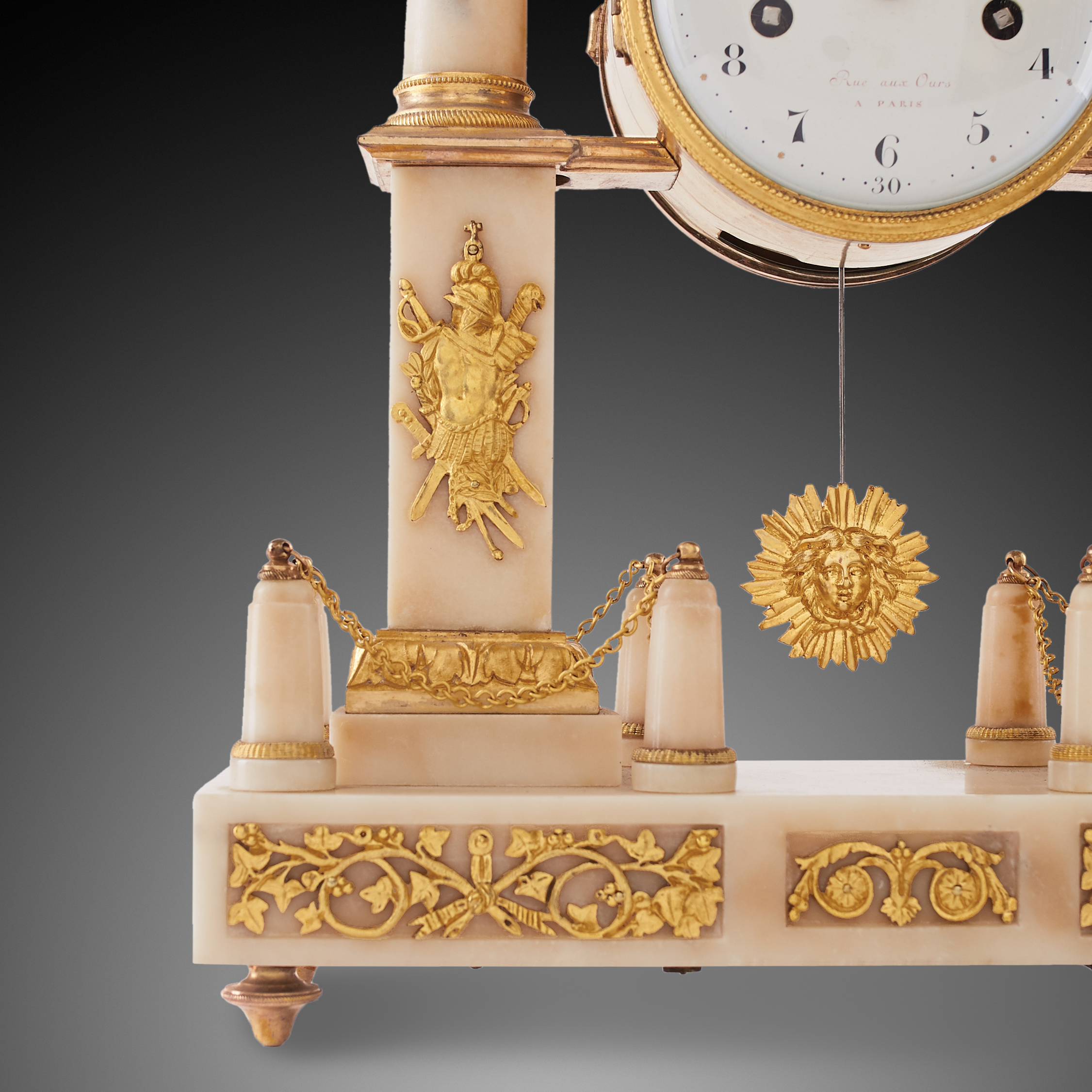
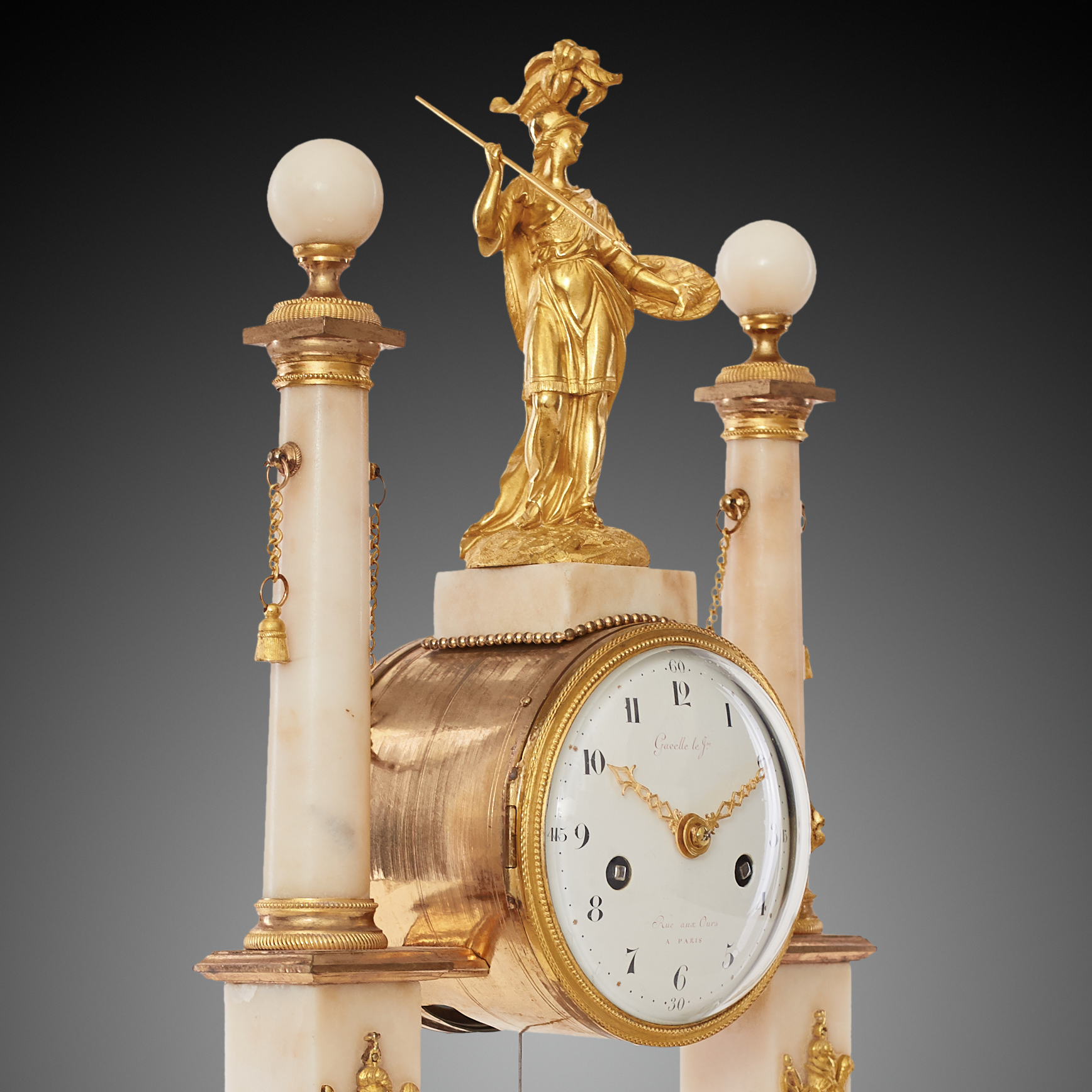
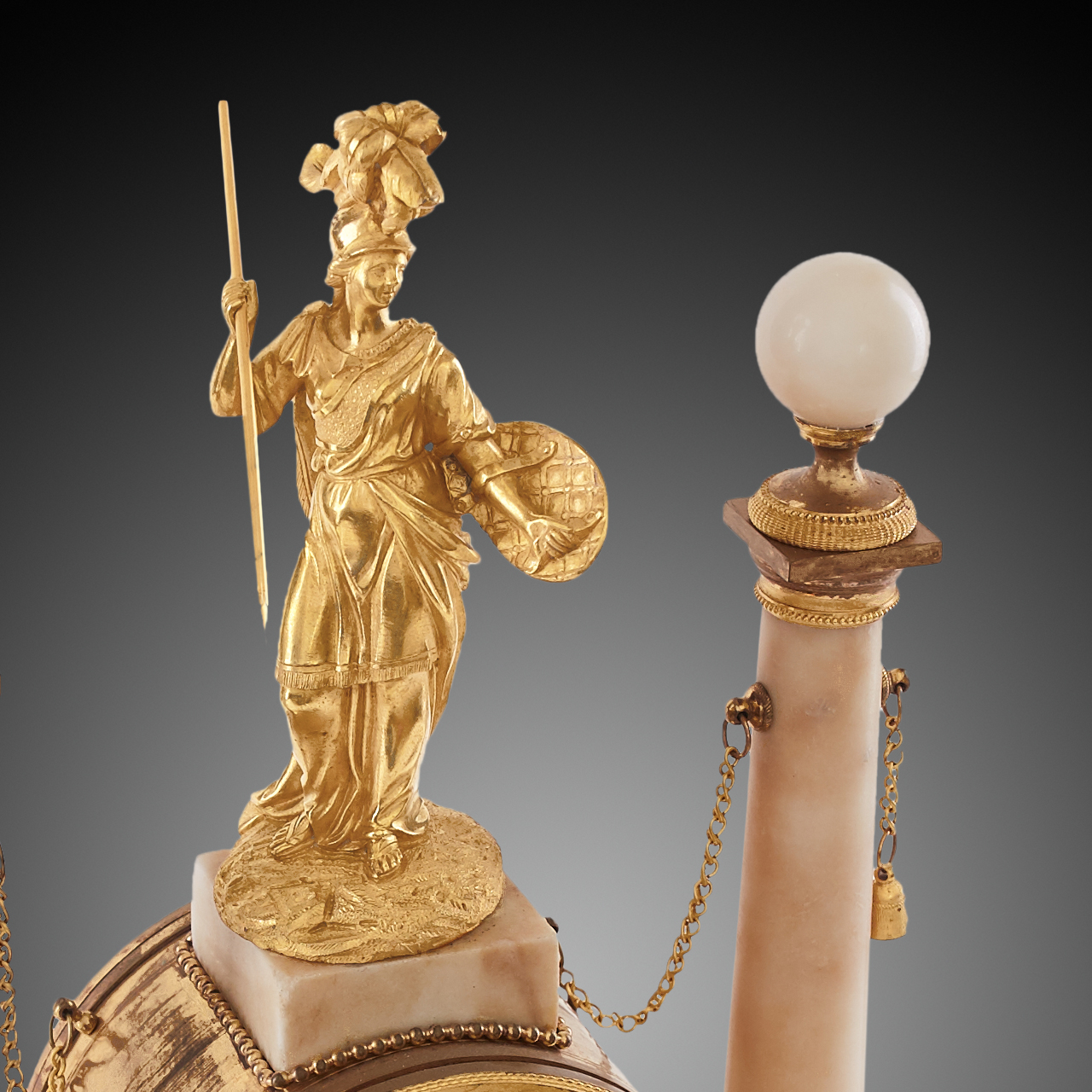
The central figure of Athena, or Minerva, is perfectly executed in gilded bronze. She stands at the top as the goddess of wisdom and strategic warfare, holding her shield and spear. This choice of deity fits the Enlightenment mindset perfectly-it implies that the owner of such a clock is someone who values reason and the disciplined passage of time. The theme continues down the columns with the ormolu mounts of armor, helmets, and swords, all of which are rendered with the sharp, clean lines that define the Neoclassical style.
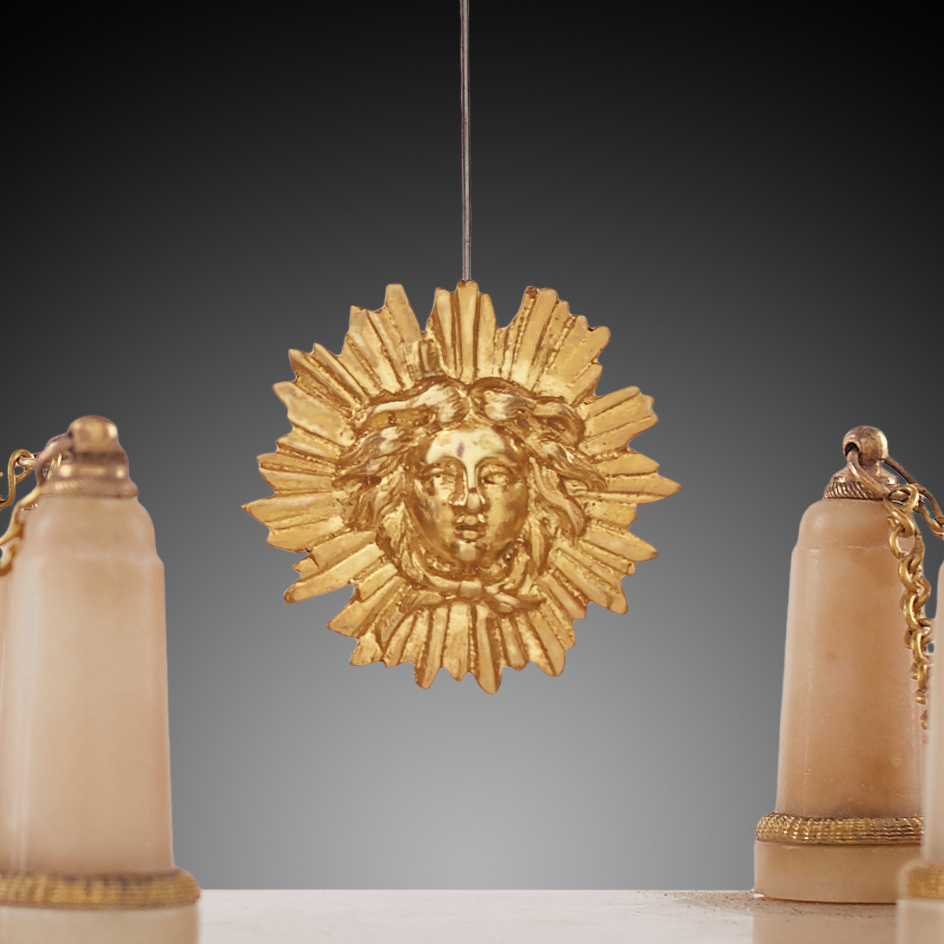
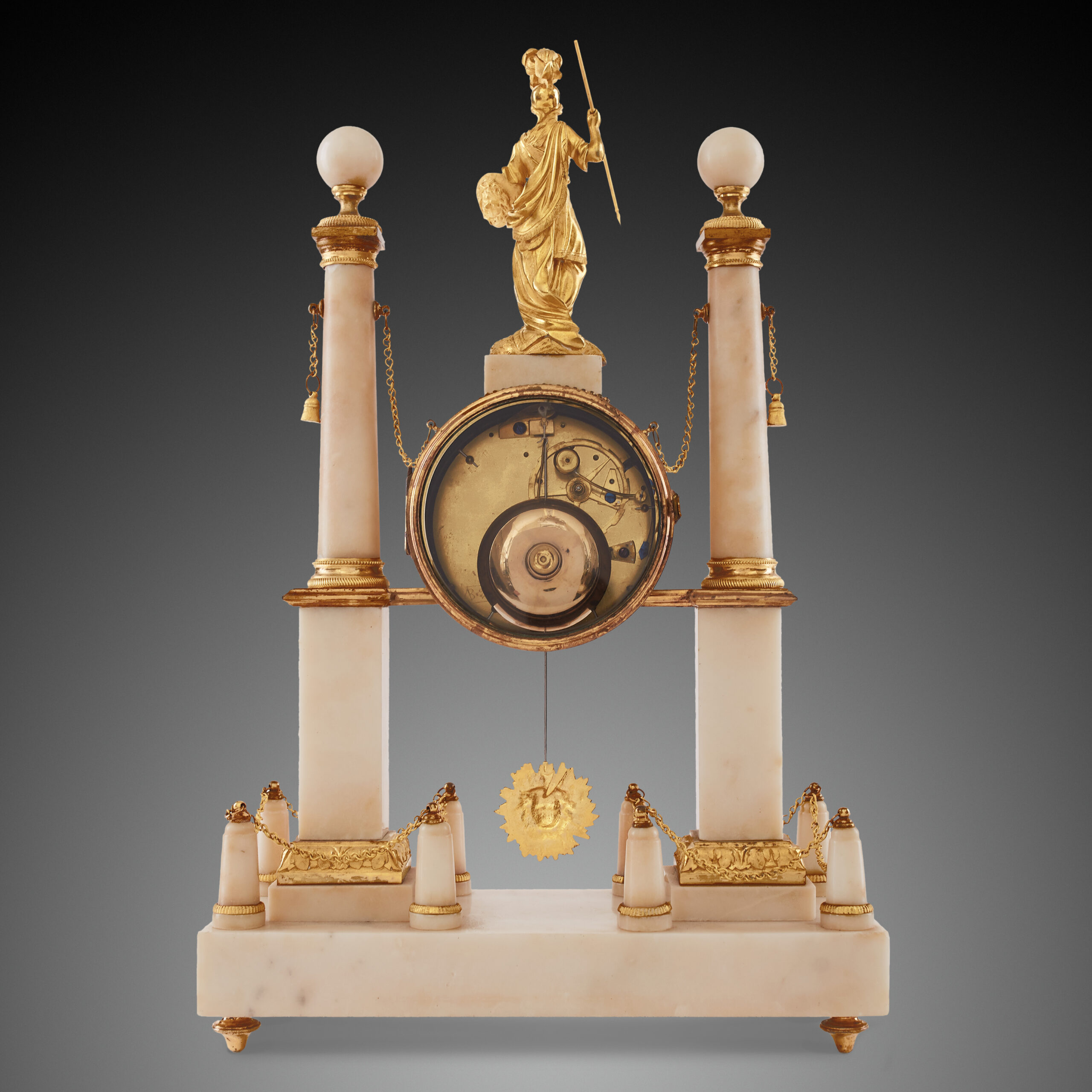
One of the most visually striking features is the suspended dial and the free-swinging sunburst pendulum. In a portico clock, the pendulum isn’t hidden away; it becomes part of the public display. The Medusa head on the sunburst adds a layer of ancient protective symbolism, and as it swings, it creates a rhythmic play of light that contrasts beautifully with the still, white marble of the frame. The small details, like the marble fence with its delicate brass chains and the ormolu friezes of grapevines on the plinth, show a level of craftsmanship where even the smallest decorative element was used to build a sense of luxury and order.
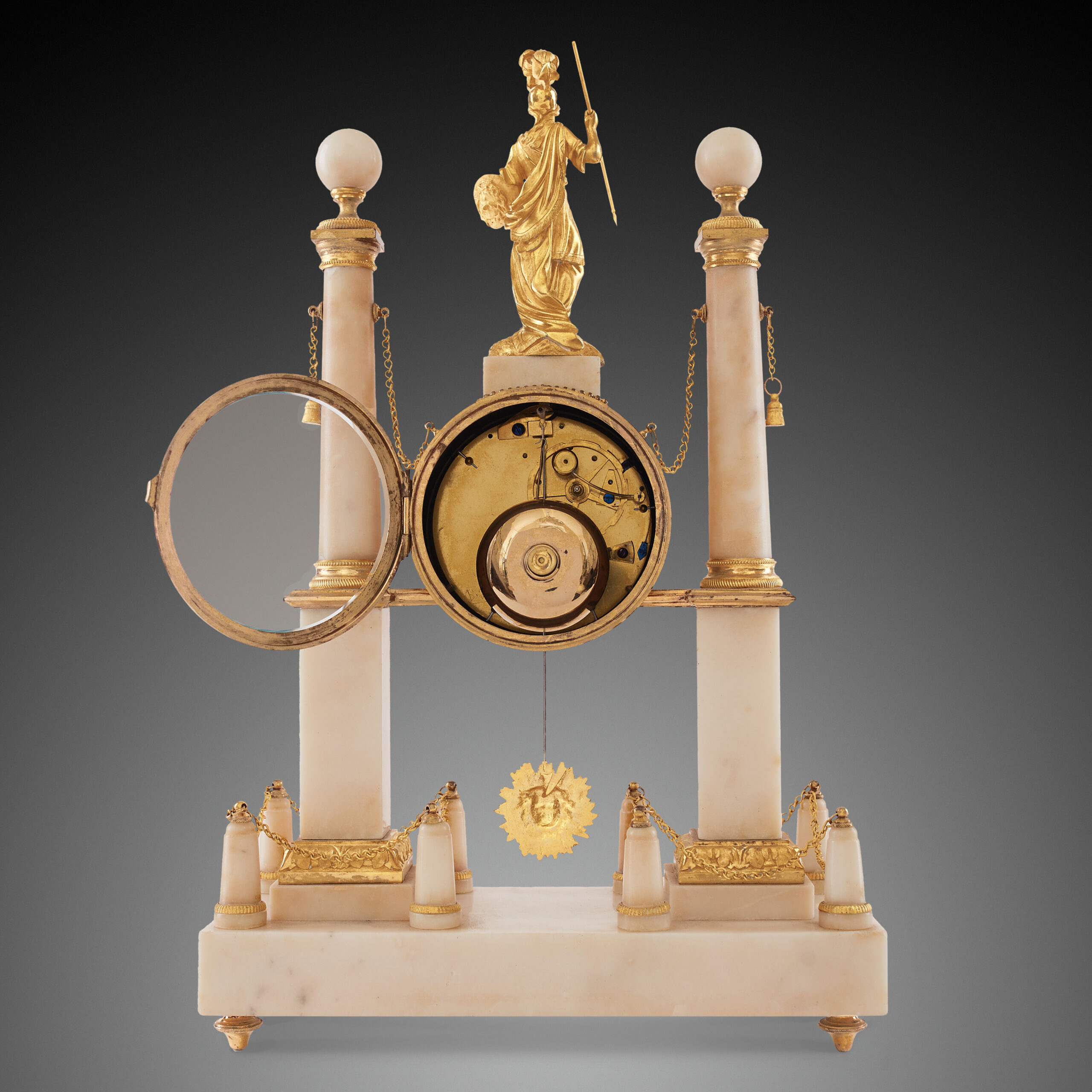
Technically, Gavelle was a respected name on the Rue aux Ours, and the movement inside is built to the high standards of 18th-century Parisian horology. The use of Arabic numerals on the enamel dial was a relatively modern touch for the time, leaning into the scientific clarity that the Louis XVI style championed. The bronze work itself likely used the mercury fire-gilding process, which provided that permanent, honey-colored luster that has stayed bright for over two hundred years.
Compared to the heavier Boulle style clocks or the solid sculptural Empire pieces in your collection, this portico clock offers a much lighter, more structural aesthetic. It’s a piece that relies on negative space and proportion to make a statement, showing how French makers could use the noble simplicity of antiquity to create something both powerful and elegant. The combination of the white marble obelisks and the free-swinging pendulum makes it a highly dynamic object that changes as you move around it, perfectly capturing the sophisticated atmosphere of a late 18th-century interior.