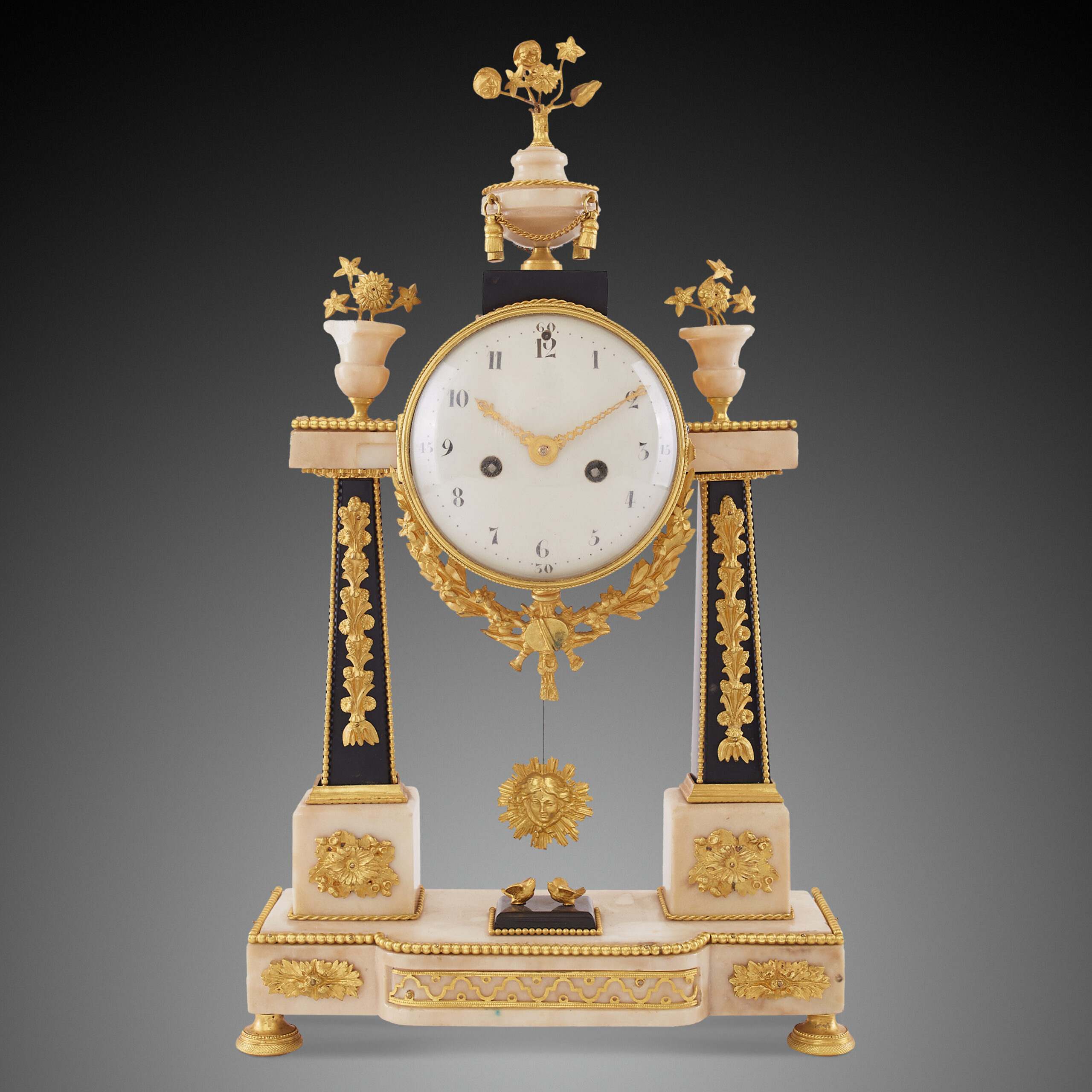
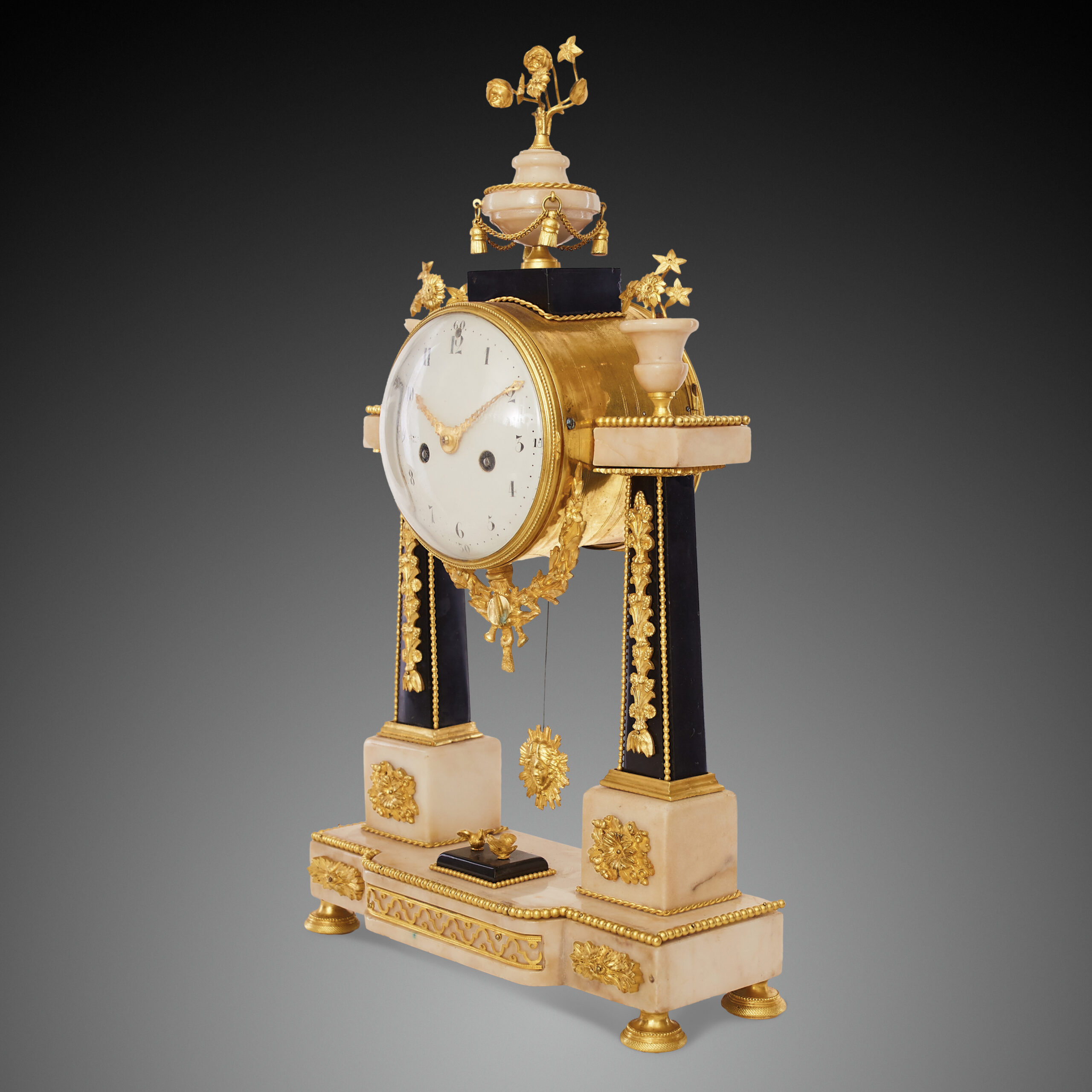
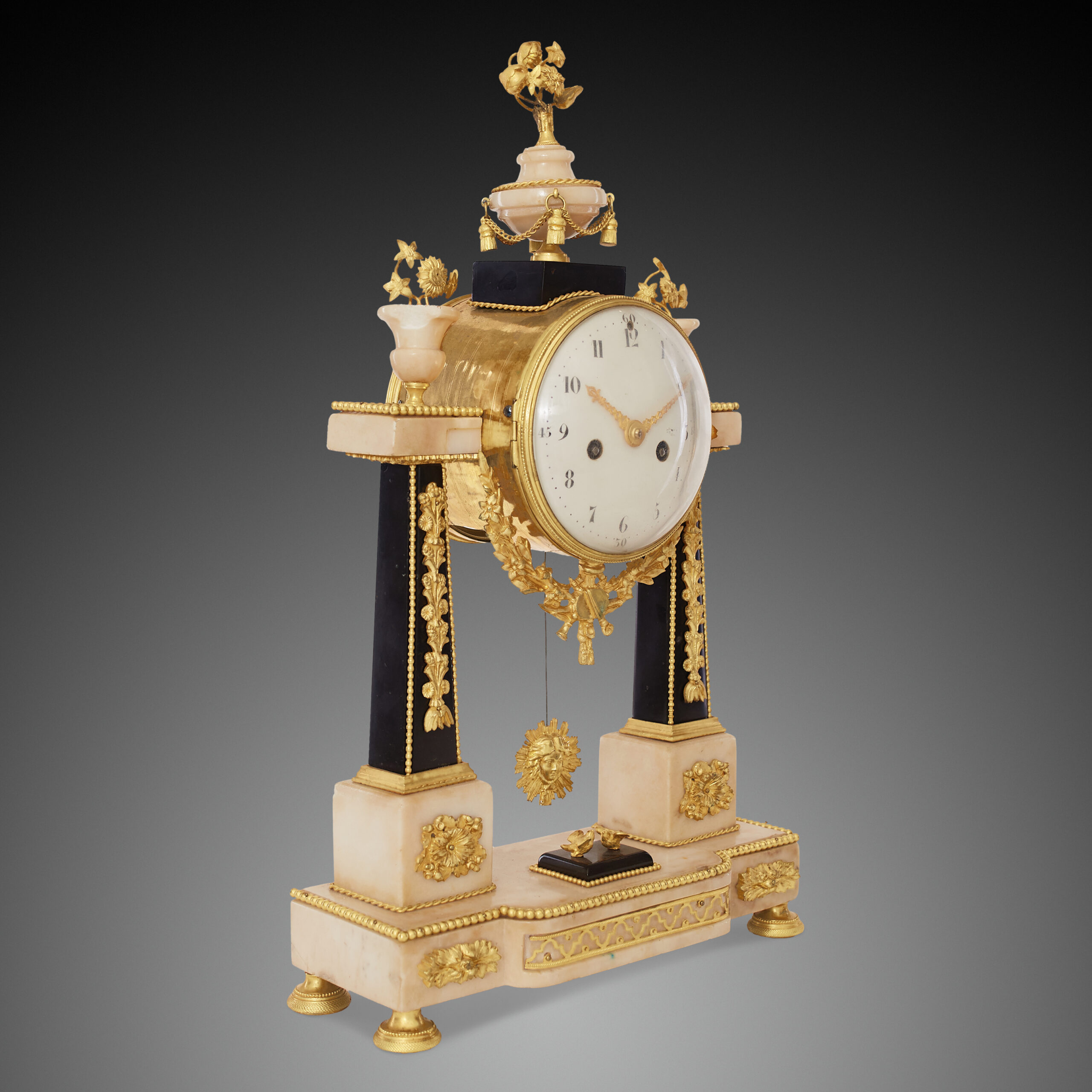
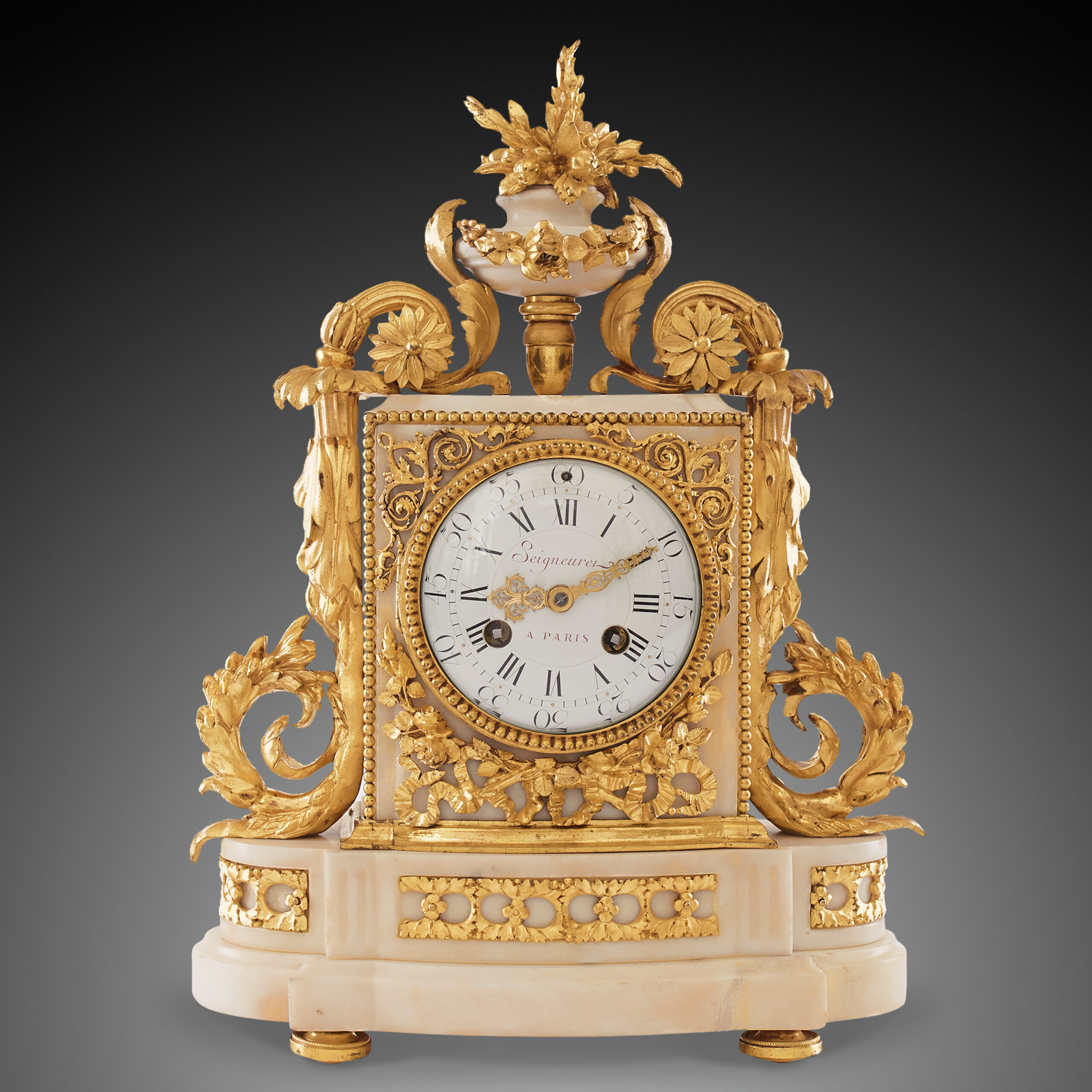
This elegant French mantel clock is a fine and characteristic example of the refined Neoclassical taste of the late Louis XVI period, dating from around 1785–1795. It belongs to the popular “portico” or “architectural” type that was highly fashionable in Parisian salons and private apartments during the final years of the Ancien Régime and the early Revolutionary period.
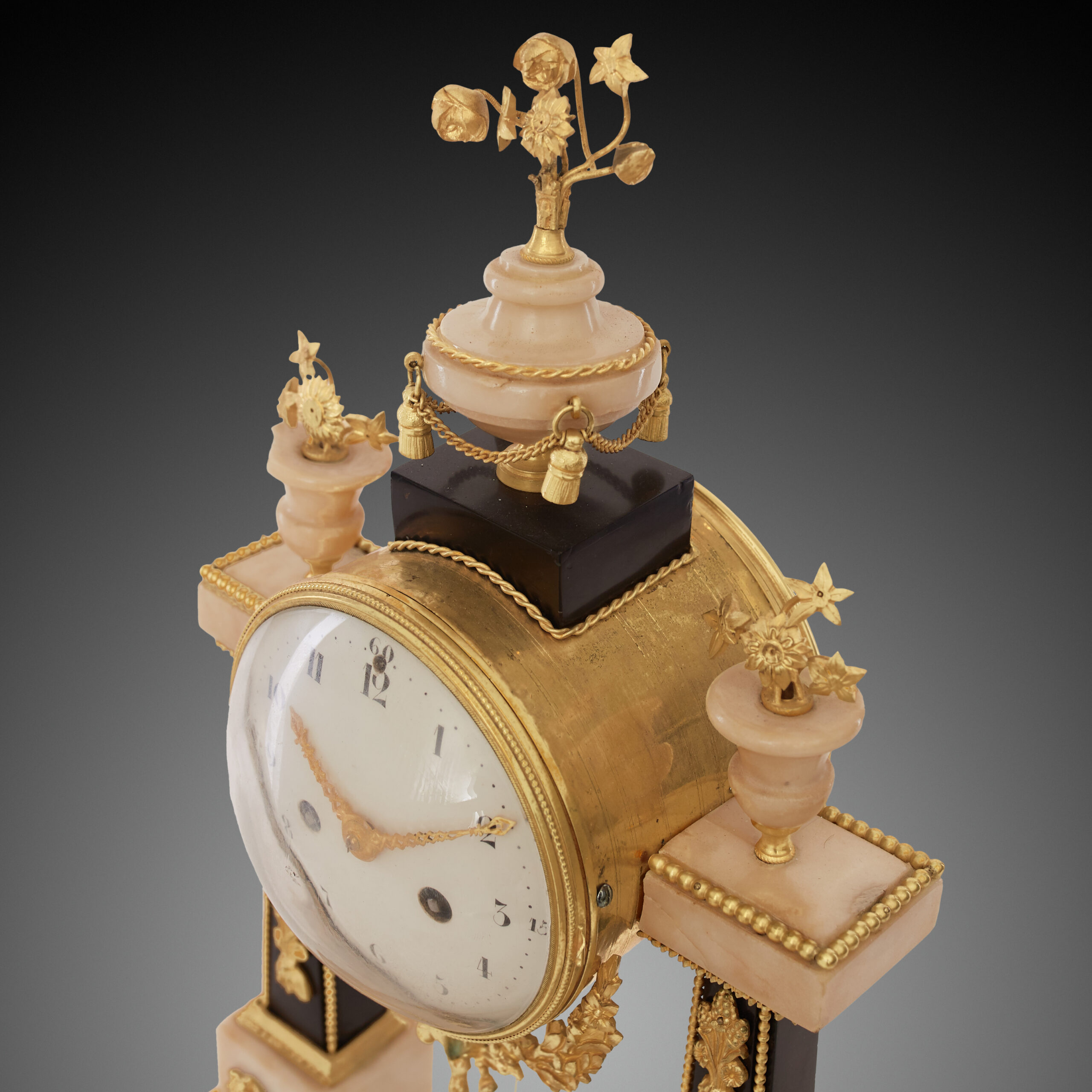
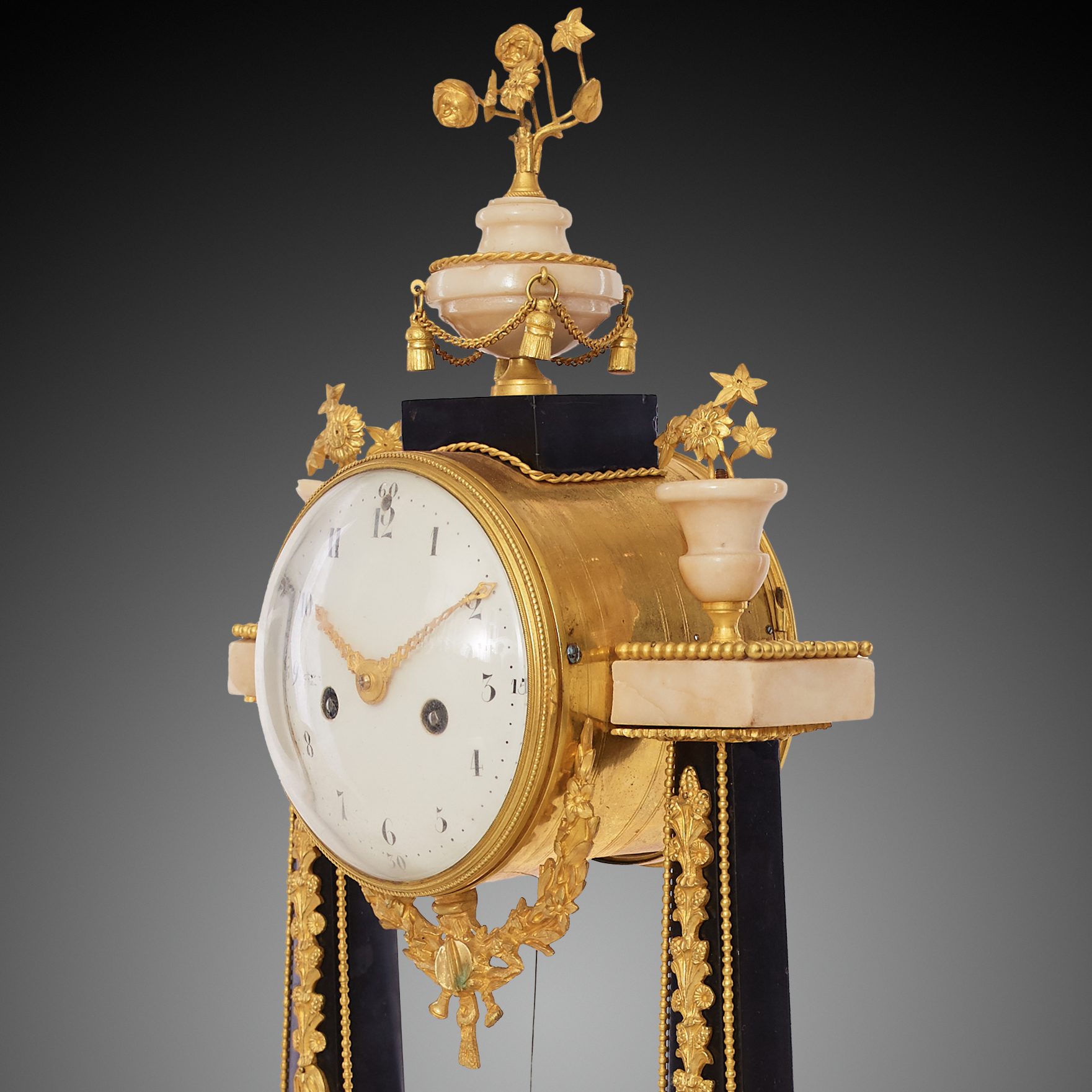
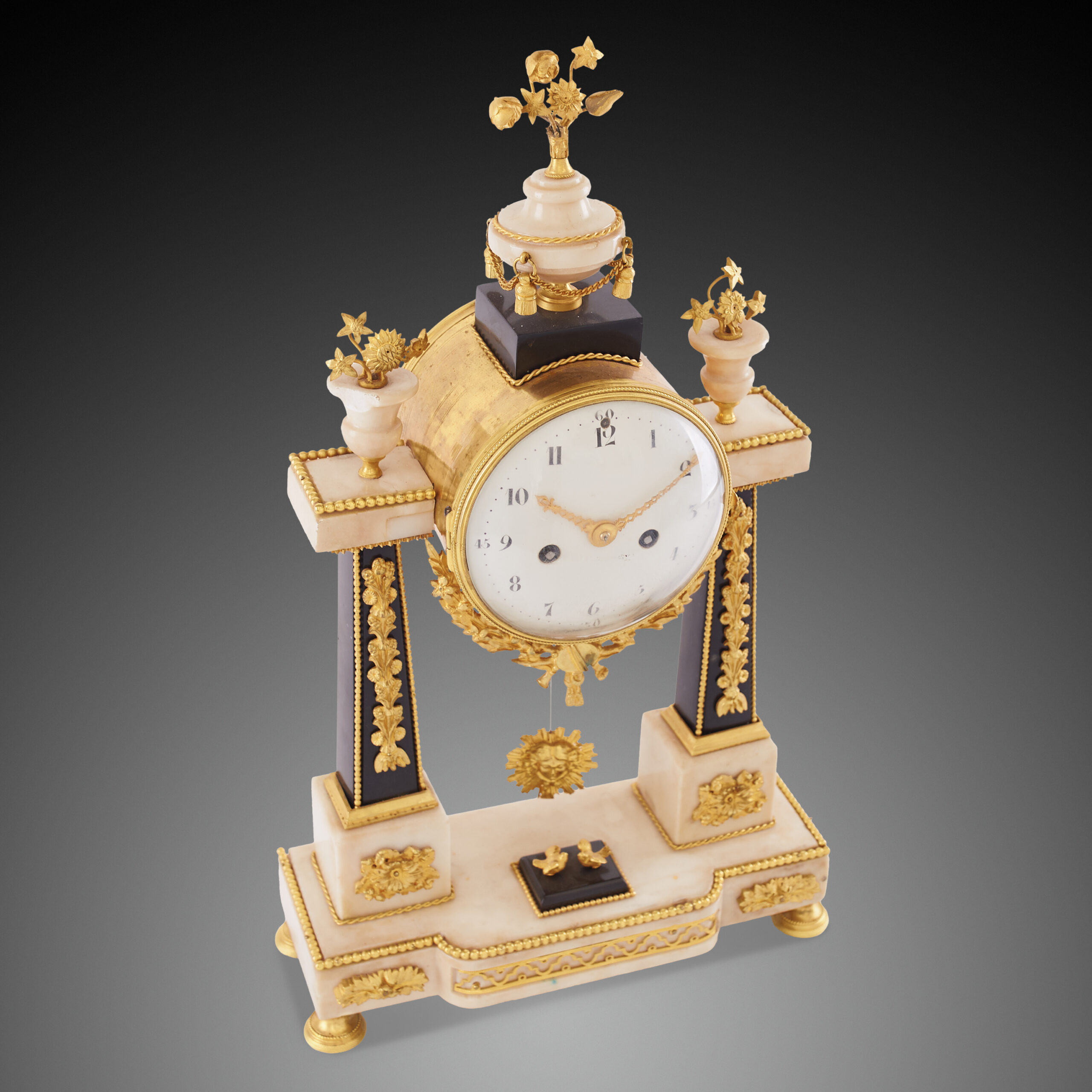
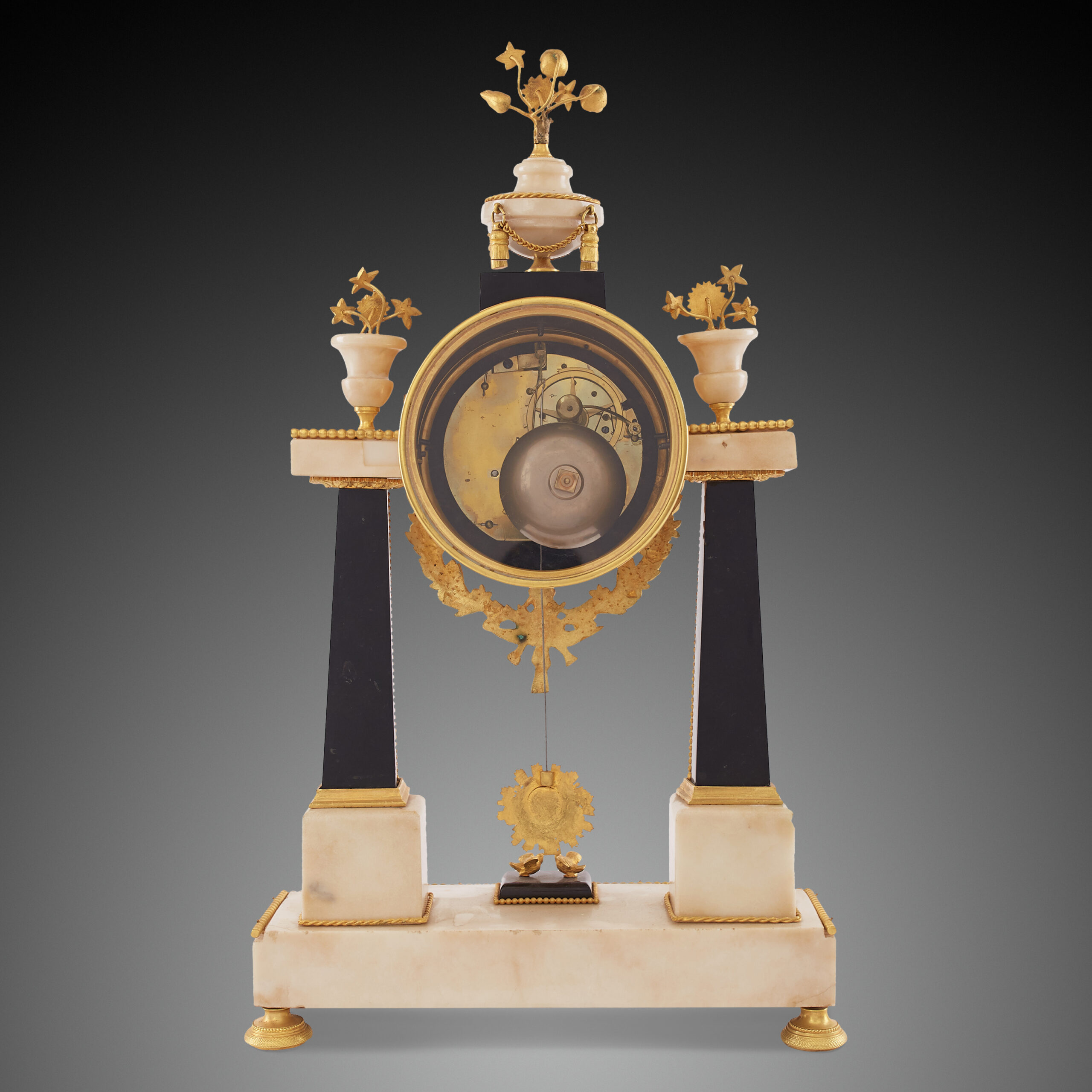
The clock is designed as a miniature temple façade, with two slender columns of black marble (or ebonized wood with gilt decoration) supporting an entablature and a stepped pediment. The columns are enriched with delicate gilt bronze mounts featuring classical motifs such as palmettes, husks, and laurel swags. At the top, a finely cast gilt bronze urn finial with flowers completes the architectural composition, while two smaller urns with floral sprays adorn the sides, adding a graceful and feminine touch typical of the Louis XVI style.
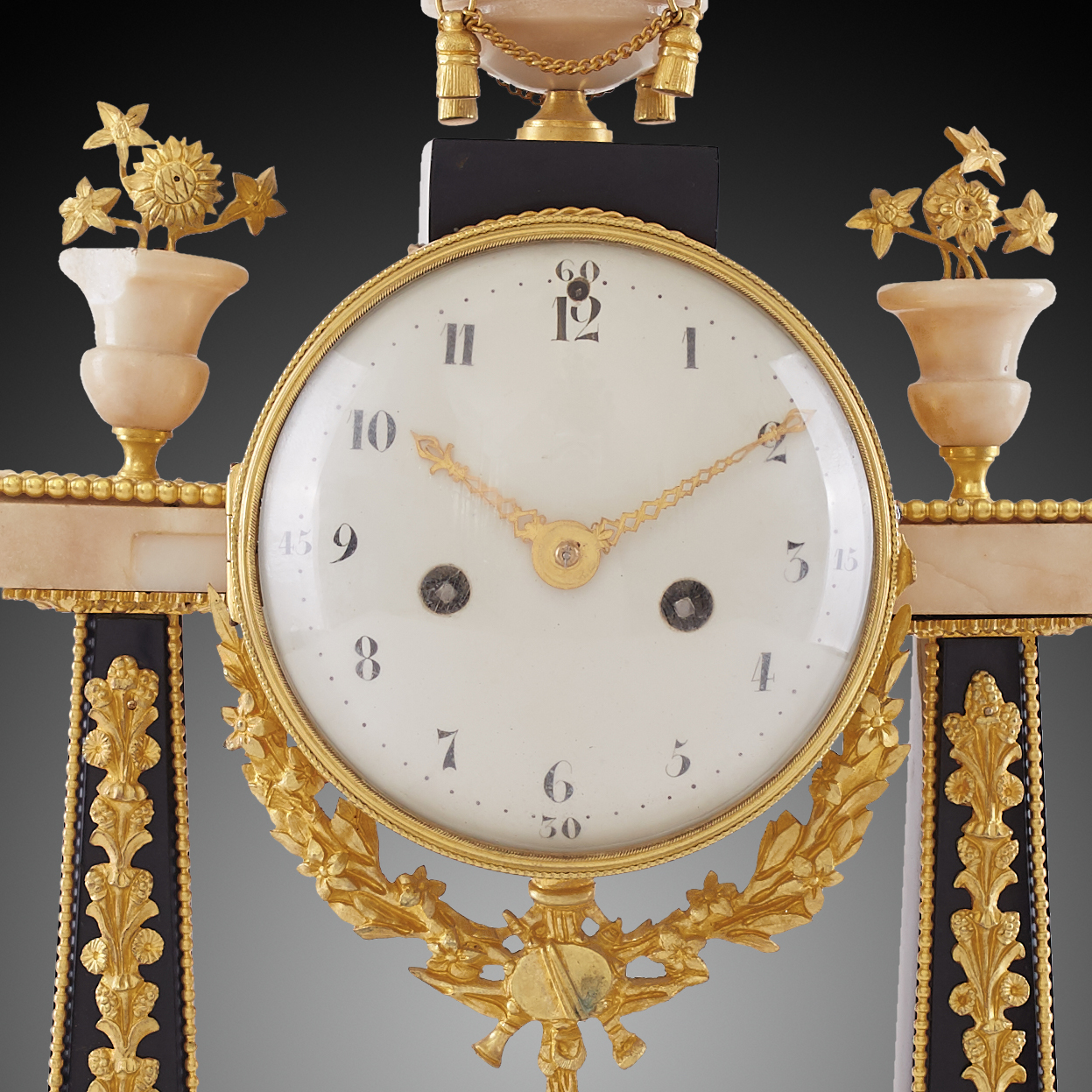
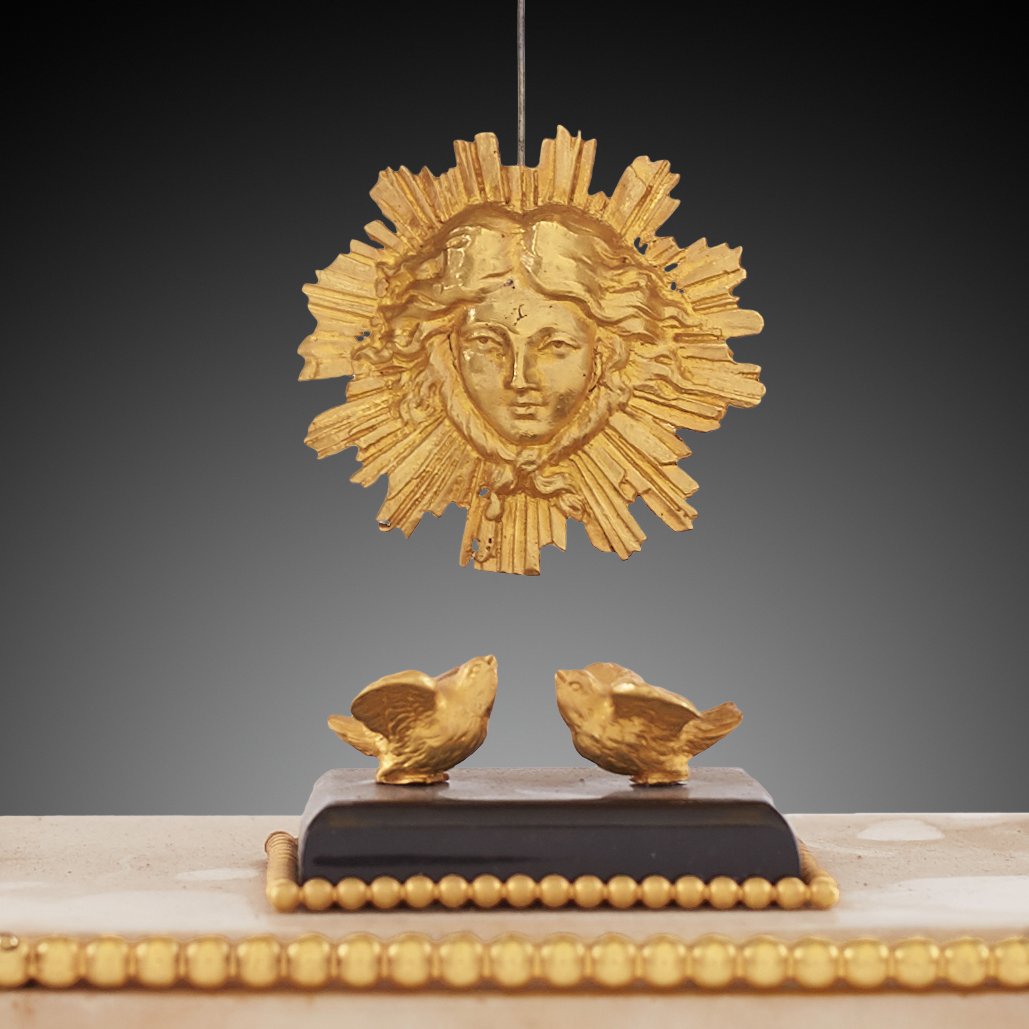
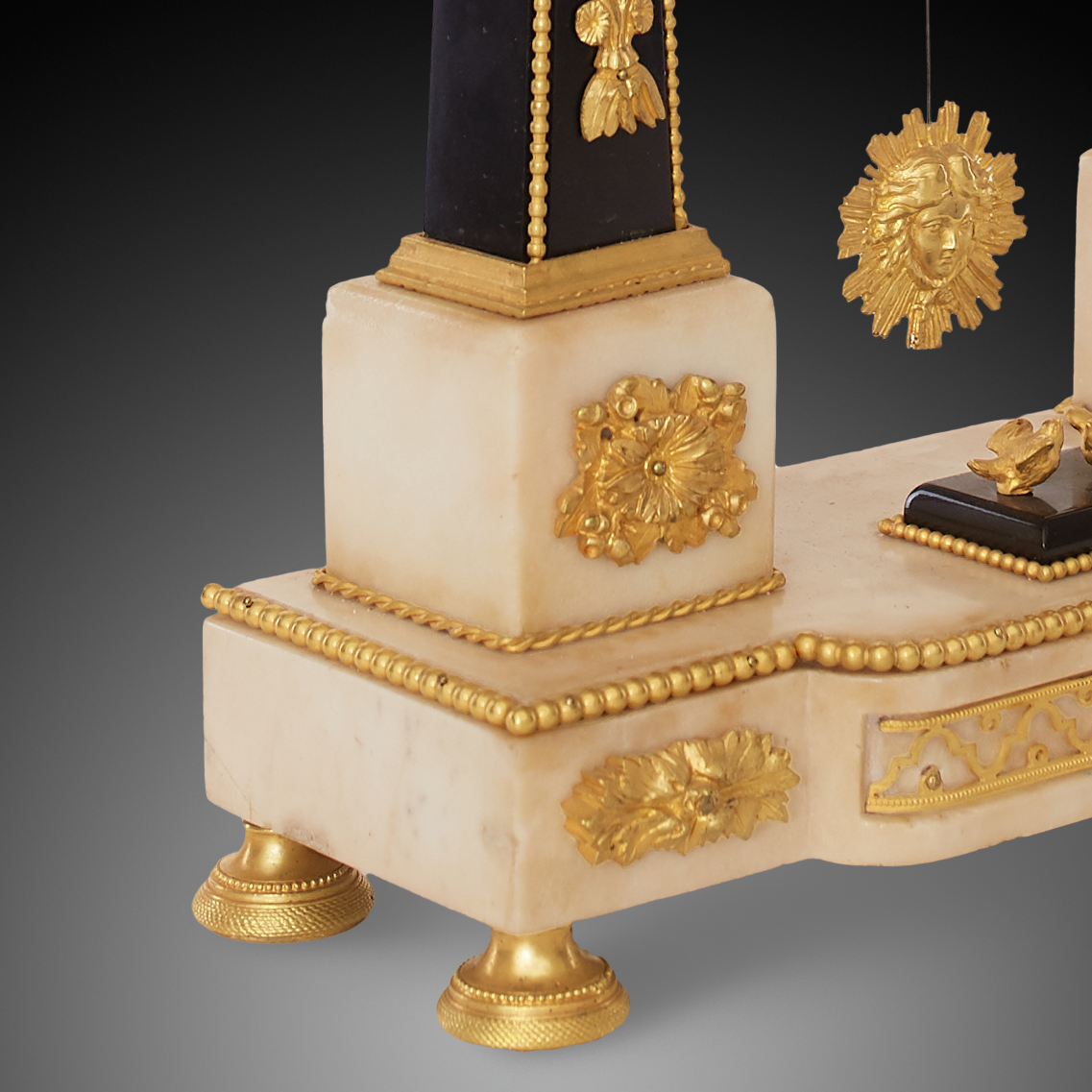
The circular white enamel dial is framed by a gilt bronze bezel with beading and presents Roman numerals with elegant gilt hands. Below the dial hangs an exposed sunburst pendulum with a pierced and gilded bob, which adds both visual interest and a gentle kinetic element to the piece. The base is executed in white marble with gilt bronze mounts, including a frieze of classical ornament and delicate feet that give the clock a light and elevated appearance.
This type of clock reflects the shift from the exuberant curves of the Rococo toward symmetry, restraint, and archaeological correctness inspired by the discoveries at Pompeii and Herculaneum. The combination of black and white marble with warm gilt bronze creates a sophisticated contrast that was particularly prized in refined interiors of the time.
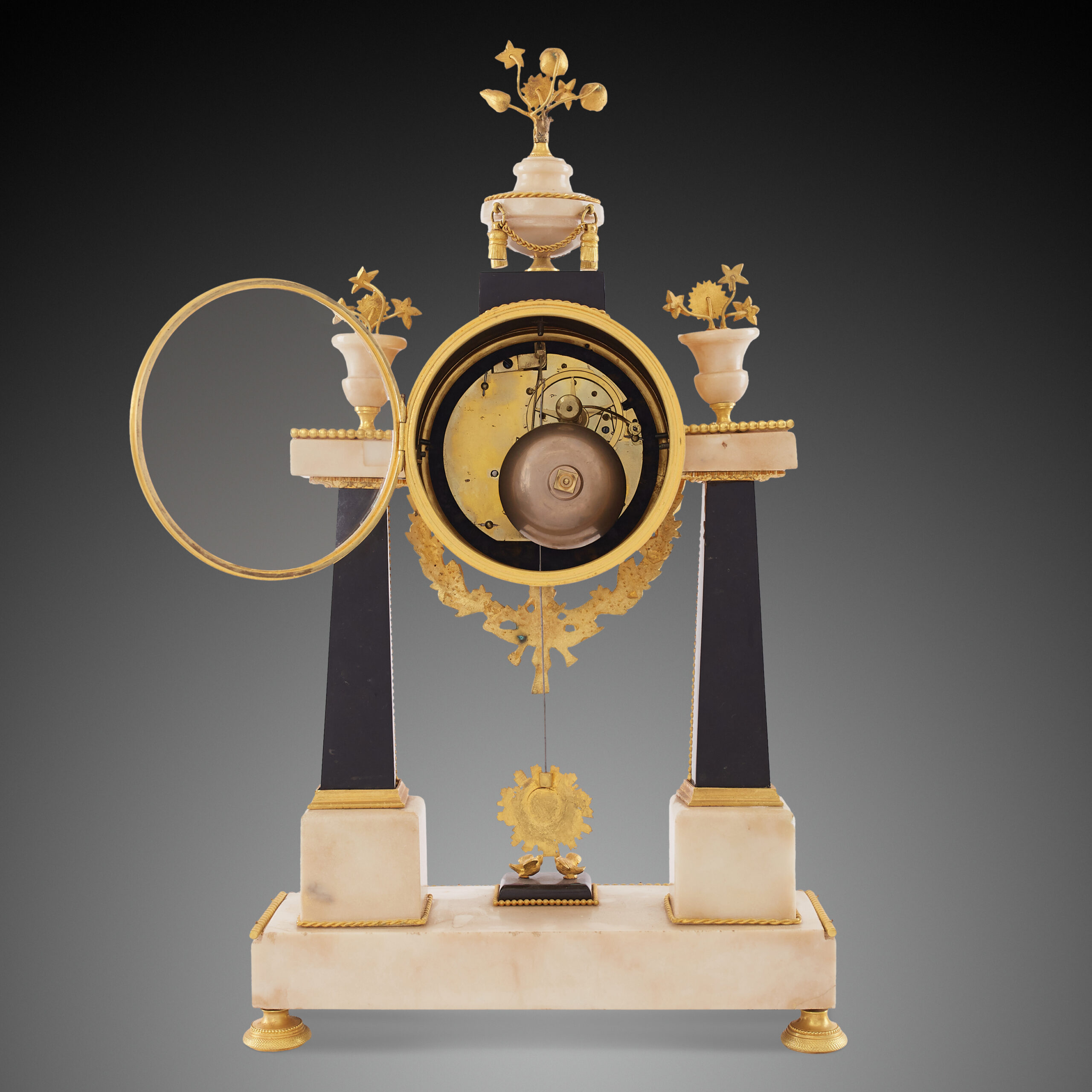
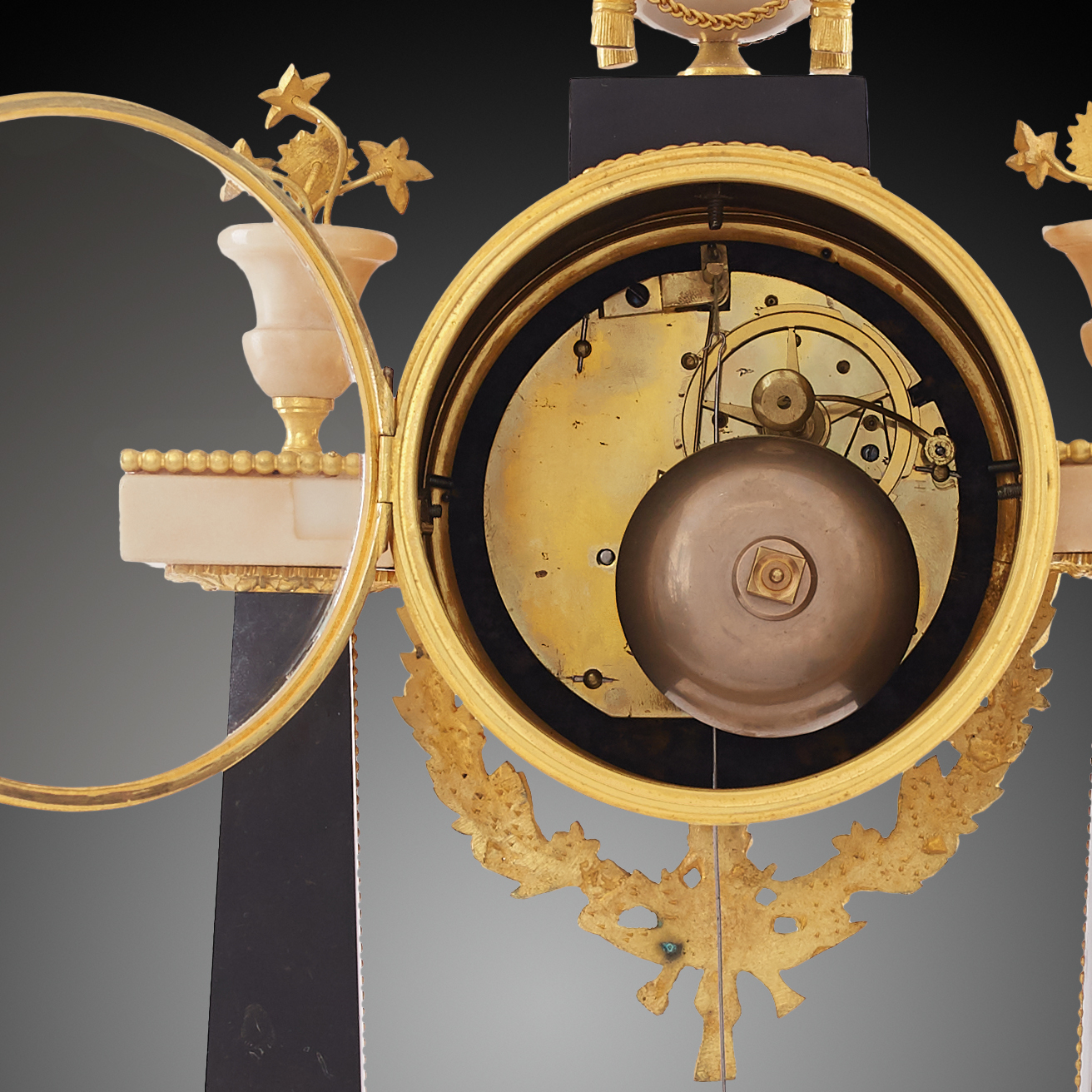
Mechanically, the clock is fitted with a reliable eight-day movement that strikes the hours and half-hours on a clear bell. It has been professionally cleaned and serviced by a specialist in museum-quality timepieces and remains in excellent cosmetic and fully working condition. It comes complete with its original pendulum, winding key, and bell.
When placed on a mantelpiece, the clock offers a perfect balance of architectural dignity and delicate ornament. The black columns frame the dial elegantly, while the gilt details catch the light with quiet refinement. The gentle swing of the sunburst pendulum and the soft chime on the half-hour bring a living rhythm that enhances the serene and civilized atmosphere of a Louis XVI interior.
This is a charming and authentic example of late 18th-century French horology, where technical precision meets classical elegance. Its harmonious proportions and high-quality materials make it a delightful addition to any collection of Neoclassical decorative arts.