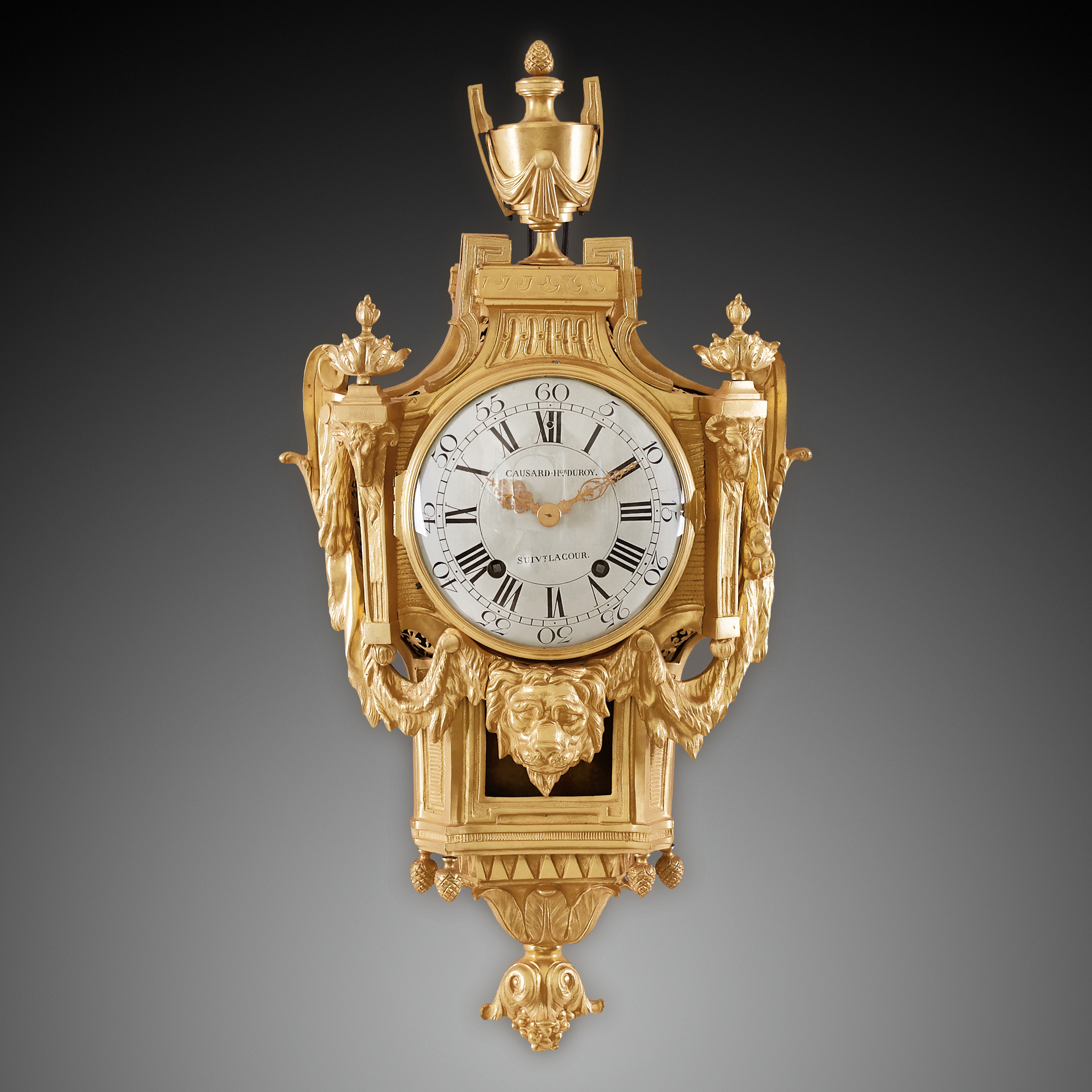
This exquisite Louis XVI cartel clock is a superlative example of late 18th-century French decorative arts, showcasing the unparalleled elegance of the Neoclassical period. Its design, which can be attributed to the renowned bronzier Robert Osmond, is a masterclass in balanced proportions and refined ornamentation.
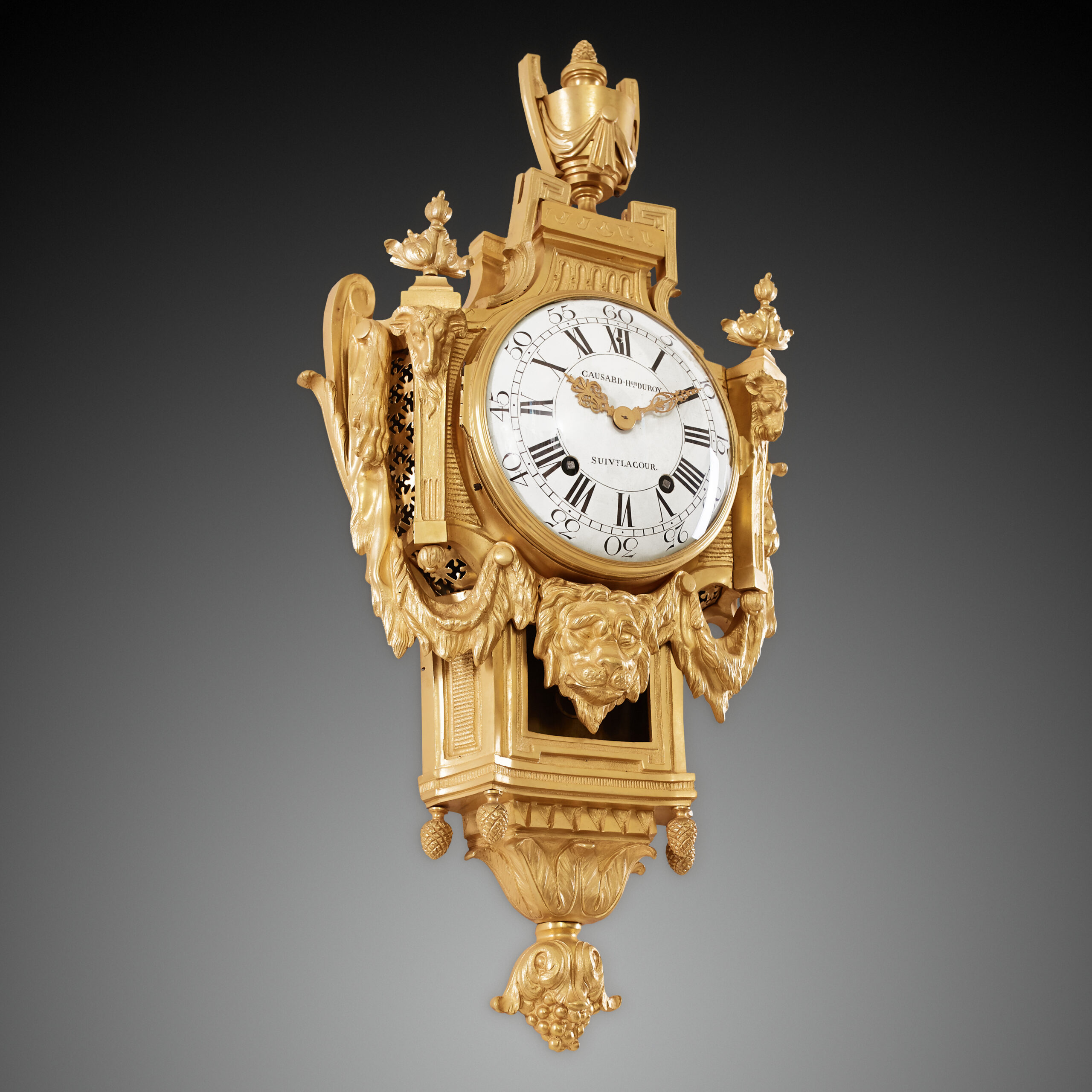
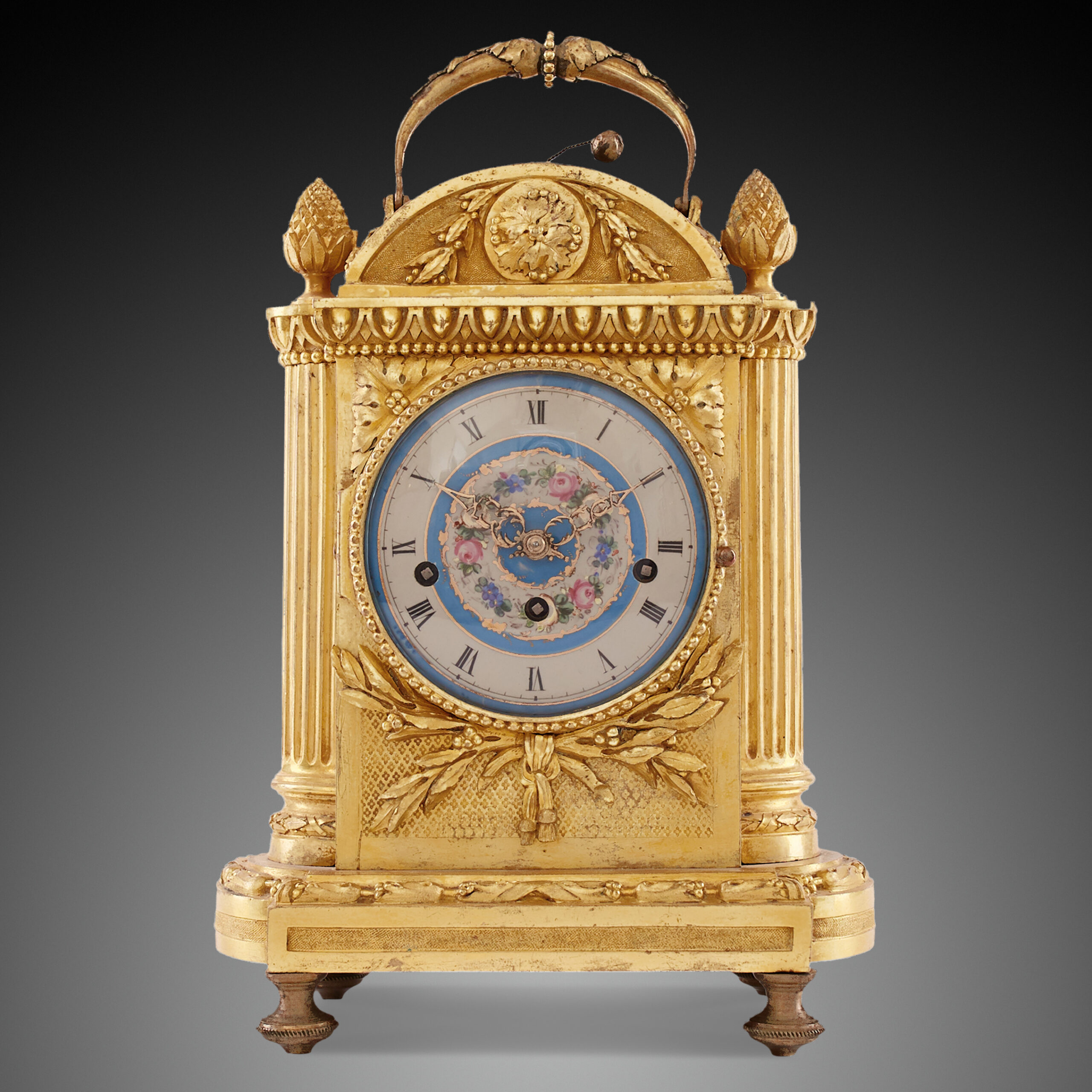
The clock is executed in original mercury-gilded bronze (ormolu), a process that imparts a deep, permanent warmth and luster unmatched by modern finishing techniques. The dial is signed “Causard H. du Roy” and “Suivt Lacour,” identifying it as a product of the Causard workshop, whose reputation for mechanical excellence earned them the esteemed title of Horologist to the King. The white enamel dial, featuring both Roman and Arabic numerals, is a hallmark of the period’s focus on both aesthetic harmony and clear functionality.
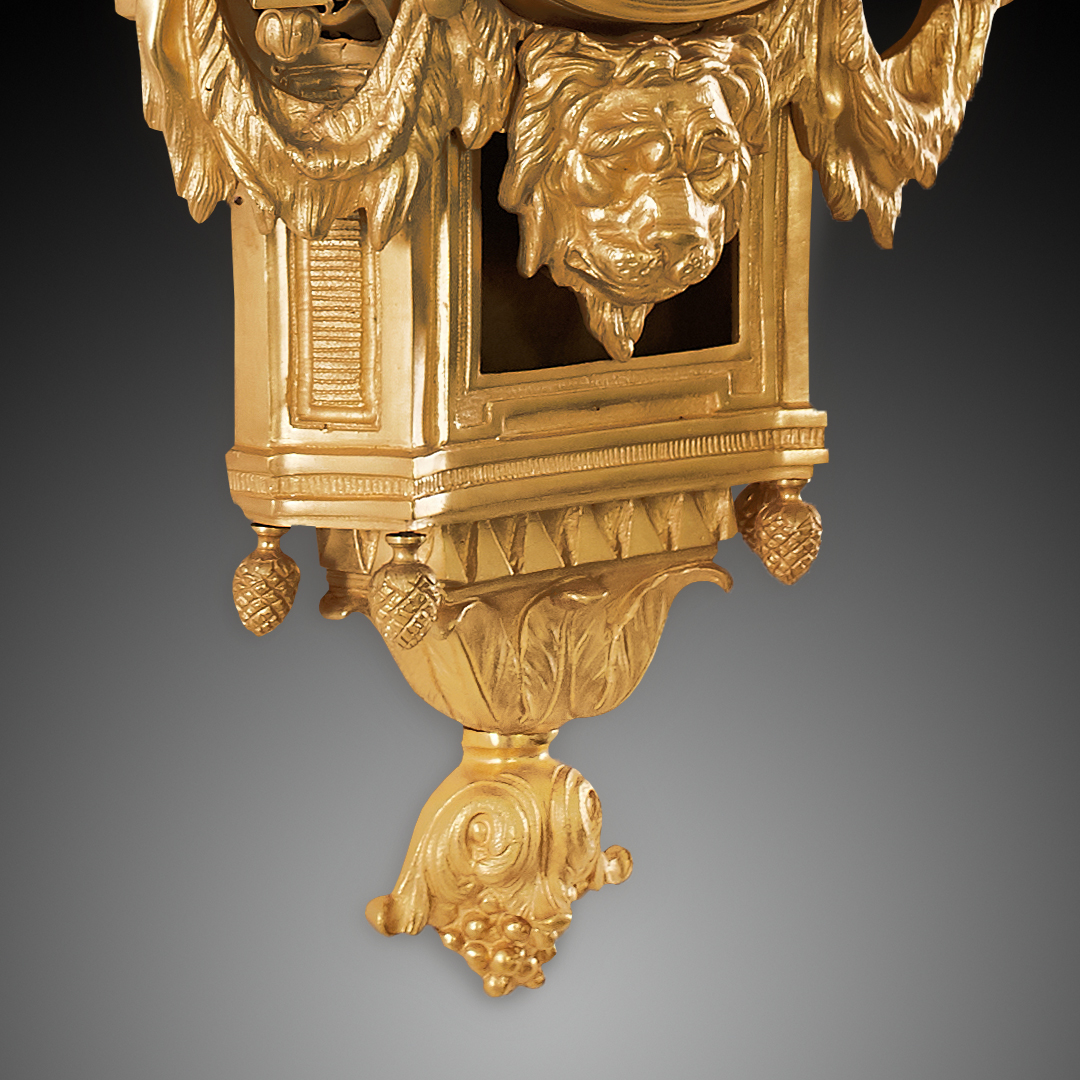
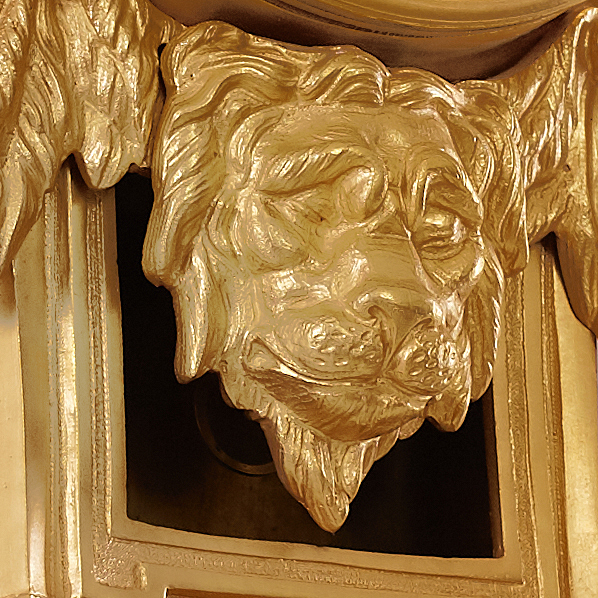
The iconographic details are rich with the symbolism favored by the French court during the reign of Louis XVI. The dial is crowned by a classical urn draped in swags, a ubiquitous motif that symbolized mourning and the passage of time. The sides of the case are flanked by fluted columns capped with goat’s heads, while lion skins-symbols of strength-are draped elegantly over the frame. Beneath the dial, a bold, high-relief lion’s mask stares out with commanding presence, and the entire structure tapers gracefully toward a decorative pomegranate finial, a symbol of fertility and abundance often used in 18th-century metalwork.
Robert Osmond, to whom this case design is attributed, was one of the most prolific and innovative maîtres-fondeurs (master casters) of the period. His ability to synthesize complex classical motifs into a cohesive, rhythmic whole made him a favorite among the Parisian elite. This clock is not merely a tool for marking the hours; it is a structural sculpture designed to integrate seamlessly into the high-style paneling (boiserie) of an 18th-century French interior.
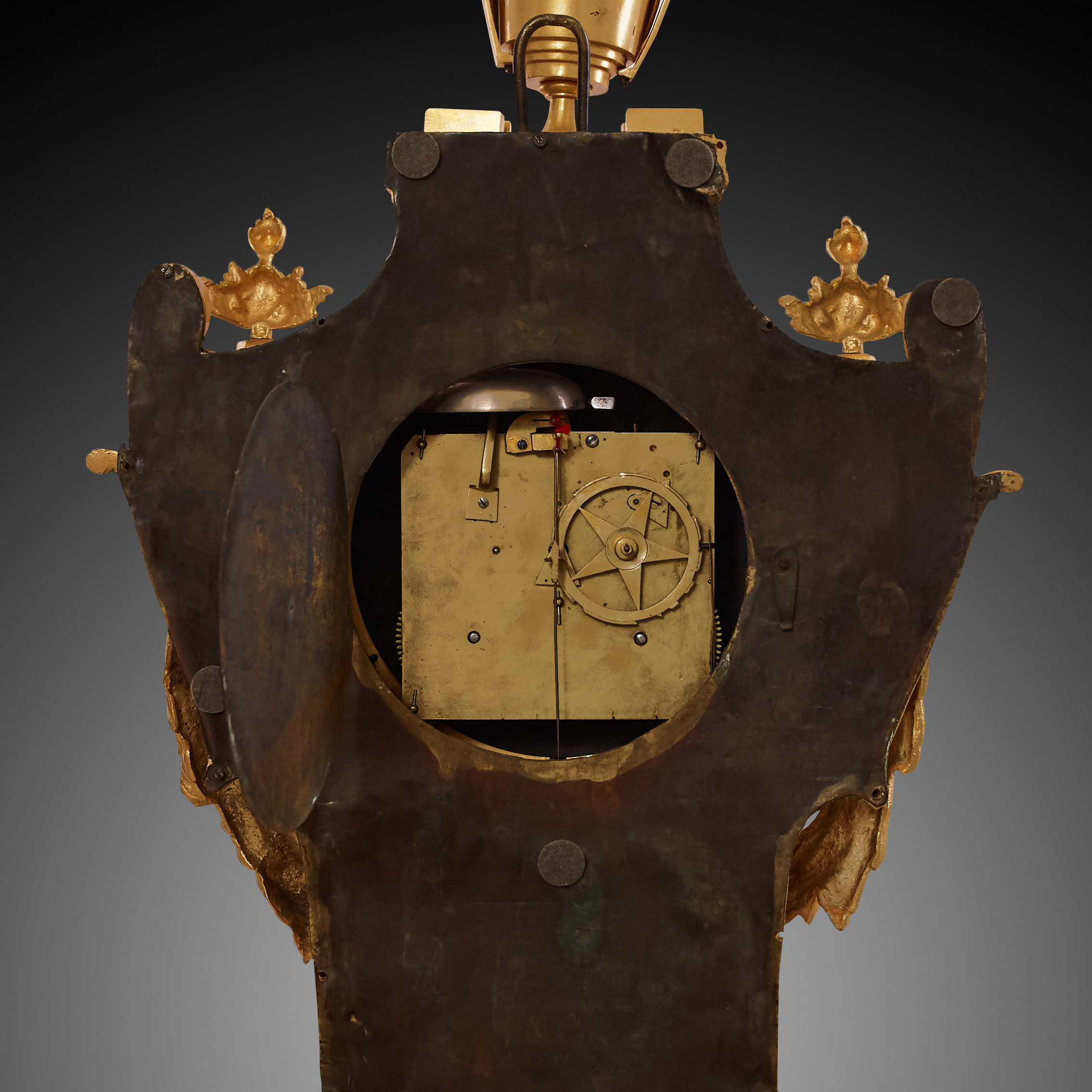
Mechanically, the clock is in exemplary working condition. It features an eight-day movement that has been recently serviced by a professional horologist specializing in museum-grade maintenance. It strikes both the hour and the half-hour on its original resonant bell. The clock is delivered complete with its pendulum, winding key, and bell, ensuring that it remains as functional as it is beautiful.
This piece represents the culmination of a period when horology and metallurgy were elevated to the status of high art. It serves as a tangible connection to the sophisticated atmosphere of the pre-revolutionary French court, capturing a moment in history when craftsmanship was driven by an uncompromising pursuit of perfection.