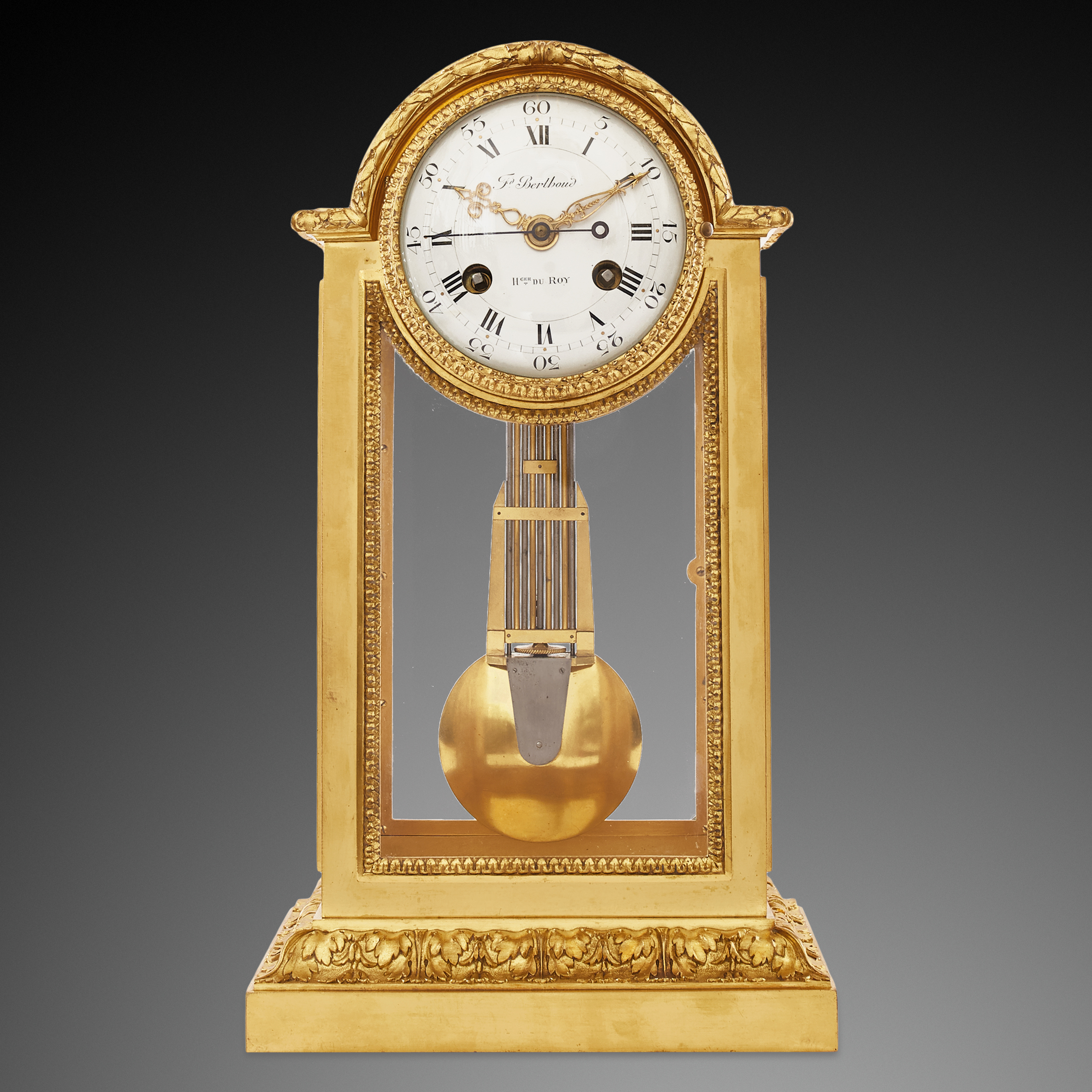
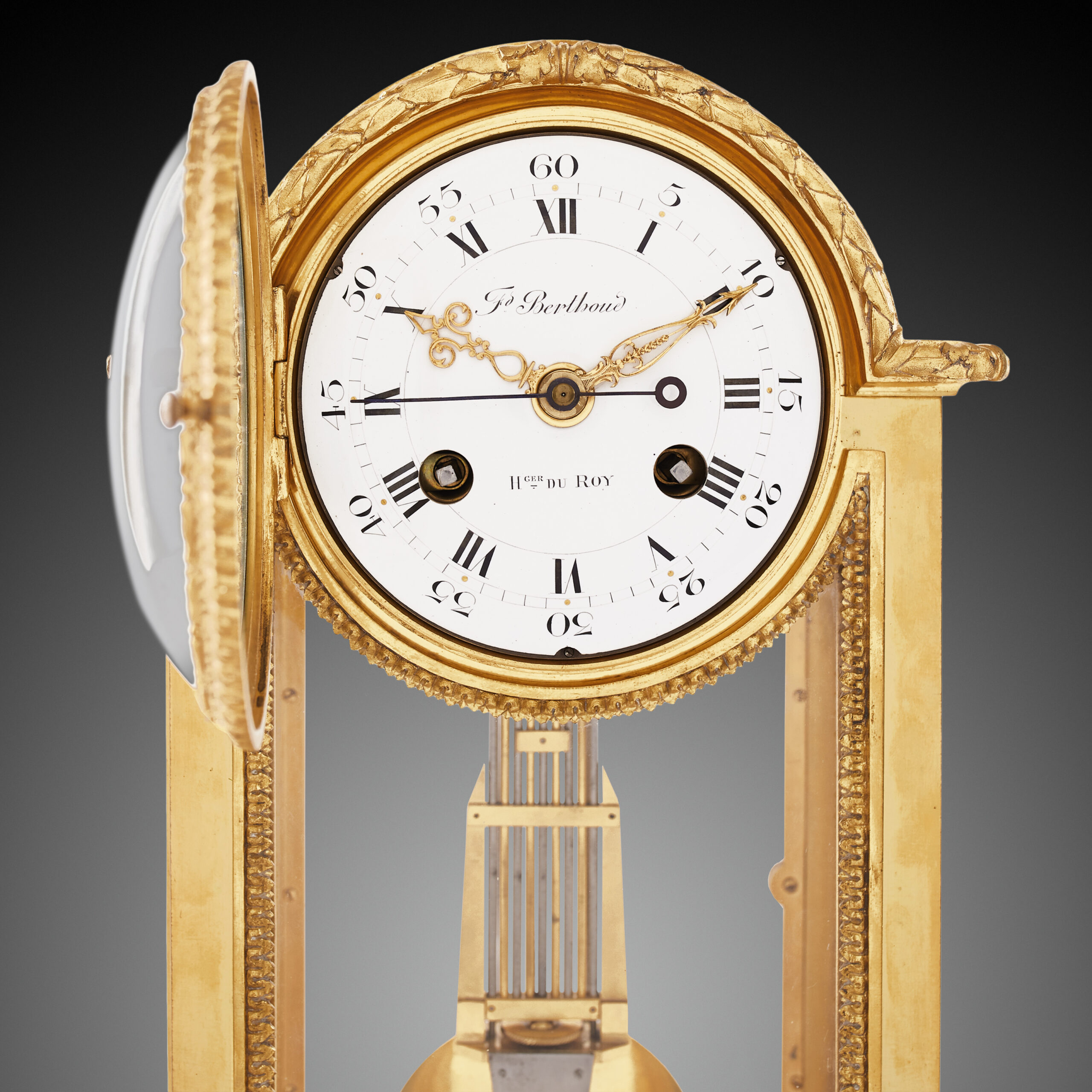
This exceptional French skeleton mantel clock is a distinguished horological specimen from the late 18th or early 19th century, featuring a movement signed by the legendary Ferdinand Berthoud. As one of the most significant figures in the history of timekeeping, Berthoud was a master scientist and watchmaker who served as the “Horologist-Mechanic by appointment to the King and the Navy.” His contributions to the development of marine chronometers were instrumental in solving the problem of longitude at sea, making his signature one of the most coveted in the world of antique clocks.
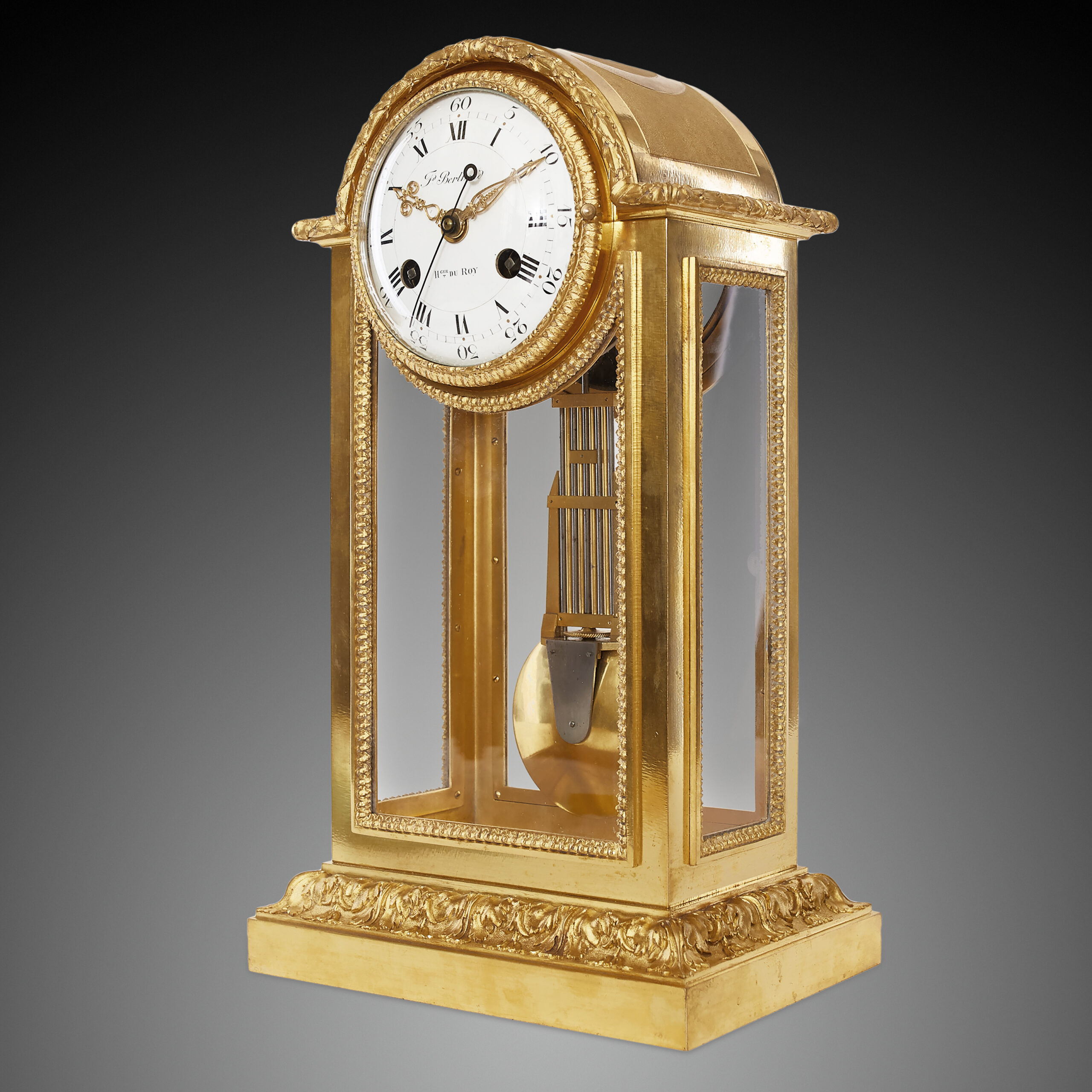
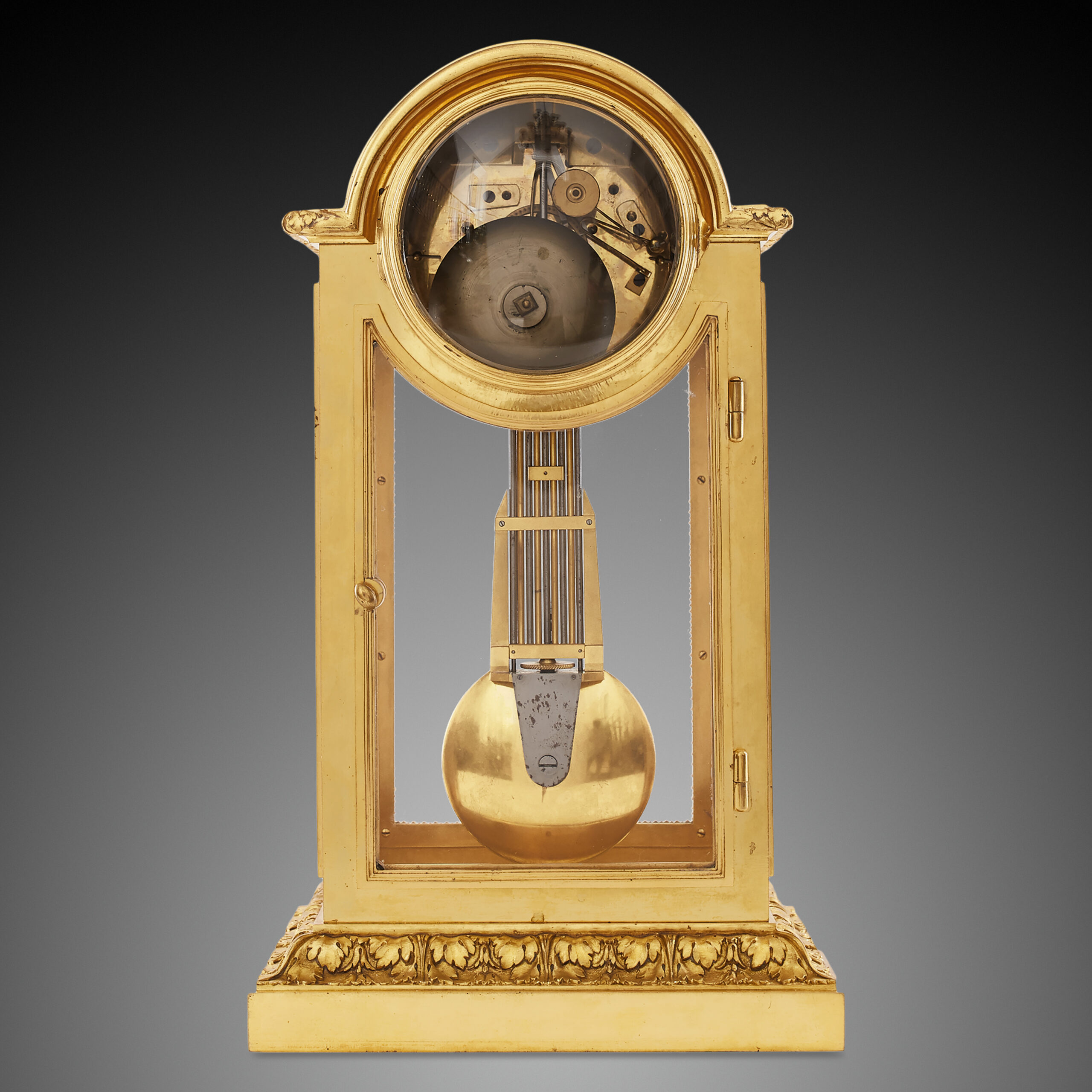
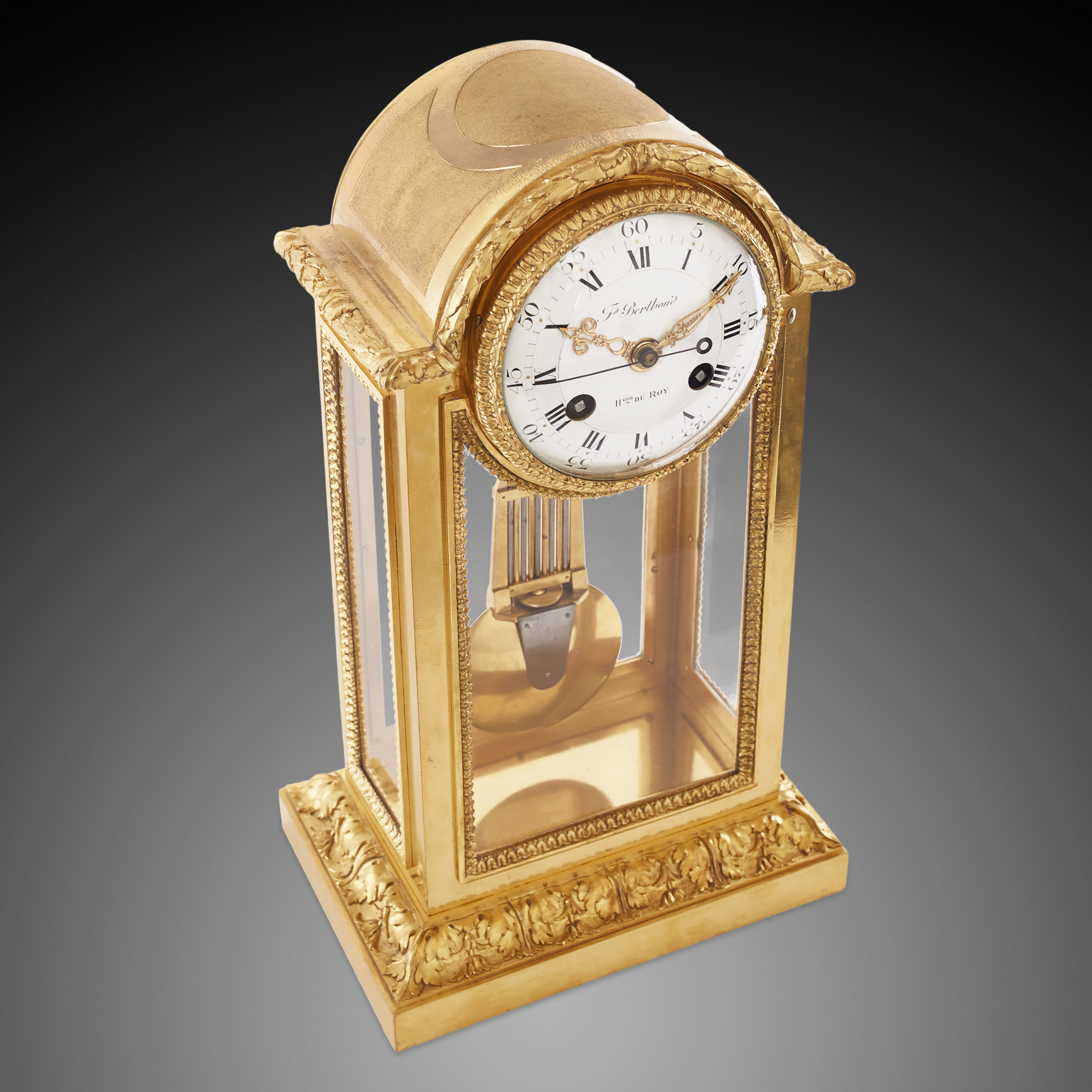
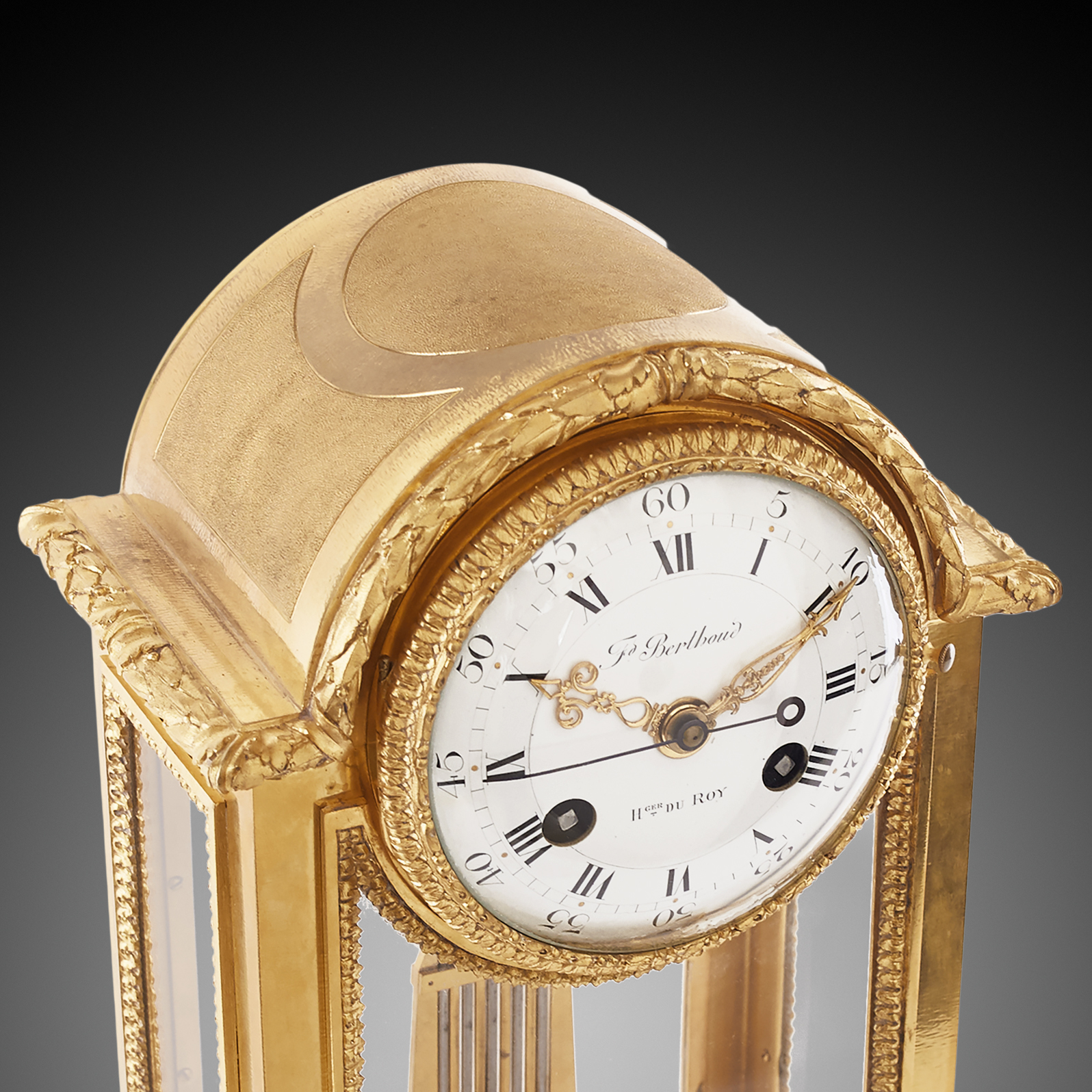
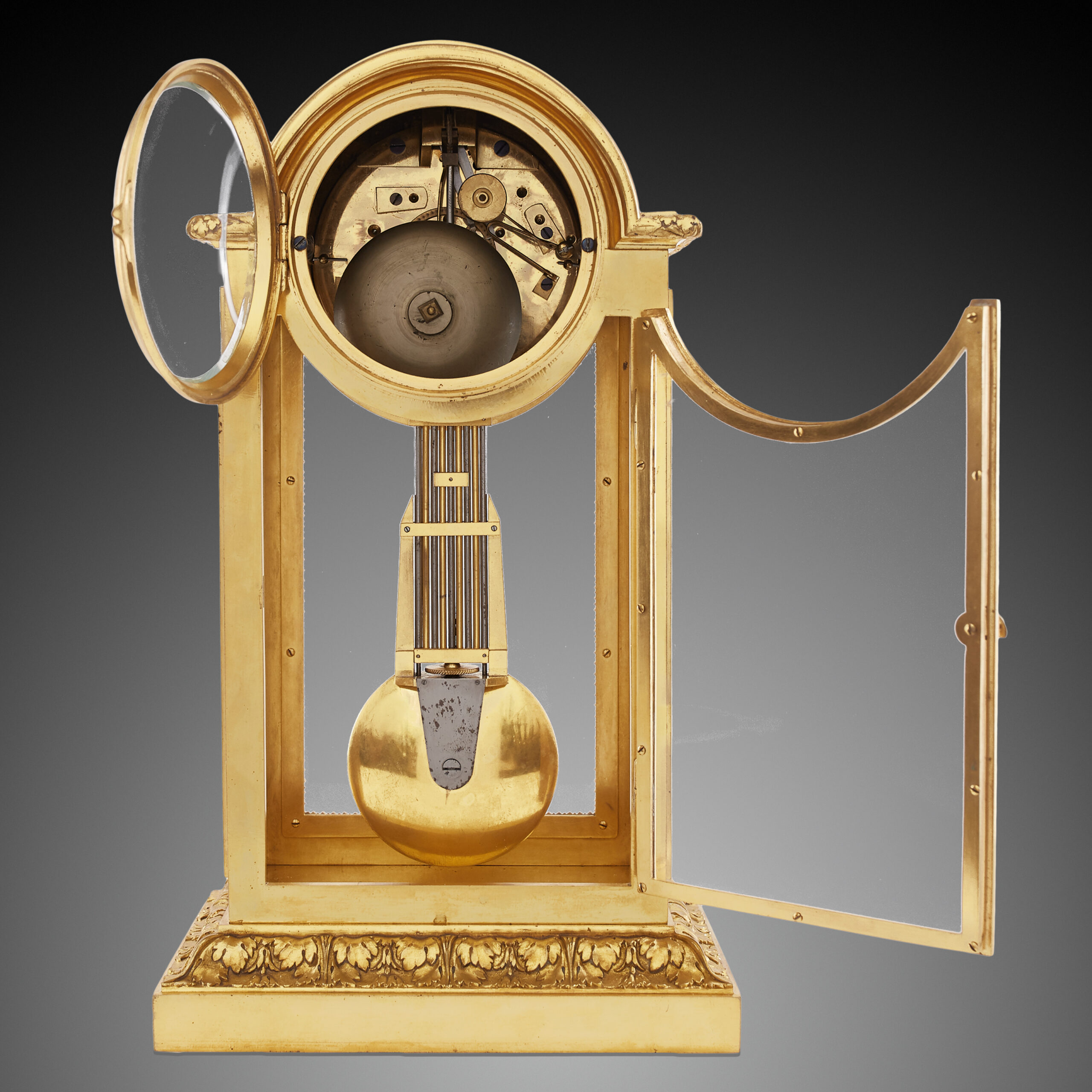
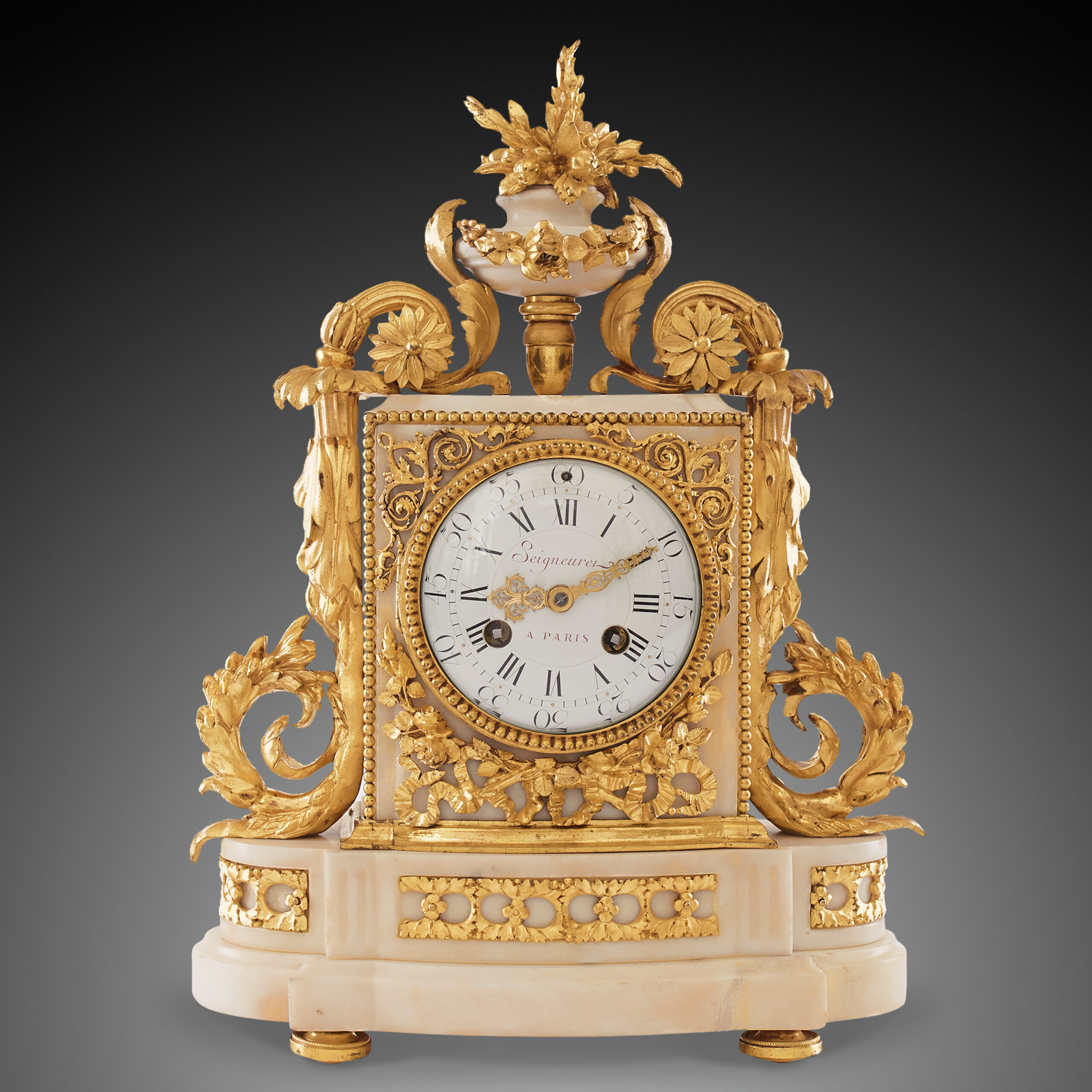
The clock is housed in a refined, architectural gilt-bronze (ormolu) case of the Directoire or early Empire style, emphasizing clean lines and classical symmetry. The transparent glass panels allow for an unobstructed view of the mechanical ingenuity within, a design choice intended to celebrate the precision of the movement itself. The dial is a masterpiece of enamel work, featuring elegant Roman numerals for the hours and an outer ring of Arabic numerals for the minutes, signed “Fd Berthoud” and “Hger du Roy” (Horologist to the King). The finely pierced and engraved gilt hands provide a luxurious contrast to the pristine white enamel surface.
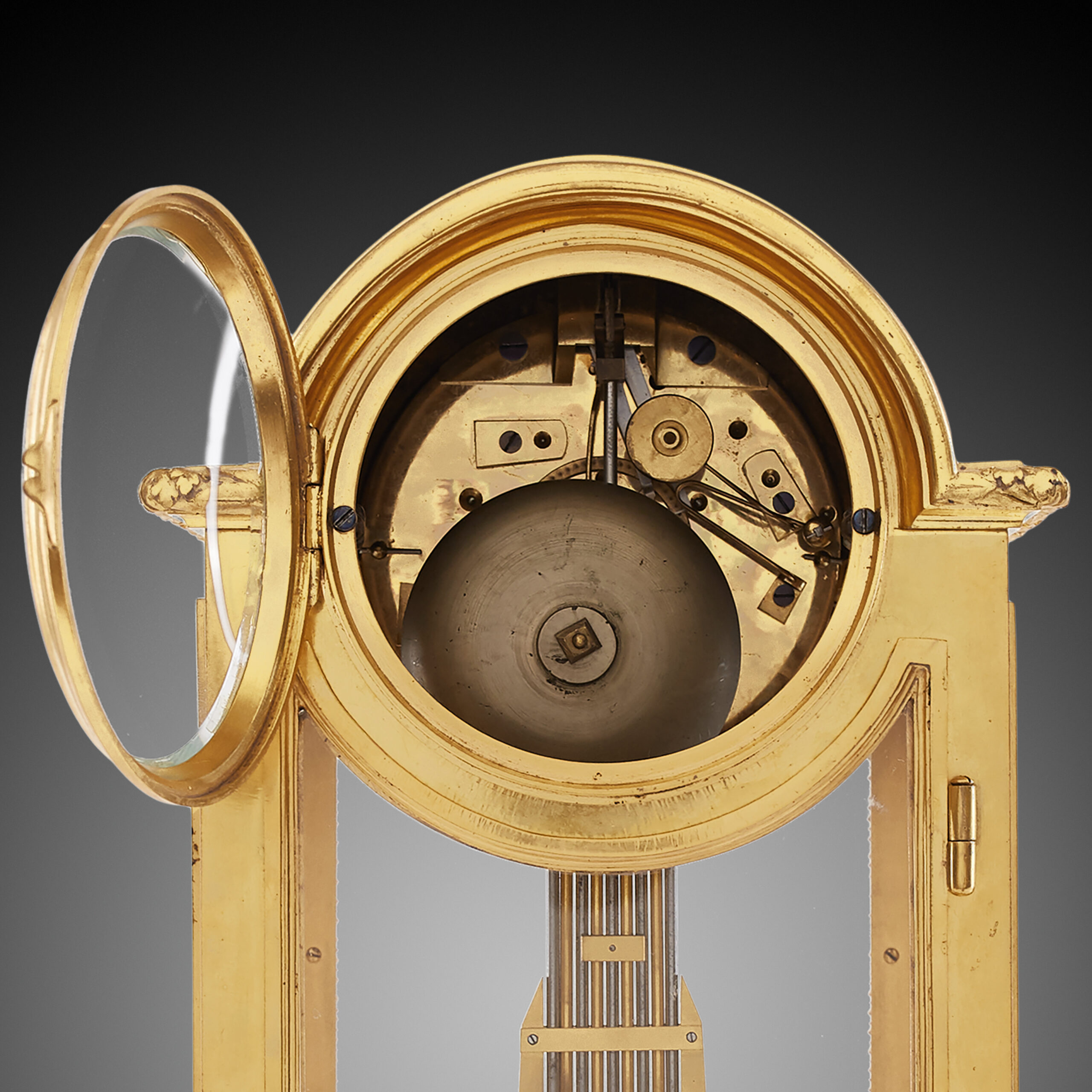
One of the most visually arresting features of this piece is its “gridiron” temperature-compensated pendulum. This sophisticated mechanical innovation uses a series of alternating brass and steel rods designed to counteract the expansion and contraction of metals caused by temperature fluctuations, thereby ensuring remarkable timekeeping accuracy. The substantial, polished gilt pendulum bob is visible through the case, adding a rhythmic, sculptural movement to the ensemble. The entire piece is supported by a robust, stepped rectangular base adorned with a deeply chased frieze of acanthus leaves and floral motifs, characteristic of the high-level bronze casting prevalent in Paris during this period.
Mechanically, the movement is in superb condition, having been recently cleaned and fully serviced by a professional horologist specializing in museum-quality maintenance. This eight-day movement features a striking mechanism that chimes the hour and the half-hour on a resonant silvered bell. The clock is offered in perfect working order and is delivered complete with its original bell and winding key. It stands not only as a functional timekeeping instrument of the highest caliber but also as a significant historical artifact representing the legacy of Ferdinand Berthoud, whose work continues to define the pinnacle of French scientific and decorative achievement.