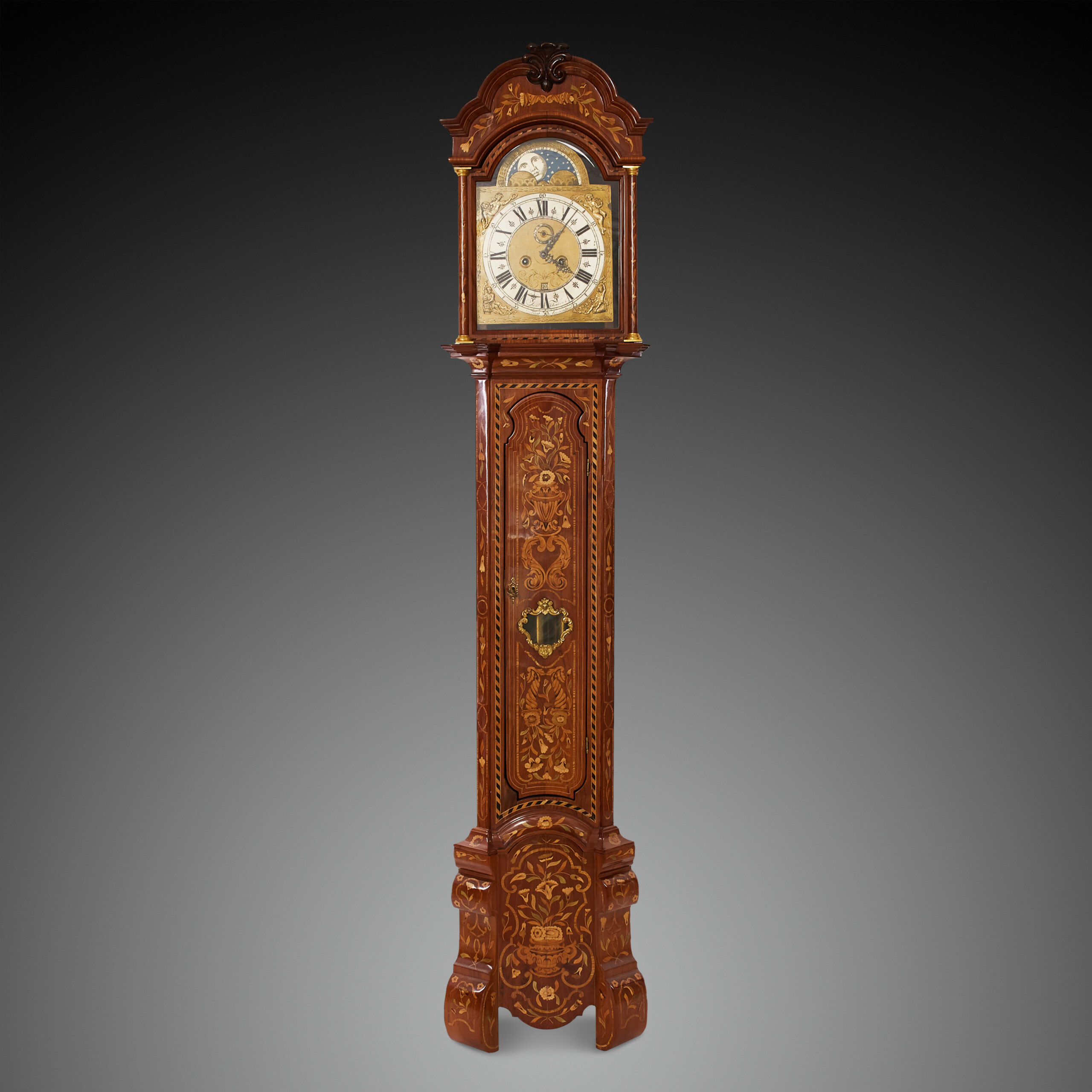
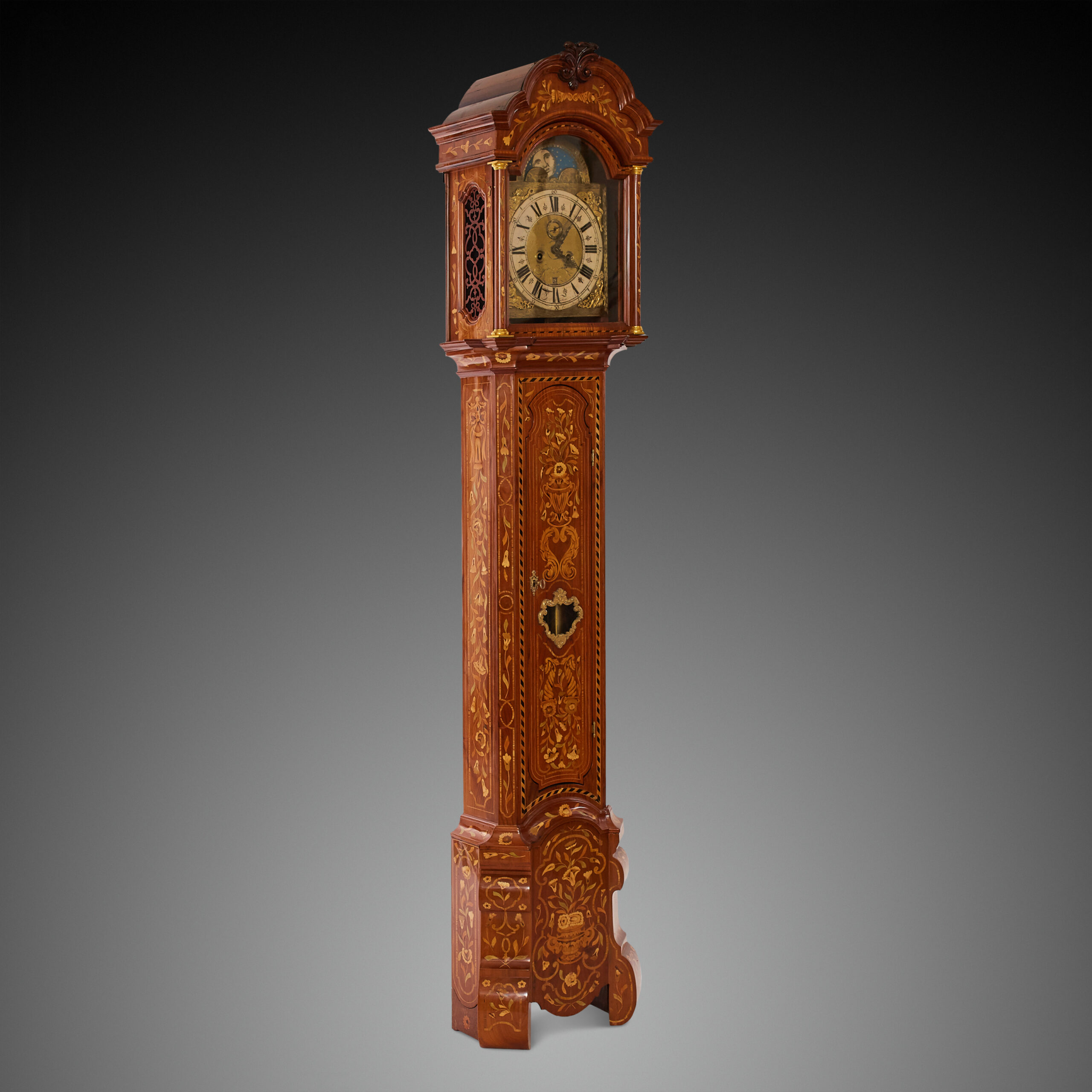
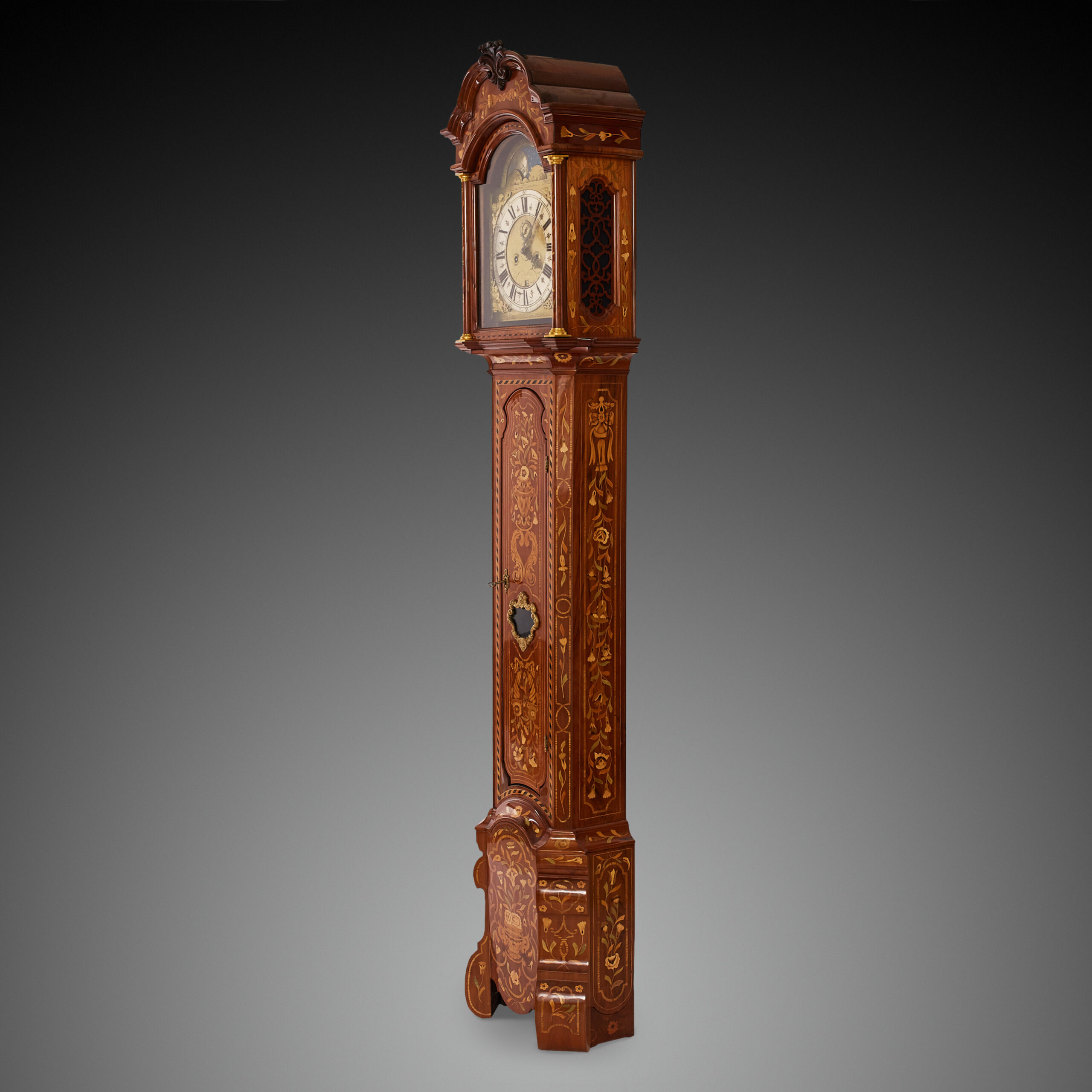
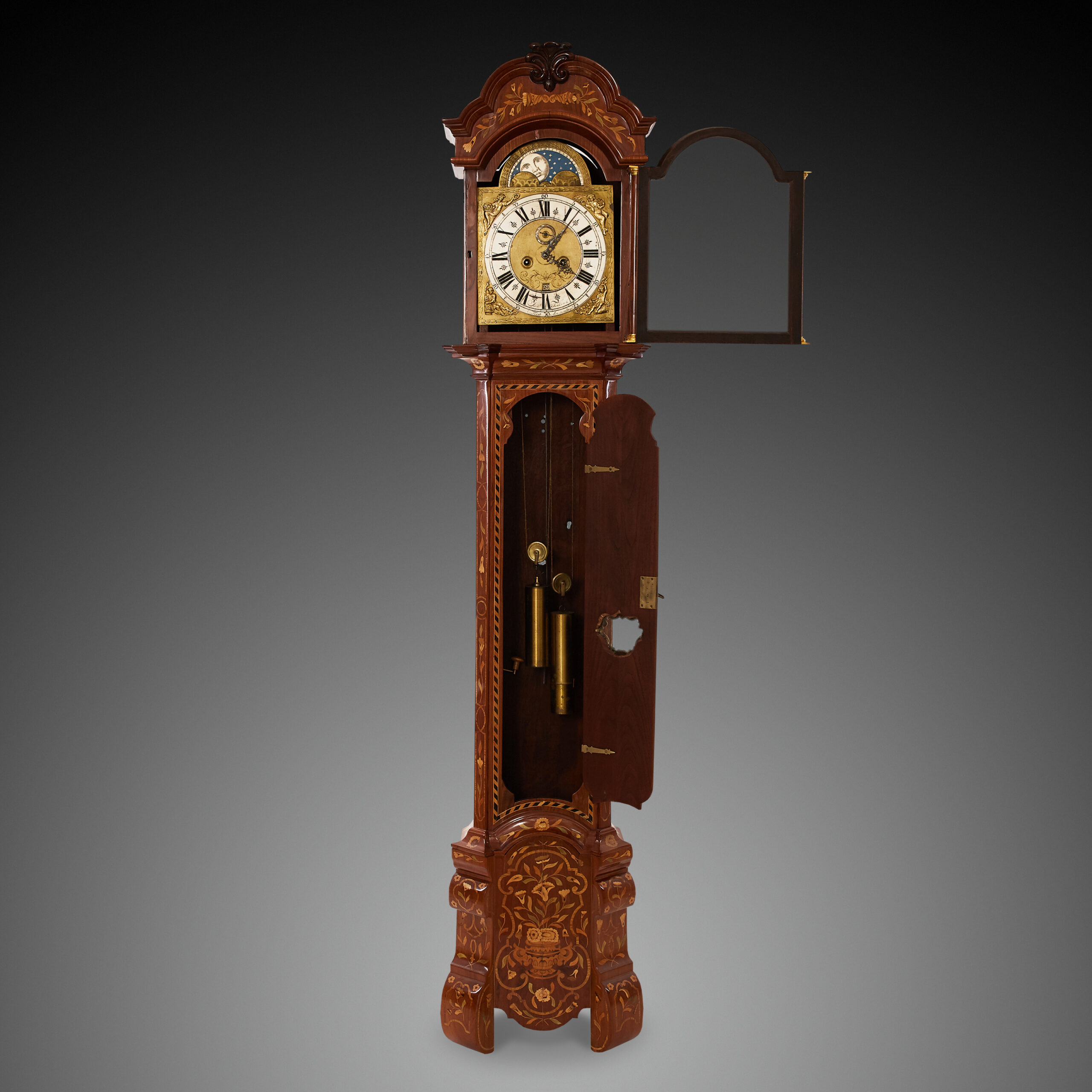
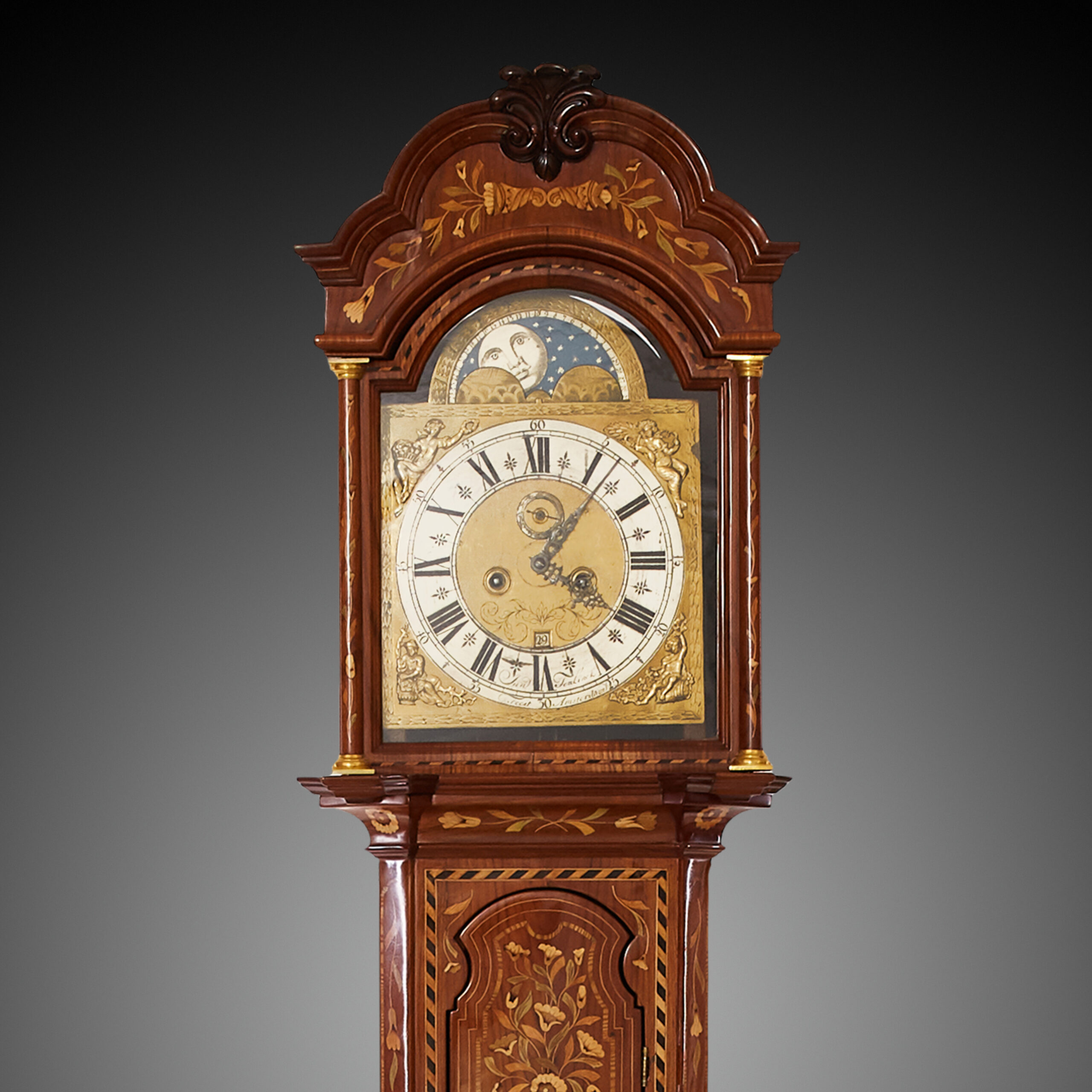
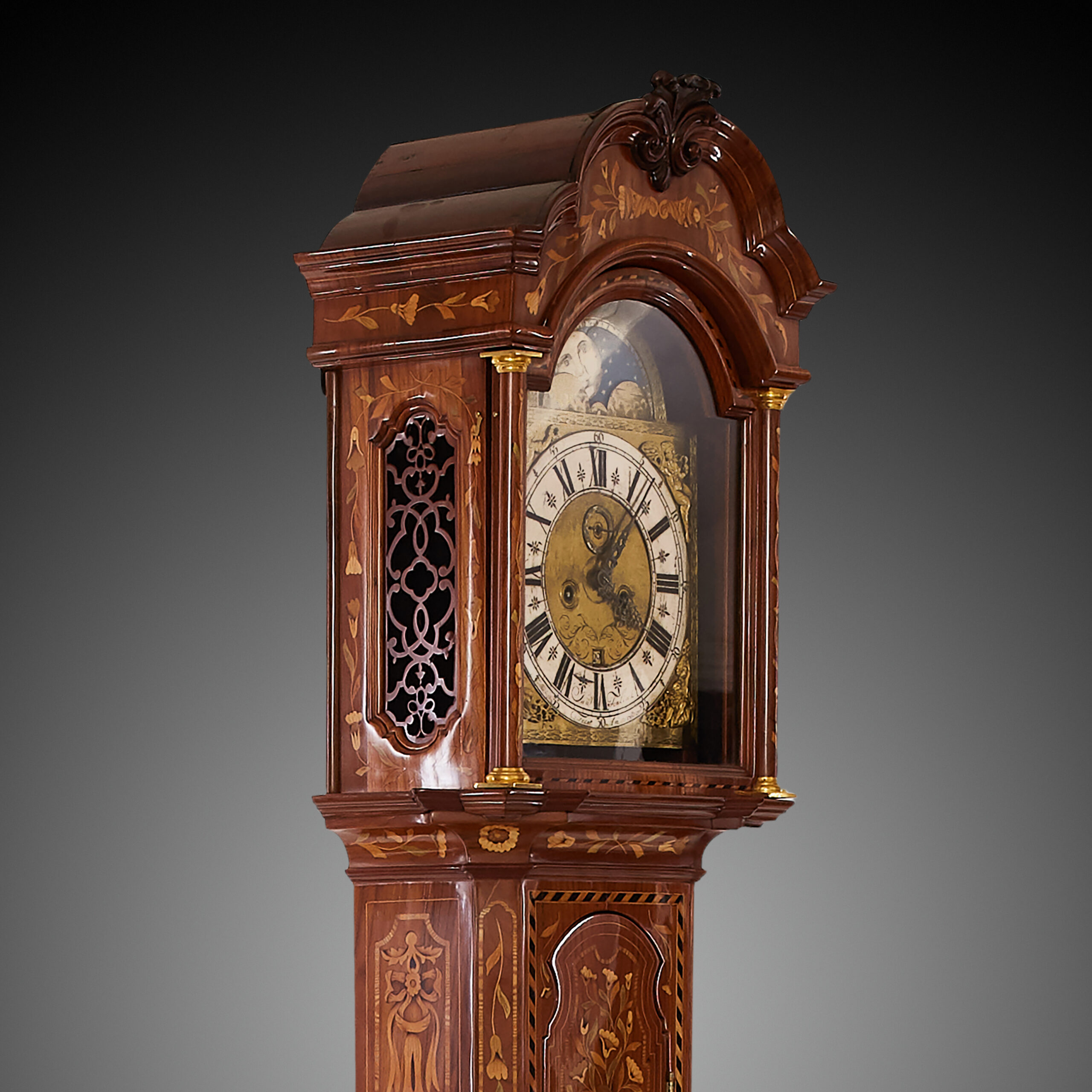
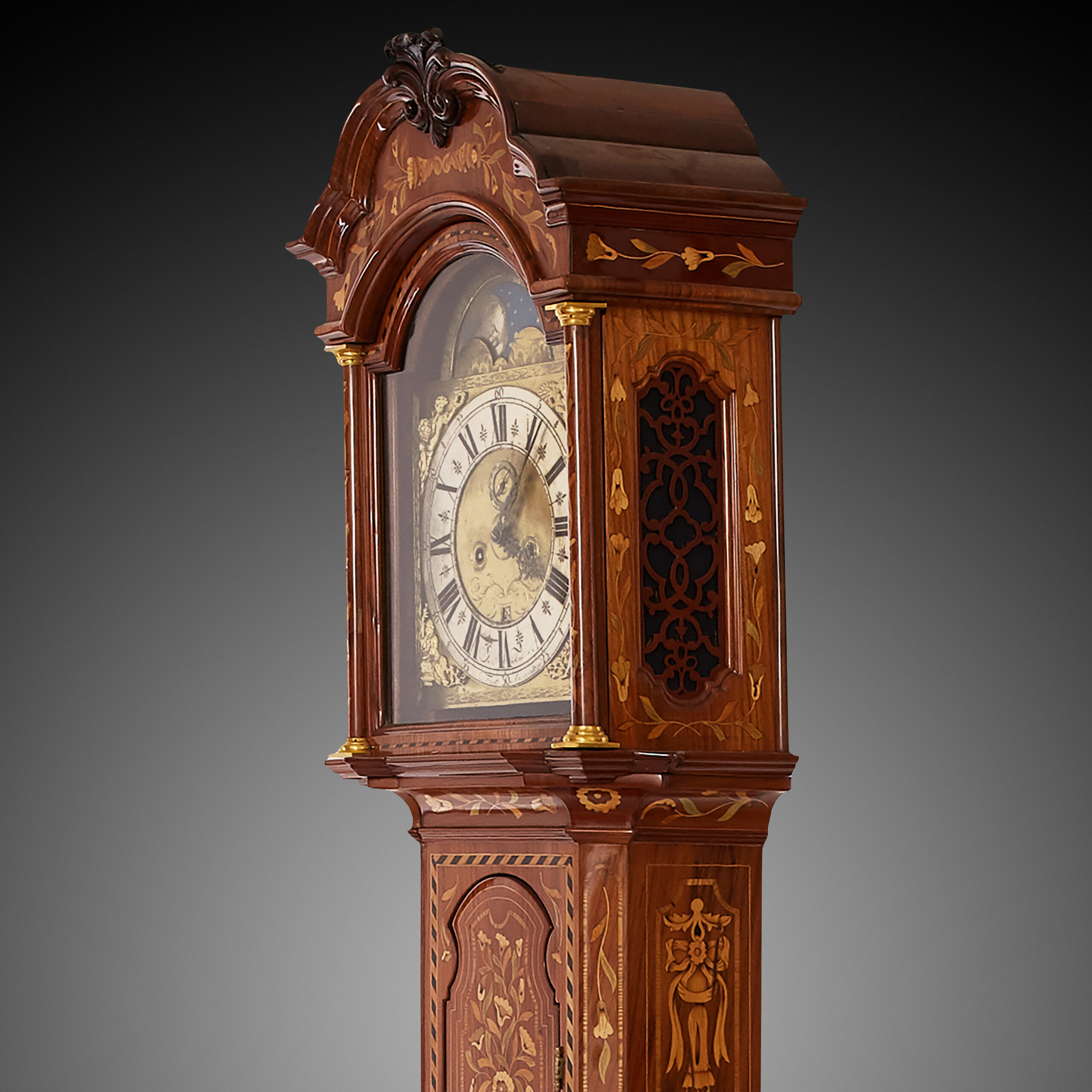
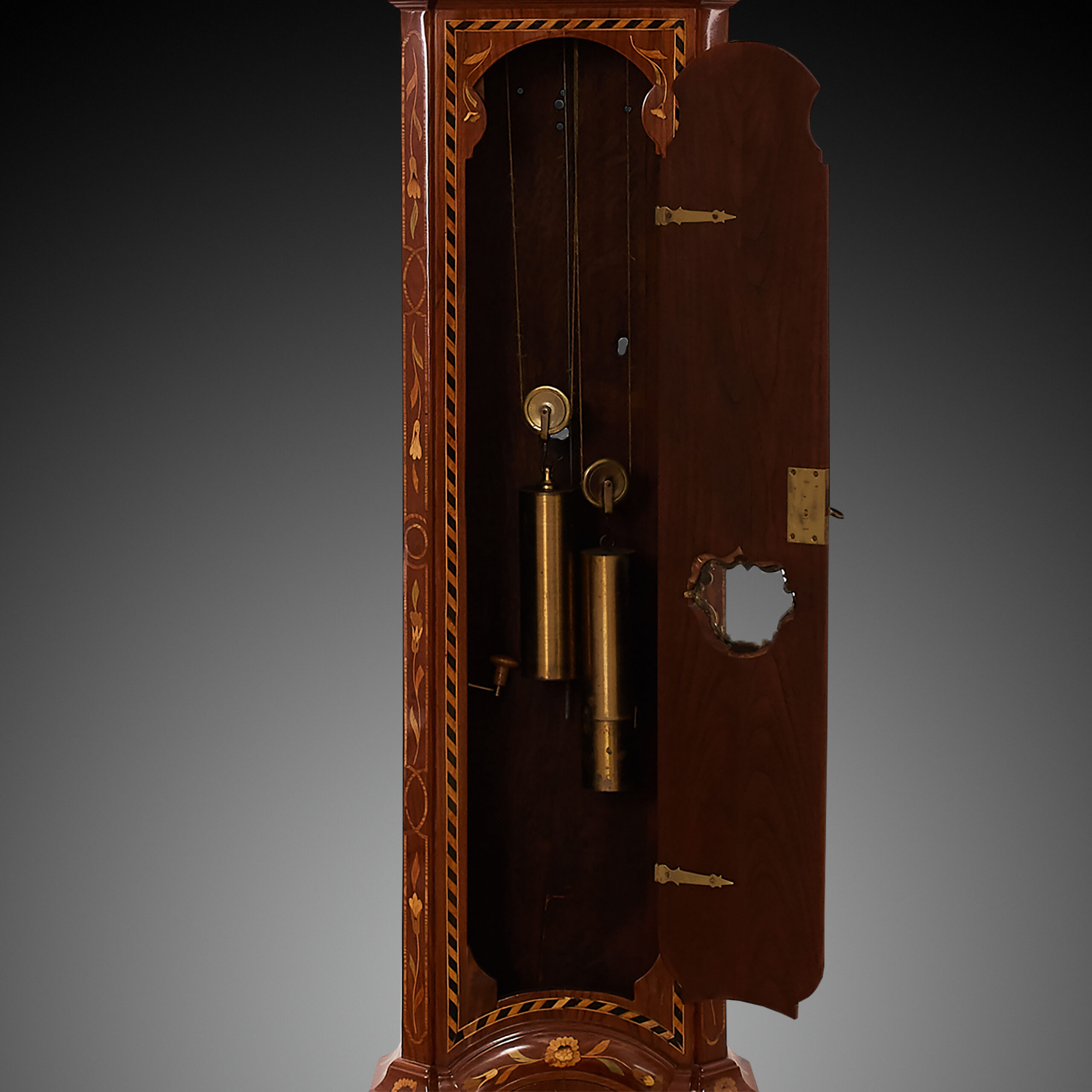
This Dutch longcase clock is a magnificent example of the craftsmanship that emerged from the Netherlands during the 18th century, a period when Dutch horology was defined by both technical complexity and breathtaking decorative arts. The most striking feature is the extensive floral marquetry that covers the entire mahogany case. This “marquetterie” was a specialized Dutch skill, where different woods were meticulously stained and inlaid to create vibrant, life-like arrangements of flowers and vines. It gives the clock a warm, organic feel that stands in stark contrast to the more rigid architectural lines of French or British clocks of the same era.
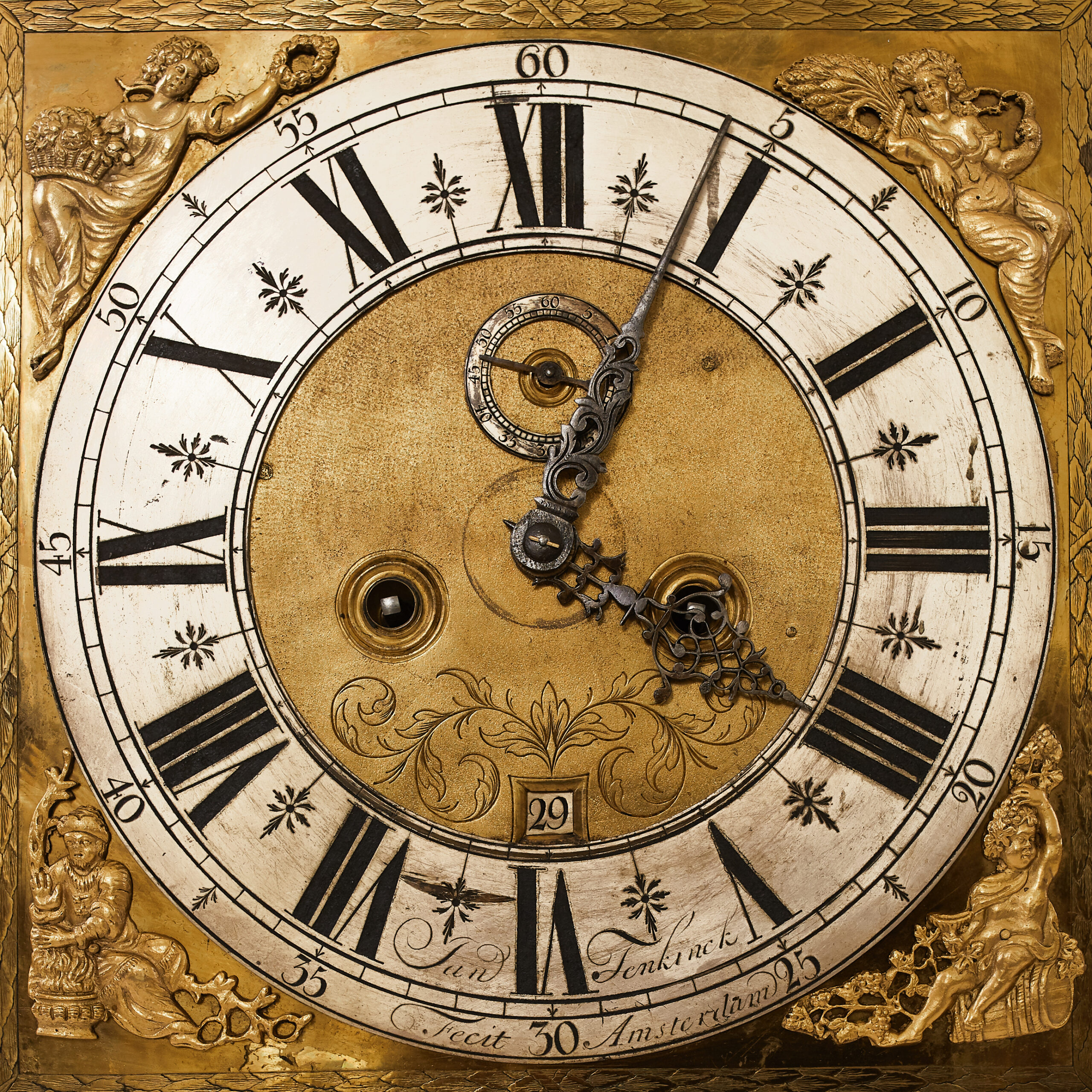
The brass dial is a masterclass in functional art, housing a variety of complications that were essential for a high-status household. In the arch of the dial, you have the day and night indicator, which tracks the lunar cycle with a beautifully painted moon phase disk. This wasn’t just for aesthetics; it was a vital tool for those whose lives were still dictated by the light of the moon for travel or maritime activities. Along with the standard tracking of seconds, minutes, and hours, the calendar function specifically highlights the month, grounding the owner in the broader passage of the seasons.
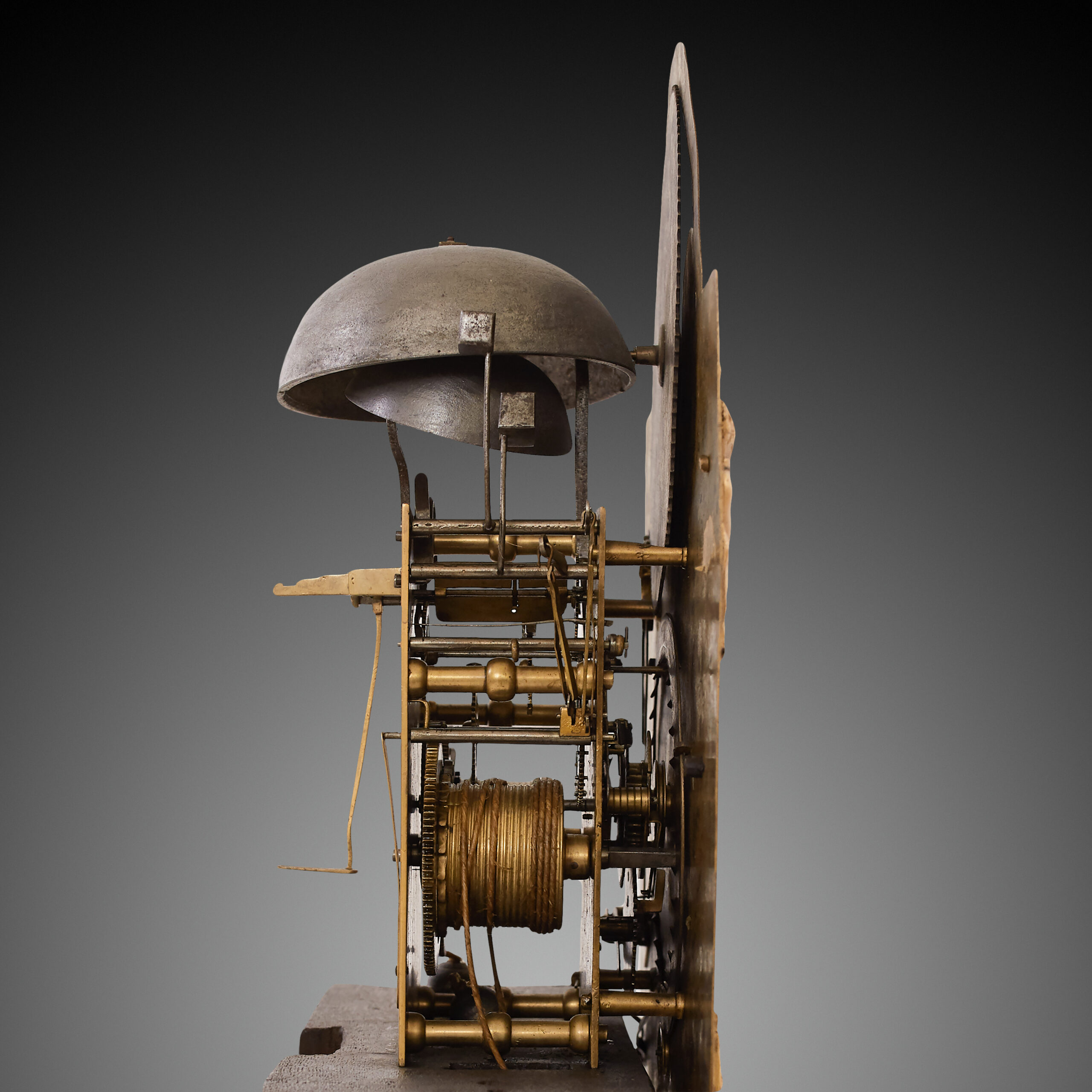
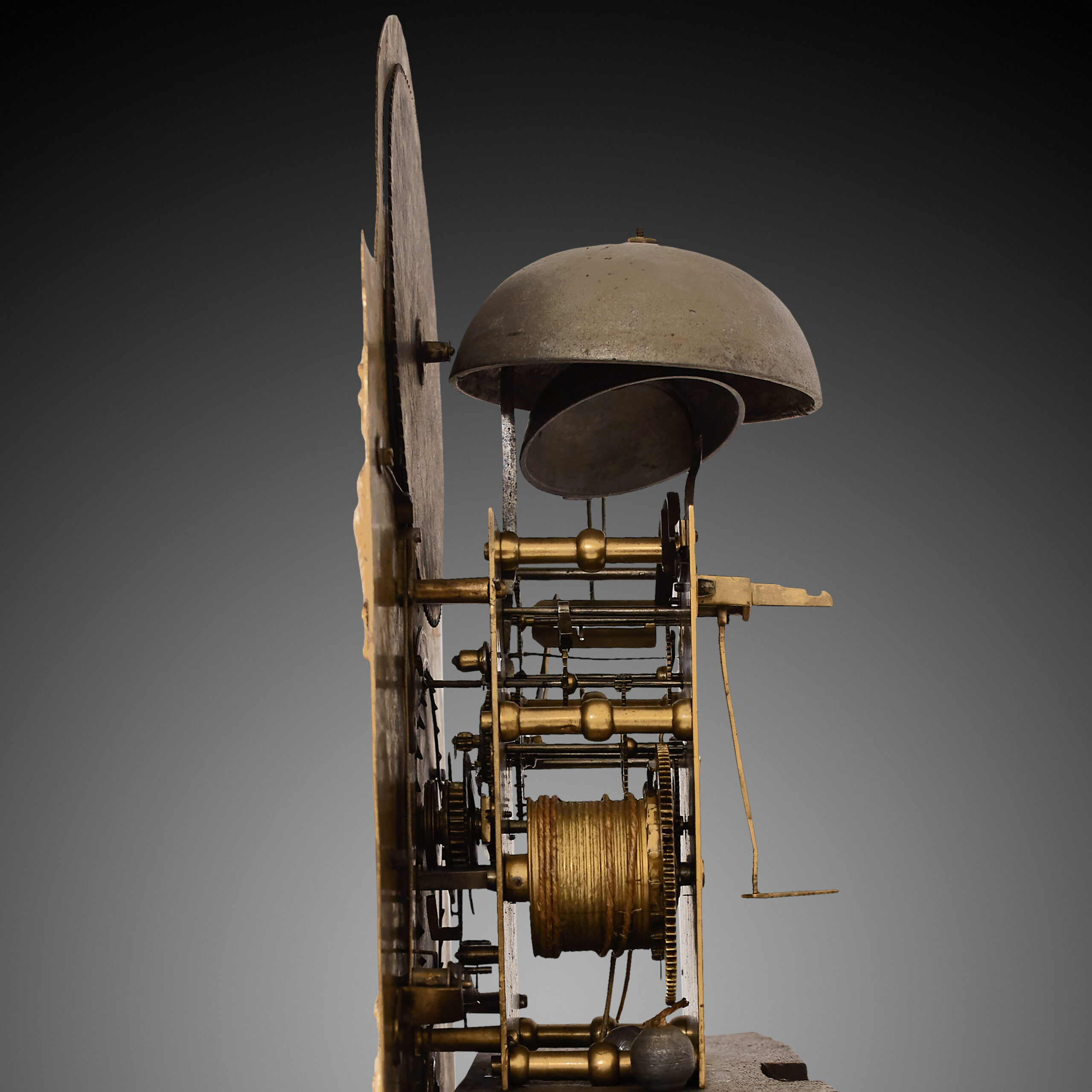
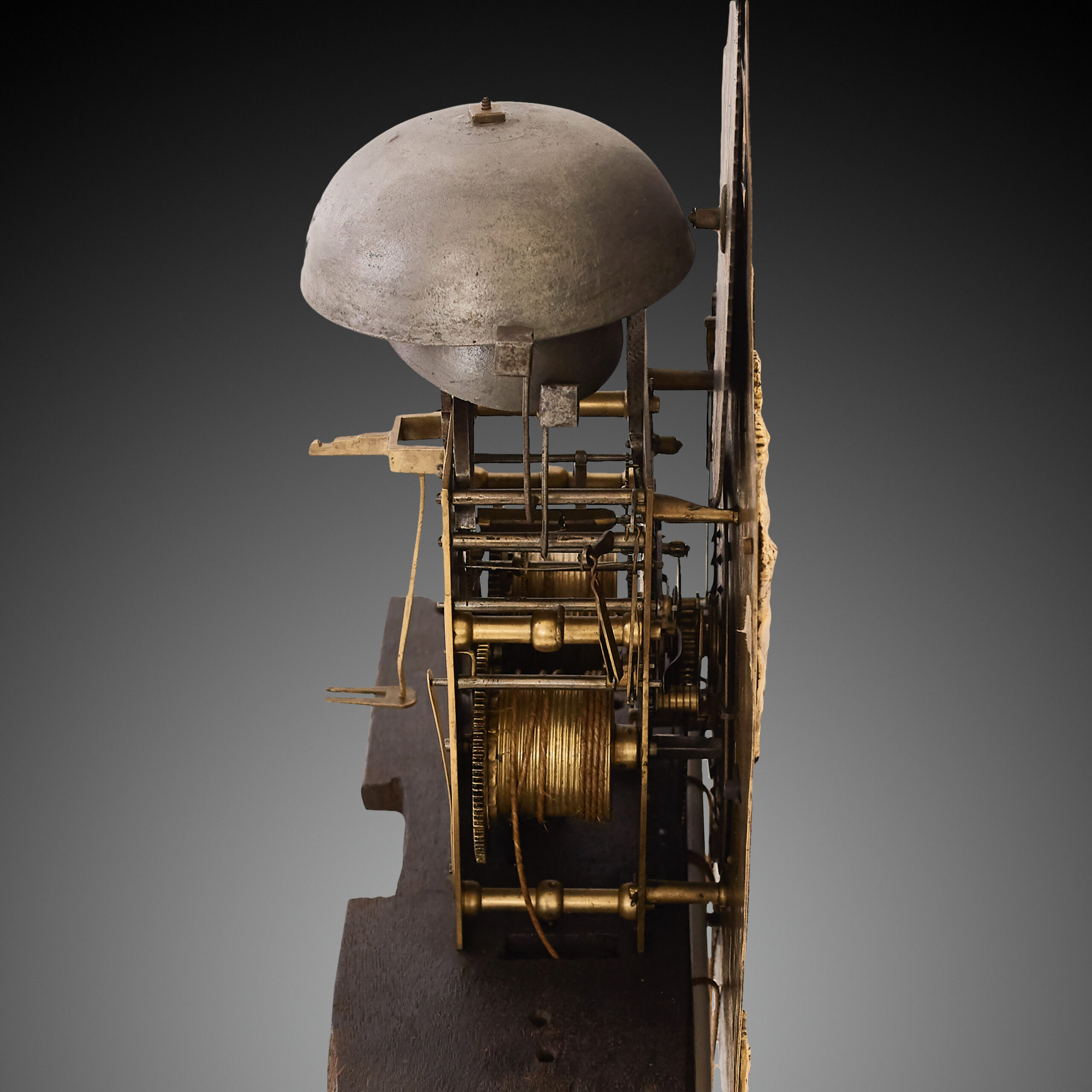
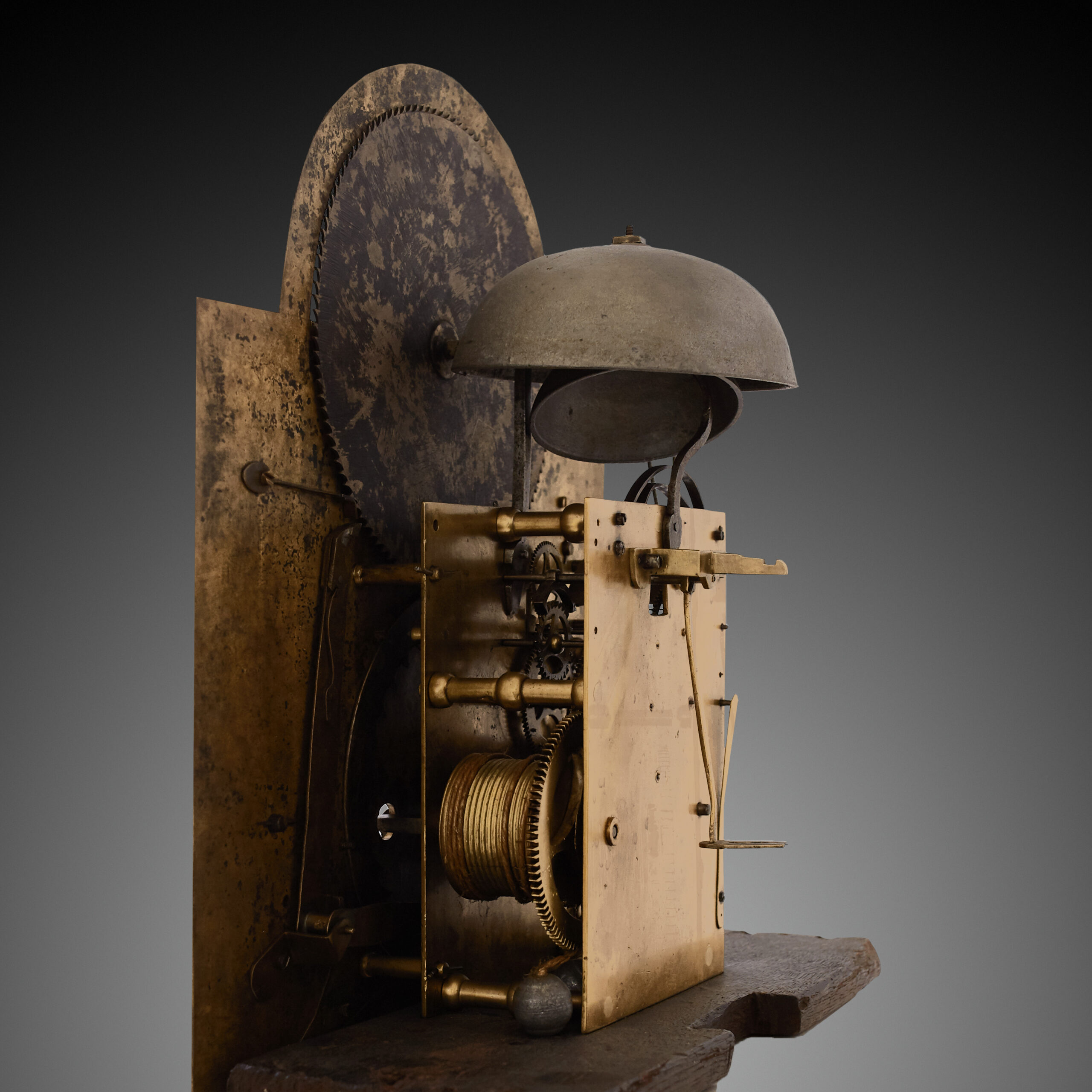
Mechanically, the clock is powered by an eight-day movement, designed to be wound just once a week. In the context of 18th-century Dutch society, the “continuously running train”-the internal gear systemwas viewed as a direct metaphor for the country’s prosperity. Just as the gears moved with relentless, synchronized precision to keep the time, the Dutch Republic’s trade networks and economic systems were seen as a perfectly oiled machine that brought wealth and stability to the nation. This clock doesn’t just tell the time; it serves as a monument to that era of Dutch global influence and the idea that order and industry lead to national success.
The case also features a small “lenticle” or window in the waist door, which allows you to see the pendulum swinging inside. This was a common feature of the period, serving as a constant visual reminder of the clock’s “heartbeat.” It’s a piece that demands a place of prominence, as it carries the weight of Dutch history and a level of artisanal detail that was meant to impress anyone who stepped into the room. It’s the perfect blend of a scientific instrument and a celebratory work of art, showing that even in the most practical objects, the Dutch found a way to express their cultural pride and their mastery of the physical world.