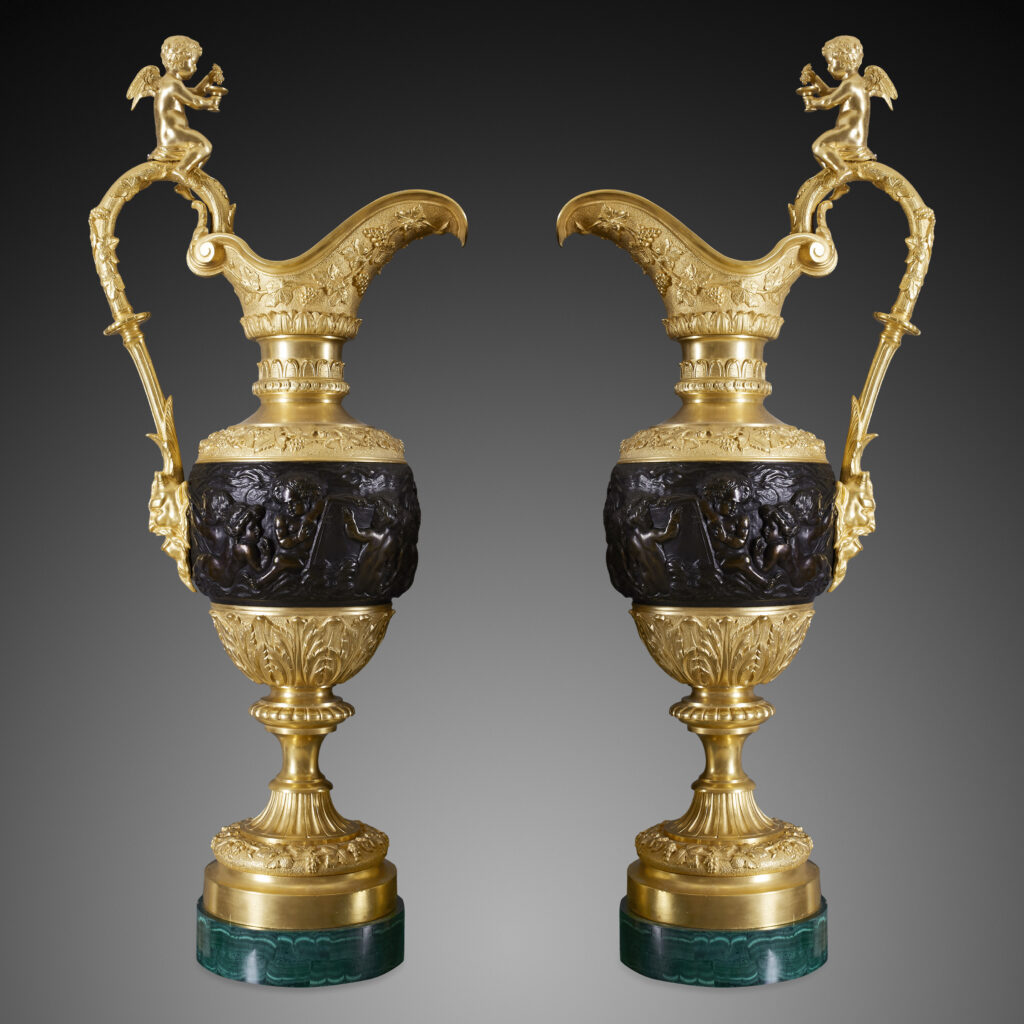
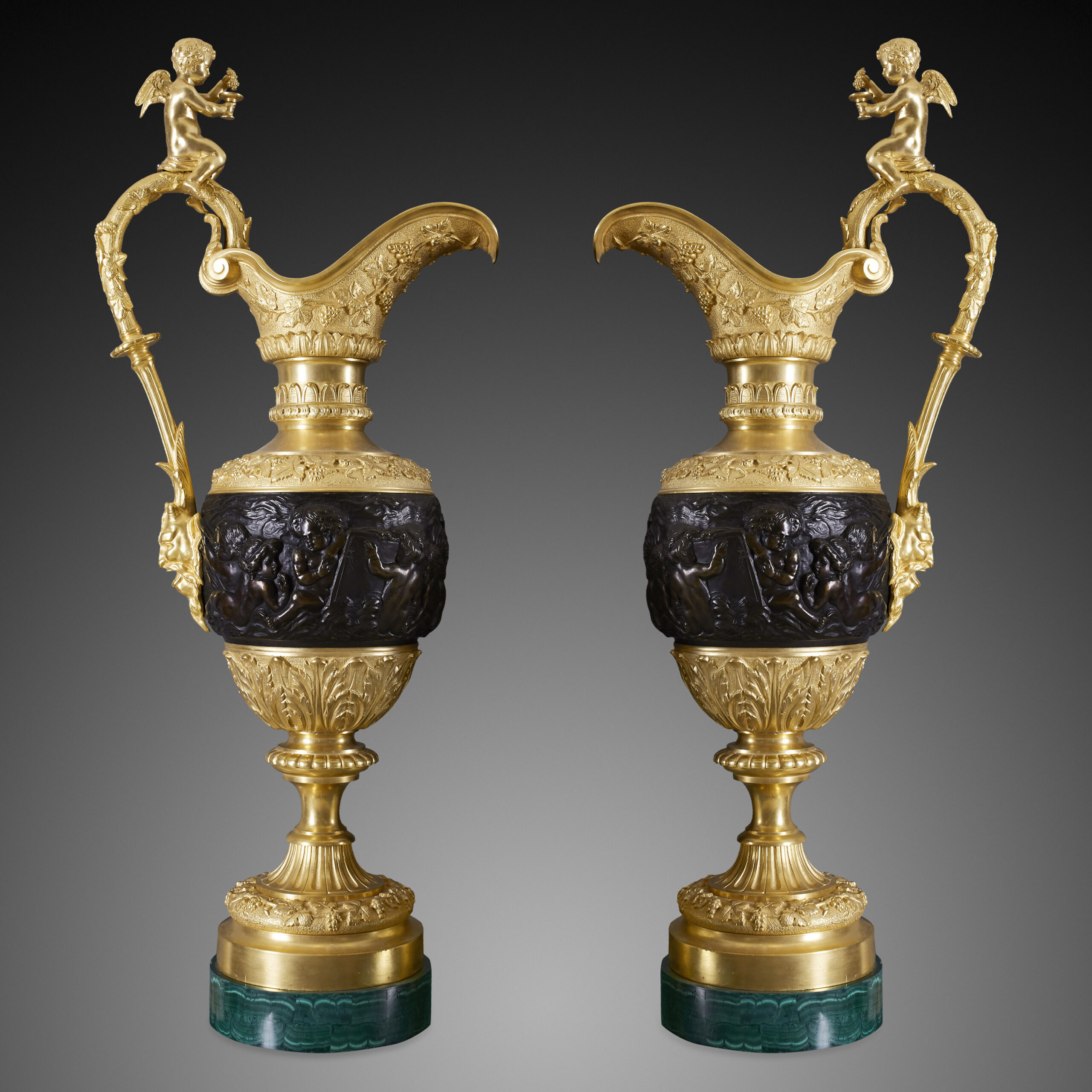
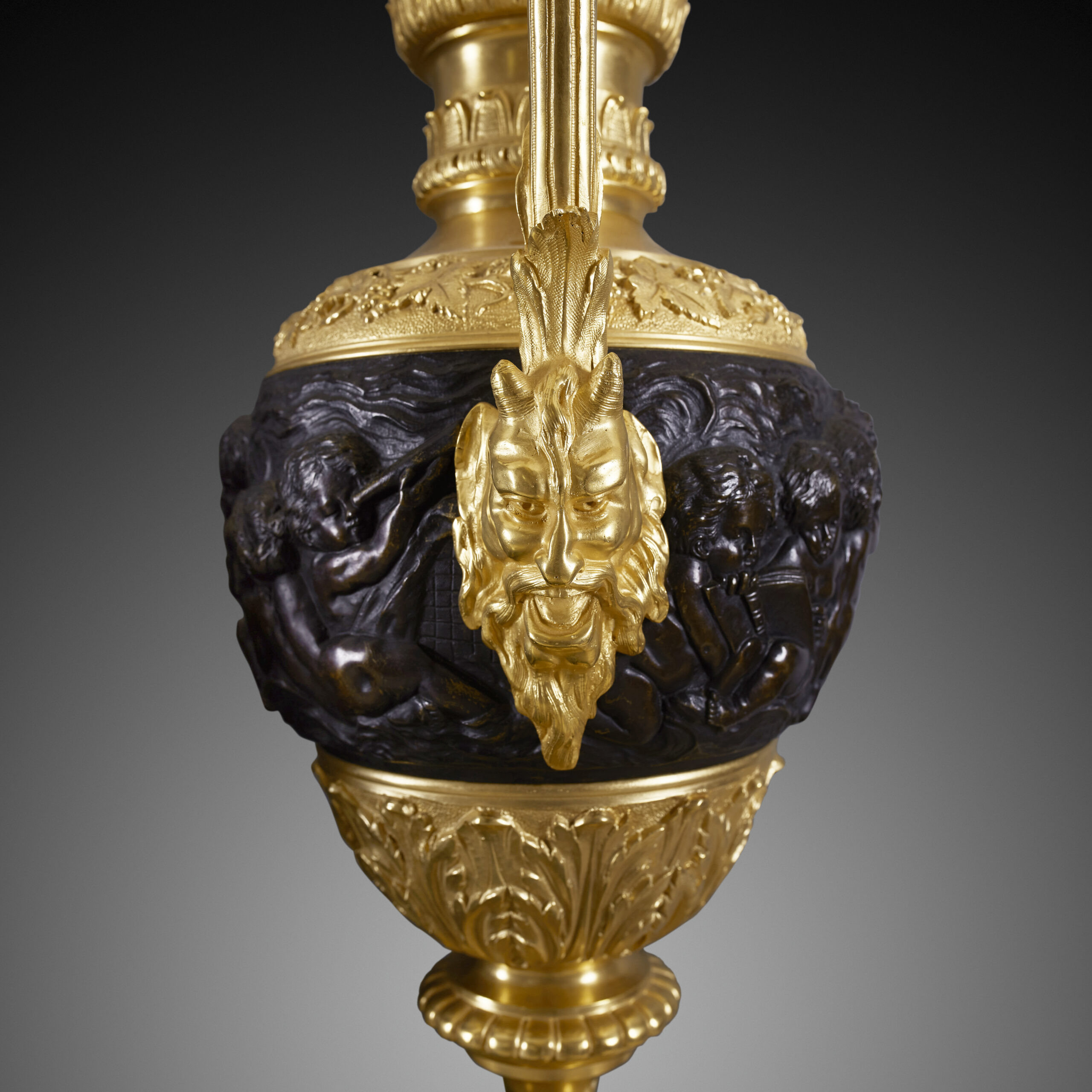
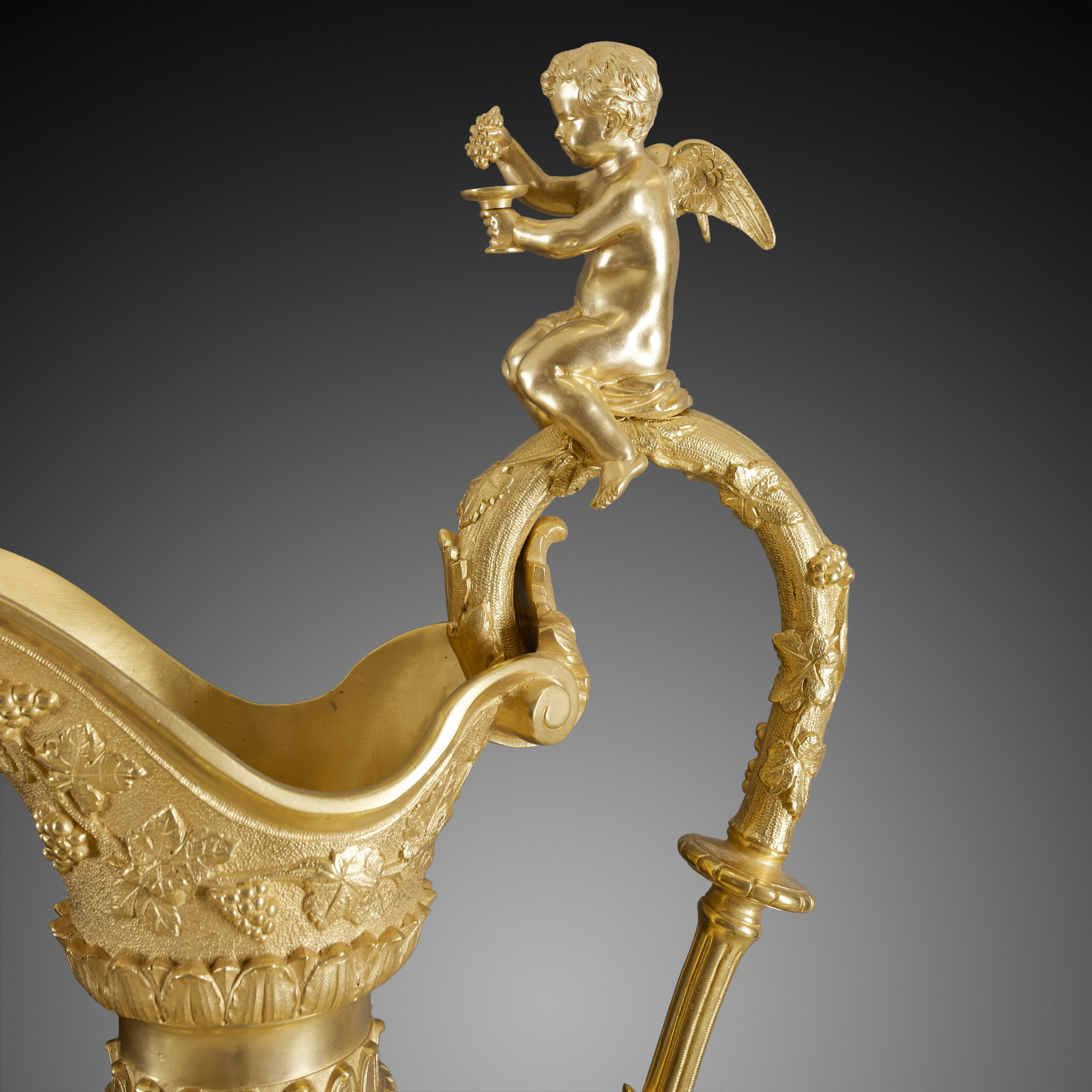
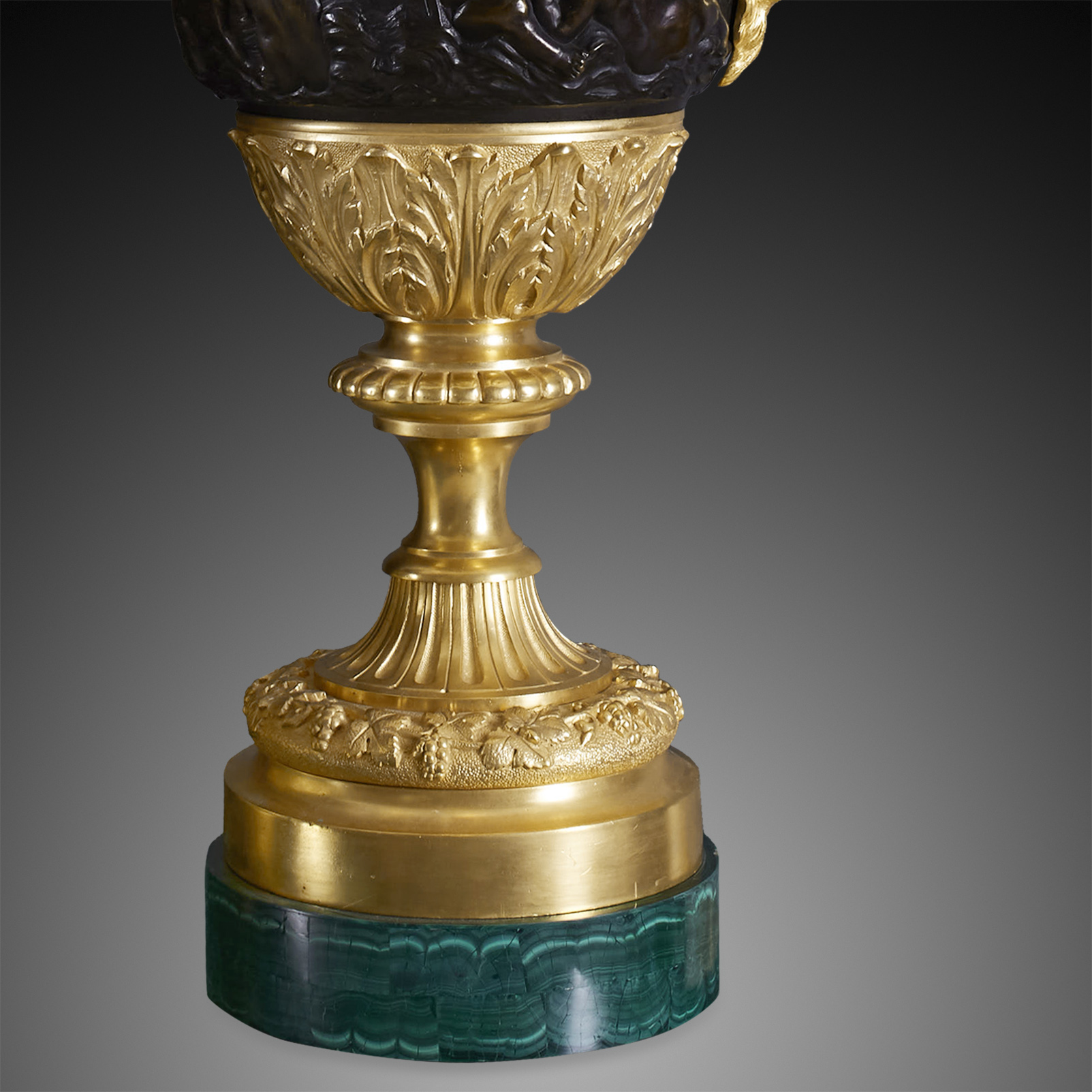
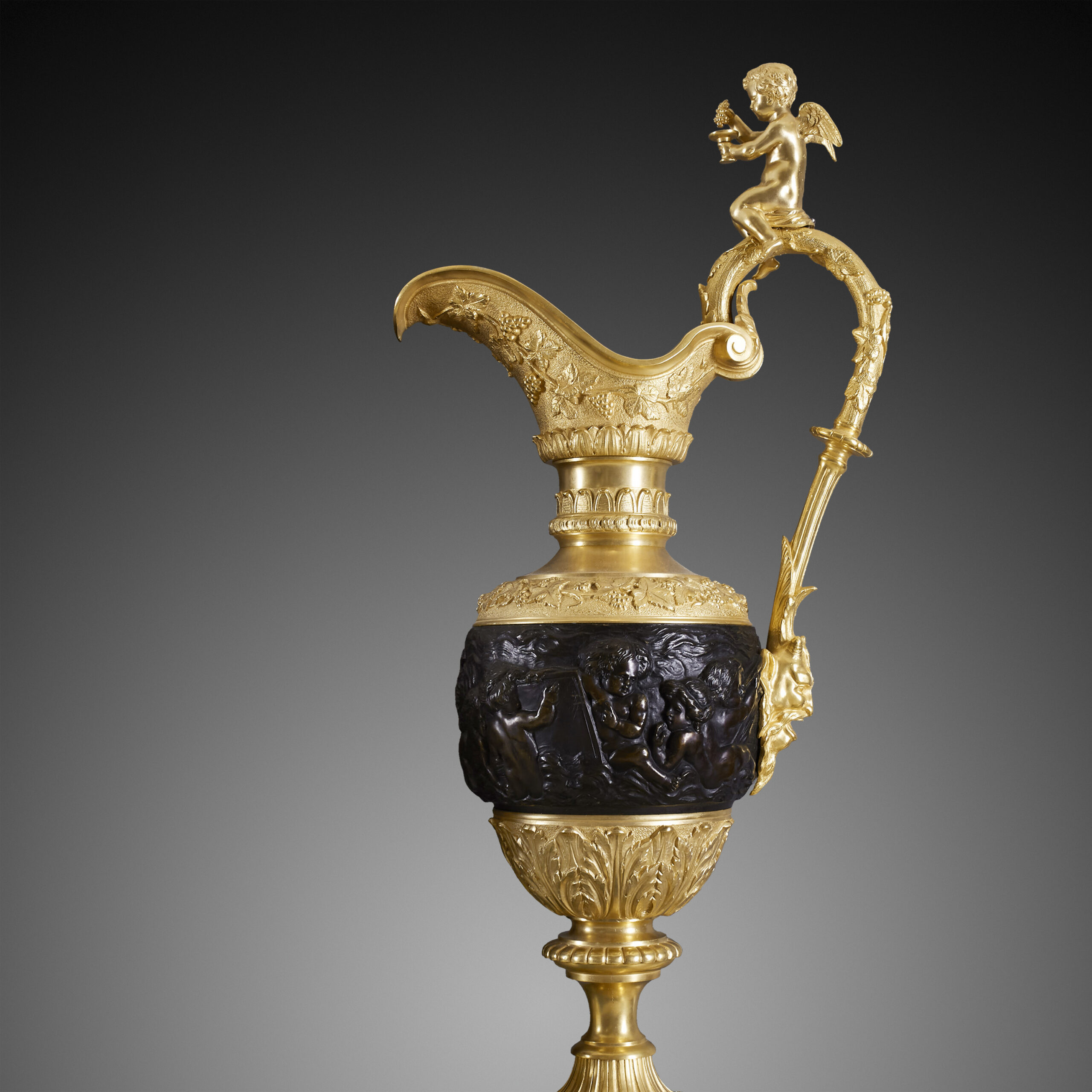
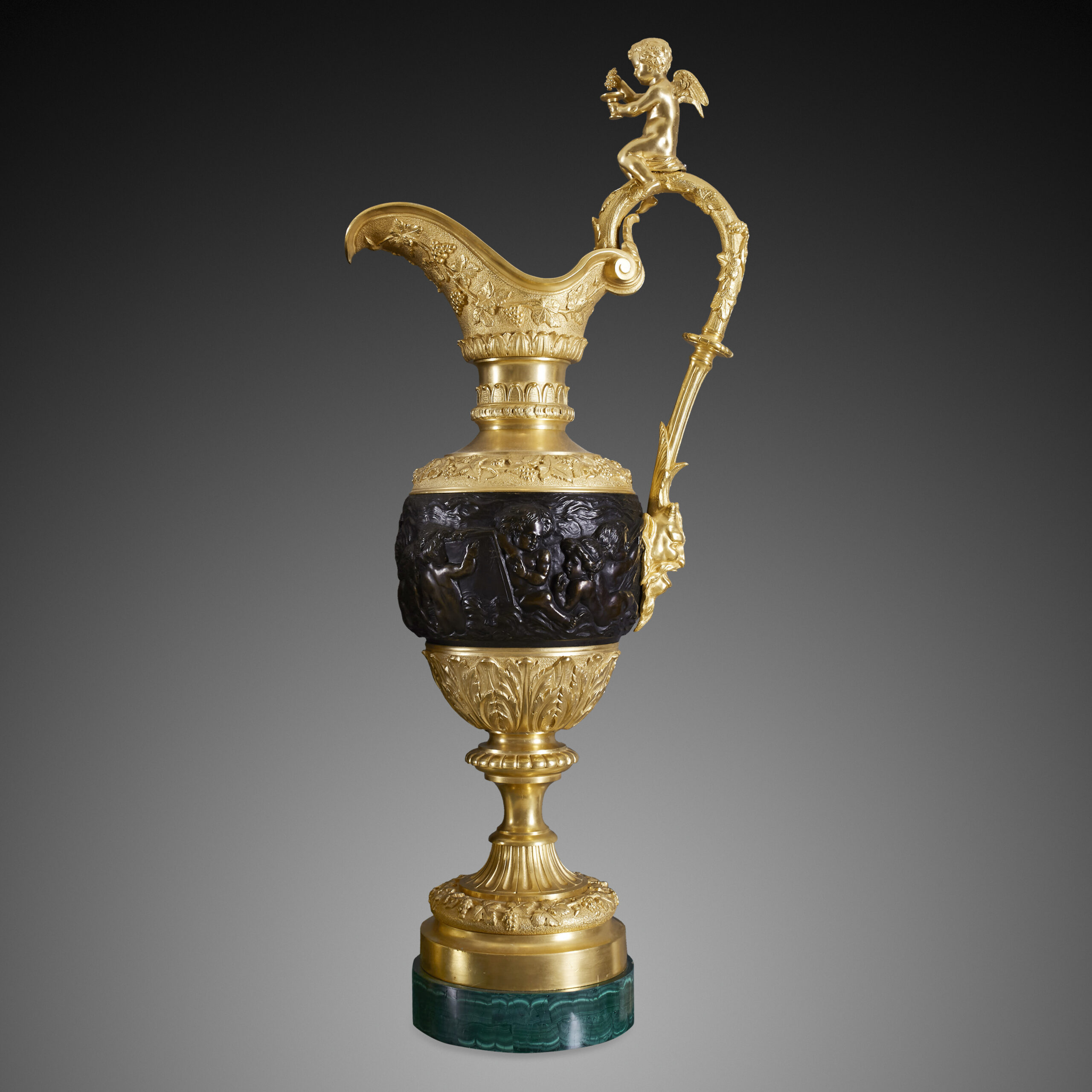
This exceptional and true pair of 19th-century ewers is a superb testament to the artistic and historical sensibilities of the Napoleon III period (1852-1870). These beautiful pieces are not merely decorative vessels; they are a profound fusion of sculpture, history, and decorative art, designed to evoke the grandeur of antiquity and the opulence of the Second French Empire. They combine the brilliance of gilt bronze (ormolu) with the rich depth of patinated bronze and the luxurious texture of malachite, representing a pinnacle of 19th-century European decorative arts.
The design is a sophisticated and highly symbolic blend of classical motifs and symmetrical elegance. Each ewer is raised on a round malachite base, a luxurious and highly prized material known for its striking, verdant color and mesmerizing concentric patterns. Malachite was frequently employed in the most prestigious commissions of the 19th century, symbolizing luxury and a connection to the mineral wealth of the world. The malachite base is further enhanced by finely chased gilt bronze mounts, featuring ornate floral and scroll motifs.
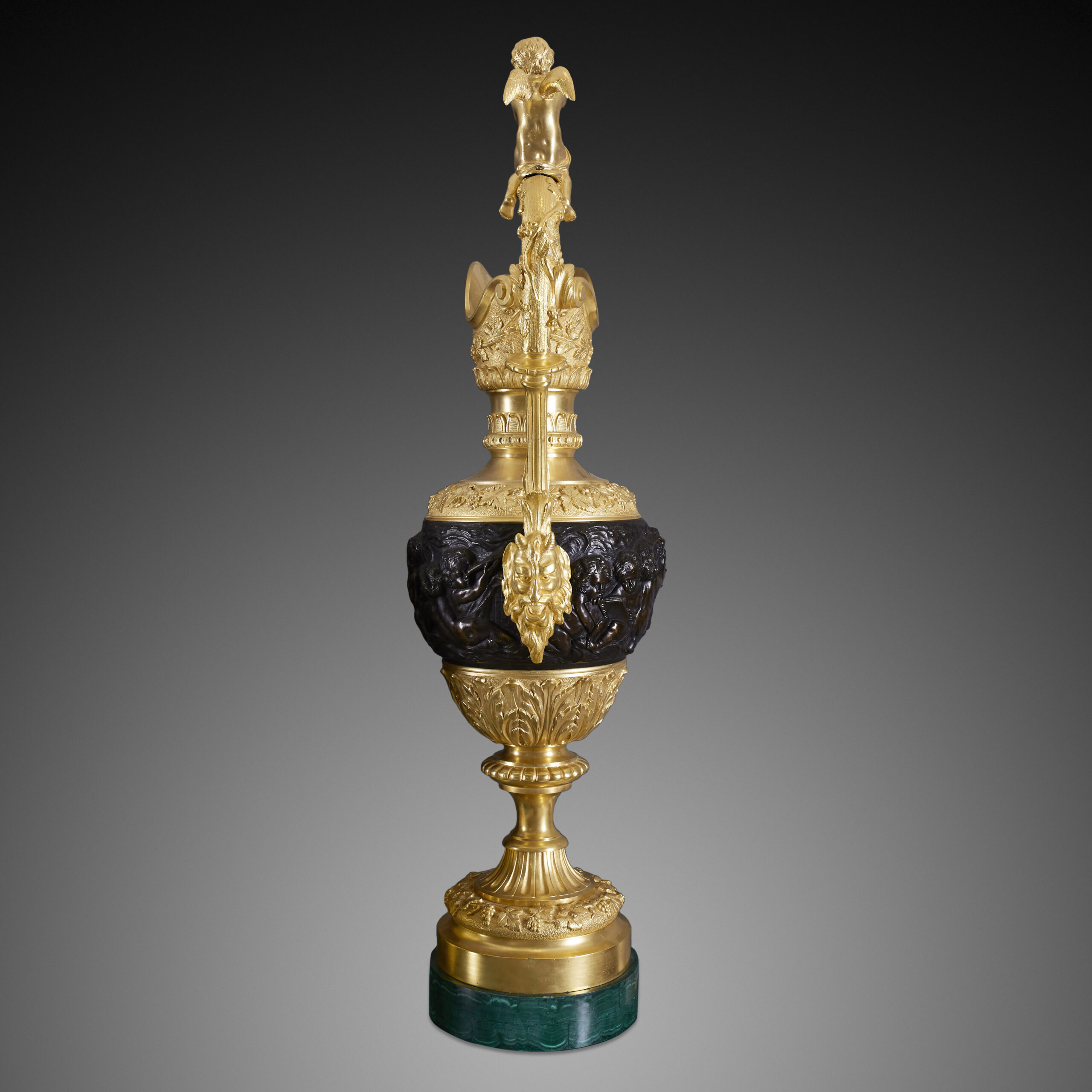
The body of each ewer is a beautifully modeled, patinated bronze urn, which is the central sculptural element. Around the circumference of the urn is a finely detailed frieze depicting classical mythological scenes with finely sculpted figures in relief. This narrative frieze is a hallmark of the period’s fascination with historical revivals. The body is elegantly supported by a gilt bronze stem with acanthus leaf motifs, creating a striking contrast between the dark, patinated bronze and the brilliant gilding.
The handles are a masterpiece of sculptural detail. They are cast from gilt bronze and take the form of a mythological creature, possibly a griffin or an eagle, whose beak forms the spout of the ewer. Crowning each handle is a charming winged putto, rendered with remarkable skill, adding a sense of playful strength and classical grace. The intricate detailing, from the feathers on the wings to the expressive faces of the figures, is a testament to the top-tier Parisian or European workshop that created them.
This pair of ewers is a sophisticated and compelling statement piece that would have originally graced a grand salon, a library, or a formal dining room. They perfectly embody the opulence and decorative spirit of the Napoleon III period, a time of renewed luxury and a celebration of historical artistic styles. Their masterful combination of materials, classical resonance, and artistic vision represents a pinnacle in the history of European decorative arts.