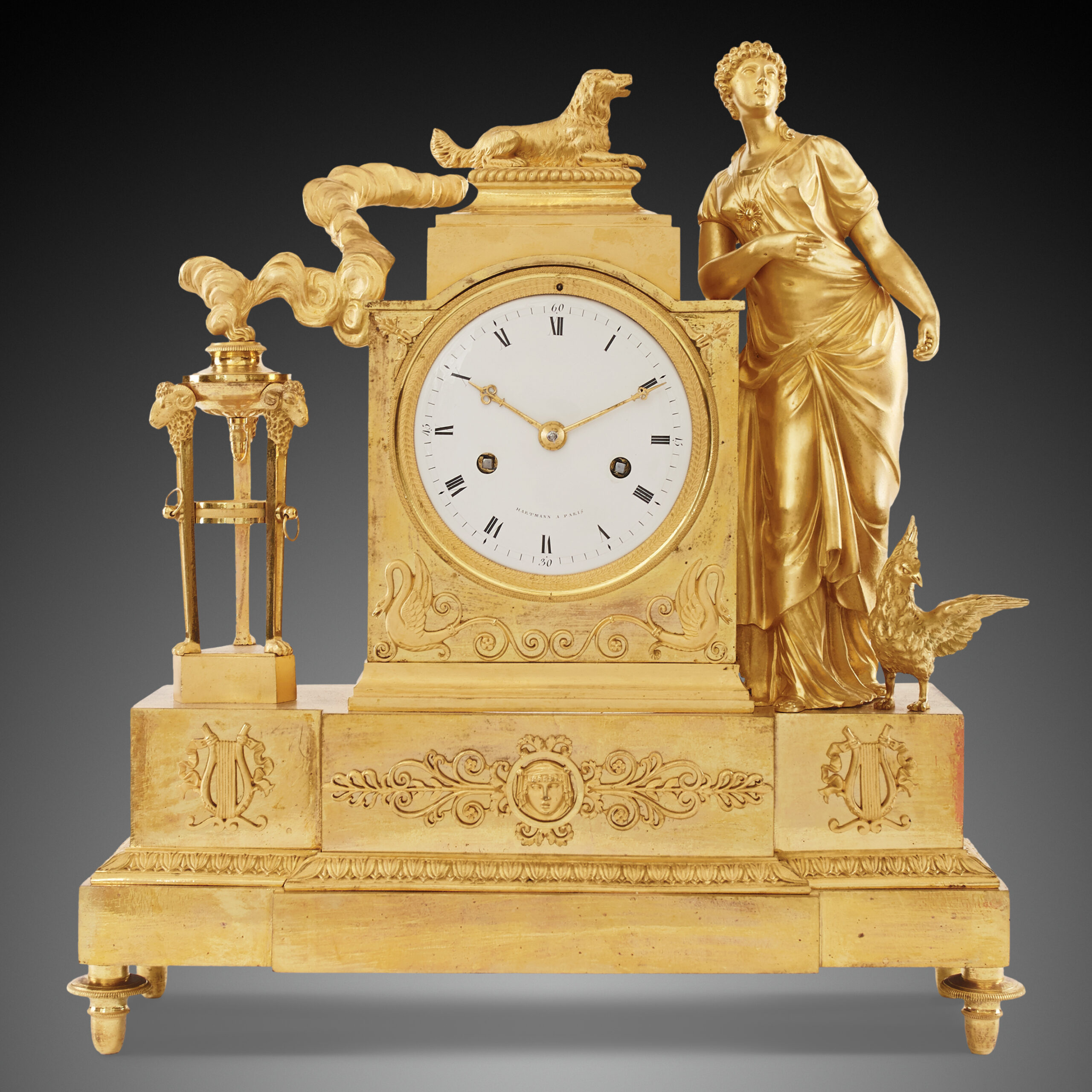
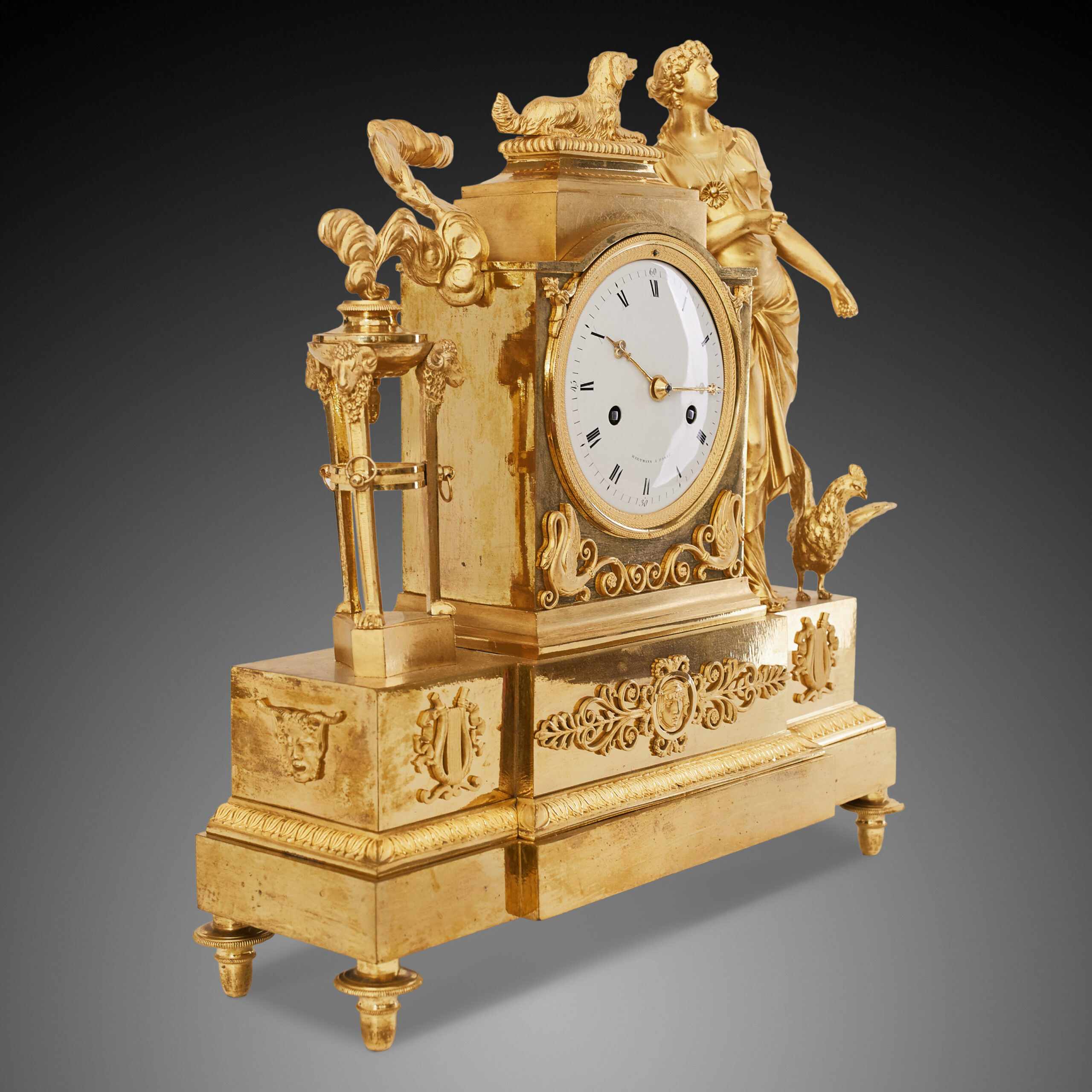
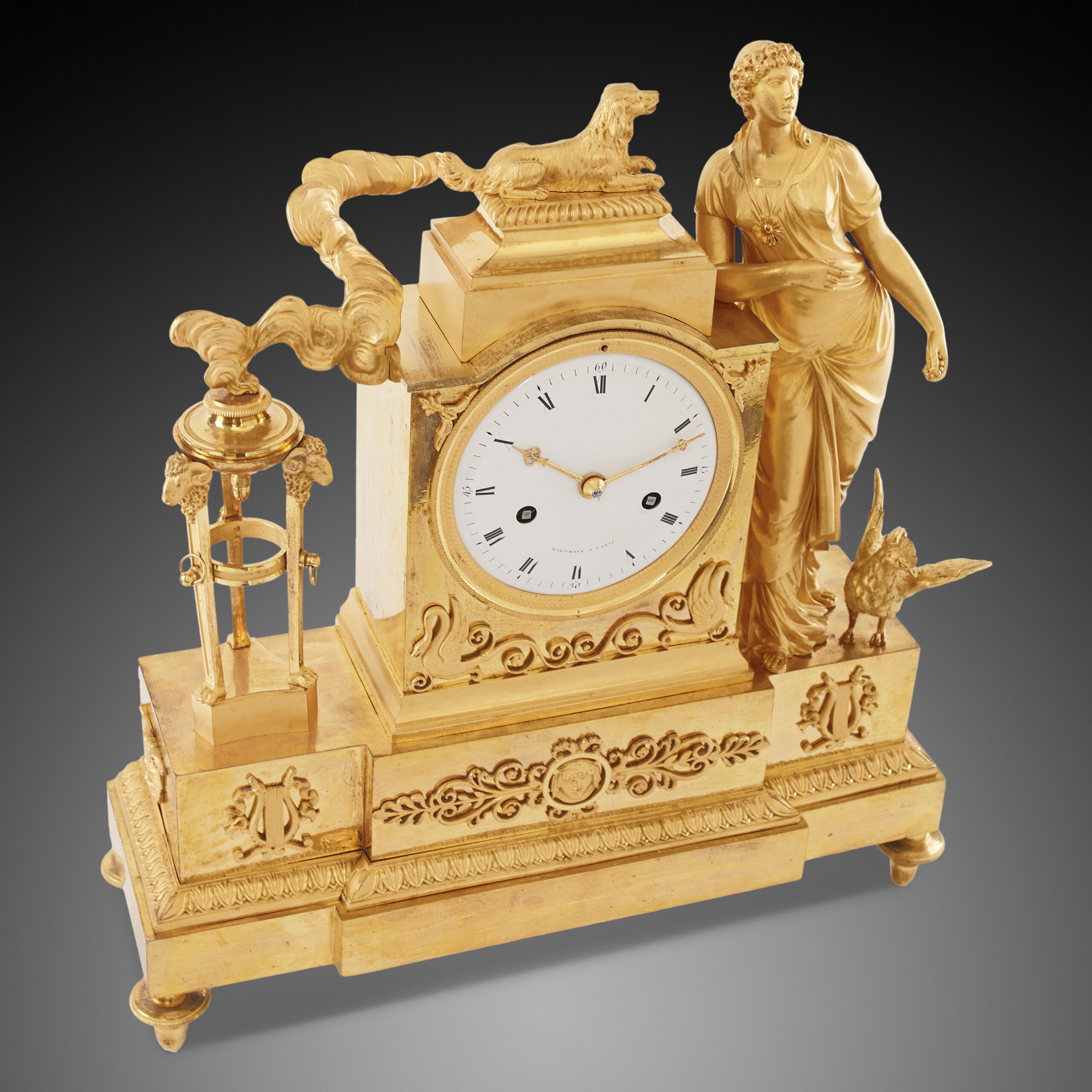
This important French Empire mantel clock represents the highest achievements of Parisian bronze craftsmanship during the first decades of the nineteenth century. Conceived as a sculptural and architectural ensemble, the composition reflects the profound influence of Classical Antiquity on the decorative arts of the Napoleonic era, when mythology, symmetry, and archaeological inspiration became central elements of artistic expression.
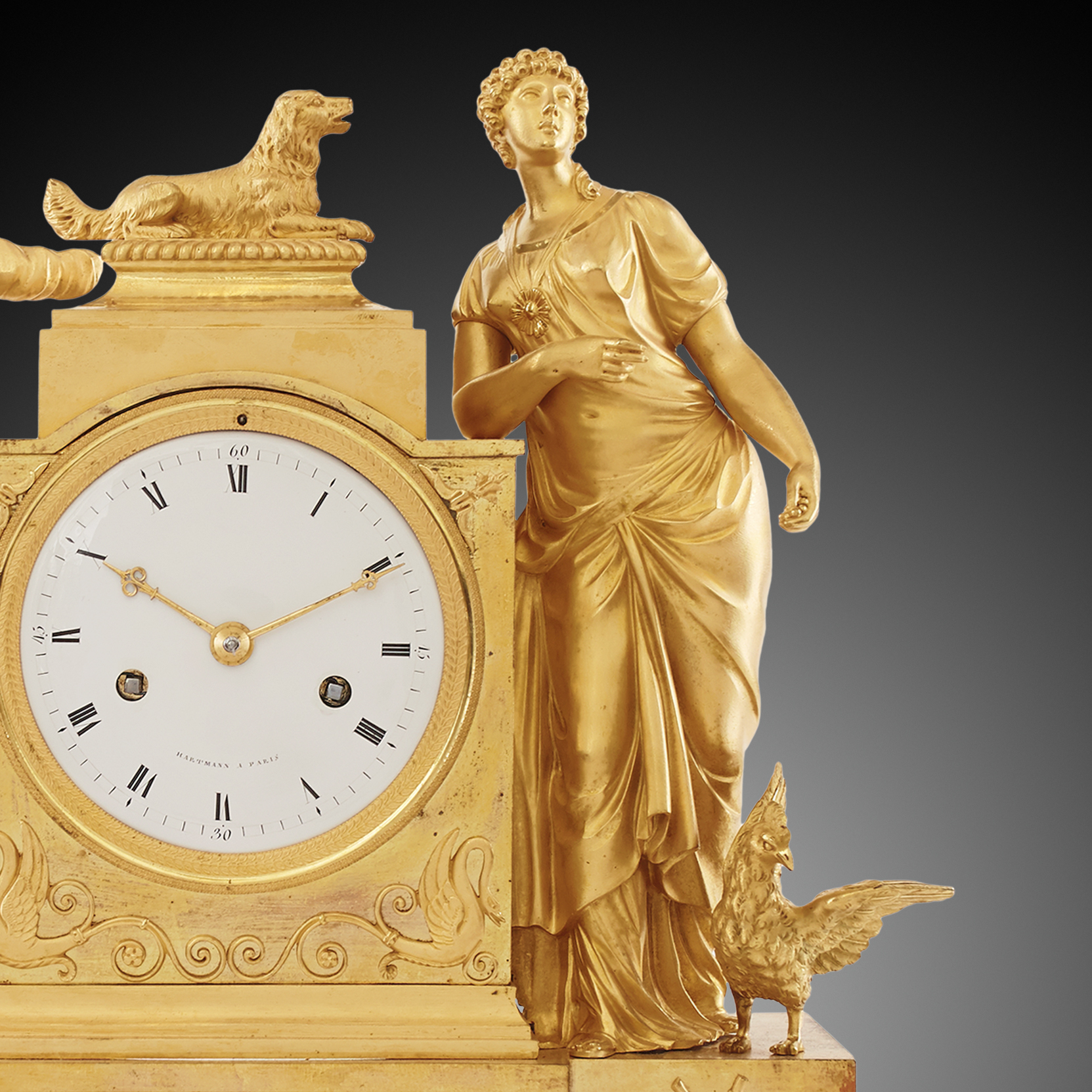
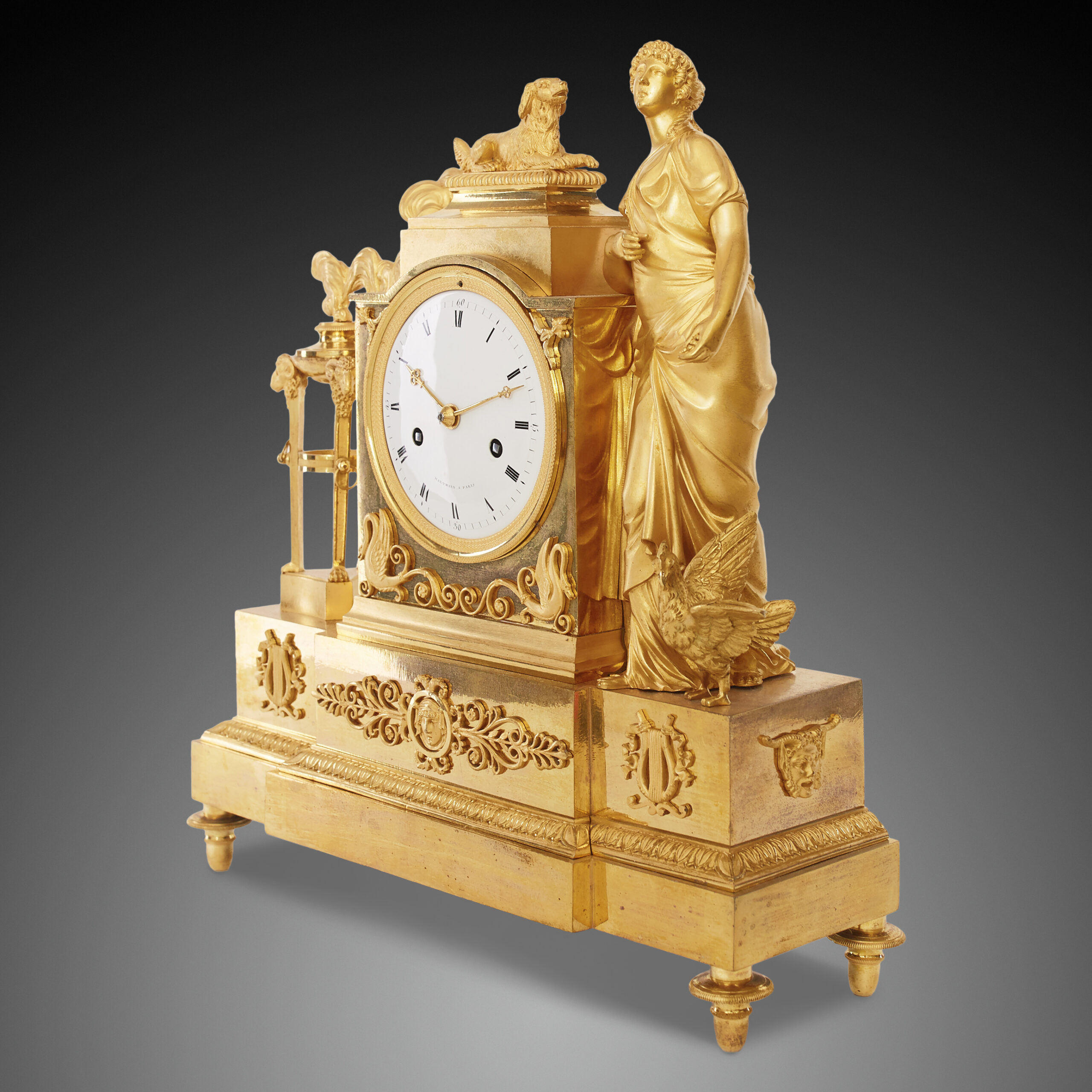
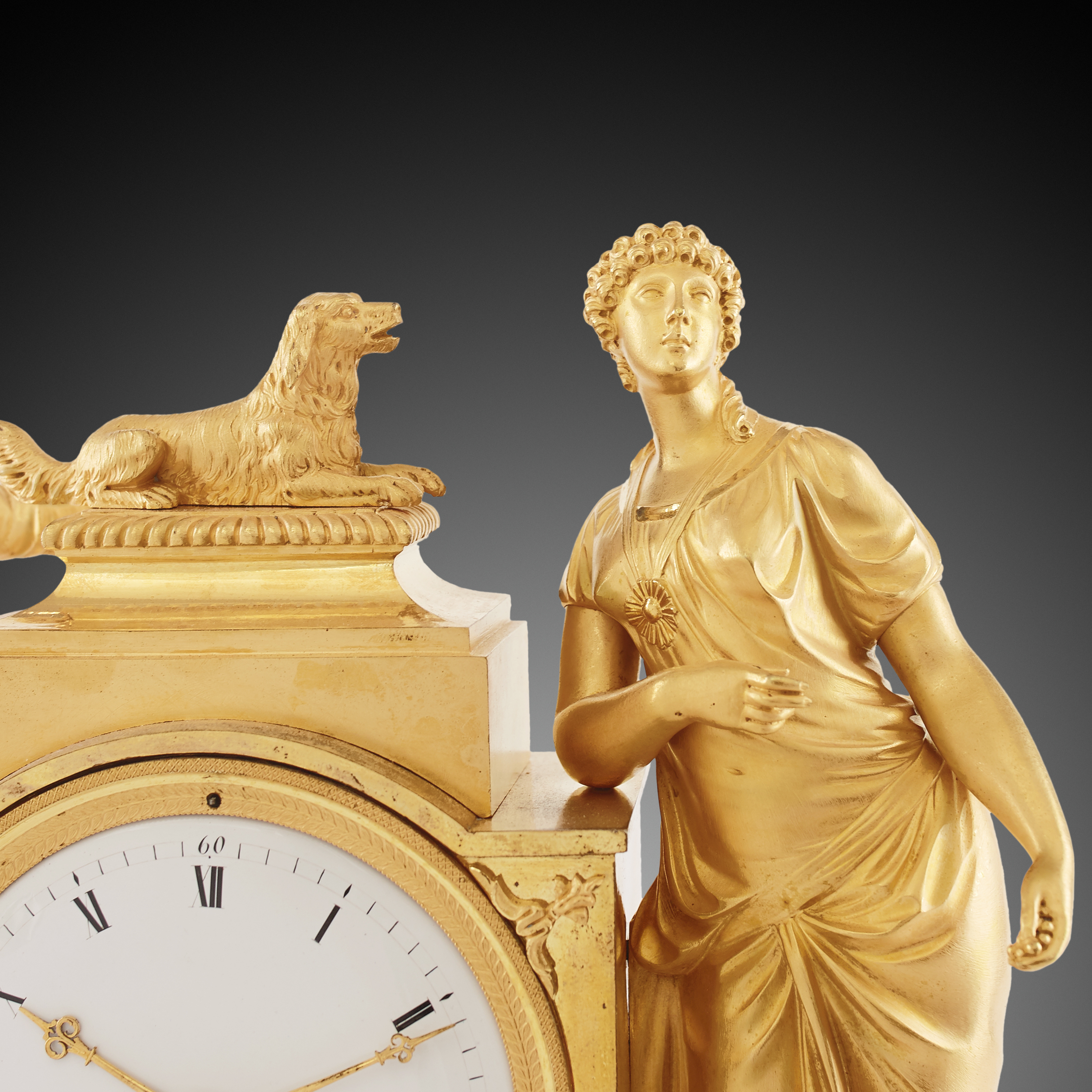
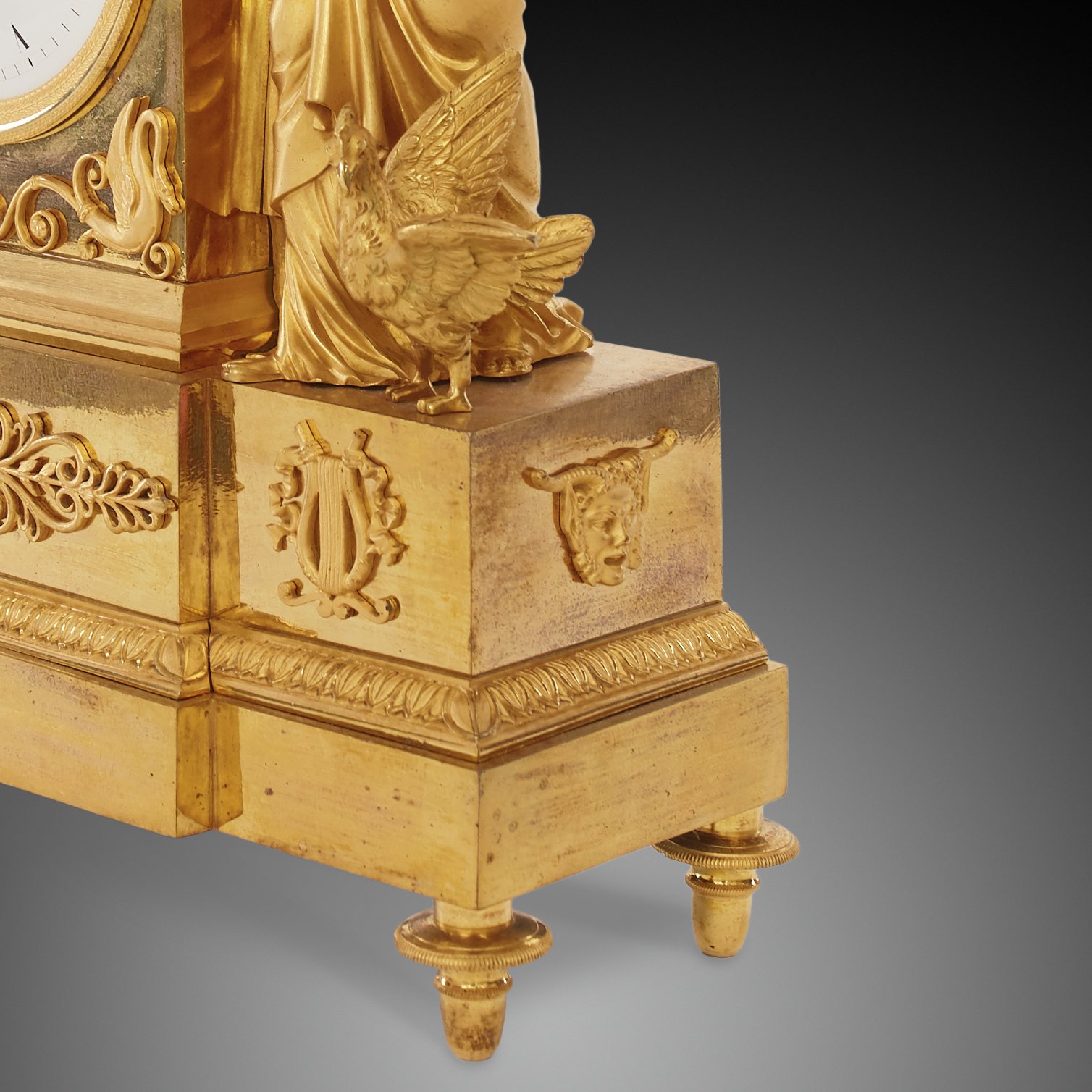
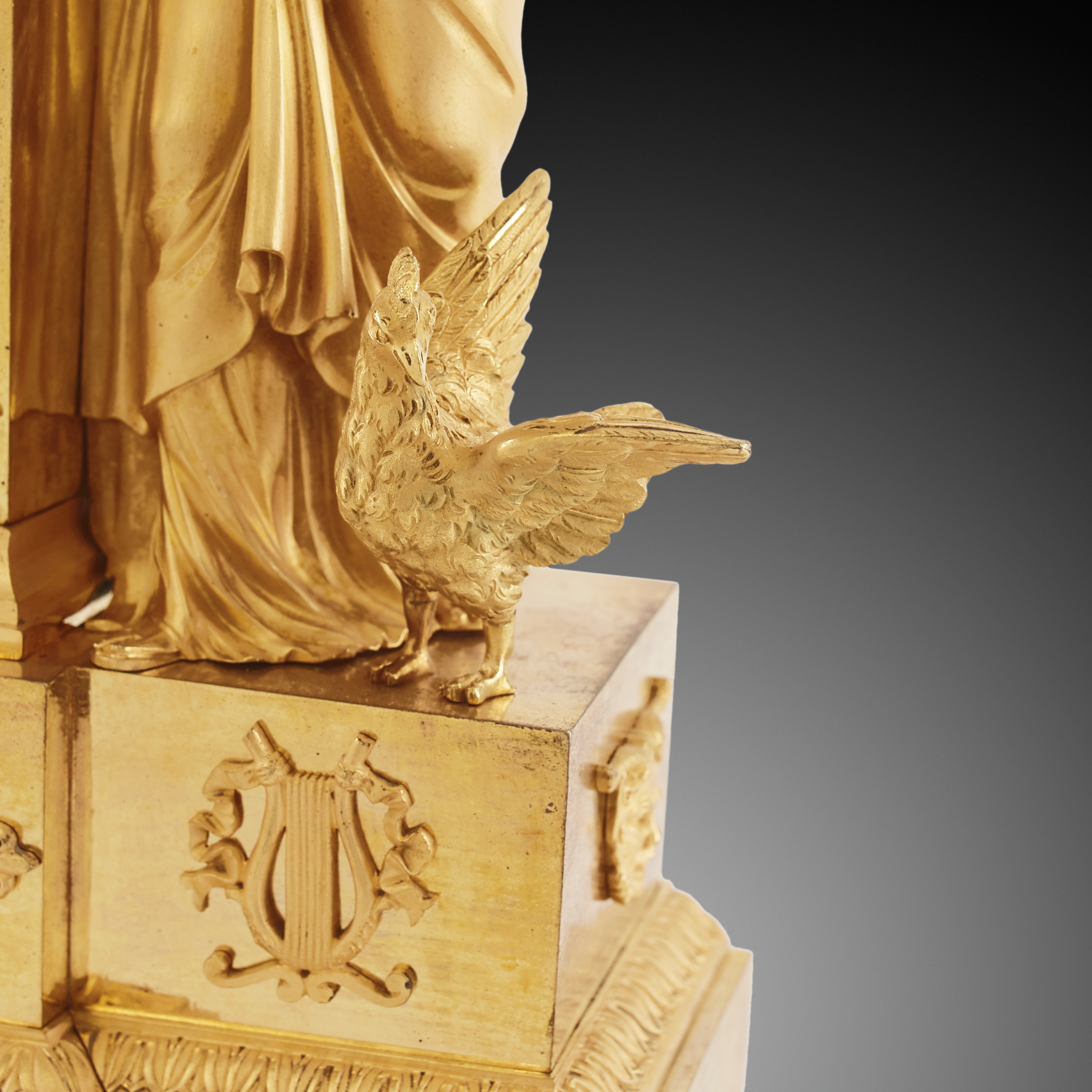
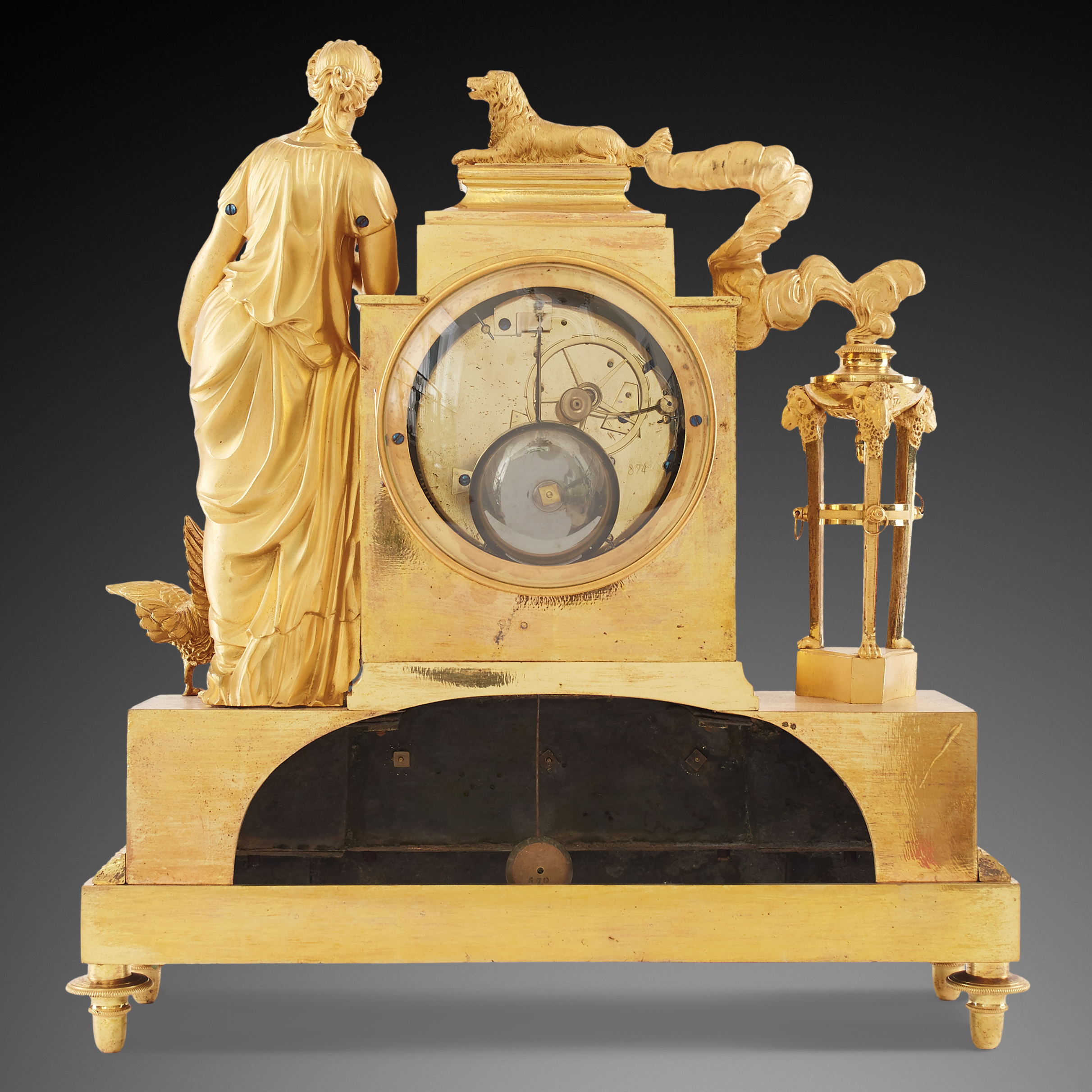
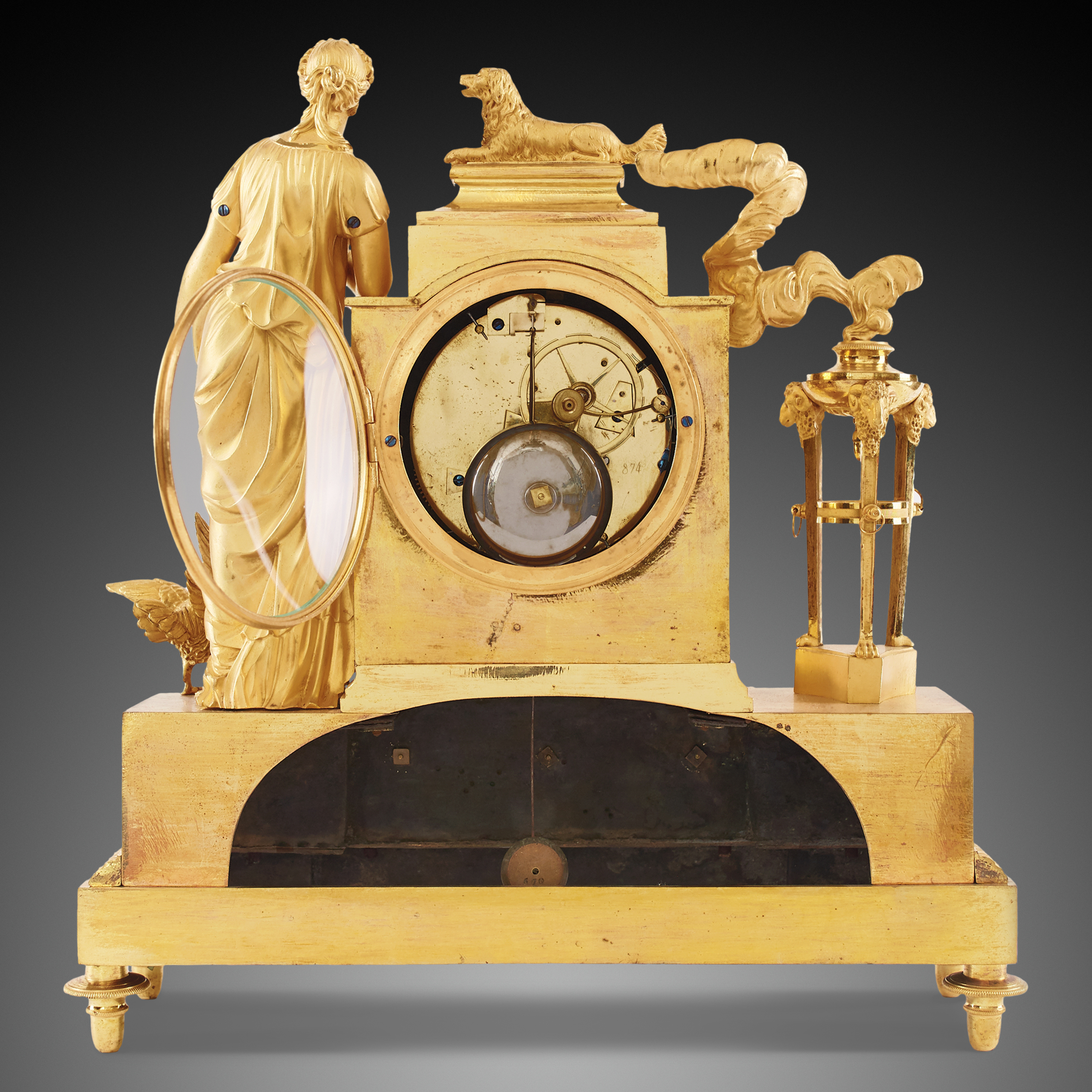
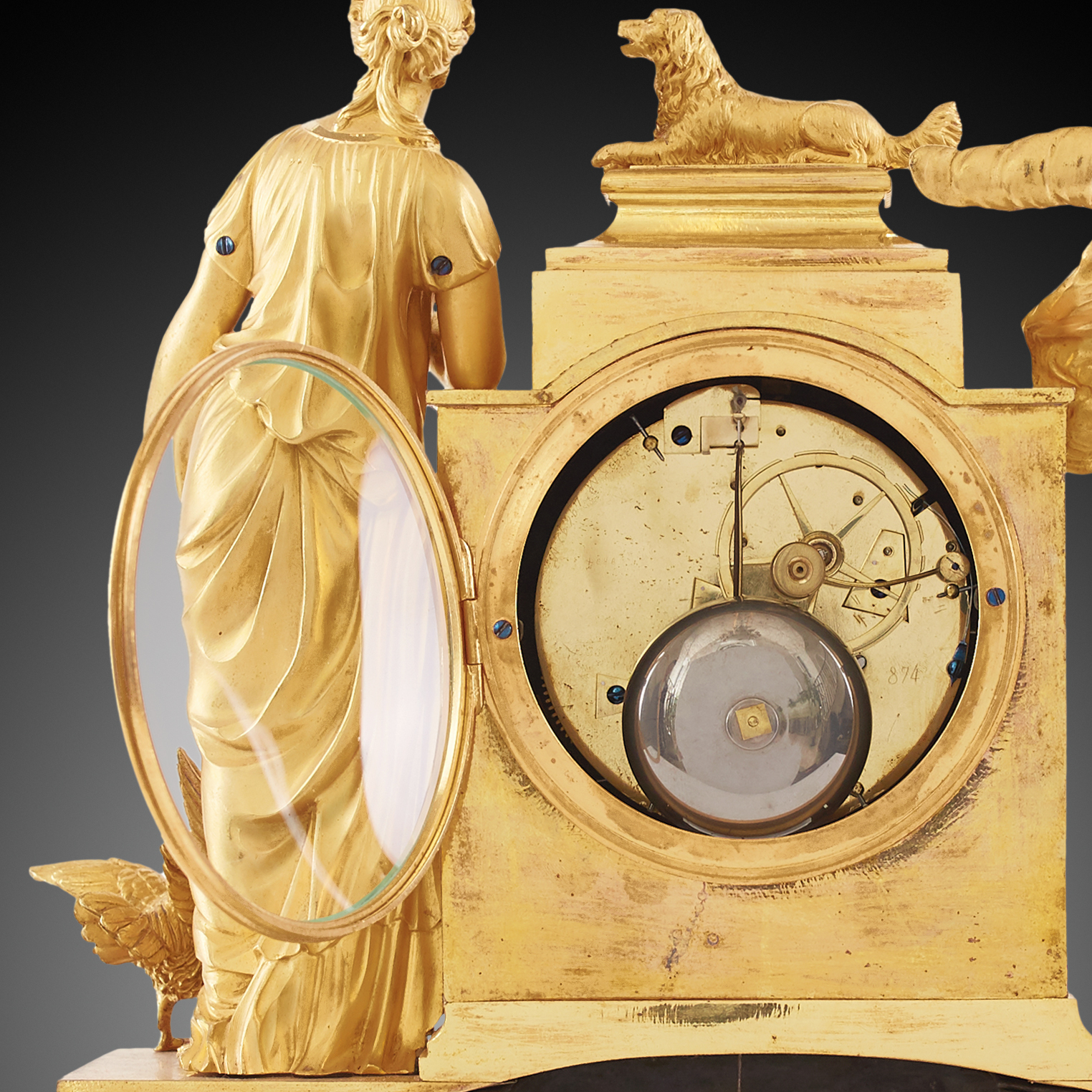
Executed entirely in finely chased and mercury-gilded bronze, the clock is centered around a majestic standing figure of Diana, the Roman goddess of the hunt. Draped in classical attire and portrayed with noble elegance, she appears beside an architectural clock case adorned with symbols associated with her mythological realm. At her feet stands a hunting dog, while a reclining hound surmounts the clock, reinforcing the allegorical theme and evoking Diana’s role as protector of the wilderness and patroness of the hunt.
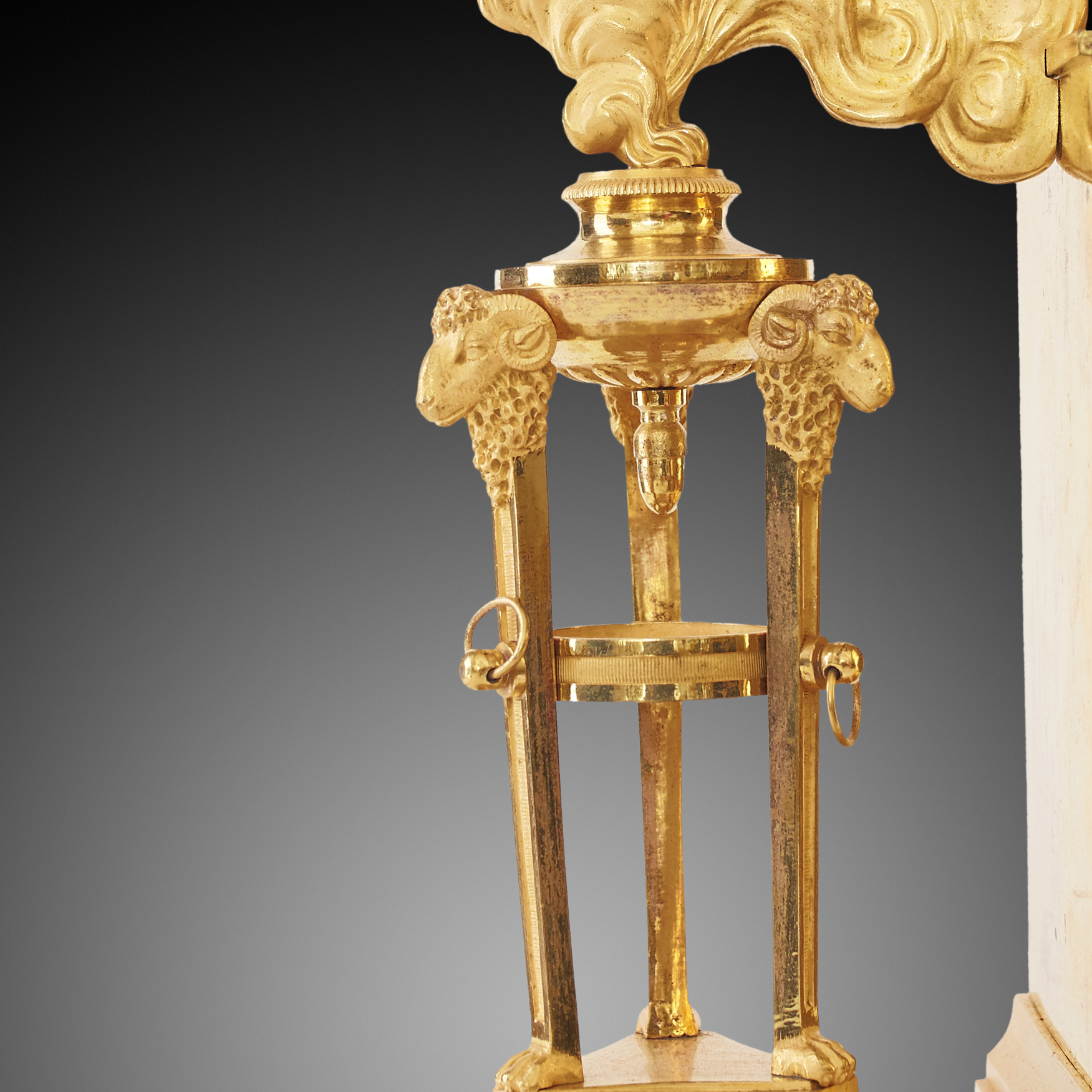
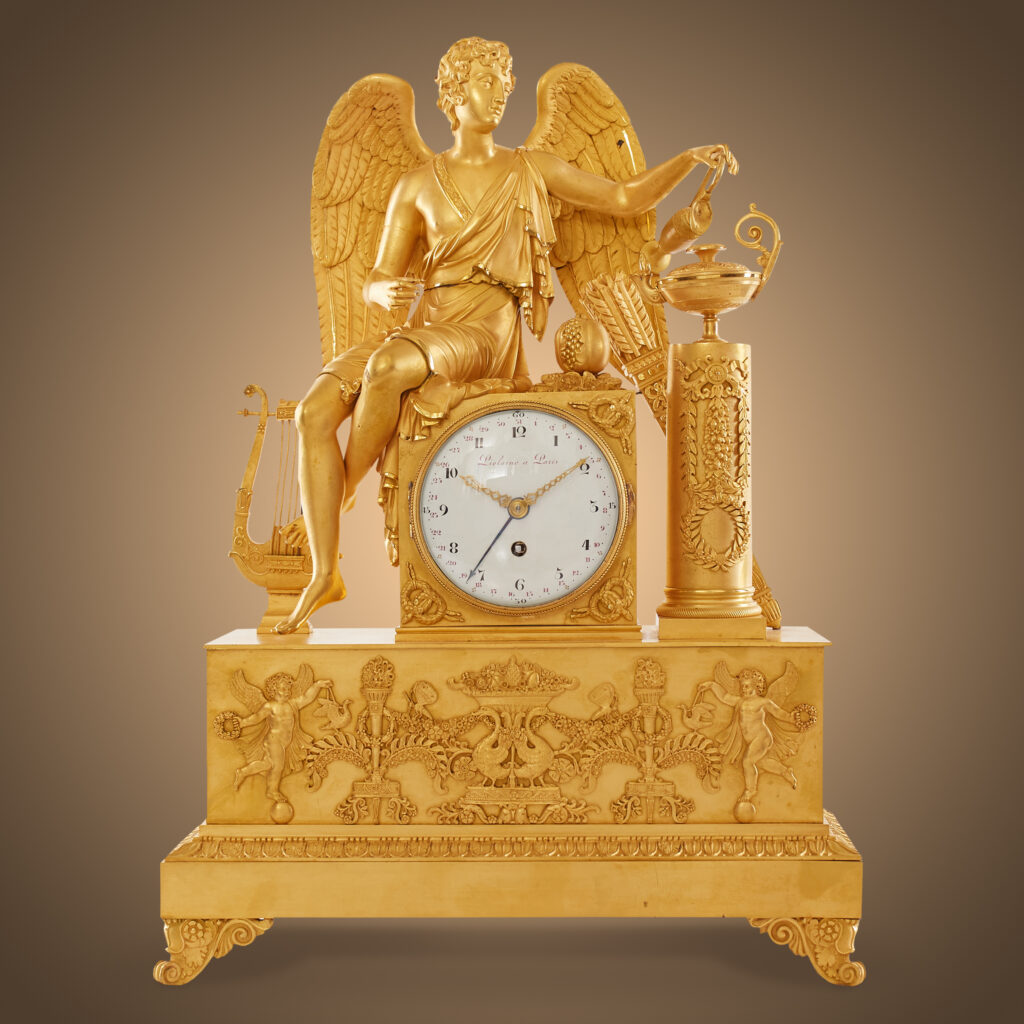
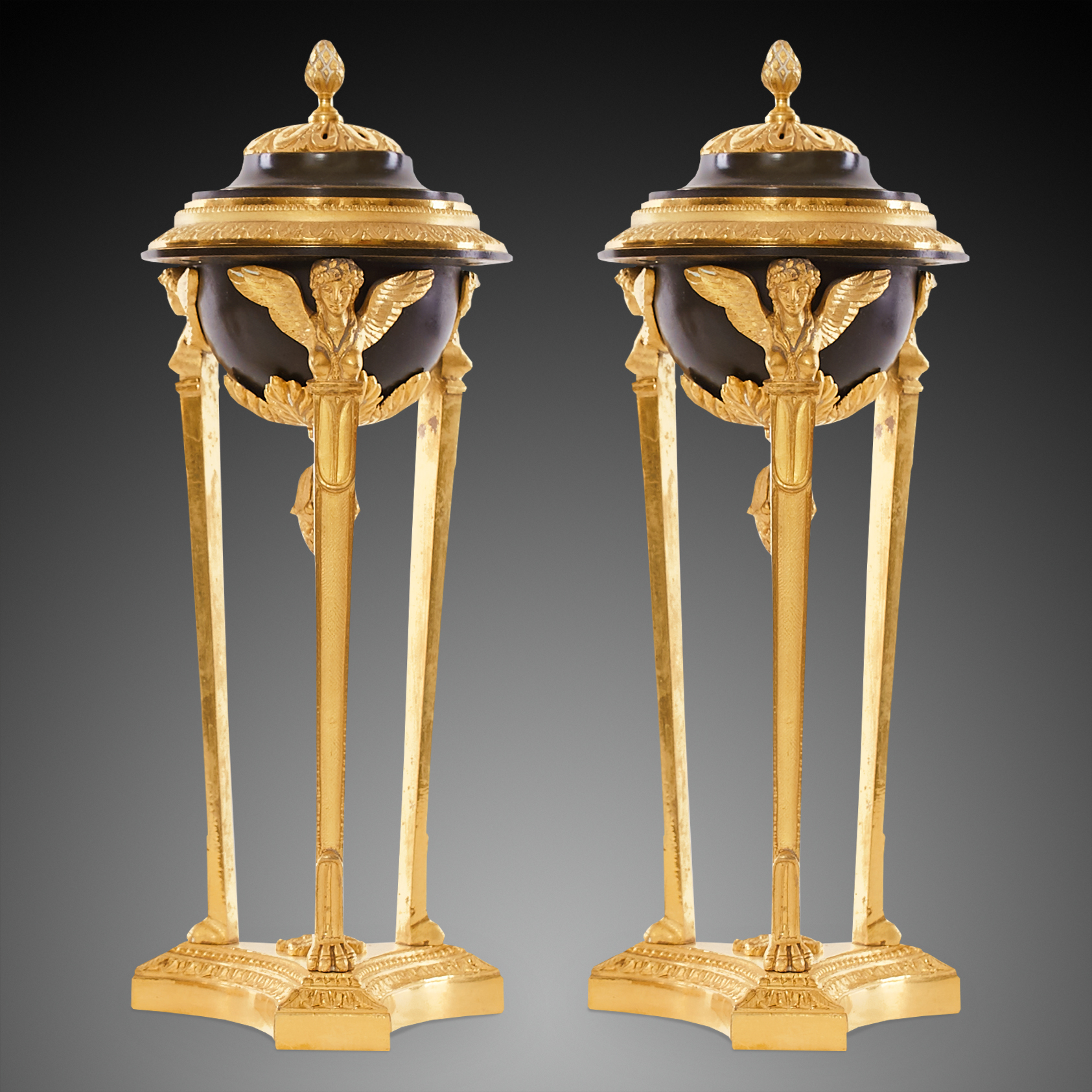
The architectural case is enriched with a remarkable repertoire of neoclassical ornament. Finely cast swans, lyres, laurel scrolls, anthemion motifs, and classical masks are arranged with perfect symmetry, demonstrating the sophisticated decorative vocabulary favored during the Empire period. To the left, an antique-inspired tripod incense burner emits stylized clouds of smoke, introducing a theatrical and poetic element inspired by ancient sacrificial altars and temple rituals. Such references to antiquity reflect the fascination with Greco-Roman civilization that defined French decorative arts under Napoleon I.
At the center of the composition, the pristine white enamel dial provides an elegant contrast to the warm brilliance of the gilded bronze. Framed by a refined bezel and integrated seamlessly into the architectural structure, it preserves the harmony and balance that characterize the finest Empire designs. The exceptional quality of the chasing and gilding demonstrates the skill of the master bronziers who supplied luxury furnishings to the imperial court and the most distinguished aristocratic patrons of the period.
Beyond its function as a timepiece, this clock is a work of sculpture and an expression of the intellectual and artistic ideals of early nineteenth-century France. Combining mythology, architecture, and masterful bronze work, it embodies the grandeur, refinement, and classical spirit that made the French Empire style one of the most influential decorative movements in European history. As both a rare collector’s object and a commanding decorative centerpiece, it would grace the finest collection of French clocks, ormolu sculpture, or museum-quality decorative arts.