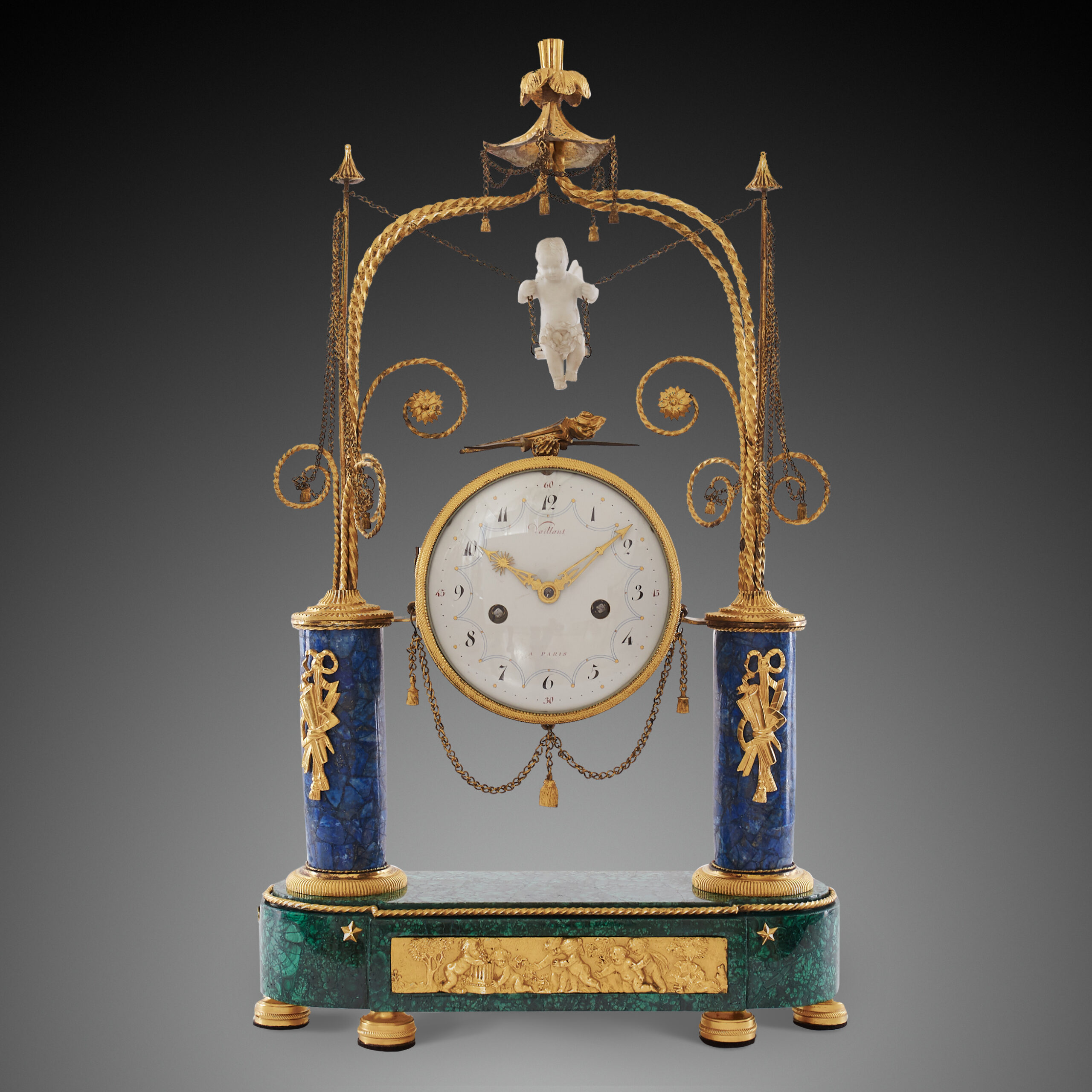
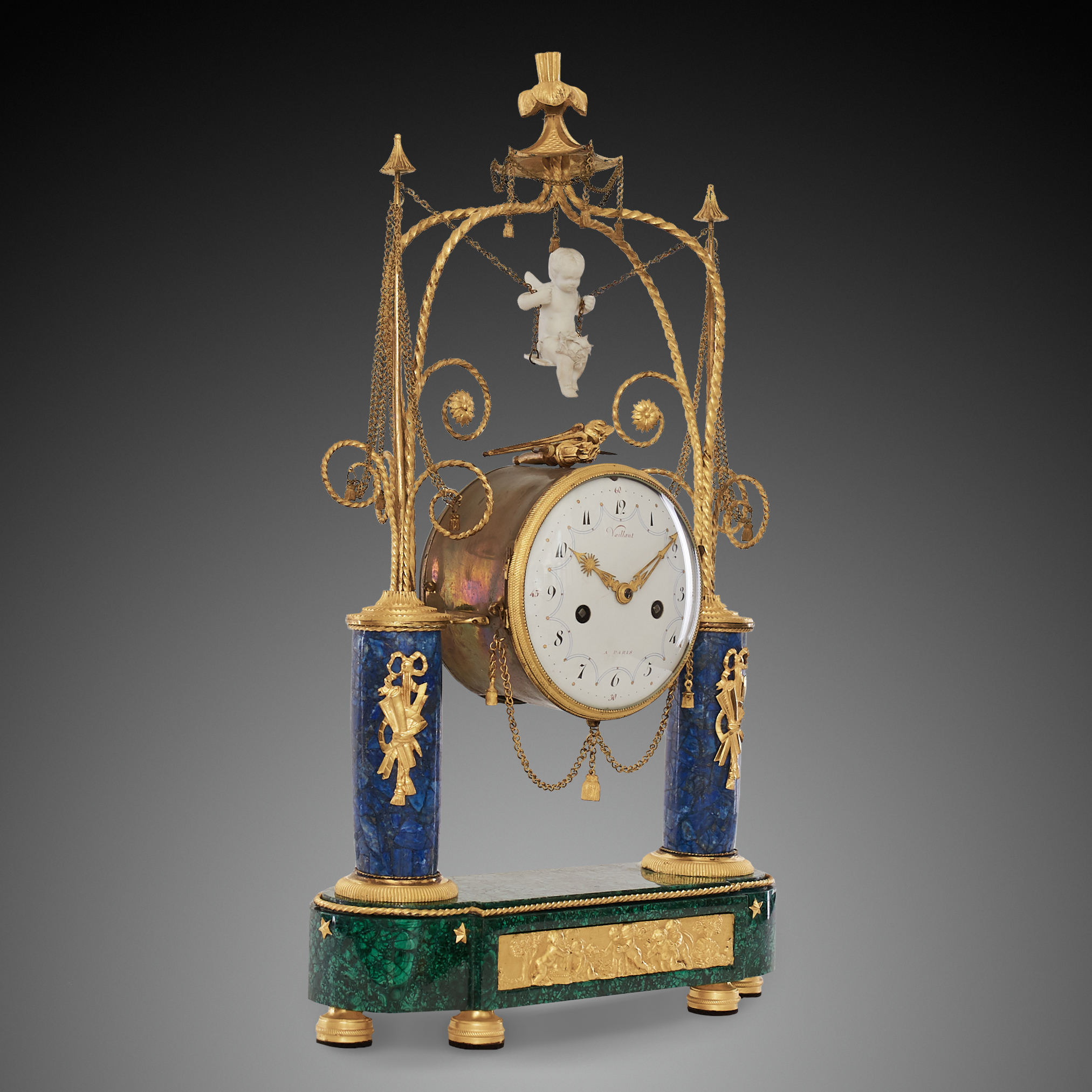
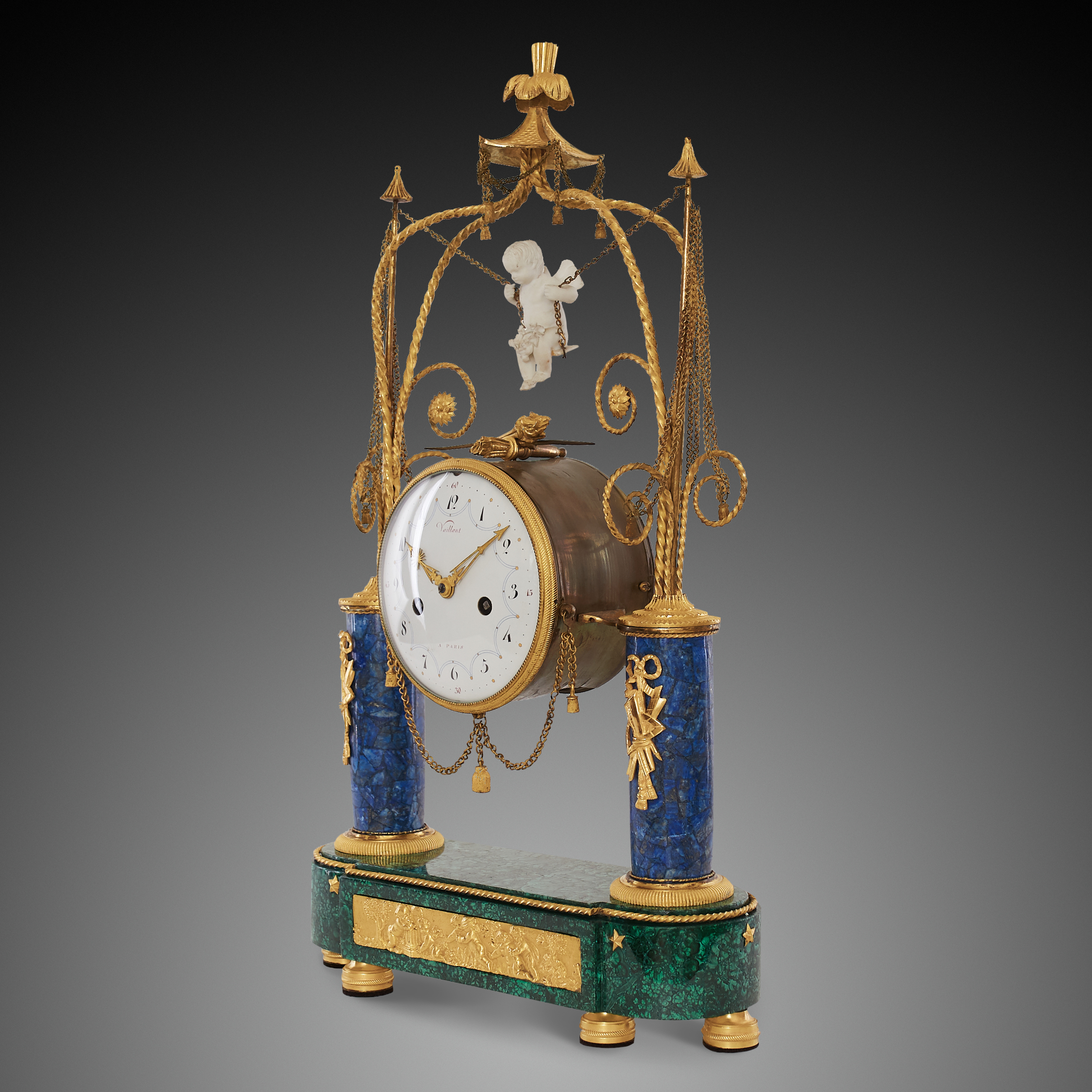
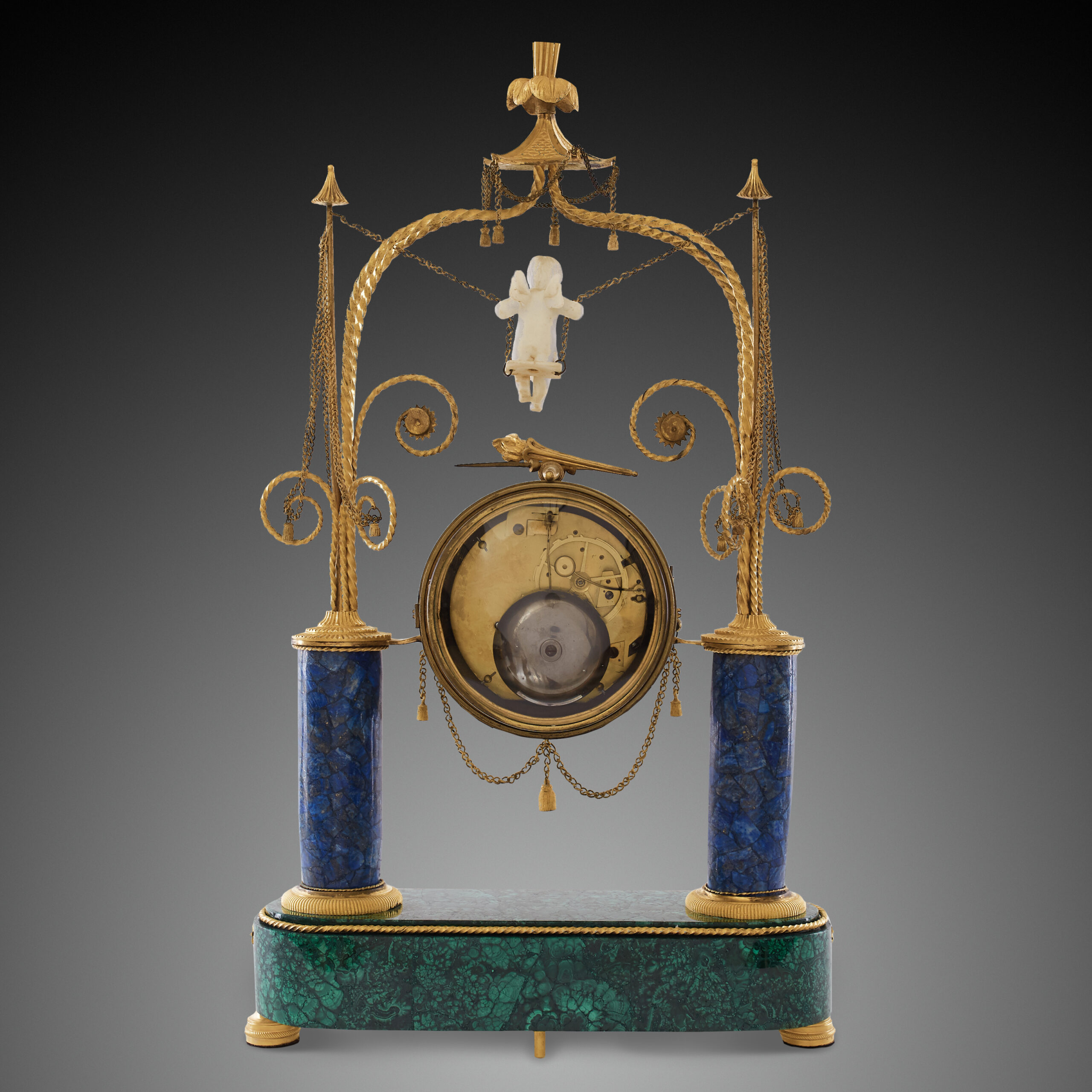
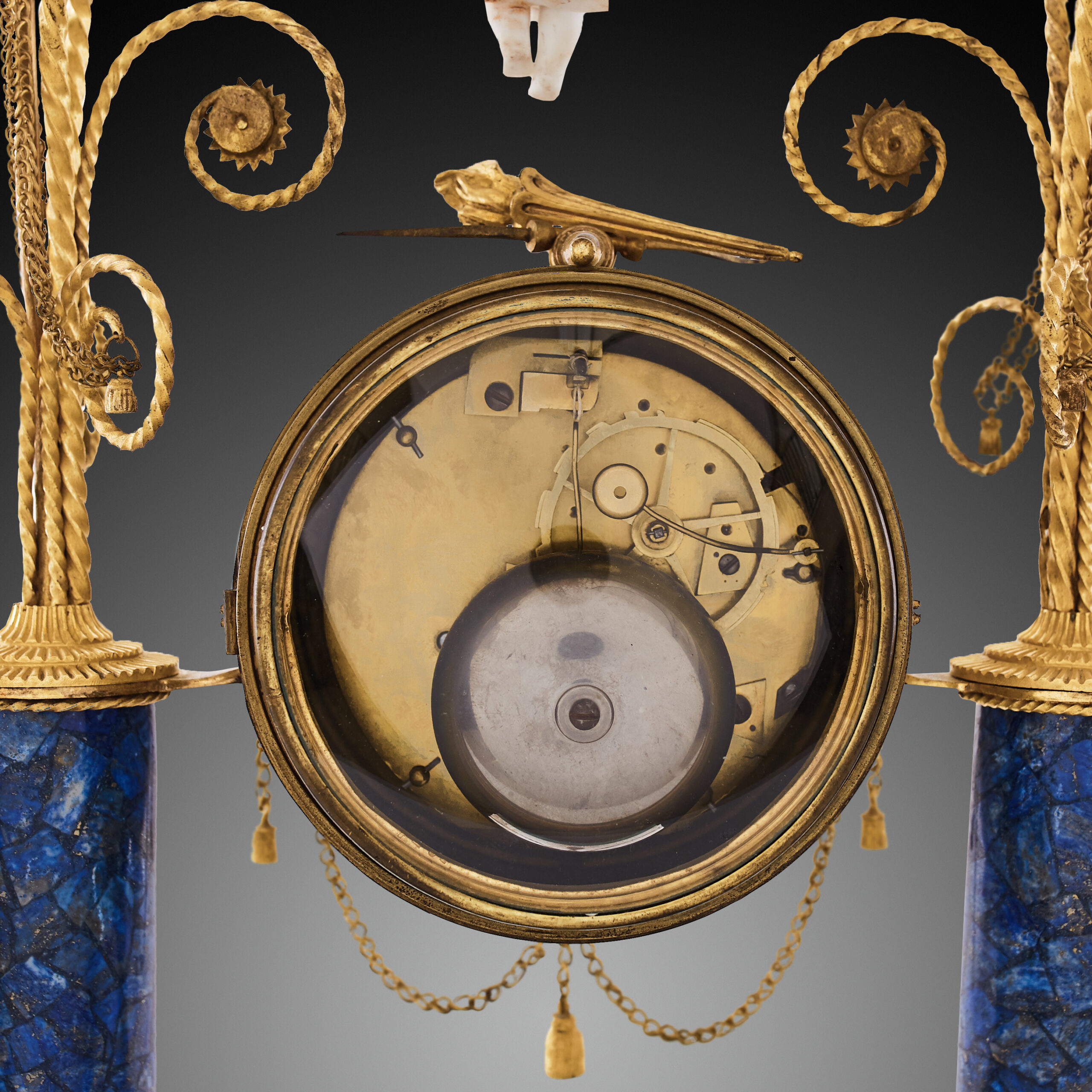
An exceptionally elegant and finely executed French Louis XVI Revival portico clock, dating from the late nineteenth century and exemplifying the enduring appeal of Neoclassical design. Combining luxurious hardstones, masterfully chased gilt-bronze mounts, and refined architectural proportions, this remarkable timepiece embodies the sophistication and craftsmanship associated with the finest Parisian decorative arts workshops of the Belle Époque.
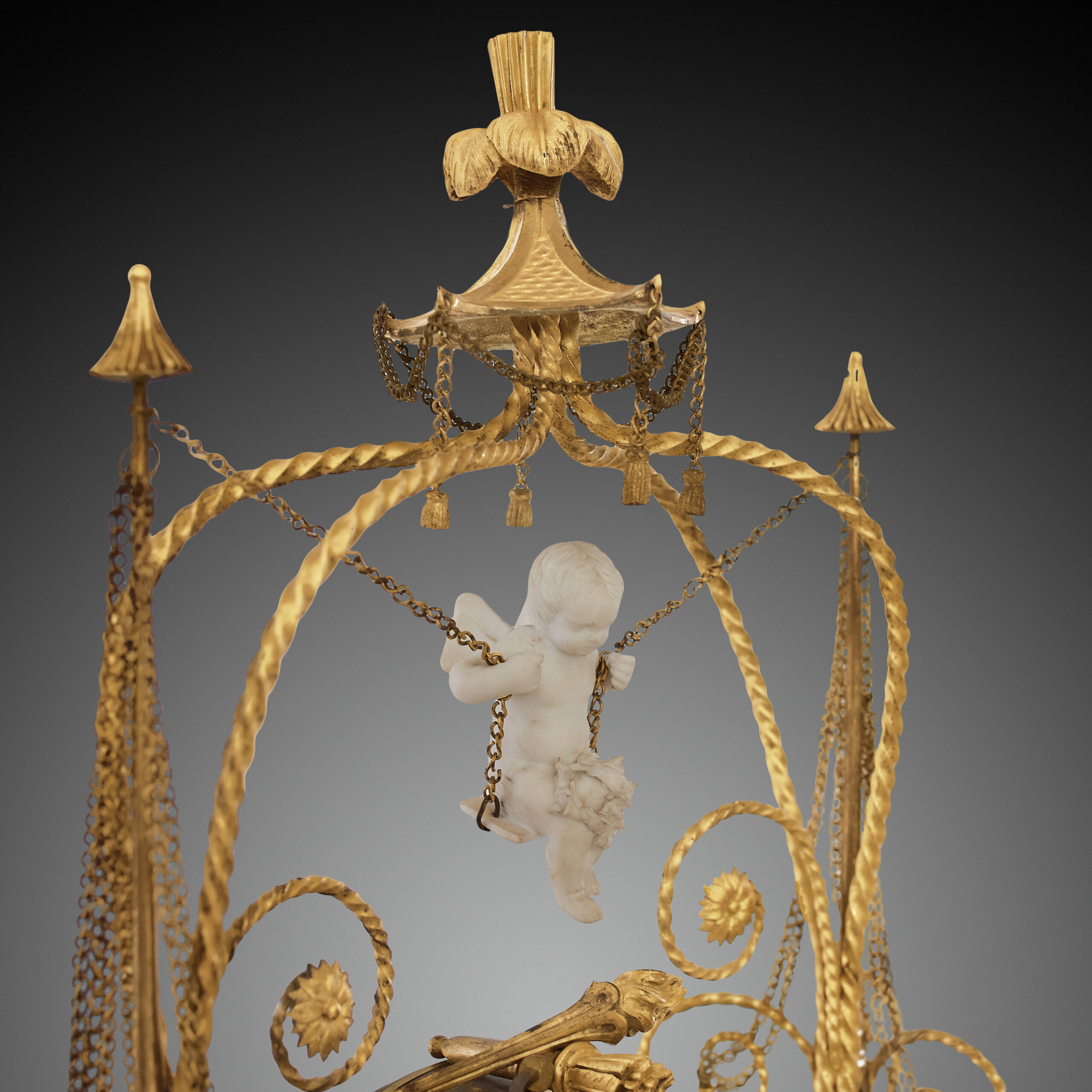
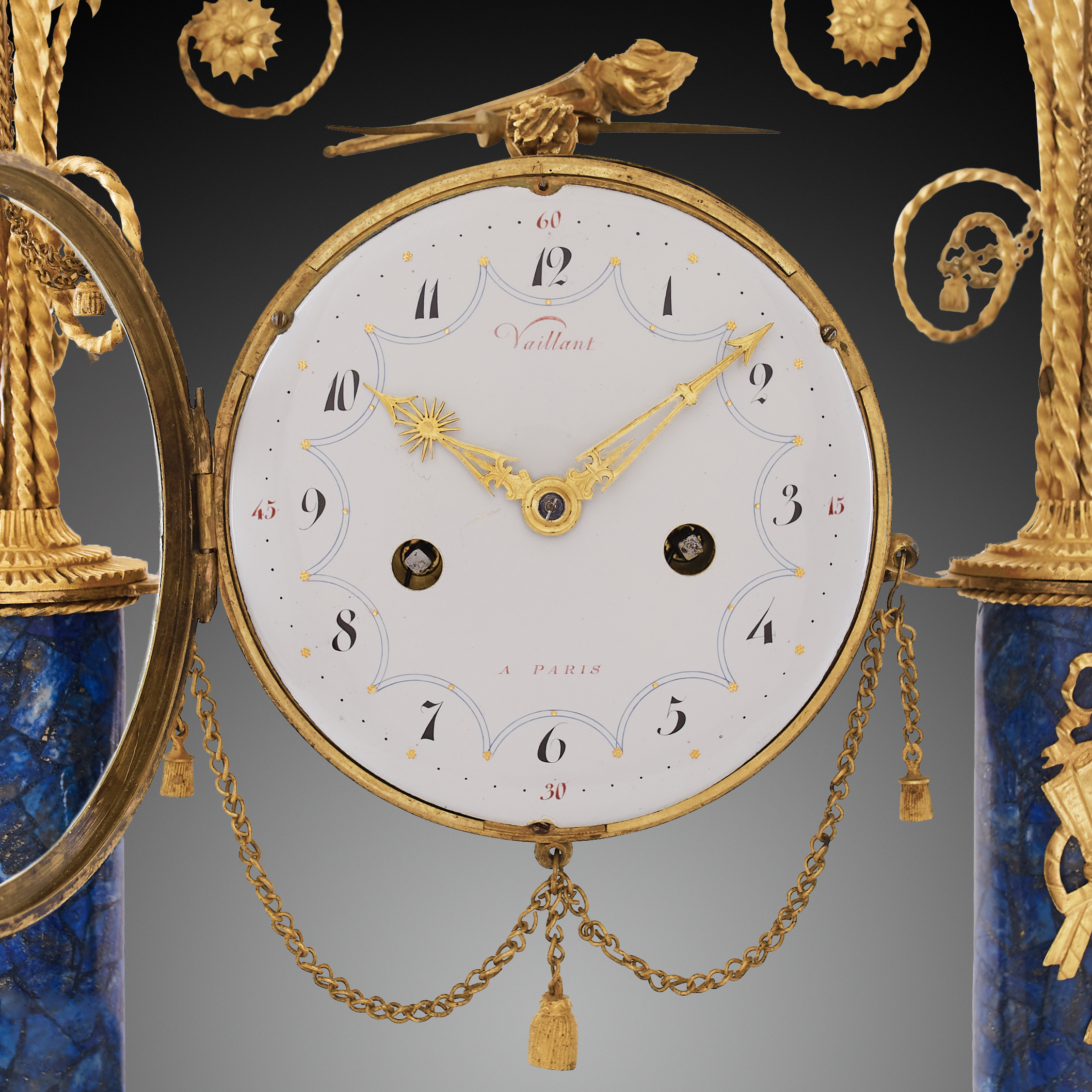
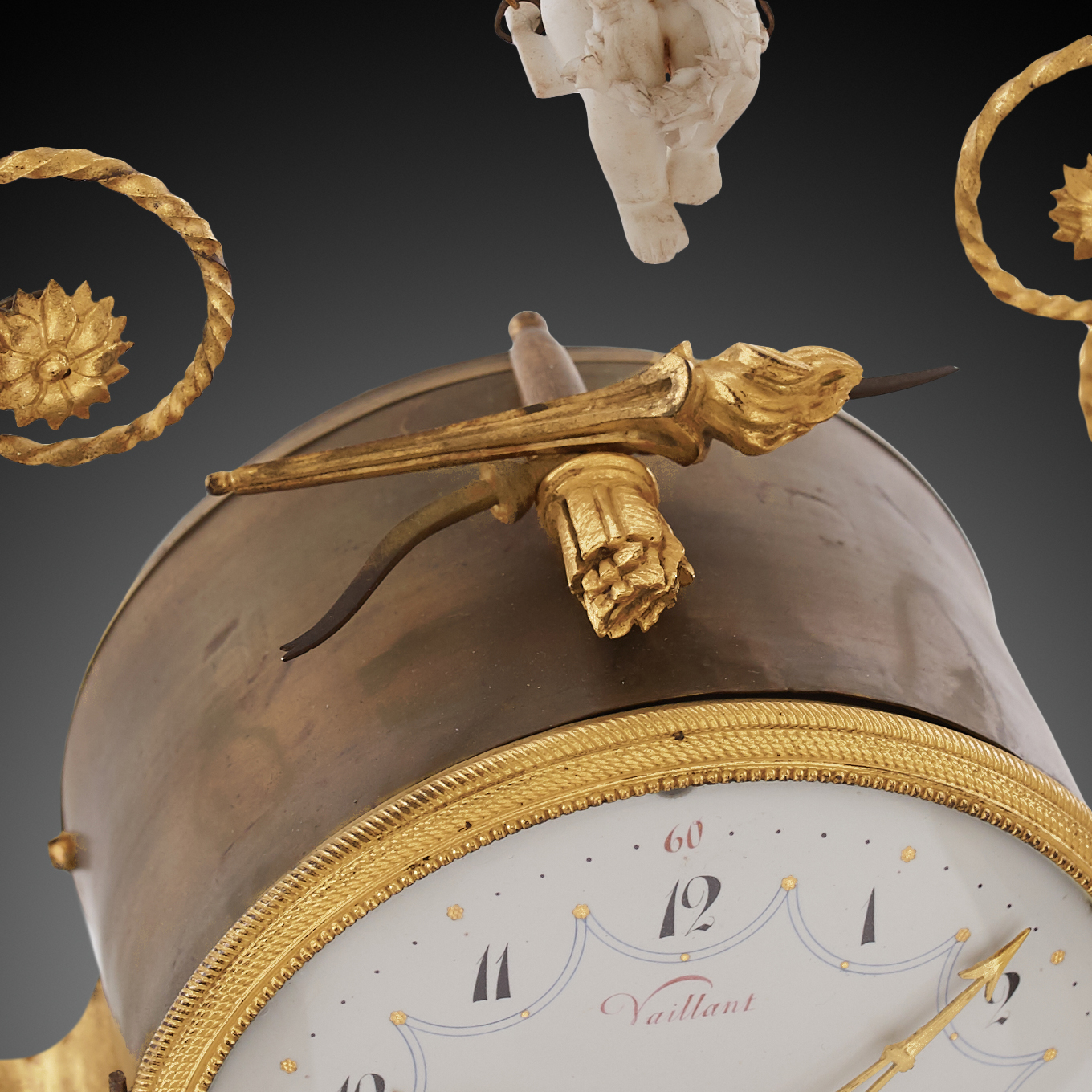
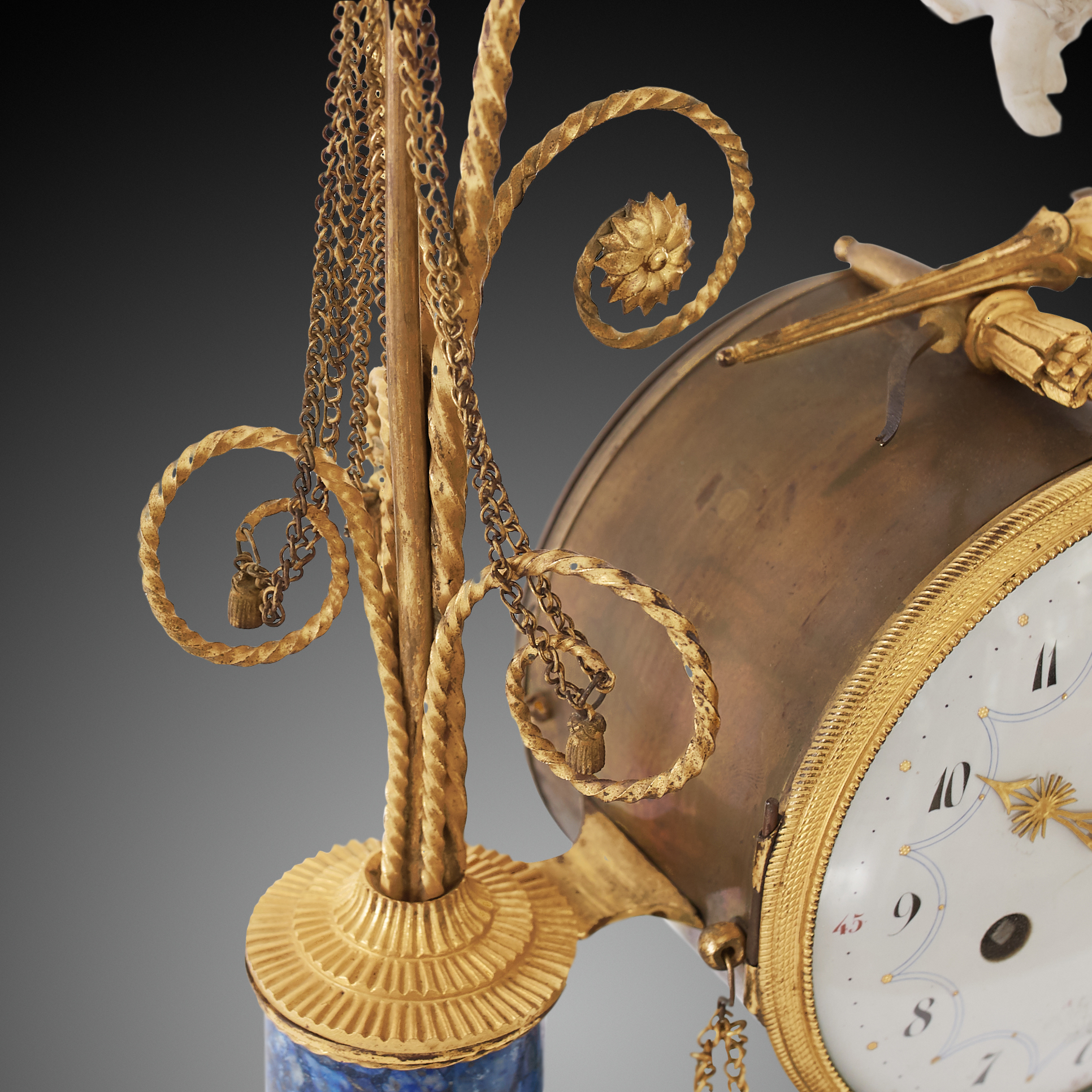
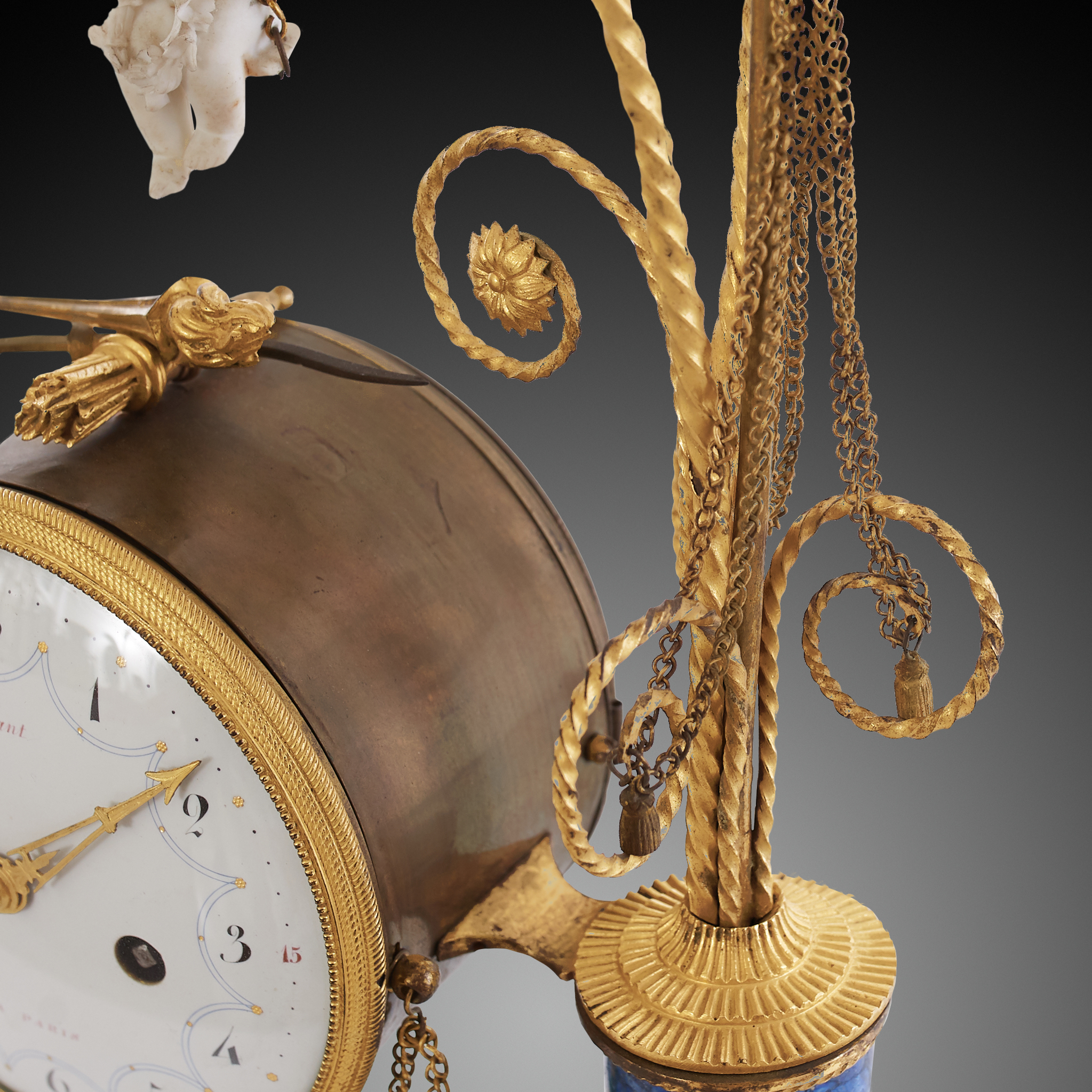
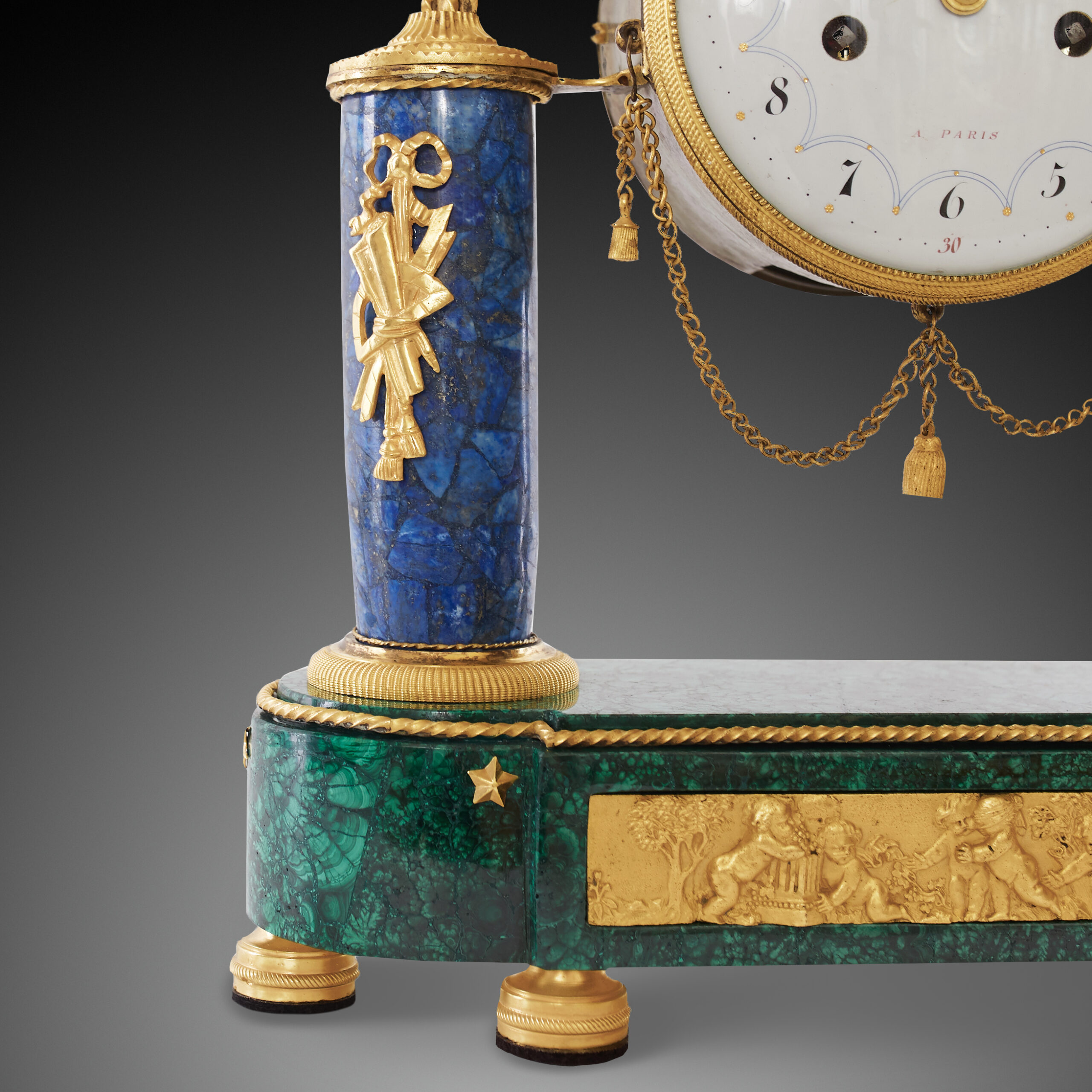
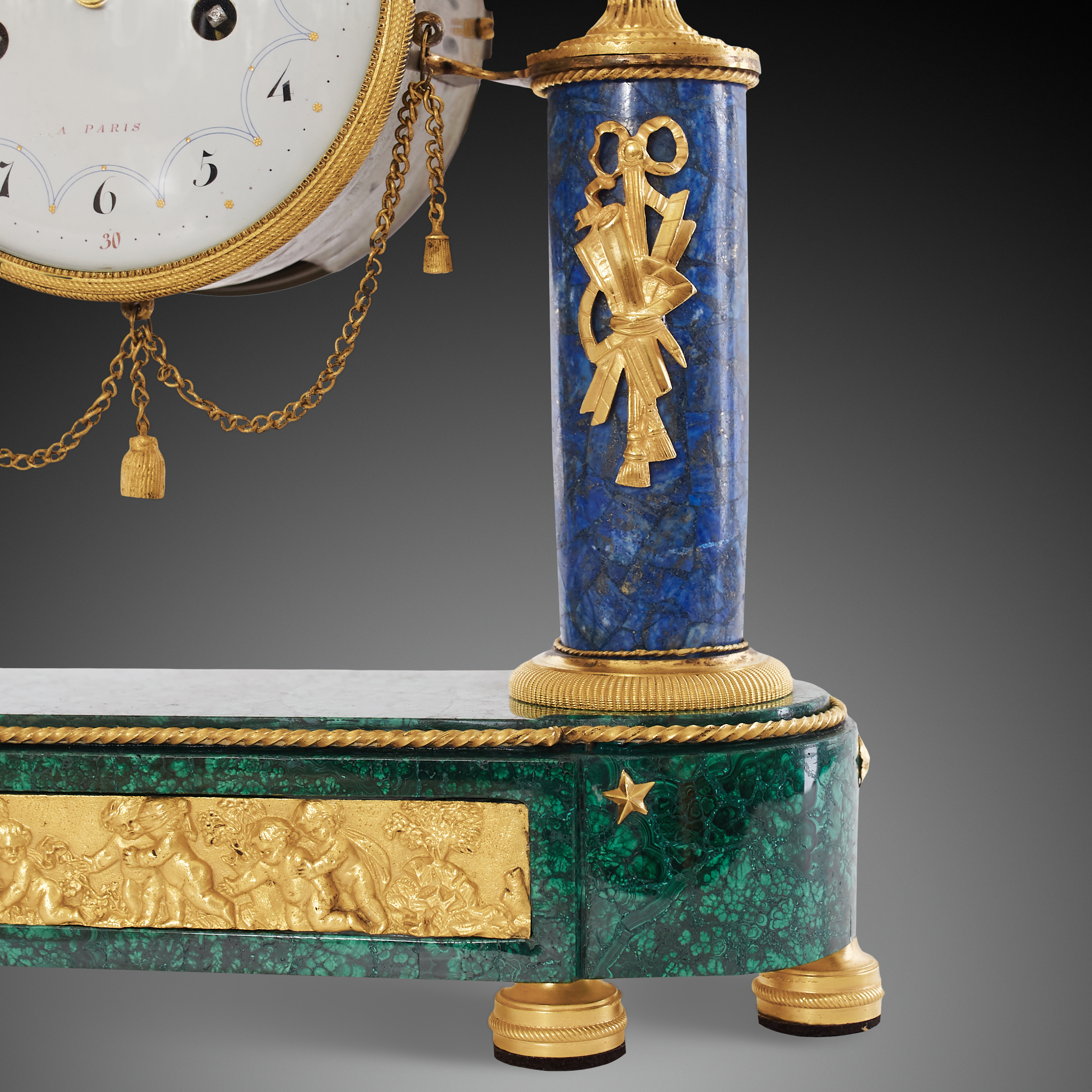
The clock is conceived in the form of a classical portico, with the circular enamel dial suspended between two richly mounted columns veneered in deep cobalt-blue lapis lazuli. The dial, framed by a finely beaded ormolu bezel, displays elegant Arabic numerals and delicate pierced gilt hands. Above, a graceful openwork canopy supports a sculpted white marble putto suspended within the architectural framework, creating a striking sense of movement and lightness. The composition is enriched by finely cast chains, rosettes, ribbon-tied trophies, and ornamental scrollwork, all executed in exquisitely chased and mercury-gilded bronze.
The shaped base is veneered in vibrant green malachite, a material long associated with aristocratic patronage and royal commissions. At the center is a finely cast gilt-bronze plaque depicting a classical bacchanalian procession, a motif inspired by ancient Roman relief sculpture and frequently employed in the decorative arts of the Louis XVI period. The combination of brilliant malachite, richly colored lapis lazuli, and luminous gilt bronze creates a dramatic and highly luxurious visual effect.
Portico clocks originated during the reign of Louis XVI in the late eighteenth century and represented the triumph of Neoclassical taste, drawing inspiration from the architecture and decorative vocabulary of antiquity. During the second half of the nineteenth century, Parisian makers revived these celebrated forms for an affluent clientele eager to furnish their residences with objects reflecting both historical grandeur and technical excellence. The present example is an outstanding interpretation of this tradition, displaying exceptional quality of materials and workmanship throughout.
More than a functional timepiece, this clock was conceived as a sculptural centerpiece intended to adorn the grand salons, reception rooms, and private libraries of distinguished European interiors. Its harmonious blend of architecture, sculpture, and horology reflects the highest ideals of French decorative art and the remarkable skill of the craftsmen who produced it.
A rare and highly decorative example of French Belle Époque luxury, combining exquisite hardstones, superb gilt-bronze work, and refined Neoclassical design. An impressive acquisition for the discerning collector of fine clocks, French decorative arts, or important nineteenth-century objets d’art.