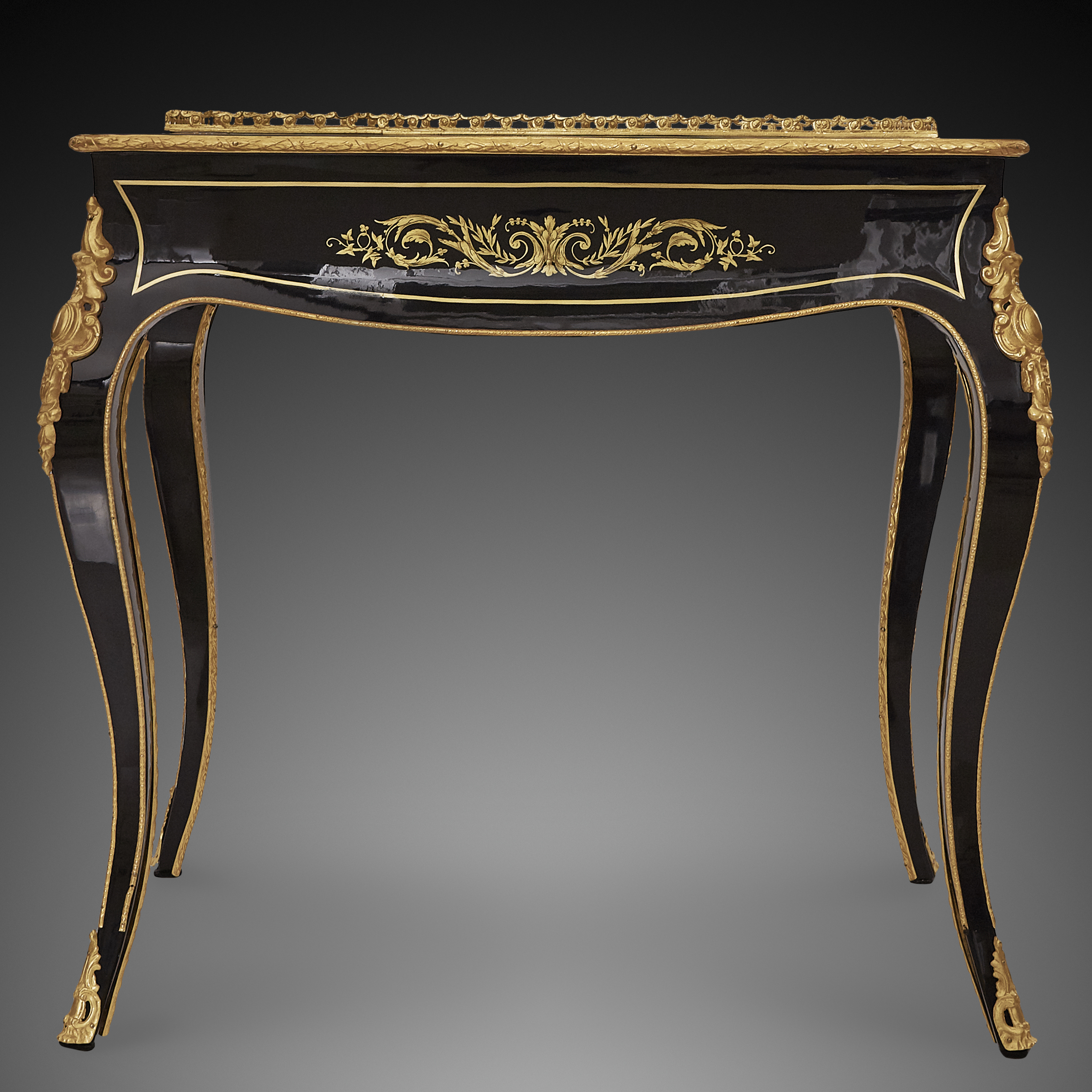
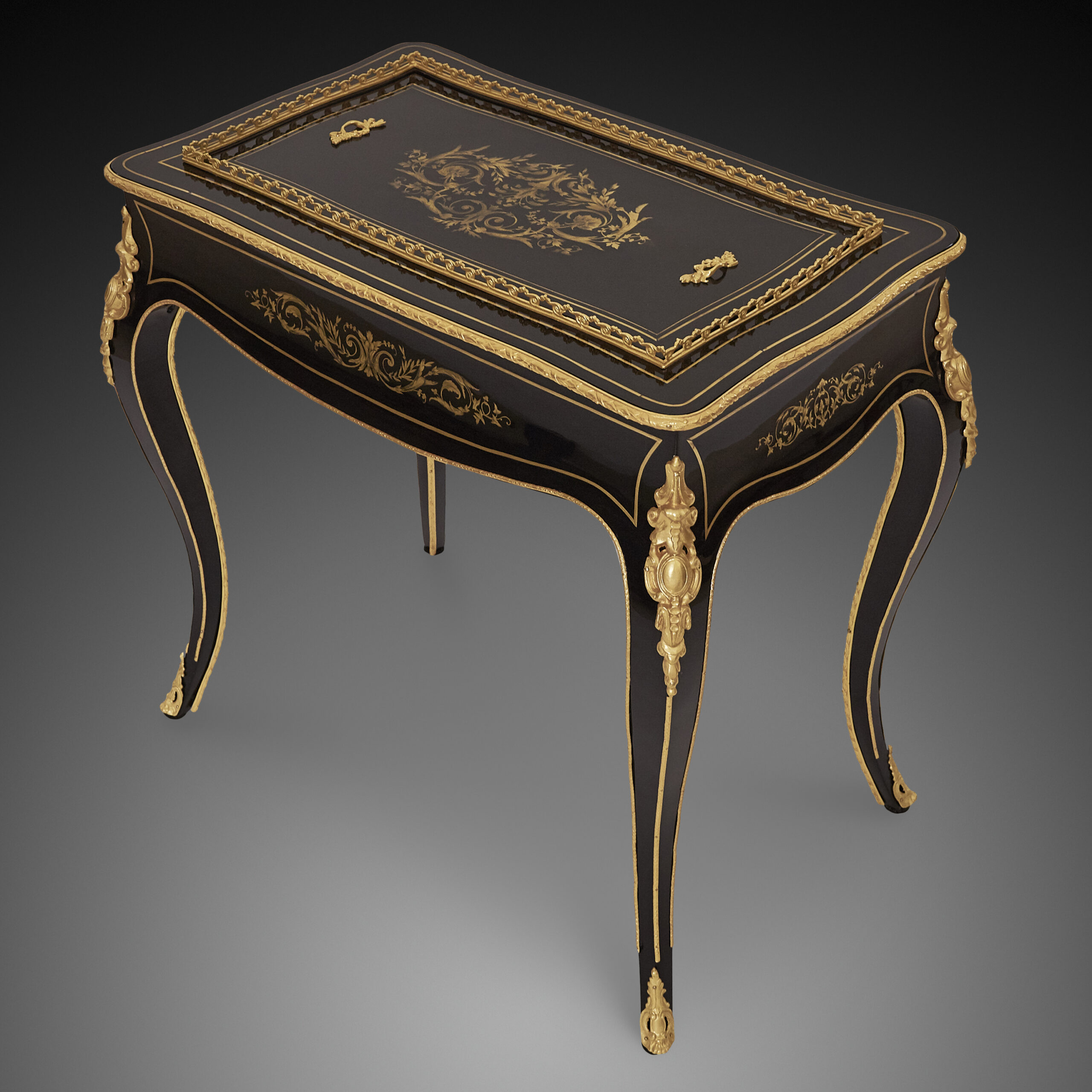
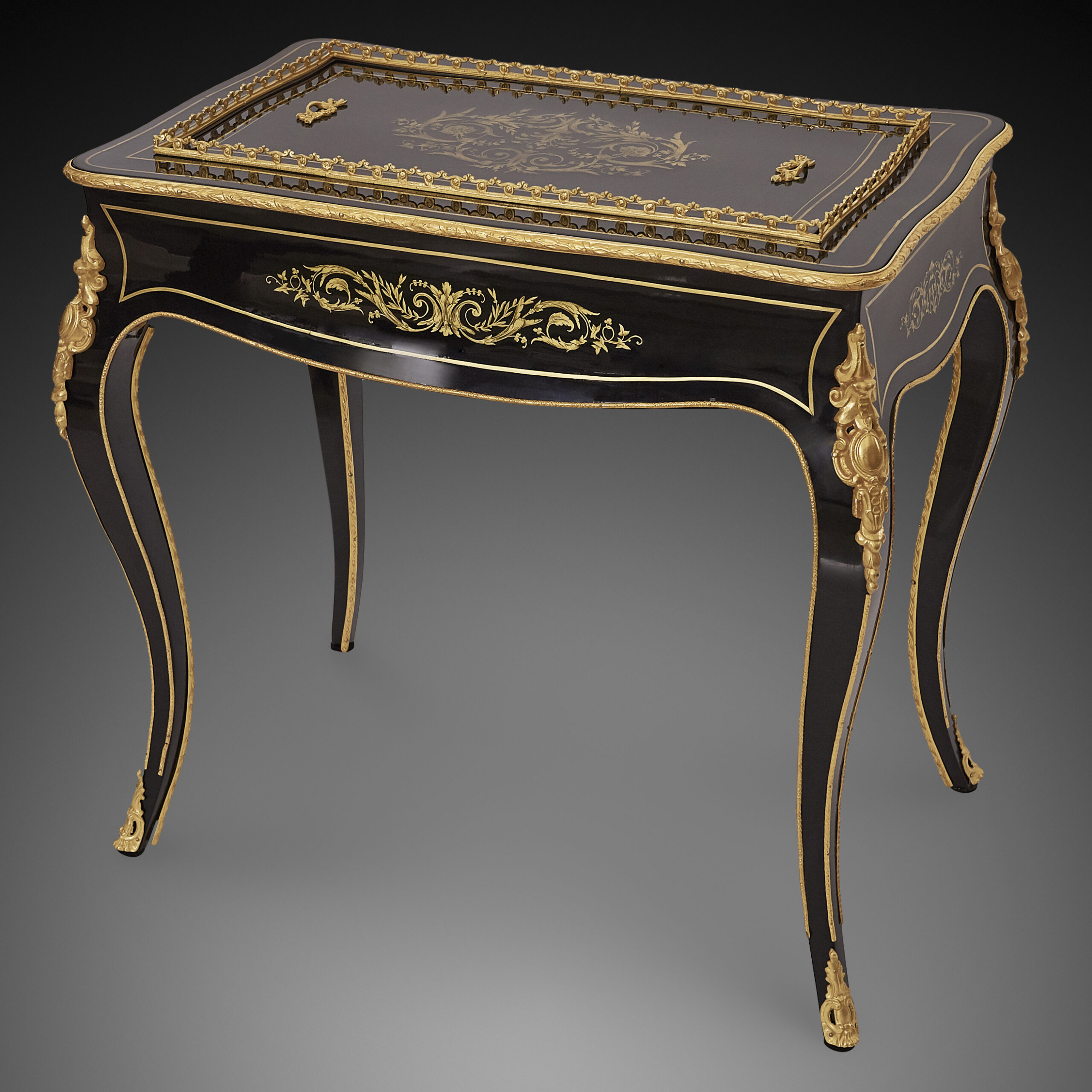
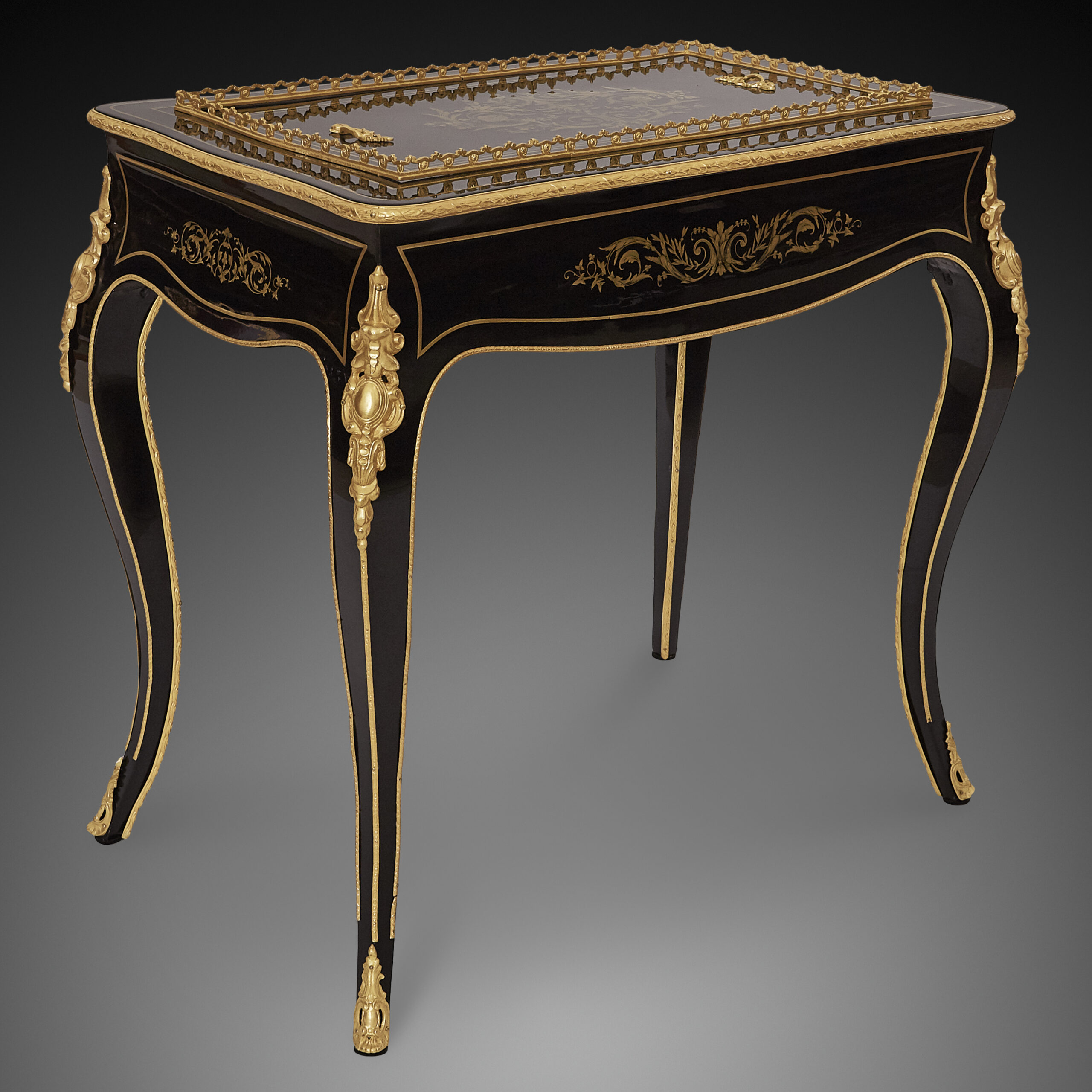
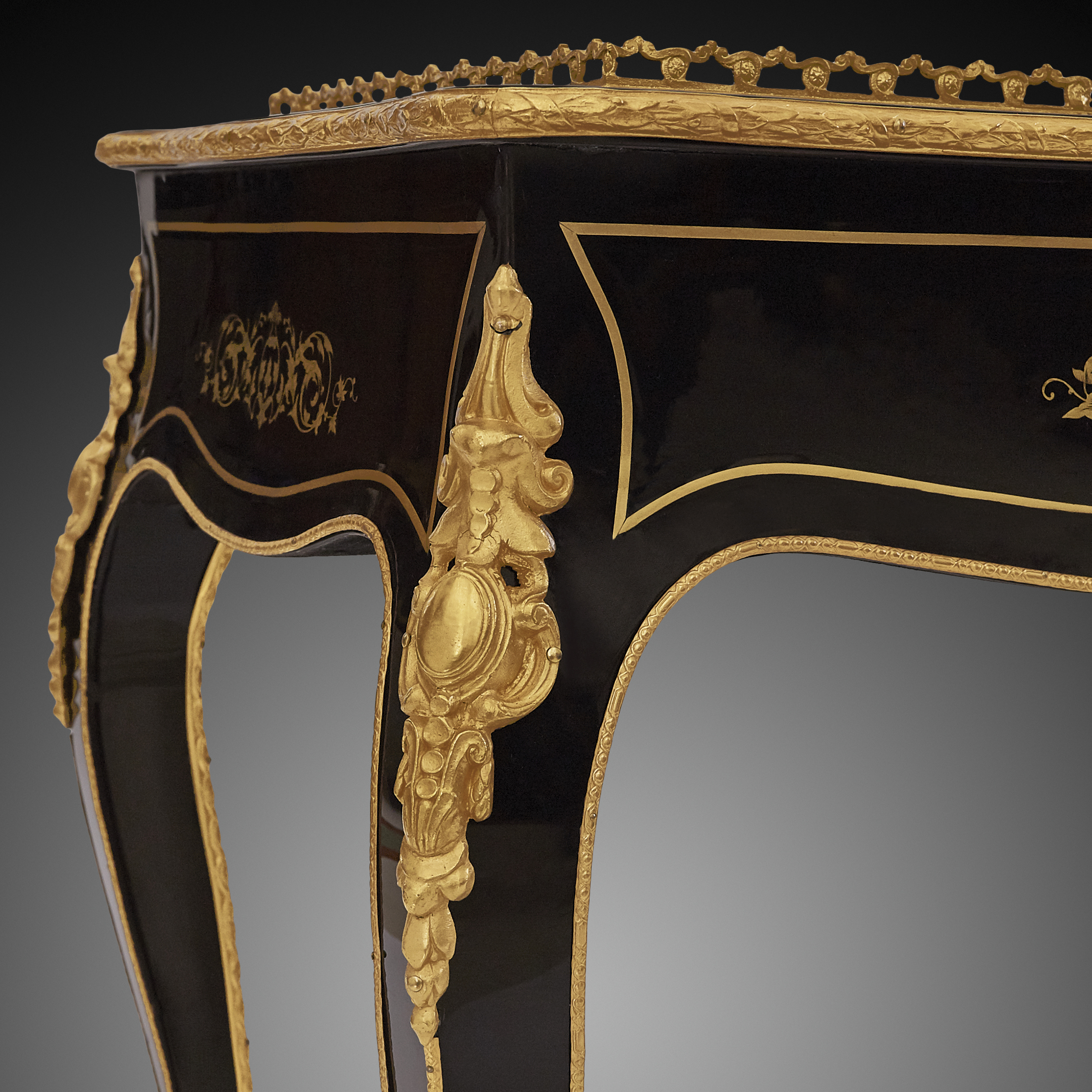
This magnificent French cabinet is a superb and highly luxurious example of the eclectic decorative arts of the Napoleon III period, dating from circa 1850–1870.
It masterfully synthesizes the intricate Boulle marquetry technique of the Baroque era with distinctive Moorish Revival elements and classical ornamentation — a combination that epitomizes the opulent and cosmopolitan taste of the Second Empire.
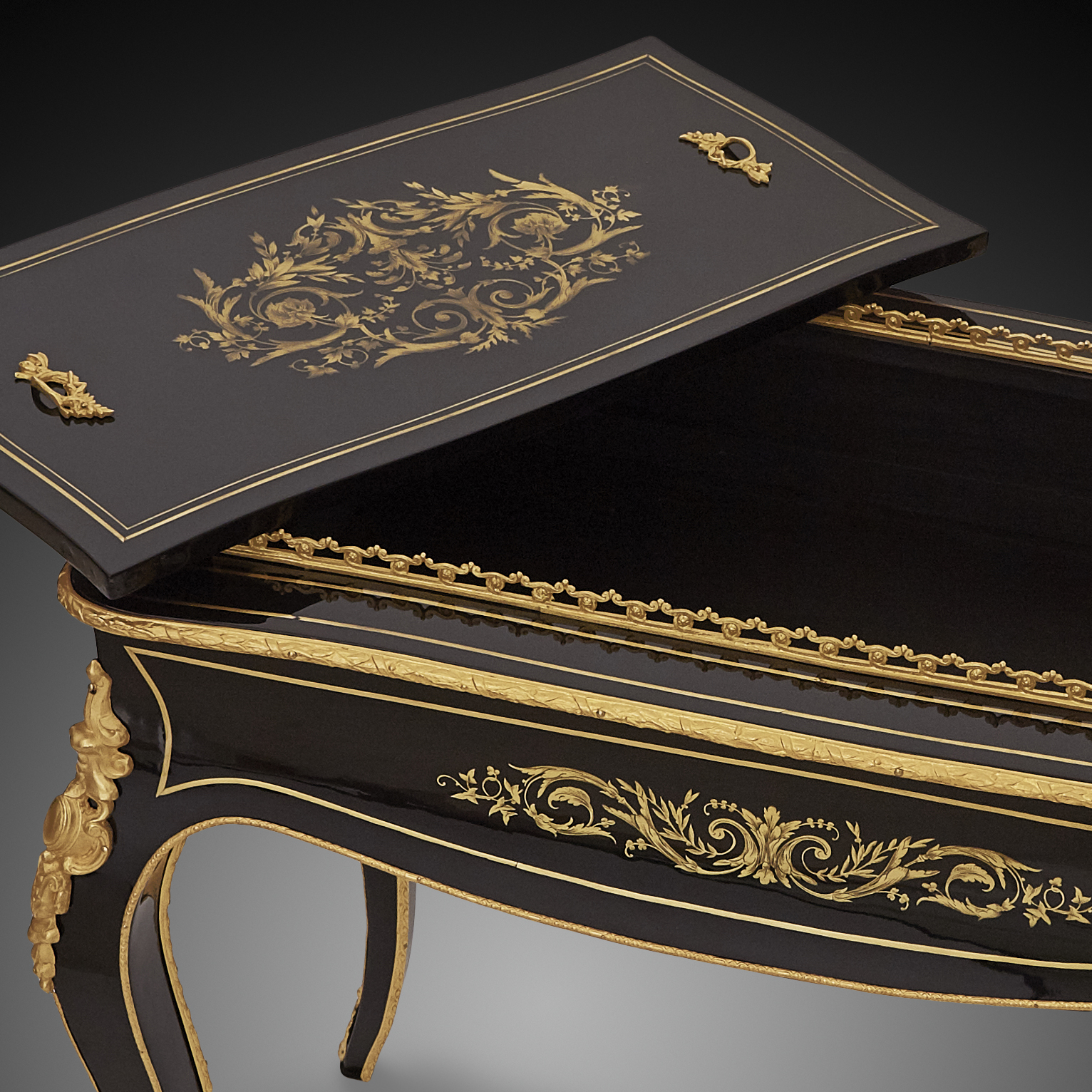
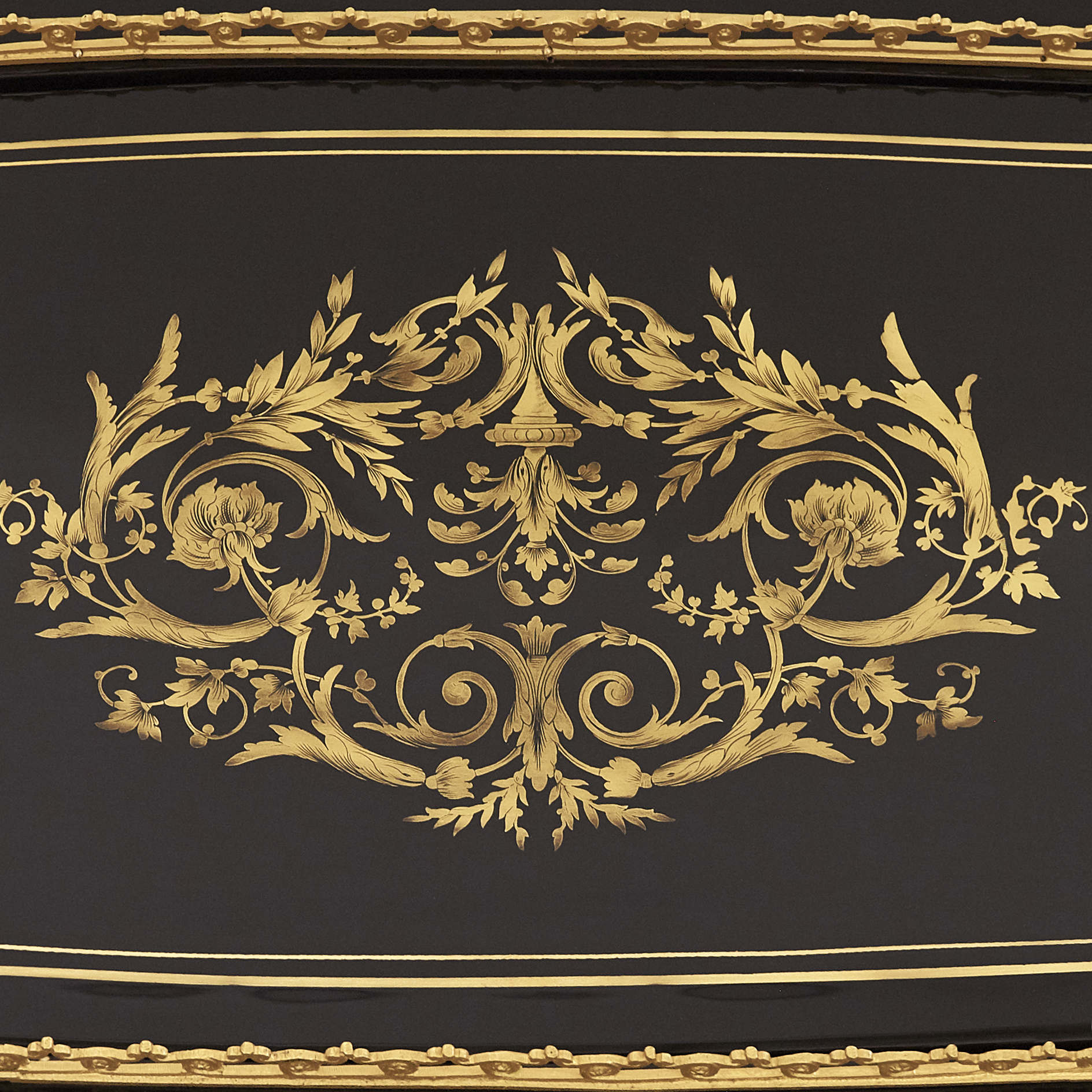
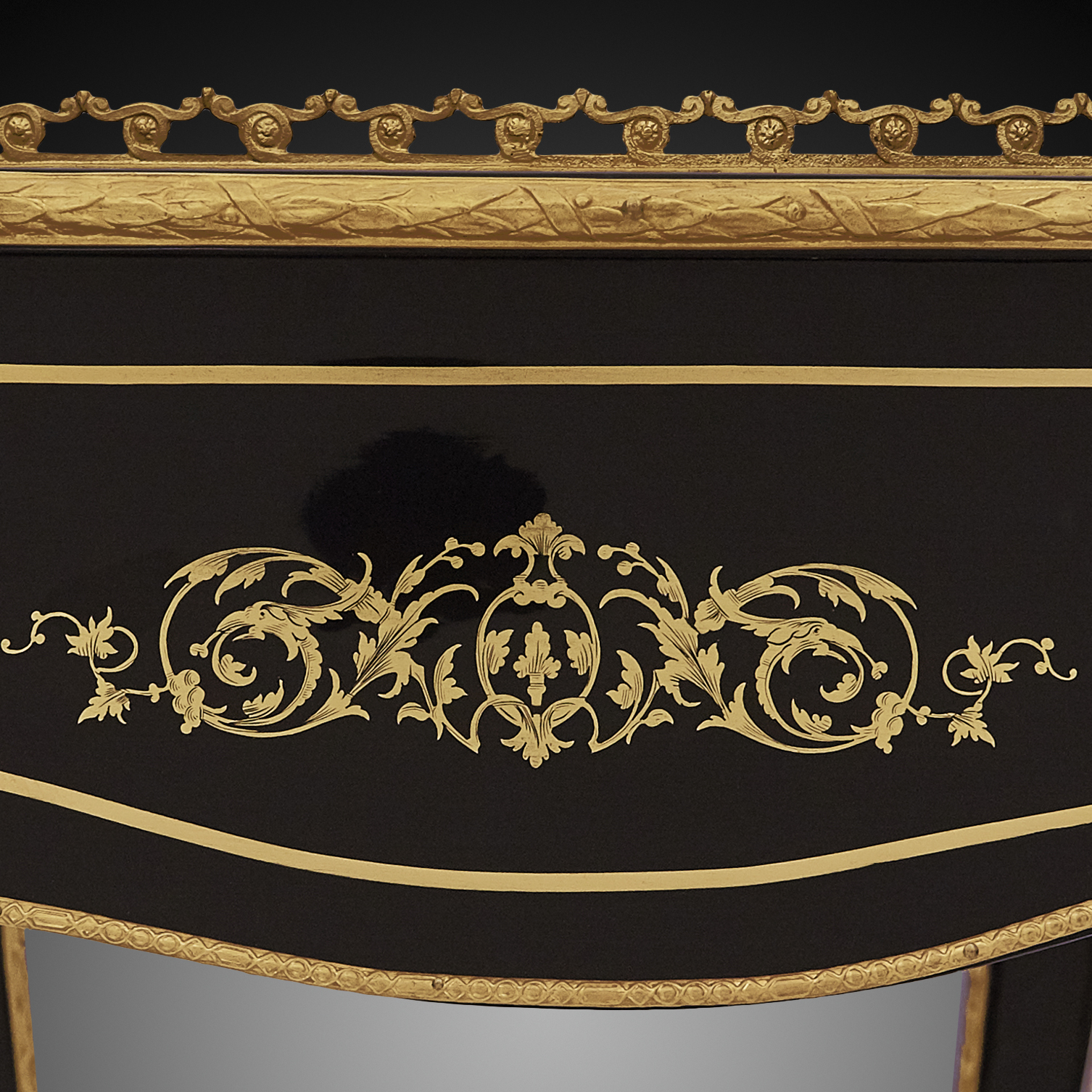
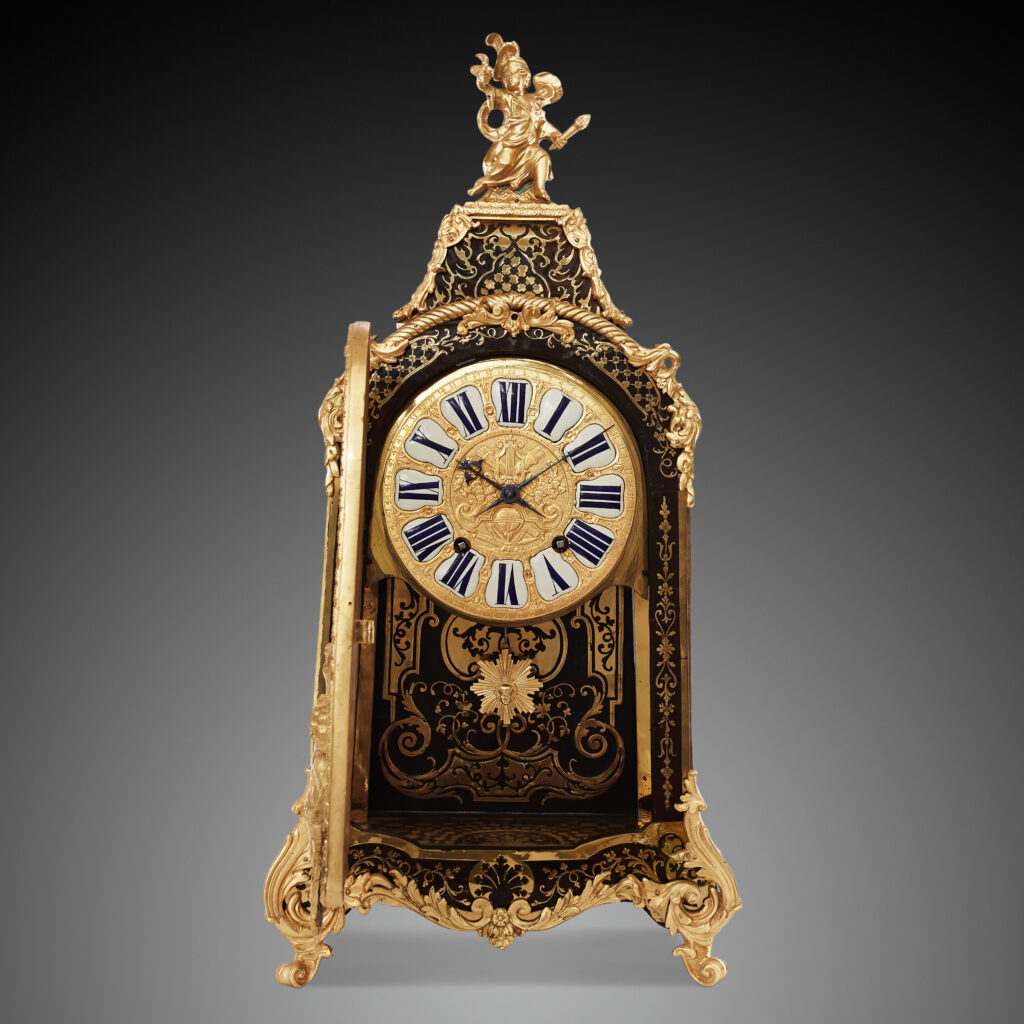
The cabinet is constructed in ebonized wood, which serves as a dramatic, deep black background that makes the rich marquetry and gilt-bronze mounts stand out with exceptional luminosity. The doors and sides are adorned with dense, flowing Boulle marquetry in brass and red tortoiseshell, featuring delicate scrolling arabesques and foliate patterns executed with remarkable precision and delicacy.
The most distinctive feature is the prominent Moorish-inspired ogival (pointed) arch that frames the central doors. This exotic architectural element, fashionable during the Second Empire, is richly bordered by fine Boulle marquetry and gilt-bronze mouldings, drawing the eye to its elegant shape. The corners are accentuated by sculptural gilt-bronze caryatid figures, while the frieze and base display classical acanthus scrolls, a central mascaron, and elaborate rocaille-inspired scrollwork.
The cabinet is further enriched with high-quality ormolu mounts, including finely chased pilasters, acanthus leaf decoration, and elegant feet. The whole composition is crowned with a white marble top, adding a cool, classical contrast to the rich warmth of the marquetry and gilding.
This cabinet perfectly illustrates the eclectic spirit of the Napoleon III era, a time of great prosperity when French artisans freely combined historical styles from different periods and cultures. The revival of the demanding Boulle marquetry technique, paired with the fashionable Moorish aesthetic and classical elements, was particularly popular among the wealthy bourgeoisie and aristocracy who wished to showcase both their cultural sophistication and material wealth.
When placed in a grand salon or formal room, this cabinet serves both as practical storage furniture and as a striking decorative statement. Its rich materials, intricate marquetry, sculptural mounts, and exotic architectural details create a powerful visual impact that embodies the luxurious historicism of the Napoleon III period.
This is a truly exceptional example of 19th-century French ébénisterie, where technical mastery, historical revival, and opulent decoration come together in perfect harmony. Its quality and stylistic sophistication make it a highly desirable addition to any serious collection of Napoleon III decorative arts.