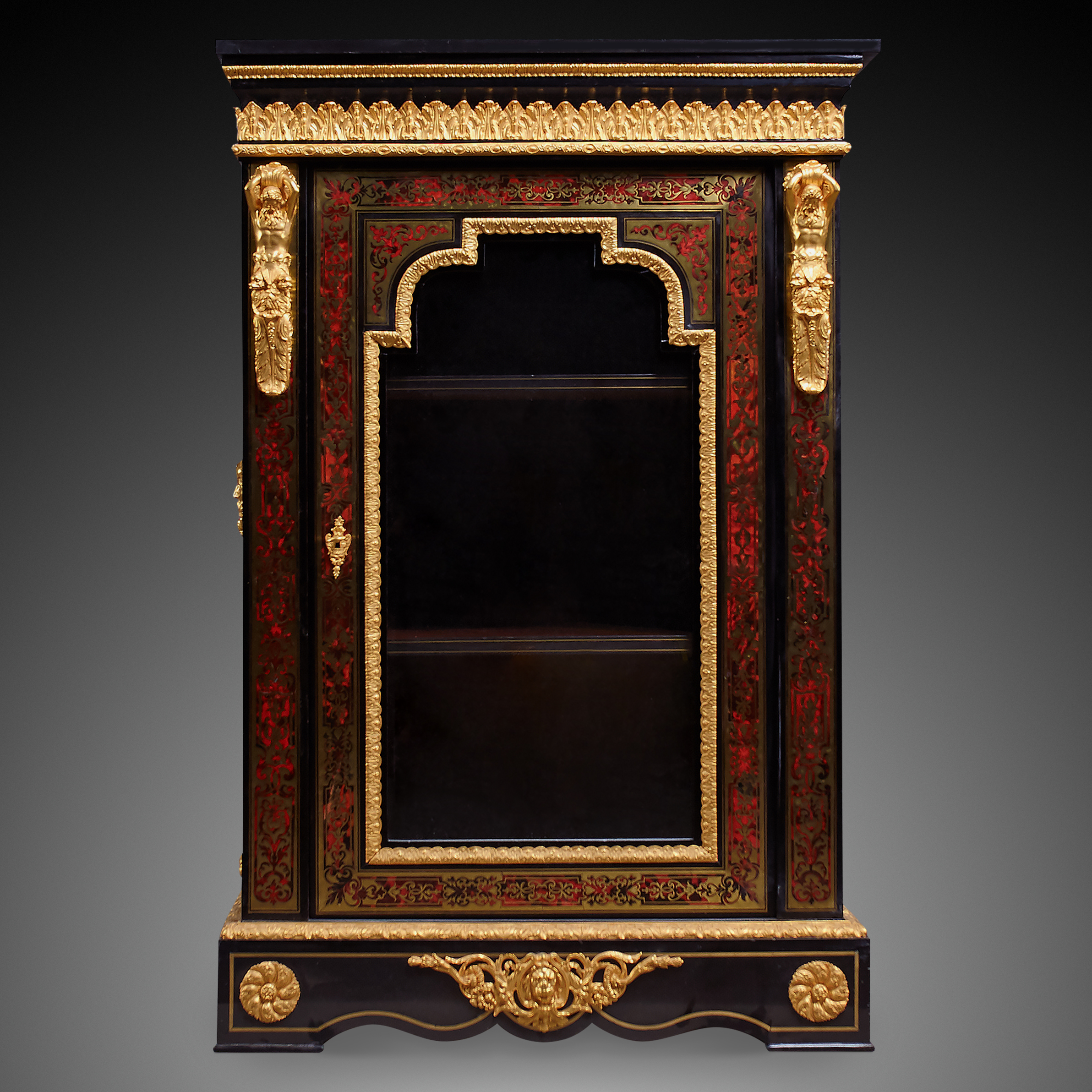
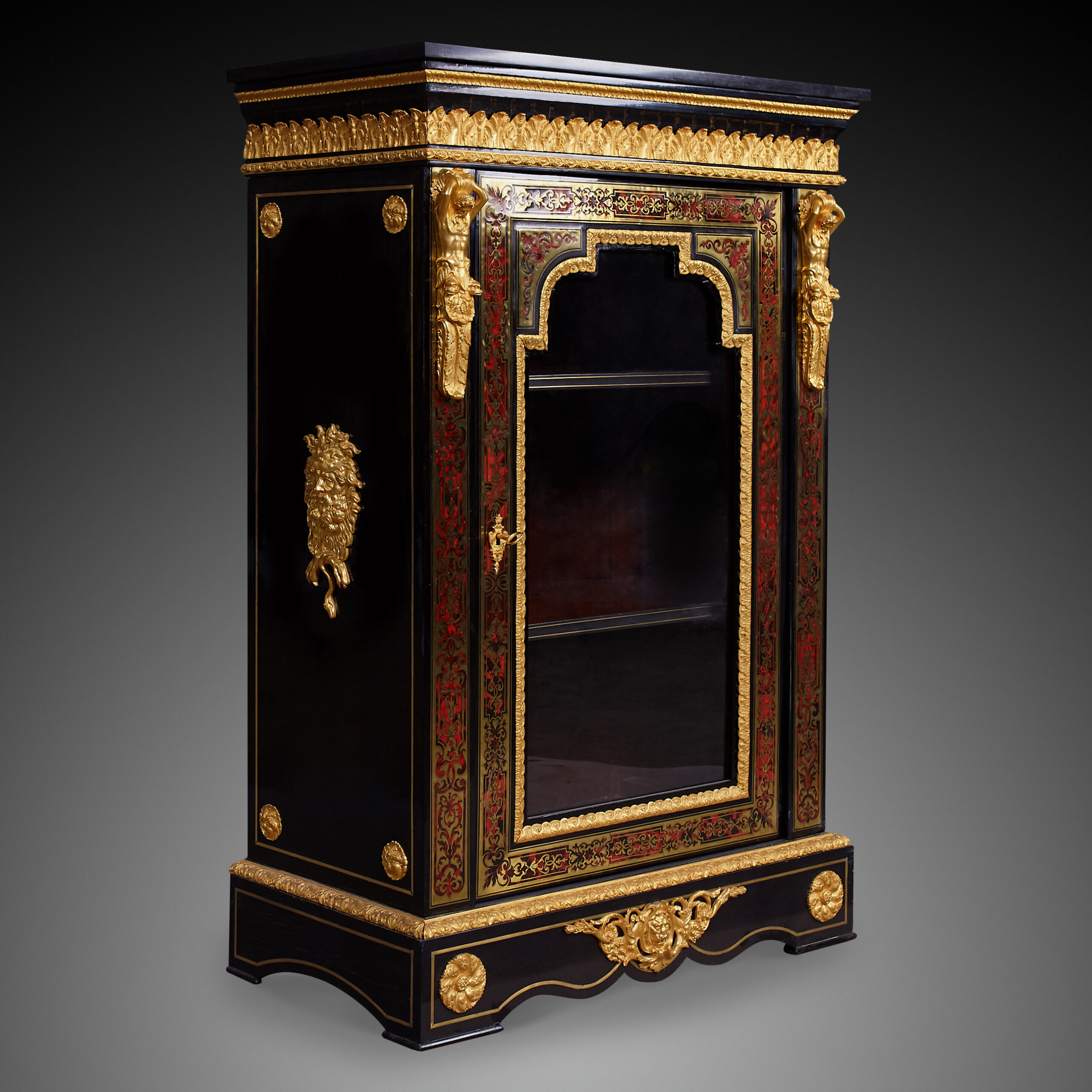
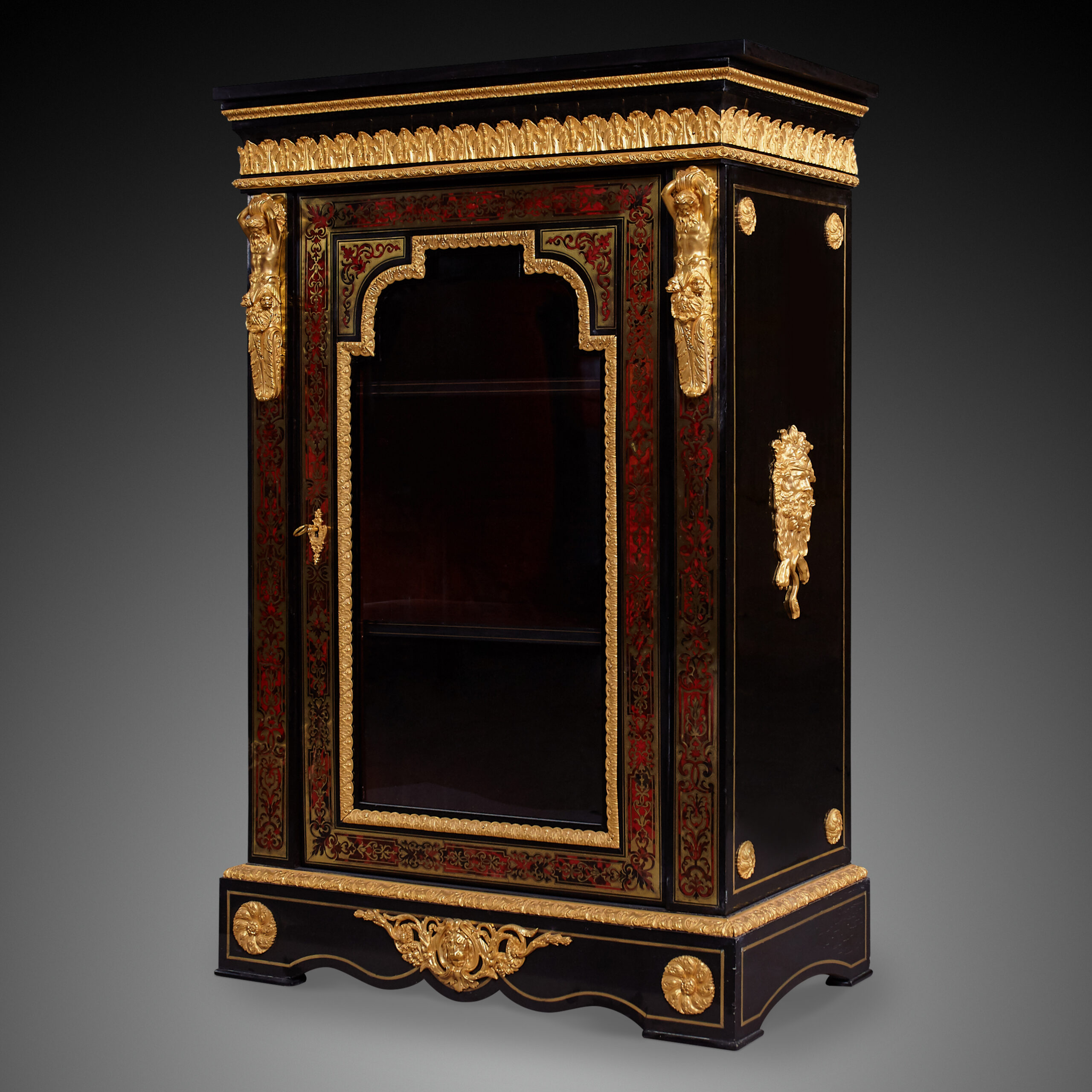
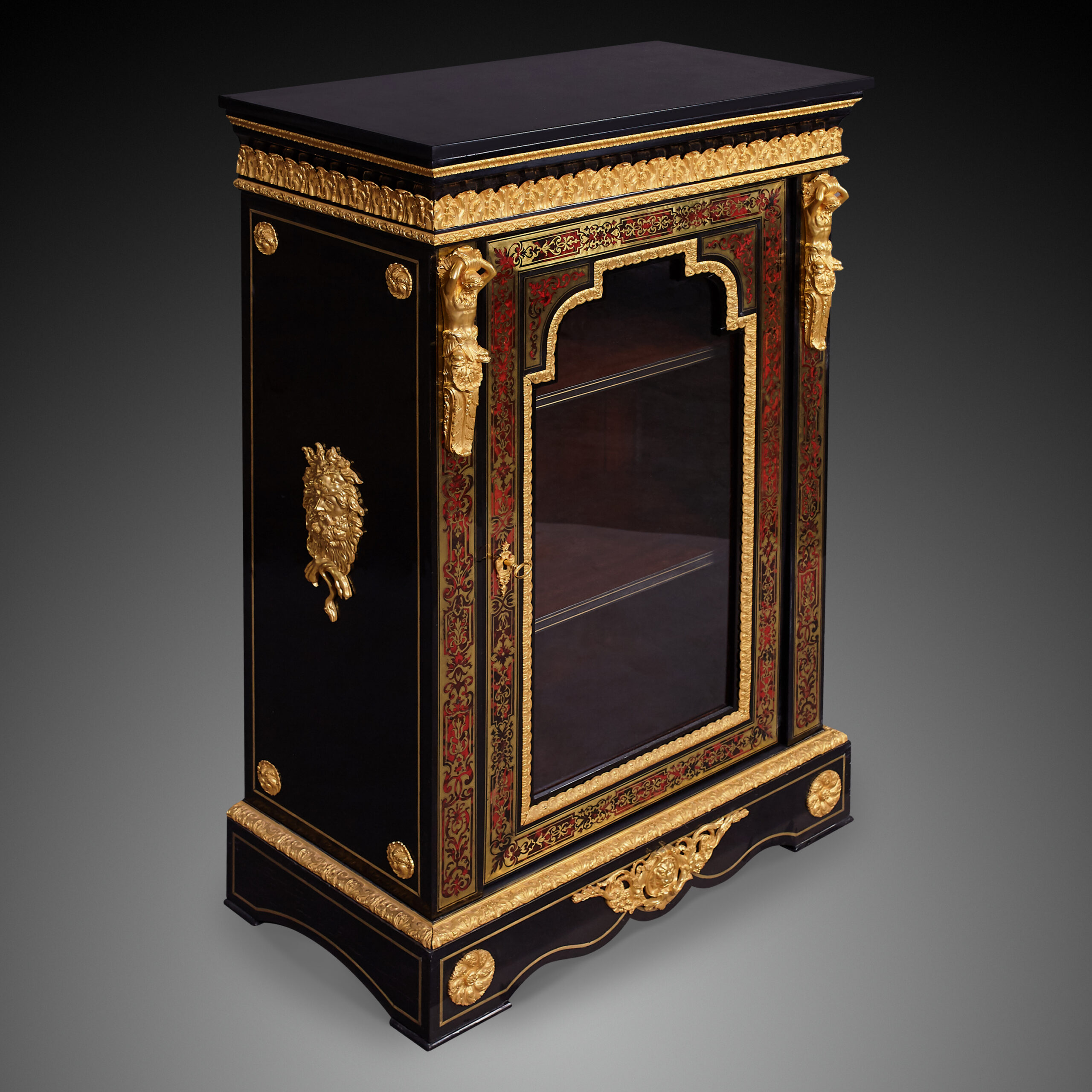
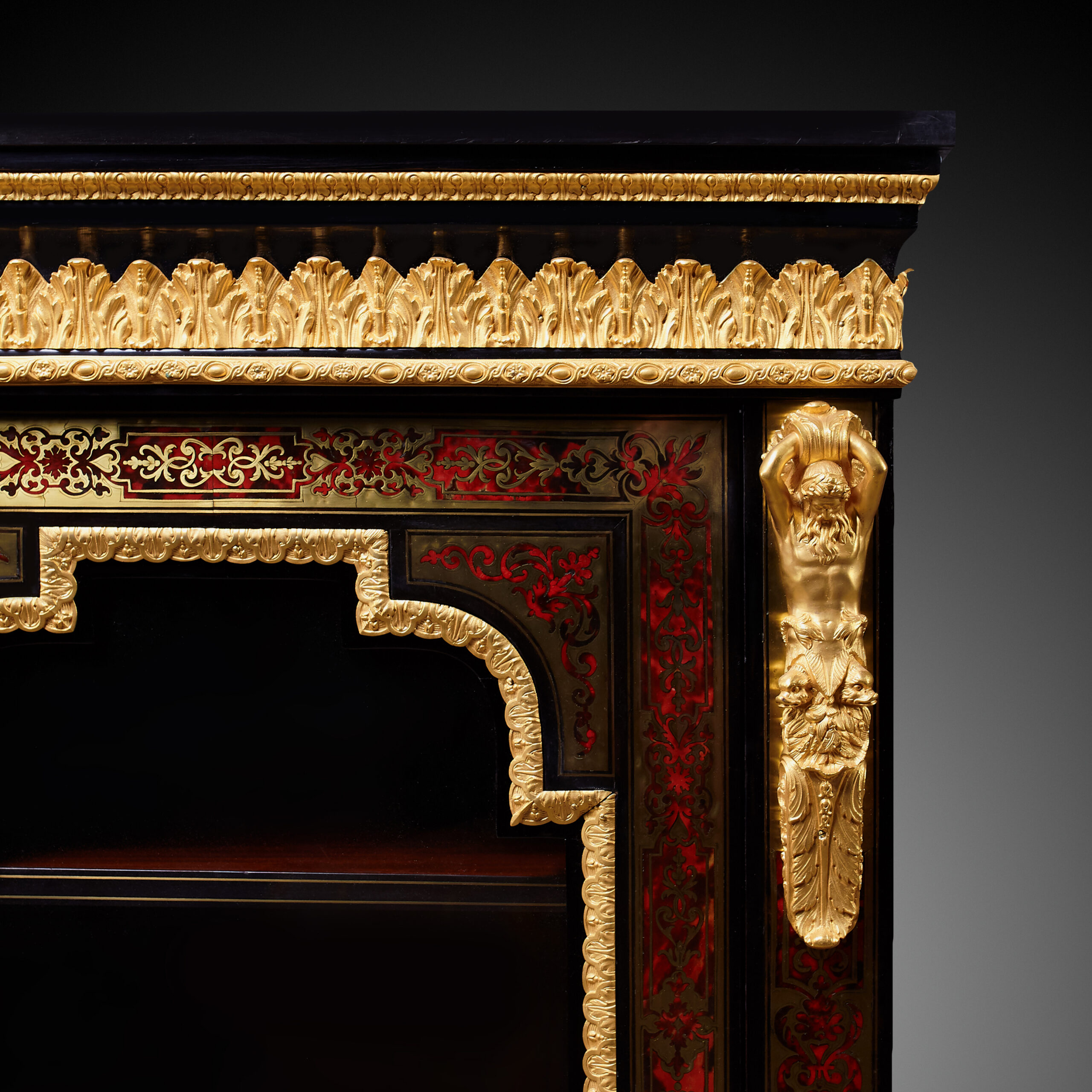
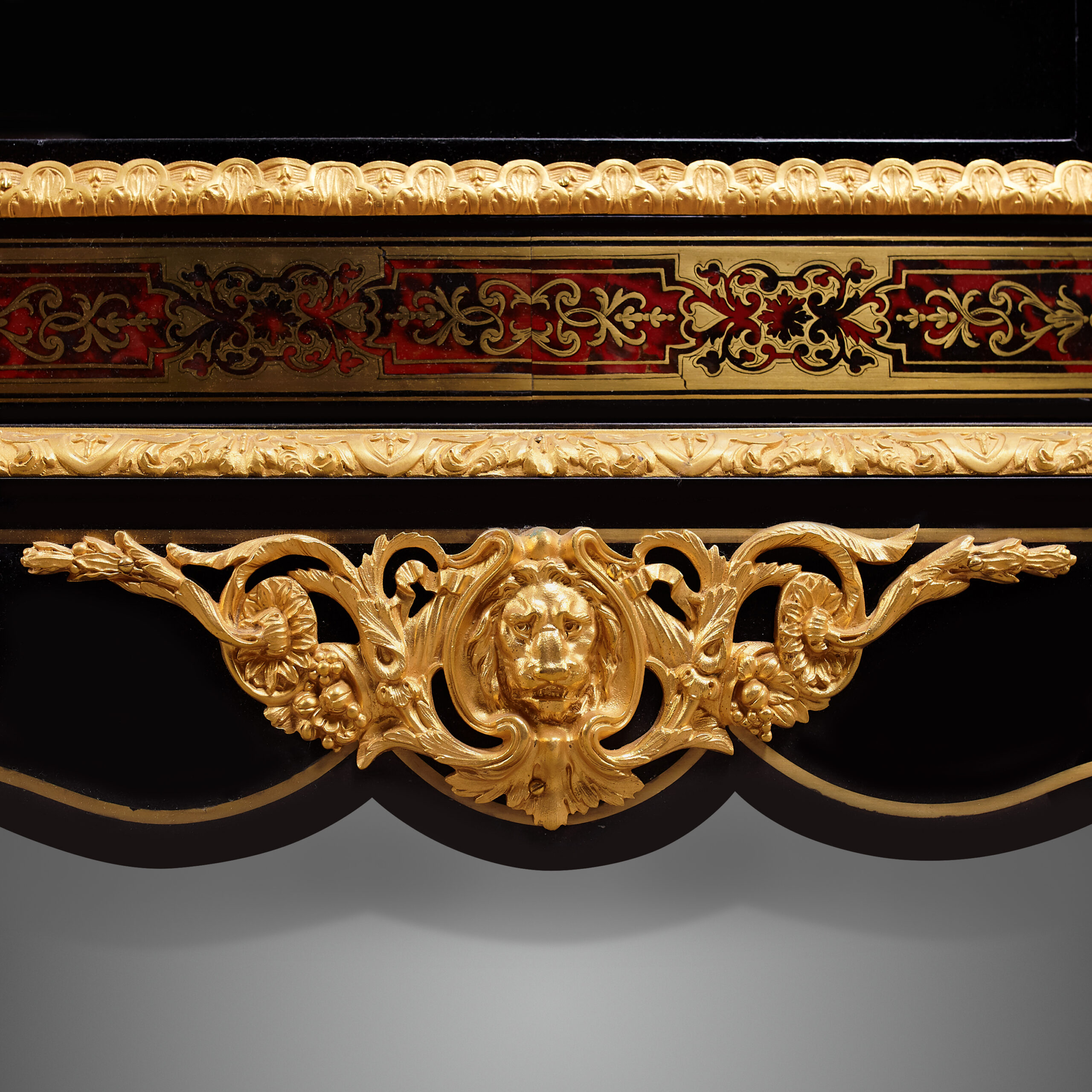
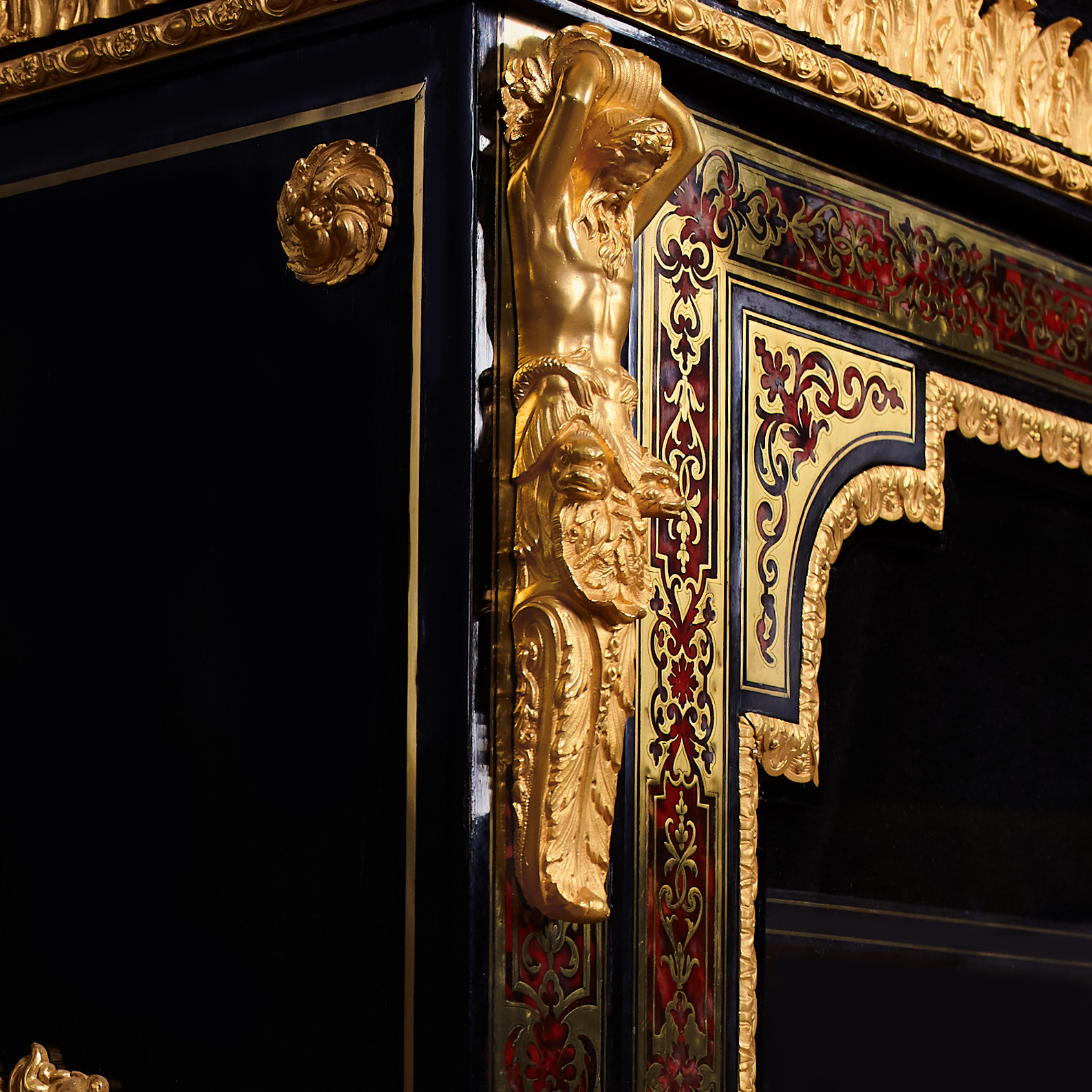
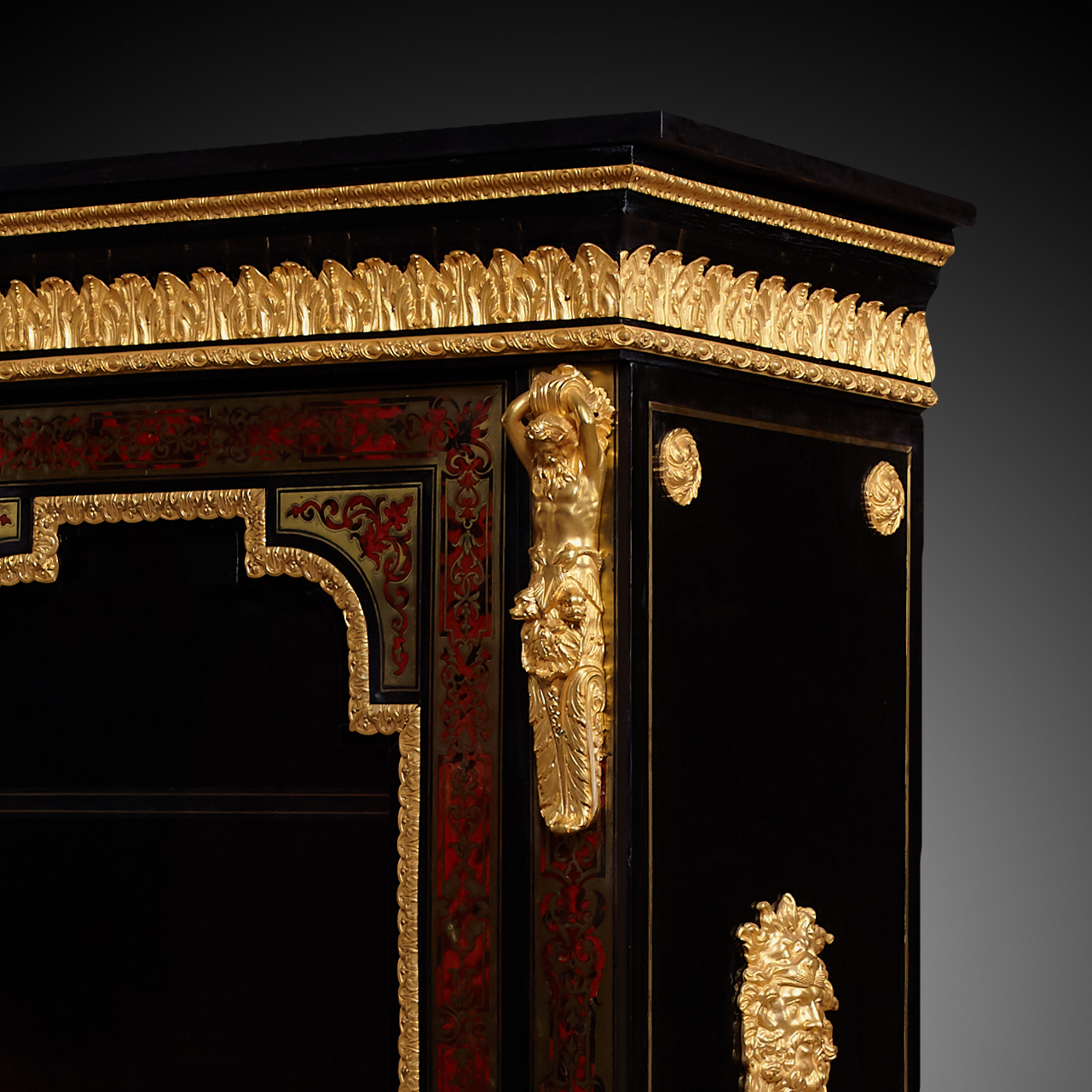
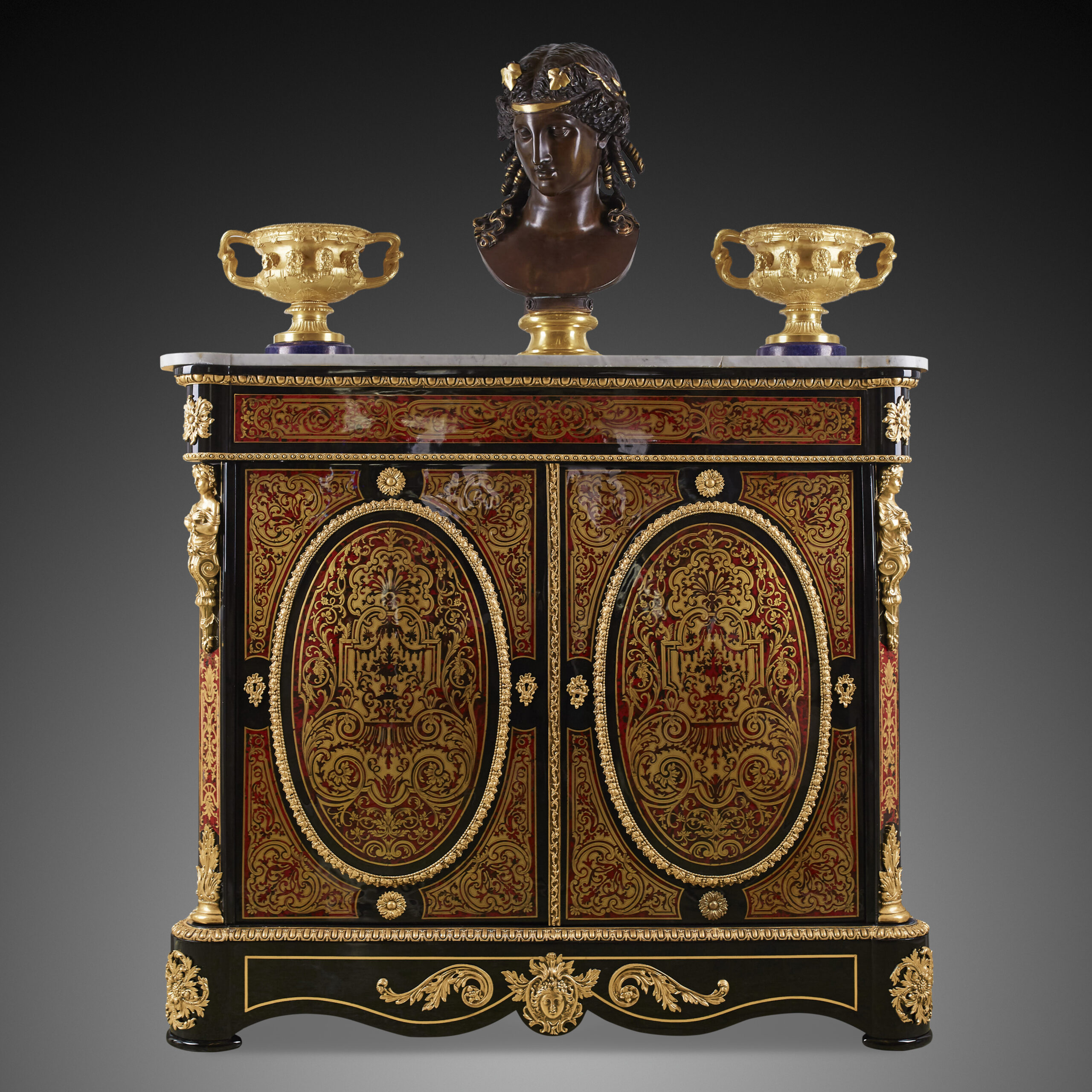
This exquisite cabinet is a superb example of a 19th-century French work, crafted in the opulent Boulle style that experienced a significant revival during the Napoleon III period (1852-1870). The piece is a masterful homage to the work of André-Charles Boulle, the celebrated ébéniste of Louis XIV, with its intricate marquetry and lavish gilt-bronze mounts.
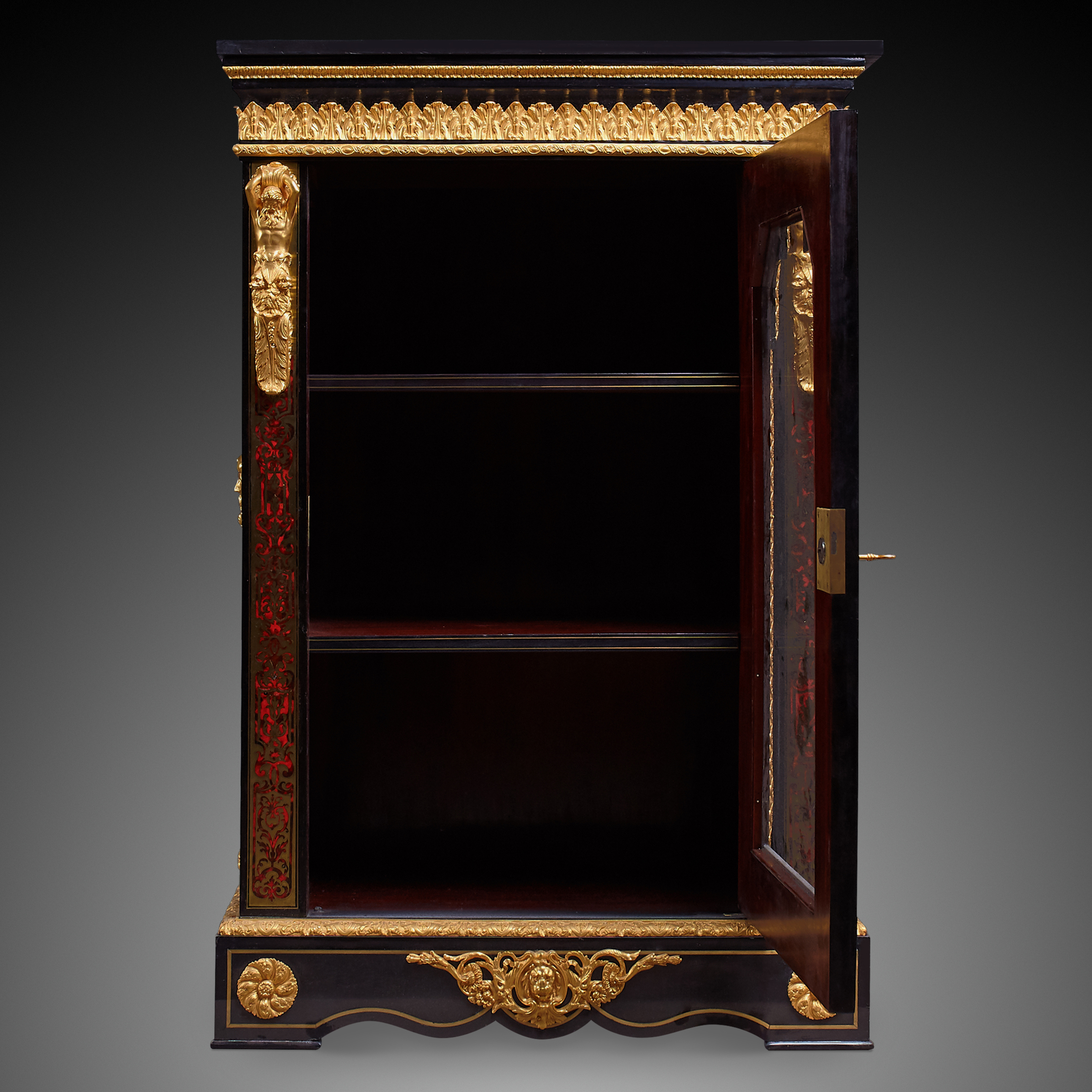
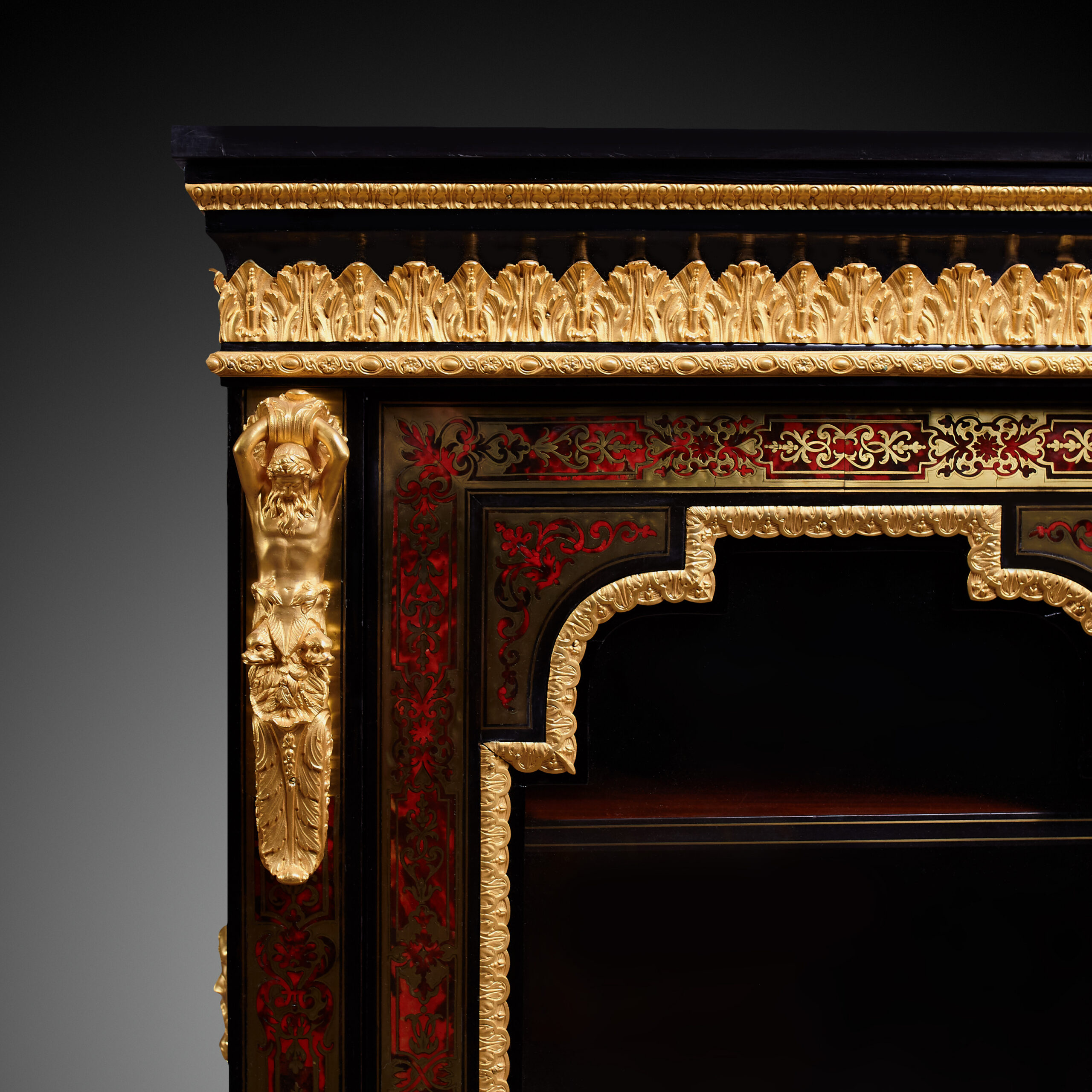
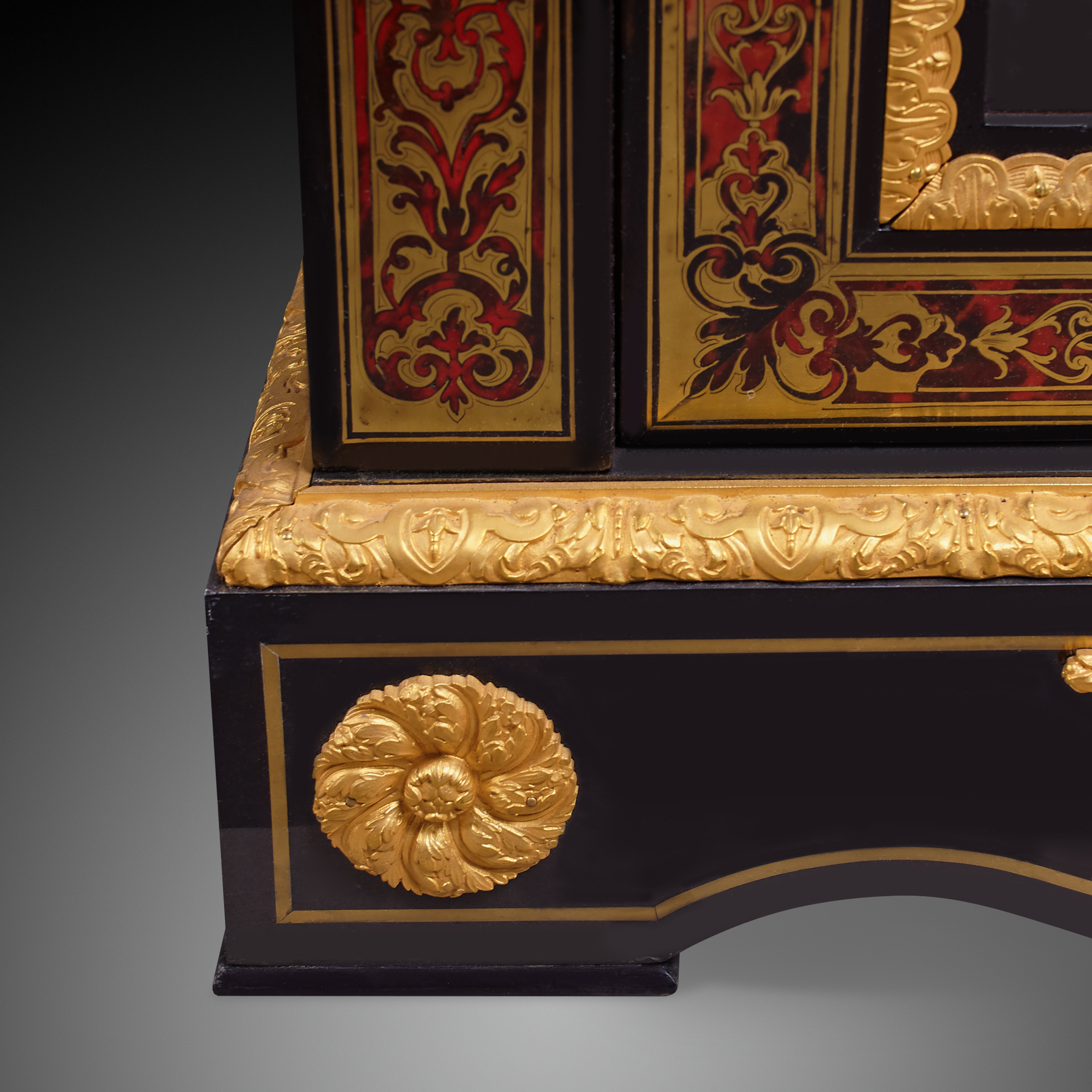
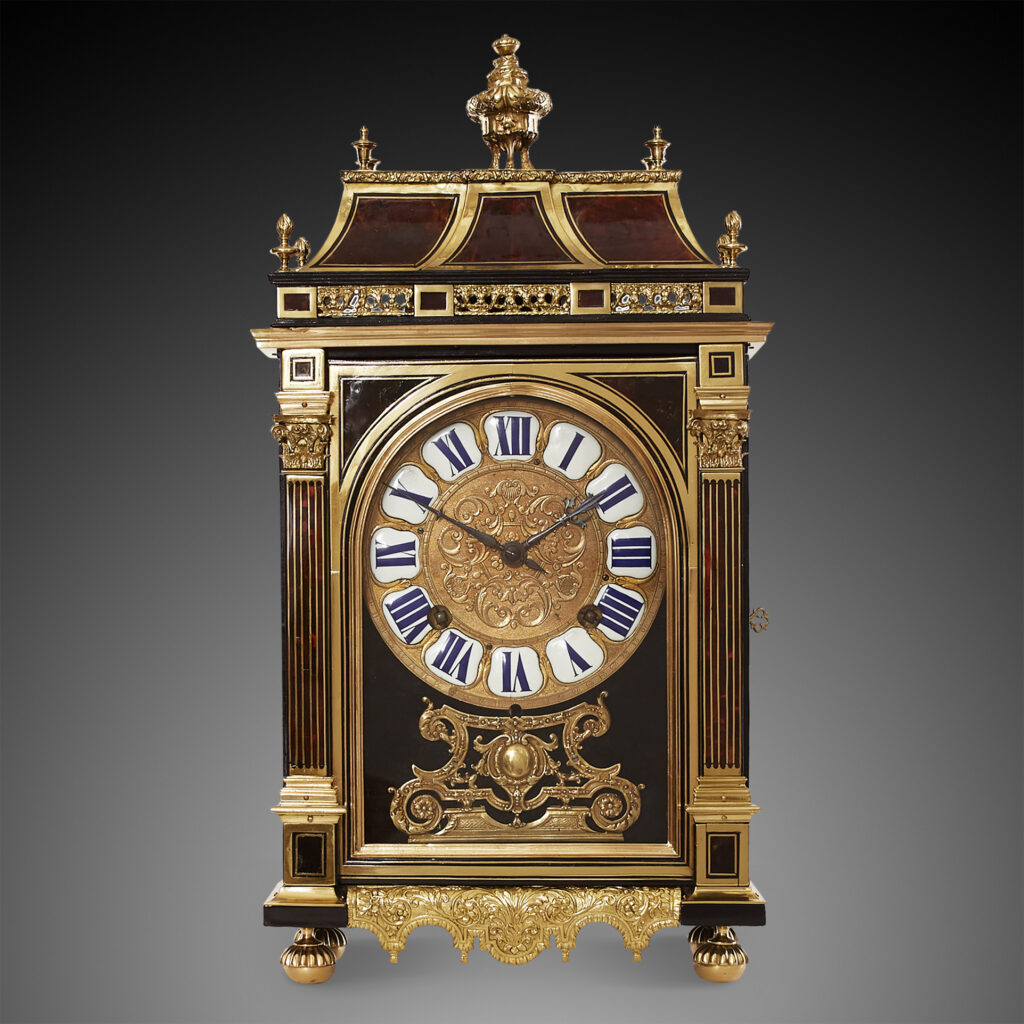
The cabinet is constructed from ebonized wood, which provides a dramatic, dark background for the meticulous marquetry. The marquetry, a hallmark of the Boulle technique, is composed of finely cut brass and red tortoiseshell. The detailed arabesques and foliate designs are executed with a precision that speaks to the high level of craftsmanship. The door’s central panel features an elegant, arched top, reminiscent of Moorish or Renaissance design, which frames the inner compartment.
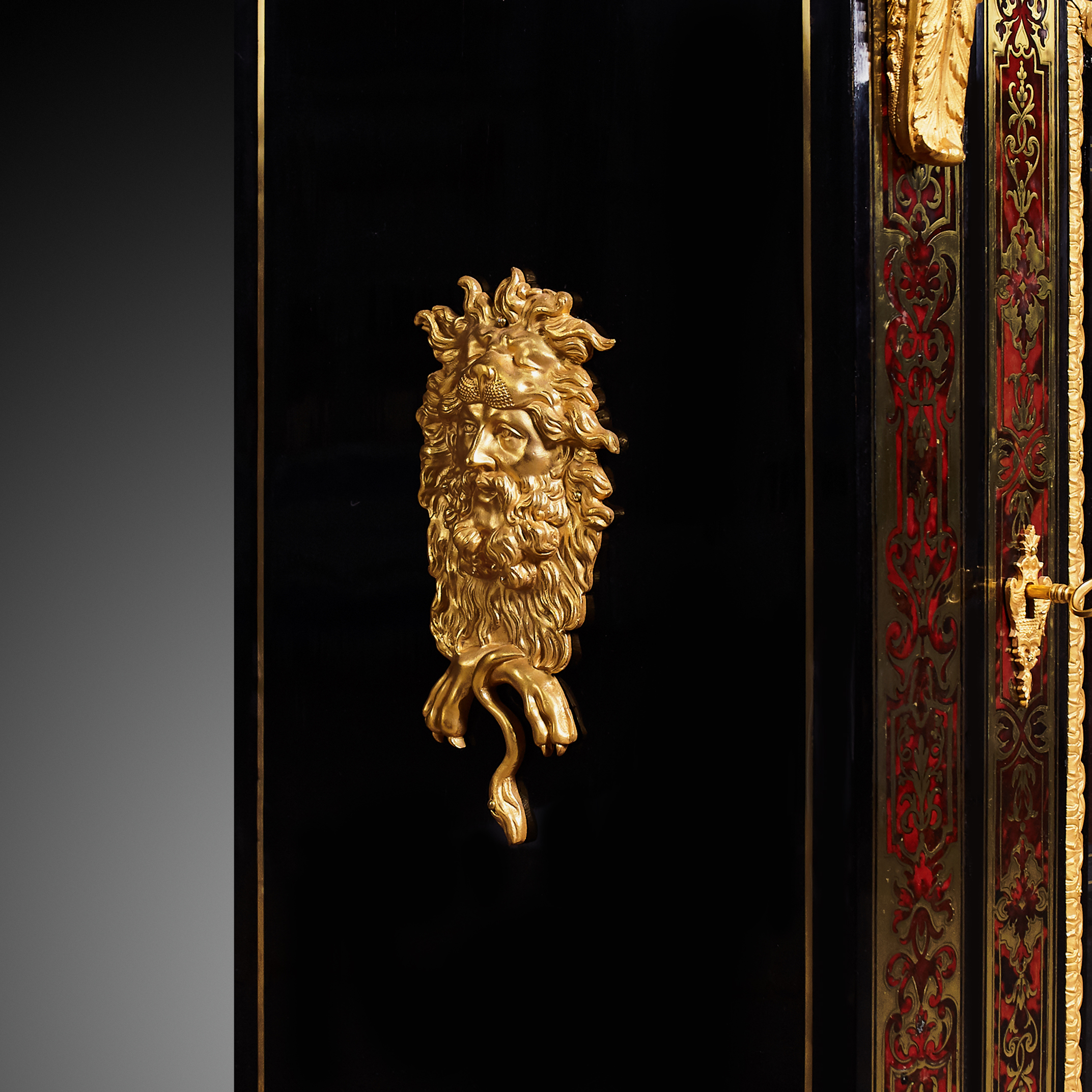
Adding to its grandeur are the expertly sculpted and chased gilt-bronze mounts. These include:
Caryatid figures: The sides of the cabinet are adorned with female caryatid busts, a classical motif that was highly fashionable during the Second Empire. These figures, with their elaborate headdresses and flowing drapery, support the upper cornice.
Acanthus leaf scrolls: The lower section of the cabinet is decorated with a profusion of acanthus leaf scrolls, a staple of Baroque and Rococo ornamentation. These elements contribute to the piece’s dynamic and sculptural quality.
Decorative moldings: Intricate gilt-bronze moldings frame the door and the top and bottom edges of the cabinet, providing a luxurious finish and highlighting the architectural structure of the piece.
This commode embodies the eclectic and historical tastes of the Napoleon III era, which borrowed heavily from previous styles to create a sense of lavishness and abundance. It is a testament to the period’s reconciliation of traditional artistry with industrial innovation, a time when luxurious materials and high-quality craftsmanship were sought after by the burgeoning bourgeoisie. This piece would have been a central feature in a grand salon or cabinet de curiosités, reflecting the wealth and refined taste of its original owner.
History and Context:
The Napoleon III style, also known as the Second Empire style, was a period of great luxury and historicism in France. Under the reign of Emperor Napoleon III and the influence of his wife, Empress Eugénie, there was a widespread fascination with past art forms. André-Charles Boulle’s work, which had defined the grandeur of the Louis XIV court, became particularly fashionable.
Cabinetmakers of the mid-19th century, such as those associated with the workshops of Bellangé, Grohé, and Linke, perfected the techniques of Boulle marquetry. They produced pieces that were not mere copies, but creative reinterpretations that were often even more ornate and detailed than the originals. The use of new industrial processes, such as electroplating for the bronze mounts, allowed for a greater profusion of decorative elements and made these luxurious items more accessible to a wider, affluent clientele.
This commode is a remarkable example of this historical revival, showcasing the craftsmanship and aesthetic sensibilities that defined one of the most opulent periods in French decorative arts. Its excellent condition and historical significance make it a highly desirable piece for any collector of 19th-century antiques.